
This unit :
Building Better Learners is about creating a culture in classrooms – and the school more widely – that systematically cultivates habits and attitudes that enable young people to develop supple learning minds.
This section explores what is entailed in making learning the object of attention, where the values of learning become clear in what is celebrated (praised, recognised, displayed) day in and day out in the classroom thus generating a rich learning friendly culture.
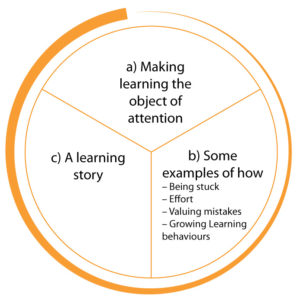
How might we start showing the learning values of the classroom more clearly?
a) Making learning the object of attention
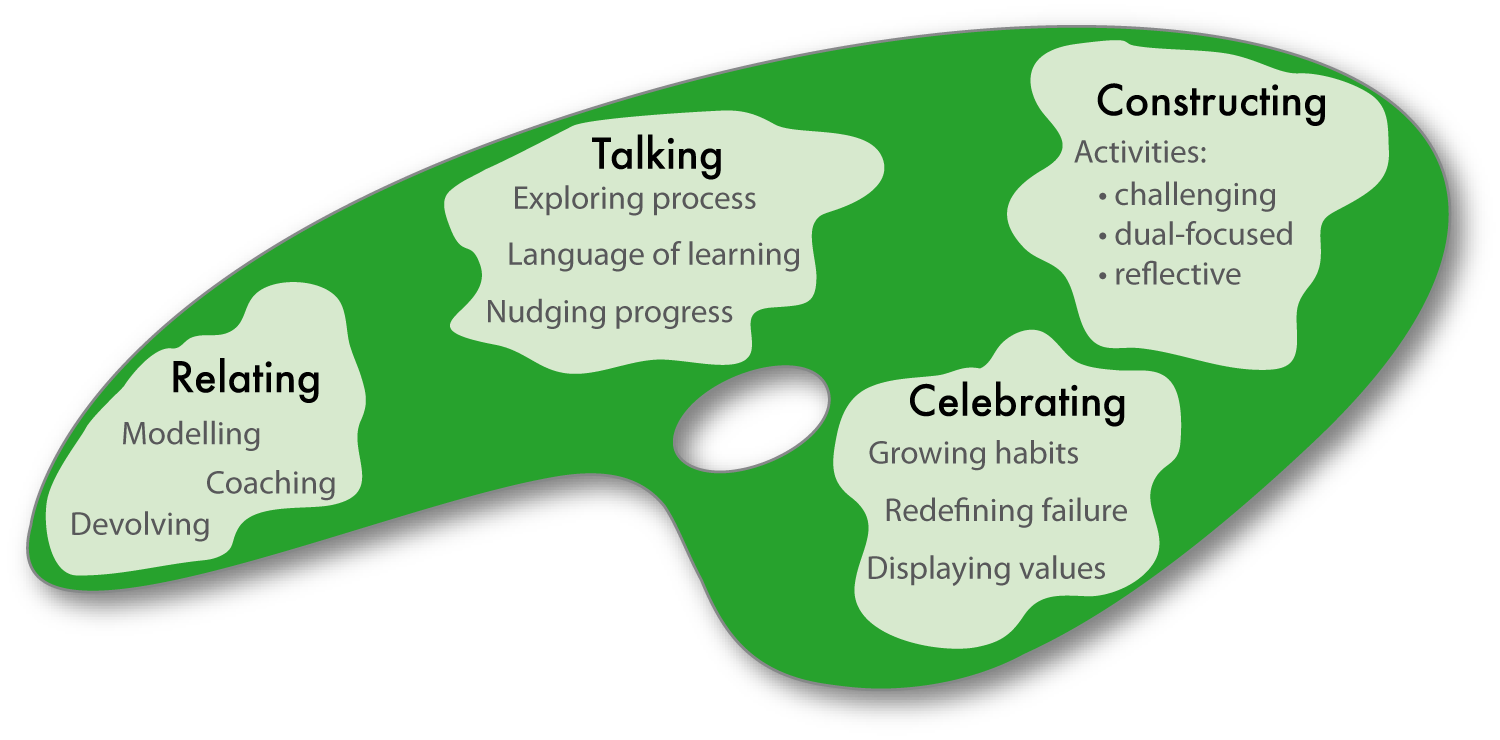
As we saw in section 3.1 Celebrating learning is about making learning the object of attention. Here the values of learning bubble up and show themselves in what you attend to, what you recognise, what you praise, what you display and celebrate. In learning friendly classrooms failure, mistakes, being stuck and applying effort have been re-framed so that learners come to view these old adversaries as valuable, interesting and essential. Furthermore the other major shift here is that the development and growth in learning behaviours themselves are given attention, praise and recognition. In the early stages re-defining the quest-like values of learning might simply include:
- ensuring students (and parents) understand ‘being stuck’ as an interesting not shameful position, with tactics to get unstuck (see 3.2);
- ensuring students (and yourself and parents) understand what is meant by effort;
- ensuring students (and parents) understand the value of mistakes;
- celebrating students’ progress in learning behaviours.
The success of this shift will depend on consistency and strong emphasis. You have to make these ideas/values obvious, big and overblown. Whispering them quietly won’t work. They have to be shouted about and put ‘in-your-face’ if they are to stick, be believed, be understood and capitalised on.
Shout the values loudly
b) Some examples of how
1) More ideas for attending to being stuck
- Have learners identify the obstacle to their progress. I’m stuck because.
- Model and talk through the ‘getting unstuck process.
- Use the Visible Thinking Routine ‘What do I know? What do I need to know? What techniques do I have to bridge the gap?’
- If students freeze, offer supportive questions, not answers. ‘What do you do next?’, ‘What could you try?’, ‘What worked last time?’ etc. You are encouraging students to take over the job of thinking it through for themselves.
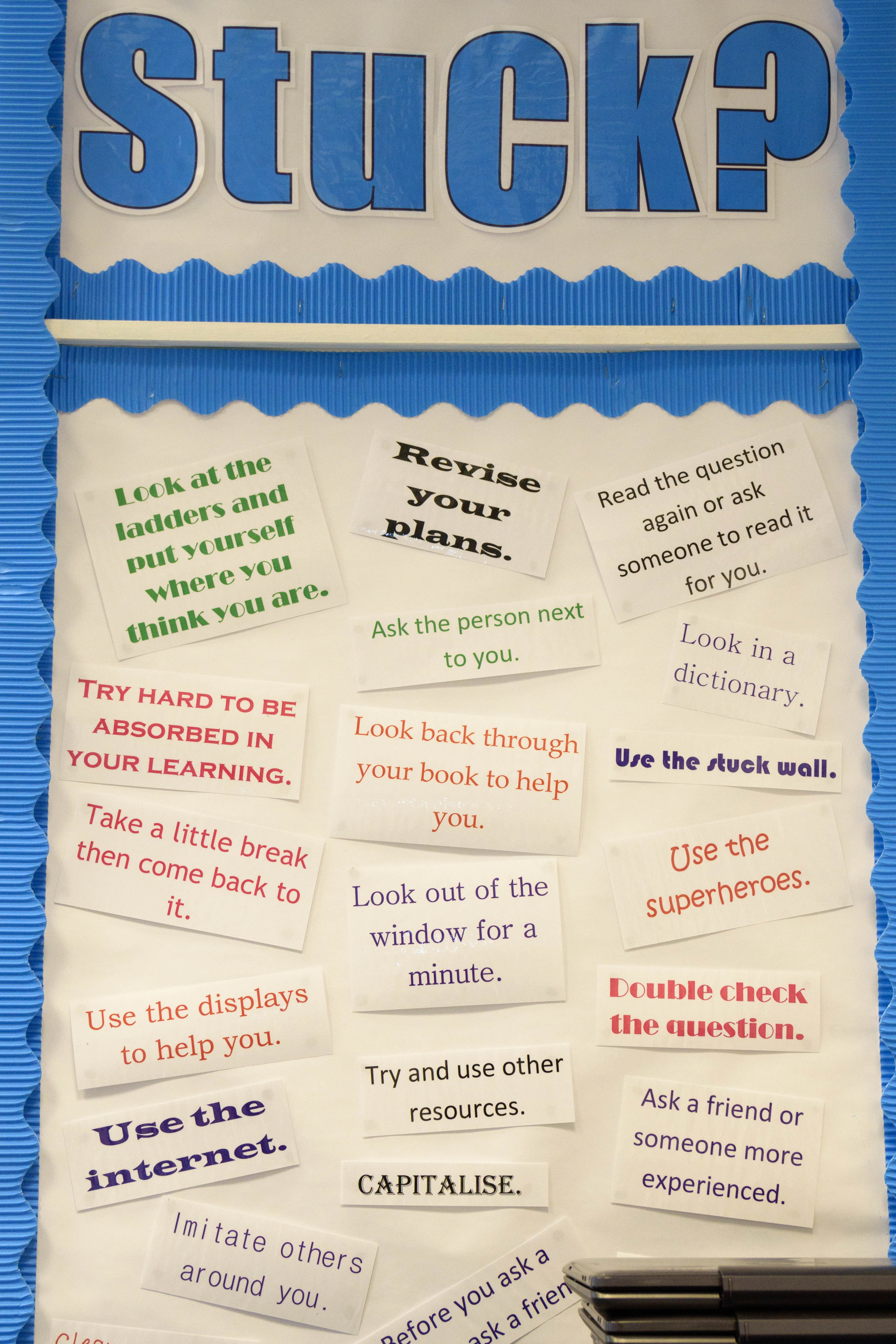
What to do when you don’t know what to do
2) Attending to what you mean by effort
Teachers often call for more effort from students but what do we mean by this?
Effort: it’s about focusing and re-focusing the mind on the work you are doing. Something is directing students’ attention.
For example the following could be used to focus the mind:
- looking for different strategies;
- using trial and error to deal with challenge;
- using success criteria to direct what you do;
- asking for feedback on how to improve/apply;
- attending to working memory – free-up space via scraps of paper, verbalising thoughts, scaffolding tasks.
Say something more useful than ‘try harder’
3) Attending to valuing mistakes
Give mistakes high status, a key role in learning
- Say that you expect students to make, for example, 3 in a lesson. If they haven’t made the quota of mistakes they are to ask for harder work
- Make a ‘Mistakes of the Week’ display.
- identify Good mistakes – as misconceptions and discuss them
- Offer a range of examples of good mistakes as lesson starters for students to find and discuss.
- Model making mistakes and how you learn from them.

Good mistakes
4) Attending to growing learning behaviours
How might secondary schools demonstrate their commitment to growing learning behaviours through display ?
The first imperative is to gain a sense of what ‘getting better’ means. Some schools have taken our progression maps, as illustrated in module 2.7, but that is only the first step. These grids are written in ‘professional speak’ and need to be adapted for a student audience. Moreover, some cells contain more than one key idea and these ideas might need to be disaggregated. Hence one progression map could give rise to well over 30 progression steps ! Clearly some editing will be necessary.
Having generated, perhaps in consultation with students, a manageable number of steps in student speak, where to display it ? The question is further complicated by the fact that there are a dozen such progression grids, each giving rise to what some schools call ‘learning lines’.
Twelve such learning lines, in every classroom ? Bedford High in Leigh, and Landau Forte in Derby, have both decided to display these learning lines in public circulation areas, thereby illustrating their interest in and commitment to growing learning behaviours.
Read the Learning Story that follows to see the impact at Bedford High.
Catch them ‘doing it’ and display it

c) A learning story
Below is part of a Learning Quality Framework report on Bedford High that had developed its own learning lines as detailed in the previous section ‘Attending to growing learning behaviours’
“The school is considering a variety of formative methods of assessing, recording and reporting progression in learning habits. Senior leaders have already detected students becoming better able to self-evaluate and use the language to describe their learning. The planned Year 7 Assessment and Progress document will deepen students’ ability to track and record their own learning development.
The school’s progression map as expressed by the learning lines, is in its infancy. Thus far, 8 learning lines have been developed by teachers in consultation with students, and the school is aware of the need to complete the remainder. Given that these lines were only developed in the summer term, it is not surprising that they have yet to back-wash into the school’s learning language or teacher planning. However there are encouraging signs – already many students have noticed the displays and some are being engaged in them by form tutors.
Students say:
“You can use the learning lines to create targets for yourself”;
“They help you to reflect personally”;
“The lines motivate you to get better”;
“The lines have helped me to appreciate that I am not as good as I thought I was”.
Teachers say:
“It was fantastic to be part of the learning line creative team”
“The lines have helped to improve my teaching – ten fold”.
There is already evidence of students recording and reflecting on their progress as learners within the y7/8 BLP course, and the presence of learning lines will inevitably make this more precise and effective. Senior leaders consider this to be an important factor in narrowing the performance gap between boys and girls.”
Noticing Learning
PRIMARY
Building Better Learners is about creating a culture in classrooms – and the school more widely – that systematically cultivates habits and attitudes that enable young people to develop supple learning minds.
This section explores what is entailed in making learning the object of attention, where the values of learning become clear in what is celebrated (praised, recognised, displayed) day in and day out in the classroom, thus generating a rich learning friendly culture.

How might we start showing the learning values of the classroom more clearly?
a) Making learning the object of attention
As we saw in section 3.1 Celebrating learning is about making learning the object of attention. Here the values of learning bubble up and show themselves in what you attend to, what you recognise, what you praise, what you display and celebrate. In learning friendly classrooms failure, mistakes, being stuck and applying effort have been re-framed so that learners come to view these old adversaries as valuable, interesting and essential. Furthermore the other major shift here is that the development and growth in learning behaviours themselves are given attention, praise and recognition. In the early stages re-defining the quest-like values of learning might simply include;
- ensuring pupils (and parents) understand ‘being stuck’ as an interesting not shameful position, with tactics to get unstuck (see 3.2)
- ensuring pupils (and yourself and parents) understand what is meant by effort
- ensuring pupils (and parents) understand the value of mistakes
- celebrating pupils’ progress in learning behaviours
The success of this shift will depend on consistency and strong emphasis. You have to make these ideas/values obvious, big and overblown. Whispering them quietly won’t work. They have to be shouted about and put ‘in-your-face’ if they are to stick, be believed, be understood and capitalised on.
Shout the values loudly
b) Some examples of how
1) More ideas for attending to being stuck
- Have learners identify the obstacle to their progress. I’m stuck because.
- Model and talk through the ‘getting unstuck process.
- Use the Visible Thinking Routine ‘What do I know? What do I need to know? What techniques do I have to bridge the gap?’
- If pupils freeze, offer supportive questions, not answers. ‘What do you do next?’, ‘What could you try?’, ‘What worked last time?’ etc. You are encouraging pupils to take over the job of thinking it through for themselves.
What to do when you don’t know what to do
2) Attending to what you mean by effort
Teachers often call for more effort from pupils but what do we mean by this?
Effort: it’s about focusing and re-focusing the mind on the work you are doing. Something is directing pupils’ attention.
For example the following could be used to focus the mind;
- looking for different strategies
- using trial and error to deal with challenge
- using success criteria to direct what you do
- asking for feedback on how to improve/apply
- attending to working memory. Free-up space via scraps of paper, verbalising thoughts, scaffolding tasks

Say something more useful than ‘try harder’
3) Attending to valuing mistakes
Give mistakes high status, a key role in learning
- Say that you expect pupils to make, for example, 3 in a lesson. If they haven’t made the quota of mistakes they are to ask for harder work
- Make a ‘Mistakes of the Week’ display.
- identify Good mistakes – as misconceptions and discuss them
- Offer a range of examples of good mistakes as lesson starters for pupils to find and discuss.
- Model making mistakes and how you learn from them.
Good mistakes
4) Attending to growing learning behaviours
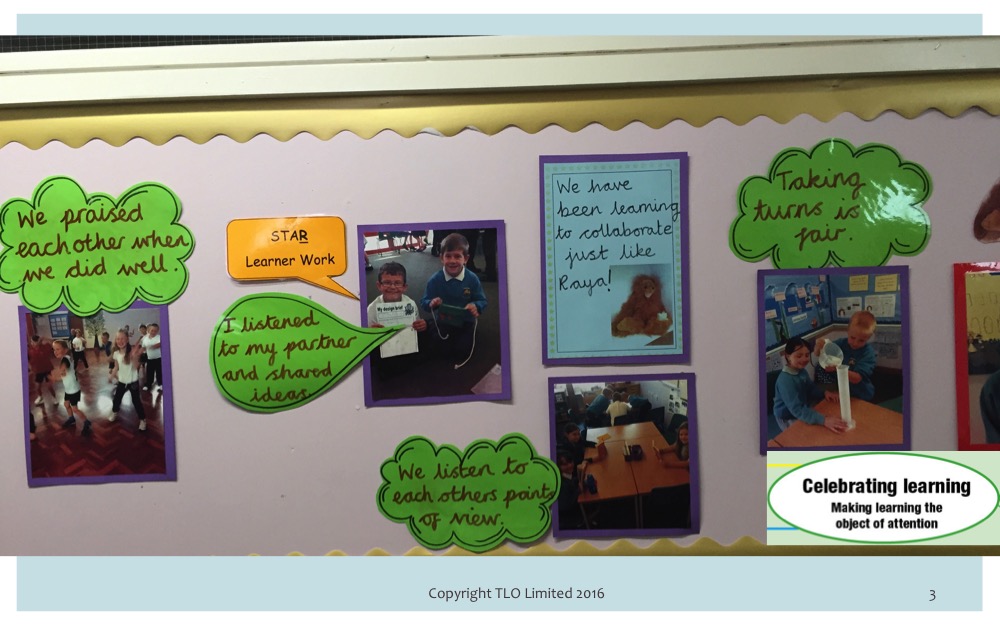
Display photographs of pupils displaying learning behaviours.
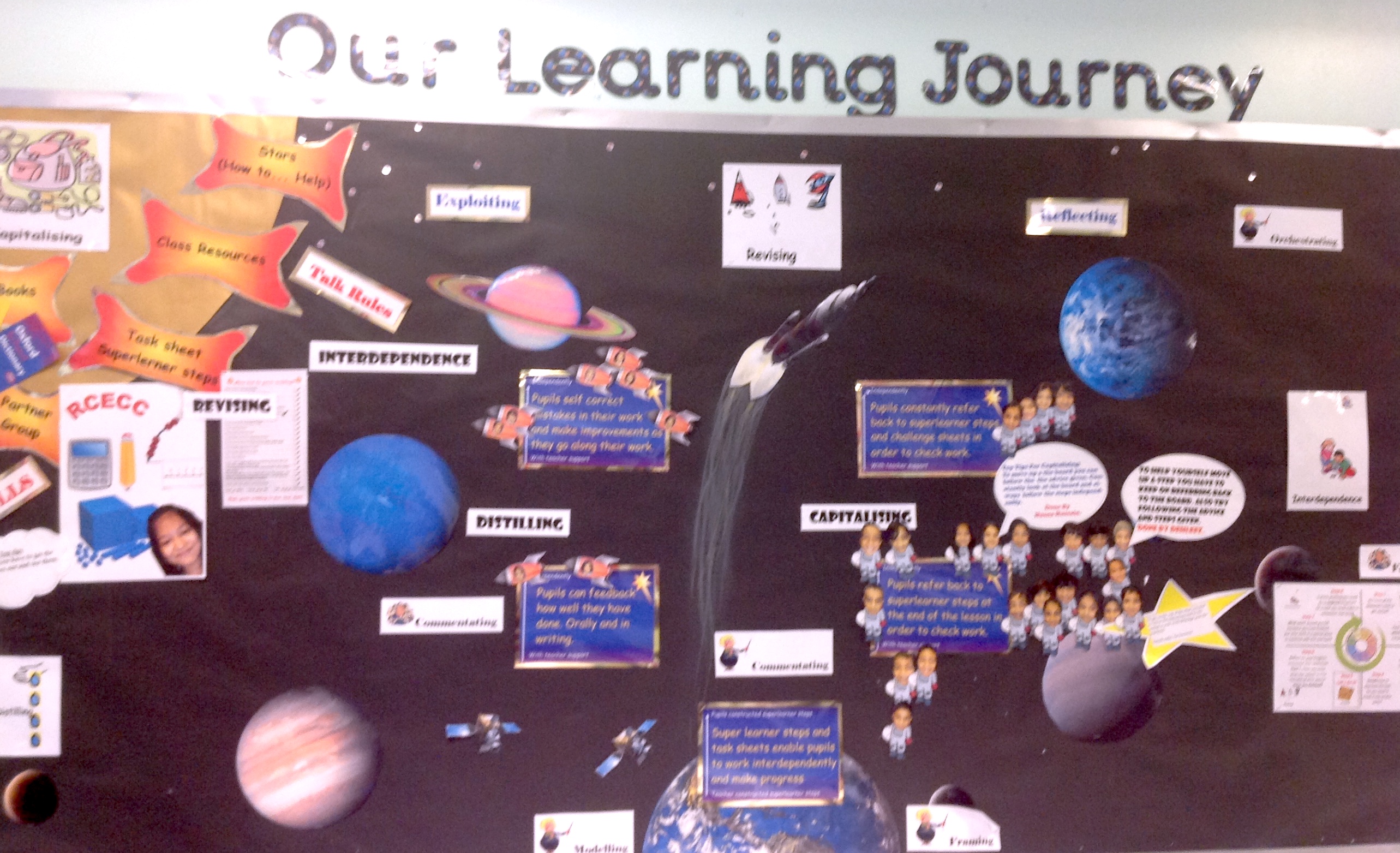
Map a learning behaviour journey and have pupils position their images to show where they have reached.

Award learners of the week in assemblies. Award use of learning behaviours rather than performance.
Catch them ‘doing it’ and display it
c) A learning story
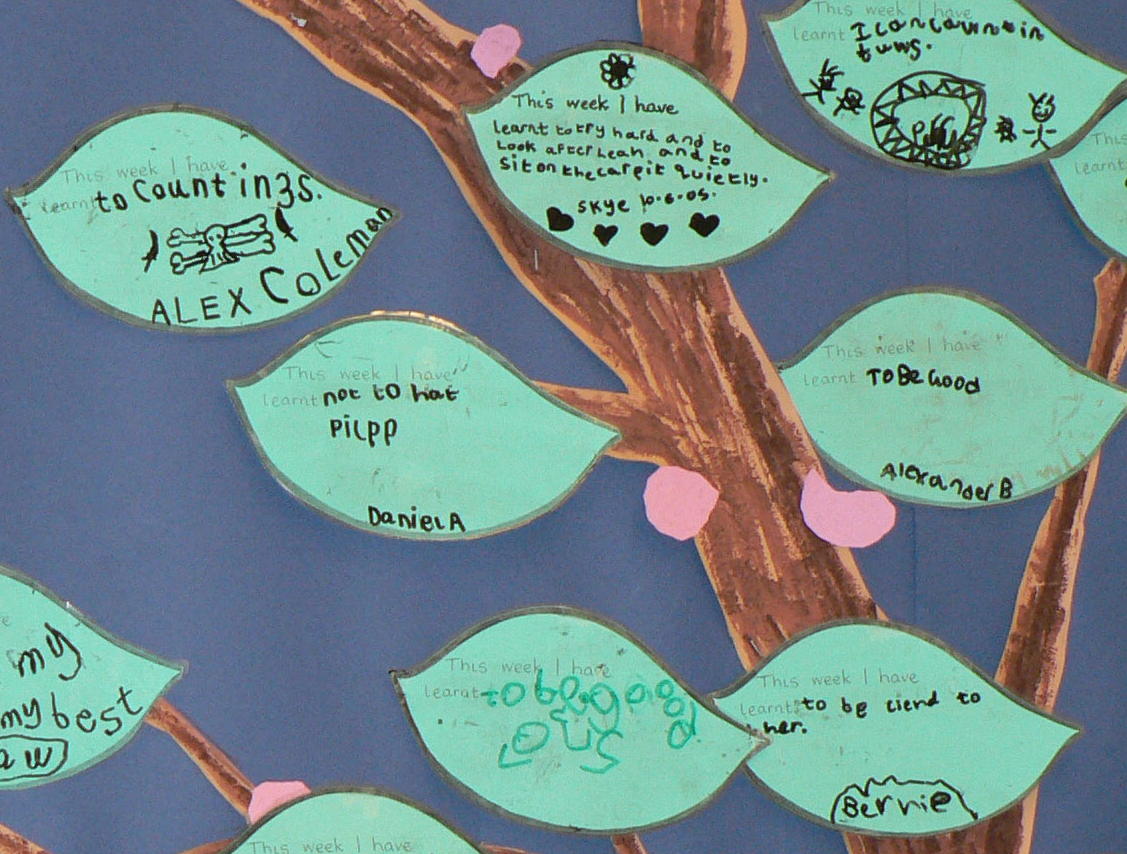
At Briar Hill Infant School near Leamington Spa you can see this process in action. As soon as a learning behaviour has been introduced the children are encouraged to notice when they use it, and to briefly record what they have done—imagined something, used a good question, managed a distraction and so on —on a sticky note which they stick on a Learning Tree wall display. Teachers are on a constant look-out for the behaviours they have been explaining, encouraging and enabling, which they, too, capture through photographs or on sticky notes and add to the Learning Tree. This ‘looking for learning’ is further enhanced by ‘learning detectives’: two children who are assigned this role each day and who look for good learning behaviours in others and again add them to the Learning Tree. At the end of the day the Learning Tree offers a rich source of information to reflect on, explain, and reinforce through a whole-class learning power discussion.
At the end of the week the sticky notes are carefully saved in a large scrapbook. This gives the teachers a running record of what the children have been doing and noticing about themselves. Although this has only been in operation for a term or so the teachers are using their analysis of the weekly data to plan further development. They are refining their professional view of how their students’ learning power behaviours can be converted into instinctive habits.
Comments are closed.