
Secondary school programme – overview
Building Better Learners
Building Better Learners is TLO’s professional development programme for secondary schools looking to embed learning power into their school life as a strategic development.
Building Better Learners is designed for whole-school implementation, with the aim of helping the school become fully ‘learning powered’. A school will typically take three years to work through the full programme; although some schools spread the programme over a longer period. So this is definitely a strategic investment in professional development and school improvement.
The major part of the programme is based on a suite of online materials, designed to blend with teachers’ daily practice and regular professional development.
The online programme is supplemented by a small number of live interactive online sessions led by TLO’s Principal Consultants. The mix is variable, at the school’s choice: from an almost purely online programme (with some additional resources), to several live sessions per year.

Core Programme
The programme is designed around a model of professional development based on what we call professional learning teams; elsewhere, these may be called teacher learning communities. Essentially, groups of about six to eight teachers who meet regularly — perhaps every four to six weeks — to focus exclusively on developing their practice with learning power, as they move through the programme together.
The two phases of online courses that make up most of the programme are structured in ‘units’, each of which relates to one such meeting cycle. There are about twenty units in all; all can be revisited as necessary. Hence the roughly monthly rhythm of team meetings implies an expected minimum time to work through the full programme of nearer three years than two.
Major Components of the programme
As illustrated in the diagram, Building Better Learners is structured in two phases, each built around one of the two online courses.
Phase 1 is built around the online course Playing the Learning Power Game (eight units).
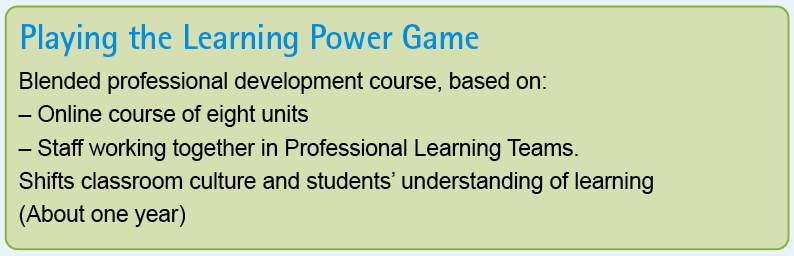
This is complemented by online resources:
- Finding Learning Power sits alongside the course, for teachers to use throughout its duration.
- Leading the Learning Power Game supports the school leaders who will be responsible for the programme as it unfolds, including preparing to launch the whole programme in the school.
- Learning Power Champions supports school nominated learning champions to trailblaze the Professional Learning Team approach, the introduce the programme to staff and thereafter act as leaders of Professional Learning Teams across the school
As preparation for the course, and indeed the whole programme, there is a choice of three ways of launching it.
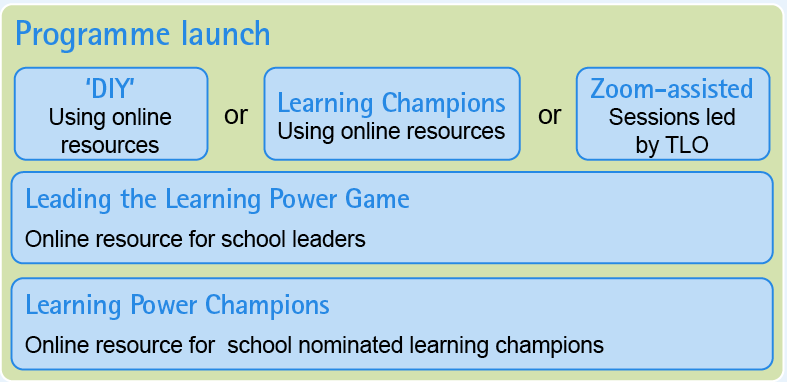
- ‘Do It Yourself’: In school launch led by senior leaders using the comprehensive launch-related resources provided within Leading the Learning Power Game.
- Launch by Learning Champions: In-school launch led by school-nominated Learning Champions supported by the online resource ‘Learning Power Champions’
- Zoom assisted launches: includes a small number of live virtual consultancy and training sessions, for either leadership staff and/or learning champions, to build familiarity and confidence in their trailblazing role in the programme. Sessions are typically scheduled to last 75–90 minutes.
Building Better Learners: Phase 1
Phase 2 is built round the online course The Professional Learning Power Game (thirteen units).

- The Finding Learning Power resource continues to sit alongside the course, to be called on as teachers move through the units.
- The Reviewing Learning resource similarly sits alongside the course, again available for use from time to time when a team wishes to take stock of its progress.
Building Better Learners: Phase 2

 Supporting Resources

Both phases of the core programme can be optionally augmented by further live virtual consultancy sessions, typically scheduled to last 75–90 minutes, and with associated resources.
Other items that may be helpful include the online BLP Activity Banks; the downloadable Learning Habits at a Glance cards; books and classroom posters. Information about all these can be found in the Publications section of the website.
In particular, a standard but optional starter pack of printed publications — books, posters, etc. — is offered with Phase 1 of Building Better Learners.
Find out more:
More detailed descriptions of the programme’s components can be found via the buttons below:
Building Better Learners: Phase 1
Building Better Learners: Phase 2
[memb_hide]Schools that have taken building better learning seriously have quickly realised the centrality of professional development (PD) in making it work.
Changing the habits of a professional lifetime is not simple. It involves un-learning and re-learning: unpicking, readjusting, trying things out and seeing what works. It’s about staff using their own learning power to effect changes in themselves. Becoming proficient, and then developing further so that the ‘new approach becomes second nature, takes time and effort
That is why we have structured our core programmes carefully to deliver slow, deep-rooted change, and long-lasting results. Our core programmes include:

Start-up learning
The start-up learning can be either face-to-face or online. Its purpose is to bring all staff on board with building pupils’ learning habits; what it means, why it’s important and how to make a start. There are also sessions or materials for senior leaders to help them tackle the strategic implications of learning culture change, whilst sessions for potential learning team leaders enable effective school-wide engagement.

 Online learning to support in-school team learning
After, but coupled to the initial training: the online courses extend teachers’ knowledge; the in-school learning teams turn this knowledge into practice. Within the courses, individual learning sessions cover topics in depth, whilst regular Professional Learning Team sessions offer staff time to discuss, share and plan learning enquiries on which to base changes in practice.

Book bundles
A selection of practical books to extend understanding of the approach amongst staff, governors and later, parents.

Free style learning
For schools wishing to tailor their journey, we can provide additional supporting programmes such as coaching visits or learning reviews.
The Finding Out Phase
You have an itch of dissatisfaction, things are not quite how you would like them to be. Teachers work hard, but many students are passive, dependent and risk averse. Teachers would like to do things differently, but they are not sure what to try – the need to chase examination success on behalf of their students is consuming their energies and creativity. You worry that your students are ill-equipped to deal with the complex demands of 21st century living and working.
Might Building Learning Power be a way of improving examination success and helping students to develop the learning behaviours that will sustain them throughout a lifetime of learning ?
Before making a start on this exciting and essential approach to education, leaders and teachers will want to explore principles, background research, and impact of learning power in schools.
Our resources in this section are designed to help leaders and teachers explore questions such as: What is Learning Power all about?; What are the imperatives that point to the need for change?; What do learning powered students, teachers and schools do differently?; What difference doe it make?
Core programmes

Supporting materials
-
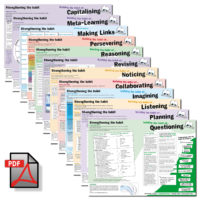

Learning Habits: At a Glance cards
Price range: £100.00 through £200.00 Select options This product has multiple variants. The options may be chosen on the product pageDelivery: Online
Days: n/a
Timescale: Up to one year
Objectives: Twelve double-sided A3 cards, available as a digital download (pdf), to help teachers infuse the learning power habits into their teaching. -
The Learning Quality Framework
Read moreGuides the long-term learning journey of a school that aspires to make world-class learning its prime educational goal. It captures the essence of what a learning school does to ensure that all its people – staff and students – become better learners.
Phase 1: Making a start
You understand that students need to leave school with as good a set of examination results as they can possibly achieve, and a range of positive learning behaviours that will enable them to be effective lifelong learners. You want your students to be emotionally engaged in their learning; to have a wide range of cognitive skills with which to learn; to be able to work and learn effectively with others; and to be ready willing and able to take responsibility for themselves as learners.
But where do you start ?
If you are convinced that independent learners for life are what you want, and are ready to engage, then Phase 1 is for you. Here you will find courses and resources to build a team of Learning Power champions to act as change agents in getting Learning Power under way in your school.
Core programmes
-

Building Learning Habits: Online start
Read moreWho for? Schools new to Learning Power where face to face start-ups are not possible, e.g. schools overseas, or tiny schools.
When? Any day of the year! (no In-service day required)
What for? Introduce senior leaders and staff to the principles, frameworks and first step classroom practices of building powerful learners. Enabling staff to hit the ground running when they begin the subsequent online programme.
How?
Online resource pack:
Senior leaders consider strategic implications of the approach. Staff explore the big frameworks and classroom practice of Building Learning Power.
AND…Online programme:
Learning Habits in a Nutshell for all staff, containing a good year’s worth of content. -

Building Learning Habits: Training course start
Read moreWho for? Schools new to Learning Power.
When? Two days training: in-service days not required.
What for? Introduce building powerful learners to the school, equipping them to use the accompanying online materials.
How?
Two Face-to-face training days: Initial workshops that prepare lead practitioners to lead development across the school
AND … Online programme: Learning Habits in a Nutshell for all staff, containing a good year’s worth of content. -

Learning Review Level 1
Read moreAn in-depth review of learning throughout the school, undertaken with a team of staff from the school. For schools at the beginning of their involvement in using learning power. The review offers valuable information on which to base their development.
Supporting materials
-
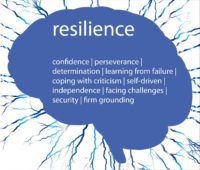

Re-energising Your Learners’ Resilience (Secondary)
Price range: £250.00 through £1,500.00 Select options This product has multiple variants. The options may be chosen on the product pageStrategies to help students:
✔ Rediscover Resilience
✔ Embrace challenge
✔ Use being ‘stuck’ as a springboard to learning
✔ Manage their learning environment
✔ Devise and achieve their goals -
Learning Habits: At a Glance cards
Price range: £100.00 through £200.00 Select options This product has multiple variants. The options may be chosen on the product pageDelivery: Online
Days: n/a
Timescale: Up to one year
Objectives: Twelve double-sided A3 cards, available as a digital download (pdf), to help teachers infuse the learning power habits into their teaching. -
The Learning Quality Framework
Read moreGuides the long-term learning journey of a school that aspires to make world-class learning its prime educational goal. It captures the essence of what a learning school does to ensure that all its people – staff and students – become better learners.
-
BLP Activity Bank Key Stage 2–3 (Transition)
Price range: £60.00 through £498.00 Select options This product has multiple variants. The options may be chosen on the product pageBank of around 300 e-learning resources to engage transition or KS3 students with their learning power. The resources build foundations for deep learning. Ideal for BLP, Growth Mindset, PSHE, and to aid induction into KS3.
-
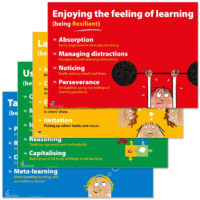
Building Learning Power 4 domains of learning; Posters
£16.00 Add to basketColourful and student friendly poster set focusing on building emotional engagement, cognitive diversity, social adeptness and strategic awareness..
-
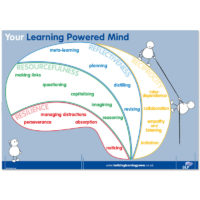
Your Learning Powered Mind Poster
£6.25 Add to basketA full-colour A2-sized poster showing the dispositions and capacities of a powerful learner. Use it as a public prompt for teachers and students in all classrooms
Phase 2: Beyond the basics
You have worked hard to introduce Building Learning Power into classrooms. Students are aware of the learning behaviours that they command, and classrooms are increasingly learning friendly. Teachers are consciously shifting responsibility towards learners, and learning itself is becoming the object of learning, of discussion, and of celebration. Students employ their positive learning behaviours more frequently than was previously the case, and in a wider range of contexts.
But questions remain – are they becoming better, more skilful at these learning behaviours ? Are they becoming better at asking questions ? Better at dealing with challenge ? Better at the cut and thrust of group work ? Better at managing their own learning ? Better at responding to and acting on feedback ? and so on.
And, moreover, what does becoming better, more skilful actually look like ?
Putting the building into Building Learning Power is at the heart of this phase.
Now gathering pace, the development of a learning culture is further extended to secure a coaching approach to teaching, to broaden the language of learning to include progression, and to enable students to take responsibility for developing their own learning behaviours.
Core programmes
-

Learning Habits in a Nutshell – Phase 2
Read moreDelivery: Online
Timescale: Approximately one year
Objectives: professional learning communities within your school build Learning Power expertise by using online resources. Guided by best practice thinking in professional development this modular on-line programme organises a consistent school-wide approach to developing students’ learning behaviours. -
The Learning Quality Framework
Read moreGuides the long-term learning journey of a school that aspires to make world-class learning its prime educational goal. It captures the essence of what a learning school does to ensure that all its people – staff and students – become better learners.
-

Learning Review Level 2
Read moreHow is it going? An analysis of how learning power is being integrated into lessons and how classroom cultures support this change.
Delivery: Face to face
Days: Two
Objectives: The school will gain an objective up-to-date view how the quality of learning has developed in the school and how teachers are enabling young people to learn more effectively.
Supporting materials
-
Re-energising Your Learners’ Resilience (Secondary)
Price range: £250.00 through £1,500.00 Select options This product has multiple variants. The options may be chosen on the product pageStrategies to help students:
✔ Rediscover Resilience
✔ Embrace challenge
✔ Use being ‘stuck’ as a springboard to learning
✔ Manage their learning environment
✔ Devise and achieve their goals -
Learning Habits: At a Glance cards
Price range: £100.00 through £200.00 Select options This product has multiple variants. The options may be chosen on the product pageDelivery: Online
Days: n/a
Timescale: Up to one year
Objectives: Twelve double-sided A3 cards, available as a digital download (pdf), to help teachers infuse the learning power habits into their teaching. -
BLP Activity Bank Key Stage 2–3 (Transition)
Price range: £60.00 through £498.00 Select options This product has multiple variants. The options may be chosen on the product pageBank of around 300 e-learning resources to engage transition or KS3 students with their learning power. The resources build foundations for deep learning. Ideal for BLP, Growth Mindset, PSHE, and to aid induction into KS3.
-

Leading a Learning Powered School
Read moreA consultancy workshop for senior leaders as schools they begin their engagement in building students’ learning power. It investigates the strategic implications of developing a learning powered school.
Phase 3: Broadening the scope
Learning Power is embedded in classrooms and is rapidly becoming ‘what we do round here’. Taking Learning Power beyond lessons and the classroom is the theme of this phase. It involves integrating learning power development across the whole curriculum, keeping everyone on board with the approach and engaging the community in learning power.
Core programmes
-
The Learning Quality Framework
Read moreGuides the long-term learning journey of a school that aspires to make world-class learning its prime educational goal. It captures the essence of what a learning school does to ensure that all its people – staff and students – become better learners.
-

Consultancy and Coaching Visits
Read moreBespoke consultancy and coaching to enhance and guide development.
Supporting materials
-
Learning Habits: At a Glance cards
Price range: £100.00 through £200.00 Select options This product has multiple variants. The options may be chosen on the product pageDelivery: Online
Days: n/a
Timescale: Up to one year
Objectives: Twelve double-sided A3 cards, available as a digital download (pdf), to help teachers infuse the learning power habits into their teaching.
________________________________________________________
[/memb_hide]
Comments are closed.