
This unit :
Building Better Learners is about creating a culture in classrooms – and the school more widely – that systematically cultivates habits and attitudes that enable young people to develop supple learning minds.
This section explores how teachers could start devolving the responsibility for learning; moving from a teacher-dominated culture to a richer learning-friendly culture.
How might we start to ensure students start taking responsibility for their learning?
Key learning question…
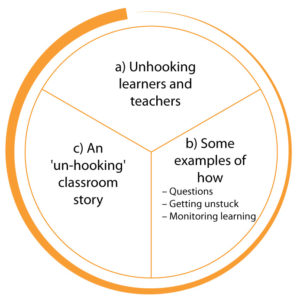
a) Unhooking learners and teachers
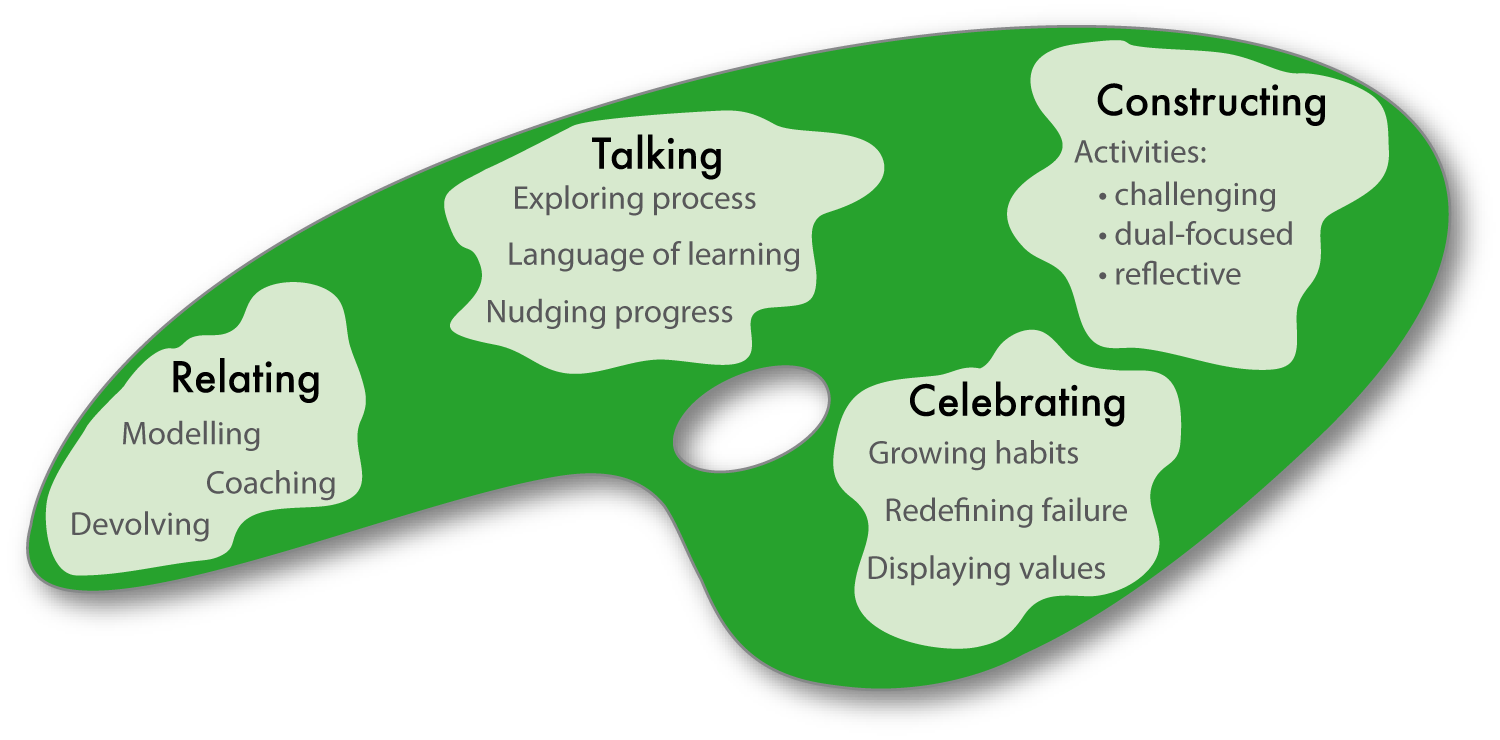
As we saw in section 3.1, Relating for learning is about making learning a shared responsibility to avoid learners becoming over dependent on teachers and building their skills as independent learners. In the early stages, devolving more responsibility to learners might simply include:
- creating opportunities for students to ask more questions
- offering students ways of getting themselves unstuck
- giving students more responsibility for monitoring their own learning
Despite giving more responsibility to learners it still leaves you with plenty to do! Your role becomes one of modelling learning processes and styling your teaching as a learning coach.
Of course there are numerous ways of unhooking a dependency relationship between teacher and students. Further ideas are the subject of the Building Better Learners online programme (described in Section 4.4).
A new style of teaching
b) some examples of how
1) Opportunities to ask questions
Here is a good starting point to get students involved in posing their own questions.
Question Starts

Question Starts is a Visible Thinking Routine that provides students with the opportunity to practise developing good questions that provoke thinking and inquiry into a topic by offering a range of interesting question stems, including: How would it be different if…?, Suppose that…? What if…?, What would change if… For more detail on Question Starts, visit the Visible Thinking website:
https://www.pz.harvard.edu/resources/creative-question-starts
Building the skill of asking good questions
2) Getting themselves unstuck
Stuck Posters.
Work with students to find useful questions for them to ask themselves and helpful strategies which they might take when they are stuck. Ensure that there are plenty of options that come higher on the list than “Ask the teacher”. Create displays as reminders.
Here is an example generated by a year 7 class:
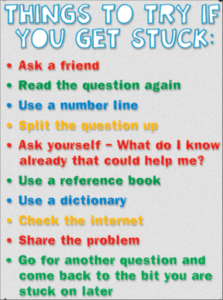
So called Stuck posters or prompts come in various shapes and sizes, but essentially they are simply home-made lists of what students can try when they get stuck with their learning.
To begin with, the teacher trains the students to make use of this information by greeting every request for prompting with; ‘Have you looked at the poster?’ After a while, looking at the poster becomes routine, and eventually, when the habit of self-unsticking becomes second nature, even the poster becomes redundant. It does not take long, in such a classroom, before ‘Ask the teacher’ becomes a last-ditch strategy, to be engaged only when all else has failed.
Growing independence
3) Giving students responsibility for monitoring their learning
Here is a way of transferring the responsibility for monitoring the learning process to students:
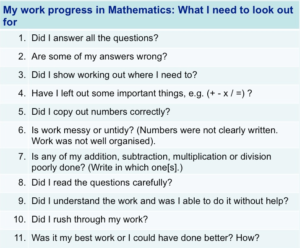
Require students to monitor and evaluate their own work before submitting it to be marked.
Obviously what students monitor will vary subject by subject. ‘Check your calculations’ in Maths might become ‘Check SPAG’ in English. There may be some commonality across all subjects in terms of aspects like ‘Is there anything more that I should do?’ or ‘Have I fully answered the question?’, and these will need to be agreed at whole-school level. But at this stage, just ask yourself what you would like your students to keep an eye on, or better still, work with them to construct the list.
It then becomes their responsibility to check their work against the agreed checklist. Or maybe it becomes an opportunity for peer assessment.
Below is an example from lower KS3 Maths. What would you put in yours ?
Making learning a conscious process
PRIMARY
Building Better Learners is about creating a culture in classrooms – and the school more widely – that systematically cultivates habits and attitudes that enable young people to develop supple learning minds.
This section explores how teachers could start devolving the responsibility for learning; moving from a teacher-dominated culture to a richer learning-friendly culture.
How might we start to ensure pupils start taking responsibility for their learning?
Key learning question…
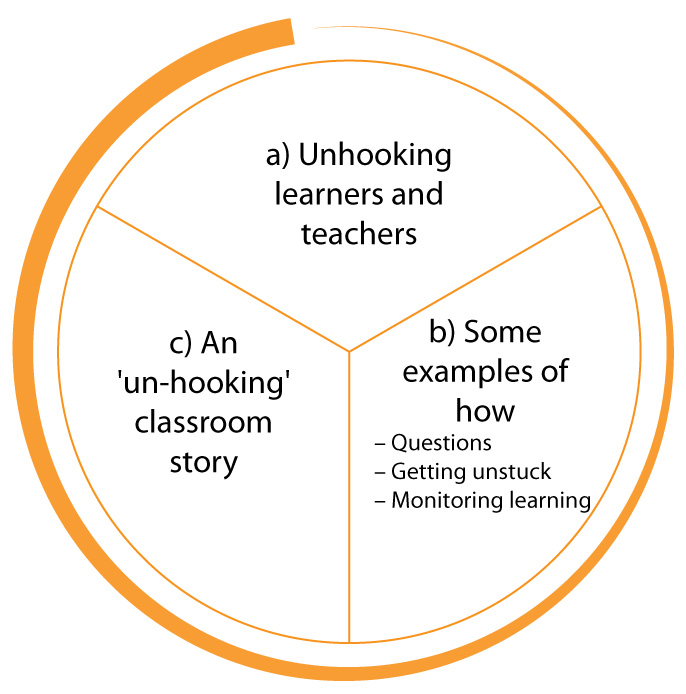
a) Unhooking learners and teachers
As we saw in section 3.1, Relating for learning is about making learning a shared responsibility to avoid learners becoming over dependent on teachers and building their skills as independent learners. In the early stages, devolving more responsibility to learners might simply include:
- creating opportunities for pupils to ask more questions
- offering pupils ways of getting themselves unstuck
- giving pupils responsibility for monitoring their learning
Despite giving more responsibility to learners it still leaves you with plenty to do! Your role becomes one of modelling learning processes and styling your teaching as a learning coach.
Of course there are numerous ways of unhooking a dependency relationship between teacher and pupils. Further ideas are the subject of the Building Better Learners online programme (described in Section 4.4).
A new style of teaching
b) Some examples of how
1) Opportunities to ask questions
Here are a couple of examples of involving pupils in posing their own questions.
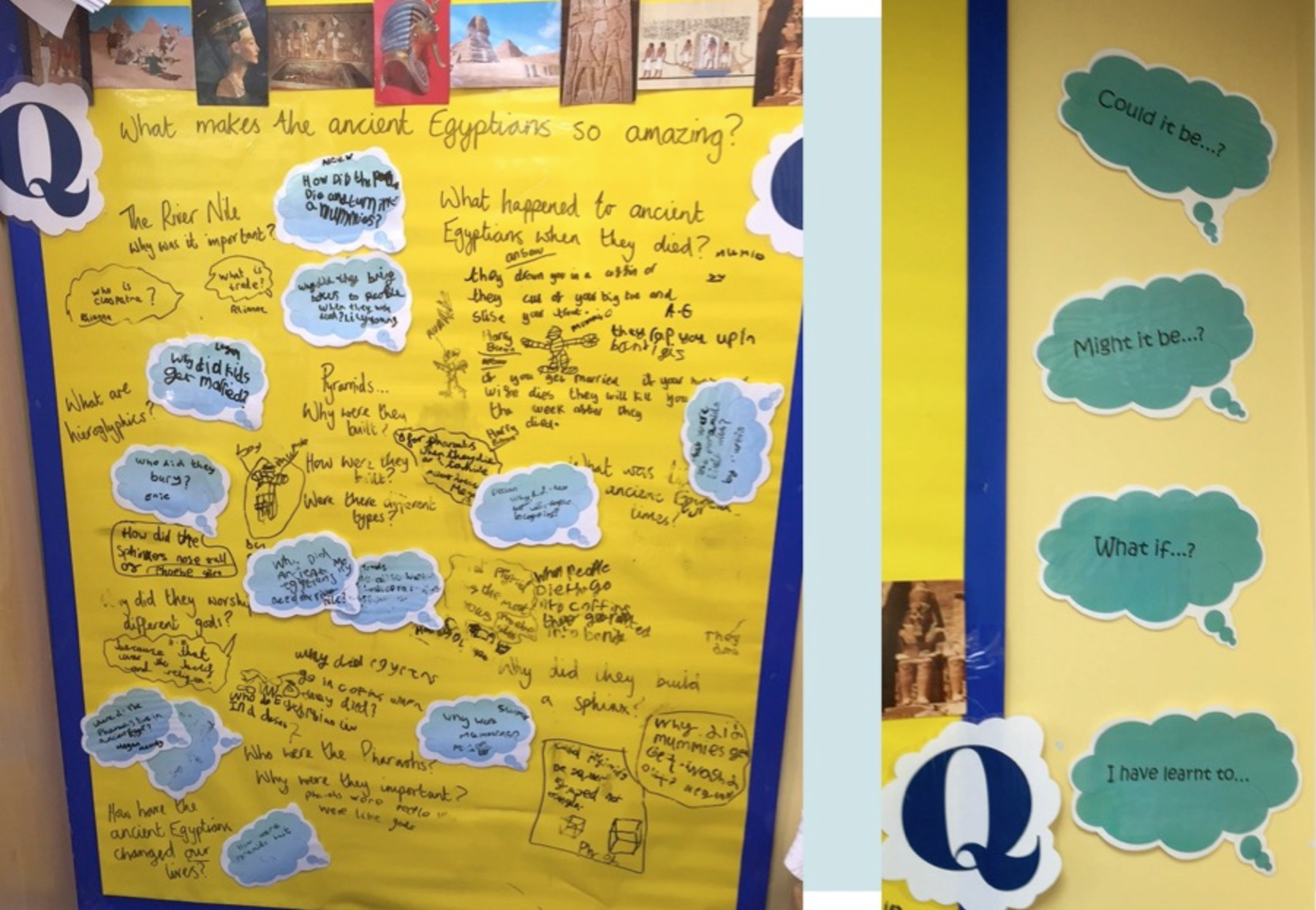
At the start of a learning unit on the Egyptians the class discuss what they want to find out and log this on a wall of questions. This gives pupils some ownership of this unit of work and consequently greater emotional involvement.
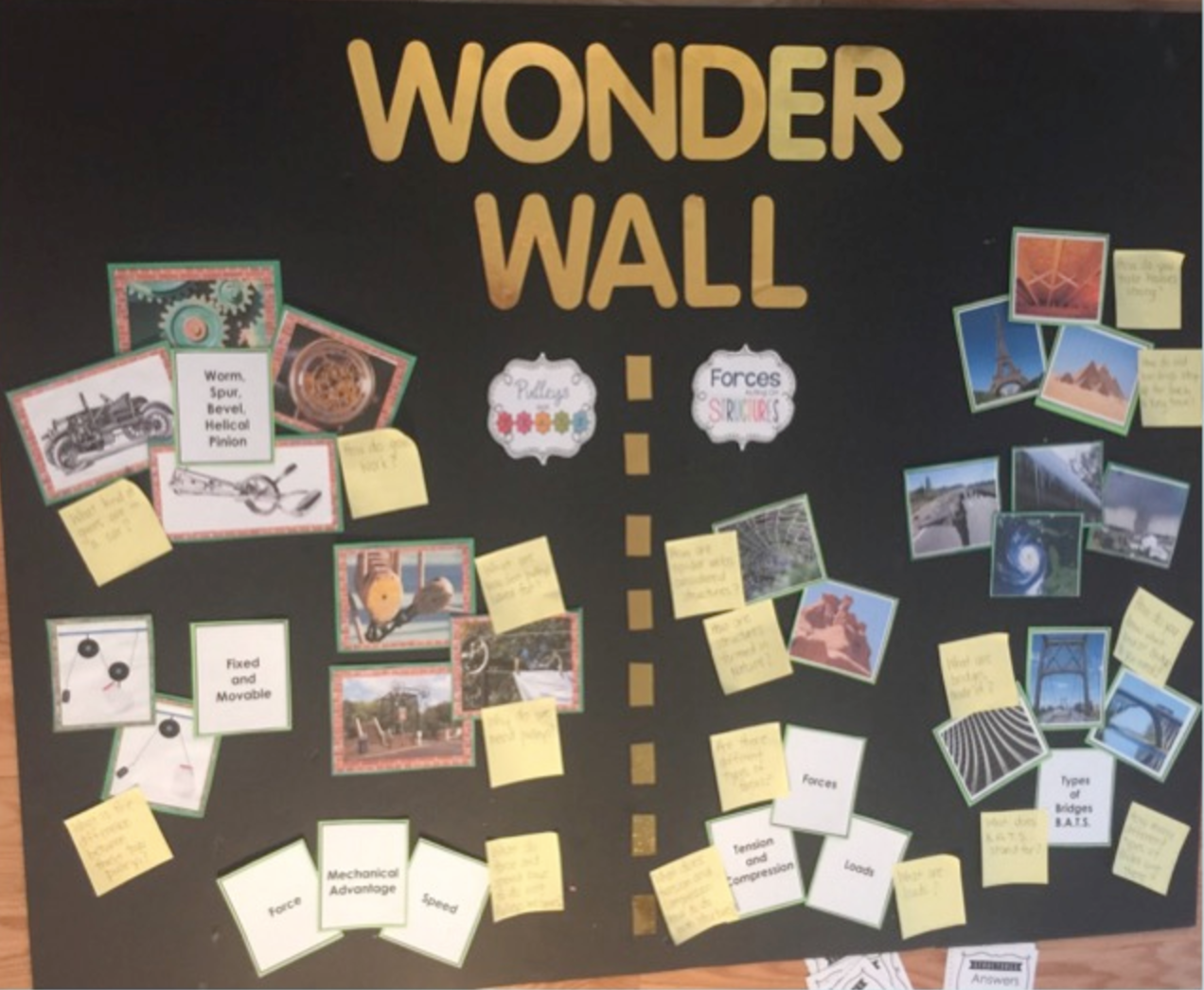
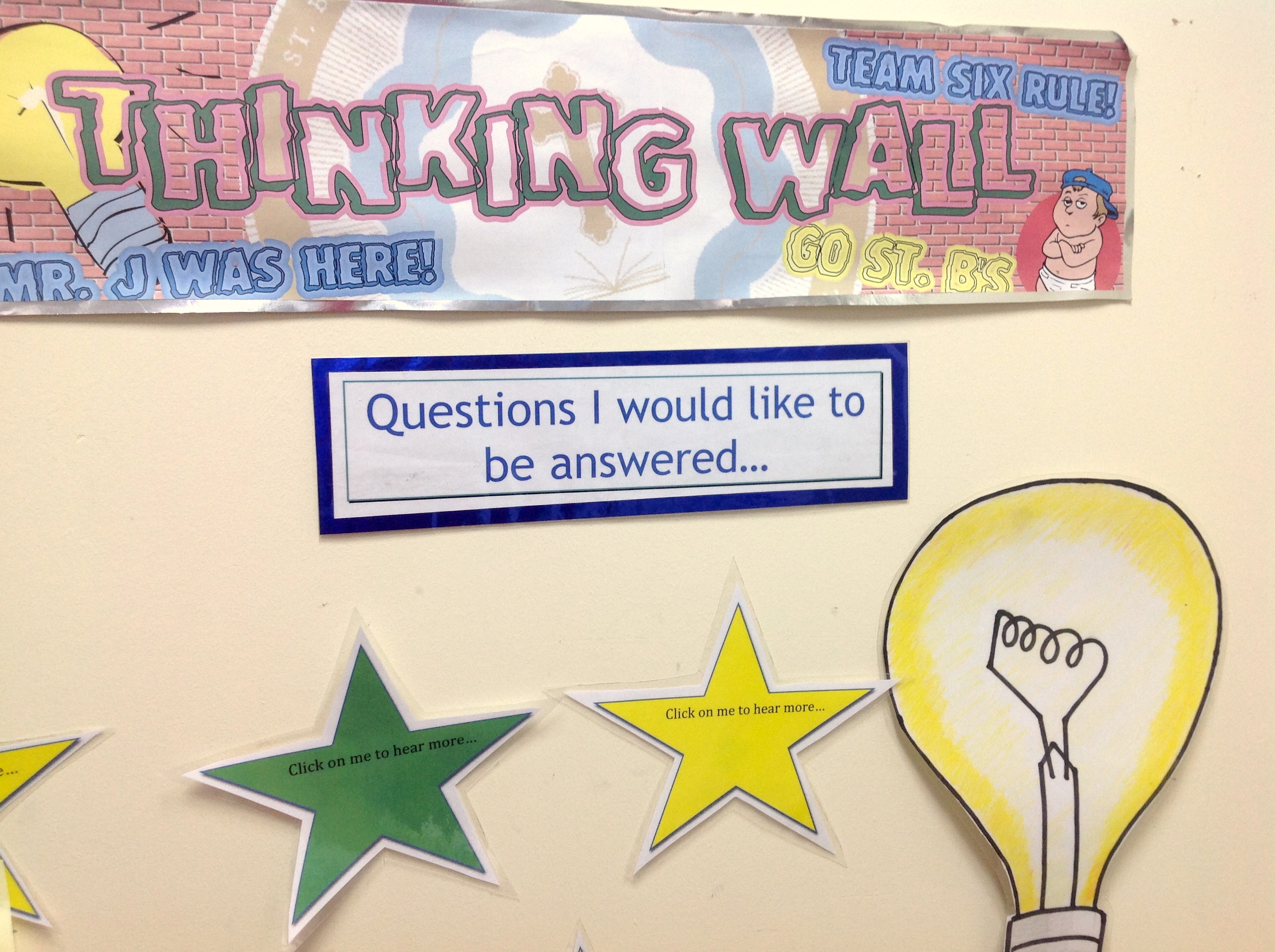
Here the class have a wonder wall where pupils can record their ‘wonders’, knowing that their teacher will find time to address their questions over time.
Building the skill of asking good questions
2) Ways of getting themselves unstuck
Here are a couple of examples of offering pupils unsticking strategies.
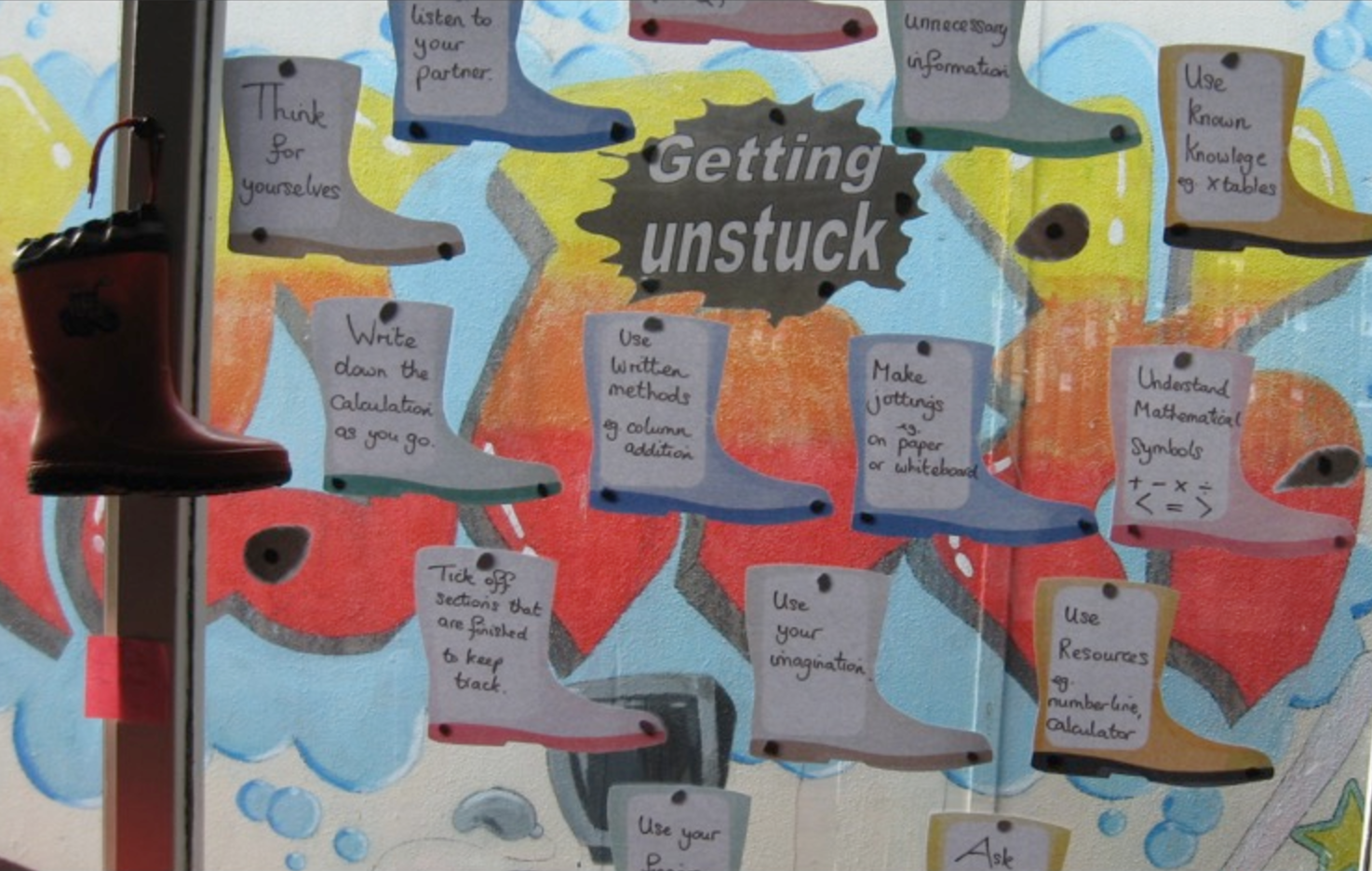
This school uses the welly boot as a metaphor for getting stuck in the mud. Helpful unsticking prompts are written on the sides of the wellies on display.
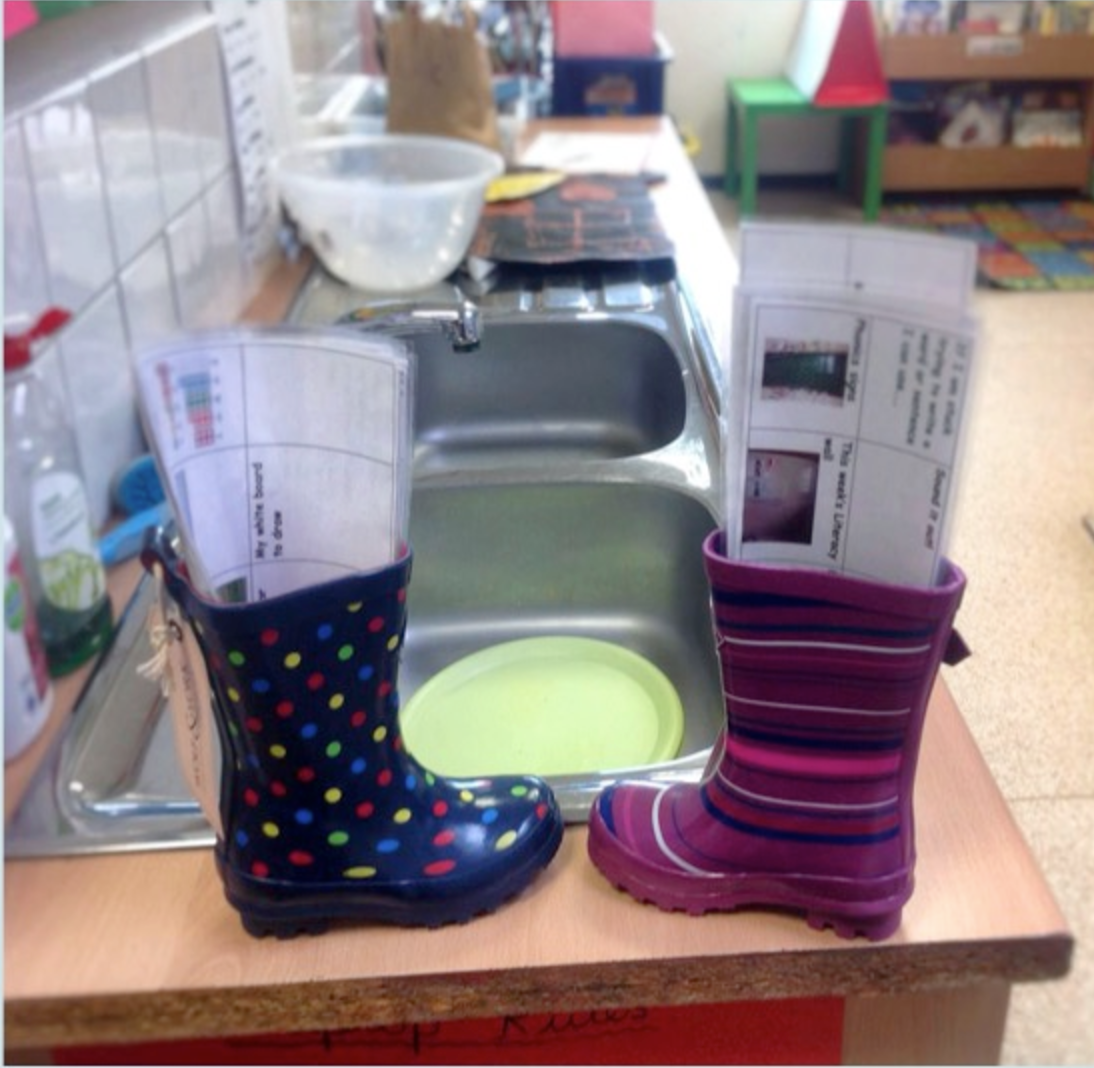
Taking it one step further, each table has two welly boots on it, one for literacy and one for numeracy. Each welly has specific suggestions like ‘Have you used full stops and capital letters?’ or ‘Have you checked your workings out?’. Pupils use the prompts to help themselves when stuck or finding it hard going.
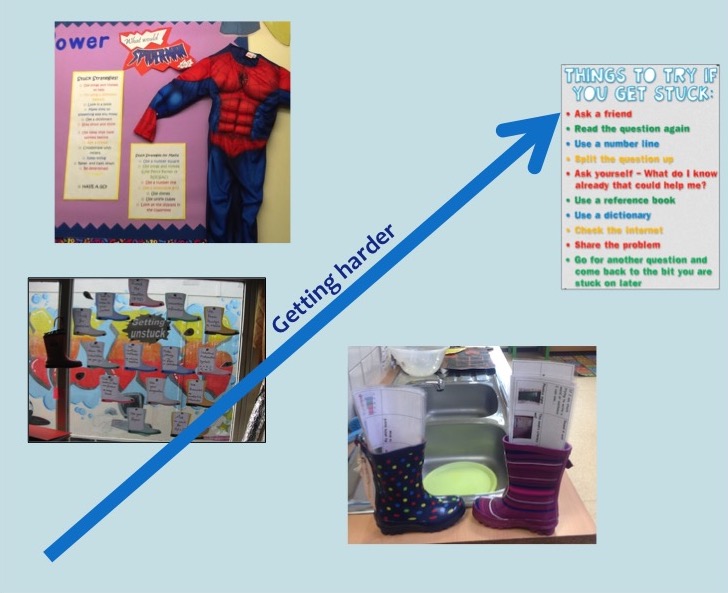
However stuck prompts are displayed, it’s important for staff to discuss the sort of stuck prompts they are using and to make sure the prompts become more stretching from year to year.
Growing independence
3) Giving pupils responsibility for monitoring their learning
Here are a couple of examples of transferring the responsibility for monitoring the learning process to pupils.
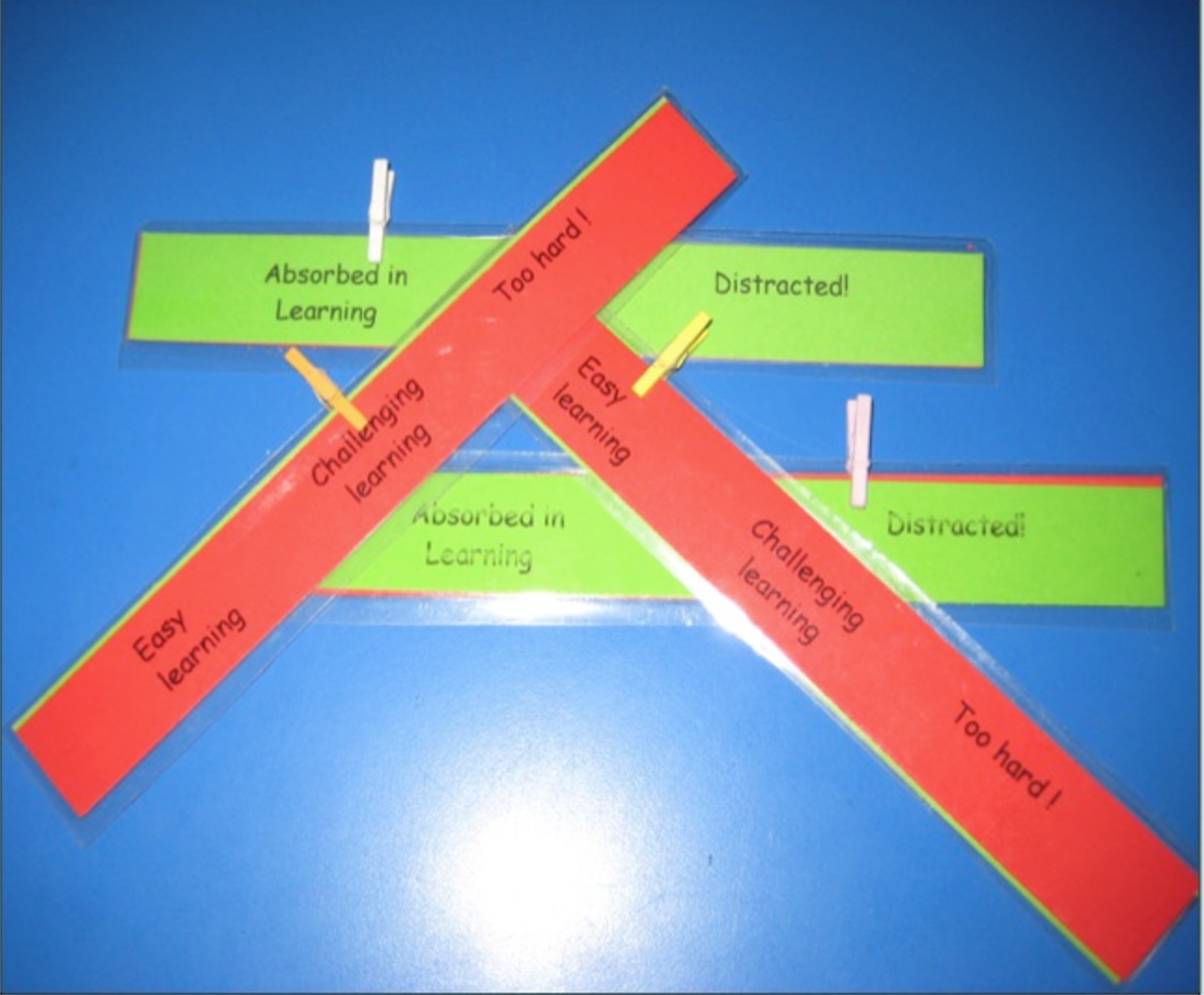
Little strips of laminated card and a peg can put children in charge of their learning a little more. Labelled ‘Easy learning’, ‘Challenging learning’ and ‘Too hard’ on one side, pupils use them to let you know whether you are meeting their learning needs or if they could do with more extension or support. It is powerful when learners realise that challenge is an essential element of their learning; that finishing easy tasks quickly does not signal cleverness but indicates time-filling rather than real learning.
The other side of this little strip is labelled ‘Absorbed’ at one end and ‘Distracted’ at the other. Teachers use this initially to help pupils monitor their absorption in learning but children will quickly begin to use it as a visual prompt to monitor themselves.
A more elaborate monitoring tool for pupils to use before submitting work to be marked. Use it, or similar, when they say ‘I’ve finished!’
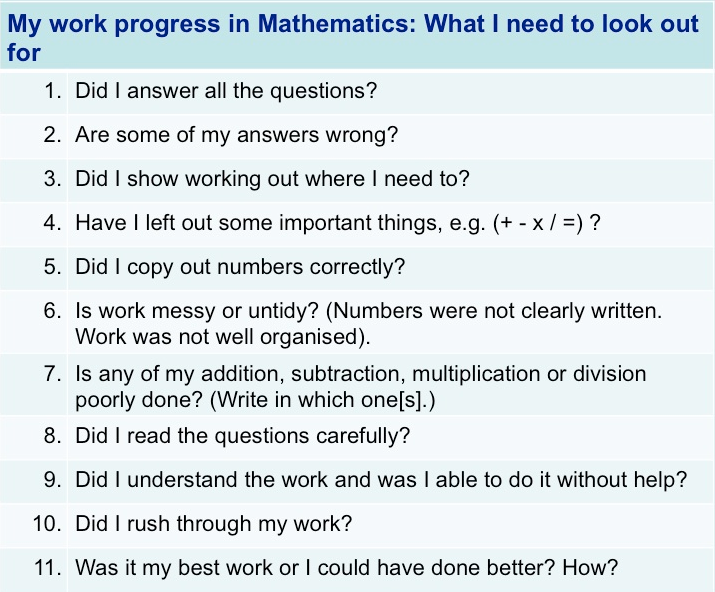
Making learning a conscious process.

c) An ‘un-hooking’ classroom story
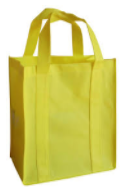 Elaine Wade is a Year 2 teacher. She wants her pupils to understand the meaning and importance of being a good planner.
As part of their work in DT pupils have to make a vehicle using several parts. Elaine keeps the components safe and pupils have to ‘order’ the parts they need. They are given a shopping list which itemises the vehicle parts, and have to indicate what and how many of each they require. The ordered items are carefully counted out by Elaine and put into a special shopping bag. So far so good. However, on unpacking their shopping bag, many of the pupils realise that they do not have enough or, in some cases, the right parts. This provides a strongly-motivated opportunity for the children to discuss the need to plan carefully, after which the pupils thankfully accept missing parts. When the activity is used again in another context later in the year, missing parts of their order are not restored and the pupils are expected to make the best they can with what they have ordered.
So here Elaine is encouraging her pupils to think for themselves, to, anticipate what they need, to plan in advance of action. She very rarely gives her pupils the equipment they need for whatever activity. She expects them to be able to find it themselves in the classroom. She’s making sure these children don’t get too reliant on her.
Learning the importance of planning
Comments are closed.