
This unit :
Building Better Learners is about creating a culture in classrooms – and the school more widely – that systematically cultivates habits and attitudes that enable young people to develop supple learning minds.
This section explores the sorts of things teachers do when starting to developing the language that helps students understand the learning process.
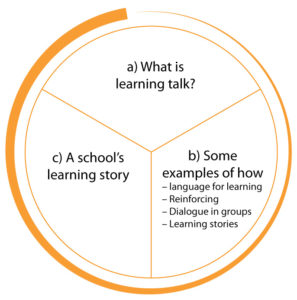
What are some of the ways to begin introducing a language for learning?
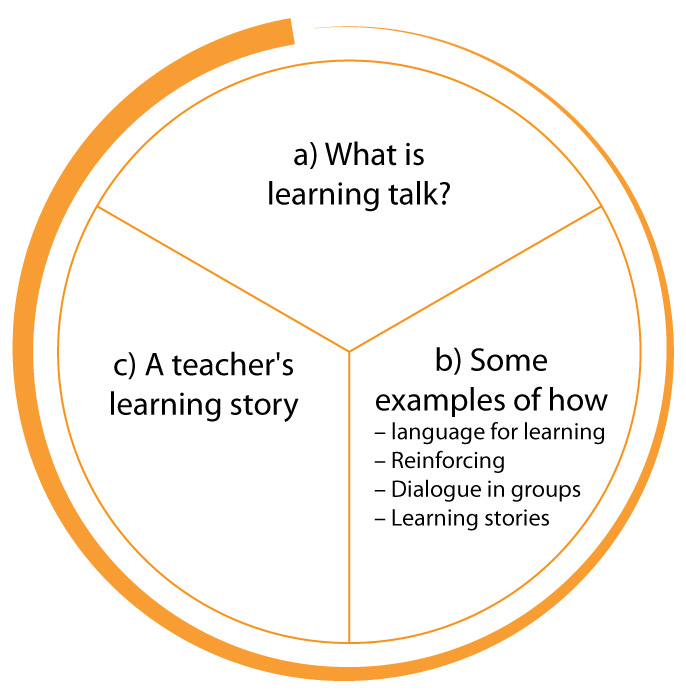
a) What is learning talk?
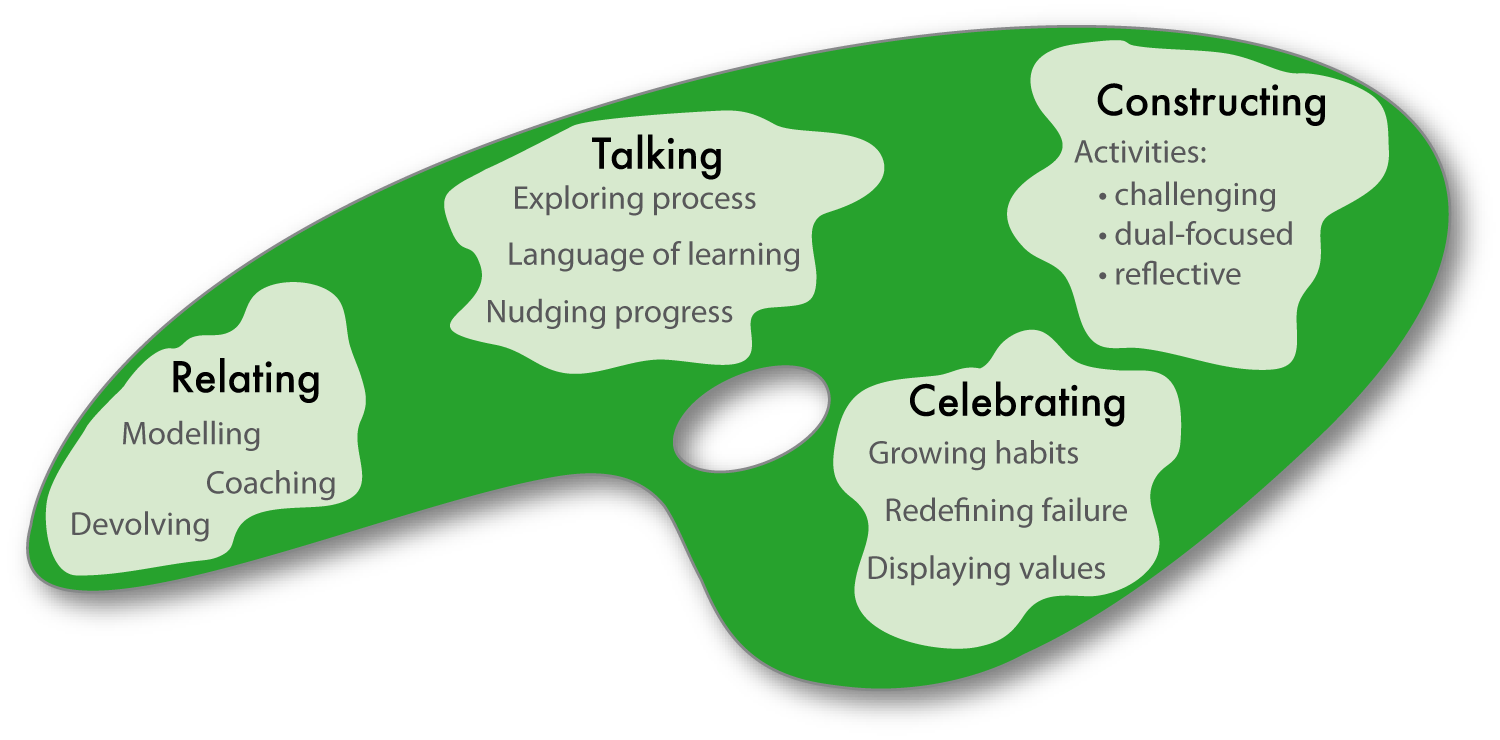
As we saw in Section 3.1, talk for learning is about the gradual introduction of a learning language that helps students to become conscious of using their learning behaviours and so build the confident self-talk of improving learners. Start by trying to use the word ‘learning’ at least as often as you use the word ‘work’ – it will be harder than you think !
The early stages of introducing a learning language might simply include:
- making students aware of the school’s language for learning;
- mention use of learning behaviours in your written feedback;
- foster learning dialogue in groups;
- have students relate their learning stories;
The more richly children come to talk about their own learning the more they see and take hold of their own role in it.
A powerful linguistic environment
b) Some examples of how
1) Making students aware of the language for learning
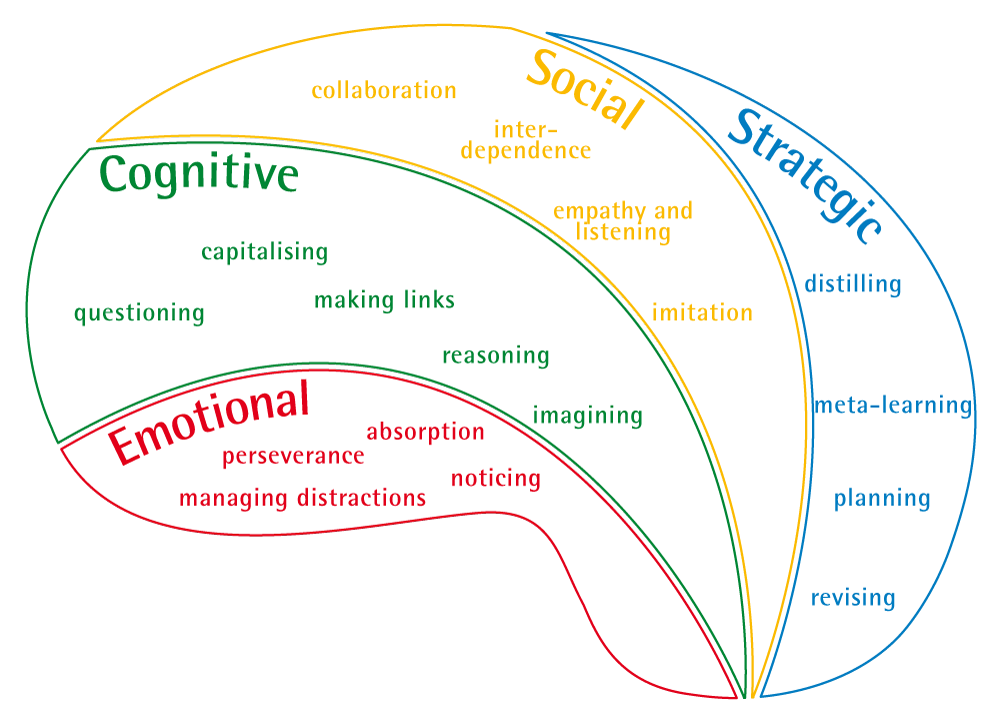
The importance of students having a language with which to discuss and understand the process of learning was explored in module 2.2, section b). But how to do it ?
To introduce the supple mind might seem a sensible starting point, maybe through engaging with the Footprints in the Snow activity suggested at the end of module 2.2.
But this does only half the job. The language is introduced, but understanding will necessarily be fairly shallow at this point. Students need to explore these learning behaviours one by one, to experience tasks that activate them, and be given the opportunity to reflect on the experience.
And even that does not work if they are not then offered repeated opportunities to exercise the behaviour in subject based lessons over the weeks following the introduction. The reason for this is two-fold: firstly they need to experience it repeatedly in order to strengthen the skill and begin to build the habit; secondly they need to see that the skill can be applied in a wide range of learning contexts.
Give them a language so that they can understand the concepts
2) Reinforcing learning behaviours in feedback
Here are a couple of examples of written feedback which name the types of learning behaviours being used. Using learning language enables teachers to be more precise about the sort of learning effort a student has used. Beneficially this means the teacher has noticed more precisely how students are learning.
Here, Miss Delaney tells Thomas he is a brilliant imitator. She has noticed that he was successful because of his skill at Imitation, is making him aware of this, and praising him for it. All well and good, but what can he do with this feedback, aside from bask in glory?
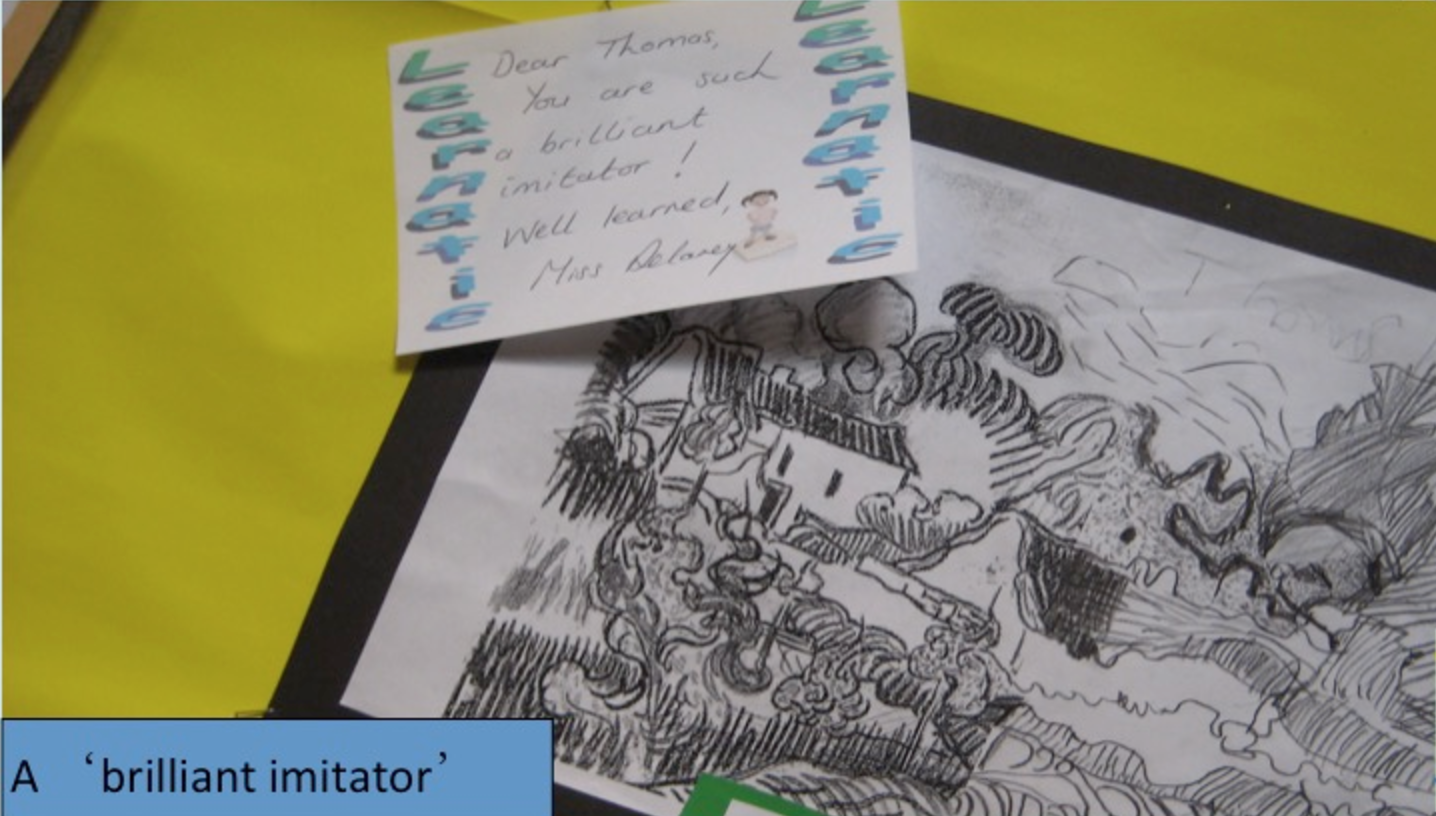
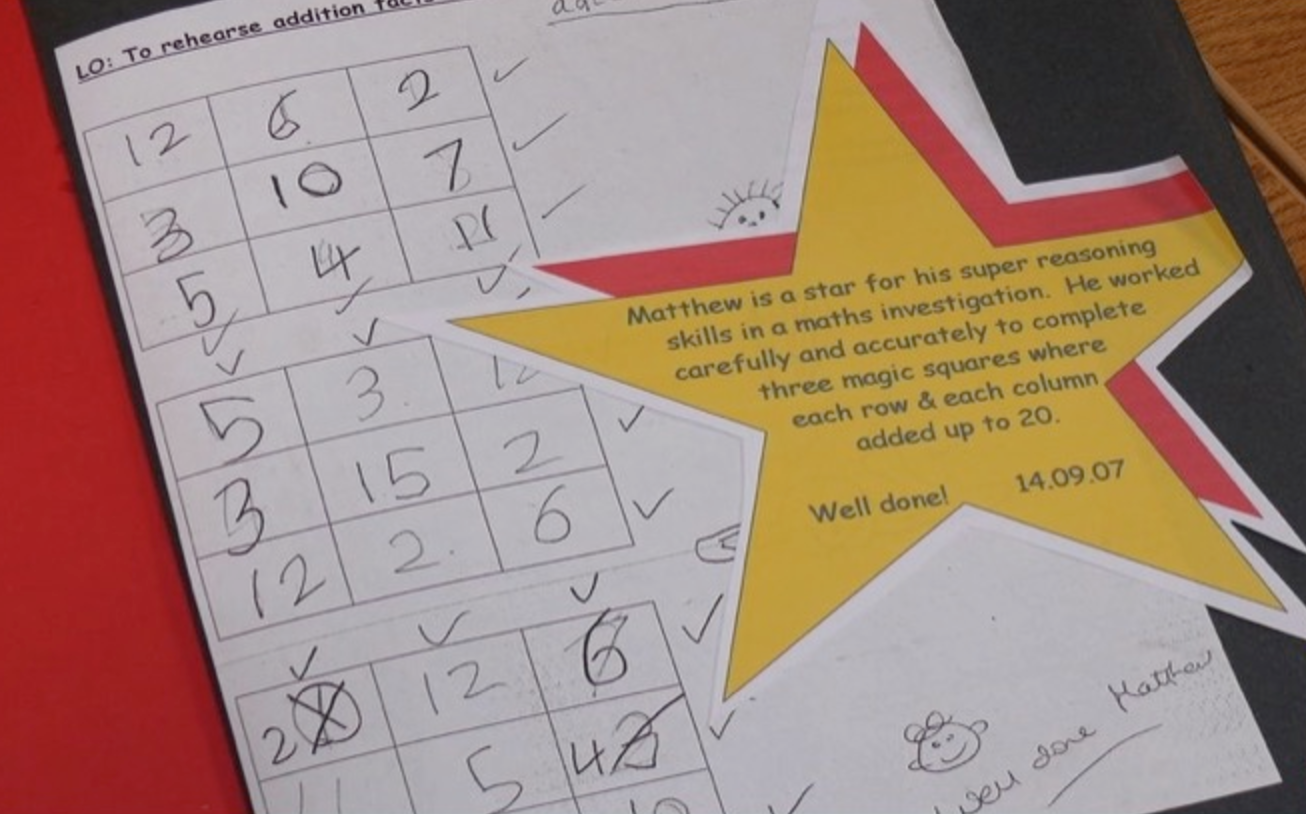
Whereas here, feedback helps Matthew to understand how his super reasoning skills helped to assure success. More useful praise, surely?
Reinforcing the learning language
3) Fostering learning dialogue in collaborative groups
How often do we not know that we know something until we hear ourselves say it? The bottom line is that dialogue (not listening to teacher type dialogue!) is crucial. Get students talking together and they will be learning together and creating meaning for themselves.
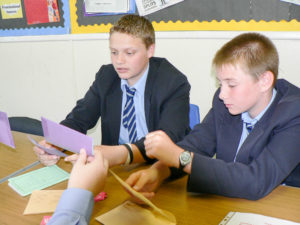
But group work is not easy. It needs a range of positive social skills, like listening, turn taking, being prepared to share ideas etc. In the early stages, it may be necessary to agree classroom ‘ground rules’ to encourage students to afford others respect in the hurly burly of collaborative learning.
Making meaning through talk.
4) Invite students to relate their learning stories

Individual scrapbook
Students were encouraged to think about themselves as learners in all contexts — inside and outside of school time. This youngster has reflected on her ballet skills and how she had used her learning power to help her improve.
Relating learning through personal stories

c) A school’s learning story
Secondary schools should, in an ideal world, be receiving kids from their feeder schools who arrive as learning powered students, ready for the next phase of their learning journey. The reality is frequently different, with students arriving in key stage 3 with no clear idea of themselves as learners.
The secondary school then faces a dilemma. It needs to introduce year 7 students to the school’s chosen learning language, but how to do this ? Two options, each with advantages and drawbacks, immediately present themselves – either design a stand-alone Learn to Learn course, or introduce the skills/concepts through the subject curriculum.
Let’s consider each in turn:
Firstly: The stand-alone L2L course. Advantages include ease of planning, few teachers involved in delivery, all kids get the same message at broadly the same time. Disadvantages include few teachers involved in delivery, it requires dedicated curriculum / tutor time, learning is in danger of being seen as ‘something we do on Tuesday afternoon’ and is unrelated to the rest of the week.
Secondly: The integrated approach. Advantages include everyone involved in delivery, learning is better integrated into the curriculum, responsibility is shared, and nobody can opt out. Disadvantages include the nightmare of mapping learning behaviours across the curriculum, everyone is involved in delivery, shared responsibility can sometimes become ‘if everyone else is doing this, it won’t matter if I don’t’.
We have yet to find a school that has been able to jump straight to the integrated approach without first passing through the stand-alone phase.
How will your school tackle this problem ?
How would you like to be involved in helping your students to understand and discuss the learning process in greater depth and with greater precision ?
A word of warning . .
PRIMARY
Building Better Learners is about creating a culture in classrooms – and the school more widely – that systematically cultivates habits and attitudes that enable young people to develop supple learning minds.
This section explores the sorts of things teachers do when starting to developing the language that helps pupils understand the learning process.
What are some of the ways to begin introducing a language for learning?
a) What is learning talk?
As we saw in Section 3.1, talk for learning is about the gradual introduction of a learning language that helps pupils to become conscious of using their learning behaviours and so build the confident self-talk of improving learners. The early stages of introducing a learning language might simply include:
- using a range of physical hooks on which to hang learning talk
- mention use of learning behaviours in your written feedback
- start using the word ‘learning’ rather than ‘work’
- foster learning dialogue in groups
- have pupils relate their learning stories
The more richly children come to talk about their own learning the more they see and take hold of their own role in it.
A powerful linguistic environment
b) Some examples of how
1) Hooks to develop a language for learning
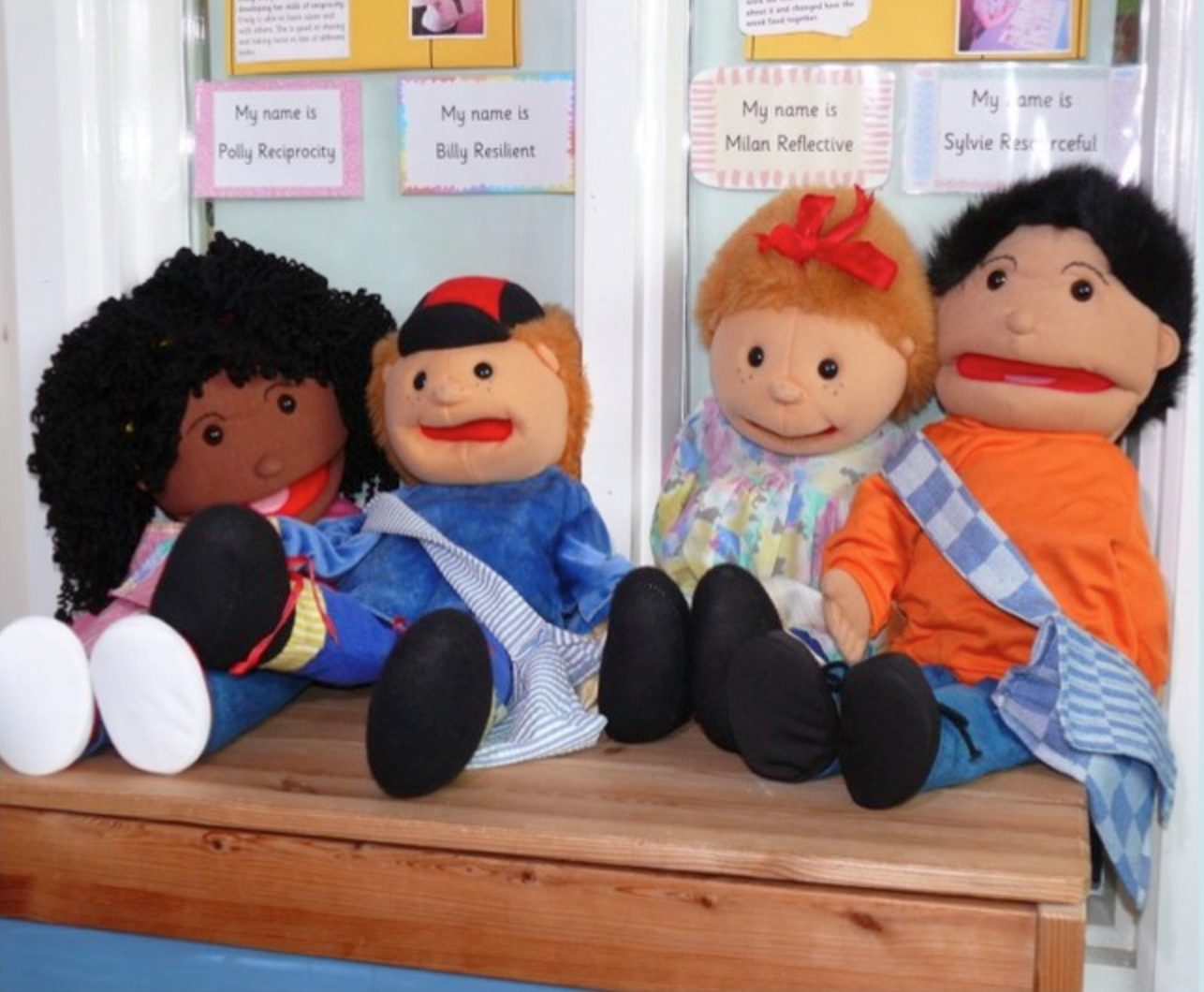
Here are a couple of examples of the sort of ‘hooks’ schools have used in the early stages to help pupils remember the learning behaviours.
A simple way to start – 4 puppets, one for each for the emotional, cognitive, social and strategic domains of learning. Note the bags on the puppets’ shoulders. These contain stickers denoting a particular learning behaviour. These are awarded to pupils when they are spotted using the behaviour appropriately. This helps pupils become more conscious of using the behaviour. It’s only when they know this that they are able to get better at it!
Going a bit deeper. Here the 17 learning behaviours have been linked to animals – planning panda, revising rabbit etc. Just another way of remembering the initial stages of a language for learning.
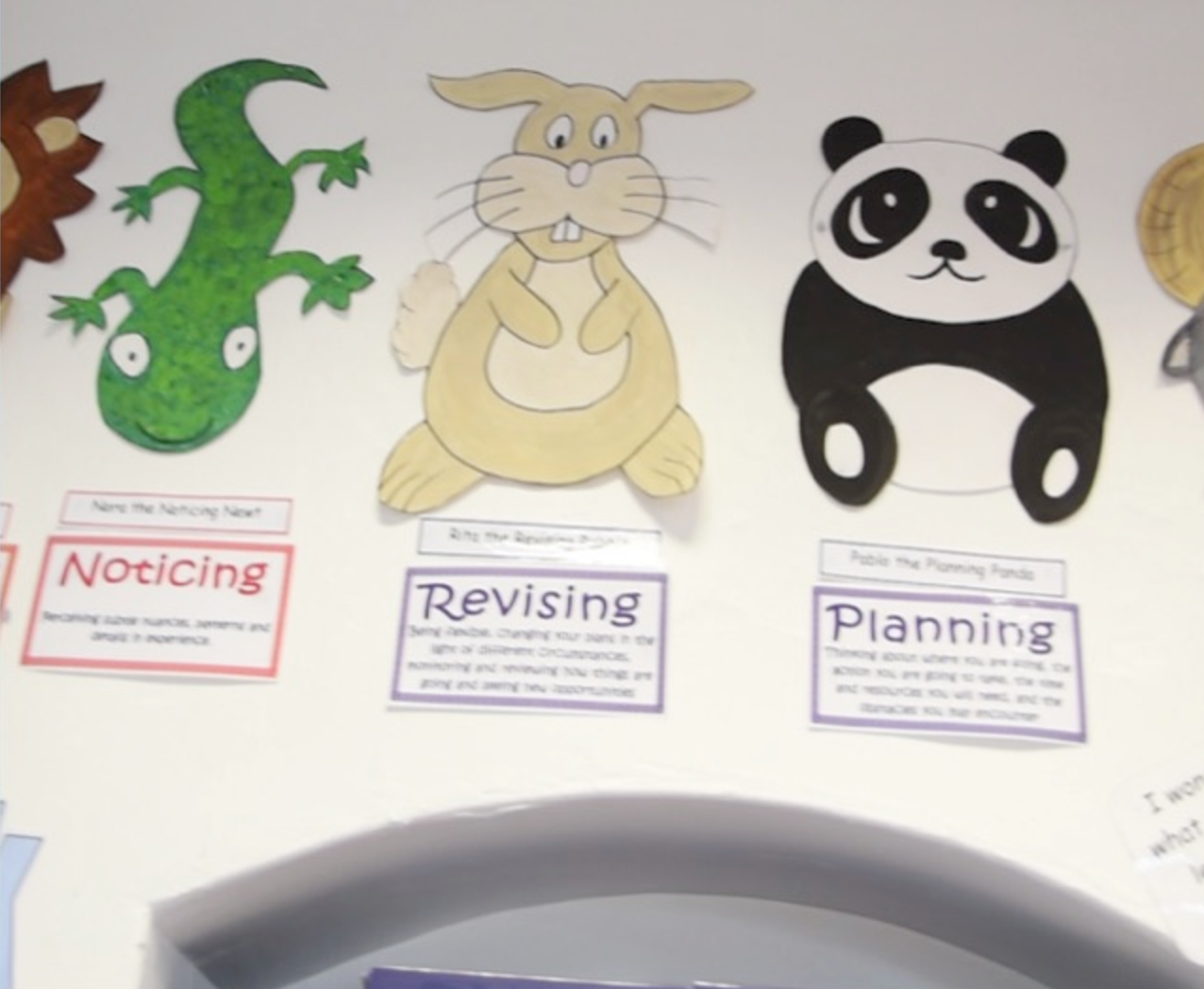
Illustrating the language of learning
2) Reinforcing learning behaviours in feedback
Here are a couple of examples of written feedback which name the types of learning behaviours being used. Using learning language enables teachers to be more precise about the sort of learning effort a pupil has used. Beneficially this means the teacher has noticed more precisely how pupils are learning.
Here, Miss Delaney tells Thomas he is a brilliant imitator. She has noticed that he was successful because of his skill at Imitation, is making him aware of this, and praising him for it. All well and good, but what can he do with this feedback, aside from bask in glory?
Whereas here, feedback helps Matthew to understand how his super reasoning skills helped to assure success. More useful praise, surely?
Here’s a quick and easy way to signal the use of a learning behaviour. In this school their learning behaviour icons have been printed onto stickers. The teacher can quickly award a sticker for appropriate use of the behaviour to achieve the outcome.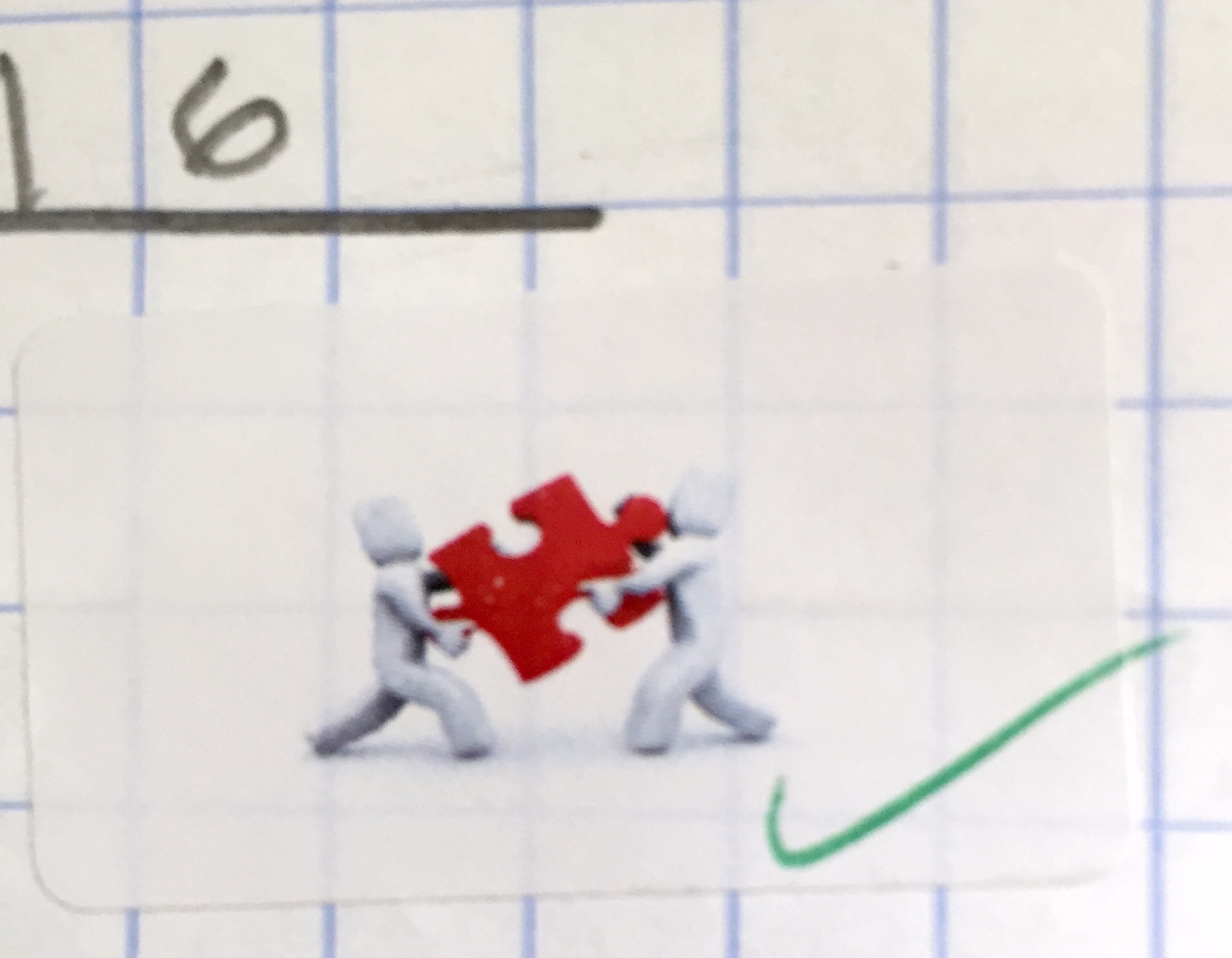
Reinforcing the learning language
3) Fostering learning dialogue in collaborative groups
How often do we not know that we know something until we hear ourselves say it? The bottom line is that dialogue (not listening to teacher type dialogue!) is crucial. Get pupils talking together and they will be learning together and creating meaning for themselves.
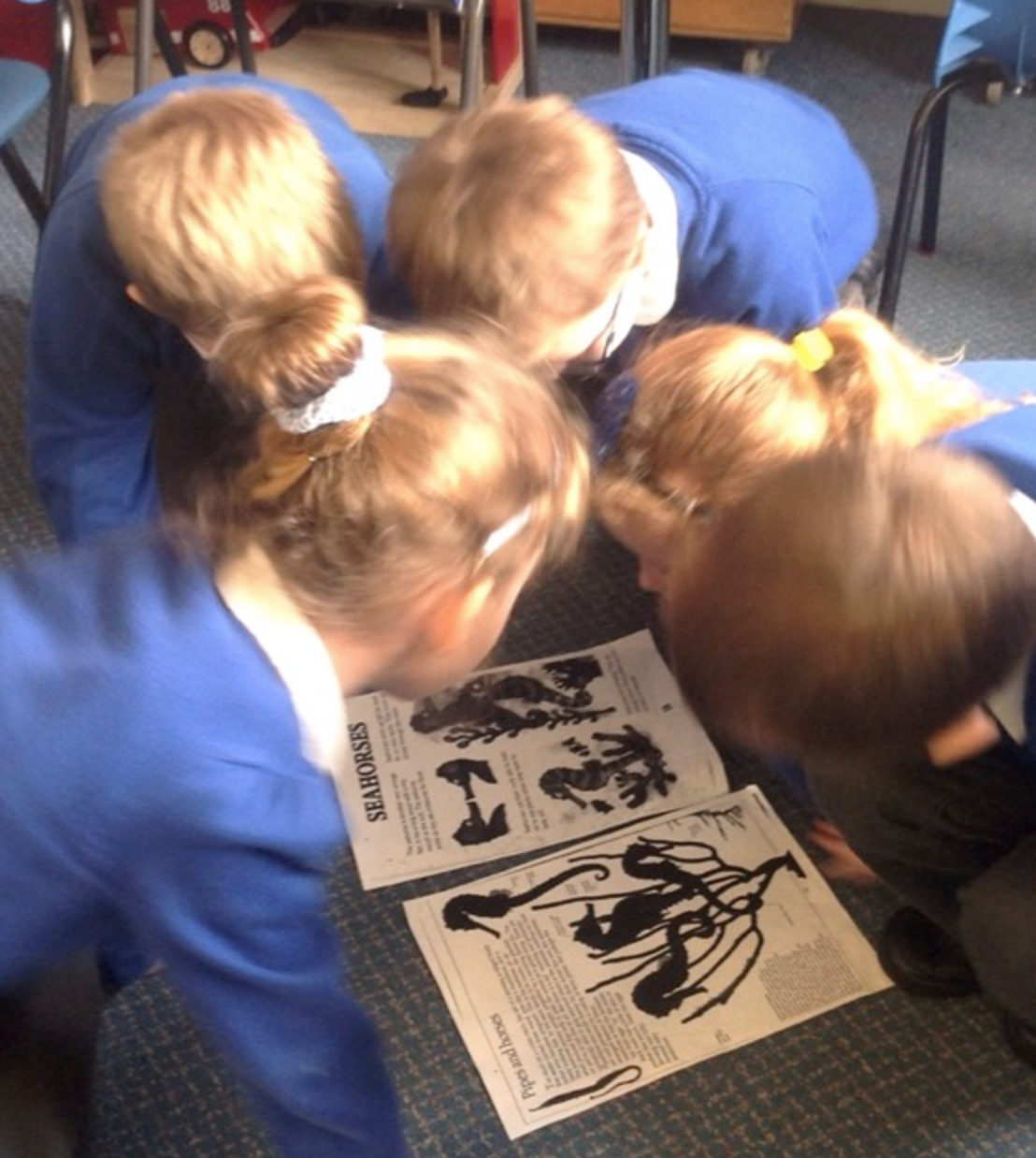
But group work is not easy. It needs a range of positive social skills, like listening, turn taking, being prepared to share ideas etc. In the early stages, it may be necessary to agree classroom ‘ground rules’ to encourage pupils to afford others respect in the hurly burly of collaborative learning.
The learning behaviour – collaboration – is fully explored in phase 1 of the online course.
Making meaning through talk.
4) Invite pupils to relate their learning stories
Individual scrapbook
Children were encouraged to think about themselves as learners in all contexts — inside and outside of school time. This child has reflected on her ballet skills and how she had used her learning power to help her improve.
Relating learning through personal stories
c) A teacher’s learning story
An early years teacher from Oldham relates how she introduces pupils to understanding the purpose of questions.
Comments are closed.