
How developing better learners impacts on learners, teaching, and leadership.
Find out about:
- The strategic model for putting learning at the heart of the school;
- How learners build supple learning minds;
- How teaching creates a classroom culture that supports this;
- How leadership develops and sustains a culture of learning.
If having a focus on learning is to work, it’s important to understand its principles and potential impact on everyone in the school. Focusing on learning is rather different in scale and scope from introducing a new examination syllabus – it has repercussions for student learning, for teacher and support staff practice and for school policy and practice.
In this unit we explore the strategic model of putting learning at the heart of the school and shine a light on the key principles and models of thinking.
NEED TO LOOK CAREFULLY AT THIS TO MAKE SURE IT DOESN’T NEED THEM TO KNOW ABOUT OTHER MODELS TO BE ABLE TO FOLLOW IT. DON’T WE HAVE A PPt FOR THIS ?
Putting learning at the heart of the school.
The holistic model below shows aspects of student learning, teacher practice and school processes fitting together and influencing each other to make learning at the heart of the school a reality. We would be kidding ourselves if we thought that “doing learning power” meant little more than a few tweaks in classroom practice. Doing it ‘right’ rather than ‘lite’ takes us deep into how supple learning minds grow, how teachers’ everyday practice needs to be developed, what it means to ‘lead learning’ and how parents can be brought into the action.
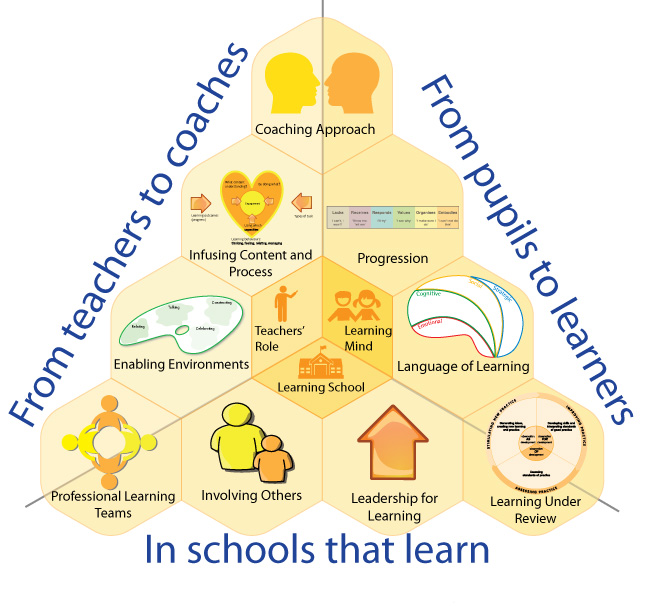
REST OF THIS SECTION NEEDS THE CORRECT THUMBNAILS INSERTING
Students build supple learning minds by:
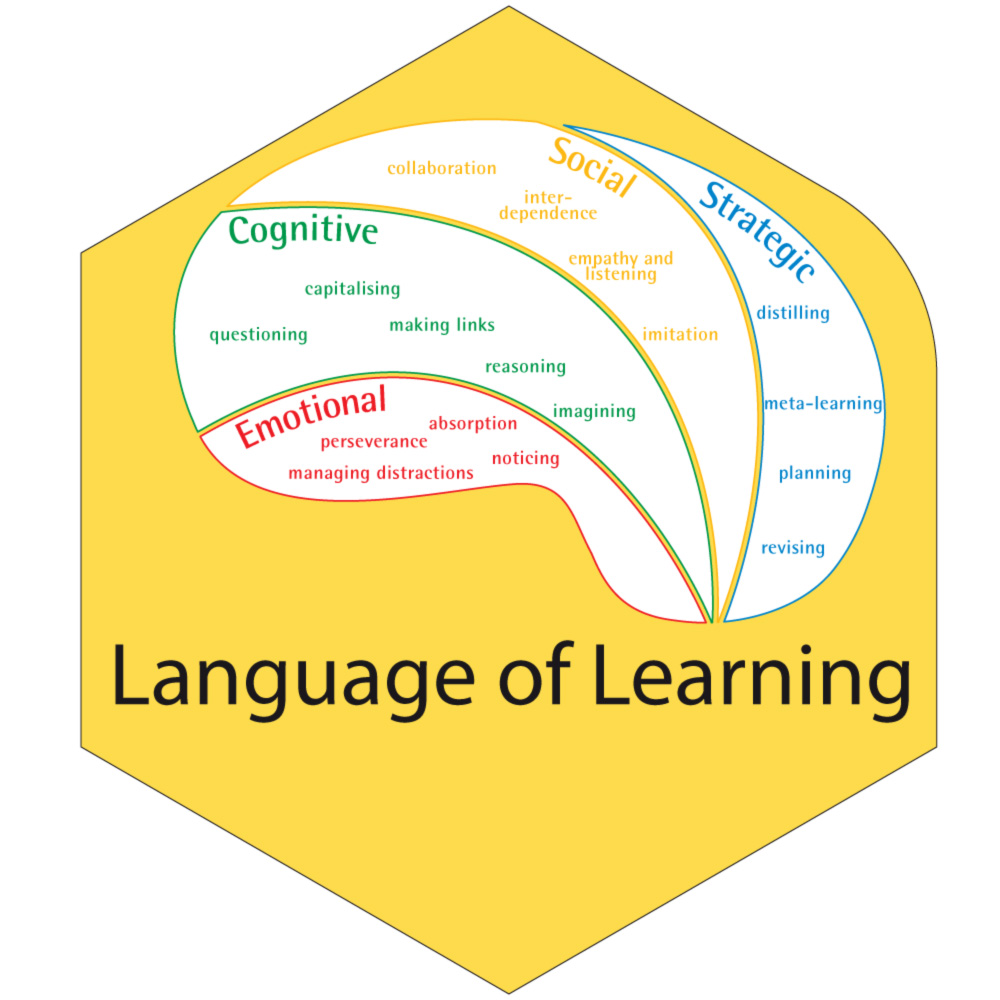
Using a language that powers learning.
- A rich and evolving language of learning, recognising its emotional, cognitive, social and strategic dimensions, permeates learning across the school and its community
- Students are confident and fluent in using the language of learning to describe and understand themselves as learners in a wide range of contexts
Building the skills of powerful learners and broadening where and how often they use them.
- A broad map of progression in the development of learning dispositions is infused into the curriculum, built into the design of lessons and motivates students to improve.
- Students record, reflect on and articulate their growth as supple-learning minded, independent, learners.

What students do

 Do our students have a sufficiently subtle language for explaining the learning process ?
- Do they have an understanding of progression that enables them to understand how they are growing as learners ?
Teachers help students to stretch and develop their supple learning minds by:
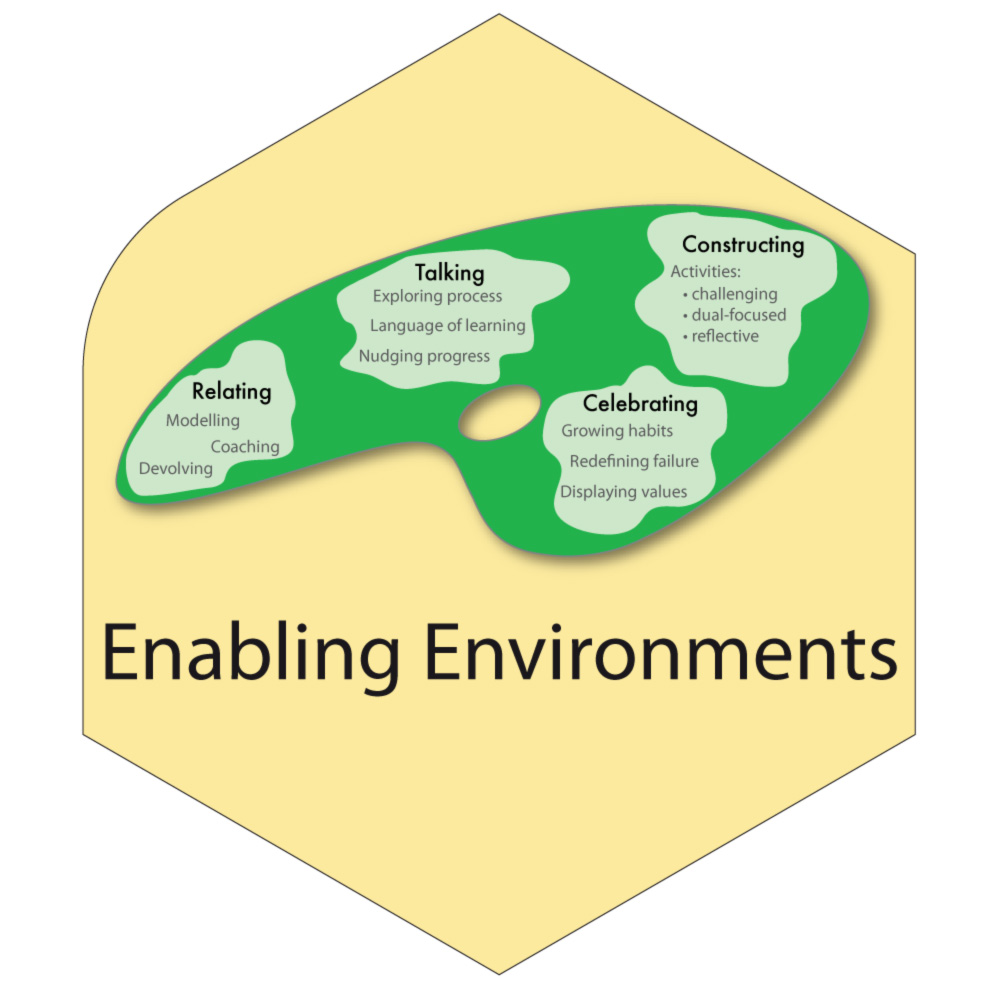
Creating rich learning environments in classrooms
- The learning environment is used constructively to promote positive learning behaviours and reinforce positive messages about the nature of learning.
- Classroom cultures promote; speculative approaches, challenging learning, the growth of learning mindsets, collaborative activity and positive messages about learning.
Teaching the how with the what of learning
- Teaching methodologies and learning opportunities intrigue and motivate learners, develop effective learning habits and enhance content acquisition.
- Teachers explain the nature of learning habits, train students to use them, design lessons to exercise them, generate feedback on the use of learning habits and model them confidently.

Using a coaching approach to learning
- Teachers use a coaching approach with students; they stay curious, their questioning helps to unearth and progress students’ learning behaviours, they join in a quest of discovery, they offer commentary and re-frame learning experiences and they secure a commitment to learning.
- Students too are trained to act as coaches to each other and thereby encourage others to go beyond what they thought they were capable of.

What classroom practitioners do
- Are our classrooms designed for teaching or for learning ?
- Is there a good balance between how we learn and what we learn ?
- To what extent is coaching the prevailing classroom culture ?
The school develops and sustains a culture of learning by:
Leading to empower learning
- The school has a vision for learning (predicated on ‘learning is learnable’) which is embedded in its culture, policies and recognised outcomes.
- Leading the development of learning becomes everyone’s concern. School leaders, teachers and students work towards becoming leaders of their own learning in a school that learns
- Leadership styles foster dialogue and exploration, empower risk taking and self-monitoring becomes an act of discovery for improvement
Creating a culture of enquiry for staff
- The school supports teachers to form and sustain formal Professional Learning Communities to share, probe and deepen the learning how to learn culture and classroom practice
- Teacher learning enquiries help drive the school’s development.

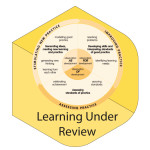
Keeping Learning under review
- Reviews of learning engage all staff and students to provide valuable evaluative data on which to build future development
- Learning Reviews include observations of learning in classrooms, interviews with teachers, surveys of the learning environment. They are viewed as an important collaborative vehicle for teacher development
Involving parents in building their child’s zest for learning
- The school works in partnership with parents and carers to develop learning dispositions in students.
- Parents are kept informed effectively of their child’s progress in developing learning habits. The school offers guidelines and examples of how parents can best support the development of their child’s learning habits in life outside school.

What schools do
- Does leadership build in teachers the very habits we seek to instil in students ?
- Do teachers take risks in developing their own practice ?
- What evidence do we have that learning habits are being developed in classrooms ?
- How have we engaged parents as partners in the process of building students’ learning habits ?
Comments are closed.