
Building a classroom culture that extends students’ responsibilities
Welcome to Building Powerful Learners Phase 2. This four??? unit online programme looks at how your development as a teacher can enable and strengthen the development of a learning-friendly classroom culture.
The programme combines three types of action to help you to experiment, analyse and understand how you can create an increasingly learning-friendly classroom culture.
1 Understand by using Read abouts…of which there are two types
- Essential Read …essential must read text.
- Extended Read …interesting, good to know, absorb when you can.
2 Analyse by using Find outs…tools to help you discover and analyse essential information.
3 Experiment with Try outs…practical activities for you to try, check and perfect in your classroom.
This unit explores how your development can create a classroom culture to develop students’ autonomy as you gradually devolve responsibility for learning to them.
- What are the key aspects of
devolving responsibility for learning? (Essential and Extended Read about 1) - With regards to
devolving responsibility, is my classroom currently more teacher focused, or more learning focused? (Find out 1) - How are my students responding to the changes I have made in my classroom culture? (Find out 2)
- What sort of approaches will be useful in moving this forward? (Try out 1 to 4)
Take a deeper look at how a learning centred classroom develops and the anticipated outcomes for learners(Find out 3)
Structuring and using the ideas below in your classroom over the next few months or so will edge your classroom culture towards supporting student independence.
change image
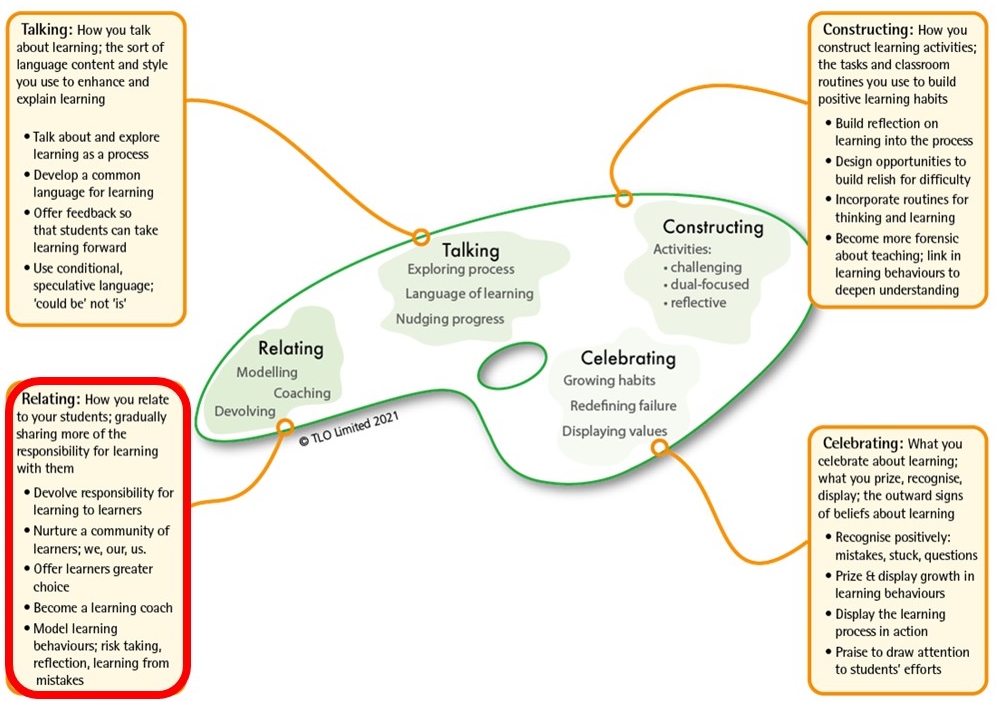
Essential Read about 1
Unpacking Relating for Learning
from HYLT, edited
From this…
In many classrooms responsibility for learning seems to rest almost exclusively with the teacher. The teacher decides the what and how of learning, and undertakes most of the questioning. The main focus is on student performance and most tasks are undertaken individually. In these classrooms the teacher assumes responsibility for assessment and adopts a ‘fount of knowledge’ role. Hence students come to believe and accept that responsibility for learning lies with their teacher and become increasingly dependent on them.
But does it have to be like this? What if learners are enabled to take responsibility for their own learning? How would classroom culture change?
To this…
Relating for learning is about developing the roles and responsibilities of teachers and learners such that learning becomes a shared responsibility. Students are given more responsibility for their own learning, the role of the teacher changes from ‘the sage on the stage’ to ‘the guide by your side’; the role of the student moves from ‘passenger’ to ‘crew’ and ultimately to ‘pilots of their own learning’.
In short…
The key features of this cultural shift include:
- gradually devolving responsibility for learning to students;
- giving students more of a stake in the process of their own learning;
- teachers becoming learning coaches, enabling students to find their own ways to improve;
- using collaborative activity to help students see each other as resources for learning;
- giving students choices about what and how to learn;
- enabling students to talk more and adults to talk less;
- teachers modelling being a learner.
image?
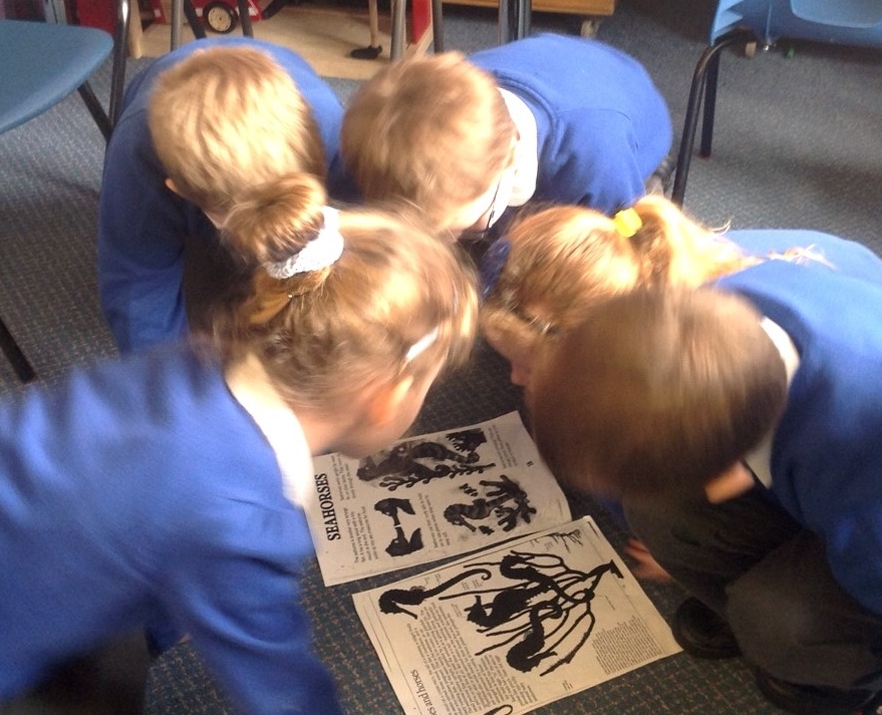
Extended Read about Relating for learning. ⬇️
from hylt, almost verbatim, formatting removed
There are three aspects to relating for learning:
giving more responsibility to learners for their learning;moving away from telling to coaching;modelling the learning process; showing ourselves as learners.
Aspect 1: Devolving Responsibility – this is about shifting the emphasis towards learners taking increasing responsibility for their own development. It involves working towards students asking more of the questions, monitoring their own learning, doing more of the work, making more choices, pursuing their own lines of enquiry. In short it’s about enabling students to become more active in the learning process; offering them more opportunities to decide what to do and actively review their own experiences.
The focus becomes how students are learning rather than how they perform, so teachers who work in this way tend to want to make sure that:
there’s plenty of collaborative activity because this helps students to see each other as resources (not rivals) for learning;students can make choices about what and how to learn (high levels of learner autonomy);students experience failure as a necessary and useful part of learning (tolerating uncertainty, mess, error and initial failure);students are given a chance to talk more – and adults talk less;3students experience more open-ended activities – and create their own;students have more opportunity to spend longer on an activity, to feed their interest/engagement in it;students establish high-level goals for their own learning, based on challenge and quality feedback including their own;students have access to learning experiences that are under rather than over-engineered, with elements of ambiguity;students can decide on admissible outcomes.
This shift to more learner involvement offers deep professional satisfaction and a new set of learning relationships.
Ask yourself:
How many of the above do I use in order to enable my students to become better learners?How frequently do I offer such opportunities?
Aspect 2. Coaching approaches – this is about moving away from ‘telling’ whenever possible. It is one of the hardest of balancing acts: knowing when you can coach and when you have to tell requires a teacher to have a deep understanding of both the subject matter and the learner.
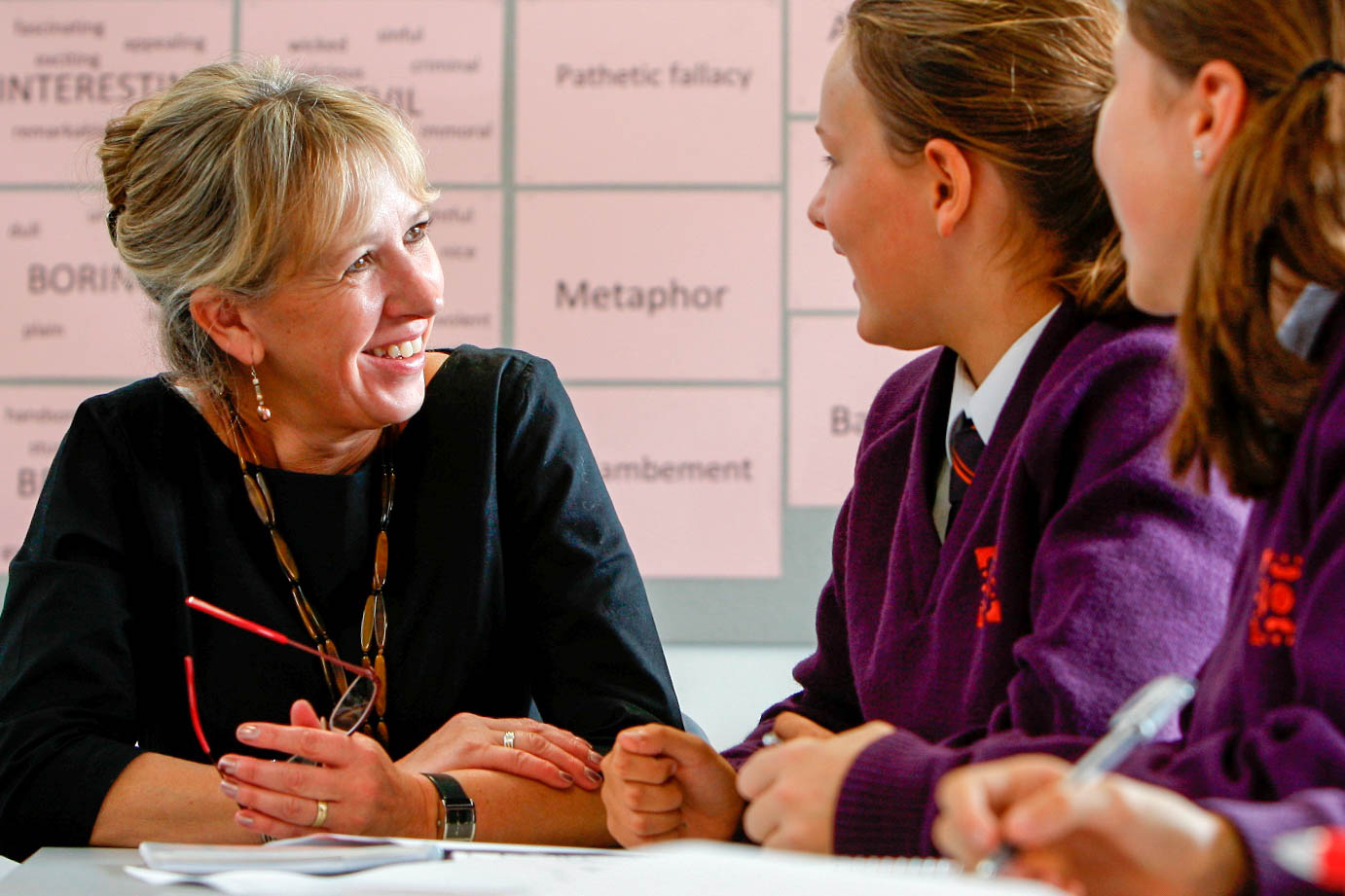 “Expert tutors often do not help very much. They hang back, letting the student manage as much as possible. And when things go awry, rather than help directly they raise questions: ‘Could you explain this step again? How did you… ?’” (Mark Lepper)
When we are curious we are genuinely interested in learning. Curiosity lies at the heart of coaching, hence coaches are effective listeners and ask questions to open dialogue without it sounding like an interrogation. Coaching aims to enable people to see what they are doing more clearly and discover their own ways to improve. A coaching approach:
helps people to explore their challenges, problems and goalsprovides an objective view of people’s actions to enable them to see things as as they really areenhances motivation and raises self-esteembuilds curiosity and encourages learning
Above all, coaches resist offering solutions. Offering solutions does little to secure learning as the student hasn’t been allowed to confront and engage with the problem and find their way forward. Learning powered teachers adopt a coaching role.
Ask yourself:
What is the balance between telling and coaching in my classroom currently?
Aspect 3. Modelling the learning process – this is about the ways in which we show that we too are learners. It indicates a shift away from teachers being ‘all-knowing subject specialists’ to displaying uncertainty, sharing their own learning stories, learning ‘aloud’ and learning alongside students.
‘Through our modelling we have the opportunity to nurture the very attitudes, values and behaviours we want to see in our students’ Ron Richhart Creating Cultures of thinking.
The way we act in classrooms sends messages about what we think and value. The more we model the behaviours we wish to see in students, the more they will pick up on them. If you model patience, forgiveness, and openness to ideas this will begin to set the tone for the sort of classroom where developing learning power can flourish. Importantly it will make students feel safe and able to take risks in learning.
Noticing and commenting on everyone’s strengths (not weaknesses), valuing everyone’s contributions, noticing and commenting on their use of learning behaviours all helps to get the balance between safety and challenge. If you model being calm, orderly and accessible the classroom will become likewise.
One of the more obvious ways of unpicking learning, putting it on show, is to model being a good learner to students. This type of modelling is about showing how you are a learner too; showing that you are a confident finder outer. So teachers who work in this way:
Take their students behind the scenes of learning and share with them some of the uncertain thinking of learning;Learn aloud, taking students through how they would or could work out a problem. Model the thought processes (including how they feel) they as a learner go through. This is important because a lot of the skill of learning only manifests itself in the inner world of the learner;Expose the thinking, feeling and decision making of a learner-in-action to help students actually see and hear how learning works. This thinking aloud will help students become aware of the thought processes they might have running through their head while learning;Model their own fallibility in order to show it’s OK not to know;Model that they’re willing to stick at problems; to research it; to spend time just thinking about it. You can do this by thinking out loud with the students when you are teaching by saying “I might be wrong about that.” ” I’m not to sure about that at the moment” ” I’ll have to come back to you about that”;Sharing their own experiences as a learner, which can be very powerful for boosting learning power in the classroom. Students will be fascinated to hear that teachers go through the same struggles as they do.
Ask yourself:
How much do I learn aloud– externalise my own exploratory thinking– in front of students?How much could I reveal about my own learning projects, with all their ups and downs?
Find out 1
How do teachers progressively devolve responsibility for learning to students and so change their classroom culture?
The chart alongside shows how the classroom culture for the three aspects of Relating for Learning:
Devolving responsibilityCoaching approachesModelling
may grow as the culture moves from being teacher centred towards being learning centred.
Download and print a copy.
Look over these trajectories. For each of the 3 columns, ask yourself the key question:
- Which cell in each column do you think best describes your current classroom culture?
It is worth taking your time over this. The outcomes from this self-reflection, coupled with the outcomes from Find Out 2, will help to identify the teaching strategies that will move your current classroom culture towards a learning centred classroom culture.
Growing Relating for Learning, from a teacher centred classroom culture towards a learning centred classroom culture.
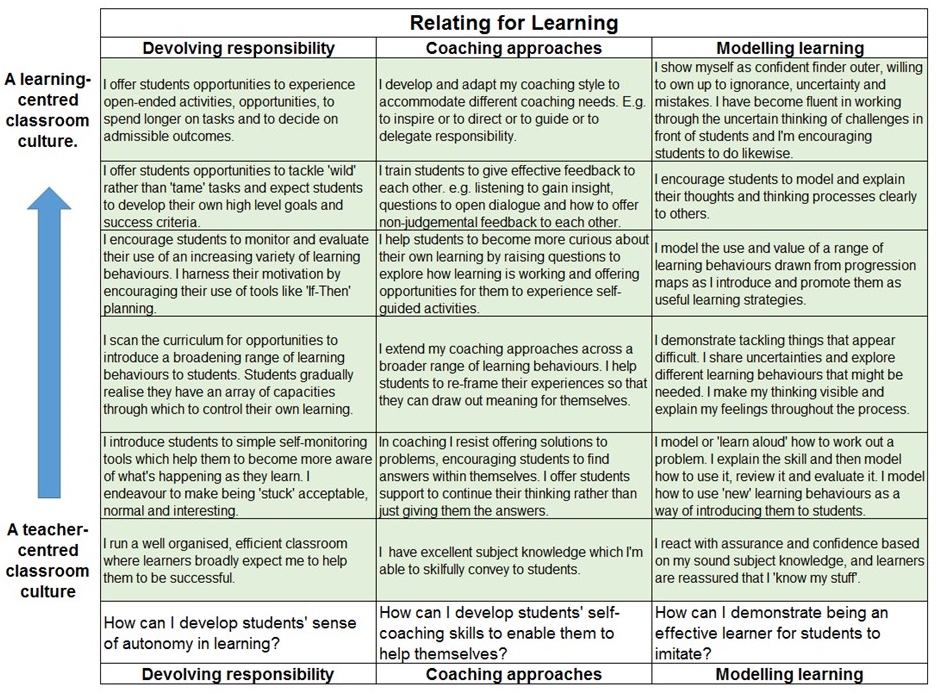
Which cells best describes your classroom culture now?
Download as a pdffind others in:
culture master april 24 v7
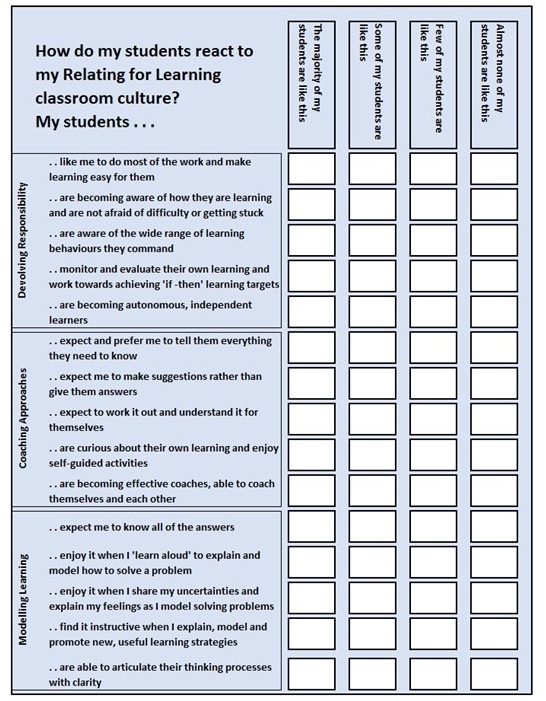
Find out 2
How are your students responding to changes in classroom culture?
Culture is the minute by minute, hour by hour, day by day way that learners come to understand their role as a learner; it’s always all too evident to learners. Culture is sometimes seen as your enacted values in the classroom – what you do and what you do not do, what you say and do not say, what you believe and do not believe, what you value and do not value.
How are your students reacting to the learning climate of your classroom? How are they reacting to the changes you are making to encourage learners to take more responsibility for their learning?
Download and print a copy.
Look over these three groups of statements.
The first 5 statements are about Devolving Responsibility, the second about Coaching, and the third about Modelling.
For each of the 3 groups, ask yourself the key question:
- Which statement in each set do you think best describes the majority of your learners at this time?
It is worth taking your time over this. The outcomes from this, coupled with the outcomes from Find Out 1, will help to identify the teaching strategies that will move your current classroom culture towards a learning centred classroom culture.
Try out 1
A range of little culture shifts
Teachers are in the habit forming business
As a teacher you are an influential character builder and so need to be mindful of how your classroom culture helps students to form, replace, re-form and strengthen their learning habits. Which aspects of your classroom culture are helpful in this respect, and which are perhaps less so? After all, if you are unable or unwilling to make changes to your classroom culture, learners are unlikely to change how they respond to it!
What to stop and start
Here are a few ideas you might want to try. Take it steady, this way of teaching can be a big but exciting shift so it’s worth doing it slowly and thoughtfully.
Begin with the ‘stop/avoid’ box – if any of these teaching behaviours are still in evidence in your classroom it would be worth thinking through how they can be eliminated, since failure to do so will undermine the changes you are hoping to achieve for your learners
Then cast your eye over the other 3 boxes. Which ideas appeal to you? Which do you think will have the greatest impact on your students?
Now seek out teaching ideas below in Try Outs 2/3/4 that you can use to move your classroom culture forward.
Try Out 2 focuses on ideas for moving responsibility towards learners;
Try Out 3 focuses on developing a coaching approach;
Try Out 4 focuses on teachers modelling themselves as learners.
.
Try out 2
Build Relating for Learning by devolving responsibility to learners
copy from FO2
Devolving Responsibility – is about shifting the emphasis towards learners taking increasing responsibility for their own development. It involves working towards students asking more of the questions, monitoring their own learning, doing more of the work, making more choices, pursuing their own lines of enquiry. In short it’s about enabling students to become more active in the learning process; offering them more opportunities to decide what to do and actively review their own experiences.
Use what you have found out about your classroom culture in Find Out 1 (the green tables) and how your students are responding to it in Find Out 2 (the blue quiz) to identify the best place to start to further devolve responsibility for learning.
Explore the teaching ideas for

Try out 3
Build Relating for Learning by extending your coaching behaviours
Coaching approaches – is about moving away from ‘telling’ whenever possible. It is one of the hardest of balancing acts: knowing when you can coach and when you have to tell requires a teacher to have a deep understanding of both the subject matter and the learner.
Use what you have found out about your classroom culture in Find Out 1 and how your students are responding to it in Find Out 2 to identify the best place to start to further develop a coaching approach.
Explore the teaching ideas for

Try out 4
Build Relating for Learning by modelling yourself as a learner
Modelling the learning process – is about the ways in which we show that we too are learners. It indicates a shift away from teachers being ‘all-knowing subject specialists’ to displaying uncertainty, sharing their own learning stories, learning ‘aloud’ and learning alongside students.
Use what you have found out about your classroom culture in Find Out 1 and how your students are responding to it in Find Out 2 to identify the best place to start to model yourself as a lifelong learner.
Explore the teaching ideas for

Needs FO3 and Meeting inserted here from Relating
=====================================
For each section:
From Find Out 1 (the green tables) you’ve developed an idea of where your classroom culture is in relation to Devolving Responsibility for Learning, and from Find Out 2 (the blue quiz) you have considered how your students are responding to the changes you have made.
Look below at the 5 Steps and identify the step that best fits your current classroom culture and how the majority of your students are responding.
If in doubt, start at the step that most accurately reflects how the majority of your students are responding.
Step 1. Start here if . . .
You run a well organised, efficient classroom where learners broadly expect you to help them to be successful (from Find Out 1).
And as a result, the majority of your students prefer you to do most of the work and make learning easy for them (from Find Out 2).
These ideas will help you to begin to move responsibility towards learners.

Step 2. Start here if . . .
You have introduced students to simple self-monitoring tools which help them to become more aware of what’s happening as they learn. You endeavour to make being ‘stuck’ acceptable, normal and interesting (from Find Out 1).
And as a result, the majority of your students are becoming aware of how they are learning and are not afraid of difficulty or getting stuck (from Find Out 2).
These ideas below will help you to move responsibility for learning towards learners.

Step 3. Start here if . .
You have scanned the curriculum for opportunities to introduce a broadening range of learning behaviours to students. Your students are gradually realising they have an array of capacities through which to control their own learning (from Find Out 1).
And as a result, the majority of your students are aware of the wide range of learning behaviours they command (from Find Out 2).
These ideas will help you to move more responsibility towards learners.
Step 4. Start here if . . .
You encourage students to monitor and evaluate their use of an increasing variety of learning behaviours and you harness their motivation by encouraging their use of tools like ‘If-Then’ planning (from Find Out 1).
And as a result, the majority of your students monitor and evaluate their own learning and work towards achieving ‘if -then’ learning targets (from Find Out 2)
These ideas will help you to begin to move yet more responsibility towards learners.

Step 5. Start here if . . .
You offer students opportunities to tackle ‘wild’ rather than ‘tame’ tasks and expect students to develop their own high level goals and success criteria (from Find Out 1).
And, as a result, the majority of your students are becoming autonomous, independent learners (from Find Out 2).
These ideas will help you to secure this and further devolve responsibility to learners.

==================================
Ideas for modelling yourself as a learner Step 1. ⬇️
Title
lhs
pic
Title
lhs
pic
Title
lhs
pic
Ideas for modelling yourself as a learner Step 2. ⬇️
Title
lhs
pic
Title
lhs
pic
Title
lhs
pic
Ideas for modelling yourself as a learner Step 3. ⬇️
Title
lhs
pic
Title
lhs
pic
Title
lhs
pic
Some text linking the blue quiz answers to this step
Ideas for modelling yourself as a learner Step 4. ⬇️
Title
lhs
pic
Title
lhs
pic
Title
lhs
pic
Ideas for modelling yourself as a learner - beyond Step 4. ⬇️
Title
lhs
pic
Title
lhs
pic
Title
lhs
pic
Return to the
Comments are closed.