

The focus of this unit is on the development of Ambitious, Capable Learners who . .
are interested in, enthusiastic about, and persistent in learning; take responsibility for their own learning; are informed and understand how things fit together; and are able to explain their thinking to others.
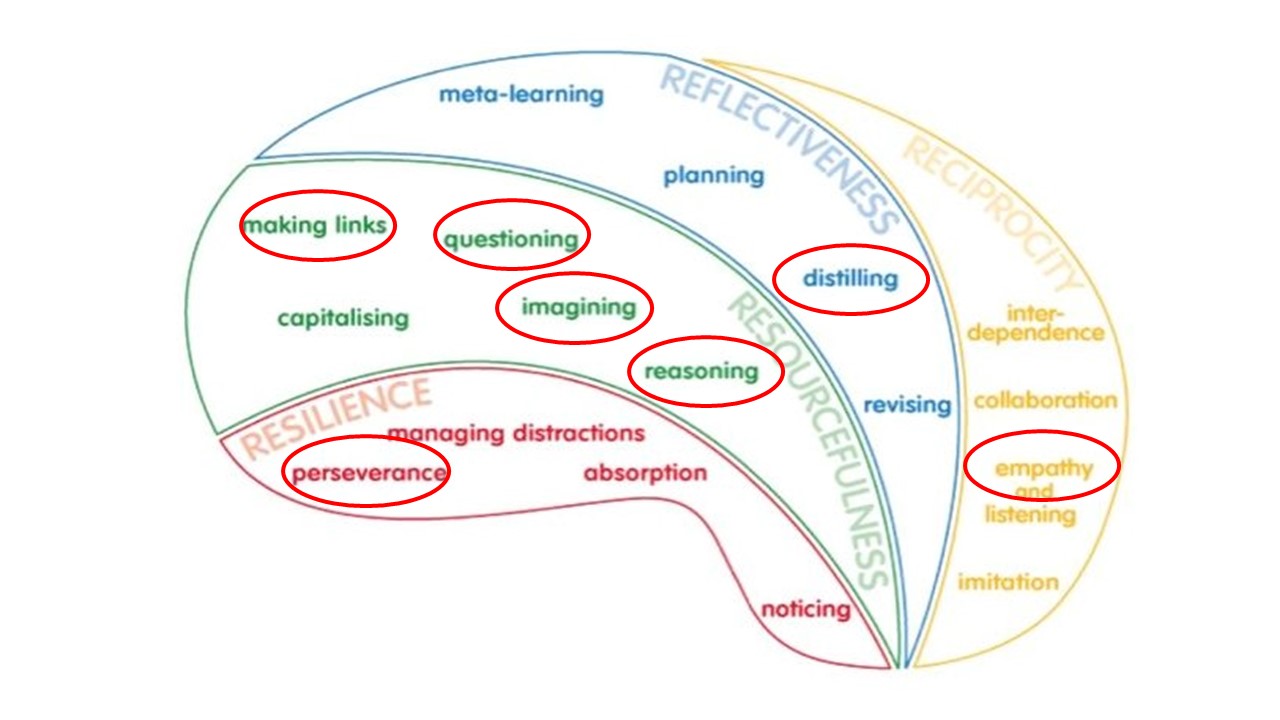
Ambitious, capable learners engage a blend of learning behaviours:
They …
- pursue their goals with tenacity
- see learning as an interconnected whole
- balance curiosity, logic and imagination
- communicate effectively
- learn from experience
The activities, think pieces and questions in this online unit aim to help you to make a start on:
- introducing students to the key behaviours of ambitious, capable learners;
- using the language of ambitious, capable learning effectively with students;
- designing the use of ambitious, capable learning behaviours into the way you teach;
- developing the confidence and skill in helping students to grow their ambitions and capabilities.
The following sections will help you to tailor your classroom practice to support the development of these dispositions.
- Section 1 explores the learning behaviours of ambitious, capable learners
- Section 2 discusses the classroom culture that supports the development of ambitious, capable learners
- Section 3 offers ideas to practise in your own classroom
- Section 4 contains some suggestions about how you might talk to encourage ambition and capability
- Section 5 makes suggestions to move practice on.
About ‘Helping learners to access Successful Futures’ – a reminder
This is one of 12 units in the suite ‘Helping learners to access Successful Futures’. The units address the 4 purposes of the Successful Futures curriculum and the 4 integral skills for modern life and work, and set these requirements into 4 aspects of a learning-friendly classroom culture within which they can thrive.
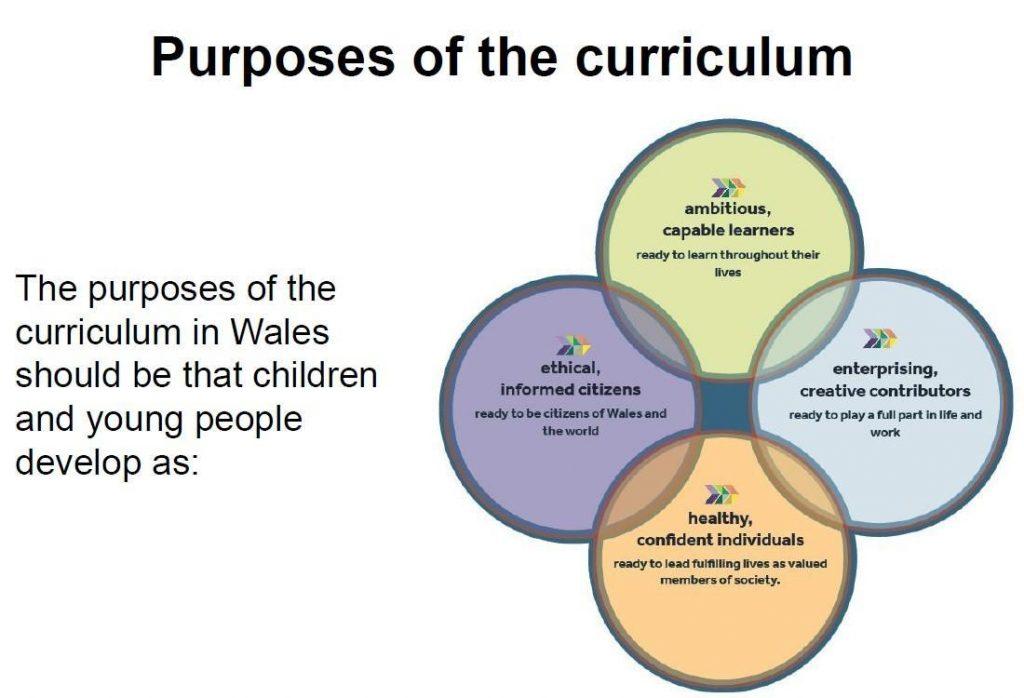 The 4 purposes of the curriculum as defined in Successful Futures are that young people should develop as:
- Ambitious, capable learners – this unit
- Enterprising, creative contributors;
- Healthy, confident individuals;
- Ethical, informed citizens.

The 4 integral skills necessary for modern life and work are defined as:
- critical thinking and problem solving (closely linked integral skill)
- planning and organising (closely linked integral skill)
- creativity and innovation
- personal effectiveness
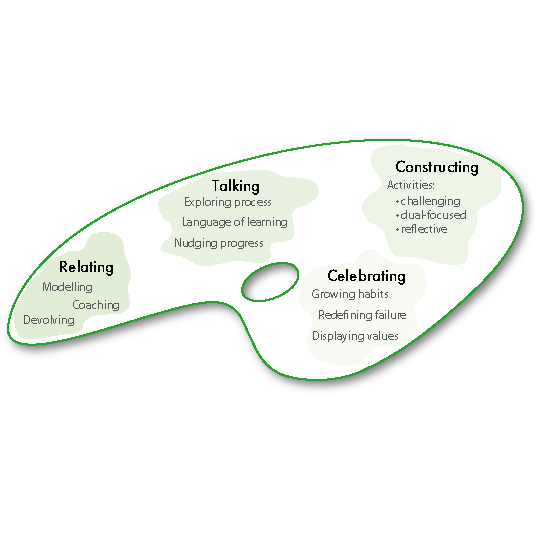
The 4 aspects of classroom culture within which these core purposes and wider skills can develop and thrive are:
- Classroom learning relationships;
- Classroom talk for learning;
- How learning is constructed;
- How learning is celebrated and grown.
Getting deeper, getting wider
Going deeper . . . . .
The Supple Learning Mind framework of high value learning behaviours.
A rich framework for learning
![BLP_Brain_Generic_no-Rs-[Converted]](https://www.buildinglearningpower.com/wp-content/uploads/2016/12/BLP_Brain_Generic_no-Rs-Converted.png)
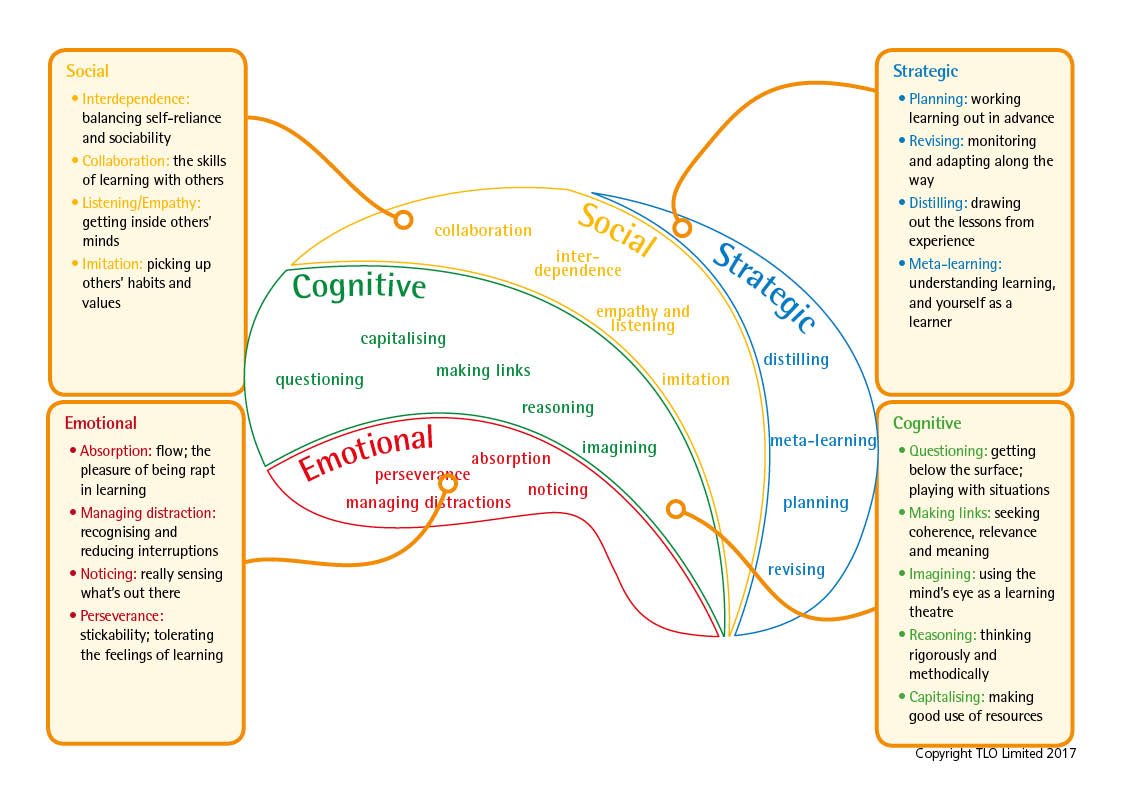
The Supple Learning Mind framework was originally conceived and researched by Professor Guy Claxton. It captures the key psychological characteristics that are judged to be of the highest value in helping students to learn and thrive in a complex world. The framework embraces each of the domains of learning and these are shown in its four parts:
- The Emotional domain of learning (sometimes described as Resilience)
- The Cognitive domain of learning (sometimes described as Resourcefulness)
- The Social domain of learning (sometimes described as Reciprocity)
- The Strategic domain of learning (sometimes described as Reflectiveness)
This learning framework shows that learning isn’t just about having a good memory; it includes how we feel, how we think, how we learn with others and how we manage the process of learning. It shows that learning is a complex process. Furthermore it provides a language that helps teachers to think about how they cultivate each of the learning behaviours and helps students to gain a better personalised understanding of how they learn content.
Each domain clusters together the high value learning behaviours that best make that domain work well. For example the social domain is made up of the learning behaviours of interdependence, collaboration, listening and empathy and imitation.
Getting wider . . . .
- Make the given wider skills more understandable and applicable to both learning in the classroom and to life;
- Offer more shape/ nuance to a learning friendly classroom and learning friendly teaching;
- Give a more practical expression to the core purposes that Successful Futures seeks to achieve.
Comments are closed.