
Classroom Culture
Culture is the curriculum of the classroom, frequently hidden from the external observer, but always all too evident to learners. It is the minute by minute, hour by hour, day by day way that learners come to understand their role as a learner. Culture is the enacted values of the teacher, not the espoused ones – it is the shadow that the teacher casts in the classroom in terms of what they do do and what they do not do, what they say and do not say, what they believe and do not believe, what they value and do not value.
There are four units dealing with shifting to a learning friendly classroom culture:
enabling students to take responsibility for their own learning
enabling students to develop a language of learning
enabling students to consciously practise and improve the process of learning [This unit]
enabling students to celebrate and value their learning behaviours
Find out what this unit is about
‘Enabling your learners to consciously practise and improve the process of learning.
Open Me
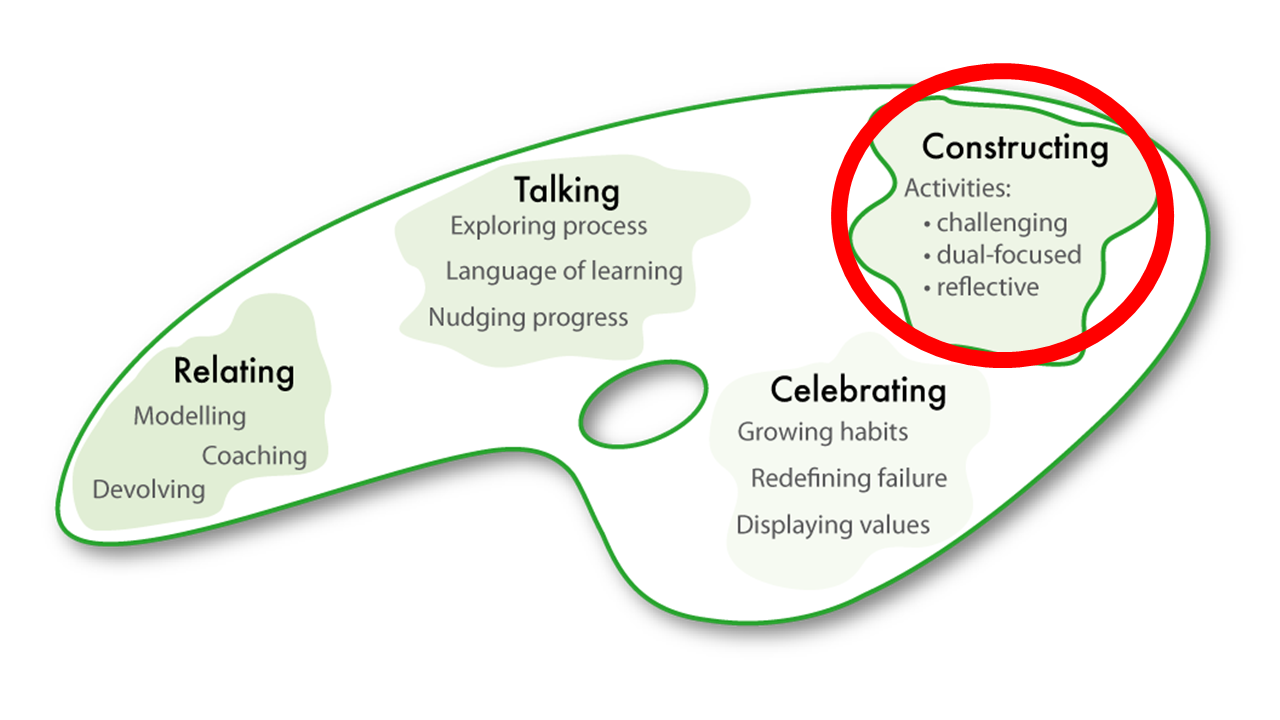
This unit focuses on just one aspect of classroom culture – consciously practise and improve the process of learning
The format of the unit will be familiar to you if you have worked through other units in this suite:
- Section 1 explores what we mean by ‘consciously practise and improve the process of learning’, details the three aspects of it, and offers some further background reading in the ‘Read More’ sections;
- Section 2 offers some quick wins to practise;
- Section 3 suggests things to stop doing, things to start doing etc. as in other units.
Background information
This short section explains the frameworks that underpin this suite of online units. It outlines the basic values, ideas and research that inform all the practical ‘how to’ ideas for use in classrooms. It’s an essential read if you are new to these units but skip it if you are familiar with its content.
Open Me
The frameworks that lie behind this suite of online units.
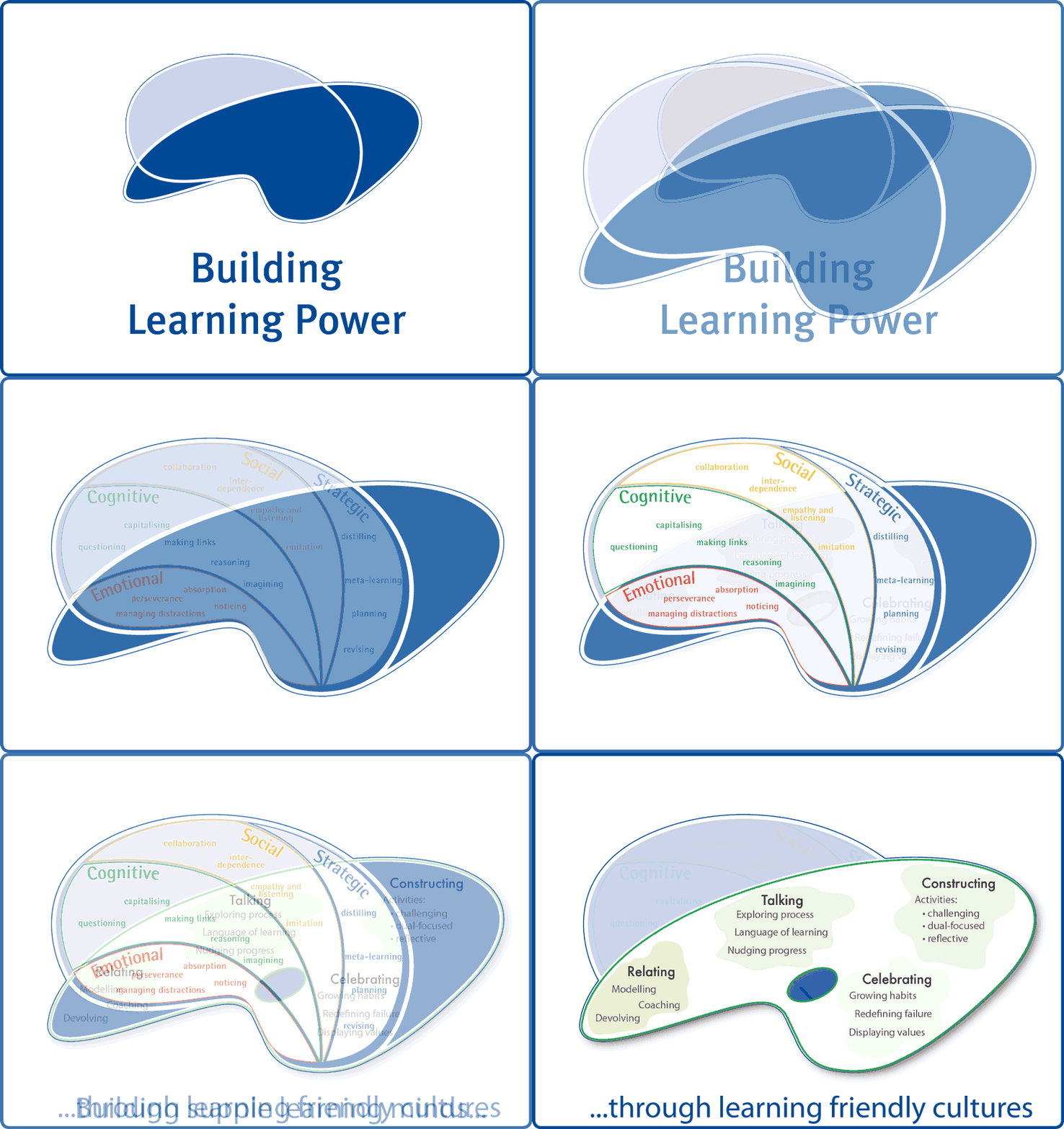
Building Powerful Learners puts at the heart of education the development of psychological characteristics that are judged to be of the highest value in young people growing up in a turbulent and increasingly complex world. There are two main parts to the approach:
A: a model of a learner and learning, in terms of a set of characteristics that work together to make a person a highly capable learner; we use ‘learning power’ to describe the effect. [Supple Learning Mind]
B: a view of the kind of pedagogy that will nurture and strengthen the learning characteristics in young people.[Teachers’ Palette]
These are bound together by the fundamental idea that ‘learning is a learnable craft’
A: What’s the Supple Learning Mind?![BLP_Brain_Generic_no-Rs-[Converted]](https://www.buildinglearningpower.com/wp-content/uploads/2016/12/BLP_Brain_Generic_no-Rs-Converted-300x216.png)
![BLP_Brain_Generic_no-Rs-[Converted]](data:image/svg+xml,%3Csvg%20xmlns=%22http://www.w3.org/2000/svg%22%20viewBox=%220%200%20300%20216%22%3E%3C/svg%3E)
![BLP_Brain_Generic_no-Rs-[Converted]](https://www.buildinglearningpower.com/wp-content/uploads/2016/12/BLP_Brain_Generic_no-Rs-Converted.png)
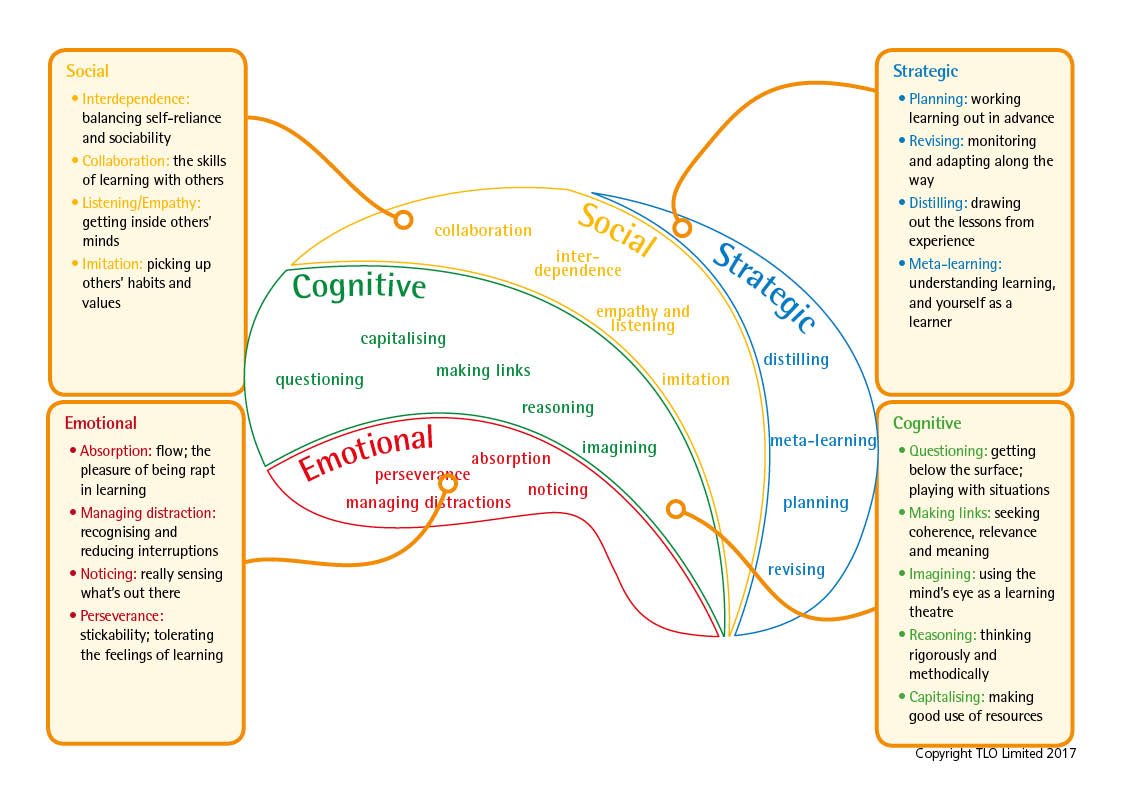
The Supple Learning Mind framework of high value learning characteristics, originally conceived and researched by Professor Guy Claxton, reveals learning as a complex process that isn’t just about thinking and having a good memory; it includes how we feel, how we think, how we learn with and from others and how we manage the process of learning. It offers the beginnings of a learning language that helps teachers think about how learning behaviours enable students to grow as learners and tackle the curriculum more profitably.
Each domain of learning…social, cognitive, social and strategic… clusters together the high value learning behaviours that best make that domain work well. For example the social domain is made up of interdependence, collaboration, listening and empathy and imitation.
B: What’s the Teachers’ Palette?

The Teachers’ Palette offers an overview of aspects of a learning friendly culture that combine to create the seedbed for building powerful learners. It includes the types of teacher action that create the conditions necessary for such learning to become habituated – how teachers relate to students, the language teachers use, the types of tasks teachers design, and the things that teachers truly value.
The teachers’ palette diagram below distils the key teacher behaviours associated with a learning friendly culture.
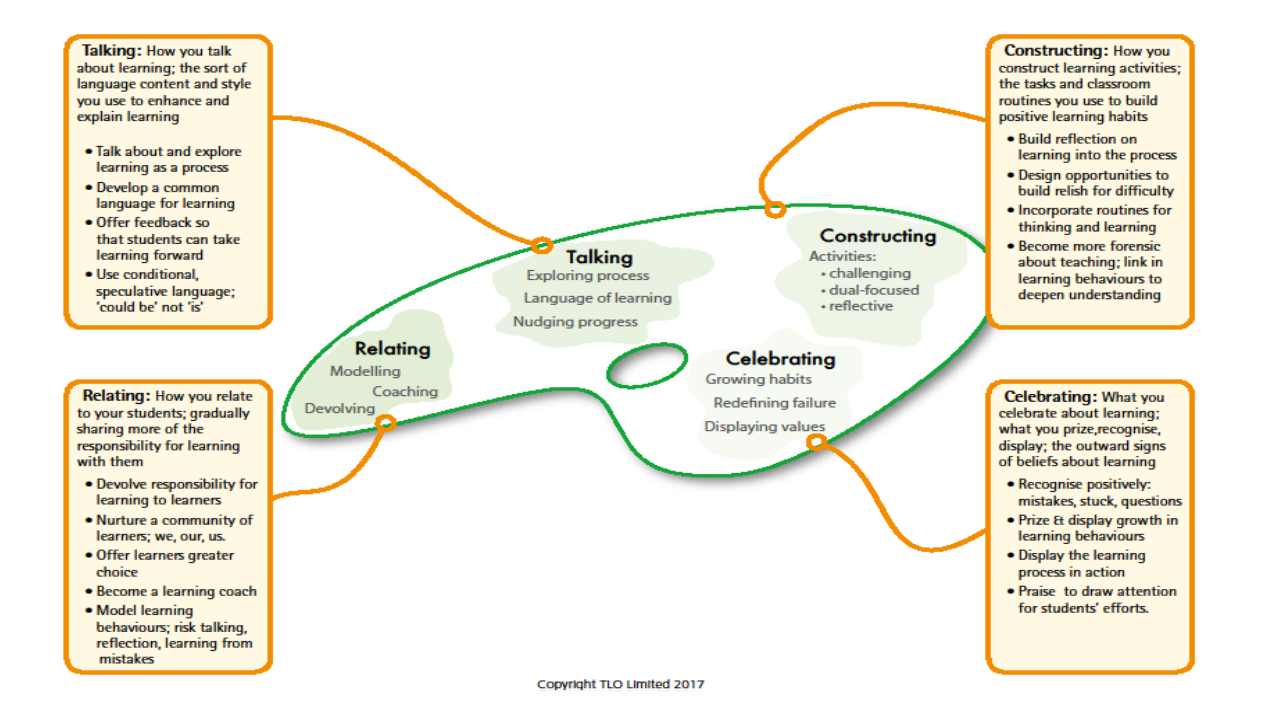
In Summary: The Supple Mind indicates the learning behaviours that we want learners to acquire, and the Palette indicates the classroom culture within which these behaviours can thrive.
What effect does the approach have on students?
Schools that are able to combine a demanding content curriculum with a focused approach to building students’ learning characteristics can expect learners who are:
- Committed to learning for life, able to learn, un-learn and re-learn and so thrive in uncertain times
- Emotionally engaged and willing to learn with enthusiasm and commitment
- Cognitively skilled, curious, logical and creative thinkers able to build a web of understanding for themselves
- Socially adept, able to balance sociability and self-reliance
- Strategically aware, interested in and able to manage their own learning
- Independent, self-confident, self-aware, reflective and self-regulating
- Ready, willing, and able to fulfil their potential
- Ready to play a full role in the learning communities of today and tomorrow.
Comments are closed.