

1. A quick overview of learning power
In a nutshell view
7 Big Questions (available to download) ++
- How close are the sentiments and ideas to the school’s current practice?
- How is development of learning behaviours viewed across the school? Why?
- Might there be any stumbling blocks?
Would you know whether or how your year 6 students were better at learning than year 2 students?

” I can’t think of anything more worth learning than learning to learn. It’s like having money in the bank at compound interest” David Perkins. Project Zero, Harvard University
2. A recent breakthrough
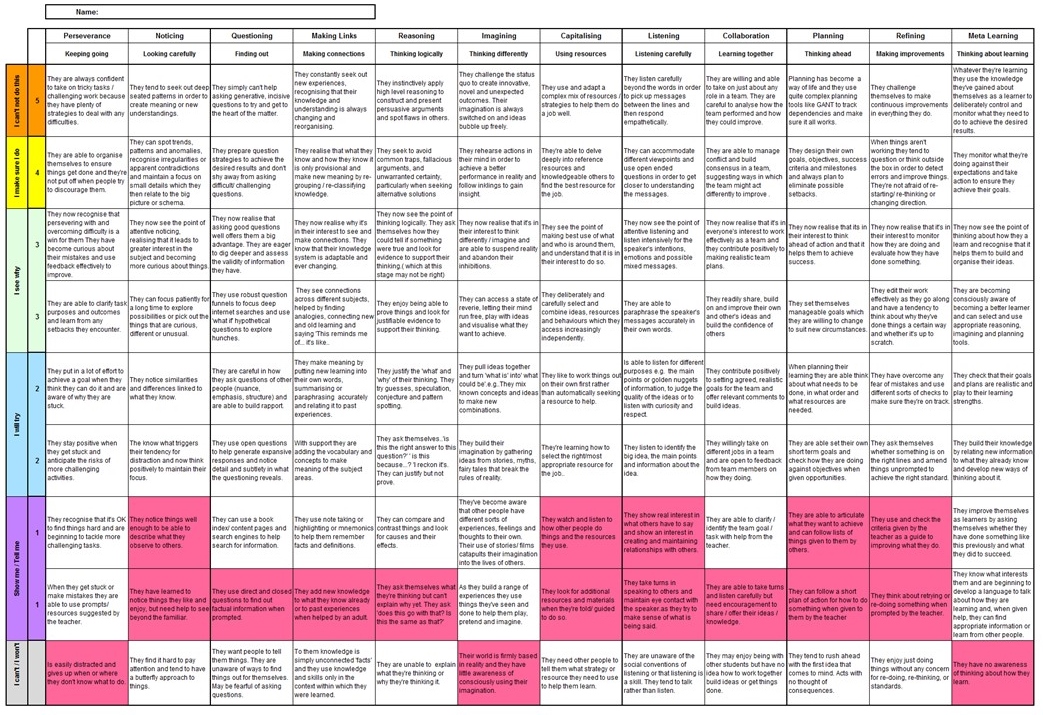
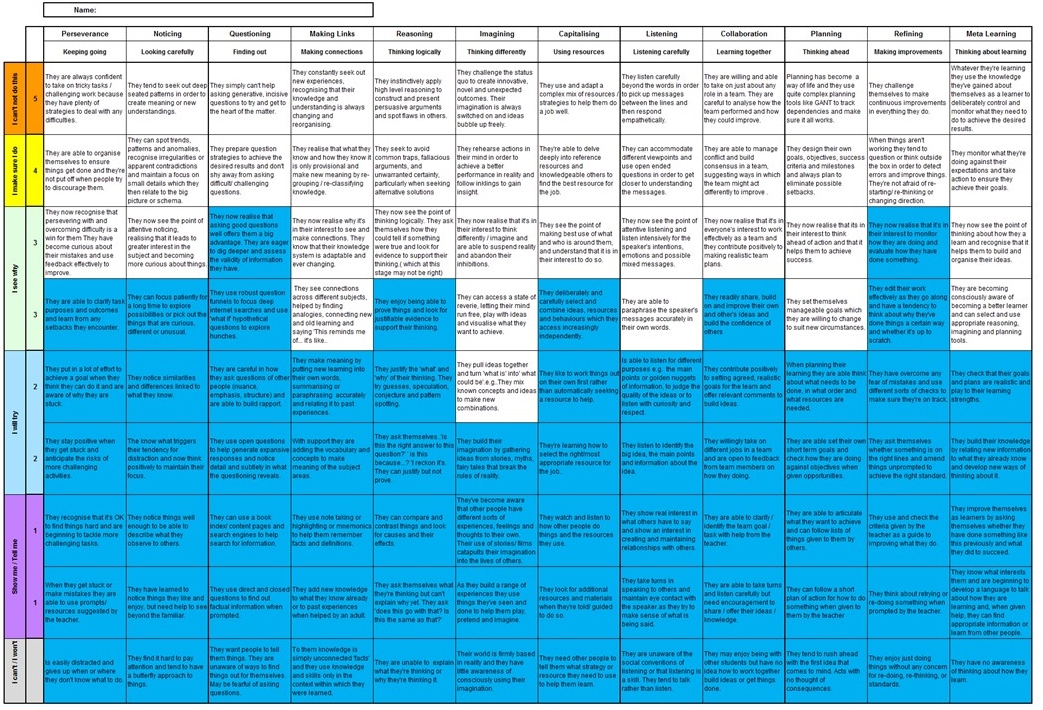
What growth in learning behaviours looks like
Based on Bloom’s taxonomy of the emotional domain.
How we might track it
Remembering that growth is not inevitable and many people will never achieve the later levels of development.
How we might use it to organise the development in classrooms
The quest is for teachers to ‘work between the lines’ to enable students to work this emotional journey.

3. Finding your students as learners first
The first unit of the course.
Teachers to discover their students’ learning behaviours:
The materials provide;
- a manageable set of tools to enable teachers uncover, collect and analyse information about each of their students’ learning character
- an outline of the research, value, makeup and growth of peoples’ learning character.
The tools will help schools discover, record, analyse and chart their students’ learning behaviours and use this information as an essential starting point for helping students become better learners. The resource helps schools to;
- use a rich picture of their students’ learning behaviours, rather than their attainment, to underpin their approach to helping students to improve, develop or catch up on their learning.
4. Our roles in making a go of it.
For TLO and for the school
For TLO... our role is to offer researched on-line content that guides and builds teachers’ understanding of;
- the characteristics of learning behaviours
- how such learning behaviours can grow and flourish over time
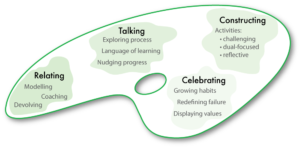
- how the classroom culture helps to develop students’ learning behaviours ( a catalogue of ideas)
- how the design of lessons also helps develop learning behaviours ( a catalogue of ideas)
- what to track in the growth and development of learning behaviours
- suggestions for working collaboratively with other teachers to bring all this about
- And we’ll call you every so often to see how it’s going and you can seek our help whenever you need to.
For school leaders...your role is to ensure staff have opportunities;
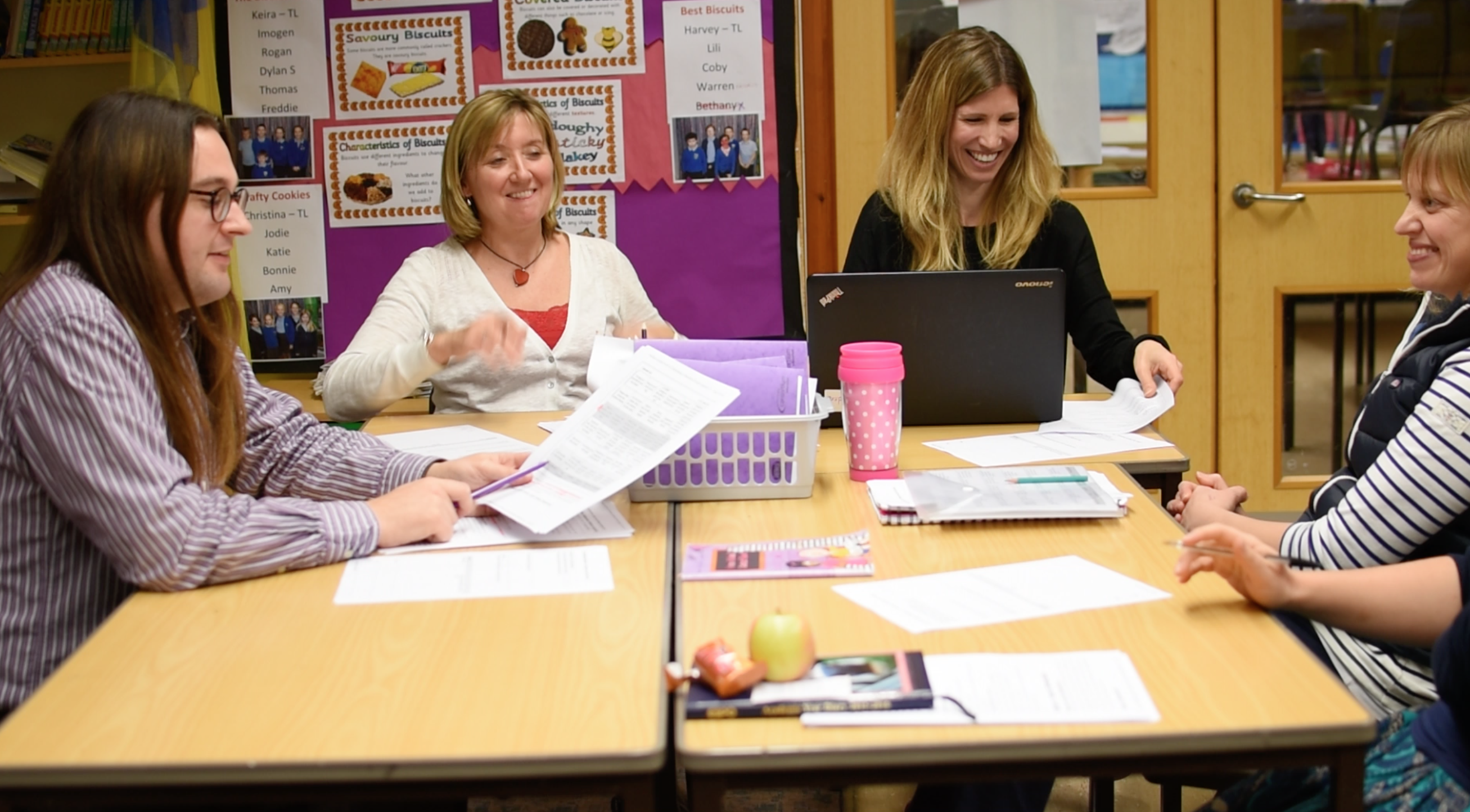
- to meet in a safe professional environment to explore putting learning power into the classroom
- to collaborate to ensure ideas in the online materials convert into “lived” practices in classrooms
- monitor and celebrate their changing practice.
Keys to making it successful
1.Build staff learning into the school’s meeting structures
Teams learn and develop by:
- discussing and unpacking the online information;
- planning how to make use of it in their classrooms;
- questioning and probing their classroom experiments.
2. Talk about developments frequently with staff i.e. keep it alive and important
3 Monitor the development of learning cultures across the school using tools provided
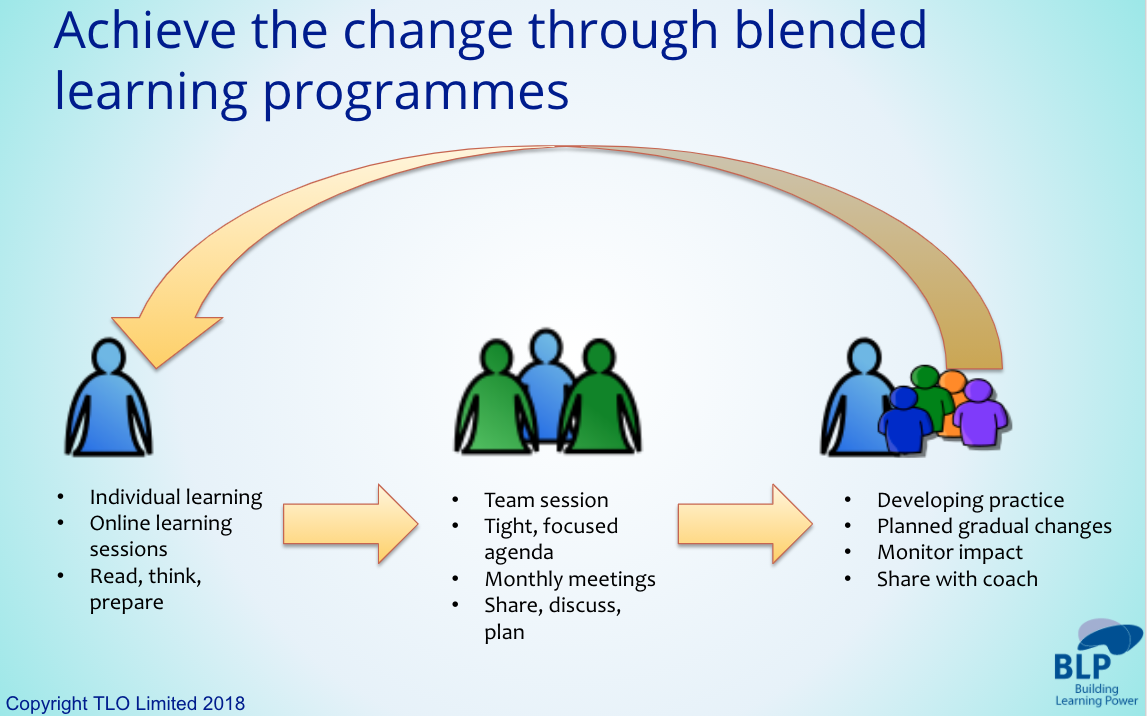
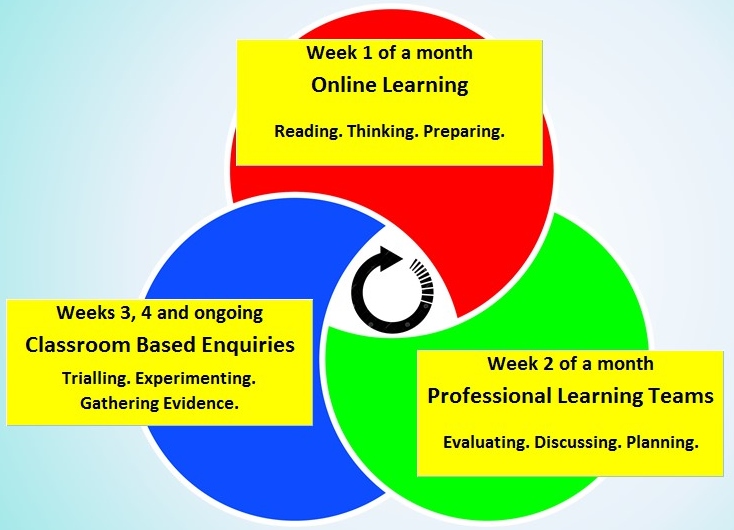
A combination of online learning, learning with and from colleagues, and learning from small scale enquiries in your own classroom.
5. Year 1 Playing the Learning Power Game.
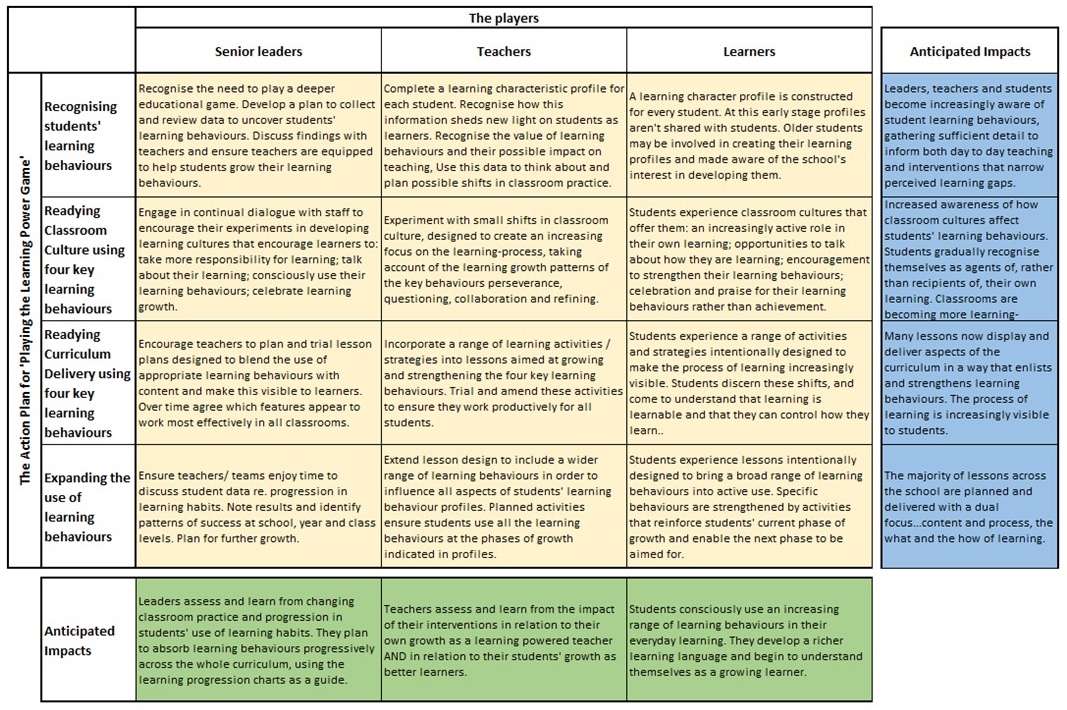
The big picture of the ambitions of the programme
- starts by introducing the idea of how learning behaviours grow and offers the tools to track this growth
- works then on adapting the culture of classrooms
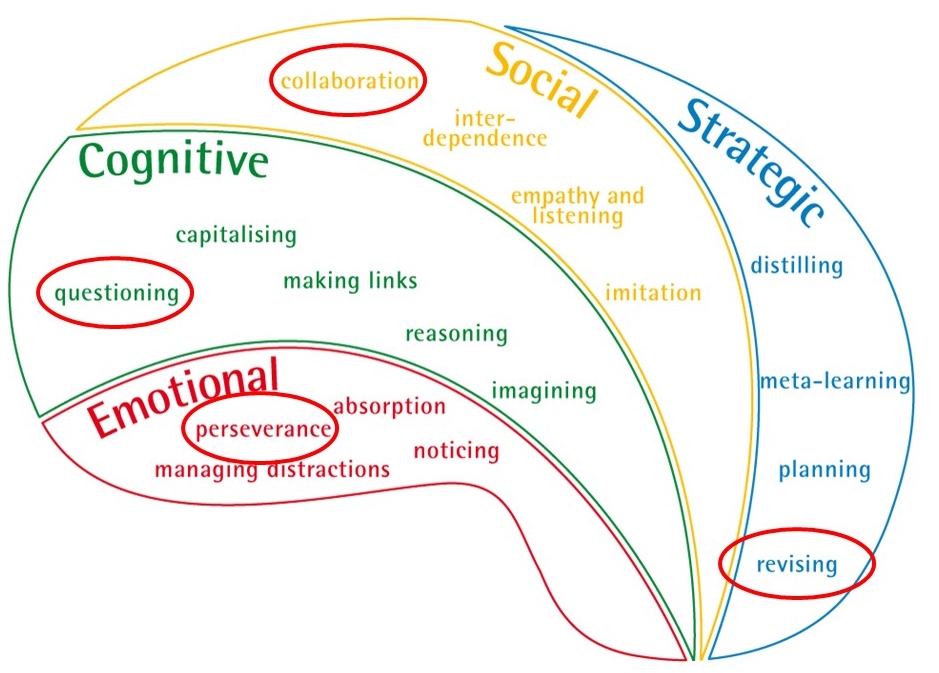
- starts slowly to introduce Foundational Four learning behaviours into lessons (perseverance, questioning, collaboration, revising.)
- offers monitoring tools to track development of the learning environment
- broadens out to include development of more learning behaviours once the Foundational Four are sound
6. Making year 1 a success
Timing of the content units
The course is divided into units, each of which will take several months to work through. The units are available for use online by every member of staff, any time of the day or night.
Unit 1 Finding learning power...quick summary of what it’s all about and the tools to collect the data. Expect this to take a couple of months. Introduce. Collect the data. Discuss what it means.
Unit 2 The classroom culture… a summary of the big ideas and a rich catalogue of ideas linked to student growth. The teachers work ‘between the lines’ of the development charts. Expect this to take 3 0r 4 months to work through. ++
Unit 3 Lesson design...a rich explanation of curriculum and lesson building using the four foundational learning behaviours plus an extensive catalogue of practical ideas. Expect this to take at least 3 months to begin to show fruit. ++
Unit 4 Broadening the scope... a quick explanation of a further 8 behaviours with a few ideas as to how they could be introduced and used in lessons.. Expect this to take as long as you like.
This tool explores aspects of the 4 key learning behaviours – Questioning, Collaboration, Perseverance and Revising.
7. Going deeper in years 2 and 3
Why it’s worth going further
From playing to professionalising
Playing the Learning Power Game makes a start on the foundational four learning behaviours and takes a swift venture into 8 more learning behaviours. Students are now ready and willing to engage more constructively with their learning.
The next step expands all their emotional, social, cognitive and strategic behaviours, and adds the all-important able. The Professional Learning Power Game will broaden students learning repertoire because teachers broaden and deepen the range of behaviours they surface in lessons.
Phase 2 goes broader and deeper by;
- providing richer and more extensive growth charts
- offering greater emphasis on curriculum and lesson development
At the heart of The Professional Learning Power Game lies a deeper concept of progression in learning behaviours. How you get better at the 12 key learning behaviours is fleshed out. It is this focus on a broader sense of progression for the wider group of learning behaviours that makes this next phase in the programme so fascinating and worthwhile.
Phase 2 is longer and more flexible
The Professional Learning Power Game’ . . . consists of online modules that offer progression charts, activities linked with teacher talk, and frameworks to help design dual focused lessons. They provide a deeper, richer look at learning so that teachers:
- gain a better sense of how to steer students growth as learners;
- use a richer language of learning effectively;
- design a curriculum to promote growth in learning behaviours;
- develop their confidence and skill as learning coaches.
The online modules can be used in whatever way the school sees fit. The modules arm teachers with material to support their efforts to apply a more forensic approach to learning.
Comments are closed.