
All lessons function on two levels, they have twin intentions. On the one hand there is content to be acquired, and on the other there are learning behaviours to be exercised in pursuit of this content. The factor that differentiates a standard lesson that effectively ‘delivers the content’ from a learning powered lesson is that the teacher has to think, in advance, about:
- the learning behaviours that are necessary for successful content acquisition;
- the design of activities or tasks that will stimulate these behaviours;
- how learners could reflect on and evaluate their use of these behaviours.
The cultural shift is about understanding how students are learning as well as what they are learning.
In this section you will find:
- examples of how teachers manage learning
- explanations of different ways to plan for learning
- long term planning
- medium term planning
- lesson planning
- a format to assist in planning dual-focused lessons
- activities to help start this journey
- encouragement to try things out with your learners
- suggestions of ways to plan to expand your lesson design
The key features of dual-focused teaching
- Learning, rather than performance is made the object of learning.
- Reflecting on learning and reviewing learning are designed into lessons
- Learning activities are designed to stretch and challenge content acquisition and learning behaviours.
- Lessons become more interesting and challenging by how teachers consciously choose learning behaviours to couple with content.
Three aspects of dual focused teaching. Read now.
Three aspects of dual-focused lessons
Aspect 1: Lessons with a dual focus – lessons are designed intentionally to deliver content and to exercise learning behaviours, and students are made aware of both. The learning behaviours drive the content acquisition, the content is the exercise regime for the learning behaviours, each enhancing the other.
Linking content with learning behaviours
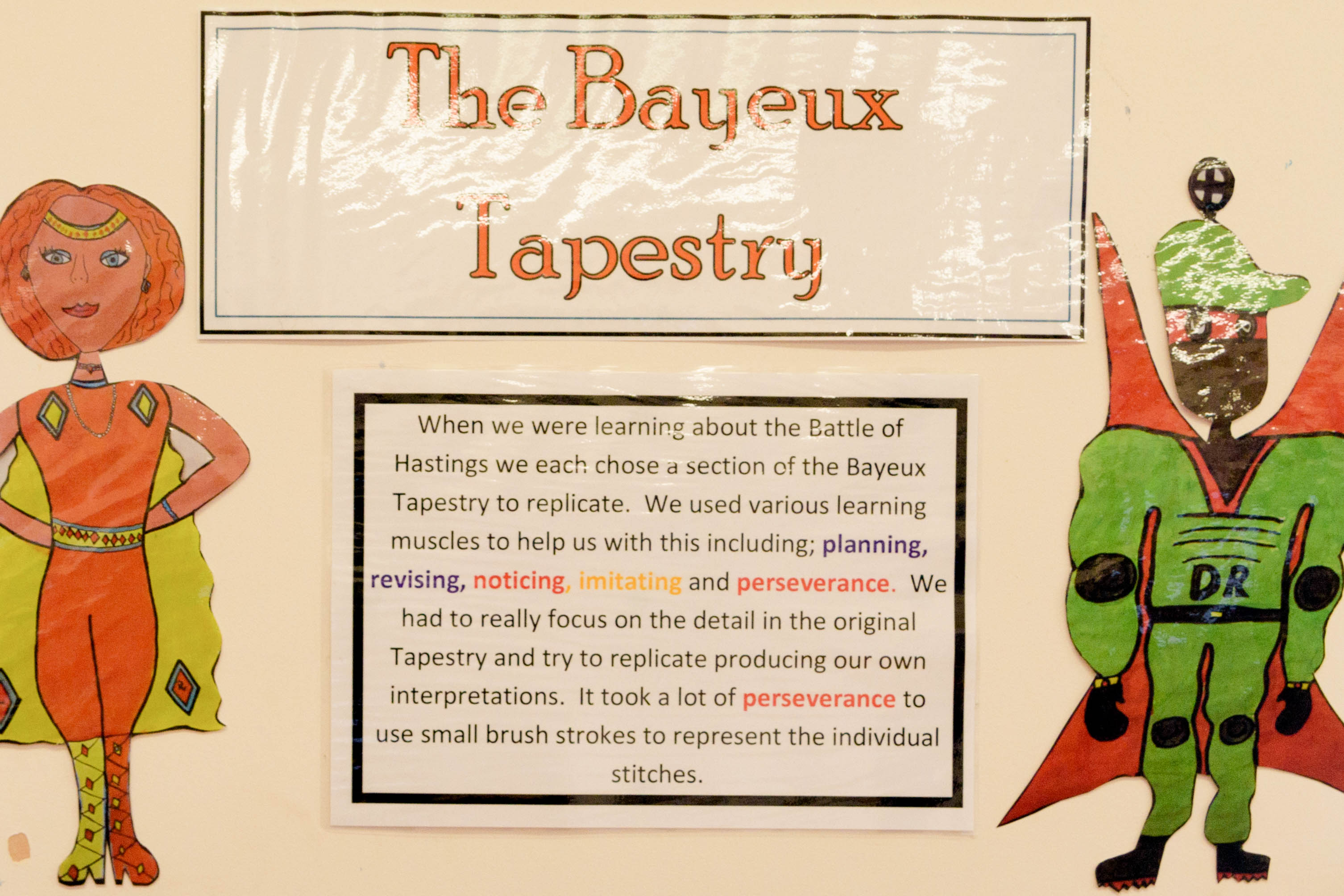 Whether we realise it or not, all lessons have a dual purpose:
- The content dimension, with material to be mastered
- The ‘epistemic’ dimension, with some learning skills and habits being exercised.
In conventional lessons where the teacher remains the focus of attention and the initiator of all activity, and where the epistemic dimension is not acknowledged, students gain habits of compliance and dependence, rather than curiosity and self-reliance. In developing learning power, teachers are making conscious choices about which habits to introduce and stretch and how best to couple these with content so that lessons become more interesting and challenging. Through such overt coupling of content and specific types of process, students come to know, understand and take control of their learning behaviours – they knowingly use and develop the whole range of learning behaviours. Ask yourself:
- Do I ask myself “How are students going to learn it?” instead of ‘How am I going to teach it?”?
Aspect 2: Rich and challenging activities – increasingly open-ended activities are designed to engage, to stretch and to challenge. The learning is not over-scaffolded, and the inherent difficulties are not avoided or diluted by overly-helpful teachers. The activities stretch and challenge both content understanding and learning behaviours.
Rich, challenging activity
 Learning is always an emotional business and learning how to manage this is best done ‘on the job’ in the course of learning rather than as a separate stand-alone activity. Emotional engagement is a prerequisite of powerful learning, it’s what gets you interested enough to be willing to put in the effort to get better and see the value of pushing yourself. So lessons aren’t just designed to make use of different kinds of learning behaviours but to give those behaviours a good work-out. Activities are designed to:
- be challenging and where being stuck and confused are regular and fruitful experiences.
- give students the opportunity to ‘learn what to do when they don’t know what to do’ – to work on wild tasks, rather than tame ones, where there’s plenty of scope to get lost and perplexed.
“The presence of challenging learning intentions has multiple consequences. Students can be induced to invest greater effort, and invest more of their total capacity than under low demand conditions.”
(Hattie, Visible Learning)
Ask yourself:
- What proportion of tasks in my classroom are rich and challenging?
Aspect 3: Lessons with in-built reflection – reflection on content and reflection on learning behaviours is routinely built into lessons. Review points, rather than the formulaic plenary, focus students on what they have learned and how they have learned it. Reflection is done by students for themselves, not by teachers on their behalf.
Build in lesson review points – so that students reflect for themselves
 The importance of reflection in the learning process is well documented. We do not learn simply by doing, we learn by doing and by reflecting on what we have done and how we have done it. But lesson review points (or plenaries) are often teacher-led. Too often they are a recap of what the teacher wanted students to learn – little more than a restating of the learning intentions and a quick check of student understanding. Necessary, maybe, but not the opportunity for students to reflect for themselves on what they have learned and how they have learned it. Try the simple method of students talking in pairs to distil:
- three things they have learned today;
- three things they still need to find out;
- three ways they learned today;
- three things they hope to do next lesson.
One or two pairs are selected to feed their opinions back to the rest of the class. Advantages for the teacher:
- You get to hear what they think they have learned, as opposed to them getting to hear what you think you have taught them;
- You get a rest at the end of the lesson while they do their reflection activity.
Ask yourself:
- To what extent is Reflection on either content or process a consistent feature in your classroom?
Comments are closed.