
Some ideas to encourage a Planning frame of mind.
In the early stages of building your students’ learning power your role is to: make them aware of the behaviour; talk about it (what, how, why, when, if); celebrate its use; give opportunities to practise it, both in lessons and elsewhere; reflect on it to improve it. This staged start is reflected below…
- Firstly… make students aware of the use and importance of planning…when, where, why, how they are or could use it
- Then… explore planning a little more through the language of planning
- Try… using planning as a lesson starter to tune students into using it
- Then start… blending planning into the way you teach the content. Use specific planning strategies to deepen content understanding.
- Ensure… students reflect on the success or otherwise of their planning frame of mind.
1. Make students aware of Planning
How you make students aware of the words that describe the behaviour and why it is important to use it.
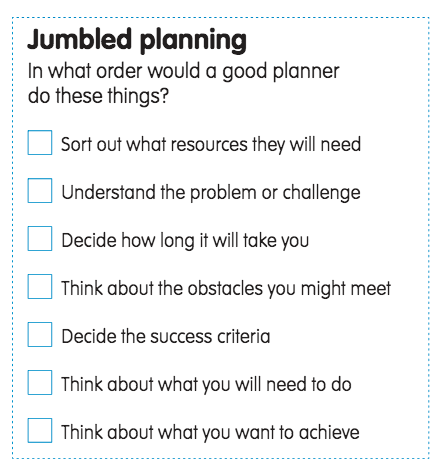
*Jumbled up planning
click to enlarge
Can you put these jumbled aspects of planning into a sensible order? Could you use the outcomes to create a planning flowchart with your class to guide future planning?
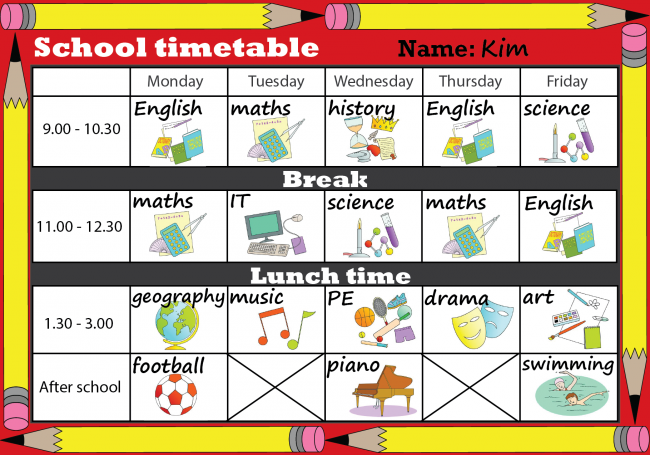
Timetables . .
Click to enlarge
Ask students to think of other things that need a timetable or plan. Start a display table and board of anything they suggest or collect. You could find some bus and train timetables, a plan of the school and playground or a dinner menu for the term or a recipe and so on.
*Structure an extended project

Give students a pack of cards that describe the 10 or so sections in an extended project based on the Driving Question: Where’s the safest place to live? Ask them to sequence the material to make clearest sense. Ask them to give each section a generic heading.
Challenge students to prepare the outline structure for a response to other Driving Questions, for example, ‘Is Planet Earth injury prone?’ ‘Where did the dinosaurs go?’ ‘Why don’t people stay at home?’ ‘Should we choose to end a human life?’ ‘Is the idea of God more trouble than it’s worth?’
Agree with the class the generic headings for an extended piece of work – display it as an aide-memoire in the future.
2. Explore the language of Planning
How you might extend the language and understanding of this behaviour
*Discuss planning

Design a planning sheet to use with students when you are planning an activity with them. You might include these and other headings:
- What are we trying to achieve? (agreed goal, outcome)
- How will we know we have been successful? (success criteria)
- What do we need to do? (actions, jobs)
- What will help us? (resources)
- What might be a problem? (traps, obstacles)
- What will we do about it? (What- if or contingency plans)
- Who will do what? (roles) [Simplify according to age range.]
Extend the language of planning
Collect words that tell you how people plan.

click to enlarge
Relate planning to well-known sayings …
If you fail to plan, you plan to fail.
Hit the ground running.
Cross that bridge when you come to it.
3. Use Planning as a lesson starter
Use a quick starter to key students into the learning behaviour you want to concentrate on in the lesson. i.e. here you are starting up the planning behaviour
*’What will it look like when it’s finished?’
Too often students start a task without giving thought to what it will look like when it has been completed, what a good one will look like. Some find it easier to plan ‘in reverse’ – working backwards from the finished article to where they are now to establish a sensible plan of action.
Make WWILLWIF the regular precursor to any action. Ask students to determine WWILLWIF for themselves in conjunction with others. Help them to visualise this in an appropriate form.
As you develop greater understanding of planning you will need to design learning activities which, by their very nature, will deepen students’ ability to plan AND their understanding of the content.
Here is an idea where, by using planning, students will gain an understanding of the content AND will develop a planning habit.
4. Focus on Planning as a learning strategy
Draw out the planning behaviour being used in a thinking routine.
*Visible Thinking Routine
How long will it take ?
 This routine helps students to anticipate what needs doing and how long it might take. It also encourages them to consider the sequencing of the activity. There are three questions:
- What needs to be done ?
- What order will you do it in ?
- How long do you think it might take ?
The natural place to use this routine is prior to embarking on a piece of extended work in order to slow the impulse to ‘get on with it’ and to encourage a more strategic approach.
And here is an idea that will help students to understand the planning process.
5. An activity to experience and strengthen Planning
Design specific activities to highlight and strengthen the behaviour
Your challenge is to plan a two-day visit to London for a group from the school. Seven events are to be scheduled over two days, and two of the events are already fixed. Creating a plan is not too difficult, but then one of the venues has to close unexpectedly… How will you need to revise your plan in light of this? Here is a very practical example of how you might develop the emotional climate of the classroom and make it planning friendly Learning mats are A4 laminated sheets that show various aspects of a learning habit. Keep them on desks/tables or as part of a wall display. A useful resource for tutor time to guide reflection and a wide ranging discussion. In the early stages of building your students’ learning power your role is to; make them aware of the behaviour; talk about it (what, how, why, when, if); celebrate its use; give opportunities to practise it, both in lessons and elsewhere; reflect on it to improve it. This staged start is reflected below… How you make students aware of the words that describe the behaviour and why it is important to use it. Invite the students to move around a big open space then stop and make the shape you call out. Create an area of the classroom which is dedicated to and celebrates the skills of reviewing and improving. Set aside a table in the classroom, and equip it as if it were an office – writing equipment, computer, office chair etc. This is called the ‘Editor’s Desk’, which is set aside for a student to use when they are in editing, drafting, redrafting, correcting or improving mode. Construct checklists with students itemising the important things to check before they consider something is finished. Here’s just one example: How you might extend the language and understanding of this behaviour Collect words that describe what a good reviser does. How else might we talk about Revising? Use a quick starter to key students into the learning behaviour you want to concentrate on in the lesson. i.e. here you are starting up the revising (Re-thinking) behaviour Use Optical Illusions to remind students that once we have seen something from one perspective, it is hard to change our minds and see it / think about it differently. Use an appropriate thinking routine to practice the behaviour. I used to think . . . . . Now I think. This routine helps students to reflect on how and why their thinking/understanding is changing. Remind students of the topic you have been working on. Ask them to respond to each of the sentence stems: I used to think…, Now, I think… Alternatively ask students to write down their views at the beginning of a topic. Invite them to revisit & update their answer during and at the end in light of what has been learned. Or, at the beginning of a lesson ask students to write down what they understand by a particular term that will be explored in the coming lesson (e.g. Phrase (English); Proof (Maths); Power (Science) etc). At the end of the lesson, ask them to write down what they now understand by the term. Read more on the VTR website Develop classroom activities that put the behaviour centre stage, helping students to understand the content by using the behaviour i.e. revising. Use this activity to demonstrate how opinions and hypotheses change and are revised as more information becomes available. Underline the importance of speculative thinking that is unlikely to be right first time. Groups of three or four. One stanza of a poem to each group. DO NOT REVEAL THE POEM’s TITLE! Explain: The group has to make assumptions about what they are reading based on the limited information they have. Ask groups to: Next, exchange stanzas with another group Repeat the process about four times. Run a formative plenary: What do we know so far? Now issue all groups with the complete but cut up poem and ask students to work towards a sequence that makes sense. Extend understanding of revising by exploring; We have found Mushrooms by Sylvia Plath a useful poem to start with. Download it in cut up form here Learning mats are A4 laminated sheets that show various aspects of a learning habit. Keep them on desks/tables or as part of a wall display. Use them during lessons as prompts to promote use. Refer to them at the end of a lesson to assess which were used, which worked and why. The Rating Wheel describes an expert ‘Reviser’. Use the wheel as a reflection tool for students to consider which skills they know about, which they have used and which might need improvement. In the early stages of building your students’ learning power your role is to; make them aware of the behaviour; talk about it (what, how, why, when, if); celebrate its use; give opportunities to practise it, both in lessons and elsewhere; reflect on it to improve it. This staged start is reflected below… For example: How you make students aware of the words that describe the behaviour and why it is important to use it. Use this quiz to get students thinking about the process of learning and how they are as learners. The purpose of this story is to introduce thinking about learning. It doesn’t by any means introduce all the learning ‘muscles’ but it begins to focus thinking about how we learn and what it is that good learners do. It offers a way to introduce the idea that there are very particular things that we can learn how to do that will help us to become better learners. Does your class need a ‘learning friend’? *Pay equal attention to what has been learned and how it has been learned in plenaries and review points. Encourage students to describe and discuss the learning behaviours they have been employing. Build in such moments for reflection whenever possible. You might use a Rating Wheel to capture their thinking – colour in the segments according to how much they feel they have used the learning behaviour. How you might extend the language and understanding of this behaviour Invite pupils to make themselves a ‘Things I have Learned in my Life’ scroll or book. In a small group — Think of something that one of you is good at that the others would like to learn … could be a sport or a school subject, playing an instrument, playing a game, making a drawing. Interview this person about what goes on in their head when they are practising the skill. Try questions like; Use a quick starter to key students into the learning behaviour you want to concentrate on in the lesson. i.e. here you are starting up the meta learning behaviour Rather than telling students how they will need to be as learners to be successful, share your Learning Objectives / Success Criteria and invite them to discuss and agree the types of learning behaviours that they expect they will need to use in the upcoming lesson / activity. Ask: As you develop greater understanding of learning you might design learning activities which, by their very nature, will deepen students’ tendency to become more aware of how they are learning and the effect this is having on their understanding of the content. Draw out the meta learning behaviour being used in a thinking routine. And here is an idea that will help students to consider how they plan to improve as a learner. Supplementary questions along the lines of ‘what are you actually going to do to achieve that?’ forces the move from wishful thinking to action planning. Such questions, asked to students who understand their learning strengths and relative weaknesses, should elicit fluent responses. But for many, initially, you will need to be prepared to scaffold the conversation, to provide suggestions and to offer strategies that might be employed. Here is a very practical example of how you might develop the emotional climate of the classroom and make it Meta Learning friendly Learning mats are A4 laminated sheets that show various aspects of a learning habit. Keep them on desks/tables or as part of a wall display. Thus far students have been reflecting on whether and / or how frequently they have been using various learning behaviours. Use this Rating Wheel to get them reflecting on how well they have used these behaviours. Challenge them to explain why they believe they have used the behaviour effectively. How could you use their answers to build definitions of effective learning behaviours?The London Game
DIY Resource
6. Reflect on Planning
*Make reflecting on planning part of everyday lessons
Learning Mats
A Learning Log to alert students to Planning across various aspects of their learning lives
NB. None of the suggestions above will lead to instant understanding nor instant changes in student’s behaviour. You will need to drip them in over time and keep building and refreshing your language of learning.
Some ideas to encourage a Revising frame of mind
1. Make students aware of Revising
Explore what it means to revise.
When they have all made their shape, ask them to look around at each other and then have another go at making the same shape differently.
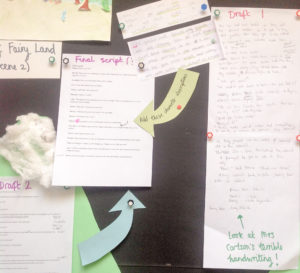
*Give revising a high profile
Display work in progress
Give revising a special place

The Editor’s Desk
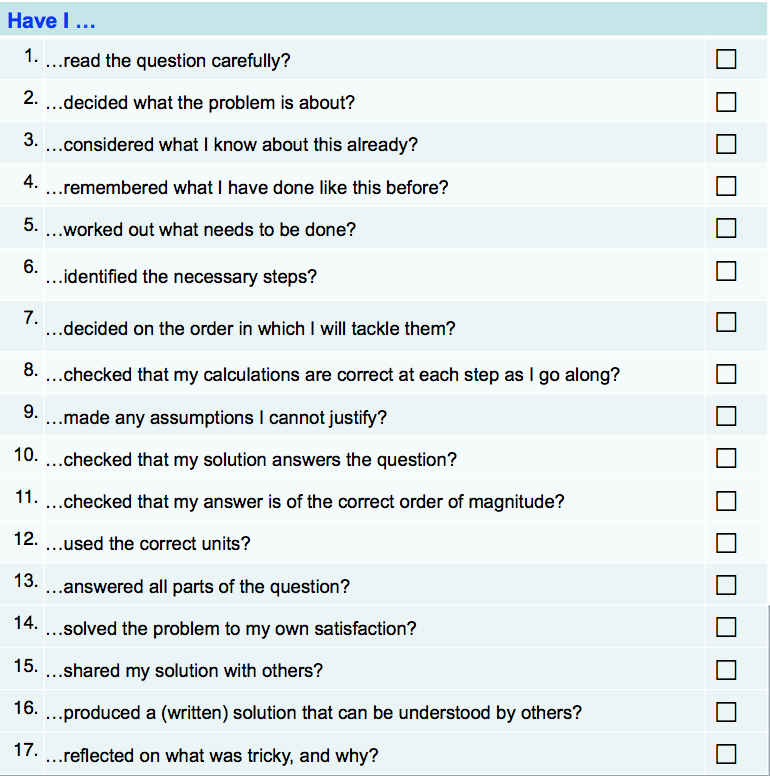
*Make monitoring checklists
2. Exploring the language of Revising
*Focus on monitoring: checking as you go along

Extend the language of Revising

Relate Revising to well known sayings
What do we mean when we say …
Change tack
Think on your feet
Fine tuning
Back to the drawing board
Keep an open mind3. Use Revising as a lesson starter
*Optical Illusions


*What do you see here?
 Ready students’ minds for adjusting their point of view, changing their mind or revising their ideas.
The technique, illustrated here through the picture of a dog leaping over First World War trenches, can be applied to any image where there is some kind of unexpected juxtaposition of conflicting aspects within the same picture.
The purpose is to draw students into speculating about various parts of the image before revealing the full image. This will necessarily require them to revise and build on their first impressions. The underlying message is that new information often forces us to change our original understandings.4. Focus on Revising as a learning strategy
*Visible Thinking Routine
5. An activity to highlight and strengthen Revising
*An activity that enhances content understanding by using the behaviour in question
Per-verse

6. Reflect on Revising
Make reflecting on Revising behaviours part of everyday lessons
*Get a handle on excellence
NB. None of the suggestions above will lead to instant understanding in students nor instant changes of behaviour. You will need to drip them in over time and keep building and refreshing your language of learning.
Some ideas to encourage a Meta Learning frame of mind.
1. Make students aware of Meta-Learning
*Find out what students know about themselves as learners
A learning fitness quiz
Introduce learning through story
Our learning friend
Create opportunities for reflection
Rating Wheel
2. Explore the language of Meta-Learning
Encourage pupils to see themselves as learners

*Explore successful learning
Time to think … and share ideas
3. Use Meta Learning as a lesson starter
*Linking ‘Learning Objectives’ and ‘Learning Behaviours’
4. Focusing on Meta Learning as a learning strategy
Visible Thinking Routine
 *Establish reflecting as a classroom routine
Teacher talk to make it work
5. An activity to highlight and strengthen Meta Learning
*How do you want / need to improve as a learner?
 The question itself is deep and searching. It requires the student to have an accurate assessment of their existing learning strengths and weaknesses, and to have identified particular aspects on which they wish / need to work.
Teacher talk
6. Reflecting on Meta Learning
*Make reflecting on Meta Learning part of everyday lessons
Learning Mats
Taking reflection to another level . . . .
NB. None of the suggestions above will lead to instant understanding in students nor instant changes of behaviour. You will need to drip these and other ideas in over time and keep building and refreshing your language of learning.
Comments are closed.