
This unit :
‘No school is an island’, as John Donne might have said, and culture change affects not just those who work in a school but all those who have a stake in it. Pre-eminent amongst those are parents. How will parents react to the school’s vision for learning, and their involvement in the endeavour?
This section explores how schools might begin to engage parents in their bigger quest of building better learners
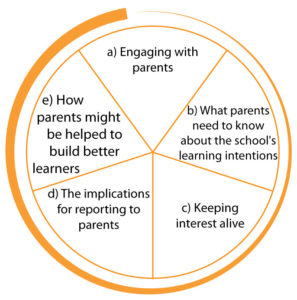
When and how might we engage parents in building their children as better learners?
a) Engaging with parents
Once schools have begun to develop their approach to implementing these learning frameworks to build better learners, it doesn’t take very long before they realise that there could be major implications for the way they interact with parents and carers. An overarching issue reported by all schools adopting these approaches is the need to develop effective ways of communicating and engaging with parents to ensure that:
- parents understand what the school is trying to do and
- what goes on at home and in the wider community complements the approaches being adopted at school.
 For more than a generation now, schools have been committed to actively involve parents. This involvement is often associated with school-generated requirements like school trips or parents’ evenings or school photographs or social events. But BLP schools are looking beyond ‘involvement’ to ‘engagement’, which implies a more active and personal level of participation in their child’s learning. Schools are interested in engagement because in recent years, research has made it clear that parental engagement with their child’s learning makes a significant contribution to the child’s achievement, and that parental engagement is a much bigger factor than school in shaping achievement. Obviously, parents also have a powerful influence in shaping their children’s character, and these aspects of character are especially useful for successful learning. They are:
- self-regulation—the ability to regulate emotions; not to be subject to temper tantrums and to be able to survive reasonable setbacks;
- empathy—being able to imagine things from another person’s perspective; to understand where they are coming from;
- persistence—being able to stick at things even when they are difficult.
Learning power approaches have much to offer on each of these three vital aspects of what it is to be a successful learner. Carol Dweck beautifully sums up the contribution of a parent intent on growing children who are powerful learners:
‘If parents want to give their children a gift, the best thing they can do is to teach their children to love challenges, be intrigued by mistakes, enjoy effort and keep on learning. That way they will have a lifelong way to build and repair their own confidence.’
The need to engage with parents

b) What parents need to know about the school’s learning intentions
The most basic thing for schools to do is communicate with parents about what they are up to—not just practical arrangements, but their vision: what it is they are trying to help their students become, and how they are going about it. In this case it means explaining to them what ‘learning power’ is, what it consists of, and why it is so important. Some schools have included parents right from the beginning, but we would recommend waiting until after trialling the approach for a term or so, when staff feel more confident about its merits and potential impact.
Information sessions
The most popular way of introducing the approach to parents has been through information sessions backed up by leaflets, newsletters, and the school website. The need to make the purpose and language of BLP accessible has proved challenging for some schools. Simply explaining the 17 learning habits doesn’t seem to engage parents’ interest reliably. Schools have found it important to highlight that:
- the approach is about helping children to become better learners, in school as well as out; enabling them to understand, use, and become more skilled in using a wide range of learning behaviours; making the children more responsible and independent as learners with outstanding employability skills;
- the approach will take some time to really embed into the culture of the school, and that it means teachers teaching a bit differently using the language of learning;
- the approach will have (or is already having) positive effects on children’s behaviour, motivation, and stickability, which feeds through to their levels of achievement;
- parents too can help their children to become better learners and that the school would value their important assistance.
If you would like a more detailed agenda for such an information evening…
Questions parents need answers to
The most successful sessions have sought to answer the following questions for parents:
- What is the approach (Building Learning Power) all about?
- What difference might I expect to see in my child’s learning habits and language?
- What will the school be doing differently?
- What will the children be doing differently?
- What can I do as a parent?
- What habits am I nurturing by the way I behave with my children?
- Which of these habits might help and which might hinder the growth of learning habits?
- Why is this something I should value?
- What place does the approach have in my child’s future?
- So what impact is it having or expected to have?
What parents need to know
c) Keeping interest alive
One information evening may be sufficient to raise awareness, but maintaining interest subsequently requires a range of ongoing strategies.
Learning activity days
Some schools hold learning activity days to help parents to understand the approach. Schools have recorded attendance of seventy or eighty parents at these events, where for past curriculum events they would have considered twenty a good turnout. These drop-in events are often organised around activities that aim to engage parents in the use of particular learning behaviours through engaging and amusing activities.
Reception Areas
The large plasma screens now so familiar in many school reception areas are being used to convey learning power messages. Snippets of video showing students using their learning behaviours, or learning focused quotes from students, have become a talking point for parents and an effective way of keeping the messages alive.
Curriculum information sheets
Many schools produce half-termly information sheets that explain what students will be learning about. Some learning powered schools have extended this valuable resource to include the focus learning behaviours linked to the content areas, the associated language of learning, and things to look out for and extend at home.
Follow on strategies
d) The implications for reporting to parents
In the past
A typical end of term report of the past would usually have concentrated on a student’s progress in each subject area, and their likelihood of success in forthcoming examinations. Reports often revolved around four overworked concepts that we have come to call The Dull Quartet: Effort, Ability, Achievement and Conduct (or Behaviour). Student’s learning was often boiled down to their level of attainment, and accompanied by cryptic comments such as ‘Tom needs to improve on his connectives.’ What, we wonder, is a parent to make of such statements? What could they do to help with Tom’s connectives? Alternatively some reports do mention learning behaviours, often with ill-targeted advice like ‘Tilly needs to ask more questions in class’. How many more? When? Why? What type of questions? Sometimes it seemed as if there was little parents could do other than endorse the report and praise their children for having done well, or exhort them to do better.
The future
Learning focused reports for parents are beginning to take a different approach. They offer parents an insight into their child’s use of and progression in learning habits. This is information is written in ways that parents can readily understand and, more importantly, do something with. It offers a talking point about what the child does at school and furthermore suggests how the parent might pick up on the points and support their child to develop further. These reports support parents to become partners in building their child’s learning behaviours.
A revolution in reporting to parents

- Does the Dull Quartet ring a bell ?
- Look at section 5.5 to consider how you might build an evidence base from which to report
- How might you harness students’ input into reports ?
e) How parents might be helped to build better learners
Schools using learning focused approaches are likely to want to focus on exactly what it is that parents can do to help their children become more powerful learners. Given that we know that what parents do at home has most impact on their children’s learning, it is not surprising that schools tend to focus next on offering ideas for parents to build their children’s learning power.
Just as learning focused approaches changes the way teachers teach, so it can influence the way parents parent. For example, if parents want to help their children see the value of effort and to develop self-belief in their talents, then they may choose to praise their child specifically for those efforts which show them ‘going the extra mile’ rather than simply for ‘getting a good mark’. Or if they want them to become more resourceful, they will create situations in which children have to work things out by themselves and hold back from helping them too soon.
Some schools are beginning to offer snappy hour-long sessions on specific aspects of the approach such as:
- ‘How to praise your child’
- ‘How to help your child when they are stuck’
- ‘Helping your child to set goals’
- ‘Recognising signs of distress’
- ’10 things to do/say with/to your child’
Obviously care needs to be taken when you begin to advise parents about parenting, but we know too well that the unguarded word from a parent at night can unintentionally undo all of the good we have done during the day. For this reason alone, finding ways to help parents to help you build better learners is important.
Comments are closed.