
Unit 7. Building the learning habit of revising.
Welcome to Building Powerful Learners. This 8 unit online programme aims to enable teachers to:
- explore how learners might become not just better at learning but effective lifelong learners;
- engage learners consciously with the ideas and processes of their own learning.
The programme combines three ways of helping you to understand, play with and become skilled in developing your students’ learning power:
1 Understand by using Read abouts…of which there are two types
- Essential Read …essential must read text.
- Extended Read …interesting, good to know, absorb when you can.
2 Analyse by using Find outs…tools to help you discover and analyse essential information
3 Experiment with Try outs…practical activities for you to try, check and perfect in your classroom
Unit 7 explores the “how” of revising.
- What are the key aspects of Revising? (Essential Read about 1)
- How effective at Revising are my students now? (Find out 1)
- How can I embed building Revising into my classsroom culture? (Find out 2)
- What sort of approaches are useful in making a start on this? (Try out 1 to 5)
- What is ‘Could-Be’ language and how can it contribute to creating a revising-friendly culture? (Find out 3)
Structuring and using the ideas below with your students over the next month or so is your seventh step in becoming a skilled learning power practitioner.
Essential Read about 1
Unpacking Revising
A well formed Revising habit involves being ready, willing, and able to:
- Self-monitor how things are going, keeping an eye on the goal;
- Expect the unexpected, having a readiness to re-shape, re-order, re-form plans to take account of new circumstances;
- Remain alive to new, unforeseen opportunities and ideas;
- Look at what you are doing with a critical eye;
- Strive to be the best you can be;
- Make sure things are on track and make improvements along the way.
So at a less abstract level, students need to learn how to deal with change, emotionally and practically. With an inflexible frame of mind they are unlikely to recognise the need to change their ideas or the way they do something. They also need to know what ‘good’ looks like; how
to keep an eye on how things are going and the willingness to evaluate how things went against external standards. When looked at from these diverse angles, growing revising moves well beyond encouraging a student to ‘have another go’.
Essential Read about 1. Introducing Revising ⬇️
What do we mean by Revising?
Making improvements
The word Revising has unfortunate connotations with Revision [for a test]. What is meant here is being prepared to do things differently in light of feedback, to be adaptable, flexible and open to change. Another word might be ‘Refining’, and indeed we’ve used the two words, revising and refining, interchangeably.
However well prepared learners are, they have to expect the unexpected. They have to have the readiness to revise / refine as they go along. Good learners are able to change their plans and think on their feet. They are able to be flexible. It may be a good decision to say ‘This is turning out to be far harder than I thought, and I’m getting less help than I imagined, and there are other interesting possibilities opening up, so I think I’ll cut my losses and quit.’ Note that the decision is based on a realistic cost-benefit analysis of the actual situation, not on frustration, pique or a blow to self-esteem.
To be effective at revising, learners need to monitor how things are going and periodically review where they have got to.
Monitoring is the art of looking over your own shoulder as you’re working away at a problem, asking yourself how it’s going.
Getting better at monitoring involves cultivating the little voice of self-awareness that keeps the strategic goals in mind, and is ready to change tack if it seems appropriate. A football manager contemplating making a substitution is monitoring, as is a teacher who decides to throw away the lesson plan on the spur of the moment and go with the interesting discussion which is developing. Students can pick up the habit and the skill of this kind of monitoring by being around people—teachers are ideally placed—who are able to model it, and who have learnt how to learn aloud, i.e. to externalise the thought processes of the vigilant monitor.
Reviewing means stopping every so often to take stock of progress, and to ensure that any emerging product—an artwork, an essay, a draft business plan—is on track. Reviewing requires the ability to look at your own work with the critical eye of an editor, and not be afraid of the possibility that some corrections may be needed. A writer may put a piece of work aside for a while and then come back to look at it afresh. An athlete may sit down and look at the video of her starting technique to see if any adjustments need to be made. But reviewing is what the low-achieving maths student, for example, is very often unable to do.
Donald Schon called monitoring ‘reflection in action’, and reviewing ‘reflection on action’. Again, modelling and coaching can help develop these abilities.
Try outs 1-5 offer a range of things that you can do to strengthen and build your students’ inclination to revise and refine their efforts to achieve high quality responses.

Re-find out 1
Focus on the Revisers in your class.
Just to get you tuned in – have a quick look back to what you discovered in Unit 3 about Revisers in your class.
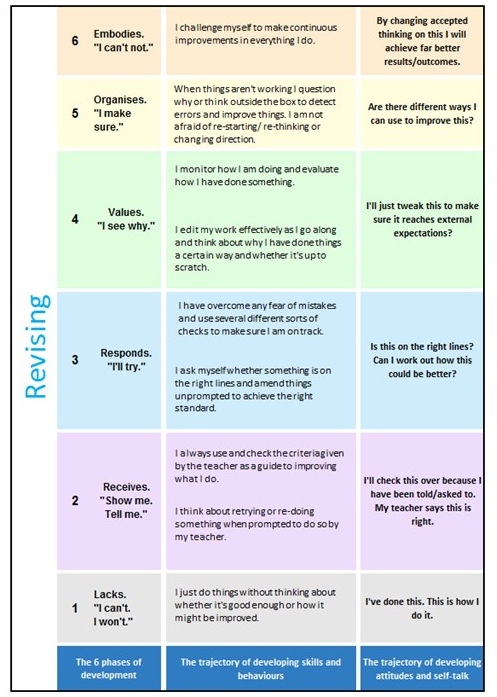
Through the lens of the Revising progression chart, you should have a fairly clear view of the Revising behaviours that your students do, and do not, currently exhibit.
- The majority of students may well display a similar set of positive behaviours (ie the majority may be in the purple/blue phase)
- You will also be conscious of some students who still lack positive behaviours (ie they are still firmly rooted in the grey/lacks phase of the progression chart)
- But some students will appear to have made more progress than the majority.
A word of warning.
While you may be tempted to focus your efforts on the majority for greatest impact, you’ll need to take care not to do so at the expense of your ‘grey’ students, as these are your potential underachievers in the future.
What to look for.
In Try Outs 1 to 5, look out for teaching ideas that you think will have the greatest impact on your particular group of learners. Don’t attempt to try all of the ideas – better to do a few thoroughly than to adopt a scattergun approach.
Growing Revising
A trajectory of developing behaviours, skills, attitudes and self-talk
Find out 2
How much does my classroom culture encourage Revising?
Culture is the curriculum of the classroom, frequently hidden from the external observer, but always all too evident to learners. It is the minute by minute, hour by hour, day by day way that learners come to understand their role as a learner. Culture is the enacted values of the teacher, not the espoused ones – it is the shadow that the teacher casts in the classroom in terms of what they do do and what they do not do, what they say and do not say, what they believe and do not believe, what they value and do not value.
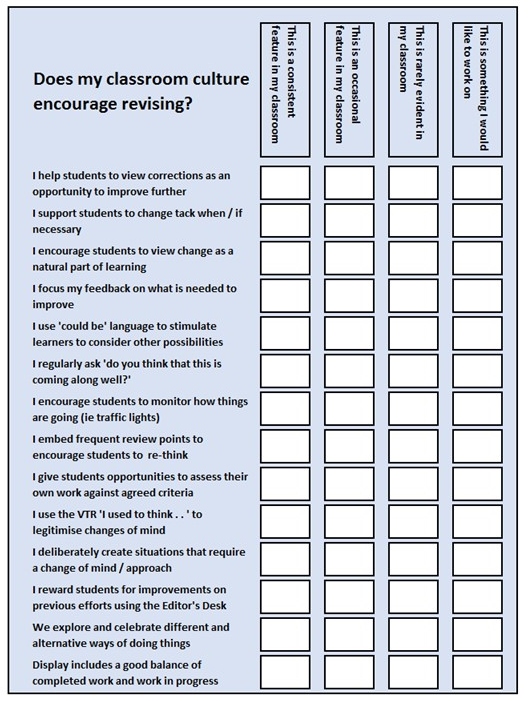
Here is a selection of features that might begin to shape the emotional climate of your classroom to encourage Revising.
Download and print a copy.
Reflect on your current classroom culture. Which of the features of the Revising-friendly classroom are:
- already a consistent feature of your classroom?
- an occasional feature of your classroom?
- rarely evident in your classroom?
And, which of these features are you interested in further developing?
Take your completed sheet to the end of the unit meeting, but in the meantime have an informal chat with some colleagues. Is anyone already making progress with one of the features you would like to work on? Do you have any consistent features that others might learn from?
Try out 1
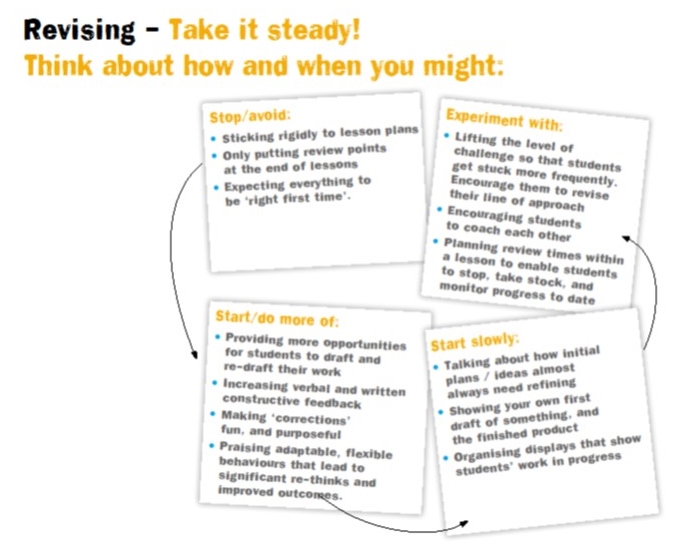
A range of little culture shifts
Have a think about your current classroom culture in relation to Revising.
Begin with the ‘stop/avoid’ box – if any of these teaching behaviours are still in evidence in your classroom it would be worth thinking through how they can be eliminated, since failure to do so will undermine the changes you are hoping to achieve for your learners
Then cast your eye over the other 3 boxes. Which ideas appeal to you? Which do you think will have the greatest impact on your students?
Now seek out teaching ideas below in Try Outs 2/3/4/5 that you can use to move your classroom culture forward.
Try Out 2 focuses on ideas for moving responsibility towards learners (Relating);
Try Out 3 focuses on developing a learning language for Revising (Talking);
Try Out 4 focuses on how lessons/activities can be designed to activate Revising (Constructing);
Try Out 5 focuses on how Revising can be rewarded / praised / celebrated (Celebrating).
Try out 2
Build Revising by extending students’ responsibilities.
Self-analysis of performance and creation of feedback
In order to reach the goals of progressing in their learning – be it content or process – students must be able to self-regulate their own learning. Teachers need to provide helpful feedback to enable students to do this.
- Share assessment criteria with students and ask them to assess/comment on the (imperfect) solutions you provide. Invite them to produce improvements based on their own feedback.
- Share assessment criteria with students and require them to assess/comment on their own work, and amend it if necessary, before submitting it.
- Ensure that your written comments are framed as questions to which your students are required to respond. “What do you think you need to do to make this section more convincing?” is preferable to “This section needs more explanation”, as it moves responsibility to the learner to identify what more needs to be done.
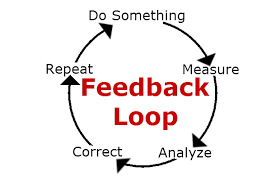
Two more ideas for extending students' responsibilities. ⬇️
End of lesson plenaries
End-of-lesson plenaries needn’t be formulaic (as they sometimes tend to be). Here are a couple of creative ideas to keep plenaries fresh and interesting. For example:
Panning for gold
- Ask students to think back over their learning as if it were panning for gold. In the first sift they might throw away irrelevant material. The last sift leaves only the shining nuggets—the really important things they have learned that they will take forward and use again. Have students discuss what they have left behind, and what they will take forward to be of real value to them in the future.

‘Tell me Three’:
End a lesson with ‘Tell me Three’ . .
- things we learned today
- learning skills we used today
- things we need to do next lesson
- ways you could become a more effective learner etc.
Ensure that students tell you three. Do not lapse into doing it for them!

Try out 3
Build Revising using a learning language
Using ‘Could-Be’ language to encourage students to consider alternatives
The importance of using ‘Could-Be’ language is well researched. It encourages more genuine engagement with what is being taught; how students will question and solve problems more readily if knowledge is presented as provisional. It’s about shifting the tone to more tentative, less cut and dried. The opposite is ‘Is’ language which positions the learner as knowledge consumers where their job is to try and understand and remember. ‘Could be’ language immediately invites students to be more thoughtful, critical or imaginative about what they are hearing or reading with a view to considering alternatives, to revising their point of view.
Begin by experimenting with how you present information to your students. Find out what happens when you use ‘could-be’ language to present information as tentative, more open to question, less cut and dried.
To find out more about the background and research behind the use of ‘Could-Be’ language, go to Find Out 3 in this unit.
Teacher talk
‘Could Be’ language includes phrase like;
- In most cases
- may include
- may on occasion
- wide variety
- could be
- probably
- possibly
- most often
- there are other ways
- one of which
- some people think that…
Two more teacher talk ideas ⬇️
Talk about and have students create success criteria.
Make it clear to students what you are looking for in a piece of learning and give them opportunities to check their ‘work ‘against the criteria, either individually or in pairs. Ensure the criteria are linked to the original learning intention. Knowing what is expected encourages students to stay on focus and to revise their work to meet the criteria. Invite students to create success criteria themselves in order to encourage ownership.
Include
- what students should know
- how much, and how, they should include opinions, judgements and their own thinking
- what skills they should be able to demonstrate
- how to link the outcome to the original learning intention.
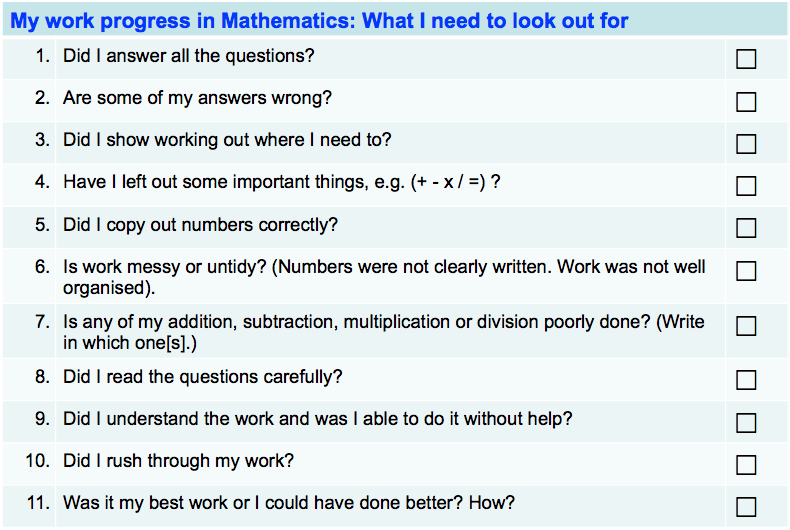
Evaluating progress towards the goal
Things to say;
- Do you think that’s coming along well?
- Have you checked your emerging outcome against your original goals?
- Are you still on track?
- What would make you change track?
- Did you have to amend your goals part way through? Why was that?
- What are you going to do about . . . . . ?
- Do you think there’s anything you could have done better, differently?
- How might you get better at that? What would be a better/alternative way of doing it?
- Are you satisfied with how it is going?
Try out 4
Build Revising into lesson design
It is through learning activities that learning behaviours get a workout. Their role is to enable your students to access and wrestle with information and ideas; to help them use and understand something; to ensure their effectiveness as a learner. The ‘right’ activity helps to make new concepts more concrete. The ‘right’ activity provides insights into new ideas and subject matter. The ‘right’ activities need to be carefully chosen and, critically, linked to the learning goal.
Use the Visible Thinking Routine ‘I used to think . . . . . Now I think . . . .’
This routine helps students to reflect on how and why their thinking/understanding is changing:
- Remind students of the topic you have been working on;
- Ask them to respond to each of the sentence stems: I used to think…, Now, I think…
Alternatively ask students to write down their views at the beginning of a topic. Invite them to revisit & update their answer during and at the end in light of what has been learned.
Or, at the beginning of a lesson ask students to write down what they understand by a particular term that will be explored in the coming lesson (e.g. Phrase (English); Proof (Maths); Power (Science) etc). At the end of the lesson ask them to write down what they now understand by the term.
Read more from the VTR website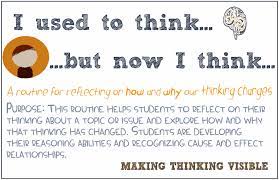
Two more lesson design ideas ⬇️
An activity that enhances content understanding by using Revising
Per-verse
Use this activity to demonstrate how opinions and hypotheses change and are revised as more information becomes available. Underline the importance of speculative thinking that is unlikely to be right first time.
Groups of three or four. One stanza of a poem to each group. DO NOT REVEAL THE POEM’s TITLE! Explain: The group has to make assumptions about what they are reading based on the limited information they have.
Ask groups to:
- Distil what they know so far, and
- List the questions to which they need answers.
Next, exchange stanzas with another group
- Does the new information answer any questions?
- Are there new questions to find out about?
- How do the verses fit together — which comes first?
Repeat the process about four times. Run a formative plenary: What do we know so far? Now issue all groups with the complete but cut up poem and ask students to work towards a sequence that makes sense.
Extend understanding of revising by exploring;
- How did opinions change as more information became available?
- Were group members willing and able to revise their views?
- How flexible was people’s thinking?
- What is the wider importance of keeping an open mind?
We have found Mushrooms by Sylvia Plath a useful poem to start with. Download it in cut up form here
Download

Give students opportunities to practise revising
What do you see here?
Ready students’ minds for adjusting their point of view, changing their mind or revising their ideas.
The technique, illustrated here through the picture of a dog leaping over First World War trenches, can be applied to any image where there is some kind of unexpected juxtaposition of conflicting aspects within the same picture.
The purpose is to draw students into speculating about various parts of the image before revealing the full image. This will necessarily require them to revise and build on their first impressions. The underlying message is that new information often forces us to change our original understandings.

Try out 5
Engage students in purposeful revising
Simply watch and wonder. How might I use this approach?
Ron Berger’s Ethic of Excellence
Build a culture of critique
Plan formal critique sessions, where students show a piece of work, explaining their ideas and what they were trying to achieve. Students are then encouraged to critique the work, but using the rules that it must be:
- Kind
- Specific
- Helpful
Students should be encouraged to phrase their critique as questions e.g. ‘Have you thought about…..?’ As a result of this feedback from their peers, students improve their work over time.
Although, surprisingly, this video is now well over a decade old it offers a perfect example of how to begin helping students to build the habit of revising their learning.
Take a look back at the revising learning mat in Unit 3. Estimate where your students are now and select one or two aspects to work on. E.g. Willing to redraft my work to improve it.
Two more Celebrating learning ideas ⬇️
Build Revising by celebrating it.
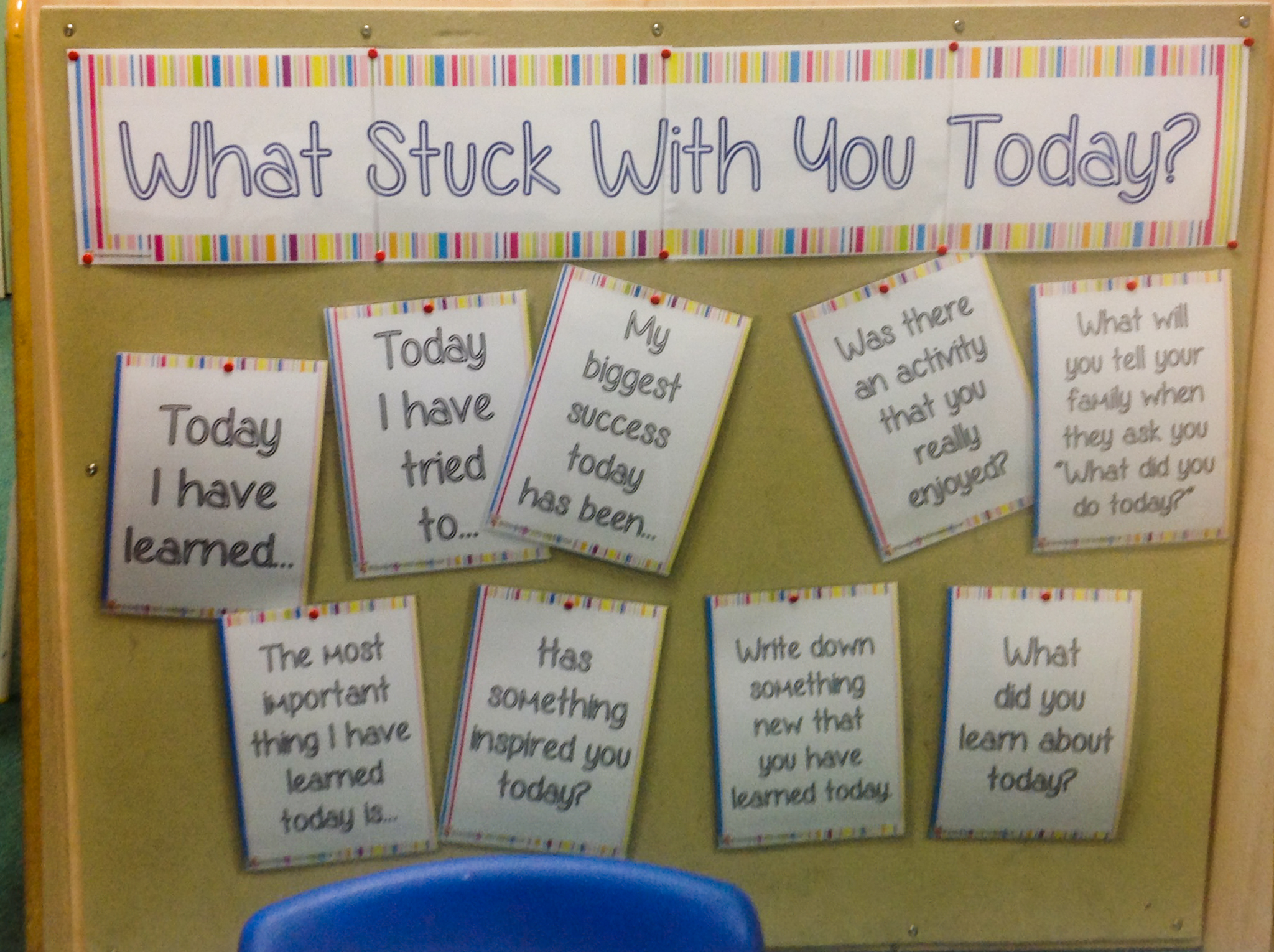
What stuck with you today?
Make reflection on what they have done part of the daily or lesson routine. This display from a primary school in Bradford shows a range of discussion cards which the teacher uses with specific groups of students during or at the end of a day.
The questions include:
- Today I have learned….
- Today I have tried to…
- My biggest success today has been….
- What will your tell your family when they ask ‘What did you do at school today’?
- The most important thing I have learned today.
- Has something inspired you today?
Each, in different ways, encourages students to think about how their thinking / understanding has changed, how they have revised their view of things.
Support students to reflect on their own performance
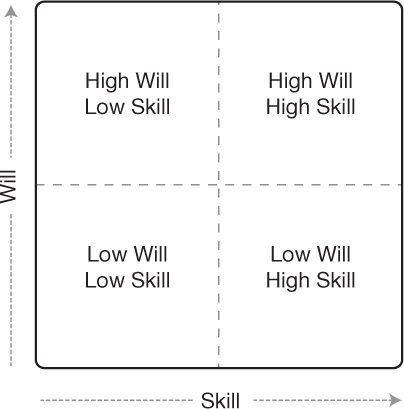
Skill : Will
Use the ‘Skill: Will’ matrix to help students develop ways of reflecting on their own performance. Using the matrix (see alongside), students judge their levels of accomplishment and motivation in any area of the curriculum. Students can support or coach each other to complete the grid objectively and then identify for themselves small steps to create the desired movement. Each of the quadrants requires a different coaching approach.
- Direct – (bottom left) set short-term goals, structure learning tasks and monitor progress closely.
- Inspire – (top left) re-kindle interest, set short term actions and accentuate positives.
- Guide – (bottom right) envision the future when skill levels are raised, secure appropriate learning opportunities and provide reflective feedback.
- Delegate – ( top right) encourage experimentation and further challenges to maintain interest.
Find out 3
Find out more about ‘Could Be’ language
Ellen Langer’s work on the importance of using ‘Could-Be’ language illustrates how this encourages more genuine engagement with what is being taught; how students will question and solve problems more readily if knowledge is presented to them as being provisional. Langer’s studies document the effect of shifting the tone in which knowledge is presented on students’ learning.
What we might call ‘Is language’ is full of certainty. It sets clear boundaries, and it often looks as though it is complete and definitive. ‘Could-Be language’, on the other hand, is more tentative and provisional: it leaves open the possibility that things might not be cut-and-dried, and that the reader or listener might be able to spot a flaw or an improvement.

Read on . . . ⬇️
More on ‘Could Be’ language
When Langer presented these different versions to two matched groups of students, she found no difference in their factual comprehension. ‘Could-Be language’ had not interfered with their grasp of the material. But when she probed their understanding with more creative or open-ended questions, she found that the ‘Could-Be students’ far out-performed their peers in the ‘Is’ group. The reason for the difference is not hard to see. ‘Is language’ positions students as knowledge-consumers. Their job is to try to understand and remember. But ‘Could-Be language’ immediately invites students to be more thoughtful, critical, or imaginative about what they are reading.
Just to remind you….
‘Could Be’ language includes phrase like;
- In most cases
- may include
- may on occasion
- wide variety
- could be
- probably
- possibly
- most often
- there are other ways
- one of which
- some people think that…
If we want young people to grow up to be inquisitive about what they are told, and imaginative in their responses to it, it would seem to be patently self-defeating to talk to them in a linguistic register that prevents them from bringing those learning dispositions to bear. ‘Is language’ invites—or almost requires—students to use learning muscles like ‘verbatim remembering’ and ‘accurate transcription’. There is nothing wrong with these; they are indeed useful in the real world. But they are not the be-all and end-all of learning. Nor, many would argue, are they the most useful habits of mind with which to meet a complex and contested world. ‘Could-Be language’ invites critical thinking, imagination, flexibility and resourcefulness, as well as helping students to develop a richer set of transferable skills.
A central belief of Learning Power is that, to breed powerful and enthusiastic young learners, we need to engage them not just as consumers of knowledge, but as critics and makers of knowledge. We need to talk to them as if the subject-matter we are discussing is provisional and contestable, not as if it is cut and dried. Of course, much of the knowledge and theory in the curriculum has stood the test of time very well. But in order to turn out thinkers rather than hoarders and regurgitators, we need to find and emphasise its unravelled edges, and help them discover how to function intelligently in this zone of contest and uncertainty.
Learning Powered schools know that it is in this zone that much real learning happens, and that this is where they have to learn how to be comfortable and effective. As a consequence, teachers observe that not only the words they use change, but also the tone they adopt shifts. As one teacher said:
“I used to ask leading questions which structured their thinking towards the “right” answer that I wanted, but that was too much scaffolding. So now I use an inquisitive tone and nudge them to work things out for themselves. It’s always surprising what students can find out for themselves when you let them.“
Learning together. Meeting 7
Unit 7 Suggested meeting agenda
- Decide what you want this meeting to achieve (5 mins)
- Discuss what you have found out about students use of Revising (15 mins)
- Re-cap and reflect on the action you have each undertaken in your classrooms (20 mins)
- Consider issues that would be beneficial if implemented across the school (10 mins)
- Review how the meeting format went (5 mins)

Learning Team Meeting 7 Agenda ⬇️
Item 1. Meeting Objectives. (5 mins)
Meeting objectives might include:
- discuss levels of Revising displayed across the school
- share and learn from what we have each tried in our classrooms;
- feel confident about taking forward ideas from online materials into our practice;
- identify actions that would be more useful if everyone applied them in their practice;
Outcome. To have decided what the meeting should aim to achieve.

Item 2. Discussion about learning culture (15 mins)
Explore together your discoveries about your students as Revisers;
- what did you find out about your students as Revisers? (Find out 1)
- are students improving as Revisers with age? Moving from grey to purple to blue etc?
- where did we each estimate our classroom to be in terms of its culture Find out 2?
- what did we each learn from Find out 2.
- which 3 are the weakest features
- which 3 actions are our strongest
- what surprised or baffled you
- are there significant differences between year groups
Outcome. A clearer understanding of students as Revisers and the extent to which our classroom cultures are set up to support and develop effective Revising.
Item 3. Explore action using the initial Try outs (20 mins)
Share and discuss the action you each took in making a start on strengthening Revising in classroom practice.
- Which of the suggestions did you each use?
- Any concerns about or difficulties in putting the Try outs into action.
- Which seemed the most valid or successful.
- How the Try Outs affected different age groups.
- Ways of implementing these that we can all learn from and adopt.
Outcome. A clear picture of our interest in and enthusiasm for amending classroom cultures to support learning to learn. A feel for which are proving to be most effective and why. Would any of these culture shifts call for action on current school wide policies? i.e. xxxxxxxxxxxxxx.
Item 4. Learning from practice (10 mins)
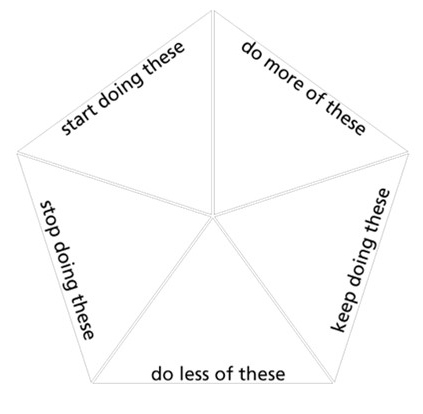
In relation to all the shades of practice you have been trying out, sharing, mulling over and observing using Find out 3, think about them now in two ways;
1. personally and 2. school wide.
Which ideas/practice stand out as:
- things you want to start doing
- things you think you need to stop doing (that’s harder)
- things you want to keep doing
- things you want to do more often
- things you want to do less
Outcome.
- At this stage it’s essential to note ideas arising from this discussion using 2 pentagon diagrams;
- one for each team member personally and
- one for decisions/suggestions that are school wide.
- Ensure that your school/group wide pentagon is shared with senior leaders.
Item 5. Evaluate team session. (5 mins)
- Did we achieve our objectives?
- Are we comfortable with what we are trying to achieve so far?
- Any concerns at this point?
- Next meeting date and time.
Comments are closed.