

The Junior Game
The job of any teacher is to give learners as real or as ‘whole’ an experience of learning as possible. So as writers of this introductory course about building better learners we wanted to do just that. We don’t think you would gain a deep sense of your role in developing students’ Learning Power if we simply provided you with examples of three or four things to do in your classroom. If you were learning to play Scrabble you wouldn’t get far if all you were given to learn were lists of three, four and five letter words. Far better to start straight away by playing ‘Junior Scrabble’, so you get the feel for the whole game, and then build up your sophistication as you play.
So you might think of this course as the junior game of learning power. Here you will find all the key elements you will need to introduce the values and activities of building your students’ learning power.
How the course is designed
All sections 1–7…
have exactly the same structure in order to ease your familiarity with the material and guard against getting lost. Each deals with a key aspect of understanding learning power and has:
- an introduction to what the section is about … take particular note of the key points
- part 1 aims to give you an idea of the sort of practice you are aiming to achieve
- part 2 highlights the main ideas of the section’s content
- part 3 offers a few practical ideas to start things off
- part 4 broaches the idea of redesigning your practice and invites you to make a plan
Illustrations, videos, pictures.NEED THIS PICTURE TO HAVE THE ELLI BRAIN BEHIND AND MOVING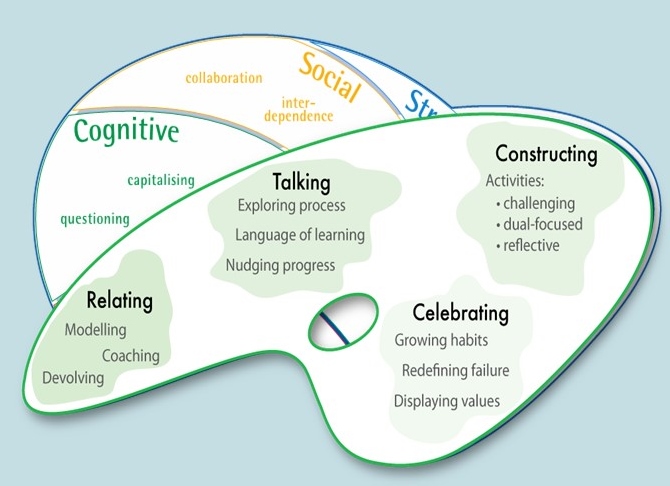
Things to download
DownloadThe Read More panels between each part offer real examples of the ideas in use in schools and deeper material to enhance and strengthen understanding.
Look through each section fairly quickly to gain a sense of the what, why and how.
We estimate each section will take about 45 minutes to read and digest. Each has enough material for you to trial and perfect in your classroom over several weeks. You are unlikely to need deeper material for a couple of terms.
The content of the course
Section 1 What do we mean by learning power?
The underlying ideas, research and models
Here you will find:
- the two interlinking models of building better learners
- examples of how the models work in practice;
- the learning dimensions you might start on
- the essential aspects of classroom practice
- links with educational research
- encouragement to try things out with your learners
- suggestions for how amendments to your teaching will help students to be better learners
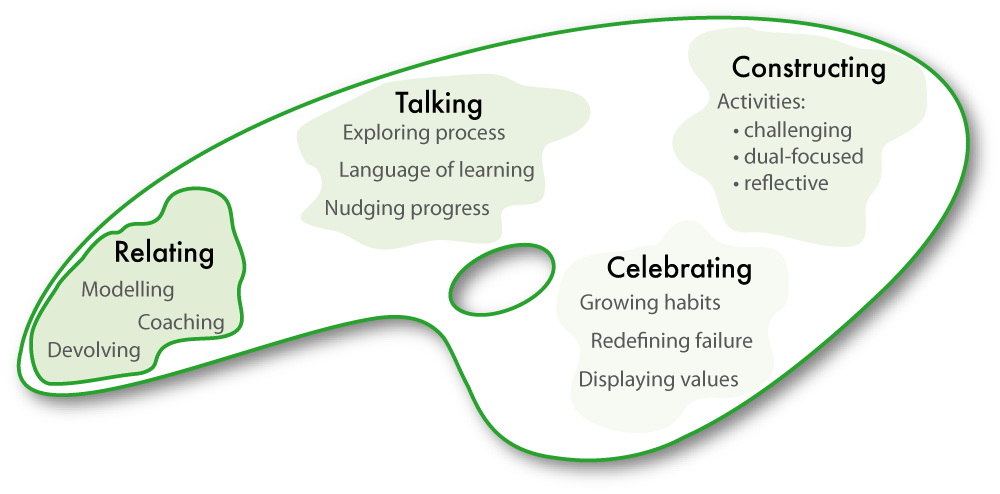
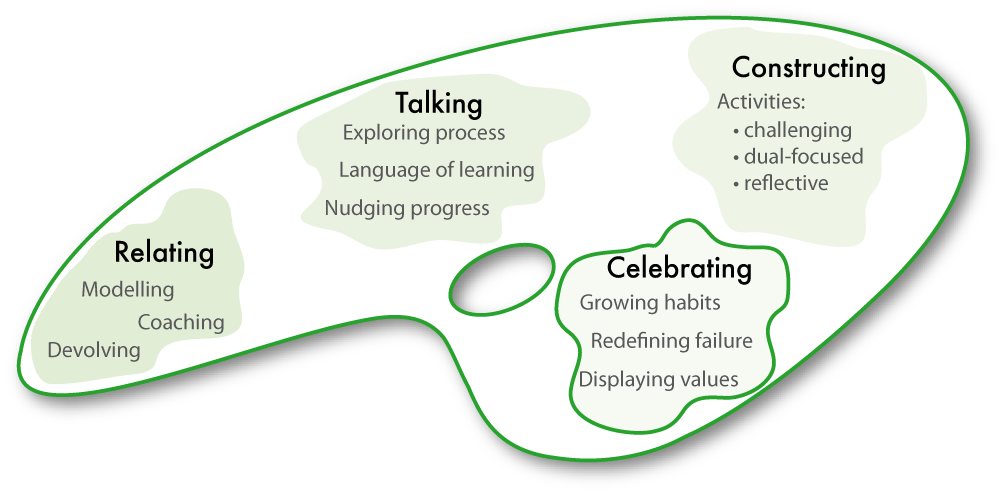
Section 2 Classroom relationships
Important shifts in classroom roles
Here you will find:
- examples of the sort of responsibilities teachers might devolve to learners
- examples of different ways to be as a teacher
- modelling the process of learning
- acting as a coach; asking not telling
- enabling greater learner responsibility
- encouragement to try things out with your learners
- suggestions of ways to plan to expand devolving responsibility to students
Section 3 Talking about learning power
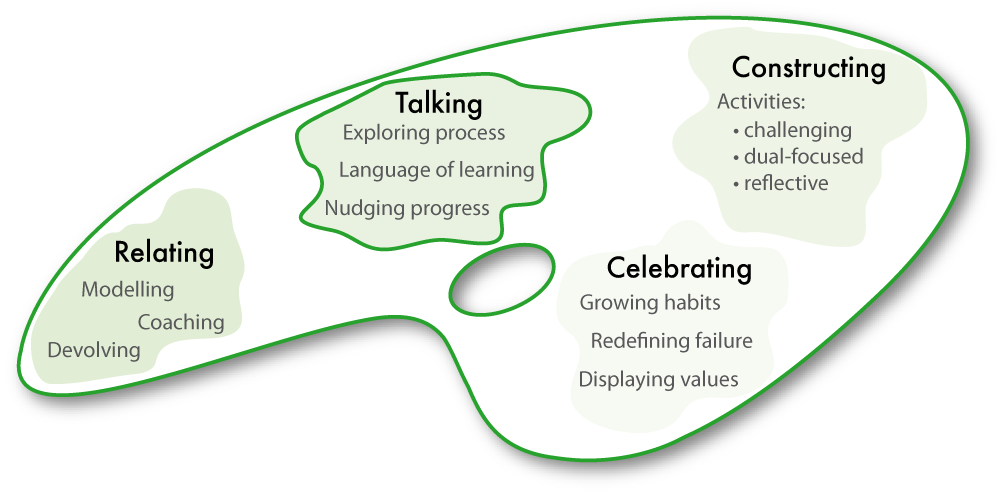
How and when to talk learnish.
Here you will find:
- examples of how learners can talk about learning
- examples of different ways to talk about learning
- nudging the process
- offering feedback
- encouraging reflective self-talk
- encouragement to try things out with your learners
- suggestions of ways to plan to expand your learning language
Section 4 Designing learning powered lessons
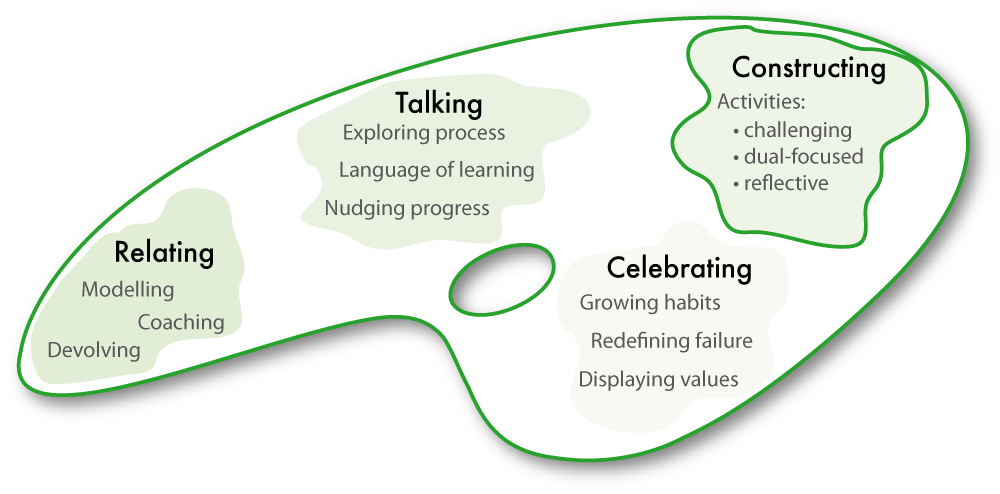
How to put dual-focused lessons together
Here you will find:
- examples of how teachers manage learning
- explanations of different ways to plan for learning
- long term planning
- medium term planning
- lesson planning
- a format to assist in planning dual-focused lessons
- activities to help start this journey
- encouragement to try things out with your learners
- suggestions of ways to plan to expand your lesson design
Section 5 Celebrating learning power
What’s seen as important in learning friendly classrooms
Here you will find:
- examples of how learners can celebrate their learning
- examples of different ways to celebrate learning
- in the growth of learning behaviours
- in re-defining failure
- in displays in the classroom
- encouragement to try things out with your learners
- suggestions of ways to plan to expand what you celebrate about learning
Section 6 How are our learners developing?
What to look for and record about better learning
Here you will find:
- explanations of three aspects of progression – frequency, scope and skilfulness
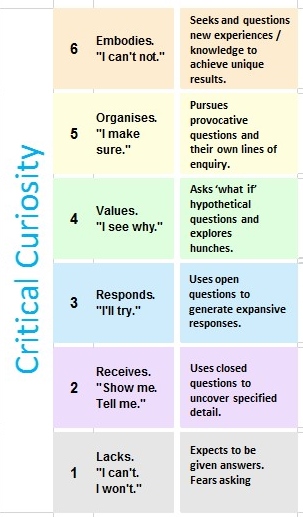
- Charts showing what the phases of growth look like in relation to;
- Critical Curiosity
- Learning Relationships
- Resilience
- Strategic Awareness
- examples of things to try out with your learners
- ways of tracking the growth of learning dimensions over time
- suggestions of ways to plan to expand what you might track about learning
Section 7 Where next?
Here you will find:
- explorations of ways forward
- tools to help you consider your growth and development as a teacher, focusing on;
- devolving greater responsibility for learning to students
- introducing more talk about the learning process
- designing deeper dual focused lessons
- celebrating more differentiated growth in learning power
- descriptions of the next stage online modules that might best support your needs
- a quick look at professional development approaches you might favour
- encouragement to further boost your teaching.

Comments are closed.