
On the page below we offer an overview of how Successful Futures, when combined with an approach that builds powerful learners, can help schools to realise the four ambitious purposes of the Donaldson report.
Successful Futures: how do we keep the curriculum balance right?
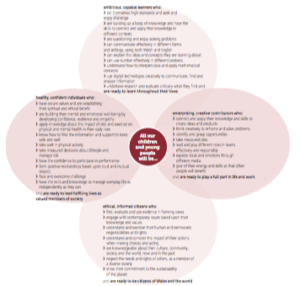
In Successful Futures, Wales has a curriculum that pays balanced attention both to the higher purposes of educating young people for their future lives, and to the more obvious classroom business of curriculum areas with knowledge and specific skills to be inculcated and acquired. Successful Futures proposes that:
“The purposes of the curriculum in Wales should be that children and young people develop as:
- ambitious, capable learners, ready to learn throughout their lives;
- enterprising, creative contributors, ready to play a full part in life and work;
- ethical, informed citizens of Wales and the world;
- healthy, confident individuals, ready to lead fulfilling lives as valued members of society.“
These four purposes of the curriculum are further exemplified as a range of attributes and capabilities, underpinned by four ‘wider skills’:
- critical thinking and problem solving;
- planning and organising;
- creativity and innovation;
- personal effectiveness.
But keeping the balance is always challenging. The ever-present pressure of the day-to-day, plus eventual qualifications, can squeeze out attention to these longer-term, higher-order learning and skills.
Yet these two sides can work synergistically instead of competitively, in concert rather than in conflict …
The development of a set of valuable learning habits, that are seen as essential for learning, life, work and citizenship, has implications not only for ‘what’ is taught and learned but, more importantly, ‘how’ it is taught and learned. Schools and teachers are keen to help realise the four purposes, but seek greater clarity on the practical implications of keeping the balance right.
An enabling approach that schools and teachers could use to deliver the Successful Futures promise is known as Building Learning Power, which aims to put the ‘how’ of learning at the heart of education and assist learners to be the best they can be. Powerful learners can expect to learn more, faster, and more thoroughly. Which, by the way, also helps with the ‘outcomes’ side of the curriculum balance.
In other words:
By using a Building Learning Power approach to develop students’ learning behaviours you will create Ambitious, Capable Learners who are Enterprising, Creative Contributors, Healthy, Confident Individuals, and Ethical, Informed Citizens.
What do the frameworks of Learning Power look like?
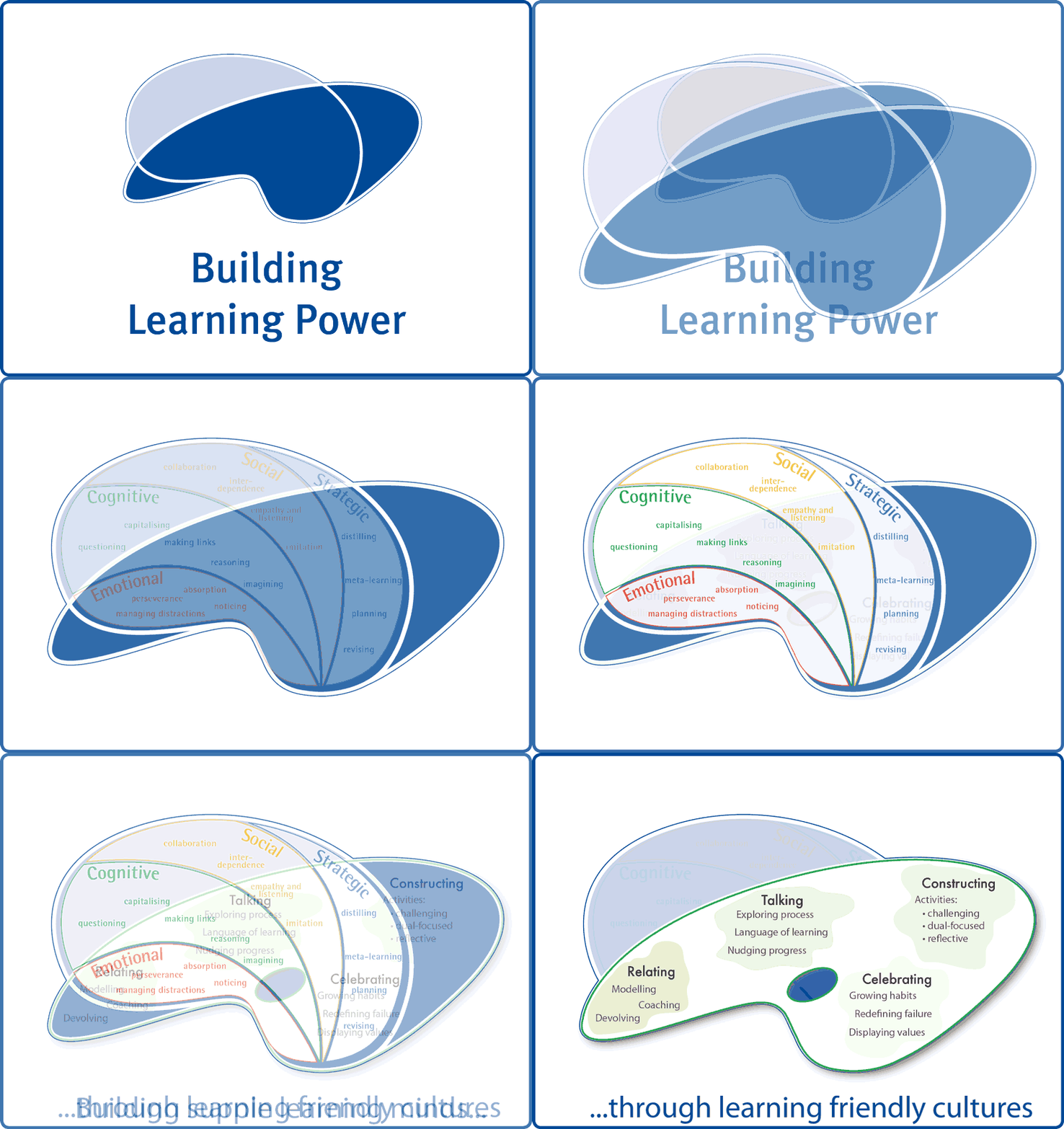
Building Learning Power puts at the heart of education the development of psychological characteristics that are judged to be of the highest value in young people growing up in a turbulent and increasingly complex world. There are two main parts to the approach:
A: a model of a learner and learning, in terms of a set of characteristics that work together to make a person a highly capable learner; we use ‘learning power’ to describe the effect. [the supple learning mind]
B: a view of the kind of pedagogy that will nurture and strengthen the learning characteristics in young people. [the teachers’ palette]
These are bound together by the fundamental idea that ‘learning is a learnable craft’, and by explicit, detailed discussion of how learning works, supported by a rich repertoire of words and action.
What constitutes a supple learning mind?
![BLP_Brain_Generic_no-Rs-[Converted]](https://www.buildinglearningpower.com/wp-content/uploads/2016/12/BLP_Brain_Generic_no-Rs-Converted-300x216.png)
![BLP_Brain_Generic_no-Rs-[Converted]](data:image/svg+xml,%3Csvg%20xmlns=%22http://www.w3.org/2000/svg%22%20viewBox=%220%200%20300%20216%22%3E%3C/svg%3E)
![BLP_Brain_Generic_no-Rs-[Converted]](https://www.buildinglearningpower.com/wp-content/uploads/2016/12/BLP_Brain_Generic_no-Rs-Converted.png)
The Supple Learning Mind framework, originally conceived and researched by Professor Guy Claxton, reveals learning as a complex process that isn’t just about thinking and having a good memory; it includes how we feel, how we think, how we learn with and from others and how we manage the process of learning. It gives the beginnings of a learning language that helps teachers think about how learning behaviours enable students to grow as learners and tackle the curriculum more profitably.
What does the teachers’ palette consist of?

The Teachers’ Palette provides an overview of aspects of a learning friendly culture that combine to create the seedbed for building powerful learners. It includes the types of teacher action that create the conditions necessary for such learning to become habituated – how they relate to students, the language they use, the types of tasks they design, and the things that they truly value.
Questions you might ask yourself
Something to think about
Does your curriculum and its expected delivery . . . .
- already go beyond the transmission of a centrally defined set of knowledge, skills and understandings and foster ambitious capability, enterprise and creativity, confident individuality and ethical, informed outlooks?
- pay attention to the wider skills of critical thinking and problem solving, planning and organising, creativity and innovation, and personal effectiveness?
- need adapting to ensure that these ‘capacities’ and wider skills are developed in a planned and progressive manner?
Comments are closed.