
Take a look at just six classroom practice ideas from various levels of the ‘Re-energising your Learners’ Resilience‘ resource.
Less than 3% of the ideas in the ‘Re-energising‘ resource.
Overcoming being stuck
An everyday teaching idea to help students overcome fear and become comfortable about being stuck.
Being stuck is a natural part of learning, we all get stuck. We come across blocks and obstacles, go into blind alleys, get flummoxed by a vast range of possibilities, or simply don’t know enough to decide what to do next.
Being able to get ourselves unstuck is as much about how we react emotionally as it is about having the practical strategies to work out how to overcome it. Being able to manage an effective way out of being stuck is a critical part of resilience.
. Design activities to ensure students are learning at the edge of their comfort zone.
Give being stuck a status
Start some lessons with something like:
- In this lesson I want to make sure that you do get stuck.
- When you get stuck take a look at the unsticking prompts on your table to see if these help you to get unstuck.
- Later we will spend a few minutes talking about what we learned from being stuck and decide which unsticking idea worked best.
The explicit message is that students need to expect being stuck during any lesson. The implicit message is that being stuck is a good thing – something you want to see. Using this technique regularly means students come to accept being stuck as a natural part of learning. It begins to build their curiosity about the why they get stuck. What you are doing is giving stuck a status.

Managing distractions
An everyday teaching idea to help students reflect on managing distractions.
Losing focus or getting distracted is an inevitable part of learning, it happens to all of us. As learners we come across distractions, both internal and external. If we are hungry, tired or anxious we find it hard to concentrate. Equally if there is too much going on around us or something unexpected happens, we may lose our focus get side-tracked. But unless students are assisted to cope positively and practically with such situations their deep engagement with learning may be in jeopardy.
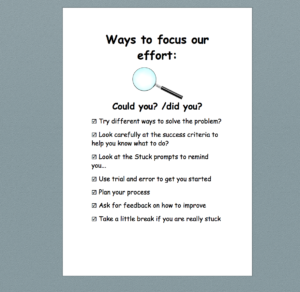
Explore the meaning of effort
Effort is a word that teachers use frequently, but what does it mean? How might students decode this and begin to do it purposefully?
- Explore what is meant by ‘effort’ with your students, and discuss with them the ways in which they might apply it.
- Encourage them to come up with a definition of effort and specific examples of what it might look like in the classroom – for example by;
- trying different strategies to solve a problem,
- using a Visible Thinking Routine (VTR)
- aiming to achieve challenging goals, or
- using different un-sticking techniques when something is tricky.
- paying attention to whoever is speaking
Targeted Effort is now seen as a path to mastery. Students need to be aware of a connection between effort and improvement; that the sort of effort being used is causing their improvement. This is why it is important to give effort meaning.
Targeted effort is effort that has direction and purpose; something is focusing their mind. It is underpinned by clear guidance and the specific goal to be achieved.
What you are doing here is giving effort a size and direction. What students need to understand is that their effort has a size and a purpose.
Teacher talk
- What sort of effort are you using on this activity?
- I can see that this xxx sort of effort will help you to…
- Is this the most appropriate sort of effort to use. You might try xxx instead.
- you might get on better if you used more of…
- which VTR would be useful to you here?
Make reflecting on managing distractions part of everyday lessons
Here is a very practical example of how you might develop the emotional climate of the classroom and make it managing distractions friendly.
Learning mats are A4 laminated sheets that show various aspects of a learning habit. Keep them on desks/tables or as part of a wall display.
Dealing with challenge
Finding learning difficult is part and parcel of learning. Indeed when learning is not challenging it is often a case of practising / consolidating what one can already do as opposed to breaking new ground. As learners we all come across difficulties that cause us to think hard – the question is whether we are excited by the prospect of rising to the challenge, or daunted by the prospect of not rising to the challenge. Do we think ‘Great, this is tricky and I’m going to give it a go’ or ‘Oh dear, this is probably too hard for me’?
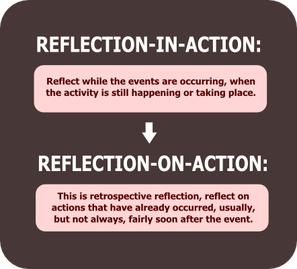
Reflect on dealing with challenge
Help students to know themselves as learners
- What’s happening?
- What am I seeing /noticing?
- How am I feeling / thinking about that?
- What else is happening?
- What’s changing?
- What’s going best/well?
- Do I need to do anything about any of this?
- What’s the most important thing that’s happened? Why?
- How was it significant?
- What difficulties did I meet?
- How did I resolve / sort them?
- Which strategies seemed effective?
- What else could we / I have done?
- How might it have been different?
Nudge students to self-regulate by asking: (adapted from Nuckles et al, 2009)
- What would be the best way of checking your learning?
- How could you reflect on these answers?
- What happened when you …?
- How can you account for …?
- What learning goals have you achieved?
- How have your ideas changed?
- What aspect of this work could you now teach to others?
Blend attentive noticing into lessons
Focus the action:
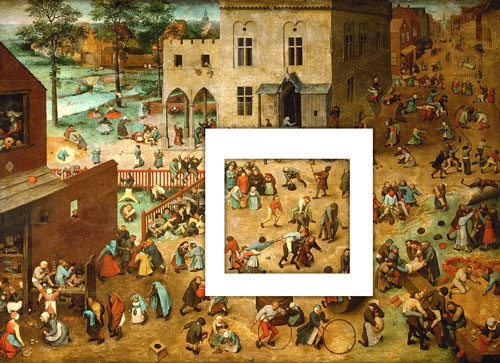
Use sets of interesting pictures together with cards with a viewing window cut into them. Students place the viewing frame over the picture in seeking a range of different features. E.g. something red, made of xx, something denoting happiness, something which suggests what might happen next. It’s a good idea to move from looking firstly for concrete features before moving on to abstract features. You could:
- use a poem. Use the viewer to find the stanza that is most descriptive, that makes them happy, that uses the best simile…
- or use a geometrical image. Use the viewer to find corresponding angles, perpendicular lines, a reflex angle…
- or an image of the water cycle. Use the viewer to find where water vapour is rising, where water is moving downwards, where it would be best to site a farm, a village, a wind turbine…
- build up the level of challenge as you go along.
Teacher talk
- Can you find . . .
- Which bit best shows . . .
- Where is . . . .
- Why have you chosen that?
- Take another look…
Learning Goals
We all find it easier to put in effort and keep going when we see the point of doing it, when we have a goal that is of interest to us. Without a goal that we buy in to, why should we bother?
- A goal without the will is wishful thinking
- The will without the goal means rapidly fading interest
- Performance related goals are less likely to engage and motivate than learning related goals
A way to help students explore the point and value of goals.
Displaying a different type of achievement
Goals are so often thought of in terms of performance. One way to entice reluctant learners to consider the idea of goals is to look at them through the lens of different types of achievement. In the picture the wall of a maths classroom has a weekly display of outcomes related to a different type of achievement, i.e. learning itself. As a result students began to realise they could dream up their own goals related to what they would be proud of or what they would work hard on to finish.
Our achievements this week;
- Things we are proud of
- Things we have never done before
- Things that we kept trying to do and finally succeeded
- Things that we found difficult
- Things that we worked hard on to finish

Comments are closed.