

Building the habit of Noticing.
Welcome to Building Powerful Learners Phase 2. This eight unit online programme will enable you as a teacher to expand your students’ use of learning behaviours.
The programme combines three types of action that will help you to experiment with, analyse and understand how to become more skilled in developing your students’ use of learning power.
1 Understand by using Read abouts…of which there are two types
- Essential Read …essential must read text.
- Extended Read …interesting, good to know, absorb when you can.
2 Analyse by using Find outs…tools to help you discover and analyse essential information
3 Experiment with Try outs…practical activities for you to try, check and perfect in your classroom
This unit explores the “how” of building noticing.
- What are the key aspects of noticing? (Essential Read about 1)
- How confident are my students now as noticers? (Find out 1)
- How could I embed building noticing into my teaching? (Find out 2)
- What sort of approaches may be useful in making a start on this? (Try out 1 to 5)
- Estimate my students’ development using a detailed noticing chart (Find out 3)
Structuring and using the ideas below with your students over the next month or so will enable them to extend the range of learning behaviours that they use consciously.

Essential Read about 1
Unpacking Noticing
Noticing involves being ready, willing, and able to:
- be attentive to details and subtleties in seeking to understand things;
- seek underlying patterns patiently, understanding that connections may take time to emerge;
- actively use all the senses to gather information to build understanding of the world around;
- gain a clear sense of the ‘what’ of something before considering the ‘why’ and ‘how’;
- recognise that learning is often complex and difficult and takes time and effort to accomplish.
So students need to learn how to focus their attention; to look patiently beyond the obvious to see detail and subtlety; to be able to identify the relative importance of what they are observing; to develop the ability to see detail in the context of the bigger picture; and to develop the ability to explain, hypothesise about and explore what is being noticed. When looked at from these diverse angles, growing noticing moves well beyond encouraging a student to ‘look carefully’.

Extended Read about 1. Understanding Noticing ⬇️
The learning behaviour known as noticing
Learning often relies on being able to pay attention to what you are interested in: not necessarily thinking about it, just really noticing how it looks, what it is made of, or how it behaves. Many professionals, from poets to scientists to business managers, rely on this quality of attentive noticing: being able to identify the significant detail, or to let an underlying pattern of connections emerge into their minds. Sometimes you have to be patient before the detail or the pattern will reveal itself to you, like looking for sea creatures in a rock pool. And this is a skill that can be strengthened with practice. We often pick up this skill from people around us. Babies very soon learn to work out what their mother is focusing on, and to ‘share joint attention’ with her. It helps to be around people who are demonstrating this ability to watch carefully and turn their observations into accurate descriptions. Getting a really clear sense of what, before starting to think about how or why, is very useful.
From Building Learning Power by Guy Claxton 2002
Re-find out 1
Focus on the noticers in your class.
The Noticing progression chart should give you a fairly clear view of the noticing behaviours and how your students do, and do not, currently exhibit them.
- The majority of students may well display a similar set of positive behaviours (ie the majority may be in the purple or blue phase)
- You will also be conscious of some students who still lack positive behaviours (ie they are still firmly rooted in the grey/lacks phase of the progression chart)
- But some students will appear to have made general progress even in learning behaviours not spotlighted earlier.
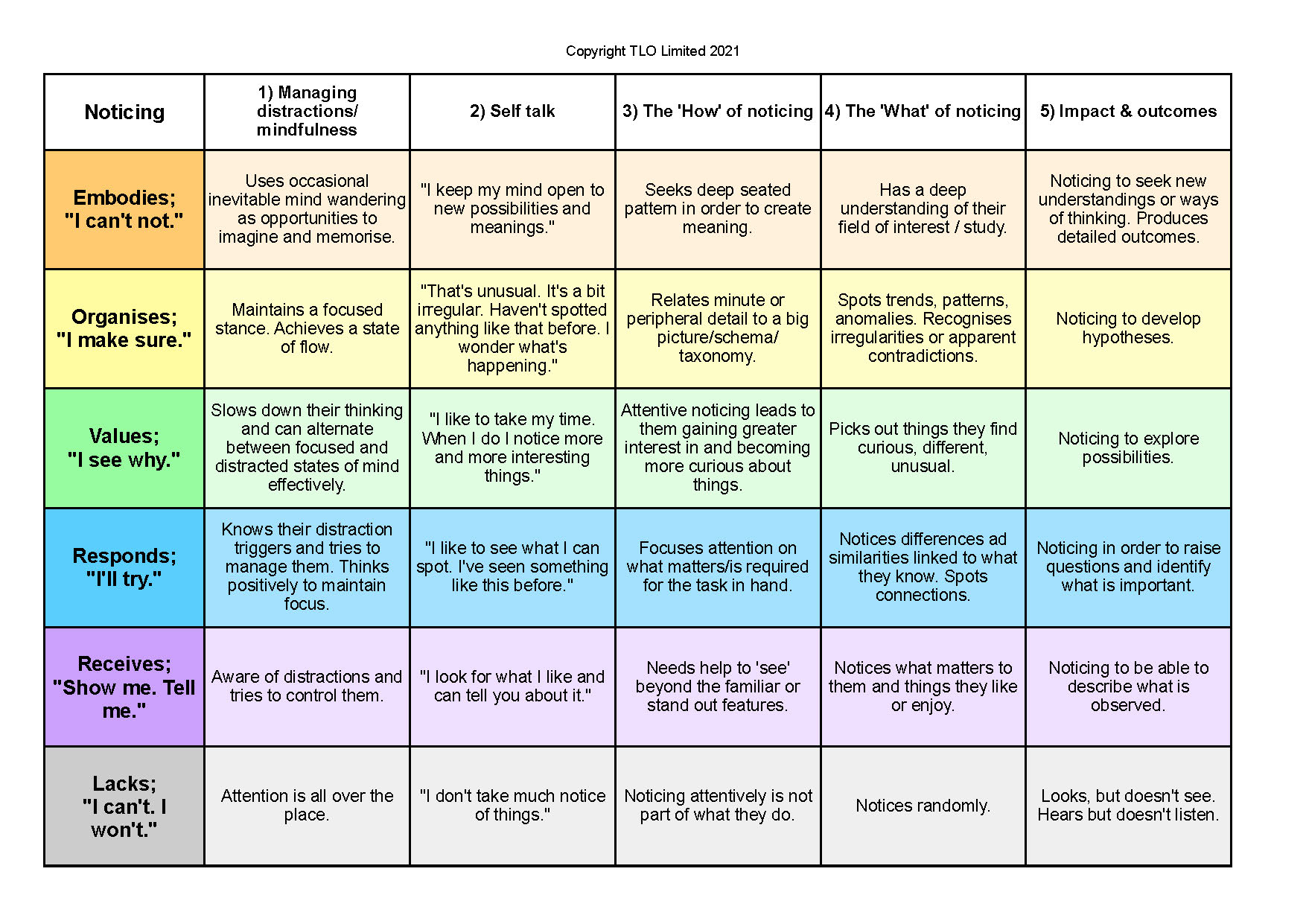
The chart alongside shows how noticing grows. Column 1 identifies the 6 phases of development, column 2 describes how the skills and behaviours may grow over time, column 3 shows the self-talk; what students may quietly say/explain to themselves at each phase of development.
A word of warning.
While you may be tempted to focus your efforts on the majority for greatest impact, you’ll need to take care not to do so at the expense of your ‘grey’ students, as these are your potential underachievers in the future.
What to look for.
In Try Outs 1 to 5, look out for teaching ideas that you think will have the greatest impact on your particular group of learners. Don’t attempt to try all of the ideas – better to do a few thoroughly than to adopt a scattergun approach.
Growing making links; a trajectory of developing behaviours, skills, attitudes and self-talk
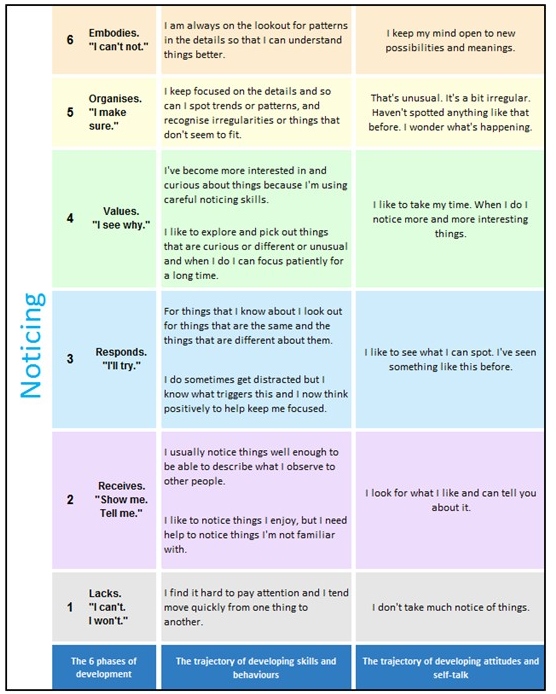
Which phase have most of your students reached now?
Download as a pdfFind out 2
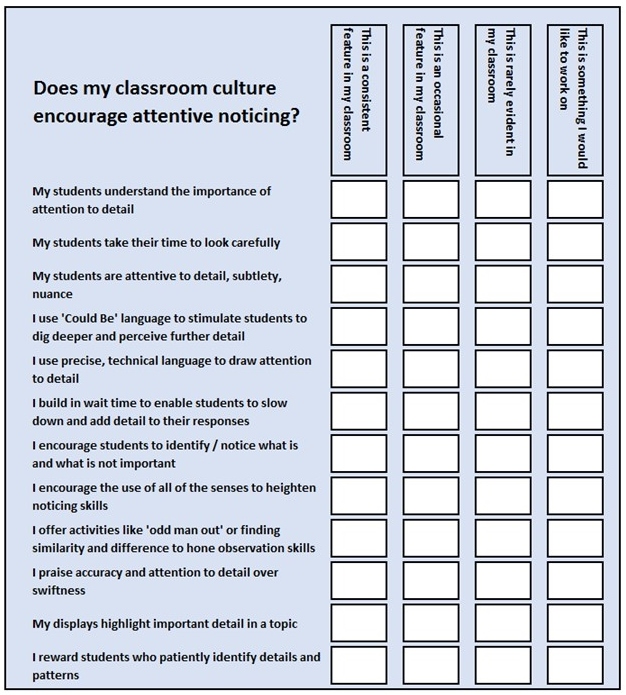
Does my classroom culture encourage Noticing?
Culture is the curriculum of the classroom, frequently hidden from the external observer, but always all evident to learners. It is the minute by minute, hour by hour, day by day way that learners come to understand their role as a learner. Culture is your enacted values in the classroom – what you do and what you do not do, what you say and do not say, what you believe and do not believe, what you value and do not value.
Here is a selection of features that might begin to shape the emotional climate of your classroom to encourage noticing.
Download and print a copy.
Reflect on your current classroom culture.
It’s worth noting that the list is made up of the four action types you first met last year in the Teachers’ Palette (Unit 2);
- ways of giving students more responsibility for their learning
- the sort of language you might use to stimulate noticing
- ideas for constructing lessons to build noticing
- ways of celebrating noticing
Ask yourself which of the features of the noticing-friendly classroom are:
- already a consistent feature of your classroom?
- an occasional feature of your classroom?
- rarely evident in your classroom?
Which of these features are you interested in developing further?
At this point it might be worth having an informal chat with some of your colleagues. Is anyone already making progress with one of the features you would like to work on? Do you have any consistent features that others might learn from? Take your completed sheet to discuss at the meeting at the end of this unit.
Try out 1
A range of little culture shifts
Have a think about your current classroom culture in relation to Noticing.
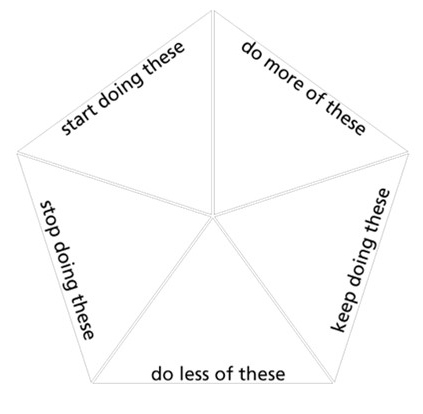
Begin with the ‘stop/avoid’ box – if any of these teaching behaviours are still in evidence in your classroom it would be worth thinking through how they can be eliminated, since failure to do so will undermine the changes you are hoping to achieve for your learners
Then cast your eye over the other 3 boxes. Which ideas appeal to you? Which do you think will have the greatest impact on your students?
Now seek out teaching ideas below in Try Outs 2/3/4/5 that you can use to move your classroom culture forward.
Try Out 2 focuses on ideas for moving responsibility for noticing towards learners (Relating);
Try Out 3 focuses on developing a learning language for noticing (Talking);
Try Out 4 focuses on how lessons/activities can be designed to activate and develop noticing (Constructing);
Try Out 5 focuses on how noticing can be recognised/ rewarded / praised / celebrated (Celebrating).
Try out 2
Extend students’ responsibilities in order to build noticing
Encourage students to think it through for themselves
The difference between looking and noticing is rooted in the time each takes. Looking is frequently superficial and completed ‘at a glance’. Noticing, however, takes time and patience. Patterns and details that are not immediately obvious emerge slowly and require a deliberate attempt to focus. It follows that too much pace can be the enemy of effective, attentive Noticing.
So – slow down, give students time to notice for themselves.
Give them time to say what they are noticing to a partner. Praise any observation that has not been spotted by other students.
For younger students.
Introduce activities that require noticing behaviours
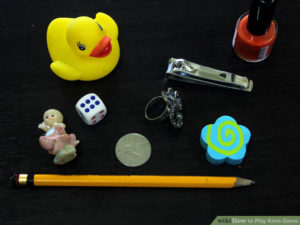
For example… Use the familiar Kim’s Game where students have to look carefully for a given time and then try to remember the group of articles. This simple format has numerous variations…what’s missing, what’s been added, what’s the odd one out? Always remember to talk about the noticing and explore the strategies that they were using.
For older students.
Introduce intriguing pictures to provoke noticing.
Use any interesting, fairly complex images you can find, and challenge students not just to find certain items within the image but to look carefully since all is not what it seems.
Have a look at Joan Steiner’s book ‘Look Alikes’ for ideas.
Alternatively, use images / paintings from the internet. Put one on the whiteboard to explore as the students enter the classroom each day.

Two more ideas for extending students' responsibilities. ⬇️
Adopt a character to help to anchor noticing
‘Adopt’ a character – real, imaginary, human or animal – who/that exhibits the best features of noticing. Talk about the character until your students become familiar with its attributes. Leave the character (actual /picture) on tables when you have set a group to work on using particular learning behaviour in – numeracy, reading, writing etc., as a reminder.
Teacher talk
- What is noticing all about?
- Why do we need to notice things?
- What will help us to notice?
- It’s all about looking carefully
- But is it just about seeing?

Engage students in looking for noticing behaviours.
Invite some students to be Learning Detectives. Task them with seeking and capturing examples of effective learning on camera / video. Build the outcomes into a display that helps all students to become more aware of the effective habits of others.

Try out 3
Build a learning language of noticing.
- Why is noticing important?
- What does it help us to do?
- If you were a gardener what sort of things would you have to notice?
- If you are cooking/making cakes what will you need to notice to ensure success?
- When texting friends what sort of things do you have to notice/ have you become expert at noticing?
Teacher talk – as a learning coach
Here is a range of things you could say to nudge noticing. When you use this kind of language you are talking as a learning coach, encouraging students to think for themselves.
- What do you notice about the way… is doing that?
- Just watch/listen for a while. What’s happening? Wait a little longer. What’s really going on?
- Be patient for a bit longer. Do you notice any patterns here?
- Great! Your patience is rewarded. You noticed some (unusual) patterns/really useful details there.
- Do you notice any differences between xxx and yyy?
- Is there more to this than you are seeing now?
- Had you noticed that before?
- What seems to be going on here?
- Do you notice [something different/unusual] about this?
- Have you missed anything?

Two more teacher talk ideas ⬇️
Focus your talk to encourage noticing….
To notice detail and the big picture
- Don’t lose sight of the big picture
- What’s the big overview/picture/classification/taxonomy/theory
- How does that detail fit in?
- Keep the end in mind
To spot patterns
- Are you seeing any patterns in that?
- What might that be telling us?
- Have you found a sequence?
- Why do you think that might be?
- Have you spotted anything unusual/unexpected?
- Would you really expect to see X with Y in this context? Seems a bit irregular.
- What might explain it?
- Worth exploring further?
Use Could-Be language
You first met Could-Be language in Phase 1 Unit 7. We’ve included it again here because it’s a way of talking/engaging that influences how you think and act. Could-Be language influences the ‘how’ of noticing.
The importance of using ‘Could-Be’ language is well researched. It encourages more genuine engagement with what is being taught; how students will question and solve problems more readily if knowledge is presented as provisional. It’s about shifting the tone to more tentative, less cut and dried.
The opposite is ‘Is’ language which positions the learner as knowledge consumers where their job is to try and understand and remember. ‘Could be’ language immediately invites pupils to be more thoughtful, critical or imaginative about what they are hearing or reading and to explore other possibilities,
For more on using ‘could be’ language, see page 69-71 in The Learning Powered School
- Could be language includes phrases like;
- In most cases
- may include
- may on occasion
- some people think that…
- on the other hand…
- wide variety
- could be
- probably
- possibly
- most often
- there are other ways
- one of which….

Try out 4
Build noticing into lesson design
It is through learning activities that learning behaviours get a workout. Their role is to enable your students to access and wrestle with information and ideas; to help them use and understand something; to ensure their effectiveness as a learner. The ‘right’ activity helps to make new concepts more concrete. The ‘right’ activity provides insights into new ideas and subject matter. The ‘right’ activities need to be carefully chosen and, critically, linked to the learning goal.
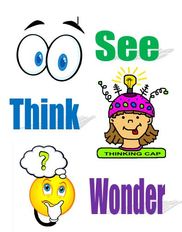
The beginnings of See / Think / Wonder
What can you see?
Many students at the Receives (purple) phase find it hard to Notice detail – they tend to look quickly and see little beyond the obvious. As a consequence they are unable to explain what they have noticed or ask questions about what they have seen. In other words, poor Seeing means that the Thinking and Wondering aspects of See/Think/Wonder are beyond them. This activity focuses only on the See bit of S/T/W.
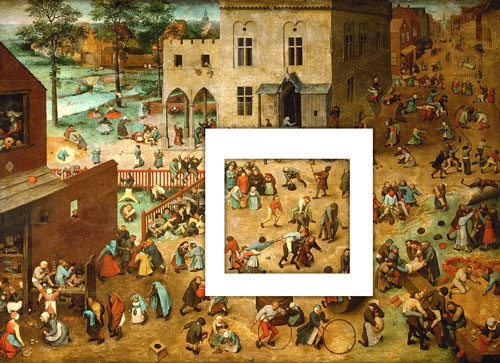
NB. This activity is NOT about the picture itself but rather how to use a picture and viewing frame to encourage and deepen noticing.
The use of viewing frames is surprisingly powerful, and has the effect of removing the Think and Wonder aspects of S/T/W so that students focus only on the Noticing aspect. It elevates Noticing beyond ‘looking/scanning’ to ‘attention to detail’.
When you distribute the image and the viewing frames, challenge students to place their viewing frame over the part of the painting that best shows:
- Skaters (a no-brainer)
- Something broken (the inn sign)
- A circle (usually the water wheel)
- Warmth (the fire, an easy one !)
- Cold (more challenging – there are a number of alternatives)
- Together (usually the Hunters)
- Alone (much more challenging, requires empathy. Many go for the bird sitting in the tree)
- Hope (Lots of varied answers, as by now they have interrogated the painting very fully)
- Despair (ditto).
The viewing frame helps to ‘fix’ the whole image, even though a limited number of things were sought. Deep noticing versus shallow looking.
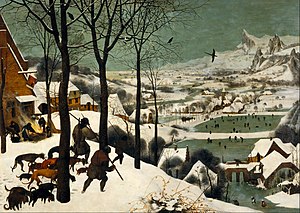
[For information: The painting is by Pieter Breugel the Elder, 1565, and is called Hunters in the Snow.]
Two more lesson design ideas ⬇️
Developing the art of noticing
Using Viewing Frames more widely
Use sets of interesting pictures together with cards with a viewing window cut into them. Students place the viewing card over the picture in seeking a range of different features. E.g. something red, made of xx, something denoting happiness, something which suggests what might happen next. It’s a good idea to look firstly for concrete features before moving on to abstract features. You could:
- use a poem. Use the viewer to find the stanza that is most descriptive, that makes them happy, that uses the best simile…
- or use a geometrical image, use the viewer to find corresponding angles, perpendicular lines, a reflex angle…
- or an image of the water cycle, use the viewer to find where water vapour is rising, where water is moving downwards, where it would be best to site a farm, a village, a wind turbine…
Whatever you use…pictures, diagrams, spreadsheets, tables, etc… the more complex the better. The technique is wasted on simple drawings.
The Visible Thinking Routine in full.
See, Think, Wonder:
- Invite students to make an observation (see) about an object (artwork, image, artifact) or topic.
- Follow up with what they think might be going on. Encourage backing up their interpretation with reasons.
- Ask students to think about what this makes them wonder about the object or topic.
- The routine works best when a student responds by using the three stems together at the same time, i.e., “I see…, I think…, I wonder…”. If not you need to scaffold each response with a follow up question for the next stem.
This routine encourages careful observations and thoughtful interpretations. It helps stimulate curiosity and sets the stage for inquiry. Use it at the beginning of a new unit to motivate student interest. Try it with an object that connects to a topic during the unit of study. Use the routine with an interesting object near the end of a unit to encourage students to further apply their new knowledge and ideas.
Try out 5
Build noticing by celebrating its use.
Self-monitoring noticing in action.
Introducing a new learning behaviour every month or so is trickier than it seems.
- You might concentrate on it in say three or four lessons.
- You will bring it to the fore in your talk.
- But how do you get students to pick up all the aspects of the behaviour?
- How might you ensure they see its usefulness in lessons in general?
- How do you ensure they absorb the use of the behaviour into how they learn?
A learning mat
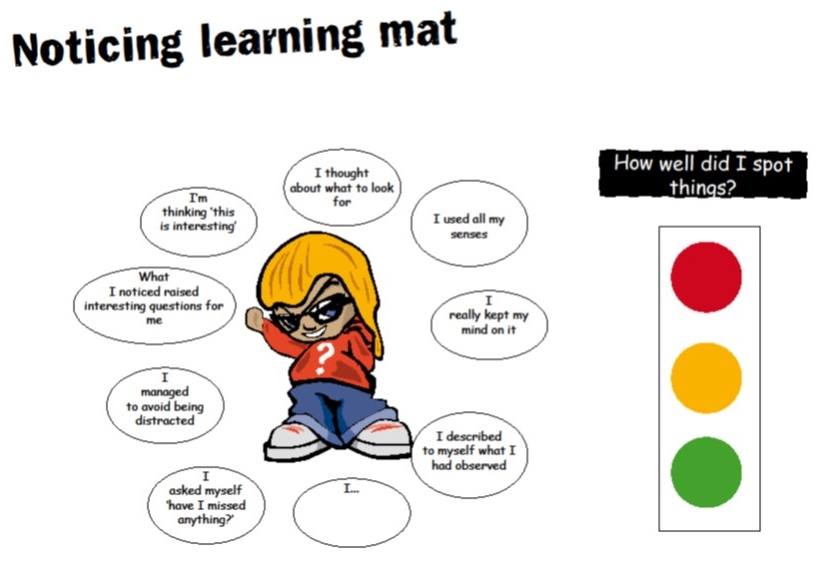
Use a learning mat for noticing to ensure students monitor their own use of the behaviour.
Learning mats are usually A4 laminated sheets that show various aspects of a learning habit. Keep them on desks/tables or as part of a wall display.
Students refer to them during lessons, using them as prompts about the finer aspects of a learning habit that is being stretched. This tool helps students to be able to join in meta-cognitive talk.
Find out 3
Build noticing by considering it in greater depth
The chart alongside offers a deeper view of how Noticing may grow.
Column one deals with being able to manage distraction and focus attention.
Column two is about self-talk; what students may be saying to themselves in growing their self-awareness about noticing.
Column three is about the ‘how’ of noticing; for the familiar, to a given brief, for interest, for fine grained detail.
Column four is about what we are noticing, from things that matter to them, or similarities and differences or for unusual or curious etc.
The last column concerns the impact and outcomes of the noticing; to simply describe what has been noticed or to raise more questions or to seek new understandings.
Take a look at the chart and see if you can plot where the majority of your students are now.
Which aspects do they find more tricky?
How has the chart helped you to understand the development of noticing more fully?
Growing noticing; a trajectory of developing behaviours, skills, attitudes and self-talk
Download as a pdfLearning together meeting (for schools that have decided that all teachers study the same unit at the same time)
Suggested meeting agenda
- Decide what you want this meeting to achieve (5 mins)
- Discuss what you have found out about students’ use of noticing (15 mins)
- Re-cap and reflect on the action you have each undertaken in your classrooms (20 mins)
- Consider issues that would be beneficial if implemented across the school (10 mins)
- Review how the meeting format went (5 mins)

Learning Team Year 2 Meeting Agenda ⬇️
Item 1. Meeting Objectives. (5 mins)
Meeting objectives might include:
- discuss levels of noticing displayed across the school
- share and learn from what we have each tried in our classrooms;
- feel confident about taking forward ideas from online materials into our practice;
- identify actions that would be more useful if everyone applied them in their practice;
Outcome. To have decided what the meeting should aim to achieve.

Item 2. Discussion about learning culture (15 mins)
Explore together your discoveries about your students as noticers;
- what did you find out about your students as noticers (Find out 1)?
- are students improving noticing with age? Moving from grey to purple to blue etc?
- where did we each estimate our classroom to be in terms of its culture (Find out 2)?
- what did we each learn from Find out 2.
- which 3 are the weakest features?
- which 3 actions are our strongest?
- what surprised or baffled you?
- are there significant differences between year groups?
Outcome. A clearer understanding of students as noticers and the extent to which our classroom cultures are set up to support and develop noticing.
Item 3. Explore action using the initial Try outs (20 mins)
Share and discuss the action you each took in making a start on strengthening noticing in classroom practice.
- Which of the suggestions did you each use?
- Any concerns about or difficulties in putting the Try outs into action.
- Which seemed the most valid or successful?
- How the Try Outs affected different age groups.
- Ways of implementing these that we can all learn from and adopt.
Outcome. A clear picture of our interest in and enthusiasm for amending classroom cultures to support learning to learn. A feel for which are proving to be most effective and why. Would any of these culture shifts call for action on current school wide policies?
Item 4. Learning from practice (10 mins)
In relation to all the shades of practice you have been trying out, sharing, mulling over and observing, think about them now in two ways;
1. personally and 2. school wide.
Which ideas/practice stand out as:
- things you want to start doing
- things you think you need to stop doing (that’s harder)
- things you want to keep doing
- things you want to do more often
- things you want to do less
Outcome.
- At this stage it’s essential to note ideas arising from this discussion using 2 pentagon diagrams;
- one for each team member personally and
- one for decisions/suggestions that are school wide.
- Ensure that your school/group wide pentagon is shared with senior leaders.
Item 5. Evaluate team session. (5 mins)
- Did we achieve our objectives?
- Are we comfortable with what we are trying to achieve so far?
- Any concerns at this point?
- Next meeting date and time.

Feedback proforma (for schools that have decided that teachers can study the units in any order)
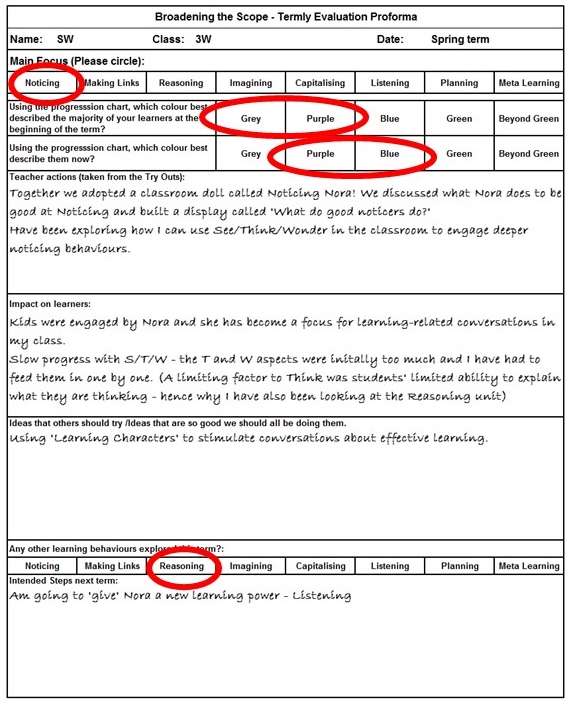
To share your experiments with others and to enable senior leaders to maintain an overview of developments, please complete this proforma termly and hand it to the Building Powerful Learners coordinator.
To give you a flavour, an example of a completed proforma relating to Noticing is opposite. Click below to download and print a blank version for yourself.
Download a blank proforma
Comments are closed.