

Building the habit of Meta Learning.
Welcome to Building Powerful Learners Phase 2. This eight unit online programme will enable you as a teacher to expand your students’ use of learning behaviours.
The programme combines three types of action that will help you to experiment with, analyse and understand how to become more skilled in developing your students’ use of learning power.
1 Understand by using Read abouts…of which there are two types
- Essential Read …essential must read text.
- Extended Read …interesting, good to know, absorb when you can.
2 Analyse by using Find outs…tools to help you discover and analyse essential information
3 Experiment with Try outs…practical activities for you to try, check and perfect in your classroom
This unit explores the “how” of building meta learning.
- What are the key aspects of meta learning? (Essential Read about 1)
- How confident are my students now as meta learners? (Find out 1)
- How could I embed building meta learning into my teaching? (Find out 2)
- What sort of approaches may be useful in making a start on this? (Try out 1 to 5)
- Estimate my students’ development using a detailed meta learning chart (Find out 3)
Structuring and using the ideas below with your students over the next month or so will enable them to extend the range of learning behaviours that they use consciously.

Essential Read about 1
Unpacking Meta Learning
John Biggs (1985) is credited with creating and defining the concept of Meta learning. His conception is framed around the ideas of “being aware of and taking control of one’s own learning”. Implicit within this conception are the ideas that people need to have a knowledge of how they learn; have the motivation to be proactive in managing themselves in this way; have the capacity to be able to regulate their learning.
Becoming a Meta-learner; being able to assess the effectiveness of your own learning process and regulate it for greater success, is made up of several strands;
- how you become and stay motivated and plan your learning
- how you build and organise your ideas
- how you learn with and from others
- how you manage your learning environment and
- how you monitor your learning process itself in order to improve
When looked at from these diverse angles, growing meta learning moves well beyond encouraging a student to ‘think about it’.
So a well formed Meta-learning habit involves being able to talk about the process of learning and how it works. They understand how they learn and are able to play to their strengths and improve areas of weakness. They learn from learning itself, mulling things over, avoiding mistakes and reflecting on experiences and identifying what might be useful elsewhere.

Re-find out 1
Focus on the Meta Learners in your class.
The meta learning progression chart should give you a fairly clear view of the meta learning behaviours and how your students do, and do not, currently exhibit them.
- The majority of students may well display a similar set of positive behaviours (ie the majority may be in the purple or blue phase)
- You will also be conscious of some students who still lack positive behaviours (ie they are still firmly rooted in the grey/lacks phase of the progression chart)
- But some students will appear to have made general progress even in learning behaviours not spotlighted earlier.
The chart alongside shows how meta learning grows. Column 1 identifies the 6 phases of development, column 2 describes how the skills and behaviours may grow over time, column 3 shows the self-talk; what students may quietly say/explain to themselves at each phase of development.
A word of warning.
While you may be tempted to focus your efforts on the majority for greatest impact, you’ll need to take care not to do so at the expense of your ‘grey’ students, as these are your potential underachievers in the future.
What to look for.
In Try Outs 1 to 5, look out for teaching ideas that you think will have the greatest impact on your particular group of learners. Don’t attempt to try all of the ideas – better to do a few thoroughly than to adopt a scattergun approach.
Growing meta learning; a trajectory of developing behaviours, skills, attitudes and self-talk
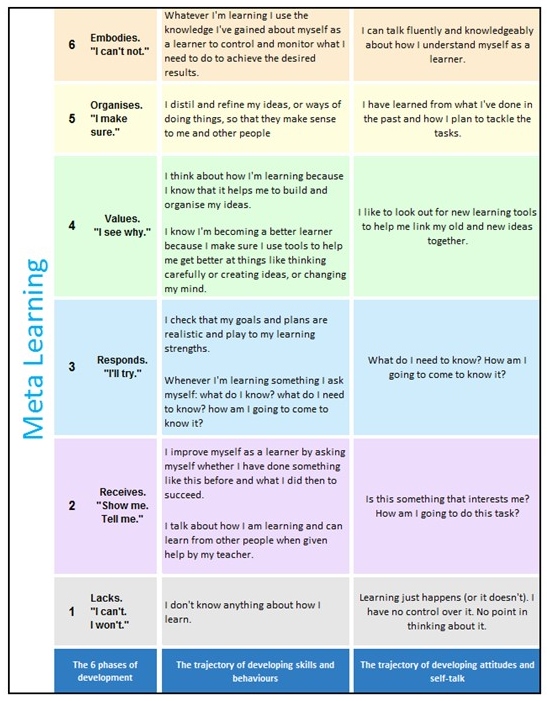
Which phase have most of your students reached now?
Download as a pdfFind out 2
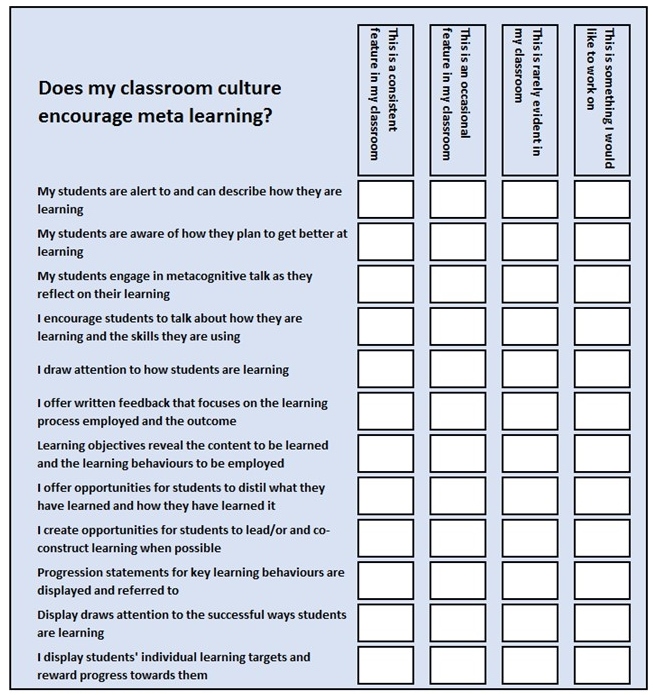
How much does my classroom culture encourage Meta Learning?
Culture is the curriculum of the classroom, frequently hidden from the external observer, but always all evident to learners. It is the minute by minute, hour by hour, day by day way that learners come to understand their role as a learner. Culture is your enacted values in the classroom – what you do and what you do not do, what you say and do not say, what you believe and do not believe, what you value and do not value.
Here is a selection of features that might begin to shape the emotional climate of your classroom to encourage meta learning.
Download and print a copy.
Reflect on your current classroom culture.
It’s worth noting that the list is made up of the four action types you first met last year in the Teachers’ Palette (Unit 2);
- ways of giving students more responsibility for their learning
- the sort of language you might use to stimulate meta learning
- ideas for constructing lessons to build meta learning
- ways of celebrating meta learning
Ask yourself which of the features of the meta learning-friendly classroom are:
- already a consistent feature of your classroom?
- an occasional feature of your classroom?
- rarely evident in your classroom?
Which of these features are you interested in developing further?
At this point it might be worth having an informal chat with some of your colleagues. Is anyone already making progress with one of the features you would like to work on? Do you have any consistent features that others might learn from? Take your completed sheet to discuss at the meeting at the end of this unit.
Try out 1
A range of little culture shifts
Have a think about your current classroom culture in relation to Meta learning.
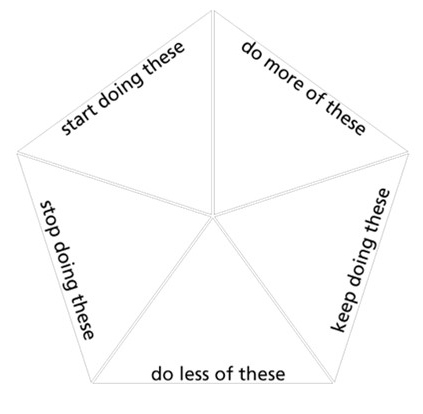
Begin with the ‘stop/avoid’ box – if any of these teaching behaviours are still in evidence in your classroom it would be worth thinking through how they can be eliminated, since failure to do so will undermine the changes you are hoping to achieve for your learners
Then cast your eye over the other 3 boxes. Which ideas appeal to you? Which do you think will have the greatest impact on your students?
Now seek out teaching ideas below in Try Outs 2/3/4/5 that you can use to move your classroom culture forward.
Try Out 2 focuses on ideas for moving responsibility for meta learning towards learners (Relating);
Try Out 3 focuses on developing a learning language for meta learning (Talking);
Try Out 4 focuses on how lessons/activities can be designed to activate and develop meta learning (Constructing);
Try Out 5 focuses on how meta learning can be recognised/ rewarded / praised / celebrated (Celebrating).
Try out 2
Extend students’ responsibilities in order to build meta learning
Build in lesson review points – so that students reflect for themselves
The problem with lesson review points (or plenaries) is that they are often teacher-led. Too often they are a recap of what the teacher wanted students to learn – little more than a restating of the learning intentions and a quick check of student understanding. Necessary, maybe, but not the opportunity for students to reflect for themselves on what they are learning, have learned or how they are/ have learned it.
Try the simple method of students talking in pairs to distil:
- three things we have learned so far;
- three things we still need to find out;
- three things we hope to do next.
Select one or two pairs to feed their opinions back to the rest of the class. Steer students to explain what they think they have learned rather than to hear what you think you have taught them. Gradually add in questions about the learning behaviours they have been using;
- three ways we are learning
- the most useful learning behaviour so far
- a useful learning behaviour we might need to try
You are beginning to give students a richer language in which to couch their reflective thinking.

Teacher talk – for reflecting on content . . .
- What have you learned today?
- What do you still need to find out?
Teacher talk – for reflecting on learning . . .
- How have you been learning today?
- Which learning behaviour was most useful, and why?
Two more ideas for extending students' responsibilities. ⬇️
Moving responsibility for recalling and reflection towards students
- Begin each lesson with ‘Tell me Three … things we learned last lesson; ways we learned last lesson; things we still need to find out; things you hope to achieve today’.
- End each lesson with ‘Tell me Three … things we learned today; learning skills we used today; things we need to do next lesson; ways you could become a more effective learner’ etc.
- Ensure that students tell you three. Do not lapse into doing it for them!
Teacher talk
- Have we remembered the 3 most important things?
- What else do you want to find out about this?
- So, what are you trying to achieve next?
- What learning behaviours did you use in achieving that?
- Which behaviour was most successful/useful/redundant?
- Have you made a habit of that behaviour yet?

Engage students in becoming aware of learning behaviours and stimulate learning conversations at home.
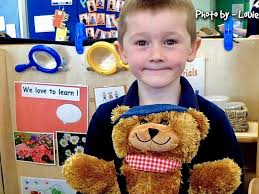
Select or create a soft toy and give it a name …say Pansy. Develop Pansy as a well-loved model learner. Encourage students to consult Pansy to see how she would learn something new.
When Pansy is well established in the classroom begin to send her home with students. By taking Pansy home for an evening or a weekend children are encouraged to talk about their learning… how/what they are learning at home as well as school. When back in school encourage students to write about what they learned with Pansy in their learning journal.
Where this idea has been tried with younger children, parents noted that the children were better behaved when Pansy ‘came to tea’ and asked when she could come again! This simple idea helps children to understand that learning can happen in environments other than school and gains parents’ interest in learning.
Try out 3
Build a learning language of meta learning.
Teacher talk – as a learning coach
Here is a range of things you could say to nudge meta learning. When you use this kind of language you are talking as a learning coach, encouraging students to think for themselves.
10 ideas to ensure your students do the thinking for themselves
- What are the most important things you have found out about yourself as a learner?
- Build in a moment to review what you have done and how you have done it
- Where else could you use this skill/knowledge/idea?
- Think back to when you. . . What did you learn from that?
- What went well? What could be improved? What can we learn from this?
- How can you / do you plan your learning in advance?
- Ask yourself: what you need to know and then how are you going to come to know it?
- How do you get through the boring/difficult bits?
- Are you getting better at regulating your learning environment?
- Can you / do you talk about your learning?

Two more teacher talk ideas ⬇️
Name the learning behaviour being used.
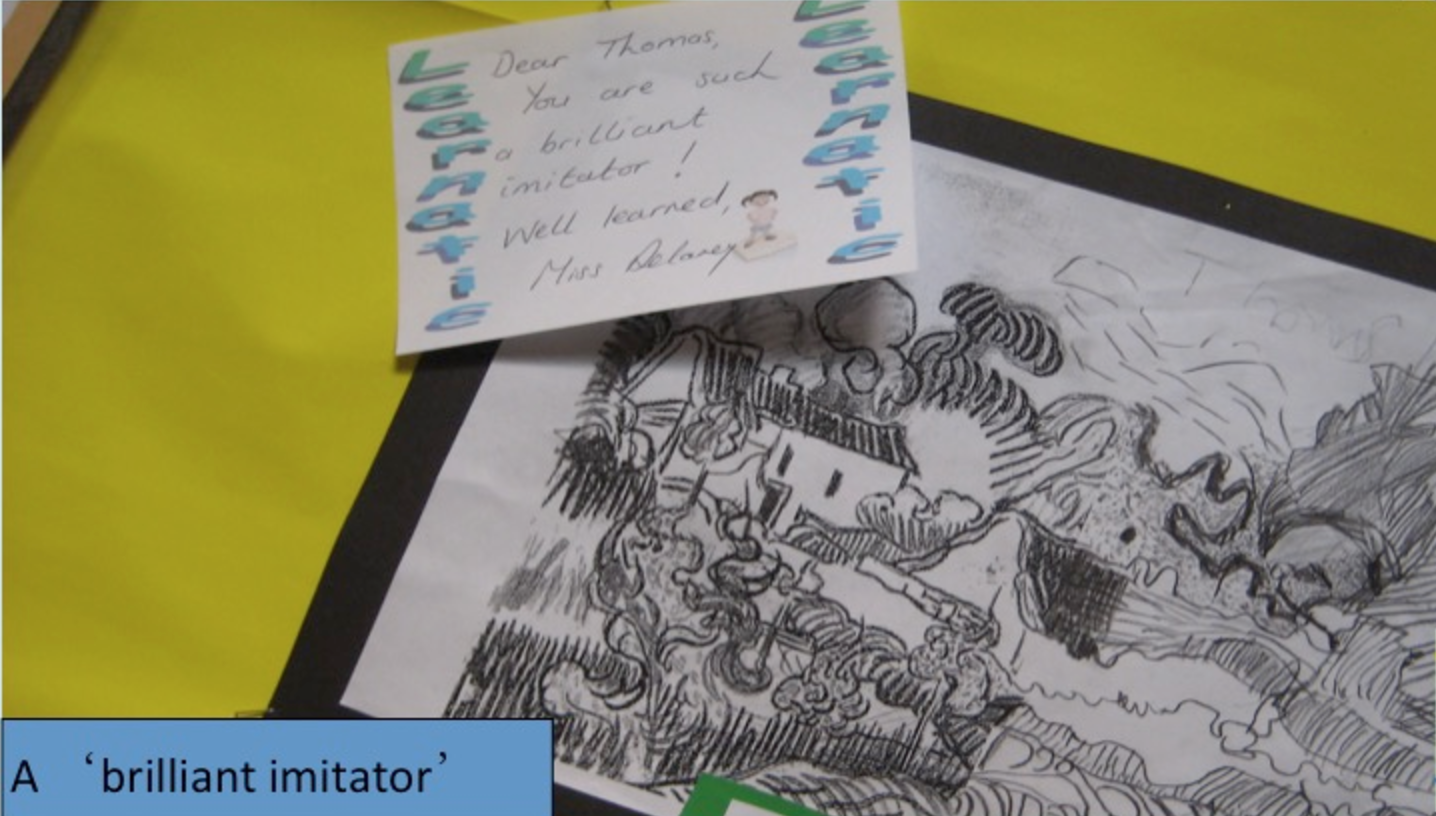
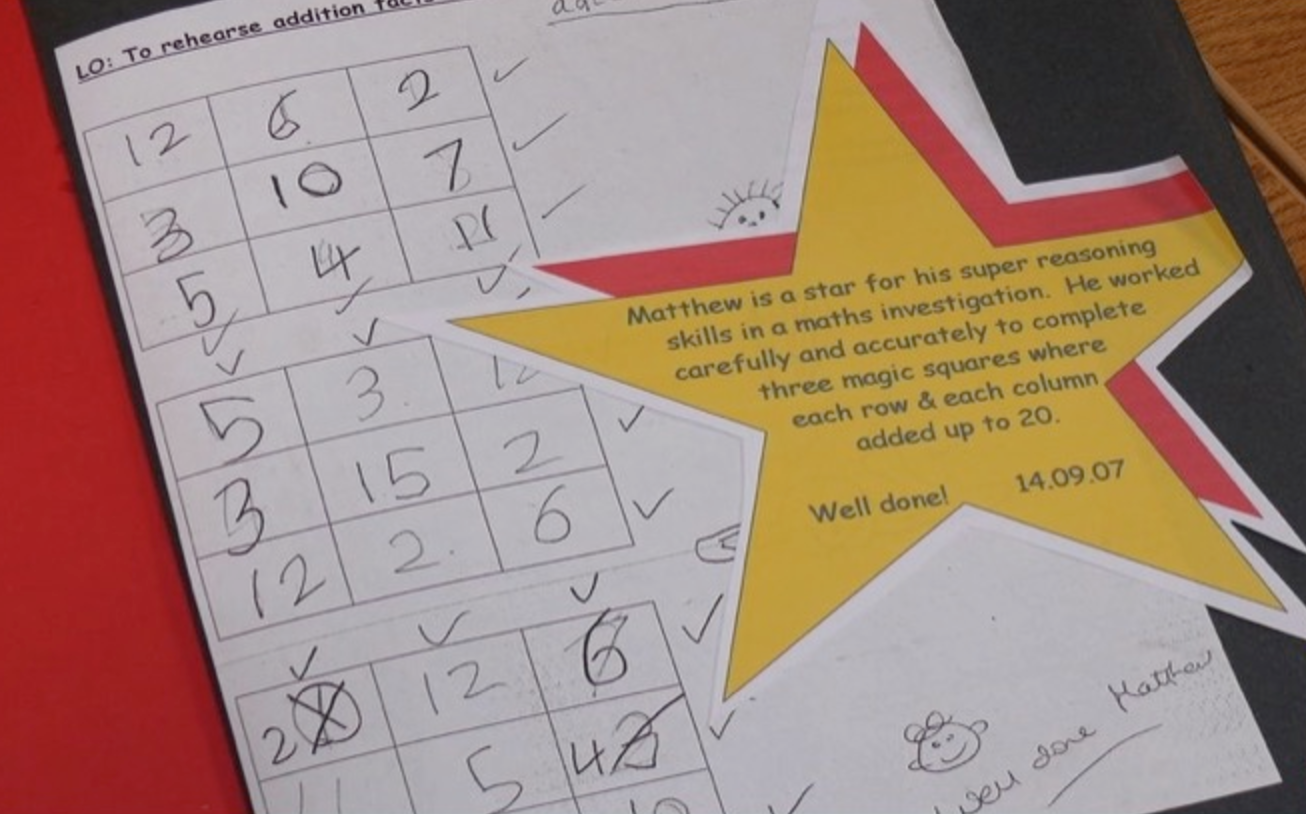
Examples of written feedback that name the types of learning behaviours being used. Using the learning language enables you to be more precise about the sort of learning effort a student has used. Beneficially this means that you notice more precisely how students are learning.
Here, a teacher tells Thomas he is a brilliant imitator. She has noticed that he successfully used his Imitation learning behaviour to draw like Van Gogh. She is making him aware of this, and praising him for it. We are sure you will agree with her observation.
And here, feedback helps Matthew to understand how his ‘super reasoning skills’ helped to assure success. The teacher is intentionally linking these learning behaviours and curricular success.
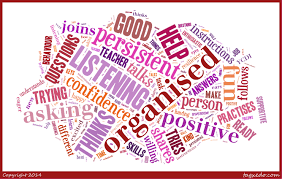
Explore what do good learners actually do
Open up a conversation with students about what good learners do. At this phase, their answers are likely to be shallow and lack precision. This will be because they have not really thought of themselves as learners as yet, preferring perhaps to view themselves as people who are taught things. Equally the lack of a language with which to discuss the process of learning will be a second inhibiting factor.
Focus on someone they perceive to be a good learner. Ask questions like:
- What do they do ?
- What don’t they do ?
- What makes them successful ?
- What do they believe ?
- How do they approach their work ?
Answers will, at this stage, be weak. Try to move students beyond simplistic notions of ‘(s)he is a good learner because they are clever’ to exploring what they actually do in order to succeed – shift the focus from ability to effort.
Create a ‘What good learners do’ display, and add to it as ideas develop over time.
Try out 4
Build meta learning into lesson design
It is through learning activities that learning behaviours get a workout. Their role is to enable your students to access and wrestle with information and ideas; to help them use and understand something; to ensure their effectiveness as a learner. The ‘right’ activity helps to make new concepts more concrete. The ‘right’ activity provides insights into new ideas and subject matter. The ‘right’ activities need to be carefully chosen and, critically, linked to the learning goal.
Make coupling content and process public
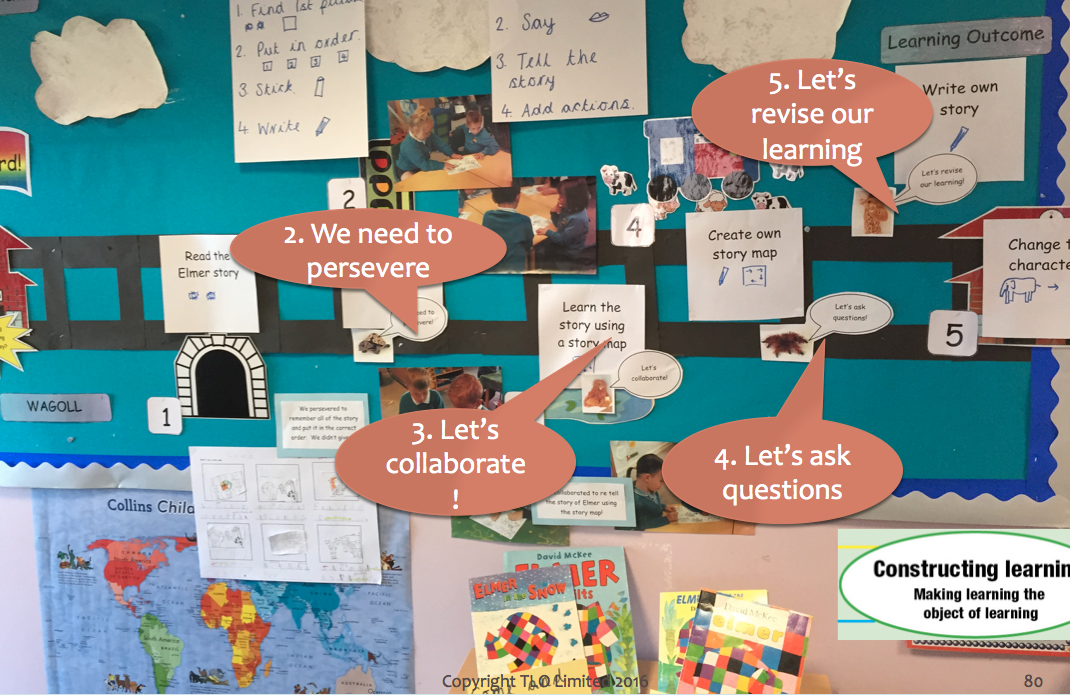
Every classroom in Cadland Primary school has two walls dedicated to current curriculum plans, one for maths and one for literacy. The purpose of these displays is to show the journey of the current unit of work. They show;
- what the objectives are;
- what the success criteria look like;
- what the stages of the process consist of;
- what is being learned at each stage;
- prompts about the new things being learned;
- what the end result might look like.
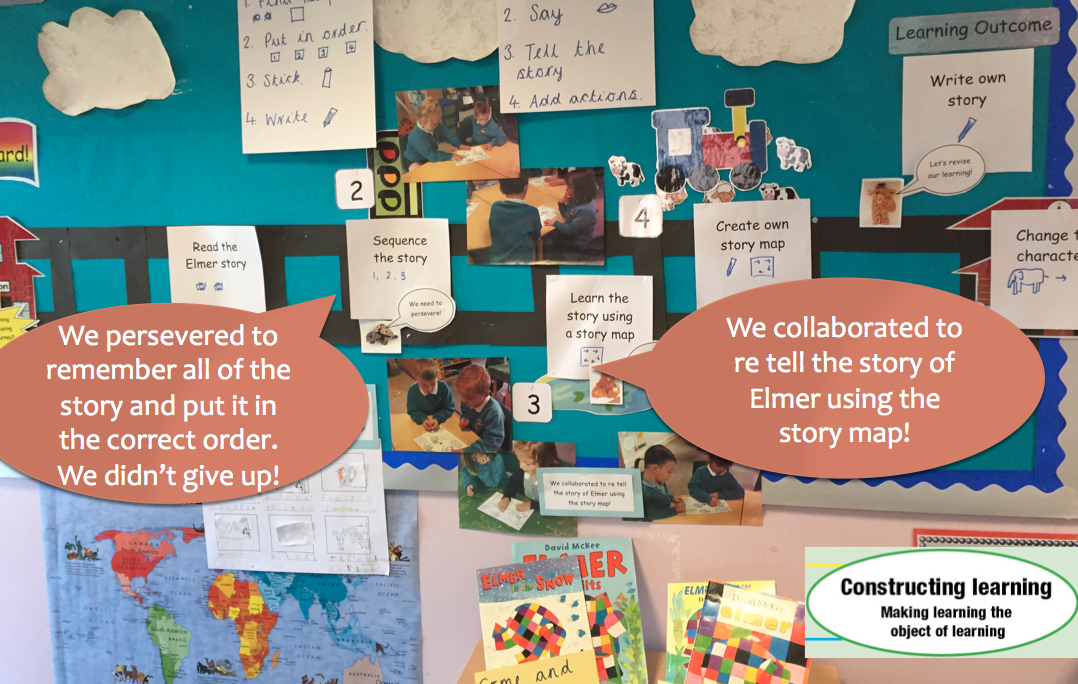
These visual journeys are talked about and added to as the class progresses through the unit content. Learning behaviours are added to each point in the plan. Now students are not only aware of what they are learning about but the learning behaviours they are using to help them get to grips with the content.
The broad brush descriptions of the learning behaviours being used is a powerful, visual coupling of content and process; the what with the how of learning.
The first photograph shows the learning behaviours they are using as they move through the unit. The second photograph shows a reflection on the learning behaviours used and what this accomplished.
Two more lesson design ideas ⬇️
Building learning behaviours into learning objectives
In phase 1 you met the idea of building learning behaviours into lesson planning.
Reminder #1 – Putting the ‘how’ before the ‘what’.
If you write a goal relating to ‘understanding xxxxx’ or ‘knowing yyyyy’ it’s less likely to motivate learners to make the effort than a goal that starts with some indication of the sort of ‘effort’ or way of doing something you want them to make. In other words learning goals that relate to doing something or researching something, or creating something . . . are better motivators than goals that relate to knowing something.
Reminder #2 – The big addition to lesson plan thinking . .
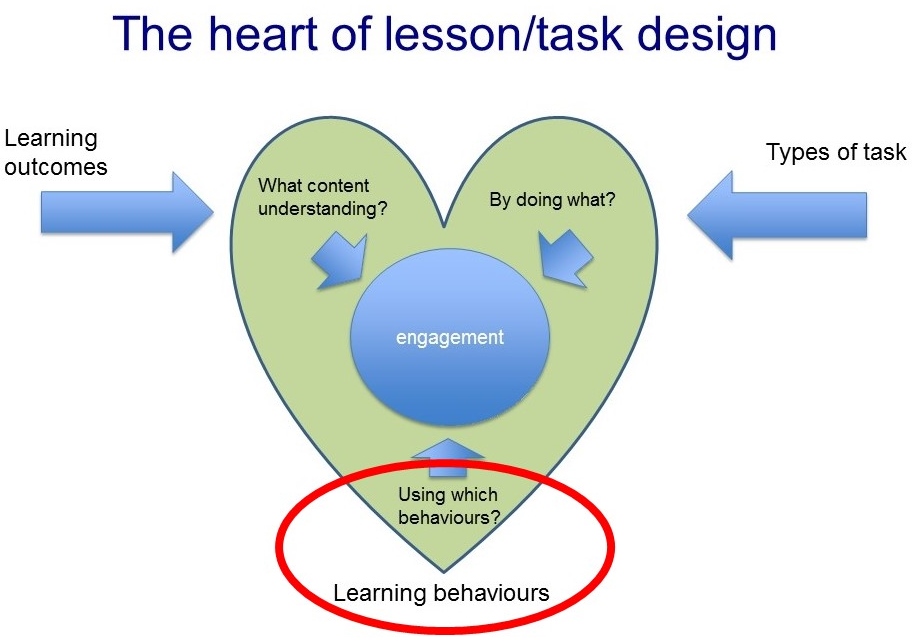
In putting a lesson together the 3 key questions to ask yourself are;
- what is to be learned? (goals)
- by using which learning behaviour(s)?
- by doing what sort of activity?
Translating that into lesson objectives:
- In the earliest stages a learning objective like ‘to understand xxxx’ becomes ‘to use your reasoning skills to understand xxxxx’
- As teachers’ understanding of Reasoning develops, the objective becomes more specific. ‘To use your reasoning skills to understand xxxxx’ might become ‘To support your ideas with evidence to explain how you have come to understand xxxxx’ (Here the learning behaviour is drawn from the progression chart for Reasoning, rather than using the somewhat blunt expression ‘reasoning skills’.)
- And as student understanding of learning behaviours develops, the focus of the objective shifts again, requiring students to speculate for themselves on the precise learning behaviours that they expect to bring to bear on the problem at hand.

Encouraging students to link learning behaviours with curriculum content
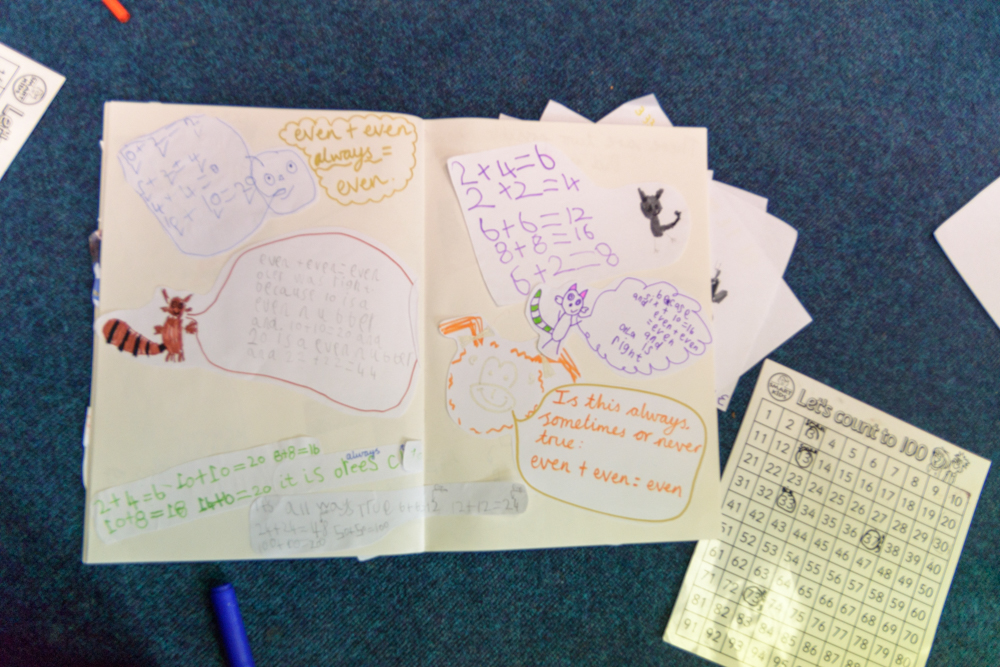
In one KS1 classroom, every day, Orla the orangutan, who is a bad learner, is brought to life through their teacher Clare. Orla sets the children a problem which she herself can’t manage – Are the numbers in the right order? And off pupils go to work it out for themselves. In this short video clip from the end of this maths lesson Orla is wanting to know what’s been going on. The children gather together to discuss what and how they have been learning. Can the children explain to Orla how they have done something? Notice that Orla wears a school shirt, she’s seen as one of them. Through the use of Orla’s questions this relaxed and purposeful metacognitive activity is helping the children to reflect, revise, reinforce and understand their learning and how their learning behaviours are contributing to this. Both the what and the how. The language of learning is being skilfully and fluently brought to life by the teacher, Orla and the pupils. It all looks effortless, but as usual when you see experts at work, it’s all the result of lots of purposeful practice and rigorous, careful planning.
And as we watch transfixed, we notice a class book on the floor which the teacher sometimes refers to. This is Orla’s maths book and the children record the answer and how they found out about it each day.
.
Try out 5
Build meta learning by celebrating its use.
Self-monitoring meta learning in action.
Introducing a new learning behaviour every month or so is trickier than it seems.
- You might concentrate on it in say three or four lessons.
- You will bring it to the fore in your talk.
- But how do you get students to pick up all the aspects of the behaviour?
- How might you ensure they see its usefulness in lessons in general?
- How do you ensure they absorb the use of the behaviour into how they learn?
A learning mat
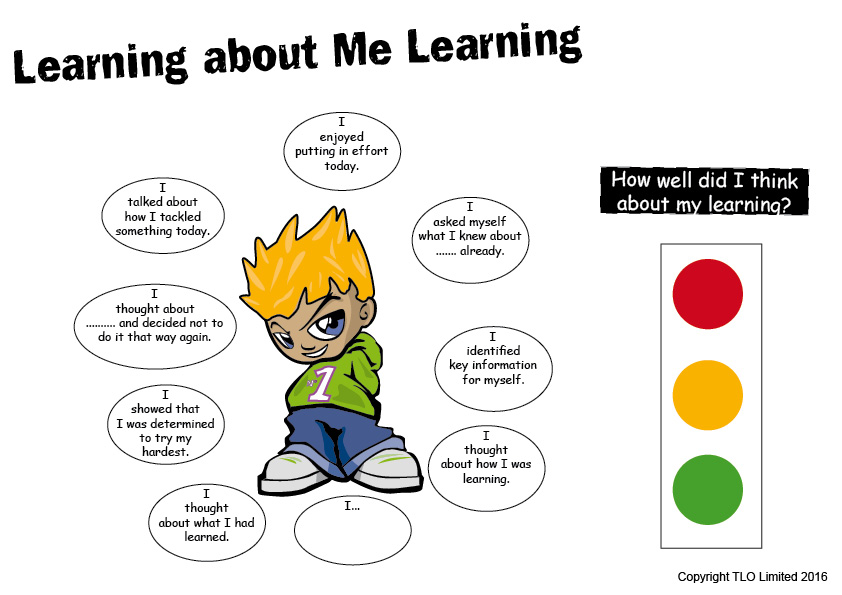
Use a learning mat for meta learning to ensure students monitor their own use of the behaviour.
Learning mats are usually A4 laminated sheets that show various aspects of a learning habit. Keep them on desks/tables or as part of a wall display.
Students refer to them during lessons, using them as prompts about the finer aspects of a learning habit that is being stretched. This tool helps students to be able to join in meta-cognitive talk.
Two more celebrating ideas ⬇️
Noticing learning behaviours
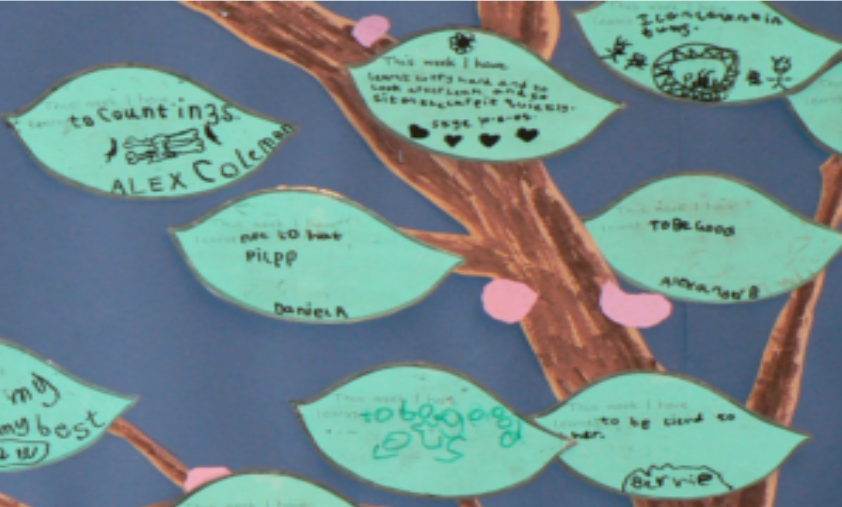
Noticing our learning behaviours has been put into action in many schools. As soon as a learning behaviour has been introduced students are encouraged to notice when they use it, and to briefly record what they have done—imagined something, used a good question, managed a distraction and so on —on a sticky note which they stick on a Learning Tree wall display. Teachers are on a constant look-out for the behaviours they have been explaining, encouraging and enabling, which they, too, capture through photographs or on sticky notes and add to the Learning Tree. This ‘looking for learning’ is further enhanced by ‘learning detectives’: two children who are assigned this role each day and who look for good learning behaviours in others and again add them to the Learning Tree. At the end of the day the Learning Tree offers a rich source of information to reflect on, explain, and reinforce through a whole-class learning power discussion.
At the end of the week the sticky notes are carefully saved in a large scrapbook. This gives the teachers a running record of what the children have been doing and noticing about themselves. Even when this had only been in operation for a term or so teachers began using their analysis of the weekly data to plan further development. They were refining their own professional view of how students’ learning behaviours could be converted into instinctive habits.
Teacher talk
- How are you learning?
- What did you do?
- How did you do it?
- Why was it successful?
Praising learning behaviours
1. Design stickers such as ‘Proud to be a learnatic’ and encourage students to show how proud they are to be learners. This is a simple, fun way to recognise efforts and by taking the stickers home they capture parents attention. Parents now ask what it’s all about when students take their stickers home with pride.
2. Use circle time to discuss learning each week and to positively identify students who learned well. Initially students who are seen as traditionally successful will be selected; good students as opposed to good learners. However, as discussion gradually develops through your modelling, students will begin to realise that just because someone doesn’t get it ‘right’ doesn’t mean they aren’t a good learner. Talk about students who persevere with their learning in, say, a science investigation by repeating the test when it’s gone wrong. Students quickly come to value how they learn and take greater notice of how others learn too.
3. Write to learners on celebratory paper to congratulate them on their learning. Find a sheet of ‘special’ paper that is instantly recognisable. Write a short letter to a student when you notice impressive learning behaviour. You could leave it in their tray, send it home by post, attach it to their recorded learning on a display; whatever suits you and the student..

Teacher talk
- Well done. You used some good learning behaviours there.
- I watched as you were learning to xxx. Well done you really keep on trying.
- I’ve noticed you using some really interesting learning behaviours?
- Great questions. You will learn lots from asking them.
Find out 3
Build meta learning by considering it in greater depth
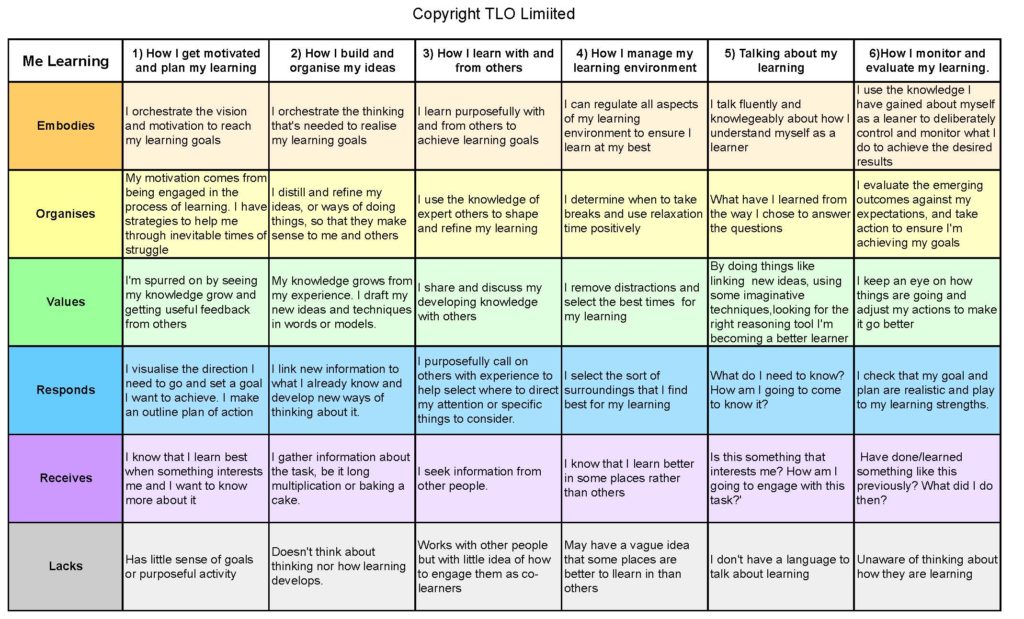
The chart alongside offers a deeper view of how Meta learning may grow.
Column one is about motivation and planning, wondering whether we have the skill and the will to do something. We gain motivation from seeing success and build strategies to help us keep going through the inevitable hard slog bits. We turn dissatisfaction to satisfaction as understanding emerges.
Column two is about building and organising ideas, moving from seeking information, seeing how it fits together with what you already know about and how you can retell the ‘story’ of this differently after incorporating the new and old ideas. It’s about making sense of things.
Column three is about learning with and from others, not just face to face or in teams but more and more through distributed electronic contact. It involves sharing hypotheses, posing questions and absorbing others’ perspectives. It’s an iterative process of gaining new ways of knowing, new insights and crafting ideas for the desired outcome.
Column four is about managing and structuring the learning environment to optimise learning effort. We learn in different ways, from physical surroundings to hours of day or emotional state. We learn how to manage distraction, how to channel our emotional energy positively and how and when to break state.i.e.we learn how to regulate our environment just as much as other aspects of the learning process.
Column five is about self-talk, what we say to ourselves as we learn. Statements capture what someone in each phase may be thinking. Teachers might usefully encourage students to set learning goals, talk through which learning methods/ resources might be useful, and to monitor and evaluate the learning being used.
The last column has to do with how we self-monitor our learning, adjusting how we are doing things and whether it is effective enough to achieve the goal; there is a causal link and the goal is all important in keeping us going.
Take a look at the chart and see if you can plot where the majority of your students are now.
Which aspects do they find more tricky?
How has the chart helped you to understand the development of meta learning more fully?
A deeper meta-learning chart.
Growing meta learning; a trajectory of developing behaviours, skills, attitudes and self-talk
Download as a pdf
Learning together meeting (for schools that have decided that all teachers study the same unit at the same time)
Suggested meeting agenda
- Decide what you want this meeting to achieve (5 mins)
- Discuss what you have found out about students’ use of meta learning (15 mins)
- Re-cap and reflect on the action you have each undertaken in your classrooms (20 mins)
- Consider issues that would be beneficial if implemented across the school (10 mins)
- Review how the meeting format went (5 mins)

Learning Team Year 2 Meeting Agenda ⬇️
Item 1. Meeting Objectives. (5 mins)
Meeting objectives might include:
- discuss levels of meta learning displayed across the school
- share and learn from what we have each tried in our classrooms;
- feel confident about taking forward ideas from online materials into our practice;
- identify actions that would be more useful if everyone applied them in their practice;
Outcome. To have decided what the meeting should aim to achieve.

Item 2. Discussion about learning culture (15 mins)
Explore together your discoveries about your students as meta learners;
- what did you find out about your students as meta learners (Find out 1)?
- are students improving meta learning with age? Moving from grey to purple to blue etc?
- where did we each estimate our classroom to be in terms of its culture (Find out 2)?
- what did we each learn from Find out 2.
- which 3 are the weakest features?
- which 3 actions are our strongest?
- what surprised or baffled you?
- are there significant differences between year groups?
Outcome. A clearer understanding of students as meta learners and the extent to which our classroom cultures are set up to support and develop meta learning.
Item 3. Explore action using the initial Try outs (20 mins)
Share and discuss the action you each took in making a start on strengthening meta learning in classroom practice.
- Which of the suggestions did you each use?
- Any concerns about or difficulties in putting the Try outs into action.
- Which seemed the most valid or successful?
- How the Try Outs affected different age groups.
- Ways of implementing these that we can all learn from and adopt.
Outcome. A clear picture of our interest in and enthusiasm for amending classroom cultures to support learning to learn. A feel for which are proving to be most effective and why. Would any of these culture shifts call for action on current school wide policies?
Item 4. Learning from practice (10 mins)
In relation to all the shades of practice you have been trying out, sharing, mulling over and observing, think about them now in two ways;
1. personally and 2. school wide.
Which ideas/practice stand out as:
- things you want to start doing
- things you think you need to stop doing (that’s harder)
- things you want to keep doing
- things you want to do more often
- things you want to do less
Outcome.
- At this stage it’s essential to note ideas arising from this discussion using 2 pentagon diagrams;
- one for each team member personally and
- one for decisions/suggestions that are school wide.
- Ensure that your school/group wide pentagon is shared with senior leaders.
Item 5. Evaluate team session. (5 mins)
- Did we achieve our objectives?
- Are we comfortable with what we are trying to achieve so far?
- Any concerns at this point?
- Next meeting date and time.
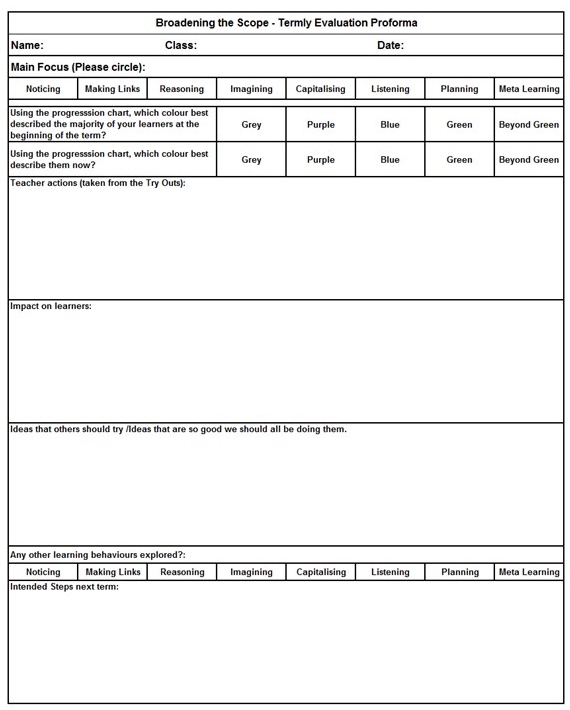
Feedback proforma (for schools that have decided that teachers can study the units in any order)
To share your experiments with others and to enable senior leaders to maintain an overview of developments, please complete this proforma termly and hand it to the Building Powerful Learners coordinator.
To give you a flavour, an example of a completed proforma is in the Noticing unit. Click below to download and print a blank version for yourself.
Download a blank proforma
Comments are closed.