
Unit 8. Looking Back, and Moving Forward
Here’s a reminder of why you’ve been working through units 1 to 7.
Learning how to learn matters.
Students across the world need now to reach higher levels of achievement, not only to find fulfilling work but also to empower themselves to thrive in an increasingly complex world.
- Employment requires being able to enhance and transfer knowledge and to operate collaboratively.
- The capacity to learn and to adapt needs to be lifelong because change is a permanent state.
Research in the learning sciences shows that learning itself is learnable; that we, as a species, can get better at learning. This means we, schools, teachers, parents, can grow/develop better, more effective learners.
- Vast amounts of information is now available and learners, young and old, need to know how to find, select and validate relevant information, to process it, connect it, to understand it and use it.
- Learning is increasingly taking place in different settings and with different relationships.
- Learning is a way of life.
Over the last eight or nine months you have used:
Read abouts…offering ‘must know’ information;
Find outs…tools to help you discover and analyse what’s happening;
Try outs…practical activities to try, check and perfect in your classroom.
To help you move on, Unit 8 has 3 very different purposes:
- Section 1 invites you to look back over the past few months and to evaluate the impact of:
- what you have learned;
- the ideas that you have tried out;
- how these changes have impacted on your students’ learning behaviours.
- Section 2 distils the key messages for teaching and classroom culture and explores what you might do next to consolidate the positive changes you have already made.
- Section 3 signposts the way ahead and opens up further possible avenues of enquiry.
Download and use the Unit 8 Reflection Summary below to record your thoughts as you work through Unit 8. Take your completed sheet to the end of unit team meeting.
Download the Unit 8 Reflection Summary


Section 1 – Looking Back
1a) Looking Back at Unit 1…which was all about learning behaviours.
In Unit 1 you were introduced to The Supple Learning Mind framework which shows high value learning behaviours identified by research.
The Supple Learning Mind framework is made up of the four domains of learning:
- The Emotional domain of learning (where becoming a good learner involves the disposition to be resilient)
- The Cognitive domain of learning (where becoming a good learner involves the disposition to be resourceful)
- The Social domain of learning (where becoming a good learner involves the disposition to be reciprocal)
- The Strategic domain of learning (where becoming a good learner involves the disposition to be reflective)
This framework shows that learning isn’t just about having a good memory; it includes how we feel, how we think, how we learn with others and how we manage the process of learning. It shows that effective learning is a complex process with a dispositional overlay i.e. all the positive or negative ways someone views learning. It also provides a language that helps you as a teacher to think about how to cultivate each of the learning behaviours and help students to gain a better personalised understanding of what they have to do to learn content.
Reflecting on learning from Unit 1 ⬇️
Consolidate your understanding of your students as learners
Unit 1 Find Out 2 invited you to ‘Get curious about your students as learners’.
This seemingly simple task was actually more demanding than it first appeared. It was probably easy to assign positive learning behaviours to one or two of your ‘golden children. Similarly when you turned the positive learning behaviours into negative behaviours, the one or two students who’ve yet to develop any positive learning behaviours also stood out from the crowd.
What of ‘the crowd back then’? You may have found that while you know your students well in terms of their attainment levels, you were far less aware of ‘how’ they were as learners.
But what of your students now that you’ve spent a few months building their awareness of learning and themselves as learners?
Download and print a few of copies of the ‘Get curious’ sheet.
- Consider just one student in your class (but avoid the extremes, just select ‘one of the crowd‘). Which of these learning behaviours are positives, neutral, or negative for your chosen student? Does this raise any questions for you about them as a learner? About your knowledge of them as a learner?
- Try another ‘one of the crowd’. Do you now know them well enough to identify individual differences?
- Turn your attention to one of the ‘golden children’. Although many or most of these behaviours will be positive, are there still a few areas of relative weakness?
- Repeat for one of your predominantly negative learners. Although the majority of their behaviours may still be negative or, at best, neutral, are there some learning behaviours that are showing signs of improvement? Which? Why might this be?
- Now think about your class as a whole. Can you identify 5 learning behaviours that you would say are mostly positive – the learning strengths of your class as a whole? Repeat for 5 learning behaviours that are still mostly neutral or negative – the weaker aspects of your class’ learning profile? What are you noticing?
Key Question: As a result of your engagement with this course do you now have a clearer view of your students as learners?
1b) Looking Back at Unit 2…which was all about teaching.
In Unit 2 you were introduced to the Teachers’ Palette framework which is about the culture of the classroom.
The culture of the classroom is determined by how you are as a teacher, the relationships that exist between you and your learners, the ways in which you talk and what you talk about, the extent to which your teaching is designed to ensure both content acquisition and the development of learning behaviours, and the often subliminal messages about what you think is really important.
You used two tools to analyse your own classroom culture:-
Culture Tool 1, looked at differences between classrooms that are:
- teacher focused;
- those becoming learner focused;
- those achieving the ultimate goal of becoming learning focused.
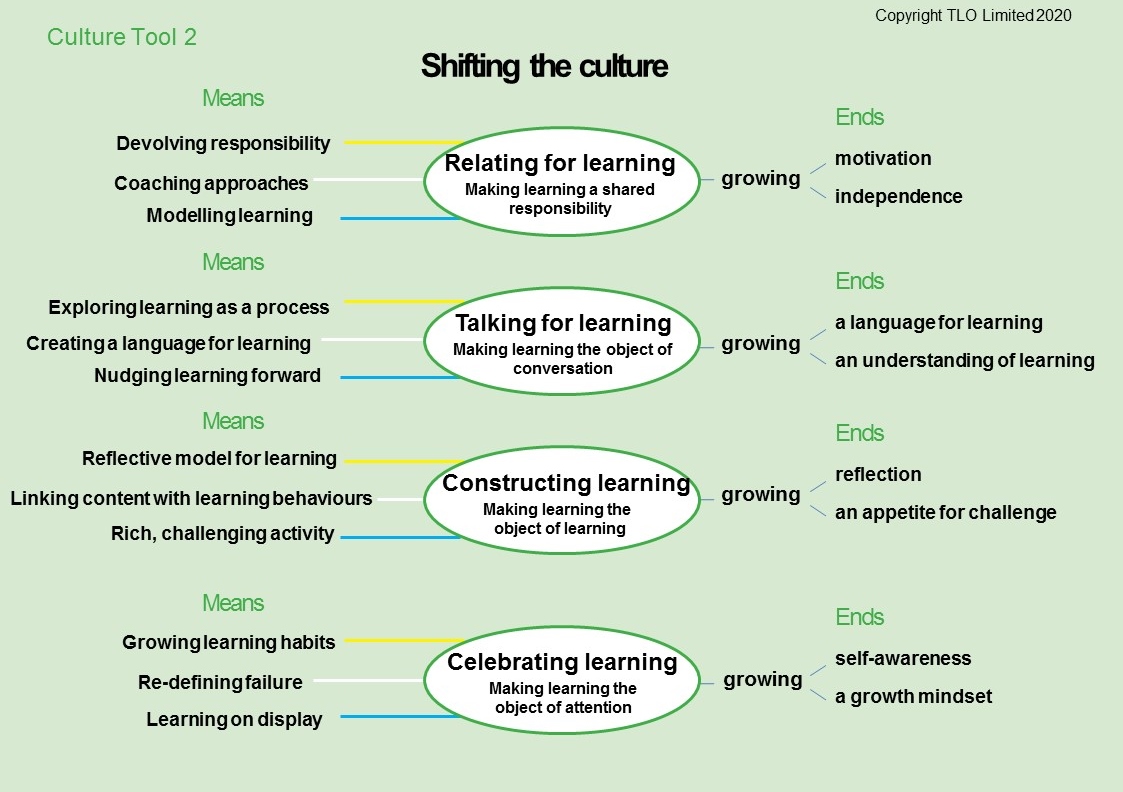
Culture Tool 2, expanded on 4 key aspects of a teacher’s behaviour and the effects or anticipated Ends/Outcomes for students of this learning culture.
Here the teacher’s role becomes one of surfacing learning itself; to make learning public; to train some of the tricky bits; to talk about it; to recognise and celebrate it as it happens; to nudge it along, assisting students to grow their learning behaviours; and to design activity to stretch a wide range of learning habits. This uncovering of learning ensures students discover, use, understand and grow their learning habits. In such classrooms there’s a shift in emphasis from performance to learning, from content to process, from teaching to coaching.

Reflecting on learning from Unit 2 ⬇️
Re-assess your classroom culture.
At the end of Unit 2, you were invited to consider the aspects of classroom culture that you may have begun to re-think. Spend a few minutes revisiting this wheel.
Ask yourself;
- Which aspects of classroom culture have I already made progress in?
- Which other aspects might still be in need of attention?
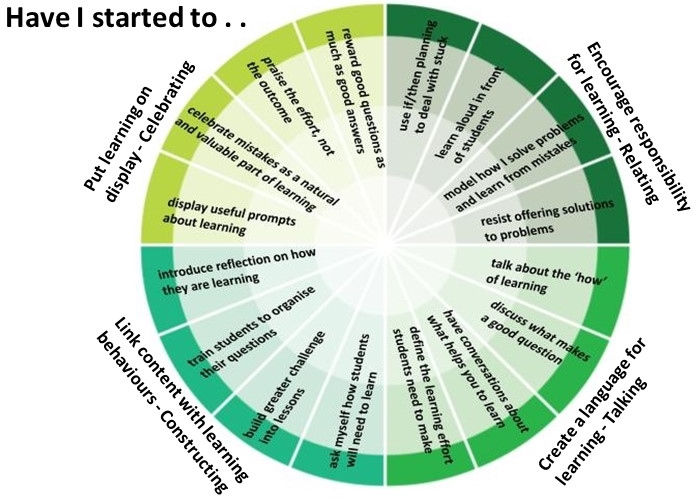 The learning culture wheel is made up of the four aspects of culture depicted in four shades of green:
- relating for learning (encouraging students to take more responsibility for learning)
- talking about learning (creating a language for learning)
- constructing learning (curriculum planning to link content and learning behaviours)
- celebrating learning (putting learning on display)
Ask yourself;
- Which aspects of classroom culture have I started to develop?
- Which aspects might need attention going forward?
- Which aspects do I need to find out more about?
- In which quadrant have I made most progress? Least progress?
- Is there anything about my classroom culture that’s jumping out at me?
- What do I need to do next?
Download the Culture Wheel
1c) Looking Back at Unit 3…which was all about progressing as a learner.
In Unit 3 we identified a key disposition from each domain of learning; from the Emotional domain – Persevering, from the Cognitive domain– Questioning, from the Social domain– Collaborating, and from the Strategic domain– Revising; these are what we call the foundational four.
Why pick out these four dispositions to start with?
Persevering because teachers find that it’s the disposition to keep going, to remain engaged, to relish challenge and go for goals that’s most lacking in many students.
Questioning because this is the driver of learning; wanting to know why, how, if, when and so forth fundamentally connects us with learning.
Collaborating because ‘working together’ is a familiar classroom activity and yet few students know how best to learn profitably together.
Revising because learning is a process and like any process it needs managing and adapting to work really well.
This foundational set of four offer the soil in which other dispositions can take root more easily.
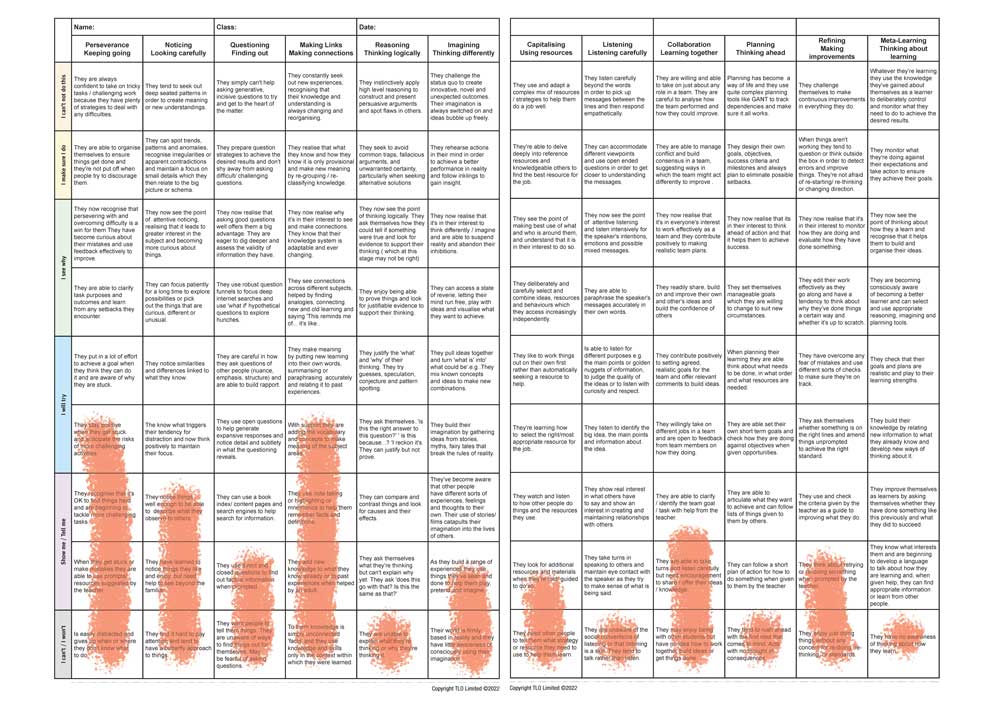
In Unit 3, Get Better at Getting Better, you met the progression charts for these four learning behaviours. (opposite).
In Find Out 2 you looked at 4 of your students through the lens of these charts and completed their individual Learning Profiles, and if you undertook the deeper dive in Extended Find Out 2 you may have completed Profiles for some groups of students, like boys, girls, more able, SEND, Pupil Premium etc.
Dig out your records.
If you’ve kept these Learning Profiles and any impressions / analysis that you recorded at the time, please retrieve them. Equally look back to any notes made at the end of Unit meetings as they may also help to remind you of your thinking and your colleagues’ thinking at the time.
Reflecting on learning from Unit 3 ⬇️
Is there any evidence that our students’ Learning Profiles are showing signs of growth?

Beware, and manage your expectations!
These progression charts show a lifetime of growth and development – most adults are not consistently at the top of these charts, in all circumstances, after many years of experience. It follows that the amount of progress that can be achieved by your children in a few short months will necessarily be limited.
But, having said that, do you get the sense that your students are already on an upward trajectory?
Go back to the 4 students you focussed on in Find Out 2 of Unit 3. Create updated Learning Profiles for these 4 students. What are you noticing? What questions are you asking yourself?
More generally:
Are there maybe some students who were initially in the ‘Grey’, negative zone who are now beginning to engage more positively, albeit with teacher encouragement and support, at the ‘Purple’ level?
Are there some students who now require less teacher encouragement and support than previously who are beginning to display some ‘Blue’ level characteristics?
Are there even some students for whom the penny has dropped, who have come to realise that adopting these learning behaviours has a big pay-off for them, and they are beginning to exhibit some ‘Green’ level characteristics?
What about groups of students? Are any groups of students displaying greater, or lesser, progress than other groups? Why might this be? What might need to be done?
And finally:
What is a realistic target for the whole school? What might the future look like if these changes are implemented consistently over an extended period of time? What, for example, might your year 1’s look like in 5 years time when they are in year 6, compared to how your year 6 students are today? Dare you dream that many more students may have made the significant shift from ‘Blue’ to ‘Green‘ before they move on to secondary school?
1d) Looking Back at Units 4/5/6 & 7…which were all about basic teaching ideas that stimulate learning behaviours.
In Units 4, 5, 6 & 7 you were invited to explore 4 key learning behaviours – Persevering, Questioning, Collaborating and Revising respectively – through the lens of the 4 aspects of classroom culture – how you relate and talk to students, and how you construct learning activities and celebrate learning.
In each unit, you:
- considered whether your classroom culture was learning-friendly (Find Out 2s);
- thought about things you should stop and start doing to create a classroom culture within which the learning behaviour might flourish (Try Out 1s);
- were encouraged to explore Try Outs 2/3/4/5 relating to each of the 4 aspects of classroom culture (relating, talking, constructing, celebrating).
Altogether there were 52 Try Out activities for you to choose from. But which did you try and how effective were they?
Take a look back and reflect on which Try Outs you tried, why you chose them, which worked, which didn’t, which would you try again, and which you’ve already built into your curriculum plans.

Reflecting on learning from Units 4/5/6&7 ⬇️
How well did the Try Outs work?
Within these 4 units there were over 50 things that you could have ‘Tried Out’, and hopefully you followed the advice to focus on adopting just a few rather than taking a scattergun approach that merely scratches the surface of a large number of possible ideas.
Look back over the 4 units, particularly at the suggested ‘Try Outs’. Ask yourself, for each of the 4 units:
- Which ‘Try Out(s)‘ had the greatest impact in your classroom?
- Which ‘Try Out(s)‘ had the least impact?
- Which ‘Try Out(s)‘ have become embedded in your classroom culture?
- Are there ‘Try Out(s)‘, maybe ones that your colleagues found useful, that you did not try at the time and need to re-visit?
Section 2 – Moving Forward . . .
Many research papers, projects and books have been written about learning to learn, metacognition and self-regulation. The problem with all this scholarship is that you can easily get lost in the detail.
In this section we’re fast tracking you to the key set of learning culture shifts that you’ve had opportunities to experiment with over the last 8 or 9 months. When they’re woven consistently together, they combine to create a learning-friendly classroom culture within which positive learning behaviours can flourish and grow. It’s the start of a culture where learners knowingly use and develop a whole range of learning behaviours and become disposed to do so when necessary.
All of the cultural shifts in this early key set have made multiple appearances during the first 7 units, and, in the toggle box that follows, we summarise their implications for teaching and their intended outcomes for learners.
Key learning culture shifts
Relating for Learning
- Coach whenever possible, tell only when necessary
- Shift responsibility for monitoring learning to the learner
Talking for Learning
- Create a rich language for, and understanding of, the process of learning
- Blend in the use of ‘Could-Be’ language across the curriculum
Constructing Learning
- Plan the use of appropriate learning behaviours into lessons across the curriculum
- Use a wide range of Visible Thinking Routines to activate the use of learning behaviours
Celebrating Learning
- Re-define usual ideas of classroom learning
- Create classroom displays to support and celebrate the process and growth of learning

Key learning culture shifts explained. Some really important stuff here. ⬇️
Reflecting on your progress to date . .
You may find it helpful to download a short review sheet to support your reflections on:
- How your own classroom culture has changed;
- And how your students have responded to the changes you have made.
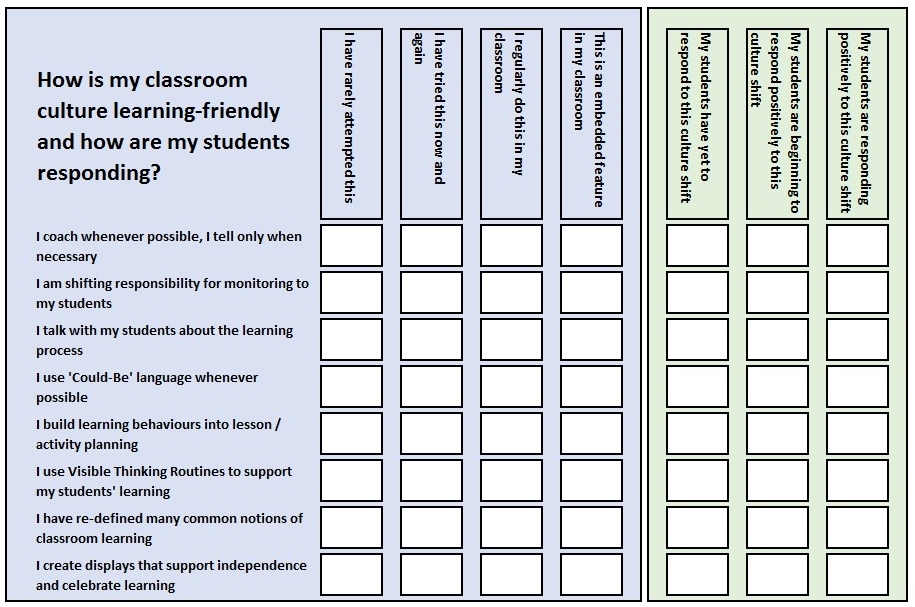
Key learning culture shifts explained
Relating for Learning…gradually devolving responsibility to the learner
1. Coach whenever possible, tell only when necessary.
Curiosity lies at the heart of coaching, so this means you have to become an effective listener and ask questions to open dialogue without it sounding like an interrogation. Your aim is to enable students to see what they are doing more clearly and discover their own ways to improve. Above all, you’ll need to resist offering solutions because this does little to secure learning as students haven’t been allowed to confront and engage with the problem and find their way forward.
2. Shift responsibility for monitoring learning to the learner
Reviewing lies at the heart of learning. It involves stopping every so often to take stock of progress and to ensure that whatever someone is trying to produce—an artwork, an essay, a draft business plan—is on track; how they want it to be. So reviewing involves your students being able to look at their own work with the critical eye of an editor, and not being afraid of the possibility that some corrections or alterations may be needed.
As a result students will be moving towards:
- being able to explore their own challenges, problems and goals;
- their own motivation and self-esteem improving;
- building their curiosity and self-encouragement for learning.
As a result students will begin to develop their own metacognitive frame of mind and they’ll muse over:
- What’s the best way of checking my work?
- How can I improve this?
- Am I achieving what I wanted to?
- What would be a better way of doing.that?
- How have my ideas changed?
Talking for Learning…promoting talk about learning
3. Create a rich language for, and understanding of, the process of learning
The importance of and ideas for a learning language have been introduced across all the Units
Having a language that captures the richness of learning helps you and your students to uncover learning as a visible process that can change and improve. A rich learning language offers you, and your students, a way of talking about what learners actually do, and this in itself enables them to expand their capacity and appetite for learning.
4. Blend in the use of ‘Could-Be’ language across the curriculum
The importance of using ‘Could-Be’ language was introduced in Unit 7.
Could-Be language encourages more genuine engagement with what is being taught; how students will question and solve problems more readily if knowledge is presented as provisional. It’s about shifting the tone to more tentative, less cut and dried. The opposite is ‘Is’ language which positions the learner as knowledge consumers where their job is to try and understand and remember.
As a result learners will begin to ask themselves things like:
- am I using the best strategy here?
- what’s the sticking point of this task
- are there other strategies I might use?
- what’s the best way of checking this?
As a result students will become:
- more thoughtful, critical or imaginative about what they are reading;
- more able to consider alternatives or revise their point of view;
- rightly sceptical about apparent ‘truths’.
Constructing Learning…shaping activities to promote learning
5. Plan the use of appropriate learning behaviours into lessons across the curriculum
Thus far you have introduced the use of four learning behaviours into your lesson plans
In designing schemes of learning or individual lessons there’s a central practical turnaround that you’ve come to recognise. You’ve now started asking the fundamental question… ‘How are my students going to learn this?’ rather than ‘How am I going to teach it?’ You’re making conscious choices about which learning habits to introduce and stretch and how to make lessons more interesting and challenging.
6. Use Visible Thinking Routines to activate a wide range of learning behaviours
Thus far you have met the VTRs ‘See Think Wonder’ (in Unit 5), ‘Think Pair Share’ (in Unit 6) and ‘I used to think . . but now I think’ (in Unit 7).
Visible Thinking Routines are simple routines that you can apply across a wide range of subjects and contexts. They require students to think or behave in a variety of different ways. When you use them regularly they become woven into the fabric of the classroom culture and progressively hard-wired into the thinking practices of your students. They become part of the learning culture. There are many more to explore at the VTR website:
Visit the VTR website
As a result students will become;
- more curious and self-reliant rather than compliant and dependent;
- and over time they’ll come to know, understand and take control of their learning behaviours.
As a result, over time, students will:
- with guidance be able to use VTRs for themselves;
- use them routinely as valid ways of thinking about and tackling problems.
Celebrating Learning…by putting learning on display
7. Re-define the usual ideas of classroom learning
In effect this is about re-defining failure – turning the lens around. Mistakes become learning opportunities; difficulty is when learning happens; struggle is to be expected; asking questions shows curiosity, not a lack of intelligence; effort not just talent is what leads to success. This shift is about ensuring that hard won gains over what is difficult are preferable to effortless success over the easy.
8. Create displays to support growing independence and celebrate learning
In your classroom you will have been displaying the process of learning (as opposed to the finished outcomes of learning) on the walls. This may have included annotated work in progress, first attempts, revisions, failed lines of enquiry, leading to the finished article. What you choose to display tells your students a lot about what you believe: displaying/praising only the finished article suggests more interest in the outcome than the process.
As a result students begin to recognise that:
- that being stuck is an interesting not shameful place to be;
- being stuck makes them a stronger learner;
- making mistakes is natural and valuable part of learning;
- they can learn by applying different types of effort.
As a result, over time, students will recognise they are:
- using their learning habits quite a lot;
- using these learning behaviours in different subjects;
- getting better at using various learning behaviours.
Section 3 – Signposting the way ahead
Broadening the scope of learning opportunities for staff; supporting the development of a learning focused school.
In this Phase 1 of the journey towards becoming a learning focused school you’ve explored the three models that form the foundation of the approach to learning, namely;
- Supple Learning Mind, (the brain diagram)
- The Teachers’ Palette
- Growth in learning behaviours
and you’ve worked on developing the foundational four learning behaviours, Perseverance, Questioning, Collaborating and Revising. Phase 2 offers opportunities for you to both branch out and go deeper.
Phases 2 and 3 of the programme.
Phase 2 is about both expanding and deepening the start made in Phase 1. This phase offers a choice of two different packages that are all available, can be used and re-used by all staff and/or groups of staff spread over a couple of years. You can choose to do one or both of them:
Building the Scope – Expanding the range of learning behaviours being brought into play
Access 8 units, each supporting the introduction of a further learning behaviour to add to and blend with the 4 that you have already explored in Phase 1.
Building Depth – Deepening and securing teachers’ understanding of a learning-friendly classroom culture
Access 4 units, each supporting teachers to better understand classroom culture, how it grows and the strategies necessary to develop a learning-friendly classroom culture. Building Depth builds on and further develops the ideas explored in Phase 1, and introduces the idea of progression in culture development in terms of both teacher actions and intended student responses.
These phase 2 packages are always available for use whenever required and each may take a couple of years to fully embed.
Phase 3 is about consolidating the gains made at phase 2. It is about building a coherent whole-school approach to Building Powerful Learners and should not be started until phase 2 is well underway. Unlike the previous 2 phases, this is designed as a small team-based research and development project that aims to shape and harmonise whole school practice.
Building Coherence – Developing two school-wide strategies
These materials are designed to assist specialised groups of staff to develop a school-strategy; one for the development of a school wide system for keeping students’ learning development under review; one for a school wide policy for curriculum and lesson design that enhances students’ development as learners.

Find out more about these phase 2 and 3 options ⬇️
Phases 2 and 3 of Building Powerful Learners offers 2 distinct routes:
Either . .
- Building the Scope – introducing 8 further learning behaviours
Or . .
- Building Depth – delving deeply into classroom culture, exploring how to create a learning-focused classroom culture
Followed by . .
- Building Coherence – 2 whole-school strategies for creating a consistent approach to:
- a) creating student learning profiles;
- b) creating learning-infused curriculum and lesson plans.
All routes are supported by a senior leader guide.
Building the Scope – Expanding the range of learning behaviours being brought into play.
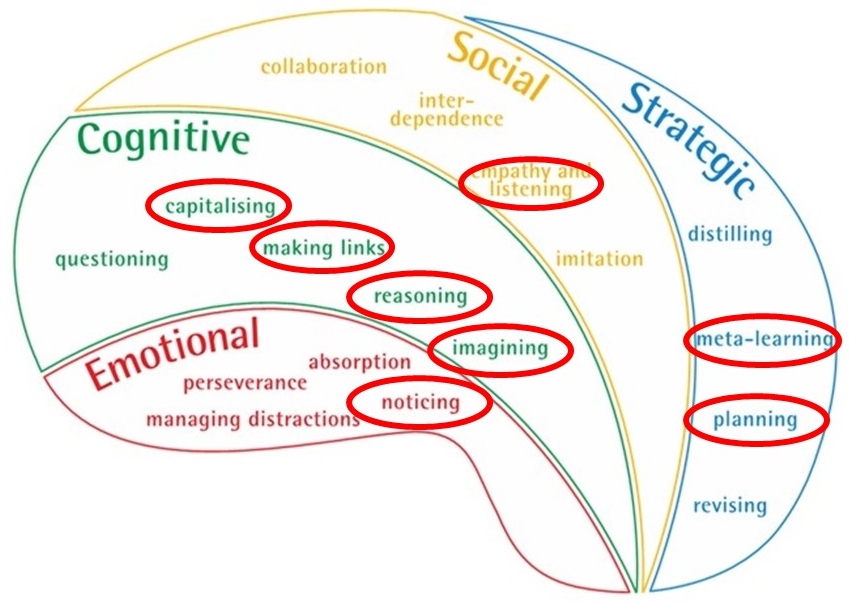
You will access 8 new units, presented in the same format and detail as Phase 1, introducing:
- Noticing, from the emotional aspects of learning;
- Making links, Reasoning, Imagining, Capitalising from the cognitive aspects of learning;
- Empathy & Listening from the social aspects of learning;
- Planning and Meta Learning from the strategic aspects of learning.
These units form an extension to the Building Powerful Learners programme in Phase 1. They can be undertaken in any order, by any group or groups of staff, at any time over the next two years. They help you expand the range of learning behaviours you want students to use.
For completeness, there is also a complementary, 9th, unit that explores and elaborates on progression in the 4 foundation learning behaviours.
Building Depth – Deepening and securing teachers’ understanding of a learning-friendly classroom culture
You will access 4 substantial new units, presented in the same format as Phase 1, that further develop:
- Devolving responsibility for learning to students;
- Talking to deepen students’ understanding learning;
- Constructing lessons with learning in mind;
- Celebrating the growth of student learning behaviours.
These units form an extension to the Building Powerful Learners programme in Phase 1. They can be undertaken in any order, by any group or groups of staff, at any time over the next two years. They help you to further develop a learning-friendly classroom culture with a focus on the stages of teacher development.
Building Coherence – Developing two school-wide strategies
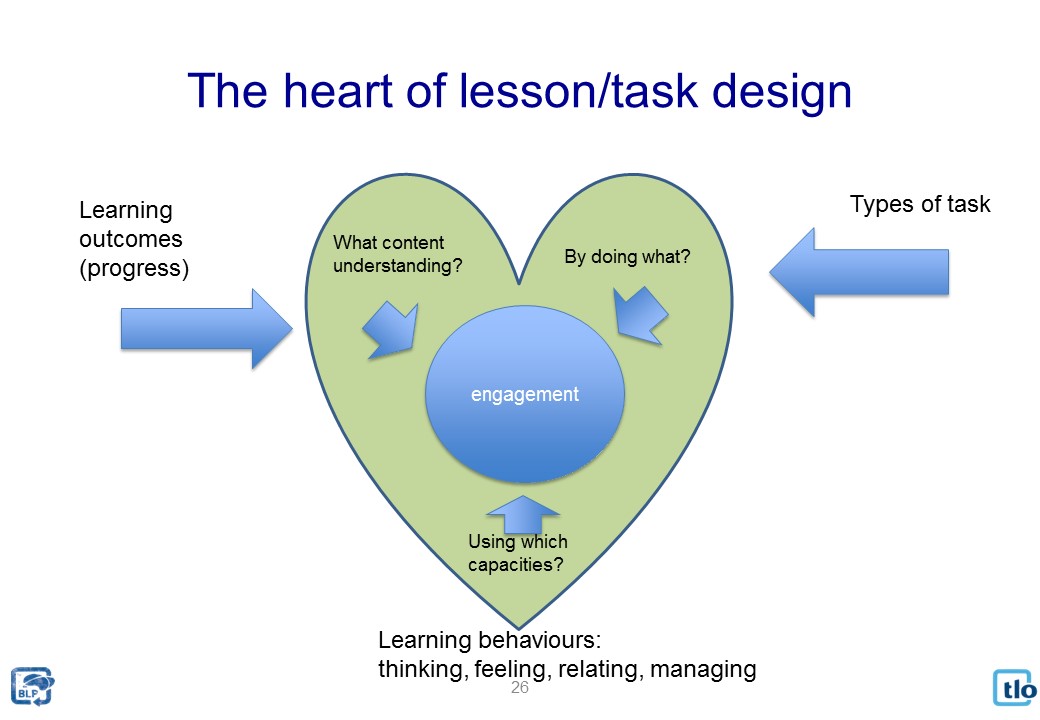
You will have access to 2 units, supported by a Senior Leaders’ Guide, to enable the school to:
- Create Students’ Learning Profiles
- Enables schools to uncover, collect and analyse information about each of their students’ learning characters, and to use the outcomes to better understand how to support individual students to grow their learning power.
- Create Curriculum and Lesson Plans
- Explores more deeply the skill of integrating the use of learning behaviours into individual lessons and into the design of the curriculum.
Unlike the other Building Powerful Learners phases which are designed to be undertaken by all classroom teachers, these materials are designed to assist specialised groups of staff to develop school-wide strategies; one for the development of a school-wide system for keeping students’ learning development under review; one for a school-wide policy for curriculum and lesson design that enhances students’ development as learners.
Learning together. Meeting 8
Unit 8 Suggested meeting agenda
- Decide what you want this meeting to achieve (5 mins)
- Looking back at Unit 1
- Reassessing our classroom cultures
- Student’s progress in learning
- Our use of the Try Outs
- Re-cap and reflect on the 8 Key Shifts
- Where and what next?
This is the last Learning Together meeting of Phase 1 of the programme. To make the most of it please ensure you all complete the Unit 8 Reflection Summary and record your thoughts on each aspect. It’s likely that discussion in this meeting will influence how the school could move forward with Learning Power in Phase 2. Please allow at least an hour for this crucial meeting.
View a possible completed Unit 8 Reflection Summary
Learning Team Meeting 8 Agenda ⬇️
Item 1. Meeting Objectives. (5 mins)
Meeting objectives might include:
- share and learn from each other what we have each experimented with in our classrooms;
- feel confident about taking forward more ideas from online materials into our practice;
- identify actions that would be more useful if everyone applied them in their practice;
Outcome. To have decided what the meeting should aim to achieve.

Item 2. Looking back at Unit 1
Do you have a clear view of all of your students as learners? How would you summarise their strengths and weaknesses?
Explore together your current views of students as learners;
- how has the course helped us to understand the process of learning?
- are we comfortable with the four aspects of learning?
- how has this view of learning helped our teaching?
- do we look at our students differently now?
- if so, how?
- would we say, in general, there are any signs that our students are improving as learners?
Outcome. A clearer view of our understanding of learning and our students as learners.
Item 3. Re-assessing classroom cultures.
Which aspects of classroom culture (Relating; Talking; Constructing; Celebrating) have I already made progress in? Which other aspects might still be in need of attention?
Share and discuss the action you each undertook in strengthening classroom practice.
- Which aspects did you each develop?
- Which would you want to find out more about?
- Which seemed the most valid or successful.
- Which is jumping out at you?
Outcome. A clear picture of our interest in and enthusiasm for amending classroom cultures to support learning to learn. A feel for which aspects of culture are proving to be most effective and why.
Item 4. Learning progress in students.
Do you get the sense that your students are already on an upward trajectory? What evidence do you have for this?
The progression charts show a lifetime of growth and development so the amount of progress that can be achieved by your students in less than a year will necessarily be limited. Having said that,
- have the charts helped our understanding of learning behaviours?
- do we get any sense that our students are already on an upward trajectory?
- would we say any of our students have moved forward
- from purple to blue or blue to green?
- if we were to set a forward looking whole school target
- what might our current Yr 1’s look like in 5 yrs time when in yr 6?
- Might we be able to help a significant number attain Green?
Outcome. A clear understanding of the progression charts and how this relates to students in each class. A feel for how the chart can be a useful tool of measuring effectiveness and setting meaningful targets.
Item 5. Exploring action using the initial Try outs (20 mins)
Which of the Try Outs had the greatest impact in your classroom? Are there other Try Outs you still intend to explore?
Which of the 50+ Try outs did we use and how might we assess their usefulness and success?
- did we follow the advice to focus on adopting just a few rather than taking a scattergun approach?
- which Try outs had the greatest impact across the school?
- how did this differ from one year group to another?
- are there any Try outs we could all use profitably?
- are there any approaches we’d rule out altogether?
Outcome. At this stage it would be useful to note the Try outs that seemed to have the greatest impact.
Item 6. The 8 key learning shifts
On which of the 8 cultural shifts have I made the greatest progress? Least progress? What are the most noticeable impacts on my students?
A consideration of the suggested 8 key learning shifts and the effects on students.
- share the charts you have made
- which of the 8 suggested learning culture shifts have you all used?
- which was used the least?
- which seems to have had minimal impact on students?
- which seems to be the most successful in terms of impact on students?
- what can we learn from this data?
Outcome. A valuable sharing of individual data that will help guide practice in the next stage of development as a learning powered school
Item 7. Where now? What next?
Moving forward – Of the two phase 2 routes (Building the Scope – Introducing more behaviours; Building Depth – Going deeper into culture), which holds the greatest appeal for you? Why?
A consideration of the two phase 2 routes.
- Building the Scope – focusing on 8 new learning behaviours
- Building Depth – going deeper with classroom culture and lesson design.
Outcome. Strong ideas or even an agreement about which aspect(s) of the Building Powerful Learners phase 2 programme the school should pursue over the coming year.
Comments are closed.