An overview
In this section you will find:
An overview of the purpose and content of:
- this strategic resource for senior leaders
- the accompanying programme for staff
This resource is designed to take a leadership perspective on developing student’s learning power, giving leaders a glimpse of the strategic concerns that will arise. The complementary programme for staff is titled Playing the Learning Power Game.
[/twocol_one]
Key points
- Take a quick look at the content of this resource
- note any concerns or queries to discuss with your TLO coach.
- Take a quick look at the online course you have selected for teachers (Playing the Learning Power Game)
- TLO will give you access to a copy of the course to enable discussion
- school staff will be given access when the school informs TLO of the start date
1 An overview of this strategic resource:
This resource is designed to give senior leaders a glimpse of the strategic concerns that will arise when a school decides to take on ‘Playing the Learning Power game’. It provides questions, think pieces, frameworks, PPts and diagrams to help leaders;
- feel secure about the purpose, benefits and frameworks of learning power
- explore important leadership roles when taking on the development of Learning Power through the school
- maintain momentum into the future
- identify ways forward beyond the initial stages
These issues are considered over 7 sections
- Overviews – this section.
- Key messages of learning power distilled.
- Leadership strategies to secure Learning Power
- Resources for session 1 exploring the Supple Learning Mind framework.
- Resources for session 2 exploring the Learning Friendly Culture framework.
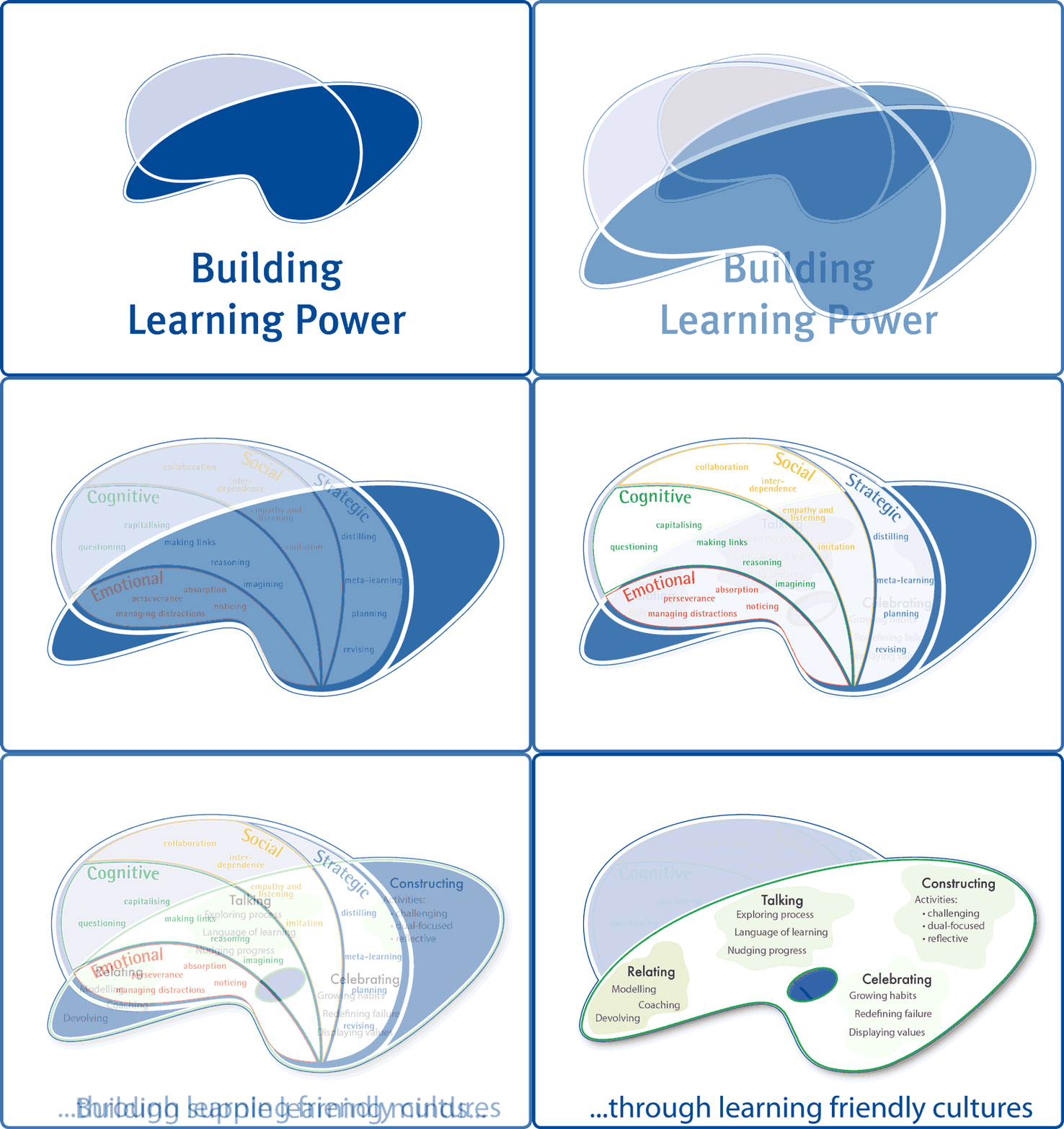
- Resources to support keeping track of progress.
- Consideration of possible next steps on the journey.
A sneak preview: section 4
Supported staff training 1 : Introducing learning power
This section offers information about the resources TLO provides to support the live Zoom training session that introduces Learning Power to staff. It includes;
- the nature of the introductory training
- how online resources support the training
- how the school can access these resources
- the nature and purpose of Advance Organisers
- the purpose of Gap tasks
- how to ensure the blended learning works to full advantage
[/twocol_one]
Key points
- Ensure staff know where to find the Advance Organiser
- Organise how in-session collaborative activities will be managed (see 3c below)
- Support and encourage staff to undertake the gap tasks (see 2d below)
- Extend staff thinking using section 2.4, the research behind Leaning Power, if required
1. What we are aiming to do
The nature of introductory training
This first interactive training session is designed to introduce staff to the field of learning behaviours namely, what they are, why they are important and how their development can happen.
The session design knits together interesting, knowledge based inputs with engaging interactive activities that serve to reinforce new ideas by applying them to the practical reality of the classroom.
From the start staff are encouraged to contribute their own learning habits to ensure the session is a rich learning opportunity for everyone.
2. The Advance Organiser
The Advance Organiser provides information about what the school and staff members will need to understand and act on in order to make best use of the remote training session. The material will be sent to staff at least a week before the training session and will be found by going to the Building Learning Power website, and logging in to My courses.
2a Introducing staff to the material
By reading and acting on the material in the Advance Organiser we hope that staff will;
- get a feel for what building powerful learners is about
- feel prepared to become engaged in and enjoy the first online training session
- be confident to take on the gap tasks that they need to try out before session 2
- find out more about the programme that staff will be taking part in over the coming 9-12 months
Sample timetable session 1.
Meeting time 1.20 hours
- x.00 Introduction and objectives
- x.05 What do good learners do? Activity
- x.25 The supple learning mind. Input
- x.35 Gap task 1 (to complete for session 2)
- x.40 What do we do when we learn? Activity
- x.00 How perseverance grows. Input
- x.15 Gap task 2 (to complete for session 2)
- x.20 Cheerio till session 2
2b Warm up activity
In preparation for session 1 staff are encouraged to watch this short introductory video and absorb its messages. It will help staff to tune-in to the what, why and how of building powerful learners.
Although this video was made some years ago its messages remain true. Headteachers, teachers and students talk about the impact of changing the classroom culture to give students a more genuine role in the learning process. Listen to how these students have begun to talk about their learning. How fluently could your students discuss their own learning?
2c The Resource Book
Each session will be supported by a Resource Book of training material.
These are made available as PDFs (colour) in the Advance Organiser for staff to print out for themselves. Most of the PPt slides used in the presentations, the group activities and the gap tasks can be found in the Resource Books.
2d Gap tasks
We believe that the best way to secure staff learning after an online training session is to relate the ideas to their own students. By doing so staff will begin to connect practically with what learning power is all about.
The tasks should be undertaken before session two where possible.
Gap task 1
(depending on course timing this task may be used as an introductory task to be completed before the training)
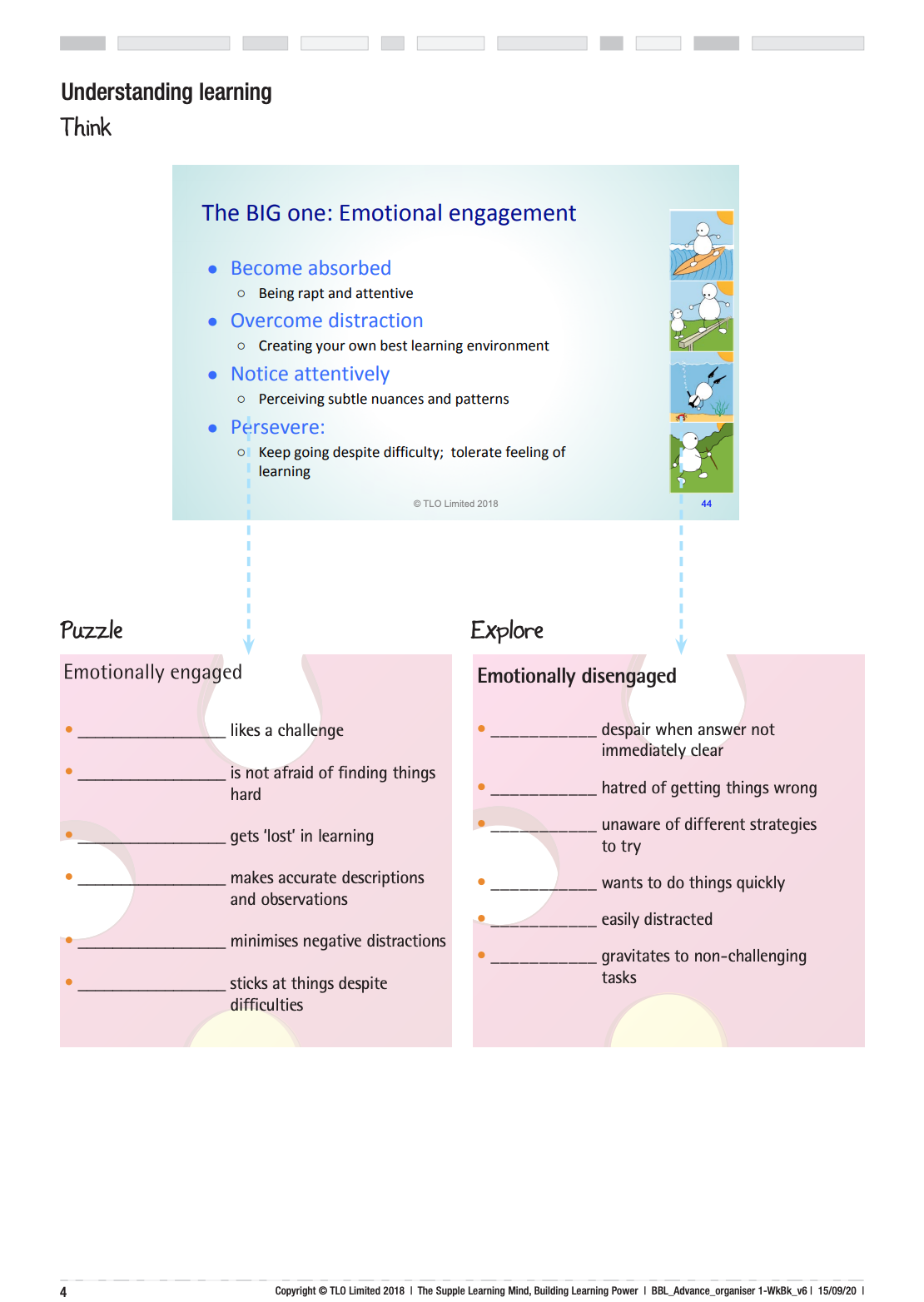
Getting to know your students as learners
- Use pages 4 to 7 in your Resource Book
- Think about pupils you know well (either from last year or those coming to you this year) and fill names into the sheets. This will just help you to attach a real student’s behaviour to an abstract learning behaviour. It will make the behaviours come alive for you.
- Copy these sheets and complete them again as you come to know your pupils better over the first few weeks of term. Keep an eye open for any changes in their behaviours.
Gap task 2
Becoming aware of how your curriculum supports learning power
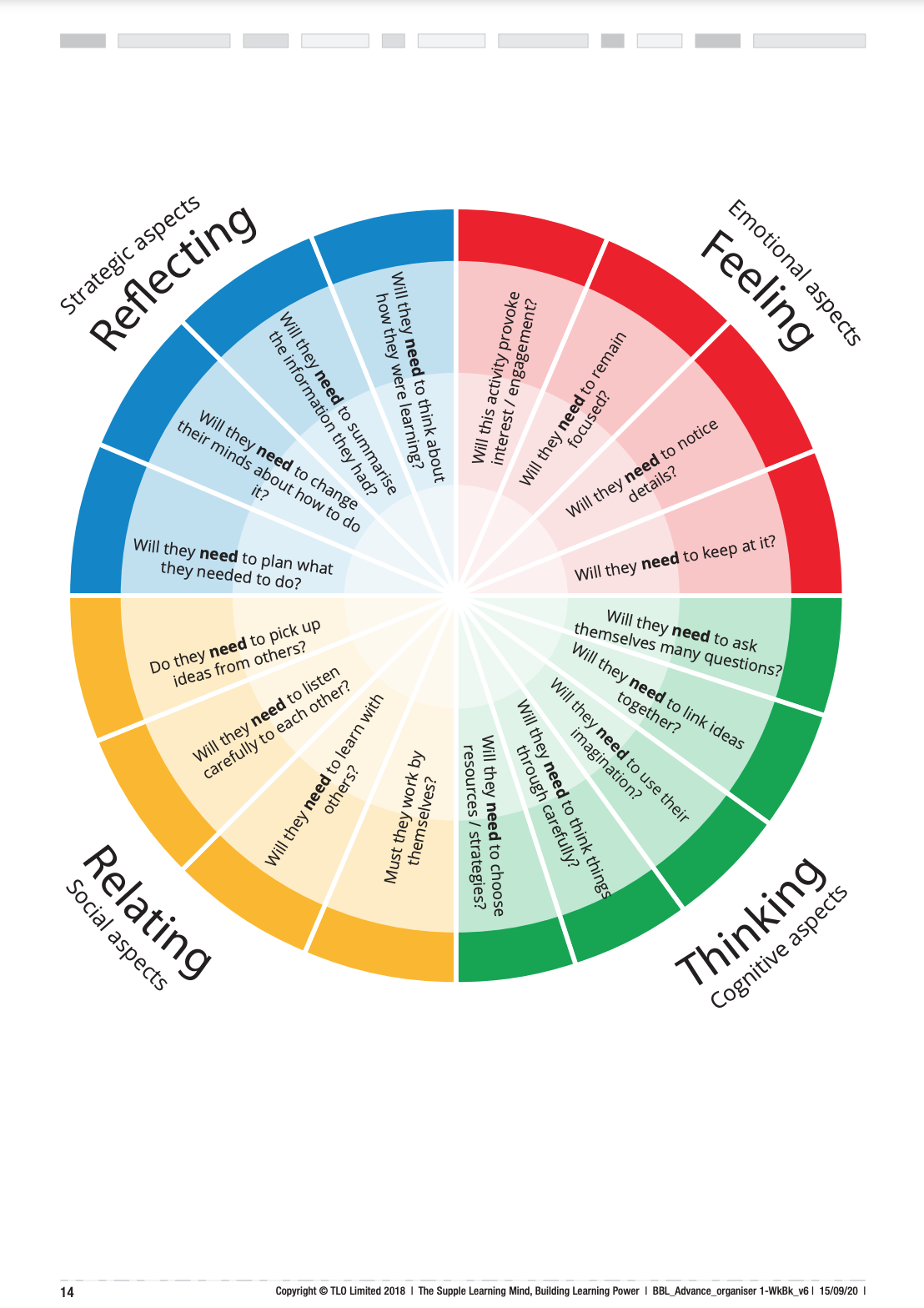
- Use page 14 in your Resource Book.
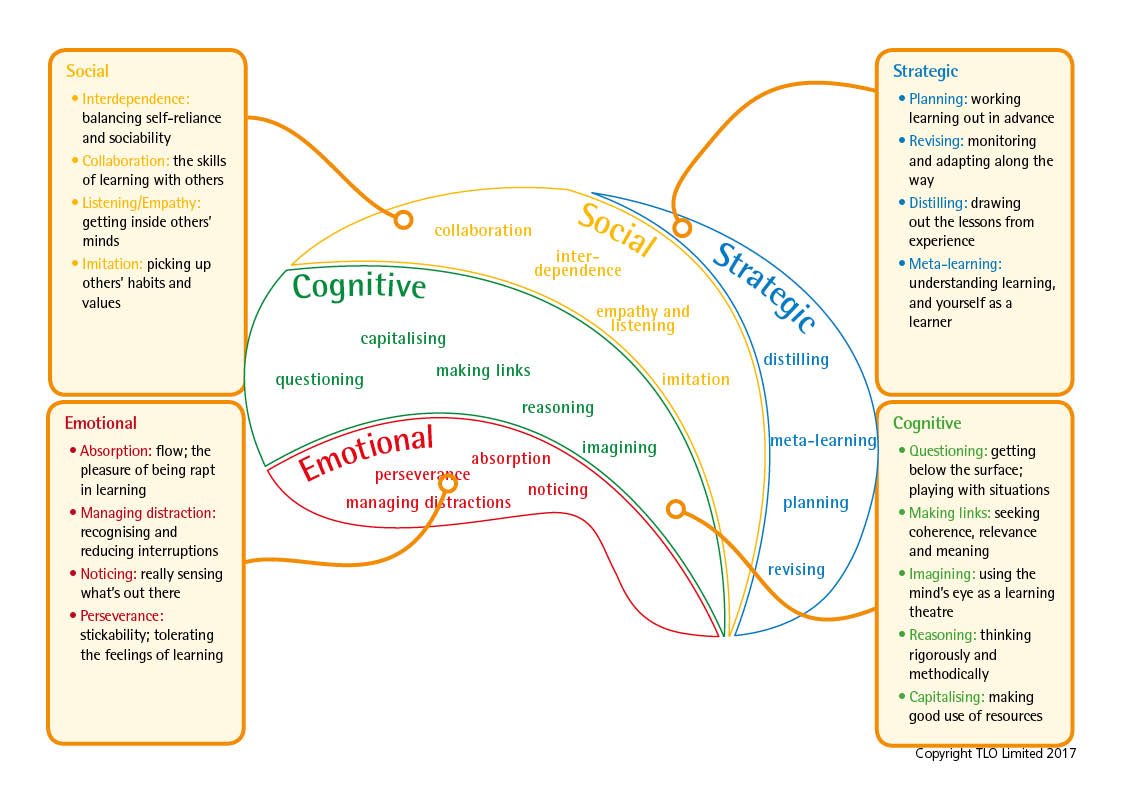
- When planning your next few lessons use this wheel to remind you of the learning behaviours. Look carefully at the words. They are descriptions of the actual behaviours. You might even ask yourself if you could name the behaviour they describe.
- Then ask yourself:
- Which behaviours will the students be using, albeit without knowing it, by doing the activities I’m planning. Only select the 2 main behaviours for any activity.
- Which ones seem to be getting most use?
- Which ones seem to be getting little or no use?
- Why might this be?
- Over time you will begin the design your curriculum such that your students will have ample opportunities to develop all these important learning, character-building, behaviours.
3. Online training session 1: Introducing the supple learning mind
3a Preparation for training sessions
To ensure the Zoom facilitated training sessions work well the TLO coach will contact a named person in the school, using Zoom, a couple of days in advance to establish:
- number of staff involved in the training
- where they will be (home, school, together etc)
- how best to group staff for activities
- feedback leaders and run through their role
- how best to run a group discussion with the group
On the training day the Zoom meeting will open 15 mins prior to start time to allow people to arrive and settle, to ensure technology is working effectively and to allow any informal introductions and welcomes to take place.
3b Inputs
There are two main inputs by the learning coach in session one.
The first will focus on the Supple Learning Mind framework and include;
- what the framework is about
- how it is structured into domains
- what each domain means
- the learning behaviours in each domain
The follow-up Gap Task will enable staff to better understand this initial input by exploring and applying its messages to their own pupils (task 1) and their curriculum (task 2)
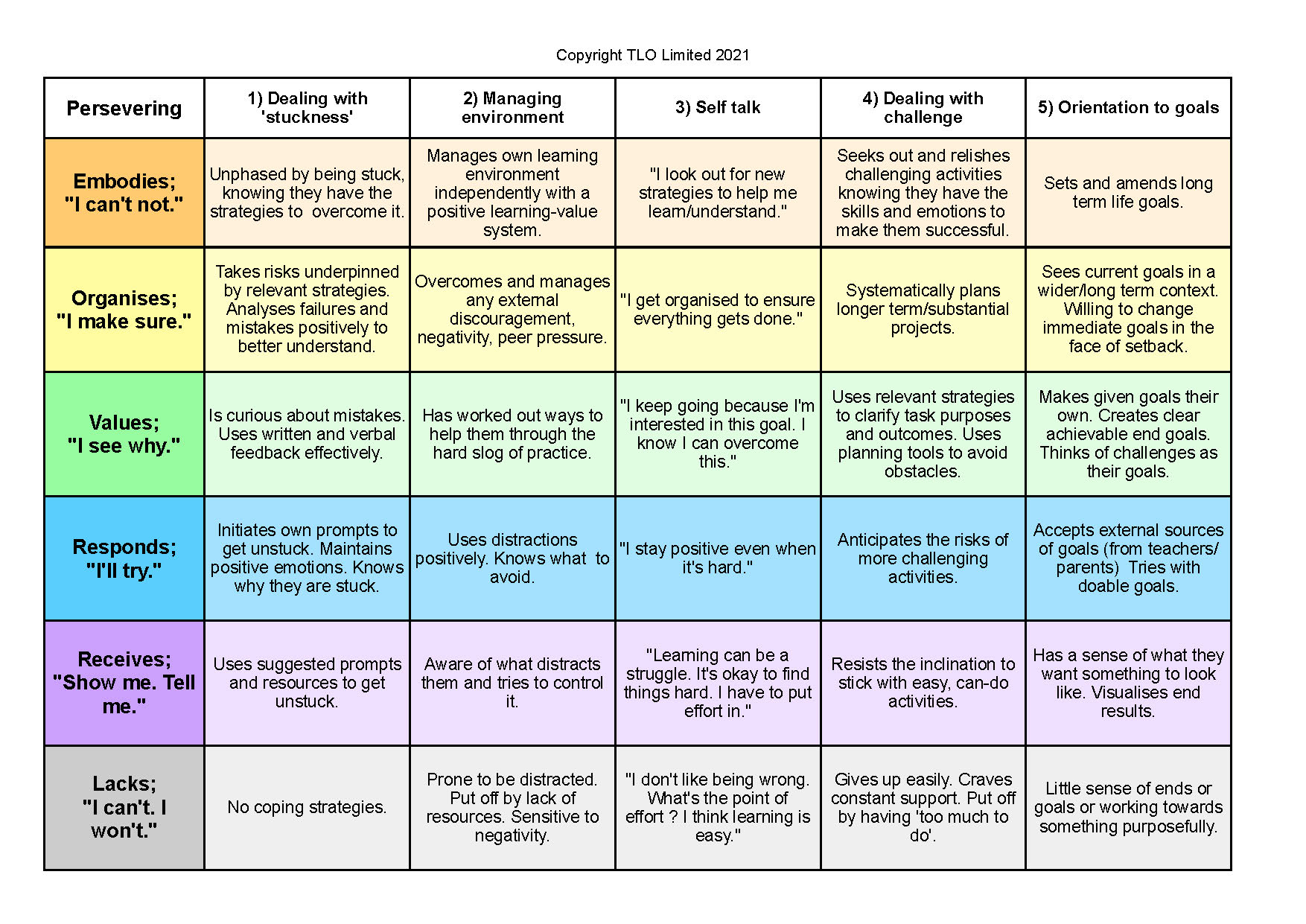
The second input will focus on how learning behaviours have the potential to develop ( to be used more frequently, in more situations and with greater skill), how Learning Power progression charts are constructed and how they can be used.
Understanding progression will be taken up in more practical detail in Session 2 and a Session 2 Gap Task.
3c Managing group tasks
During this first session there are 2 group activities.
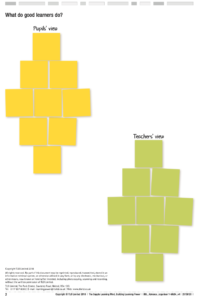
The first involves staff considering what their pupils think good learners do, and how this may differ from their own views of learning. (20 Mins including discussion)
The second involves staff considering picture of a happening, considering clues and working out what has happened. This task is about staff applying their own learning habits to solve the puzzle or imagine the solution. (20 mins including solution and patterns of habits used)
For each of these tasks please assign a member of staff to distil the feedback/findings and report back on behalf of the group.
Gathering group feedback
Activity 1 At the end of the activity please discuss and feedback on;
- the sort of ideas pupils have about what good learners do?
- which 3 are prominent?
- what might that imply?
- why might children have these ideas?
- what might cause/influence these beliefs?
- how are teachers’ beliefs about learning different?
- what’s the standout difference?
- why might that be?
- what else surprises the group?
- how might teachers’ change things?
Activity 2 At the end of the activity please discuss and feedback on;
- How the group observer has coloured in the learning behaviours they thought had used
- Compare this pattern with the one shown by the tutor
- Which learning behaviour did you use most?
- Which weren’t used at all?
- Did people spot themselves using all the main ones?
- Which ones do you think you missed?
- Key question...if you were only able to allocate 2 behaviours to this activity which 2 would they be?
This rich discussion will serve to show the importance of understanding, using and developing learning behaviours.