Living the purposes
It is important that as children and young people move through the education system in Wales they are not viewed as aiming towards the four purposes, but rather seen as living the four purposes during their time at school.
Dylan Jones and Jane Waters. CfW Blog. IoE UWTSD
Enriching students’ sense of being a learner… throughout the curriculum
The four purposes referred to above are the now familiar pillars of the new curriculum for Wales… to develop children and young people as:
ambitious, capable learners, ready to learn throughout their lives; enterprising, creative contributors, ready to play a full part in life and work; ethical, informed citizens of Wales and the world; healthy, confident individuals, ready to lead fulfilling lives as valued members of society.“
There’s a temptation to view these four life enhancing learning behaviours exclusively as outcomes; something to hope for as the end result of the new curriculum. While the new curriculum in Wales is designed to achieve such results, developing them will cause schools to infuse them all the way through the curriculum and across years of education.
In other words the whole curriculum, both in its content, design and delivery, will be dedicated to achieving these wider outcomes for young people. Through new programmes of study and experiences, (PoSE) a set of wider skills and a re-think of assessment, ‘what’ is taught and learned and ‘how’ it is taught and learned should constantly enrich students’ sense of being a learner.
An ambitious curriculum preparing students for the future

Bringing learning out of the shadows
Behind the headlines
So, as the new curriculum prepares students ‘ not just for a life of tests but for the tests of life‘ the purpose of education moves beyond the accumulation of knowledge to shaping what a student can become as a person.
To make such outcomes more compelling and understandable the four purposes are expanded using words and phrases such as:
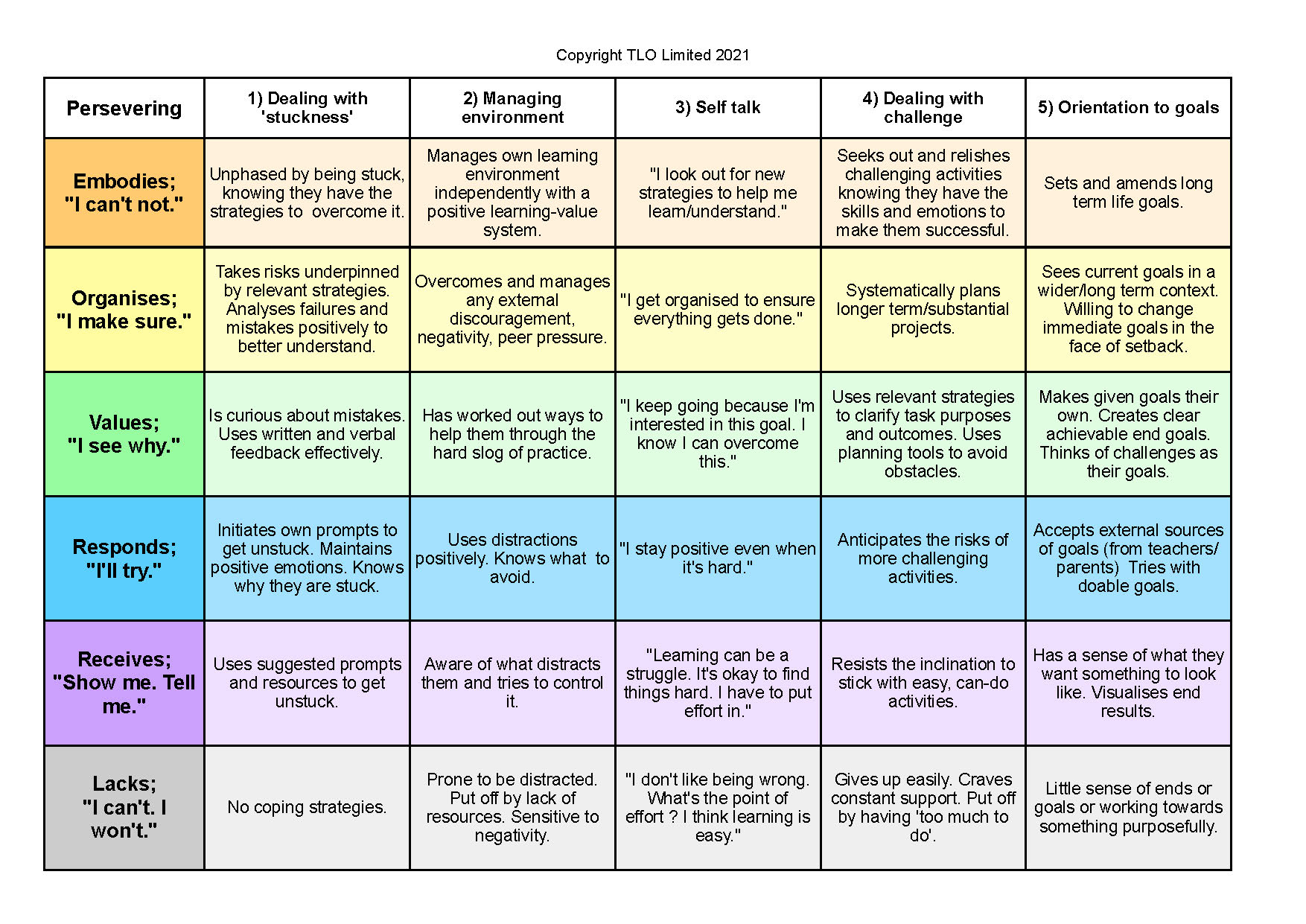
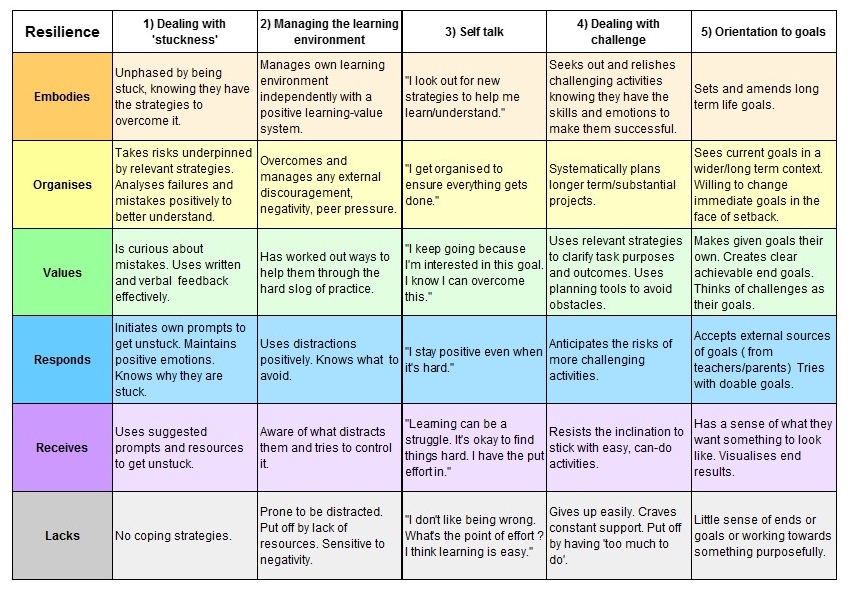
- resilience
- perseverance
- making connections
- play different team roles
- use evidence
- face and overcome challenge
- manage risk
- develop empathy
Such words begin to tell us what sort of learners your school will be creating. This means helping students build up the mental, emotional and social resources to enjoy challenge and cope well with uncertainty and complexity. Students have to learn how to be tenacious and resourceful, imaginative and logical, self-disciplined and self-aware, collaborative and inquisitive.
These are descriptors of what are known as learning dispositions, or powers or habits. Taken together they add up to a learning character. Your learning dispositions determine your inclination or tendency for change; they direct those behaviours that influence and underpin your performance throughout life. Making the purposes of Successful Futures successful will rely on paying attention to developing students’ learning dispositions; firing up their energy or appetite for changing, growing and learning . It’s about concentrating on the ‘how’ of learning – on bringing the learning process itself out of the shadows.
Learning dispositions/ habits/ powers = learner’s character.
Can you learn how to learn?
Selling the idea that learning is learnable
It’s an erroneous idea that an individual’s ability is fixed at birth, we now know that the brain is like a muscle in that its intelligence grows with exercise. We also know that intelligence is ‘the sum total of ‘habits of mind’ and that habits can be changed. When learners and their teachers are convinced of these facts it causes a major shift in self belief and the possibilities of education
Helping all young people to understand that learning is learnable, to make them aware of the learning behaviours they command, gives them greater enthusiasm and power for engaging with the potential highs and lows of learning.
When learners become aware of their learning behaviours through structured opportunities to improve it, they become:
- more reflective and aware of themselves as learners
- more confident and motivated to learn
- more willing and able to take responsibility by ‘owning’ their learning for themselves
- more intentional in their learning
- keener to carry on learning as they move beyond school
- more likely to realise their potential and gain grades that were previously regarded as beyond them
- more confident socially and able to learn with, and from, one another
- more able to manage transitions and take change in their stride throughout their lives.
Learning is a learnable craft
A valuable set of learning habits
Big questions: some answers
- It’s easy for schools to come across lists of learning habits — you might even make up your own! But is there a cluster of learning dispositions that are particularly appropriate for 21st century learners; helping them to deal with an increasingly complex world?
- Similarly, teaching ideas to improve student performance abound, but do these teaching ideas develop the valuable, necessary learning habits?
What schools are in search of is a researched collection of learning habits coupled with sound classroom activities and advice about how to nurture and build lifelong learning habits.
Background to an approach that works
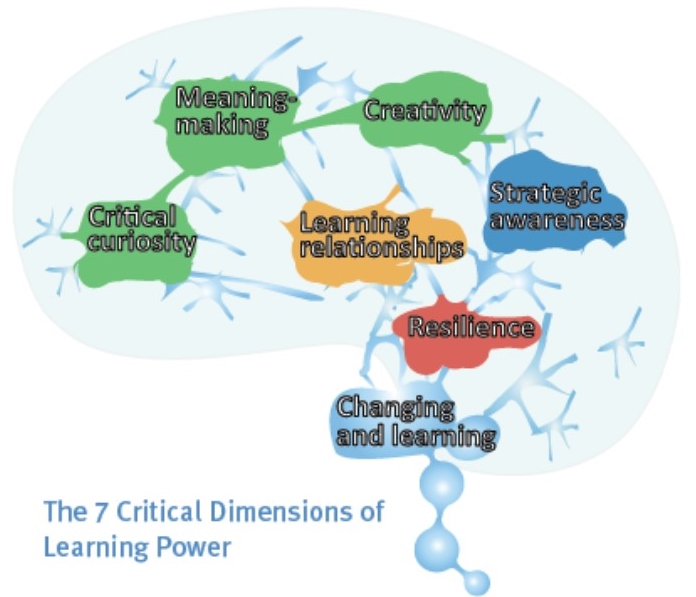
Research undertaken by Bristol University, as part of a project into lifelong learning, identified critical dimensions of what is now known as Learning Power; dimensions of learning that can create a step-change in individual, team, and indeed organisational performance.
Furthermore the research found that the power to learn changes over time in response to the qualities of learning environments. As environmental circumstances change, they can have either a constructive or a destructive influence on a person’s power to learn. Informed interventions can significantly enhance personal confidence and performance.
 please replace with the elli logo
The Building Learning Power approach developed from this original research. It’s an approach which is focused on developing learning habits through appropriate classroom cultures and which schools and teachers could profitably use to deliver the Successful Futures promise.The emergent powerful learners develop skills in monitoring and reviewing their learning, they pay attention to the diversity of practices that can be effective for learning more thoroughly, and become self-regulating, meta-cognitive learners.
How can we make this work?
A framework of valuable learning habits
The Supple Learning Mind; framework of high value learning behaviours.
![BLP_Brain_Generic_no-Rs-[Converted]](https://www.buildinglearningpower.com/wp-content/uploads/2016/12/BLP_Brain_Generic_no-Rs-Converted-300x216.png)
![BLP_Brain_Generic_no-Rs-[Converted]](data:image/svg+xml,%3Csvg%20xmlns=%22http://www.w3.org/2000/svg%22%20viewBox=%220%200%20300%20216%22%3E%3C/svg%3E)
![BLP_Brain_Generic_no-Rs-[Converted]](https://www.buildinglearningpower.com/wp-content/uploads/2016/12/BLP_Brain_Generic_no-Rs-Converted.png)
The first framework of Building Learning Power is The Supple Learning Mind. This captures the key psychological characteristics that are judged to be of the highest value in helping students to learn and thrive in a complex world. The framework embraces each of the domains of learning and these are shown in its four parts:
- The Emotional domain of learning (sometimes described as Resilience)
- The Cognitive domain of learning (sometimes described as Resourcefulness)
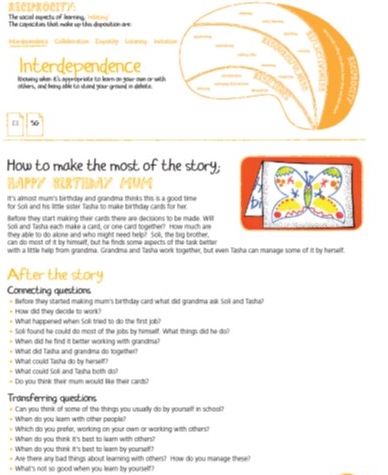
- The Social domain of learning (sometimes described as Reciprocity)
- The Strategic domain of learning (sometimes described as Reflectiveness)
This learning framework shows that learning isn’t just about having a good memory; it includes how we feel, how we think, how we learn with and from others and how we manage the process of learning. It shows that learning is a complex process. Moreover it provides a language that helps teachers to think about how they cultivate each of the learning behaviours and helps students to gain a better personalised understanding of how they learn content.
Each domain clusters together the high value learning behaviours that best make that domain work well. For example the emotional domain is made up of the learning behaviours of perseverance, managing distractions, absorption and noticing.
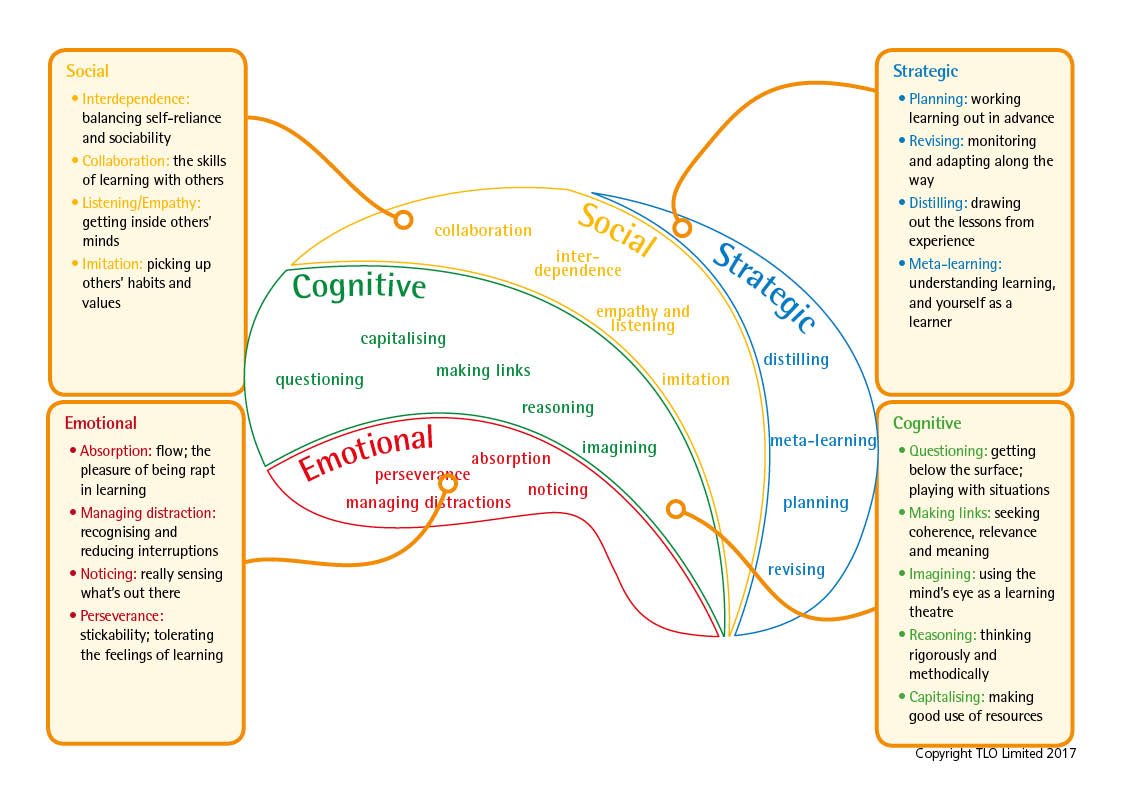
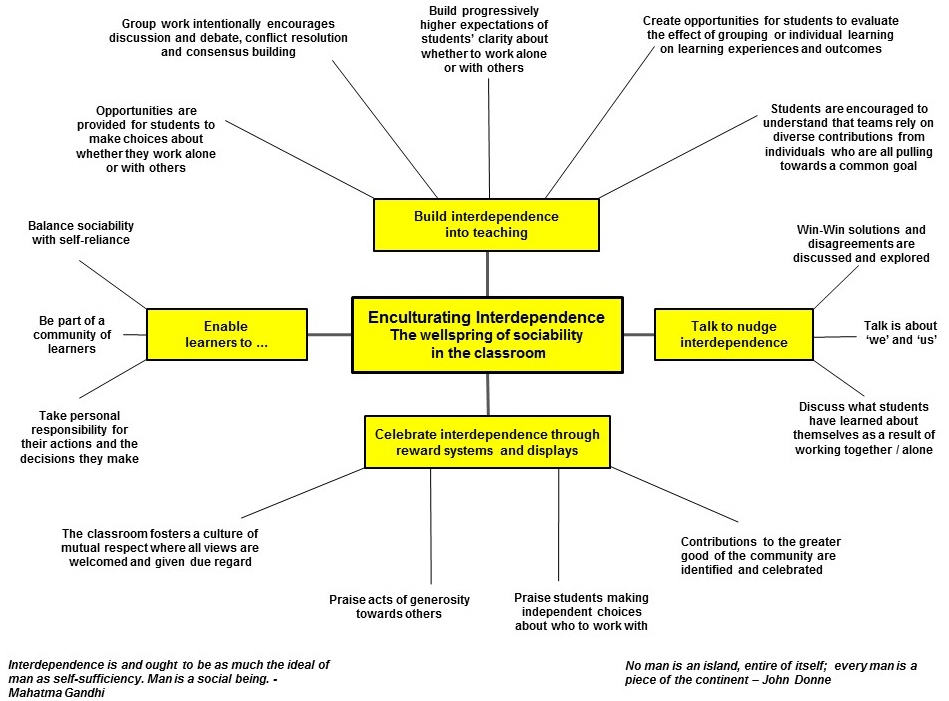
The cognitive domain is made up of behaviours like questioning, link making, imagination, reasoning and capitalising. The social domain is made up of behaviours like interdependence, collaboration, listening and empathy, and imitation. Finally the strategic domain encompasses planning, revising, distilling and meta-learning.
A researched framework of high value learning dispositions
Learning dispositions to underpin the four curriculum purposes
Ambitious, capable learners; enterprising, creative contributors; ethical, informed citizens; healthy, confident individuals.
Brian please put the daffodil in here
Sometimes these ambitious purposes sound too grand and vague to get a practical handle on but the behaviours in the learning power framework can help to underpin and clarify. Being Capable, Creative, Informed, Confident, for example all require good questioning skills. Being ambitious, enterprising, ethical and healthy all draw on the ability to draw on multiple perspectives and see the world from other people’s eyes (empathy). In this way the same learning habit can contribute to several ‘high order’ competencies’.
By the same token each wider skill is itself a composite. Take the wider skill of Creativity and innovation. Research suggests that becoming a creative thinker involves being able to notice details and patterns, taking risks, questioning and playing, learning by imitating others, revising your ideas, and imagining possibilities. Each of these is treated in the Supple Learning Mind framework (see above) as a separate learning behaviour, each of which is capable of being stretched and strengthened. Thus learning dispositions make explicit and coachable the very foundations of those qualities of mind the new curriculum for Wales is trying to secure. They form the very roots of learning, enabling students to develop wider skills throughout the programmes of study and experience and the flowering of the four purposes.
Learning behaviours: the essential roots of the curriculum

Some important questions
The headteacher of a Welsh medium school recently told us that:
‘If we do not look at the core purposes and wider skills of the new curriculum through the lens of a well-researched framework of learning dispositions, Successful Futures will fail in Wales. As a school, we are able to understand Successful Futures only because we already understand learning through our engagement with Building Learning Power.’
- Do you agree with the need for a well-researched framework of learning dispositions?
- If yes, which well-researched framework do you plan to use to support your implementation of Successful Futures and your understanding of the core purposes and wider skills in designing your curriculum?
- If no, how do you plan to make sense of, and align, all of the demands that Successful Futures places on schools, on leaders, on teachers, and on learners?