How do my students deal with difficulty? How challenge friendly is my classroom culture? What might I do to develop a more challenge friendly classroom culture?
Rising to the challenge vs taking the easy way out
Wrestling with difficulty is a natural part of learning, we all find lots of things hard, it’s a constant part of learning. Blocks and obstacles, just not ‘getting’ something, going into blind alleys, misremembering, getting flummoxed by having too much to think about, making little or even fatal mistakes are all things we may fear from taking the risk of trying difficult stuff. It feels as though there’s a lot at stake.
Being willing to ‘have a go’ or work through something we perceive to be difficult is as much about how we react emotionally as it is about having the practical strategies to press on, make an effort and work out how to overcome it. Being able to manage an effective way of rising to challenge is a critical part of persevering.
Re-framing challenge and mistakes
Most students, quite understandably, make great efforts to avoid making mistakes. After all, the culture of classrooms across the centuries has prized being right over being wrong. Examinations likewise! So it shouldn’t surprise us that our students have detected and absorbed this and hence do their best to avoid them.
Little wonder then that they often opt for ‘easy stuff’ to improve their chances of ‘getting it right’ – it seems a very sensible strategy to adopt in the face of the pressure to ‘be right’.
But never having a go at difficult stuff, succeeding at the easy option, avoiding the possibility of making a mistake, doesn’t bode well for real learning. It may well mean you are just coasting along – going through the motions, doing exercises, rather than learning. But avoiding challenge is just postponing the day when you’ll need to embrace real learning. The longer you leave it the harder and more disastrous it will be. Helping learners to make the most of challenge, make mistakes, put in the effort involves thinking of it anew: as an interesting place to be; with mistakes being valuable; and effort needing purposeful focusing. It’s about making challenge an adventure rather than a dispiriting chore.
The two questionnaires in this section aim to help you analyse:
What your students do now when they face difficulty and what this reveals [Questionnaire 1 Challenge Questions]
How challenge friendly your classroom culture appears to be and what this might suggest. [Questionnaire 2 Culture Questions]
Results from these questionnaires will take you to a focused range of moving forward ideas.
This section is for those teachers who are undertaking this unit alone and are not part of a Teacher Learning Communitystructure. The section provides well researched ways for planning and reflecting on your changing classroom practice
When teachers want or need to improve it actually involves them in changing their teaching habits. It’s not just about knowing new stuff, like reading the previous sections, it is about doing what you do differently. That’s much harder. It involves changes to;
what you know – knowledge
what you believe – feelings or attitudes
what you can do – your skills
what you actually do – putting it all into practice
So changing how you teach is a delicate, complex process……...that’s why it’s hard!
And the hardest thing isn’t getting new ideas into teachers’ heads
It’s getting the old ones out…….that’s why it takes time and effort.
It takes time and practice to undo old habits and become graceful at new ones……that’s why we have provided materials here to help you to plan the changes you want to make, monitor what happens in your classroom as the changes happen, and reflect on the impact of those changes; their worth and value.
This section offers a framework of support for a productive Teacher Learning Community
Teacher learning communities have the potential to provide you, as teachers and support staff, with the information and support you need to develop your practice in deep and lasting ways. They provide a forum for supporting you in converting the information and ideas in the online learning sessions into “lived” practices within your specific subjects and classrooms. They provide a safe forum in which to;
kick around ideas from the online content,
unpack it’s meaning when it’s unclear,
consider what’s do-able and appropriate for your pupils
make plans for what and how you might incorporate the ideas into your practice
share and unpack what you have tried in the classroom
relate your triumphs and tribulations
support colleagues through changes in practice
reflect on what you hope you might do, or have done, differently
The format of the agenda is based on research into teacher learning communities by Dylan Wiliam, of Assessment for Learning (AfL) fame. Teacher learning communities are the engines of teacher development.
What could I do differently to engage students in realising the value of remaining focused and avoiding unnecessary distractions?
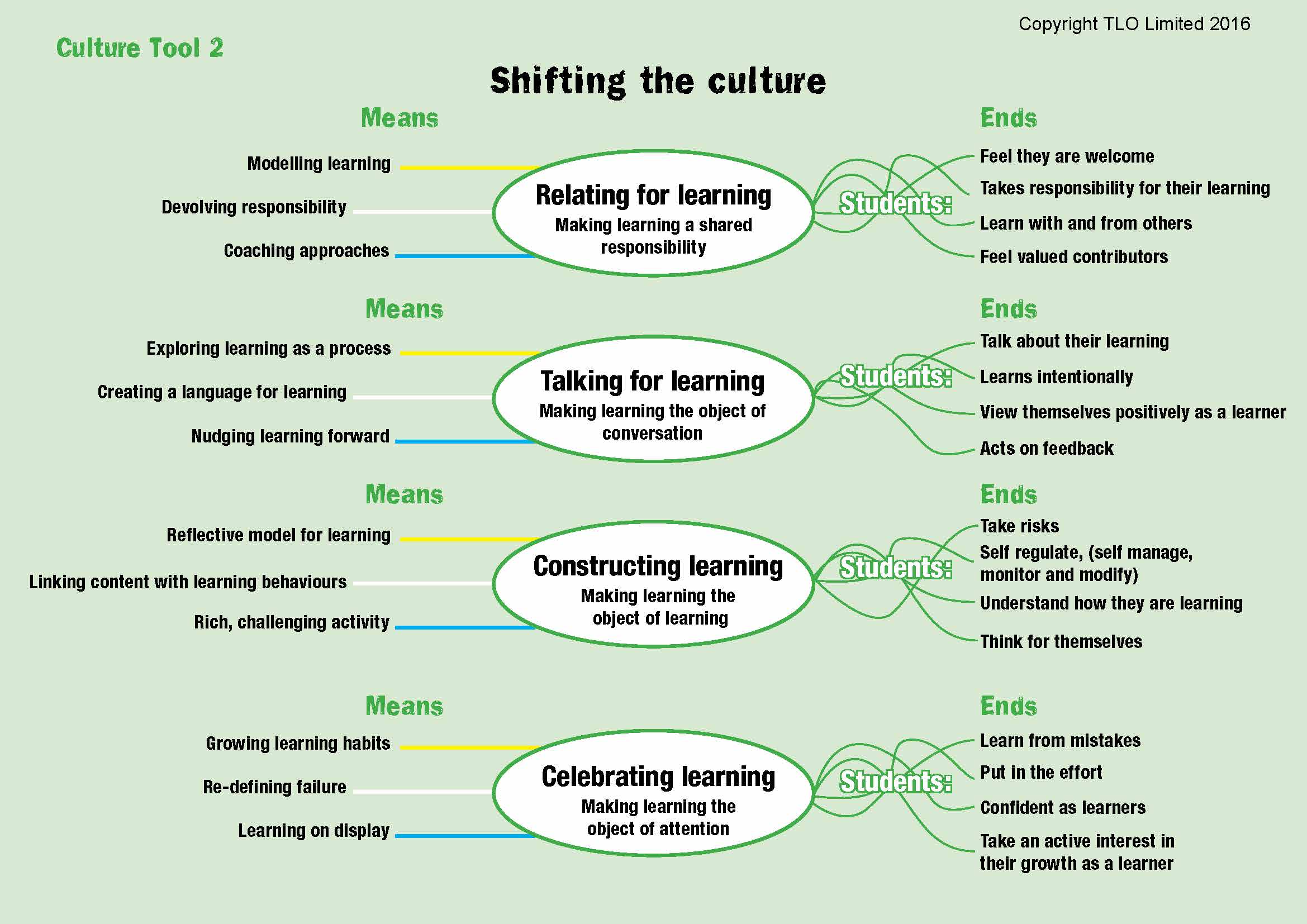
The four shifts in teacher behaviour:
how you relate to students;
how you talk to students;
how you construct learning opportunities;
how you celebrate learning.
This grouping will enable you to look at one type of teacher behaviour shift across all student development phases.
Have a rummage through the sections to see what you can find. As you do, keep in mind what your students do now when they are stuck. Think about, what do you want them to be able to do that they can’t or don’t do now?
This dimension of the learning friendly classroom concerns learning becoming a shared responsibility.
As a teacher you will be giving students more responsibility for their own learning by:
acting as a learning coach, gradually enabling students to find their own ways to improve;
focusing collaborative activity to help students to see each other as resources for learning;
offering students choices about what and how to learn;
enabling students to talk more, with you talking less;
modelling being a learner;
surfacing and promoting the processes of learning itself.
Shifting responsibility for learning ensures students recognise, use, understand and grow their learning habits.
The classroom gradually becomes a learning community where everyone is learning from each other and growing more confident as learners as a result.
Organisation of ideas below
The ideas below have been included for their effectiveness in helping to unhook teacher-student dependency and shifting more responsibility for learning to students. The coloured lines bounding each idea suggest the progression phase the ideas might best secure.
#1: Introduce the idea of distraction
Quick ways in to introducing managing distractions
For older students.
Here are a couple of ideas for introducing the idea of distractions to students in the transition years. They need not be used in the ‘worksheet’ format of course! If these don’t suit there are plenty of other ideas later in this section.
For younger students.
Here is a story about managing distraction in everyday life. Take a look at the sort of questions the text calls for….both the content and the underlying process being unpacked.
Here’s a fuller explanation of distraction if you need one. It might be useful for deeper discussion and analysis with students
#2 Explore the idea of managing distractions.
Exploring what it feels like
AIM To enable students to recognise;
What distractions are
What it feels like when being distracted
A range of distractions
What distracts them.
Set up the Learning Challenge
Pair up students — Student A, Student B.
A to describe a complicated process, e.g. tying a shoelace or tie.
B to try to distract by –
butting in –
looking bored –
looking elsewhere –
talking about how they would do it –
and so on 2 minutes.
Swap roles.
Plenary Discussion Explore:
What happened?
How were you distracted?
What did being distracted feel like?
How could you avoid or manage the distractions better?
Record Distractions
As a whole group, or in pairs, construct a list of things that distract people: – in the classroom – at home.
Prompt: Distractions may not be outside us, but in our heads …
Compare the lists. Draw out interesting / mundane distractions.
(Could be done using Post-its as a scan and focus exercise.)
#3 Model being distracted
Model distractions (ages 4-8)
A quick starter activity to illustrate the meaning of distraction.
Explore the effects of distractions on pupils.
#4 Start students self-monitoring their distractions
Am I a ☆☆☆ manager?
Work with students to describe different degrees of the ability to manage distractions.For example:
A 3-star manager might
always keep focused on what s/he is learning
support other learners by helping them to manage their distractions
Use language appropriate for the age of the students.
Comment on behaviour in order to recognise and value the management of distractions.
Ask students to help each other with ideas about how to earn more stars as distraction managers.
#5 Classroom layout: managing the learning environment
An environment that’s their’s to manage
Being concerned with classroom layout in dealing with distraction may seem strange bedfellows, but if we think of distraction in the wider context of managing the learning environment it begins to make more sense.
Just have a look around your classroom and ask yourself:
Does it feel a calm place to be?
Are there different habits within the classroom? e.g.A quiet thinking place, An editor’s table and chair
Is the layout quickly adaptable?
What about the walls? Do they celebrating the classroom values? Too busy/congested?
Are learning resources accessible by students? Do they know where things are? Can they get what they need, when they need it?
Do you expect students always to sit at tables? Are there any other work spaces?
Is it a distracting environment? Does it aid quiet reflection?
Is the environment their’s to manage?
Classrooms that feel like homely places to be, where there’s freedom of movement, a choice of learning spaces a sense of calm and where students feel they belong all seem to help concentration levels, lessen stress and focus effort.
The Saints’ Way MAT in Cornwall decided to fundamentally challenge their thinking about educational spaces and provision. They wanted to enable learning, not necessarily direct learning.
‘I do not teach anyone I only provide the environment in which they can learn.’ Albert Einstein
The classroom environment became their starting point. It just so happened that they had a new classroom that needed to be equipped for the coming year – a blank canvas. The brief they set themselves was to create a flexible, neutral space that would facilitate learning. They had already equipped a number of classrooms with furniture from Ikea so returned to the catalogue for inspiration.
The first decision was to put all the furniture on casters to maximise flexibility within the space, they centralised the resources so that they could put large whiteboards at child height on every wall. These were to enable pupils to think about, explore, plan and reflect upon their learning, they would become the Working Walls, ensuring that all information was current and relevant. They arranged several work and break out spaces including tables and chairs, bar tables and stools, sofas, bean bags, an architect’s desk. This variety of work spaces has enabled every child to feel comfortable and find their element. Some prefer tables, other work alone, some like being perched high up, others snuggle into sofas. Higher up display boards were minimised, but those that remained were covered in neutral backing paper in order to maintain a calm space where the pupils’ work would provide the colour.
It may not look like a conventional classroom but it’s a space where learners feel able to move about, find what they need and learn in a variety of positions. There’s less fidgeting, more comfort and less stress and more focus.
The new classroom layout
#1 Introduce how to focus effort
Explore the meaning of effort
Effort is a word that teachers use frequently, but what does it mean? How might students decode this and begin to do it purposefully?
Explore what is meant by ‘effort’ with your students, and discuss with them the ways in which they might apply it.
Encourage them to come up with a definition of effort and specific examples of what it might look like in the classroom – for example by;
trying different strategies to solve a problem,
using a Visible Thinking Routine (VTR)
aiming to achieve challenging goals, or
using different un-sticking techniques when something is tricky.
paying attention to whoever is speaking.
See Celebrate learning values #2 below for a poster of Effort prompts.
Targeted Effort is now seen as a path to mastery. Students need to be aware of a connection between effort and improvement; that their effort is causing their improvement. This is why it is important to give effort meaning. Meaning often underpins motivation which in turn drives behaviour.
Targeted effort is effort that has direction and purpose. It is underpinned by clear guidance and the specific goal to be achieved.
What you are doing here is giving effort a size and direction. What students need to understand is that their effort has a size and a purpose.
#2 Use ‘If-then’ statements to strengthen focusing effort
Put ‘If-then’ planning into action in your classroom to make effort more specific and focused
‘Ifs’ are the situations you want to remind yourself about. In this case focusing effort it’s useful to list all the sorts of places this is needed.
‘Thens’ are what you will do about something; the action you will take. In this case the ways of focusing effort as introduced in #1 above.
The how of ‘If-then’ planning and a relevant example:
When setting a goal, for example ‘make more effort’, you need to specify not only what you will do but also where and when you will do it.
If (or when) [___situation__], then I will do [___behaviour__]
An If-then statement linked to the ‘make more effort’ goal might be
‘If I lose focus at the start of a task, then I’ll look at the success criteria to give me direction ‘.
This may sound a bit cumbersome to start with but research suggests far more goals are achieved by using ‘if-then’ statements. And the clever bit is that this builds self talk at the same time. You do what you are telling yourself to do.
The ‘if-then’ plan succeeds because the situation and the action become linked in the mind. The brain recognises the situation as an opportunity to advance the goal. When the situation is detected action is initiated automatically. “If-then’ plans become “instant habits”.
#3 Model effort
Give students an idea of what effort looks like in practice.
Demonstrating a task which you expect them to complete later in the lesson.
Explain what you are doing, in terms of effort, as you go along.
Your commentary might include:
referring to success criteria to plan and direct your actions
using an unsticking strategy when you come across something tricky
looking for feedback from the class on your efforts, and adjusting your course in the face of that feedback
reminding yourself to refocus when a distraction comes along
#4 Introduce the idea of being absorbed
Introduce students to the idea of being absorbed
Try this starter activity to introduce students to being absorbed. Useful at the start of any lesson.
The resource above is part of the BLP Activity Bank. Find out more from our website
#1 Introduce ideas about working memory
Help for working memory
Working memory is what we use for processing information in real-time. It is particularly exercised when we are learning new things, performing tasks, cogitating, questioning and so forth. Your students are using it all the time during lessons. But working memory is limited to about 7 items at a time – any more than that and the brain starts to freeze up, and engagement drops. We sometimes say ‘I don’t have the head space for that’. Students will need to know when they are reaching capacity, and how to cope when they do.
Ways to free up thinking space
Fortunately, freeing up working memory is relatively simple.
jotting things down as notes,
talking through a process out loud,
creating a mind map
making a set of lists to group disparate pieces of information into larger lumps
splitting a task down into smaller tasks
are all good techniques for giving the brain more thinking space.
#2 Three strategies for refocusing effort: nudging not telling
Model it: for the student who is well and truly stuck, or who has taken a path that leads to a dead-end and is withdrawing from learning, try modelling the process for them. Narrate as you go, highlighting the thinking processes you are using, what you plan to do next, how you are getting yourself unstuck, and so on.
Nudge it: For students who are more resilient to becoming stuck or encountering difficulty, try using gentle nudges to get them out of the mud. “Can you think of something we did earlier that might help you?” “How have you tackled this sort of problem before?” “Would the instructions help you here?” This is far from a full-blown model of what to do, but rather prompting to a way back in to the learning.
Give clues: Some students will enjoy the added brain tease of a clue to nudge them in the right direction. “I think Newton had the right idea here…what about you?” “Perhaps it is a bit like hibernation…?” “Chapter 4 has some interesting things to say on this”
Each of these techniques provides progressively less scaffolding for the student – you will need to gauge which technique to use for each student – fragile learners who struggle with being stuck will not appreciate clue giving as it will only compound their stuckness! Similarly, students who are able to deal with being stuck well on their own will not be sufficiently stretched by the modelling approach. You are differentiating your nudging.
#3 Introduce ideas for overcoming hard slog of practice
Embracing the hard bits
It’s the hard parts in learning that can cause demotivation in students accompanied by a greater likelihood of distraction. Students and teachers need to learn how best to cope with them.
Good work on the hard parts is a structural challenge for teaching as well as learning. We need to build in versions of ongoing assessment but assessment that is not concerned with marks /grades or evaluating the the how of learning. This is assessment designed to feed into the learning process and make the learning stronger. It’s possible to organise the rhythm of learning so that it embraces;
deliberate practice
assessment focused on understanding
peer and self assessment
communicative feedback
Teachers need to anticipate where the sticking points in the content are likely to be, the troublesome knowledge, and then ask;
what standard ritual ways of thinking might get in the way?
what do students know already that they might not have linked to this topic/knowledge/task?
what is getting in the way of them thinking differently about this content to be able to assimilate it?
what might they need to unlearn in order to relearn this content?
which aspect(s) of the content is conceptually difficult
Here are researched ways of structuring work on the hard parts into the rhythm of the learning.
Vary practice activities and conditions
Interleave rather than block practice
Break down complex problems
Use low stake tests/quizzes with students
Encourage students to self test
Offer clues rather than solutions
You can read a little more on each of these below.
1. Introduce variety and unpredictability into classroom environments
Making learning easier boosts retrieval strength in the short term and this leads to better outcome performance. This feels good and produces a sense of cognitive ease. When something feels comfortable and familiar, it makes us feel good. And when we feel good, we’re relaxed, not thinking. BUT because the deeper processing that encourages the long-term retention is missing, that retrieval strength quickly evaporates. The very weird fact of the matter is that forgetting creates the capacity for learning.
Remember though, learning happens when we think hard, so we need to create conditions which induce cognitive strain. Strain is unpleasant and stressful. We’re wary of the unfamiliar so we concentrate. When we’re forced into situations where we have to pay attention and make an effort, we have to think. Visual and verbal information can be processed simultaneously without overloading working memory.
2. Interleave/mix topics together instead of presenting them in neat termly blocks
Practice should be distributed (spacing & interleaving) over extended periods of time. Spacing – exploits the cycle of forgetting and relearning (more strongly) by revisiting topics repeatedly over the course of a term or a year. Interleaving – what topics will you teach whilst you are waiting for students to forget what you have just taught before revisiting it?
Blocking / massed practice– review the basics, complete a few related practice examples, reach an acceptable level of proficiency, and then move to the next topic. Blocking leads to compelling short term gains, but interleaving the curriculum leads to deeper understanding by the end of the course.
3. Complex problems should be broken down into constituent parts and students required to practise these smaller elements before being asked to solve complex problems independently.
4. Test pupils’ ability to retrieve information instead of simply showing it to them again.
Regular low stakes tests or quizzes taps into the effect (that trying to remember something helps us with the long-term memory for that material). Quick questions on the board, quizzes, self-tests. If students have drawn mindmaps, get them to try redrawing them from memory. If using flashcards, make sure they are testing themselves by jotting down their contents from memory, rather than simply looking at them (recognition vs recall). Students often mistake familiarity with material for the ability to recall it. We can help students from more accurate judgements of learning by encouraging a delay between studying and self-testing
5. Self testing
We are more accurate at predicting later performance when there is a delay between studying material and making a judgement about how much we can securely recall. Encourage students to test that judgement by attempting tasks or quests from memory.
6. Give clues rather than complete solutions so that pupils have to generate rather than simply repeat answers.
BUT When teaching new material, ensure pupils are not overloaded – more inductive discovery methods require pupils to juggle a lot of information at once in order to perceive the relationships or patterns we want them to understand. Providing an element of explicit instruction, using carefully considered explanations, worked example and accurate analogies, is almost certainly a better bet than providing relatively little guidance using problem-solving or open inquiry methods. Students should be provided with worked examples and exemplar answers as well as partially completed sample problems
#1 Putting targeted effort in plans
Plan for targeted effort
Expect students to plan for their targeted effort.When devising project plans with students, ask them to come up with;
their own idea for what they want to focus on
What that will mean they are looking out for (monitoring) as they undertake the work.
What they will focus on when revising in their work.
For example, a Y1 student might decide to focus on using capital letters at the beginning of sentences when writing a passage. When they read their work through at the end, they would focus their effort on the same criterion – are there any sentences that still need capital letters? And possibly ask themselves ‘I wonder how/why I missed that one?’
Or a Y10 student might aim to focus their effort in science on coming up with a really tight method for an experiment. They would monitor how things are going and whether they need to adjust anything. This will also provide the focus for the conclusion section of the process, as they can suggest refinements to their original method to gain more meaningful results in future experiments.
It’s all about where the effort needs to be focused. One bit at a time.
#2 Introduce attentive noticing
Now that your students are familiar with and in control of distractions it’s a good time to deepen their attentiveness. This activity offers an informal introduction to relaxed noticing rather than focused concentration.
Here you will find a small set of ideas for introducing and discussing the noticing capacity. Useful for younger students.
Both of these activities are part of the BLP Transition Activity Bank
#3 Extend understanding of distractions to beyond the classroom.
Build awareness of students’ distractibility across life more generally by using a learning log for recording everyday distractions and their reactions to them.
Discuss ideas about how to reduce distractions.
Extends the language of learning
Talk for learning
This dimension of the learning friendly classroom concerns using the language of learning,
As a teacher you will be:
using language to encourage perseverant, inquisitive, imaginative attitudes in students;
exploring learning as an explicit theme that runs across all subject matter;
talking about learning in terms of constant change; experimental, working towards, constant improvement, flexibility, could be;
prompting in the form of questions to nudge pupils into thinking for themselves. “That’s curious. What’s odd about that? What does that make you wonder?”
focusing questions on the process of learning, encouraging students to slow down, appraise the strategies and steps along the way, become more thoughtful and explore different strategies for making progress;
aware of positive and negative student self talk and building positive talk by giving them the knowledge and experience of the learning behaviours ( the tools) with which they learn.
The more richly children come to relate their own learning the more they see and take hold of their own role in it.
Organisation of ideas below
The ideas below have been selected for their effectiveness in helping to surface the learning process and deepen the language of learning.
#1 Talk to extend understanding of distractions
Sometimes we are distracted by people, sometimes things can get in the way.
Have a discussion about these two types of distractions (people and things) and come up with lists of the different ways we can be put off by people and by things e.g. when we break a pencil, when we don’t have the things we need etc. Talk about what we could do in different situations.
#2 Talk to nudge the skill.
Managing distraction phrases
Encourage students to become more aware of distractions and how they might deal with them. Use phrases like:
What might put you off?
What might get in your way?
Do you sometimes distract others?
How might they feel when you do that?
What could you do to avoid being distracted?
Where are you now on our distractions scale?
How well have you managed your distractions today?
The language of learning can help teachers to think about how they might talk in a way that helps to cultivate the learning behaviours and help pupils to gain a better personalised understanding of content.
Teachers can turn each of the learning habits into sets of casual prompts or nudges to move pupils along in learning. For example, to nudge curiosity/questioning: “What’s odd about that? What does that make you wonder? What do you want to find out? How else could you do that?”
Teachers’ classroom talk is all focused on the process and experience of learning itself. Sometimes teacher comments encourage pupils to pay attention to how they are learning. Teacher comments ask them to slow down and notice and appraise the strategies and steps they are using along the way. E.g. “What would have made this easier for you? Where else could you use that?” This helps pupils to become more reflective and thoughtful about their own learning.
#3 Written feedback on managing distractions
Reinforce taking responsibility for learning with supportive marking comments
You have been successful because you avoided being distracted. Well done!
#1 Talk to extend understanding of ‘distractions’
To build up students’ understanding of distractions, use phrases like:
How did you keep going?
What could we do when we feel we are losing focus?
What sorts of things distract you most?
When are friends a distraction – or a source of inspiration?
What sorts of learning environment might be appropriate for different types of learning?
What internal distractions might we have? (tiredness, emotions, hunger, failure).
How could you let us know if we are distracting you?
You’re doing well with avoiding that distraction.
#2 Reinforce familiarity with distractions by ranking them
Work with students to identify distractions in the classroom and to come up with strategies for reducing them. Encourage them to think about:
Straightforward concepts – e.g. people, objects, the weather, the environment.
Issues which are not clear cut, such as friends who are both a distraction and a source of inspiration, and whether fiddling is a distraction or an aid to concentration
Different learning environments that might be appropriate for different types of learning, both in school and at home
Internal distractions, such as hunger, tiredness, emotions, failure.
Once you have identified various potential distractions, ask students to rank the distractions and match them against ideas for managing these distractions. Remember to address the emotional content of internal distractions. Examples might include:
Using their imagination to take themselves to a different place, a happy place, where they can block out the distraction
Discussing how to deal with the situation with a friend so that the worry does not go round and round in their minds
Giving themselves time to laugh or cry about a situation if necessary before settling back into a task.
#3 Using distractions positively
Sometimes when we are stuck, becoming distracted is our brain’s way of saying “I need to take a break”. Often, moving away from the problem at hand and doing something different for a while, or simply gazing out of the window, can help new ideas bubble to the surface, it gives the subconscious time to work on a problem that has previously seemed uncrackable.
Consider having a quiet break-out area for students to use when they need a break, but make sure it isn’t being used too frequently or improperly!
Use ‘gazing out of the window’ positively.
When you see a student doing this ask them ‘What’s bubbling up in your mind? What new ideas are you imagining?’ rather than referring negatively to an apparent loss of focus or concentration.
#4 Written feedback on managing distractions
Giving feedback on the learning process; make it a habit of yours.
The story of Lemar and his distractions
Lemar was in Yr 6, registered SEN and always distracted. He looked here and there, talked to other children and sometimes wandered around the classroom when he should have been absorbed in learning.
His teacher decided that the place to start with Lemar was managing his distractions. After talking with all the class about what distractions were the pupils came up with all manner of ways they could use to try and avoid them. One idea was a simple line on a page to record when distractions happened.(Self monitoring)
The next day the teacher drew such a line at the top of Lemar’s page and asked him to try it out. You can see the line on the first picture and how Lemar marked it throughout the lesson. Although one could argue that the line itself was a distraction what it was actually doing here was making Lemar aware of being distracted.
On seeing his writing at the end of the lesson the teacher was astonished by the amount Lemar had managed in the time. The lines he had written represented 100% increase in volume. Note the teacher’s comment at the bottom. She acknowledges that he has indeed managed his distractions well.
A couple of days later Lemar had more writing to tackle. This time he created his own line at the top of his page….a significant breakthrough because he had seen the value of using this tactic. Here again he marks when distractions happen and even mentions his distractor Jordan! Furthermore he has completed yet more writing.
Hannah Moore Primary School
Here again the teacher comments on the writing and acknowledges that it is good work, but unfortunately she doesn’t comment on his obvious effort on managing his distractions.
If we are going to help pupils to build their own learning habits a single written comment won’t be enough, habit formation needs far more encouragement and reinforcement.
Wow! using your distraction line today has really helped you to focus well. Feel pleased with yourself for this good effort.
#1 Talk to focus effort
Effort focusing questions
What strategies will keep you going here?
What are the things you can do to keep yourself on track?
Can you show me what really good effort looks like?
What could you look at to see if you are on the right lines?
When did you target your effort effectively?
What could you focus on next?
If you had to pick one thing to focus your effort on, what would it be
#2 Written feedback to maintain interest
Supportive marking comments
Well done on keeping focused – this was a hard slog, but your effort was worthwhile and enabled you to produce a really good piece of work.
#3 Questions to focus reflection on effort
How did that effort help you learn more?
How did you manage to keep your effort up when there was a lot of distraction?
Where in that piece of work did effort play a really big part?
Which effort strategies have you found most useful?
How would you change your tactics next time?
Are there certain times in learning when effort becomes indispensable?
What does it feel like when you are really targeting your effort?
#1 Feedback to nudge the skill
Process-Level Feedback Prompts (adapted from Nuckles et al, 2009)
What strategies are you using?
Are there more efficient strategies you could use?
What other Qs could you ask about this task?
Do you grasp the concept underpinning this task?
Have you done anything similar to this before?
How could you use that information to target your effort?
Has making this effort made you want to learn more?
What could you focus on next?
#2 Written feedback on overcoming negative pressures
Supportive marking comments. Keep them coming to support habit formation
It would have been easy to have given up on this, but you stuck to your guns despite the doubts of others. You should be proud of what you have achieved.
Constructing learning lessons
This dimension of the learning friendly classroom concerns how you design learning episodes/lessons/projects.
As a teacher you will be:
building reflection on learning and reviewing learning as key features in the rhythms of into the classroom;
designing learning activities with a dual focus; to explore content and stretch ability to use learning behaviours;
making conscious choices about:
which habits/learning behaviours to introduce and stretch;
how best to couple these with content so that lessons become more interesting and challenging;
adding a third dimension to your teaching:
1. Subject matter;
2. Assessment;
3. The learning behaviours being used in order to learn the content.
Organisation of ideas below
The ideas below have been selected for their effectiveness in helping to show how you value the process of maintaining focus. The coloured lines bounding each idea suggest the phase of development and the order in which they might best be introduced.
#1 Nurture the capacity to manage distractions
Sliding doors
Have some fun by thinking about what might have happened if characters in familiar stories had been distracted e.g. suppose someone distracted the prince each time he wanted to ask Cinderella to dance?
We’ll let you have fun finding other ideas.
#2 Build in break states
Break States.
Change the mental and physical state of the class by using music, quick games (Fizz-Buzz, Simon Says), guided relaxation, Brain Gym (Dennison, 1992), change of partner/desk/lighting, breathing exercises, or a refreshment break. Such activities refresh and relax pupils, enabling a greater degree of focus afterwards. Discuss their impact on concentration and how pupils could use them in other contexts to keep themselves on track with their learning.
Extract (above) from Building Learning Power in Action, by Sarah Gornall, Maryl Chambers, Guy Claxton. You will find lots of other ideas for all the learning behaviours.
#3 Build in ways to recognise distraction
Keeping count
For students aged about 4 to 8
Encourage your students to recognise when they are becoming distracted.
At the start of an activity give each student a number of counters, beads, bricks etc. Each time they find themselves distracted they put one counter etc. into a pot.
Groups of individuals can compare outcomes and talk about the different ways they had been distracted.
#1 Practise using defined effort
Tight effort
Set your students a task that requires them to focus their effort very tightly. For example:
Produce a piece of writing on the topic of ‘squirrels'( or indeed on anything relevant/current),
using only 10 words.
you have five minutes.
You can of course change the topic, word limit, and time limit, or add further constraints like ‘no lists’, to give almost infinite variations on this theme. Changing these criteria will have the effect of broadening or narrowing your students’ effort/focus.
#2 Use ‘brink’ targets and ‘flow’ tasks
Being in a ‘state of flow’ is about an ideal state of being totally involved with or absorbed by something you are doing. How might we try to achieve that state in the classroom? The secret to designing what we might term “Goldilocks ‘ tasks is to make sure they are exciting ( arousing the interest of the learner) with just the right level of challenge; where the student is on the brink of being able to achieve something (challenging but within reach)
#1 Targeting effort in self-assessment
A refinement of Austin’s butterfly.
Ask your students to copy a picture of a teapot (or something relevant to current learning) as best they can in 10 minutes.
At the end of the allotted time ask them to swap pictures with a partner.
Now provide students with a list of criteria against which to review the picture they have been given, but require them to select and focus their review against only one of the criteria. The list, in this case, might include: handle, spout, pattern, outline, lid. Stress that the feedback must be helpful enough to enable their partner to improve their drawing.This keeps feedback tight, focused and meaningful. It also helps students move on from potentially vague and ambiguous feedback.
Have a look at Austin’s butterfly above and notice how the children work out, with a little prompting, how to focus feedback to help Austin achieve his goal. Magic.
#2 Scaffold tasks to focus effort
Looking 10 x 2
Give students 30 seconds to look at a picture relevant to your topic.
Ask them to list ten things they noticed about the picture.
Repeat the process, seeing if they can list 10 more things about the picture.
This process can be repeated until no new ideas come forth.
Focusing effort has now engaged the learning behaviour known as attentive noticing
#3 Go with the flow
Go with the learning and follow absorption. Where possible, don’t stop a lesson arbitrarily because of the time or a projected move to the next topic. Make sure there’s time to explore and to allow the students to develop their interest fully.
#1 Blending managing distractions seamlessly into a lesson
A a school in Wotton-under-Edge in Gloucestershire teachers have extended the usual idea about classroom distraction (losing focus) by using the same idea to encompass looking out for red herrings/distracting or irrelevant information in texts.
A literacy lesson revolved around a writing activity. The stimulus was a video clip of Gavin Henson, the Welsh fly-half, taking a successful kick in a famous rugby match. This was used to stimulate a deep discussion about managing distraction and how this was possible in such a public setting. What had Gavin got to do to make sure the kick was successful?
The students were then invited to write a short piece for a newspaper using the the following information. They were asked to be aware of what they thought to be the key pieces of information. But of course irrelevant information was also included.
There were 3 layered targets for this piece of writing which different groups of students understood had to be incorporated into the writing.
The following task was to consider what advice Gavin Henson would offer a learner about managing distraction. This again led to a very profitable discussion which was then captured in writing.
Throughout the lesson students recorded their thoughts about managing distraction using this format.
Needless to say this teacher is Welsh and a passionate Rugby supporter.
#2 Blending attentive noticing into lessons
This activity arouses an appreciation of noticing skills.
Students will be able to:
Recognise that noticing can be fun
Appreciate the value of noticing
Appreciate noticing as a way into greater interest
Appreciate noticing as a precursor to making links
The following resources provide coaching notes, DIY resources and an observation tool.
You could try the activity without as much scaffolding. E.g. use a VTR, ask: – “What do you notice?” – “What’s happening here?” – “What makes you say that?” Then explore feelings about not being told where to look and what to look for, etc.
#3 Reflect on effort related strategies
Self-Regulation-Level Feedback questions (adapted from Nuckles et al, 2009)
What would be the best way of checking your work?
How could you reflect on these answers?
What happened when you …?
How can you account for …?
What learning goals have you achieved?
How have your ideas changed?
What aspect of this work could you now teach to others?
Celebrate learning values
This dimension of the learning friendly classroom concerns what is valued, recognised, praised, displayed about managing distractions.
As a teacher you will be:
showing attention to learning, rather than performance;
recognising, praising, displaying aspects of remaining focused and bouncing back after distractions. For example:-
recognising losing focus is something over which we have some degree of control;
having a clear description of what focus means and how best to achieve it.
acknowledging/recognising/ praising when overcoming distractions is used more skilfully
attending to the growth of learning habits associated with retaining focus.
Learning powered environments build confident uncertainty. Managing distractions and remaining on task is celebrated as an interesting place where real learning begins.
Organisation of ideas below
The ideas below have been selected for their effectiveness in helping to show how you value the process of maintaining focus. The coloured lines bounding each idea suggest the phase of development and the order in which they might best be introduced.
#1 Display ☆☆☆ managers
Display and celebrate achievement of managing distractions
Ensure that your display walls include pictures and explanations that illustrate what you have been exploring about distraction and how to avoid it.
Here we see a ☆☆☆ Distraction manager ( explained in activity #4 Relating)
Encourage students to write on a separate note how they managed their distractions, and display the note with the 3* managers.
It’s important that students understand learning as a process rather than an event, and that being distracted is a inevitable part of that process. Mostly distraction takes us away from learning but sometimes purposeful distraction can be a helpful addition to the learning process. We look at this in the ‘I’ll try’ section.
#2 Photograph and display students focusing on learning
Have your camera at the ready and capture moments where you see students focusing intently on what they are learning. Make a big fuss of this focused behaviour, explore with the students what they have been learning and what ‘focusing’ felt like. Regularly encourage students to think about a moment when they became really absorbed and how it felt. Celebrate the unusual ones by displaying them on a ‘focus or absorbed wall’. Students will develop an interest in their ability to become absorbed.
#1 Display students’ self monitoring of distraction
A learning powered primary school near Milton Keynes captured student’s own assessment of managing distractions each week
They have developed a 5 point scale describing different levels of distraction
Each student crafted a personal logo, known only to them and the teacher. Each week they would stick their logo on the level of distraction they estimated they had achieved across the week.
These assessments were recorded by school and set against progress data
Perhaps not surprisingly strong positive correlations were found…being able to manage distractions better positively correlates with increases in progress! Now there’s a surprise.
#2 Display an Effort checklist.
Create a prompt checklist of the ways you have introduced that will help focus effort.
This display list links to #1 Relating. Introduce how to focus effort
#1 Ways to help your memory: a checklist
This Working Memory checklist does the same job as a Stuck prompt…it reminds students about what they could do when their heads are in danger of getting confused; too full of ideas or too much to do or …….
#1 Develop a Raptometer
Switch the thinking from managing distraction to becoming absorbed and attentiveness
Raptometer.
Make a scale on the classroom wall to indicate degrees of absorption. Students or adult observers (e.g. Teacher Training student, Teaching Assistant) observe groups and/or individuals as they are working and move a label with a students’s name or picture up and down the scale according to how absorbed they perceive individuals are.
Use as a prompt for discussion about:
how students have become absorbed at different stages of a lesson,
what the characteristics of absorption are
what it feels like to be absorbed
how to be more absorbed in the flow and how to avoid distractions.
What could I do differently to engage students in managing their distractions and becoming more focused?
In this section we explore a range of ideas, activities, ways to display, and things to say about understanding distraction and becoming more focused. The ideas aim to deepen your learning friendly classroom culture and help to support and strengthen your students’ relationship with focus: how to enjoy it; what to do about it if disrupted.
Much of being able to be focused involves your feelings; your emotional responses to learning. Being emotionally robust is a pre-requisite for powerful learning. Hence looking out for students who have lost focus (they are not usually hard to spot !) and offering them ways to maintain focus is one small, but essential, way of moulding them into powerful lifelong learners.
The ideas to practise are grouped in two ways;
In this section (2)
The four phases of learner behaviour (we have left the most advanced phase, ’embodies’, out):
Receives ( purple) Do as they are told, but need assistance, ‘Show me. Tell me’;
Responds ( blue) Act more willingly, prepared to try, ‘I’ll try’;
Values ( green ) Values the behaviour, does it more frequently, ‘I see why’;
Organises ( yellow) Organises themselves to use the behaviour effectively, ‘I’ll make sure’.
This grouping will enable you to look at all the ideas linked to a phase of development
In section 3 The culture sort
All the activities linked to the four shifts in teacher behaviour:
how you relate to students;
how you talk to students;
how you construct learning opportunities;
how you celebrate learning.
This grouping will enable you to look at one type of teacher behaviour shift across all student development phases
Most of the ideas to practise are not phase-specific and can be used, or readily be adapted for use, with students of any age. Have a rummage through the sections to see what you can find. As you do, keep in mind what your students do now when they become distracted and move off-task. Think about, what do you want them to be able to do that they can’t or don’t do now?
How do my students deal with distractions? How focus friendly is my classroom culture? What might I do to develop a more focus friendly classroom culture?
Managing Distractions
Losing focus or getting distracted is an inevitable part of learning, it happens to all of us.As learners we come across distractions, both internal and external. If we are hungry, tired or anxious we find it hard to concentrate. Equally if there is too much going on around us or something unexpected happens, we may lose our focus or get side-tracked. But unless students are assisted to cope positively and practically with such situations their deep engagement with learning may be in jeopardy.
Being able to avoid distractions or get ourselves re-focused is as much about how we react emotionally as it is about having the practical strategies to work out what to do. Being able to manage distractions is a critical part of persevering.
Why is managing distractions difficult?
Being totally absorbed and focused isn’t always the best strategy. Total immersion, however valuable, may mean that you miss whatever else is going on, be it a new opportunity or a looming threat. Our ancestors would have been vulnerable were they not continually checking for potential danger, and so to a lesser extent are we. In reality some students are preoccupied with what they perceive to be more important calls on their attention than the learning topic in hand. This isn’t because they are wilfully off task, but because they simply cannot help it. The ability to maintain concentration on longer-term goals, in the face of more immediate attractions, isn’t finally developed until quite late adolescence. Nevertheless, calling attention to distraction, exploring ways to overcome it, being clear about what effort means, and devising activities that are likely to minimise distraction are all part of a learning friendly culture.
The two questionnaires in this section aim to help you analyse:
Where your students are now in their journey to managing their distractions. [Questionnaire 1 Distraction Questions]
What you do to help students minimise their distractions and what this might suggest. [Questionnaire 2 Culture Questions]
Results from these questionnaires will take you to a focused range of moving forward ideas.
This section is for those teachers who are undertaking this unit alone and are not part of a Teacher Learning Communitystructure. The section provides well researched ways for planning and reflecting on your changing classroom practice
When teachers want or need to improve it actually involves them in changing their teaching habits. It’s not just about knowing new stuff, like reading the previous sections, it is about doing what you do differently. That’s much harder. It involves changes to;
what you know – knowledge
what you believe – feelings or attitudes
what you can do – your skills
what you actually do – putting it all into practice
So changing how you teach is a delicate, complex process……...that’s why it’s hard!
And the hardest thing isn’t getting new ideas into teachers’ heads
It’s getting the old ones out…….that’s why it takes time and effort.
It takes time and practice to undo old habits and become graceful at new ones……that’s why we have provided materials here to help you to plan the changes you want to make, monitor what happens in your classroom as the changes happen, and reflect on the impact of those changes; their worth and value.
This section offers a framework for supporting a productive Teacher Learning Community
Teacher learning communities have the potential to provide you, as teachers and support staff, with the information and support you need to develop your practice in deep and lasting ways. They provide a forum for supporting you in converting the information and ideas in the online learning sessions into “lived” practices within your specific subjects and classrooms. They provide a safe forum in which to;
kick around ideas from the online content,
unpack it’s meaning when it’s unclear,
consider what’s do-able and appropriate for your pupils
make plans for what and how you might incorporate the ideas into your practice
share and unpack what you have tried in the classroom
relate your triumphs and tribulations
support colleagues through changes in practice
reflect on what you hope you might do, or have done, differently
The format of the agenda is based on research into teacher learning communities by Dylan Wiliam, of Assessment for Learning (AfL) fame. Teacher learning communities are the engines of teacher development.
What could I do differently to engage students in realising the value of working towards goals?
The four shifts in teacher behaviour:
how you relate to students;
how you talk to students;
how you construct learning opportunities;
how you celebrate learning.
This grouping will enable you to look at one type of teacher behaviour shift across all student development phases.
Have a rummage through the sections to see what you can find. As you do, keep in mind what your students do now when they are stuck. Think about, what do you want them to be able to do that they can’t or don’t do now?
This dimension of the learning friendly classroom concerns learning becoming a shared responsibility.
As a teacher you will be giving students more responsibility for their own learning by:
acting as a learning coach, gradually enabling students to find their own ways to improve;
focusing collaborative activity to help students to see each other as resources for learning;
offering students choices about what and how to learn;
enabling students to talk more, with you talking less;
modelling being a learner;
surfacing and promoting the processes of learning itself.
Shifting responsibility for learning ensures students recognise, use, understand and grow their learning habits.
The classroom gradually becomes a learning community where everyone is learning from each other and growing more confident as learners as a result.
Organisation of ideas below
The ideas below have been included for their effectiveness in helping to unhook teacher-student dependency and shift more responsibility for learning to students. The coloured lines bounding each idea suggest the progression phase the ideas might best secure.
#1 Getting started with a plan
Planning in its simplest form means we have something to do, we have thought about what we are going to do. Hence in teaching children how to plan we are teaching them to be thoughtful about what they are doing and to be best prepared to achieve success.
Plan, do, review.
Planning can begin at an early age. The High Scope pre-school/nursery programme has planning built in to daily activity.
Begin the day with children saying what their plan for the morning is…what activities in what order.
The children carry out their plan, do, including getting and returning the appropriate equipment.
The children are expected to review at the end of the session what they did and how their plan worked out.
Children learn that through planning they can bring order, structure and predictability to their world even if it is just in the prepared environment of the classroom. They are no longer passive recipients of information about what to do, but can be active in planning purposeful activities.
#2 Learning Power Tools: equipping learners to achieve learning intentions
Learning-power tools to build and strengthen learning behaviours.
If we want young learners to strike out and achieve curriculum goals we need to alert them the tools to do just that. i.e. knowledge, understanding and improvement of their learning behaviours.
Younger learners need physical prompts or hooks for many invisible concepts including learning. Several schools use physical tools since tools are what adults use to help out with many jobs. Tools help children to connect with the idea of their learning powers in a tangible way.
Use real toolboxes from a DIY shop and gather items to represent just some of the learning capacities i.e. those that you are particularly wanting younger children to use each day. For example:
a blindfold for managing distractions
a magnifying glass for noticing details.
a plastic hammer for perseverance.
a giant key for collaboration.
a notebook for planning
Introduce the items to the children one at a time as the learning behaviour it represents fits with a part of the classroom culture you want to strengthen. Later ask children ‘Which learning tools will we need to help us today?’ They are soon able to go and fetch the notebook that represented planning before going outdoors to build a rocket.
Instead of using tools develop a set of icons to represent the learning behaviours. Such icons could be used:
throughout the school, giving a sense of consistency and continuity.
in lesson openings when children are considering the learning powers they will need to stretch in the lesson.
on the greeting cards that teachers use to commentate on and nudge the learning behaviours along.
displayed around the school and used as an integral part of children evaluating their own learning.
• What icons for learning power capacities would your students respond to?
• Would you want to stick to one set of icons for the whole school or use a different set for each year group or phase?
• Could your older students design a set of their own that could be used throughout the school?
• Clip art has proved a valuable place to look for ideas.
#3 Sharing your real life problems
A powerful motivator
Telling your learners about some of your own real life problems becomes a powerful motivator and a useful tool for discussing alternative plans of actions.
One way to start off the week is to share with students one or two real life problems you had to deal with over the weekend. Your students will be fascinated. It helps them to see you as human and with problems and importantly that these problems could be shared and talked about.
#1 Use If/Then planning
‘If – then’ display example, Heathcoat Primary school Tiverton
Put ‘If-then’ planning into action in your classroom to make goal setting more effective
If we want students to change their behaviour we need to help them to think much more closely about the ‘hows’ and the ‘whats’.
Motivation research proposes an effective solution called ‘if-then’ planning.
‘Ifs’ are the situations you want to remind yourself about. They are the triggers that stimulate the ‘Thens’
‘Thens’ are what you will do about something, the action you will take whenever the ‘If’ happens.
Research on motivation and goals from Harvard University shows how our brains work to achieve our goals. Basically it says that goals need to be very clear and our brain ignores a goal if it’s unclear about what to do. Brains act on goals only when what to do is clear.
So, goals like ‘Lose weight’ or ‘Exercise more often‘ or even ‘Aim high’ are too nebulous. They beg the question ‘how’ or ‘what do I do?’
The how to ‘If-then’ planning
When setting a goal you need to specify not only what you will do but also where and when you will do it.
If (or when) [___situation__], then I will do [___behaviour__]
So going back to our goal about losing weight, we need to know much more about the ‘how’ and the ‘what’ and the ‘how to’ of losing weight.
An If-then statement or goal might be ‘If I get the pudding menu, then I’ll ask for coffee’.
This may sound a bit cumbersome to start with but research suggests far more goals are achieved by using ‘if-then’ planning. And the clever bit is that this builds self-talk at the same time. You do what you are telling yourself to do.
The ‘if-then’ plan succeeds because the situation and the action become linked in the mind. The brain recognises the situation as an opportunity to advance the goal. When the situation is detected action is initiated automatically. “If-then’ plans become “instant habits”.
Examples:
If I’m not sure what my goal is, then I will try and picture it ( visualise) in my mind ( head)
If I’m am going to start working on a goal then I will think about what and how I need to do it. I’ll make a plan even just in my head.
If I’m getting confused about a goal ( outcome, objective) then I will look at the success criteria to help me get back on track..
#2: Introduce planning frames
Planning Frames
Establish a convention of shapes and colours linked to elements needed for a good plan, e.g. green arrow for your target, blue hexagon for resources, yellow star for the people to help you, brown footprint for steps to take, grey clock for deadlines or time-frames.
For group or whole-class work, use coloured card cut shapes to put together project plans.
Set up symbols on the network so that students can cut and paste these into word processed plans.
Create worksheets using the symbols.
Set criteria for what you expect in particular plans, and encourage pupils to use at least one frame of each colour/shape for every plan.
#3 Model your own planning strategies
Pursuing your own goals
Share something that you personally are trying to achieve, and how you are going about achieving it. Talk about plans, milestones, stumbling blocks, resources, time frames etc.
The key ideas to get over are:
that success usually results from effort and following a planned course of action, and rarely happens ‘by accident’;
that by thinking ahead we can influence the future.
One of the first ways of surfacing learning, putting it on show, is to focus on how you are modelling being a good learner to students. Modelling is all the ways in which teachers demonstrate how they are a learner too, in this case a person who confidently pursues a goal.
Take your students behind the scenes of learning, sharing with them some of the uncertain thinking of learning.
Learning aloud is a good place to start: take students through how you would plan to achieve a goal. Modelling the thought processes (including emotional) that learners go through is important because a lot of the skill of learning only manifests itself in the inner world of the learner.
Expose the thinking, feeling and decision making of a learner-in-action to help students actually see and hear how learning works.
#1 Making FAME plans
It’s important that plans provide a starting point. A clear beginning or focus shows a student where and how to start and what to do, and what steps or actions to take. The aim of the plan is to liberate the student from direct teacher assistance. Plans are not only a teaching device but aim to provide a means for independent learning.
A good plan contains;
an action component
a thinking component
a monitoring component, which means providing metacognitive steps to help make judgements about what they are doing
an evaluation component
Without the monitoring and evaluation components the plan remains just a set of directions for a given task. A good plan is strategic and includes skills that can be applied in a number of contexts.
FAME – Focus, Act, Monitor, Evaluate.
You can of course include more steps e.g. 2 for focusing or 3 for acting. Having too many steps becomes confusing. Keep the magic number 7 in mind
A good way to introduce this type of planning is for the teacher to do a very detailed one and then ask students to simplify the steps in their own words
Once students understand the planning process and have used them for a number of purposes they will become more proficient and confident, developing skills in;
knowledge of what plans are
formulating plans for different purposes
understanding when planning would or would not be useful/appropriate
being mindful (strategic) in undertaking tasks and solving problems.
#2 Allow students to select their own level of challenge and so set their own performance goals
Select own levels of challenge
For the same bit of curriculum content, provide tasks that are designed to offer low, medium and high challenge ( or mild, spicy, hot) and encourage students to decide on the level of challenge they wish to undertake. Use this as an opportunity to encourage them to set their own learning goals.
SOLO Taxonomy (structure of observed learning outcomes) is sometimes used to help teachers to structure tasks with varying levels of challenge.
At the unistructural level, only key aspects of the task are explored
[ie: How did the fire of London start ? ]
At the multistuctural level, several aspects of the task are explored but their relationships to each other and the whole are not.
[ie: What factors contributed to the spread of the fire of London ?]
At the relational level, the aspects are linked and integrated, and contribute to a deeper and more coherent understanding of the whole.
[ie: How did these factors combine to cause so much damage ?]
At the extended abstract level, the new understanding at the relational level is re-thought at another conceptual level, looked at in a new way, and used as the basis for prediction, generalisation, reflection, or creation of new understanding.
[ie: What could have been done at the time to prevent the fire of London spreading so quickly ?]
Four levels of challenge. Four goals for students to choose between.
#3 Begin to share outcomes with a wider audience
To move beyond peer assessment towards whole group assessment:
Set this up with plenty of notice and make it clear to students that their work will be seen by an audience.
Agree with students a valid set of success criteria for their work. This could then be used to drive and sustain their progress through the unit.
Include opportunities to draft/edit/improve
Use Kind, Specific, Helpful critique for feedback (as in Ron Berger’s Austin’s Butterfly)
The audiences could be:
another teacher.
a visitor
members of SLT willing to come and witness the ‘performance’
all the school
‘performance’ becomes a ‘pop-up’ learning exhibition somewhere in the school
students create and include QR code links to their displays and invite Kind, Specific, Helpful comments from all who see them
students show their learning in silence to each other and provides KSH feedback on sticky-notes. Feedback is collated and acted on in silence
#4 Link goals to the real world
Here’s a simple, straightforward way of showing the purpose of learning objectives or goals…simply add SO THAT at the end of the objective. The SO THAT is similar to the why. It aims to offer a wider reason for pursuing the learning objective. So an objective becomes…
Be able to xxxxxxx So That. . . . add the wider purpose
#1 Self-monitoring of plans
Keeping goals on track
Require students to monitor how their plan is progressing AND assess whether the end goal is still achievable/relevant.
Make sure students understand that changing plans (revising) is an okay thing to do and that changing their plans in order to achieve their end goals is often necessary.
Sometimes of course the set back is such that the original goal becomes unattainable and needs re-casting in a more achievable form – this requires maturity and bravery. Changing an end-goal inevitably leads to having to revise, in the form of start from scratch, the original plan. Many people, let alone students, are reluctant to undertake such root and branch changes, and erroneously rely on minor amendments to plans in the hope that small tweaks will produce the necessary impact.
Constant monitoring of the plan and the goal can counteract this tendency.
#2 Students analysing their own performance
Self analysis of performance and creation of feedback
In order to reach the goals of progressing in their learning – be it content or process – students must be able to self-regulate their own learning. Teachers need to provide helpful feedback to enable pupils to do this.
Share assessment criteria with students and ask them to assess/comment on the (imperfect) solutions you provide. Invite them to produce improvements based on their own feedback.
Share assessment criteria with students and require them to assess/comment on their own work, and amend it if necessary, before submitting it.
Ensure that your written comments are framed as questions to which your students are required to respond. “What do you think you need to do to make this section more convincing?” is preferable to “This section needs more explanation”, as it moves responsibility to the learner to identify what more needs to be done.
#3 Modelling a skill
By Lori Yerdon
Whatever the subject modelling ‘how to’ is given added value when linked to the learning behaviours that make for successful performance. Take on the role of an intelligent novice and model performance at a slightly higher, more coherent and informed level than is characteristic of your students. Model your ‘think alouds’.
Try the following steps for whatever skill you are modelling;
introduce the skill e.g. how to find something in an index
explain the skill, explaining why the information is important
model the skill, showing how you do it
review what you have done, ask students to tell you what you did
reflect on the use of the skill, where else the skill can be applied.
Talk for learning
This dimension of the learning friendly classroom concerns using the language of learning,
As a teacher you will be:
using language to encourage perseverant, inquisitive, imaginative attitudes in students;
exploring learning as an explicit theme that runs across all subject matter;
talking about learning in terms of constant change; experimental, working towards, constant improvement, flexibility, could be;
prompting in the form of questions to nudge pupils into thinking for themselves. “That’s curious. What’s odd about that? What does that make you wonder?”
focusing questions on the process of learning, encouraging students to slow down, appraise the strategies and steps along the way, become more thoughtful and explore different strategies for making progress;
aware of positive and negative student self talk and building positive talk by giving them the knowledge and experience of the learning behaviours ( the tools) with which they learn.
The more richly children come to relate their own learning the more they see and take hold of their own role in it.
Organisation of ideas below
The ideas below have been selected for their effectiveness in helping to surface the learning process and deepen the language of learning.
Talk to nudge visualising achievements.
Phrases to help students think about what they are trying to achieve.
Encourage students to develop the ability to articulate what they are trying to achieve and visualise end results. Use phrases like:
The language of learning can help teachers to think about how they might talk in a way that helps to cultivate the learning behaviours and help pupils to gain a better personalised understanding of content.
You can turn each of the learning habits into sets of casual prompts or nudges to move pupils along in learning. For example, to nudge curiosity/questioning: “What’s odd about that? What does that make you wonder? What do you want to find out? How else could you do that?”
Teachers’ classroom talk is all focused on the process and experience of learning itself.
Sometimes teacher comments encourage pupils to pay attention to how they are learning.
Teacher comments ask them to slow down and notice and appraise the strategies and steps they are using along the way. E.g. “What would have made this easier for you? Where else could you use that?”
This helps pupils to become more reflective and thoughtful about their own learning.
#2 Written feedback encourging working towards a goal
Reinforce taking responsibility for learning with supportive marking comments
Well done – you thought carefully about what you were wanting to achieve and followed your plan.
#3 Talking about learning
Making learning personal
If we want children to take some responsibility for their learning we need them to relate to what they are learning and involve their personal interests. At this stage in the progression of goal setting, they are reliant on goals set by others – we need to sow the seeds for them to begin to set their own. One way that has proved effective is to ask “you-questions’ which aim to help students identify with the subject matter. Such questions should be addressed to the student and relevant to their personal interests, feelings and experiences. They should invite opinion, knowledge and experience.
What do you know about it?
What do you want to know?
Have you ever been to…?
Have you ever heard about…?
What do you think it feels/felt like…?
#4 Guided Visualisation.
Using your mind’s eye to rehearse the future
Encourage students to develop the ability to articulate what they are trying to achieve and visualise end results. This technique is useful for students of any age.
Visualisation or mental imagery is a way of conditioning your brain for successful outcomes. The more you mentally rehearse your performance, the more it becomes habituated in your mind.
Think of visualisation as a pre-activity walk-through, helping you to think through what you will be doing and what you want to achieve in advance of actually doing it. It can be used to eliminate some of the unknowns and allows the student to rehearse the future in their mind’s eye.
Talk students through what they are going to be doing.
Some students find it helpful to close their eyes as you guide them through what they will be doing and achieving.
As they get the idea, encourage them to talk each other through it for themselves.
The point is to slow the learning down and give students the time to think in advance of committing to action.
How to use visualization for successful performance:
Visualise the outcome you want – When you mentally rehearse your performance in your head, make sure you see the event as how you want it to unfold. If your mental images turn negative, stop the mental tape, rewind and restart then visualise again see the performance you want to see.
Use all your senses from a first-person perspective – Visualise your performance in detail. What would you see, hear, feel, smell and taste. Feel how your body would feel as you go through the motions of your performance. Try adding in some physical movements that coincide with the visualised images. Feel the excitement of successfully fulfilling your performance goal.
Practise frequently – Mental rehearsal is a skill that becomes better with repetition. Practise your visualisation or imagery daily.
#1 Talk about the future
For many students, the future is something that just ‘happens’. It is a future that they are consistently surprised by and so are at the mercy of these ‘unexpected’ events. It is a facet of learned helplessness due to an inability to see beyond the here and now.
Try the following simple ideas to get students thinking and talking about the future:
Have a daily routine which is consistent and discussed – ‘What do we do after lunch?’
When reading a story, or watching a film etc, stop and ask what they think will happen next.
Ask what they are going to be doing this weekend / tonight / after school.
Encourage talk about tomorrow / next week.
#2 Involve everybody in asking why.
‘Why are we doing this?’
is a question that children rarely know the answer to. The most common answer is ‘because my teacher told me’. Children do things on the whole without knowing why. They inhabit a classroom environment whose purpose is activity but don’t know the reason for the activity.
If we want our students to take on learning goals as their own we need to broaden their thinking about why they are doing something. Broaden their perception by seeking to identify the purpose of our thinking and learning.
Discuss things like;
what are we trying to do
what do we want to end up with?
why are we doing this?
what is its purpose?
what else will it help us to do?
would it matter if we couldn’t do this? Why?
Then move into planning mode
Develop the willingness to accept and attempt externally generated goals with language like:
I think you can do this – will you have a go?
Your challenge is to . . . .
Do you accept this challenge?
This is achievable – give it a try, see what happens
#3 Teacher talk to nudge students to decide what they are trying to achieve
As they are deciding what they are going to do and how they are going to do it, use phrases like:
What are you trying to do?
What do you hope to achieve.
What will it be like when you have finished it?
Maybe you need to reconsider what you are trying to achieve.
Is that possible, or might you need to try something else?
Is that realistic, or are you aiming too high / too low?
#4 Written feedback: linking use of learning behaviours to successful outcomes
Use feedback to link learning behaviours to curriculum success.
Your well-reasoned argument is well researched and convincing. A couple of other sources would be useful.
Reinforce taking responsibility for learning with supportive marking comments
You thought carefully about what you were hoping to achieve, followed your plan and succeeded.
#1 Written feedback
Supportive marking comments
I want you to look critically at this piece of work. Is it good ? Is it good enough ? How could it be even better ?
#2 Use the language of expectation
From hope to expect.
What I hope students will do as a result of this lesson
becomes
What I expect students to be able to do as a result of this lesson
When you ask students to set their own goals ahead of the lesson ask them to think through the frame
I expect to complete….
I expect to achieve….
I expect to be able to….
In this way they can begin to own their ambition
Other expectant language could be:
As a result of today’s lesson (learning outcome) I can.………..so that I will.………
#1 Talk to nudge reflection on progress towards goals
Enabling pupils to become reflective and thoughtful about goals.
To evaluate progress towards the goal, use phrases like:
Do you think that’s coming along well.
Have you checked your emerging outcome against your original goals?
Are you still on track?
What would make you change track?
Did you have to amend your goals part way through? Why was that?
What are you going to do about . . . . . ?
Do you think there’s anything you could have done better, differently?
How might you get better at that? What would be a better/alternative way of doing it.
Are you satisfied with how it is going?
#2 Talk to nudge the skill of analysing their own performance
Enabling students to become reflective and thoughtful about learning.
To reflect on how their learning behaviour is improving, use phrases like:
What are you doing in order to be successful?
Which of the learning behaviours are your strong points?
As a class, we need to get better at (capacity ) How might we do that?
What do good (collaborators, listeners, imaginers, questioners etc.) do?
That’s an interesting way to talk about your learning!
How are you going to get better at . . . . ?
I think you are getting to know yourself really well as a learner.
#3 Talk to nudge evaluation of learning behaviours
Enabling pupils to become reflective and thoughtful about learning.
To monitor and evaluate learning, use phrases like:
What learning power have you used/improved in this learning project? How do you know?
What are you keeping an eye on in this learning project?
How do you think it’s going?
Are you on track/time.
How are you improving the way you monitor your learning?
If it’s not going well what do you do to keep yourself going?
What have you been really good at doing in this learning project?
What bits could you have done better?
Is this something you already recognised in yourself?
What one thing might you need to work on?
#4 More ideas for If – Then prompts
Enabling pupils to become reflective and thoughtful about learning.
An If – Then suggestion.
If I am finishing a piece of work, then I will reflect on how I did it and how I could have done it even better.
If I am near to finishing something, then I will stop and ask myself whether it will meet my expectations.
If I complete a piece of work, then I will ask myself what I have learned from the way I chose to tackle it.
#5 Written feedback on pursuing self-imposed standards
Supportive marking comments
Are you happy that this meets the standards that you have set for yourself? Does it accomplish what you intended ? How would you assess the piece against your own criteria ?
Constructing learning lessons
This dimension of the learning friendly classroom concerns how you design learning episodes/lessons/projects.
As a teacher you will be:
building reflection on learning and reviewing learning as key features in the rhythms of the classroom;
designing learning activities with a dual focus; to explore content and stretch ability to use learning behaviours;
making conscious choices about:
which habits/learning behaviours to introduce and stretch;
how best to couple these with content so that lessons become more interesting and challenging;
adding a third dimension to your teaching:
1. Subject matter;
2. Assessment;
3. The learning behaviours being used in order to learn the content.
The classroom becomes a place where young people learn that to struggle with a problem is ultimately satisfying and brings its own rewards.
Organisation of ideas below
The ideas below have been selected for their effectiveness in helping surface the learning process. The coloured lines bounding each idea suggest the phase of development and the order in which they might best be introduced.
#1 Sorting the language of goals.
Every good teacher is in the habit of planning lessons around the delivery and development of subject specific learning objectives. Too often, what pass for learning objectives are no more than statements of what will be covered during the lesson and what students will have been required to do.
Learning objectives should be concerned with the statement of what will have been achieved and understood by the end of the lesson or unit of learning. In other words, what students will be able to do as a result of their own efforts and the teacher’s effective management of learning.
Rather than presenting learning objectives aridly to students at the beginning of lessons, enable them to realise what the objectives are and how they apply specifically to their individual learning needs. Many of the suggestions in this unit aim to do just that.
The world of goals is flush with terminology which is used indiscriminately, interchangeably and often confusingly. Before anything else it would pay to get the language of learning goals sorted throughout the school, with everyone using the same terminology in the same way and to mean the same thing.
Learning objectives are sometimes called goals or outcomes or learning intentions. Whichever word is used learning objectives are about what is to be learned, the bit of the curriculum that’s being focused on.
Learning objectives are:
Broad statements
General intentions
Describe what is to be learned
Connect to “big ideas” and prior learning
Often not measurable
But how will we know we have achieved the goal or outcome or objective?
● What shall we count as success ?
● How shall we know we are on the way ?
● What detectable difference do we expect to see ?
These questions point to the need for success criteria or ‘what a good one looks like’. Success criteria describe and illuminate the learning objective and can be used to assess progress; they put flesh on the bare bones of a learning objective. Identifying ‘what a good one looks like’, enables students to glimpse the future and think about the upcoming learning journey. Whereas learning objectives tend to outline what is going to be learned, success criteria should describe how well you will be able to do once the learning objective has been achieved.
Success Criteria are:
Specific
Concrete
Describe what success looks like when the learning goal is reached
Measurable
#2 Flipping the emphasis in how goals are expressed
Getting student buy-in to goals
Setting a goal that the learner has little or no motivation to achieve is unlikely to lead to success. What is needed is learner buy-in to goals.
Evidence shows that goals that relate to doing something or researching something, or creating something . . . ) are better motivators than goals that relate to knowing something or passing / doing well in a test.
Putting the ‘how’ before the ‘what’.
So – a goal relating to ‘understanding xxxxx’ or ‘knowing yyyyy’ is less likely to motivate a learner to make the effort than a goal that starts with some indication of the sort of ‘effort’ or way of doing something;
work with a partner to decide why…….
use your problem solving skills to work out……
use your imagination to ….
Where ‘knowing goals’ place the emphasis on the successful acquisition of knowledge or creates a pass/fail scenario, the ‘doing goals’ focus on how – something to do rather than something to know.
Have a look at some real examples just to give you a flavour of this technique
With a partner, use your reasoning skills to explain why all prime numbers, with the exception of 2, are odd.
Use your noticing skills to identify three similarities and three differences between these two images.
By using what you already know and your imagination to generate ideas, tell the story of the fire of London from the perspective of a young child living in London at the time.
What you are doing here is beginning to pay some attention to how students will be learning as well as what they will be learning. This linking of how and what will come to play a central role in building students learning power later in your learning journey.
#3 Explore planning through stories
Many stories that we share with children have a planning element in the plot.
Use the following questions to explore this in almost any story;
What problems did the heroine/hero face?
What was her/his plan to solve the problem in the story
Did the plan work? Why?
Extend this to asking the children what plan they could think of if they were, for example, one of the three little pigs.
#4 Plan a picnic
Planning together (for young children)
This activity is about children planning something together, the subject, though enjoyable, is irrelevant. The activity is also a strong collaborative activity and will lead into revising when plans have to be changed.
#5 Beginning to think about achievement
Amongst all this planning activity it’s important to start children thinking about achievement too.
What is real achievement in learning?
Invite your students to brainstorm their own definitions and come up with a list.
An achievement is something;
you can be really proud of
you have never done it before
that you kept trying to do and finally succeeded
you have done that you found difficult
you have worked hard to finish
you have done what teachers tell you is good
Notice that all these are aimed towards a growth mindset. Make sure your praise matches these statements. You could use any one of these to group children’s learning on a wall display. See #3 below.
#1 Building learning goals into lessons: shift your own thinking
Setting goals with learning in mind
Lessons have two key purposes:
to enable learners to acquire some knowledge, skills or understanding;
to activate the use of a range of learning behaviours in order to access the knowledge/understanding or to practise the skills.
This has been true for all time whether or not the teacher (or learners) are aware of the learning behaviours that are being invoked.
The difference is that a learning-power-aware teacher thinks through;
the learning behaviours that could be useful for successful content acquisition
how the design of activities /tasks will best stimulate these behaviours
how learners could be made aware of these behaviours
how learners might be enabled to reflect on and evaluate their use of these behaviours.
In other words, the goal of the lesson has both a content and a learning dimension.
In planning terms, the teacher has made a shift from thinking;
From ‘what do I have to teach and how am I going to teach it?’
To ‘what do I have to teach, how will they best learn it, and how am I going to teach it ?’
This is the beginning of what is sometimes called ‘infusion’ or ‘split-screen’ teaching. It is about the teacher becoming increasingly aware of the learning behaviours that the topic / lesson / tasks will exercise, bringing these learning behaviours into the foreground, and so making students aware of the learning behaviours that will be needed for curricular success.
In #1 Celebrating below you will see how teachers are preparing for this more forensic approach to teaching and learning by plotting which learning behaviours best map into a unit of work.
#2 Predict the next learning focus
Use this as a plenary session.
Ask students to predict what the next lesson will focus on, based on their learning from this and previous series of lessons.
Answers could be given in as the students leave the lesson and the answer revealed at the start of the next. You could even introduce a regular ‘predict-the-learning’ segment in your teaching.
Extend this idea by asking students to connect and sequence a series of lessons together
#3 We’ve got a problem
A group planning activity for use with older students.
Taken from TLO’s online BLP Activity Banks.
#1 Build in expectation for students to establish their own success criteria
Creating Success Criteria
Success Criteria, which should be closely tied to the learning objectives / intentions, are specific, concrete and measurable. They describe what success will look like when the learning goal has been reached.
In earlier phases (Purple, Blue) success criteria are generally determined by teachers and shared with learners. By this phase the learners themselves can be entrusted, on occasion, to determine their own.
Encourage students to design their own success criteria, and assess their own learning against these criteria.
It is dependent on students having a reliable sense of standards – it is unlikely to be within the grasp of a learner who does not as yet have a secure sense of ‘what a good one looks like’, or a learner who is happy with ‘good enough’.
#2 Thinking ahead of action
‘What will it look like when it’s finished?’ (WWILLWIF)
Set a task — physical, dramatic, written, practical, spoken, visual — that has clear parameters.
Make WWILLWIF the regular precursor to any action.
Ask students to determine WWILLWIF for themselves and in conjunction with others.
Help them to visualise this in an appropriate form.
Build WWILLWIF into a list of stuck prompts, as a reminder to think ahead, but also to help students to get unstuck by visualising what the finished article might look like.
With older students, you might consider exploring one of Stephen Covey’s Habits of Highly Effective People – to ‘Begin with the end in Mind’.
#3 Build in opportunities for students to self-check their work
Monitoring checklists
Construct checklists with students itemising the important things to check before they consider something is finished. Use such checklists as they work through something, and use it again as a final check before they submit work for assessment.
How we relate to standards of excellence, quality, and correctness is key. It is about developing a sense of standards; a view of what’s good, bad or indifferent. Initially students accept what they are told by teachers about what something needs to look like, be like, feel like. But with support and encouragement students are able to begin to think for themselves about what makes something good and eventually determine their own standards.
#1 Closer coupling of the ‘how’ and the ‘what; planning for learning
Infusing learning with content in lesson design
Learning in school has two key purposes;
to enable learners to acquire some knowledge, skills or understanding
to enable them to optimise the use of their learning behaviours in order to acquire knowledge/understanding or skills.
The ‘what’ of learning – knowledge, skills and understandings are determined by the curriculum with little latitude. The ‘how teachers teach’ bit is less closely prescribed, although there are standards of classroom practice coupled with expectations of ‘what good teachers do’ that combine to determine teaching behaviours.
Designing split-screen lessons
Designing a ‘full blown’ split-screen lesson involves a number of considerations, some of which may be a little unfamiliar to start with. Planning might start with the normal question: what do I want all / most/ some of the pupils to know / understand / be skilful in by the end of the lesson? But then comes the learning power thinking:
• How do I want my students to be learning? What learning habits do I want them to stretch in this lesson?
• What sort of learning challenge [at the heart of the lesson] will extend or expand their learning in ways that will intrigue and challenge them?
• How competent are these students already in using this learning habit—do I need to warm up the relevant learning muscle at the beginning or during the lesson?
• How can I really stretch this muscle so that we build on past experience?
• When will I build in moments of reflection to evaluate how effectively they are or have been learning?
As teachers get used to asking ‘What would this lesson on forces or poetry or positive and negative numbers look like if I coupled it with listening or imagining or noticing or capitalising?’, a whole new world of lesson design comes into view. Lessons on the same familiar content can be transformed when viewed as opportunities to stretch a wide variety of different learning capacities. Once the unfamiliarity wears off, we have found that this way of looking at classroom learning captures teachers’ interest and renews their creativity.
Adapting learning objectives to include both the what and the how of learning is not difficult. For example ‘To understand the push and pull factors relating to migration’ becomes:
‘To work with a partner to research the push and pull factors relating to migration’ or
‘To use your Imagination and Empathy skills to consider why people might feel the need to migrate in order to understand the push and pull factors relating to migration’ or
‘To use your Distilling skills to . . . .’ or
‘To make links between . . . .’ etc.
The learning behaviour, of course, depends mostly on the activities that the teacher has designed coupled with the inherent conflict of the push/pull dilemma.
So,in addition to the content to be explored, the key learning behaviours are signalled, they drive the learning forward during the lesson, and they are reviewed / evaluated at the review point(s).
#2 Try ‘planning in reverse’ (future based planning)
Future-Based Planning
Basically this is about asking students to envisage what their goal will look like when they have achieved it and planning back from that achievement to now. This is a powerful technique because it is about planning from the strength and confidence of achievement rather than from uncertainty of just starting out. It’s harder than you might imagine but worth the effort. Take students through the following steps:
Step into the future. Imagine you have achieved your goals
Bring back to mind your ideas about goals, and describe them as though they are happening now
Describe how it is: –
what is in place
what is happening
how are you feeling
how are you behaving
what can you do
Establish a picture of success – think it, feel it, see it.
From your viewpoint in the future, think about what you did to get there:
What did you do the day before handing it in?
What did you do the day/week before that?
What did you do the day/week before that?
When were different ideas introduced and finished?
What resistors were overcome, when and how ?
Plot the broad path of each aspect of your plan backwards from the future, take each aspect in turn.
researching
building lines of argument
drafts
illustrations/maps
monitoring points
revising points
Look across the aspects:
Is there coherence?
Does it make sense?
Are some things dependent on others and is the ordering right?
Have you thought about resisting factors?
Is this manageable, where are the possible overload points?
Amend the timing of these aspects accordingly.
Record this broad outline of action.
Write or draw it on a flipchart sheet with a target date.
#3 Build in planning for consequences
Encourage deeper thinking about consequences
By this stage students will be familiar with planning and organising their learning but may not yet have considered the consequences. In considering a course of action we need to consider the consequences because it invites students to predict along a timeline into the future.
Things to discuss;
what may happen as an immediate consequence of this?
what may happen in the short period of time as a consequence?
what may happen after some time when things have settled down?
What might be the long term consequence of this action now?
Important concepts like possibility, probability and certainty are involved in considering questions like;
What outcome are you sure about?
Will it always turn out like this?
What else could it be like?
Do we know what will happen?
What do you think will happen? Why?
#4 Planning for research
A useful first step on any research activity can be to ask some key questions.
On a chosen topic invite students to make lists under the headings;
What do we know about this topic?
What do we need to know?
How can we find out?
Where?
Who might help us?
#5 Planning for risk
In this organising phase students should be planning for risk and asking themselves questions such as;
What are the dangers?
What might go wrong?
How can that be avoided?
What’s the worst thing that could go wrong?
How do I make sure it doesn’t happen?
What’s the ideal outcome?
What’s the most likely outcome?
Celebrate learning values
This dimension of the learning friendly classroom concerns what is valued, recognised, praised, displayed about goals.
As a teacher you will be:
showing attention to learning, rather than performance;
recognising, praising, displaying aspects of pursuing and achieving clearly defined goals;
acknowledging/recognising/ praising when goals /success criteria are achieved;
attending to the growth of learning habits associated with becoming goal orientated.
prizing aspects of self-regulation
prizing risk taking, trying new ways, and being flexible
prizing collaborative activity as a way of co-constructing knowledge
prizing the generation of intriguing ideas, making interesting connections, and forming well reasoned arguments over ‘right’ answers
recognising good (insightful and generative) questions as more worthy than good answers
prising self review and evaluation the learning process as essential for understanding learning and becoming a self regulating, independent learner.
Focus is on the learning rather than performance. By concentrating on the learning the performance takes care of itself.
Organisation of ideas below
The ideas below have been selected for their effectiveness in helping to show how you value the opportunities that working towards clearly defined goals offers the learner. The coloured lines bounding each idea suggest the phase of development and the order in which they might best be introduced.
#1 Displaying our ‘plan for today’
Another obvious way of introducing the need to plan is to have a daily programme.
What should we do?
When should we do it?
When should we stop?
Why should we do it that way?
Find ways of documenting and displaying some of the following;
the daily planned timetable
the weekly planned timetable
long term plan of major events of the year
weekend plans, how they plan to spend it
study plans for older students, homework or study plan for a project
holiday plans
#2 Celebrating ( reinforcing) learning behaviours
Here’s an interesting story from Nayland Primary school in Suffolk.
We use circle time to discuss our learning each week and to positively identify children who have done well. Initially the children who were seen as being traditionally successful were selected; good students as opposed to good learners. However, as discussion gradually changed through modelling from the teacher, the children began to realise that just because someone didn’t get it ‘right’ didn’t mean they weren’t a good learner. We talked about Karl who had really persevered with his learning in a science investigation by repeating the test when it had gone wrong. We also thought about Sophie who had imitated the process her friend had used to solve a Maths problem, showing that copying how it had been done was fine. The children now value how they learn and are beginning to take greater notice of how others learn too.
#3 Displaying valuable types of achievement
Here a teacher has made a weekly display of outcomes related to the ideas children came up with when they thought about achievement.
Look at our achievements this week;
Things we are really proud of
Things we have never done before
Things that we kept trying to do and finally succeeded
Things that we found difficult
Things that we worked hard on to finish
#1 Putting learning behaviours into curriculum plans
Every classroom in Cadland Primary school has two walls dedicated to curriculum plans, one for maths and one for literacy. The purpose of these displays is to show the stages of what might be termed a unit of work showing;
what the objectives are;
what the success criteria look like;
what the stages of the process consist of;
what will be/ is being done at each stage;
prompts about the new things being learned;
what the end result might look like.
These lively plans are talked about and added to as the class progresses through them. Learning power behaviours are added at each point in the plan. Now students are not only aware of the what they are learning about but the learning behaviour, the how, they will be using to help them get to grips with the content.
These broad brush descriptions of the learning behaviours being used is a first stage in coupling content with process, the what with the how of learning.
The first photograph shows the learning behaviours they anticipate using as they move through the unit. The second photograph shows a reflection on the learning behaviours used and what this accomplished.
#2 Displaying the how of learning
Our plan for learning to spell
Here is a public prompt showing just one way (memorisation) this class is getting to grips with spelling. The subject (spelling) itself isn’t the point here. What’s important is that students are being offered reminders about the how of learning, e.g. having a simple plan to help remember spellings.
Another example of public prompts related to the ‘how’ of learning.
#2 Goals and public recognition for growing learning behaviours
All the students in this classroom own a colour piece of A4 paper on the classroom wall. There is an envelope attached to the paper which contains a piece of card cut up into five pieces. Each piece of card has a student generated ‘learning how’ goal. For example;
I can take turns in a group.
I can ignore things that distract me.
I can keep calm when I get stuck
I found a way of getting unstuck
I learned to how to improve something after making a mistake
I built on other peoples ideas
When a student achieves a stated behaviour the card is taken out of the envelope and stuck to their piece of paper. The aim is to have all five pieces of card making up a completed jigsaw on the wall in a given time. e.g. a fortnight.
This one example of public recognition being given to learning behaviour goals.
#1 Display questions for possibility, probability and certainty.
What could I do differently to engage students in working towards clearly defined goals?
In this section we explore a range of ideas, activities, ways to display, and things to say about goal orientation. The ideas aim to deepen your learning friendly classroom culture, helping to support and strengthen your students’ ability to work towards goals.
The ideas to practise are grouped in two ways –
In this section [2]:
The four phases of learner behaviour (we have left the most advanced one, ’embodies’, out):
Receives ( purple) Do as they are asked;
Responds ( blue) Acts more willingly;
Values ( green ) Values the behaviour;
Organises ( yellow) Organises themselves to use the behaviour effectively.
This grouping will enable you to look at all the ideas linked to a phase of development
In the following section [3] –
The ideas are grouped by the four shifts in teacher behaviour:
how you relate to students;
how you talk to students;
how you construct learning opportunities;
how you celebrate learning.
This grouping will enable you to look at one type of teacher behaviour shift across all student development phases
Most of the ideas to practise are not phase-specific and can be used, or readily be adapted for use, with students of any age. Have a rummage through the sections to see what you can find. As you do, keep in mind what your students do now in relation to identifying and pursuing goals. Think about, what do you want them to be able to do that they can’t or don’t do now?
How could I develop a more goal friendly classroom culture?
Goal Orientation
Goal oriented people can see the outcomes they are trying to achieve clearly and vividly in their minds and apply themselves vigorously to achieving them. A goal without the will is wishful thinking. The will without a goal means rapidly fading interest. Goals need motivation in order to be realised, motivation needs a goal if it is to remain focused.
Students are often able to apply themselves to their own projects, but can lack such purpose and motivation when it comes to learning in school. The same child who purposefully wrestles with a computer game one minute can become an uninterested ‘spectator’ in the next lesson – why? What makes us want to achieve something, glad to put in the effort, happy to spend hours of practise, or just content to keep going. What types of goals make the difference? Research shows that performance related goals are less likely to engage and motivate than are learning related goals. Goals that relate to knowing stuff or achieving particular outcomes (like a target grade) – performance related goals – are less motivating than goals that relate to being able to do something – learning related goals. Whereas performance goals provide hurdles to be overcome, leading to a focus on ability as defined by one’s hurdle jumping skills, learning related goals encourage effort where success is defined by the sort of effort deployed rather than the height of the hurdle that is cleared. So,how can we help students to engage with curricular challenges in such a way as they become their own learning goals.
The two questionnaires in this section aim to help you analyse:
How goal orientated your students appear to be, and what this reveals [Questionnaire 1 Goal Questions]
How learning goal friendly your classroom culture appears to be and what this might suggest. [Questionnaire 2 Culture Questions]
Results from these questionnaires will suggest a focused range of moving forward suggestions.
The why and how of knowing your students as learners.
Find out about how progress in learning could be recorded and used:
The nature of progression in learning behaviours
What progress in learning behaviours might look like
Ways of becoming aware of progress
Reasons for recording progress
and gain an overview of the importance of progression in learning behaviours.
If a parent were to ask whether their child was more resilient than when they arrived in the school, what would you be able to say? How would you respond beyond, hopefully, yes, or a bland statement about ‘sticking at things for longer’? How would you know? What evidence might you use and where would this come from?
A quick overview of progression
There are three key facets to the progression of learning behaviours:
the frequencywith which the behaviour is used (how often)
the range of contexts in which it is used (range of different wheres)
and the skilfulness with which it is employed (how effective)
The frequency with which the learning behaviour is used: Is about noticing how often students use the behaviour and then intentionally planning activities that will give more opportunities to extend that frequency.
The range of contexts within which it is used: Is about noticing where/when students use the learning behaviour and helping them to see how the behaviour used in one context can be applied to different one.
The skilfulness of the habit: Is about noticing how well students are using the learning behaviour, for example the quality of the questions they are asking. To be able to do this there’s a need for a trajectory of skilfulness, and this is why skilfulness is the most complex of the three dimensions to track. However, once mapped, it helps; students to set targets; self and peer assessment; teachers to design appropriate tasks; curriculum planning and more.
What does ‘getting better’ mean?
What does progress look like? Firstly, a word of warning
Our Progression Charts for Resilience, Confidence and Independence follow. There are, almost inevitably, overlaps, since Resilience, Confidence and Independence are themselves inter-related:
Without resilience, confidence in misplaced: Without confidence, resilience is short-lived: Without both, independence cannot flourish.
Resilience, Confidence and Independence are inter-related
What does progress look like?
Our Progression Chart for resilience offers a way to understand and map the complex journey from, for example, the ready giver-upper to the highly tenacious student in pursuit of their own goals.
The following grid needs to be changed from perseverance to resilience
This and similar charts are written for teachers rather than students and the statements are too broad to be individually tracked. However, these statements could be used in student reports or broken down into a couple of ‘can do’ statements. Importantly, the statements serve to broaden our understanding of the learning behaviour and enrich the language of learning. This helps teachers to talk more meaningfully about resilience and to offer parents a more professional answer to their valid question about progress in resilience.
Take a broad look at your school’s learners through the lens of this map of resilience:
Outliers aside, where are the majority of your youngest learners?
Outliers aside, where are the majority of your oldest learners?
Do your students become increasingly resilient as they pass through your school?
Can you speculate on why this happens?
Would plotting this progression be useful?
to teachers
to students
to parents
How realistic would it be to have most of your students reaching at least the Value/Green phase?
How might you use the chart to help you sort out the evidence you need to collect to show such progression robustly?
Becoming resilient, step by step
Our Progression Chart for confidence offers a way to understand and map the complex journey from the student who lacks confidence and is dependent on others for support to the student who is confident to pursue their own lines of enquiry and to do it their way.
Replace with confident grid
Take a broad look at your school’s learners through the lens of this map of confidence:
Outliers aside, where are the majority of your youngest learners?
Outliers aside, where are the majority of your oldest learners?
Do your students become increasingly confident as they pass through your school?
Can you speculate on why this happens?
Would plotting this progression be useful?
to teachers
to students
to parents
How realistic would it be to have most of your students reaching at least the Value/Green phase?
How might you use the chart to help you sort out the evidence you need to collect to show such progression robustly?
Becoming confident, step by step
Our Progression Chart for independence offers a way to understand and map the complex journey from, for example, the student who believes that it is their teacher’s job is to tell them what to do and how to do it, and the student who is in control of their own learning. decides what they need to do and how they are going to do it.
WE NEED A PROGRESSION CHART FOR INDEPENDENCE
Take a broad look at your school’s learners through the lens of this map of independence.
Outliers aside, where are the majority of your youngest learners?
Outliers aside, where are the majority of your oldest learners?
Do your students become increasingly independent as they pass through your school?
Can you speculate on why this happens?
Would plotting this progression be useful?
to teachers
to students
to parents
How realistic would it be to have most of your students reaching at least the Value/Green phase?
How might you use the chart to help you sort out the evidence you need to collect to show such progression robustly?
Becoming independent, step by step
What types of evidence might you look for?
Having students use a learning behaviour is one thing, but enabling students to use it more frequently, more skilfully and in a wider range of contexts, is our aim. How might we track such progress? Evidence teachers could collect in order to make these kinds of judgements include:
what students think of themselves as learners
what teachers observe of students as learners
what other people perceive of students as learners.
1. What students think about themselves as learners
Given the opportunity, students are often happy to reflect on, talk about or write about themselves as learners. Learners’ own self-reports offer a rich and legitimate source of evidence through, for example:
extracts from students’ learning logs;
digital records of personal best moments taken by students themselves;
student responses to self-report questionnaires;
evidence from self and peer assessments;
testimony recorded in their school planner.
2. What teachers observe of students as learners
As teachers assess students’ learning they will also be noticing and commentating on their use of various learning behaviours. Teachers will be rewarding or praising the determined use of learning behaviour or undertaking observations of students as they grapple with a new challenge.
Such evidence might include:
students’ products or performances;
photographic records of ‘personal best’ moments;
dynamic assessment—observations and records made of students in the process of learning.
when and how they ask for help.
the kinds of questions they ask.
the sort of self-talk they venture out loud;
a record of to whom, when and why recognitions of learning behaviours were given;
noticing student comments that echo progression chart statements.(e.g. the charts above)
3. What other people perceive of students as learners
Evidence of using their learning behaviours more widely can be drawn not only from other teachers but from people who see the students outside school. It might include:
unsolicited comments from parents;
digital records from home or school clubs or out-of-school activities;
testimony from employers regarding a student’s attitude to work during work experience;
testimony from piano teachers, sports coaches, youth club leaders, and the like.
Naturally, as you gain a clearer record of your students’ growth as learners (as opposed to knowers), you have a rich evidence base from which to report more extensively to parents about both their attainment levels and how they are developing as a learner.
What might the evidence look like?
The benefits of looking for progress
Schools find it useful to start documenting progression in students’ learning behaviours because it:
motivates and encourages students to put in the effort to continue improving their learning behaviours;
gives students feedback on their learning behaviour progress so that they can decide which learning behaviours they might target in the next period;
encourages teachers to recognise that their efforts to improve learning behaviours are being effective;
gives teachers information about individual students or classes to enable them to discuss and guide learning development more precisely and helpfully;
validates the progress made by students in terms of conventional attainment measures.
Why do it?
Consider:
what are the advantages of tracking learning behaviours in this way?
How ways of learning cascade through the school to teachers and then to students
Applying the learning characteristics of a learner to the school; its emotional, cognitive, social and metacognitive culture.
A review tool to match your practice against and plan for development
in order to ensure that the school, as an organisation, is aware of the conditions in which successful learners (students and staff), can flourish.
Schools as learning organisations
Recent work in Wales has resulted in a model of schools as learning organisations, a model that is worthy of wider application. (See ‘’Schools in Wales as Learning Organisations’)
It sets out a framework with seven dimensions:
developing and sharing a vision centred on the learning of all students
creating and supporting continuous learning opportunities for all staff
promoting team learning and collaboration among all staff
establishing a culture of inquiry, innovation and exploration
embedding systems for collecting and exchanging knowledge and learning
learning with and from the external environment and larger learning system
modelling and growing learning leadership
So as your school takes on becoming a learning organisation you will come to see the school as a learning system and see how the seven dimensions interact and affect each other. This accurate and continual self-reflection will give you a real picture of developing both staff and students as powerful learners.
Schools that learn
Try thinking of your school through the lens of the Supple Learning Mind
A school that is emotionally engaged, cognitively skilled, socially adept and strategically responsible exhibits a range of positive learning behaviours, much like the ones they are seeking to develop in learners. Here’s how it works:
[Use the tabs across the top to scroll through the 4 dimensions.]
Is confident it can rise to the challenge of its long term goals
Retains its focus and commitment in adversity
Is resilient and optimistic in the face of difficulty
Avoids complacency when things are going well
Maintains focus on what it sees as important
Experiments and learns from its mistakes.
A school that is Cognitively Skilled:
Is interested in and questions how things might be different
Constantly questions to secure deeper understanding
Senses how things are inter-connected
Values intuition and is prepared to play with ideas
Adopts an efficient and methodical approach
Creates its own understandings for itself
Is inventive and flexible in its use of people and resources.
A school that is Socially Adept:
Articulates its values in ways that are understandable to all
Explores things from a variety of viewpoints before deciding
Is led by a team that listens, consults and conveys clear messages
Values and rewards everyone’s contributions
Challenges individuals to go beyond their comfort zone
Is outward looking and networked with other schools / professionals
Learns and functions as a team in pursuit of common goals
A school that is Strategically Aware:
Has a vision and plan of action to achieve it
Sets challenging targets that provide stretch
Initiates development
Monitors performance in order to modify practice proactively
Focuses on the important rather than the urgent, and knows the difference
Ensures teams and talents are managed effectively
Understands how it learns, keeping the quality of learning under review.
How well does this describe your school? What might you need to do differently?
The school as a powerful learner
A learning journey framework
Guides the long-term learning journey of a school that aspires to make world-class learning its prime educational goal. It captures the essence of what a learning school does to ensure that all its people – staff and students – become better learners
The journey to becoming a learning school is complex and many schools have found it helpful to seek a framework to support their development as a learning organisation. The Learning Quality Framework [LQF] offers a set of staged descriptions of the development of a school seeking to become a school that learns. The LQF captures the essence of what a learning school does to ensure that all of its people become better learners.
The LQF is organised under twelve principles which are concerned with different aspects of a school’s culture, such as the school’s vision for learning, how leaders lead learning, how classroom practice works, how assessment and the curriculum are designed in order to build learning habits, and how the school acts on its own learning. In other words many of the issues that have been explored in sections of this resource.
LQF serves three useful functions:
As a diagnostic instrument, the LQF enables a school to assess where it is now on its learning journey. By matching current practice against the twelve LQF principles, schools can assess where they have reached thus far and so identify areas of development.
As a formative instrument, the LQF provides a school with a clear set of guidelines for planning their way forward. From an audit of ‘what is’, which the framework provides, the school can develop a strategic overview of next steps.
As a summative instrument, it gives schools an external view of their progress through an external assessment and the award of a LQF quality mark. Developing a culture in which real world learning thrives is not an insignificant job, so stages along the way are worth recognising and celebrating. A school’s progress can be publicly validated and accredited by The Learning Organisation (TLO), as and when it feels ready to seek accreditation.
The why and how of knowing how your students are progressing as learners.
Find out about what progress in learning might look like:
The nature of progression in learning behaviours
What progress in learning behaviours might look like
Ways of becoming aware of progress
Reasons for recording progress
and gain an overview of the importance of progression in learning behaviours.
If a parent were to ask whether their child was more resilient than when they arrived in the school, what would you be able to say? How would you respond beyond, hopefully, yes, or a bland statement about ‘sticking at things for longer’? How would you know?
A quick overview of progression
There are three key facets to the progression of learning behaviours:
the frequencywith which the behaviour is used (how often)
the range of contexts in which it is used (range of different wheres)
and the skilfulness with which it is employed (how effective)
The frequency with which the learning behaviour is used: Is about noticing how often students use the behaviour and then intentionally planning activities that will give more opportunities to extend that frequency.
The range of contexts within which it is used: Is about noticing where/when students use the learning behaviour and helping them to see how the behaviour used in one context can be applied to different one.
The skilfulness of the habit: Is about noticing how well students are using the learning behaviour, for example the quality of the questions they are asking. To be able to do this there’s a need for a trajectory of skilfulness, and this is why skilfulness is the most complex of the three dimensions to track. However, once mapped, it helps; students to set targets; self and peer assessment; teachers to design appropriate tasks; curriculum planning and more.
What does ‘getting better’ mean?
What does progress look like? Firstly, a word of warning
Our Progression Trajectories for Resilience, Confidence and Independence follow. There are, almost inevitably, overlaps, since Resilience, Confidence and Independence are themselves inter-related:
Without resilience, confidence in misplaced:
Without confidence, resilience is short-lived:
Without both, independence cannot flourish.
Resilience, Confidence and Independence are inter-related
What does progress in Resilience look like?
The page below offers an overview of progression in learning behaviours and sketches the poles of such a progression for Resilient Learners.
CREATE POLES APART:
4 threads:
1) LHS: No coping strategies
thread title: Dealing with being stuck
RHS : Unphased by being stuck knowing they have the strategies to overcome it.
2) LHS: Prone to be distracted. Put off by lack of resources. Sensitive to negativity.
thread title: Managing distractions
RHS: Manages own learning environment independently according to a positive-learning value system.
3) LHS: Gives up easily. Craves constant support. Put off by ‘too much to do’.
thread: Dealing with challenge
RHS: Seeks out and relishes challenging activities knowing they have the skills and emotions to make them successful.
4) LHS: Little sense of ends or goals or working towards something purposefully.
thread: Working towards goals
RHS: Sets and works towards long term (life) goals.
Growing Resilient Learners
The learning behaviours that combine to create Resilient Learners need to develop and mature over time – it is the ‘building’ bit of Building Learning Power. These behaviours should become more frequently employed, in a wider range of contexts, and increasingly skilfully, as learners move through their school careers.
But what does such ‘growth’ look like ? The learning trajectories hint at the journey from ‘won’t/can’t’ to ‘will/can’ – where are your learners on these trajectories?
The resilient behaviours of the maturing adult should be more sophisticated than those of the infant, but this is not always / inevitably the case.
The questions below relate to the ‘Dealing with being Stuck’ trajectory but could, of course, have been written with only minor amendments, about any of the learning behaviours that comprise Resilient Learning.
Something to think about . . .
Take a look at the ‘Dealing with being Stuck’ learning trajectory above.
You will have some students who have ‘no coping strategies’, and some others who are ‘unphased by being stuck knowing they have the strategies to overcome it’. Ignore these ‘outliers’ for a moment:
Where would you guesstimate the majority of your learners to be on this journey?
Do many of them equate how they deal with being stuck with being successful?
How many of them actually act on this?
Do you believe that your students become better at dealing with being stuck as they move through your school?
Why do you think this might be?
Do you have any evidence for this?
If you would like to see a fully populated trajectory for Resilience, go to the companion module ‘Helping your learners to be resilient’.
Becoming resilient, poles apart
The page below offers an overview of progression in learning behaviours and sketches the poles of such a progression for Confident Learners.
CREATE POLES APART DIAGRAM ONCE GRIDS AGREED
Something to think about . . .
Take a look at the Confidence from Self-Awareness learning trajectory above. You will have some students who are ‘unaware of thinking about how they are learning’, and some others who ‘use the knowledge they have gained about themselves as a learner to deliberately control and monitor what they do to achieve the desired results’. Ignore these ‘outliers’ for a moment:
Where would you guesstimate the majority of your learners to be on this journey?
Do many of them equate confidence with being successful?
How many of them actually act on this ?
Do you believe that your students become more aware of themselves as learners as they move through your school?
Why do you think this might be?
Do you have any evidence for this?
If you would like to see a fully populated trajectory for Confidence, go to the companion module ‘Helping your learners to be confident individuals’.
Becoming confident, poles apart
The page below offers an overview of progression in learning behaviours and sketches the poles of such a progression for Independent Learners.
CREATE POLES APART DIAGRAM ONCE GRIDS AGREED
Something to think about . . .
Take a look at the Setting Priorities learning trajectory above.
You will have some students who have ‘little sense of ends or purpose, who rush ahead with the first idea that comes to mind.’, and some others who have ‘plans for managing their lives and contingency plans to cover what ifs.’. Ignore these ‘outliers’ for a moment:
Where would you guesstimate the majority of your learners to be on this journey?
Do many of them equate independence with being successful?
How many of them actually act on this ?
Do you believe that your students become more independent as they move through your school?
Why do you think this might be?
Do you have any evidence for this?
If you would like to see a fully populated trajectory for Independence, go to the companion module ‘Helping your learners to be independent’.
Becoming independent poles apart
The benefits of looking for progress
Schools find it useful to start documenting progression in students’ learning behaviours because it:
motivates and encourages students to put in the effort to continue improving their learning behaviours;
gives students feedback on their learning behaviour progress so that they can decide which learning behaviours they might target in the next period;
encourages teachers to recognise that their efforts to improve learning behaviours are being effective;
gives teachers information about individual students or classes to enable them to discuss and guide learning development more precisely and helpfully;
validates the progress made by students in terms of conventional attainment measures.
Why do it?
Consider:
what are the advantages of tracking learning behaviours in this way?
The changing nature of observing learning in classrooms.
Find out about:
Three different purposes for observing classroom practice
How looking for learning refocuses classroom observation
What early attempts of looking for learning might consist of
An observation tool for capturing learning behaviours;
in order to become aware of how teachers’ classroom cultures build powerful learners.
Re-thinking observing in classrooms
Looking at classrooms through the lens of learning behaviours rather than teaching behaviours.
Classrooms are where the school conducts its core activity of building learning behaviours. It is where all of our values, policies and procedures are made real and communicated to learners, minute by minute, hour by hour, day by day. It is where all of our intentions become reality, or not.
A shift in focus
If the focus is on learners and how teachers nurture the use and development learning behaviours, then the focus of observation turns firstly towards learners’ learning and how this process is being stimulated and supported by the teacher. This shift in focus will succeed if, and only if, leaders are able to stimulate and support professional conversations about how students are learning and, later, how the design of the curriculum might further support learning behaviours.
Your approach to observing in classrooms … ‘can be a fixed-mindset message that says: You have permanent traits and I’m judging them. Or it can be a growth-mindset message that says: You are a developing person and I am interested in your development.” ― Carol S. Dweck, Mindset: The New Psychology Of Success
The observation strategy suggested here is based on that simple premise.
Looking for learning
Review learning in classrooms
Looking for learning behaviours that students are being enabled to exercise
In the early stages of looking for learning the discovery question becomes: ‘Whichlearning behaviours are students being enabled to exercise?’ And the subsidiary discovery question, ‘How are we going to find out?’
Traditional observation tools focusing on the teacher’s behaviour won’t provide the evidence needed. The observation tool below is focused purely on learning behaviours and invites observers to record which they see/notice/recognise being used. This tool helps teachers to become more aware of learning behaviours and where/when they are used.
(The ‘learning behaviours’ on the wheel are the 17 learning behaviours from the Supple Learning Mind, changed into questions. Hence ‘Perseverance’ becomes ‘Did they stick at it when it is difficult?’)
How to use it:
Spend around 20/30 minutes in a classroom,
Towards the end shade in the sector of the wheel to show the extent to which learning behaviours were a positive aspect of this lesson
For example. If planning was very strong feature of the lesson, shade all/most of the planning sector.
If planning was only used a little, shade only the inner bit of the sector.
If students have not been required to do any planning, simply leave the sector blank.
Repeat for all of the sectors.
The final ‘picture’ shows which behaviours were (and were not) exercised.
On its own, one of these completed wheels tells us little of the bigger picture. It is a useful document on which to base a discussion with the teacher…which behaviours were used (or were planned into the lesson), why they were used, to what purpose, whether there were missed opportunities for nurturing learning dispositions and so on…. but beyond that it has minimal meaning. It’s a tool to sharpen skills in the observation of learning.
However, once several have been completed clear patterns begin to emerge. They will show which behaviours are getting regular exposure, which less so. This information will, later, give rise to interesting discussions about the balance of learning behaviours in lesson or across the curriculum and how to foreground the ones gaining less exposure.
How to look for and record learning.
Ask yourself:
how might you introduce this observation tool to colleagues?
how will you ensure that the observations are developmental rather than judgemental?
how will you analyse and share the outcomes?
how will you ensure refocused observation across the school?
Leadership strategies that secure and sustain a learning culture.
Find out about the need to:
create and share a vision for learning
build dialogue amongst staff
create a culture of enquiry
monitor progress of the changes
follow the impact on student learning.
and gain an overview of the sort of leadership that will enable your vision for learning to be successful.
The nature of leadership
Leadership is about creating a sense of purpose and direction’ –Sir Michael Bichard
For school leaders, creating a culture that builds students’ learning characters is about leading innovation – not through great fanfare or grand gestures, but through many and various marginal gains. So it involves a series of leadership approaches that include: creating a dialogue; supporting a culture of enquiry; keeping the learning on track. It’s about slowly creating a community that thrives on investigation and enquiry.
Creating a community that thrives on investigation and enquiry
Build a dialogue to maintain commitment
Driving your commitment to build better learners
Few teachers would argue against the core purposes of creating self-confident, resilient, independent learners. Who could mount a serious argument against doing so? But believing in it, and doing something about it, are different things.
Some may argue that the fact that their students already achieve good grades must indicate that they are already building effective learning behaviours and that they don’t need to change, even if others do! Some may be initiative weary. Some may want to do it, but don’t know how. Some may have the best of intentions, but lose sight of these in the day to day pressures of the classroom.
It follows that as a leader you will need to make sure that you frequently, visibly and genuinely express your commitment through both your actions and through the dialogues you create.
And as this innovation goes along the big lessons for senior leaders are:
Keep close to the developments.
Keep it high profile in school, visit classrooms regularly.
Talk with teachers about how they are weaving the ideas into their lessons.
Focus on the kinds of learning processes teachers are routinely asking students to use.
Identify where the new practice is really taking hold or is faltering.
Sharing your commitment
Create a culture of enquiry
In any school there will be enthusiasts, early adopters, cautious observers (waiting to be reassured or convinced), and maybe a few who actively resist changing their ways. You will need to work with different groups in different ways for a while. It’s important to see this as a process of gradual, cumulative culture change across the whole school that might take several years to really embed.
The following types of professional development opportunities could be built into the Continuing Professional Development programmes of your school. The more of these professional development opportunities are used strategically to affect change, the more the school becomes a culture of enquiry.
Learning reviews
Teacher learning communities or Professional Learning Teams
Coaching partnerships
Small-scale learning enquiries
Appreciative enquiry
Classroom observation and personal review
Visiting and sharing with other schools
Teachers’ habits as learners have to become part of the picture; how they go about changing as well as those changes they are aiming to bring about. In other words, staff learning has to undergo the same sort of shifts as students’ learning. So the school has to think of professional development in terms of ‘what’ has to be learned and ‘how’ it might be learned.
Professional Learning Teams serve to deepen and sustain dialogue and empower staff to experiment and create their own solutions. Such teams meet together regularly to deepen their understanding of an approach, try out new things and reflect on and share data from their experiments with each other. As a consequence, a spirit of openness and enquiry increasingly pervades the school.
It’s the development of staff through Professional Learning Teams that will prove to be the engine of change.
PLCs: the engines of change
Monitor development in classrooms
Working in this culture of trust and openness, teachers and teaching assistants will become increasingly confident to experiment and take risks. But this is no free-for-all: the quality of learning in classrooms and around the school will need to be kept under regular review.
It’s important that teachers get used to being observed regularly, and come to trust that such observation is in the spirit of learning support for them, and not a process of judgement or appraisal. Staff need to see classroom observation as part of a dynamic, reflective and development process across all levels of the school. As the new culture consolidates, people will get used to watching out for and recording changes both in their practice and in students’ learning behaviours, motivation and achievement.
Observation AS development
Self reflection
To what extent is your school’s vision for developing students’ learning characters clearly developed and widely understood in the school’s community?
What might you say to assure colleagues of your belief and commitment to the school’s core purpose of developing student learning behaviours?
To what extent do staff feel empowered to enquire into their classroom practice and to innovate?
How do you plan to understand what is happening in classrooms that build student learning characters?
Powerful learners are moulded by their role in the curriculum.
Consider some of the issues involved in embedding learning power into your new curriculum:
plan and deliver learning power lesson by lesson
integrate knowledge and learning skills
build learning behaviours into known lesson design formats
offer learner participation in the curriculum
and find out how the curriculum can be adapted to better allow the development of learning habits.
The design of the curriculum involves taking decisions not just about the knowledge, skills and habits of mind you want young people to acquire, but critically how these will be embedded into all types of learning opportunities over terms and years. Here are some initial ideas to start you thinking.
Design and deliver learning power lesson by lesson
Six principles of learning power lesson design
One: Make the learning process visible
Students need to be very clear about the learning habits and processes which they are using. Teachers seek to make every aspect of the learning process as visible as possible through the language they use and through the words and images they display on the walls.
Two: Combine the ‘what’ and the ‘how’
Learning activities are designed to combine the dual objectives of ‘what’ will be learned and ‘how’ it will be learned. Students come to know that the content they are studying is a way of giving their minds a useful workout.
Three: Ensure emotional engagement
Teachers design lessons that intrigue their students. Students will not put in the effort to stretch their learning ‘muscles’ unless their energy and attention are captured by what they are doing. Emotional engagement is a prerequisite for learning that stretches and develops students’ powers of learning.
Four: Nurture handling uncertainty
What is engaging tends to be what is challenging. If education is a preparation for a learning life, students have to be helped to learn how to handle increasing degrees of complexity and uncertainty. Hence teachers create challenging tasks that stretch learning ‘muscles’.
Five: Build learning relationships
Learning is both a sociable and a solitary activity, and students need to learn how to move around in the social space of learning to best effect. Teachers enable their students to become interdependent learners who know how to handle themselves in collaborative groups.
Six: Develop reflection and responsibility
Students learn how to manage and organise their learning by being given increasingly demanding opportunities to do so. Teachers encourage their students to take charge of their own learning, planning what they do, distilling meaning from it, and revising it accordingly.
Thinking differently about planning learning
For some teachers, this way of operating comes entirely naturally. For others, it means changing their own habits to some extent. Our experience with schools has taught us that it is really important that teachers are involved in shifting not just what they say but what they do. Talking to students about the learning habits, or writing a new learning-power intention on the board at the start of a lesson, may be a start, but it is only that. We have seen schools where the students have become very fluent in talking about their learning, but show little sign of having changed the way they actually learn. Being able to explain the concept of resilience is not the same thing as being resilient. And that means teachers have to think slightly differently about the way they plan and deliver lessons.
Six principles: lesson by lesson
Link learning behaviours into lesson design
Blending Content and Learning Behaviours
All lessons have always had two purposes:
to have learners acquire some knowledge, skills or understanding;
to use some learning behaviours to access the knowledge/understanding or to practise the skills..
…although teachers may not have been fully aware of the learning behaviours that are being invoked.
As teachers become more deeply aware of learning behaviours they will think through lesson planning a bit differently:
the learning behaviours that could be useful for getting to grips with the content;
how the design of activities /tasks will best stimulate these behaviours;
how learners could be made more aware of these behaviours;
how learners could be enabled to reflect on and evaluate their use of these behaviours.
In other words, the goal of the lesson would then have overt content and learning dimensions.
In planning terms, they have made a shift from thinking;
From ‘what do I have to teach and how am I going to teach it?’
To ‘what do students need to learn, how will they best learn it, and how am I going to orchestrate that learning?’
Build learning behaviours into lesson design
Asking the hard questions:
Have you agreed on the learning dispositions that you would like your curriculum to develop?
Have you mapped these dispositions against your curriculum areas?
To what extent does your current curriculum adapt in response to learners’ interests and questions?
How might you engage student voice in the design of the curriculum?
Of the six principles of learning powered lesson design, which are already established features of lesson design? Which still need attention? Where might you start?
In light of this section, what is the one thing that you could do that would make the greatest difference in your school?
Powerful learners are developed in learning-friendly classroom cultures.
Find out about a framework for building learning friendly classrooms:
frameworks for building powerful learning
the four cultural shifts that create a learning-friendly classroom culture
the outcomes of these shifts for learners and for teachers.
and gain an overview of where practice is now in your classrooms.
A word or two about culture
‘Culture’ concerns the details of the micro-climate that teachers create in their classrooms.
What they do and say
What they notice and commend and what they don’t
What kind of role model of a learner they offer: all these are of the essence.
And what really matters is how they design and present activities so that, over the course of a term or a year, their students are cumulatively getting a really good all-round mental work-out. All the learning bits of their brains are being stretched and strengthened, one by one and all together.
The framework for developing learning friendly classrooms is known as the Teachers’ Palette. This combines the types of teacher actions that create the conditions necessary for students’ learning behaviours to become shaped and habituated. Schools that successfully build learning behaviours have found that there are four key cultural shifts that combine to create the seedbed for building better learners – the relationships in the classroom; the ways in which learning is talked about; how learning itself becomes the object of learning; how learning is noticed and celebrated.
Creating the seedbed for building powerful learners
The four key cultural shifts
Moving to more learning-friendly cultures is a big shift in thinking and action. Establishing learning-friendliness comes from four shifts in teacher practice:
a shift in relationships
a shift in the language
a shift in how learning is constructed
a shift in what is celebrated, what is seen to matter.
1. Relating for learning: changing the roles and responsibilities of teachers and learners, so that learning becomes a shared responsibility. Students are given more responsibility for their own learning, the role of the teacher changes from ‘the sage on the stage’ to ‘the guide by your side’; the role of the student moves from ‘passenger’ to ‘crew’ and ultimately to becoming ‘pilots of their own learning’.
2. Talking for learning: developing the sort of language content and style to enhance learning, making learning itself the object of conversation. The way we express ourselves in the classroom creates a powerful linguistic environment that teaches young people the best of what we know about the how of learning. The language of learning helps students to discuss, understand, and become conscious of using their learning behaviours.
3. Constructing for learning: developing activities and classroom routines that feed learning habits, where learning becomes the object of learning. Learning activities are designed to stretch and challenge by having a dual focus – to explore content and stretch students’ use of their learning behaviours. There is a strong underpinning of not just ‘doing’ learning but reviewing and reflecting on the process in order to make meaning and apply it elsewhere.
4. Celebrating learning: clarifying the outward signs of the values that underpin the culture, making learning the object of attention. In this shift failure has been redefined; being stuck is seen as interesting and mistakes valuable. Effort, questions and taking risks and the growth of learning habits are recognised, attended to, acknowledged and praised. These serve to make visible the underlying values of the learning environment.
This uncovering of learning ensures students discover, use, understand and grow their learning habits.
The shifts lead teachers to ask how can I:
build a classroom culture that ensures that responsibility for learning is shared with and to some degree devolved to learners?
create opportunities to discuss the learning process using the language of learning?
construct activities that develop positive learning behaviours and help learners to acquire the necessary content?
build learners’ commitment to becoming better learners through what is valued and recognised?
For learners a learning friendly culture is a place where their role changes from receptivity to activity:
they collaborate and talk about how they understand things
they accept responsibility for learning
they do more of the thinking
they develop curiosity, perseverance, attentiveness, and open-mindedness
they monitor and assess what they do
they talk fluently about their learning behaviours
they value mistakes, challenge, feedback
they develop their learning behaviours consciously
they regard themselves as improving learners
For teachers a learning friendly culture is a place where their role changes from ‘delivering’ learning to students, to the creation of situations in which students consciously use their learning behaviours to learn:
the learning process is brought to the surface, given a language, discussed, looked for, celebrated
learning processes are modelled
teachers act as learning coaches
few lessons are simply ‘talk-and chalk’
lessons contain challenges and activities that get students thinking and learning for themselves
teachers encourage students to explore a challenging question, problem or assertion
teachers enable students to become observers and regulators of their own learning
teachers keep thinking ‘What’s the least I can do to get productive learning happening (again)?’
[Use the tabs in the orange bar at the top to shift between learners and teachers]
But do remember – the way learners behave is a function of how teachers teach. It follows that learners will not change their learning behaviours until teachers first change their teaching behaviours.
Because learning-centred teachers have a particularly rich conception of learning and the habits that underpin it, they are able to design nudges and activities that target quite specific aspects of learning behaviours. Teaching for learning becomes more detailed and forensic.
Where are you now?
How did you react to the learner’s list?
What about the teacher’s list?
How do-able does that feel?
Which aspects on either list feel very possible?
Which items feel more problematic?
What makes you say that?
What one thing might you insist upon developing to make classrooms more learning-friendly?
Powerful learners are developed in learning-friendly classroom cultures.
Find out about a the type of classroom culture that best supports powerful learners:
the meaning of classroom culture
teacher centred cultures
learner centred cultures
learning centred cultures
and gain an overview of the most dominant learning culture in your school at present.
Cultures for learning
Why talk about culture
The original research behind the idea of Learning Power made clear that learning dispositions aren’t fixed at birth, that learning is a learnable craft, and that the learning environment can have a constructive or destructive influence on a person’s energy for and approach to learning. Classroom cultures, therefore, come into play. Cultures have the power to grow or diminish students’ inclinations and abilities to learn.
Therefore…
developing learners for a successful future is about creating a culture in classrooms – and the school more widely – that will systematically cultivate habits and attitudes that will stand students in good stead for a complex world.
Culture: all those little habits, routines and practices that implicitly convey ‘what we believe and value around here’. Classrooms are the places where, hour by hour, students experience the values and practices that are embodied in the school, rather than just the ones that are espoused.
Culture is about the micro-climate: what teachers do and say; what they notice and commend, or don’t; what kind of role model of learning they offer; how they design and present activities to build learning behaviours. Some classroom cultures are just more learning friendly than others.
What do we mean by a learning culture?
Types of learning culture
Research by Chris Watkins back in 2004 suggested three types of classroom learning cultures, some more learning friendly than others.
Teacher centred; has an overriding emphasis on what the teacher is doing or saying.
Learning = being taught.
Students are passengers
Students have an impoverished view of their learning ability
The emphasis is on acquiring knowledge
Learner centred; students take a more active role in deciding what to do.
The learning is making meaning.
Students are crew
Students collaborate and discuss learning
The emphasis is on understanding
Learning centred; students learn about learning itself.
Students use a language of learning.
Become conscious of the learning process and the learning habits they command.
Students are pilots of their learning
The emphasis is on self-regulation, becoming meta-learners for a learning life
Hence there are often two strategic shifts to make in the journey from Teacher centred to Learning centred cultures. Teacher centred cultures may well achieve good results but only Learning centred cultures achieve good results PLUS resilient, independent, confident learners.
We will give greater recognition to education providers’ work to support the personal development of learners. Respondents overwhelmingly supported the proposal to create 2 separate judgements for ‘personal development’ and ‘behaviour and attitudes’. The new ‘personal development’ judgement will consider what a provider does to help develop learners’ character, resilience and values and the provider’s advice and support to help learners succeed in life.
Education inspection framework 2019: a report on the responses to the consultation – Executive Summary.
Enriching students’ resilience, confidence and independence
The 2019 Ofsted Inspection Framework:
Ofsted have, relatively quietly, slipped a few references to a competencies based curriculum into the 2019 Framework. No extensive curriculum review, minimal attempt to argue the case or provide training and support (something that were characteristics of the Scottish and Welsh reviews). In Personal Development (paragraph 28), the framework states that inspectors will:
‘make a judgement on the personal development of learners by evaluating the extent to which the curriculum and the provider’s wider work support learners to develop their character – including their resilience, confidence and independence – and help them know how to keep physically and mentally healthy’.
For the first time, the intention to make judgements about how effectively schools are developing learner competencies is embedded in the inspection framework, even if it has yet to be embedded in the national curriculum.
A Quiet Revolution – preparing students for employability and the future
Can you learn how to learn?
Selling the idea that learning is learnable
It’s an erroneous idea that an individual’s ability is fixed at birth, we now know that the brain is like a muscle in that its intelligence grows with exercise. We also know that intelligence is ‘the sum total of ‘habits of mind’ and that habits can be changed. When learners and their teachers are convinced of these facts it causes a major shift in self belief and the possibilities of education
Helping all young people to understand that learning is learnable, to make them aware of the learning behaviours they command, gives them greater enthusiasm and power for engaging with the potential highs and lows of learning.
When learners become aware of their learning behaviours through structured opportunities to improve it, they become:
more reflective and aware of themselves as learners
more confident and motivated to learn
more willing and able to take responsibility by ‘owning’ their learning for themselves
more intentional in their learning
keener to carry on learning as they move beyond school
more likely to realise their potential and gain grades that were previously regarded as beyond them
more confident socially and able to learn with, and from, one another
more able to manage transitions and take change in their stride throughout their lives.
Learning is a learnable craft
A framework of valuable learning habits
The Supple Learning Mind; framework of high value learning behaviours.
The first framework of Building Learning Power is The Supple Learning Mind. This captures the key psychological characteristics that are judged to be of the highest value in helping students to learn and thrive in a complex world. The framework embraces each of the domains of learning and these are shown in its four parts:
The Emotional domain of learning (sometimes described as Resilience)
The Cognitive domain of learning (sometimes described as Resourcefulness)
The Social domain of learning (sometimes described as Reciprocity)
The Strategic domain of learning (sometimes described as Reflectiveness)
This learning framework shows that learning isn’t just about having a good memory; it includes how we feel, how we think, how we learn with and from others and how we manage the process of learning. It shows that learning is a complex process. Moreover it provides a language that helps teachers to think about how they cultivate each of the learning behaviours and helps students to gain a better personalised understanding of how they learn content.
Each domain clusters together the high value learning behaviours that best make that domain work well. For example the emotional domain is made up of the learning behaviours of perseverance, managing distractions, absorption and noticing.
The cognitive domain is made up of behaviours like questioning, link making, imagination, reasoning and capitalising. The social domain is made up of behaviours like interdependence, collaboration, listening and empathy, and imitation. Finally the strategic domain encompasses planning, revising, distilling and meta-learning.
A researched framework of high value learning dispositions
Some important questions
A headteacher recently said to us that:
‘If we do not look at the changes suggested by the (Ofsted) framework through the lens of a well-researched framework of learning dispositions, we will fail. As a school, we are able to understand these changes only because we already understand learning through our engagement with Building Learning Power.’
Do you agree with the need for a well-researched framework of learning dispositions?
If yes, which well-researched framework do you plan to use to support the development of students’ learning characters?
If no, how do you plan to make sense of, and align, all of the demands that Ofsted is placing on schools, on leaders, on teachers, and on learners?
How ways of learning cascade through the school to teachers and then to students
Applying the learning characteristics of a learner to the school; its emotional, cognitive, social and metacognitive culture.
A review tool to match your practice against and plan for development
in order to ensure that the school, as an organisation, is aware of the conditions in which successful learners (students and staff), can flourish.
Schools in Wales as learning organisations
Unlike anywhere else we know of, the Welsh government has recognised the amount of change involved in implementing Successful Futures and has developed an all-Wales model of schools as learning organisations. ‘Schools in Wales as Learning Organisations’ sets out a framework with seven dimensions:
developing and sharing a vision centred on the learning of all students
creating and supporting continuous learning opportunities for all staff
promoting team learning and collaboration among all staff
establishing a culture of inquiry, innovation and exploration
embedding systems for collecting and exchanging knowledge and learning
learning with and from the external environment and larger learning system
modelling and growing learning leadership
So as your school takes on becoming a learning organisation you will come to see the school as a learning system and see how the seven dimensions interact and affect each other. This accurate and continual self-reflection will give you a real picture of developing both staff and students as powerful learners.
Schools that learn
More on learning organisations
Organisations, just like people, exist in a society that is constantly changing. In order to thrive, the school and its leaders must constantly adapt and change. Schools with a determination to flourish in an environment of change adopt a learning philosophy – they have come to be known as ‘learning organisations’.
Learning organisations are characterised by their ability to:
understand the environment in which they operate
anticipate the future
appreciate their capabilities
learn from practice, experience and data
use their learning to plan and guide change
Schools that adopt the characteristics of learning organisations may truly become ‘learning schools’ where everyone within them is a learner. Such schools are organised as learning systems: they are rich in data and use evaluative activity to inform and guide change. There is a focus on student learning, but staff collaborate and learn too. Staff learning is facilitated and harnessed to bring about development, with the headteacher as the leading learner.
The learning school goes well beyond securing extensive professional development. It is concerned to:
generate and apply individual and team learning
learn from and through internal systems and processes
interact with and learn from external sources
contribute to and learn from other schools and training systems
support the development of a lifelong learning culture
In addition the learning school recognises that it has a past, a present and a future and that it has the power to determine and achieve that future. Strategic planning acts as the focus for organisational learning and helps create a culture of enquiry, reflection, innovation and achievement.
School: an organisation of learning and an organisation that learns
Creating a trickle down culture
As a school you have undertaken to develop your students as:
emotionally intelligent learners;
who are cognitively skilled;
socially adept;
and aware of themselves as growing learners (meta-learners);
in order to realise the core purposes of Successful Futures.
However, this is unlikely to happen unless teachers themselves adopt these qualities; modelling and using the behaviours they wish to instil in their students.
Similarly, teachers will find it difficult to do this unless, the school, as an organisation, does itself display these qualities. Thus in adopting a focus on learning the school will need to act in ways that:
ensures its own improvement as an organisation;
ensures its teachers grow as confident, interdependent, risk taking professionals, who in turn..
guide students to become self-regulating learners. It’s a cascade effect.
As John Hattie says in Visible Learning for Teachers:
“The remarkable feature of the evidence is that the greatest effects on student learning occur when teachers become learners of their own teaching, and when students become their own teachers”
A common learning framework for students, staff and the school
Try thinking of your school as a Supple Learning Mind
A school that is emotionally engaged, cognitively skilled, socially adept and strategically responsible exhibits a range of positive learning behaviours, much like the ones they are seeking to develop in learners. Here’s how it works:
[Use the tabs across the top to scroll through the 4 dimensions.]
Is confident it can rise to the challenge of its long term goals
Retains its focus and commitment in adversity
Is resilient and optimistic in the face of difficulty
Avoids complacency when things are going well
Maintains focus on what it sees as important
Experiments and learns from its mistakes.
A school that is Cognitively Skilled:
Is interested in and questions how things might be different
Constantly questions to secure deeper understanding
Senses how things are inter-connected
Values intuition and is prepared to play with ideas
Adopts an efficient and methodical approach
Creates its own understandings for itself
Is inventive and flexible in its use of people and resources.
A school that is Socially Adept:
Articulates its values in ways that are understandable to all
Explores things from a variety of viewpoints before deciding
Is led by a team that listens, consults and conveys clear messages
Values and rewards everyone’s contributions
Challenges individuals to go beyond their comfort zone
Is outward looking and networked with other schools / professionals
Learns and functions as a team in pursuit of common goals
A school that is Strategically Aware:
Has a vision and plan of action to achieve it
Sets challenging targets that provide stretch
Initiates development
Monitors performance in order to modify practice proactively
Focuses on the important rather than the urgent, and knows the difference
Ensures teams and talents are managed effectively
Understands how it learns, keeping the quality of learning under review.
How well does this describe your school? What might you need to do differently?
The school as a powerful learner
To what extent are we a Learning School now?
This review tool will cause you to ask difficult questions, help you evaluate the learning culture of your school taking account of the evidence you have for this. Download a copy and use it to explore just where you are now.
The questions, some of which you will be familiar with, have been worded and organised to reflect; emotional engagement; cognitive skill; social adeptness; strategic responsibility; much like the range of learning behaviours the school is seeking to develop in its learners:
Which aspects do you consider to be strengths in your school?
Ditto relative weaknesses?
How secure is your evidence base?
Would all stakeholders view the school similarly ? How will you find out?
A learning journey framework
The journey to becoming a learning school is complex and many schools have found it helpful to seek a framework to support their development as a learning organisation. The Learning Quality Framework [LQF] offers a set of staged descriptions of the development of a school seeking to become a school that learns. The LQF captures the essence of what a learning school does to ensure that all of its people become better learners.
The LQF is organised under twelve principles which are concerned with different aspects of a school’s culture, such as the school’s vision for learning, how leaders lead learning, how classroom practice works, how assessment and the curriculum are designed in order to build learning habits, and how the school acts on its own learning. In other words many of the issues that have been explored in sections of this resource.
LQF serves three useful functions:
As a diagnostic instrument, the LQF enables a school to assess where it is now on its learning journey. By matching current practice against the twelve LQF principles, schools can assess where they have reached thus far and so identify areas of development.
As a formative instrument, the LQF provides a school with a clear set of guidelines for planning their way forward. From an audit of ‘what is’, which the framework provides, the school can develop a strategic overview of next steps.
As a summative instrument, it gives schools an external view of their progress through an external assessment and the award of a LQF quality mark. Developing a culture in which real world learning thrives is not an insignificant job, so stages along the way are worth recognising and celebrating. A school’s progress can be publicly validated and accredited by The Learning Organisation (TLO), as and when it feels ready to seek accreditation.
The why and how of knowing your students as learners.
Find out about how progress in learning could be recorded and used:
The nature of progression in learning behaviours
What progress in learning behaviours might look like
Ways of becoming aware of progress
Reasons for recording progress
and gain an overview of the importance of progression in learning behaviours.
If a parent were to ask whether their child was more perseverant than when they arrived in the school, what would you be able to say? How would you respond beyond, hopefully, yes, or a bland statement about ‘sticking at things for longer’? How would you know? What evidence might you use and where would this come from?
A quick overview of progression
There are three key facets to the progression of learning behaviours:
the frequencywith which the behaviour is used (how often)
the range of contexts in which it is used (range of different wheres)
and the skilfulness with which it is employed (how effective)
The frequency with which the learning behaviour is used: Is about noticing how often students use the behaviour and then intentionally planning activities that will give more opportunities to extend that frequency.
The range of contexts within which it is used: Is about noticing where/when students use the learning behaviour and helping them to see how the behaviour used in one context can be applied to different one.
The skilfulness of the habit: Is about noticing how well students are using the learning behaviour, for example the quality of the questions they are asking. To be able to do this there’s a need for a trajectory of skilfulness, and this is why skilfulness is the most complex of the three dimensions to track. However, once mapped, it helps; students to set targets; self and peer assessment; teachers to design appropriate tasks; curriculum planning and more.
What does ‘getting better’ mean?
What does progress look like?
Our Progression Chart for perseverance offers a way to understand and map the complex journey from, for example, the ready giver-upper to the highly tenacious student in pursuit of goals.
This and similar charts are written for teachers rather than students and the statements are too broad to be individually tracked. However, these statements could be used in student reports or broken down into a couple of ‘can do’ statements. Importantly, the statements serve to broaden our understanding of the learning behaviour and enrich the language of learning. This helps teachers to talk more meaningfully about perseverance and to offer parents a more professional answer to their valid question about progress in perseverance.
Take a broad look at your school’s learners through the lens of this map of perseverance:
Outliers aside, where are the majority of your youngest learners?
Outliers aside, where are the majority of your oldest learners?
Do your students become increasingly perseverant as they pass through your school?
Can you speculate on why this happens?
Would plotting this progression be useful?
to teachers
to students
to parents
How realistic would it be to have most of your students reaching at least the Value/Green phase?
How might you use the chart to help you sort out the evidence you need to collect to show such progression robustly?
Becoming perseverant, step by step
What types of evidence might you look for?
Having students use a learning behaviour is one thing, but enabling students to use it more frequently, more skilfully and in a wider range of contexts, is what will make the four purposes of Successful Futures successful. Evidence teachers could collect in order to make these kinds of judgements include:
what students think of themselves as learners
what teachers observe of students as learners
what other people perceive of students as learners.
1. What students think about themselves as learners
Given the opportunity, students are often happy to reflect on, talk about or write about themselves as learners. Learners’ own self-reports offer a rich and legitimate source of evidence through, for example:
extracts from students’ learning logs;
digital records of personal best moments taken by students themselves;
student responses to self-report questionnaires;
evidence from self and peer assessments;
testimony recorded in their school planner.
2. What teachers observe of students as learners
As teachers assess students’ learning they will also be noticing and commentating on their use of various learning behaviours. Teachers will be rewarding or praising the determined use of learning behaviour or undertaking observations of students as they grapple with a new challenge.
Such evidence might include:
students’ products or performances;
photographic records of ‘personal best’ moments;
dynamic assessment—observations and records made of students in the process of learning.
when and how they ask for help.
the kinds of questions they ask.
the sort of self-talk they venture out loud;
a record of to whom, when and why recognitions of learning behaviours were given;
noticing student comments that echo progression chart statements.(e.g. the chart above)
3. What other people perceive of students as learners
Evidence of using their learning behaviours more widely can be drawn not only from other teachers but from people who see the students outside school. It might include:
unsolicited comments from parents;
digital records from home or school clubs or out-of-school activities;
testimony from employers regarding a student’s attitude to work during work experience;
testimony from piano teachers, sports coaches, youth club leaders, and the like.
Naturally, as you gain a clearer record of your students’ growth as learners (as opposed to knowers), you have a rich evidence base from which to report more extensively to parents about both their attainment levels and how they are developing as a learner.
What might the evidence look like?
The benefits of looking for progress
Schools find it useful to start documenting progression in students’ learning behaviours because it:
motivates and encourages students to put in the effort to continue improving their learning behaviours;
gives students feedback on their learning behaviour progress so that they can decide which learning behaviours they might target in the next period;
encourages teachers to recognise that their efforts to improve learning behaviours are being effective;
gives teachers information about individual students or classes to enable them to discuss and guide learning development more precisely and helpfully;
validates the progress made by students in terms of conventional attainment measures.
Why do it?
Consider:
what are the advantages of tracking learning behaviours in this way?
The changing nature of observing learning in classrooms.
Find out about:
Three different purposes for observing classroom practice
How looking for learning refocuses classroom observation
What early attempts of looking for learning might consist of
An observation tool for capturing learning behaviours;
in order to become aware of how teachers’ classroom cultures build powerful learners.
Three broad purposes of classroom observation
Classrooms provide rich learning environments for teachers as well as students. Watching teaching and learning and exploring the experience afterwards is a highly effective tool for developing the craft of teaching. As continuing professional development takes its rightful place at the heart of school improvement, enthusiasm for classroom observation as a supportive developmental process is being rekindled.
There are perhaps three broad purposes for classroom observation:
to help to stimulate and initiate new practice (observation AS development)
to develop current practice (observation FOR development)
to assure standards of practice (observation OF development) associated with performance management.
Pathways to Classroom Observation
For the purposes of developing better learners the feel and format of classroom observation should be firmly rooted in:
observation AS development, where the focus is on discovery.e.g. how to develop good coaching habits, how students are using collaborative habits, how problem solving is being developed.
observation FOR development, where the focus is on improvement e.g. are students learning effectively from group work, are students questioning skills effective, are our approaches to problem solving proving effective?
Three very different purposes for classroom observation.
Re-thinking observing in classrooms
Looking at classrooms through the lens of learning behaviours rather than teaching behaviours.
Classrooms are where the school conducts its core activity of building learning behaviours. It is where all of our values, policies and procedures are made real and communicated to learners, minute by minute, hour by hour, day by day. It is where all of our intentions become reality, or not.
A shift in focus
In Successful Futures the focus is on learners and how teachers nurture the use and development learning behaviours. Thus the focus of observation turns firstly towards learners learning and how this process is being stimulated and supported by the teacher. This shift in focus will succeed if, and only if, leaders are able to stimulate and support professional conversations about how students are learning and, later, how the design of the curriculum might further support learning behaviours.
Your approach to observing in classrooms … ‘can be a fixed-mindset message that says: You have permanent traits and I’m judging them. Or it can be a growth-mindset message that says: You are a developing person and I am interested in your development.” ― Carol S. Dweck, Mindset: The New Psychology Of Success
The observation strategy suggested here is based on that simple premise.
Looking for learning
Review learning in classrooms
Looking for learning behaviours that students are being enabled to exercise
In the early stages of looking for learning the discovery question becomes: ‘Whichlearning behaviours are students being enabled to exercise?’ And the subsidiary discovery question, ‘How are we going to find out?’
Traditional observation tools focusing on the teacher’s behaviour won’t provide the evidence needed. The observation tool below is focused purely on learning behaviours and invites observers to record which they see/notice/recognise being used. This tool helps teachers to become more aware of learning behaviours and where/when they are used.
(The ‘learning behaviours’ on the wheel are the 17 learning behaviours from the Supple Learning Mind, changed into questions. Hence ‘Perseverance’ becomes ‘Did they stick at it when it is difficult?’)
How to use it:
Spend around 20/30 minutes in a classroom,
Towards the end shade in the sector of the wheel to show the extent to which learning behaviours were a positive aspect of this lesson
For example. If planning was very strong feature of the lesson, shade all/most of the planning sector.
If planning was only used a little, shade only the inner bit of the sector.
If students have not been required to do any planning, simply leave the sector blank.
Repeat for all of the sectors.
The final ‘picture’ shows which behaviours were (and were not) exercised.
On its own, one of these completed wheels tells us little of the bigger picture. It is a useful document on which to base a discussion with the teacher…which behaviours were used (or were planned into the lesson), why they were used, to what purpose, whether there were missed opportunities for nurturing learning dispositions and so on…. but beyond that it has minimal meaning. It’s a tool to sharpen skills in the observation of learning.
However, once several have been completed clear patterns begin to emerge. They will show which behaviours are getting regular exposure, which less so. This information will, later, give rise to interesting discussions about the balance of learning behaviours in lesson or across the curriculum and how to foreground the ones gaining less exposure.
How to look for and record learning.
Ask yourself:
how might you introduce this observation tool to colleagues?
how will you ensure that the observations are developmental rather than judgemental?
how will you analyse and share the outcomes?
how will you ensure refocused observation across the school?
Leadership strategies that secure and sustain a learning culture.
Find out about the need to:
create and share a vision for learning
build dialogue amongst staff
create a culture of enquiry
monitor progress of the changes
follow the impact on student learning.
and gain an overview of the sort of leadership that will enable your vision for learning to be successful.
The nature of leadership
Leadership is about creating a sense of purpose and direction’ –Sir Michael Bichard
For school leaders, creatingSuccessful Futures is about leading innovation – not through great fanfare or grand gestures, but through many and various marginal gains. So it involves a series of leadership approaches that include: creating a dialogue; supporting a culture of enquiry; keeping the learning on track. It’s about slowly creating a community that thrives on investigation and enquiry.
Creating a community that thrives on investigation and enquiry
Create a vision for learning and learners
Creating this new curriculum involves every Welsh school becoming a learning organisation; ‘where everyone continually expands their capacity to create the results they truly desire‘
Research shows that the development and use of a shared vision is a common feature of successful organisations. Visions have been described as ‘an expression of a desirable direction and future challenging state for the school’. They articulate the way forward and are more than a restatement of aims and values; beyond a short, punchy, expressive statement. It’s helpful to think in terms of a broader framework which is visionary in the sense of forward-looking but which captures all the overarching ideas that will guide the work of the school into the future – a visionary guiding framework:
to guide future decisions about all aspects of the school
to provide a reference point for the school
to provide a sense of higher purpose beyond the routine
to provide the focus and energy for learning
to inspire and redirect change
to create consistency of purpose towards improvement
to create a sense of identity
to characterise the school to its community and articulate the values of the school.
The visionary guiding framework acts as a magnet that draws staff and stakeholders together to understand and achieve a common purpose. While the common purpose of all schools is achieving Successful Futures, the visionary guiding framework will be unique to the school; it expresses its ambitions and ways of achieving them within its social, economic and geographical context.
Take time to develop your own school’s vision of how you will make the challenges of Successful Futures a reality in your school.
You may find Chapter 1, Vision, in ‘The Learning Powered School‘ useful in forming your narrative.
Vision: an expression of a desirable direction and future challenging state for the school
Build a dialogue to maintain commitment
Driving your commitment to build Successful Futures.
Few teachers would argue against the core purposes of Successful Futures. Who could mount a serious argument against building, for example, learners’ ambition and capability? But believing in it, and doing something about it, are different things.
Some may argue that the fact that their students already achieve good grades must indicate that they are already building their Successful Futures and that they don’t need to change, even if others do! Some may be initiative weary. Some may want to do it, but don’t know how. Some may have the best of intentions, but lose sight of these in the day to day pressures of the classroom.
It follows that as a leader you will need to make sure that you frequently, visibly and genuinely express your commitment through both your actions and through the dialogues you create.
And as this innovation goes along the big lessons for senior leaders are:
Keep close to the developments.
Keep it high profile in school, visit classrooms regularly.
Talk with teachers about how they are weaving the ideas into their lessons.
Focus on the kinds of learning processes teachers are routinely asking students to use.
Identify where the new practice is really taking hold or is faltering.
Sharing your commitment
Create a culture of enquiry
In any school there will be enthusiasts, early adopters, cautious observers (waiting to be reassured or convinced), and maybe a few who actively resist changing their ways. You will need to work with different groups in different ways for a while. It’s important to see Successful Futures as a process of gradual, cumulative culture change across the whole school that might take several years to really embed.
The following types of professional development opportunities could be built into the Continuing Professional Development programmes of your school. The more of these professional development opportunities are used strategically to affect change, the more the school becomes a culture of enquiry.
Learning reviews
Teacher learning communities or Professional Learning Teams
Coaching partnerships
Small-scale learning enquiries
Appreciative enquiry
Classroom observation and personal review
Visiting and sharing with other schools
Teachers’ habits as learners have to become part of the picture; how they go about changing as well as those changes they are aiming to bring about. In other words, staff learning has to undergo the same sort of shifts as students’ learning. So the school has to think of professional development in terms of ‘what’ has to be learned and ‘how’ it might be learned.
Professional Learning Teams serve to deepen and sustain dialogue and empower staff to experiment and create their own solutions. Such teams meet together regularly to deepen their understanding of an approach, try out new things and reflect on and share data from their experiments with each other. As a consequence, a spirit of openness and enquiry increasingly pervades the school.
It’s the development of staff through Professional Learning Teams that will prove to be the engine of change.
PLCs: the engines of change
Monitor development in classrooms
Working in this culture of trust and openness, teachers and teaching assistants will become increasingly confident to experiment and take risks. But this is no free-for-all: the quality of learning in classrooms and around the school will need to be kept under regular review.
It’s important that teachers get used to being observed regularly, and come to trust that such observation is in the spirit of learning support for them, and not a process of judgement or appraisal. Staff need to see classroom observation as part of a dynamic, reflective and development process across all levels of the school. As the new culture consolidates, people will get used to watching out for and recording changes both in their practice and in students’ learning behaviours, motivation and achievement.
See section 6 for more ideas on classroom observation.
Observation AS development
Come to know your students as developing learners
As part of the innovation to bring Successful Futures into being you will need to keep an eye on and recognise progression students make in their learning behaviours. When leaders and teachers recognise, point out and praise such progression it:
motivates and encourages students to put in the effort to continue improving their learning behaviours
gives students feedback on their learning behaviour progress so that they can decide which ‘learning muscles’ they are going to put effort into next
encourages teachers themselves to realise that their efforts to improve learning behaviours are being effective
gives teachers information about individual students or classes that will enable them, the teachers, to discuss and guide learning development more precisely and helpfully
validates the progress made by students in terms of conventional attainment measures.
In other words you will be quietly watching to see whether and how students’ learning dispositions are shaping up. You can be assured that learning habits won’t suddenly appear from nowhere at the end of their school life: you will have been building them up slowly throughout their time in your school.
Navigating your way forward
Self reflection
To what extent is your school’s vision for developing and embedding Successful Futures clearly developed and widely understood in the school’s community?
What might you say to assure colleagues of your belief and commitment to the school’s core purpose of developing students’ successful futures?
To what extent do staff feel empowered to enquire into their classroom practice and to innovate?
How do you plan to understand what is happening in classrooms that build the purposes of Successful Futures?
Powerful learners are moulded by their role in the curriculum.
Consider some of the issues involved in embedding learning power into your new curriculum:
integrate knowledge and learning skills
build learning behaviours into known curriculum design formats
offer learner participation in the curriculum
plan and deliver learning power lesson by lesson
and find out how the curriculum can be adapted to better allow the development of learning habits.
The design of the curriculum involves taking decisions not just about the knowledge, skills and habits of mind you want young people to acquire, but critically how these will be embedded into all types of learning opportunities over terms and years. Here are some initial ideas to start you thinking.
Decide on skills and map to knowledge areas
1. Decide what kind of learners you want
Given that you are preparing young people for a lifetime of learning, it’s important to ask ‘what kind of learners do we want our students to become by the time they leave our school?’
Even though you will be aware of the learning behaviours hinted at in the four purposes and the four wider skills, it is really worthwhile inviting staff to explore the question above. Here’s a common response summarised in a spider diagram SPIDER DIAGRAM NEEDED HERE from TLPS page 125https://www.dropbox.com/s/ad9s8csme7l3yjq/64217_The_Learning_Powered_School_Text.pdf?dl=0 Some of these learning skills and dispositions lead to examinable attainment; but much is long-term, personal, and focused on real-world problem-solving of many kinds. The learning habits on which the curriculum focuses should extend beyond study and scholarship.
2. Map learning into curriculum areas
Mapping the curriculum is a key starting point. Start by asking:
Do all curriculum areas exercise all learning behaviours equally?
The obvious answer is that they don’t. Some curriculum areas exercise and rely particularly on one subset of behaviours, while others rely on another subset. Some areas seem to operate over a wide range of behaviours, while others seem to operate over a more limited set. That’s ok – different curriculum areas exercise a different blend of behaviours simply by their nature.
Begin by asking your teams:
Which learning behaviours gain regular exposure in your everyday classroom practice?
Alternatively, which behaviours, if missing, would really limit students’ ability to succeed in your curriculum area?
Which behaviours rarely surface?
This will rapidly establish a curriculum map of each subjects’ ‘go-to’ learning behaviours and the ones that the subject area finds hard to reach. This exercise will show that almost all behaviours are exercised somewhere across the curriculum, even though few subjects regularly exercise all of them.
Then assign each curriculum area two or three of the key learning behaviours that teachers will introduce to students. For example: you may ask / suggest
Technology and the Performing Arts might focus on Planning and Revising
Mathematics and Numeracy will probably start with Reasoning and Making Links
Language, Literacy and Communication may go for Listening and Making Links
Just as Questioning and Perseverance should be added to each area because rising to challenge and persevering should be a facet of every lesson.
This way, no curriculum area or subject team starts out by working out of their comfort zone, no subject is required to ‘force in’ a learning behaviour that doesn’t seem to fit readily. But this is just the start. As teachers become comfortable with talking about, noticing and training the use of familiar behaviours others can be planned in across all curriculum areas.
Start by working in people’s comfort zone.
Link learning behaviours into curriculum design formats
The design of the new curriculum is left to the schools themselves and many will be exploring how strategies such as Problem Solving or Enquiry Based Learning might ensure the delivery of the four purposes.
Developing curiosity, independence, and transferable research skills are at the heart of ‘enquiry-based learning’ (EBL). It’s an approach to learning that focuses on student enquiry and encourages teachers from different subject areas to work collaboratively and to focus on the skills that they would want their learners to develop.’
Enquiry based learning in action
The new curriculum makes it possible for different curriculum areas to come together to provide investigative work to generate a spirit of enquiry and experimentation. Here’s an example of how we have seen EBL work:
The Humanities came together for an eight-week block to explore issues of migration under the driving question: Why don’t people stay at home?
Science, PE and Mathematics combined for a unit called A Question of Sport where students investigated the science and maths of certain sports They experimented, for example, with the ways tennis would change if ball weight and racquet sizes changed.
RE and Humanities came together to consider a wide range of disastrous events—a tsunami, the Holocaust, the crucifixion, and explore the question: Does every cloud have a silver lining?
After two weeks of research, groups presented their findings to their peers, parents and teachers.
Even from this short outline you can easily imagine the rich range of learning behaviours that would be involved, talked about, stretched, trained and reflected on.
Build learning behaviours into curriculum design formats
Gradually build learner participation in the curriculum
Giving students increasing access to ‘the controls’ of their own learning gets better results, and prepares them better to be responsible and imaginative learners for the rest of their lives. Trying to do this bit by bit will produce a range of interesting shifts in the way the new curriculum is designed and delivered—and who it is designed and delivered by. As you get to grips with the new curriculum, look for ways to ensure that students are:
learning to lead their own learning: exercising choice about what, when and how they will learn
teaching others: taking a lead role in the classroom and beyond
assessing themselves as learners; monitoring their own progression in learning power as well as in learning achievement
acting as learning mentors and coaches: supporting the learning of other students and teachers
reviewing learning in lessons: evaluating their effectiveness and feeding back to teachers
being part of curriculum review teams: having a genuine voice in decisions about the structure and delivery of the curriculum.
In such ways students are involved as active participants and, at best, the architects of their curriculum.
Enable students to become active participants
Design and deliver learning power lesson by lesson
Six principles of learning power lesson design
One: Make the learning process visible
Students need to be very clear about the learning habits and processes which they are using. Teachers seek to make every aspect of the learning process as visible as possible through the language they use and through the words and images they display on the walls.
Two: Combine the ‘what’ and the ‘how’
Learning activities are designed to combine the dual objectives of ‘what’ will be learned and ‘how’ it will be learned. Students come to know that the content they are studying is a way of giving their minds a useful workout.
Three: Ensure emotional engagement
Teachers design lessons that intrigue their students. Students will not put in the effort to stretch their learning ‘muscles’ unless their energy and attention are captured by what they are doing. Emotional engagement is a prerequisite for learning that stretches and develops students’ powers of learning.
Four: Nurture handling uncertainty
What is engaging tends to be what is challenging. If education is a preparation for a learning life, students have to be helped to learn how to handle increasing degrees of complexity and uncertainty. Hence teachers create challenging tasks that stretch learning ‘muscles’.
Five: Build learning relationships
Learning is both a sociable and a solitary activity, and students need to learn how to move around in the social space of learning to best effect. Teachers enable their students to become interdependent learners who know how to handle themselves in collaborative groups.
Six: Develop reflection and responsibility
Students learn how to manage and organise their learning by being given increasingly demanding opportunities to do so. Teachers encourage their students to take charge of their own learning, planning what they do, distilling meaning from it, and revising it accordingly.
Six principles: lesson by lesson
Asking the hard questions:
Have you agreed on the learning dispositions that you would like your curriculum to develop?
Have you mapped these dispositions against your curriculum areas?
To what extent does your current curriculum adapt in response to learners’ interests and questions?
How might you engage student voice in the design of the new curriculum?
Of the six principles of learning powered lesson design, which are already established features of lesson design? Which still need attention? Where might you start?
In light of this section, what is the one thing that you could do that would make the greatest difference in your school?
Powerful learners are developed in learning-friendly classroom cultures.
Find out about a framework for building learning friendly classrooms:
frameworks for building powerful learning
the four cultural shifts that create a learning-friendly classroom culture
the outcomes of these shifts for learners and for teachers.
and gain an overview of where practice is now in your classrooms.
A word or two about culture
‘Culture’ concerns the details of the micro-climate that teachers create in their classrooms.
What they do and say
What they notice and commend and what they don’t
What kind of role model of a learner they offer: all these are of the essence.
And what really matters is how they design and present activities so that, over the course of a term or a year, their students are cumulatively getting a really good all-round mental work-out. All the learning bits of their brains are being stretched and strengthened, one by one and all together.
The framework for developing learning friendly classrooms is known as the Teachers’ Palette. This combines the types of teacher actions that create the conditions necessary for students’ learning behaviours to become shaped and habituated. Schools that successfully build learning behaviours have found that there are four key cultural shifts that combine to create the seedbed for building better learners – the relationships in the classroom; the ways in which learning is talked about; how learning itself becomes the object of learning; how learning is noticed and celebrated.
Creating the seedbed for building powerful learners
The four key cultural shifts
Moving to more learning-friendly cultures is a big shift in thinking and action. Establishing learning-friendliness comes from four shifts in teacher practice:
a shift in relationships
a shift in the language
a shift in how learning is constructed
a shift in what is celebrated, what is seen to matter.
1. Relating for learning: changing the roles and responsibilities of teachers and learners, so that learning becomes a shared responsibility. Students are given more responsibility for their own learning, the role of the teacher changes from ‘the sage on the stage’ to ‘the guide by your side’; the role of the student moves from ‘passenger’ to ‘crew’ and ultimately to becoming ‘pilots of their own learning’.
2. Talking for learning: developing the sort of language content and style to enhance learning, making learning itself the object of conversation. The way we express ourselves in the classroom creates a powerful linguistic environment that teaches young people the best of what we know about the how of learning. The language of learning helps students to discuss, understand, and become conscious of using their learning behaviours.
3. Constructing for learning: developing activities and classroom routines that feed learning habits, where learning becomes the object of learning. Learning activities are designed to stretch and challenge by having a dual focus – to explore content and stretch students’ use of their learning behaviours. There is a strong underpinning of not just ‘doing’ learning but reviewing and reflecting on the process in order to make meaning and apply it elsewhere.
4. Celebrating learning: clarifying the outward signs of the values that underpin the culture, making learning the object of attention. In this shift failure has been redefined; being stuck is seen as interesting and mistakes valuable. Effort, questions and taking risks and the growth of learning habits are recognised, attended to, acknowledged and praised. These serve to make visible the underlying values of the learning environment.
This uncovering of learning ensures students discover, use, understand and grow their learning habits.
The shifts lead teachers to ask how can I:
build a classroom culture that ensures that responsibility for learning is shared with and to some degree devolved to learners?
create opportunities to discuss the learning process using the language of learning?
construct activities that develop positive learning behaviours and help learners to acquire the necessary content?
build learners’ commitment to becoming better learners through what is valued and recognised?
For learners a learning friendly culture is a place where their role changes from receptivity to activity:
they collaborate and talk about how they understand things
they accept responsibility for learning
they do more of the thinking
they develop curiosity, perseverance, attentiveness, and open-mindedness
they monitor and assess what they do
they talk fluently about their learning behaviours
they value mistakes, challenge, feedback
they develop their learning behaviours consciously
they regard themselves as improving learners
For teachers a learning friendly culture is a place where their role changes from ‘delivering’ learning to students, to the creation of situations in which students consciously use their learning behaviours to learn:
the learning process is brought to the surface, given a language, discussed, looked for, celebrated
learning processes are modelled
teachers act as learning coaches
few lessons are simply ‘talk-and chalk’
lessons contain challenges and activities that get students thinking and learning for themselves
teachers encourage students to explore a challenging question, problem or assertion
teachers enable students to become observers and regulators of their own learning
teachers keep thinking ‘What’s the least I can do to get productive learning happening (again)?’
[Use the tabs in the orange bar at the top to shift between learners and teachers]
Because learning-centred teachers have a particularly rich conception of learning and the habits that underpin it, they are able to design nudges and activities that target quite specific aspects of learning behaviours. Teaching for learning becomes more detailed and forensic.
Where are you now?
How did you react to the learner’s list?
What about the teacher’s list?
How do-able does that feel?
Which aspects on either list feel very possible?
Which items feel more problematic?
What makes you say that?
What one thing might you insist upon developing to make classrooms more learning-friendly?
Look carefully at the issues raised in relation to your school.
Ring the MEANS statements that describe aspects of the school’s classroom cultures that you think are secure.
Ring the ENDS statements that you think are secure.
Underline those statements that would most benefit your students now, the statements that you would most like to ring but can’t at the moment.
Ask the hard questions
How many of these MEANS are in use in classrooms?
How many ENDS are secure?
How much is learning externalised or surfaced?
What’s the balance between telling and coaching in classrooms?
Do students have a language with which to talk about their learning?
What proportion of tasks would you estimate to be rich and challenging?
Something to reflect on
Thinking more deeply about classroom cultures in your school. Asking the hard questions.
What is needed to make it all work?
A headteacher said, apropos the recently published draft curriculum for Wales:
‘It tells us what to do, but does not tell us how to do it. We all agree with the core purposes of the curriculum and the importance of progressively building the wider skills, but we need help on how to do it, not on what to teach. The new curriculum aspires to create a range of complex outcomes for students, I still have little idea about how this might be achieved.
To what extent have you considered how classroom culture is critical in delivering the core purposes and wider skills?
How confident are you that the classroom culture in your school is already achieving these desirable dispositional outcomes?
And if it is not, what changes might be necessary?
Powerful learners are developed in learning-friendly classroom cultures.
Find out about a the type of classroom culture that best supports powerful learners:
the meaning of classroom culture
teacher centred cultures
learner centred cultures
learning centred cultures
and gain an overview of the most dominant learning culture in your school at present.
Cultures for learning
Why talk about culture
The original research behind the idea of Learning Power made clear that learning dispositions aren’t fixed at birth, that learning is a learnable craft, and that the learning environment can have a constructive or destructive influence on a person’s energy for and approach to learning. Classroom cultures, therefore, come into play. Cultures have the power to grow or diminish students’ inclinations and abilities to learn.
Therefore…
developing learners for a successful future is about creating a culture in classrooms – and the school more widely – that will systematically cultivate habits and attitudes that will stand students in good stead for a complex world.
Culture: all those little habits, routines and practices that implicitly convey ‘what we believe and value around here’. Classrooms are the places where, hour by hour, students experience the values and practices that are embodied in the school, rather than just the ones that are espoused.
Culture is about the micro-climate: what teachers do and say; what they notice and commend, or don’t; what kind of role model of learning they offer; how they design and present activities to build learning behaviours. Some classroom cultures are just more learning friendly than others.
What do we mean by a learning culture?
Types of learning culture
Research by Chris Watkins from XXX back in 2004 suggested three types of classroom learning cultures, some more learning friendly than others.
Teacher centred; has an overriding emphasis on what the teacher is doing or saying.
Learning = being taught.
Students are passengers
Students have an impoverished view of their learning ability
The emphasis is on acquiring knowledge
Learner centred; students take a more active role in deciding what to do.
The learning is making meaning.
Students are crew
Students collaborate and discuss learning
The emphasis is on understanding
Learning centred; students learn about learning itself.
Students use a language of learning.
Become conscious of the learning process and the learning habits they command.
Students are pilots of their learning
The emphasis is on self-regulation, becoming meta-learners for a learning life
Hence there are often two strategic shifts to make in the journey from Teacher centred to Learning centred cultures. Teacher centred cultures may well achieve good results but only Learning centred cultures achieve good results PLUS ambitious and capable, enterprising and creative, ethical and informed, healthy and confident learners.
It is important that as children and young people move through the education system in Wales they are not viewed as aiming towards the four purposes, but rather seen as living the four purposes during their time at school.
Dylan Jones and Jane Waters. CfW Blog. IoE UWTSD
Enriching students’ sense of being a learner… throughout the curriculum
The four purposes referred to above are the now familiar pillars of the new curriculum for Wales… to develop children and young people as:
ambitious, capablelearners, ready to learn throughout their lives; enterprising, creative contributors, ready to play a full part in life and work; ethical, informed citizens of Wales and the world; healthy, confident individuals, ready to lead fulfilling lives as valued members of society.“
There’s a temptation to view these four life enhancing learning behaviours exclusively as outcomes; something to hope for as the end result of the new curriculum. While the new curriculum in Wales is designed to achieve such results, developing them will cause schools to infuse them all the way through the curriculum and across years of education.
In other words the whole curriculum, both in its content, design and delivery, will be dedicated to achieving these wider outcomes for young people. Through new programmes of study and experiences, (PoSE) a set of wider skills and a re-think of assessment, ‘what’ is taught and learned and ‘how’ it is taught and learned should constantlyenrich students’ sense of being a learner.
An ambitious curriculum preparing students for the future
Bringing learning out of the shadows
Behind the headlines
So, as the new curriculum prepares students ‘ not just for a life of tests but for the tests of life‘ the purpose of education moves beyond the accumulation of knowledge to shaping what a student can become as a person.
To make such outcomes more compelling and understandable the four purposes are expanded using words and phrases such as:
resilience
perseverance
making connections
play different team roles
use evidence
face and overcome challenge
manage risk
develop empathy
Such words begin to tell us what sort of learners your school will be creating. This means helping students build up the mental, emotional and social resources to enjoy challenge and cope well with uncertainty and complexity. Students have to learn how to be tenacious and resourceful, imaginative and logical, self-disciplined and self-aware, collaborative and inquisitive.
These are descriptors of what are known as learning dispositions, or powers or habits. Taken together they add up to a learning character. Your learning dispositions determine your inclination or tendency for change; they direct those behaviours that influence and underpin your performance throughout life. Making the purposes of Successful Futures successful will rely on paying attention to developing students’ learning dispositions; firing up their energy or appetite for changing, growing and learning . It’s about concentrating on the ‘how’ of learning – on bringing the learning process itself out of the shadows.
It’s an erroneous idea that an individual’s ability is fixed at birth, we now know that the brain is like a muscle in that its intelligence grows with exercise. We also know that intelligence is ‘the sum total of ‘habits of mind’ and that habits can be changed. When learners and their teachers are convinced of these facts it causes a major shift in self belief and the possibilities of education
Helping all young people to understand that learning is learnable, to make them aware of the learning behaviours they command, gives them greater enthusiasm and power for engaging with the potential highs and lows of learning.
When learners become aware of their learning behaviours through structured opportunities to improve it, they become:
more reflective and aware of themselves as learners
more confident and motivated to learn
more willing and able to take responsibility by ‘owning’ their learning for themselves
more intentional in their learning
keener to carry on learning as they move beyond school
more likely to realise their potential and gain grades that were previously regarded as beyond them
more confident socially and able to learn with, and from, one another
more able to manage transitions and take change in their stride throughout their lives.
Learning is a learnable craft
A valuable set of learning habits
Big questions: some answers
It’s easy for schools to come across lists of learning habits — you might even make up your own! But is there a cluster of learning dispositions that are particularly appropriate for 21st century learners; helping them to deal with an increasingly complex world?
Similarly, teaching ideas to improve student performance abound, but do these teaching ideas develop the valuable, necessary learning habits?
What schools are in search of is a researched collection of learning habits coupled with sound classroom activities and advice about how to nurture and build lifelong learning habits.
Background to an approach that works
Research undertaken by Bristol University, as part of a project into lifelong learning, identified critical dimensions of what is now known as Learning Power; dimensions of learning that can create a step-change in individual, team, and indeed organisational performance.
Furthermore the research found that the power to learn changes over time in response to the qualities of learning environments. As environmental circumstances change, they can have either a constructive or a destructive influence on a person’s power to learn. Informed interventions can significantly enhance personal confidence and performance.
please replace with the elli logo
The Building Learning Power approach developed from this original research. It’s an approach which is focused on developing learning habits through appropriate classroom cultures and which schools and teachers could profitably use to deliver the Successful Futures promise.The emergent powerful learners develop skills in monitoring and reviewing their learning, they pay attention to the diversity of practices that can be effective for learning more thoroughly, and become self-regulating, meta-cognitive learners.
How can we make this work?
A framework of valuable learning habits
The Supple Learning Mind; framework of high value learning behaviours.
The first framework of Building Learning Power is The Supple Learning Mind. This captures the key psychological characteristics that are judged to be of the highest value in helping students to learn and thrive in a complex world. The framework embraces each of the domains of learning and these are shown in its four parts:
The Emotional domain of learning (sometimes described as Resilience)
The Cognitive domain of learning (sometimes described as Resourcefulness)
The Social domain of learning (sometimes described as Reciprocity)
The Strategic domain of learning (sometimes described as Reflectiveness)
This learning framework shows that learning isn’t just about having a good memory; it includes how we feel, how we think, how we learn with and from others and how we manage the process of learning. It shows that learning is a complex process. Moreover it provides a language that helps teachers to think about how they cultivate each of the learning behaviours and helps students to gain a better personalised understanding of how they learn content.
Each domain clusters together the high value learning behaviours that best make that domain work well. For example the emotional domain is made up of the learning behaviours of perseverance, managing distractions, absorption and noticing.
The cognitive domain is made up of behaviours like questioning, link making, imagination, reasoning and capitalising. The social domain is made up of behaviours like interdependence, collaboration, listening and empathy, and imitation. Finally the strategic domain encompasses planning, revising, distilling and meta-learning.
A researched framework of high value learning dispositions
Learning dispositions to underpin the four curriculum purposes
Sometimes these ambitious purposes sound too grand and vague to get a practical handle on but the behaviours in the learning power framework can help to underpin and clarify. Being Capable, Creative, Informed, Confident, for example all require good questioning skills. Being ambitious, enterprising, ethical and healthy all draw on the ability to draw on multiple perspectives and see the world from other people’s eyes (empathy). In this way the same learning habit can contribute to several ‘high order’ competencies’.
By the same token each wider skill is itself a composite. Take the wider skill of Creativity and innovation. Research suggests that becoming a creative thinker involves being able to notice details and patterns, taking risks, questioning and playing, learning by imitating others, revising your ideas, and imagining possibilities. Each of these is treated in the Supple Learning Mind framework (see above) as a separate learning behaviour, each of which is capable of being stretched and strengthened. Thus learning dispositions make explicit and coachable the very foundations of those qualities of mind the new curriculum for Wales is trying to secure. They form the very roots of learning, enabling students to develop wider skills throughout the programmes of study and experience and the flowering of the four purposes.
Learning behaviours: the essential roots of the curriculum
Some important questions
The headteacher of a Welsh medium school recently told us that:
‘If we do not look at the core purposes and wider skills of the new curriculum through the lens of a well-researched framework of learning dispositions, Successful Futures will fail in Wales. As a school, we are able to understand Successful Futuresonly because we already understand learning through our engagement with Building Learning Power.’
Do you agree with the need for a well-researched framework of learning dispositions?
If yes, which well-researched framework do you plan to use to support your implementation of Successful Futures and your understanding of the core purposes and wider skills in designing your curriculum?
If no, how do you plan to make sense of, and align, all of the demands that Successful Futures places on schools, on leaders, on teachers, and on learners?
It is important that as children and young people move through the education system in Wales they are not viewed as aiming towards the four purposes, but rather seen as living the four purposes during their time at school.
Dylan Jones and Jane Waters. CfW Blog. IoE UWTSD
Enriching students’ sense of being a learner… throughout the curriculum
The four purposes referred to above are the now familiar pillars of the new curriculum for Wales… to develop children and young people as:
ambitious, capablelearners, ready to learn throughout their lives; enterprising, creative contributors, ready to play a full part in life and work; ethical, informed citizens of Wales and the world; healthy, confident individuals, ready to lead fulfilling lives as valued members of society.“
There’s a temptation to view these four life enhancing learning behaviours exclusively as outcomes; something to hope for as the end result of the new curriculum. While the new curriculum in Wales is designed to achieve such results, developing them will cause schools to infuse them all the way through the curriculum and across years of education.
In other words the whole curriculum, both in its content, design and delivery, will be dedicated to achieving these wider outcomes for young people. Through new programmes of study and experiences, (PoSE) a set of wider skills and a re-think of assessment, ‘what’ is taught and learned and ‘how’ it is taught and learned should constantlyenrich students’ sense of being a learner.
An ambitious curriculum preparing students for the future
Bringing learning out of the shadows
Behind the headlines
So, as the new curriculum prepares students ‘ not just for a life of tests but for the tests of life‘ the purpose of education moves beyond the accumulation of knowledge to shaping what a student can become as a person.
To make such outcomes more compelling and understandable the four purposes are expanded using words and phrases such as:
resilience
perseverance
making connections
play different team roles
use evidence
face and overcome challenge
manage risk
develop empathy
Such words begin to tell us what sort of learners your school will be creating. This means helping students build up the mental, emotional and social resources to enjoy challenge and cope well with uncertainty and complexity. Students have to learn how to be tenacious and resourceful, imaginative and logical, self-disciplined and self-aware, collaborative and inquisitive.
These are descriptors of what are known as learning dispositions, or powers or habits. Taken together they add up to a learning character. Your learning dispositions determine your inclination or tendency for change; they direct those behaviours that influence and underpin your performance throughout life. Making the purposes of Successful Futures successful will rely on paying attention to developing students’ learning dispositions; firing up their energy or appetite for changing, growing and learning . It’s about concentrating on the ‘how’ of learning – on bringing the learning process itself out of the shadows.
It’s an erroneous idea that an individual’s ability is fixed at birth, we now know that the brain is like a muscle in that its intelligence grows with exercise. We also know that intelligence is ‘the sum total of ‘habits of mind’ and that habits can be changed. When learners and their teachers are convinced of these facts it causes a major shift in self belief and the possibilities of education
Helping all young people to understand that learning is learnable, to make them aware of the learning behaviours they command, gives them greater enthusiasm and power for engaging with the potential highs and lows of learning.
When learners become aware of their learning behaviours through structured opportunities to improve it, they become:
more reflective and aware of themselves as learners
more confident and motivated to learn
more willing and able to take responsibility by ‘owning’ their learning for themselves
more intentional in their learning
keener to carry on learning as they move beyond school
more likely to realise their potential and gain grades that were previously regarded as beyond them
more confident socially and able to learn with, and from, one another
more able to manage transitions and take change in their stride throughout their lives.
Learning is a learnable craft
A valuable set of learning habits
Big questions: some answers
It’s easy for schools to come across lists of learning habits — you might even make up your own! But is there a cluster of learning dispositions that are particularly appropriate for 21st century learners; helping them to deal with an increasingly complex world?
Similarly, teaching ideas to improve student performance abound, but do these teaching ideas develop the valuable, necessary learning habits?
What schools are in search of is a researched collection of learning habits coupled with sound classroom activities and advice about how to nurture and build lifelong learning habits.
Background to an approach that works
Research undertaken by Bristol University, as part of a project into lifelong learning, identified critical dimensions of what is now known as Learning Power; dimensions of learning that can create a step-change in individual, team, and indeed organisational performance.
Furthermore the research found that the power to learn changes over time in response to the qualities of learning environments. As environmental circumstances change, they can have either a constructive or a destructive influence on a person’s power to learn. Informed interventions can significantly enhance personal confidence and performance.
The Building Learning Power approach developed from this original research. It’s an approach which is focused on developing learning habits through appropriate classroom cultures and which schools and teachers could profitably use to deliver the Successful Futures promise.The emergent powerful learners develop skills in monitoring and reviewing their learning, they pay attention to the diversity of practices that can be effective for learning more thoroughly, and become self-regulating, meta-cognitive learners.
How can we make this work?
A framework of valuable learning habits
The Supple Learning Mind; framework of high value learning behaviours.
The first framework of Building Learning Power is The Supple Learning Mind. This captures the key psychological characteristics that are judged to be of the highest value in helping students to learn and thrive in a complex world. The framework embraces each of the domains of learning and these are shown in its four parts:
The Emotional domain of learning (sometimes described as Resilience)
The Cognitive domain of learning (sometimes described as Resourcefulness)
The Social domain of learning (sometimes described as Reciprocity)
The Strategic domain of learning (sometimes described as Reflectiveness)
This learning framework shows that learning isn’t just about having a good memory; it includes how we feel, how we think, how we learn with and from others and how we manage the process of learning. It shows that learning is a complex process. Moreover it provides a language that helps teachers to think about how they cultivate each of the learning behaviours and helps students to gain a better personalised understanding of how they learn content.
Each domain clusters together the high value learning behaviours that best make that domain work well. For example the emotional domain is made up of the learning behaviours of perseverance, managing distractions, absorption and noticing.
The cognitive domain is made up of behaviours like questioning, link making, imagination, reasoning and capitalising. The social domain is made up of behaviours like interdependence, collaboration, listening and empathy, and imitation. Finally the strategic domain encompasses planning, revising, distilling and meta-learning.
A researched framework of high value learning dispositions
Learning dispositions to underpin the four curriculum purposes
Sometimes these ambitious purposes sound too grand and vague to get a practical handle on but the behaviours in the learning power framework can help to underpin and clarify. Being Capable, Creative, Informed, Confident, for example all require good questioning skills. Being ambitious, enterprising, ethical and healthy all draw on the ability to draw on multiple perspectives and see the world from other people’s eyes (empathy). In this way the same learning habit can contribute to several ‘high order’ competencies’.
By the same token each wider skill is itself a composite. Take the wider skill of Creativity and innovation. Research suggests that becoming a creative thinker involves being able to notice details and patterns, taking risks, questioning and playing, learning by imitating others, revising your ideas, and imagining possibilities. Each of these is treated in the Supple Learning Mind framework (see above) as a separate learning behaviour, each of which is capable of being stretched and strengthened. Thus learning dispositions make explicit and coachable the very foundations of those qualities of mind the new curriculum for Wales is trying to secure. They form the very roots of learning, enabling students to develop wider skills throughout the programmes of study and experience and the flowering of the four purposes.
Learning behaviours: the essential roots of the curriculum
Some important questions
The headteacher of a Welsh medium school recently told us that:
‘If we do not look at the core purposes and wider skills of the new curriculum through the lens of a well-researched framework of learning dispositions, Successful Futures will fail in Wales. As a school, we are able to understand Successful Futuresonly because we already understand learning through our engagement with Building Learning Power.’
Do you agree with the need for a well-researched framework of learning dispositions?
If yes, which well-researched framework do you plan to use to support your implementation of Successful Futures and your understanding of the core purposes and wider skills in designing your curriculum?
If no, how do you plan to make sense of, and align, all of the demands that Successful Futures places on schools, on leaders, on teachers, and on learners?

 Exploring what it feels like


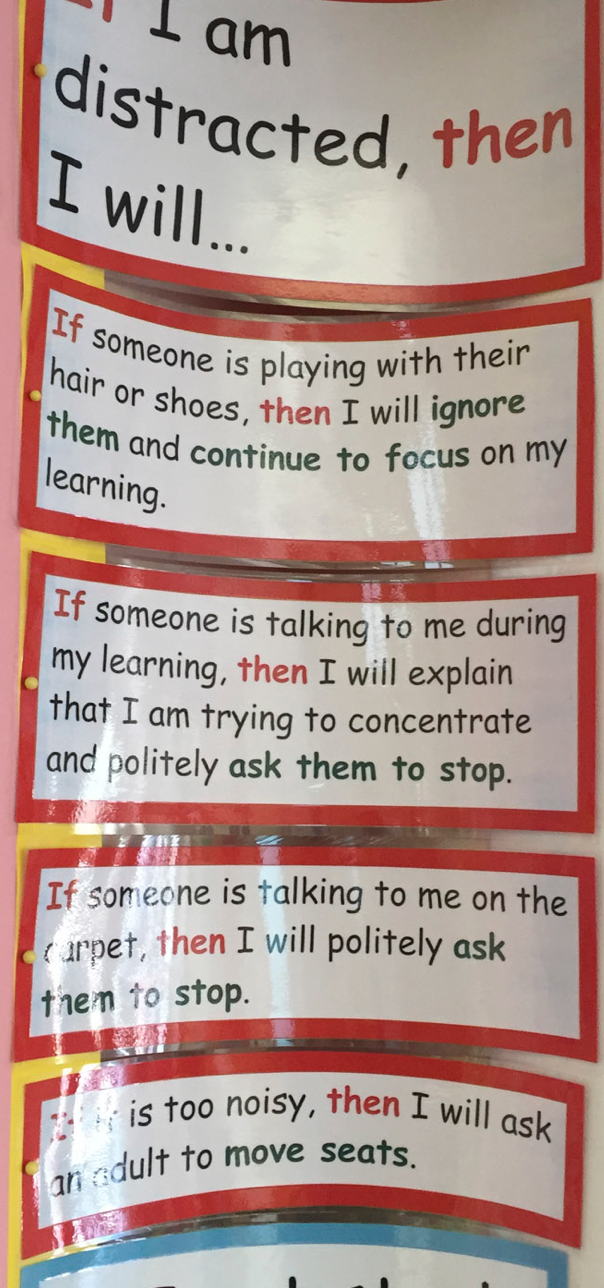
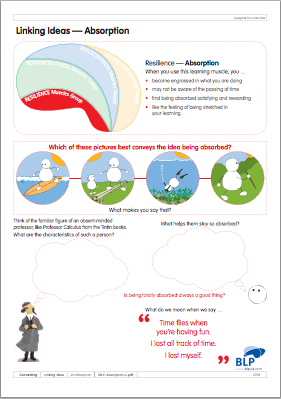









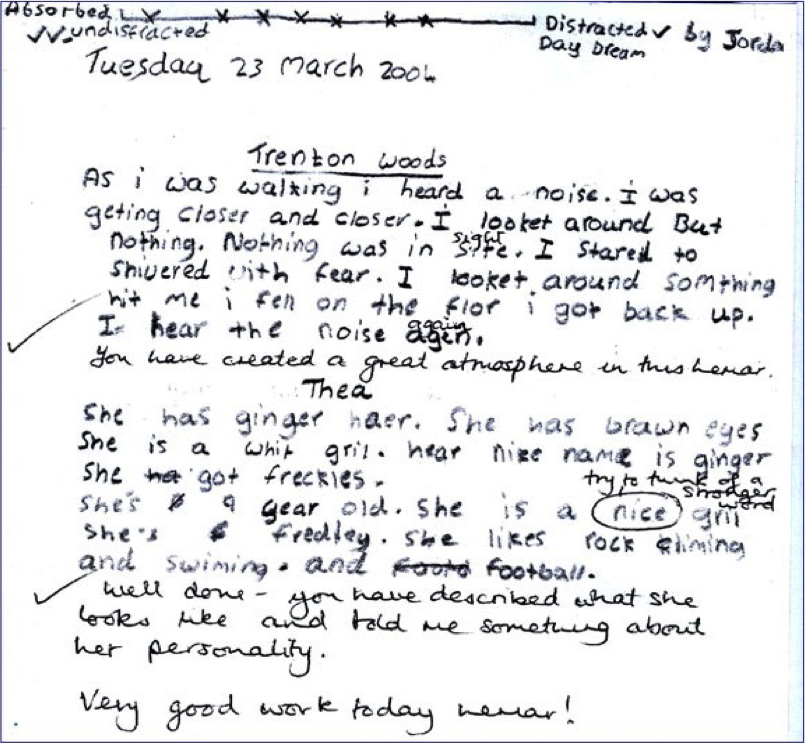









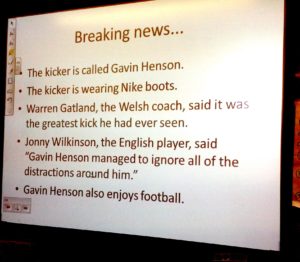


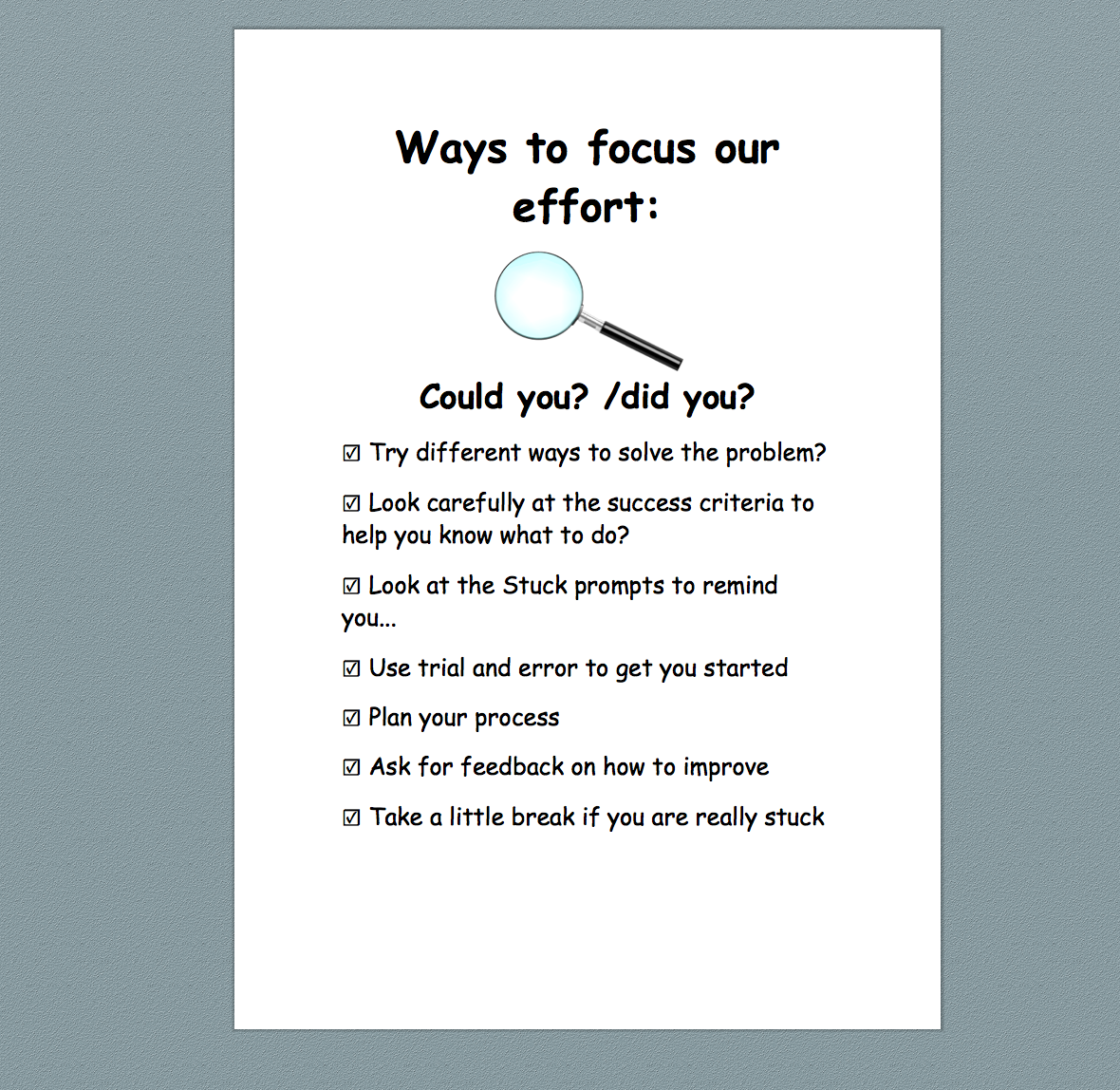


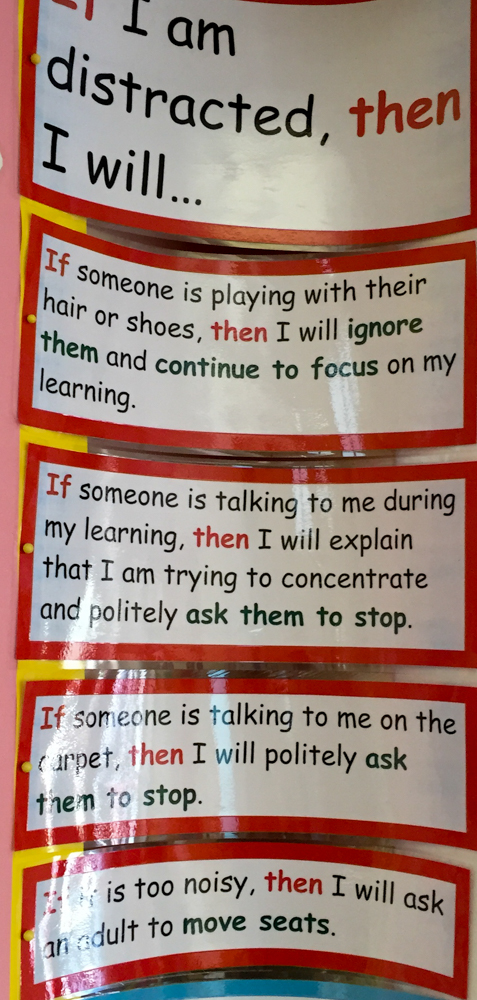





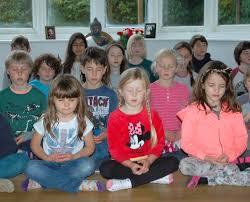











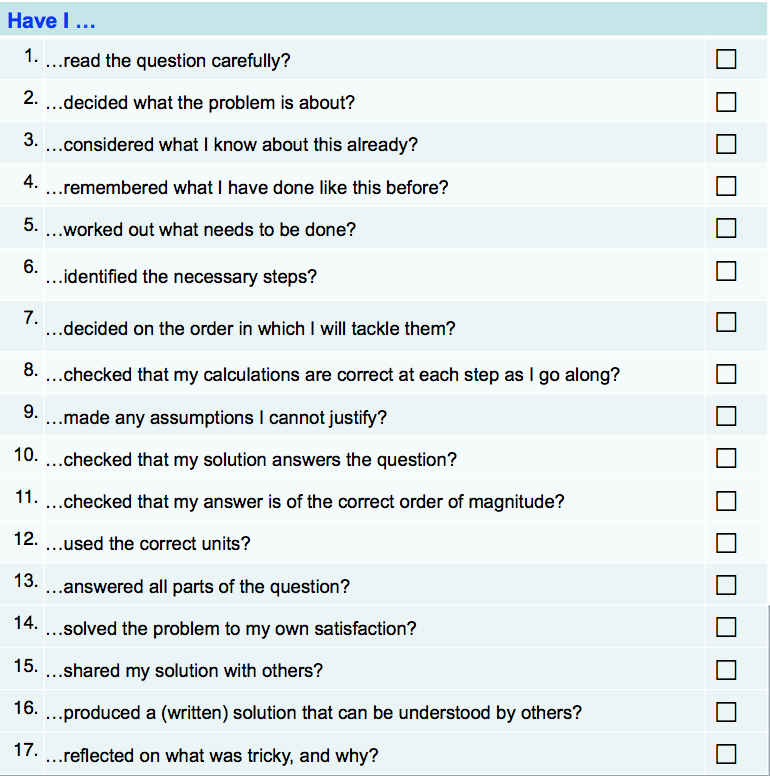
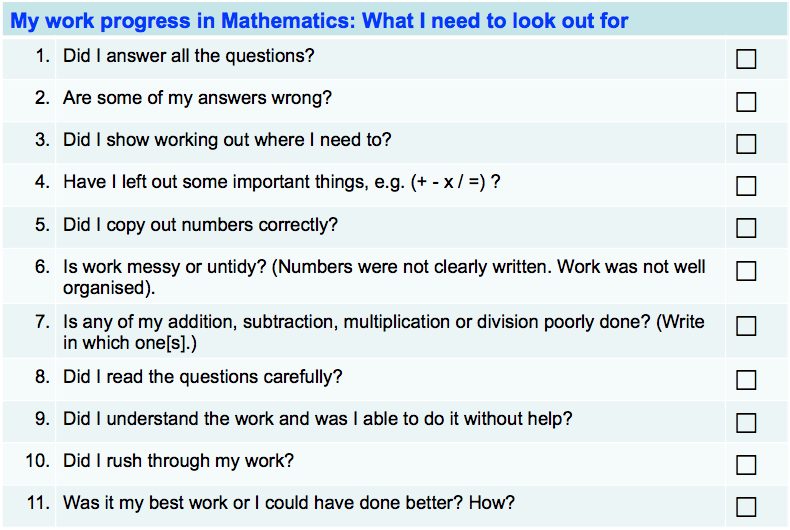









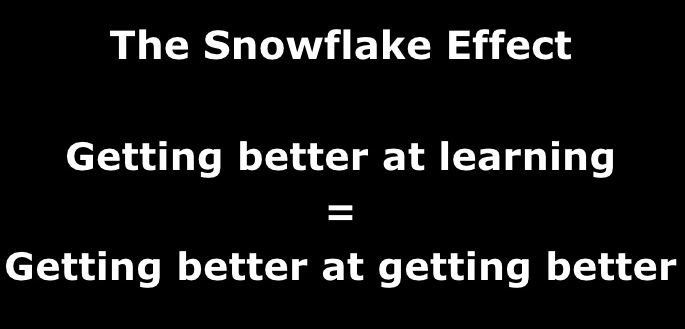

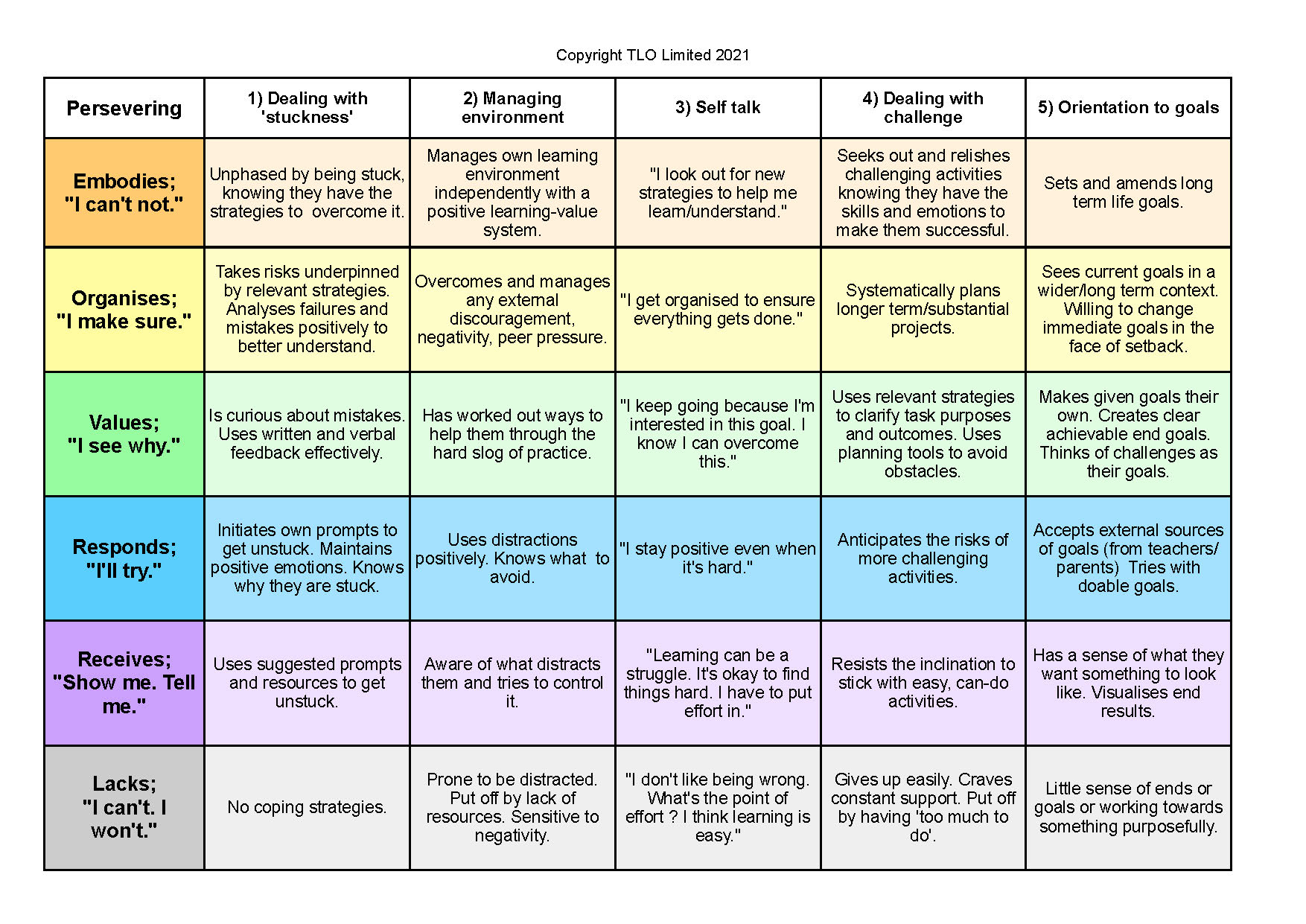




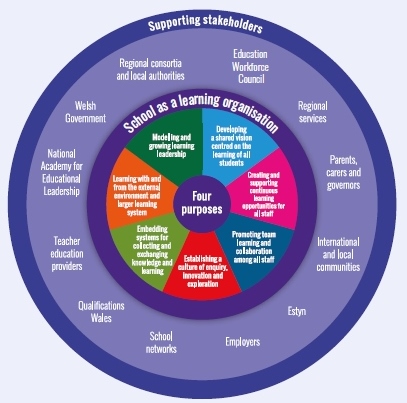
![BLP_Brain_Generic_no-Rs-[Converted]](https://www.buildinglearningpower.com/wp-content/uploads/2016/12/BLP_Brain_Generic_no-Rs-Converted-300x216.png)





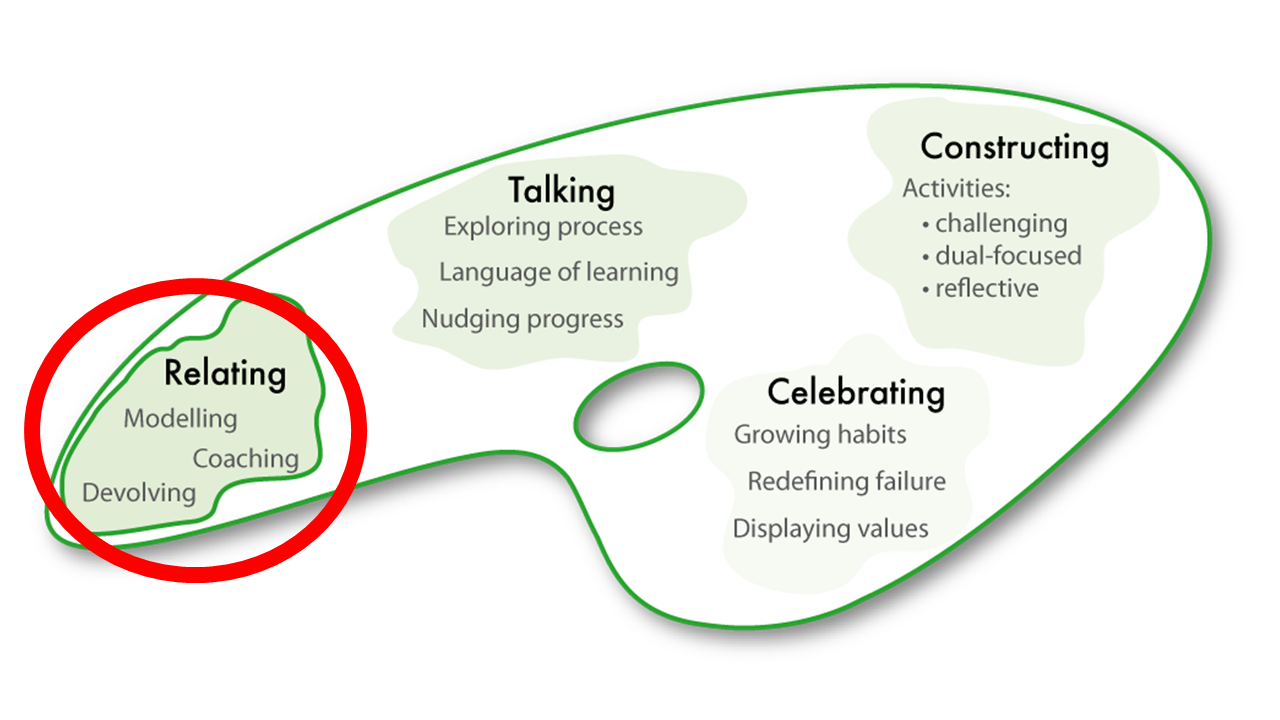
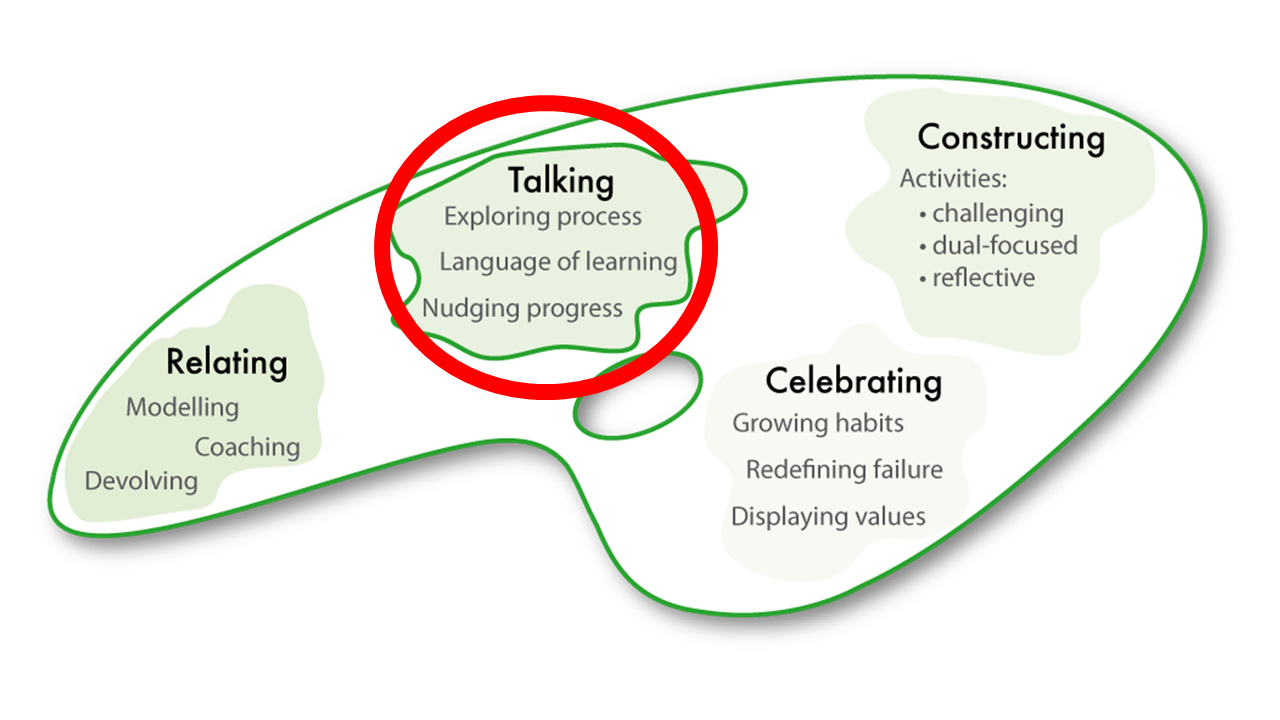
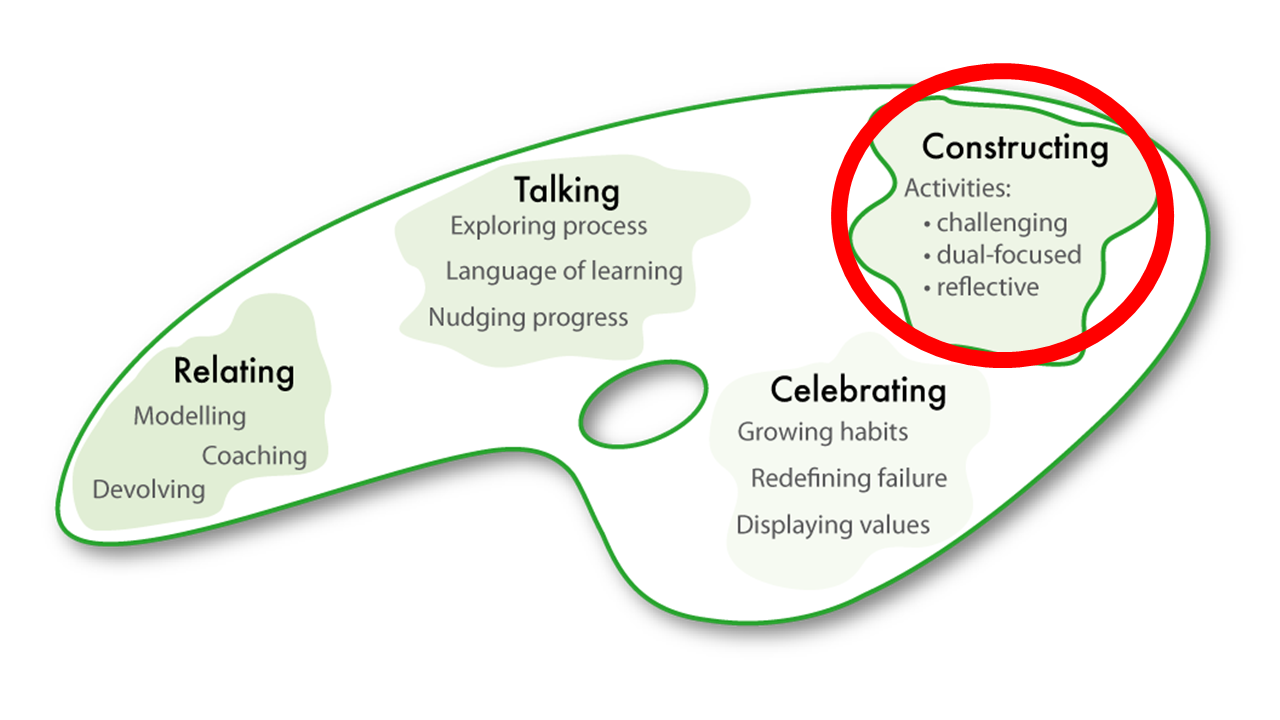
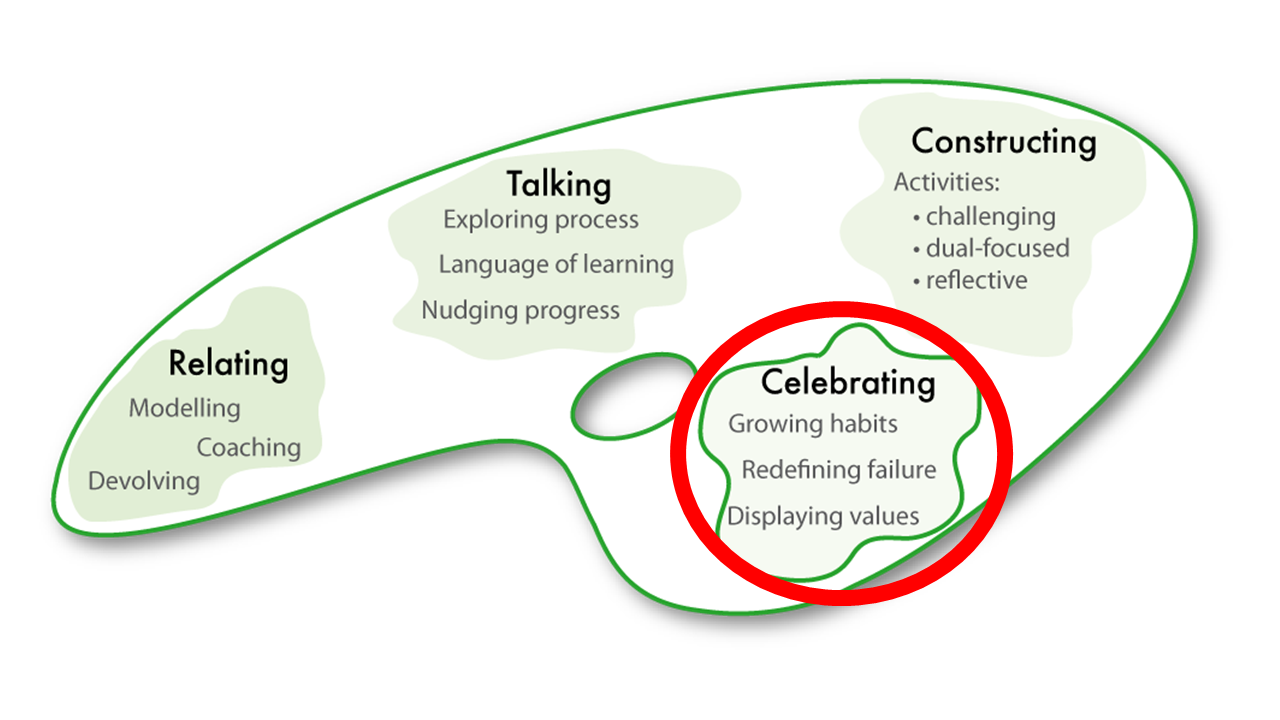
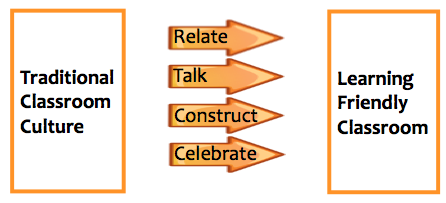



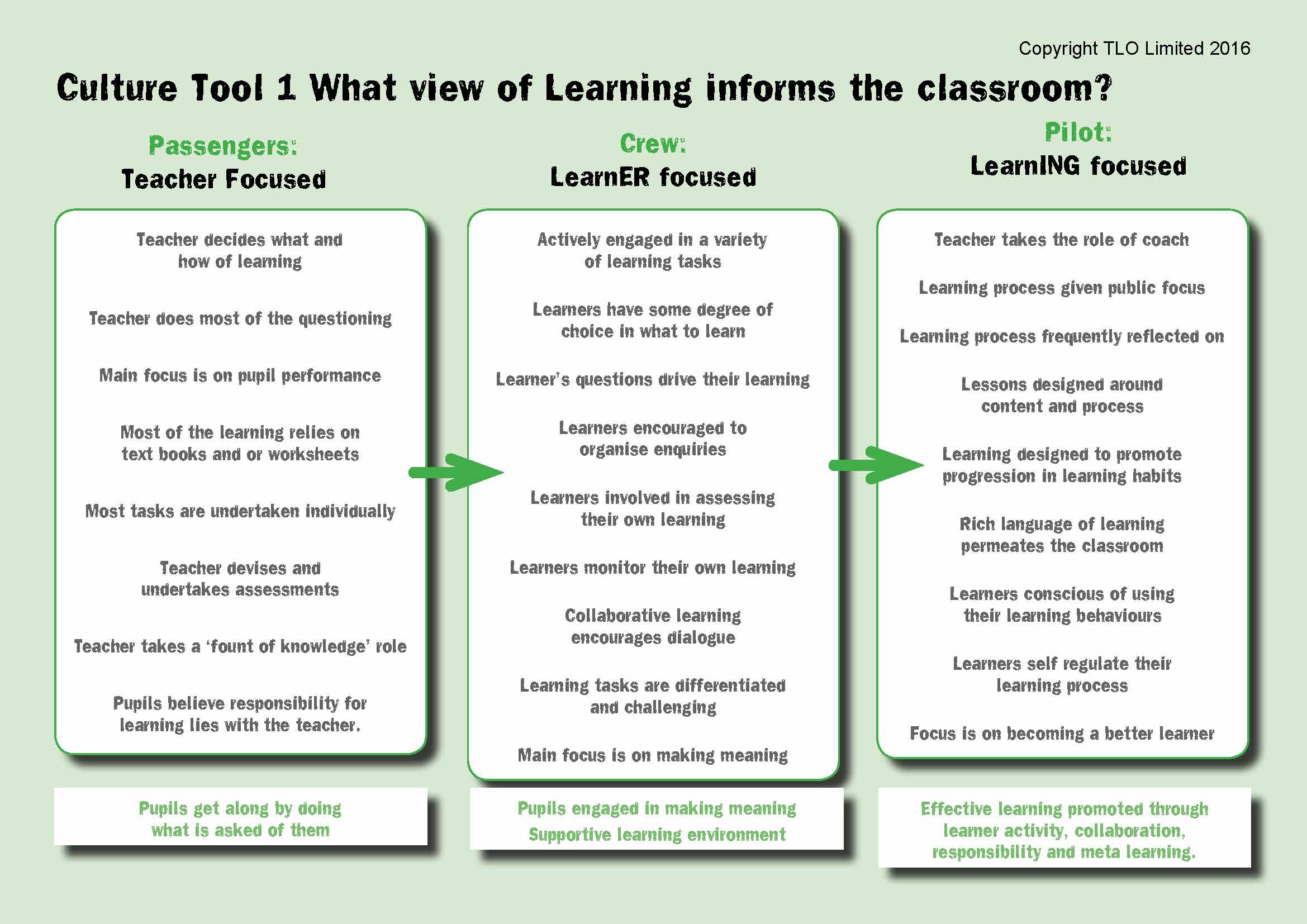
![BLP_Brain_Generic_no-Rs-[Converted]](https://www.buildinglearningpower.com/wp-content/uploads/2016/12/BLP_Brain_Generic_no-Rs-Converted.png)