3. Ideas for classroom practice
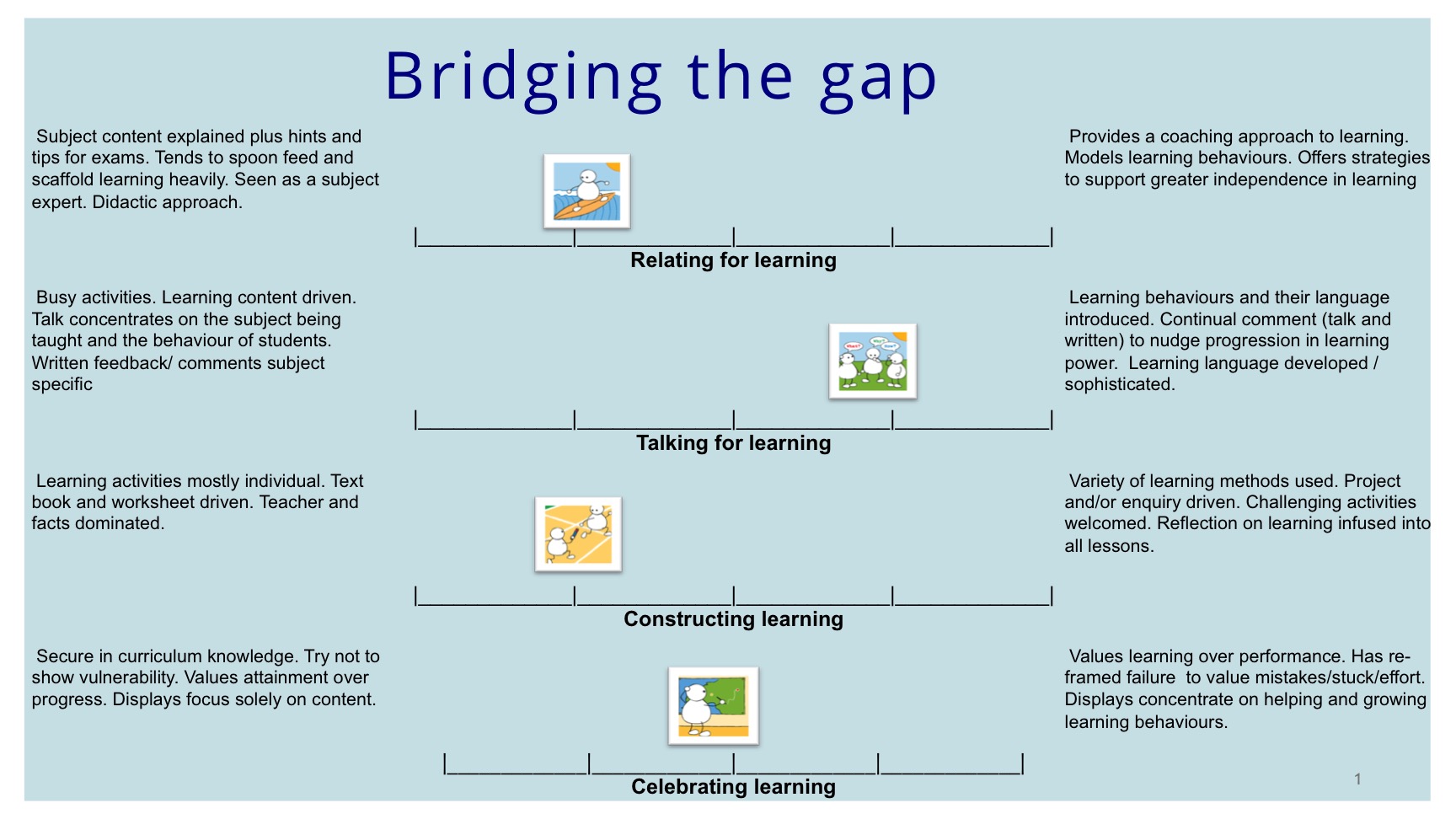
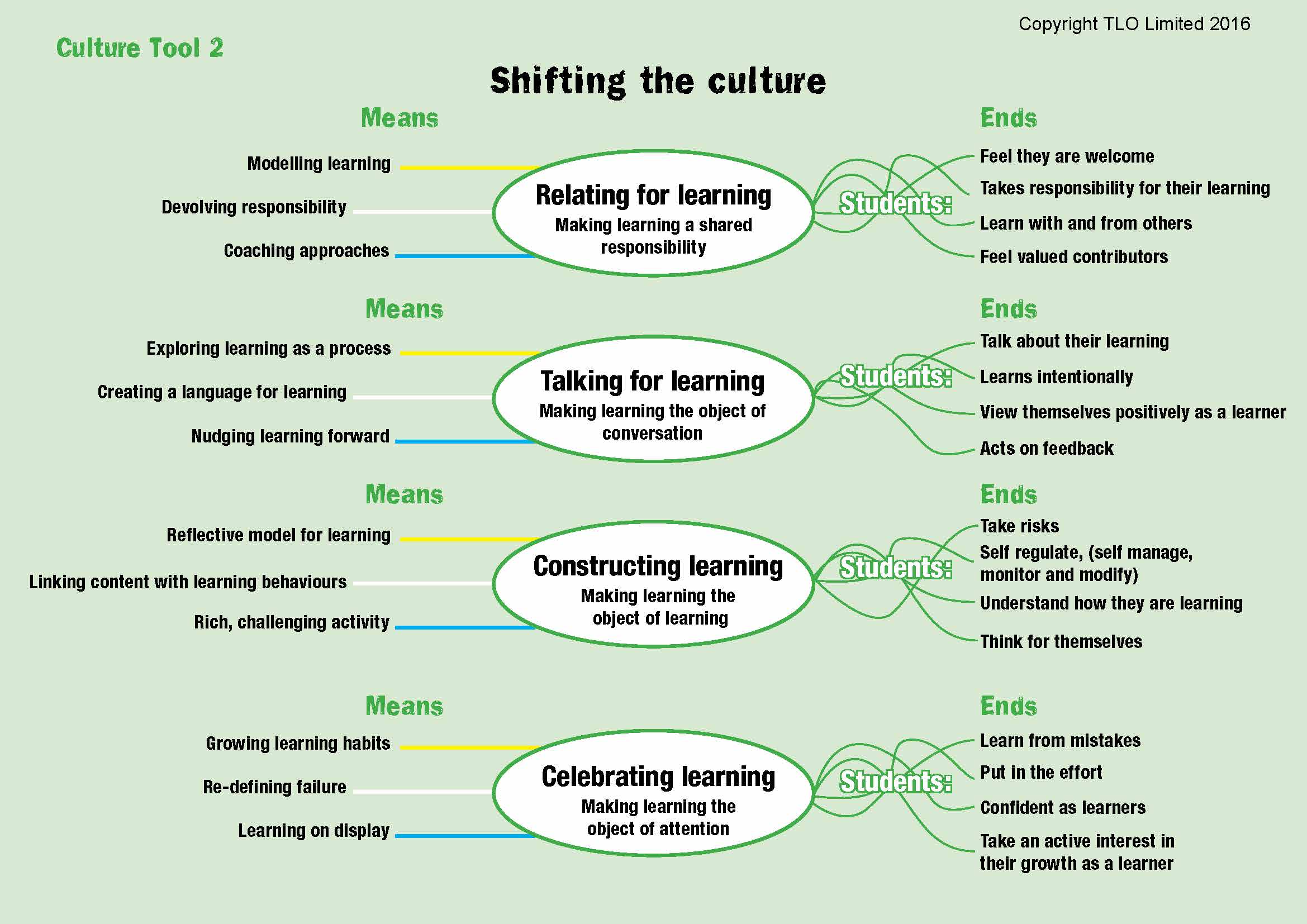
Some ideas to encourage a learning-friendly culture that supports the three aspects of Relating for Learning.
For the aspects of Relating for Learning:
- A couple of quick wins for Modelling the Learning Process to try immediately;
- A big idea to shift classroom culture in relation to Modelling the Learning Process.
- A couple of quick wins for Coaching Learners to try immediately;
- A big idea to shift classroom culture in relation to Coaching learners;
- A couple of quick wins for Devolving Responsibility to try immediately;
- A big idea to shift classroom culture in relation to Devolving Responsibility.
1. Quick wins to Modelling the Learning Process.
Quick wins to get you going.
Primary
A powerful motivator

Telling your learners about some of your own real life problems becomes a powerful motivator and a useful tool for discussing alternative plans of actions.
One way to start off the week is to share with students one or two real life problems you had to deal with over the weekend. Your students will be fascinated. It helps them to see you as human and with problems and importantly that these problems could be shared and talked about.
Secondary
Pursuing your own goals
Share something that you personally are trying to achieve, and how you are going about achieving it. Talk about plans, milestones, stumbling blocks, resources, time frames etc.
The key ideas to get over are:
- that success usually results from effort and following a planned course of action, and rarely happens ‘by accident’;
- that by thinking ahead we can influence the future.
Primary
Modelling ‘how to’

Whatever the subject, modelling ‘how to’ is given added value when linked to the learning behaviours that make for successful performance. Take on the role of an intelligent novice and model performance at a slightly higher, more coherent and informed level than is characteristic of your students. Model your ‘think alouds’.
Try the following steps for whatever skill you are modelling;
- introduce the skill e.g. how to find something in an index;
- explain the skill, explaining why the information is important;
- model the skill, showing how you do it;
- review what you have done, ask students to tell you what you did;
- reflect on the use of the skill, where else the skill can be applied.
Secondary
Modelling learning; showing what it means to be a learner
One of the first ways of surfacing learning, putting it on show, is to focus on how you are modelling being a good learner to students. Modelling is all the ways in which teachers demonstrate how they are a learner too; a confident finder outer.
- Take your students behind the scenes of learning and share with them some of the uncertain thinking of learning.
- Learning aloud is a good place to start: take pupils through how you would work out a problem. Modelling the thought processes (including emotional) that learners go through is important because a lot of the skill of learning only manifests itself in the inner world of the learner.
- Expose the thinking, feeling and decision making of a learner-in-action to help students actually see and hear how learning works.
Ask yourself:
- How much do I learn aloud– externalise my own exploratory thinking– in front of pupils?
- How much could I reveal about my own learning projects with all their ups and downs?
2. A big idea to Model the Learning Process.
Primary and Secondary
The school as a learning organisation
You have decided that you want to develop your students as emotionally intelligent learners who are cognitively skilled, socially adept and strategically aware. However, this is unlikely to happen unless teachers themselves adopt these qualities, modelling and surfacing the behaviours they wish to instil in their students.
Similarly, teachers will find it difficult to do this unless, the school, as an organisation, does itself display these qualities. Thus in adopting a focus on learning the school needs to act in ways that:
- ensures its own improvement as an organisation;
- ensures its teachers grow as confident, interdependent, risk taking professionals, who in turn..
- guide students to become self-regulating learners. It’s a cascade effect.
As John Hattie says in Visible Learning for Teachers:
“The remarkable feature of the evidence is that the greatest effects on student learning occur when teachers become learners of their own teaching, and when students become their own teachers”
A Learning School is a school that:
is Emotionally Engaged:
- Takes risks in pursuit of its long-term goals;
- Is tenacious;
- Is resilient and optimistic in the face of difficulty;
- Maintains focus on what it sees as important;
- Experiments and learns from its mistakes.
is cognitively skilled:
- Is interested in and questions how things might be different;
- Senses how things are inter-connected;
- Is efficient and methodical;
- Creates its own understandings for itself;
- Makes enterprising, opportunistic use of what is available.
is socially adept:
- Is inclusive;
- Is led by a team that consults and coaches;
- Values all contributions and contributors;
- Is outward looking and networked with other schools / professionals;
- Learns and functions as a team.
is strategically aware:
- Has a vision and plan of action to achieve it;
- Initiates;
- Monitors, evaluates and and adapts;
- Focuses the important rather than the urgent, and knows the difference;
- Understands how it learns.
Ask yourself
- How well does this describe your school?
- What might your school need to do differently?
- What might you need to do differently?
3. Quick wins to Coach learners.
Quick wins to get you going.
Primary
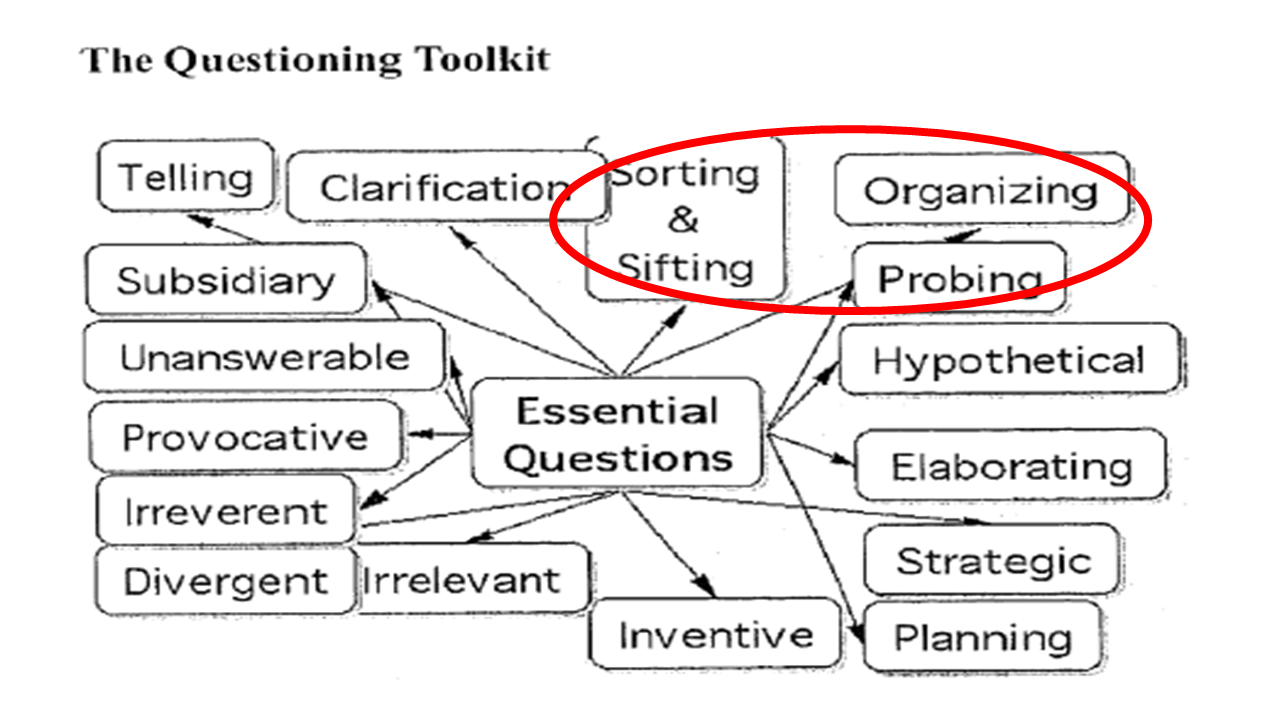
Use the ‘support to continue’ technique: questions not answers
If students freeze when they are wrestling with something they find tricky, offer supportive questions not answers. A basic support to continue is ‘What might you do next?’, and when this has been done simply ask the question again.
To extend the ‘support to continue’ approach, try using phrases like:
- What have you already tried? What else might work?
- Why is this proving difficult? What is it that you can’t do?
- What did you do last time?
- I wonder what you did to move on?
Secondary
Letting students ‘get on with it’
Experiment with intervening only when absolutely necessary – stand back, listen and watch, and let the learning happen.
Teachers are constantly walking a tightrope – when/whether/how to intervene, how much support to offer, how much challenge to inject etc. It is in these ways that teachers scaffold the learning for their students, offering just the right balance of challenge and support to keep students working towards the edge of their comfort zone. But if teachers always scaffold learning in this way, when will students develop the skills required to manage their own learning for themselves?
Primary
Encouraging pupils to slow down, notice, and appraise strategies and steps.
Becoming curious about the strategies they are using. Try asking . .
- Give it a go, you can always try another approach if that doesn’t work.
- What could you do if it goes wrong?
- What else might work?
- Where will you seek help from?
- Is this sufficiently challenging for you?
- How are you planning to go about it?
- Do you have any fall-back plans?
Secondary
From ‘I’m stuck ‘ To ‘I’m stuck because ..’
Encourage students to identify the cause of their stuckness. Move students from saying “I’m stuck” to ” I’m stuck because…” Naming the problem will often suggest a reasonable next step.
It’s also useful at this stage to insist that students can’t call themselves ‘stuck’ unless they have tried to apply at least 1 solution.
In the early stages this is a strategy for becoming unstuck, but over time as students’ internalise and use ‘I’m stuck because‘ it develops into a self-coaching strategy.
4. A big idea to Coach learners.
Primary and Secondary
Coaching approaches
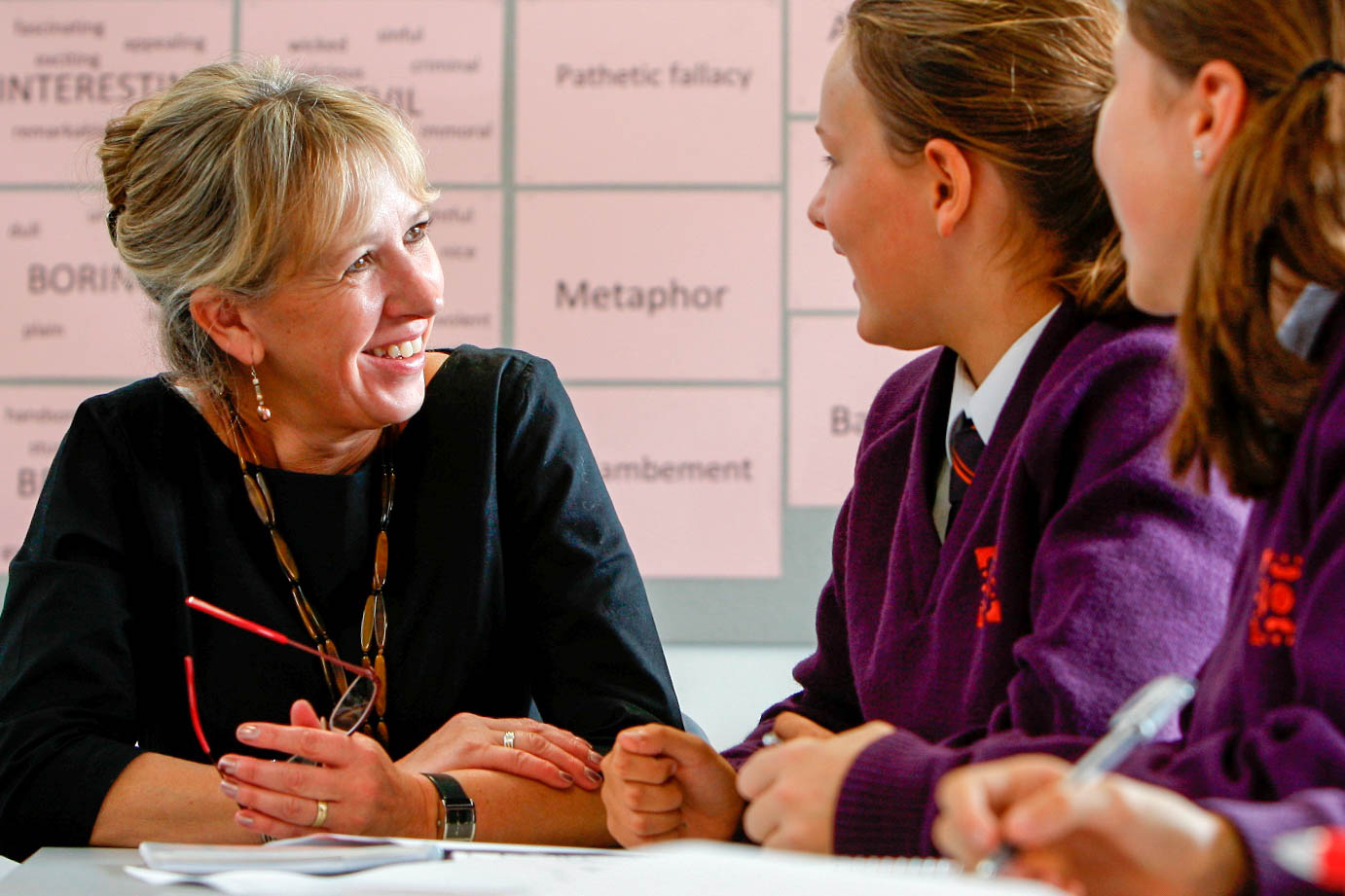 “Expert tutors often do not help very much. They hang back, letting the student manage as much as possible. And when things go awry, rather than help directly they raise questions: ‘Could you explain this step again? How did you… ?’” (Mark Lepper)
When we are curious we are genuinely interested in learning. Curiosity lies at the heart of coaching, hence coaches are effective listeners and ask questions to open dialogue without sounding like an interrogation. Coaching aims to enable people to see what they are doing more clearly and discover their own ways to improve. A coaching approach:
- helps people to explore their challenges, problems and goals
- provides an objective view of peoples actions to enable them to see things as as they really are
- enhances motivation and raises self esteem
- builds curiosity and encourages learning
Above all, coaches resist offering solutions. Offering solutions does little to secure learning as the student hasn’t been allowed to confront and engage with the problem and find their way forward. Learning powered teachers adopt a coaching role.
- What is the balance between telling and coaching in my classroom currently?
5. Quick wins to Devolve Responsibility.
Quick wins to get you going.
Primary
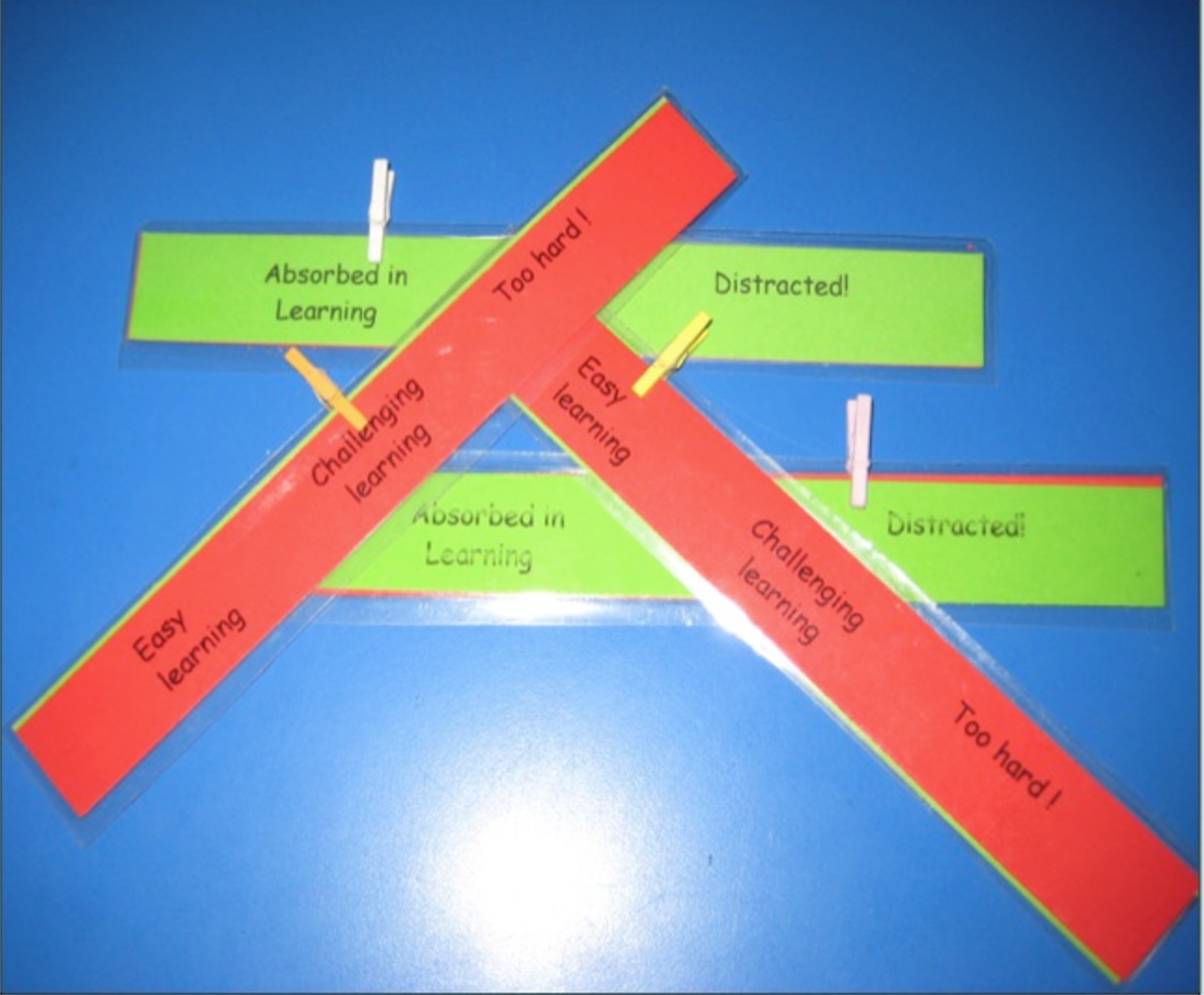
Students monitoring their own learning climate.
A bit of laminated card and a clothes peg. Absorbed or Distracted? Too Easy or Too Hard? Stuck or Doing Fine? Interested or Bored?
The beginnings of moving the responsibility for monitoring towards the learner.
Secondary
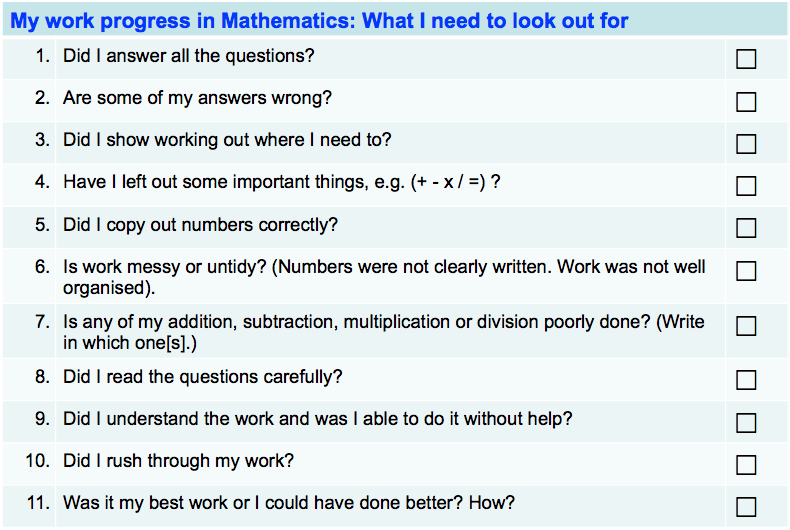
Students monitoring their own work.
Share, or better still, agree with students the success criteria. Design a checklist for students to use to keep an eye on how it is going, to be used as an aide-memoire while working and as a final check before assessment.
Primary
Stuck Posters
Without strategies for getting unstuck, it is inevitable that students turn to you for help – “! can’t do it”!
Design and agree a stuck poster and insist that students try things from it before seeking help from you. It shifts responsibility for getting unstuck away fro you and towards the learner.

Secondary
Stuck Posters . . . need to ‘grow up’.
Older students should have a wider range of unsticking prompts than younger ones.
In case you are wondering, WWILLWIF stands for ‘What Will It Look Like When It’s Finished’ – visualising the end product in order to ‘see’ what needs doing.
6. A big idea to Devolve Responsibility.
Primary and Secondary
Devolving responsibility
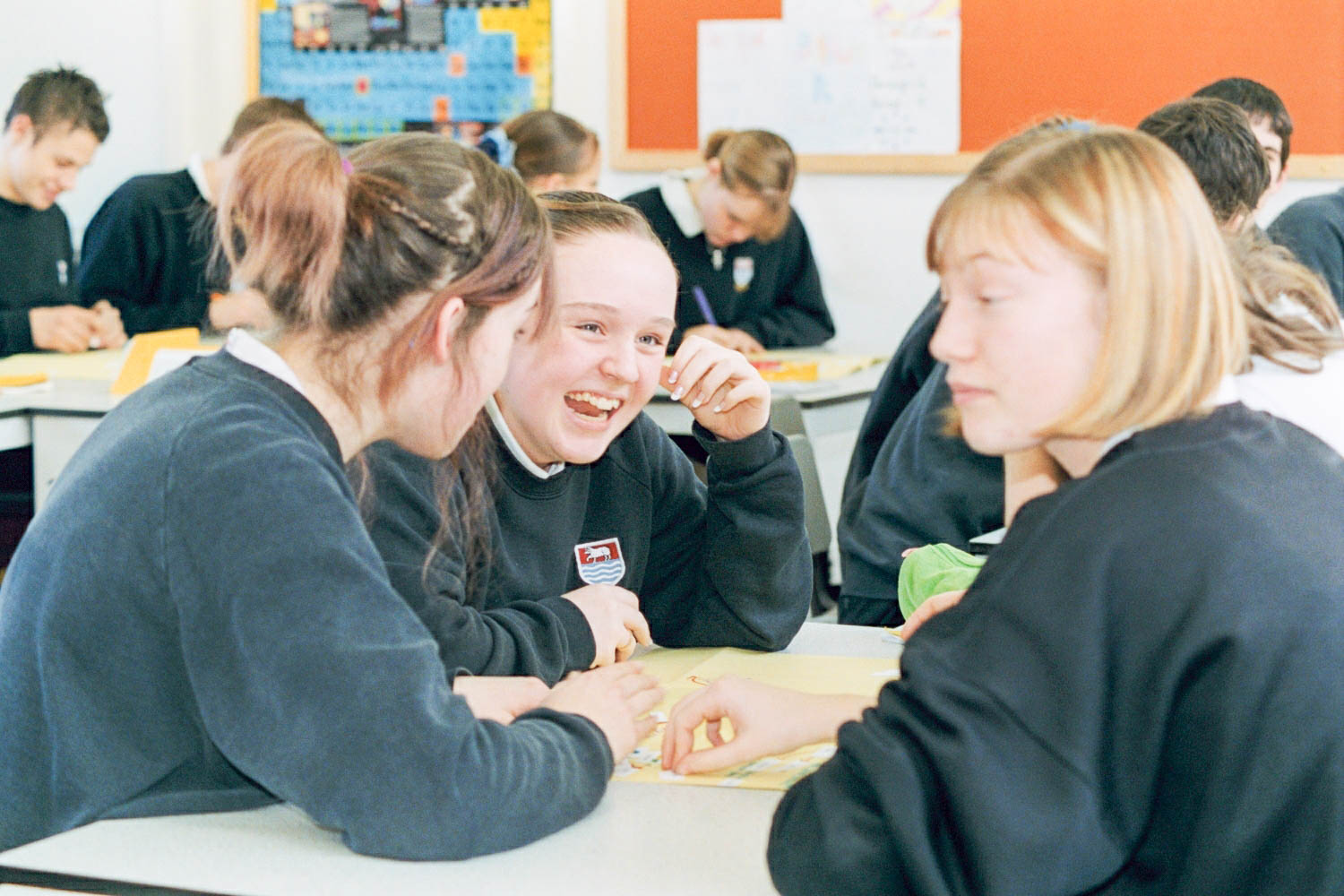 Another important way of surfacing learning is to let students do more of it; to become more active in the learning process. Active learners are not only offered more opportunities to decide what to do, but are also actively learning through the explicit review of their own experience.
The focus on students’ activity is learning rather than performing, hence the teacher makes sure that:
- there’s plenty of collaborative activity, since this helps students to see each other as resources (not rivals) for learning
- students can make choices about what and how to learn (high levels of learner autonomy)
- students experience failure as a necessary and useful part of learning (tolerating uncertainty, mess, error and initial failure)
- students are given a chance to talk more – and adults talking less
- students experience more open-ended activities – and create their own
- students have more opportunity to spend longer on an activity, to feed their interest/engagement in it
- students establish high-level goals for their own learning, based on challenge and quality feedback including their own
- students have access to learning experiences that are under- rather than over engineered, with elements of ambiguity
- students can decide on admissible outcomes
This shift to more learner involvement offers deep professional satisfaction and a new set of learning relationships.
Ask yourself:
How many of the above do I use in order to enable my students to become better learners?
How frequently do I offer such opportunities?
Primary and Secondary
What do you think?
- Have you considered the importance of making learning a shared responsibility in order to avoid creating a dependency culture?
- Which aspects of making learning a shared responsibility are already embedded in your classroom culture?
- Which aspects might need attention?
- To what extent does the balance of responsibility reinforce or undermine your commitment to building better learners?
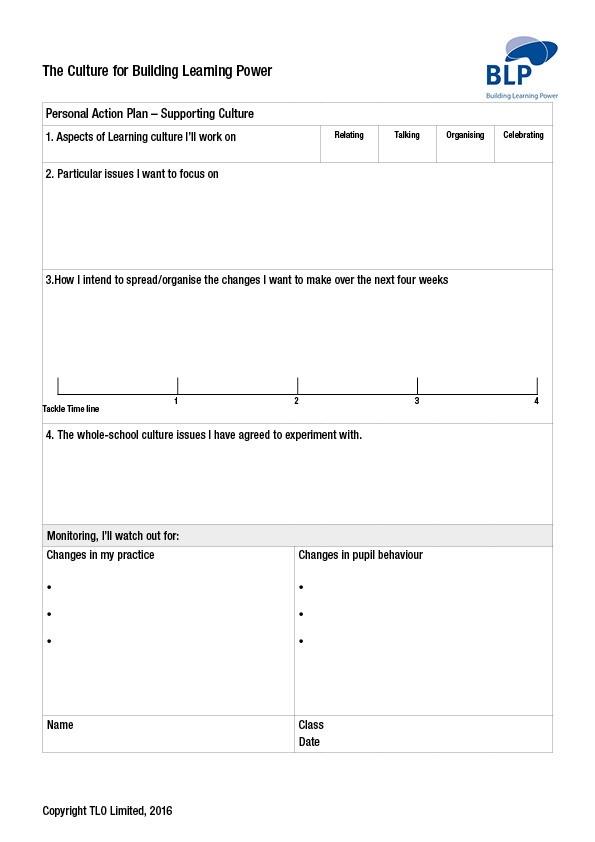
Make a note of…

- One thing you could easily do differently in your own classroom to further share responsibility for learning.
- How you will monitor the impact of this change.
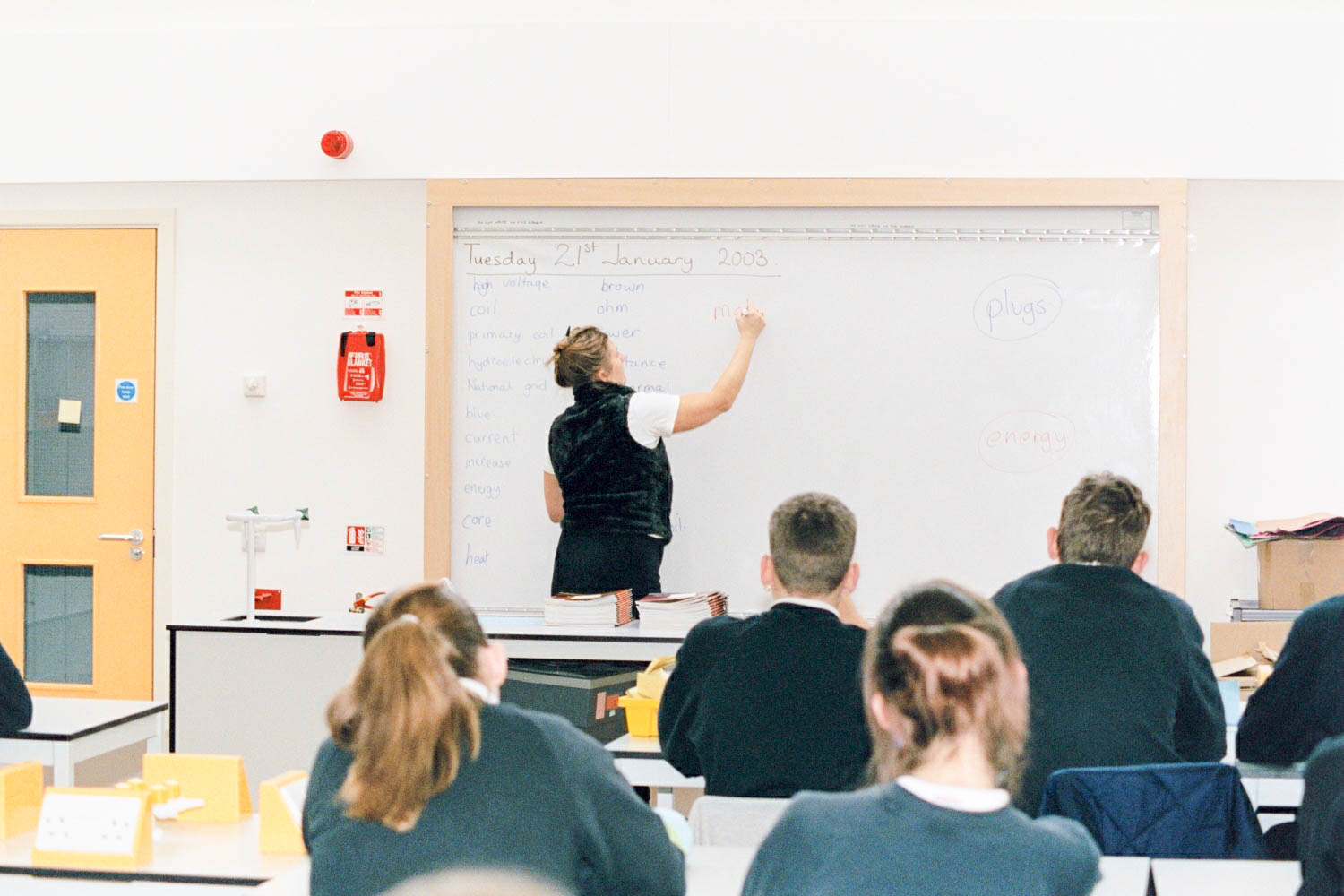
 Your students spend much of their time watching you teach a subject… be it Maths, or Science, or History or . . . .