find pleasure in seeing how things fit together, make patterns
connect new ideas to how you think and feel already
look for analogies in your memory that will give you a handle on something complicated
The purpose of Building Learning Power is to facilitate the growth of high value psychological characteristics in order to strengthen students’ learning characters. These skills, attitudes and values, when used with increasing competence and confidence across many learning opportunities, become learning habits; the characteristics of successful lifelong learners.
‘A person’s Learning Power determines, even dictates, their propensity for change, and directs those behaviours that influence and underpin performance throughout life.
The power to learn is the essential ingredient in implementing strategies for change i.e. to learn.‘
The activities, think pieces and questions in this online unit aim to help teachers make a start on:
introducing students to one of the key learning behaviours;
using the language of learning effectively with students;
designing the use of learning behaviours into the way they teach;
developing the confidence and skill in helping students to grow their learning power.
tolerate feelings of apprehension, frustration or confusion without getting upset
recognise that learning can be a struggle
keep on going despite difficulties and find ways to overcome them
The purpose of Building Learning Power is to facilitate the growth of high value psychological characteristics in order to strengthen students’ learning characters. These skills, attitudes and values, when used with increasing competence and confidence across many learning opportunities, become learning habits; the characteristics of successful lifelong learners.
‘A person’s Learning Power determines, even dictates, their propensity for change, and directs those behaviours that influence and underpin performance throughout life.
The power to learn is the essential ingredient in implementing strategies for change i.e. to learn.‘
The activities, think pieces and questions in this online unit aim to help teachers make a start on:
introducing students to one of the key learning behaviours;
using the language of learning effectively with students;
designing the use of learning behaviours into the way they teach;
developing the confidence and skill in helping students to grow their learning power.
You could consider the behaviour-specific improvement indicators for the learning habit you were improving. (i.e. as shown for this behaviour in section 5c below)
3. Recapping on-line materials
What did we think of the materials? ( 15 mins)
Reactions to
The Xxxxxxxx grid
Where students are secure
Where the students could be when they leave secondary school
Activities and talk ideas
4. Planning what to do
What do we need to do next? ( 10 mins )
Decide
Which ideas should we all adopt as a school strategy?
How the progression of xxxxxxxx should be built across the school. ie how the phases of xxxxxxxx might play out against key curriculum stages and even year groups.
5 Personal action planning
What am I going to do? ( 20 mins )
5a Consider
how you want your students to improve/develop/enhance their approach to persevering ?
what you are going to do to bring this about?
develop your enquiry question.
Think of it like this…
If I do XXXX will it improve/develop/enhance YYYY
This is the crunch question. Your students are unlikely to change unless you change!
Looked at your students through the lens of the Xxxxxxxx learning chart
Gained a sense of what becoming better at Xxxxxxxx looks like
Explored a range of ideas and activities that will help to engage students with Xxxxxxxx
Now we look closely at how to blend improving students’ xxxxxxxx into the content you have to teach.
A. The principles behind any learning powered lesson
B. Big questions to ask about lesson design
Learning habits form through use and practice, but desirable habits survive and flourish better if students are aware of them, realise their value and strive to improve them. The curriculum through its lessons provides the rich and varied occasions for exercising learning habits.
A. The principles behind any learning powered lesson
Think of yourself as a learning power coach, helping your students to help themselves to develop their learning habits. Hence your lessons are much more likely to contain challenges and activities that get your students thinking and learning for themselves. You encourage students to explore challenging questions, problems or assertions and become observers of their own learning. You step back from telling and heavy scaffolding and instead try to mobilise your students’ learning behaviours. You are organising learning to let them take the strain.
The SIX principles that lie behind teaching for learning power
1: Visible learning…Surfacing learning
You make it clear to students which learning habits and processes they are using. You try to make every aspect of the learning process as visible as possible through the language you use and through the words and images you display on the walls.
For example:
Develop ‘stuck prompts’ together
Work with students to find useful questions to ask themselves and helpful strategies for them to use when they are stuck.
Ensure that there are plenty of options that come higher on the list than “Ask the teacher”.
Create stuck prompts as reminders around the classroom.
These are, in effect, low-risk, low-investment levers for creating a shift in students’ sense of what is valued, what is normal, and what is the point of their learning — and thus in the quality of their engagement.
2: Dual focus teaching…blending content and process
You design activities that combine the dual objectives of ‘what’ will be learned and ‘how’ it will be learned. You make sure students know that the content they are learning is a way of giving their minds a useful workout. (The content is the vehicle for learning)
For example:
Set goals with learning in mind – shift the way you plan.
All your lessons have always had two purposes:
to have learners acquire some knowledge, skills or understanding;
to use some learning behaviours to access the knowledge/understanding or to practise the skills..
…although you may not have been fully aware of the learning behaviours that are being invoked.
As you become more deeply aware of learning behaviours you will think through lesson planning a bit differently:
the learning behaviours that could be useful for getting to grips with the content;
how the design of activities /tasks will best stimulate these behaviours;
how learners could be made more aware of these behaviours;
how learners could be enabled to reflect on and evaluate their use of these behaviours.
In other words, the goal of the lesson would then have overt content and learning dimensions.
In planning terms, you have made a shift from thinking;
From ‘what do I have to teach and how am I going to teach it?’
To ‘what do students need to learn, how will they best learn it, and how am I going to orchestrate that learning?’
3: Emotional engagement…Capturing attention
Your lessons are designed to intrigue your students. Students don’t put in the effort unless their energy and attention are captured by what they are doing. You capture your students’ emotional engagement by giving them more of a stake in the process of learning.
For example:
Start lessons with a grapple task
A good grapple problem is challenging. It’s something that the students might have an idea about but might entail something they haven’t come across or done before. A good grapple task centres on learning that is just beyond the students’ reach/experience. They give students a chance to wrestle with the problem before they have been taught methods for tackling it. They are allowed to solve it in any way they want and in doing so they are discovering their own approaches and exposing their own tricky bits.
Blend grapple tasks with Think Pair Share…giving time to think by themselves, share ideas with a partner before discussing it more widely. By using grapple tasks you are getting the students:
to build resilience;
to develop problem solving skills;
enhance collaboration and listening;
cultivate ‘having a go’;
lessen fear of mistakes.
Don’t forget to discuss which strategies were used, which were successful/effective and why.
4: Handling uncertainty…Challenge
You have realised from your own life that what is engaging tends to be what is challenging. Since you see education as a preparation for a learning life, you help students to learn how to handle increasing degrees of complexity and uncertainty.
For example:
Use a range of ways to support challenge
Make positive connections between making mistakes and challenge
Model how to think about and work through challenges
Create a challenge wall; put up questions, extension tasks, riddles, problems. A go-to place for another challenges when other learning is finished
Display work that shows students have improved mistakes etc.
Stimulate different ways of thinking by using what are known as ‘Stingray’ questions…What if...(something they thought they knew is looked at from a different angle – What if the Moon’s gravitational pull disappeared? What if Germany had won the First World War? How would the country look if everyone went Vegan?)
Use the Nando’s Peri-ometer as a visual aid to support the ranking of tasks by level of challenge, and allow students to select the level of challenge that they wish to undertake.
5: Relationships…Working together
Learning is both a sociable and a solitary activity, and you offer your students opportunities to experience both. You develop interdependent learners who know how to handle themselves in collaborative groups and able to move around in the social space of learning to best effect.
For example:
Help students to learn how to share their ideas with others.
Many students find it hard to share their ideas with others – in group situations, they seem to get swamped by the louder, by the more assertive, by the quicker thinkers. So they stop trying and become reliant on the ideas of others.
To develop students’ inclination to share their ideas, nudge them with:
What do you think?
Tell your friend what you are thinking?
What do you know about this?
Tell us about . . .
Who would like to tell us . . . .
What does xxx think
Say what you think
Who haven’t we heard from yet?
6: Reflection and responsibility…Taking charge
You understand that students have to learn how to manage and organise their own learning and that the way to do this is by giving them increasingly demanding opportunities to do so. You orchestrate students taking charge of their learning by expecting them to plan what they do, distil meaning from it, and revise it accordingly.
For example:
Make reflecting on persevering part of everyday lessons
Learning Mats
Learning mats are A4 laminated sheets that show various aspects of a learning habit. Keep them on desks/tables or as part of a wall display.
Students refer to them during lessons, using them as prompts about the finer aspects of a learning habit that is being stretched.
A checklist for lesson planning based on these six principles.
Does the lesson plan:
Make it clear to students which learning behaviours are being activated?
Match and blend the learning behaviour with content?
Include a tactic to captivate students’ attention?
Have sufficiently challenging learning activities to sustain interest for all?
Offer choice on how students could interact on these tasks?
Embed aspects of planning, reflecting and revising for content and process?
What do you think?
Which of these six principles are a regular feature of your planning?
What do you make of principle 2? Is it the most tricky of the six? The following section B is mostly about this aspect of planning.
Look at the checklist in the green box above this one: Do your lesson plans capture these six aspects of an effective learning experience?
Make a note of…
Which of the six principles might need to be given greater prominence in your planning.
B. Big questions to ask about lesson design.
What we teach and how we teach it (the enacted curriculum) are intertwined and offer teachers a lot of freedom. It is here that you can start applying a learning power filter and deploy a unique combination of content and learning tasks.
In conventional lessons where the teacher remains the focus of attention and the initiator of all activity, and where the epistemic dimension (the conditions for acquiring knowledge) is not acknowledged, students gain habits of compliance and dependence, rather than curiosity and self-reliance.
In developing learning power, teachers are making conscious choices about which habits to introduce and stretch and how best to couple these with content so that lessons become more interesting and challenging. Through such overt coupling of content and specific types of process, students come to know, understand and take control of their learning behaviours – they knowingly use and develop the whole range of learning behaviours.
All lessons function on two levels, they have twin intentions. On the one hand there is content to be acquired, and on the other there are learning behaviours to be exercised in pursuit of this content. The factor that differentiates a standard lesson that effectively ‘delivers the content’ from a learning powered lesson is that the teacher has to think, in advance, about:
the learning behaviours that are necessary for successful content acquisition;
the design of activities /tasks that will stimulate these behaviours;
how learners could reflect on and evaluate their use of these behaviours.
In designing such lessons you have to dare to think differently and flip round your usual lesson design thinking.
A turn-around in lesson design
Think in two dimensions at once – the content dimension and the learning behaviour dimension. It means turning your thinking around – from teaching to learning.
Or put another way
Think to yourself;
what content?
using which learning behaviour(s)?
via an activity to stretch both?
Lesson design questions… one by one
Here the general rules of lesson design have been related to the learning behaviour…xxxxxxxx.
Stage 1. What content do students need to learn?
What content has to be learned? …..Think outcomes.
Use standard lesson planning tools:
What are students going to be able to do/learn?…think objectives
How will they know if they been successful?… think success criteria
While keeping an obvious eye on
What do they already know?….think previous learning.
Stage 2. How will they best learn it?
Using which learning behaviours?
This is the new bit
Not the usual second step but nonetheless a vital second step where the aim is to weave content acquisition with learning behaviours. The content is the vehicle for exercising the learning behaviours and the learning behaviours accelerate the content acquisition.
Using which learning behaviours?…Think types of learning behaviours
Which learning behaviour(s) will help these students get closer to understanding this content?…think learning behaviour charts.
Which aspect of, say, xxxxxxxx, lends itself to achieving these outcomes?…think progression columns.
How skilled are these students in using this learning behaviour …think progression phases/rows
Say something like this to yourself .…My students need to achieve xxx. At this stage we could get closer to this content by using xxxxxxxx. Most of my students are able to use xxx phase (e.g. respond/blue) xxxxxxxx approaches confidently.
Stage 3. What type of task/activity will stretch the learning?
Which type of task…Think types of task.
Pick up your thinking from stage 2;
My students need to achieve xxx. At this stage we could get closer to this content by using xxxxxxxx. Most of my students would be able to use xxx phase (e.g. blue/responds phase) xxxxxxxx approaches confidently.
And now think about the sort of task/activity you might develop/design so as to:
orchestrate a problem-solving activity to enable students’ understanding of xyz content without telling them;
intrigue them with something that is open to several interpretations;
stimulate their curiosity;
grab their attention…visually and aurally;
allow them to stay stuck before you ask them how they are thinking;
offer as a nudge to get them thinking differently that doesn’t give the answer away;
leave it as a problem hanging in the air to which we will return later;
make links between the challenge, and what and how we are learning in this lesson.
The challenge isn’t about the inherent complexity of the subject matter but about how the content is orchestrated to encourage students to use their learning habits to resource their solution.
Think…what/how much information/content do I need to give/reveal? At what point? In what form? To what end?
Say something like this to yourself .…
my students need to achieve xxx.
at this point we could get closer to this content by using xxxxxxxx.
most of my students are able to use xxx phase (e.g. respond/blue phase) xxxxxxxx approaches confidently.
What type of task would stretch their xxxxxxxx but assist them with the content…without me just telling them!
To summarise…the heart of the lesson
It’s the question ‘using which learning behaviours?’ that causes you to think differently about the lesson planning.
You ask – as always – what are the anticipated objectives/intentions?
The verbs in your resulting objectives will give you clues about the types of task/methodology that will get students there and the sorts of learning behaviours your students will need to contribute to this learning endeavour.
You are designing the task in a way that requires students to contribute their learning ‘powers’ / behaviours. The tasks you design will hook into their learning ‘powers’ and help them to improve them.
Say something like this to yourself:
I am going to think content, learning behaviour and task together:
Xxxxxxxx will help students to better access the content;
The aspect of xxxxxxxx (column) and phase (row) that would fit best is (for example) “Use relevant strategies to clarify tasks/outcomes and planning tools to avoid obstacles.” (Dealing with Challenge column, Green phase).
The type of task/activity that would best stretch both content and learning behaviour, intrigue, challenge, bring people together and give responsibility to students is………
Think….what information do I need to reveal/give, in what form, at what point, and what do I want students to do with it?
What do you think?
What strikes you about this way of planning with learning behaviours in mind?
Where are the potential stumbling blocks?
How will you decide which learning behaviour(s) you are going to foreground in your objectives?
Consider a lesson you are about to teach…
What is the content?
Which learning behaviour(s), if missing, would make accessing the content very difficult / impossible?
How could you blend reference to this learning behaviour(s) into the learning objectives?
Can you design a task that will help students to access the content and exercise the key learning behaviour(s) you have identified?
As teachers we are in the habit-forming business. What we say, what we display on classroom walls, what we celebrate, praise or dismiss, what we model or how we design learning activities will all influence the ways in which pupils learn, perform and behave. Classroom cultures have a huge influence on pupils’ learning.
Five big shifts to get you started. Ask yourself – how might you:
Support and encourage pupils to step into risky, challenging areas of learning;
Offer students the skills and motivation to create and achieve their own goals;
Help students to overcome and control the negative emotions of learning;
Build reflection in and on learning a regular feature of classroom activity;
Nourish, guide and support students to become confident independent learners.
“Attention can be broken when learning gets blocked, but good learners have learnt the knack of maintaining or quickly re-establishing their concentration when they get stuck or frustrated. The quality of stickability or xxxxxxxx is essential if you are going to get to the bottom of something that doesn’t turn out as quickly or easily as you had thought, or hoped.
If you get upset and start to think there is something wrong with you as soon as you get stuck, you are not going to be able to maintain engagement.
Instead, all your energy will go into trying to avoid the uncomfortable feeling, and this may mean drifting off into a daydream, creating a distraction, or blaming somebody else. A great deal of classroom misbehaviour starts this way. If students were better equipped to cope emotionally with the inevitable difficulty of learning, they would mess about less. There is a range of things that teachers can do to strengthen students’ stickability.
Building Learning Power, Guy Claxton
Xxxxxxxx is often undermined by two common and erroneous beliefs. The first is that learning ought to be easy. If learners think that they will either understand something straight away, or not at all, then there is simply no point in persisting and struggling. The second is that bright people pick things up easily, so if you have to try it means you’re not very bright. Clearly the idea that effort must be symptomatic of a lack of ability makes persevering an unpleasant experience. Good learners develop xxxxxxxx when their parents and teachers avoid conveying these messages, even unwittingly.”
Extract from Building Learning Power, by Guy Claxton
In a nutshell…
Xxxxxxxx is about;
Keeping going in the face of difficulties; channelling the energy of frustration productively; knowing what a slow and uncertain process learning often is.
A mature learner understands that real learning requires effort and persistence, relishes opportunities to struggle with challenge, and believes that with effort they can become a more effective learner.
What do you think?
Are you aware of students who prefer to succeed at ‘easy’ work ?
Are you aware of students who are over-anxious to get things ‘right’?
Does your reward system reward attainment over ‘having a go’?
Are you aware of parents who view success mainly in terms of achievement and progress?
Make a note of…
Students who remain optimistic when faced with challenge
Students who remain optimistic after making a mistake
1.2 How xxxxxxxx might build when we nurture it
Being yyyyyyyy isn’t something that switches on on good days and off on bad days. Xxxxxxxx grows and builds when it’s nurtured and supported. Furthermore, being yyyyyyyy involves gaining control of a range of linked skills and emotions. Take a look at how progression in Xxxxxxxx might grow across five components.
Cast your eye over the ‘big picture’ of growing Xxxxxxxx below. Then move on to finding out what the columns and the rows are all about.
Xxxxxxxx is about the way we stick at things even when they are difficult. It’s one of the most useful but neglected learning behaviours. What makes us able to persevere more and more usefully? We think several things come into play here. How you are willing and able to deal with being stuck, how you are able to manage distractions and manage the learning environment, how you relate to a challenge and whether you are influenced by goals whether they be your own or imposed by others. All these things contribute to being able to persevere. And lastly there’s your own little voice of self-awareness: what you say to yourself and how this influences your beliefs and values.
Take a closer look at what each column of the grid is about
1) Dealing with ‘stuckness’
How we deal with being stuck
Column 1 is all about way how we react when we get stuck; the strategies we have for overcoming it; being brave about not knowing something; how we cope with making mistakes; how we benefit from feedback about mistakes or being stuck; how we come to love mistakes, become curious about them and learn from them. There’s a long and winding road buried in the statements in this column and the role of the teacher is to ensure students make a significant start on this journey.
2) Managing the learning environment
How adept we are at maintaining focus
Column 2 is about how we manage our learning environment; the extent to which we can manage our own learning climate, ignore or manage distractions, regain focus if lost. Since much of students’ learning takes place in a classroom, they need to be able to manage and take advantage of that environment. They learn to understand just what distracts them from learning and why distractions can be both a help and a hindrance. How they need to learn to overcome the hard slog of practice and use their environment to help. How the learning environment can include all sorts of negativity from others and how they might overcome these disruptive emotions. The learning environment itself has many facets that can trip up and stall learning.
3) Self-talk
The voice of self awareness
Self-talk is what we say to ourselves as we learn. The statements capture what someone in each phase of the grid might be thinking. Students may use some of these phrases when talking with you, or in writing from time to time, but mostly self-talk goes on inside their heads. We have shown a small flavour of self-talk thoughts that teachers can encourage students to imitate. Some relate to how emotionally brave they are, others to the strategies they have at their disposal. All such self-talk is important in building a persevering habit.
4) Dealing with challenge
The relationship we have with challenge
Column 4 is about how we relate to challenge: are we more excited by the prospect of triumphing over challenge, or more afraid of failing when faced with difficulty? Challenge needs to be included here with Xxxxxxxx because there is little need to persevere with easy, familiar activities. Students need to be challenged even for us to discover how or whether or not they persevere at all. So the growth of ways to cope with challenge helps to cement Xxxxxxxx too. Here they learn to enjoy a challenge and recognise the satisfaction of triumphing over difficulty. The phases include practical ideas like recognising risks, sorting out what the challenge is fundamentally about, and using tools to plan and avoid obstacles.
5) Orientation to goals
How our orientation to goals influences our determination to persevere.
Column 5 concerns goals; having goals can have an impact on our xxxxxxxx. Let’s face it, if you haven’t got a goal, or at least an interest in something, you are not likely to stick at it and channel your emotion positively to get it done. In the beginning students have little sense of goals or purpose but this can be turned into being able to imagine what something might look like. Later students can be helped to understand what a ‘do-able’ goal is and how to turn goals set by the teacher into a goal that they want to achieve – to make it their goal. A wanted goal is something you put effort into. Later phases in this development include being able to put your goals into a wider context, to realise that being able to do X or Y isn’t just about the here and now but has wider implications for life. This will certainly come into play when choosing options, for example. Do students go for something they like, enjoy and find easy or do they chose some options on the basis of their relevance to their future career? It’s a hard and grown up sort of decision to make. This orientation to goals all turns on how we design our own goals, blend these with the goals of others, and then pursue them with tenacity and independence.
What do you think?
What have you learned about Xxxxxxxx from these descriptions?
What have you had confirmed?
What surprised you?
How have your views changed?
Make a note of…
Any ideas for practical classroom experiments that these descriptions have triggered.
Which column your students are most secure in.
1.4 Unpick the rows; getting better at Xxxxxxxx
Of course the development of Xxxxxxxx does not grow neatly up each column or evenly across the phases in the grid. The five broad phases of dispositional growth (purple – orange) are affective ways in which people may be inclined to behave: we call this inclination ‘mindedness’.
Here is our interpretation of how Xxxxxxxx might grow.
The phases are drawn from Bloom’s taxonomy of the affective domain.
Phase ‘Receives’ (purple) is about doing something because you are told or expected to.
Phase ‘Responds’ (blue) is about gaining interest and doing things more willingly.
Phase ‘Values’ (green) is a key phase since the student now sees the value of behaving in this way. It’s a win for them; to behave like this is in their interest. It’s in this phase that the behaviour becomes more secure.
Phase ‘Organises’ (yellow) is the phase in which the student capitalises on this ‘in their interest’ behaviour and gets themselves organised to use it positively.
Phase ‘Embodies’ (orange), known as ‘characterised’ in the original taxonomy. In this phase the student has made this behaviour their own. It has become part of their character; they can’t not do it and they have become highly skilled in doing it.
We urge you to see this progression as long term. Some phases will take years for people to work through; some will never be worked through. None of the phases are inevitable. There is a lifetime of development captured here. Nevertheless the role of a teacher or parent should surely be to encourage and enable this journey.
Lacks: Minded to give up easily and be needy for support
In this ‘Lacks’ (grey) phase, students are minded to give up easily. There are all sorts of reasons for this; they may just be constantly distracted from the activity in hand; they may just need constant support from an adult; they may not know which resource might help them or they simply don’t know what stuck means, let alone how to get unstuck. Many students will need to be eased into learning how to learn in a classroom setting and how/what yyyyyyyy learners behave/do.
Receives: Minded to seek to stay in their comfort zone
In the Receives (purple) phase, students have made a big leap from having a negative mindset to a neutral one. Here they are inclined to play it safe, staying within their own comfort zone to ensure success and avoid perceived failure. They still need adult support to maintain focus and optimism when tackling tasks they perceive as difficult, but beginning to show willing to take more responsibility.
Responds: Minded to be willing to believe that effort will pay off
In the Responds (blue) phase students develop greater independence and are motivated by trying to reach achievable goals. They are realising that fear, the need for adult support, and distraction can be overcome by having/using more coping strategies and practical ideas to get them unstuck.
Values: Minded to recognise the point of persevering in learning
In the Values (green) phase the student has developed a strong belief that they can get better at learning. They become curious about mistakes and care about the goals they are trying to reach. They develop and use many practical strategies to assist them in dealing with challenge, being stuck and staying focused.
Organises: Minded to learn how to persevere more productively
In the Organises (yellow) phase the student organises themselves to get the job/task/problem done. Risk-taking is underpinned by sound strategies. Failures are analysed for greater understanding. They have accepted responsibility for their behaviour.
Embodies: Minded to see persevering as a way of being
In the Embodies (orange) phase, student behaviour is pervasive and consistent, predictable and importantly characteristic of the learner. Persevering effectively i.e. using all the contributory aspects, is now part of their character.
What do you think?
What has struck you about the act of Xxxxxxxx having read the descriptions above?
Which phase do you operate in?
What makes you say that?
Make a note of…
What you might do to assist your students to make headway in their Xxxxxxxx behaviour.
The suggestions and pointers in the starter pack, ‘Helping your learners to access Successful Futures’ have piqued your interest and given you a good start, but you realise there is still more to do. Understanding the complex blend of inclinations and skills that need to build progressively over time to create, for example, ambitious, capable learners, is still eluding you. It is obvious that the ambitions and capabilities of the 16 year old are (or at least should be) more sophisticated and extensive than those of the 6 year old. But how do we map this development? What does ‘getting more ambitious’ look like? How can we plan for it?
The answer, although not simple, is to build progressively the learning behaviours that underpin the outcomes you are hoping to achieve.
For example, for Ambitious, Capable learners we identified that a well formed ambitious and capable approach involves being ready, willing, and able to:
Be forward thinking and ambitious: having a realistic and achievable life plan; pursuing self-generated goals with tenacity; reaching high, self-imposed standards through focused effort; relishing and rising to challenge and difficulty.
Create meaning for themselves: Seeing connections between disparate events and experiences – building patterns – weaving a web of understanding across subjects and ways of working.
Be curious: motivated by asking questions of themselves and others, being curious and playful with ideas – delving beneath the surface of things. Exploring possibilities and asking what if… Skilled at finding things out for themselves.
Think critically: using logical and rational skills to solve problems methodically and rigorously: constructing good arguments and spotting the flaws in others; listening attentively to understand what is being said and listening critically to evaluate the quality of others’ ideas.
Think creatively: using imagination and intuition to explore possibilities playfully; looking at things in different ways; able to devise new ways of understanding and explaining information; producing original, novel and inventive ways to communicate ideas.
Be an effective communicator: understanding others; putting themselves in other people’s shoes, so that they can communicate effectively with a variety of audiences.
Be able to learn from experience: understanding what is and what is not important or of value; able to summarise and paraphrase to draw out salient features and to separate key points from underlying detail; able to carry key ideas forward to aid further learning.
In terms of the Supple Learning Mind, these skills are, in order; 1) Perseverance; 2) Making Links; 3) Questioning; 4) Reasoning; 5) Imagining; 6) Empathy; 7) Distilling.
It follows that if we can progressively build students’ inclination and skilfulness in these underpinning behaviours, we are putting in place the foundations for growing ambition and capability.
We offer two major online sets of materials to achieve just this . . .
For primary schools, we offer Stepping Stones phase 1 and Stepping Stones phase 2
In these online courses, we explore the nature of progression in key learning behaviours, the necessary cultural shifts, and offer teaching strategies linked to the various phases of development. To gain a sense of the scale and depth that these modules achieve, take a look at the module that explores Perseverance, the first of the 7 behaviours that combine to build ambition and capability.
This short section summarises the aspects of Successful Futures, the two key models of Building Better Learners, and how each relates to the other. It considers the learning behaviours and skills that underpin ambitious capability, enterprise and creativity, confident individuality and ethical, informed learners and the classroom cultures in which they can thrive.
It outlines the basic values, ideas and research that inform all the practical ‘how to’ ideas for use in classrooms. It’s an essential read if you are new to these units but skip it if you are familiar with its content.
Here we offer an overview of how Successful Futures, when combined with an approach that builds powerful learners, can help schools to realise the four ambitious purposes of the Donaldson report.
Successful Futures: how do we keep the curriculum balance right?
In Successful Futures, Wales has a curriculum that pays balanced attention both to the higher purposes of educating young people for their future lives, and to the more obvious classroom business of curriculum areas with knowledge and specific skills to be inculcated and acquired. Successful Futures proposes that:
“The purposes of the curriculum in Wales should be that children and young people develop as:
ambitious, capable learners, ready to learn throughout their lives;
enterprising, creative contributors, ready to play a full part in life and work;
ethical, informed citizens of Wales and the world;
healthy, confident individuals, ready to lead fulfilling lives as valued members of society.“
These four purposes of the curriculum are further exemplified as a range of attributes and capabilities, underpinned by four ‘integral skills’ (formerly called wider skills):
critical thinking and problem solving;
planning and organising;
creativity and innovation;
personal effectiveness.
But keeping the balance is always challenging. The ever-present pressure of the day-to-day, plus eventual qualifications, can squeeze out attention to these longer-term, higher-order learning and skills.
Yet these two sides can work synergistically instead of competitively, in concert rather than in conflict …
The development of a set of valuable learning habits, that are seen as essential for learning, life, work and citizenship, has implications not only for ‘what’ is taught and learned but, more importantly, ‘how’ it is taught and learned. Schools and teachers are keen to help realise the four purposes, but seek greater clarity on the practical implications of keeping the balance right.
An enabling approach that schools and teachers could use to deliver the Successful Futures promise is known as Building Learning Power, which aims to put the ‘how’ of learning at the heart of education and assist learners to be the best they can be. Powerful learners can expect to learn more, faster, and more thoroughly. Which, by the way, also helps with the ‘outcomes’ side of the curriculum balance.
In other words:
By using a Building Learning Power approach to develop students’ learning behaviours you will create Ambitious, Capable Learners who are Enterprising, Creative Contributors, Healthy, Confident Individuals, and Ethical, Informed Citizens.
What do the frameworks of Learning Power look like?
Building Learning Power puts at the heart of education the development of psychological characteristics that are judged to be of the highest value in young people growing up in a turbulent and increasingly complex world. There are two main parts to the approach:
A: a model of a learner and learning, in terms of a set of characteristics that work together to make a person a highly capable learner; we use ‘learning power’ to describe the effect. [the supple learning mind]
B: a view of the kind of pedagogy that will nurture and strengthen the learning characteristics in young people. [the teachers’ palette]
These are bound together by the fundamental idea that ‘learning is a learnable craft’, and by explicit, detailed discussion of how learning works, supported by a rich repertoire of words and action.
What constitutes a supple learning mind?
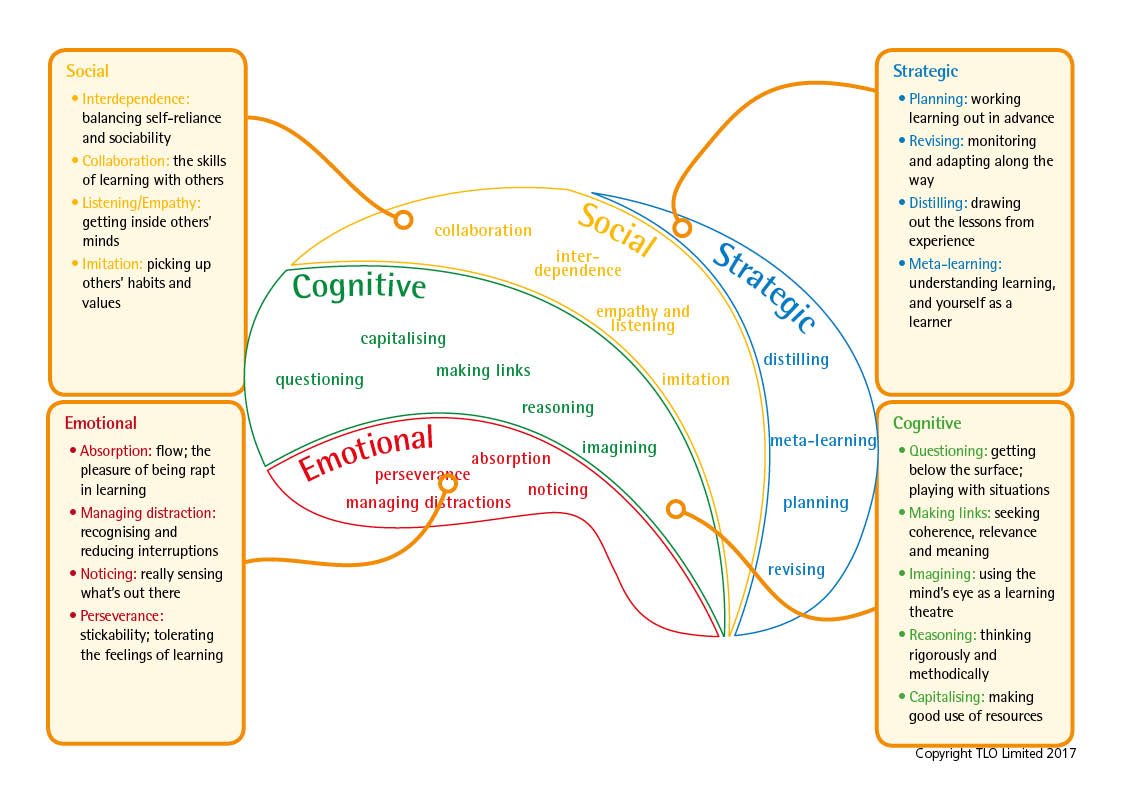
The Supple Learning Mind framework, originally conceived and researched by Professor Guy Claxton, reveals learning as a complex process that isn’t just about thinking and having a good memory; it includes how we feel, how we think, how we learn with and from others and how we manage the process of learning. It gives the beginnings of a learning language that helps teachers think about how learning behaviours enable students to grow as learners and tackle the curriculum more profitably.
Each domain of learning…social, cognitive, social and strategic… clusters together the high value learning behaviours that best make that domain work well. For example the social domain is made up of interdependence, collaboration, listening and empathy and imitation.
What does the teachers’ palette consist of?
The Teachers’ Palette provides an overview of aspects of a learning friendly culture that combine to create the seedbed for building powerful learners. It includes the types of teacher action that create the conditions necessary for such learning to become habituated – how they relate to students, the language they use, the types of tasks they design, and the things that they truly value.
The teachers’ palette distils the key teacher behaviours associated with a learning friendly-culture within which the 4 purposes of Successful Futures can flourish.
The central argument is that the 4 key purposes of Successful Futures (ambitious capable learners; healthy confident individuals; enterprising creative contributors; ethical informed citizens) and the 4 ‘integral skills’ (planning and organising; critical thinking and problem solving; creativity and innovation; personal effectiveness) each require a unique blend of the learning behaviours identified in the Supple Learning Mind.
And, learning behaviours that can flourish only in learning-friendly classrooms.
Building supple learning minds in learning-friendly classrooms gives learners the skills to achieve Successful Futures.
Questions you might ask yourself
Something to think about
Does your curriculum and its expected delivery . . . .
already go beyond the transmission of a centrally defined set of knowledge, skills and understandings and foster ambitious capability, enterprise and creativity, confident individuality and ethical, informed outlooks?
pay attention to the integral skills of critical thinking and problem solving, planning and organising, creativity and innovation, and personal effectiveness?
need adapting to ensure that these ‘capacities’ and wider skills are developed in a planned and progressive manner?
Providing rich and varied occasions for exercising learning habits;
Infusing learning habits into lessons to enhance content understanding;
Recognising and celebrating the use and growth of learning habits;
Expecting students to take ownership of and responsibility for their own learning habits;
Exploring the development of learning habits with students over time.
As a teacher you are an influential character builder and so need to be mindful of how you help students form, replace, re-form and strengthen their learning habits.
But don’t worry, you’re not there yet. It takes most teachers between 2 and 3 years to become really fluent with this way of teaching. So, go easy on yourself. Feel determined because small steps often prove to be big levers for change. Have a think about what you might do…
What to stop and start
Here are a few ideas you might want to try. Take it steady, this way of teaching can be a big but exciting shift so it’s worth doing it slowly and thoughtfully.
Look first at the Stop/avoid ideas. Some of these are far from trivial but it’s best to try to remove them before starting on the Start/do more of, Start slowly and Experiment with ideas.
Create from:
Stop
Valuing pace over taking a slower, more strategic approach
Expecting everything to be ‘right first time’
Attending to detail at the expense of the bigger picture
Planning everything yourself
Start
Encouraging students to discuss and decide what needs to be done
Creating opportunities for students to plan and define their own outcomes
Discussing with students that only they can manage their own distractions
Allowing students time to decide on a course of action
Slowly
Allowing longer for drafting and planning
Organising displays that show work in progress, your own included.
Encouraging students to set their own success criteria
Encouraging students to leave you post-it notes saying what they need to do/know next
Experiment
Enabling students to agree their longer-term objectives
Building in time for students to evaluate the effectiveness of their plans
Building in review times in lessons to enable students to take stock and monitor progress
Using longer-term projects that require sustained effort and focus
What do you think?
Which of the ideas appealed to you most?
Can you see ways of incorporating these into your subject/class routines?
Which would make the biggest difference to your students?
Which would make your life easier?
Make a note of…
Ideas that you want to try and the impact you hope they will have on your teaching and on your students.
Here is a range of things you can say to nudge Planning and Organising. When you use this kind of language you are talking as a learning coach, encouraging students to think for themselves. Using such statements encourages your students to:
imitate you;
start to think in this way;
become conscious of these phrases and their meaning.
Eventually you will hear some of the questions pop up in students’ self-talk….in speech or even in writing from time to time, but mostly these will go on inside their heads. As your work on Planning and Organising gathers pace see if you can detect students who talk, or think, in these ways.
My learning talk nudges to encourage Planning and Organising
Teacher talk – as a learning coach
To ensure students do the thinking for themselves, use phrases like these to nudge them to:
Be forward looking:
What will your end product look like?
How will you judge the success of what you have done?
Do you have a contingency plan if that does not work?
Be flexible:
Look at what you have done so far – do you need to make any changes?
Keep a weather eye on how it is going.
Is your plan working out?
Keep both the big picture and the detail in focus:
What is most important here?
Have you missed anything?
Are you on track to meet your deadline / objectives?
Be logical and systematic:
What needs doing?
In what order will you tackle it?
How will you organise this?
Be alert to possibilities:
What will you do if . . . . ?
That’s interesting – it might cause a re-think.
That opens up a new line of enquiry, doesn’t it?
Maintain focus:
How do you plan to see it through?
How long do you expect it to take?
What might stop you getting the job done?
Be evaluative:
Did you achieve what you intended?
How can you make this plan more efficient?
Are you satisfied with what you achieved?
What do you think?
Which of these nudges might you start using?
In which particular lessons would such nudging be most useful?
How will most of your students respond to such nudges?
Will this way of engaging be more popular with girls or boys?
What other nudging ideas might you add to the list?
Make a note of…
Students’ reactions to the nudges.
Ideas about why this might be.
Ways in which you could further encourage students to imitate this meta-cognitive self-talk.
Some ideas to encourage a Planning and Organising frame of mind
Firstly… make students aware of Planning and Organising…when, where, why.
Then… explore Planning and Organising a little more through the language of Planning and Organising
Try… using Planning and Organising as a lesson starter to tune students into using it
Then start… blending Planning and Organising into the way you teach the content. Use specific Planning and Organising strategies to deepen content understanding.
Ensure… students reflect on the success or otherwise of their Planning and Organising mindframe.
1. Making students aware of Planning and Organising
How you make students aware of the words that describe the behaviour and why it is important to use it.
Stimulate the beginnings of planning
Primary
Planning a picnic
Tell the class that they are going to bring their teddies to school for a picnic and there are lots of things that need to be planned to make sure that it goes well.
Ask the children to suggest things that might need doing. They may well come up with ideas like food, games, music, invitations… Write the ideas on a flip chart with pictures as prompts.
Explain that different groups are going to plan each part. While you are supporting each group in turn, the others could perhaps draw their teddy bear.
Spend time with each group in turn. Discuss what needs doing for one aspect of the picnic and act as their scribe. Summarise their plan back to them when everything is agreed.
Bring everyone back together and share each aspect of the plan.
Now ask the children how they think they can work together to get everything ready for the party. Keep referring to the plan. This is also a very good exercise in collaboration and will offer lots of opportunities for revising as well when things need changing from the original idea.
Secondary
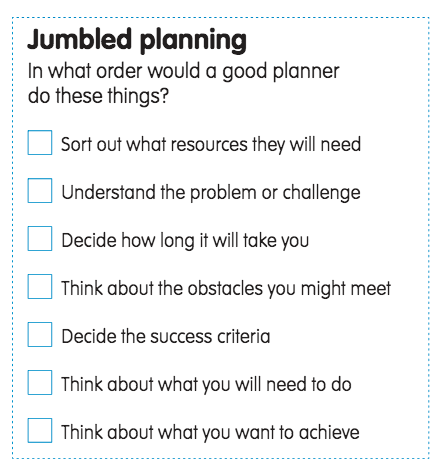
Jumbled up planning
click to enlarge
Can you put these jumbled aspects of planning into a sensible order? Could you use the outcomes to create a planning flowchart with your class to guide future planning?
Primary
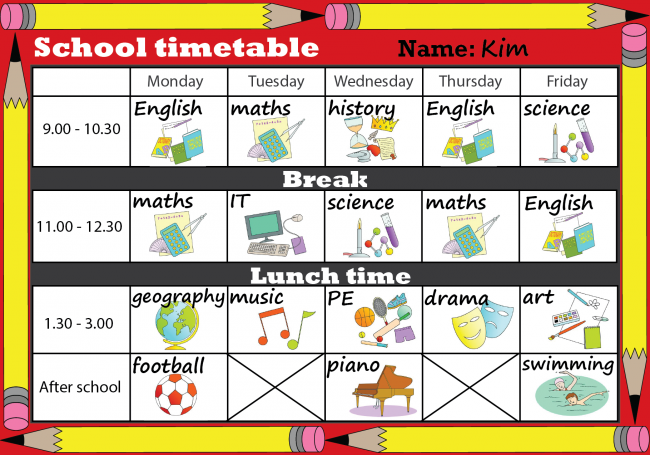
Timetables . .
Click to enlarge
Ask the children to think of other things that need a timetable or plan. Start a display table and board of anything the children suggest or collect. You could find some bus and train timetables, a plan of the school and playground or a dinner menu for the term and so on.
A Treasure Map
Plan a treasure hunt around the school. This could have a seasonal theme or simply be a fun one. Use a small area of the school and make a very simple large scale plan. Attach photographs or drawings to help the children follow the plan. Take them on the treasure hunt in small groups and regularly refer to the Treasure Map as a plan.
Secondary
Structuring an extended project
Give students a pack of cards that describe the 10 or so sections in an extended project based on the Driving Question: Where’s the safest place to live? Ask them to sequence the material to make clearest sense. Ask them to give each section a generic heading.
Challenge students to prepare the outline structure for a response to other Driving Questions, for example, ‘Is Planet Earth injury prone?’ ‘Where did the dinosaurs go?’ ‘Why don’t people stay at home?’ ‘Should we choose to end a human life?’ ‘Is the idea of God more trouble than it’s worth?’
Agree with the class the generic headings for an extended piece of work – display it as an aide-memoire in the future.
2. Exploring the language of Planning and Organising
How you might extend the language and understanding of this behaviour
Primary
Discuss Planning and Organising
Design a planning sheet to use with the children when you are planning an activity with them. You might include these and other headings:
What are we trying to achieve?
How will we know we have been successful?
What do we need to do?
What will help us?
What might be a problem?
What will we do about it?
Who will do what? [Simplify according to age range.]
Secondary
A way with words
Collect words that tell you how people plan.
Explore well known sayings
click to enlarge
What do we mean when we say …
If you fail to plan, you plan to fail.
Hit the ground running.
Cross that bridge when you come to it.
3. Using Planning and Organising as a lesson starter
Use a quick starter to key students into the learning behaviour you want to concentrate on in the lesson. i.e. here you are starting up the planning / organising behaviour
Primary
Clapping a pattern
Planning a short rhythm
Sit pupils in a circle. Tell them you are going to clap a short rhythm for them, but first of all you are going to plan it.
Think aloud as you plan what you are going to do and mention “Beginning”, “Middle” and “End”. Then clap the pattern you have planned.
Ask pupils if they want to listen again and then have a go with you. Tell them you can remember it because you have a plan.
Now ask pupils to work in pairs and plan a short clapping pattern of their own. Get them to practice with their fingertips on their palms so that they don’t disturb each other too much.
After a few minutes ask them if they would like to perform their rhythm in pairs for everyone to listen to. Some may also like to try to teach it!
The emphasis is on planning what they are going to clap rather than just clapping straight off.
You may want to encourage pupils to make some kind of paper plan with a mark for every clap.
Secondary
‘What will it look like when it’s finished?’
Too often students start a task without giving thought to what it will look like when it has been completed, what a good one will look like. Many find it easier to plan ‘in reverse’ – working backwards from the finished article to where they are now to establish a sensible plan of action.
Make WWILLWIF the regular precursor to any action. Ask students to determine WWILLWIF for themselves in conjunction with others. Help them to visualise this in an appropriate form.
As you get deeper into a lesson you will need activities which, by their very nature, will develop students’ planning and organising AND their understanding of the content.
Here is an idea where, by using planning, students will gain an understanding of the content AND will develop a planning habit.
4. Focusing on Planning and Organising as a learning strategy
Draw out the planning behaviour being used in a thinking routine.
Primary and Secondary
Visible Thinking Routine
How long will it take ?
This routine helps students to anticipate what needs doing and how long it might take. It also encourages them to consider the sequencing of the activity. There are three questions:
What needs to be done ?
What order will you do it in ?
How long do you think it might take ?
The natural place to use this routine is prior to embarking on a piece of extended work in order to slow the impulse to ‘get on with it’ and to encourage a more strategic approach.
And here is an idea that will help students to understand the planning and organising process.
5. An activity to highlight and strengthen Planning and Organising
Design specific activities to highlight and strengthen the behaviour
The London Game
Your challenge is to plan a two-day visit to London for a group from the school.
Seven events are to be scheduled over two days, and two of the events are already fixed. Creating a plan is not too difficult, but then one of the venues has to close unexpectedly…
How will you need to revise your plan in light of this?
Can you see a use for any of the suggested activities?
Have you raised awareness of planning with your students?
Does your class have an agreed set of good planning behaviours?
Which two ideas from above do you want to try out?
How long will you keep them going before you decide whether they have worked or not?
Make a note of…
What happens in your classroom in response to any of the above ideas.
How students’ behaviour changes over about 3 weeks of becoming more familiar and talking about the behaviour.
How your behaviour in the classroom changes as you use these ideas over time.
NB. None of the actions above will lead to instant understanding nor instant changes in student behaviour. You will need to drip them in over time and keep building and refreshing your language of learning.
Building effective learning behaviours is about creating a culture in classrooms – that systematically cultivates habits and attitudes that enable young people to face difficulty calmly, confidently and creatively. By a ‘culture’ we mean all the little habits, routines and practices that implicitly convey ‘what we believe and value round here’.
So ‘culture’ concerns the details of the micro-climate that you create in your classrooms. What you do and say, what you notice and commend and what you don’t, what kind of role model of a learner you offer – all these are of the essence. The micro-climate of a classroom can inadvertently stifle, or specifically enhance, the very behaviours you are seeking to promote.
Does my classroom climate encourage Planning and Organising?
In the classroom that is a learning-friendly environment within which planning and organising can grow, there are changes in the relationships; what is discussed; how learning is constructed; and in what is celebrated.
Apply your own attentive noticing and consider whether you already use any of these features and which you fancy trying.
The changes in relationships include:
Teachers model flexibility: Teachers model a can-do, flexible approach in the face of mistakes or unexpected events in order to achieve desired outcomes.
Reflection in action is a learner responsibility: The responsibility for monitoring work in progress and ensuring that it is on track is devolved to students.
Reflection on action is a learner responsibility: The responsibility for evaluating outcomes against learner generated success criteria is devolved to students.
Responsibility for maintaining focus lies with learners: There is an expectation that students are accountable for any failure to maintain focus and that it is their job to ensure that their efforts are directed to achieving their goals.
The changes in what is talked about include:
Students talk about the future: Students talk about what they are hoping to achieve and how they are planning to achieve it.
Students discuss the order in which they will do things: Students are encouraged to break plans into small, detailed steps and sequence the steps in order to achieve desired outcomes.
Students discuss distractions: Distractions, what they are and how to avoid them, are a topic of conversation. Strategies for resuming focus after a distraction are discussed.
The changes in how learning is constructed include:
Opportunities to think ahead of action: Time is built in for students to consider what they could do / should do, and what could happen / should happen before starting out on a task.
Tasks with tight deadlines are evident: Forward planning and good time management are needed to meet tight deadlines that dictate the need for pace.
Lessons link prior and future learning: Lesson starters require students to revisit prior learning and to identify what still needs to be learned.
Logic matters: Students are expected to create plans that are logical and well thought through, and for critically evaluating the effectiveness of those plans.
The changes in what is celebrated include:
Effective plans and work in progress are displayed: Display celebrates both the strategies that have been used and significant staging points in the development of the finished article.
Alternative strategies are captured and praised: There is a classroom culture that recognises and celebrates that there are a number of different ways of achieving the desired outcomes. Enterprising, imaginative approaches are valued as much as using tried and tested routines.
Written and oral praise celebrates focus: Students are praised by maintaining focus through the hard slog of seeing a plan through to a conclusion.
Display captures absorption: Images show learners who are absorbed and working ‘in flow’.
[So the outer ring of the culture wheel then contains only the text in bold]
Title
A Learning-Friendly Culture for Planning and Organising
INSERT CULTURE WHEEL HERE
What do you think?
What do your answers suggest?
How does your classroom culture contribute to students’ reactions or approaches to Planning and Organising?
Is this broadly negative or positive?
What insightful ‘Ah Ha’ moments did you have as you read through the list?
How have these changed your view of Planning and Organising?
Make a note of…
Any ideas that look as if they might help students to become better at Planning and Organising.
An idea on the list you want to start doing.
An idea that interests you, but you are uncertain what it means or how you might do it.
Successful Futures identifies Planning and Organising as one of the four Integral Skills for modern life and work and describes it as:
implementing solutions and executing ideas and monitoring and reflecting on results
with the associated sub-skills of:
implementing ideas; setting goals; decision making; time management; monitoring and reflecting on results; adapting; checking for accuracy; responsibility and reliability; managing resources.
Though distinct in meaning, planning and organising are two concepts that complement each other – you simply cannot have one without the other. Because of the nature of planning, the ability to effectively organise is of the utmost importance. Each step of the planning process is simplified when organised properly. Clear plans of action give direction, while effective organisation enables these plans to be realised.
Without planning, organisation lacks direction. Without organisation, planning lacks precision and impact.
What does being a learner who is good at Planning and Organising involve?
A well formed Planning and Organising habit involves being ready, willing, and able to:
Be forward looking: creating clear plans of action to achieve pre-determined goals; identifying end goals or objectives before considering possible action; foreseeing potential obstacles and strategies to circumvent them; resisting the temptation to act impulsively before thinking it through; understanding that time taken planning reduces the time needed for the overall project.
Be flexible: being alert to how the plan is unfolding and being prepared to tweak the plan when necessary; monitoring progress against the original objectives.
Keep both the big picture and the detail in focus: attending to detail; identifying and sequencing the detailed steps to ensure that the overall objectives are realised; ensuring that the original objectives do not get lost in the detail.
Be logical and systematic: ensuring that the necessary tasks are tackled in a logical order; developing a logical strategy for achieving goals.
Be alert to possibilities: using imagination and creativity to react to new opportunities or unforeseen difficulties.
Maintain focus:balancing competing pressures, both external and internal, in order to keep focus on the plan and so achieve intended outcomes.
Be evaluative: looking back on the project, learning from experience, considering the extent to which the original objectives have been met, reflecting on how to plan more effectively in future.
Spotting the good planners in your classes
Just to get you tuned in – have a quick think about ‘Planning and Organising learners you may know’. Make a note of students you know who display these characteristics.
Create from below:
Title – Good learning habits – Planning and Organising
Column heading: Your potentially good planners and organisers are likely to:
Resist impulsivity, think ahead of taking action
Think about the order in which they do things
Arrive prepared for lessons / learning
Can follow a (given) plan of action
Sort out what needs to be done
Use time efficiently, submit work on time
Work with accuracy
Keep the end in mind
Apply effort for an extended period
Take stock of progress
Act on feedback
Think about how/why they have been successful
What do you think?
How many students come to mind when looked at through the lens of Planning and Organising?
Is there a gender balance or have you noted down more girls than boys or vice versa?
Are the students you have noted from across all age groups or do some dominate?
How do these Planning and Organising characteristics help these students to be better learners?
If the question had been about students without these characteristics, what would you have discovered?
Make a note of…
Those groups or classes that seem to have lots of good Planning and Organising characteristics.
Providing rich and varied occasions for exercising learning habits;
Infusing learning habits into lessons to enhance content understanding;
Recognising and celebrating the use and growth of learning habits;
Expecting students to take ownership of and responsibility for their own learning habits;
Exploring the development of learning habits with students over time.
As a teacher you are an influential character builder and so need to be mindful of how you help students form, replace, re-form and strengthen their learning habits.
But don’t worry, you’re not there yet. It takes most teachers between 2 and 3 years to become really fluent with this way of teaching. So, go easy on yourself. Feel determined because small steps often prove to be big levers for change. Have a think about what you might do…
What to stop and start
Here are a few ideas you might want to try. Take it steady, this way of teaching can be a big but exciting shift so it’s worth doing it slowly and thoughtfully.
Look first at the Stop/avoid ideas. Some of these are far from trivial but it’s best to try to remove them before starting on the Start/do more of, Start slowly and Experiment with ideas.
Stop
Making things too easy
Asking all of the questions
Providing everything they need
Limiting opportunities for students to make choices
Expecting things to be right first time
Start
Talking about how tricky learning can be, even for you
Using ‘could be’ language to encourage speculation
Celebrating novel, unusual or unexpected responses or strategies
Making resources freely available
Intentionally stimulating students’ imaginations
Letting students decide what needs to be done and how they will do it
Start Slowly
Withdrawing some of the scaffolding
Devising more open-ended activities
Allowing students to fail in safety
Acting as coach rather than instructor
Designing lessons around students’ questions
Experiment with
Wild open-ended tasks with unpredictable outcomes
Playing Devil’s Advocate; Saying ‘but what if . . . ‘
Allowing students to design their own goals, objectives, success criteria and milestones
Looking for different ways to solve the same problem
Planning review times in lessons to enable students to stop, take stock and monitor progress
What do you think?
Which of the ideas appealed to you most?
Can you see ways of incorporating these into your subject/class routines?
Which would make the biggest difference to your students?
Which would make your life easier?
Make a note of…
Ideas that you want to try and the impact you hope they will have on your teaching and on your students.
Here is a range of things you can say to nudge Creativity and Innovation. When you use this kind of language you are talking as a learning coach, encouraging students to think for themselves. Using such statements encourages your students to:
imitate you;
start to think in this way;
become conscious of these phrases and their meaning.
Eventually you will hear some of the questions pop up in students’ self-talk….in speech or even in writing from time to time, but mostly these will go on inside their heads. As your work on Creativity and Innovation gathers pace see if you can detect students who talk, or think, in these ways.
My learning talk nudges to encourage Creativity and Innovation
Teacher talk – as a learning coach
To ensure students do the thinking for themselves, use phrases like these to nudge them to:
Be curious about possibilities:
What if . . . .
Do you have to do it this way?
If you could ask just one question, what would it be?
Be imaginative:
How else might we . . . . ? What if we . . . ?
What are your instincts telling you?
Wow – I was not expecting that! Brilliant!
Make best use of what and who is available:
Who might be able to help with this?
What else could you use?
How else might you try to . . . . ?
Be emotionally robust:
Give it a go. What is the worst that can happen?
If it doesn’t work, so what? Try again!
Never expect to get it right first time – live with it!
Create plans to realise their goals:
What are you trying to achieve? How will you go about it?
What will you tackle first? Second?
What might stop you . . . . .?
Be flexible:
Are you keeping an eye on how it going? Are you on track?
Is this good enough? Does it meet your success criteria?
Great learning is about making mistakes and learning from them, doing it differently next time.
What do you think?
Which of these nudges might you start using?
In which particular lessons would such nudging be most useful?
How will most of your students respond to such nudges?
Will this way of engaging be more popular with girls or boys?
What other nudging ideas might you add to the list?
Make a note of…
Students’ reactions to the nudges.
Ideas about why this might be.
Ways in which you could further encourage students to imitate this meta-cognitive self-talk.
Some ideas to encourage a Creative, Innovative frame of mind
Firstly… make students aware of Creativity and Innovation…when, where, why.
Then… explore Creativity and Innovation a little more through the language of learning
Try… using Creativity and Innovation as a lesson starter to tune students into using it
Then start… blending Creativity and Innovation into the way you teach the content. Use specific Creativity and Innovation strategies to deepen content understanding.
Ensure… students reflect on the success or otherwise of their creative, innovative mindframe.
1. Making students aware of Creativity and Innovation
How you make students aware of the words that describe the behaviour and why it is important to use it.
Raising awareness of challenge
Primary
Enable students to become aware of levels of challenge
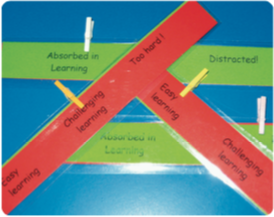
Provide a laminated strip of card and a clothes peg. The card is marked ‘Too Easy’, ‘Hard but not too hard’ and ‘Too difficult’
Students move the peg to indicate the difficulty of the task. Good information for the teacher to judge when and how to intervene. A great opportunity for students to become aware of how they assess their own levels of challenge.
Invite students to think up their own ideas about achievement.
Here are some examples from children.
An achievement is something;
you can be really proud of
you have never done it before
that you kept trying to do and finally succeeded
you have done something you found difficult
you have worked hard to finish
you have done what teachers tell you is good
Make sure your praise matches these statements.
Secondary
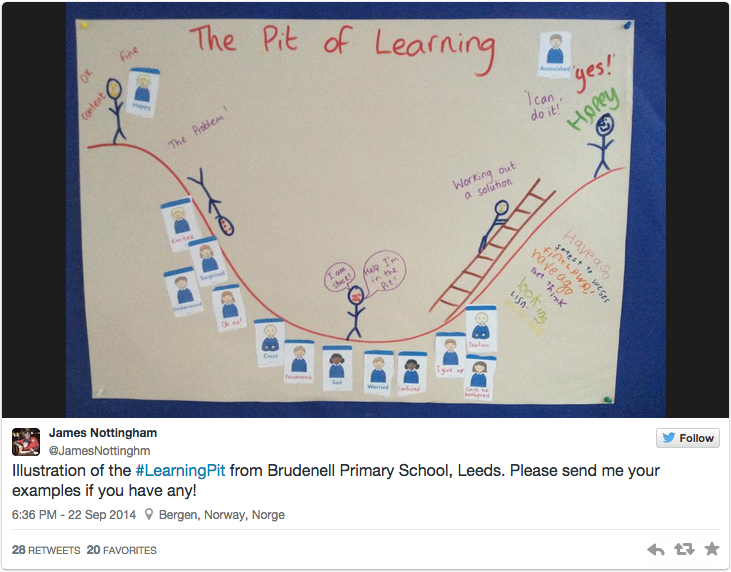
Introduce the Learning Pit to explore the stuck/struggle journey
Use the ‘Learning Pit’ as a means of opening up a conversation around the feelings involved with being stuck, and the journey towards getting unstuck – the struggle. It is essential that students know:
that the ‘pit’ is only one staging post on the learning journey
they can get out by using ‘stuck strategies’ and tools
It is also worth noting that the pit is not necessarily inevitable for all students in all learning – some will fly over the pit in some topics or curriculum areas.
Helping students to think ahead
Primary
Introduce the idea of forward planning
Design a planning sheet to use with the children when you are planning an activity with them. You might include these and other headings:
What are our goals
Success criteria
Steps
Resources
Possible sticky bits
Contingency plan
Job roles
[Simplify according to age range.]
Secondary
Talking about the future
a) Build time into lessons when students are required to explain to a neighbour what they are trying to do / hoping to achieve in order to stop them ‘doing it’ and to ‘think about doing it’. Allow time for a brief conversation about how it is going thus far and what might be done next.
b) When reading a story or similar, get in the habit of stopping and asking ‘what do you think will happen next?’
c) Get in the habit of asking ‘What do you know? What do you need to know?’ to help students to focus on next steps.
Helping learners to capitalise on others’ successful learning strategies
Primary
Use display to record key learning
Set aside an area of display where students are asked to share any strategies or ‘top tips’ that they have found particularly helpful in their own learning.
For those offering the ‘top tip’ it is a distilling activity, but the resulting gallery of ‘top tips’ invites students to adopt the successful strategies of others.
Secondary
Expert Interviews
Set up interviews with people who can do something really well. Develop a series of questions with students to uncover exactly what the ‘expert’ does. E.g. What sort of preparation is there? What does it feel like? What sort of thinking, habits of mind, values or beliefs are helpful?
Create a checklist of key aspects to imitate.
Extend with students in the role of real or imaginary expert, encouraging them to assess their own subconscious knowledge of how to succeed.
Nudging creativity
Primary
Capturing ideas
Encourage students to brainstorm or mind-map and keep notebooks or Post-its of interesting ideas to feed their creativity. Do this collectively and individually.
Elect one student ‘Plant of the Day’, whose job it is to suggest unlikely ideas.
Secondary
Scrapheap Challenge
Collect a pile of unrelated objects, or ask students to bring in one object each and mix them in random groupings – eg a copper tube, piece of cloth, felt pen, blu-tack.
Challenge students to make as many things as they can from the objects, using all of them but nothing else.
Discuss examples of particularly imaginative / effective use of materials and whether these ideas can be used in another context.
2. Exploring the language of Imagining
How you might extend the language and understanding of this behaviour
Primary
What else could it be ?
Give students a familiar object – a pencil, hairbrush, scissors, toilet roll, cushion – whatever comes to hand.
Then pose the question: ‘What else could it be?’
Discuss and praise the most imaginative ideas.
What you are trying to develop in young learners is:
An awareness of the power of imagination;
The ability to use their imagination to picture how things might look, sound, feel or be;
The willingness to talk imaginatively about situations, events, characters, etc.
Secondary
A way with words . .
Click to enlarge
Collect words that tell you how people learn to imagine.
Explore well known sayings
What do we mean when we say …
In my mind’s eye
Thinking outside the box
3. Using Creativity as a lesson starter
Use a quick starter to key students into the learning behaviour you want to concentrate on in the lesson. i.e. here you are starting up the need to ask interesting questions.
Primary and Secondary
Visible Thinking Routine
Question Starts is a Visible Thinking Routine that provides students with the opportunity to practise developing good questions that provoke thinking and inquiry into a topic by offering a range of interesting question stems. For example:
Brainstorm a list of at least 12 questions about the topic, concept or object. Use these question-starts to help you think of interesting questions:
Why…?
How would it be different if…?
What are the reasons…?
Suppose that…?
What if…?
What if we knew…?
What is the purpose of…?
What would change if…?
Review the brainstormed list and star the questions that seem most interesting. Then, select one or more of the starred questions to discuss for a few moments.
Reflect: What new ideas do you have about the topic, concept or object that you didn’t have before?
As you get deeper into a lesson you will need activities which, by their very nature, will develop students’ Creativity and Innovation AND their understanding of the content.
Here is an idea where, by using Creativity and Innovation, students will gain an understanding of the content AND will develop an creative, innovative habit.
4. Focusing on noticing as a springboard in to questioning, making links, imagining and reasoning
Draw out the creative, innovative behaviours being used in a thinking routine.
Primary and Secondary
Visible Thinking Routine
See, Think, Wonder:
Invite students to make an observation (see) about an object (artwork, image, artifact) or topic.
Follow up with what they think might be going on. Encourage backing up their interpretation with reasons.
Ask students to think about what this makes them wonder about the object or topic.
The routine works best when a student responds by using the three stems together at the same time, i.e., “I see…, I think…, I wonder…”. If not you need to scaffold each response with a follow up question for the next stem.
This routine encourages careful observations and thoughtful interpretations. It helps stimulate curiosity and sets the stage for inquiry. Use it at the beginning of a new unit to motivate student interest. Try it with an object that connects to a topic during the unit of study. Use the routine with an interesting object near the end of a unit to encourage students to further apply their new knowledge and ideas. Go to visiblethinkingpz.org for more examples and information about think routines.
And here is an idea that will help students to experience the imaginative use all of their senses.
5. An activity to highlight and strengthen Imagining
Design specific activities to highlight and strengthen the behaviour
Imagining through all of the senses . . .
Click to enlarge
What has happened here ? Good guy or bad ? Can we see any colours ? Hear any sounds ? Imagine being there….
A quick way to activate the Imagination and explore how we use our senses to imagine.
What you are trying to achieve:
To support students to use their imaginations using all of their senses,
How might you use the technique?
As a starter for creative writing
As a prelude to reading a book – start with the B&W copy of the dust jacket.
To build empathy
To scaffold the use of all of the senses
To trigger the imagination
6. Reflecting on Creativity and Innovation
Primary
Make reflecting on Creativity and Innovation part of everyday lessons
Here is a very practical example of how you might develop the emotional climate of the classroom and make it Creativity and Innovation friendly.
Learning Mats
Today, I asked ‘what if . . . . ?’
I did not believe that . . . .
I tried a different approach to . . . .
I closed my eyes and thought about . . . . .
I followed a hunch when I . . . .
I thought . . . . . might not work, so I . . . . . .
I thought about what I was trying to achieve when I . . . . .
I had a change on mind when . . . .
I asked . . . to help me to . . . .
Learning mats are A4 laminated sheets that show various aspects of a learning habit. Keep them on desks/tables or as part of a wall display.
Secondary
A Learning Log to alert students to Creativity and Innovation and how it impacts across various aspects of their learning lives.
When I was . . . . . . . . I tried a new way of … and it was successful I felt …
box 2
I tried to do it differently when …… but it didn’t work out I felt … It would have helped if …
box 3
I saw my idea of . . . . . . . through to a conclusion and it worked!
I felt … What I will do next time …
End
What I’ve learned about myself and how I use my creativity
Primary and Secondary
What do you think?
Can you see a use for any of the suggested activities?
Have you raised awareness of Creativity and Innovation with your students?
Does your class have an agreed set of good Creativity and Innovation behaviours?
Which two ideas from above do you want to try out?
How long will you keep them going before you decide whether they have worked or not?
Make a note of…
What happens in your classroom in response to any of the above ideas.
How students’ behaviour changes over about 3 weeks of becoming more familiar and talking about the behaviour.
How your behaviour in the classroom changes as you use these ideas over time.
NB. None of the behaviours above will lead to instant understanding in students nor instant changes of behaviour. You will need to drip them in over time and keep building and refreshing your language of learning.

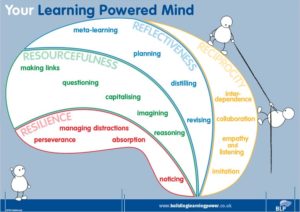 Resourcefulness — Making Links

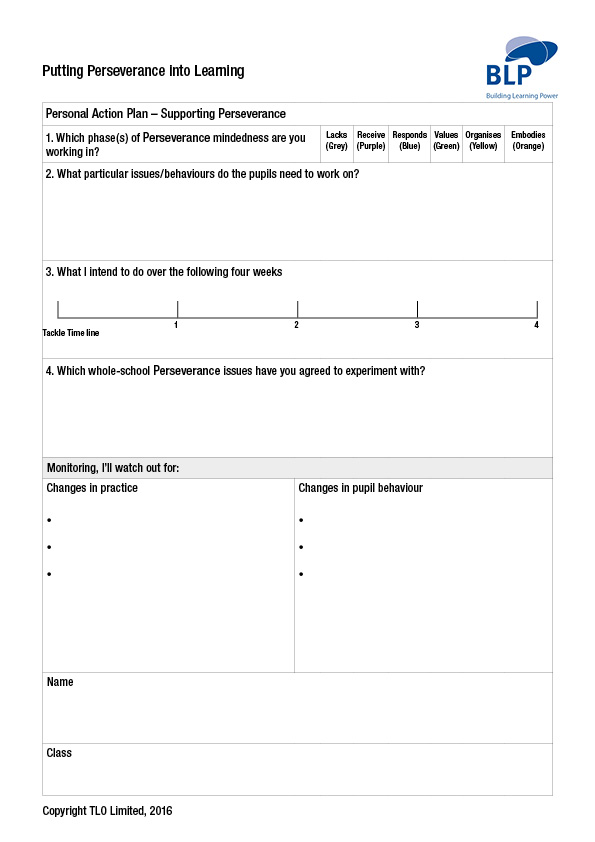
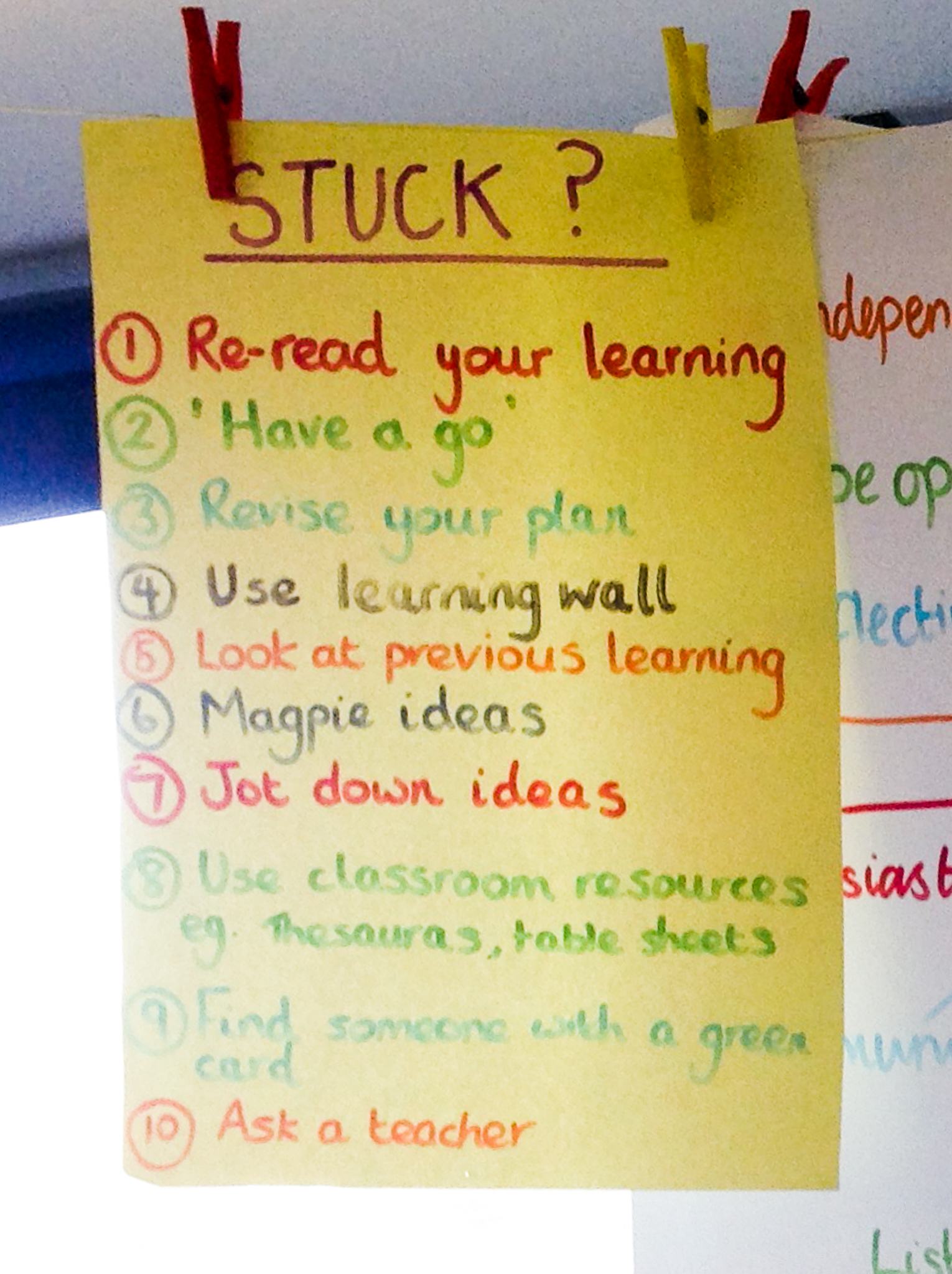

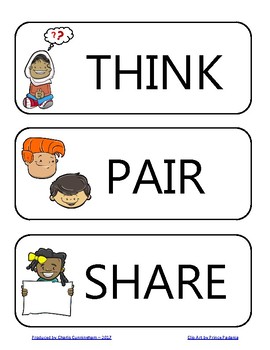

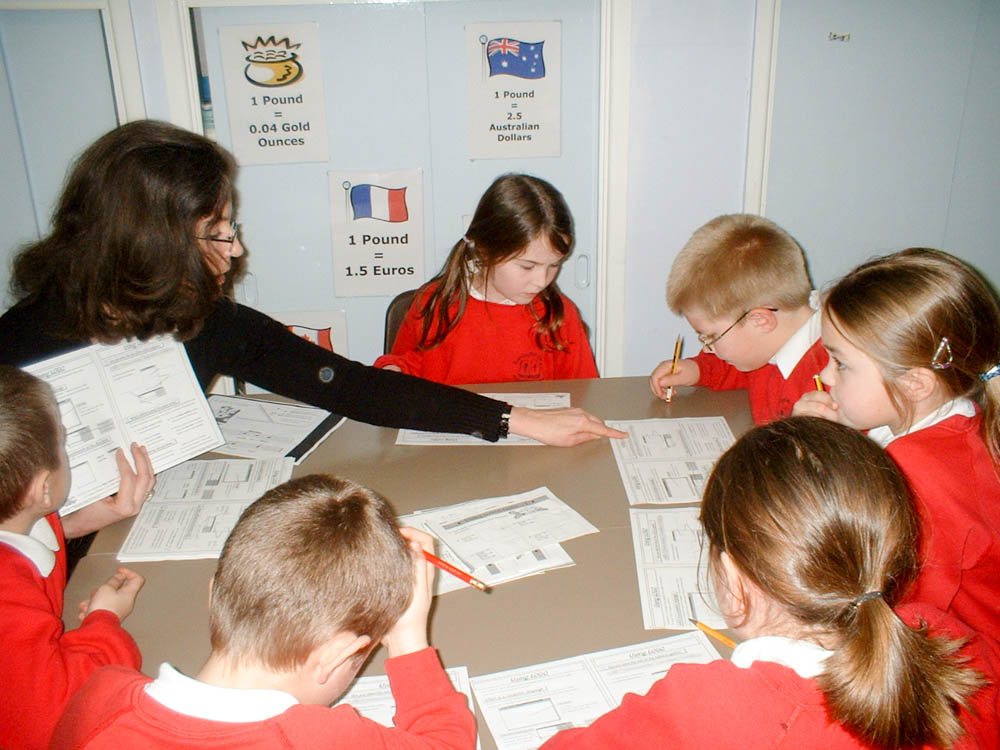

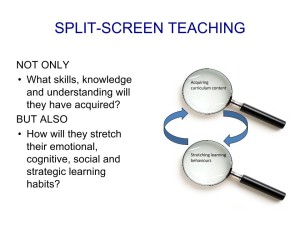
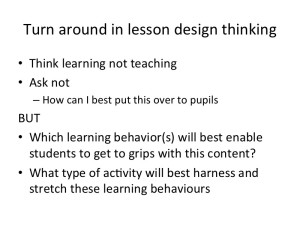

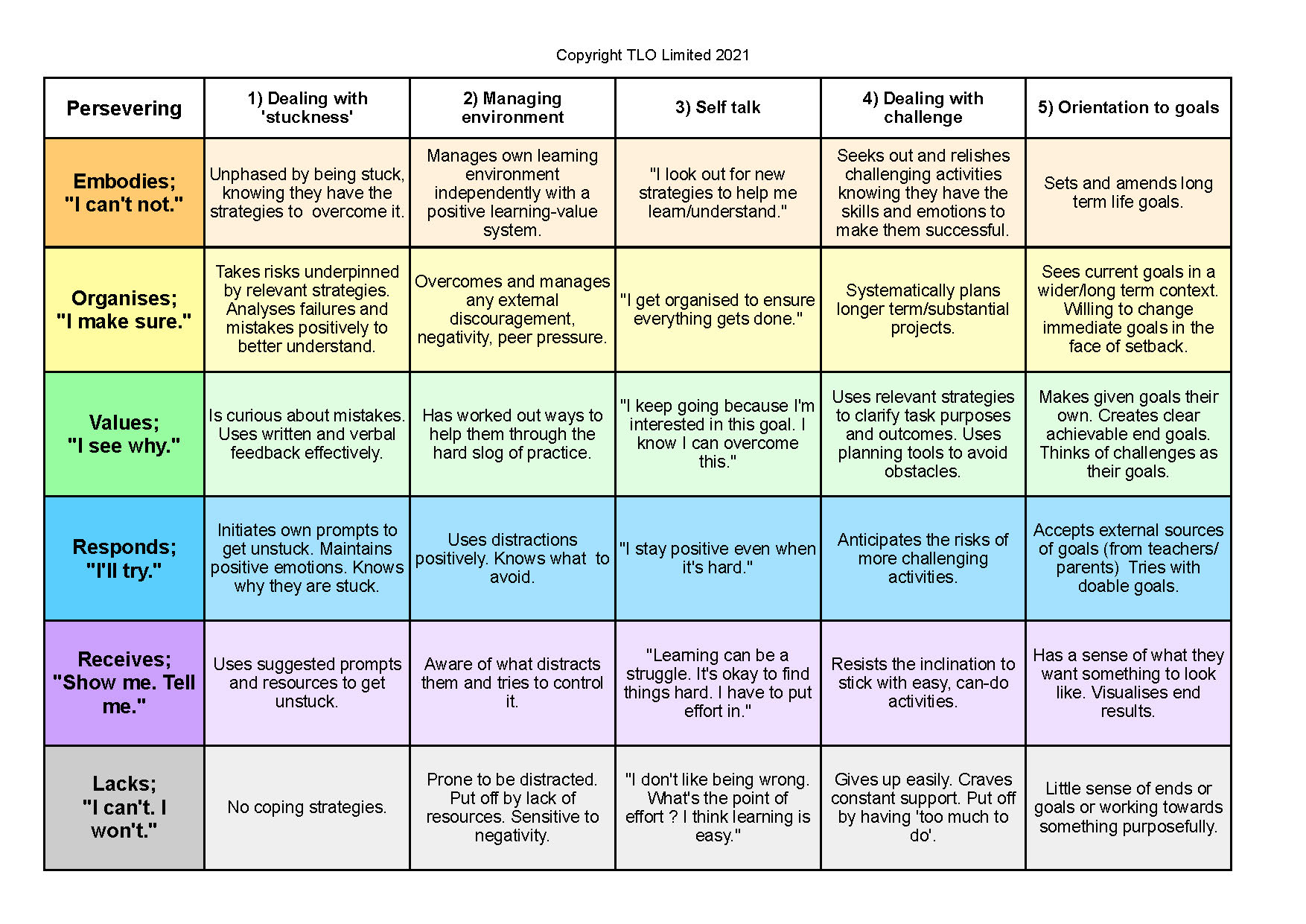

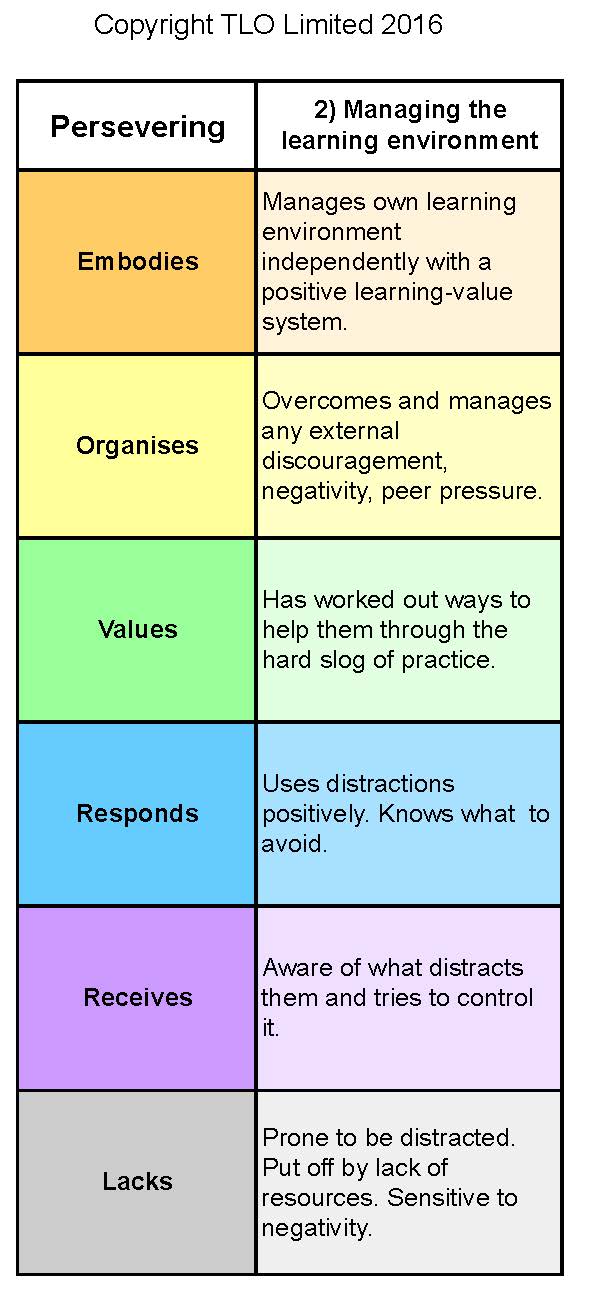
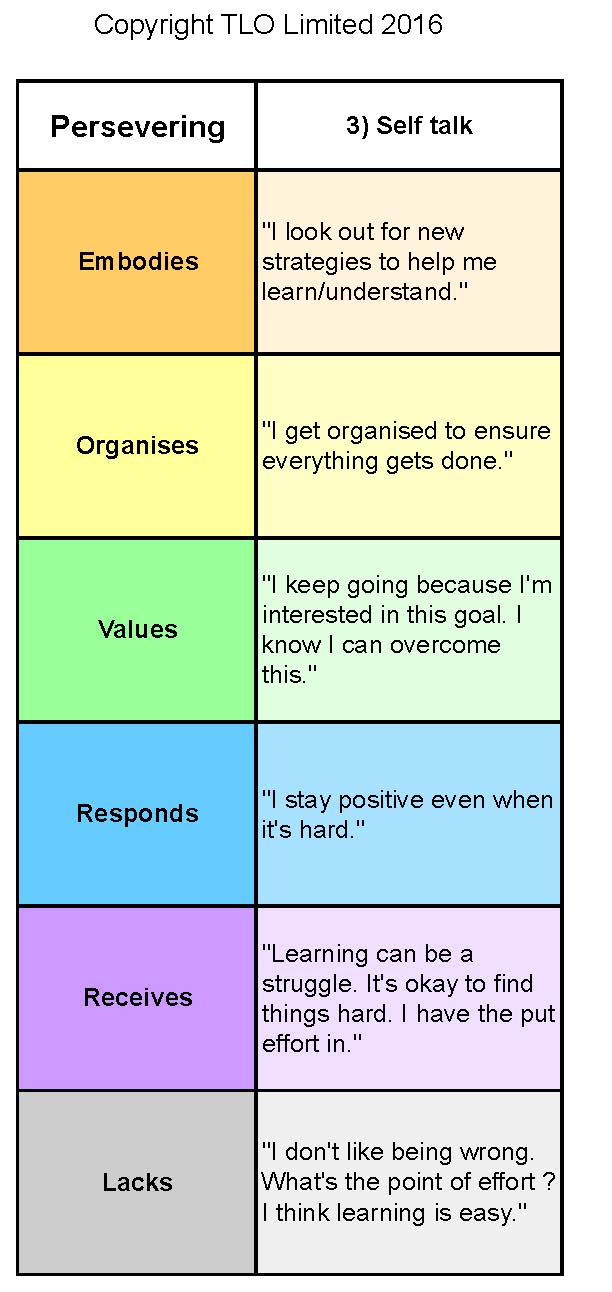

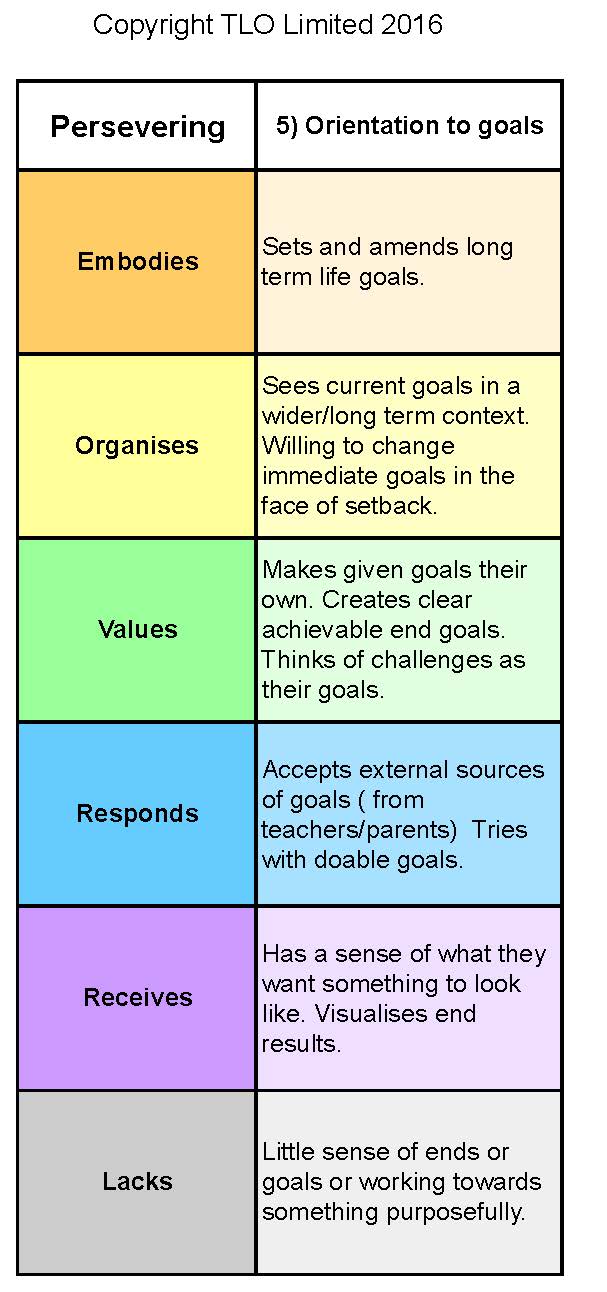
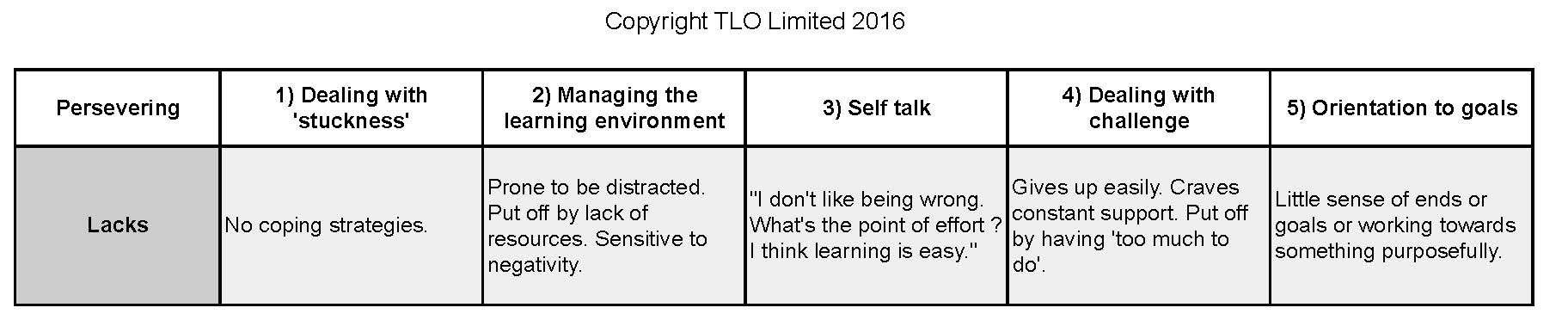
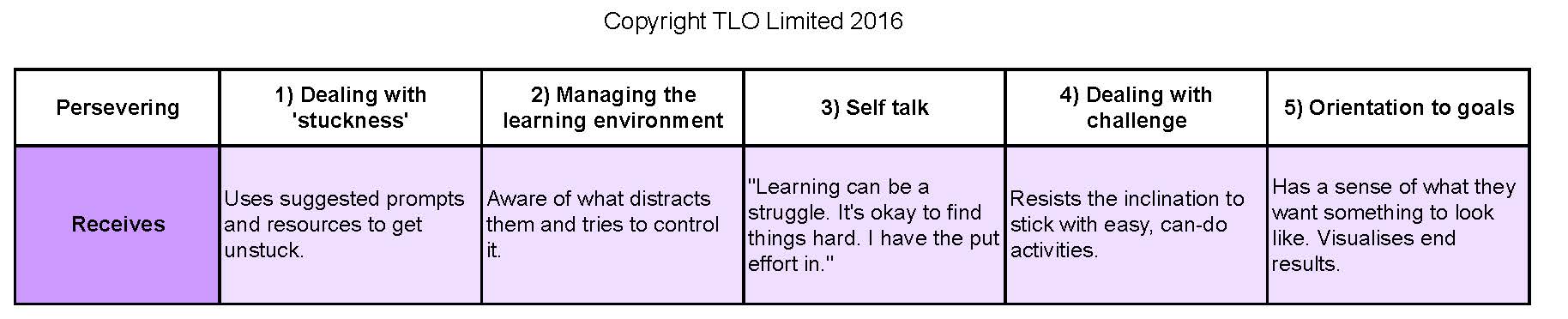
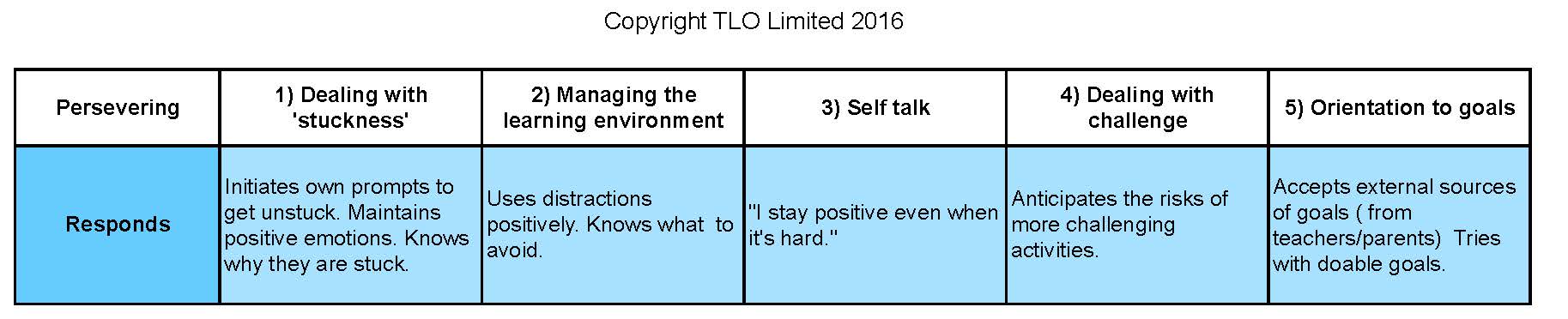
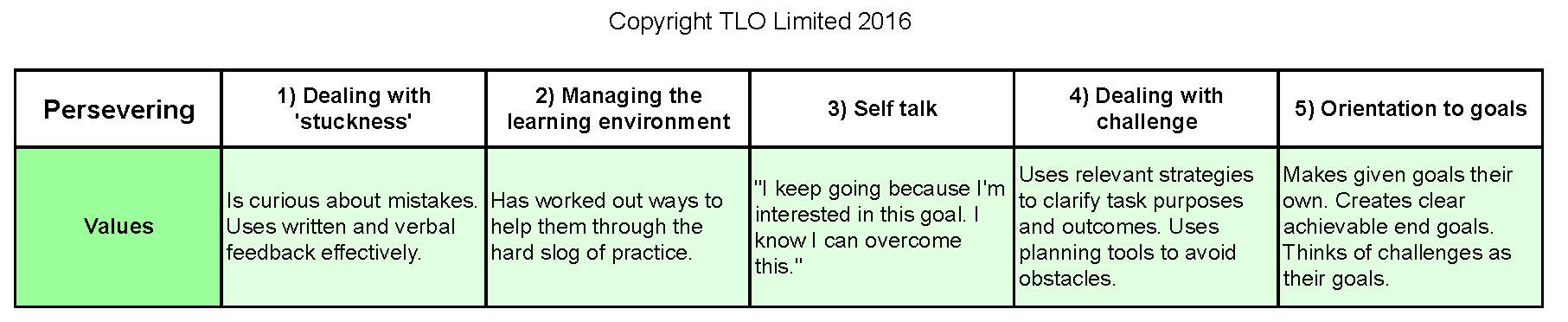
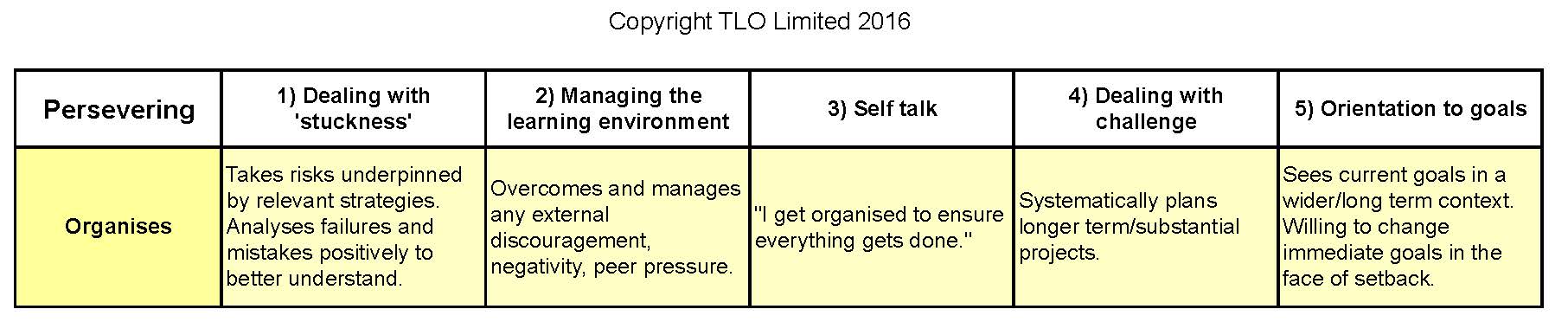
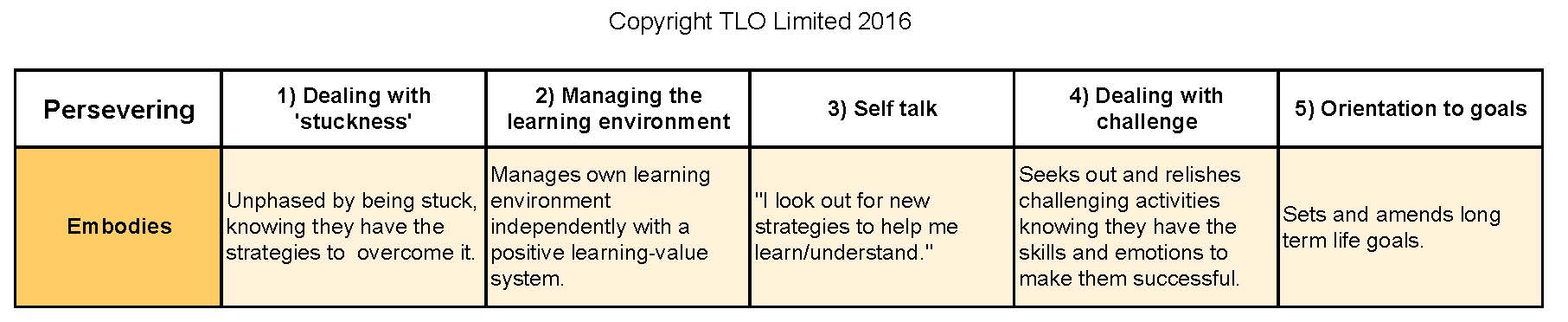

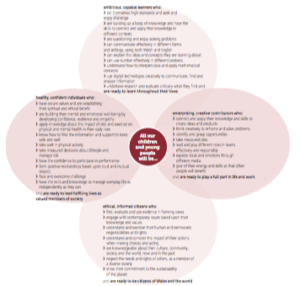
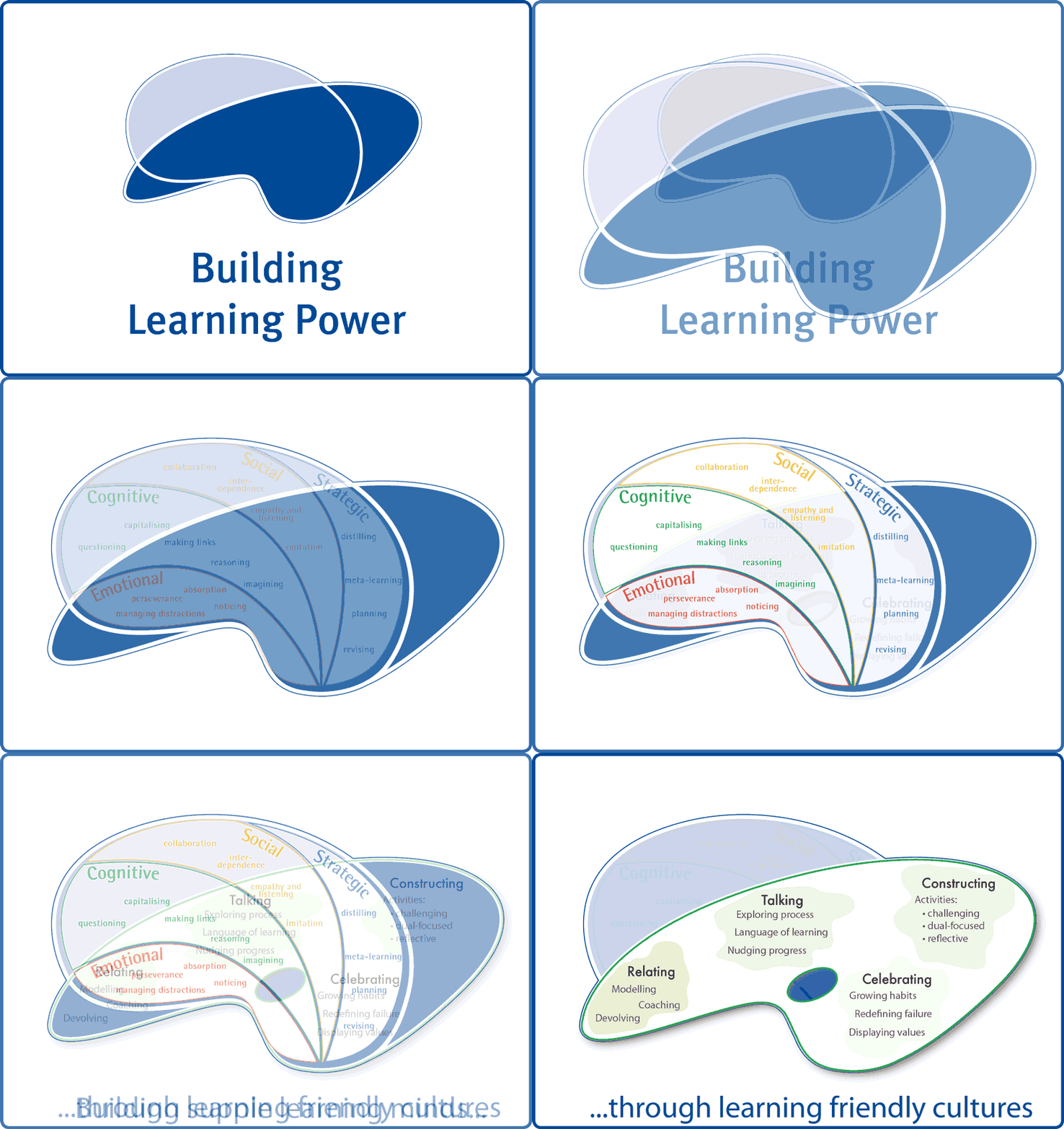
![BLP_Brain_Generic_no-Rs-[Converted]](https://www.buildinglearningpower.com/wp-content/uploads/2016/12/BLP_Brain_Generic_no-Rs-Converted.png)