My menu

Sections Archive

Getting the classroom climate right

Building effective learning behaviours is about creating a culture in classrooms – that systematically cultivates habits and attitudes that enable young people to face difficulty calmly, confidently and creatively. By a ‘culture’ we mean all the little habits, routines and practices that implicitly convey ‘what we believe and value round here’. 

So ‘culture’ concerns the details of the micro-climate that you create in your classrooms. What you do and say, what you notice and commend and what you don’t, what kind of role model of a learner you offer – all these are of the essence. The micro-climate of a classroom can inadvertently stifle, or specifically enhance,  the very behaviours you are seeking to promote.

Does my classroom climate encourage Creativity and Innovation?

In the classroom that is a learning-friendly environment within which creativity and innovation can grow, there are changes in the relationships; what is discussed; how learning is constructed; and in what is celebrated.

Apply your own attentive noticing and consider whether you already use any of these features and which you fancy trying.

The changes in relationships include: 

  • Self-directed learning: Students create their own end goals and success criteria.
  • Teachers model creativity and innovation: Teachers share their own curiosity and questions, their experiments and the risks they are taking, the mistakes they have made.
  • Students make choices: Students are encouraged to decide on the strategies and tools for the job in hand, and from where / whom they will seek advice.
  • Teachers stand back: Teachers allow students to fail (in safety), they coach, they resist the temptation to tell, and intervene only when necessary.

The changes in what is talked about include:

  • Talk encourages speculation: ‘Could Be’ type language encourages students to speculate and consider alternatives. ‘Is’ language is kept to a minimum. 
  • Risk taking is encouraged: Students are encouraged and supported to step into risky challenging areas, failure is to be expected and learned from, doing it differently next time. 
  • Creative insight is provoked: Alternative perspectives are explored. Considering a situation from different angles helps new approaches and solutions to emerge.
  • Changes of mind are discussed: Changing tack in light of reflection and incoming feedback is part of the learning conversation. Adaptability is seen as a strategy for achieving excellence. 

The changes in how learning is constructed include:

  • Tasks stimulate creative responses: Lessons include opportunities to pursue open-ended, ‘wild’ tasks that have unpredictable outcomes.
  • Student questions shape learning: Students’ questions and areas of interest are built into lessons so that they can explore their own areas of interest and uncertainty.
  • Opportunities to speculate are planned: There are regular opportunities for learners to speculate on what they could do / should do.
  • Challenge stimulates creativity: Tasks are constructed to challenge and to take learners out of their comfort zone, to create situations where tried and tested strategies do not suffice.

The changes in how learning is celebrated include:

  • Questions are as important as answers: Good questions are valued as highly as good answers. Staff and other students draw attention to interesting questions, thoughts and wonderings.
  • Other ways of doing things are valued: Unlikely, unusual, unexpected, quirky ideas and strategies are welcomed and explored. 
  • Display captures the uncertain nature of learning: Work in progress, changes of direction and failed lines of enquiry feature in display which illustrates the iterative nature of problem solving.
  • Novelty on display: Display illustrates alternative, unusual ways of solving the same problem and creative /unexpected solutions.


[So the outer ring of the culture wheel then contains only the text in bold]

Title

A Learning-Friendly Culture for Creativity and Innovation

INSERT CULTURE WHEEL HERE


What do you think?

  • What do your answers suggest?
  • How does your classroom culture contribute to students’ reactions or approaches to Creativity and Innovation?
  • Is this broadly negative or positive?
  • What insightful ‘Ah Ha’ moments did you have as you read through the list?
  • How have these changed your view of Creativity and Innovation?

Make a note of…Little_r

  • Any ideas that look as if they might help students to become better at being creative and innovative
  • An idea on the list you want to start doing.
  • An idea that interests you, but you are uncertain what it means or how you might do it.
Continue Reading

What is . . . Creativity and Innovation?

What do we mean by Creativity and Innovation?

Successful Futures identifies Creativity and Innovation as one of the four Integral Skills for modern life and work and describes it as:

  • generating ideas, openness and courage to explore ideas and express opinions

with the associated sub-skills of:

  • generating ideas; curiosity and inquisitiveness; the courage to explore and develop ideas; the ability to turn ideas into action; planning and managing projects; identifying opportunities; acting on opportunities and ideas and turning them into financial, cultural or social value.

Creativity and Innovation – what’s the difference?

The main difference between creativity and innovation is the focus. Creativity is about unleashing the potential of the mind to conceive new ideas. Those concepts could manifest themselves in any number of ways, but most often they become something we can see, hear, smell, touch, or taste. However, creative ideas can also be simply thought experiments within one person’s mind.

Innovation, on the other hand, is concerned with the work required to make a creative idea into a viable solution.

The three phases of creativity and innovation are:

  • Inspiration – when the problem that motivates solution-finding is identified;
  • Generating ideas – the process of generating and developing ideas to solve the problem (This is the Creative phase, rich with imagination and blue-sky thinking);
  • Implementing – the activities that enable a creative idea to move from the drawing board to become a reality (This is the Innovation phase, rich with the hard work of translating the creative idea into reality).

Any project may loop back to an earlier phase more than once as a team explores, develops, and implements its ideas.


What does being a Creative, Innovative learner involve?

A well formed Creativity and Innovation habit involves being ready, willing, and able to:

  • Be curious about possibilities: asking generative or hypothetical questions that open up new lines of enquiry; displaying a healthy scepticism about received wisdom; willing to question the tried and tested / the status quo and the assumptions that underpin it; willing to pursue own line of enquiry even if they do not know where it may lead.
  • Be imaginative: prepared to suspend reality and break the rules to explore other possibilities; turning ‘what is’ into ‘what could be’; making unexpected or unusual links between apparently dissimilar things / ideas; prepared to follow a hunch / intuition ‘just to see what happens’; thinking outside the box.
  • Make best use of what and who is available: willing to find and access available expertise where necessary; exploiting previously unnoticed potential; adopting strategies that do not immediately appear relevant; making enterprising use of all types of resources.
  • Be emotionally robust: willing to take a risk and explore the unknown, working at / beyond their own comfort zone; having a can-do outlook; excited by challenge; unafraid to ‘fail’ in pursuit of new understandings.
  • Create flexible plans to realise their goals: prepared to take time to decide on a course of action, having first identified the ‘problem’ they wish to solve; able to identify and sequence sub-tasks; foreseeing potential obstacles and planning how to avoid them; balancing attention to detail with the big picture; recognising that success rarely comes easily or first time; monitoring how plans are progressing; evaluating outcomes; starting afresh when things do not work out as anticipated.

Spotting the Creative, Innovative learners in your classes

Just to get you tuned in – have a quick think about ‘Creative, Innovative learners you may know’. Make a note of students you know who display these characteristics.

Create from below

Title – Good learning habits – Creativity and Innovation

Column heading: Your potentially creative, innovative learners are likely to:

Enjoy playing with ideas

Ask ‘awkward’ / what if . . .  questions

Question the status quo

Daydream

Do things ‘differently’

Follow their intuition

Find ways to make the best of a bad job

Understand that failure is to be expected and learned from

Take time to decide what they want to do/achieve

Keep a close eye on progress, changing tack if necessary

Find ways to access others’ expertise

Come up with novel / unexpected outcomes.


What do you think?

  • How many students come to mind when looked at through the lens of Creativity and Innovation?
  • Is there a gender balance or have you noted down more girls than boys or vice versa?
  • Are the students you have noted from across all age groups or do some dominate?
  • How do these creative, innovative characteristics help these students to be better learners?
  • If the question had been about students without these characteristics, what would you have discovered?

Make a note of…Little_r

  • Those groups or classes that seem to have lots of good creative, innovative characteristics.
  • How you think you might capitalise on this.
Continue Reading

Moving my practice on

Cultivating learning habits ultimately involves:

  • Providing rich and varied occasions for exercising learning habits;
  • Infusing learning habits into lessons to enhance content understanding;
  • Recognising and celebrating the use and growth of learning habits;
  • Expecting students to take ownership of and responsibility for their own learning habits;
  • Exploring the development of learning habits with students over time.

As a teacher you are an influential character builder and so need to be mindful of how you help students form, replace, re-form and strengthen their learning habits.

But don’t worry, you’re not there yet. It takes most teachers between 2 and 3 years to become really fluent with this way of teaching. So, go easy on yourself. Feel determined because small steps often prove to be big levers for change. Have a think about what you might do…


What to stop and start

Here are a few ideas you might want to try. Take it steady, this way of teaching can be a big but exciting shift so it’s worth doing it slowly and thoughtfully.

Look first at the Stop/avoid ideas. Some of these are far from trivial but it’s best to try to remove them before starting on the Start/do more of, Start slowly and Experiment with ideas.


Stop

Talking mostly about content and knowledge

Using review points to check only what has been learned

Spoon feeding

Them seeing things from only one perspective

Confusing urgency with importance

Start

Introducing students to the language of learning

Talking about the learning process

Infusing learning behaviours in to lesson objectives

Placing responsibility with students to make appropriate choices

Encouraging students to speculate about others’ motives

Creating time for students to distil the learning for themselves

Start Slowly

Building reflection on the learning process in to review points

Encouraging students to explain how they are learning

Exploring conflicting viewpoints

Enabling students to discuss how they feel about each other

Praising adaptable, flexible behaviours that lead to a significant re-think and improved outcomes

Experiment with

Enabling students to set their own targets for development as a learner

Encouraging students to reflect on how successful learning behaviours enhance content understanding

Pairing students with differing learning habit strengths as learning buddies to broaden horizons

Creating difficult situations that require empathetic responses

Using students as peer learning coaches

What do you think?

  • Which of the ideas appealed to you most?
  • Can you see ways of incorporating these into your subject/class routines?
  • Which would make the biggest difference to your students?
  • Which would make your life easier?

Make a note of…Little_r

  • Ideas that you want to try and the impact you hope they will have on your teaching and on your students.
Continue Reading

Developing my talk for . . .Personal Effectiveness

Developing your learning language

Here is a range of things you can say to nudge Personal Effectiveness. When you use this kind of language you are talking as a learning coach, encouraging students to think for themselves. Using such statements encourages your students to:

  • imitate you;
  • start to think in this way;
  • become conscious of these phrases and their meaning.

Eventually you will hear some of the questions pop up in students’ self-talk….in speech or even in writing from time to time, but mostly these will go on inside their heads. As your work on developing Personal Effectiveness gathers pace see if you can detect students who talk, or think, in these ways.

My learning talk nudges to encourage Personal Effectiveness

Teacher talk – as a learning coach

To ensure students do the thinking for themselves, use phrases like these to nudge them to:

Be reflective about oneself as a learner:

  • How did you do this? Which learning skills did you use?
  • How would you describe your strengths/weaknesses as a learner?
  • What can you bring to this?

Be self-aware:

  • How would you describe yourself?
  • How would others describe you?
  • Why do you think you got that reaction?

Behave with empath, interdependence and understanding towards others:

  • What is (s)he not saying? What does (s)he believe?
  • What do you think (s)he is feeling? Why do you think that is?
  • How are you going to make sure that everyone is involved?

Make good choices:

  • How have you chosen to do this? Why?
  • How else could you have tried?
  • Who else could you have / should you have involved?

Take responsibility for one’s own development:

  • What do you want to become better at as a learner? What are you doing about achieving that?
  • What are you doing to ensure that you achieve your own goals?
  • If it is going to happen, it is down to you.


What do you think?

  • Which of these nudges might you start using?
  • In which particular lessons would such nudging be most useful?
  • How will most of your students respond to such nudges?
  • Will this way of engaging be more popular with girls or boys?
  • What other nudging ideas might you add to the list?

Make a note of…

Little_r

  • Students’ reactions to the nudges.
  • Ideas about why this might be.
  • Ways in which you could further encourage students to imitate this meta-cognitive self-talk.
Continue Reading

Ideas for classroom practice

Some ideas to encourage Personal Effectiveness

  1. Firstly… make students aware of their learning behaviours…when, where, why. 
  2. Then… explore learning a little more through the language of learning
  3. Try… building learning talk into lessons
  4. Then start… blending in routines that will help learners to deepen their understanding of their learning behaviours
  5. Ensure… students reflect on the success or otherwise of their effective learning dispositions.


1. Making students aware of their learning powers

How you make students aware of the words that describe the behaviour and why it is important to use it.

Primary

We learn best when . . .

The teacher begins by talking about what they know about themselves as a learner. No need to go into too much detail, or it may limit students’ ideas – just enough to get them going. Try things like ‘I learn best when I think ahead’, or ‘I learn best when I put in lots of effort’ etc.

Pupils work with a partner. One talks about when they learn best, while the other produces a spider diagram capturing the main points.

Then they swap places so that each generates their own spider diagram.

Use the spider diagrams as a basis for exploring similarities (and differences), and to produce a class spider diagram showing ‘how we learn best’. Make it into a display that can be referred to by yourself and by pupils.

Secondary

How’s your learning fitness?

Use this quiz to get students thinking about the process of learning and how they are as learners.

Primary

Our learning friend

The purpose of this story is to introduce thinking about learning. It doesn’t by any means introduce all the learning ‘muscles’ but it begins to focus thinking about how we learn and what it is that good learners do. It offers a way to introduce the idea that there are very particular things that we can learn how to do that will help us to become better learners.

Does your class need a ‘learning friend’?

Story Guide & Story: ‘Our Learning Friend’

Secondary

Create opportunities for reflection

Pay equal attention to what has been learned and how it has been learned in plenaries and review points. Encourage students to describe and discuss the learning behaviours they have been employing. Build in such moments for reflection whenever possible. 

You might use a Rating Wheel to capture their thinking – colour in each spoke depending on how much they feel they have used the capacity.

Rating Wheel

Helping learners to act on feedback

Primary

Give revising a special place

The Editor’s Desk

Create an area of the classroom which is dedicated to and celebrates the skills of reviewing and improving. Set aside a table in the classroom, and equip it as if it were an office – writing equipment, computer, office chair etc. This is called the ‘Editor’s Desk’, which is set aside for a student to use when they are in editing, drafting, redrafting, correcting or improving mode.

Secondary

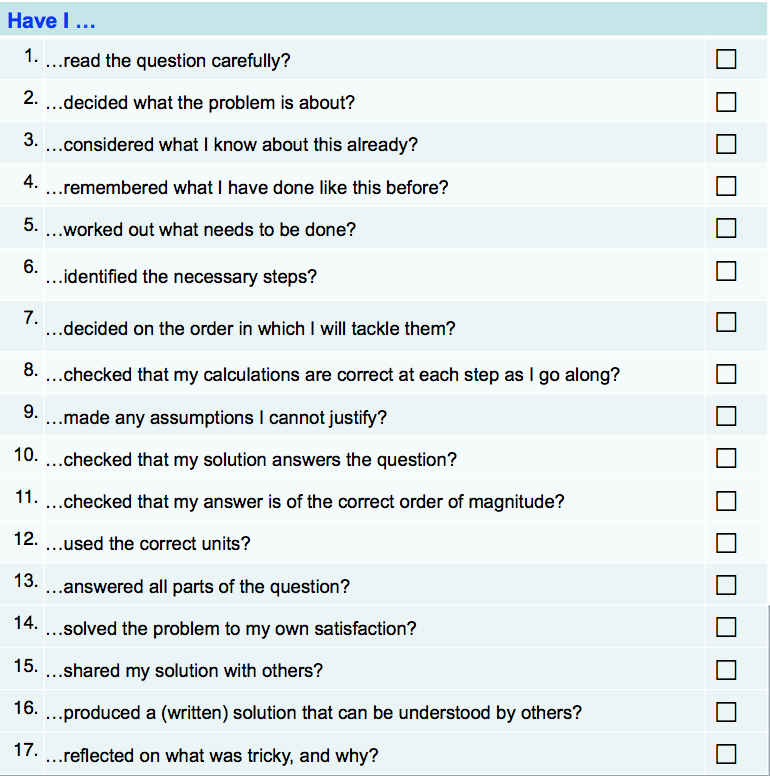
Monitoring checklists

Construct checklists with students itemising the important things to check before they consider something is finished. Here’s just  one example:Screen Shot 2016-05-09 at 13.56.32

Help learners to consider others

Primary

Empathy Specs

Image result for empathy glasses

Make cardboard spectacles and cover the lens space with coloured film. These are empathy specs. When a pupil puts them on, they have to see the world, problem, or event, from a different point of view.

You could use different colour specs for different points of view – ‘Today the blue specs are for land owners, the red specs are for tenant farmers, the green specs are for animals, the yellow specs are for . . . .’

Secondary

Contentious Issues – To encourage students to consider different sides of an issue.

Stimulate debate with provocative statements:

  • ‘Experimenting on animals is not an option in a civilised society’
  • ‘This island has room enough for many more people’
  • ‘Live for today since tomorrow is unknown’
  • ‘If cows were more intelligent, would we still eat them?’

Or, alternatively . . .

Primary

Big Feet

Image result for big feet

Make two enormous feet out of coloured card or material. Choose two volunteers, each stands on one of the feet. The first talks about a situation or problem from their point of view. The second talks about the same situation / problem from his/her point of view. Then they each move to stand on the other foot and talk about the same situation from the other person’s point of view.

Secondary

Exploring different perspectives

Image result for different perspectives

Offer students different pictures, or descriptions, of the same event.

Ask students to build the full picture. This is usually more effective done in pairs or small groups than individually.

Compare two groups’ views of the same event. Explore how such different views may come about.

2. Exploring the language of Learning

How you might extend the language and understanding of this behaviour

Primary

What do good learners do?

Related image

If, as a teacher, you were asked this question, how would you answer? Make some notes about your initial thoughts. Which learning behaviours do you think are most important for a ‘good learner’?

Then open up a conversation with your children about what good learners do – you may be surprised what children really think about learning and their role in it!

How does their view differ from your’s? What might you do about resolving these differences?

Secondary

Talking Learnish

If you have not been used to talking about learning, try opening a discussion about learning itself. What it is, how it feels, what it’s for etc. Here are some starters to think about:

  • What is learning about?
  • What is it not?
  • When is it best?
  • Where is it best?
  • What helps your learning?
  • What steps do you take in learning?
  • How does it feel?
  • What surprises have you found?
  • What hinders learning?
  • What do you learn for?
  • What do you do with your learning?

3a. Infusing learning in to lesson objectives

Use a quick starter to key students into the learning behaviour you want to concentrate on in the lesson. i.e. here you are starting up the meta learning behaviour

Primary and Secondary

Linking ‘Learning Objectives’ and ‘Learning Behaviours’

Rather than telling children how they will need to be as learners to be successful, share your Learning Objectives / Success Criteria and invite them to discuss and agree the types of learning behaviours that they expect they will need to use in the upcoming lesson / activity.

Ask:

  • Why did they choose those particular behaviours?
  • Have they missed any key ones?
  • How precisely will they use these key behaviours?
  • How will they monitor the use?
  • What are their Success Criteria for the use of these key behaviours?
  • What are your’s?


3b. Helping learners to think ahead in order to be successful

Use a quick starter to key students into the learning behaviour you want to concentrate on in the lesson. i.e. here you are starting up the need to think strategically.

Primary and Secondary

Visible Thinking Routine

How will you find that out ? This routine helps students to take stock of what they need to find out and to consider the strategies they might use to achieve it. It encourages metacognitive thinking about which learning strategy is most likely to lead to success. The routine has two questions:

  • What do you need to know / understand ?
  • Which strategy is most likely to be successful ?

The natural place to use this routine is when students understand what they need to find out but before they make a choice from a range of learning strategies.


As you get deeper into a lesson you will need activities which, by their very nature, will develop students’ learning behaviours AND their understanding of the content.

Here are 2 ideas where students will gain an understanding of the content AND will develop effective learning behaviours.

4. Focusing on improving as a learner – 2 visible thinking routines

Draw out the meta learning behaviour being used in a thinking routine.

Primary and Secondary

Visible Thinking Routine #1

How do you want to improve as a learner ?

The questions are deep and searching. This routine helps students to take stock of their current learning strengths and weaknesses. It requires the student to have an accurate assessment of their existing learning strengths and weaknesses and to have identified particular aspects on which they wish / need to work. It encourages metacognitive thinking of the highest order, not about what is to be learned, but about the learning process and self as learner.

Image result for strength weakness

The routine has three questions:

  • What are your current learning strengths and weaknesses?
  • Which do you need to improve ?
  • How will you do that ?

The natural time to use this routine is when students already have a fluent language with which to discuss the learning process and have frequently been given opportunities to reflect on how they are as a learner. The third question forces the move from wishful thinking to action planning. But in the early stages, the teacher will need to be prepared to scaffold the conversation, to provide suggestions and to offer strategies that might be employed.

Visible Thinking Routine #2

Headlines: a routine for capturing what is really important.

Image result for headlines

This routine draws on the idea of newspaper-type headlines as a vehicle for summing up and capturing the essence of an event, idea, concept, topic, etc. The routine asks one core question:

  • If you were to write a headline for this topic or issue right now that captured the most important aspect that should be remembered, what would that headline be?

Consider following it up with the challenge of writing the first paragraph only of the newspaper article, the one that lays out all of the key information relating to the headline.

This routine works especially well at the end of a class discussion or session in which students have explored a topic and gathered a fair amount of new information or opinions about it.


And here is an idea that will help students to better understand themselves as learners.

5. An activity to highlight and strengthen Learning

Talking Learnish

Students first need to develop a language to describe the learning process before they can understand learning and themselves as learners. Talking Learnish will help students to begin to develop their language and understanding of learning.

Coaching Notes

Coaching Notes

Trainer Notes

Trainer Notes

Learning Log

Learning Log

6. Reflecting on Personal Effectiveness

Primary

Make reflecting on Personal Effectiveness part of everyday lessons

Here is a very practical example of how you might develop the emotional climate of the classroom and make it Personal Effectiveness friendly.

Learning Mats

I was interested what . . . . . had to say about . . . . 

I listened carefully to understand what  . . . .. was saying

I noticed how  . . . was feeling  when . . . . 

I talked about how I was learning to . . . . 

As a learner, what I want to improve is . . . . 

I tried hard to involve  . . .  with . . . . 

I made a good contribution to my group when I  . . . . .

I took responsibility for  . . . . 

I am planning to get better at . . . . by doing . . . . 


Learning mats are A4 laminated sheets that show various aspects of a learning habit. Keep them on desks/tables or as part of a wall display.

Secondary

Taking reflection to another level . . . .

Thus far students have been reflecting on whether and / or how frequently they have been using various learning behaviours. Use this Rating Wheel to get them reflecting on how well they have used these behaviours. Challenge them to explain why they believe they have used the behaviour effectively. How could you use their answers to build definitions of effective learning behaviours?


Primary and Secondary

What do you think?

  • Can you see a use for any of the suggested activities?
  • Have you raised awareness of Learning Effectiveness with your students?
  • Does your class have an agreed set of good Learning Effectiveness behaviours?
  • Which two ideas from above do you want to try out?
  • How long will you keep them going before you decide whether they have worked or not?

Make a note of…Little_r

  • What happens in your classroom in response to any of the above ideas.
  • How students’ behaviour changes over about 3 weeks of becoming more familiar and talking about the behaviour.
  • How your behaviour in the classroom changes as you use these ideas over time.

NB. None of the behaviours above will lead to instant understanding in students nor instant changes of behaviour. You will need to drip them in over time and keep building and refreshing your language of learning.

Continue Reading

Getting the classroom climate right

Building effective learning behaviours is about creating a culture in classrooms – that systematically cultivates habits and attitudes that enable young people to face difficulty calmly, confidently and creatively. By a ‘culture’ we mean all the little habits, routines and practices that implicitly convey ‘what we believe and value round here’.

So ‘culture’ concerns the details of the micro-climate that you create in your classrooms. What you do and say, what you notice and commend and what you don’t, what kind of role model of a learner you offer – all these are of the essence. The micro-climate of a classroom can inadvertently stifle, or specifically enhance,  the very behaviours you are seeking to promote.

Does my classroom climate encourage Personal Effectiveness?

In the classroom that is a learning-friendly environment within which personal effectiveness can grow, there are changes in the relationships; what is discussed; how learning is constructed; and in what is celebrated.

Apply your own attentive noticing and consider whether you already use any of these features and which you fancy trying.

The changes in relationships include: 

  • Reflection is a learner responsibility: Students are expected to distil what they have learned and how they have learned it for themselves.
  • Students set their own targets for development: Students are enabled to reflect on their own learning strengths and weaknesses and to set targets for their own personal, learning development.
  • Students make choices: Students are enabled to make choices about their learning and to reflect on how successful these choices have been in accomplishing the task; students are enabled to decide what they still need to do / find out.
  • Students demonstrate independence: Students are encouraged to make the best of difficult situations by making imaginative use of resources and of other people.

The changes in what is talked about include:

  • Learning is a focus of conversation: Students are encouraged to engage in meta-cognitive talk as they reflect on the process of learning during review points.
  • Feedback is well-balanced; Teachers draw attention to what students have learned and how they learned it through both written and oral feedback.
  • Feelings are a topic of conversation: Students are encouraged to express and discuss their own emotions; Opportunities to talk about emotions are built into classroom discussions; Stories/photos are used to promote discussion about emotions.
  • Dialogue is key to learning: The classroom supports a culture of learners working collaboratively in pursuit of individual and team goals, talking together and making the best of students’ diverse contributions.

The changes in how learning is constructed include:

  • Learning is built into planning: Learning objectives reveal both the content to be learned and the learning behaviours to be employed; students are alerted to how they are learning.
  • Learning is built into review points: Students are given time to to review both content and process in lessons and to consider where else they might apply new learning.
  • The need for empathy
  • and interdependence is

  • planned into the curriculum: Opportunities are provided for individuals to see things through others’ eyes and encourage them to value different opinions; Tasks are designed to enable students to argue in favour of views other than their own.
  • Flexibility is planned: Planning anticipates and encourages students to select their own objectives and success criteria, and to decide on and apply their own chosen strategies to solve problems.

The changes in how learning is celebrated include:

  • Display celebrates learning behaviours: Display celebrates learning in progress and emphasises the learning processes used.
  • Display foregrounds learning strategies: Students are encouraged to consider and adopt the successful learning strategies that are evident in display.
  • Diversity is welcomed: The classroom fosters a culture of mutual respect where all views are respected and given due regard.
  • Flexibility is prized: Changing tack in light of feedback and personal reflection is seen as part of the pursuit of excellence.

[So the outer ring of the culture wheel then contains only the text in bold]

Title

A Learning-Friendly Culture for Personal Effectiveness

INSERT CULTURE WHEEL HERE


What do you think?

  • What do your answers suggest?
  • How does your classroom culture contribute to students’ reactions or approaches to Personal Effectiveness?
  • Is this broadly negative or positive?
  • What insightful ‘Ah Ha’ moments did you have as you read through the list?
  • How have these changed your view of Personal Effectiveness?

Make a note of…Little_r

  • Any ideas that look as if they might help students to improve their Personal Effectiveness
  • An idea on the list you want to start doing.
  • An idea that interests you, but you are uncertain what it means or how you might do it.

Continue Reading

What is good . . . Personal Effectiveness?

What do we mean by Personal Effectiveness?

Successful Futures identifies Personal Effectiveness as one of the four Integral Skills for modern life and work and describes it as:

  • reflecting on and understanding oneself and others, behaving in effective and appropriate ways; being an effective learner

with the associated sub-skills of:

  • self-awareness; confidence and self-esteem; emotional intelligence; the ability to evaluate own learning strengths and areas for development; independence; leadership; social and cultural awareness, ethics.

It involves making good use of all the resources you have at your disposal (i.e. your talents, strengths, skills, energy and time) to enable you to take control of your life and to achieve both work and life goals – to live well in uncertain times.

What does being a Personally Effective learner involve?

A well formed Personal Effectiveness habit involves being ready, willing, and able to:

  • Be reflective about oneself as a learner: understanding how you learn, knowing your learning strengths and how you can exploit them, knowing your learning weaknesses and how you can circumvent them.
  • Be self-aware: understanding yourself – having a clear perception of your personality, including strengths, weaknesses, thoughts, beliefs, motivation, and emotions; understanding other people – how they perceive you, your attitude and your responses to them.
  • Behave with empathy,
  • interdependence

  • and understanding towards others: interacting effectively and appropriately in a range of different situations with sensitivity to others; seeking to understand how others are feeling; looking out for the needs of others while pursuing your own goals.
  • Make good choices: understanding how to behave and interact so as to get the best from yourself and others.
  • Take responsibility for one’s own development: becoming the master of your own learning destiny, creating plans for self-improvement, intentionally practising to improve the things that really matter to you.


Spotting the personally effective learners in your classes

Just to get you tuned in – have a quick think about ‘learners who display Personal Effectiveness you may know’. Make a note of students you know who display these characteristics.

Create from:

Title – Good learning habits – Personal Effectiveness

Column heading: Your potentially personally effective learners are likely to:

Show interest in and respect for others’ ideas

Listen in order to understand others

Be alert to others’ feelings

Talk about how they learn

Have an accurate view of themselves as learners

Want to improve as learners

Put effort into managing relationships

Work well with others

Enjoy taking on responsibilities

Have plans for their own development


What do you think?

  • How many students come to mind when looked at through the lens of Personal Effectiveness?
  • Is there a gender balance or have you noted down more girls than boys or vice versa?
  • Are the students you have noted from across all age groups or do some dominate?
  • How do these personally effective characteristics help these students to be better learners?
  • If the question had been about students without these characteristics, what would you have discovered?

Make a note of…Little_r

  • Those groups or classes that seem to have lots of good personally effective characteristics.
  • How you think you might capitalise on this.


Continue Reading

Moving my practice on – healthy, confident individuals

Cultivating learning habits ultimately involves:

  • Providing rich and varied occasions for exercising learning habits;
  • Infusing learning habits into lessons to enhance content understanding;
  • Recognising and celebrating the use and growth of learning habits;
  • Expecting students to take ownership of and responsibility for their own learning habits;
  • Exploring the development of learning habits with students over time.

As a teacher you are an influential character builder and so need to be mindful of how you help students form, replace, re-form and strengthen their learning habits.

But don’t worry, you’re not there yet. It takes most teachers between 2 and 3 years to become really fluent with this way of teaching. So, go easy on yourself. Feel determined because small steps often prove to be big levers for change. Have a think about what you might do…


What to stop and start

Here are a few ideas you might want to try. Take it steady, this way of teaching can be a big but exciting shift so it’s worth doing it slowly and thoughtfully.

Look first at the Stop/avoid ideas. Some of these are far from trivial but it’s best to try to remove them before starting on the Start/do more of, Start slowly and Experiment with ideas.

Stop

  • Talking mostly about content and knowledge at the expense of the learning process
  • Doing the planning and the reflection for them
  • Intervening too early
  • Spoon-feeding
  • Limiting opportunities for choice
  • Assuming that their values match yours

Start

  • Talking about the process of learning
  • Infusing learning behaviours into lesson objectives
  • Praising effort, stickability, control of negative emotions
  • Placing responsibility with students to make appropriate choices
  • Giving more time to plan what to do before actually doing it
  • Talking about the beliefs, values and feelings of others

Start slowly

  • Building opportunities for students to explain how they are learning into review points
  • Injecting greater challenge
  • Exploring how techniques and ideas in one subject can be applied elsewhere
  • Withdrawing the scaffold so that students do more for themselves
  • Allowing them to fail in safety
  • Talking about how initial plans / ideas almost always need revising

Experiment with

  • Enabling students to set their own targets for learning development
  • Peer to peer teaching
  • Allowing students to design their own goals, objective, success criteria and milestones
  • Building in time to reflect on the process of planning
  • Creating opportunities for students to explain their beliefs and feelings


What do you think?

  • Which of the ideas appealed to you most?
  • Can you see ways of incorporating these into your subject/class routines?
  • Which would make the biggest difference to your students?
  • Which would make your life easier?

Make a note of…Little_r

  • Ideas that you want to try and the impact you hope they will have on your teaching and on your students.
Continue Reading

Developing my talk for healthy, confident individuality

Developing your learning language

Here is a range of things you can say to nudge healthy, confident learning. When you use this kind of language you are talking as a learning coach, encouraging students to think for themselves. Using such statements encourages your students to:

  • imitate you;
  • start to think in this way;
  • become conscious of these phrases and their meaning.

Eventually you will hear some of the questions pop up in students’ self-talk….in speech or even in writing from time to time, but mostly these will go on inside their heads. As your work on healthy, confident learning gathers pace see if you can detect students who talk, or think, in these ways.

My learning talk nudges to encourage Healthy, Confident Individuality

Teacher talk – as a learning coach

To ensure students do the thinking for themselves, use phrases like these to nudge them to:

Be resilient: 

  • Give it a go – see what happens
  • Don’t give up – I’m confident you can do this!
  • If it’s not difficult, what are you going to learn?

Be self-confident:

  • What should you do?
  • What do you believe is the best course of action?
  • What would a principled response be to . . . . . ?

Be resourceful: 

  • Who might be of help here?
  • Who is the expert? What do they say?
  • What can you find out about this? How will you go about finding it?

Develop the skill of transfer:

  • Where / when else might you use this?
  • Could you use this outside of school?
  • Has this got any applications in other subjects?

Be forward thinking:

  • What are you trying to achieve? How will you do that?
  • What do you learn from that? How does it change your outlook?
  • Have you considered all of the available evidence?

Have self-respect: 

  • Don’t lose faith – you can do anything you want!
  • If you don’t believe in yourself / your ideas, who else will?
  • How can you hold true to your principles? 

Be self-aware: 

  • How are you learning this?
  • How are you improving as a learner? What will you work on next?
  • Which learning strengths can you / did you bring to this?

What do you think?

  • Which of these healthy, confident learning nudges might you start using?
  • In which particular lessons would such nudging be most useful?
  • How will most of your students respond to such nudges?
  • Will this way of engaging be more popular with girls or boys?
  • What other nudging ideas might you add to the list?

Make a note of…

Little_r

  • Students’ reactions to the nudges.
  • Ideas about why this might be.
  • Ways in which you could further encourage students to imitate this meta-cognitive self-talk.
  • Any positive or negative impact of these healthy, confident behaviours.
Continue Reading

Ideas for classroom practice

Some ideas to encourage a Healthy, Confident frame of mind

  1. Firstly… make students aware of healthy, confident individuality…when, where, why. 
  2. Then… explore healthy, confident learning a little more through the language of learning
  3. Try… using healthy, confident learning as a lesson starter to tune students into using it
  4. Then start… blending healthy, confident learning into the way you teach the content. Use specific healthy, confident learning strategies to deepen content understanding.
  5. Ensure… students reflect on the success or otherwise of their healthy, confident mindframe.


1. Making students aware of Healthy, Confident individuality

How you make students aware of the words that describe the behaviour and why it is important to use it.

Helping students to face difficulty with confidence

Primary

Develop learning heroes

‘Adopt’ a character – real, imaginary, human or animal – who exhibits the best features of perseverance. Talk about the character until your children become familiar with its attributes. When you have set a group to work on a particular task – numeracy, reading, writing etc., leave this character (actual or picture) on their table as a reminder of ‘there are things you can do when you don’t know what to do’


Secondary

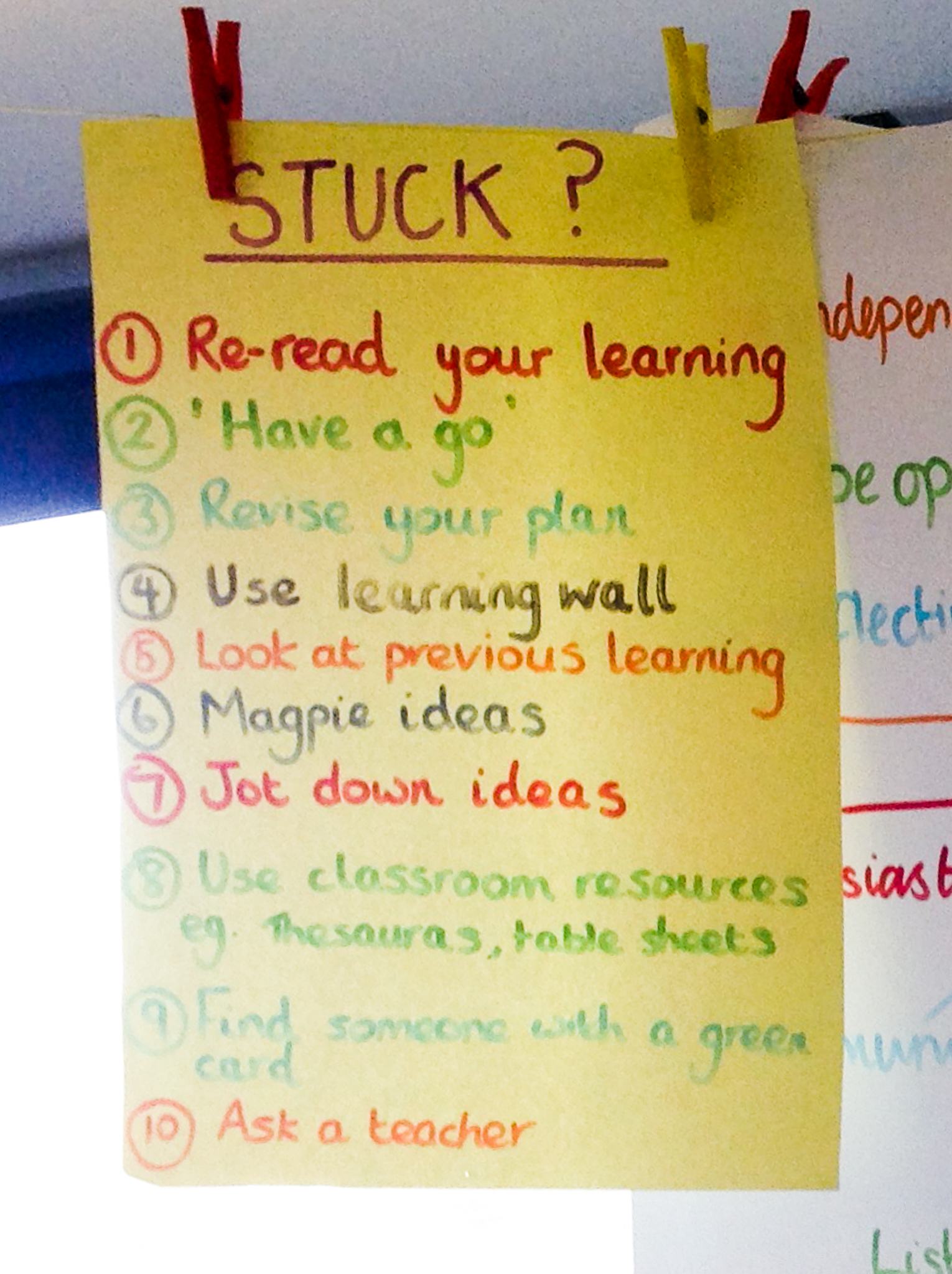
Explore strategies for getting unstuck…

…by looking at the hows of  being stuck. Different sorts of stuck call for different strategies:

Develop prompts to nudge students’ self-talk: 

  1. You have forgotten the next step in a process –  what might I try next.
  2. You tried something that didn’t work- what would be an alternative strategy?
  3. You don’t understand the problem/objective/goal – I need to re-read the ‘question’.
  4. The problem is presented differently –  what does this remind me of? What did I do then?
  5. You don’t know which remedy to choose – what’s the range of possible strategies I could use?
  6. You can’t find a way out, you are in a blind alley – I’ll retrace my steps back to where I first ‘got lost’.
  7. You don’t know where to find more information –  where else might I look?

Helping students to be forward looking

Primary

Explore planning through a story

Screen Shot 2016-07-22 at 13.58.00

Jay thinks he ought to do his own packing when he goes to spend a week with grandma and grandad but he discovers that it isn’t as simple as he thinks.

Story Guide & Story

Extend thinking about forward planning by exploring:

  • If you were going away for a holiday how would you plan what you needed to do?
  • Do you think it’s a good idea to make a plan before you do something?
  • How does it help us if we make a plan before we start
  • What do you need to think about when you are making a plan?
  • When do we make plans at school?


Secondary

Looking to the future

Build time into lessons when students are required to explain to a neighbour what they are trying to do / hoping to achieve in order to stop them ‘doing it’ and to ‘think about doing it’. Allow time for a brief conversation about how it is going thus far and what might be done next.

When reading a story, watching a video, or similar, get in the habit of stopping and asking ‘what do you think will happen next?’

The ability to think ahead is one of the last things to develop in teenage brains – this will come as no surprise to parents! Here you are helping students to understand that the future is something that can, to an extent, be anticipated and therefore controlled.


Helping students to understand that excellence takes time, effort, and flexibility

Primary and Secondary

Give revising a high profile

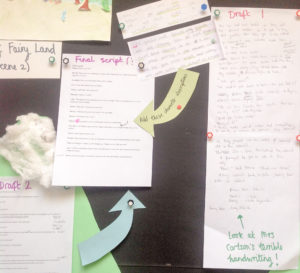
Display work in progress

  • Collect and display work at different stages of development. Use arrows and notes to highlight the changes and their impact.
  • Renew and refer to these frequently to encourage students to review and amend their work.
  • Show that learning isn’t about perfection at the first attempt!
  • Build confidence that learning is a slow process and that setbacks are to be expected.


Helping learners to apply effective learning behaviours to real-world situations

Primary and Secondary

The holy grail of transfer

Learners find transfer between similar situations difficult, and near impossible between dissimilar ones. They frequently fail to see that the successful behaviours in one area of learning can be useful when applied elsewhere.

Where else?

Give time to discuss effective learning behaviours. Catch them being effective and unpack what they are doing, how they are doing it, and why it is successful. It is very much ‘in the moment’ planning – spotting it and talking about it.

Then probe ‘Where else might you use this?’

Start with other areas of school learning, but broaden it out into other areas of students’ learning lives – home, hobbies, family etc.


2. Exploring the language of monitoring and revising

How you might extend the language and understanding of this behaviour to support self-confidence

Primary

Focus on monitoring; checking as you go along


Secondary

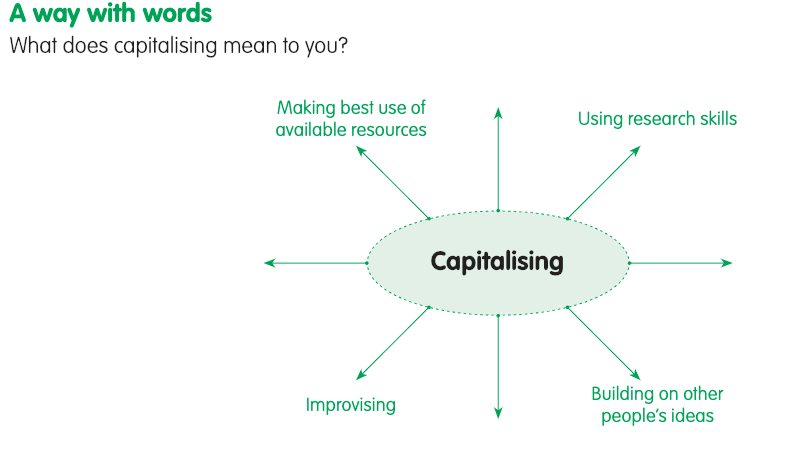
A way with words


Collect words that describe what a good reviser does.How else might we talk about Revising? Explore well known sayings

What do we mean when we say …

Change tack
Think on your feet
Fine tuning
Back to the drawing board
Keep an open mind


3. Building confidence by exploring possible strategies

Use a quick starter to build students’ belief that they have the strategies to be successful.

Primary and Secondary

How might we tackle this?

A lack of confidence often stems from simply not knowing what to do or how to do it. The task appears overwhelming and otherwise confident individuals become paralysed by the prospect of the task ahead.

At the beginning of a session talk with the students about the strategies and things they might use to help them with their learning. Get them talking about how they might tackle this, thinking about strategies that have worked in the past, or speculating on new approaches that might work. It is time spent thinking about tackling the task rather than actually starting to tackle it. It reminds students that they have a range of strategies available and gives confidence that they have the tools for the job in hand.


As you get deeper into a lesson you will need activities which, by their very nature, will develop students’ healthy, confident learning AND their understanding of the content.

Here is an idea where, by using healthy, confident learning, students will gain an understanding of the content AND will develop an healthy, confident habit.

4. Focusing on Healthy, Confident Individuality as a learning strategy

Draw out the healthy, confident behaviours being used in a thinking routine.

Primary and Secondary

Visible Thinking Routine – Know, Don’t Know, Find Out

Image result for how will you find out

The visible thinking routine has three components:

  • What do you know?
  • What do you need to know?
  • How are you going to find out?’

It encourages students to take stock of what they already know or can do, the puzzles, questions and difficulties that remain and, critically, how they might resolve them. Use it after students have started to study something but before they have got it completely sorted. Be prepared to scaffold their thinking to answer ‘How are you going to find out?’ as this is the tricky aspect of the routine – it places responsibility on them to think through the best way ahead.


And here is an idea that will help students to understand the healthy, confident learning processes.

5. Two activities to highlight and strengthen the ability to make the most of what and who is available

Design specific activities to highlight and strengthen the behaviour

Icarus All-Sorts

We have an image, but we do not know what it is called. Where might we look? How  might we find out?

The activity leads to a recognition of the range of resources that can be called upon when seeking to acquire new knowledge, understand the unfamiliar and respond to challenges.

Coaching Notes

Coaching Notes

Resource

Resource


Borrowing the Best Bits

The aim of ‘Borrowing the Best Bits’ is to develop an understanding that learning is about gleaning from others, taking what they do well, adapting it and applying their strategies to our own practice.

Coaching Notes

Coaching Notes


6. Reflecting on Healthy, Confident learning

Primary

Make reflecting on Healthy, Confident learning part of everyday lessons

Here is a very practical example of how you might develop the emotional climate of the classroom and make it Healthy, Confident learning friendly.

Learning Mats

I was confident that I could . . . . 

I kept going when . . .

I took time to think about . . . . before I . . . . 

I asked myself what I already knew about . . . .

I asked myself where else I could . . . .

I want to do . . . .  like . . . . . does it

I changed my mind about . . . . . 

I asked myself how I could . . . . . . 

 I knew I was getting it right because I  . . . . . 

Learning mats are A4 laminated sheets that show various aspects of a learning habit. Keep them on desks/tables or as part of a wall display.

Secondary

A Learning Log to alert students to Healthy, Confident learning behaviours and how it impacts across various aspects of their learning lives.

I want a learning log like this one:

Learning Log

with the text changed:

My Learning Log : Healthy, Confident Individuality

Box 1

I was confident that I would be able to . . . . . . . .

Afterwards I felt …

box 2

I d0 not believe that I will be able to . . . . . . . . .
I feel …
It would help if I  …

box 3

I tried to . . . . . .  but I failed

I felt …
What I could do next time …

End

What I’ve learned about myself and the importance of self-belief

Primary and Secondary

What do you think?

  • Can you see a use for any of the suggested activities?
  • Have you raised awareness of healthy, confident learning with your students?
  • Does your class have an agreed set of good healthy, confident behaviours?
  • Which two ideas from above do you want to try out?
  • How long will you keep them going before you decide whether they have worked or not?

Make a note of…Little_r

  • What happens in your classroom in response to any of the above ideas.
  • How students’ behaviour changes over about 3 weeks of becoming more familiar and talking about the behaviour.
  • How your behaviour in the classroom changes as you use these ideas over time.

NB. None of the behaviours above will lead to instant understanding in students nor instant changes of behaviour. You will need to drip them in over time and keep building and refreshing your language of learning.

Continue Reading

Getting the classroom climate right – healthy, confident individuals

Building effective learning behaviours is about creating a culture in classrooms – that systematically cultivates habits and attitudes that enable young people to face difficulty calmly, confidently and creatively. By a ‘culture’ we mean all the little habits, routines and practices that implicitly convey ‘what we believe and value round here’. 

So ‘culture’ concerns the details of the micro-climate that you create in your classrooms. What you do and say, what you notice and commend and what you don’t, what kind of role model of a learner you offer – all these are of the essence. The micro-climate of a classroom can inadvertently stifle, or specifically enhance,  the very behaviours you are seeking to promote.

Does my classroom climate encourage healthy, confident individuality?

In the classroom that is a learning-friendly environment within which healthy, confident individuals can grow, there are changes in the relationships; what is discussed; how learning is constructed; and in what is celebrated.

Apply your own attentive noticing and consider whether you already use any of these features and which you fancy trying.

The changes in relationships include:

  • Coaching, not telling, is the prevailing culture: Students are coached through failure and encouraged to learn from it to foster a growth mindset.
  • Students are encouraged to make choices: Students are responsible for making choices about which learning strategies/behaviours to employ.
  • Active learning is evident: Learners are required to find things out for themselves.
  • Students are accountable for their behaviours: Responsibility for doing ‘the right thing’ lies with students.

The changes in what is talked about include:

  • Students talk about the learning process: Students engage in meta-cognitive talk as they discuss their learning.
  • Teachers are alert to opportunities to transfer: Teachers draw attention to the ways in which students are learning and how these behaviours might apply elsewhere.
  • The relative value of varying ideas is a topic of conversation: Students are encouraged to discuss evidence, to consider the relative strengths of different arguments, and so arrive at sound judgements.
  • Explanations, not assertions, are required: Students are encouraged to explain and defend their viewpoints.

The changes in how learning is constructed include:

  • Dual focused objectives include learning behaviours and content: Learning objectives reveal both the content to be learned and the learning behaviours to employed. Both are the focus of reflection during student-led review points.
  • Challenge is high but do-able: learning is planned to stretch learning rather than simply consolidate understanding.
  • Students find things out for themselves: Effective search skills are taught and regularly exercised.
  • Empathy is evident: There are planned opportunities to see the world through others’ eyes.
  • Reflection time is planned: Time to think ahead, to plan what to do, to monitor progress, is built into lessons.

The changes in how learning is celebrated include:

  • Display is more than ‘the finished article’: Display celebrates: learning in progress and emphasises the learning processes used; plans, drafts and revisions.
  • Effort is rewarded over attainment: Success as a result of effort is valued over the effortless success of able learners working on materials that they find less than challenging.
  • Transfer is a topic of interest: Knowledge, and skills learned in one context and applied elsewhere are noted.
  • Generous actions that benefit others are celebrated:  Students are rewarded for contributions to the learning of others and of the groups within which they work.

[So the outer ring of the culture wheel then contains only the text in bold]

Title

A Learning Friendly Culture for Healthy, Confident Individuals

INSERT CULTURE WHEEL HERE

What do you think?

  • What do your answers suggest?
  • How does your classroom culture contribute to students’ reactions or approaches to healthy, confident learning?
  • Is this broadly negative or positive?
  • What insightful ‘Ah Ha’ moments did you have as you read through the list?
  • How have these changed your view of healthy, confident learning?

Make a note of…Little_r

  • Any ideas that look as if they might help students to become better at healthy, confident individuality.
  • An idea on the list you want to start doing.
  • An idea that interests you, but you are uncertain what it means or how you might do it.
Continue Reading

What does it mean to be a healthy, confident individual?


What do we mean by Healthy, Confident Individuals?

Successful Futures defines healthy, confident individuals who:

  • have secure values and are establishing their spiritual and ethical beliefs;
  • are building their mental and emotional well-being by developing confidence, resilience and empathy;
  • apply knowledge about the impact of diet and exercise on physical and mental health in their daily lives;
  • know how to find the information and support to keep safe and well;
  • take part in physical activity;
  • take measured decisions about lifestyle and manage risk;
  • have the confidence to participate in performance;
  • form positive relationships based upon trust and mutual respect;
  • face and overcome challenge;
  • have the skills and knowledge to manage everyday life as independently as they can;
  • and are ready to lead fulfilling lives as valued members of society.

Some of these traits are learning behaviours, where others are things we do (like take part in physical activity) or an outcome (like ready to lead fulfilling lives).

Drawing out the learning behaviours embedded in this description of the healthy, confident individual, students need to have a strong, positive view of self, to understand how, through their efforts, they achieve success in all areas of their lives, to be able to discover what they need to know and apply this knowledge appropriately, and to have the skill and disposition to manage themselves, to be self-regulators.


What does being a Healthy, Confident learner involve?

A well formed Healthy, Confident learning habit involves being ready, willing, and able to:

  • Be resilient: enjoy and rise to challenges, have a ‘can do’ outlook, take responsible risks in pursuit of their own goals.
  • Be self-confident: develop a secure set of values from which to interact with others; able to explain and defend one’s values and beliefs; develop the ability to act in accordance with one’s personal values.
  • Be resourceful: Draw on a full range of resources from the wider world in order to expand horizons and discover information of value.
  • Develop the skill of transfer: See where and when to use existing knowledge / skills in both similar and dissimilar situations; be alert to opportunities to use school-based learning in the wider world. 
  • Be forward thinking: be prepared to think ahead before taking action; able to weigh up the pros and cons of possible ways forward; willing to reconsider decisions as new evidence emerges.
  • Have self-respect: build a strong and positive view of self; have a strong belief in one’s personal efficacy; learn within a culture of positive relationships which respect and value the unique contribution each student can make.
  • Be self-aware: understanding how they learn so that they can play to their strengths and improve on areas of weakness; having a sense of growing as a learner. 


The key ‘integral skills’ most closely linked to Healthy and Confident individuality are:

  • personal effectiveness – reflecting on and understanding oneself and others, behaving in effective and appropriate ways; being an effective learner.
  • planning and organising – implementing solutions and executing ideas and monitoring and reflecting on results.

Spotting the Healthy, Confident learners in your classes

Just to get you tuned in – have a quick think about ‘healthy, confident learners you may know’. Make a note of students you know who display these characteristics.

create from

Title – Good learning habits – Healthy, Confident Individuals

Column heading: Your potentially healthy, confident learners are likely to:

Adopt a ‘can do’ outlook

Pursue their own goals with confidence and tenacity

Act based on a secure set of personal values

Think before they act

Be willing and able to broaden their perspectives based on experience

Exhibit self-confidence born of secure values

Sense where else they can apply new learning

Believe in themselves

Learn with and from others

Understand how they learn

Be able to explain how they are improving as a learner


What do you think?

  • How many students come to mind when looked at through the lens of healthy, confident learning?
  • Is there a gender balance or have you noted down more girls than boys or vice versa?
  • Are the students you have noted from across all age groups or do some dominate?
  • How do these healthy, confident characteristics help these students to be better learners?
  • If the question had been about students without these characteristics, what would you have discovered?

Make a note of…Little_r

  • Those groups or classes that seem to have lots of good healthy, confident characteristics.
  • How you think you might capitalise on this.
Continue Reading

Moving my practice on – ethical, informed citizenship

Cultivating learning habits ultimately involves:

  • Providing rich and varied occasions for exercising learning habits;
  • Infusing learning habits into lessons to enhance content understanding;
  • Recognising and celebrating the use and growth of learning habits;
  • Expecting students to take ownership of and responsibility for their own learning habits;
  • Exploring the development of learning habits with students over time.

As a teacher you are an influential character builder and so need to be mindful of how you help students form, replace, re-form and strengthen their learning habits.

But don’t worry, you’re not there yet. It takes most teachers between 2 and 3 years to become really fluent with this way of teaching. So, go easy on yourself. Feel determined because small steps often prove to be big levers for change. Have a think about what you might do…


What to stop and start

Here are a few ideas you might want to try. Take it steady, this way of teaching can be a big but exciting shift so it’s worth doing it slowly and thoughtfully.

Look first at the Stop/avoid ideas. Some of these are far from trivial but it’s best to try to remove them before starting on the Start/do more of, Start slowly and Experiment with ideas.

Create from

Stop

  • taking responsibility for dealing with all of their misdemeanours
  • repeating yourself – it reduces the need for students to listen attentively
  • noticing for them, telling them what to notice
  • expecting perfection at the first attempt
  • doing all of the explaining for them – it is their job
  • leading all of the plenaries / review points

Start

  • exploring/discussing the beliefs, feelings, motives and values of others
  • considering why others might see things differently
  • gradually shifting responsibility towards learners
  • modelling active listening techniques
  • creating time for students to distil the learning for themselves at review points
  • praising flexible behaviours that lead to a significant re-think

Start slowly

  • exploring conflicting viewpoints and contentious issues
  • listening beyond the facts to the values/beliefs of the speaker, and what is not being said
  • pairing up learners / creating groups with differing views
  • creating opportunities to weigh conflicting evidence
  • encouraging students to do the same thing, but in another way

Experiment with

  • creating difficult situations that require an empathetic response
  • engineering conflict that students need to resolve for themselves
  • playing Devil’s Advocate
  • using attentive noticing as a springboard into questioning, making links, imagining and reasoning
  • training students as coaches

What do you think?

  • Which of the ideas appealed to you most?
  • Can you see ways of incorporating these into your subject/class routines?
  • Which would make the biggest difference to your students?
  • Which would make your life easier?

Make a note of…Little_r

  • Ideas that you want to try and the impact you hope they will have on your teaching and on your students.
Continue Reading

Developing my language for ethical, informed citizenship

Developing your learning language

Here is a range of things you can say to nudge ethical, informed learning. When you use this kind of language you are talking as a learning coach, encouraging students to think for themselves. Using such statements encourages your students to:

  • imitate you;
  • start to think in this way;
  • become conscious of these phrases and their meaning.

Eventually you will hear some of the questions pop up in students’ self-talk….in speech or even in writing from time to time, but mostly these will go on inside their heads. As your work on ethical, informed citizenship gathers pace see if you can detect students who talk, or think, in these ways.

My learning talk nudges to encourage Ethical, Informed learning

Teacher talk – as a learning coach


To ensure students do the thinking for themselves, use phrases like these to nudge them to:

Be outward-looking, reflective learners:  

  • Hold on – just think it through before you start to . . . . .
  • Not sure I agree with that, but give me a bit more. I am interested in what you are saying.
  • Weighing the evidence, what should you/we do?

Think logically: 

  • What might happen if you . . . . . .?
  • What are the implications of  . . . . ?
  • Are there any reasons to not . . . . .?

Adopt an empathetic outlook:

  • Who, yourself aside, will this benefit?
  • What do the others think?
  • How will you find common ground so that you can work with . . . .

Behave with integrity: 

  • What is the right thing to do, in these circumstances?
  • On balance, what do you think you should do?
  • Where does the buck stop? Are you sure that this is the right course of action?

Be attentive:

  • Did you hear that? What do you think of it?
  • What is that telling you? What are the implications?
  • What do you notice? What does it mean?

Be perceptive: 

  • What is important here? What do you think is irrelevant?
  • What would you say is the big idea here?
  • Why do you think that this is important / unimportant?


What do you think?

  • Which of these ethical, informed learning nudges might you start using?
  • In which particular lessons would such nudging be most useful?
  • How will most of your students respond to such nudges?
  • Will this way of engaging be more popular with girls or boys?
  • What other nudging ideas might you add to the list?

Make a note of…

Little_r

  • Students’ reactions to the nudges.
  • Ideas about why this might be.
  • Ways in which you could further encourage students to imitate this meta-cognitive self-talk.
  • Any positive or negative impact of these ethical, informed learning behaviours.
Continue Reading

Ideas for classroom practice

Some ideas to encourage an ethical, informed frame of mind

  1. Firstly… make students aware of ethical, informed citizenship…when, where, why. 
  2. Then… explore ethical, informed learning a little more through the language of learning
  3. Try… using ethical, informed learning as a lesson starter to tune students into using it
  4. Then start… blending ethical, informed learning into the way you teach the content. Use specific ethical, informed learning strategies to deepen content understanding.
  5. Ensure… students reflect on the success or otherwise of their ethical, informed mindframe.


1. Making students aware of ethical, informed citizenship

How you make students aware of the words that describe the behaviour and why it is important to use it.

Helping students to identify what is and is not important

Primary

Circle Time

Image result for circle time

As part of circle time, encourage the children to talk about:

  • Things that worked well for me this week/today
  • or Things I will use again to help me
  • or Things I have learned
  • or Things I still need to find out

Secondary

Use post-its or postcards

Image result for post it


Giving students a large piece of paper encourages them to write lots – it might be a useful strategy for capturing detail, but it acts against the need to weigh up what is really important.

Require students to make notes on postcards or post-its – large enough for the key points, but too small for unnecessary detail.

Encourage students to discuss what must be on the postcard, and what can be safely considered ‘detail’.

Helping students to be attentive noticers

Primary

Give noticing a high profile

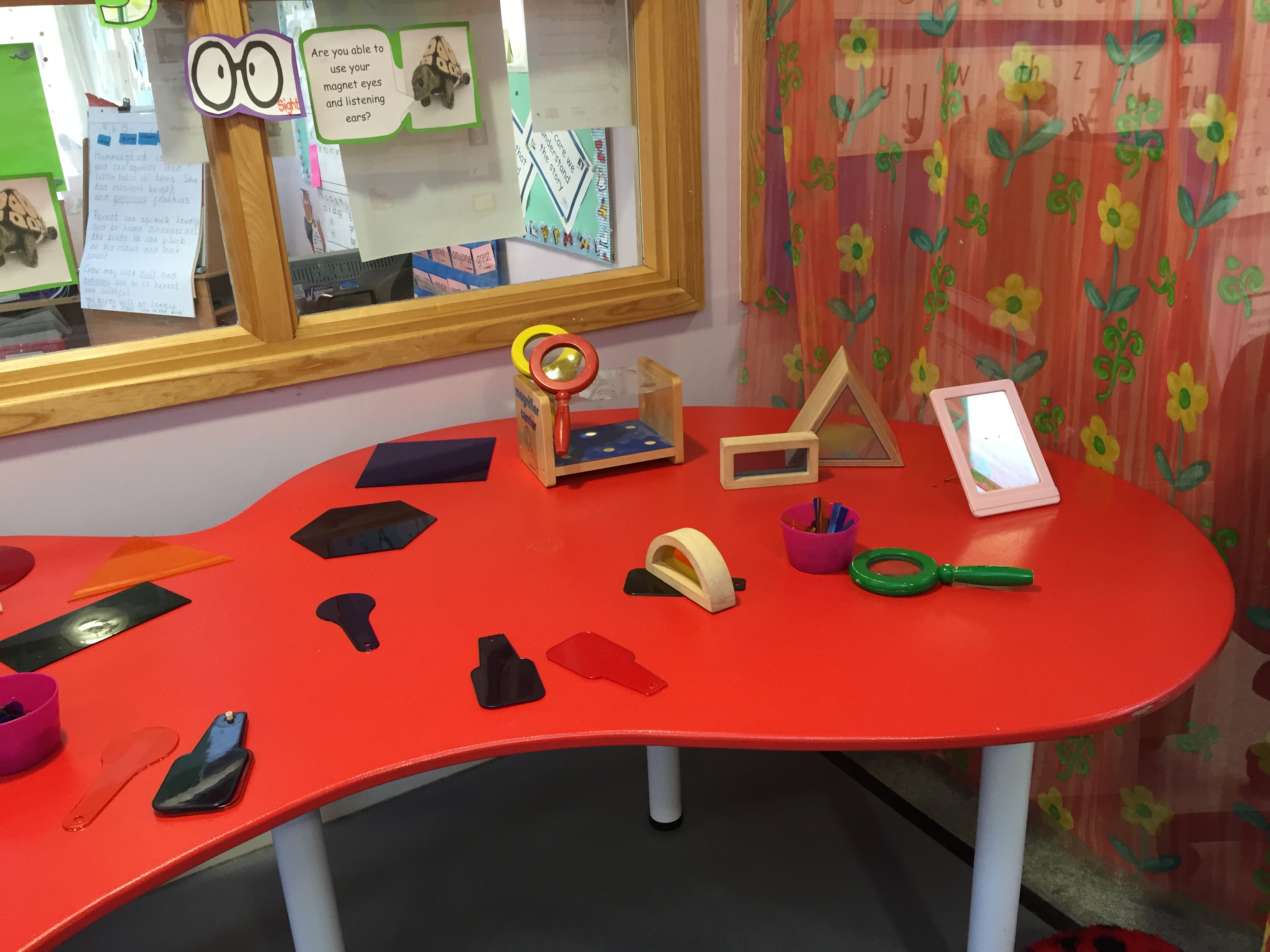
For example, create a Noticing table with magnifying glasses and interesting objects …. shells, coins, dead insects, flowers …… and lots more! Spend a few minutes each day for children to report on what new things they have noticed about the objects.


Secondary

Time to think … and share ideas

What do experts notice? – A painter will notice subtle differences in colour, shape or texture. What about other experts … gardeners, doctors, musicians, drivers, sports-people, actors, cooks, mechanics?

Choose a couple of experts from the list or from your own ideas and think about what they notice and how they might have learned this.

Helping students to be attentive listeners

Primary

Listening for Inference and Understanding

Explore sentences spoken with different stress, tone, pace and emphasis, to yield different meanings.

For example:

  • ‘I don’t know why you didn’t go.’
  • ‘How can I answer that?’


Secondary

Listening for inference and understanding

Play recordings of, for example:

  • One end of a telephone conversation: Who’s on the other end… What’s being said… How do you know?
  • A dialogue: What’s just happened… What happens next… How do you know?
  • Recognisable people: Who are they… What’s the evidence… How do you know?
  • Unknown individuals talking: What do you know… Who could they be… How do you know?


Helping students to think through what ‘should happen’

Primary and Secondary

Thinking through the consequences

Get in the habit of requiring students to predict what the consequences of an action should be. This is quite different from asking them to say what might or could happen – that’s closer to speculation and Imagining. Here you are asking pupils to use what they already know to make a prediction. Often referred to as hypothesising in Science, this is about using logic to make an intelligent ‘guess’.

Once they have made their prediction, encourage them to explain why they think that – it helps to move their thinking from describing what they think will happen to explaining why they think it will happen. It is the ‘giving reasons’ bit of Reasoning, that will in time mature into justification and proof.


Helping students to understand ‘fairness’

Primary and Secondary

Now, Then, Later

Image result for now then later

This routine is about identifying and evaluating specific actions that might make a situation fair.

  1. Frame the task. Present and clarify an issue of fairness. Students will be thinking about things to do to make the situation more fair: now, in the future, or to change the situation so it would have been fair in the past.
  2. Brainstorm. Ask students to brainstorm ideas for things they might do to “make it fair.”
  3. Sort. Sort the list into actions that relate to making the situation fair in the past, now, or for the future.
  4. Evaluate. Ask students to pick one idea from the list that they think has the most merit and expand on it, either verbally or in writing.

2. Exploring the language of Empathy

How you might extend the language and understanding of this behaviour

Primary

The colour of feelings

Related image


Discuss with the children the colour that certain feelings make them think of and then do some ‘Mood Paintings’ using these colours. These kind of associations will help the children build a vocabulary of feelings.

Secondary

A way with words


Explore well known sayings.

What do we mean when we say …

Put yourself in my shoes

Listening between the lines

I feel your pain

3. Using Questioning as a lesson/project starter

Use a quick starter to key students into the learning behaviour you want to concentrate on in the lesson. i.e. here you are starting up the questioning behaviour

Primary

Is your question important?

quesito everything

Identify a project which the class might investigate. Write a series of questions on separate pieces of cards and give each group a set of the cards. The group shuffle the cards and deal each student one card. They have to decide:

  • the best order for the questions, to do the project well
  • if they have to ask all the questions or whether some are irrelevant in the context
  • whether there are any missing questions and if so, what they might be
  • what they have learnt about questions from this.

Secondary

Questions you would like to ask

Tell students:

‘In 5 minutes, ‘something’ related to the upcoming lesson will walk in.

What are the three questions that we should ask it ?’

[The ‘something’ might be: a full stop; an improper fraction; osmosis; the Bible; a data base; the renaissance . . . . ] [The ‘three’ is important – it encourages students to prioritise their questions and consider which are most likely to uncover the information they require and discourages ‘random’ asking.]

As you get deeper into a lesson you will need activities which, by their very nature, will develop students’ ethical, informed learning AND their understanding of the content.

Here is an idea where, by using empathy, students will gain an understanding of the content AND will develop an ethical, informed habit.

4. Focusing on responding with empathy

Draw out the learning behaviours being used in a thinking routine.

Primary and Secondary

Visible Thinking Routine

via Harvard’s Project Zero & Making Thinking Visible comes Step Inside: Perceive, Know About, Care About Step Inside visible thinking routine could not be more connected with design thinking.  To me …The visible thinking routine ‘Step Inside: Perceive, Know, Care about‘ helps students to explore different perspectives and viewpoints as they try to imagine things, events, problems, or issues differently.

Three core questions guide students in this routine:

• What can the person perceive?
• What might the person know about or believe?
• What might the person care about?

The routine asks students to step inside the role of a character or object—from a picture they are looking at, a story they have read, an element in a work of art, an historical event being discussed, and so on—and to imagine themselves inside that point of view. Students are asked to then speak or write from that chosen point of view. This routine works well when you want students to open up their thinking and look at things differently. It can be used as an initial kind of problem-solving brainstorm that open ups a topic, issue, or item. It can also be used to help make abstract concepts, pictures, or events come more to life for students.

https://www.visiblethinkingpz.org/VisibleThinking_html_files/03_ThinkingRoutines/03g_CreativityRoutines/StepInside/StepInside_Routine.html


And here is an idea that will help students to understand that learning is a shared activity

5. An activity to highlight and strengthen interdependence

Design specific activities to highlight and strengthen the behaviour

Passing the bucket.

Divide class into groups of seven and provide them with a bucket filled with water (best done outdoors!).

Provide instructions: “The bucket has to pass smoothly round the circle of seven in a clockwise direction while the circle rotates smoothly in an anti-clockwise direction. You may not discuss how to do this. You have exactly five minutes.”

Use the activity to help students to recognise that individuals need to work together in an efficient and purposeful way if they are to overcome an apparently insuperable problem.

Coaching notes

6. Reflecting on Ethical, Informed citizenship

Primary

Make reflecting on Ethical, informed learning part of everyday lessons

Here is a very practical example of how you might develop the emotional climate of the classroom and make it Ethically Informed learning friendly.

Learning Mats

After thinking about it, I decided to . . . 

I did the right thing when I . . . . 

The most important thing about  . . . was . . . .

I listened to what . . . had to say about . . . 

I thought about how  . . .  might feel when I . . . .

My contribution was to  . . . . 

I worked well with . . . . even though I did not agree with them about . . . 

I looked carefully at  . . . .

I helped  . . .  to  . . . . 


Learning mats are A4 laminated sheets that show various aspects of a learning habit. Keep them on desks/tables or as part of a wall display.

Secondary

A Learning Log to alert students to Ethical, Informed Citizenship and how it impacts across various aspects of their learning lives.

I want a learning log like this one:

Learning Log

with the text changed:

My Learning Log : Ethical and Informed Citizenship.

Box 1

I was tempted to . . . . . . but I resisted and did . . . . . . instead.

I felt …

box 2

I tried to be a good friend when I  …… but it didn’t work out
I felt …
It would have helped if …

box 3

I tried hard to understand where (s)he was coming from when (s)he said . . . . . . 

I felt …
What I will do next time …

End

What I’ve learned about myself and how I behave towards others

Primary and Secondary

What do you think?

  • Can you see a use for any of the suggested activities?
  • Have you raised awareness of ethical, informed learning with your students?
  • Does your class have an agreed set of good ethical, informed behaviours?
  • Which two ideas from above do you want to try out?
  • How long will you keep them going before you decide whether they have worked or not?

Make a note of…Little_r

  • What happens in your classroom in response to any of the above ideas.
  • How students’ behaviour changes over about 3 weeks of becoming more familiar and talking about the behaviour.
  • How your behaviour in the classroom changes as you use these ideas over time.

NB. None of the behaviours above will lead to instant understanding in students nor instant changes of behaviour. You will need to drip them in over time and keep building and refreshing your language of learning.

Continue Reading

Getting the classroom climate right – ethical, informed citizenship

Building effective learning behaviours is about creating a culture in classrooms – that systematically cultivates habits and attitudes that enable young people to face difficulty calmly, confidently and creatively. By a ‘culture’ we mean all the little habits, routines and practices that implicitly convey ‘what we believe and value round here’. 

So ‘culture’ concerns the details of the micro-climate that you create in your classrooms. What you do and say, what you notice and commend and what you don’t, what kind of role model of a learner you offer – all these are of the essence. The micro-climate of a classroom can inadvertently stifle, or specifically enhance,  the very behaviours you are seeking to promote.

Does my classroom climate encourage ethical, informed citizenship?

In the classroom that is a learning-friendly environment within which ethical, informed citizens can grow, there are changes in the relationships; what is discussed; how learning is constructed; and in what is celebrated.

Apply your own attentive noticing and consider whether you already use any of these features and which you fancy trying.

The changes in relationships include:

  • Students take responsibility: Students are enabled to take personal responsibility for their actions, their behaviour, and for the decisions they make.
  • Teachers model curiosity: Teachers model their own interest in alternative points of view.
  • Coaching is in evidence: Students are coached to explore what they think and why, rather than being told.
  • Reflection is a learner activity: Reflection is done by, not for, learners.

The changes in what is talked about include:

  • Students discuss difficult issues: Students are encouraged to talk through disagreements and difference of opinion.
  • Rights and responsibilities are a focus of conversation: Talk explores the balance between rights and responsibilities, and how students think and feel.
  • Different ways of doing things are discussed: Alternative strategies are discussed, and their potential impact explored.
  • Silence is valued: ‘Wait time’ deepens understanding and thoughtfulness.

The changes in how learning is constructed include:

  • Empathy is evident: Opportunities are provided for students to see things through others’ eyes, to value differing opinions, and to display care and concern for others.
  • Differences of opinion are provoked and explored: Tasks are designed to expose learners to differences of opinion and different ways of interpreting the same information.
  • Tasks are designed to encourage evaluation: Tasks encourage students to employ sound reasoning to evaluate evidence and counter evidence.
  • Opportunities for quiet reflection are evident: Time for learners to reflect, review and consider issues are routinely built into lessons.

The changes in how learning is celebrated include:

  • Diversity is valued: Diverse opinions are given due regard. Disagreements are valued as learning opportunities.
  • Good citizenship matters: Contributions to the greater good of the community are celebrated.
  • Mutual respect is valued: All contributions are heard and valued in a culture of mutual respect.
  • Flexibility is important: Flexibility / changes of mind are re-framed as a necessary stage in effective learning.
  • Depth is important: Attention to detail and accuracy are prized over swiftness.

[So the outer ring of the culture wheel then contains only the text in bold]

Title

A Learning-Friendly Culture for Ethical, Informed Citizens

INSERT CULTURE WHEEL HERE

What do you think?

  • What do your answers suggest?
  • How does your classroom culture contribute to students’ reactions or approaches to ethical, informed learning?
  • Is this broadly negative or positive?
  • What insightful ‘Ah Ha’ moments did you have as you read through the list?
  • How have these changed your view of ethical, informed citizenship?

Make a note of…Little_r

  • Any ideas that look as if they might help students to become better at being ethical and informed.
  • An idea on the list you want to start doing.
  • An idea that interests you, but you are uncertain what it means or how you might do it.
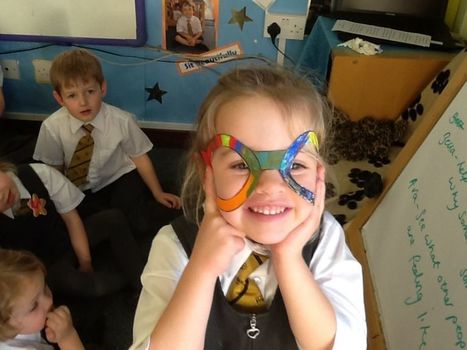
Continue Reading

What does it mean to be an ethical, informed citizen?

What do we mean by Ethical, Informed Citizens ?

Successful Futures defines ethical, informed citizens who:

  • find, evaluate and use evidence in forming views
  • engage with contemporary issues based upon their knowledge and values
  • understand and exercise their human and democratic responsibilities and rights
  • understand and consider the impact of their actions when making choices and acting
  • are knowledgeable about their culture, community, society and the world, now and in the past
  • respect the needs and rights of others, as a member of a diverse society
  • show their commitment to the sustainability of the planet
  • and are ready to be citizens of Wales and the world

Some of these traits are learning behaviours, where others are the outcomes of adopting an ethical, informed stance.

Drawing out the learning behaviours embedded in this description of the ethical, informed citizen, students need to take responsibility for their actions, be attentive, open and empathetic to different ideas and views while maintaining a principled, questioning stance in considering the worth and value of something.


What does being an ethical, informed citizen involve?

A well formed ethical, informed learning habit involves being ready, willing, and able to:

  • Be outward-looking, reflective learners: being interested in others who hold different views and beliefs; willing to review and weigh the available evidence, making decisions in light of careful reflection; being prepared to change outlook as further evidence emerges; being able to accommodate others’ perspectives into an increasingly diverse personal outlook. 
  • Think logically: using logical and rational skills to evaluate evidence and counter evidence; using ‘if this . . .then that’ type reasoning to consider the possible impact of decisions; developing a logical strategy for achieving goals.
  • Adopt an empathetic outlook: seeing things from other people’s point of view; demonstrating tolerance and empathy for others; forming views with the greater good in mind.
  • Behave with integrity: able to balance rights with responsibilities, willing to take personal responsibility for the actions they take and the choices they make.
  • Be attentive: being alert to the implications of what they hear and what they see, attentive to detail, able to sense patterns and make accurate inferences.
  • Be perceptive: discerns what is, and what is not, important, able to separate key points from the underlying detail and to explain them with clarity to others.


The key ‘integral skill’ most closely linked to Ethical and Informed citizenship is:

  • personal effectiveness – reflecting on and understanding oneself and others, behaving in effective and appropriate ways; being an effective learner.


Spotting the ethical, informed learners in your classes

Just to get you tuned in – have a quick think about ‘ethical, informed learners you may know’. Make a note of students you know who display these characteristics.

Being a learning powered teacher means developing a keen awareness of the subtleties of your students’ learning behaviours.

Create from

Title – Good learning habits – Ethical and Informed Citizens

Column heading: Your potentially ethical, informed citizens are likely to:

Know right from wrong, and act accordingly

Make decisions having weighed the evidence

Think before acting

Know what is, and what is not, important

Be alert to and interested in what they see and hear

Consider the likely impact of the decisions they make

Act with the greater good in mind

Show interest in other people’s point of view

Be able to work with others they do not agree with

Take responsibility for what they do, and do not, do


What do you think?

  • How many students come to mind when looked at through the lens of ethical, informed learning?
  • Is there a gender balance or have you noted down more girls than boys or vice versa?
  • Are the students you have noted from across all age groups or do some dominate?
  • How do these ethical, informed learning characteristics help these students to be better learners?
  • If the question had been about students without these characteristics, what would you have discovered?

Make a note of…Little_r

  • Those groups or classes that seem to have lots of good ethical, informed characteristics.
  • How you think you might capitalise on this.


Continue Reading

Moving my practice on – enterprise and creativity

Cultivating learning habits ultimately involves:

  • Providing rich and varied occasions for exercising learning habits;
  • Infusing learning habits into lessons to enhance content understanding;
  • Recognising and celebrating the use and growth of learning habits;
  • Expecting students to take ownership of and responsibility for their own learning habits;
  • Exploring the development of learning habits with students over time.

As a teacher you are an influential character builder and so need to be mindful of how you help students form, replace, re-form and strengthen their learning habits.

But don’t worry, you’re not there yet. It takes most teachers between 2 and 3 years to become really fluent with this way of teaching. So, go easy on yourself. Feel determined because small steps often prove to be big levers for change. Have a think about what you might do…


What to stop and start

Here are a few ideas you might want to try. Take it steady, this way of teaching can be a big but exciting shift so it’s worth doing it slowly and thoughtfully.

Look first at the Stop/avoid ideas. Some of these are far from trivial but it’s best to try to remove them before starting on the Start/do more of, Start slowly and Experiment with ideas.

Stop

  • Telling/giving students exactly what they need
  • Telling them how to do things
  • Doing the speculation for them
  • Expecting perfection first time round
  • Deciding the composition of all groups

Start

  • Offering more choices over how to complete a task
  • Responding more speculatively to student questions
  • Placing responsibility with students to make appropriate choices
  • Valuing imagination as part of your subject area (if you do not do so already)
  • Providing drafting and re-drafting opportunities
  • Praising thinking that leads to a significant re-think

Start slowly

  • Devising more open-ended activities
  • Acting as coach rather than instructor
  • Playing creative thinking games and using guided visualisation techniques
  • Offering students the opportunity to explore the wider picture
  • Displaying work (and thinking) in progress
  • Allowing students to decide whether to work alone or together

Experiment with

  • Intriguing students with something that is open to multiple interpretations
  • Looking for different ways to solve the same problem
  • Playing Devil’s Advocate
  • Encouraging peer coaching
  • Planning review times to enable students to take stock and monitor progress.
  • Refusing to accept individual responses to group tasks


What do you think?

  • Which of the ideas appealed to you most?
  • Can you see ways of incorporating these into your subject/class routines?
  • Which would make the biggest difference to your students?
  • Which would make your life easier?

Make a note of…Little_r

  • Ideas that you want to try and the impact you hope they will have on your teaching and on your students.
Continue Reading

Developing my talk for enterprise and creativity

Developing your learning language

Here is a range of things you can say to nudge enterprise and creativity. When you use this kind of language you are talking as a learning coach, encouraging students to think for themselves. Using such statements encourages your students to:

  • imitate you;
  • start to think in this way;
  • become conscious of these phrases and their meaning.

Eventually you will hear some of the questions pop up in students’ self-talk….in speech or even in writing from time to time, but mostly these will go on inside their heads. As your work on enterprising, creative learning gathers pace see if you can detect students who talk, or think, in these ways.

My learning talk nudges to encourage Enterprising, Creative learning

Teacher talk – as a learning coach

To ensure students do the thinking for themselves, use phrases like these to nudge them to:

Adopt an enterprising frame of mind: 

  • How might you tackle this? What might you use?
  • How might  . . . . do this?
  • How else might you do it?

Be Emotionally Brave:

  • Do it your way, see what happens.
  • Try a different approach this time.
  • Have a go – what’s the worst thing that can happen?

Be Collaborative: 

  • Will you tell everyone else what you are thinking / planning / doing?
  • Do you find that convincing, or are you sticking to your guns?
  • What strategies do you have for resolving this?

Be creative:  

  • Amazing – I would never have thought of that!
  • Follow your instincts. Think outside the box.
  • What if you could . . . . ?

Be Interdependent: 

  • Can you do this by yourself? Will you need others to help?
  • Could you help her/him with  . . . . ?
  • Are you proud of your contribution?

Be Flexible and Adaptable: 

  • OK – that didn’t work. What do you learn from that? What will you do next?
  • How / can you make this even better?
  • How is it going / did it go? What will you do differently next time?

What do you think?

  • Which of these enterprising, creative learning nudges might you start using?
  • In which particular lessons would such nudging be most useful?
  • How will most of your students respond to such nudges?
  • Will this way of engaging be more popular with girls or boys?
  • What other nudging ideas might you add to the list?

Make a note of…

Little_r

  • Students’ reactions to the nudges.
  • Ideas about why this might be.
  • Ways in which you could further encourage students to imitate this meta-cognitive self-talk.
  • Any positive or negative impact of these enterprising, creative behaviours.
Continue Reading

Ideas for classroom practice

Some ideas to encourage an Enterprising, Creative frame of mind

  1. Firstly… make students aware of enterprising, creative learning…when, where, why. 
  2. Then… explore enterprising, creative learning a little more through the language of learning
  3. Try… using enterprising, creative learning as a lesson starter to tune students into using it
  4. Then start… blending enterprising, creative learning into the way you teach the content. Use specific enterprising, creative learning strategies to deepen content understanding.
  5. Ensure… students reflect on the success or otherwise of their enterprising, creative mindframe.


1. Making students aware of Enterprising, Creative learning

How you make students aware of the words that describe the behaviour and why it is important to use it.

Helping students to engage their imaginations

Primary

The Mind’s Eye

  • Introduce pupils to the idea of the mind’s eye: Talk about the fact that we all have 2 eyes which we use all the time but that everyone also has a third, hidden, mind’s eye. Talk about how we can use this secret third eye to imagine and create pictures and ideas inside our minds.
  • Invite pupils to close their eyes and imagine they are using their third eye. Describe something in great detail and ask them to try and see it with their third eye.
  • Here is an example: Close your eyes tightly and imagine my alien. It has a large, round, green body with lots of arms and legs. On the top of the round, green body is a huge pink and purple head with spiky yellow hair and 4 great big blue eyes. It has long, pink fingers on its hands and short, purple toes on its big feet. When it walks along it makes a high squeaky sound and it smells just like fish and chips!
  • You could ask them to draw their idea of the alien, concentrating on their ideas rather than an exact representation of your description.
  • Ask pupils to imagine something for themselves- unprompted by you. Invite them to describe what they are imagining.
  • Talk about what seems to happen in their mind when they imagine.
  • Talk about when our ability to imagine can be useful.
  • Ask, “When do you use your imagination?”

Secondary

Guided Visualisation


Invite students to visualise, for example, a snowy mountain peak until the image fades – discuss how long this could be sustained.

Now visualise hovering over the mountain and exploring the terrain by helicopter – the experience will have lasted longer.

Now provide students with a guided visualisation of the mountain that triggers their imaginative faculties – discuss the features of this experience.

Enable students to identify the ways of triggering their own imaginations when provided with stimuli. Invite them into a city at night, or the alimentary canal, . . . 

Stimulating the imagination

Use music to create atmosphere and stimulate imaginative thinking.

Provide varied, unexpected and ever-changing visual experiences — on whiteboards, classroom walls, in ideas banks, through web-links, etc.

Read vivid prose and poetry that captures details, moods and atmospheres.

Growing Interdependence

Draw out the interdependent behaviours being used in a thinking routine.

Primary and Secondary

Who can you ask? Who can you help?

In most situations there is someone in the room (other than the teacher!) who knows how to do something that you have not yet mastered or knows / understands something that you have not yet understood. Who could that be? Who could you ask?

Equally, in most situations, there are things that you know, understand or can do that others have yet to master. Who could that be? Who can you help?

In either case, the teacher is fostering peer teaching and learner independence.

The point here is to help students to recognise that:

  • the teacher is not the only source of expertise in the room;
  • peers can play an active role in your own learning;
  • you can play an active role in the learning of others.


2. Exploring the language of enterprise

How you might extend the language and understanding of this behaviour

Primary

Discuss enterprising / capitalising

Use language to encourage thinking about capitalising. Build these into your learning language:

  • Have you thought about what would help you to do this?
  • Just think about all the things we have in the classroom that might be useful.
  • How else might you do it?
  • What is everyone else doing?
  • Is there anything else that you could use?
  • There may be other people who could help you with this.
  • Who do you think might know something about this?
  • Where could you find out more about this?
  • Which of the things you used did you find the most useful?
  • If you had to do this again is there anything else you might use to help you?

Secondary

A way with words

click to enlarge

Collect words that tell you how people learn to Capitalise on what is around them.

Explore well known sayings.

What do we mean when we say …

There is more than one way to skin a cat

Making the best of a bad job

A bit ‘Heath Robinson’


3a. Using Revising as a lesson starter

Use a quick starter to key students into the learning behaviour you want to concentrate on in the lesson. i.e. here you are starting up the revising ( Re-thinking) behaviour

Primary

Optical Illusions

Use Optical Illusions to remind students that once we have seen something from one perspective, it is hard to change our minds and see it/think about it differently.

Image result for optical illusion old womanImage result for optical illusion old woman

Secondary

What do you see here?

This type of lesson starter readies students’ minds for adjusting their point of view, changing their mind or revising their ideas.
The technique, illustrated here through the picture of a dog leaping over First World War trenches, can be applied to any image where there is some kind of unexpected juxtaposition of conflicting aspects within the same picture.
The purpose is to draw students into speculating about various parts of the image before revealing the full image. This will necessarily require them to revise and build on their first impressions. The underlying message is that new information often forces us to change our original understandings.

Primary and Secondary

3b. Counter attitudes that limit perseverance, strengthen the positives.

Consider what your students feel about being stuck, facing challenge, and risking failure. Think how you might adjust your language to re-frame their outlook.

Primary and Secondary

Re-framing Stuck and Challenge

Many students are eager to ‘get things right (first time!)’, to ‘do things quickly’, to ‘avoid errors’ because they perceive that’s what good learners do and want to be the same. This mindset means being stuck is: shameful, the point at which learning finishes rather than a stepping stone to new learning; challenge should be avoided rather than embraced; breaking new ground is too risky at the edge of their comfort zone, with all of the attendant risks of ‘failure’.  Here are some ‘starters for 10’ to begin to tackle it.

Adopt a coaching role

Model being a learner and show how you work things out, get unstuck, learn from mistakes.

When modelling

Take on the role of an intelligent novice

Model getting unstuck at a slightly higher, more coherent and informed level than is characteristic of your students

Model your ‘think alouds’

When students get perplexed

If students freeze offer supportive questions NOT answers.

  • ‘What do you do next?’
  • and ‘Then what do you do next’
  • and ‘Then what do you do next’

Thus you are encouraging students to take over the job for themselves

Remind students that uncertainty shouldn’t lead to paralysis!

Re-framing Challenge

Give Mistakes a status, a key role in learning

Give mistake quotas. Tell students you expect them to make, say.3 in a lesson. If not, the challenges they are tackling are too easy and they should move to harder ones.

Explore the concept of ‘Good mistakes’ –  where the student has misunderstood something thus enabling you and the student to track the issue.

Offer a range of ‘good mistakes’ at the start of a lesson for students to find, explore and correct.

Give time in lessons for students to Trial and Improve something. Discard ‘trial and error’.

3c. Using Imagining as a lesson starter

Use a quick starter to key students into the learning behaviour you want to concentrate on in the lesson. i.e. here you are starting up the imagining behaviour

Primary

Telling Stories

Image result for stories

Provide a stem statement…

A man walks into a room with a suitcase in his hand…

Invite one student to carry it on. Each student continues from where the previous one left off.

Or . .

Create a scenario…There are no windows, water drips into a bucket, two people are seated back to back…what might be happening? What might happen next? Can you improvise the dialogue between the people?

Secondary

‘What if …’ challenges

Image result for what if

Provoke students to think ‘What if… we ran out of oil in 25 years… we lived in a two-dimensional world… we all lived for exactly 70 years… tennis balls were heavier… we had two moons…’

Encourage students to build collaborative spider diagrams that explore the possible ramifications of such eventualities. Extend the imagining in creative presentations using a variety of media.


As you get deeper into a lesson you will need activities which, by their very nature, will develop students’ enterprising, creative learning AND their understanding of the content.

Here is an idea where, by using enterprising, creative learning, students will gain an understanding of the content AND will develop an enterprising, creative habit.

4. Focusing on generating questions as a learning strategy

Draw out the enterprising, creative behaviours being used in a thinking routine.

Primary and Secondary

Visible Thinking Routine

Creative Questions

Image result for creative questions

Creative Questions is a visible thinking routine that encourages students to create interesting questions and then imaginatively mess around with them for a while in order to explore their creative possibilities:

Pick an everyday object or topic and brainstorm a list of questions about it.

Look over the list and transform some of the questions into questions that challenge the imagination. Do this by transforming questions along the lines of:

  • What would it be like if…
  • How would it be different if…
  • Suppose that …
  • What would change if …
  • How would it look differently if …

Choose a question to imaginatively explore. Explore it by imaginatively playing out its possibilities. Do this by: Writing a story or essay, drawing a picture, creating a play or dialogue, inventing a scenario, conducting an imaginary interview, conducting a thought experiment . . . .

Reflect: What new ideas do you have about the topic, concept or object that you didn’t have before?


For more detail on Creative Questions, visit the Visible Thinking website:

https://www.visiblethinkingpz.org/VisibleThinking_html_files/03_ThinkingRoutines/03g_CreativityRoutines/CreativeQuestions/CreativeQuestions_Routine.html


And here is an idea that will help students to understand the enterprising, creative learning processes.

5. An activity to highlight and strengthen an understanding that learning is a collaborative process.

Design specific activities to highlight and strengthen the behaviour

Visible Thinking Routine

Think, Pair, Share

Offer students a problem or question which is more substantial than simple recall.

Think – Allow plenty of individual think time to engage with the issue.

Pair – Students then try out their ideas, (discuss, clarify, challenge) with a ‘Learning Partner’.

Share – The pair share with another pair, and subsequently with the whole class to arrive at a range of possible answers. They come to know and shape their views by collaborating with others.

Use as a simple strategy to prepare students for working together in teams, having first thought it through for themselves (Think), checked their ideas out with a trusted friend (Pair), before moving on to contributing to a group (Share).

At each point students are exposed to the views of others which encourages them to revise and refine their initial thinking.


6. Reflecting on Enterprising, Creative learning

Primary

Make reflecting on Enterprise and Creativity part of everyday lessons

Here is a very practical example of how you might develop the emotional climate of the classroom and make it enterprise and creativity friendly.

Learning Mats

I enjoyed trying to . . . . 

I tried a different way to . . . 

I had another go at . . . . 

I decided how I would . . . . 

I helped  . . .  to  . . . .

I enjoyed working with . . . . . 

I spotted that  . . .was successful at . . . . 

I stopped and had a think about how . . . . . was going

I learned from the mistake I made when . . . .

Learning mats are A4 laminated sheets that show various aspects of a learning habit. Keep them on desks/tables or as part of a wall display.

Secondary

A Learning Log to alert students to Enterprising, Creative learning and how it impacts across various aspects of their learning lives.

I want a learning log like this one:

Learning Log

with the text changed:

My Learning Log : Enterprising Creativity

Box 1

When I was trying to . . . . . . . . I had a great idea and succeeded in …
I felt …

box 2

I tried my idea but still didn’t get where I wanted when …
I felt …
It would have helped if …

box 3

I had no idea what to do when …
I felt …
What I could have done differently …

End

What I’ve learned about myself and how I use my ideas

Primary and Secondary

What do you think?

  • Can you see a use for any of the suggested activities?
  • Have you raised awareness of enterprising, creative learning with your students?
  • Does your class have an agreed set of good enterprising, creative behaviours?
  • Which two ideas from above do you want to try out?
  • How long will you keep them going before you decide whether they have worked or not?

Make a note of…Little_r

  • What happens in your classroom in response to any of the above ideas.
  • How students’ behaviour changes over about 3 weeks of becoming more familiar and talking about the behaviour.
  • How your behaviour in the classroom changes as you use these ideas over time.

NB. None of the behaviours above will lead to instant understanding in students nor instant changes of behaviour. You will need to drip them in over time and keep building and refreshing your language of learning.

Continue Reading

Getting the classroom climate right – enterprising, creative contributors

Building effective learning behaviours is about creating a culture in classrooms – that systematically cultivates habits and attitudes that enable young people to face difficulty calmly, confidently and creatively. By a ‘culture’ we mean all the little habits, routines and practices that implicitly convey ‘what we believe and value round here’. 

So ‘culture’ concerns the details of the micro-climate that you create in your classrooms. What you do and say, what you notice and commend and what you don’t, what kind of role model of a learner you offer – all these are of the essence. The micro-climate of a classroom can inadvertently stifle, or specifically enhance,  the very behaviours you are seeking to promote.

Does my classroom climate encourage enterprising, creative learning?

In the classroom that is a learning-friendly environment within which enterprising, creative contributors can grow, there are changes in the relationships; what is discussed; how learning is constructed; and in what is celebrated.

Apply your own attentive noticing and consider whether you already use any of these features and which you fancy trying.

The changes in relationships include: 

  • Students enabled to make choices: Students are expected to make choices about their learning and decide whether to work alone or with others.
  • Teachers model fallibility: Adults take risks and get things wrong.
  • Students self-monitor: The responsibility for monitoring and adapting rests with learners.
  • Group work responsibility rests with learners: Groups are enabled to decide with whom they will work, and make decisions about how they will work. 

The changes in what is talked about include:

  • Students are alerted to sources of support: Students discuss what and who might be of assistance.
  • Alternative strategies are explored: Talk is about alternative strategies to solve problems.
  • Changes of mind are discussed: The importance of changing one’s mind in light of new learning is explored.  
  • Students coach each other: Peer to peer coaching is evident
  • Student dialogue deepens learning: Group work promotes dialogue between learners.
  • Possibilities are explored: What if, Could be type language stimulates speculation and the exploration of possibilities.

The changes in how learning is constructed include:

  • Collaboration is orchestrated: Tasks mostly require, rather than invite, collaboration.
  • Challenge is evident: Students are offered challenging materials / activities that take them out of their comfort zone and force them to experiment and take risks.
  • Not all tasks have pre-determined outcomes: Open ended tasks are in evidence.
  • Feedback promotes reflection: Feedback promotes reflection on what is needed to improve both as a learner and in terms of content understanding.
  • Disagreements are created and resolved: Group work intentionally creates the need for conflict resolution and consensus building.

The changes in how learning is celebrated include:

  • Mistakes are re-framed: Mistakes are celebrated as part of the journey to excellence.
  • Display illustrates work in progress: Display illustrates work in progress and the thinking processes behind it.
  • Originality is celebrated: Novel, unexpected solutions are celebrated, originality is valued over the tried and tested. 
  • Contributions to the greater good are identified and celebrated: Generous acts of kindness and support between learners are celebrated and sometimes captured in display.
  • Flexibility matters: Flexibility is seen as a key learning behaviour.

[So the outer ring of the culture wheel then contains only the text in bold]

Title

A Learning-Friendly Culture for Enterprising, Creative Contributors

INSERT CULTURE WHEEL HERE


What do you think?

  • What do your answers suggest?
  • How does your classroom culture contribute to students’ reactions or approaches to enterprising, creative learning?
  • Is this broadly negative or positive?
  • What insightful ‘Ah Ha’ moments did you have as you read through the list?
  • How have these changed your view of enterprising, creative learning?

Make a note of…Little_r

  • Any ideas that look as if they might help students to become better at enterprise and creativity.
  • An idea on the list you want to start doing.
  • An idea that interests you, but you are uncertain what it means or how you might do it.
Continue Reading

What does it mean to be an enterprising, creative contributor?

What do we mean by Enterprising, Creative contributors?

Successful Futures defines enterprising, creative contributors who:

  • connect and apply their knowledge and skills to create ideas and products
  • think creatively to re-frame and solve problems
  • identify and grasp opportunities
  • take measured risks
  • lead and play different roles in teams effectively and responsibly
  • express ideas and emotions through different media
  • give of their energy and skills so that other people will benefit
  • and are ready to play a full part in life and work

Some of these traits are learning behaviours, where others are things we do, or are outcomes.

Drawing out the learning behaviours embedded in this description of the enterprising, creative contribution, students need to have social awareness, be effective team players with the ability to lead and manage others through difficulties, be willing to take risks, and to tackle problems from novel perspectives to create original solutions.


What does being an Enterprising, Creative contributor involve?

A well formed enterprising, creative learning habit involves being ready, willing, and able to:

  • Adopt an enterprising frame of mind: drawing on the full range of resources from the wider world; making good use of what and who is around you; creating novel solutions.
  • Be Emotionally Brave: ready to try new ideas / things out to see where they might lead, willing to take risks in breaking new ground. Unafraid of ‘having a go’.  
  • Be Collaborative: working constructively with others; understanding when to step forward, or to lead, or to take more of a back seat when working with others; knowing when and how to stick to their own point of view when others need convincing; being skilled at seeking compromise and building consensus. 
  • Be creative: being prepared to step into the unknown and explore areas of uncertainty; using imagination and intuition to put themselves through new experiences or to explore possibilities; looking at things in different ways; producing original, novel and inventive outcomes. 
  • Be Interdependent: knowing when to ‘go it alone’ and when to seek support from others; willing and able to offer support to others when necessary; contributing to the greater good.
  • Be Flexible and Adaptable: Being flexible, revising plans in the light of different circumstances, monitoring and reviewing how things are going and seeing new opportunities and fresh ideas all in pursuit of wanting to be the best they can be.

The key ‘integral skills’ most closely linked to Enterprising and Creative contribution are:

  • creativity and innovation – generating ideas, openness and courage to explore ideas and express opinions.
  • planning and organising – implementing solutions and executing ideas and monitoring and reflecting on results.
  • critical thinking and problem solving – marshalling critical and logical processes to analyse and understand situations and develop responses and solutions.

Spotting the Enterprising, Creative learners in your classes

Just to get you tuned in – have a quick think about ‘enterprising, creative contributors you may know’. Make a note of students you know who display these characteristics.

Being a learning powered teacher means developing a keen awareness of the subtleties of your students’ learning behaviours.


Create from

Title – Good learning habits – Enterprising and Creative Contributors

Column heading: Your potentially enterprising and creative learners are likely to:

Use a wide range of resources and strategies with discrimination

Unafraid of ‘having a go’

Enjoy doing new things, dislike the tried and tested

Look at things ‘differently’, from an unexpected angle

Create novel, unique solutions

Know when to go it alone and when to involve others

Share their ideas generously

Enjoy the cut and thrust of learning with / from others

Watch and adopt the successful strategies of others

Seek to improve on first attempts

Monitor how it is going and evaluate how it went 

See failure as feedback and a natural part of the learning process


What do you think?

  • How many students come to mind when looked at through the lens of enterprising, creative learning?
  • Is there a gender balance or have you noted down more girls than boys or vice versa?
  • Are the students you have noted from across all age groups or do some dominate?
  • How do these enterprising, creative characteristics help these students to be better learners?
  • If the question had been about students without these characteristics, what would you have discovered?

Make a note of…Little_r

  • Those groups or classes that seem to have lots of good enterprising, creative characteristics.
  • How you think you might capitalise on this.

————————————————————————–

Learning behaviours for Enterprising, Creative Contributors

Building enterprising frames of mind (Capitalising): drawing on the full range of resources from the wider world; making good use of what and who is around you; creating novel solutions.

Building Emotionally Brave learners (Perseverance): ready to try new ideas / things out to see where they might lead, willing to take risks in breaking new ground. Unafraid of ‘having a go’.  

Building Collaborative learners (Collaboration): working constructively with others; understanding when to step forward, or to lead, or to take more of a back seat when working with others; knowing when and how to stick to their own point of view when others need convincing; being skilled at seeking compromise and building consensus. 

Building creativity (Imagining): being prepared to step into the unknown and explore areas of uncertainty; using imagination and intuition to put themselves through new experiences or to explore possibilities; looking at things in different ways; producing original, novel and inventive outcomes. 

Building Interdependent learners (Interdependence): knowing when to ‘go it alone’ and when to seek support from others; willing and able to offer support to others when necessary; contributing to the greater good.

Building Strategically Flexible learners (Revising): Being flexible, revising plans in the light of different circumstances, monitoring and reviewing how things are going and seeing new opportunities and fresh ideas all in pursuit of wanting to be the best they can be.

The Donaldson report, Successful Futures, recommends that the ‘wider skills’ of critical thinking and problem solving, planning and organising, creativity and innovation, and personal effectiveness be built into the curriculum at all phases, not only at Key Stage 4 as was previously the case.

The key ‘wider skills’ that underpin Enterprising and Creative contribution are:

  • creativity and innovation – generating ideas, openness and courage to explore ideas and express opinions.
  • planning and organising – implementing solutions and executing ideas and monitoring and reflecting on results.
  • critical thinking and problem solving – marshalling critical and logical processes to analyse and understand situations and develop responses and solutions.
Continue Reading

Moving my practice on – ambition and capability

Cultivating learning habits ultimately involves:

  • Providing rich and varied occasions for exercising learning habits;
  • Infusing learning habits into lessons to enhance content understanding;
  • Recognising and celebrating the use and growth of learning habits;
  • Expecting students to take ownership of and responsibility for their own learning habits;
  • Exploring the development of learning habits with students over time.

As a teacher you are an influential character builder and so need to be mindful of how you help students form, replace, re-form and strengthen their learning habits.

But don’t worry, you’re not there yet. It takes most teachers between 2 and 3 years to become really fluent with this way of teaching. So, go easy on yourself. Feel determined because small steps often prove to be big levers for change. Have a think about what you might do…

What to stop and start

Here are a few ideas you might want to try. Take it steady, this way of teaching can be a big but exciting shift so it’s worth doing it slowly and thoughtfully.

Look first at the Stop/avoid ideas. Some of these are far from trivial but it’s best to try to remove them before starting on the Start/do more of, Start slowly and Experiment with ideas.

What do you think?

  • Which of the ideas appealed to you most?
  • Can you see ways of incorporating these into your subject/class routines?
  • Which would make the biggest difference to your students?
  • Which would make your life easier?

Make a note of…Little_r

  • Ideas that you want to try and the impact you hope they will have on your teaching and on your students.
Continue Reading

Developing my talk for . . ambition and capability

Developing your learning language

Here is a range of things you can say to nudge ambitious capability. When you use this kind of language you are talking as a learning coach, encouraging students to think for themselves. Using such statements encourages your students to:

  • imitate you;
  • start to think in this way;
  • become conscious of these phrases and their meaning.

Eventually you will hear some of the questions pop up in students’ self-talk….in speech or even in writing from time to time, but mostly these will go on inside their heads. As your work on ambitious capability gathers pace see if you can detect students who talk, or think, in these ways.

My learning talk nudges to encourage ambition and capability

Teacher talk – as a learning coach

To ensure students do the thinking for themselves, use phrases like these to nudge them to:

Be forward thinking and ambitious:

  • This is tricky – are you enjoying it?
  • What are you hoping to achieve?
  • How can you do even better?

Create meaning for themselves: 

  • How does this link with what you already know?
  • Might you have to re-consider . . . . ?
  • Where else might this apply / be useful?

Be curious:

  • What are you asking yourself?
  • What is puzzling you?
  • What do you want to find out? How are you going to do that?

Think critically:  

  • Go on – convince me!
  • Explain your thinking so that I understand what you are thinking and why.
  • What would convince you? What evidence do you need / want?

Think creatively:

  • What if you . . . . . ?
  • How else might you . . . . ?
  • Give me an alternative . . . . . 

Be an effective communicator: 

  • Tell me what you are thinking
  • How would you explain that to xxxx ?
  • How do you know that someone is interested in what you are saying / thinking?

Be able to learn from experience:

  • What do you learn from that?
  • What are the important ideas here?
  • How might you approach it differently next time?

What do you think?

  • Which of these nudges might you start using?
  • In which particular lessons would such nudging be most useful?
  • How will most of your students respond to such nudges?
  • Will this way of engaging be more popular with girls or boys?
  • What other nudging ideas might you add to the list?

Make a note of…

Little_r

  • Students’ reactions to the nudges.
  • Ideas about why this might be.
  • Ways in which you could further encourage students to imitate this meta-cognitive self-talk.
  • Any positive or negative impact of these behaviours.
Continue Reading

Ideas for classroom practice – ambitious, capable learners

Some ideas to encourage an ambitious, capable frame of mind

  1. Firstly… make students aware of ambition and capability…when, where, why. 
  2. Then… explore ambition and capability a little more through how we talk about it
  3. Try… using visible thinking routines as a lesson starter to tune students into seeing learning as a whole.
  4. Then start…building the inclination to make progress through explaining why they are stuck / what they cannot do.
  5. Ensure… students reflect on the success or otherwise of their ambitious, capable mindframe.


1. Making students aware of ambition and capability

Making students aware of dealing with difficulty and rising to challenge

How you make students aware of the words that describe the behaviour and why it is important to use it.

Primary

Develop ‘stuck prompts’ together

  • Work with students to find useful questions to ask themselves and helpful strategies for them to use when they are stuck.
  • Ensure that there are plenty of options that come higher on the list than “Ask the teacher”.
  • Create stuck prompts as reminders around the classroom.
  • These are, in effect, low-risk, low-investment levers for creating a shift in students’ sense of what is valued, what is normal, and what is the point of their learning — and thus in the quality of their engagement.


Secondary

Allow students to select their own level of challenge and so set their own ambitious performance goals

For the same bit of curriculum content, provide tasks that are designed to offer low, medium and high challenge  (or mild, spicy, hot) and encourage students to decide on the level of challenge  they wish to undertake. Use this as an opportunity to encourage them to set their own learning goals.

SOLO Taxonomy (structure of observed learning outcomes) is sometimes used to help teachers to structure tasks with varying levels of challenge.

At the unistructural level, only key aspects of the task are explored

[ie: How did the fire of London start? ]

At the multistuctural level, several aspects of the task are explored but their relationships to each other and the whole are not.

[ie: What factors contributed to the spread of the fire of London?]

At the relational level, the aspects are linked and integrated, and contribute to a deeper and more coherent understanding of the whole.

[ie: How did these factors combine to cause so much damage?]

At the extended abstract level, the new understanding at the relational level is re-thought at another conceptual level, looked at in a new way, and used as the basis for prediction, generalisation, reflection, or creation of new understanding.

[ie: What could have been done at the time to prevent the fire of London spreading so quickly?]

Four levels of challenge. Four goals for students to choose between.

Helping students to think critically

Primary

Introduce games that require reasoning behaviours to stimulate a methodical approach

Image result for jigsaw

Sit at the jigsaw table with groups of children and work on the jigsaws together. Model your reasoning out loud to the children explaining what you did first second, third, etc. so that they begin to understand a methodical, step by step approach.

Secondary

Code Breaking to exercise reasoning skills

Image result for code breaking

Present students with coded messages and require them to work them out using their deductive skills.

Start with simple substitution codes where, for example, each letter is replaced by the one after it in the alphabet. (i.e. b replaces a, c replaces b etc. etc.) Increase difficulty by using more complex ciphers.

Helping students to learn from experience and create meaning for themselves

Primary

What stuck with you today?

Make reflection on being stuck part of the daily or lesson routine. This display shows a range of discussion cards which the teacher uses with specific groups of students during or at the end of a day.

The questions include;

Today I have learned….

Today I have tried to…

My biggest success today has been….

What will your tell your family when they ask ‘What did you do at school today’?

The most important thing I have learned today.

Has something inspired you today?

Secondary

Conversions – to sort the important from the unimportant

Related image

If information is currently framed in any of the following, challenge students to change it into another format of their choosing: text; mind map; flow diagram; storyboard; graph; venn diagram; ranked bullet points/list; video; teacher explanation; revision notes etc.

Consider limiting the number of words that can be used – forcing students to limit words and/or employ images instead encourages them to distil what is really important and salient.

Converting from one medium to another requires students to identify the key features. It can only be converted if it is understood, so this technique promotes deep learning. Where students are struggling, it can reveal misconceptions. It helps students to create revision notes for themselves, and in their preferred learning style.

2. Exploring the language of being forward thinking and ambitious

How you might extend the language and understanding of this behaviour

Primary

Phrases to help students think about what they are trying to achieve.

Encourage students to develop the ability to articulate what they are trying to achieve and visualise end results. Use phrases like:

  • Tell your friend what you are going to do
  • Tell me what you are trying to achieve
  • What are you going to do?
  • What are you hoping to achieve?
  • What will it look like when you have done it?
  • Begin with the end in mind . . .
  • Let’s imagine what success will be like

Secondary

A way with words

What do we mean when we say . .

Look at these quotations. What message is the writer trying to convey?

Ambition is the first step to success. The second step is action.

If you fail to plan, you plan to fail.

Intelligence without ambition is like a bird without wings.

We are all in the gutter, but some of us are looking at the stars.

3. Visible thinking routines that help learners to make links between what they know and what they have yet to find out. 

Use these routines to key students into the learning behaviour you want to concentrate on in the lesson. i.e. here you are starting up the need to understand the inter-connectedness of learning. 

Primary and Secondary

2 Visible Thinking Routines

#1: Think, Puzzle, Explore . .

is a Visible Thinking Routine that encourages students to connect to prior knowledge, to stimulate curiosity and to lay the groundwork for independent inquiry. The 3 questions are:

Image result for think puzzle explore

What do you think you know about this topic?

What questions or puzzles do you have?

How can you explore this topic?

The natural place to use this routine is before students have learned something new. For more detail on Think/Puzzle/Explore visit the Visible Thinking website:

Think Puzzle Explore

#2: Connect, Extend, Challenge

This routine helps students make connections between new ideas and prior knowledge. It also encourages them to take stock of ongoing questions, puzzles and difficulties as they reflect on what they are learning.

Image result for connect extend challenge

Connect: How are the ideas and information presented connected to what you already know?

Extend: What new ideas did you get that extended or pushed your thinking in new directions?

Challenge: What is still challenging you or confusing for you to get your mind round? What questions, wondering or puzzles do you now have?

The natural place to use this routine is after students have learned something new. For example: after exploring a work of art, a theory, a method, a piece of evidence. Try it as a reflection during a lesson, after a longer project, or when completing a unit of study. The routine works just as well with the whole class, small groups or individually.

Connect Extend Challenge


As you get deeper into a lesson you will need activities which, by their very nature, will develop students’ ambition and capability AND their understanding of the content.

Here is an idea where, by explaining why they are stuck, students will gain an understanding of the content AND will develop an ambitious, capable habit.

4. Focusing on explaining stuckness as a learning strategy.

Help learners to develop their own internal monologue to overcome stuckness.

Primary and Secondary

Visible Thinking Routine

From ‘I’m stuck ‘              To ‘I’m stuck because …‘Image result for because

When a student says ‘I’m stuck’, resist the temptation to ask ‘what are you stuck on?’ – you know only too well they will probably reply ‘everything’. Better to explore ‘why’ they are stuck . . . .

Encourage students to identify the cause of their stuckness. Move students from saying “I’m stuck” to ” I’m stuck because…” Naming the problem will often suggest a reasonable next step.

It’s also useful to insist that students can’t call themselves ‘stuck’ unless they have tried to apply at least 1 solution.


And here is an idea that will help students to understand the process of curiosity and the different types of questions you can ask.

5. An activity to learn about Curiosity and Questioning

Build a three-level ‘questioning habit‘ Image result for arnolfini

‘ReQuest’ is a structured process for deepening questions.

For example, start with the painting The Arnolfini Wedding by Jan van Eyck:

  • On-the-line questions: ask questions about the picture for which the answers can be seen just by looking closely at the picture: ‘How many candles are there?’ ‘What kind of room is it?’ ‘What is on the wall behind the people?’
  • Between-the-lines questions: questions whose answers can be inferred by looking at the picture: E.g. ‘What is the relationship between the two people?’ ‘How long ago was the picture painted?’ ‘What time of day is it?’
  • Beyond-the-line questions: questions whose answers need to be elicited by making interpretive links from the picture: E.g. ‘What did the artist think of his subjects?’ Is the number of candles significant?’ How does perspective work in the painting?

6. Reflecting in order to learn from experience

Primary

Make reflecting on ambition and capability part of everyday lessons

Here is a very practical example of how you might develop the emotional climate of the classroom and make it ambitious capability friendly.

Learning Mats

Learning mats are A4 laminated sheets that show various aspects of a learning habit. Keep them on desks/tables or as part of a wall display.

Secondary

A Learning Log to alert students to how they might realise their ambitions

Use learning logs such as this to encourage students to reflect on how their ambitions will only realised through perseverance and hard work. Use as the basis of discussion.

Learning Log

Primary and Secondary

What do you think?

  • Can you see a use for any of the suggested activities?
  • Have you raised awareness of ambitious capability with your students?
  • Does your class have an agreed set of good ambitious, capable behaviours?
  • Which two ideas from above do you want to try out?
  • How long will you keep them going before you decide whether they have worked or not?

Make a note of…Little_r

  • What happens in your classroom in response to any of the above ideas.
  • How students’ behaviour changes over about 3 weeks of becoming more familiar and talking about the behaviour.
  • How your behaviour in the classroom changes as you use these ideas over time.

NB. None of the behaviours above will lead to instant understanding in students nor instant changes of behaviour. You will need to drip them in over time and keep building and refreshing your language of learning.

Continue Reading

Getting the classroom climate right – ambitious, capable learners

Building effective learning behaviours is about creating a culture in classrooms – that systematically cultivates habits and attitudes that enable young people to face difficulty calmly, confidently and creatively. By a ‘culture’ we mean all the little habits, routines and practices that implicitly convey ‘what we believe and value round here’. 

So ‘culture’ concerns the details of the micro-climate that you create in your classrooms. What you do and say, what you notice and commend and what you don’t, what kind of role model of a learner you offer – all these are of the essence. The micro-climate of a classroom can inadvertently stifle, or specifically enhance,  the very behaviours you are seeking to promote.

Does my classroom climate encourage ambition and capability?

In the classroom that is a learning-friendly environment within which ambitious, capable learners can grow, there are changes in the relationships; what is discussed; how learning is constructed; and in what is celebrated.

Apply your own attentive noticing and consider whether you already use any of these features and which you fancy trying.

The changes in relationships include:

  • Goal orientation is evident: Students are encouraged to create their own learning goals and success criteria.
  • Teachers exhibit enquiry mindedness: Adults share their own enthusiasms and enquiries, and model their own fallibility.
  • Critical curiosity is a learner responsibility: Students are expected to use their own critical curiosity to explore problems.
  • Review points are student led: Responsibility for summarising / distilling what has been learned rests with students, and they lead review points in lessons.
  • Students identify next steps: Students are given time / opportunity to decide what they still need to find out. 

The changes in what is talked about include:

  • Growing perseverance: Stuck prompts are displayed and discussed.
  • Creative insight is encouraged: Interesting questions are discussed from different angles to generate new lines of enquiry.
  • Links to everyday life are discussed: How current learning links to everyday life is a topic of conversation. Adults nudge students to consider how they might transfer skills to other areas of their lives.
  • Rigour matters – logical arguments using precise language are evident.
  • Student dialogue is frequent: Opportunities to communicate their ideas to other students are frequent.
  • Review points attend to transfer: Students discuss how new learning impacts on prior understandings.

The changes in how learning is constructed include:

  • Challenge is high, risk is encouraged: Students are encouraged and expected to step into risky, challenging areas, to aim high.
  • Reflection is key: Reflection / review time is built into lessons.
  • Tasks are engaging: Learning involves open-ended, ‘wild’ tasks and enquiry based challenges.
  • Links are explicit: Opportunities to consider how new learning might be applied elsewhere is routinely built into lessons.
  • Empathy is encouraged: Tasks are designed to see things through others’ eyes, and to argue in favour of views contrary to their own. 

The changes in how learning is celebrated include:

  • Effort is valued over attainment: Students are praised and rewarded for effort.
  • Curiosity is rewarded: Good questions are valued as much as good answers. Unlikely and unusual suggestions are welcomed.
  • Display focuses on the ‘how’ of learning: Displays of work include ‘work in progress’; it shows the logical processes that sit behind completed work; it captures the key learning that has occurred. 
  • Connections are identified in display: Patterns and links are discussed and displayed.

[So the outer ring of the culture wheel then contains only the text in bold:-

Relating has:  Goal orientation is evident. Teachers exhibit enquiry mindedness. Critical curiosity is a learner responsibility. Review points are student led. Students identify next steps. 

Talking has: Growing perseverance. Creative insight is encouraged. Links to everyday life are discussed. Rigour matters. Student dialogue is frequent. Review points attend to transfer.

Constructing has Challenge is high, risk is encouraged. Reflection is key. Tasks are engaging. Links are explicit. Empathy is encouraged. 

Celebrating has: Effort is valued over attainment. Curiosity is rewarded. Display focuses on the ‘how’ of learning. Connections are identified in display.]

INSERT CULTURE WHEEL HERE

please adjust the culture wheel thus:

add more spaces between the 3 facets in the 2nd ring from the outer edge

change  Dual Focus Challenging Reflection’ to ‘Dual Focus   Reflection    Challenge’

This is a must do before any others are created


What do you think?

  • What do your answers suggest?
  • How does your classroom culture contribute to students’ reactions or approaches to being ambitious and capable?
  • Is this broadly negative or positive?
  • What insightful ‘Ah Ha’ moments did you have as you read through the list?
  • How have these changed your view of ambitious capability?

Make a note of…Little_r

  • Any ideas that look as if they might help students to become more ambitious and capable.
  • An idea on the list you want to start doing.
  • An idea that interests you, but you are uncertain what it means or how you might do it.
 

Continue Reading

What does it mean to be an ambitious, capable learner?

What do we mean by an ambitious, capable learner?

Successful Futures defines ambitious, capable learners who:

  • set themselves high standards and seek and enjoy challenge
  • are building up a body of knowledge and have the skills to connect and apply that knowledge in different contexts
  • are questioning and enjoy solving problems
  • can communicate effectively in different forms and settings, using both Welsh and English
  • can explain the ideas and concepts they are learning about
  • can use number effectively in different contexts
  • understand how to interpret data and apply mathematical concepts
  • use digital technologies creatively to communicate, find and analyse information
  • undertake research and evaluate critically what they find
  • and are ready to learn throughout their lives

Some of these traits are learning behaviours, where others are things we can do (like use number effectively / interpret data).

Drawing out the learning behaviours embedded in this description of the ambitious, capable learner, students need to be interested in, enthusiastic about, and persistent in learning; prepared to take responsibility for their own learning; informed and understand how things fit together; able to explain their thinking to others.


What does being an ambitious, capable learner involve?

A well formed ambitious and capable approach involves being ready, willing, and able to:

Be forward thinking and ambitious: having a realistic and achievable life plan; pursuing self-generated goals with tenacity; reaching high, self-imposed standards through focused effort; relishing and rising to challenge and difficulty.

Create meaning for themselves: Seeing connections between disparate events and experiences – building patterns – weaving a web of understanding across subjects and ways of working.

Be curious: motivated by asking questions of themselves and others, being curious and playful with ideas – delving beneath the surface of things. Exploring possibilities and asking what if… Skilled at finding things out for themselves. 

Think critically: using logical and rational skills to solve problems methodically and rigorously: constructing good arguments and spotting the flaws in others; listening attentively to understand what is being said and listening critically to evaluate the quality of others’ ideas. 

Think creatively: using imagination and intuition to explore possibilities playfully; looking at things in different ways; able to devise new ways of understanding and explaining information; producing original, novel and inventive ways to communicate ideas.

Be an effective communicator: understanding others; putting themselves in other people’s shoes, so that they can communicate effectively with a variety of audiences.

Be able to learn from experience: understanding what is and what is not important or of value; able to summarise and paraphrase to draw out salient features and to separate key points from underlying detail; able to carry key ideas forward to aid further learning.


The key ‘integral skills’ that underpin Ambitious and Capable learning are

  • critical thinking and problem solving – marshalling critical and logical processes to analyse and understand situations and develop responses and solutions
  • planning and organising – implementing solutions and executing ideas and monitoring and reflecting on results.


Spotting the ambitious, capable learners in your classes

Just to get you tuned in – have a quick think about ‘ambitious, capable learners you may know’. Make a note of students you know who display these characteristics.

What do you think?

  • How many students come to mind when looked at through the lens of ambitious, capable learners?
  • Is there a gender balance or have you noted down more girls than boys or vice versa?
  • Are the students you have noted from across all age groups or do some dominate?
  • How do these ambitious and capable characteristics help these students to be better learners?
  • If the question had been about students without these characteristics, what would you have discovered?

Make a note of…Little_r

  • Those groups or classes that seem to have lots of good ambitious and capable characteristics.
  • How you think you might capitalise on this.
Continue Reading