
This section covers key leadership issues;
- What Unit 3 is about and why it’s important
- More detail on the in’s and out’s of curriculum and lesson design
- Strategic concerns you might need to consider
- How support for staff is built into Unit 3
- A short powerpoint to help you to introduce Unit 3 to teachers
1. The intentions of Unit 3 – Constructing Learning
The intention of each section in this unit is to:
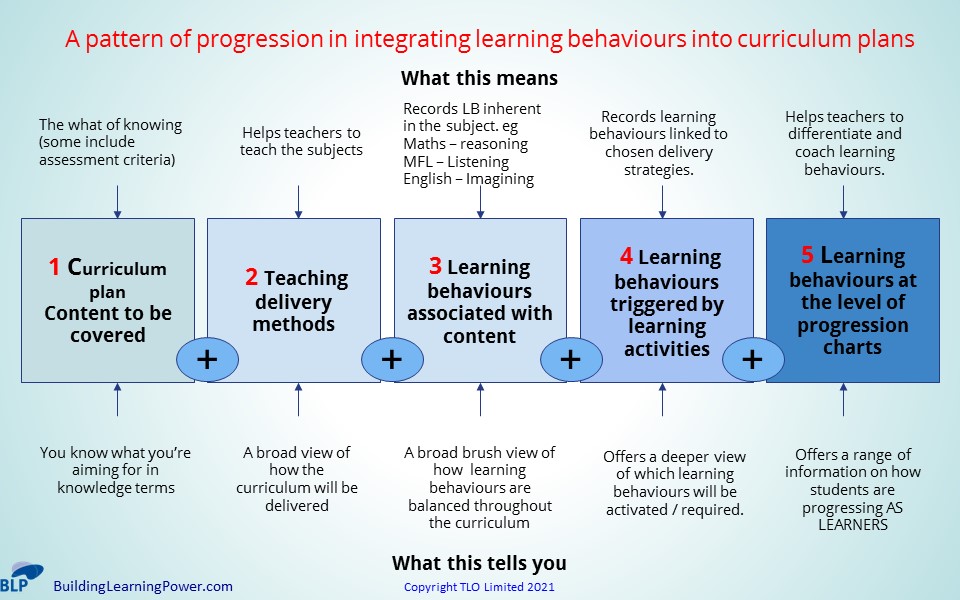
- Section 3A – alert teachers to the transition from content-only planning, through to planning that weaves together the content to be acquired, the planned activities and the learning behaviours that are being developed and grown;
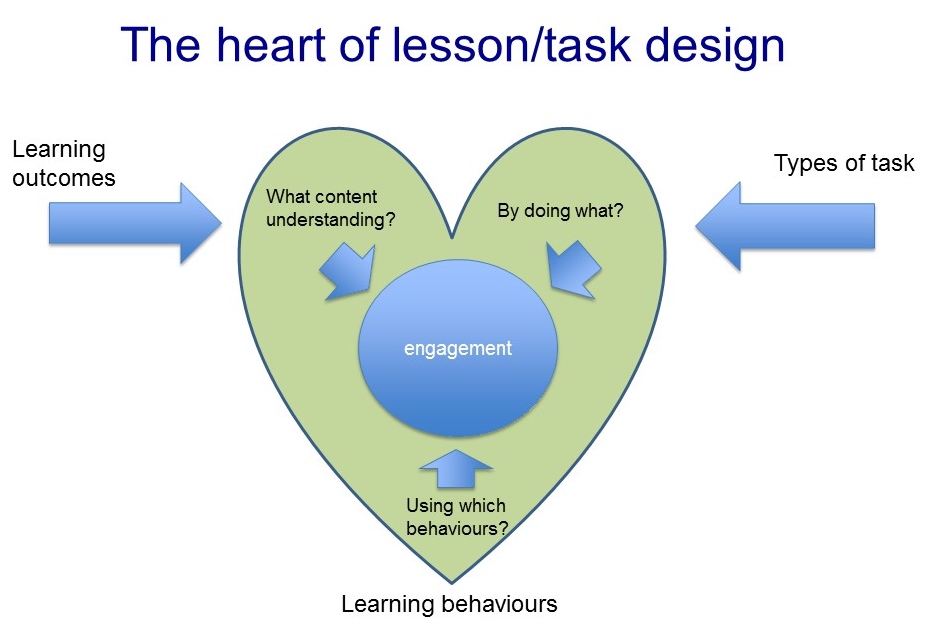
- Section 3B – explain how teachers might begin to integrate learning behaviours into units of work and lessons;
- Section 3C – introduce teachers to descriptions of different groups/types of learning activities;
- Section 3D – offer a huge number and range of teaching ideas that will help teachers to blend the 4 key learning behaviours into their curriculum planning.
As a result of working through Unit 3, teachers will:
- have recognised the importance of weaving content and learning behaviours into their planning;
- have explored alternative ways of planning units of work and individual lessons to include learning behaviours;
- have a heightened awareness of the activities they tend to gravitate to, and an understanding of how they might broaden their repertoire;
- be able to intentionally blend activities that trigger, support or extend the 4 key learning behaviours into their curriculum planning.
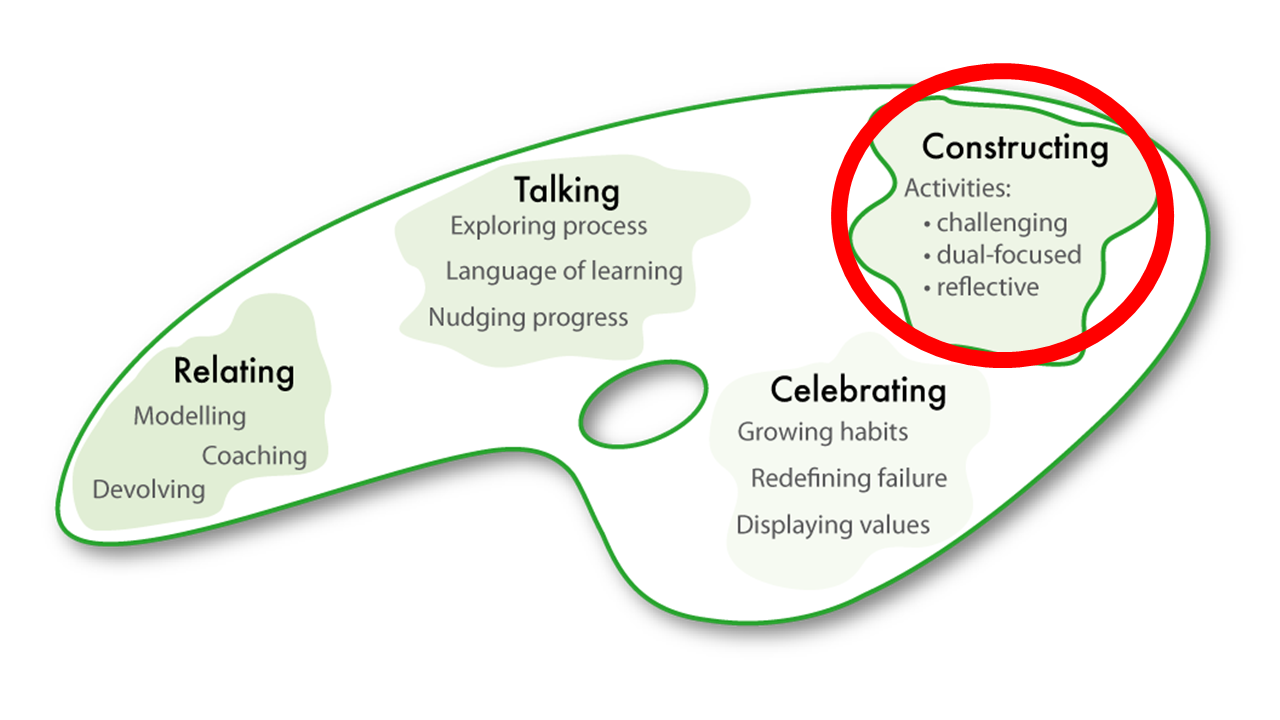
2. Tackling Unit 3 over three months
Staff will need time to;
- read sections 3A, 3B and 3C. Each section presents key ideas that will be utilised when exploring section 3D.
- reflect on what each section means for how the curriculum, medium term plans, individual lessons and activities are currently planned with learning in mind. A meeting is scheduled once 3A/B/C have been explored.
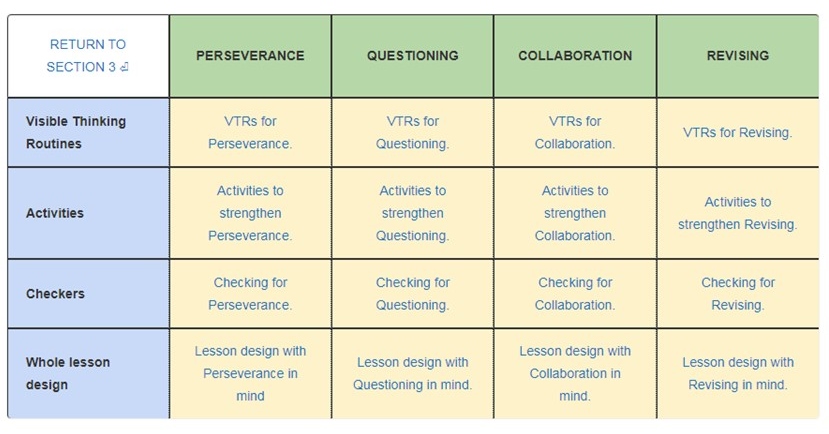
- explore the interactive navigation grid in section 3D – it opens up a catalogue of teaching ideas, clustered around each of the 4 key learning behaviours, each with visible thinking routines to try; activities to build into lessons; suggestions for monitoring and self-monitoring of learning; plus a fully worked up lesson for each behaviour. It is a rich resource with over 100 ideas to weave into teachers’ planning.
- pick out and trial several of these suggestions. They should plan to put a couple into action every couple of weeks and note the positives or negatives of making such a change.
Leaders should be aware that one of the outcomes from exploring these sections may be the need to overhaul planning frames and consider time frames for transitioning towards building learning behaviours into existing curriculum plans.
If the programme started in Sept you should aim to begin Unit 3 around February half term with the intention of completing it around Summer half term.

3. Strategic concerns for leaders
What might leaders be doing?
- While teachers are at the online reading stage of sections 3A, 3B and 3C: keep the conversation going informally, show an interest in what they are reading, thinking and maybe even worrying about.
- Leaders will be reading sections 3A/B/C alongside teachers – these sections raise significant issues that may need to be resolved at the whole-school level.
- Before Learning Team Meeting 1: As teachers begin to trial some ideas, go into classrooms to support and encourage. Look in particular for teachers who are trialling linking content with learning behaviours (sections 3A and 3B) and for teachers who are trialling the use of different task types (Section 3C ).
- After Meeting 1 and through to the end of Unit 3: Support teachers implementing their personal action plans derived from Section 3D. Look out for teachers trialling similar ideas and pair them up. Share ideas that are working well.
What leaders will be thinking about?
In relation to Section 3A: do we have any examples of teachers beginning to plan at the level of 3A4 and/or 3A5? (This is where teachers are beginning to link learning behaviours with content in their planning).
In relation to Section 3B: are our curriculum / lesson planning proformas fit for purpose?
In relation to Section 3C: which types of activities are usually designed, and are we seeing a wider, more imaginative range developing?
In relation to Section 3D: which VTRs, Activities and Monitoring tools appear to be having the greatest impact?
And for all 4 of these sections, how long might it take to phase in these planning ideas so that they become fully embedded? [Think in multiple months.]

4. Supporting development
Unit 3, Team Meeting Agenda 1
[We anticipate that Unit 3 may well take around 3 months to complete. Two meetings are to be scheduled, this meeting one month after starting Unit 3, and a second one about a month later. There is no ‘end of unit’ meeting, although the outcomes from Unit 3 will be explored during the first of the Unit 4 meetings.]
So far teachers have been developing their practice to ensure that their classroom culture becomes increasingly learning-friendly. This meeting begins the process of how they can construct curriculum plans that blend content and learning behaviours.
This meeting is positioned and designed to enable them to:
- Look back over and discuss with colleagues the progress they have made with their personal action plans relating to Unit 2, classroom culture that they devised at the previous meeting, and . . .
- Share their responses to their reading in Unit 3, sections 3A, 3B and 3C and…
- Draw up a personal action plan for how they will take their practice forward based on further exploration of the ideas in 3A/B and C.

Unit 3, Team Meeting Agenda 2
[Schedule this meeting about one month after the previous Unit 3 meeting.]
This meeting explores the activities that teachers can use to blend content and learning behaviours.
This meeting is positioned and designed to enable them to:
- Look back over and discuss with colleagues the progress they have made with their personal action plans relating to Unit 3, sections 3A, B and C, that they devised at the previous meeting, and . . .
- Share their responses to their reading in Unit 3, section 3D.
- Draw up a personal action plan for how they will take their practice forward based on further exploration of the ideas in 3D.
Find the agendas for the meetings in the toggle boxes below.
Unit 3 - Learning Team Meeting 1 Agenda ⬇️
Unit 3, Team Meeting Agenda 1
- Agree objectives and agenda (5 mins)
- Share reports of how learning powered lesson plans have worked (20 mins)
- Discuss the online materials that people have looked at in Unit 3, sections 3 A, B and C (15 mins)
- Consider possible policy issues for the school (5 mins)
- Personal Action Planning (20 mins)
- Review the meeting process (5 mins)
1. Session objectives: What do we want to achieve? (5 mins)
Objectives should include:
- learning from what and how our Action Plans have worked in different classrooms;
- feeling confident to take forward ideas from online materials into our practice;
- proposing actions that would benefit if everyone applied them in their practice;
- planning further personal developments in classroom practice.

2. Reports from classroom enquiries (15 mins)
Share and discuss teachers’ practice; a valuable source of learning for everyone.
This involves thinking back to what you have been putting into practice over the last few weeks from your last Action Plan. It covers;
- what you each tried to implement using ideas from Unit 2, section 2D, a catalogue of ideas
- how they worked
- what you could/did change to make it work better
- how students reacted
- whether there may be longer term benefits for students
Ask each other questions, offer suggestions and learn from each other.
Remember…everyone is supposed to report back to every meeting.
This isn’t a simple show-and-tell session but one where the group question and probe their colleagues’ summaries of what they have done to encourage analysis and deeper reflection.
Questions to encourage deeper thinking include:
- What do you think is getting in the way?
- What would make this better?
- How did students react to that change?
- How could this technique be modified to make it work better for you?
- What do you think made that work so well?
3. Recap on-line materials in Unit 3, sections 3A, 3B and 3C: What the materials made us think (15 mins)
The materials in these sections concentrated on the stages before actually teaching i.e. giving learning behaviours recognition and value by embedding them ever more skilfully into curriculum and lesson plans.
Try a PMI (Plus, minus, interesting) routine to help sort out your thinking.
Think about:
- how the different task types would suit your students as learners
- which task types of curriculum planning ideas are realistic both for you and your students
- how the ideas would impact on your planning and classroom culture
- which ideas are front runners for you and why?
Use this decision making pentagon in deciding what to do you might try.
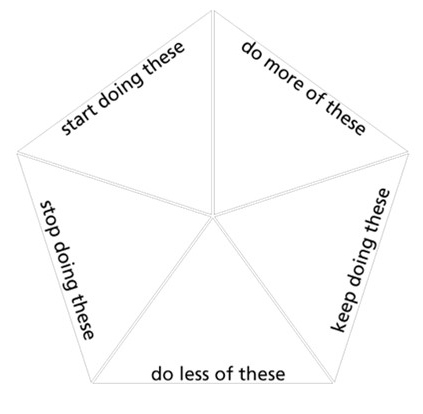
Note down a couple of:
- things you want to start doing
- things you think you need to stop doing (that’s harder)
- things you want to keep doing
- things you want to do more often
- things you want to do less
4. Propose what may be needed across the school. (5 mins)
The point here is to identify ideas that are sufficiently important that they;
- should be included in everyone’s action plan
- i.e. you are sufficiently keen on some of the ideas that you all want to try them in one form or another
- should be adopted by everyone as a whole school strategy
- i.e. when discussions over time have concluded that some ideas have proved so useful across the school they should be woven into school policies or procedures.
Some of the ideas suggested in the on-line materials are likely to make greater impact if they were to be adopted by everyone across the school. For example if you all decide to begin planning learning behaviours into lesson plans, it may be necessary to adapt the school’s existing planning proforma to ensure a consistency of approach.
5. Personal action planning. What am I going to do? (20 mins)
Think about what you are trying to achieve.
Plans at this stage should be linked to what you learned from Unit 3 Sections A.B.C. Gain more value from your plan by creating it around a question. Think of it as an If:Then problem.
If I introduce ‘Mystery object in a bag’ will it strengthen my students’ tendency to question?
(Find this activity in the Unit 3, Section 3D, Catalogue of Activities, Activities to strengthen Questioning)
The learning enquiry plan is a record of what you intend to do. It takes your enquiry question from what to how. Remember:
- you can choose which aspect(s) of classroom practice to focus on;
- think about the aspect that is likely to have the greatest benefit for your students;
- make the plan specifically focus on development;
- concentrate on no more than two or three actions;
- decide how to map your actions over the next three or four weeks;
- it’s useful to think about what you are going to do less of to make room for the changes.
As part of your plan it’s important to record what you will monitor over the weeks.
Changes you expect to see in your classroom practice. For example what do you expect to:
- see yourself doing differently?
- hear yourself saying more often, with greater commitment, more effectively?
- look out for in order to find out which approach best suits most students?
- feel less stressed about? What will indicate that?
- monitor to make sure that the changes you are making are having an impact of your students?
Changes you expect to see in your students. For example do you expect students to:
- begin to take greater responsibility for their own learning;
- be more inclined / better able to talk about learning;
- be better able to recognise/ describe how they are learning;
- show a deeper understanding of the process of learning;
- other.
Noting such changes will motivate you to continue with your experiments because the changes in students are almost always positive. The plan represents a promise to do it. This promise helps you to keep the plan as a priority in your mind.
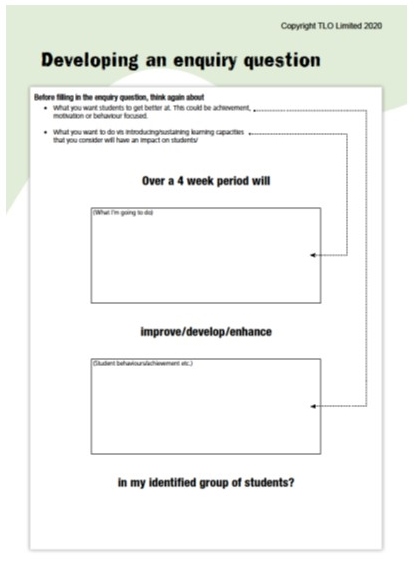
You could talk yourself through ‘THINKS’ like:
- How would you like your students to be different?
- How do you want your students to improve/develop/enhance in …………?.
- What aspects of your learning culture might be stopping this happening?
- Which practical ideas from the online material might improve these circumstances.

The level of critical analysis which is part of small research projects has been designed/built into the Enquiry Question and Action Planning forms. In other words their very design helps you to develop effective research focused questions and provoke evidenced based reflection.
6. Evaluate team session: How did we do as a team? (5 mins)
- Did we achieve our objectives?
- Are we comfortable with what we are trying to achieve?
- Any concerns at this point?
- Next meeting date and time.
Unit 3 - Learning Team Meeting 2 Agenda ⬇️
Unit 3, section 3D, Team Meeting Agenda 2
- Agree objectives and agenda (5 mins)
- Share reports of how learning powered lesson plans have worked (20 mins)
- Discuss the online materials that people have looked at in Unit 3D (15 mins)
- Consider possible policy issues for the school (5 mins)
- Personal Action Planning (20 mins)
- Review the meeting process (5 mins)
1. Session objectives: What do we want to achieve? (5 mins)
Objectives should include:
- learning from what and how our Action Plans have worked in different classrooms;
- feeling confident to take forward ideas from online materials into our practice;
- proposing actions that would benefit if everyone applied them in their practice;
- planning further personal developments in classroom practice.
2. Reports from classroom enquiries (15 mins)
Share and discuss teachers’ practice; a valuable source of learning for everyone.
- what you each tried to change or try out in your lesson planning
- how it worked
- what you could/did change to make it work better
- how students reacted
- whether there may be longer term benefits for students
Ask each other questions, offer suggestions and learn from each other.
Remember…everyone is supposed to report back to every meeting.
This isn’t a simple show-and-tell session but one where the group question and probe their colleagues’ summaries of what they have done to encourage analysis and deeper reflection.
Questions to encourage deeper thinking include:
- What do you think is getting in the way?
- What would make this better?
- How did students react to that change?
- How could this technique be modified to make it work better for you?
- What do you think made that work so well?
3. Recap on-line materials in Unit 3, section 3D: What the materials made us think (15 mins)
You will have been looking at and using the Catalogue of activities for a month or so now. What have you been trying out? What more do you want to experiment with?
Try a PMI (Plus, minus, interesting) routine to help sort out your thinking.
Think about:
- how the ideas would suit your students as learners
- which are realistic both for you and your students
- how the ideas would impact on your classroom culture and the students view of themselves as learners
- which ideas are front runners and why?
Use this decision making pentagon in deciding what to do you might try.
Note down a couple of:
- things you want to start doing
- things you think you need to stop doing (that’s harder)
- things you want to keep doing
- things you want to do more often
- things you want to do less
4. Propose what may be needed across the school. (5 mins)
The point here is to identify ideas that are sufficiently important that they;
- should be included in everyone’s action plan
- i.e. you are sufficiently keen on some of the ideas that you all want to try them in one form or another
- should be adopted by everyone as a whole school strategy
- i.e. when discussions over time have concluded that some ideas have proved so useful across the school they should be woven into school policies or procedures.
Some of the ideas suggested in the on-line materials are likely to make greater impact if they were to be adopted by everyone across the school. For example, you could all agree to adopt 2 or 3 Visible Thinking Routines that appear to be making an impact and trial them with all classes as and when appropriate.
5. Personal action planning. What am I going to do? (20 mins)
Think about what you are trying to achieve.
Plans at this stage should be linked to what you are learning from section 3D, but also linked to what you discovered in sections 3A/B/C. Gain more value from your plan by creating it around a question. Think of it as an If:Then problem.
For example:
If I make frequent use of the VTR ‘See, Think, Wonder’, will it develop my students’ attentive noticing as a springboard into improving their thinking skills?
(See this VTR in Unit 3, Section 3D, Catalogue of Activities, VTR Questioning)
The learning enquiry plan is a record of what you intend to do. It takes your enquiry question from what to how. Remember:
- you can choose which aspect(s) of classroom practice to focus on;
- think about the aspect that is likely to have the greatest benefit for your students;
- make the plan specifically focus on development;
- concentrate on no more than two or three actions;
- decide how to map your actions over the next three or four weeks;
- it’s useful to think about what you are going to do less of to make room for the changes.
As part of your plan it’s important to record what you will monitor over the weeks.
Changes you expect to see in your classroom practice. For example what do you expect to:
- see yourself doing differently?
- hear yourself saying more often, with greater commitment, more effectively?
- look out for in order to find out which approach best suits most students?
- feel less stressed about? What will indicate that?
- monitor to make sure that the changes you are making are having an impact of your students?
Changes you expect to see in your students. For example do you expect students to:
- begin to take greater responsibility for their own learning;
- be more inclined / better able to talk about learning;
- be better able to recognise/ describe how they are learning;
- show a deeper understanding of the process of learning;
- other.
Noting such changes will motivate you to continue with your experiments because the changes in students are almost always positive. The plan represents a promise to do it. This promise helps you to keep the plan as a priority in your mind.
You could talk yourself through ‘THINKS’ like:
- How would you like your students to be different?
- How do you want your students to improve/develop/enhance in …………?.
- What aspects of your learning culture might be stopping this happening?
- Which practical ideas from the online material might improve these circumstances.
The level of critical analysis which is part of small research projects has been designed/built into the Enquiry Question and Action Planning forms. In other words their very design helps you to develop effective research focused questions and provoke evidenced based reflection.
6. Evaluate team session: How did we do as a team? (5 mins)
- Did we achieve our objectives?
- Are we comfortable with what we are trying to achieve?
- Any concerns at this point?
- Next meeting date and time.
5. Resources for bringing staff onboard
Here we offer a short powerpoint with delivery notes to introduce Unit 3, Constructing Learning, to staff.
Introducing Unit 3 content to your teachers
This short slide presentation aims to help teachers understand Unit 3 and how it leads naturally on from the work they have been doing on Unit 2. The slide deck could be used to introduce teachers to the key ideas behind Unit 3. In total it might take around 30 minutes to work through with your staff. You might use this slide deck: Brief explanatory notes can be found under each slide. You are now in Leading Unit 3, Constructing Learning.
Use the navigation bar to move from section to section.
Comments are closed.