Here is a range of things you could say to nudge Noticing. When you use this kind of language you are talking as a learning coach; encouraging students to think for themselves. Using such statements encourages your students to:
imitate you
start to think in this way
become conscious of these phrases and their meaning.
Gradually you will hear some of the statements pop up in students’ self-talk….in speech or even in writing from time to time, but mostly this will go on inside their heads. As your work on noticing gathers pace see if you can detect students who talk, or think, in these ways.
Learning-talk nudges that encourage Noticing
Teacher talk – as a learning coach
Here are 10 ideas to ensure your students do the thinking for themselves
What do you notice about the way… is doing that?
Just watch/listen for a while. What’s happening? Wait a little longer. What’s really going on?
Be patient for a bit longer. Do you notice any patterns here?
Great! Your patience is rewarded. You noticed some (unusual) patterns/really useful details there.
Do you notice any differences between xxx and yyy?
Is there more to this than you are seeing now?
Had you noticed that before?
What seems to be going on here?
Do you notice [something different/unusual] about this?
Have you missed anything?
What do you think?
Which of these noticing nudges might you start using?
For which particular content areas would such nudging be most useful?
How will most of your students respond to such nudges?
Will this way of engaging be more popular with girls or boys?
What other nudging ideas might you add to the list?
Make a note of…
Students’ reactions to the nudges.
Ideas about why this might be.
Ways in which you could further encourage students to imitate this metacognitive self-talk.
Any positive or negative impact of these noticing behaviours.
In the early stages of building your students’ learning power your role is to; make them aware of the behaviour; talk about it (what, how, why, when, if); celebrate its use; give opportunities to practise it, both in lessons and elsewhere; reflect on it to improve it. This staged start is reflected below…
Firstly… make students aware of the use and importance of noticing…when, where, why, how they are or could be doing it
Then… explore noticing a little more through the language of noticing
Try… using noticing as a lesson starter to tune students into using it
Then start… blending noticing into the way you teach the content. Use specific noticing strategies to deepen content understanding.
Ensure… students reflect on the success or otherwise of their noticing frame of mind.
1. Make students aware of Noticing
How you make your students aware of the words that describe the behaviour and why it is important to use it.
Primary
Give noticing a high profile
For example, create a Noticing table with magnifying glasses and interesting objects …. shells, coins, dead insects, flowers …… and lots more! Spend a few minutes each day for children to report on what new things they have noticed about the objects.
Secondary
Give time to think … and share ideas
What do experts notice? – A painter will notice subtle differences in colour, shape or texture. What about other experts … gardeners, doctors, musicians, drivers, sports-people, actors, cooks, mechanics?
Choose a couple of experts from the list or from your own ideas and think about what they notice and how and why they might have learned this.
Primary
Introduce games that require noticing behaviours
For example… use the familiar Kim’s game where students have to look carefully for a given time and then try to remember the group of articles. This simple format has numerous variations…what’s missing, what’s been added, what’s the odd one out?
Secondary
Introduce intriguing pictures to provoke noticing
2. Explore the language of Noticing
How you might extend the language and understanding of this behaviour
Primary
Discuss noticing others
Invite some students to be Learning Detectives. Task them with watching how children play team games. Their job is to watch out for how to do the activity best, what works and what doesn’t work. You will need to model this regularly, it won’t matter whether they are throwing bean bags into buckets, jumping through hoops or balancing on bars, the noticing and coaching will make a real difference to their learning. If possible capture examples of effective learning on camera / video. Build the outcomes into a display that helps all students to become more aware of the effective habits of others.
Secondary
Extend the language of noticing
Collect words that tell you how people learn to notice detail.
Relate noticing to well known sayings
What do we mean when we say …
Eagle-eyed.
I’ve gone through it with a fine-tooth comb.
Keep your eyes peeled
3. Use Noticing as a lesson starter
Use a quick starter to key your students into the learning behaviour you want to concentrate on in the lesson. i.e. here you are starting up their noticing behaviour
Primary
Intriguing Images
For example have an intriguing picture ready on the whiteboard before the lesson starts. Students look forward to looking carefully at pictures where all is not as it seems.
Secondary
Finding shapes
Offer students a random set of dots (or picture of the night sky). Invite them to seek items such as:
A letter of the alphabet
An animal
A regular shape
A face
Or something linked to the content of the forthcoming lesson
As you develop greater understanding of noticing you will need to design learning activities which, by their very nature, will deepen students’ tendency to Notice AND their understanding of the content.
Here is an idea where, by using noticing, students will gain an understanding of the content AND will develop a Noticing habit.
4. Focus on Noticing as a learning strategy
Draw out the noticing behaviour being used in a thinking routine.
Primary and Secondary
Visible Thinking Routine
See, Think, Wonder:
Invite students to make an observation (see) about an object (artwork, image, artifact) or topic.
Follow up with what they think might be going on. Encourage backing up their interpretation with reasons.
Ask students to think about what this makes them wonder about the object or topic.
The routine works best when a student responds by using the three stems together at the same time, i.e., “I see…, I think…, I wonder…”. If not you need to scaffold each response with a follow up question for the next stem.
This routine encourages careful observations and thoughtful interpretations. It helps stimulate curiosity and sets the stage for inquiry. Use it at the beginning of a new unit to motivate student interest. Try it with an object that connects to a topic during the unit of study. Use the routine with an interesting object near the end of a unit to encourage students to further apply their new knowledge and ideas. Go to visible thinking website for more examples and information about thinking routines.
And here is an idea that will help students to understand the noticing process.
5. An activity to highlight and strengthen Noticing
Design specific activities to highlight and strengthen the behaviour
Viewing Frames:
Use sets of interesting pictures together with cards with a viewing window cut into them. Students place the viewing card over the picture in seeking a range of different features. E.g.something red, made of xx, something denotinghappiness, something which suggests what might happen next. It’s a good idea to look firstly for concrete features before moving on to abstract features. You could:
use a poem. Use the viewer to find the stanza that is most descriptive, that makes them happy, that uses the best simile…
or use a geometrical image, use the viewer to find corresponding angles, perpendicular lines, a reflex angle…
or an image of the water cycle, use the viewer to find where water vapour is rising, where water is moving downwards, where it would be best to site a farm, a village,a wind turbine…
or . . . .
6. Reflect on Noticing
Primary
Make reflecting on noticing part of everyday lessons
Here is a very practical example of how you might develop the emotional climate of the classroom and make it Noticing friendly
Learning mats are A4 laminated sheets that show various aspects of a learning habit. Keep them on desks/tables or as part of a wall display.
Secondary
Alert students to noticing across subjects
A useful resource for tutor time to guide a wide ranging discussion
Primary and Secondary
What do you think?
Can you see a use for any of the suggested activities?
Have you raised awareness of attentive noticing with your students?
Does your class have an agreed set of good noticing behaviours?
Which two ideas from above do you want to try out?
How long will you keep them going before you decide whether they have worked or not?
Make a note of…
What happens in your classroom in response to any of the above ideas.
How students’ behaviour changes over about 3 weeks of becoming more familiar and talking about the behaviour.
How your behaviour in the classroom changes as you use these ideas over time.
NB. None of the suggestions above will lead to instant understanding in students nor instant changes of behaviour. You will need to drip them in over time and keep building and refreshing your language of learning.
Building students’ Learning Power is about creating a culture in your classrooms – that systematically cultivates habits and attitudes that enable your students learn confidently and face difficulty calmly, and creatively. By a ‘culture’ we mean all the little habits, routines and practices that implicitly convey ‘what we believe and value round here’.
So ‘culture’ concerns the details of the micro-climate that you create in your classrooms. What you do and say, what you notice and commend and what you don’t, what kind of role model of a learner you offer: all these are of the essence. The micro-climate of a classroom can inadvertently stifle or, specifically enhance, the very behaviours you are seeking to promote.
Does my classroom climate encourage Noticing?
Here is a selection of features that might begin to shape the emotional climate of your classroom to encourage noticing.
The diagram has 4 sections:
Top – strategies you could build into the way you teach to stimulate noticing;
Right – indications of the sort of language you might use to stimulate noticing;
Bottom – ways in which you might celebrate / praise students’ use of noticing;
Left – things that you need to enable students to do.
Apply your own noticing and consider whether you already use any of these features and which you fancy trying.
Learning often relies on being able to pay attention to what you are interested in: not necessarily thinking about it, just really noticing how it looks, what it is made of, or how it behaves. Many professionals, from poets to scientists to business managers, rely on this quality of attentive noticing: being able to identify the significant detail, or to let an underlying pattern of connections emerge into their minds. Sometimes you have to be patient before the detail or the pattern will reveal itself to you, like looking for sea creatures in a rock pool.
This is a skill that can be strengthened with practice. We often pick up this skill from people around us. Babies very soon learn to work out what their mother is focusing on, and to ‘share joint attention’ with her. It helps to be around people who are demonstrating this ability to watch carefully and turn their observations into accurate descriptions. Getting a really clear sense of what, before starting to think about how or why, is very useful.
What does being a good Noticer involve?
If you have a well formed Noticing habit you will be ready, willing, and able to:
be attentive to details and subtleties in order to understand things;
seek underlying patterns patiently, understanding that connections take time to emerge;
actively use all your senses to gather information to build understanding of the world around;
gain a clear sense of the ‘what’ of something before considering the ‘why’ and ‘how’;
recognise that learning is often complex and difficult and takes time and effort to accomplish.
Spot the Noticers in your classes
Just to get you tuned in – have a quick think about ‘noticers you may know’. Make a note of students you know who display these characteristics.
Becoming a teacher who develops students’ learning power means developing a keen awareness of the subtleties of your students’ learning behaviours.
What do you think?
How many of your students come to mind when looked at through the lens of noticing?
Is there a gender balance or have you noted down more girls than boys or vice versa?
Are the students you have noted from across all age groups or do some dominate?
How do these ‘noticing characteristics’ help these students to be better learners?
Make a note of…
Those groups or classes that seem to have lots of good noticing characteristics.
Answering the question “To what extent have students discerned a culture shift in classrooms”.
Think about recording and analysing conversations
Before beginning to talk with students about learning, it might be worth organising a recording of what they say. You could use IRIS if the school has this technology, but a simple video camera will do the job. If everyone made such recordings they could be used further down the line to sense longitudinal change in your students’ ability to discuss the process of learning – whether they are becoming increasingly fluent in ‘talking learnish’.
Conduct conversations with a mixed group of about 6 students for about 15 minutes.
When conducting such conversations it will be important to:
Put students at ease
Explain what you are doing
Assure them that there are no right answers
Ask them to just answer honestly etc.
Follow up open-ended questions with prompts like
what makes you say that?
how do you know that?
how do you feel about that?
how often does that happen?
when does that happen? etc
Take care not to influence or lead
Try not to agree or disagree
Refrain from asking leading questions
Show empathy by saying ‘Yes I understand’
Check your understanding by “Do you mean…” “I’m not sure I understood that, are you saying…”
Avoid wandering by saying “Let’s move on to the next point/another idea”
Thank them for their time and thoughts at the end. Make them feel valued
Key questions you might pose in the learning conversation (and/or add some of your own):
How would you describe most of your lessons?
Who does the majority of the work?
Who asks the questions ?
To what extent would you say your learning is active ? (this will need explanation from you about the differences between being cognitively active and cognitively passive. The question is not about being physically active)
Have you noticed any changes in how teachers organise your lessons recently?
Are you able to make some choices in your lessons?
How much of your time is spent learning on your own, and how much learning with others?
What do you do when you don’t know what to do / when you are stuck?
Do you enjoy doing things that you find challenging?
What advice would you give the school in order to improve the learning experience for you?
Important. Beforeundertaking the conversation please read the section ‘Analysing student responses’. This will help you to become aware of what you are hoping to glean from these conversations and hence make it easier to devise supplementary probing/exploratory questions to the ones above, as conversations unfold.
Analysing student responses:
Watch your recording, listening carefully to what and, importantly, how students are talking about learning and the shifts that they have perceived
Ask yourself:
How do my students perceive the culture of my classroom?
To what extent do students believe the culture is teacher focused?
Have they sensed a shift in recent months?
Do they prefer it now to previously?
How would they describe your classroom?
Do they believe they are able to exercise more choice than was previously the case?
Are they aware of what you have been trying to achieve?
Do responses indicate that students are aware of and prepared to accept a growing responsibility for their own learning?
Are they able to describe how they are better able to persevere now ?
Do they understand that work should be challenging, and do they enjoy this ?
What advice do they offer for further developments?
A chance to speculate
Had you conducted this learning conversation a year ago with the same students, what do you think the responses would have been?
Overall
What are students saying about learning and your classroom culture?
How convincingly are they saying it?
Are there links between what they are saying and the analysis and reflections that you have just undertaken?
Pupils, of course, may see it a little differently. You can check out how their views of themselves as learners relate to your view of changes in practice. Invite your class to complete the quiz online. Older pupils will be able to do it for themselves, while younger ones will need to be talked through it by an adult.
The quizzes look at grey to purple (lacks to receive) and purple to blue phases of Perseverance, Collaboration and Questioning.
What are pupils learning about learning?
Make the Pupil Reaction review survey available on a computer in your classroom. Have the class complete it over the course of a day. Please ensure you select the survey tool that matches the Teacher Action tool you used (1 Grey to purple or 2 Purple to blue) There are 32 identical questionnaires pre-prepared. All pupils have to do is to type their names at the top of the questionnaire (or leave the generic [pupil 1] name), read the questions and put an x in the appropriate column.
Pupil Reaction review tool 1 – Grey to Purple
You can find this tool in the same Classroom Practice Review Review tool 1 excel spreadsheet as the Grey to Purple Teacher Action tool 1.
Pupil Reaction review tool 2 – Purple to blue
You can find this tool in the same Classroom Practice Review tool 2 excel spreadsheet as the Purple to Blue Teacher Action tool 2
Once you have collected your pupils’ views you can access a spreadsheet that combines your answers with pupils’ answers. to each of the 15 questions. The blue columns are your results and the red columns are pupil results. The taller the red column the more the pupil agrees with the statement. Look carefully at these intriguing results.
Ask yourself:
To what extent do my views and pupil views coincide?
Where are they different?
Why might that be?
Are differences in some way related to the three different learning behaviours (i.e. is there a stronger relationship for Perseverance (1-5) than for Collaboration (6-10) for example)?
Do pupil results match my feeling for how they are progressing in their learning behaviours? (See questions in Task 4)
Are differences due to pupils having, in my opinion, an unrealistic/inaccurate view of themselves as learners?
If so, which learners have this unrealistic view? Is there a gender bias? Attainment bias?
What might I need to do to alter/improve these unrealistic/inaccurate views?
Make a note of…
What you think are the three most important differences in how your pupils are as Perseverers, Collaborators and Questioners
Providing rich and varied occasions for exercising learning habits;
Infusing learning habits into lessons to enhance content understanding;
Recognising and celebrating the use and growth of learning habits;
Expecting students to take ownership of and responsibility for their own learning habits;
Exploring the development of learning habits with students over time.
As a teacher you are an influential character builder and so need to be mindful of how you help students form, replace, re-form and strengthen their learning habits.
But don’t worry, you’re not there yet. It takes most teachers between 2 and 3 years to become really fluent with this way of teaching. So, go easy on yourself. Feel determined because small steps often prove to be big levers for change. Have a think about what you might do…
What to stop and start
Here are a few ideas you might want to try. Take it steady, this way of teaching can be a big but exciting shift so it’s worth doing it slowly and thoughtfully.
Look first at the Stop/avoid ideas. Some of these are far from trivial but it’s best to try to remove them before starting on the Start/do more of, Start slowly and Experiment with ideas.
CHANGE PDF TITLE FROM PERSEVERING TO RESILIENCE
What do you think?
Which of the ideas appealed to you most?
Can you see ways of incorporating these into your subject/class routines?
Which would make the biggest difference to your students?
Which would make your life easier?
Make a note of…
Ideas that you want to try and the impact you hope they will have on your teaching and on your students.
Here is a range of things you can say to nudge resilience. When you use this kind of language you are talking as a learning coach, encouraging students to think for themselves. Using such statements encourages your students to:
imitate you;
start to think in this way;
become conscious of these phrases and their meaning.
Gradually you will hear some of the ideas pop up in students’ self-talk….in speech or even in writing from time to time, but mostly these will go on inside their heads. As your work on resilience gathers pace see if you can detect students who talk, or think, in these ways.
My learning talk nudges to encourage Resilience
Teacher talk – as a learning coach
Here are 10 ideas to ensure your students do the thinking for themselves
NEEDS PUTTING INTO SUBSECTIONS
What happened when you got stuck before? What did you do to work it out?
Great! You have come through the confused / stuck feeling. What helped you?
It’s when you get stuck that you really start to learn.
How can you avoid that distraction?
Is this goal worth going for?
What do you know? What do you need to know? How might you bridge the gap?
You can’t do it – yet.
Can you explain why you are stuck?
That’s an interesting mistake.
Give it a go and see what happens.
What do you think?
Which of these resilience nudges might you start using?
In which particular lessons would such nudging be most useful?
How will most of your students respond to such nudges?
Will this way of engaging be more popular with girls or boys?
What other nudging ideas might you add to the list?
Make a note of…
Students’ reactions to the nudges.
Ideas about why this might be.
Ways in which you could further encourage students to imitate this metacognitive self-talk.
Any positive or negative impact of these resilient behaviours.
In the early stages of building students’ learning power your role is to; make students aware of the behaviour; talk about it (what, how, why, when, if); celebrate its use; give opportunities to practise it, both in lessons and elsewhere; reflect on it to improve it. This staged start is reflected below…
Some ideas to enable students to become more resilient
Firstly… make students aware of resilience…what, when, where, why, if.
Then… explore perseverance a little more through the language of resilience.
Try… strengthening more positive feelings about being stuck, the value of mistakes or the exhilaration of challenge.
Then start… blending the above aspects of resilience into the way you teach the content. Teach strategies to aid resilience.
Ensure… students reflect on the success or otherwise of their ‘sticking at it’ efforts.
1. Make students aware of Resilience
How you make students aware of the words that describe the behaviour and why it is important to use it.
Primary
Enable students to become aware of levels of challenge
Provide a laminated strip of card and a clothes peg. The card is marked ‘Too Easy’, ‘Hard but not too hard’ and ‘Too difficult’
Students move the peg to indicate the difficulty of the task. Good information for the teacher to judge when and how to intervene. A great opportunity for students to become aware of how they assess their own levels of challenge.
Invite students to think up their own ideas about achievement.
Here are some examples from children.
An achievement is something;
you can be really proud of
you have never done it before
that you kept trying to do and finally succeeded
you have done something you found difficult
you have worked hard to finish
you have done what teachers tell you is good
Make sure your praise matches these statements.
Secondary
Introduce the Learning Pit to explore the stuck/struggle journey
Use the ‘Learning Pit’ as a means of opening up a conversation around the feelings involved with being stuck, and the journey towards getting unstuck – the struggle. It is essential that students know:
that the ‘pit’ is only one staging post on the learning journey
they can get out by using ‘stuck strategies’ and tools
It is also worth noting that the pit is not necessarily inevitable for all students in all learning – some will fly over the pit in some topics or curriculum areas.
2. Exploring the language of Resilience
How you might extend the language and understanding of this behaviour
Primary
Develop ‘stuck prompts’ together
Work with students to find useful questions to ask themselves and helpful strategies for them to use when they are stuck.
Ensure that there are plenty of options that come higher on the list than “Ask the teacher”.
Create stuck prompts as reminders around the classroom.
These are, in effect, low-risk, low-investment levers for creating a shift in students’ sense of what is valued, what is normal, and what is the point of their learning — and thus in the quality of their engagement.
Secondary
A way with words
What do we mean when we say . .
Look at these quotations.
Consider the postage stamp: its usefulness consists of the ability to stick to one thing ‘til it gets there
Fall seven times, stand up eight
Perseverance is the hard work you do after you get tired of doing the hard work you already did
Introduce a deeper way of considering the how of stuck
In this phase we are not talking about modelling getting unstuck on a problem where you may simply have forgotten a step. Nor is this process driven primarily by subject knowledge. Here the analysis is about what you might ask yourself when you are in a major stuck problem and need to rethink what you are doing in order to restart, tweak, or give up.
10 points to explore;
Can I explain to myself what’s really going on here?
Am I keeping to the original intention?
Have I read and understood the question/problem properly?
Am I applying the right principles? Have I got roughly the right ideas?
Does anything stand out as simply wrong?
Have I forgotten something obvious?
Have I veered off course? Am I down a rabbit hole?
Am I making this too complicated? or too simple? Do I need to go back to basics?
What would a distilled list of key stages or points look like?
Is this worth continuing with in this way? Why/why not? What could I do instead?
Undertaking this analysis relies on the students’ inclination to;
Self-monitor how things are going, keeping an eye on the goal
Expect the unexpected, having a readiness to re-shape, re-order, re-form plans to take account of new circumstances.
Remain alive to new, unforeseen opportunities and ideas
Look at what you are doing with a critical eye
Strive to be the best you can be
Make sure things are on track and make improvements along the way.
So at a less abstract level, students need to learn how to deal with change, emotionally and practically. With an inflexible frame of mind they are unlikely to recognise the need to change their ideas or the way they do something. These behaviours are closely aligned with the revising/refining habit.
3. Counter attitudes that limit resilience; strengthen the positives.
Consider what your students feel about being stuck, facing challenge, and risking failure. Think how you might adjust your language to re-frame their outlook.
Primary and Secondary
Re-frame Stuck and Challenge
Many students are eager to ‘get things right (first time!)’, to ‘do things quickly’, to ‘avoid errors’ because they perceive that’s what good learners do. This mindset means being stuck is: shameful, the point at which learning finishes rather than a stepping stone to new learning; challenge should be avoided rather than embraced; breaking new ground is too risky at the edge of their comfort zone, with all of the attendant risks of ‘failure’.
Adopt a coaching role
Model being a learner and show how you work things out, get unstuck, learn from mistakes.
When modelling
Take on the role of an intelligent novice
Model getting unstuck at a slightly higher, more coherent and informed level than is characteristic of your students
Model your ‘think alouds’
When students get perplexed
If students freeze offer supportive questions NOT answers.
‘What do you do next?’
and ‘Then what do you do next’
and ‘Then what do you do next’
Thus you are encouraging students to take over the job for themselves
Remind students that uncertainty shouldn’t lead to paralysis!
Re-frame Challenge
Give Mistakes a status, a key role in learning
Give mistake quotas. Tell students you expect them to make, say.3 in a lesson. If not, the challenges they are tackling are too easy and they should move to harder ones.
Explore the concept of ‘Good mistakes’ – where the student has misunderstood something thus enabling you and the student to track the issue.
Offer a range of ‘good mistakes’ at the start of a lesson for students to find, explore and correct.
Give time in lessons for students to Trial and Improve something. Discard ‘trial and error’.
4. Focus on Resilience as a learning strategy
Draw out the persevering behaviour being used in a thinking routine.
Primary and Secondary
Visible Thinking Routine
From ‘I’m stuck ‘ To ‘I’m stuck because …‘
When a student says ‘I’m stuck’, resist the temptation to ask ‘what are you stuck on?’ – you know only too well they will probably reply ‘everything’. Better to explore ‘why’ they are stuck . . . .
Encourage students to identify the cause of their stuckness. Move students from saying “I’m stuck” to ” I’m stuck because…” Naming the problem will often suggest a reasonable next step.
It’s also useful to insist that students can’t call themselves ‘stuck’ unless they have tried to apply at least 1 solution.
And here is an idea that will help students to understand resilience.
5. An activity to highlight and strengthen Resilience
Use Origami to help students explore keeping going with a challenge.
A seemingly simple task that frequently leads to frustration and the need to have another go. Some students may do it fairly easily, others will give up, and some will struggle through and achieve, almost to their surprise, the desired outcome. Use the task to explore the feelings around stuck, challenge, potential distractions, and trying to achieve a goal.
Use it as an opportunity to explore further with the group — what makes us give up, what helps us keep going?
Couple content and process: build trial and improvement into lessons.
Trial and Improvement; promote the idea that being stuck is okay. If students know we expect them to try things out, make slip-ups and have another go, their perception of being stuck is likely to turn to curiosity. Weave trial and improvement into lessons by, for example: –
Include a trial and improvement success criterion when asking students to complete an activity or create a piece of work. For example: I want to see evidence that you have tried and improved at least a couple of different layouts before settling on…
Include a designated focused trial and improvement time in lessons; time to test out ideas. Use scrap paper, mini whiteboards or rough books. Include opportunities for discussion to encourage editing, refining and clarifying of thinking.
Mark the working out that students do. Extend this common in maths idea across the curriculum.
Since we want young people to turn out to be robust, confident learners we have to talk with them in terms of a growth mindset.
Teachers develop their students’ interest in the learnable skills and strategies.
Teacher comments focus on effort, habit and disposition, focusing students on how to get better by looking for ways to try harder or differently.
Students are steered away from carving the world into things they are ‘good at’ or ‘not good at’.
Flip the emphasis in how goals are expressed
Getting student buy-in to goals
Setting a goal that the learner has little or no motivation to achieve is unlikely to lead to success. What is needed is learner buy-in to goals.
Evidence shows that goals that relate to doing something or researching something, or creating something . . . ) are better motivators than goals that relate to knowing something or passing / doing well in a test.
Putting the ‘how’ before the ‘what’.
So – a goal relating to ‘understanding xxxxx’ or ‘knowing yyyyy’ is less likely to motivate a learner to make the effort than a goal that starts with some indication of the sort of ‘effort’ or way of doing something;
work with a partner to decide why…….
use your problem solving skills to work out……
use your imagination to ….
Where ‘knowing goals’ place the emphasis on the successful acquisition of knowledge or creates a pass/fail scenario, the ‘doing goals’ focus on how – something to do rather than something to know.
Have a look at some real examples just to give you a flavour of this technique
With a partner, use your reasoning skills to explain why all prime numbers, with the exception of 2, are odd.
Use your noticing skills to identify three similarities and three differences between these two images.
By using what you already know and your imagination to generate ideas, tell the story of the fire of London from the perspective of a young child living in London at the time.
What you are doing here is beginning to pay some attention to how students will be learning as well as what they will be learning. This linking of how and what will come to play a central role in building students learning power later in your learning journey.
Link goals to the real world
Here’s a simple, straightforward way of showing the purpose of learning objectives or goals…simply add SO THAT at the end of the objective. The SO THAT is similar to the why. It aims to offer a wider reason for pursuing the learning objective. So an objective becomes…
Be able to xxxxxxx So That. . . . add the wider purpose
Build reflection on challenge into lessons
Reflecting on challenge after the event
Draw a thermometer on the wall, with a scale from overstretched to low or coasting. Work with the class to describe the various levels. High might read “I took the step to try something just a bit harder than before. I worked on it until I could do it and understood it clearly” and Overstretched might be “This was a few steps too far … next time I will chose a more manageable task.” Talk to children about the degree to which they have felt stretched and ask them to move photos of themselves up and down the scale. Use it to stimulate discussion about sticking with tasks and understanding when it is not wise to do so.
This activity helps students understand risk and challenge. It is worth routinising this until students get the measure of it
Extract from Building Learning Power in Action, by Sarah Gornall, Maryl Chambers, Guy Claxton
6. Reflect on Resilience
Primary
Make reflecting on resilience or perseverance part of everyday lessons
Learning Mats
Learning mats are A4 laminated sheets that show various aspects of a learning habit. Keep them on desks/tables or as part of a wall display.
Students refer to them during lessons, using them as prompts about the finer aspects of a learning habit that is being stretched.
Secondary
A Resilience Learning Log
Use learning logs such as this to encourage students to reflect on when they did and didn’t persevere, and what happened as a consequence. Use as the basis of discussion.
Can you see a use for any of the suggested activities?
Have you raised awareness of resilience with your students?
Does your class have an agreed set of good resilient learning behaviours?
Which two ideas from above do you want to try out?
How long will you keep them going before you decide whether they have worked or not?
Make a note of…
What happens in your classroom in response to any of the above ideas.
How students’ behaviour changes over about 3 weeks of becoming more familiar and talking about the behaviour.
How your behaviour in the classroom changes as you use these ideas over time.
NB. None of the suggestions above will lead to instant understanding in students nor instant changes in their behaviour. You will need to drip them in over time and keep building and refreshing your language of learning.
Building students’ Learning Power is about creating a culture in your classrooms – that systematically cultivates habits and attitudes that enable your students learn confidently and face difficulty calmly and creatively. By a ‘culture’ we mean all the little habits, routines and practices that implicitly convey ‘what we believe and value round here’.
So ‘culture’ concerns the details of the micro-climate that you create in your classrooms. What you do and say, what you notice and commend and what you don’t, what kind of role model of a learner you offer – all these are of the essence. The micro-climate of a classroom can inadvertently stifle, or specifically enhance, the very behaviours you are seeking to promote.
Does my classroom climate encourage Resilience?
Here is a selection of features which might begin to shape the emotional climate of the classroom to encourage resilience.
Apply your own attentive noticing and consider whether you already use any of these features and which you fancy trying.
CHANGE PDF TITLE TO CLASSROOM CLIMATE _ RESILIENCE
What do you think?
What do your answers suggest?
How does your classroom culture contribute to students’ reactions or approaches to being resilient?
Is this broadly negative or positive?
What insightful ‘Ah Ha’ moments did you have as you read through the list?
How have these changed your view of resilience?
Make a note of…
Any ideas that look as if they might help your students to become more resilient.
An idea on the list you want to start doing.
An idea that interests you, but you are uncertain what it means or how you might do it.
A well formed Resilient habit involves being ready, willing, and able to:
Keep going in the face of difficulties;
Enjoy working at the edge of our comfort zone;
Channel the energy of frustration productively, marshalling positive emotions to succeed;
Understand that learning is often a slow and uncertain process that requires grit,risk-taking and different ways of working;
Relish working towards ever more challenging goals without fear of ‘failure’.
Let’s look a little closer
Attention can be broken when learning gets blocked, but good learners have learnt the knack of maintaining or quickly re-establishing their concentration when they get stuck or frustrated. The quality of stickability or perseverance is essential if you are going to get to the bottom of something that doesn’t turn out as quickly or easily as you had thought, or hoped.
If you get upset and start to think there is something wrong with you as soon as you get stuck, you are not going to be able to maintain engagement.
Instead all your energy will go into trying to avoid the uncomfortable feeling, and this may mean drifting off into a daydream, creating a distraction, or blaming somebody else. A great deal of classroom misbehaviour starts this way. If students were better equipped to cope emotionally with the inevitable difficulty of learning, they would mess about less. There is a range of things that teachers can do to strengthen students’ stickability.
Perseverance is often undermined by two common and erroneous beliefs. The first is that learning ought to be easy. If learners think that they will either understand something straight away, or not at all, then there is simply no point in persisting and struggling. The second is that bright people pick things up easily, so if you have to try it means you’re not very bright. Clearly the idea that effort must be symptomatic of a lack of ability makes persevering an unpleasant experience. Good learners develop perseverance when their parents and teachers avoid conveying these messages, even unwittingly.
Spot the Resilient learners in your classes
Just to get you tuned in – have a quick think about ‘Resilient learners you may know’. Make a note of students you know who display these characteristics.
Being a teacher of learning power means developing a keen awareness of the subtleties of your students’ learning behaviours.
CHANGE TITLE OF PDF FROM PERSEVERING TO RESILIENCE
What do you think?
How many students come to mind when looked at through the lens of resilience?
Is there a gender balance or have you noted down more girls than boys or vice versa?
Are the students you have noted from across all age groups or do some dominate?
How do these resilient characteristics help these students to be better learners?
Make a note of…
Those groups or classes that seem to have lots of good resilient characteristics.
Providing rich and varied occasions for exercising learning habits;
Infusing learning habits into lessons to enhance content understanding;
Recognising and celebrating the use and growth of learning habits;
Expecting students to take ownership of and responsibility for their own learning habits;
Exploring the development of learning habits with students over time.
As a teacher you are an influential character builder and so need to be mindful of how you help students form, replace, re-form and strengthen their learning habits.
But don’t worry, you’re not there yet. It takes most teachers between 2 and 3 years to become really fluent with this way of teaching. So, go easy on yourself. Feel determined because small steps often prove to be big levers for change. Have a think about what you might do…
What to stop and start
Here are a few ideas you might want to try. Take it steady, this way of teaching can be a big but exciting shift so it’s worth doing it slowly and thoughtfully.
Look first at the Stop/avoid ideas. Some of these are far from trivial but it’s best to try to remove them before starting on the Start/do more of, Start slowly and Experiment with ideas.
Stop
Talking mostly about content and knowledge at the expense of the learning process
Doing the planning and the reflection for them
Intervening too early
Spoon-feeding
Limiting opportunities for choice
Assuming that their values match yours
Start
Talking about the process of learning
Infusing learning behaviours into lesson objectives
Praising effort, stickability, control of negative emotions
Placing responsibility with students to make appropriate choices
Giving more time to plan what to do before actually doing it
Talking about the beliefs, values and feelings of others
Start slowly
Building opportunities for students to explain how they are learning into review points
Injecting greater challenge
Exploring how techniques and ideas in one subject can be applied elsewhere
Withdrawing the scaffold so that students do more for themselves
Allowing them to fail in safety
Talking about how initial plans / ideas almost always need revising
Experiment with
Enabling students to set their own targets for learning development
Peer to peer teaching
Allowing students to design their own goals, objective, success criteria and milestones
Building in time to reflect on the process of planning
Creating opportunities for students to explain their beliefs and feelings
What do you think?
Which of the ideas appealed to you most?
Can you see ways of incorporating these into your subject/class routines?
Which would make the biggest difference to your students?
Which would make your life easier?
Make a note of…
Ideas that you want to try and the impact you hope they will have on your teaching and on your students.
Here is a range of things you can say to nudge confident learning. When you use this kind of language you are talking as a learning coach, encouraging students to think for themselves. Using such statements encourages your students to:
imitate you;
start to think in this way;
become conscious of these phrases and their meaning.
Eventually you will hear some of the questions pop up in students’ self-talk….in speech or even in writing from time to time, but mostly these will go on inside their heads. As your work on confident learning gathers pace see if you can detect students who talk, or think, in these ways.
My learning talk nudges to encourage Confident Individuality
Teacher talk – as a learning coach
To ensure students do the thinking for themselves, use phrases like these to nudge them to:
Be resilient:
Give it a go – see what happens
Don’t give up – I’m confident you can do this!
If it’s not difficult, what are you going to learn?
Be self-confident:
What should you do?
What do you believe is the best course of action?
What would a principled response be to . . . . . ?
Be resourceful:
Who might be of help here?
Who is the expert? What do they say?
What can you find out about this? How will you go about finding it?
Develop the skill of transfer:
Where / when else might you use this?
Could you use this outside of school?
Has this got any applications in other subjects?
Be forward thinking:
What are you trying to achieve? How will you do that?
What do you learn from that? How does it change your outlook?
Have you considered all of the available evidence?
Have self-respect:
Don’t lose faith – you can do anything you want!
If you don’t believe in yourself / your ideas, who else will?
How can you hold true to your principles?
Be self-aware:
How are you learning this?
How are you improving as a learner? What will you work on next?
Which learning strengths can you / did you bring to this?
What do you think?
Which of these confidence learning nudges might you start using?
In which particular lessons would such nudging be most useful?
How will most of your students respond to such nudges?
Will this way of engaging be more popular with girls or boys?
What other nudging ideas might you add to the list?
Make a note of…
Students’ reactions to the nudges.
Ideas about why this might be.
Ways in which you could further encourage students to imitate this meta-cognitive self-talk.
Any positive or negative impact of these confident behaviours.
In the early stages of building your students’ confidence, your role is to; make them aware of the behaviour; talk about it (what, how, why, when, if); celebrate its use; give opportunities to practise it, both in lessons and elsewhere; reflect on it to improve it. This staged start is reflected below…
Firstly… make students aware of confident individuality…when, where, why.
Then… explore confident learning a little more through the language of learning
Try… using confident learning as a lesson starter to tune students into using it
Then start… blending confident learning into the way you teach the content. Use specific confident learning strategies to deepen content understanding.
Ensure… students reflect on the success or otherwise of their confident mindframe.
1. Making students aware of Confident individuality
How you make students aware of the words that describe the behaviour and why it is important to use it.
Helping students to face difficulty with confidence
Primary
Develop learning heroes
‘Adopt’ a character – real, imaginary, human or animal – who exhibits the best features of perseverance. Talk about the character until your children become familiar with its attributes. When you have set a group to work on a particular task – numeracy, reading, writing etc., leave this character (actual or picture) on their table as a reminder of ‘there are things you can do when you don’t know what to do’
Secondary
Explore strategies for getting unstuck…
…by looking at the hows of being stuck. Different sorts of stuck call for different strategies:
Develop prompts to nudge students’ self-talk:
You have forgotten the next step in a process – what might I try next.
You tried something that didn’t work- what would be an alternative strategy?
You don’t understand the problem/objective/goal – I need to re-read the ‘question’.
The problem is presented differently – what does this remind me of? What did I do then?
You don’t know which remedy to choose – what’s the range of possible strategies I could use?
You can’t find a way out, you are in a blind alley – I’ll retrace my steps back to where I first ‘got lost’.
You don’t know where to find more information – where else might I look?
Helping students to be forward looking
Primary
Explore planning through a story
Jay thinks he ought to do his own packing when he goes to spend a week with grandma and grandad but he discovers that it isn’t as simple as he thinks.
Extend thinking about forward planning by exploring:
If you were going away for a holiday how would you plan what you needed to do?
Do you think it’s a good idea to make a plan before you do something?
How does it help us if we make a plan before we start
What do you need to think about when you are making a plan?
When do we make plans at school?
Secondary
Looking to the future
Build time into lessons when students are required to explain to a neighbour what they are trying to do / hoping to achieve in order to stop them ‘doing it’ and to ‘think about doing it’. Allow time for a brief conversation about how it is going thus far and what might be done next.
When reading a story, watching a video, or similar, get in the habit of stopping and asking ‘what do you think will happen next?’
The ability to think ahead is one of the last things to develop in teenage brains – this will come as no surprise to parents! Here you are helping students to understand that the future is something that can, to an extent, be anticipated and therefore controlled.
Helping students to understand that excellence takes time, effort, and flexibility
Primary and Secondary
Give revising a high profile
Display work in progress
Collect and display work at different stages of development. Use arrows and notes to highlight the changes and their impact.
Renew and refer to these frequently to encourage students to review and amend their work.
Show that learning isn’t about perfection at the first attempt!
Build confidence that learning is a slow process and that setbacks are to be expected.
Helping learners to apply effective learning behaviours to real-world situations
Primary and Secondary
The holy grail of transfer
Learners find transfer between similar situations difficult, and near impossible between dissimilar ones. They frequently fail to see that the successful behaviours in one area of learning can be useful when applied elsewhere.
Where else?
Give time to discuss effective learning behaviours. Catch them being effective and unpack what they are doing, how they are doing it, and why it is successful. It is very much ‘in the moment’ planning – spotting it and talking about it.
Then probe ‘Where else might you use this?’
Start with other areas of school learning, but broaden it out into other areas of students’ learning lives – home, hobbies, family etc.
2. Exploring the language of monitoring and revising
How you might extend the language and understanding of this behaviour to support self-confidence
Primary
Focus on monitoring; checking as you go along
Secondary
A way with words
Collect words that describe what a good reviser does.How else might we talk about Revising? Explore well known sayings
What do we mean when we say …
Change tack Think on your feet Fine tuning Back to the drawing board Keep an open mind
3. Building confidence by exploring possible strategies
Use a quick starter to build students’ belief that they have the strategies to be successful.
Primary and Secondary
How might we tackle this?
A lack of confidence often stems from simply not knowing what to do or how to do it. The task appears overwhelming and otherwise confident individuals become paralysed by the prospect of the task ahead.
At the beginning of a session talk with the students about the strategies and things they might use to help them with their learning. Get them talking about how they might tackle this, thinking about strategies that have worked in the past, or speculating on new approaches that might work. It is time spent thinking about tackling the task rather than actually starting to tackle it. It reminds students that they have a range of strategies available and gives confidence that they have the tools for the job in hand.
As you get deeper into a lesson you will need activities which, by their very nature, will develop students’ confidence AND their understanding of the content.
4. Focusing on Confident Individuality as a learning strategy
Draw out the confident behaviours being used in a thinking routine.
Primary and Secondary
Visible Thinking Routine – Know, Don’t Know, Find Out
The visible thinking routine has three components:
What do you know?
What do you need to know?
How are you going to find out?’
It encourages students to take stock of what they already know or can do, the puzzles, questions and difficulties that remain and, critically, how they might resolve them. Use it after students have started to study something but before they have got it completely sorted. Be prepared to scaffold their thinking to answer ‘How are you going to find out?’ as this is the tricky aspect of the routine – it places responsibility on them to think through the best way ahead.
And here is an idea that will help students to understand the confident learning processes.
5. Two activities to highlight and strengthen the ability to make the most of what and who is available
Design specific activities to highlight and strengthen the behaviour
Icarus All-Sorts
We have an image, but we do not know what it is called. Where might we look? How might we find out?
The activity leads to a recognition of the range of resources that can be called upon when seeking to acquire new knowledge, understand the unfamiliar and respond to challenges.
The aim of ‘Borrowing the Best Bits’ is to develop an understanding that learning is about gleaning from others, taking what they do well, adapting it and applying their strategies to our own practice.
I was confident that I would be able to . . . . . . . .
Afterwards I felt …
box 2
I d0 not believe that I will be able to . . . . . . . . . I feel … It would help if I …
box 3
I tried to . . . . . . but I failed
I felt … What I could do next time …
End
What I’ve learned about myself and the importance of self-belief
Primary and Secondary
What do you think?
Can you see a use for any of the suggested activities?
Have you raised awareness of confident learning with your students?
Does your class have an agreed set of good confident behaviours?
Which two ideas from above do you want to try out?
How long will you keep them going before you decide whether they have worked or not?
Make a note of…
What happens in your classroom in response to any of the above ideas.
How students’ behaviour changes over about 3 weeks of becoming more familiar and talking about the behaviour.
How your behaviour in the classroom changes as you use these ideas over time.
NB. None of the behaviours above will lead to instant understanding in students nor instant changes of behaviour. You will need to drip them in over time and keep building and refreshing your language of learning.
Building effective learning behaviours is about creating a culture in classrooms – that systematically cultivates habits and attitudes that enable young people to face difficulty calmly, confidently and creatively. By a ‘culture’ we mean all the little habits, routines and practices that implicitly convey ‘what we believe and value round here’.
So ‘culture’ concerns the details of the micro-climate that you create in your classrooms. What you do and say, what you notice and commend and what you don’t, what kind of role model of a learner you offer – all these are of the essence. The micro-climate of a classroom can inadvertently stifle, or specifically enhance, the very behaviours you are seeking to promote.
Does my classroom climate encourage confident individuality?
In classrooms that are said to offer a learning-friendly environment confident individuals can grow. This often means there are changes in the relationship between teacher and students; changes in what is discussed; changes in how learning activity is constructed; and, importantly, changes in in what is celebrated.
Apply your own attentive noticing and consider whether you think you already use any of these features and which you fancy trying.
Changes in relationships such that responsibility for learning is gradually devolved to students. For example:
Your teaching style is closer to Coaching rather than telling. You coach your students through failure and encourage to learn from it in order to foster a growth mindset.
You offer your students choices: They are given responsibility for making choices about which learning strategies or behaviours they need to use.
You enable students to be active in their learning: Learners are required to find things out for themselves.
Students are accountable for their behaviours: Responsibility for doing ‘the right thing’ lies with students. The point is how do they know this?
The changes in what is talked about such that …..xxxxxxxx. For example:
Students talk about the learning process: Students engage in meta-cognitive talk as they discuss their learning.
Teachers are alert to opportunities to transfer: Teachers draw attention to the ways in which students are learning and how these behaviours might apply elsewhere.
The relative value of varying ideas is a topic of conversation: Students are encouraged to discuss evidence, to consider the relative strengths of different arguments, and so arrive at sound judgements.
Explanations, not assertions, are required: Students are encouraged to explain and defend their viewpoints.
I think the above has to be angled to the teacher’s side. What sort of conversations need to go on to encourage/enable kids to become confident. What sort of feedback would help confidence and help kids feel competent
The changes in how learning activity is constructed include:
Dual focused objectives include learning behaviours and content: Learning objectives reveal both the content to be learned and the learning behaviours to employed. Both are the focus of reflection during student-led review points.
Challenge is high but do-able: learning is planned to stretch learning rather than simply consolidate understanding.
Students find things out for themselves: Effective search skills are taught and regularly exercised.
Empathy is evident: There are planned opportunities to see the world through others’ eyes.
Reflection time is planned: Time to think ahead, to plan what to do, to monitor progress, is built into lessons.
I think the above needs re-writing to 2nd person and take out our jargon. Teacher won’t know what dual focused objectives are!
The changes in how learning is celebrated include:
Display is more than ‘the finished article’: Display celebrates: learning in progress and emphasises the learning processes used; plans, drafts and revisions.
Effort is rewarded over attainment: Success as a result of effort is valued over the effortless success of able learners working on materials that they find less than challenging.
Transfer is a topic of interest: Knowledge, and skills learned in one context and applied elsewhere are noted.
Generous actions that benefit others are celebrated: Students are rewarded for contributions to the learning of others and of the groups within which they work.
Same here…and for example what is ‘transfer is a topic of interest’
[So the outer ring of the culture wheel then contains only the text in bold]
Title
A Learning Friendly Culture for Confident Individuals
INSERT CULTURE WHEEL HERE
Please can we think of another way of depicting the culture stuff. You hate my funny mind-map, and I think your circle is too abstract and complex for people to gain much from it.
What do you think?
What do your answers suggest?
How does your classroom culture contribute to students’ reactions or approaches to confident learning?
Is this broadly negative or positive?
What insightful ‘Ah Ha’ moments did you have as you read through the list?
How have these changed your view of healthy, confident learning?
Make a note of…
Any ideas that look as if they might help students to become better at healthy, confident individuality.
An idea on the list you want to start doing.
An idea that interests you, but you are uncertain what it means or how you might do it.
feeling or showing confidence in oneself or one’s abilities or qualities
confidence
noun: confidence
a feeling of self-assurance arising from an appreciation of one’s own abilities or qualities
self-confidence
noun: self-confidence
a feeling of trust in one’s abilities, qualities, and judgement
I really think we need to start with a dictionary definition of some sort. I sort of want something to anchor any further ideas on to. See above for confident, confidence and self-confidence. Suggest an amalgam:
Confidence is a feeling of self-assurance arising from an appreciation of and trust in one’s own abilities, qualities and judgements.
What do we mean by Confident Individuals?
Confident individuals:
have secure values and are establishing their spiritual and ethical beliefs;
are building their mental and emotional well-being by developing confidence, resilience and empathy;
know how to find the information and support to keep safe and well;
take measured decisions about lifestyle and manage risk;
have the confidence to participate in performance;
form positive relationships based upon trust and mutual respect;
face and overcome challenge;
have the skills and knowledge to manage everyday life as independently as they can;
and are ready to lead fulfilling lives as valued members of society.
Well I guess you must have found this list from the great and good but I think its ridiculous. It’s what confident people do rather than what they have that’s important. Who says that confidence is having skills to manage everyday life. Maybe my problem with the list is more about how these statements are styled than they are wrong. I need a deep think here.
Ans – think the list can be easily reconfigured into doing rather than having statements
this is an abridged version of Donaldson’s description of healthy confident individuals in successful futures, with the ‘healthy’ bits removed
Drawing out the learning behaviours embedded in this description of the confident individual, students need to have a strong, positive view of self, to understand how, through their efforts, they achieve success in many areas of their lives, to be able to discover what they need to know and apply this knowledge appropriately, and to have the skill and disposition to manage themselves, to be self-regulators. THIS NEEDS TO GO FIRST
What does being a Confident learner involve?
A well formed Confident learning habit involves being ready, willing, and able to:
Be resilient: enjoy and rise to challenges, have a ‘can do’ outlook, take responsible risks in pursuit of their own goals.
Be self-confident: develop a secure set of values from which to interact with others; able to explain and defend one’s values and beliefs; develop the ability to act in accordance with one’s personal values.Why does a confident person have a deep sense of values?
Be resourceful: Draw on a full range of resources from the wider world in order to expand horizons and discover information of value. What has this to do with confidence?
It is here because we tied capitalising to confident individuals on the at a glance card !
Develop the skill of transfer: See where and when to use existing knowledge / skills in both similar and dissimilar situations; be alert to opportunities to use school-based learning in the wider world.
Be forward thinking: be prepared to think ahead before taking action; able to weigh up the pros and cons of possible ways forward; willing to reconsider decisions as new evidence emerges.
Have self-respect: build a strong and positive view of self; have a strong belief in one’s personal efficacy; learn within a culture of positive relationships which respect and value the unique contribution each student can make.
Be self-aware: understanding how they learn so that they can play to their strengths and improve on areas of weakness; having a sense of growing as a learner.
Spotting the Confident learners in your classes
Just to get you tuned in – have a quick think about ‘confident learners you may know’. Make a note of students you know who display these characteristics.
create from
Title – Good learning habits – Confident Individuals
Column heading: Your potentially confident learners are likely to:
Adopt a ‘can do’ outlook
Pursue their own goals with confidence and tenacity
Act based on a secure set of personal values???
Think before they act ???
Be willing and able to broaden their perspectives based on experience???
Exhibit self-confidence born of secure values
Sense where else they can apply new learning???
Believe in themselves
Learn with and from others
Understand how they learn
Be able to explain how they are improving as a learner
What do you think?
How many students come to mind when looked at through the lens of confident learning?
Is there a gender balance or have you noted down more girls than boys or vice versa?
Are the students you have noted from across all age groups or do some dominate?
How do these confident characteristics help these students to be better learners?
If the question had been about students without these characteristics, what would you have discovered?
Make a note of…
Those groups or classes that seem to have lots of good confident characteristics.
Providing rich and varied occasions for exercising learning habits;
Infusing learning habits into lessons to enhance content understanding;
Recognising and celebrating the use and growth of learning habits;
Expecting students to take ownership of and responsibility for their own learning habits;
Exploring the development of learning habits with students over time.
As a teacher you are an influential character builder and so need to be mindful of how you help students form, replace, re-form and strengthen their learning habits.
But don’t worry, you’re not there yet. It takes most teachers between 2 and 3 years to become really fluent with this way of teaching. So, go easy on yourself. Feel determined because small steps often prove to be big levers for change. Have a think about what you might do…
What to stop and start
Here are a few ideas you might want to try. Take it steady, this way of teaching can be a big but exciting shift so it’s worth doing it slowly and thoughtfully.
Look first at the Stop/avoid ideas. Some of these are far from trivial but it’s best to try to remove them before starting on the Start/do more of, Start slowly and Experiment with ideas.
What do you think?
Which of the ideas appealed to you most?
Can you see ways of incorporating these into your subject/class routines?
Which would make the biggest difference to your students?
Which would make your life easier?
Make a note of…
Ideas that you want to try and the impact you hope they will have on your teaching and on your students.
Here is a range of things you can say to nudge ambitious capability. When you use this kind of language you are talking as a learning coach, encouraging students to think for themselves. Using such statements encourages your students to:
imitate you;
start to think in this way;
become conscious of these phrases and their meaning.
Eventually you will hear some of the questions pop up in students’ self-talk….in speech or even in writing from time to time, but mostly these will go on inside their heads. As your work on ambitious capability gathers pace see if you can detect students who talk, or think, in these ways.
My learning talk nudges to encourage ambition and capability
Teacher talk – as a learning coach
To ensure students do the thinking for themselves, use phrases like these to nudge them to:
Be forward thinking and ambitious:
This is tricky – are you enjoying it?
What are you hoping to achieve?
How can you do even better?
Create meaning for themselves:
How does this link with what you already know?
Might you have to re-consider . . . . ?
Where else might this apply / be useful?
Be curious:
What are you asking yourself?
What is puzzling you?
What do you want to find out? How are you going to do that?
Think critically:
Go on – convince me!
Explain your thinking so that I understand what you are thinking and why.
What would convince you? What evidence do you need / want?
Think creatively:
What if you . . . . . ?
How else might you . . . . ?
Give me an alternative . . . . .
Be an effective communicator:
Tell me what you are thinking
How would you explain that to xxxx ?
How do you know that someone is interested in what you are saying / thinking?
Be able to learn from experience:
What do you learn from that?
What are the important ideas here?
How might you approach it differently next time?
What do you think?
Which of these nudges might you start using?
In which particular lessons would such nudging be most useful?
How will most of your students respond to such nudges?
Will this way of engaging be more popular with girls or boys?
What other nudging ideas might you add to the list?
Make a note of…
Students’ reactions to the nudges.
Ideas about why this might be.
Ways in which you could further encourage students to imitate this meta-cognitive self-talk.
Any positive or negative impact of these behaviours.
Some ideas to encourage an ambitious, capable frame of mind
Firstly… make students aware of ambition and capability…when, where, why.
Then… explore ambition and capability a little more through how we talk about it
Try… using visible thinking routines as a lesson starter to tune students into seeing learning as a whole.
Then start…building the inclination to make progress through explaining why they are stuck / what they cannot do.
Ensure… students reflect on the success or otherwise of their ambitious, capable mindframe.
1. Making students aware of ambition and capability
Making students aware of dealing with difficulty and rising to challenge
How you make students aware of the words that describe the behaviour and why it is important to use it.
Primary
Develop ‘stuck prompts’ together
Work with students to find useful questions to ask themselves and helpful strategies for them to use when they are stuck.
Ensure that there are plenty of options that come higher on the list than “Ask the teacher”.
Create stuck prompts as reminders around the classroom.
These are, in effect, low-risk, low-investment levers for creating a shift in students’ sense of what is valued, what is normal, and what is the point of their learning — and thus in the quality of their engagement.
Secondary
Allow students to select their own level of challenge and so set their own ambitious performance goals
For the same bit of curriculum content, provide tasks that are designed to offer low, medium and high challenge (or mild, spicy, hot) and encourage students to decide on the level of challenge they wish to undertake. Use this as an opportunity to encourage them to set their own learning goals.
SOLO Taxonomy (structure of observed learning outcomes) is sometimes used to help teachers to structure tasks with varying levels of challenge.
At the unistructural level, only key aspects of the task are explored
[ie: How did the fire of London start? ]
At the multistuctural level, several aspects of the task are explored but their relationships to each other and the whole are not.
[ie: What factors contributed to the spread of the fire of London?]
At the relational level, the aspects are linked and integrated, and contribute to a deeper and more coherent understanding of the whole.
[ie: How did these factors combine to cause so much damage?]
At the extended abstract level, the new understanding at the relational level is re-thought at another conceptual level, looked at in a new way, and used as the basis for prediction, generalisation, reflection, or creation of new understanding.
[ie: What could have been done at the time to prevent the fire of London spreading so quickly?]
Four levels of challenge. Four goals for students to choose between.
Helping students to think critically
Primary
Introduce games that require reasoning behaviours to stimulate a methodical approach
Sit at the jigsaw table with groups of children and work on the jigsaws together. Model your reasoning out loud to the children explaining what you did first second, third, etc. so that they begin to understand a methodical, step by step approach.
Secondary
Code Breaking to exercise reasoning skills
Present students with coded messages and require them to work them out using their deductive skills.
Start with simple substitution codes where, for example, each letter is replaced by the one after it in the alphabet. (i.e. b replaces a, c replaces b etc. etc.) Increase difficulty by using more complex ciphers.
Helping students to learn from experience and create meaning for themselves
Primary
What stuck with you today?
Make reflection on being stuck part of the daily or lesson routine. This display shows a range of discussion cards which the teacher uses with specific groups of students during or at the end of a day.
The questions include;
Today I have learned….
Today I have tried to…
My biggest success today has been….
What will your tell your family when they ask ‘What did you do at school today’?
The most important thing I have learned today.
Has something inspired you today?
Secondary
Conversions – to sort the important from the unimportant
If information is currently framed in any of the following, challenge students to change it into another format of their choosing: text; mind map; flow diagram; storyboard; graph; venn diagram; ranked bullet points/list; video; teacher explanation; revision notes etc.
Consider limiting the number of words that can be used – forcing students to limit words and/or employ images instead encourages them to distil what is really important and salient.
Converting from one medium to another requires students to identify the key features. It can only be converted if it is understood, so this technique promotes deep learning. Where students are struggling, it can reveal misconceptions. It helps students to create revision notes for themselves, and in their preferred learning style.
2. Exploring the language of being forward thinking and ambitious
How you might extend the language and understanding of this behaviour
Primary
Phrases to help students think about what they are trying to achieve.
Encourage students to develop the ability to articulate what they are trying to achieve and visualise end results. Use phrases like:
Tell your friend what you are going to do
Tell me what you are trying to achieve
What are you going to do?
What are you hoping to achieve?
What will it look like when you have done it?
Begin with the end in mind . . .
Let’s imagine what success will be like
Secondary
A way with words
What do we mean when we say . .
Look at these quotations. What message is the writer trying to convey?
Ambition is the first step to success. The second step is action.
If you fail to plan, you plan to fail.
Intelligence without ambition is like a bird without wings.
We are all in the gutter, but some of us are looking at the stars.
3. Visible thinking routines that help learners to make links between what they know and what they have yet to find out.
Use these routines to key students into the learning behaviour you want to concentrate on in the lesson. i.e. here you are starting up the need to understand the inter-connectedness of learning.
Primary and Secondary
2 Visible Thinking Routines
#1: Think, Puzzle, Explore . .
is a Visible Thinking Routine that encourages students to connect to prior knowledge, to stimulate curiosity and to lay the groundwork for independent inquiry. The 3 questions are:
What do you think you know about this topic?
What questions or puzzles do you have?
How can you explore this topic?
The natural place to use this routine is before students have learned something new. For more detail on Think/Puzzle/Explore visit the Visible Thinking website:
This routine helps students make connections between new ideas and prior knowledge. It also encourages them to take stock of ongoing questions, puzzles and difficulties as they reflect on what they are learning.
Connect: How are the ideas and information presented connected to what you already know?
Extend: What new ideas did you get that extended or pushed your thinking in new directions?
Challenge: What is still challenging you or confusing for you to get your mind round? What questions, wondering or puzzles do you now have?
The natural place to use this routine is after students have learned something new. For example: after exploring a work of art, a theory, a method, a piece of evidence. Try it as a reflection during a lesson, after a longer project, or when completing a unit of study. The routine works just as well with the whole class, small groups or individually.
As you get deeper into a lesson you will need activities which, by their very nature, will develop students’ ambition and capability AND their understanding of the content.
Here is an idea where, by explaining why they are stuck, students will gain an understanding of the content AND will develop an ambitious, capable habit.
4. Focusing on explaining stuckness as a learning strategy.
Help learners to develop their own internal monologue to overcome stuckness.
Primary and Secondary
Visible Thinking Routine
From ‘I’m stuck ‘ To ‘I’m stuck because …‘
When a student says ‘I’m stuck’, resist the temptation to ask ‘what are you stuck on?’ – you know only too well they will probably reply ‘everything’. Better to explore ‘why’ they are stuck . . . .
Encourage students to identify the cause of their stuckness. Move students from saying “I’m stuck” to ” I’m stuck because…” Naming the problem will often suggest a reasonable next step.
It’s also useful to insist that students can’t call themselves ‘stuck’ unless they have tried to apply at least 1 solution.
And here is an idea that will help students to understand the process of curiosity and the different types of questions you can ask.
5. An activity to learn about Curiosity and Questioning
Build a three-level ‘questioning habit‘
‘ReQuest’ is a structured process for deepening questions.
For example, start with the painting The Arnolfini Wedding by Jan van Eyck:
On-the-line questions: ask questions about the picture for which the answers can be seen just by looking closely at the picture: ‘How many candles are there?’ ‘What kind of room is it?’ ‘What is on the wall behind the people?’
Between-the-lines questions: questions whose answers can be inferred by looking at the picture: E.g. ‘What is the relationship between the two people?’ ‘How long ago was the picture painted?’ ‘What time of day is it?’
Beyond-the-line questions: questions whose answers need to be elicited by making interpretive links from the picture: E.g. ‘What did the artist think of his subjects?’ Is the number of candles significant?’ How does perspective work in the painting?
6. Reflecting in order to learn from experience
Primary
Make reflecting on ambition and capability part of everyday lessons
Here is a very practical example of how you might develop the emotional climate of the classroom and make it ambitious capability friendly.
Learning Mats
Learning mats are A4 laminated sheets that show various aspects of a learning habit. Keep them on desks/tables or as part of a wall display.
Secondary
A Learning Log to alert students to how they might realise their ambitions
Use learning logs such as this to encourage students to reflect on how their ambitions will only realised through perseverance and hard work. Use as the basis of discussion.
Can you see a use for any of the suggested activities?
Have you raised awareness of ambitious capability with your students?
Does your class have an agreed set of good ambitious, capable behaviours?
Which two ideas from above do you want to try out?
How long will you keep them going before you decide whether they have worked or not?
Make a note of…
What happens in your classroom in response to any of the above ideas.
How students’ behaviour changes over about 3 weeks of becoming more familiar and talking about the behaviour.
How your behaviour in the classroom changes as you use these ideas over time.
NB. None of the behaviours above will lead to instant understanding in students nor instant changes of behaviour. You will need to drip them in over time and keep building and refreshing your language of learning.
Building effective learning behaviours is about creating a culture in classrooms – that systematically cultivates habits and attitudes that enable young people to face difficulty calmly, confidently and creatively. By a ‘culture’ we mean all the little habits, routines and practices that implicitly convey ‘what we believe and value round here’.
So ‘culture’ concerns the details of the micro-climate that you create in your classrooms. What you do and say, what you notice and commend and what you don’t, what kind of role model of a learner you offer – all these are of the essence. The micro-climate of a classroom can inadvertently stifle, or specifically enhance, the very behaviours you are seeking to promote.
Does my classroom climate encourage ambition and capability?
In the classroom that is a learning-friendly environment within which ambitious, capable learners can grow, there are changes in the relationships; what is discussed; how learning is constructed; and in what is celebrated.
Apply your own attentive noticing and consider whether you already use any of these features and which you fancy trying.
The changes in relationships include:
Goal orientation is evident: Students are encouraged to create their own learning goals and success criteria.
Teachers exhibit enquiry mindedness: Adults share their own enthusiasms and enquiries, and model their own fallibility.
Critical curiosity is a learner responsibility: Students are expected to use their own critical curiosity to explore problems.
Review points are student led: Responsibility for summarising / distilling what has been learned rests with students, and they lead review points in lessons.
Students identify next steps: Students are given time / opportunity to decide what they still need to find out.
The changes in what is talked about include:
Growing perseverance: Stuck prompts are displayed and discussed.
Creative insight is encouraged: Interesting questions are discussed from different angles to generate new lines of enquiry.
Links to everyday life are discussed: How current learning links to everyday life is a topic of conversation. Adults nudge students to consider how they might transfer skills to other areas of their lives.
Rigour matters – logical arguments using precise language are evident.
Student dialogue is frequent: Opportunities to communicate their ideas to other students are frequent.
Review points attend to transfer: Students discuss how new learning impacts on prior understandings.
The changes in how learning is constructed include:
Challenge is high, risk is encouraged: Students are encouraged and expected to step into risky, challenging areas, to aim high.
Reflection is key: Reflection / review time is built into lessons.
Tasks are engaging: Learning involves open-ended, ‘wild’ tasks and enquiry based challenges.
Links are explicit: Opportunities to consider how new learning might be applied elsewhere is routinely built into lessons.
Empathy is encouraged: Tasks are designed to see things through others’ eyes, and to argue in favour of views contrary to their own.
The changes in how learning is celebrated include:
Effort is valued over attainment: Students are praised and rewarded for effort.
Curiosity is rewarded: Good questions are valued as much as good answers. Unlikely and unusual suggestions are welcomed.
Display focuses on the ‘how’ of learning: Displays of work include ‘work in progress’; it shows the logical processes that sit behind completed work; it captures the key learning that has occurred.
Connections are identified in display: Patterns and links are discussed and displayed.
[So the outer ring of the culture wheel then contains only the text in bold:-
Relating has: Goal orientation is evident. Teachers exhibit enquiry mindedness. Critical curiosity is a learner responsibility. Review points are student led. Students identify next steps.
Talking has: Growing perseverance. Creative insight is encouraged. Links to everyday life are discussed. Rigour matters. Student dialogue is frequent. Review points attend to transfer.
Constructing has Challenge is high, risk is encouraged. Reflection is key. Tasks are engaging. Links are explicit. Empathy is encouraged.
Celebrating has: Effort is valued over attainment. Curiosity is rewarded. Display focuses on the ‘how’ of learning. Connections are identified in display.]
INSERT CULTURE WHEEL HERE
please adjust the culture wheel thus:
add more spaces between the 3 facets in the 2nd ring from the outer edge
change Dual Focus Challenging Reflection’ to ‘Dual Focus Reflection Challenge’
This is a must do before any others are created
What do you think?
What do your answers suggest?
How does your classroom culture contribute to students’ reactions or approaches to being ambitious and capable?
Is this broadly negative or positive?
What insightful ‘Ah Ha’ moments did you have as you read through the list?
How have these changed your view of ambitious capability?
Make a note of…
Any ideas that look as if they might help students to become more ambitious and capable.
An idea on the list you want to start doing.
An idea that interests you, but you are uncertain what it means or how you might do it.
set themselves high standards and seek and enjoy challenge
are building up a body of knowledge and have the skills to connect and apply that knowledge in different contexts
are questioning and enjoy solving problems
can communicate effectively in different forms and settings, using both Welsh and English
can explain the ideas and concepts they are learning about
can use number effectively in different contexts
understand how to interpret data and apply mathematical concepts
use digital technologies creatively to communicate, find and analyse information
undertake research and evaluate critically what they find
and are ready to learn throughout their lives
Some of these traits are learning behaviours, where others are things we can do (like use number effectively / interpret data).
Drawing out the learning behaviours embedded in this description of the ambitious, capable learner, students need to be interested in, enthusiastic about, and persistent in learning; prepared to take responsibility for their own learning; informed and understand how things fit together; able to explain their thinking to others.
What does being an ambitious, capable learner involve?
A well formed ambitious and capable approach involves being ready, willing, and able to:
Be forward thinking and ambitious: having a realistic and achievable life plan; pursuing self-generated goals with tenacity; reaching high, self-imposed standards through focused effort; relishing and rising to challenge and difficulty.
Create meaning for themselves: Seeing connections between disparate events and experiences – building patterns – weaving a web of understanding across subjects and ways of working.
Be curious: motivated by asking questions of themselves and others, being curious and playful with ideas – delving beneath the surface of things. Exploring possibilities and asking what if… Skilled at finding things out for themselves.
Think critically: using logical and rational skills to solve problems methodically and rigorously: constructing good arguments and spotting the flaws in others; listening attentively to understand what is being said and listening critically to evaluate the quality of others’ ideas.
Think creatively: using imagination and intuition to explore possibilities playfully; looking at things in different ways; able to devise new ways of understanding and explaining information; producing original, novel and inventive ways to communicate ideas.
Be an effective communicator: understanding others; putting themselves in other people’s shoes, so that they can communicate effectively with a variety of audiences.
Be able to learn from experience: understanding what is and what is not important or of value; able to summarise and paraphrase to draw out salient features and to separate key points from underlying detail; able to carry key ideas forward to aid further learning.
The key ‘wider skills’ that underpin Ambitious and Capable learning are
critical thinking and problem solving – marshalling critical and logical processes to analyse and understand situations and develop responses and solutions
planning and organising – implementing solutions and executing ideas and monitoring and reflecting on results.
Spotting the ambitious, capable learners in your classes
Just to get you tuned in – have a quick think about ‘ambitious, capable learners you may know’. Make a note of students you know who display these characteristics.
What do you think?
How many students come to mind when looked at through the lens of ambitious, capable learners?
Is there a gender balance or have you noted down more girls than boys or vice versa?
Are the students you have noted from across all age groups or do some dominate?
How do these ambitious and capable characteristics help these students to be better learners?
If the question had been about students without these characteristics, what would you have discovered?
Make a note of…
Those groups or classes that seem to have lots of good ambitious and capable characteristics.
Providing rich and varied occasions for exercising learning habits;
Infusing learning habits into lessons to enhance content understanding;
Recognising and celebrating the use and growth of learning habits;
Expecting students to take ownership of and responsibility for their own learning habits;
Exploring the development of learning habits with students over time.
As a teacher you are an influential character builder and so need to be mindful of how you help students form, replace, re-form and strengthen their learning habits.
But don’t worry, you’re not there yet. It takes most teachers between 2 and 3 years to become really fluent with this way of teaching. So, go easy on yourself. Feel determined because small steps often prove to be big levers for change. Have a think about what you might do…
What to stop and start
Here are a few ideas you might want to try. Take it steady, this way of teaching can be a big but exciting shift so it’s worth doing it slowly and thoughtfully.
Look first at the Stop/avoid ideas. Some of these are far from trivial but it’s best to try to remove them before starting on the Start/do more of, Start slowly and Experiment with ideas.
Create from:
Stop
Making things too easy
Encouraging ‘learned helplessness’ by doing it for them
Asking all of the questions
Providing answers when students are stuck
Spoon feeding
Making all of the choices for them
Providing closed templates and prescribed routes that over-scaffold learning
Start
Coaching more, telling less
Encouraging students to talk about and explain the connections they make
Encouraging students to justify what they say
Creating opportunities for students to plan their own learning and define their own outcomes
Exercising lateral thinking by using ‘could be’ language
Creating time for students to distil the learning for themselves
Gradually shifting responsibility towards the learners
Offering more choices over how to complete a task
Making resources freely available
start slowly
Allowing students to fail in safety
Asking ‘what questions are you asking yourself?’
Exploring how techniques and ideas in one subject can be used elsewhere
Using activities that exercise the higher-order thinking skills – analysing, synthesising, justifying, evaluating
Building in time to discuss the differences between learning alone and learning together
Allowing students to choose whether or not to work together
Acting as coach rather than instructor
Experiment with
Wild tasks and enquiry based learning with unpredictable outcomes
Withdrawing your support as students take increased responsibility
Encouraging students agree their longer-term learning objectives
Allowing students to design their own goals, objectives, success criteria and milestones
Fading into the background as learners do more for themselves
What do you think?
Which of the ideas appealed to you most?
Can you see ways of incorporating these into your subject/class routines?
Which would make the biggest difference to your students?
Which would make your life easier?
Make a note of…
Ideas that you want to try and the impact you hope they will have on your teaching and on your students.
Here is a range of things you can say to nudge independence. When you use this kind of language you are talking as a learning coach, encouraging students to think for themselves. Using such statements encourages your students to:
imitate you;
start to think in this way;
become conscious of these phrases and their meaning.
Eventually you will hear some of the questions pop up in students’ self-talk….in speech or even in writing from time to time, but mostly these will go on inside their heads. As your work on independence gathers pace see if you can detect students who talk, or think, in these ways.
Learning talk-nudges that encourage independence
Teacher talk – as a learning coach
To ensure students do the thinking for themselves, use phrases like these to nudge them to:
List too long and complicated. Too much to take in at this stage. What would the list look like if it was organised around learning intentionally, meta-cognitive, self regulated??
Be curious:
What are you asking yourself?
What is puzzling you?
What do you want to find out? How are you going to do that?
Create meaning for themselves:
How does this link with what you already know?
Might you have to re-consider . . . . ?
Where else might this apply / be useful?
Think critically:
Go on – convince me!
Explain your thinking so that I understand what you are thinking and why.
What would convince you? What evidence do you need / want?
Think creatively:
What if you . . . . . ?
How else might you . . . . ?
Give me an alternative . . . . .
Be resourceful:
How / Where might you find that out?
Who might be able to help?
Which strategies are you considering / have you considered?
Be tenacious and self-reliant:
It is down to you to sort this out.
Don’t give up – you are almost there!
You need to do the hard yards
Who said it would be easy?
Be able to learn from experience:
What do you learn from that?
What are the important ideas here?
How might you approach it differently next time?
Be forward thinking:
What are you trying to achieve?
How do you intend to tackle it?
What will you do first? Second?
What might go wrong / prove tricky?
Be flexible:
OK – that didn’t work. What do you learn from that? What will you do next?
How / can you make this even better?
How is it going / did it go? What will you do differently next time?
Be aware of self as learner:
How did you do this? Which learning skills did you use?
How would you describe your strengths/weaknesses as a learner?
What can you bring to this?
What do you think?
Which of these nudges might you start using?
In which particular lessons would such nudging be most useful?
How will most of your students respond to such nudges?
Will this way of engaging be more popular with girls or boys?
What other nudging ideas might you add to the list?
Make a note of…
Students’ reactions to the nudges.
Ideas about why this might be.
Ways in which you could further encourage students to imitate this meta-cognitive self-talk.
Any positive or negative impact of these behaviours.
Some ideas to encourage an independent frame of mind
In the early stages of building your students’ learning power your role is to; make them aware of the behaviour; talk about it (what, how, why, when, if); celebrate its use; give opportunities to practise it, both in lessons and elsewhere; reflect on it to improve it. This staged start is reflected below…
Firstly… make students aware of independence…when, where, why.
Then… explore independence a little more through how we talk about it
Try… using visible thinking routines as a lesson starter to tune students into framing their own lines of enquiry.
Then start…varying the tasks you design to encourage increased independence.
Ensure… students reflect on the success or otherwise of their independent mindframe.
1. Making students aware of independence
How you make students aware of the words that describe the behaviour and why it is important to use it.
Making students aware of thinking ahead and planning what they want to achieve
Primary
Plan a picnic for teddies
Ask children to suggest things that might need doing and record on flip chart using picture prompts. They may well come up with ideas like food, games, music, invitations…
Have different groups to plan each part. Support each group in turn
Discuss what needs doing for one aspect of the picnic and act as their scribe. Summarise their plan back to them when everything is agreed.
Bring everyone back together and share each aspect of the plan.
Ask the children how they think they can work together to get everything ready for the party. Keep referring to the plan.
This is also a very good exercise in collaboration and will offer lots of opportunities for revising as well when things need changing from the original idea.
Secondary
Jumbled up planning
click to enlarge
Can you put these jumbled aspects of planning into a sensible order? Could you use the outcomes to create a planning flowchart with your class to guide future planning?
Helping learners to monitor how things are going and make improvements when necessary.
Primary
Give revising a special place
The Editor’s Desk
Create an area of the classroom which is dedicated to and celebrates the skills of reviewing and improving.
Set aside a table in the classroom, and equip it as if it were an office – writing equipment, computer, office chair etc.
This is called the ‘Editor’s Desk’, which is set aside for a student to use when they are in editing, drafting, redrafting, correcting or improving mode.
It is the beginnings of helping students to understand that excellence usually requires more than one attempt.
Secondary
Make monitoring checklists
Construct checklists with students itemising the important things to check before they consider something is finished. Here’s just one example:
It helps students to understand that is it their responsibility to keep an eye on how things are progressing and whether the outcome is acceptable.
Helping students to think critically
Primary
Introduce games that require reasoning behaviours to stimulate a methodical approach
Sit at the jigsaw table with groups of children and work on the jigsaws together. Model your reasoning out loud to the children explaining what you did first second, third, etc. so that they begin to understand a methodical, step by step approach.
Secondary
Code Breaking to exercise reasoning skills
Present students with coded messages and require them to work them out using their deductive skills.
Start with simple substitution codes where, for example, each letter is replaced by the one after it in the alphabet. (i.e. b replaces a, c replaces b etc. etc.) Increase difficulty by using more complex ciphers.
Helping students to learn from experience and create meaning for themselves
Primary
What stuck with you today?
Make reflection on being stuck part of the daily or lesson routine. This display shows a range of discussion cards which the teacher uses with specific groups of students during or at the end of a day.
The questions include;
Today I have learned….
Today I have tried to…
My biggest success today has been….
What will your tell your family when they ask ‘What did you do at school today’?
The most important thing I have learned today.
Has something inspired you today?
Secondary
Conversions – to sort the important from the unimportant
If information is currently framed in any of the following, challenge students to change it into another format of their choosing: text; mind map; flow diagram; storyboard; graph; venn diagram; ranked bullet points/list; video; teacher explanation; revision notes etc.
Consider limiting the number of words that can be used – forcing students to limit words and/or employ images instead encourages them to distil what is really important and salient.
Converting from one medium to another requires students to identify the key features. It can only be converted if it is understood, so this technique promotes deep learning. Where students are struggling, it can reveal misconceptions. It helps students to create revision notes for themselves, and in their preferred learning style.
2. Exploring the language of being independent
How you might extend the language and understanding of this behaviour
Primary
Phrases to help students think about what they are trying to achieve.
Encourage students to develop the ability to articulate what they are trying to achieve and visualise end results. Use phrases like:
Tell your friend what you are going to do
Tell me what you are trying to achieve
What are you going to do?
What are you hoping to achieve?
What will it look like when you have done it?
Begin with the end in mind . . .
Let’s imagine what success will be like
Secondary
A way with words
What do we mean when we say . .
Look at these quotations. What message is the writer trying to convey?
Ambition is the first step to success. The second step is action.
If you fail to plan, you plan to fail.
Intelligence without ambition is like a bird without wings.
We are all in the gutter, but some of us are looking at the stars.
3a. Visible thinking routines that help learners to consider what interests them and to make links between what they know and what they have yet to find out.
Use these routines to key students into the learning behaviour you want to concentrate on in the lesson. i.e. here you are starting up the idea of questioning what you have noticed as a basis for further exploration.
Primary and Secondary
2 Visible Thinking Routines
#1: See, Think, Wonder . .
is a visible thinking routine that encourages students to frame questions about what they are noticing – the beginnings of developing their own lines of enquiry.
Invite students to make an observation (see) about an object (artwork, image, artifact) or topic.
Follow up with what they think might be going on. Encourage backing up their interpretation with reasons.
Ask students to think about what this makes them wonder about the object or topic.
The routine works best when a student responds by using the three stems together at the same time, i.e., “I see…, I think…, I wonder…”. If not you need to scaffold each response with a follow up question for the next stem.
This routine encourages careful observations and thoughtful interpretations. It helps stimulate curiosity and sets the stage for inquiry. Use it at the beginning of a new unit to motivate student interest. Try it with an object that connects to a topic during the unit of study. Use the routine with an interesting object near the end of a unit to encourage students to further apply their new knowledge and ideas. Go to visiblethinkingpz.org for more examples and information about thinking routines
Variations: Read/Think/Wonder; Hear/Think/Wonder.
#2: Think, Puzzle, Explore . .
is a Visible Thinking Routine that encourages students to connect to prior knowledge, to stimulate curiosity and to lay the groundwork for independent inquiry. The 3 questions are:
What do you think you know about this topic?
What questions or puzzles do you have?
How can you explore this topic?
The natural place to use this routine is before students have learned something new. For more detail on Think/Puzzle/Explore visit the Visible Thinking website.
3b. Focusing on deciding how to proceed
Help learners to develop an internal dialogue around what they need to find out and how they might tackle an upcoming project.
Primary and Secondary
Visible Thinking Routine
How will you find that out ? This routine helps students to take stock of what they need to find out and to consider the strategies they might use to achieve it. It encourages metacognitive thinking about which learning strategy is most likely to lead to success. The routine has two questions:
What do you need to know / understand?
Which strategy is most likely to be successful?
The natural place to use this routine is when students understand what they need to find out but before they make a choice from a range of learning strategies.
As you get deeper into a lesson you will need activities which, by their very nature, will develop students’ independence AND their understanding of the content.
Here is an idea where, by changing the way that tasks are designed, we can slowly build learner independence.
4. Give some thought to task design . . .
Primary and Secondary
Designing tasks to encourage independence.
Very young learners may well display a degree of independence, but such ‘innate’ learning behaviours rarely withstand ‘schooling’ – curiosity is a similar casualty.
In order to help learners to become increasingly independent and self-sufficient, teachers need to design tasks that, over time, afford learners opportunities to do more for themselves as the teaching scaffold is slowly reduced.
In the early stages, tasks may be highly structured with the whole class following a path pre-determined by the teacher. As the amount of teacher direction reduces, the teacher may still set the agenda and provide the necessary resources to answer the questions that they set, but how the questions are to be tackled is beginning to shift towards the learner – controlled enquiry.
At the level of guided enquiry, the teacher still identifies the topic / area of study, but learners decide how to tackle it. And at the level of free, independent enquiry, learners determine the area of study and how they wish to pursue it.
Ask yourself the hard questions:
Which type(s) of enquiry are evident in your classroom?
How could you begin to gradually shift task design away from Structured Enquiry and towards Free Enquiry?
Think about the oldest students in your school – which level of Enquiry might they be capable of working at? How will you plan, at whole-school level, to achieve this?
And here is an idea that will help students to understand the process of curiosity and the different types of questions you can ask.
5a. An activity to learn about Curiosity and Questioning
Build a three-level ‘questioning habit‘
‘ReQuest’ is a structured process for deepening questions.
For example, start with the painting The Arnolfini Wedding by Jan van Eyck:
On-the-line questions: ask questions about the picture for which the answers can be seen just by looking closely at the picture: ‘How many candles are there?’ ‘What kind of room is it?’ ‘What is on the wall behind the people?’
Between-the-lines questions: questions whose answers can be inferred by looking at the picture: E.g. ‘What is the relationship between the two people?’ ‘How long ago was the picture painted?’ ‘What time of day is it?’
Beyond-the-line questions: questions whose answers need to be elicited by making interpretive links from the picture: E.g. ‘What did the artist think of his subjects?’ Is the number of candles significant?’ How does perspective work in the painting?
5b. An activity to help students to build the habit of reflecting on how they are learning
Student led plenaries and review points
Use review points and end of lesson plenaries to encourage students to reflect on their own learning.
At the beginning of the lesson, place some coloured boxes/hats/objects on student desks. These identify which aspects of the learning the individual/group have to pay particular attention to.
Some teachers might use hats so that individual students will do the feedback. Others might place a coloured box on each nest of tables to indicate that the group has the responsibility to conduct the feedback.
At the end of the lesson, students have to feed back as follows:
Black box/hat – what were the learning objectives of the lesson ?
Red box/hat – what were the three most important things we learned today ?
Blue box/hat – in what three ways did we learn today ?
Green box/hat – what might we do tomorrow ?
Yellow box/hat – how could the lesson have been improved ?
White box/hat – how would you teach this to your younger sibling ?
6. Reflecting in order to learn from experience
Primary
Make reflecting on independence part of everyday lessons
Here is a very practical example of how you might develop the emotional climate of the classroom and make it ambitious capability friendly.
Learning Mats
Drafted below for independence
Change text:
Title: Independence learning mat
subtitle: How independent was I ?
Text in boxes:
I sorted out what I needed to do when . . . .
I took control of the situation when . . .
I worked through . . . . . without any help
I stuck to my plan and achieved what I wanted to
I found an answer to something that was puzzling me
I thought about what I was doing and decided to do it differently
I decided how I could use . . . to . . .
I used a range of thinking skills when I . . . .
Learning mats are A4 laminated sheets that show various aspects of a learning habit. Keep them on desks/tables or as part of a wall display for ongoing review opportunities. Or, change them into ‘I can’ statements and use them to help students to self-assess periodically.
Secondary
A Learning Log to alert students to how they are independent
SEE HYLT CAPITALISING
Use learning logs such as this to encourage students to reflect on how their ambitions will only realised through perseverance and hard work. Use as the basis of discussion.
Can you see a use for any of the suggested activities?
Have you raised awareness of independence with your students?
Does your class have an agreed set of good independent learning behaviours?
Which two ideas from above do you want to try out?
How long will you keep them going before you decide whether they have worked or not?
Make a note of…
What happens in your classroom in response to any of the above ideas.
How students’ behaviour changes over about 3 weeks of becoming more familiar and talking about the behaviour.
How your behaviour in the classroom changes as you use these ideas over time.
NB. None of the behaviours above will lead to instant understanding in students nor instant changes of behaviour. You will need to drip them in over time and keep building and refreshing your language of learning.
Building effective learning behaviours is about creating a culture in classrooms – that systematically cultivates habits and attitudes that enable young people to face difficulty calmly, confidently and creatively. By a ‘culture’ we mean all the little habits, routines and practices that implicitly convey ‘what we believe and value round here’.
So ‘culture’ concerns the details of the micro-climate that you create in your classrooms. What you do and say, what you notice and commend and what you don’t, what kind of role model of a learner you offer – all these are of the essence. The micro-climate of a classroom can inadvertently stifle, or specifically enhance, the very behaviours you are seeking to promote.
Does my classroom climate encourage independence?
In the classroom that is a learning-friendly environment within which independent learners can grow, there are changes in the relationships; what is discussed; how learning is constructed; and in what is celebrated.
Apply your own attentive noticing and consider whether you already use any of these features and which you fancy trying.
If this is our ‘starter for 10’ type unit then this list is just too long/rich. It needs thinning down to no more than 3 statements in each category. And the 4 categories themselves deserve a line of explanation
The changes in Relationships between students and teachers become more blurred, where students are offered, encouraged and enabled to take more responsibility for their own learninginclude:
Goal orientation is evident: Students are encouraged to create their own learning goals and success criteria.
Students make choices: about how they are going to learn, and sometimes what they are going to learn.
Critical curiosity is a learner responsibility: Students are expected to use their own critical curiosity to explore problems.
Review points are student led: Responsibility for summarising / distilling what has been learned rests with students, and they lead review points in lessons. ????
Students identify next steps: Students are given time / opportunity to decide what they still need to find out.
The changes in what is talked about include: ,Talk in the classroom emphasises xxx
Growing perseverance: Stuck prompts are displayed and discussed.????
Creative insight is encouraged: Interesting questions are discussed from different angles to generate new lines of enquiry.
Links to everyday life are discussed: How current learning links to everyday life is a topic of conversation. Adults nudge students to consider how they might transfer skills to other areas of their lives.
Rigour matters – logical arguments using precise language are evident. ????
Review points attend to both content and process: Review points explore both what has been learned and how it has been learned.
The changes in how learning is constructed include:
Challenge is high, risk is encouraged: Students are encouraged and expected to step into risky, challenging areas, to aim high.
Reflection is key: Reflection / review time is built into lessons.
Activities are engaging: Learning involves open-ended, ‘wild’ tasks and enquiry based challenges. Problems to be solved outweigh tasks to be done.
Links are explicit: Opportunities to consider how new learning might be applied elsewhere is routinely built into lessons.
Objectives link content and process: Students are made aware of what they are learning and how they are /will be learning it.
The changes in how learning is celebrated include:
Effort is valued over attainment: Students are praised and rewarded for effort.
Curiosity is rewarded: Good questions are valued as much as good answers. Unlikely and unusual suggestions are welcomed.
Problems are re-framed as opportunities: Difficulties are welcomed. Easy activities are discouraged. Attempts at difficulty are rewarded over success with easier options.
Display focuses on the ‘how’ of learning: Displays of work include ‘work in progress’; it shows the logical processes that sit behind completed work; it captures the key learning that has occurred.
Alternatives are rewarded: Unusual or unexpected solutions or strategies are discussed as a means of broadening learners’ repertoires.
I think your rings are too abstract and complicated for this short/early course
[So the outer ring of the culture wheel then contains only the text in bold:-
INSERT CULTURE WHEEL HERE
please adjust the culture wheel thus:
add more spaces between the 3 facets in the 2nd ring from the outer edge
change Dual Focus Challenging Reflection’ to ‘Dual Focus Reflection Challenge’
This is a must do before any others are created
What do you think?
What do your answers suggest?
How does your classroom culture contribute to students’ reactions or approaches to being independent?
Is this broadly negative or positive?
What insightful ‘Ah Ha’ moments did you have as you read through the list?
How have these changed your view of independence?
Make a note of…
Any ideas that look as if they might help your students to become more independent.
An idea on the list you want to start doing.
An idea that interests you, but you are uncertain what it means or how you might do it.
The term ‘Independence’ is used with regularity in schools – learners are urged to ‘be more independent’, and teachers frequently say that developing independent learners should be a key purpose of schooling. However, independence is a complex and multi-faceted set of learning behaviours that go way beyond ‘working on your own’. Worse still, there is considerable evidence that schooling frequently stifles rather than encourages independence, despite the stated intentions of schools and teachers.
The DfE (or rather the DCSF as it then was) commissioned a review of the literature around Independent Learning in 2008 [Research Report: DCSF-RR051]. The key findings were:
There are a number of different terms used to describe independent learning, the most common being ‘self-regulated learning’. All these different terms describe very similar themes and processes, including pupils having an understanding of their learning; being motivated to take responsibility for their learning; and working with teachers to structure their learning environment. There is a consensus in the literature that independent learning does not merely involve pupils working alone. The important role teachers can play in enabling and supporting independent learning is stressed.
The research report emphasises the key elements of independent learning comprise factors which are both internal and external to learners. The external element is the development of a strong enabling classroom culture that actively promotes independence. The internal elements are the underlying behaviours and skills that learners need to acquire – these behaviours and skills are a blend of the cognitive, meta-cognitive and emotional aspects of learning. [Below we explore/unpick the internal factors, the behaviours and skills of independent learners. In the next section we address the external factors of an enabling classroom culture.]
A definition of independent learning, which echoes the ‘Teaching and Learning in 2020 Review Group’, is that independent learners are active and curious: they create their own hypotheses, ask their own questions, solve their own problems, access the expertise of knowledgeable others, set goals for themselves, monitor their progress and experiment with ideas for taking risks, knowing that mistakes and ‘being stuck’ are part of learning.
Take 5 minutes to consider how you would define ‘independence’. How would it compare to this definition?
What does being an independent learner involve?
Drawing out the learning behaviours embedded in the above description of an independent learner, a well formed independent approach involves being ready, willing and able to:
Be curious: motivated by asking questions of themselves and others, being curious and playful with ideas – delving beneath the surface of things. Exploring possibilities and asking what if… Skilled at finding things out for themselves.
Create meaning for themselves: Seeing connections between disparate events and experiences – building patterns – weaving a web of understanding across subjects and ways of working. They make meaning by pulling a range of ideas together into a coherent whole.
Think critically: using logical and rational skills to solve problems methodically and rigorously: constructing good arguments and spotting the flaws in others; listening attentively to understand what is being said and listening critically to evaluate the quality of others’ ideas.
Think creatively: using imagination and intuition to explore possibilities playfully; looking at things in different ways; able to devise new ways of understanding and explaining information; producing original, novel and inventive ways to communicate ideas.
Be resourceful: making discerning use of both what is available and who is available; choosing between and utilising a wide range of strategies to solve problems.
Be tenacious and self-reliant: keeping going in the face of difficulties; having the strategies and confidence to rise to challenge; able to draw on internal sources of motivation; willing to apply effort as and when necessary, knowing that it will pay off in the longer term.
Be able to learn from experience: understanding what is and what is not important or of value; able to summarise and paraphrase to draw out salient features and to separate key points from underlying detail; able to carry key ideas forward to aid further learning.
Be forward thinking: being prepared to think ahead before taking action; able to weigh up the pros and cons of possible ways forward; willing to reconsider decisions as new evidence emerges.
Be flexible: monitoring how things are going to ensure that success criteria are being met; evaluating outcomes with a critical eye; fine tuning in the pursuit of excellence.
Be aware of self as learner: understanding how they learn so that they can play to their strengths and improve on areas of weakness; having a sense of growing as a learner.
Spotting the independent learners in your classes
create from
Title – Good learning habits – Independent Learners
Column heading: Your potentially independent learners are likely to:
Stick at things when tricky
Prefer to do things for themselves
Ask lots of questions
See patterns and relationships
Believe that effort will pay off
Act on feedback
Think ahead of taking action
Try to achieve high standards
Do it ‘their way’
Make good use of what is to hand
Know what is and what is not important
Motivate themselves
Make good choices / decisions
Just to get you tuned in – have a quick think about ‘independent learners you may know’. Make a note of students you know who display these characteristics.
What do you think?
How many students come to mind when looked at through the lens of independent learners?
Is there a gender balance or have you noted down more girls than boys or vice versa?
Are the students you have noted from across all age groups or do some dominate?
How do these independent characteristics help these students to be better learners?
If the question had been about students without these characteristics, what would you have discovered?
Make a note of…
Those groups or classes that seem to have lots of good independent characteristics.
How ways of learning cascade through the school to teachers and then to students
Applying the learning characteristics of a learner to the school; its emotional, cognitive, social and metacognitive culture.
A review tool to match your practice against and plan for development
in order to ensure that the school, as an organisation, is aware of the conditions in which successful learners (students and staff), can flourish.
Schools as learning organisations
Recent work in Wales has resulted in a model of schools as learning organisations, a model that is worthy of wider application. (See ‘’Schools in Wales as Learning Organisations’)
It sets out a framework with seven dimensions:
developing and sharing a vision centred on the learning of all students
creating and supporting continuous learning opportunities for all staff
promoting team learning and collaboration among all staff
establishing a culture of inquiry, innovation and exploration
embedding systems for collecting and exchanging knowledge and learning
learning with and from the external environment and larger learning system
modelling and growing learning leadership
So as your school takes on becoming a learning organisation you will come to see the school as a learning system and see how the seven dimensions interact and affect each other. This accurate and continual self-reflection will give you a real picture of developing both staff and students as powerful learners.
Schools that learn
More on learning organisations
Organisations, just like people, exist in a society that is constantly changing. In order to thrive, the school and its leaders must constantly adapt and change. Schools with a determination to flourish in an environment of change adopt a learning philosophy – they have come to be known as ‘learning organisations’.
Learning organisations are characterised by their ability to:
understand the environment in which they operate
anticipate the future
appreciate their capabilities
learn from practice, experience and data
use their learning to plan and guide change
Schools that adopt the characteristics of learning organisations may truly become ‘learning schools’ where everyone within them is a learner. Such schools are organised as learning systems: they are rich in data and use evaluative activity to inform and guide change. There is a focus on student learning, but staff collaborate and learn too. Staff learning is facilitated and harnessed to bring about development, with the headteacher as the leading learner.
The learning school goes well beyond securing extensive professional development. It is concerned to:
generate and apply individual and team learning
learn from and through internal systems and processes
interact with and learn from external sources
contribute to and learn from other schools and training systems
support the development of a lifelong learning culture
In addition the learning school recognises that it has a past, a present and a future and that it has the power to determine and achieve that future. Strategic planning acts as the focus for organisational learning and helps create a culture of enquiry, reflection, innovation and achievement.
School: an organisation of learning and an organisation that learns
Creating a trickle down culture
As a school you have undertaken to develop your students as:
emotionally intelligent learners;
who are cognitively skilled;
socially adept;
and aware of themselves as growing learners (meta-learners);
in order to systematically build their learning characters.
However, this is unlikely to happen unless teachers themselves adopt these qualities; modelling and using the behaviours they wish to instil in their students.
Similarly, teachers will find it difficult to do this unless, the school, as an organisation, does itself display these qualities. Thus in adopting a focus on learning the school will need to act in ways that:
ensures its own improvement as an organisation;
ensures its teachers grow as confident, interdependent, risk taking professionals, who in turn..
guide students to become self-regulating learners. It’s a cascade effect.
As John Hattie says in Visible Learning for Teachers:
“The remarkable feature of the evidence is that the greatest effects on student learning occur when teachers become learners of their own teaching, and when students become their own teachers”
A common learning framework for students, staff and the school
Try thinking of your school through the lens of the Supple Learning Mind
A school that is emotionally engaged, cognitively skilled, socially adept and strategically responsible exhibits a range of positive learning behaviours, much like the ones they are seeking to develop in learners. Here’s how it works:
[Use the tabs across the top to scroll through the 4 dimensions.]
Is confident it can rise to the challenge of its long term goals
Retains its focus and commitment in adversity
Is resilient and optimistic in the face of difficulty
Avoids complacency when things are going well
Maintains focus on what it sees as important
Experiments and learns from its mistakes.
A school that is Cognitively Skilled:
Is interested in and questions how things might be different
Constantly questions to secure deeper understanding
Senses how things are inter-connected
Values intuition and is prepared to play with ideas
Adopts an efficient and methodical approach
Creates its own understandings for itself
Is inventive and flexible in its use of people and resources.
A school that is Socially Adept:
Articulates its values in ways that are understandable to all
Explores things from a variety of viewpoints before deciding
Is led by a team that listens, consults and conveys clear messages
Values and rewards everyone’s contributions
Challenges individuals to go beyond their comfort zone
Is outward looking and networked with other schools / professionals
Learns and functions as a team in pursuit of common goals
A school that is Strategically Aware:
Has a vision and plan of action to achieve it
Sets challenging targets that provide stretch
Initiates development
Monitors performance in order to modify practice proactively
Focuses on the important rather than the urgent, and knows the difference
Ensures teams and talents are managed effectively
Understands how it learns, keeping the quality of learning under review.
How well does this describe your school? What might you need to do differently?
The school as a powerful learner
To what extent are we a Learning School now?
This review tool will cause you to ask difficult questions, help you evaluate the learning culture of your school taking account of the evidence you have for this. Download a copy and use it to explore just where you are now.
The questions, some of which you will be familiar with, have been worded and organised to reflect; emotional engagement; cognitive skill; social adeptness; strategic responsibility; much like the range of learning behaviours the school is seeking to develop in its learners:
Which aspects do you consider to be strengths in your school?
Ditto relative weaknesses?
How secure is your evidence base?
Would all stakeholders view the school similarly ? How will you find out?
A learning journey framework
Guides the long-term learning journey of a school that aspires to make world-class learning its prime educational goal. It captures the essence of what a learning school does to ensure that all its people – staff and students – become better learners
The journey to becoming a learning school is complex and many schools have found it helpful to seek a framework to support their development as a learning organisation. The Learning Quality Framework [LQF] offers a set of staged descriptions of the development of a school seeking to become a school that learns. The LQF captures the essence of what a learning school does to ensure that all of its people become better learners.
The LQF is organised under twelve principles which are concerned with different aspects of a school’s culture, such as the school’s vision for learning, how leaders lead learning, how classroom practice works, how assessment and the curriculum are designed in order to build learning habits, and how the school acts on its own learning. In other words many of the issues that have been explored in sections of this resource.
LQF serves three useful functions:
As a diagnostic instrument, the LQF enables a school to assess where it is now on its learning journey. By matching current practice against the twelve LQF principles, schools can assess where they have reached thus far and so identify areas of development.
As a formative instrument, the LQF provides a school with a clear set of guidelines for planning their way forward. From an audit of ‘what is’, which the framework provides, the school can develop a strategic overview of next steps.
As a summative instrument, it gives schools an external view of their progress through an external assessment and the award of a LQF quality mark. Developing a culture in which real world learning thrives is not an insignificant job, so stages along the way are worth recognising and celebrating. A school’s progress can be publicly validated and accredited by The Learning Organisation (TLO), as and when it feels ready to seek accreditation.
The why and how of knowing your students as learners.
Find out about how progress in learning could be recorded and used:
The nature of progression in learning behaviours
What progress in learning behaviours might look like
Ways of becoming aware of progress
Reasons for recording progress
and gain an overview of the importance of progression in learning behaviours.
If a parent were to ask whether their child was more resilient than when they arrived in the school, what would you be able to say? How would you respond beyond, hopefully, yes, or a bland statement about ‘sticking at things for longer’? How would you know? What evidence might you use and where would this come from?
A quick overview of progression
There are three key facets to the progression of learning behaviours:
the frequencywith which the behaviour is used (how often)
the range of contexts in which it is used (range of different wheres)
and the skilfulness with which it is employed (how effective)
The frequency with which the learning behaviour is used: Is about noticing how often students use the behaviour and then intentionally planning activities that will give more opportunities to extend that frequency.
The range of contexts within which it is used: Is about noticing where/when students use the learning behaviour and helping them to see how the behaviour used in one context can be applied to different one.
The skilfulness of the habit: Is about noticing how well students are using the learning behaviour, for example the quality of the questions they are asking. To be able to do this there’s a need for a trajectory of skilfulness, and this is why skilfulness is the most complex of the three dimensions to track. However, once mapped, it helps; students to set targets; self and peer assessment; teachers to design appropriate tasks; curriculum planning and more.
What does ‘getting better’ mean?
What does progress look like? Firstly, a word of warning
Our Progression Charts for Resilience, Confidence and Independence follow. There are, almost inevitably, overlaps, since Resilience, Confidence and Independence are themselves inter-related:
Without resilience, confidence in misplaced: Without confidence, resilience is short-lived: Without both, independence cannot flourish.
Resilience, Confidence and Independence are inter-related
What does progress look like?
Our Progression Chart for resilience offers a way to understand and map the complex journey from, for example, the ready giver-upper to the highly tenacious student in pursuit of their own goals.
The following grid needs to be changed from perseverance to resilience
This and similar charts are written for teachers rather than students and the statements are too broad to be individually tracked. However, these statements could be used in student reports or broken down into a couple of ‘can do’ statements. Importantly, the statements serve to broaden our understanding of the learning behaviour and enrich the language of learning. This helps teachers to talk more meaningfully about resilience and to offer parents a more professional answer to their valid question about progress in resilience.
Take a broad look at your school’s learners through the lens of this map of resilience:
Outliers aside, where are the majority of your youngest learners?
Outliers aside, where are the majority of your oldest learners?
Do your students become increasingly resilient as they pass through your school?
Can you speculate on why this happens?
Would plotting this progression be useful?
to teachers
to students
to parents
How realistic would it be to have most of your students reaching at least the Value/Green phase?
How might you use the chart to help you sort out the evidence you need to collect to show such progression robustly?
Becoming resilient, step by step
Our Progression Chart for confidence offers a way to understand and map the complex journey from the student who lacks confidence and is dependent on others for support to the student who is confident to pursue their own lines of enquiry and to do it their way.
Replace with confident grid
Take a broad look at your school’s learners through the lens of this map of confidence:
Outliers aside, where are the majority of your youngest learners?
Outliers aside, where are the majority of your oldest learners?
Do your students become increasingly confident as they pass through your school?
Can you speculate on why this happens?
Would plotting this progression be useful?
to teachers
to students
to parents
How realistic would it be to have most of your students reaching at least the Value/Green phase?
How might you use the chart to help you sort out the evidence you need to collect to show such progression robustly?
Becoming confident, step by step
Our Progression Chart for independence offers a way to understand and map the complex journey from, for example, the student who believes that it is their teacher’s job is to tell them what to do and how to do it, and the student who is in control of their own learning. decides what they need to do and how they are going to do it.
WE NEED A PROGRESSION CHART FOR INDEPENDENCE
Take a broad look at your school’s learners through the lens of this map of independence.
Outliers aside, where are the majority of your youngest learners?
Outliers aside, where are the majority of your oldest learners?
Do your students become increasingly independent as they pass through your school?
Can you speculate on why this happens?
Would plotting this progression be useful?
to teachers
to students
to parents
How realistic would it be to have most of your students reaching at least the Value/Green phase?
How might you use the chart to help you sort out the evidence you need to collect to show such progression robustly?
Becoming independent, step by step
What types of evidence might you look for?
Having students use a learning behaviour is one thing, but enabling students to use it more frequently, more skilfully and in a wider range of contexts, is our aim. How might we track such progress? Evidence teachers could collect in order to make these kinds of judgements include:
what students think of themselves as learners
what teachers observe of students as learners
what other people perceive of students as learners.
1. What students think about themselves as learners
Given the opportunity, students are often happy to reflect on, talk about or write about themselves as learners. Learners’ own self-reports offer a rich and legitimate source of evidence through, for example:
extracts from students’ learning logs;
digital records of personal best moments taken by students themselves;
student responses to self-report questionnaires;
evidence from self and peer assessments;
testimony recorded in their school planner.
2. What teachers observe of students as learners
As teachers assess students’ learning they will also be noticing and commentating on their use of various learning behaviours. Teachers will be rewarding or praising the determined use of learning behaviour or undertaking observations of students as they grapple with a new challenge.
Such evidence might include:
students’ products or performances;
photographic records of ‘personal best’ moments;
dynamic assessment—observations and records made of students in the process of learning.
when and how they ask for help.
the kinds of questions they ask.
the sort of self-talk they venture out loud;
a record of to whom, when and why recognitions of learning behaviours were given;
noticing student comments that echo progression chart statements.(e.g. the charts above)
3. What other people perceive of students as learners
Evidence of using their learning behaviours more widely can be drawn not only from other teachers but from people who see the students outside school. It might include:
unsolicited comments from parents;
digital records from home or school clubs or out-of-school activities;
testimony from employers regarding a student’s attitude to work during work experience;
testimony from piano teachers, sports coaches, youth club leaders, and the like.
Naturally, as you gain a clearer record of your students’ growth as learners (as opposed to knowers), you have a rich evidence base from which to report more extensively to parents about both their attainment levels and how they are developing as a learner.
What might the evidence look like?
The benefits of looking for progress
Schools find it useful to start documenting progression in students’ learning behaviours because it:
motivates and encourages students to put in the effort to continue improving their learning behaviours;
gives students feedback on their learning behaviour progress so that they can decide which learning behaviours they might target in the next period;
encourages teachers to recognise that their efforts to improve learning behaviours are being effective;
gives teachers information about individual students or classes to enable them to discuss and guide learning development more precisely and helpfully;
validates the progress made by students in terms of conventional attainment measures.
Why do it?
Consider:
what are the advantages of tracking learning behaviours in this way?
The changing nature of observing learning in classrooms.
Find out about:
Three different purposes for observing classroom practice
How looking for learning refocuses classroom observation
What early attempts of looking for learning might consist of
An observation tool for capturing learning behaviours;
in order to become aware of how teachers’ classroom cultures build powerful learners.
Three broad purposes of classroom observation
Classrooms provide rich learning environments for teachers as well as students. Watching teaching and learning and exploring the experience afterwards is a highly effective tool for developing the craft of teaching. As continuing professional development takes its rightful place at the heart of school improvement, enthusiasm for classroom observation as a supportive developmental process is being rekindled.
There are perhaps three broad purposes for classroom observation:
to help to stimulate and initiate new practice (observation AS development)
to develop current practice (observation FOR development)
to assure standards of practice (observation OF development) associated with performance management.
Pathways to Classroom Observation
For the purposes of developing better learners the feel and format of classroom observation should be firmly rooted in:
observation AS development, where the focus is on discovery.e.g. how to develop good coaching habits, how students are using collaborative habits, how problem solving is being developed.
observation FOR development, where the focus is on improvement e.g. are students learning effectively from group work, are students questioning skills effective, are our approaches to problem solving proving effective?
Three very different purposes for classroom observation.
Re-thinking observing in classrooms
Looking at classrooms through the lens of learning behaviours rather than teaching behaviours.
Classrooms are where the school conducts its core activity of building learning behaviours. It is where all of our values, policies and procedures are made real and communicated to learners, minute by minute, hour by hour, day by day. It is where all of our intentions become reality, or not.
A shift in focus
If the focus is on learners and how teachers nurture the use and development learning behaviours, then the focus of observation turns firstly towards learners’ learning and how this process is being stimulated and supported by the teacher. This shift in focus will succeed if, and only if, leaders are able to stimulate and support professional conversations about how students are learning and, later, how the design of the curriculum might further support learning behaviours.
Your approach to observing in classrooms … ‘can be a fixed-mindset message that says: You have permanent traits and I’m judging them. Or it can be a growth-mindset message that says: You are a developing person and I am interested in your development.” ― Carol S. Dweck, Mindset: The New Psychology Of Success
The observation strategy suggested here is based on that simple premise.
Looking for learning
Review learning in classrooms
Looking for learning behaviours that students are being enabled to exercise
In the early stages of looking for learning the discovery question becomes: ‘Whichlearning behaviours are students being enabled to exercise?’ And the subsidiary discovery question, ‘How are we going to find out?’
Traditional observation tools focusing on the teacher’s behaviour won’t provide the evidence needed. The observation tool below is focused purely on learning behaviours and invites observers to record which they see/notice/recognise being used. This tool helps teachers to become more aware of learning behaviours and where/when they are used.
(The ‘learning behaviours’ on the wheel are the 17 learning behaviours from the Supple Learning Mind, changed into questions. Hence ‘Perseverance’ becomes ‘Did they stick at it when it is difficult?’)
How to use it:
Spend around 20/30 minutes in a classroom,
Towards the end shade in the sector of the wheel to show the extent to which learning behaviours were a positive aspect of this lesson
For example. If planning was very strong feature of the lesson, shade all/most of the planning sector.
If planning was only used a little, shade only the inner bit of the sector.
If students have not been required to do any planning, simply leave the sector blank.
Repeat for all of the sectors.
The final ‘picture’ shows which behaviours were (and were not) exercised.
On its own, one of these completed wheels tells us little of the bigger picture. It is a useful document on which to base a discussion with the teacher…which behaviours were used (or were planned into the lesson), why they were used, to what purpose, whether there were missed opportunities for nurturing learning dispositions and so on…. but beyond that it has minimal meaning. It’s a tool to sharpen skills in the observation of learning.
However, once several have been completed clear patterns begin to emerge. They will show which behaviours are getting regular exposure, which less so. This information will, later, give rise to interesting discussions about the balance of learning behaviours in lesson or across the curriculum and how to foreground the ones gaining less exposure.
How to look for and record learning.
Ask yourself:
how might you introduce this observation tool to colleagues?
how will you ensure that the observations are developmental rather than judgemental?
how will you analyse and share the outcomes?
how will you ensure refocused observation across the school?
Leadership strategies that secure and sustain a learning culture.
Find out about the need to:
create and share a vision for learning
build dialogue amongst staff
create a culture of enquiry
monitor progress of the changes
follow the impact on student learning.
and gain an overview of the sort of leadership that will enable your vision for learning to be successful.
The nature of leadership
Leadership is about creating a sense of purpose and direction’ –Sir Michael Bichard
For school leaders, creating a culture that builds students’ learning characters is about leading innovation – not through great fanfare or grand gestures, but through many and various marginal gains. So it involves a series of leadership approaches that include: creating a dialogue; supporting a culture of enquiry; keeping the learning on track. It’s about slowly creating a community that thrives on investigation and enquiry.
Creating a community that thrives on investigation and enquiry
Create a vision for learning and learners
Creating this culture involves every school becoming a learning organisation; ‘where everyone continually expands their capacity to create the results they truly desire‘
Research shows that the development and use of a shared vision is a common feature of successful organisations. Visions have been described as ‘an expression of a desirable direction and future challenging state for the school’. They articulate the way forward and are more than a restatement of aims and values; beyond a short, punchy, expressive statement. It’s helpful to think in terms of a broader framework which is visionary in the sense of forward-looking but which captures all the overarching ideas that will guide the work of the school into the future – a visionary guiding framework:
to guide future decisions about all aspects of the school
to provide a reference point for the school
to provide a sense of higher purpose beyond the routine
to provide the focus and energy for learning
to inspire and redirect change
to create consistency of purpose towards improvement
to create a sense of identity
to characterise the school to its community and articulate the values of the school.
The visionary guiding framework acts as a magnet that draws staff and stakeholders together to understand and achieve a common purpose. While the common purpose of all schools is to build students’ earning characters, the visionary guiding framework will be unique to the school; it expresses its ambitions and ways of achieving them within its social, economic and geographical context.
Take time to develop your own school’s vision of how you will make the challenges of building successful learners a reality in your school.
You may find Chapter 1, Vision, in ‘The Learning Powered School‘ useful in forming your narrative.
Vision: an expression of a desirable direction and future challenging state for the school
Build a dialogue to maintain commitment
Driving your commitment to build better learners
Few teachers would argue against the core purposes of creating self-confident, resilient, independent learners. Who could mount a serious argument against doing so? But believing in it, and doing something about it, are different things.
Some may argue that the fact that their students already achieve good grades must indicate that they are already building effective learning behaviours and that they don’t need to change, even if others do! Some may be initiative weary. Some may want to do it, but don’t know how. Some may have the best of intentions, but lose sight of these in the day to day pressures of the classroom.
It follows that as a leader you will need to make sure that you frequently, visibly and genuinely express your commitment through both your actions and through the dialogues you create.
And as this innovation goes along the big lessons for senior leaders are:
Keep close to the developments.
Keep it high profile in school, visit classrooms regularly.
Talk with teachers about how they are weaving the ideas into their lessons.
Focus on the kinds of learning processes teachers are routinely asking students to use.
Identify where the new practice is really taking hold or is faltering.
Sharing your commitment
Create a culture of enquiry
In any school there will be enthusiasts, early adopters, cautious observers (waiting to be reassured or convinced), and maybe a few who actively resist changing their ways. You will need to work with different groups in different ways for a while. It’s important to see this as a process of gradual, cumulative culture change across the whole school that might take several years to really embed.
The following types of professional development opportunities could be built into the Continuing Professional Development programmes of your school. The more these professional development opportunities are used strategically to affect change, the more the school becomes a culture of enquiry.
Learning reviews
Teacher learning communities or Professional Learning Teams
Coaching partnerships
Small-scale learning enquiries
Appreciative enquiry
Classroom observation and personal review
Visiting and sharing with other schools
Teachers’ habits as learners have to become part of the picture; how they go about changing as well as those changes they are aiming to bring about. In other words, staff learning has to undergo the same sort of shifts as students’ learning. So the school has to think of professional development in terms of ‘what’ has to be learned and ‘how’ it might be learned.
Professional Learning Teams serve to deepen and sustain dialogue and empower staff to experiment and create their own solutions. Such teams meet together regularly to deepen their understanding of an approach, try out new things and reflect on and share data from their experiments with each other. As a consequence, a spirit of openness and enquiry increasingly pervades the school.
It’s the development of staff through Professional Learning Teams that will prove to be the engine of change.
PLCs: the engines of change
Monitor development in classrooms
Working in this culture of trust and openness, teachers and teaching assistants will become increasingly confident to experiment and take risks. But this is no free-for-all: the quality of learning in classrooms and around the school will need to be kept under regular review.
It’s important that teachers get used to being observed regularly, and come to trust that such observation is in the spirit of learning support for them, and not a process of judgement or appraisal. Staff need to see classroom observation as part of a dynamic, reflective and development process across all levels of the school. As the new culture consolidates, people will get used to watching out for and recording changes both in their practice and in students’ learning behaviours, motivation and achievement.
Observation AS development
Come to know your students as developing learners
As part of the innovation to bring the culture shift into being you will need to keep an eye on and recognise progression students make in their learning behaviours. When leaders and teachers recognise, point out and praise such progression it:
motivates and encourages students to put in the effort to continue improving their learning behaviours
gives students feedback on their learning behaviour progress so that they can decide which ‘learning muscles’ they are going to put effort into next
encourages teachers themselves to realise that their efforts to improve learning behaviours are being effective
gives teachers information about individual students or classes that will enable them, the teachers, to discuss and guide learning development more precisely and helpfully
validates the progress made by students in terms of conventional attainment measures.
In other words you will be quietly watching to see whether and how students’ learning dispositions are shaping up. You can be assured that learning habits won’t suddenly appear from nowhere at the end of their school life: you will have been building them up slowly throughout their time in your school.
Navigating your way forward
Self reflection
To what extent is your school’s vision for developing students’ learning characters clearly developed and widely understood in the school’s community?
What might you say to assure colleagues of your belief and commitment to the school’s core purpose of developing student learning behaviours?
To what extent do staff feel empowered to enquire into their classroom practice and to innovate?
How do you plan to understand what is happening in classrooms that build student learning characters?
Powerful learners are moulded by their role in the curriculum.
Consider some of the issues involved in embedding learning power into your new curriculum:
plan and deliver learning power lesson by lesson
integrate knowledge and learning skills
build learning behaviours into known lesson design formats
offer learner participation in the curriculum
and find out how the curriculum can be adapted to better allow the development of learning habits.
The design of the curriculum involves taking decisions not just about the knowledge, skills and habits of mind you want young people to acquire, but critically how these will be embedded into all types of learning opportunities over terms and years. Here are some initial ideas to start you thinking.
Design and deliver learning power lesson by lesson
Six principles of learning power lesson design
One: Make the learning process visible
Students need to be very clear about the learning habits and processes which they are using. Teachers seek to make every aspect of the learning process as visible as possible through the language they use and through the words and images they display on the walls.
Two: Combine the ‘what’ and the ‘how’
Learning activities are designed to combine the dual objectives of ‘what’ will be learned and ‘how’ it will be learned. Students come to know that the content they are studying is a way of giving their minds a useful workout.
Three: Ensure emotional engagement
Teachers design lessons that intrigue their students. Students will not put in the effort to stretch their learning ‘muscles’ unless their energy and attention are captured by what they are doing. Emotional engagement is a prerequisite for learning that stretches and develops students’ powers of learning.
Four: Nurture handling uncertainty
What is engaging tends to be what is challenging. If education is a preparation for a learning life, students have to be helped to learn how to handle increasing degrees of complexity and uncertainty. Hence teachers create challenging tasks that stretch learning ‘muscles’.
Five: Build learning relationships
Learning is both a sociable and a solitary activity, and students need to learn how to move around in the social space of learning to best effect. Teachers enable their students to become interdependent learners who know how to handle themselves in collaborative groups.
Six: Develop reflection and responsibility
Students learn how to manage and organise their learning by being given increasingly demanding opportunities to do so. Teachers encourage their students to take charge of their own learning, planning what they do, distilling meaning from it, and revising it accordingly.
Thinking differently about planning learning
For some teachers, this way of operating comes entirely naturally. For others, it means changing their own habits to some extent. Our experience with schools has taught us that it is really important that teachers are involved in shifting not just what they say but what they do. Talking to students about the learning habits, or writing a new learning-power intention on the board at the start of a lesson, may be a start, but it is only that. We have seen schools where the students have become very fluent in talking about their learning, but show little sign of having changed the way they actually learn. Being able to explain the concept of resilience is not the same thing as being resilient. And that means teachers have to think slightly differently about the way they plan and deliver lessons.
Six principles: lesson by lesson
Decide on skills and map to knowledge areas
1. Decide what kind of learners you want
Given that you are preparing young people for a lifetime of learning, it’s important to ask ‘what kind of learners do we want our students to become by the time they leave our school?’
Even though you will be aware of the learning behaviours hinted at in Ofsted framework, it is really worthwhile inviting staff to explore the question above. Some of the learning skills and dispositions that emerge will lead to examinable attainment; but much will be long-term, personal, and focused on real-world problem-solving of many kinds.
2. Map learning into curriculum areas
Mapping the curriculum is a key starting point. Start by asking:
Do all curriculum areas exercise all learning behaviours equally?
The obvious answer is that they don’t. Some curriculum areas exercise and rely particularly on one subset of behaviours, while others rely on another subset. Some areas seem to operate over a wide range of behaviours, while others seem to operate over a more limited set. That’s ok – different curriculum areas exercise a different blend of behaviours simply by their nature.
Begin by asking your teams:
Which learning behaviours gain regular exposure in your everyday classroom practice?
Alternatively, which behaviours, if missing, would really limit students’ ability to succeed in your curriculum area?
Which behaviours rarely surface?
This will rapidly establish a curriculum map of each subjects’ ‘go-to’ learning behaviours and the ones that the subject area finds hard to reach. This exercise will show that almost all behaviours are exercised somewhere across the curriculum, even though few subjects regularly exercise all of them.
Then assign each curriculum area two or three of the key learning behaviours that teachers will introduce to students. For example: you may ask / suggest
Technology and the Performing Arts might focus on Planning and Revising
Mathematics and Numeracy will probably start with Reasoning and Making Links
Language, Literacy and Communication may go for Listening and Making Links
Just as Questioning and Perseverance should be added to each area because curiosity, asking questions, rising to challenge and persevering should be a facet of every lesson.
This way, no curriculum area or subject team starts out by working out of their comfort zone, no subject is required to ‘force in’ a learning behaviour that doesn’t seem to fit readily. But this is just the start. As teachers become comfortable with talking about, noticing and training the use of familiar behaviours others can be planned in across all curriculum areas.
Start by working in people’s comfort zone.
Link learning behaviours into lesson design
Blending Content and Learning Behaviours
All lessons have always had two purposes:
to have learners acquire some knowledge, skills or understanding;
to use some learning behaviours to access the knowledge/understanding or to practise the skills..
…although teachers may not have been fully aware of the learning behaviours that are being invoked.
As teachers become more deeply aware of learning behaviours they will think through lesson planning a bit differently:
the learning behaviours that could be useful for getting to grips with the content;
how the design of activities /tasks will best stimulate these behaviours;
how learners could be made more aware of these behaviours;
how learners could be enabled to reflect on and evaluate their use of these behaviours.
In other words, the goal of the lesson would then have overt content and learning dimensions.
In planning terms, they have made a shift from thinking;
From ‘what do I have to teach and how am I going to teach it?’
To ‘what do students need to learn, how will they best learn it, and how am I going to orchestrate that learning?’
Build learning behaviours into lesson design
Gradually build learner participation in the curriculum
Giving students increasing access to ‘the controls’ of their own learning gets better results, and prepares them better to be responsible and imaginative learners for the rest of their lives. Trying to do this bit by bit will produce a range of interesting shifts in the way the curriculum is designed and delivered—and who it is designed and delivered by. As you get to grips with the curriculum, look for ways to ensure that students are:
learning to lead their own learning: exercising choice about what, when and how they learn
teaching others: taking a lead role in the classroom and beyond
assessing themselves as learners; monitoring their own progression in learning power as well as in learning achievement
acting as learning mentors and coaches: supporting the learning of other students and teachers
reviewing learning in lessons: evaluating their effectiveness and feeding back to teachers
being part of curriculum review teams: having a genuine voice in decisions about the structure and delivery of the curriculum.
In such ways students are involved as active participants and, at best, the architects of their curriculum.
Enable students to become active participants
Asking the hard questions:
Have you agreed on the learning dispositions that you would like your curriculum to develop?
Have you mapped these dispositions against your curriculum areas?
To what extent does your current curriculum adapt in response to learners’ interests and questions?
How might you engage student voice in the design of the curriculum?
Of the six principles of learning powered lesson design, which are already established features of lesson design? Which still need attention? Where might you start?
In light of this section, what is the one thing that you could do that would make the greatest difference in your school?


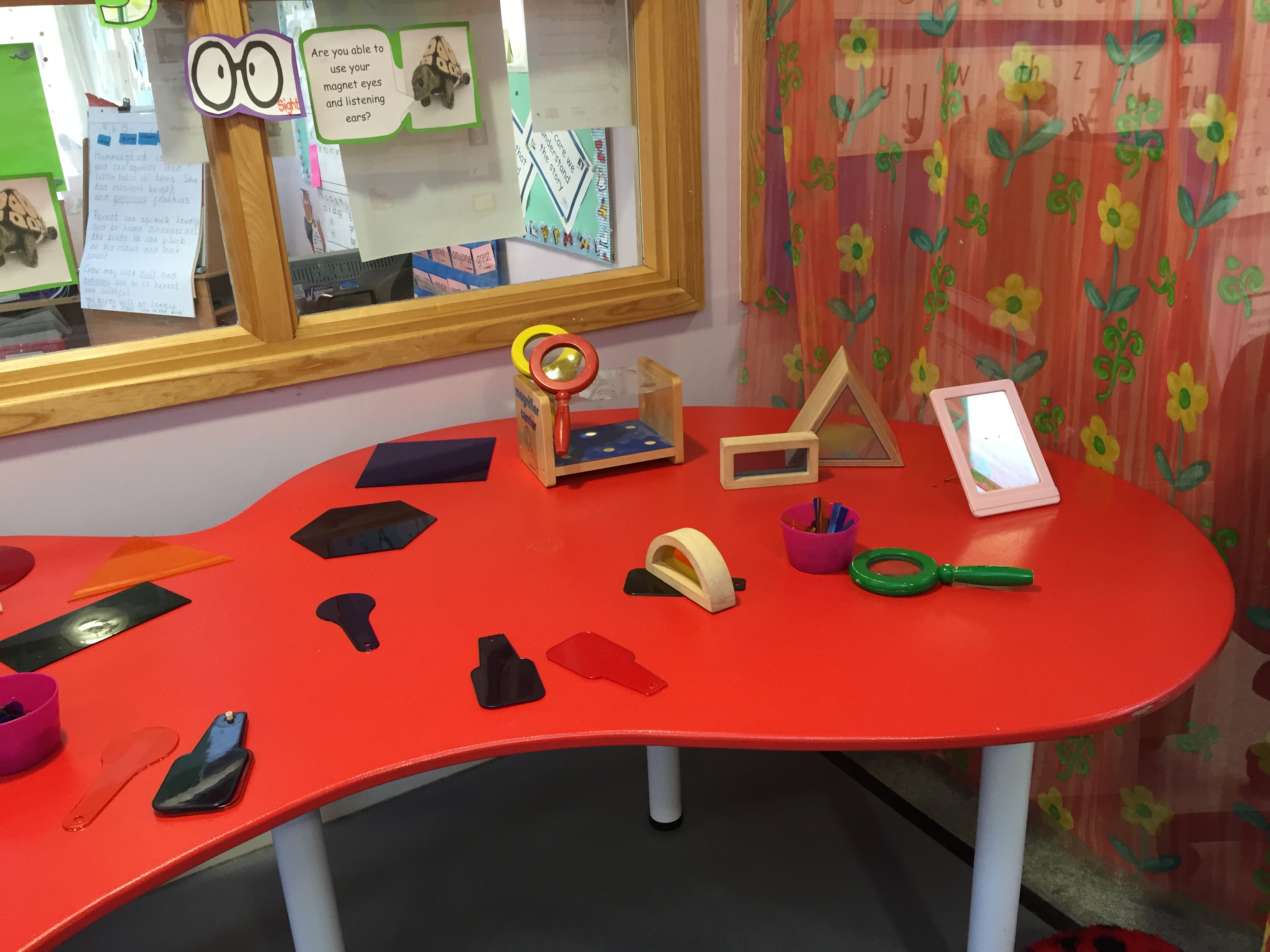




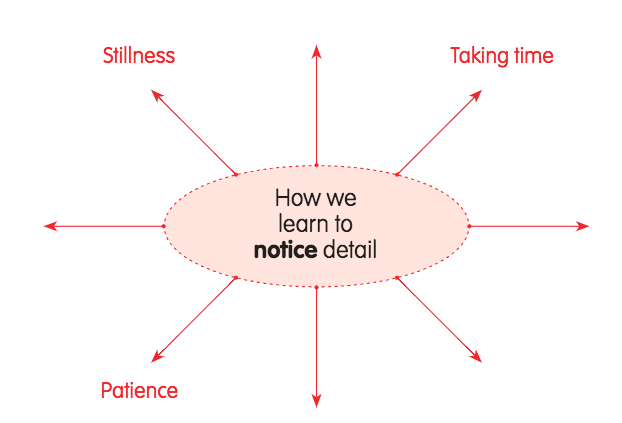


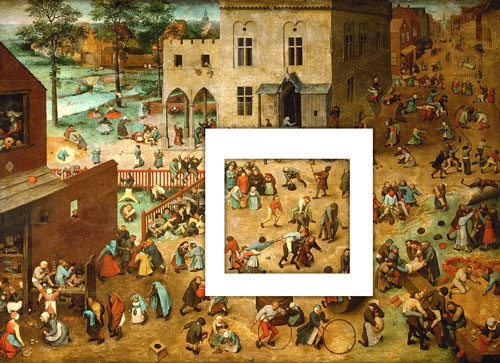
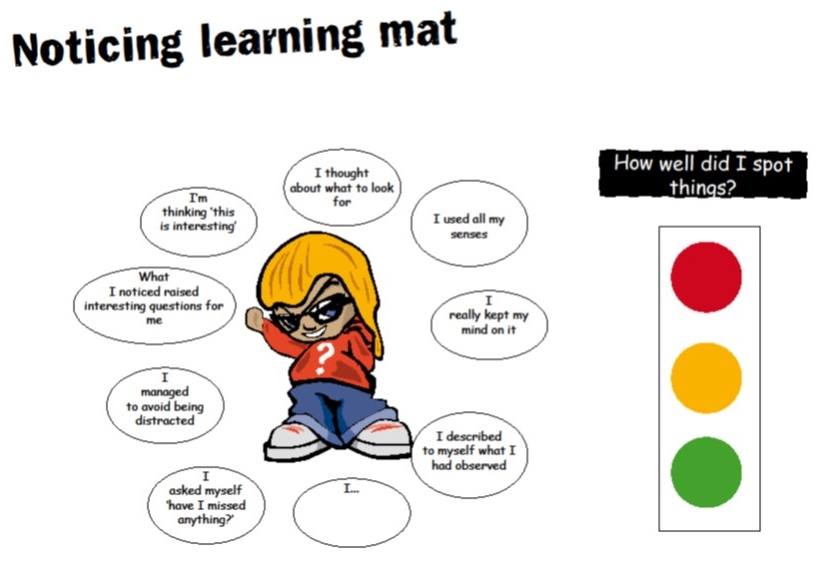
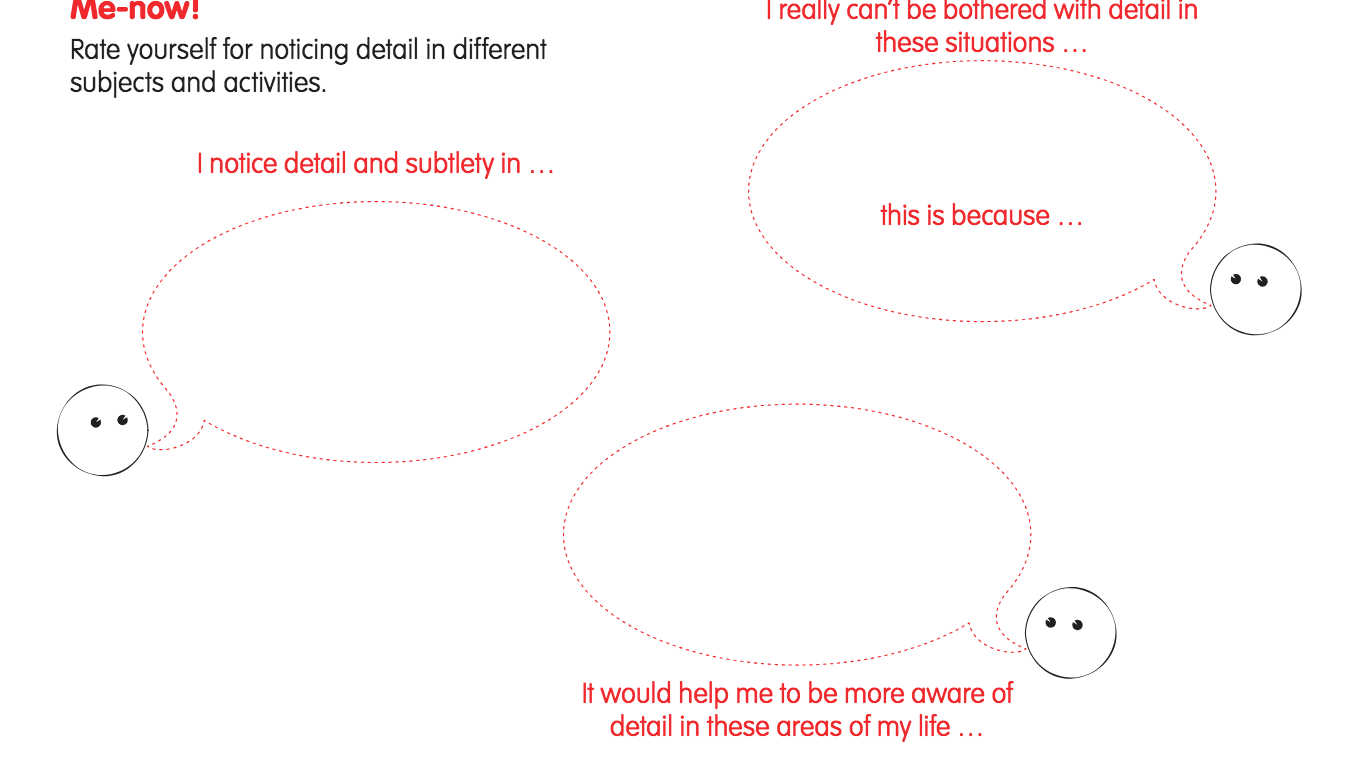
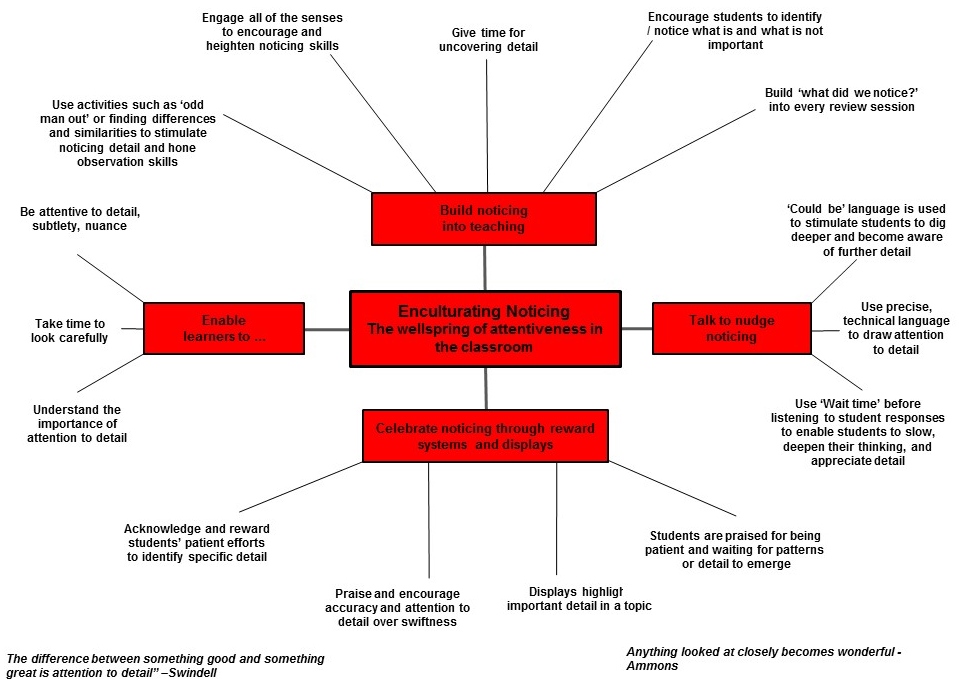
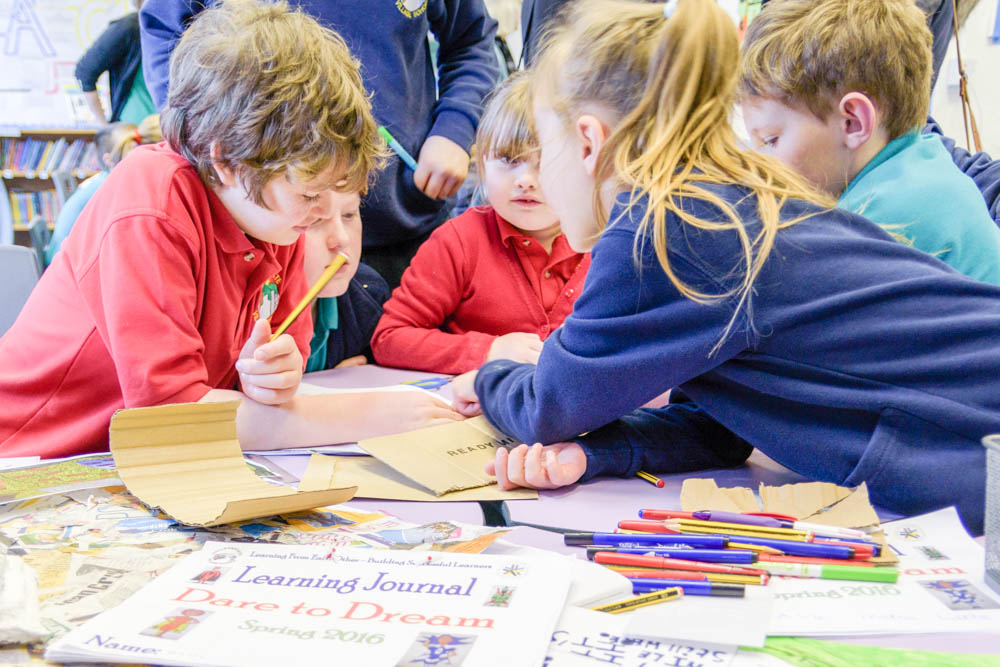
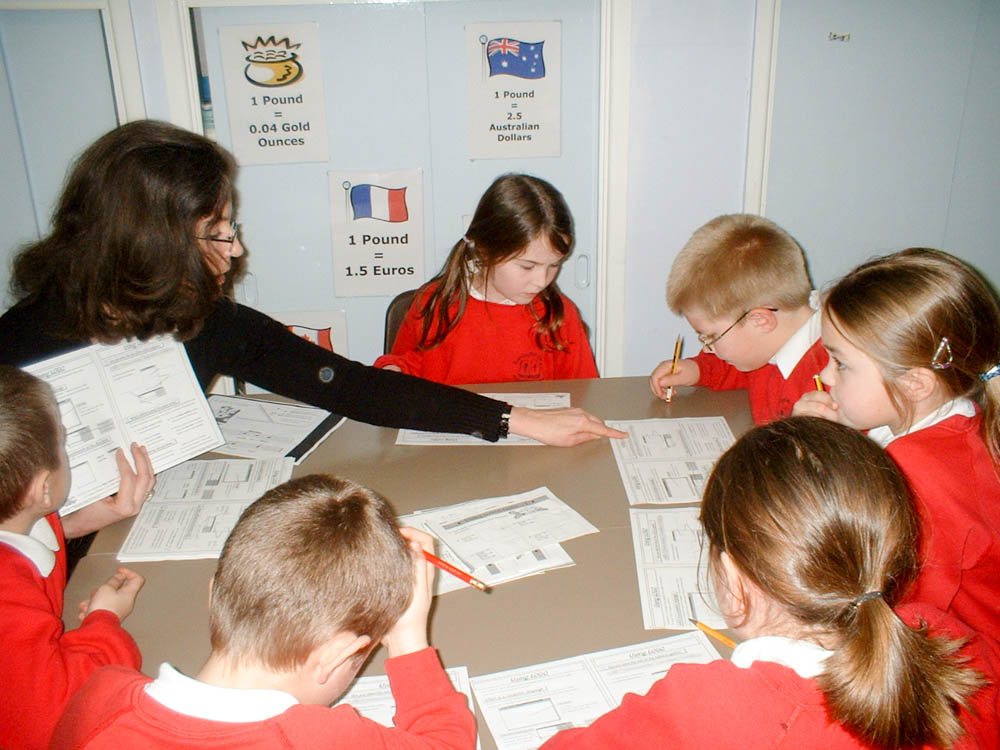
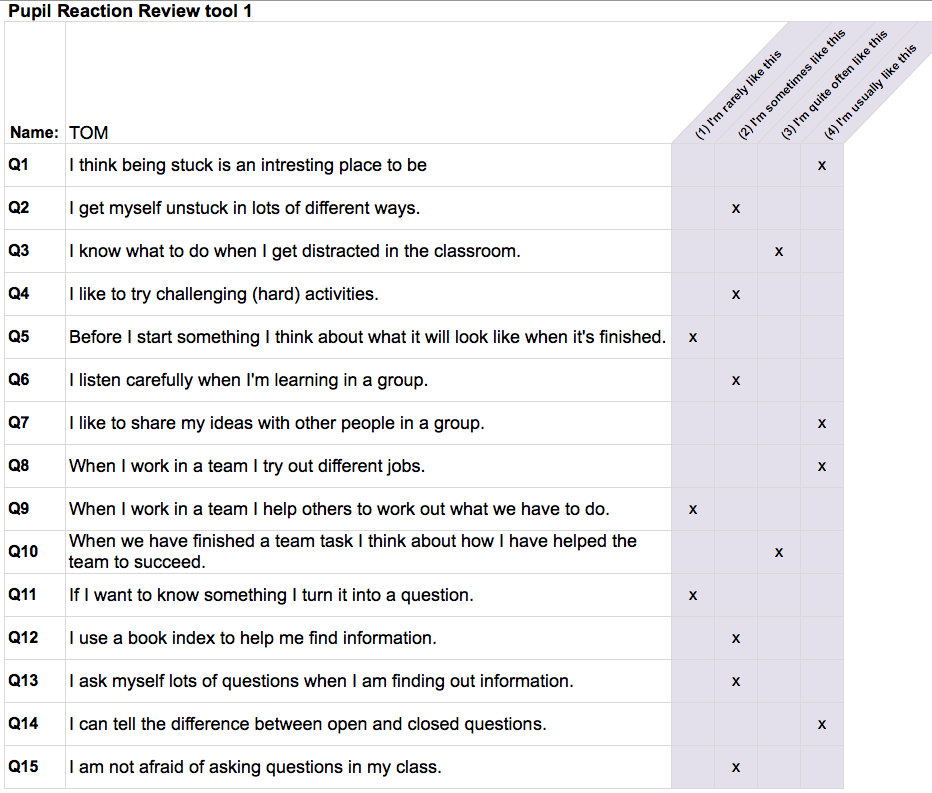
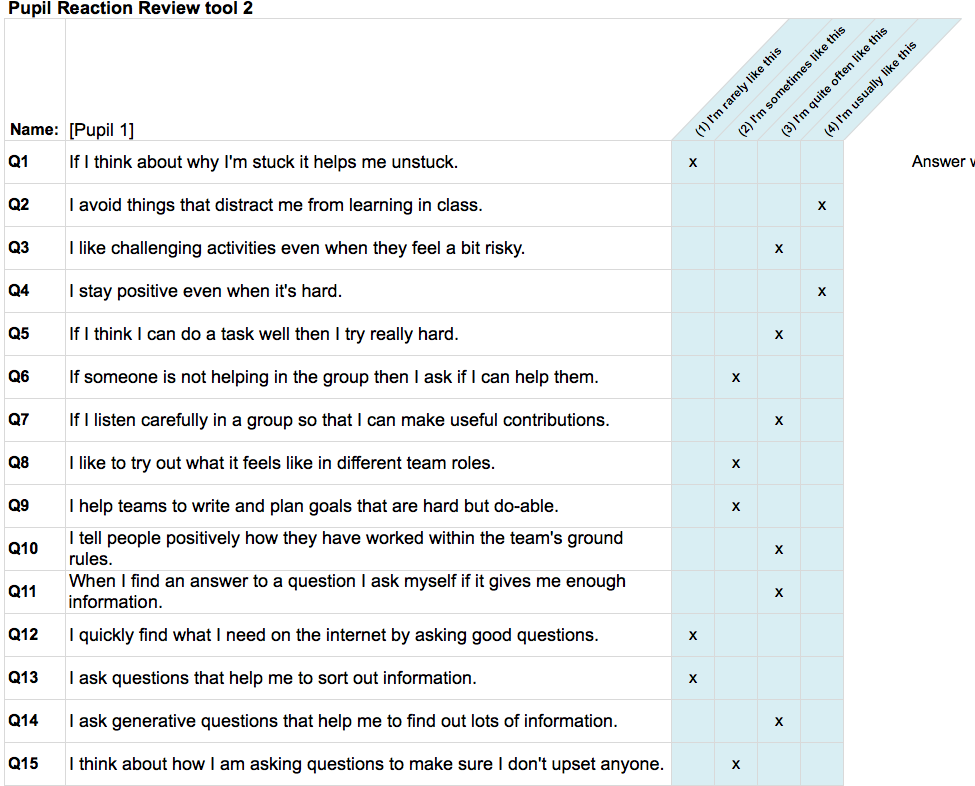
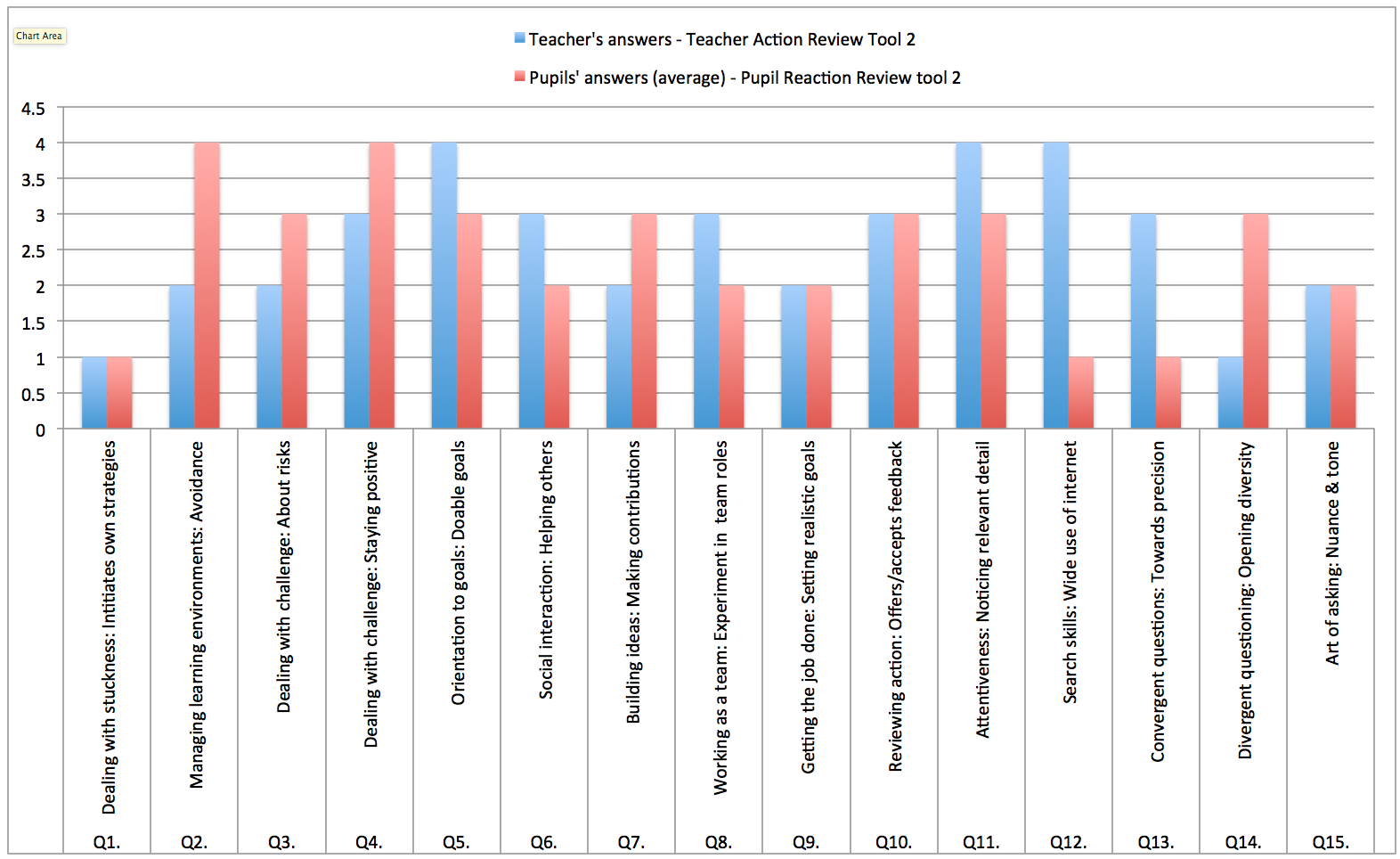
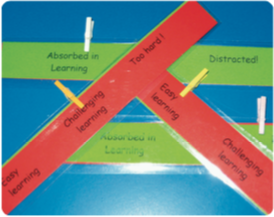
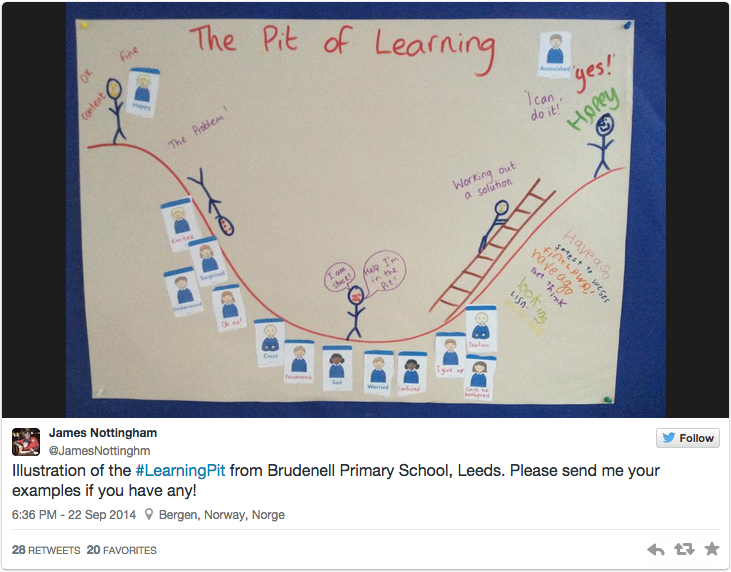
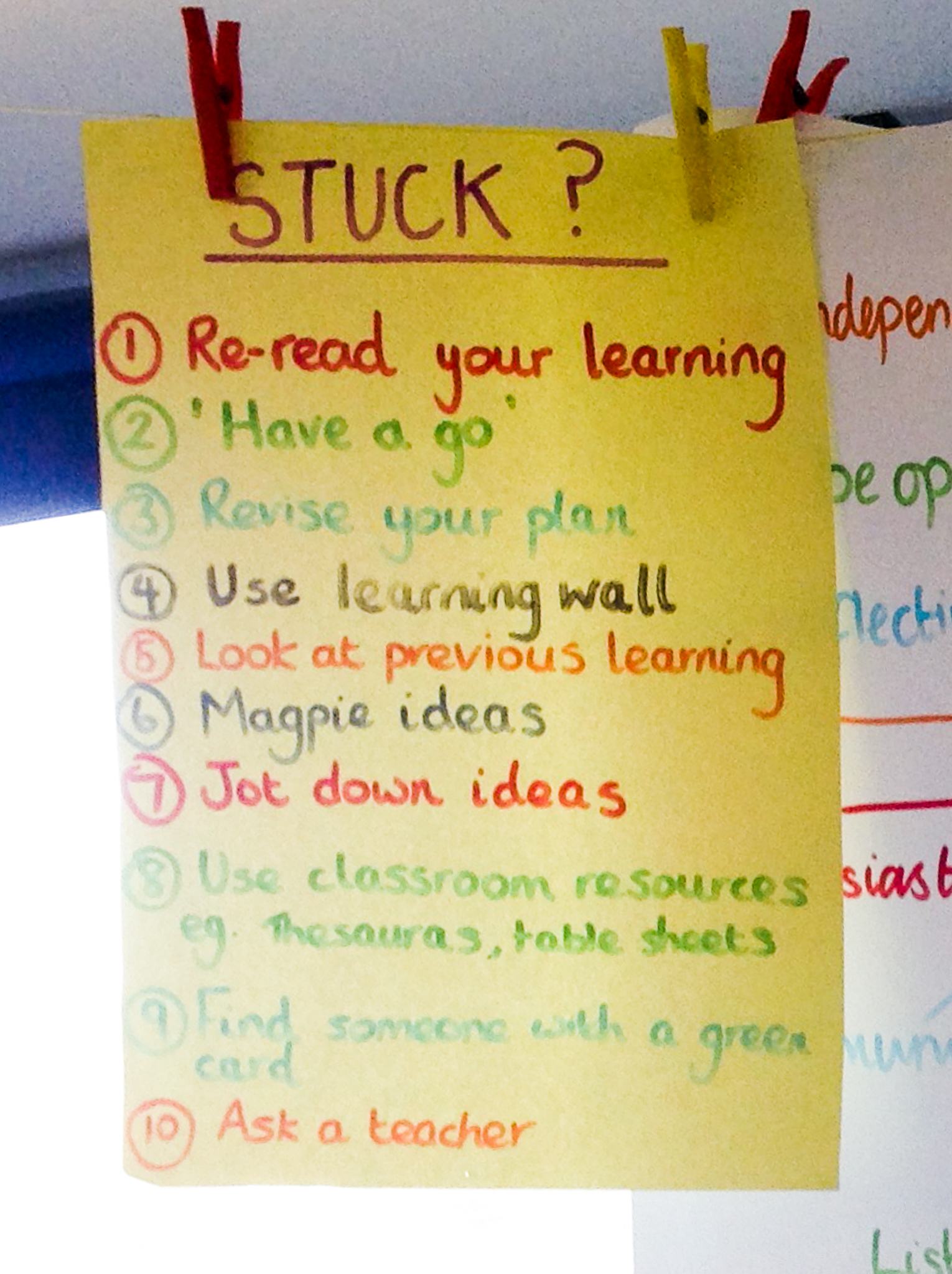






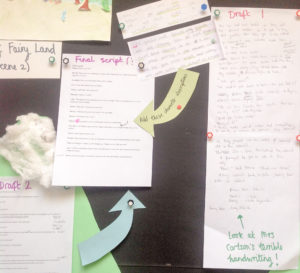





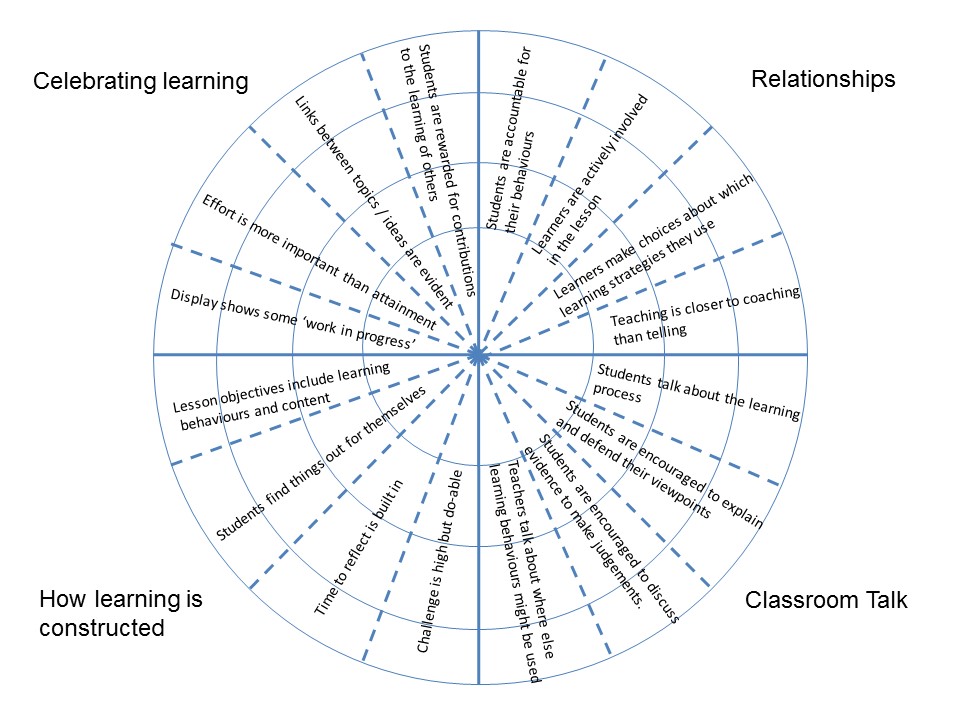




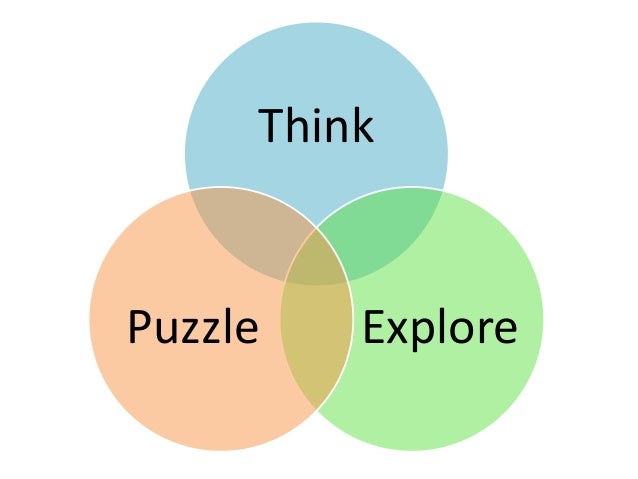


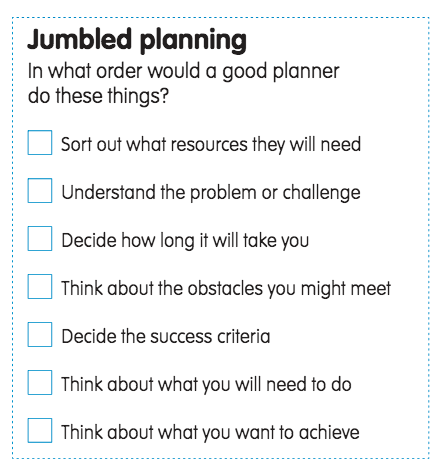

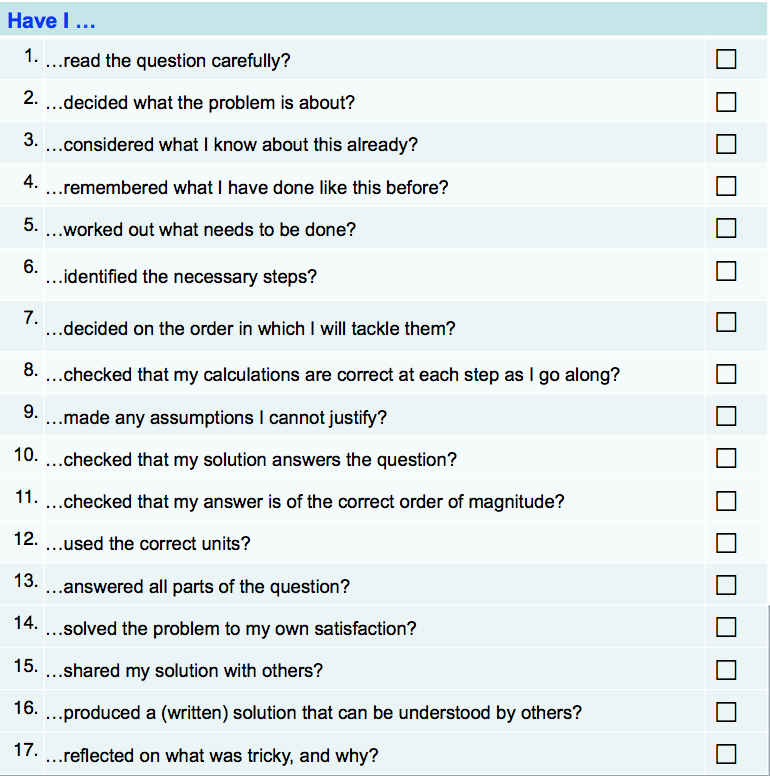
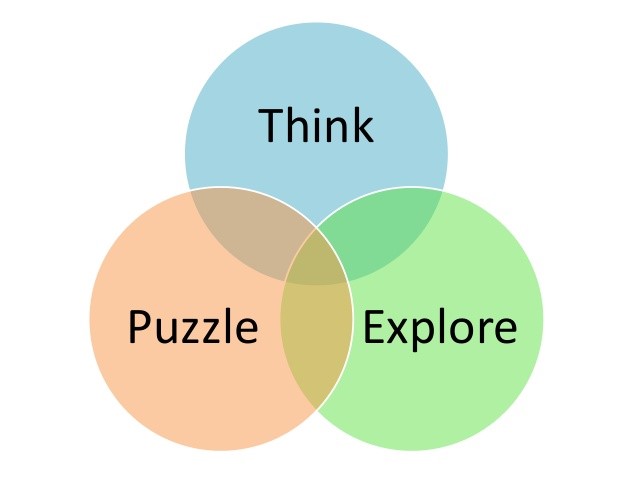
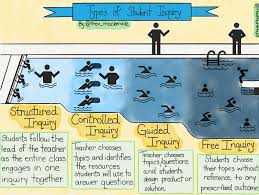

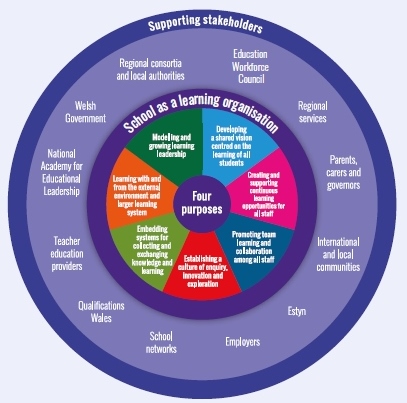



![BLP_Brain_Generic_no-Rs-[Converted]](https://www.buildinglearningpower.com/wp-content/uploads/2016/12/BLP_Brain_Generic_no-Rs-Converted-300x216.png)