My menu

Sections Archive

3. What does it take to shift classroom cultures? COMPLETE

Powerful learners are developed in learning-friendly classroom cultures.

Find out about a framework for building learning friendly classrooms:

  • frameworks for building powerful learning 
  • the four cultural shifts that create a learning-friendly classroom culture
  • the outcomes of these shifts for learners and for teachers.

and gain an overview of where practice is now in your classrooms.

A word or two about culture

 ‘Culture’ concerns the details of the micro-climate that teachers create in their classrooms.

  • What they do and say
  • What they notice and commend and what they don’t
  • What kind of role model of a learner they offer: all these are of the essence.

And what really matters is how they design and present activities so that, over the course of a term or a year, their students are cumulatively getting a really good all-round mental work-out. All the learning bits of their brains are being stretched and strengthened, one by one and all together.
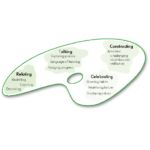
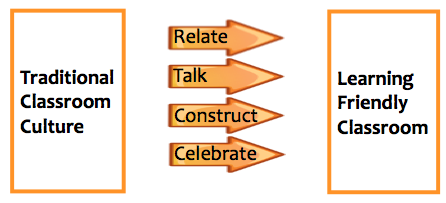
The framework for developing  learning friendly classrooms is known as the Teachers’ Palette. This combines the types of teacher actions that create the conditions necessary for students’ learning behaviours to become shaped and habituated. Schools that successfully build learning behaviours have found that there are four key cultural shifts that combine to create the seedbed for building better learners – the relationships in the classroom; the ways in which learning is talked about; how learning itself becomes the object of learning; how learning is noticed and celebrated. 


Creating the seedbed for building powerful learners

jean-victor-balin-arrow-orange-down

The four key cultural shifts

Moving to more learning-friendly cultures is a big shift in thinking and action. Establishing learning-friendliness comes from four shifts in teacher practice:

  • a shift in relationships
  • a shift in the language
  • a shift in how learning is constructed 
  • a shift in what is celebrated, what is seen to matter.
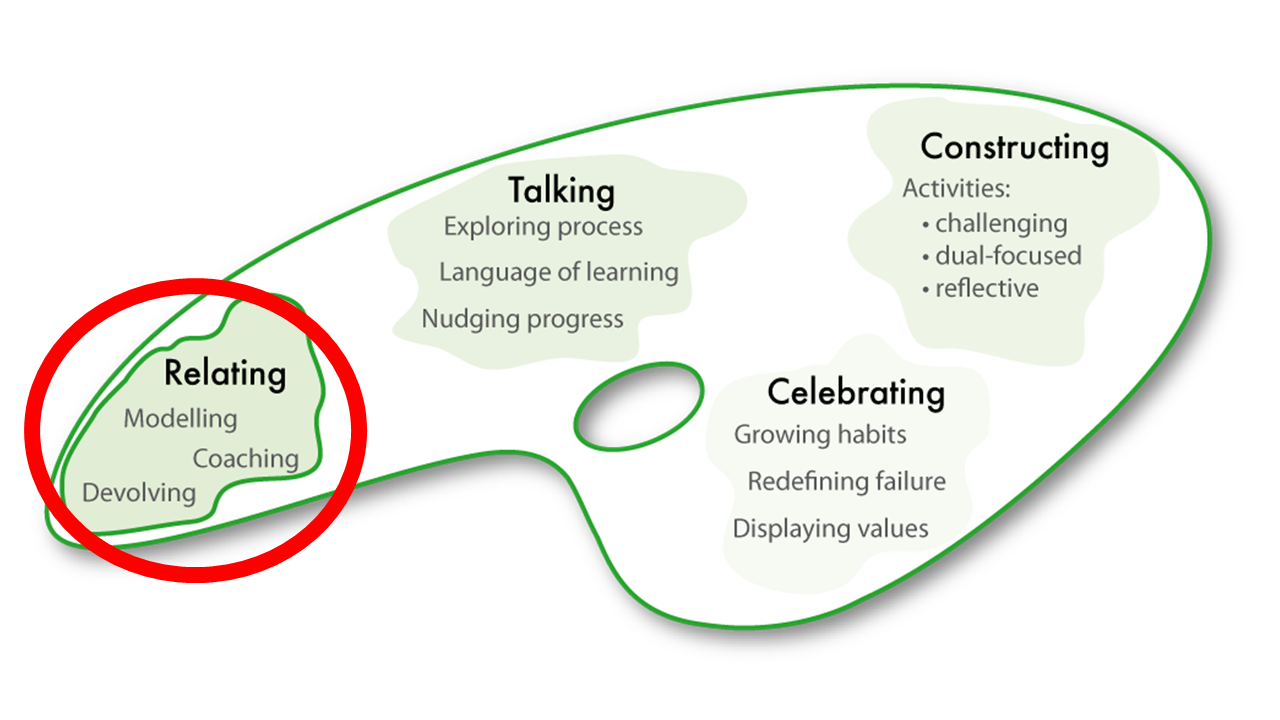
1. Relating for learning: changing the roles and responsibilities of teachers and learners, so that learning becomes a shared responsibility. Students are given more responsibility for their own learning, the role of the teacher changes from ‘the sage on the stage’ to ‘the guide by your side’; the role of the student moves from ‘passenger’ to ‘crew’ and ultimately to becoming ‘pilots of their own learning’.
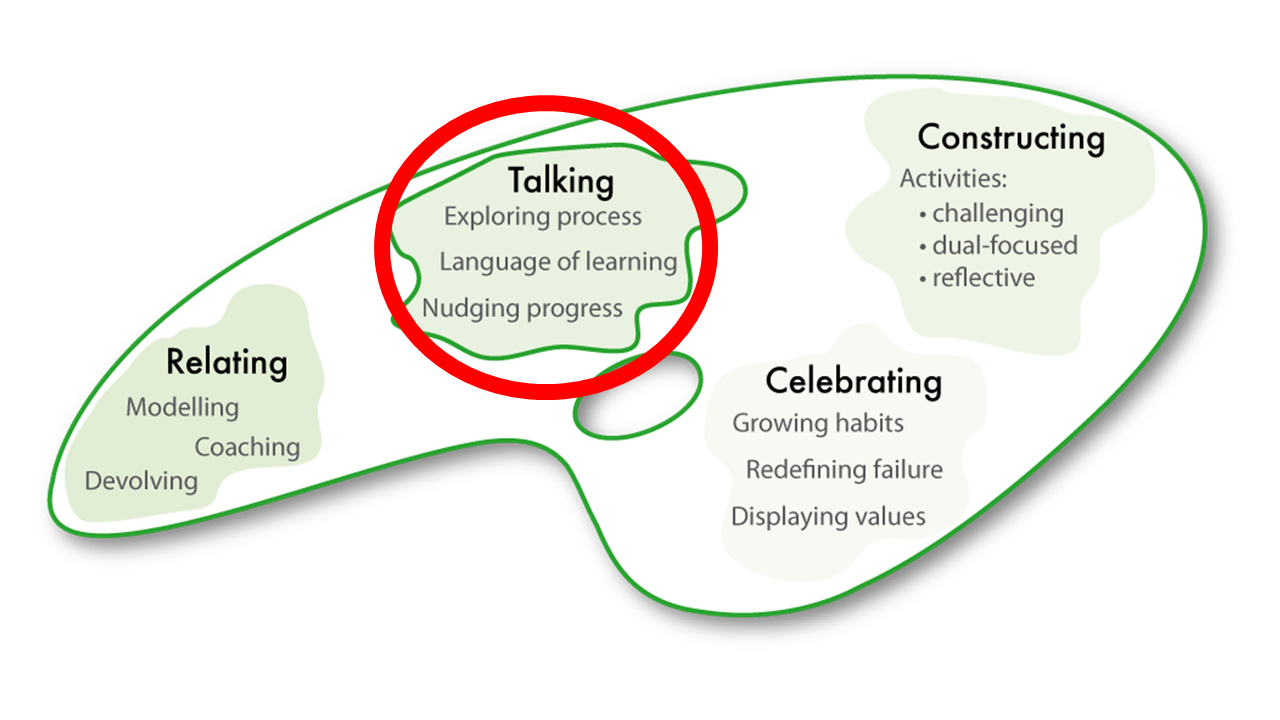
 

2. Talking for learning: developing the sort of language content and style to enhance learning, making learning itself the object of conversation. The way we express ourselves in the classroom creates a powerful linguistic environment that teaches young people the best of what we know about the how of learning. The language of learning helps students to discuss, understand, and become conscious of using their learning behaviours.
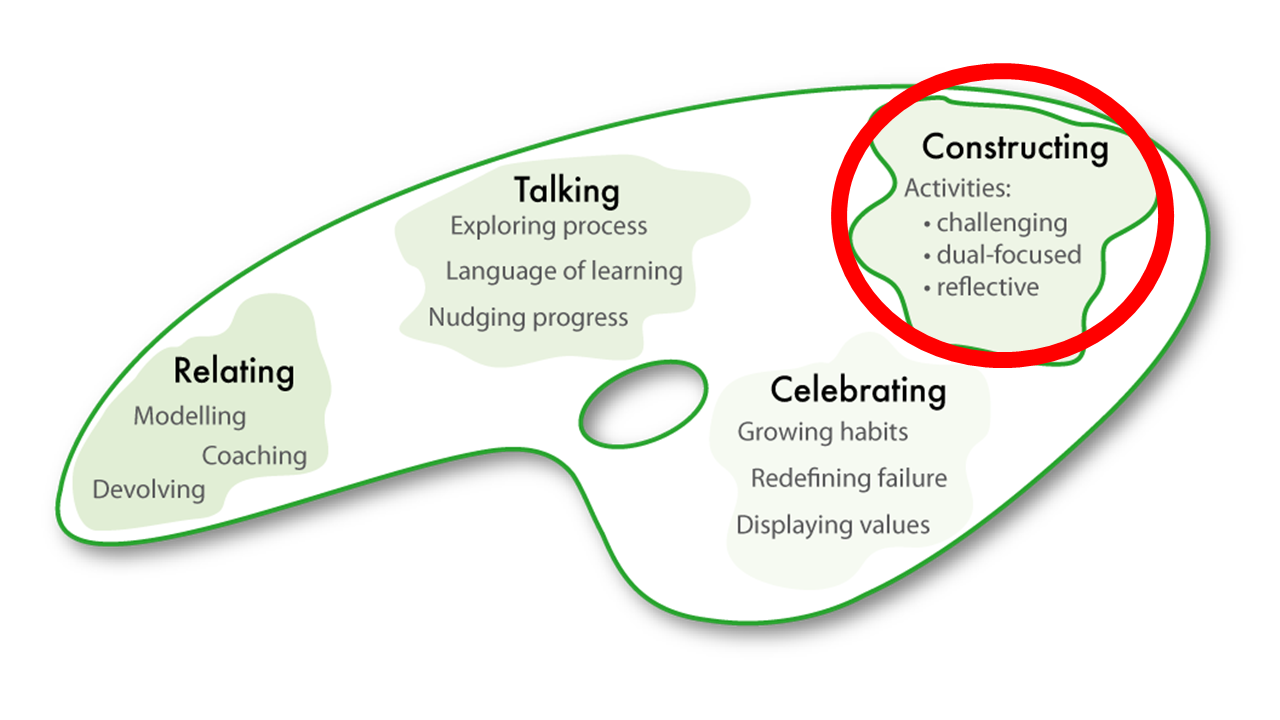
 

3. Constructing for learning: developing activities and classroom routines that feed learning habits, where learning becomes the object of learning. Learning activities are designed to stretch and challenge by having a dual focus – to explore content and stretch students’ use of their learning behaviours. There is a strong underpinning of not just ‘doing’ learning but reviewing and reflecting on the process in order to make meaning and apply it elsewhere.
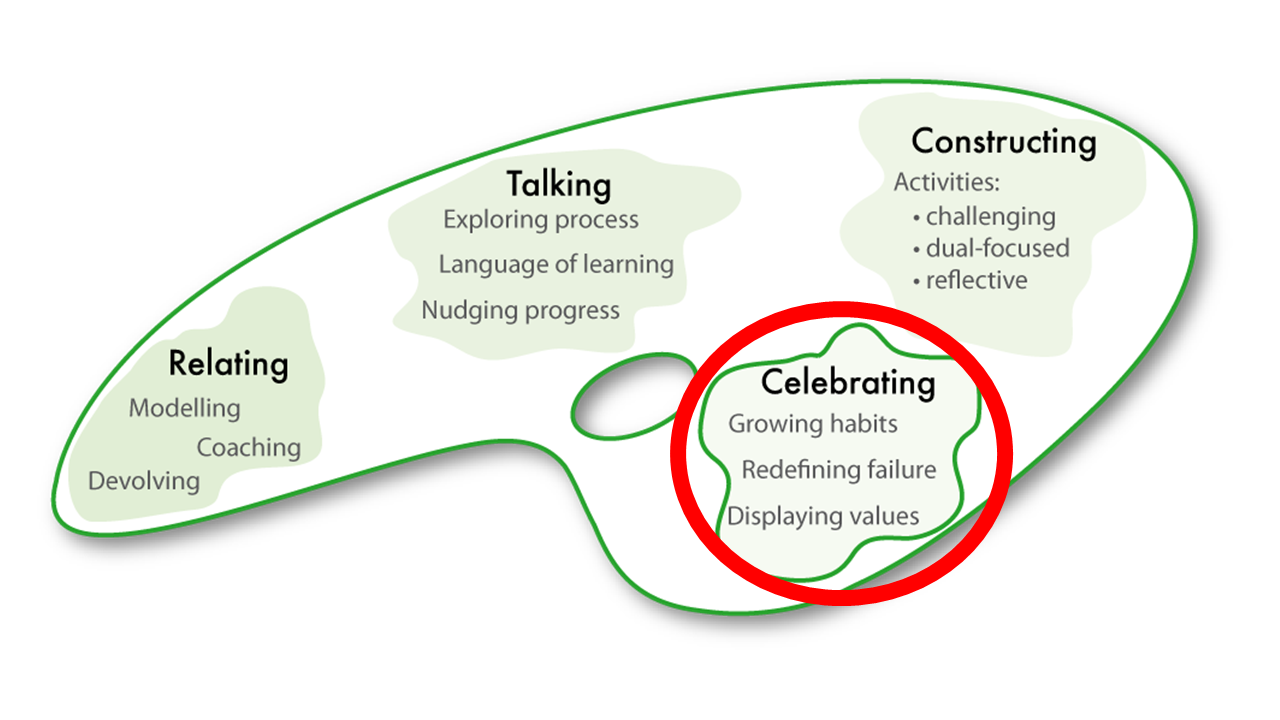
 

4. Celebrating learning: clarifying the outward signs of the values that underpin the culture, making learning the object of attention. In this shift failure has been redefined; being stuck is seen as interesting and mistakes valuable. Effort, questions and taking risks and the growth of learning habits are recognised, attended to, acknowledged and praised. These serve to make visible the underlying values of the learning environment.
Screen Shot 2017-02-02 at 13.58.57


This uncovering of learning ensures students discover, use, understand and grow their learning habits. 

The shifts lead teachers to ask how can I:

  • build a classroom culture that ensures that responsibility for learning is shared with and to some degree devolved to learners?
  • create opportunities to discuss the learning process using the language of learning?
  • construct activities that develop positive learning behaviours and help learners to acquire the necessary content?
  • build learners’ commitment to becoming better learners through what is valued and recognised?


How roles change

jean-victor-balin-arrow-orange-down

The changing role of learners and teachers

For learners a learning friendly culture is a place where their role changes from receptivity to activity:

  • they collaborate and talk about how they understand things
  • they accept responsibility for learning
  • they do more of the thinking
  • they develop curiosity, perseverance, attentiveness, and open-mindedness
  • they monitor and assess what they do
  • they talk fluently about their learning behaviours
  • they value mistakes, challenge, feedback
  • they develop their learning behaviours consciously
  • they regard themselves as improving learners

For teachers a learning friendly culture is a place where their role changes from ‘delivering’ learning to students, to the creation of situations in which students consciously use their learning behaviours to learn:

  • the learning process is brought to the surface, given a language, discussed, looked for, celebrated
  • learning processes are modelled
  • teachers act as learning coaches
  • few lessons are simply ‘talk-and chalk’
  • lessons contain challenges and activities that get students thinking and learning for themselves
  • teachers encourage students to explore a challenging question, problem or assertion
  • teachers enable students to become observers and regulators of their own learning
  • teachers keep thinking ‘What’s the least I can do to get productive learning happening (again)?’
[Use the tabs in the orange bar at the top to shift between learners and teachers]

But do remember – the way learners behave is a function of how teachers teach. It follows that learners will not change their learning behaviours until teachers first change their teaching behaviours.

Because learning-centred teachers have a particularly rich conception of learning and the habits that underpin it, they are able to design nudges and activities that target quite specific aspects of learning behaviours. Teaching for learning becomes more detailed and forensic.


Where are you now?

questionmark_50
  • How did you react to the learner’s list?
  • What about the teacher’s list?
  • How do-able does that feel?
  • Which aspects on either list feel very possible?
  • Which items feel more problematic?
  • What makes you say that?
  • What one thing might you insist upon developing to make classrooms more learning-friendly?

jean-victor-balin-arrow-orange-down

Analyse classroom practice more deeply
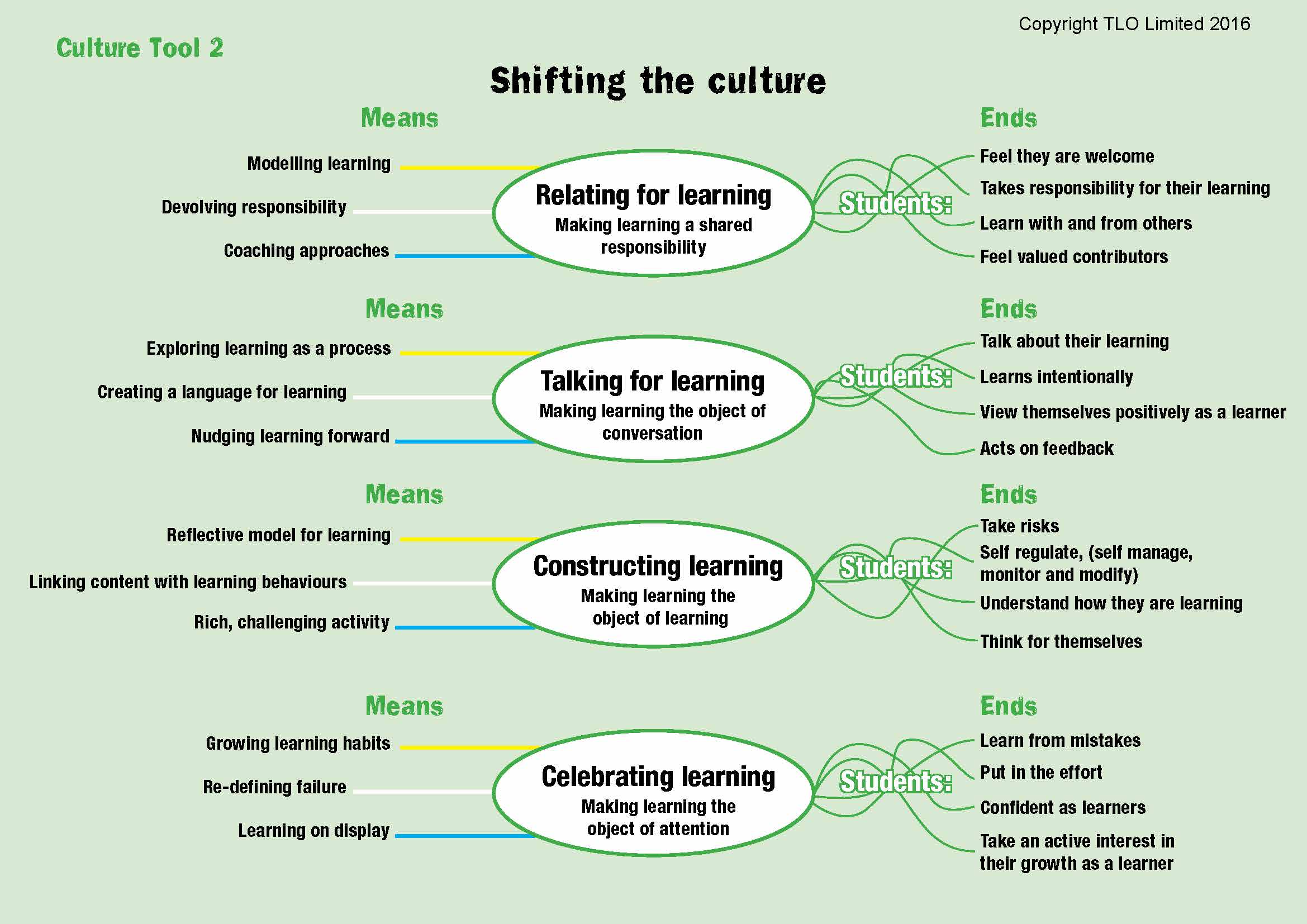
 

culture-tool-2_shifting-the-culture_v7

Deeper Learning Culture Tool
  • Download the deeper Learning Culture Tool.
  • Look carefully at the issues raised in relation to your school.
  • Ring the MEANS statements that describe aspects of the school’s classroom cultures that you think are secure.
  • Ring the ENDS statements that you think are secure.
  • Underline those statements that would most benefit your students now, the statements that you would most like to ring but can’t at the moment.

Ask the hard questions

  • How many of these MEANS are in use in classrooms?
  • How many ENDS are secure?
  • How much is learning externalised or surfaced?
  • What’s the balance between telling and coaching in classrooms?
  • Do students have a language with which to talk about their learning?
  • What proportion of tasks would you estimate to be rich and challenging?


Something to reflect on


Thinking more deeply about classroom cultures in your school. Asking the hard questions.

QuestionMark100

What is needed to make it all work?

A headteacher said, apropos the 2019 Ofsted Framework:

‘It tells us what to do, but does not tell us how to do it. While we may agree with the importance of developing independent learners and the importance of progressively building these skills, we need help on how to do it. The framework challenges us to create a range of complex outcomes for students, I still have little idea about how this might be achieved. 

  • To what extent have you considered how classroom culture builds independence?
  • How confident are you that the classroom culture in your school is already achieving these desirable dispositional outcomes?
  • And if it is not, what changes might be necessary?


Continue Reading

2. What sort of culture will develop powerful learners? COMPLETE

Powerful learners are developed in learning-friendly classroom cultures.

Find out about a the type of classroom culture that best supports powerful learners:

  • the meaning of classroom culture
  • teacher centred cultures
  • learner centred cultures
  • learning centred cultures

and gain an overview of the most dominant learning culture in your school at present.

 Cultures for learning 

Why talk about culture

The original research behind the idea of Learning Power made clear that learning dispositions aren’t fixed at birth, that learning is a learnable craft, and that the learning environment can have a constructive or destructive influence on a person’s energy for and approach to learning. Classroom cultures, therefore, come into play. Cultures have the power to grow or diminish students’ inclinations and abilities to learn.

Therefore…

developing learners for a successful future is about creating a culture in classrooms – and the school more widely – that will systematically cultivate habits and attitudes that will stand students in good stead for a complex world.

Culture: all those little habits, routines and practices that implicitly convey ‘what we believe and value around here’. Classrooms are the places where, hour by hour, students experience the values and practices that are embodied in the school, rather than just the ones that are espoused.

Culture is about the micro-climate: what teachers do and say; what they notice and commend, or don’t; what kind of role model of learning they offer; how they design and present activities to build learning behaviours. Some classroom cultures are just more learning friendly than others.


What do we mean by a learning culture?

jean-victor-balin-arrow-orange-down

 Types of learning culture

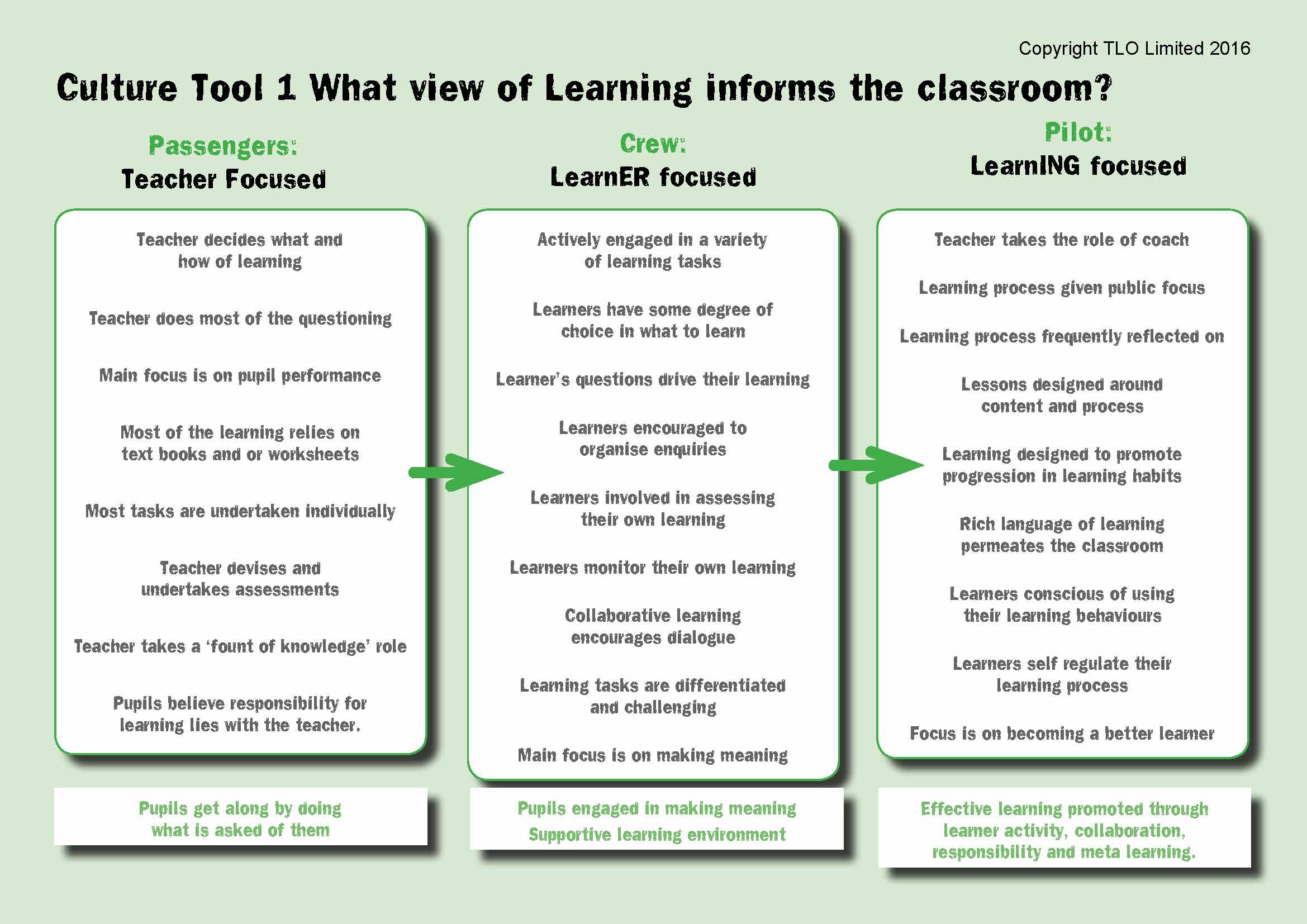
Research by Chris Watkins back in 2004 suggested three types of classroom learning cultures, some more learning friendly than others.

  • Teacher centred; has an overriding emphasis on what the teacher is doing or saying.
    • Learning = being taught.
    • Students are passengers
    • Students have an impoverished view of their learning ability
    • The emphasis is on acquiring knowledge
  • Learner centred; students take a more active role in deciding what to do.
    • The learning is making meaning.
    • Students are crew
    • Students collaborate and discuss learning
    • The emphasis is on understanding
  • Learning centred; students learn about learning itself.
    • Students use a language of learning.
    • Become conscious of the learning process and the learning habits they command.
    • Students are pilots of their learning
    • The emphasis is on self-regulation, becoming meta-learners for a learning life

Hence there are often two strategic shifts to make in the journey from Teacher centred to Learning centred cultures. Teacher centred cultures may well achieve good results but only Learning centred cultures achieve good results PLUS  resilient, independent, confident learners.

Learning shift

Learning shift


Types of classroom cultures

jean-victor-balin-arrow-orange-down

 Where is your school’s learning culture now?

culture-tool-1_v2

Download a copy of the Culture Review Tool

The Culture Tool describes in greater detail the features of teacher centred, learner centred and learning centred classrooms.

Take a look at it and think about the school’s learning culture against the indicators in each panel.

  • Reflect on the culture of each classroom
  • Highlight all aspects of culture that are a regular feature in each classroom
  • What are the similarities and differences between phases, year groups, individual classes?
  • What is this telling you about your school’s learning culture?

Analyse the school’s current learning culture

QuestionMark100

Look more closely and think ahead

  • Which panels have most statements highlighted?
  • Does this alter from phase to phase? Teacher to teacher?
  • What does this imply?
  • Which statements in the middle panel would you most liked to have ticked but could not?
  • What might you need to do about that?
  • Are there any aspects from the third, learning centred, panel that you were able to tick?
  • How might you spread this practice more widely?
  • It’s worth remembering that the more teacher centred the existing culture, the longer the journey to creating a learning friendly culture.


Continue Reading

1. What sort of learners are we trying to create? COMPLETE

Building learners’ character

We will give greater recognition to education providers’ work to support the personal development of learners. Respondents overwhelmingly supported the proposal to create 2 separate judgements for ‘personal development’ and ‘behaviour and attitudes’. The new ‘personal development’ judgement will consider what a provider does to help develop learners’ character, resilience and values and the provider’s advice and support to help learners succeed in life.

Education inspection framework 2019: a report on the responses to the consultation – Executive Summary.


Enriching students’ resilience, confidence and independence

Background:

The NFER and Arad Research A Rapid Evidence Assessment on the Impact of Curriculum and Assessment Arrangements within High Performing Countries, notes that ‘Although expressed differently in the policy documents of each of the high performing countries, there is a common, general aim to develop in their learners the necessary attitudes, values, skills and knowledge they need in order to achieve success and fulfilment as engaged thinkers and ethical citizens with an entrepreneurial spirit’.

Donaldson’s extensive review of the Scottish Curriculum in 2004, A Curriculum for Excellence, was based on that premise – of moving from a knowledge-based to a skills/competencies-based curriculum.

In his more recent review of the curriculum in Wales, Successful Futures, Donaldson asserts that ‘There is a discernable shift from curriculum specifications based upon traditional subject disciplines towards the framing of purposes in terms of key competences, key skills, life skills, capabilities or capacities, for example in guidance from the European Union (EU), the United Nations Educational, Scientific and Cultural Organisation (UNESCO) and OECD.’

But he also laments later in the Successful Futures review that ‘England retains subjects as the main curriculum building blocks. The national curriculum remains structured around 12 subjects, split into core and foundation, with associated programmes of study. Recommendations from independent reviews to move to a structure based on capacities and areas of learning have been rejected by the government.’

So, as the regions undertake radical curriculum reviews, England remains by and large unaffected, bound by the DFE’s ongoing commitment to a knowledge based curriculum.


The 2019 Ofsted Inspection Framework:

Without undertaking a comparable curriculum review in England, Ofsted have, relatively quietly, slipped a few references to a competencies based curriculum into the 2019 Framework. No extensive curriculum review, minimal attempt to argue the case or provide training and support (something that were characteristics of the Scottish and Welsh reviews). In Personal Development (paragraph 28), the framework states that inspectors will:

‘make a judgement on the personal development of learners by evaluating the extent to which the curriculum and the provider’s wider work support learners to develop their character – including their resilience, confidence and independence – and help them know how to keep physically and mentally healthy’.

Guidance for inspectors (para 214) says that this judgement ‘focuses on the dimensions of the personal development of pupils that our education system has agreed, either by consensus or statute, are the most significant. These are:

  • developing responsible, respectful and active citizens who are able to play their part and become actively involved in public life as adults
  • developing and deepening pupils’ understanding of the fundamental British values of democracy, individual liberty, the rule of law and mutual respect and tolerance
  • promoting equality of opportunity so that all pupils can thrive together, understanding that difference is a positive, not a negative, and that individual characteristics make people unique
  • promoting an inclusive environment that meets the needs of all pupils, irrespective of age, disability, gender reassignment, race, religion or belief, sex or sexual orientation
  • developing pupils’ character, which we define as a set of positive personal traits, dispositions and virtues that informs their motivation and guides their conduct so that they reflect wisely, learn eagerly, behave with integrity and cooperate consistently well with others. This gives pupils the qualities they need to flourish in our society
  • developing pupils’ confidence, resilience and knowledge so that they can keep themselves mentally healthy’

The first 4 bullet points (Citizenship, British Values, Equal Opportunities & Inclusion) are familiar, but the last 2 are new and indicative of a shift of emphasis to a curriculum that builds both knowledge and competencies.

Added to this:

  • ‘the provider’s curriculum is coherently planned and sequenced towards cumulatively sufficient knowledge and skills for future learning and employment’ (in Curriculum Intent, para 26);
  • ‘teachers present subject matter clearly, promoting appropriate discussion about the subject matter they are teaching.
  • over the course of study, teaching is designed to help learners to remember in the long term the content they have been taught and to integrate new knowledge into larger concepts’ (both in Curriculum Implementation, para 26);
  • ‘learners’ attitudes to their education or training are positive. They are committed to their learning, know how to study effectively and do so, are resilient to setbacks and take pride in their achievements’ (in Behaviour and Attitudes, para 27).


For the first time, the intention to make judgements about how effectively schools are developing learner competencies is embedded in the inspection framework, even if it has yet to be embedded in the national curriculum.


A Quiet Revolution –  preparing students for employability and the future

jean-victor-balin-arrow-orange-down

Bringing learning out of the shadows 

Behind the headlines

So, as the curriculum prepares students ‘ not just for a life of tests but for the tests of life‘ the purpose of education moves beyond the accumulation of knowledge to also shaping a student’s learning character.

Phrases such as:

  • resilient;
  • independent;
  • self-confident;
  • collaborative;
  • reflective;
  • motivated;
  • integrity

begin to tell us what sort of learners your school will be creating. This means helping students build up the mental, emotional and social resources to enjoy challenge and cope well with uncertainty and complexity. Students have to learn how to be tenacious and resourceful, imaginative and logical, self-disciplined and self-aware, collaborative and inquisitive.

These are descriptors of what are known as learning dispositions, or powers or habits. Taken together they add up to a learning character. Your learning dispositions determine your inclination or tendency for change; they direct those behaviours that influence and underpin your performance throughout life. Building such a learning character will rely on paying attention to developing students’ learning dispositions; firing up their energy or appetite for changing, growing and learning . It’s about concentrating on the ‘how’ of learning – on bringing the learning process itself out of the shadows.


Learning dispositions/ habits/ powers = a learner’s character.

jean-victor-balin-arrow-orange-down

Can you learn how to learn?

Selling the idea that learning is learnable

It’s an erroneous idea that an individual’s ability is fixed at birth, we now know that the brain is like a muscle in that its intelligence grows with exercise. We also know that intelligence is ‘the sum total of ‘habits of mind’ and that habits can be changed. When learners and their teachers are convinced of these facts it causes a major shift in self belief and the possibilities of education

Helping all young people to understand that learning is learnable, to make them aware of the learning behaviours they command, gives them greater enthusiasm and power for engaging with the potential highs and lows of learning.

When learners become aware of their learning behaviours through structured opportunities to improve it, they become:

  • more reflective and aware of themselves as learners
  • more confident and motivated to learn
  • more willing and able to take responsibility by ‘owning’ their learning for themselves
  • more intentional in their learning
  • keener to carry on learning as they move beyond school
  • more likely to realise their potential and gain grades that were previously regarded as beyond them
  • more confident socially and able to learn with, and from, one another
  • more able to manage transitions and take change in their stride throughout their lives.

Learning is a learnable craft

jean-victor-balin-arrow-orange-down

A valuable set of learning habits

Big questions: some answers

  1. It’s easy for schools to come across lists of learning habits — you might even make up your own! But is there a cluster of learning dispositions that are particularly appropriate for 21st century learners; helping them to deal with an increasingly complex world?
  2. Similarly, teaching ideas to improve student performance abound, but do these teaching ideas develop the valuable, necessary learning habits?

What schools are in search of is a researched collection of learning habits coupled with sound classroom activities and advice about how to nurture and build lifelong learning habits.

Background to an approach that works

Research undertaken by Bristol University, as part of a project into lifelong learning, identified critical dimensions of what is now known as Learning Power; dimensions of learning that can create a step-change in individual, team, and indeed organisational performance.

Furthermore the research found that the power to learn changes over time in response to the qualities of learning environments. As environmental circumstances change, they can have either a constructive or a destructive influence on a person’s power to learn. Informed interventions can significantly enhance personal confidence and performance.

Image result for background research

The Building Learning Power approach developed from this research. It’s an approach which is focused on developing learning habits through appropriate classroom cultures and which schools and teacher could use to support the development of students’ learning characters.

What to build

Building powerful learners is built around a constellation of learning behaviours based on the learning sciences. It puts at the heart of education the development of the psychological characteristics that are judged to be of the highest value in young people growing up in a turbulent and increasingly complex world.

The emergent powerful learners develop skills in monitoring and reviewing their learning, they pay attention to the diversity of practices that can be effective for learning more thoroughly, and become self-regulating, meta-cognitive learners.

How can we make this work?

jean-victor-balin-arrow-orange-down

A framework of valuable learning habits

The Supple Learning Mind; framework of high value learning behaviours. 
BLP_Brain_Generic_no-Rs-[Converted]

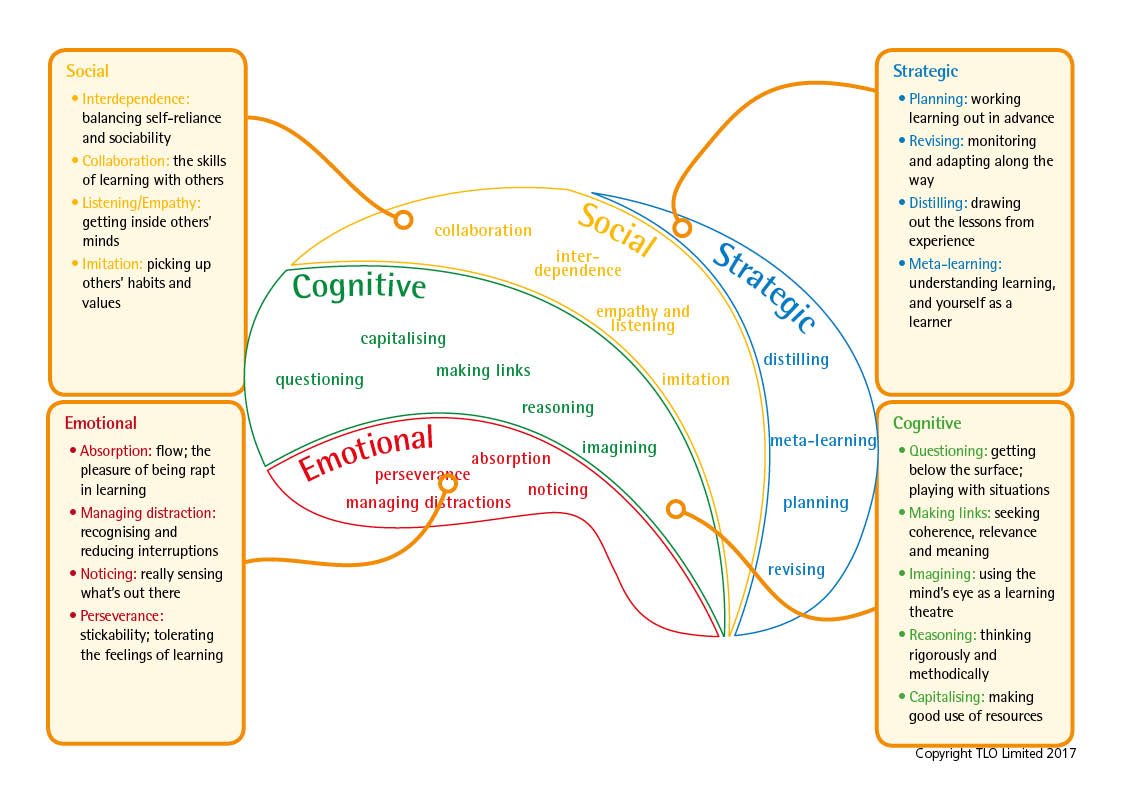
The first framework of Building Learning Power is The Supple Learning Mind. This captures the key psychological characteristics that are judged to be of the highest value in helping students to learn and thrive in a complex world. The framework embraces each of the domains of learning and these are shown in its four parts:

  • The Emotional domain of learning (sometimes described as Resilience)
  • The Cognitive domain of learning (sometimes described as Resourcefulness)
  • The Social domain of learning (sometimes described as Reciprocity)
  • The Strategic domain of learning (sometimes described as Reflectiveness)

This learning framework shows that learning isn’t just about having a good memory; it includes how we feel, how we think, how we learn with and from others and how we manage the process of learning. It shows that learning is a complex process. Moreover it provides a language that helps teachers to think about how they cultivate each of the learning behaviours and helps students to gain a better personalised understanding of how they learn content.

Each domain clusters together the high value learning behaviours that best make that domain work well. For example the emotional domain is made up of the learning behaviours of perseverance, managing distractions, absorption and noticing.
The Supple Learning Mind diagram_v2

 The cognitive domain is made up of behaviours like questioning, link making, imagination, reasoning and capitalising.  The social domain is made up of behaviours like interdependence, collaboration, listening and empathy, and imitation. Finally the strategic domain encompasses planning, revising, distilling and meta-learning.

A researched framework of high value learning dispositions


jean-victor-balin-arrow-orange-down

Learning dispositions to underpin the curriculum

Independent, resilient, confident, reflective . . . . . .

Sometimes these learning behaviours sound too grand and vague to get a practical handle on, but the behaviours in the learning power framework can help to underpin and clarify. Being Independent, for example requires a range of skills, including the ability to:

  • Question – deliberately asking different kinds of questions to probe and develop understanding;
  • Plan – thinking about what problems need to be solved, how to set about solving them, what obstacles there might be;
  • Revise – knowing where they are going, but ready to reassess in the light of new knowledge and experience, changing and improving their ideas and approach as they go along;
  • Imagine – exploring alternatives and possibilities, asking ‘what might happen . . ?’ and ‘what if . . ?’;
  • Reason – exercising logical thinking skills as they explore, analyse and evaluate;
  • Making Links – seeing connections between diverse areas of their learning and experience;
  • Capitalise – making discriminating use of a wide range of external resources, techniques and tools
  • Persevere – being willing to try again, or try a new approach, or stick with it when it is difficult, coping with frustration;
  • Distil – pulling out the essential features of what they are engaged in, and using these to aid further learning
  • Meta-Learn – understanding how they learn best so that they can play to their strengths and improve on areas of weakness.

Each of these is treated in the Supple Learning Mind framework (see above) as a separate learning behaviour, each of which is capable of being stretched and strengthened. Thus learning dispositions make explicit and coachable the very foundations of those qualities of mind the curriculum is trying to secure. They form the elusive but essential ‘under-felt’ on which the carpet of the more familiar curriculum is laid. 

Learning behaviours: the essential  under-felt of the curriculum

QuestionMark100

Some important questions

A headteacher recently said to us that:

‘If we do not look at the changes suggested by the (Ofsted) framework through the lens of a well-researched framework of learning dispositions, we will fail. As a school, we are able to understand these changes only because we already understand learning through our engagement with Building Learning Power.’

  • Do you agree with the need for a well-researched framework of learning dispositions?
  • If yes, which well-researched framework do you plan to use to support the development of students’ learning characters?
  • If no, how do you plan to make sense of, and align, all of the demands that Ofsted is placing on schools, on leaders, on teachers, and on learners?


Continue Reading

1. What sort of learners are we trying to create? Copy

Living the purposes

It is important that as children and young people move through the education system in Wales they are not viewed as aiming towards the four purposes, but rather seen as living the four purposes during their time at school.

Dylan Jones and Jane Waters. CfW Blog. IoE UWTSD

Enriching students’ sense of being a learner… throughout the curriculum

The four purposes referred to above are the now familiar pillars of the new curriculum for Wales… to develop children and young people as:

ambitious, capable learners, ready to learn throughout their lives; enterprising, creative contributors, ready to play a full part in life and work; ethical, informed citizens of Wales and the world; healthy, confident individuals, ready to lead fulfilling lives as valued members of society.“

There’s a temptation to view these four life enhancing learning behaviours exclusively as outcomes; something to hope for as the end result of the new curriculum. While the new curriculum in Wales is designed to achieve such results, developing them will cause schools to infuse them all the way through the curriculum and across years of education.

In other words the whole curriculum, both in its content, design and delivery, will be dedicated to achieving these wider outcomes for young people. Through new programmes of study and experiences, (PoSE) a set of wider skills and a re-think of assessment, ‘what’ is taught and learned and ‘how’ it is taught and learned should constantly enrich students’ sense of being a learner.

An ambitious curriculum preparing students for the future

jean-victor-balin-arrow-orange-down

Bringing learning out of the shadows 

Behind the headlines

So, as the new curriculum prepares students ‘ not just for a life of tests but for the tests of life‘ the purpose of education moves beyond the accumulation of knowledge to shaping what a student can become as a person.

To make such outcomes more compelling and understandable the four purposes are expanded using words and phrases such as:

  • resilience
  • perseverance
  • making connections
  • play different team roles
  • use evidence
  • face and overcome challenge
  • manage risk
  • develop empathy

Such words begin to tell us what sort of learners your school will be creating. This means helping students build up the mental, emotional and social resources to enjoy challenge and cope well with uncertainty and complexity. Students have to learn how to be tenacious and resourceful, imaginative and logical, self-disciplined and self-aware, collaborative and inquisitive.

These are descriptors of what are known as learning dispositions, or powers or habits. Taken together they add up to a learning character. Your learning dispositions determine your inclination or tendency for change; they direct those behaviours that influence and underpin your performance throughout life. Making the purposes of Successful Futures successful will rely on paying attention to developing students’ learning dispositions; firing up their energy or appetite for changing, growing and learning . It’s about concentrating on the ‘how’ of learning – on bringing the learning process itself out of the shadows.


Learning dispositions/ habits/ powers = learner’s character.

jean-victor-balin-arrow-orange-down

Can you learn how to learn?

Selling the idea that learning is learnable

It’s an erroneous idea that an individual’s ability is fixed at birth, we now know that the brain is like a muscle in that its intelligence grows with exercise. We also know that intelligence is ‘the sum total of ‘habits of mind’ and that habits can be changed. When learners and their teachers are convinced of these facts it causes a major shift in self belief and the possibilities of education

Helping all young people to understand that learning is learnable, to make them aware of the learning behaviours they command, gives them greater enthusiasm and power for engaging with the potential highs and lows of learning.

When learners become aware of their learning behaviours through structured opportunities to improve it, they become:

  • more reflective and aware of themselves as learners
  • more confident and motivated to learn
  • more willing and able to take responsibility by ‘owning’ their learning for themselves
  • more intentional in their learning
  • keener to carry on learning as they move beyond school
  • more likely to realise their potential and gain grades that were previously regarded as beyond them
  • more confident socially and able to learn with, and from, one another
  • more able to manage transitions and take change in their stride throughout their lives.

Learning is a learnable craft

A valuable set of learning habits

Big questions: some answers

  1. It’s easy for schools to come across lists of learning habits — you might even make up your own! But is there a cluster of learning dispositions that are particularly appropriate for 21st century learners; helping them to deal with an increasingly complex world?
  2. Similarly, teaching ideas to improve student performance abound, but do these teaching ideas develop the valuable, necessary learning habits?

What schools are in search of is a researched collection of learning habits coupled with sound classroom activities and advice about how to nurture and build lifelong learning habits.

Background to an approach that works

Research undertaken by Bristol University, as part of a project into lifelong learning, identified critical dimensions of what is now known as Learning Power; dimensions of learning that can create a step-change in individual, team, and indeed organisational performance.

Furthermore the research found that the power to learn changes over time in response to the qualities of learning environments. As environmental circumstances change, they can have either a constructive or a destructive influence on a person’s power to learn. Informed interventions can significantly enhance personal confidence and performance.

Image result for background research

The Building Learning Power approach developed from this research. It’s an approach which is focused on developing learning habits through appropriate classroom cultures and which schools and teachers could profitably use to deliver the Successful Futures promise.

What to build

Building powerful learners is built around a constellation of learning behaviours based on the learning sciences.It   puts at the heart of education the development of the psychological characteristics that are judged to be of the highest value in young people growing up in a turbulent and increasingly complex world.

The emergent powerful learners develop skills in monitoring and reviewing their learning, they pay attention to the diversity of practices that can be effective for learning more thoroughly, and become self-regulating, meta-cognitive learners.

How can we make this work?

jean-victor-balin-arrow-orange-down

A framework of valuable learning habits

The Supple Learning Mind; framework of high value learning behaviours. 
BLP_Brain_Generic_no-Rs-[Converted]

The first framework of Building Learning Power is The Supple Learning Mind. This captures the key psychological characteristics that are judged to be of the highest value in helping students to learn and thrive in a complex world. The framework embraces each of the domains of learning and these are shown in its four parts:

  • The Emotional domain of learning (sometimes described as Resilience)
  • The Cognitive domain of learning (sometimes described as Resourcefulness)
  • The Social domain of learning (sometimes described as Reciprocity)
  • The Strategic domain of learning (sometimes described as Reflectiveness)

This learning framework shows that learning isn’t just about having a good memory; it includes how we feel, how we think, how we learn with and from others and how we manage the process of learning. It shows that learning is a complex process. Moreover it provides a language that helps teachers to think about how they cultivate each of the learning behaviours and helps students to gain a better personalised understanding of how they learn content.

Each domain clusters together the high value learning behaviours that best make that domain work well. For example the emotional domain is made up of the learning behaviours of perseverance, managing distractions, absorption and noticing.
The Supple Learning Mind diagram_v2

 The cognitive domain is made up of behaviours like questioning, link making, imagination, reasoning and capitalising.  The social domain is made up of behaviours like interdependence, collaboration, listening and empathy, and imitation. Finally the strategic domain encompasses planning, revising, distilling and meta-learning.

A researched framework of high value learning dispositions


jean-victor-balin-arrow-orange-down

Learning dispositions to underpin the four purposes

Ambitious, capable learners; enterprising, creative contributors; ethical, informed citizens; healthy, confident individuals.

Sometimes these ambitious purposes sound too grand and vague to get a practical handle on but the behaviours in the learning power framework can help to underpin and clarify. Being Capable, Creative, Informed, Confident, for example all require good questioning skills. Being ambitious, enterprising, ethical and healthy all draw on the ability to draw on multiple perspectives and see the world from other people’s eyes (empathy). In this way the same learning habit can contribute to several ‘high order’ competencies’.

By the same token each wider skill is itself a composite. Take the wider skill of Creativity and innovation. Research suggests that becoming a creative thinker involves being able to notice details and patterns, taking risks, questioning and playing, learning by imitating others, revising your ideas, and imagining possibilities. Each of these is treated in the Supple Learning Mind framework (see above) as a separate learning behaviour, each of which is capable of being stretched and strengthened. Thus learning dispositions make explicit and coachable the very foundations of those qualities of mind the New curriculum for Wales is trying to secure. They form the elusive but essential ‘underfelt’ on which the carpet of the more familiar curriculum is laid. 

Learning behaviours: the essential  underfelt of the curriculum

[/fivecol_four]
QuestionMark100

Some important questions

The headteacher of a Welsh medium school recently told us that:

‘If we do not look at the core purposes and wider skills of the new curriculum through the lens of a well-researched framework of learning dispositions, Successful Futures will fail in Wales. As a school, we are able to understand Successful Futures only because we already understand learning through our engagement with Building Learning Power.’

  • Do you agree with the need for a well-researched framework of learning dispositions?
  • If yes, which well-researched framework do you plan to use to support your implementation of Successful Futures and your understanding of the core purposes and wider skills in designing your curriculum?
  • If no, how do you plan to make sense of, and align, all of the demands that Successful Futures places on schools, on leaders, on teachers, and on learners?


Continue Reading

1. What sort of learners are we trying to create? Copy

Living the purposes

It is important that as children and young people move through the education system in Wales they are not viewed as aiming towards the four purposes, but rather seen as living the four purposes during their time at school.

Dylan Jones and Jane Waters. CfW Blog. IoE UWTSD

Enriching students’ sense of being a learner… throughout the curriculum

The four purposes referred to above are the now familiar pillars of the new curriculum for Wales… to develop children and young people as:

ambitious, capable learners, ready to learn throughout their lives; enterprising, creative contributors, ready to play a full part in life and work; ethical, informed citizens of Wales and the world; healthy, confident individuals, ready to lead fulfilling lives as valued members of society.“

There’s a temptation to view these four life enhancing learning behaviours exclusively as outcomes; something to hope for as the end result of the new curriculum. While the new curriculum in Wales is designed to achieve such results, developing them will cause schools to infuse them all the way through the curriculum and across years of education.

In other words the whole curriculum, both in its content, design and delivery, will be dedicated to achieving these wider outcomes for young people. Through new programmes of study and experiences, (PoSE) a set of wider skills and a re-think of assessment, ‘what’ is taught and learned and ‘how’ it is taught and learned should constantly enrich students’ sense of being a learner.

An ambitious curriculum preparing students for the future

jean-victor-balin-arrow-orange-down

Bringing learning out of the shadows 

Behind the headlines

So, as the new curriculum prepares students ‘ not just for a life of tests but for the tests of life‘ the purpose of education moves beyond the accumulation of knowledge to shaping what a student can become as a person.

To make such outcomes more compelling and understandable the four purposes are expanded using words and phrases such as:

  • resilience
  • perseverance
  • making connections
  • play different team roles
  • use evidence
  • face and overcome challenge
  • manage risk
  • develop empathy

Such words begin to tell us what sort of learners your school will be creating. This means helping students build up the mental, emotional and social resources to enjoy challenge and cope well with uncertainty and complexity. Students have to learn how to be tenacious and resourceful, imaginative and logical, self-disciplined and self-aware, collaborative and inquisitive.

These are descriptors of what are known as learning dispositions, or powers or habits. Taken together they add up to a learning character. Your learning dispositions determine your inclination or tendency for change; they direct those behaviours that influence and underpin your performance throughout life. Making the purposes of Successful Futures successful will rely on paying attention to developing students’ learning dispositions; firing up their energy or appetite for changing, growing and learning . It’s about concentrating on the ‘how’ of learning – on bringing the learning process itself out of the shadows.


Learning dispositions/ habits/ powers = learner’s character.

jean-victor-balin-arrow-orange-down

Can you learn how to learn?

Selling the idea that learning is learnable

It’s an erroneous idea that an individual’s ability is fixed at birth, we now know that the brain is like a muscle in that its intelligence grows with exercise. We also know that intelligence is ‘the sum total of ‘habits of mind’ and that habits can be changed. When learners and their teachers are convinced of these facts it causes a major shift in self belief and the possibilities of education

Helping all young people to understand that learning is learnable, to make them aware of the learning behaviours they command, gives them greater enthusiasm and power for engaging with the potential highs and lows of learning.

When learners become aware of their learning behaviours through structured opportunities to improve it, they become:

  • more reflective and aware of themselves as learners
  • more confident and motivated to learn
  • more willing and able to take responsibility by ‘owning’ their learning for themselves
  • more intentional in their learning
  • keener to carry on learning as they move beyond school
  • more likely to realise their potential and gain grades that were previously regarded as beyond them
  • more confident socially and able to learn with, and from, one another
  • more able to manage transitions and take change in their stride throughout their lives.

Learning is a learnable craft

A valuable set of learning habits

Big questions: some answers

  1. It’s easy for schools to come across lists of learning habits — you might even make up your own! But is there a cluster of learning dispositions that are particularly appropriate for 21st century learners; helping them to deal with an increasingly complex world?
  2. Similarly, teaching ideas to improve student performance abound, but do these teaching ideas develop the valuable, necessary learning habits?

What schools are in search of is a researched collection of learning habits coupled with sound classroom activities and advice about how to nurture and build lifelong learning habits.

Background to an approach that works

Research undertaken by Bristol University, as part of a project into lifelong learning, identified critical dimensions of what is now known as Learning Power; dimensions of learning that can create a step-change in individual, team, and indeed organisational performance.

Furthermore the research found that the power to learn changes over time in response to the qualities of learning environments. As environmental circumstances change, they can have either a constructive or a destructive influence on a person’s power to learn. Informed interventions can significantly enhance personal confidence and performance.

Image result for background research

The Building Learning Power approach developed from this research. It’s an approach which is focused on developing learning habits through appropriate classroom cultures and which schools and teachers could profitably use to deliver the Successful Futures promise.

What to build

Building powerful learners is built around a constellation of learning behaviours based on the learning sciences.It   puts at the heart of education the development of the psychological characteristics that are judged to be of the highest value in young people growing up in a turbulent and increasingly complex world.

The emergent powerful learners develop skills in monitoring and reviewing their learning, they pay attention to the diversity of practices that can be effective for learning more thoroughly, and become self-regulating, meta-cognitive learners.

How can we make this work?

jean-victor-balin-arrow-orange-down

A framework of valuable learning habits

The Supple Learning Mind; framework of high value learning behaviours. 
BLP_Brain_Generic_no-Rs-[Converted]

The first framework of Building Learning Power is The Supple Learning Mind. This captures the key psychological characteristics that are judged to be of the highest value in helping students to learn and thrive in a complex world. The framework embraces each of the domains of learning and these are shown in its four parts:

  • The Emotional domain of learning (sometimes described as Resilience)
  • The Cognitive domain of learning (sometimes described as Resourcefulness)
  • The Social domain of learning (sometimes described as Reciprocity)
  • The Strategic domain of learning (sometimes described as Reflectiveness)

This learning framework shows that learning isn’t just about having a good memory; it includes how we feel, how we think, how we learn with and from others and how we manage the process of learning. It shows that learning is a complex process. Moreover it provides a language that helps teachers to think about how they cultivate each of the learning behaviours and helps students to gain a better personalised understanding of how they learn content.

Each domain clusters together the high value learning behaviours that best make that domain work well. For example the emotional domain is made up of the learning behaviours of perseverance, managing distractions, absorption and noticing.
The Supple Learning Mind diagram_v2

 The cognitive domain is made up of behaviours like questioning, link making, imagination, reasoning and capitalising.  The social domain is made up of behaviours like interdependence, collaboration, listening and empathy, and imitation. Finally the strategic domain encompasses planning, revising, distilling and meta-learning.

A researched framework of high value learning dispositions


jean-victor-balin-arrow-orange-down

Learning dispositions to underpin the four purposes

Ambitious, capable learners; enterprising, creative contributors; ethical, informed citizens; healthy, confident individuals.

Sometimes these ambitious purposes sound too grand and vague to get a practical handle on but the behaviours in the learning power framework can help to underpin and clarify. Being Capable, Creative, Informed, Confident, for example all require good questioning skills. Being ambitious, enterprising, ethical and healthy all draw on the ability to draw on multiple perspectives and see the world from other people’s eyes (empathy). In this way the same learning habit can contribute to several ‘high order’ competencies’.

By the same token each wider skill is itself a composite. Take the wider skill of Creativity and innovation. Research suggests that becoming a creative thinker involves being able to notice details and patterns, taking risks, questioning and playing, learning by imitating others, revising your ideas, and imagining possibilities. Each of these is treated in the Supple Learning Mind framework (see above) as a separate learning behaviour, each of which is capable of being stretched and strengthened. Thus learning dispositions make explicit and coachable the very foundations of those qualities of mind the New curriculum for Wales is trying to secure. They form the elusive but essential ‘underfelt’ on which the carpet of the more familiar curriculum is laid. 

Learning behaviours: the essential  underfelt of the curriculum

[/fivecol_four]
QuestionMark100

Some important questions

The headteacher of a Welsh medium school recently told us that:

‘If we do not look at the core purposes and wider skills of the new curriculum through the lens of a well-researched framework of learning dispositions, Successful Futures will fail in Wales. As a school, we are able to understand Successful Futures only because we already understand learning through our engagement with Building Learning Power.’

  • Do you agree with the need for a well-researched framework of learning dispositions?
  • If yes, which well-researched framework do you plan to use to support your implementation of Successful Futures and your understanding of the core purposes and wider skills in designing your curriculum?
  • If no, how do you plan to make sense of, and align, all of the demands that Successful Futures places on schools, on leaders, on teachers, and on learners?


Continue Reading

6. Team reflection and planning

This section offers a framework for supporting a productive Teacher Learning Community

If you are undertaking this online unit alone and are not part of a Teacher Learning Community structure, please move on to Section 7.

Teacher learning communities have the potential to provide you, as teachers and support staff, with the information and support you need to develop your practice in deep and lasting ways. They provide a forum for supporting you in converting the information and ideas in the online learning sessions into “lived” practices within your specific subjects and classrooms. They provide a safe forum in which to;

  • kick around ideas from the online content,
  • unpack it’s meaning when it’s unclear,
  • consider what’s do-able and appropriate for your pupils
  • make plans for what and how you might incorporate the ideas into your practice
  • share and unpack what you have tried in the classroom
  • relate your triumphs and tribulations
  • support colleagues through changes in practice
  • reflect on what you hope you might do, or have done, differently

The format of the agenda is based on research into teacher learning communities by Dylan Wiliam, of Assessment for Learning (AfL) fame. Teacher learning communities are the engines of teacher development.

Continue Reading

7. Moving my practice on

This section is for those teachers who are undertaking this online unit alone and are not part of a Teacher Learning Community structure.

Cultivating learning habits ultimately involves:

  • Providing rich and varied occasions for exercising learning habits;
  • Infusing learning habits into lessons to enhance content understanding;
  • Recognising and celebrating the use and growth of learning habits;
  • Expecting students to take ownership of and responsibility for their own learning habits;
  • Exploring the development of learning habits with students over time.

As a teacher you are an influential character builder and so need to be mindful of how you help students form, replace, re-form and strengthen their learning habits.

But don’t worry, you’re not expected to be there yet. It takes most teachers between 2 and 3 years to become really fluent with this way of teaching. So, go easy on yourself. Feel determined because small steps often prove to be big levers for change. Have a think about what you might do…


What to stop and start

Here are a few ideas you might want to try. Take it steady, this way of teaching can be a big but exciting shift so it’s worth doing it slowly and thoughtfully.

Look first at the Stop/avoid ideas. Some of these are far from trivial but it’s best to try to remove them before starting on the Start/do more of, Start slowly and Experiment with ideas.

What do you think?

  • Which of the ideas appealed to you most?
  • Can you see ways of incorporating these into your subject/class routines?
  • Which would make the biggest difference to your students?
  • Which would make your life easier?

Make a note of…Little_r

  • Ideas that you want to try and the impact you hope they will have on your teaching and on your students.
Continue Reading

5. Develop your talk for… Collaboration

Develop your learning language

Here is a range of things you could say to nudge collaboration. When you use this kind of language you are talking as a learning coach, encouraging students to think for themselves. Using such statements encourages your students to:

  • imitate you;
  • start to think in this way;
  • become conscious of these phrases and their meaning.

Gradually you will hear some of the ideas pop up in students’ self-talk….in speech or even in writing from time to time, but mostly these will go on inside their heads. As your work on collaboration gathers pace see if you can detect students who talk, or think, in these ways.

Teacher talk – as a learning coach

Here are 10 ideas to ensure your students do the thinking for themselves

  1. Choose different groups today so that you work with different people.
  2. Who is going to be responsible for how the team gets on?
  3. Time to check you are on the right lines.
  4. Are you making the most of everybody’s talents?
  5. How will you / did you help your team?
  6. Have you worked together to discover what this task/problem is about?
  7. How can you / did you help to get everyone more involved?
  8. Will you / did you contribute your own ideas and listen to the ideas of others?
  9. How will you find a way to agree / make a decision?
  10. How and why was your team successful?

What do you think?

  • Which of these collaboration nudges might you start using?
  • In which particular lessons would such nudging be most useful?
  • How will most of your students respond to such nudges?
  • Will this way of engaging be more popular with girls or boys?
  • What other nudging ideas might you add to the list?

Make a note of…

Little_r

  • Students’ reactions to the nudges.
  • Ideas about why this might be.
  • Ways in which you could further encourage students to imitate this metacognitive self-talk.
  • Any positive or negative impact of these collaboration behaviours.
Continue Reading

4. Ideas for classroom practice

Some ideas to encourage a Collaborative frame of mind

In the early stages of building your students’ learning power your role is to; make them aware of the capacity; talk about it (what, how, why, when, if); celebrate its use; give opportunities to practise it, both in lessons and elsewhere; reflect on it to improve it. This staged start is reflected below…

  1. Firstly… make students aware of the use and importance of collaborating…when, where, why, how they are or could be doing it.
  2. Then… explore collaborating a little more through the language of collaboration
  3. Try… using collaboration as a lesson starter or short activity to tune students into using it
  4. Then start… blending collaboration into the way you teach the content. Use specific collaboration strategies to deepen content understanding.
  5. Ensure… students reflect on the success or otherwise of their collaborative mindframe.

1. Make students aware of Collaborating

How you make students aware of the words that describe the behaviour and why it is important to use it.

Primary

Give collaborating a high profile

Collaboration Wall

Click to enlarge

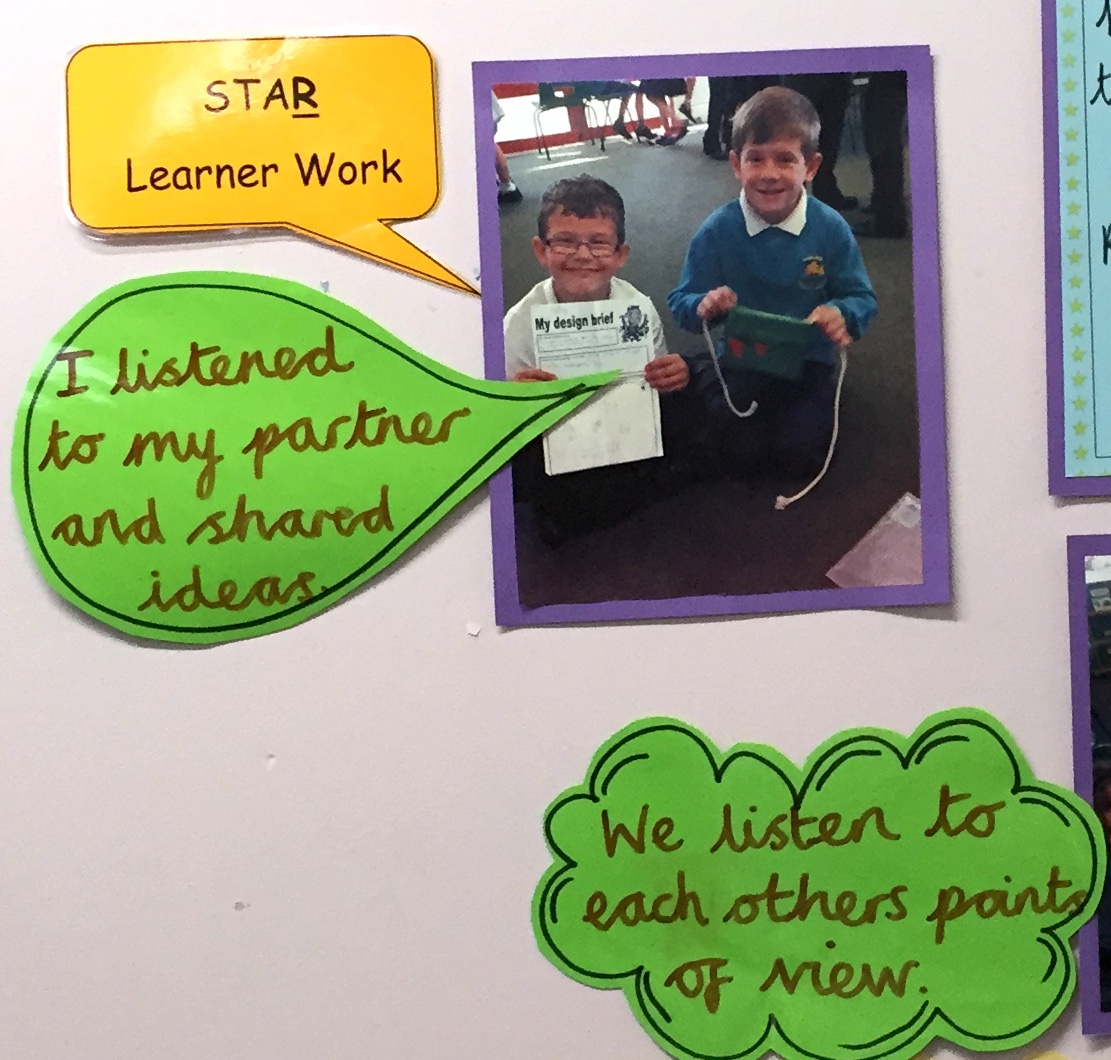
Take photographs when you notice children playing and working well together. Place them on a ‘Collaboration Wall’ in the classroom or in a special book that you look at regularly with the children.

Invite the children to suggest captions for the photographs encouraging phrases that exemplify collaboration – sharing ideas, listening carefully, talking turns, everyone involved, etc.

Secondary

Give time to think… and share ideas

An idea to get students thinking about collaboration that could also be used in upper primary classes too.

In pairs – Think of a time when each of you has learned something with others. Take turns to interview each other about;

  • Where you were.
  • How many people were in the group.
  • What you learned from them.
  • How the group worked out the best way forward
  • What you were trying to do.
  • What you did to add to the group’s learning
  • Who you were with.
  • Whether you were able to pick up any good learning habits.
  • Where the group’s best idea came from.

Primary

Introduce games that require collaborative behaviours

Give the children challenges which can only be achieved through collaboration! For example; Ask a group of 10 children to stand on a bench and put themselves in order of height without anyone stepping off and on again. They will have to work cooperatively as a team to meet this challenge.

Secondary

An activity that enables students to recognise that working collaboratively means everyone having a role in success.

Use activities to show everyone has a role in success

Four teams of seven. Explain: “Create a machine with moving parts using yourselves. Each of you is to be part of the machine or something that the machine makes. When you have made it work you will demonstrate it working to the class. You have 10 minutes. The class will try and guess what your machine makes.”

Debrief...how the group work together. Whether a leader emerged? How decisions were made about what the machine should make. How it was decided when the machine would start. How machine parts were assigned. What different people contributed to the team effort? What has been learned about working in a team?

2. Explore the language of Collaboration

How you might extend the language and scope of collaborating in a team

Primary and Secondary

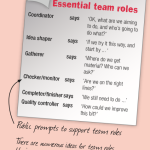
Explore and use team roles

click to enlarge

Open up a conversation about different team roles with students.
Introduce students to a few essential team roles, for example.

  • Coordinator
  • Resource gatherer
  • Finisher

Many students will, initially, have a preferred role, but over time encourage them to try out other roles to broaden their team working skills. Experiment with allowing individuals to choose their own roles, assigning roles yourself, and allowing teams to assign roles.


3. Use Collaboration as a way of organising learning

Use a quick starter to key students into the learning behaviour you want to concentrate on in the lesson. i.e. here you are starting up the collaborating behaviour

Primary

Getting ready for teamwork

Try a sharing activity (KS1)

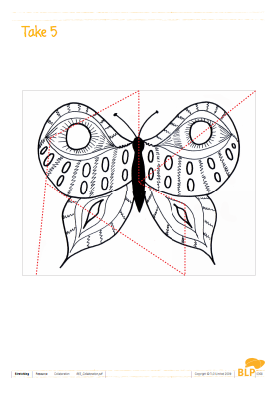
An activity that requires pupils to share what they have in order to finish the task. Use this also to encourage children to think about what they are trying to achieve.

Use harder jigsaws, or groups of information, with older pupils.

Download Resource Download Task Explanation

Secondary

Building on the answers of others (KS2/3)

Have students work in pairs for 5 minutes to begin a draft answer to a tricky question. Once time is up, partially completed answers are passed to the next pair to be built upon, refined or redrafted, and the process is repeated as many times as necessary. At the end of the process, answers are returned to the original pair who are tasked with using all of the suggestions to draft their final polished version of the answer.

For more on this, read The Teacher’s Toolkit (Paul Ginnis), pages 139/140

Download

4. Focus on Collaboration as a learning strategy

Improve collaborating behaviour through the use of a thinking routine.

Primary and Secondary

Visible Thinking Routine

Think, Pair, Share

Offer students a problem or question which is more substantial than simple recall.

Think – Allow plenty of individual think time to engage with the issue.

Pair – Students then try out their ideas, (discuss, clarify, challenge) with a ‘Learning Partner’.

Share – The pair share with another pair, and subsequently with the whole class to arrive at a range of possible answers. They come to know and shape their views by collaborating with others.

Use as a simple strategy to prepare students for working together in teams, having first thought it through for themselves (Think), checked their ideas out with a trusted friend (Pair), before moving on to contributing to a group (Share).

At each point students are exposed to the views of others which encourages them to revise and refine their initial thinking.


And here is an activity that will help students to understand more about collaboration and team work.

5. An activity to highlight and strengthen Collaboration

Design specific activities to highlight, strengthen and improve collaboration itself. Use collaboration to help students to better understand the content.

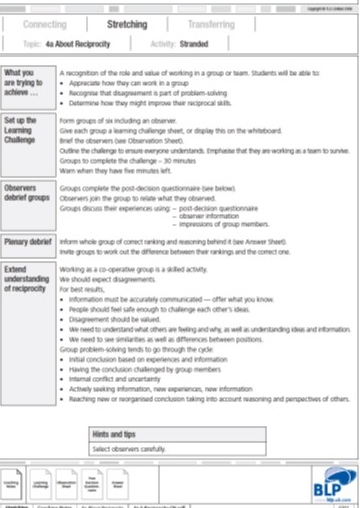
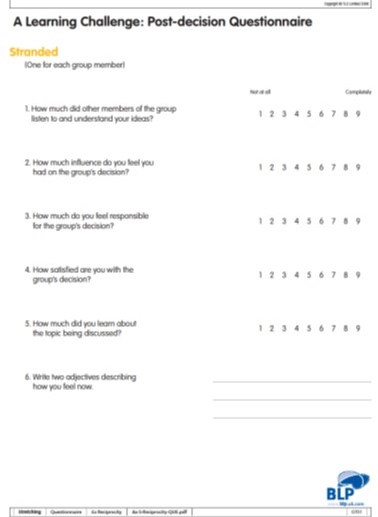
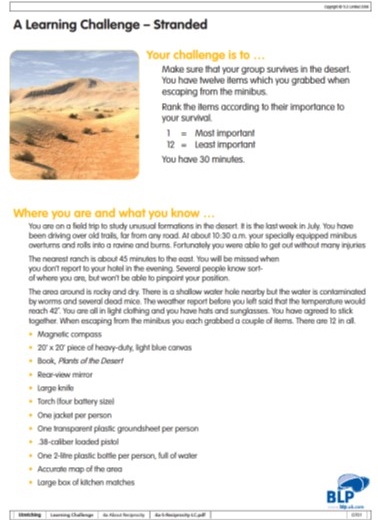
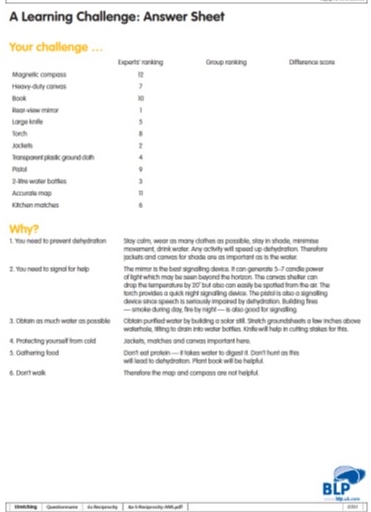
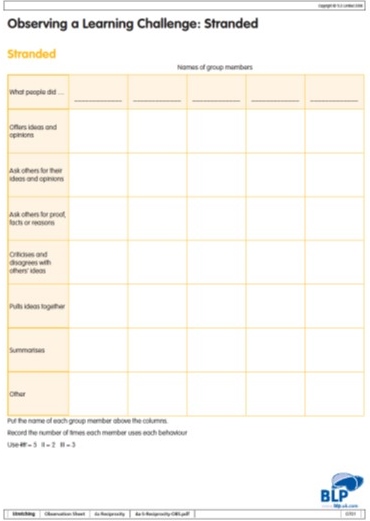
Stranded!

This take on a classic exercise encourages students to listen, share ideas and, hopefully, come to an agreed solution.

Coaching Notes

Coaching Notes

Questionnaire

Questionnaire

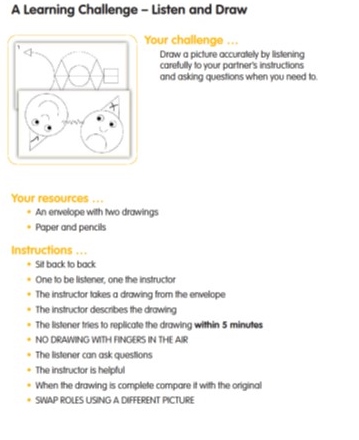
Learning Challenge

Learning Challenge

Answer Sheet

Answer Sheet

Observation Sheet

Observation Sheet


6. Reflect on Collaboration

Primary

Make reflecting on collaboration part of everyday lessons

Here is a practical example of how you might develop the social climate of the classroom and make it collaboration friendly

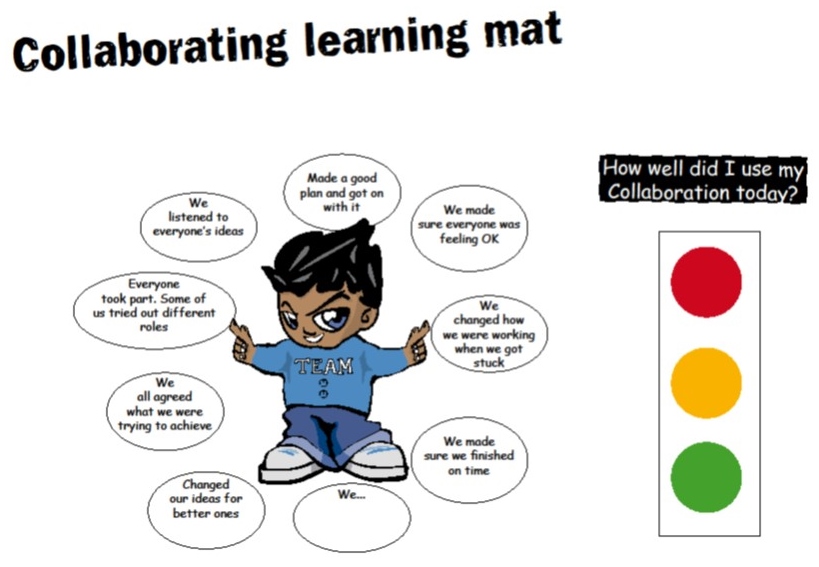
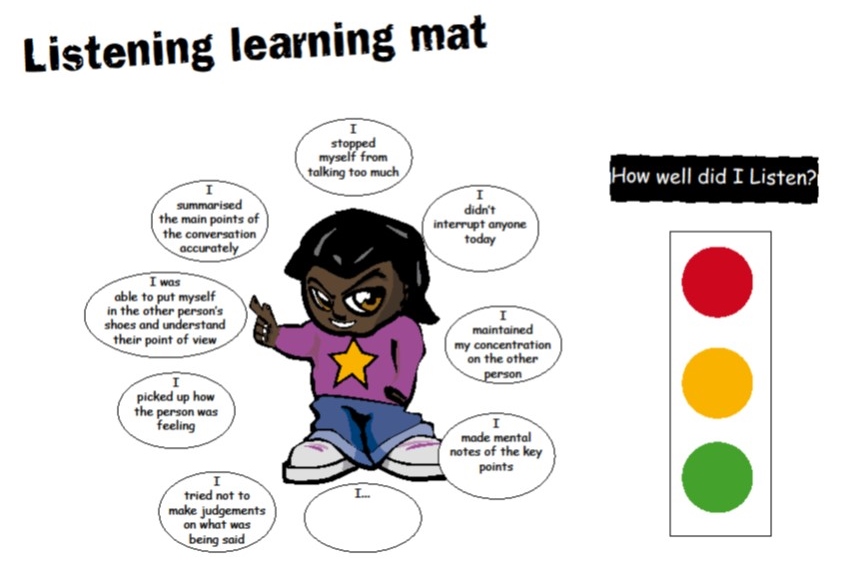
Learning Mat

Learning mats are  A4 laminated sheets that show various aspects of a learning habit. Keep them on desks/tables or as part of a wall display.

Students can refer to them during lessons as prompts about the finer aspects of collaborating and later for self-reflection on what they have used, whether it was successful and how to improve it.

Download

Secondary

Encourage self reflection on collaboration

click to enlarge

Me-now! is a self-reflective tool for use in either upper primary or secondary schools to focus a discussion. They are useful in encouraging students to consider several aspects of the learning behaviour in question. There are some fairly sophisticated attributes in the list.

How am I at collaborating? Answer with Usually/Sometimes/Rarely/Don’t Know

  • I explore a task and work out what we have to achieve …
  • I help plan how the group will work …
  • I play my part in getting work done …
  • I’m patient whilst others learn …
  • I share what I think or know …
  • I accept ideas that improve on my own …
  • I make suggestions to others for improvements …
  • I contribute to group review …
  • I celebrate others’ achievements …
  • I help to resolve conflict …


Primary and Secondary

What do you think?

  • Can you see a use for any of the suggested activities?
  • Have you raised awareness of collaboration with your students?
  • Does your class have an agreed set of good collaborative behaviours?
  • Which two ideas from above do you want to try out?
  • How long will you keep them going before you decide whether they have worked or not?

Make a note of…Little_r

  • What happens in your classroom in response to any of the above ideas.
  • How students’ behaviour changes over about 3 weeks of becoming more familiar and talking about the behaviour.
  • How your behaviour in the classroom changes as you use these ideas over time.

NB. None of the suggestions above will lead to instant understanding in students nor instant changes of behaviour. You will need to drip them in over time and keep building and refreshing your language of learning.

Continue Reading

2. A classroom culture for Collaboration

Building students’ Learning Power is about creating a culture in your classrooms – that systematically cultivates habits and attitudes that enable your students to face difficulty calmly, confidently and creatively. By a ‘culture’ we mean all the little habits, routines and practices that implicitly convey ‘what we believe and value round here’.

So ‘culture’ concerns the details of the micro-climate that you create in your classrooms. What you do and say, what you notice and commend and what you don’t, what kind of role model of a learner you offer – all these are of the essence. The micro-climate of a classroom can inadvertently stifle, or specifically enhance,  the very behaviours you are seeking to promote.

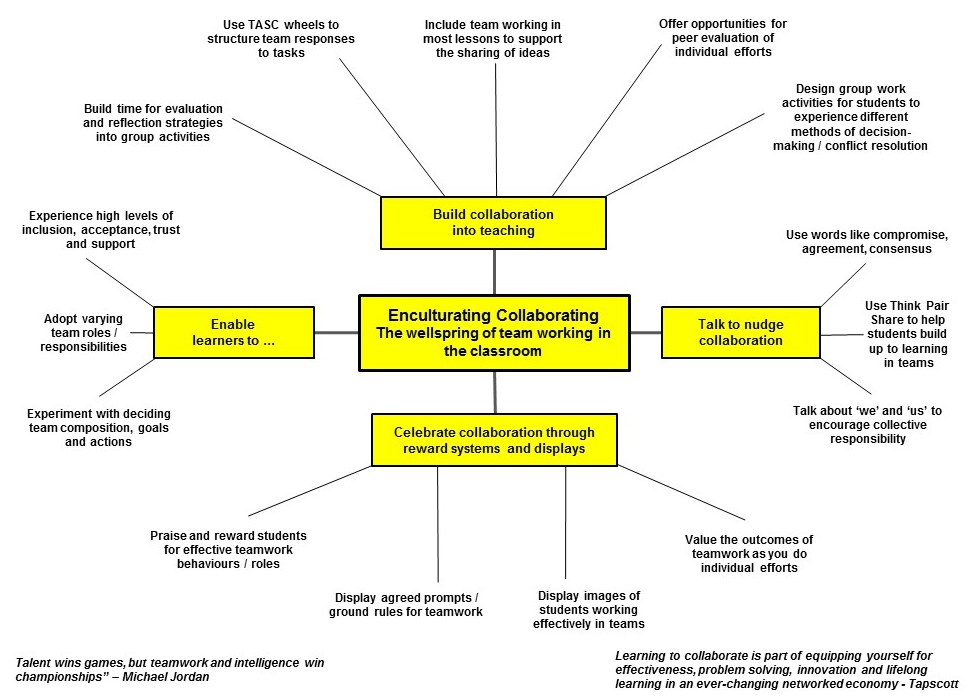
Does my classroom climate encourage Collaboration?

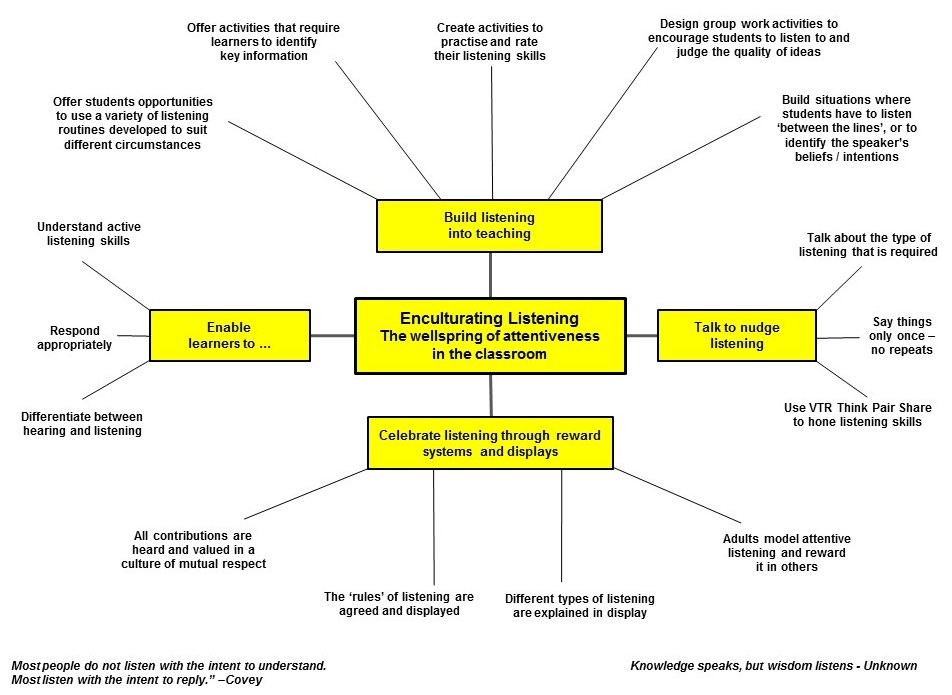
Here is a selection of features that might begin to shape the emotional climate of your classroom to encourage collaboration.

The diagram has 4 sections:

  • Top – strategies you could build into the way you teach to stimulate collaboration;
  • Right – indications of the sort of language you might use to stimulate collaboration;
  • Bottom – ways in which you might celebrate / praise students’ use of collaboration;
  • Left – things that you need to enable students to do.

Apply your own attentive noticing and consider whether you already use any of these features and which you fancy trying.

Download as a pdf

What do you think?

  • Which of the ‘build’ ideas (top) are already features of your teaching?
  • Which of the ‘talk’ prompts (right) do you regularly use when talking about collaboration?
  • Which of the ‘celebrate’ ideas (bottom) are already in evidence your classroom?
  • Which of the ‘enable’ behaviours (left) are you intentionally enabling in your classroom?

Make a note of…Little_r

  • Any ideas that look as if they might help your students to become better at collaboration.
  • An idea that you want to start doing.
  • An idea that interests you, but you are uncertain what it means or how you might do it.
Continue Reading

1. What is… good Collaboration?

What do we mean by Collaborating

Collaboration involves knowing how to learn with others. It means being able to work as part of a pair or a team, in a situation where no one person is in possession of all parts of the puzzle, and where the sharing of information and ideas is essential. Collaboration means being willing to share, and having the skills of communication to do so effectively. In many primary schools, Circle Time, for example, is used as a way of cultivating the requisite attitudes and abilities. Classes can be constituted as a group of research teams, each of which has responsibility for finding out part of the answer to a whole-class project, and then sharing that research with the other teams.

What does being a good Collaborator involve?

If you have well formed Collaborating habit you will be ready, willing, and able to:

  • Work effectively with others towards common goals;
  • Seek to understand what others are saying;
  • Share, challenge, support and build on ideas;
  • Adopt different roles and responsibilities in pursuit of team goals;
  • Act responsibly with initiative, and perseveres in the face of difficulties;
  • Hold and express opinions coherently, compromises and adapts to circumstances when appropriate.

Spotting the Collaborators in your classes

Just to get you tuned in – have a quick think about ‘Collaborators you may know’. Make a note of students you know who display these characteristics.

Becoming a teacher who develops students’ learning power means developing a keen awareness of the subtleties of your students’ learning behaviours. What you are trying to do is to help them to help themselves to get better at using these behaviours.

What do you think?

  • How many of your students come to mind when looked at through the lens of collaboration?
  • Is there a gender balance or have you noted down more girls than boys or vice versa?
  • Are the students you have noted from across all age groups or do some dominate?
  • How do these collaborative characteristics help these students to be better learners?

Make a note of…Little_r

  • Those groups or classes that seem to have lots of good collaborative characteristics.
  • How you think you might capitalise on this.
Continue Reading

6. Team reflection and planning

This section offers a framework for supporting a productive Teacher Learning Community

If you are undertaking this unit alone and are not part of a Teacher Learning Community structure, please move on to Section 7.

Teacher learning communities have the potential to provide you, as teachers and support staff, with the information and support you need to develop your practice in deep and lasting ways. They provide a forum for supporting you in converting the information and ideas in the online learning sessions into “lived” practices within your specific subjects and classrooms. They provide a safe forum in which to;

  • kick around ideas from the online content,
  • unpack it’s meaning when it’s unclear,
  • consider what’s do-able and appropriate for your pupils
  • make plans for what and how you might incorporate the ideas into your practice
  • share and unpack what you have tried in the classroom
  • relate your triumphs and tribulations
  • support colleagues through changes in practice
  • reflect on what you hope you might do, or have done, differently

 The format of the agenda is based on research into teacher learning communities by Dylan Wiliam, of Assessment for Learning (AfL) fame. Teacher learning communities are the engines of teacher development. 


Continue Reading

7. Moving your practice on

This section is for those teachers who are undertaking this online unit alone and are not part of a Teacher Learning Community structure.

Cultivating learning habits ultimately involves:

  • Providing rich and varied occasions for exercising learning habits;
  • Infusing learning habits into lessons to enhance content understanding;
  • Recognising and celebrating the use and growth of learning habits;
  • Expecting students to take ownership of and responsibility for their own learning habits;
  • Exploring the development of learning habits with students over time.

As a teacher you are an influential character builder and so need to be mindful of how you help students form, replace, re-form and strengthen their learning habits.

But don’t worry, you are not expected to be there yet. It takes most teachers between 2 and 3 years to become really fluent with this way of teaching. So, go easy on yourself. Feel determined because small steps often prove to be big levers for change. Have a think about what you might do…


What to stop and start

Here are a few ideas you might want to try. Take it steady, this way of teaching can be a big but exciting shift so it’s worth doing it slowly and thoughtfully.

Look first at the Stop/avoid ideas. Some of these are far from trivial but it’s best to try to remove them before starting on the Start/do more of, Start slowly and Experiment with ideas.

What do you think?

  • Which of the ideas appealed to you most?
  • Can you see ways of incorporating these into your subject/class routines?
  • Which would make the biggest difference to your students?
  • Which would make your life easier?

Make a note of…Little_r

  • Ideas that you want to try and the impact you hope they will have on your teaching and on your students.

Continue Reading

5. Talk for nurturing imagining

Develop your learning language

Here is a range of things you could say to nudge imagining. When you use this kind of language you are talking as a learning coach, encouraging students to think for themselves. Using such statements encourages your students to:

  • imitate you;
  • start to think in this way;
  • become conscious of these phrases and their meaning.

Eventually you will hear some of the questions pop up in students’ self-talk….in speech or even in writing from time to time, but mostly these will go on inside their heads. As your work on imagining gathers pace see if you can detect students who talk, or think, in these ways.

Learning-talk nudges to encourage Imagining

Teacher talk – as a learning coach

Here are 10 ideas to ensure your students do the thinking for themselves

  1. What would happen if …
  2. Try to picture … in your mind. Tell me about . . . .
  3. Can you use your mind’s eye to see what that might look like?
  4. Are there any other possible explanations?
  5. Close your eyes – what can you see? Hear? Feel?
  6. What do you feel might be happening?
  7. What could this be?
  8. How might you do this differently?
  9. Imagine yourself doing it before you do it for real.
  10. Can you imagine how xxx feels now even though you disagree with their views?

What do you think?

  • Which of these imagination nudges might you start using?
  • In which particular lessons would such nudging be most useful?
  • How will most of your students respond to such nudges?
  • Will this way of engaging be more popular with girls or boys?
  • What other nudging ideas might you add to the list?

Make a note of…

Little_r

  • Students’ reactions to the nudges.
  • Ideas about why this might be.
  • Ways in which you could further encourage students to imitate this metacognitive self-talk.
  • Any positive or negative impact of these imagining behaviours.

Continue Reading

4. Ideas for classroom practice

Some ideas to encourage an Imagining frame of mind.

In the early stages of building your students’ learning power your role is to; make them aware of the behaviour; talk about it (what, how, why, when, if); celebrate its use; give opportunities to practise it, both in lessons and elsewhere; reflect on it to improve it. This staged start is reflected below…

  1. Firstly… make your students aware of the use and importance of imagining…when, where, why, how they are or could be using it
  2. Then… explore imagining a little more through the language of imagining
  3. Try… using imagining as a lesson starter to tune students into using it
  4. Then start… blending imagining into the way you teach the content. Use specific imagining strategies to deepen content understanding.
  5. Ensure… students reflect on the success or otherwise of their imagining frame of mind.


1. Make students aware of Imagining

How you make your students aware of the words that describe the behaviour and why it is important to use it.

Primary

The Mind’s Eye

  • Introduce pupils to the idea of the mind’s eye: Talk about the fact that we all have 2 eyes which we use all the time but that everyone also has a third, hidden, mind’s eye. Talk about how we can use this secret third eye to imagine and create pictures and ideas inside our minds.
  • Invite pupils to close their eyes and imagine they are using their third eye. Describe something in great detail and ask them to try and see it with their third eye.
  • For example: Close your eyes tightly and imagine my alien. It has a large, round, green body with lots of arms and legs. On the top of the round, green body is a huge pink and purple head with spiky yellow hair and 4 great big blue eyes. It has long, pink fingers on its hands and short, purple toes on its big feet. When it walks along it makes a high squeaky sound and it smells just like fish and chips!
  • You could ask pupils to draw their idea of the alien, concentrating on their ideas rather than an exact representation of your description.
  • Ask pupils to imagine something for themselves- unprompted by you. Invite them to describe what they are imagining.
  • Talk about what seems to happen in their mind when they imagine.
  • Talk about when our ability to imagine can be useful.
  • Ask, “When do you use your imagination?”

Secondary

Guided Visualisation


Invite students to visualise, for example, a snowy mountain peak until the image fades – discuss how long this could be sustained.

Now visualise hovering over the mountain and exploring the terrain by helicopter – the experience will have lasted longer.

Now provide students with a guided visualisation of the mountain that triggers their imaginative faculties – discuss the features of this experience.

Enable students to identify the ways of triggering their own imaginations when provided with stimuli. Invite them into a city at night, or the alimentary canal, . . . 

Stimulating the imagination

Use music to create atmosphere and stimulate imaginative thinking.

Provide varied, unexpected and ever-changing visual experiences — on whiteboards, classroom walls, in ideas banks, through web-links, etc.

Read vivid prose and poetry that captures details, moods and atmospheres.

Primary

Capture ideas

Encourage pupils to brainstorm or mind-map and keep notebooks or Post-its of interesting ideas to feed their creativity. Do this collectively and individually.

Elect one pupil as ‘Plant of the Day’, whose job it is to suggest unlikely ideas.


Secondary

Play the prediction game, emphasise mental rehearsal

Image result for wilkinson kicking percentage

Show video clips of e.g. rugby or football heroes preparing to kick a ball, as well as other sports and entertainment people rehearsing ahead of action.

Discuss what they are doing to ‘play the movie’ in their heads before they act.

Explore occasions when this could be useful in students’ own lives. Identify the triggers and habits required when anticipating the right action.


2. Explore the language of Imagining

How you might extend the language and understanding of this behaviour

Primary

Talk about how things might look, feel, sound.

Related image

Give pupils a familiar object – a pencil, hairbrush, scissors, toilet roll, cushion – whatever comes to hand.

Then pose the question: ‘What else could it be?’ or ‘What could this become’

Discuss and praise the most imaginative ideas.

What you are trying to develop in young learners is:

  • An awareness of the power of imagination;
  • The ability to use their imagination to picture how things might look, sound, feel or be;
  • The willingness to talk imaginatively about situations, events, characters, etc.

Secondary

Expand the vocabulary of imagining

Click to enlarge

Collect words that tell you how people learn to imagine.

Relate imagining to well known sayings

What do we mean when we say …

In my mind’s eye

Thinking outside the box


3. Use Imagining as a lesson starter

Use a quick starter to key your students into the learning behaviour you want to concentrate on in the lesson. i.e. here you are starting up their imagining behaviour

Primary

Extend imaginative thinking by telling stories

Provide a stem statement…

A man walks into a room with a suitcase in his hand…

Invite one student to carry it on. Each student continues from where the previous one left off.

Or . .

Create a scenario…There are no windows, water drips into a bucket, two people are seated back to back…what might be happening? What might happen next? Can you improvise the dialogue between the people?

Secondary

Trigger imagination with ‘What if …’ challenges

Image result for what if

Provoke students to think ‘What if… we ran out of oil in 25 years… we lived in a two-dimensional world… we all lived for exactly 70 years… tennis balls were heavier… we had two moons…’

Encourage students to build collaborative spider diagrams that explore the possible ramifications of such eventualities. Extend the imagining in creative presentations using a variety of media.

As you develop greater understanding of imagining you will need to design learning activities which, by their very nature, will deepen students’ tendency to be imaginative  AND their understanding of the content.

4. Focus on Imagining as a learning strategy

Draw out the Imagining behaviour being used in a thinking routine.

Primary and Secondary

Visible Thinking Routine

Creative Questions

Image result for creative questions

Creative Questions is a visible thinking routine that encourages students to create interesting questions and then imaginatively mess around with them for a while in order to explore their creative possibilities:

Pick an everyday object or topic and brainstorm a list of questions about it.

Look over the list and transform some of the questions into questions that challenge the imagination. Do this by transforming questions along the lines of:

  • What would it be like if…
  • How would it be different if…
  • Suppose that …
  • What would change if …
  • How would it look differently if …

Choose a question to imaginatively explore. Explore it by imaginatively playing out its possibilities. Do this by: Writing a story or essay, drawing a picture, creating a play or dialogue, inventing a scenario, conducting an imaginary interview, conducting a thought experiment . . . .

Reflect: What new ideas do you have about the topic, concept or object that you didn’t have before?

For more detail on Creative Questions, visit the visible thinking website


And here is an idea that will help students to understand the imagining process.

5. An activity to highlight and strengthen Imagining

Design specific activities to highlight and strengthen the behaviour

Imagining through all of the senses . . .

Click to enlarge

What has happened here ? Good guy or bad ? Can we see any colours ? Hear any sounds ? Imagine being there….

A quick way to activate the Imagination and explore how we use our senses to imagine.

What you are trying to achieve:

To support students to use their imaginations using all of their senses,

How might you use the technique?

  • As a starter for creative writing
  • As a prelude to reading a book – start with the B&W copy of the dust jacket.
  • To build empathy
  • To scaffold the use of all of the senses
  • To trigger the imagination

Download guidance for the activity

6. Reflect on Imagining

Primary

Make reflecting on Imagining part of everyday lessons

Here is a very practical example of how you might develop the emotional climate of the classroom and make it Imagining friendly

Learning Mats

Download

Learning mats are A4 laminated sheets that show various aspects of a learning habit. Keep them on desks/tables or as part of a wall display.


Secondary

Alert students to how they use their Imaginations

A useful resource for tutor time to guide a wide ranging discussion.

Download

Primary and Secondary

What do you think?

  • Can you see a use for any of the suggested activities?
  • Have you raised awareness of imagining with your students?
  • Does your class have an agreed set of good imaginative behaviours?
  • Which two ideas from above do you want to try out?
  • How long will you keep them going before you decide whether they have worked or not?

Make a note of…Little_r

  • What happens in your classroom in response to any of the above ideas.
  • How students’ behaviour changes over about 3 weeks of becoming more familiar and talking about the behaviour.
  • How your behaviour in the classroom changes as you use these ideas over time.

NB. None of the suggestions above will lead to instant understanding in students nor instant changes in their behaviours. You will need to drip them in over time and keep building and refreshing your language of learning.

Continue Reading

2. A classroom culture for imagining

Building students Learning Power is about creating a culture in your classrooms – that systematically cultivates habits and attitudes that enable your students to learn confidently and face difficulty calmly and creatively. By a ‘culture’ we mean all the little habits, routines and practices that implicitly convey ‘what we believe and value round here’.

So ‘culture’ concerns the details of the micro-climate that you create in your classrooms. What you do and say, what you notice and commend and what you don’t, what kind of role model of a learner you offer – all these are of the essence. The micro-climate of a classroom can inadvertently stifle, or specifically enhance,  the very behaviours you are seeking to promote.

Does my classroom climate encourage Imagining?

Here is a selection of features which might begin to shape the emotional climate of the classroom to encourage Imagining.

The diagram has 4 sections:

  • Top – strategies you could build into the way you teach to stimulate imagining;
  • Right – indications of the sort of language you might use to stimulate the imagination;
  • Bottom – ways in which you might celebrate / praise students’ use of imagination;
  • Left – things that you need to enable students to do.

Apply your own imagination and consider whether you already use any of these features and which you fancy trying.

Download as a pdf

What do you think?

  • Which of the ‘build’ ideas (top) are already features of your teaching?
  • Which of the ‘talk’ prompts (right) do you regularly use when talking about imagining?
  • Which of the ‘celebrate’ ideas (bottom) are already in evidence your classroom?
  • Which of the ‘enable’ behaviours (left) are you intentionally enabling in your classroom?

Make a note of…Little_r

  • Any ideas that look as if they might help your students to become better at imagining.
  • An idea that you want to start doing.
  • An idea that interests you, but you are uncertain what it means or how you might do it.

Continue Reading

1. What is… good Imagining?

What do we mean by Imagining?

Imagination is not just a cute faculty that children use to weave fantasies: it is one of the most effective tools in the learner’s toolbox. Scientists, designers and executives need a powerful imagination just as much as painters and novelists, and it can either be developed, through appropriate experience and encouragement, or left to shrivel up. Good learners are ready and able to look at things in different ways. They like playing with ideas and possibilities, and adopting different perspectives (even though they may not have a clear idea of where their imagination is leading them). They use pictures and diagrams to help them think and learn.

There are two kinds of imagination: active and receptive. In active imagination, you deliberately create a scenario to run in your mind’s eye. Sports people use this kind of mental rehearsal, and experiments have shown it to be very effective at improving their level of skill.

The second kind of imagination is more receptive, like daydreaming: letting a problem slip to the back of your mind, and then just sliding into a kind of semi-awake reverie, where the mind plays with ideas and images without much control on your part. Successful learners and inventors know how to make good use of this kind of creative intuition. They are interested in inklings and ideas that just bubble up into their minds.

What does being a good Imaginer involve?

If you have a well formed Imagining habit you will be ready, willing, and able to:

  • Use the mind as a theatre in which to play out ideas and possible actions experimentally;
  • Use a rich variety of visual, aural and sensory experiences to trigger creative and lateral thinking;
  • Explore possibilities speculatively, saying ‘What might …’, ‘What could …’ and ‘What if …?’ rather than being constrained by what is;
  • Retain a childlike playfulness when confronted with challenges and difficulties;
  • Be aware of intended outcomes whilst adopting a flexible approach to realising goals;
  • Rehearse actions in the mind before performing them in reality.

Spot the Imaginers in your classes

Just to get you tuned in – have a quick think about ‘imaginers you may know’. Make a note of students you know who display these characteristics.

Being a teacher who develops students’ learning power means developing a keen awareness of the subtleties of your students’ learning behaviours.

What do you think?

  • How many of your students come to mind when looked at through the lens of imagining?
  • Is there a gender balance or have you noted down more girls than boys or vice versa?
  • Are the students you have noted from across all age groups or do some dominate?
  • How do these imagining characteristics help these students to be better learners?

Make a note of…Little_r

  • Those groups or classes that seem to have lots of good imagining characteristics.
  • How you think you might capitalise on this.

Continue Reading

6. Team reflection and planning

This section offers a framework for supporting a productive Teacher Learning Community

If you are undertaking this unit alone and are not part of a Teacher Learning Community structure, please move on to Section 7.

Teacher learning communities have the potential to provide you, as teachers and support staff, with the information and support you need to develop your practice in deep and lasting ways. They provide a forum for supporting you in converting the information and ideas in the online learning sessions into “lived” practices within your specific subjects and classrooms. They provide a safe forum in which to;

  • kick around ideas from the online content,
  • unpack it’s meaning when it’s unclear,
  • consider what’s do-able and appropriate for your pupils
  • make plans for what and how you might incorporate the ideas into your practice
  • share and unpack what you have tried in the classroom
  • relate your triumphs and tribulations
  • support colleagues through changes in practice
  • reflect on what you hope you might do, or have done, differently

 The format of the agenda is based on research into teacher learning communities by Dylan Wiliam, of Assessment for Learning (AfL) fame. Teacher learning communities are the engines of teacher development. 


Continue Reading

7. Move your practice on

This section is for those teachers who are undertaking this unit alone and are not part of a Teacher Learning Community structure.

Cultivating learning habits ultimately involves:

  • Providing rich and varied occasions for exercising learning habits;
  • Infusing learning habits into lessons to enhance content understanding;
  • Recognising and celebrating the use and growth of learning habits;
  • Expecting students to take ownership of and responsibility for their own learning habits;
  • Exploring the development of learning habits with students over time.

As a teacher you are an influential character builder and so need to be mindful of how you help students form, replace, re-form and strengthen their learning habits.

But don’t worry, you’re not expected to be there yet. It takes most teachers between 2 and 3 years to become really fluent with this way of teaching. So, go easy on yourself. Feel determined because small steps often prove to be big levers for change. Have a think about what you might do…


What to stop and start

Here are a few ideas you might want to try. Take it steady, this way of teaching can be a big but exciting shift so it’s worth doing it slowly and thoughtfully.

Look first at the Stop/avoid ideas. Some of these are far from trivial but it’s best to try to remove them before starting on the Start/do more of, Start slowly and Experiment with ideas.

What do you think?

  • Which of the ideas appealed to you most?
  • Can you see ways of incorporating these into your subject/class routines?
  • Which would make the biggest difference to your students?
  • Which would make your life easier?

Make a note of…Little_r

  • Ideas that you want to try and the impact you hope they will have on your teaching and on your students.

Continue Reading

5. Develop your talk for… Listening

Develop your learning language

Here is a range of things you could say to nudge listening. When you use this kind of language you are talking as a learning coach, encouraging students to think for themselves. Using such statements encourages your students to:

  • imitate you;
  • start to think in this way;
  • become conscious of these phrases and their meaning.

Eventually you will hear some of the questions pop up in students’ self-talk….in speech or even in writing from time to time, but mostly these will go on inside their heads. As your work on listening gathers pace see if you can detect students who talk, or think, in these ways.

Learning-talk nudges to encourage Listening

Teacher talk – as a learning coach

Here are 10 ideas to ensure your students do the thinking for themselves

  1. What does the tone of voice tell you about the person?
  2. Close your eyes and let the sounds wash over you.
  3. Can you hear what she’s really saying?
  4. Listen for the main messages. Can you summarise the key points of what you’ve just heard.
  5. How does what he’s saying make you feel?
  6. Wait for your turn to talk.
  7. How can you help XXX to say what they are thinking?
  8. Do you think there’s a deeper meaning in what is being said?
  9. How can you show empathy for the speaker in your responses?
  10. Do you understand the mood and beliefs of the speaker?

What do you think?

  • Which of these listening nudges might you start using?
  • In which particular lessons would such nudging be most useful?
  • How will most of your students respond to such nudges?
  • Will this way of engaging be more popular with girls or boys?
  • What other nudging ideas might you add to the list?

Make a note of…

Little_r

  • Students’ reactions to the nudges.
  • Ideas about why this might be.
  • Ways in which you could further encourage your students to imitate this metacognitive self-talk.
  • Any positive or negative impact of these listening behaviours.

Continue Reading

4. Ideas for classroom practice

Some ideas to encourage a Listening frame of mind

In the early stages of building your students’ learning power your role is to; make them aware of the capacity; talk about it (what, how, why, when, if); celebrate its use; give opportunities to practise it, both in lessons and elsewhere; reflect on it to improve it. This staged start is reflected below…

  1. Firstly… make students aware of the use and importance of  listening…when, where, why, how they are or could be doing it
  2. Then… explore listening a little more through the language of listening
  3. Try… using listening as a lesson starter to tune students into using it
  4. Then start… blending listening into the way you teach the content. Use specific listening strategies to deepen content understanding.
  5. Ensure… students reflect on the success or otherwise of their listening frame of mind.


1. Make students aware of Listening

How you make your students aware of the words that describe the behaviour and why it is important to use it.

Primary

Make pupils aware of listening

Who said “Sausages”?

An activity to encourage good listening skills.

  • First, try a quiet activity to help the children focus on the physical sensation of intent listening.
  • Ask the children to move round to sit in a circle.
  • Ask them to close their eyes and clasp their hands gently on their laps.
  • Tell them you are going to chime an Indian bell and that they should listen as carefully as they can and only open their eyes when they can no longer hear the sound.
  • Ask them to be very, very quiet so that they do not disturb each other.
  • Now move on to a simple listening game.
  • Children remain sitting in their circle. They take turns to sit blindfolded in the middle.
  • Point to a child in the circle who then says “sausages.” The blindfolded child has to guess whose voice it is.
  • As the children become more familiar with this game, they will deliberately alter their voices and it can be a lot of fun.
  • Regularly remind the children of the skills they are using and reward really good listening!
  • After playing this game, you may be able to agree some good listening tips with the children.

Now think about how you could extend this into other listening activities.

Secondary

Offer ways to focus on listening

What Can You Hear?


A short listening activity to help students to recognise that attentive listening enables them to centre themselves, focus on what is really happening and take possession of themselves as learners.

Coaching notes

Primary

Listening for Inference and Understanding

Explore sentences spoken with different stress, tone, pace and emphasis, to yield different meanings.

For example:

  • ‘I don’t know why you didn’t go.’
  • ‘How can I answer that?’


Secondary

Become aware of the effect of sounds

Silent Film Show

Related image

Play a two-minute scene from a film, without the visuals.

Listen for clues in sound effects, voices, soundtrack.

Predict / speculate what is happening.

Show the film and attend to the way in which sounds contributed to meaning.

2. Explore the language of Listening

How you might extend the language and understanding of this behaviour

Primary

Discuss listening and tone of voice.

Model different tones of voice. Start with ones that are easy to recognise and understand, like a cross voice or a scared one. Gradually build up this repertoire of voices and use them in stories and songs. Talk about when we use these different tones of voice and why. Ask the children to listen carefully to the way people talk at different times and spot their feelings.

Expand further by inventing voices that you can use for different activities: imagine the voices for different toys or puppets you may have in the classroom; count like robots of a day; recite a rhyme like the big bad wolf. The children will have fun inventing a wide and wonderful assortment of voices whilst refining their listening skills.

Secondary

Expand the listening vocabulary

Collect words that tell you how people learn to listen attentively.

Relate listening to well known sayings

What do we mean when we say …

Being all ears

Listening between the lines

3. Use Listening as a lesson starter

Use a quick starter to key your students into the learning behaviour you want to concentrate on in the lesson. i.e. here you are starting up their listening behaviour.

Primary

Centring Activities

Use centring activities at the beginning of lessons to focus minds before the learning begins. Play music and ask students to focus on the associations that it conjures about places, people, moods and atmospheres.

Something wrong here ?

Read a sentence or statement without expression, then read it again, once, with changes; no further repetition. Students have to spot the changes.


Secondary

Listen for inference and understanding

Play recordings of, for example:

  • One end of a telephone conversation: Who’s on the other end… What’s being said… How do you know?
  • A dialogue: What’s just happened… What happens next… How do you know?
  • Recognisable people: Who are they… What’s the evidence… How do you know?
  • Unknown individuals talking: What do you know… Who could they be… How do you know?

As you develop greater understanding of listening you will need to design learning activities which, by their very nature, will deepen students’ tendency to Listen AND their understanding of the content.

Here is an idea where, by using listening students will gain an understanding of the content AND will develop a listening habit.

4. Focusing on Listening as a learning strategy

Draw out the listening behaviour being used in a thinking routine.

Primary and Secondary

Visible Thinking Routine

What did (s)he say ? 

This routine helps students to listen carefully for and to understand important factual information. It also encourages them to distil key points as they listen for key messages. The routine has two questions:

  • What are the big ideas ?
  • What are the big ideas in your own words ?

The natural place to use this routine is before students are about to listen to something – it could be a video, a You Tube clip, or even teacher exposition. The routine works just as well with small groups or individually.


And here is an idea that will help students to understand the listening process.

5. An activity to highlight and strengthen Listening

Design specific activities to highlight and strengthen the behaviour

Listen and Draw

A short and enjoyable task that can only be achieved through careful explanation and attentive listening. Use it to stimulate a discussion about jumping to conclusions based on partial information.

Coaching Notes


Learning Challenge


DIY

6. Reflect on Listening

Primary

Here is a very practical example of how you might develop the emotional climate of the classroom and make it listening friendly

Make reflecting on listening part of everyday lessons

Learning Mats

Download

Learning mats are A4 laminated sheets that show various aspects of a learning habit. Keep them on desks/tables or as part of a wall display.


Secondary

A Learning Log to alert students to Listening across various aspects of their learning lives

A useful resource for tutor time to guide reflection and a wide ranging discussion.

Learning Log

Primary and Secondary

What do you think?

  • Can you see a use for any of the suggested activities?
  • Have you raised awareness of attentive listening with your students?
  • Does your class have an agreed set of good listening behaviours?
  • Which two ideas from above do you want to try out?
  • How long will you keep them going before you decide whether they have worked or not?

Make a note of…Little_r

  • What happens in your classroom in response to any of the above ideas.
  • How students’ behaviour changes over about 3 weeks of becoming more familiar and talking about the behaviour.
  • How your behaviour in the classroom changes as you use these ideas over time.

NB. None of the suggestions above will lead to instant understanding in students nor instant changes of behaviour. You will need to drip them in over time and keep building and refreshing your language of learning.

Continue Reading

2. A classroom culture for Listening right

Building students’ Learning Power is about creating a culture in your classrooms – that systematically cultivates habits and attitudes that enable your students to learn confidently and face difficulty calmly, and creatively. By a ‘culture’ we mean all the little habits, routines and practices that implicitly convey ‘what we believe and value round here’.

So ‘culture’ concerns the details of the micro-climate that you create in your classrooms. What you do and say, what you notice and commend and what you don’t, what kind of role model of a learner you offer – all these are of the essence. The micro-climate of a classroom can inadvertently stifle, or specifically enhance, the very behaviours you are seeking to promote.

Does my classroom climate encourage Listening?

Here is a selection of features that might begin to shape the emotional climate of your classroom to encourage listening.

The diagram has 4 sections:

  • Top – strategies you could build into the way you teach to stimulate listening;
  • Right – indications of the sort of language you might use to stimulate listening;
  • Bottom – ways in which you might celebrate / praise students’ attentive listening;
  • Left – things that you need to enable students to do.

Apply your own noticing and consider whether you already use any of these features and which you fancy trying.

Download as a pdf

What do you think?

  • Which of the ‘build’ ideas (top) are already features of your teaching?
  • Which of the ‘talk’ prompts (right) do you regularly use when talking about ‘good listening’?
  • Which of the ‘celebrate’ ideas (bottom) are already in evidence your classroom?
  • Which of the ‘enable’ behaviours (left) are you intentionally enabling in your classroom?

Make a note of…Little_r

  • Any ideas that look as if they might help your students to become better at listening.
  • An idea that you want to start doing.
  • An idea that interests you, but you are uncertain what it means or how you might do it.

Continue Reading

1. What is… good Listening?

What do we mean by Listening?

Understanding how to listen effectively is an essential skill that benefits everything from family life to business. It’s one of the most critical skills for working effectively in teams. Hearing and listening are different. There’s all sorts of faulty listening. Sometimes we fake it or pretend to listen; sometimes we only respond to the remarks we are interested in and reject the rest. Sometimes we listen defensively and take innocent remarks as personal attacks. Or, we listen to collect information to use to attack the speaker, or we avoid particular topics, or we listen insensitively and can’t look beyond the words for other meanings, or we turn the conversation to ourselves. So, listening is hard and requires effort. To be a good listener you need to be able to listen for information, listen to judge the quality of the information and listen empathetically to build a relationship and help solve a problem. When looked at from these diverse angles growing Listening moves well beyond encouraging a student to ‘do good listening’.

What does being a good Listener involve?

A well formed Listening habit involves being ready, willing, and able to:

  • Be genuinely interested in other people and what they are saying;
  • Focus on the current moment, being attentive and responsive to visual cues and atmosphere;
  • Notice subtle details and nuances in what is being said;
  • Know when to make well-judged interventions to elucidate, probe or challenge;
  • Manage distractions constructively;
  • Be comfortable with silence and attend actively to what is being said.

Spot the Listeners in your classes

Just to get you tuned in – have a quick think about ‘listeners you may know’. Make a note of students you know who display these characteristics.

Becoming a teacher who develops students’ learning power means developing a keen awareness of the subtleties of your students’ learning behaviours. 

What do you think?

  • How many of your students come to mind when looked at through the lens of listening?
  • Is there a gender balance or have you noted down more girls than boys or vice versa?
  • Are the students you have noted from across all age groups or do some dominate?
  • How do these listening characteristics help these students to be better learners?

Make a note of…Little_r

  • Those groups or classes that seem to have lots of good listening characteristics.
  • How you think you might capitalise on this.

Continue Reading

6. Team reflection and planning

This section offers a framework for supporting a productive Teacher Learning Community

If you are undertaking this unit alone and are not part of a Teacher Learning Community structure, please move on to Section 7.

Teacher learning communities have the potential to provide you, as teachers and support staff, with the information and support you need to develop your practice in deep and lasting ways. They provide a forum for supporting you in converting the information and ideas in the online learning sessions into “lived” practices within your specific subjects and classrooms. They provide a safe forum in which to;

  • kick around ideas from the online content,
  • unpack it’s meaning when it’s unclear,
  • consider what’s do-able and appropriate for your pupils
  • make plans for what and how you might incorporate the ideas into your practice
  • share and unpack what you have tried in the classroom
  • relate your triumphs and tribulations
  • support colleagues through changes in practice
  • reflect on what you hope you might do, or have done, differently

 The format of the agenda is based on research into teacher learning communities by Dylan Wiliam, of Assessment for Learning (AfL) fame. Teacher learning communities are the engines of teacher development. 


Continue Reading

7. Move your practice on

This section is for those teachers who are undertaking this unit alone and are not part of a Teacher Learning Community structure.

Cultivating learning habits ultimately involves:

  • Providing rich and varied occasions for exercising learning habits;
  • Infusing learning habits into lessons to enhance content understanding;
  • Recognising and celebrating the use and growth of learning habits;
  • Expecting students to take ownership of and responsibility for their own learning habits;
  • Exploring the development of learning habits with students over time.

As a teacher you are an influential character builder and so need to be mindful of how you help students form, replace, re-form and strengthen their learning habits.

But don’t worry, you’re not expected to be there yet. It takes most teachers between 2 and 3 years to become really fluent with this way of teaching. So, go easy on yourself. Feel determined because small steps often prove to be big levers for change. Have a think about what you might do…


What to stop and start

Here are a few ideas you might want to try. Take it steady, this way of teaching can be a big but exciting shift so it’s worth doing it slowly and thoughtfully.

Look first at the Stop/avoid ideas. Some of these are far from trivial but it’s best to try to remove them before starting on the Start/do more of, Start slowly and Experiment with ideas.

What do you think?

  • Which of the ideas appealed to you most?
  • Can you see ways of incorporating these into your subject/class routines?
  • Which would make the biggest difference to your students?
  • Which would make your life easier?

Make a note of…Little_r

  • Ideas that you want to try and the impact you hope they will have on your teaching and on your students.

Continue Reading

5. Developing my talk for… Making Links

Developing your learning language

Here is a range of things you can say to nudge link making. When you use this kind of language you are talking as a learning coach, encouraging students to think for themselves. Using such statements encourages your students to:

  • imitate you;
  • start to think in this way;
  • become conscious of these phrases and their meaning.

Eventually you will hear some of the questions pop up in students’ self-talk….in speech or even in writing from time to time, but mostly these will go on inside their heads. As your work on making links gathers pace see if you can detect students who talk, or think, in these ways.

My learning talk nudges to encourage Making links

Teacher talk – as a learning coach

Here are 10 ideas to ensure your students do the thinking for themselves

  1. What do you know already that might help?
  2. Can you say how . . is like . . .?
  3. What conclusions can you draw?
  4. Does the analogy… help us to get a handle on this?
  5. Now that you know… has it changed how you think about…?
  6. Can you see a link between what we did in… and what you do…?
  7. How can you apply what you know about xxx to this problem?
  8. Have you seen/done/felt something like this before?
  9. Do you need to re-think ‘X’ in light of ‘Y’?
  10. Can you relate this information to what you know already?

What do you think?

  • Which of these link making nudges might you start using?
  • In which particular lessons would such nudging be most useful?
  • How will most of your students respond to such nudges?
  • Will this way of engaging be more popular with girls or boys?
  • What other nudging ideas might you add to the list?

Make a note of…

Little_r

  • Students’ reactions to the nudges.
  • Ideas about why this might be.
  • Ways in which you could further encourage students to imitate this metacognitive self-talk.
  • Any positive or negative impact of these link making behaviours.

Continue Reading

4. Ideas for classroom practice

Some ideas to encourage a Link Making frame of mind.

In the early stages of building your students’ learning power your role is to; make them aware of the capacity; talk about it (what, how, why, when, if); celebrate its use; give opportunities to practise it, both in lessons and elsewhere; reflect on it to improve it. This staged start is reflected below…

  1. Firstly… make students aware of the use and importance of making links…when, where, why, how they are or could be doing it.
  2. Then… explore making links a little more through the language of making links
  3. Try… using link making as a lesson starter to tune students into using it
  4. Then start… blending making links into the way you teach the content. Use specific link making strategies to deepen content understanding.
  5. Ensure… students reflect on the success or otherwise of their link making frame of mind.


1. Make students aware of Making Links

How you make your students aware of the words that describe the behaviour and why it is important to use it.

Primary

My Grandma went shopping . . .

Recommend group of no more than 12-15

  • Start by saying “My grandma went shopping and she bought…” and say an item. Let pupils take turns and each time one of them adds another item, they have to explain their link to everyone else.
  • Encourage the children to think of lots of different ways of linking items and reward their ingenuity.
  • To take the learning a little bit further, it could be useful to share a real shopping list with your children and discuss the links that help you when actually shopping.
  • For example, perhaps you list all the fruit and vegetables first, if they are found in the first aisle etc. Or perhaps you list all the breakfast foods together…

Secondary

Mind Maps for link making


Use mind maps to encourage students to link and explain how information and ideas seem to be associated.

Use mind mapping at the beginning, middle and end of a unit of study to show how links and understanding change as knowledge grows.

Use a ‘thought shower mind map’ at the outset of a lesson to connect with prior learning and activate link making. Use in the middle to monitor shifts in understanding. Use at the end of a module of learning as a synthesising tool.

Primary

Think and Link

Organisation: For groups of 5/6 children.

Print out and photocopy the Odd One Out series of pictures. (see resource).

  • Each row has 5 pictures in it. Four can be linked together easily but one doesn’t fit readily with the others.
  • Encourage the children to find an odd one out and perhaps invent a reason or story about how/why the odd one could be made to ‘fit’.
  • Spend plenty of time discussing why the pictures fit together and what the links are. It’s fine if the children can think of different ways to link them as long as they can explain their rationale to you and the other children.
  • Keep praising and rewarding the ‘making links’ bit of the activity rather than focusing on getting it right.
  • To extend this activity a little and assess their understanding, ask the children to devise a row of pictures of their own and give them to each other as a fresh challenge.
  • Join in yourself and model your link making by thinking aloud.


Secondary

Match Them Up

Offer students a set of cards that need to be matched up or linked in some way.

It might be:

  • a set of pairs of cards like ‘It has been raining’ and ‘The river is flowing fast’ where the student is challenged to decide whether there Must be a connection between the two events, Could be a connection, or No possible connection;
  • a problem to select a substance (metal, clay, wax, salt, ice, …) and a change (freezes, dissolves, melts, burns, …) and decide if the change is Reversible or Irreversible;
  • a set of cards that students are required to match into pairs – it could be 5 graphs and 5 equations; 5 characters and 5 attitudes; 5 words and 5 definitions etc.

[The ‘Thinking Through’ series edited by David Leat has individual books for Geography, History, RE, MFL, English, Maths, Science and PSHE which all contain subject specific examples.]


2. Explore the language of Making Links

How you might extend the language and understanding of this behaviour

Primary

Discuss making links


Gather together a really good assortment of shapes: 2D and 3D shapes and different sizes and colours. Using small hoops or different coloured paper circles ask pupils to take turns to sort the shapes by putting them in the hoops and explain their reasoning for sorting them this way. It should be possible to rearrange the shapes in several different ways as different children take a turn. This can help the children understand that there are often many different ways to link things together.

Secondary

Extend the language of Making Links

Collect words that tell you how people learn to make links.

Relate link making to well known sayings

What do we mean when we say …

Chain reaction

Cause and effect

Seeing the wood and the trees

3. Use Making Links as a lesson starter

Use a quick starter to key your students into the learning behaviour you want to concentrate on in the lesson. i.e. here you are starting up the link making behaviour

Primary

Similarity and Difference

Image result for similar different

Find two images with both similarities and differences. Invite students to work in pairs to identify at least 5 of each, and then work as a four to decide the 3 most important similarities and differences.

Timings could be around 1 minute for the pair work, and 2 minutes for the work in fours.

This will also support the skills of noticing, collaborating, and distilling.


Secondary

Odd One Out

Identify four ‘things’ related to your own subject area – this could be 4 images, 4 words, 4 techniques, or anything else that links to your own subject and/or what students are currently learning about.

Invite them to identify the odd one out, and to explain why they think this.

When you can, construct lists where it is possible to justify that each of the items are, in fact, the odd one out.

As you develop greater understanding of making links you will need to design learning activities which, by their very nature, will deepen students’ tendency to Make Links AND their understanding of the content.

Here is an idea where, by using making links, students will gain an understanding of the content AND will develop a making links habit.

4. Focus on Making Links as a learning strategy

Draw out the making links behaviour being used in a thinking routine.

Primary and Secondary

 Visible Thinking Routine

Connect, Extend, Challenge

This routine helps students make connections between new ideas and prior knowledge. It also encourages them to take stock of ongoing questions, puzzles and difficulties as they reflect on what they are learning.

Image result for connect extend challenge

Connect: How are the ideas and information presented connected to what you already know?

Extend: What new ideas did you get that extended or pushed your thinking in new directions?

Challenge: What is still challenging you or confusing for you to get your mind round? What questions, wondering or puzzles do you now have?

The natural place to use this routine is after students have learned something new. For example: after exploring a work of art, a theory, a method, a piece of evidence. Try it as a reflection during a lesson, after a longer project, or when completing a unit of study. The routine works just as well with the whole class, small groups or individually.

This is one of many visible thinking routines to be found on the visible thinking website


And here is an idea that will help students to understand the link making process.

5. An activity to highlight and strengthen Making Links

And or So

An activity to encourage students to make imaginative links between seemingly unconnected objects. Who can find the most novel / humorous / unexpected link ? Are some objects not linked in any way at all ?

Use to explore how most things can be linked together in some way, and how  making the links helps us to remember things and maybe see things in new ways.

Learning Challenge

Coaching Notes

DIY

6. Reflect on Making Links

Primary

Make reflecting on Making Links part of everyday lessons

Here is a very practical example of how you might develop the emotional climate of the classroom and make it Link Making friendly.

Learning Mats

Download

Learning mats are A4 laminated sheets that show various aspects of a learning habit. Keep them on desks/tables or as part of a wall display.


Secondary

A Learning Log to alert students to Making Links across various aspects of their learning lives

A useful resource for tutor time to guide reflection and a wide ranging discussion.

Learning Log

Primary and Secondary

What do you think?

  • Can you see a use for any of the suggested activities?
  • Have you raised awareness of making links with your students?
  • Does your class have an agreed set of good link making behaviours?
  • Which two ideas from above do you want to try out?
  • How long will you keep them going before you decide whether they have worked or not?

Make a note of…Little_r

  • What happens in your classroom in response to any of the above ideas.
  • How students’ behaviour changes over about 3 weeks of becoming more familiar and talking about the behaviour.
  • How your behaviour in the classroom changes as you use these ideas over time.

NB. None of the suggestions above will lead to instant understanding in students nor instant changes of behaviour. You will need to drip them in over time and keep building and refreshing your language of learning.

Continue Reading

2. A classroom culture for Making Links

Building students’ Learning Power is about creating a culture in your classrooms – that systematically cultivates habits and attitudes that enable your students to learn confidently, and face difficulty calmly, and creatively. By a ‘culture’ we mean all the little habits, routines and practices that implicitly convey ‘what we believe and value round here’.

So ‘culture’ concerns the details of the micro-climate that you create in your classrooms. What you do and say, what you notice and commend and what you don’t, what kind of role model of a learner you offer – all these are of the essence. The micro-climate of a classroom can inadvertently stifle, or specifically enhance, the very behaviours you are seeking to promote.

Does my classroom climate encourage Making Links?

Here is a selection of features that might begin to shape the emotional climate of your classroom to encourage making links.

The diagram has 4 sections:

  • Top – strategies you could build into the way you teach to stimulate making links;
  • Right – indications of the sort of language you might use to stimulate making links;
  • Bottom – ways in which you might celebrate / praise students’ link making;
  • Left – things that you need to enable students to do.

Apply your own noticing and consider whether you already use any of these features and which you fancy trying.

Download as a pdf

What do you think?

  • Which of the ‘build’ ideas (top) are already features of your teaching?
  • Which of the ‘talk’ prompts (right) do you regularly use when talking about making links?
  • Which of the ‘celebrate’ ideas (bottom) are already in evidence your classroom?
  • Which of the ‘enable’ behaviours (left) are you intentionally enabling in your classroom?

Make a note of…Little_r

  • Any ideas that look as if they might help your students to become better at making links.
  • An idea that you want to start doing.
  • An idea that interests you, but you are uncertain what it means or how you might do it.

Continue Reading

1. What is… good Making Links?

What do we mean by Making Links ?

Making links is about integrating or making connections between different things. It comprises not only the ability to see or make relationships but also the inclination to look for them.

Trying to hook up new experiences with what you already know is what some people call ‘making meaning’.

New ideas become meaningful to the extent that we can incorporate them within our own mental webs of associations and significances. Good learners get pleasure from seeing how things fit together. They are interested in the big picture, and how new learning expands it.

Good learners can make all kinds of different links. They can link together this lesson’s physics topic with what they were doing in maths last week. They can look for links to their own goals and interests, to discover the relevance of the new learning to their own lives. They find links to their own real-life experience—using new ideas or theories to make sense of past impressions. They weave new events into their developing autobiographical story relating them to their sense of self. They can connect new learning with their own opinions and beliefs, so that they come out not just knowing something new, but looking at the world in a different way. And—very importantly for creativity—they may look for analogies in their own memory that give them a handle on a complicated new domain. ‘What’s it like?’ they ask themselves.

What does being a good Link Maker involve?

A well formed Making Links habit involves being ready, willing, and able to:

  • Connect new ideas to what you know and feel already;
  • Match and categorise ideas, techniques and concepts to ones that are already understood;
  • Link ideas across different academic disciplines and in varying contexts;
  • Looking for similarities, differences, the unusual and absurd;
  • Seek novel and inventive ways of connecting apparently unconnected ideas, events or techniques.

Spot the Link Makers in your classes

Just to get you tuned in – have a quick think about ‘Link Makers you may know’. Make a note of students you know who display these characteristics.

Becoming a teacher who develops students’ learning power means developing a keen awareness of the subtleties of your students’ learning behaviours. 

What do you think?

  • How many of your students come to mind when looked at through the lens of making links?
  • Is there a gender balance or have you noted down more girls than boys or vice versa?
  • Are the students you have noted from across all age groups or do some dominate?
  • How do these link making characteristics help these students to be better learners?

Make a note of…Little_r

  • Those groups or classes that seem to have lots of good link making characteristics.
  • How you think you might capitalise on this.

Continue Reading

6. Team reflection and planning

Session agenda

1. Session objectives

What do we want to achieve? ( 5 mins)

2 Sharing classroom experiments

How did our experiments go? ( 20 mins)

Share

  • the changes in practice you tried
  • how students reacted
  • what you learned
  • what next as a result

Probe

  • what was getting in the way?
  • what seemed difficult?
  • what would make it easier?
  • what made it work particularly well?
  • why it was successful?
  • changes in your behaviour

Impact (general)

  • improvements in students’ behaviour
  • increased focus
  • more enjoyment in learning
  • more/renewed interest in the subject
  • greater harmony in the classroom
  • more willingness to try, and try different ways
  • more positive about themselves as learners
  • Avoidance of…..
  • Improvements in……
  • Increases in…….
  • Little of no changes in…

Impact ( specific)

  • You could consider the behaviour-specific improvement indicators for the learning habit you were improving. (i.e. as shown for this behaviour in section 5c below)

3. Recapping on-line materials

What did we think of the materials? ( 15 mins)

Reactions to

  • The Perseverance grid
  • Where students are secure
  • Where the students could be when they leave secondary school
  • Activities and talk ideas

4. Planning what to do

What do we need to do next? ( 10 mins )

Decide

  • Which ideas should we all adopt as a school strategy?
  • How the progression of perseverance should be built across the school. ie how the phases of perseverance might play out against key curriculum stages and even year groups.

5 Personal action planning

What am I going to do? ( 20 mins )

5a Consider

  • how you want your students to improve/develop/enhance their approach to persevering ?
  • what you are going to do to bring this about?
  • develop your enquiry question.

Think of it like this…

If I do XXXX will it improve/develop/enhance YYYY

This is the crunch question. Your students are unlikely to change unless you change!

Capture your learning enquiry as a question

BOTH OF THE DOWNLOADS WILL NEED CREATING

Developing-an-enquiry-question-Perseverance

Developing-an-enquiry-question-Perseverance.pdf

5b. Put a short enquiry plan together


personal-action-plan-perservance

Personal-Action-Plan-Perseverance.pdf

5c. Things you might want to look out for that result from your classroom experiment:

  • a willingness to spend more time on task. All types of task? Some types? Which?
  • showing less stress or worry about being stuck or challenged
  • reduced reliance on external support
  • developing their own ways of dealing with being stuck
  • greater confidence in themselves
  • recognising that getting stuck is normal and helpful
  • willingness to try other ways of tackling a task
  • greater engagement with tasks
  • improvement in their belief in themselves as learners (growth mindset)
  • others you may have observed…

6. Evaluate team session:

How did we do as a team? ( 5 mins )

We wish you well with your rich activity/learning enquiry. Do let us know how it went…

Maybe you would like to write a blog about it to feature on our website for the benefit of the Building Learning Power community.

Continue Reading