As teachers we are in the habit-forming business. Those habits that we model in front of young people influence the ways in which they perform and behave. Therefore, we need to be sure to foster productive learning habits. If, for example, we expect students to listen more than we expect them to speak, we may (or may not !) help them to hone their listening skills, but their abilities to discuss, argue and debate may be side-lined.
In such ways can good teachers, albeit inadvertently, stifle the very behaviours they are seeking to promote.
The pros and the cons
As with most things, collaborative learning may be a double-edged sword. On the plus side, an increase in collaboration and dialogue can lead to deeper understandings. On the other hand, such an increase can result the worst type of group work – one person doing it, three people watching them. Is the time invested in group work and student dialogue likely to compromise our ability to ‘deliver the curriculum’?
What do you think?
What arguments would you mount in favour of increasing collaborative learning and student dialogue?
What arguments would you mount against such an increase?
On balance, which of these lines of argument do you find most persuasive?
Activity: Spot collaborative learning behaviours in your students
Have a quick think about how your students react to opportunities to talk with and learn from each other.
What do you think?
Which classes/groups come to mind when looked at through this lens?
Which classes seem to have a more negative reaction to learning in this way?
Why might this be?
How do reactions to opportunities to discuss and debate seem to relate to different levels of attainment or gender?
Who attain most highly, the collaborative sociable, interdependent learner or the social isolate?
Who do you prefer teaching?
Make a note of…
Students who prefer to work on their own
Students who use group work as an opportunity to allow others to do all the work
Students who learn with and from their peers
Behaviours you would like to change or improve in your students’ ability to learn effectively together.
A community of learners can be defined as a group of people who share values and beliefs and who actively engage in learning from one another— learners from teachers, teachers from learners, and learners from learners.
The first, learners learning from teachers, is a long-established aspect of traditional classroom practice. It is with the addition of the second and third aspects that the classroom becomes a true learning community. If teachers are unable or unwilling to learn from students, why should students value the opportunity to learn from each other ? What price lifelong learning, if teachers are reluctant to do it !
To build the foundations of a learning community, teachers need to provide opportunities for students to practise and develop a range of social skills – the abilities to listen to each other; to engage in constructive dialogue; to manage and contribute to the give and take of group work.
At its least sophisticated, it is little more than being cooperative. At its most sophisticated and complex levels it goes beyond learning ‘in a team’ and becomes learning ‘as a team’.
In short…
Having both the skills and the inclination to contribute positively to group work in order to learn productively with and from others.
What do you think?
Do your students become increasingly like this as they move through your school?
What makes you say that?
What do you currently do in school that encourages students to develop their social learning skills?
Look carefully at the chart. Read every cell. The statements are written in adult speak. Translate the statements into student focused ‘can do’ statements if that helps. Get a feel for how it all fits together. Now move on to estimating students’ progress.
As teachers we are in the habit-forming business. Those habits that we model or praise or celebrate in front of young people influence the ways in which they perform and behave. Therefore, we need to be sure to foster productive learning habits. If, for example, we offer constructive feedback but fail to require students to act on it, we are not building their inclination to further improve on previous attempts. In such ways do good teachers, albeit inadvertently, stifle the very behaviours they are seeking to promote.
Classroom culture is all-important in building pupils’ learning power. It’s about roles andrelationships in the classroom, how learning is organised, the vocabulary of learning, and what gets celebrated. A classroom climate that supports and nourishes the inclination to persevere is characterised by: a culture that prizes effort over attainment; high-challenge low-stress activities; a language of ‘learning’, not ‘work’ and that being stuck is an interesting place to be; the feeling that students can fail ‘in safety’.
Developing a perseverance-friendly culture needs teachers to believe that:
Real learning comes from making mistakes and overcoming being stuck
Being stuck is an interesting, not shameful, place to be
Mistakes are learning opportunities
Real learning requires effort, and good teaching is about putting the learning in the extended grasp of the learner
And through such a persevering culture students come to believe that:
Effort is part and parcel of the learning process, and ‘I’m discovering how to do this’.
‘Having to try doesn’t mean I can’t be good at it’
‘I can learn more from making mistakes’
‘I should only think about giving up when I’ve tried all sort of strategies and they’ve failed’
‘Easy work doesn’t help me really learn’
Using the ideas above get a feel for your classroom culture and how this may be working for or against positive approaches to students becoming increasingly willing to persevere.
Look through the ideas carefully and consider whether you already use some, and whether any appeal to you to try.
What do you think?
What do your answers suggest?
How does your picture of classroom culture contribute to students’ approaches to Perseverance?
Is this broadly negative or positive?
What insightful ‘Ah ha’ moments did you have as you read through the list?
How have these changed your view of Perseverance?
Make a note of…
An idea on the list you want to start doing.
Any ideas that look as if they might help students to become better at Perseverance.
There are four ‘how to’ units which link to this information unit.
Engaging students in…getting themselves unstuck
Engaging students in…managing their distractions
Engaging students in….rising to the challenge
Engaging students in….achieving their goals
You may have noticed that each unit is linked to just one column of the Perseverance progression chart you have just been exploring. These units take you deeper into practical ways to change your classroom culture for each phase of the chart.
The teachers’ classroom culture palette.
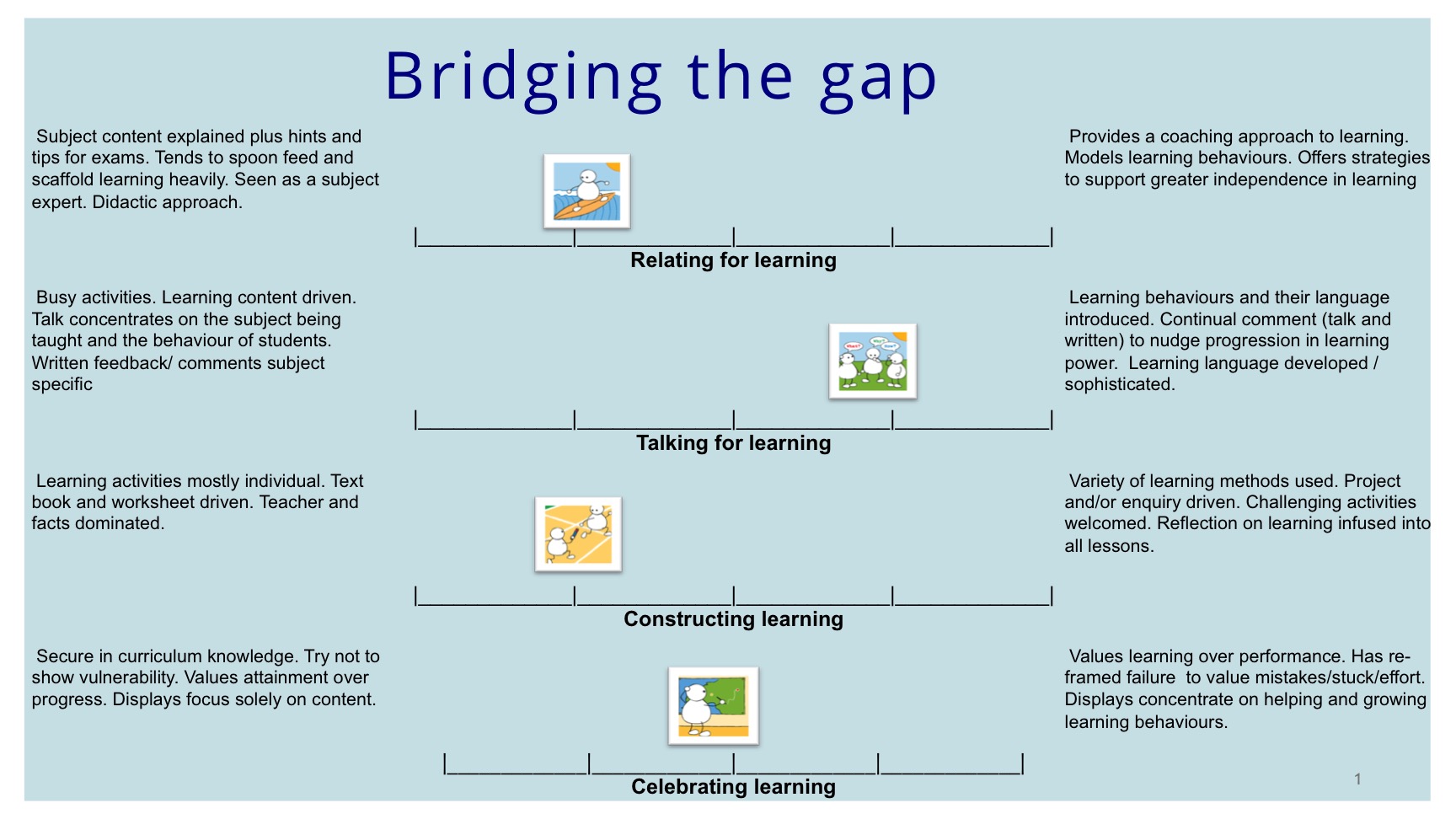
Moving to more learning-friendly cultures means shifts in thinking and action. To establish learning-friendliness you will need to think about four shifts. A shift in relationships, a shift in the language, a shift in how learning is constructed and a shift in what is celebrated, what is seen to matter:
Relating for learning: the changing roles and responsibilities of teachers and learners, where learning becomes a shared responsibility. Pupils are given more responsibility for their own learning, the role of the teacher changes from ‘the sage on the stage’ to ‘the guide by your side’; the role of the pupil moves from ‘passenger’ to ‘crew’ and ultimately ‘pilots of their own learning’.
Talking for learning: the sort of language content and style to enhance learning, making learning the object of conversation. The way we express ourselves in the classroom creates a powerful linguistic environment that teaches young people the best of what we know about learning. The language of learning helps pupils to discuss, understand, and become conscious of using their learning behaviours.
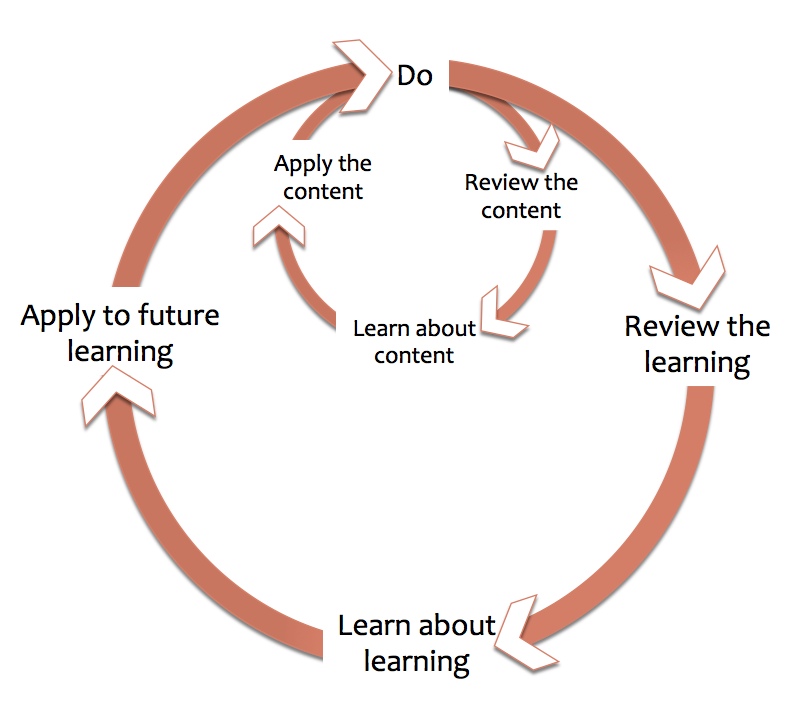
Constructing learning: activities and classroom routines feed learning habits and learning becomes the object of learning. Learning activities are designed to stretch and challenge by having a dual focus – to explore content and stretch pupils’ use of their learning behaviours. There is a strong underpinning of not just ‘doing’ learning but reviewing and reflecting on the process in order to make meaning and apply it elsewhere.
Celebrating learning: the outward signs of the values that underpin the culture, making learning the object of attention. In this dimension failure has been redefined; being stuck is seen as interesting and mistakes valuable. Effort, questions and taking risks are recognised, attended to, acknowledged and praised. These and other things serve to make visible the underlying values of the learning environment.
The teacher’s role becomes one of surfacing learning; to make learning public; to train some of the tricky bits; to talk about it; to recognise and celebrate it as it happens; to nudge it along, assisting pupils to grow their learning capacities; and to design activity to stretch a wide range of learning habits. This uncovering of learning ensures pupils discover, use, understand and grow their learning habits. There is a shift in emphasis from performance to learning, from content to process, from teaching to coaching
Here you can explore the big picture of perseverance, what it consists of and how it grows. Take a look at the chart and think about what it might mean for you.
Being perseverant isn’t something that switches on on good days and off on bad days. Perseverance grows and builds when it’s nurtured and supported. Furthermore, being perseverant involves gaining control of a range of linked skills and emotions.
Take a look at how progression in Perseverance might grow across six components..
Does this make any sense?
What do I like about this?
What else do I need to find out?
What has this chart got to do with me as a teacher?
Are these phases just an inevitable part of growing up?
Read ‘Your role in Building Perseverance’ to find out more.
Of course the development of Perseverance does not grow neatly up each column or evenly across the phases in the chart. The five broad phases of dispositional growth (purple – orange) are affective ways in which people may be inclined to behave: we call this inclination ‘mindedness’.
What do the phases mean
The phases are drawn from Bloom’s taxonomy of the affective domain.
Phase ‘Receives’ (purple) is about doing something because you are told or expected to.In self talk student may say ‘Show me or tell me”
Phase ‘Responds’ (blue) is about gaining interest and doing things more willingly. This might translate to “I’ll try” in student self talk
Phase ‘Values’ (green) is a key phase since the student now sees the value of behaving in this way. It’s a win for them; to behave like this is in their interest. It’s in this phase that the behaviour becomes more secure. In self talk this might translate into “I see why”
Phase ‘Organises’ (yellow) is the phase in which the student capitalises on this ‘in their interest’ behaviour and gets themselves organised to use it positively. In student self talk this might translate into “I’ll make sure I do”.
Phase ‘Embodies’ (orange), known as ‘characterised’ in the original taxonomy. In this phase the student has made this behaviour their own. It has become part of their character; they can’t not do it and they have become highly skilled in doing it. In student self talk this might translate into “I can’t not do”.
We urge you to see this progression as long term. Some phases will take years for people to work through; some will never be worked through. None of the phases are inevitable. There is a lifetime of development captured here. Nevertheless the role of a teacher or parent should surely be to encourage and enable this journey.
Lacks: Minded to give up easily and/or be needy for support
In this ‘Lacks’ (grey) phase, students are minded to give up easily. There are all sorts of reasons for this; they may just be constantly distracted from the activity in hand; they may just need constant support from an adult; they may not know which resource might help them or they simply don’t know what stuck means, let alone how to get unstuck. Most students will need to be eased into learning how to learn in a classroom setting and how/what perseverant learners behave/do.
Receives: Minded to seek to stay in their comfort zone
In the Receives (purple) phase, students have made a big leap from having a ‘not know about’ mindset to a more knowledgable one. Here they are inclined to play it safe, staying within their own comfort zone to ensure success and avoid perceived failure. They still need adult support to maintain focus and optimism when tackling tasks they perceive as difficult, but beginning to show willing to take more responsibility.
Responds: Minded to be willing to believe that effort will pay off
In the Responds (blue) phase students develop greater independence and are motivated by trying to reach achievable goals. They are realising that fear, the need for adult support, and distraction can be overcome by having/using more coping strategies and practical ideas to get them unstuck. They are picking up their tools for learning.
Values: Minded to recognise the point of persevering in learning
In the Values (green) phase the student has developed a strong belief that they can get better at learning. They become curious about mistakes and care about the goals they are trying to reach. They develop and use many practical strategies to assist them in dealing with challenge, being stuck and staying focused. They have realised that by using these strategies they are doing better; behaving in this way is a win for them.
Organises: Minded to learn how to persevere more productively
In the Organises (yellow) phase the student organises themselves to get the job/task/problem done. Risk-taking is underpinned by sound strategies. Failures are analysed for greater understanding. They have accepted responsibility for their behaviour. They have turned knowing the value of using the strategies into organising themselves to use them more generally.
Embodies: Minded to see persevering as a way of being
In the Embodies (orange) phase, student behaviour is pervasive and consistent, predictable and importantly characteristic of the learner. Persevering effectively i.e. using all the contributory aspects, is now part of their character.
What do you think?
What has struck you about becoming more Perseverant having read the descriptions above?
Which phase do you operate in?
What makes you say that?
Make a note of…
What you might do to assist your students to make headway in their Perseverance behaviour.
Take a look at the descriptions of each chart column to get a deep view of perseverance.
Overview of the chart
Perseverance is about the way we stick at things even when they are difficult. It’s one of the most useful but neglected learning behaviours. What makes us able to persevere more and more usefully? We think several things come into play here. How you are willing and able to deal with being stuck, how you are able to manage distractions and manage the learning environment wherever that may be, how you relate to a challenge and whether you are influenced by goals be they your own or imposed by others. All these things contribute how well you are able to persevere. And lastly there’s your own little voice of self awareness: what you say to yourself and how this influences your beliefs and values.
Take a closer look at what each column of the chart is about
Dealing with ‘stuckness’
How we deal with being stuck
Column 1 is all about way how we react when we get stuck; the strategies we have for overcoming it; being brave about not knowing something; how we cope with making mistakes; how we find ways out of being stuck; how we benefit from feedback about mistakes or being stuck; how we come to love mistakes, become curious about them and learn from them. There’s a long and winding road buried in the statements in this column and the role of the teacher is to ensure students make a significant start on this journey.
Managing the learning environment
How adept we are at maintaining focus
Column 2 is about how we manage our learning environment; the extent to which we can manage our own learning climate, ignore or manage distractions, regain focus if lost. Since much of students’ learning takes place in a classroom, they need to be able to manage and take advantage of that environment. They learn to understand just what distracts them from learning and why distractions can be both a help and a hindrance. How they need to learn to overcome the hard slog of practice and use their environment to help. How the learning environment can include all sorts of negativity from others and how they might overcome these disruptive emotions. The learning environment itself has many facets that can trip up and stall learning.
Self-talk
The voice of self awareness
Self-talk is what we say to ourselves as we learn. Positive self talk spurs us on. Negative self talk simply self destructs learning. The statements capture what someone in each phase of the chart might be thinking. Students may use some of these phrases when talking with you, or in writing from time to time, but mostly self-talk goes on inside their heads. We have shown a small flavour of self talk thoughts that teachers can encourage students to imitate. Some relate to standards, others to self monitoring, or flexibility. All such positive self-talk is important in building the habit of persevering.
Dealing with challenge
The relationship we have with challenge
Column 4 is about how we relate to challenge: are we more excited by the prospect of triumphing over challenge, or more afraid of failing when faced with difficulty? Challenge needs to be included here as part of Perseverance because there is little need to persevere with easy, familiar activities. Students need to be challenged even just for us to discover how or whether or not they persevere at all. So the growth of ways to cope with challenge helps to cement Perseverance. Here they learn to enjoy a challenge and recognise the satisfaction of triumphing over difficulty. The phases include practical ideas like recognising risks, sorting out what the challenge is fundamentally about, and using tools to plan and avoid obstacles.
Orientation to goals
How our orientation to goals influences our determination to persevere.
Column 5 concerns goals; having goals can have an impact on our perseverance. Let’s face it, if you haven’t got a goal, or at least an interest in something, you are not likely to stick at it and channel your emotion positively to get it done. In the beginning students have little sense of goals or purpose but this can be turned into being able to imagine what something might look like. Later students can be helped to understand what a ‘do-able’ goal is and how to turn goals set by the teacher into a goal that they want to achieve – to make it their goal. A wanted goal is something you put effort into. Later phases in this development include being able to put your goals into a wider context, to realise that being able to do X or Y isn’t just about the here and now but has wider implications for life. This will certainly come into play when choosing options, for example. Do students go for something they like, enjoy and find easy or do they chose some harder options on the basis of their relevance to their future career? It’s a hard and grown up sort of decision to make. This orientation to goals all turns on how we design our own goals, blend these with the goals of others, and then pursue them with tenacity and independence.
What do you think?
What have you learned about Perseverance from these descriptions?
What have you had confirmed?
What surprised you?
How have your views changed?
Make a note of…
Any ideas for practical classroom experiments that these descriptions have triggered.
Make a note of how you might translate some of the statements into student ‘Can do’ statements or targets.
This section is for those teachers who are undertaking this unit alone and are not part of a Teacher Learning Communitystructure. The section provides well researched ways for planning and reflecting on your changing classroom practice
When teachers want or need to improve it actually involves them in changing their teaching habits. It’s not just about knowing new stuff, like reading the previous sections, it is about doing what you do differently. That’s much harder. It involves changes to;
what you know – knowledge
what you believe – feelings or attitudes
what you can do – your skills
what you actually do – putting it all into practice
So changing how you teach is a delicate, complex process……...that’s why it’s hard!
And the hardest thing isn’t getting new ideas into teachers’ heads
It’s getting the old ones out…….that’s why it takes time and effort.
It takes time and practice to undo old habits and become graceful at new ones……that’s why we have provided materials here to help you to plan the changes you want to make, monitor what happens in your classroom as the changes happen, and reflect on the impact of those changes; their worth and value.
This section offers a framework for supporting a productive Teacher Learning Community
Teacher learning communities have the potential to provide you, as teachers and support staff, with the information and support you need to develop your practice in deep and lasting ways. They provide a forum for supporting you in converting the information and ideas in the online learning sessions into “lived” practices within your specific subjects and classrooms. They provide a safe forum in which to;
kick around ideas from the online content,
unpack it’s meaning when it’s unclear,
consider what’s do-able and appropriate for your pupils
make plans for what and how you might incorporate the ideas into your practice
share and unpack what you have tried in the classroom
relate your triumphs and tribulations
support colleagues through changes in practice
reflect on what you hope you might do, or have done, differently
The format of the agenda is based on research into teacher learning communities by Dylan Wiliam, of Assessment for Learning (AfL) fame. Teacher learning communities are the engines of teacher development.
Here are some ideas you might try in your own classroom. They are split into five types:
Something to think about;
Some teaching ideas;
A routine you might adopt;
Ways in which you might talk to support the behaviour;
A learning mat to help students to reflecton the behaviour.
Use the tabs to navigate the sections.
Scaffolding Learning
All teachers want to develop knowledge, skills and understanding in their students. They design lessons, tasks and activities that will support students to achieve this. Sometimes these are wild and open ended, but more frequently they are carefully structured to ensure the curriculum is ‘covered’ and the ‘right’ knowledge, skills and understandings are at least offered if not acquired. Indeed, it’s the mark of a good teacher that they are able to design lessons that help to achieve this – imagine for a moment a teacher who is incapable of designing such learning experiences!
But herein lies a dilemma. Teachers can design lessons, tasks and activities that scaffold the learning to the extent that the learner is given little room for manoeuvre, placing them effectively in a learning straight-jacket that ensures they follow the path, chosen by the teacher, to success. Despite the fact that they can, the question becomes should theyalways scaffold the learning so deliberately?
Classrooms are full of overly helpful adults: differentiating a little too much; explaining a little too much; talking a little too much; helping a little too much; intervening a little too often. They work with students who expect: learning to be easy; that their teacher will do the thinking for them; that their job is simply to listen.
While some lessons inevitably fall into this mode, what should the balance be like?
It is the age-old challenge of differentiation – how do we keep the learning in the extended grasp of the learner? Goldilocks difficulty – not too easy, not too hard, just right!
A teacher recently said to us:
“I became a better teacher the day I stopped thinking ‘have I made it easy enough for them to understand’ and started thinking ‘have I made it hard enough to stretch them?'”
What changes could you make in your classroom to make the learning less easy, more stretching ?
Build in Wait Time – to let students think it through for themselves
What we should do.
Research suggests that the optimum time that teachers should wait after asking a closed question relating to factual recall is approximately 3 seconds. For an open question that requires a more elaborate response students should be given around 10 seconds of thinking time.
What we actually do
Research into the actual wait time that teachers give students before accepting an answer is closer, on average, to 1 second, irrespective of whether the question is closed or open.
In other words,
students aren’t being given sufficient time to think things through for themselves. Q&A sessions become an exchange between teachers and the intellectually fleet of foot and/or impulsive students. Students who want or need time to think it over and come up with their considered answer are denied the opportunity to do so..
A tough question:
How long do you routinely give your students to think through an answer before they give it? Are you one of the 3 second / 10 second teachers, or have you lapsed into pursuing pace at the expense of giving time for thought? Most teachers won’t know the answer, but it might be worth finding out!
A challenge –
ask a close colleague to monitor the time that you tend to give students to respond to your questions. If you find that you are in the 3 second / 10 second group – great! But if you find that you are giving too little time for student responses, you might consider how changing your practice might improve your students’ responses.
Build Active Listening – so that students listen for themselves
Individuals are assigned an active listening role before an input. After the input, participants with the same role meet to discuss their findings. Groups are then reorganised to contain one person of each role. The groups then review the input from various angles. Individuals could be challenged to do one of:
summarise any new information;
clarify – ask questions for clarification;
identify and prioritise – identify key points and put them in order of priority;
apply the information – give examples of practical applications;
relate information to what they already know;
identify areas of disagreement – in order to open discussion.
Build Active Noticing – so that students notice for themselves
It is easy to fall into the trap of doing the noticing for students – telling them what to look out for, what is, and what is not, important. Find images that have more to them than meets the eye – actually, with the aid of good noticing, most images fall into this category!
Students work in pairs, each looking at a different image, to take turns in describing to their partner something that they have noticed in their image.
How many different things can you find in your image to tell your partner about?
Once they run out of ideas, students swap images and each try to find aspects/details that were missed by their partner.
Build in Lesson review points – so that students reflect for themselves
The importance of reflection in the learning process is well documented. We do not learn simply by doing, we learn by doing and by reflecting on what we have done and how we have done it.
But lesson review points (or plenaries) are often teacher-led. Too often they are a recap of what the teacher wanted students to learn – little more than a restating of the learning intentions and a quick check of student understanding. Necessary, maybe, but not the opportunity for students to reflect for themselves on what they have learned and how they have learned it.
Try the simple method of students talking in pairs to distil:
three things they have learned today;
three things they still need to find out;
three ways they learned today;
three things they hope to do next lesson.
One or two pairs are selected to feed their opinions back to the rest of the class.
Advantages for the teacher:
You get to hear what they think they have learned, as opposed to them getting to hear what you think you have taught them;
You get a rest at the end of the lesson while they do their reflection activity.
Lift the level of challenge in lessons – so that students can make choices for themselves
Ask yourself what would happen if your lessons were constructed with the intention of making it hard enough to stretch students, rather than easy enough for them to understand?
Many lessons are pitched around the middle of the perceived ability range, with some extension work for the able/speedy, and some support materials for those who are struggling. Overly helpful ‘differentiation’ further diminishes levels of challenge, as students come to understand that teachers will often do the thinking for them.
So – offer tasks with differing levels of challenge. Allow students to make choices about which level of challenge they wish to tackle in a particular lesson, although insist that they explain and justify this choice! Ensure that, over time, all students attempt all levels of challenge.
Let students ‘get on with it’ – so that they can wrestle with it for themselves
Experiment with intervening only when absolutely necessary – stand back, listen and watch, and let the learning happen.
Teachers are constantly walking a tightrope – when/whether/how to intervene, how much support to offer, how much challenge to inject etc. It is in these ways that teachers scaffold the learning for their students, offering just the right balance of challenge and support to keep students working towards the edge of their comfort zone. But if teachers always scaffold learning in this way, when will students develop the skills required to manage their own learning for themselves?
Visible Thinking Routine – See / Think / Wonder
See-Think-Wonder is a visible thinking routine that encourages students to notice attentively and make careful observations (See), to make thoughtful interpretations, to reflect on what they are noticing, to make links to what they already know, and to distil the important bits (Think), and finally to ask questions about what has been noticed (Wonder). It helps stimulate curiosity and sets the stage for inquiry.
Use this routine when you want students to think carefully about why something looks the way it does or is the way it is. Use the routine at the beginning of a new unit to motivate student interest or try it with an object that connects to a topic during the unit of study. Consider using the routine with an interesting object near the end of a unit to encourage students to further apply their new knowledge and ideas. The routine works best when a student responds by using the three stems together at the same time, i.e., “I see…, I think…, I wonder ...” However, you may find that students begin by using one stem at a time and that you need to scaffold each response with a follow-up question for the next stem.
Using ‘Could be’ language to foster active engagement and participation
The importance of using ‘Could-Be’ language is well researched. It encourages more genuine engagement with what is being taught; how students will question and solve problems more readily if knowledge is presented as provisional. It’s about shifting the tone to more tentative, less cut and dried. The opposite is ‘Is’ language which positions the learner as knowledge consumers where their job is to try and understand and remember.
‘Could be’ language immediately invites students to be more thoughtful, critical or imaginative about what they are hearing or reading. Could be language includes phrase like; In most cases; may include; may on occasion; wide variety; could be; probably; possibly; most often; there are other ways; one of which…. For more on using ‘could be’ language, see page 69-71 in The Learning Powered School
Use the ‘support to continue’ technique: questions not answers
If students freeze when they are wrestling with something they find tricky, offer supportive questions not answers. A basic support to continue is ‘What might you do next?’, and when this has been done simply ask the question again.
To extend the ‘support to continue’ approach, try using phrases like:
What have you already tried? What else might work?
Why is this proving difficult? What is it that you can’t do?
What did you do last time?
I wonder what you did to move on?
It is the beginnings of shifting away from telling them how to do it towards nudging them to do it for themselves. Which leads in to . . . .
Coaching approaches
‘Support to continue’ prompts are seen as helpful by pupils. You are encouraging them to take over the job themselves and reminding them that uncertainty shouldn’t lead to paralysis.
The advantage of asking questions over telling is that you are in a better position to monitor how students are learning when they are doing the explaining. Ask students how they might check their answers or why they think they are right or wrong. Have them work with each other on this to encourage a learning community rather than just teacher-student dialogues.
“Expert tutors often do not help very much. They hang back, letting the student manage as much as possible. And when things go awry, rather than help directly they raise questions: ‘Could you explain this step again? How did you… ?’” (Mark Lepper)
When we are curious we are genuinely interested in learning. Curiosity lies at the heart of coaching, hence coaches are effective listeners and ask questions to open dialogue without sounding like an interrogation. Coaching aims to enable people to see what they are doing more clearly and discover their own ways to improve. A coaching approach:
helps people to explore their challenges, problems and goals
provides an objective view of people’s actions to enable them to see things as as they really are
enhances motivation and raises self esteem
builds curiosity and encourages learning
Above all, coaches resist offering solutions. Offering solutions does little to secure learning as the pupil hasn’t been allowed to confront and engage with the problem and find their way forward. Learning powered teachers adopt a coaching role.
A Learning Mat
A Learning Mat is a simple tool to encourage students to become more self-aware of how they are using a learning habit. Basically, it’s an A3 or A4 laminated sheet that is kept on tables or used as part of wall display. It shows various aspects of a learning habit. Students refer to them during lessons, using them as prompts about the finer aspects of a learning habit that are being stretched. They help students to be able to join in meta-cognitive talk.
Click below to download a PDF copy of the above mat.
As teachers we are in the habit-forming business. Those habits that we model in front of young people influence the ways in which they perform and behave. Therefore, we need to be sure to foster productive learning habits. If, for example, we expect students to listen to our exposition for extended periods, we risk encouraging passivity and/or the need to memorise what ‘the expert’ has to say. If, on the other hand, we expect students to wrestle with the subject matter for themselves to develop their own understandings, we encourage learners to engage actively with the content.
In such ways can good teachers, albeit inadvertently, stifle the very behaviours they are seeking to promote.
The pros and the cons
As with most things, active participation may be a double-edged sword. On the plus side, an increase in active participation might lead to increased engagement and deeper learning. On the other hand, such an increase may lead to issues around classroom control and/or a change in the role of the teacher.
What do you think?
What arguments would you mount in favour of increasing active participation ?
What arguments would you mount against increasing active participation ?
On balance, which of these lines of argument do you find most persuasive ?
Activity: Spot active participation in your students.
What do you think?
Which classes/groups come to mind when looked at through this lens?
Which classes seem to have a more negative reaction to active participation?
Why might this be?
How do reactions to active participation seem to relate to different levels of attainment or gender?
Who attain most highly, the active participators or the passive recipients?
Who do you prefer teaching?
Make a note of…
Students who rarely engage with learning
Students who are passive observers of lessons
Students who actively engage with their lessons
Behaviours you would like to change or improve in your students’ ability to participate actively
Active learning is a form of learning in which teaching strives to involve students in the learning process more directly than in other methods. In active learning, students participate in the process and students participate most when they are doing something besides passively listening.
But active learning has, over the years, had a bad press. Too often likened to students being physically active, it has held little interest for many teachers. That idea, of being physically active, is not what is meant here.
Rather we are talking about students being cognitively active, thinking things through for themselves, actively engaging with and participating in the learning at hand.
What is needed is for students to take part in their own learning rather than merely observing our teaching, agents rather than recipients, crew rather than passengers.
“There is an old Polish proverb which says ‘One who sleeps on the floor need not fear falling out of bed’, and indeed there are some students like that. They prefer to be passive passengers rather than active ‘crew’ as far as their education is concerned, because that way they do not have to take any risks or be held responsible. And the more we tow them through the curriculum, rather than making them use their own muscles to swim, the more likely they are to develop that passive attitude. We should not be surprised – and certainly not defeated – if at first some of them resist our efforts to get them to think for themselves. But we have found that, for the majority of students this is just a habit that, with a bit of persistence and persuasion they can get over, and when they do, they find school is more engaging and more rewarding. They become more keen to be proactive and independent.” (Page 60, The Learning Powered School).
What do you think?
Do your students become increasingly like this as they move through your school?
What makes you say that?
What do you currently do in school that encourages students to take an active role in their own learning?
This team session is the final one in Nutshells phase 1. The format has been altered to accommodate the various evidence collection and analysis that team members may have been engaged in. NB All the review tools have a slot in this agenda. Simply select the ones that team members have used.
Agreeing objectives and the items to be covered (5mins)
Self reflection analysis (20mins)
Student voice assessment (20mins)
Learning Ambles (20mins)
Progression charts (20 mins)
Where next as a team and school? (15mins)
1. Session objectives. What do we want to achieve? (5 mins)
Share and unpick personal reflections on the ‘what and how well’ of our changing classrooms
Share and analyse our students’ views
Develop a common understanding of what is happening in our classrooms
Decide the strategic issues that emerge from the various reviews
2. Reflect on your changing practice: how far have I come? (20 mins)
Share everyone’s personal findings
People’s analysis of changes in practice using Culture Tool 1
People’s analysis of changes in practice using the Pentagon
People’s analysis of changes in practice using the 3 baskets
Probe
What was getting in the way?
What seemed difficult?
What would make it easier?
What made things work particularly well?
What made something successful?
Ways in which everyone’s behaviour has changed.
3. Give students a voice: how well have students taken to this way of learning? What impact has it had on them? (20 mins)
Share everyone’s personal findings
People’s experience of talking with students about classroom culture
People’s reactions to and analysis of learning conversations with students
Explore impact on students
What are students saying about the culture of classrooms?
Are there links between what they are saying/doing and the analysis and reflections that you have just undertaken?
Are there any surprises?
4. Learn with and from colleagues: what are the variations on the learning culture theme and what can we learn from these variations? (20 mins)
Share findings from Learning Ambles
What are the similarities and differences in cultural elements of classrooms?
Why might this be?
Which of the ideas we have seen would we each like to imitate and/or see more widely spread?
Which variations do we think should be reduced?
5. How have student learning behaviours changed as a result of our interventions ? (20 mins)
Share findings from your reflections
Which learning behaviours appear to have shown the greatest improvements ?
Which appear to be showing less sign of improvement ?
In both cases, Why might this be ?
What might we now do to secure and build on these improvements ?
What might we need to do to address those behaviours that have yet to show the kinds of improvements we were hoping to see ?
6 Learning together: where do we need to go next? (15 mins)
Distilling our thoughts and findings
Evaluations and reflections have focused on:
The extent to which our classroom cultures are learning friendly
The extent to which we have achieved a coherent learning culture across the school
The extent to which our classroom experiments have impacted on student learning behaviours
Key questions
What are the three most important aspects of culture shift in our classrooms?
What are the three most important differences in how our students are as learners ?
Reflecting on changes in student learning behaviours
This section aims to answer the question “How have the changes in classroom culture impacted on student learning behaviours?”
The whole point of making changes to your own practice is to build your students as better learners. In this section you might want to put this to the test.
Here we invite you to;
estimate your students’ improvements in taking more: active participation; shared responsibility; and dialogue/collaboration using a possible progression chart.
re-visit chart showing progress in perseverance and use it to estimate possible improvements in your students.
Here we introduce a progression chart addressing three important issues:
Building Active Participation
Building Shared Responsibility
Building Dialogue and Collaboration.
This chart is constructed using the same underlying structure that you met in the ‘Building progression in Perseverance’ module.
Colour in the cells where you think the majority of your students are secure.
Don’t expect all your students to be in the same phase for each column!
There will be a few outliers ( i.e. further forward or behind the majority) but forget about them for now.
How much have they changed ?
‘Guesstimate’ how you would have coloured this in before you engaged with the Nutshells modules.
Is there any evidence that they participate more actively as a result of the changes you have made ?
Is there any evidence that they exercise more responsibility ?
Is there any evidence that the quality of dialogue and collaboration has strengthened ?
Take a really close look at where your students are now
You met this progression chart in the module ‘Building progression in Perseverance’. If you are able to retrieve the download that you coloured in at the time, that would be great.
This section aims to answer the question “How have aspects of culture been interpreted differently in classrooms?”
Learning Walks….well, more of an amble really.
Learning Walks are sometimes given a bad press and have been abandoned in some schools. We view such experiences as important professional development opportunities. However, we prefer to use the word ‘Amble’ rather than ‘Walk’ and stress that they are best undertaken in a spirit of curiosity, enquiry, ruminative discussion, evolving understanding. NOT monitoring or checking up.
How you organise such Ambles we leave to your team and the school. However, we would like to suggest that you each have an opportunity to visit other classrooms, preferably with other colleagues, when learning is in progress.
Some ‘how to’ reminders
For those of you who are about to amble, here are some ‘how to’ reminders.
Share any observation checklists with the teacher in advance
Meet for 5 mins beforehand if ambling with other colleagues to discuss the precise focus
Make sure your documented evidence is as free of judgement as is possible
Spend at least 15 minutes in each classroom
Don’t disrupt the learning in the classroom
Don’t chat to each other whilst in the classroom
Don’t make any judgemental comments
Meet outside the classroom afterwards for a quick learning conversation about what you saw
This Learning Amble tool, is based on Culture Tool 1. The purpose of the classroom visit is to obtain a brief snapshot of the culture in action. This Amble helps you to gather data on how the aspects of culture may currently appear in classrooms. You will be looking to see to how the following have been interpreted:
Teacher centred – Here the overriding emphasis is on what the teacher is doing or saying. Learners have little to do but listen and be told what to do. Students have a ‘thin’ view of themselves as learners;
Learner centred – The learner centred classroom is where students take a more active part in deciding what to do. Here there is more collaborative learning where students have dialogues about what they are learning and create meaning together;
Learning centred – Here a language about learning itself is added for students and teachers alike, and learners practise reflecting on the learning process. Students come to see themselves as learners, develop stories about their experiences, understand the learning behaviours they are using and develop and propose improvements. They consciously grow their learning habits.
Answering the question “To what extent have students discerned a culture shift in classrooms”.
Think about recording and analysing conversations
Before beginning to talk with students about learning, it might be worth organising a recording of what they say. You could use IRIS if the school has this technology, but a simple video camera will do the job. If everyone made such recordings they could be used further down the line to sense longitudinal change in your students’ ability to discuss the process of learning – whether they are becoming increasingly fluent in ‘talking learnish’.
Conduct conversations with a mixed group of about 6 students for about 15 minutes.
When conducting such conversations it will be important to:
Put students at ease
Explain what you are doing
Assure them that there are no right answers
Ask them to just answer honestly etc.
Follow up open-ended questions with prompts like
what makes you say that?
how do you know that?
how do you feel about that?
how often does that happen?
when does that happen? etc
Take care not to influence or lead
Try not to agree or disagree
Refrain from asking leading questions
Show empathy by saying ‘Yes I understand’
Check your understanding by “Do you mean…” “I’m not sure I understood that, are you saying…”
Avoid wandering by saying “Let’s move on to the next point/another idea”
Thank them for their time and thoughts at the end. Make them feel valued
Key questions you might pose in the learning conversation (and/or add some of your own):
How would you describe most of your lessons?
Who does the majority of the work?
Who asks the questions ?
To what extent would you say your learning is active ? (this will need explanation from you about the differences between being cognitively active and cognitively passive. The question is not about being physically active)
Have you noticed any changes in how teachers organise your lessons recently?
Are you able to make some choices in your lessons?
How much of your time is spent learning on your own, and how much learning with others?
What do you do when you don’t know what to do / when you are stuck?
Do you enjoy doing things that you find challenging?
What advice would you give the school in order to improve the learning experience for you?
Important. Beforeundertaking the conversation please read the section ‘Analysing student responses’. This will help you to become aware of what you are hoping to glean from these conversations and hence make it easier to devise supplementary probing/exploratory questions to the ones above, as conversations unfold.
Analysing student responses:
Watch your recording, listening carefully to what and, importantly, how students are talking about learning and the shifts that they have perceived
Ask yourself:
How do my students perceive the culture of my classroom?
To what extent do students believe the culture is teacher focused?
Have they sensed a shift in recent months?
Do they prefer it now to previously?
How would they describe your classroom?
Do they believe they are able to exercise more choice than was previously the case?
Are they aware of what you have been trying to achieve?
Do responses indicate that students are aware of and prepared to accept a growing responsibility for their own learning?
Are they able to describe how they are better able to persevere now ?
Do they understand that work should be challenging, and do they enjoy this ?
What advice do they offer for further developments?
A chance to speculate
Had you conducted this learning conversation a year ago with the same students, what do you think the responses would have been?
Overall
What are students saying about learning and your classroom culture?
How convincingly are they saying it?
Are there links between what they are saying and the analysis and reflections that you have just undertaken?
An essential aspect of a community of enquiry, of which you are a part, is keeping practice under review and researching the effects of changing practice. This accurate and continual self-reflection gives you and the school a real picture of itself as a learning organisation and the information can used to plan further improvement action.
Here you ask yourself “How far have I come in relation to
1a working towards a secure learner centred classroom culture ( Culture Tool 1)
1b consider which of your enquiries was most successful
1c make an overall assessment of the changes you have made
In the first session of this programme you looked at the idea of a learning friendly classroom culture. You explored the differences between teacher centred, learner centred and learning centred classrooms. Here are some quick reminders of these cultures.
.
Teacher centred classrooms
Many classrooms could be thought of as teacher centred. Here the overriding emphasis is on what the teacher is doing or saying. Learners have little to do but listen and be told what to do. Students have a ‘thin’ view of themselves as learners.
.
Learner centred classrooms
The learner centred classroom is where students take a more active part in deciding what to do. Here there is more collaborative learning where students have dialogues about what they are learning and create meaning together.
.
Learning centred classrooms
Here a language about learning itself is added for students and teachers alike, and learners practise reflecting on the learning process. Students come to see themselves as learners, develop stories about their experiences, understand the learning behaviours they are using and develop and propose improvements. They consciously grow their learning habits.
.
How learning positive is my classroom culture?
Download a copy of Culture Tool 1. Spend a little time thinking about your own classroom culture against the indicators for the three classroom cultures. Where would you say your classroom culture is now?
Now find the highlighting you did when you first used this tool. If you have lost it just take your memory back to where you were then and imagine how you probably completed it.
B1. What will work on the Nutshell units achieve for staff and students?
Coaching staff through the implementation of Nutshell units should help teachers to;
become enthusiastic leaders of their students learning
be committed to approaches that are relevant, worthwhile and manageable
develop more and more creative ideas of their own
share with each other the rapid impact this shift in perspective has on their students’ learning
enjoy their teaching even more
Where teachers work differently students will;
find classroom activities engaging and interesting
secure a greater understanding of content and make progress
understand how using learning behaviours helps them to learn better
work towards becoming leaders of their own learning
become less dependent on their teachers to provide them with answers and solutions
B2. How might we pace the content? What coaching climate will be most effective?
(i) Suggested pacing of content
Remember – each of the units may take half a term to work through.
In preparation.
Give the team access to the on-line units in advance of the session. Invite them to read it through, get the feel of it, undertake the suggested activities for themselves, and scan the suggested teaching ideas . Considering units in this way is essential pre-reading before the team meetings.
Team meeting
Team meeting agendas and support notes are part of every online unit.
Such meetings aim to:
assess where teaching practices are now;
explore the suggested teaching activities, routines and teacher talk that can/will support students;
agree what type of teaching practices to change by undertaking a learning enquiry linked to the online materials.
ii) Building an effective coaching climate
Changing the habits of a professional lifetime is not simple. It involves un-learning and re-learning: unpicking, readjusting, trying things out and seeing what works. It’s about staff using their own learning power to affect changes in themselves. And the desired change is not just in what they think and believe; it is in how they spontaneously talk and act and plan. Even small shifts in the type of language a teacher uses take time to implement fluently. They have to stop using previous language, start using new language, hesitantly at first, then in different contexts, more frequently and with greater fluency.
Think Teacher Learning Community
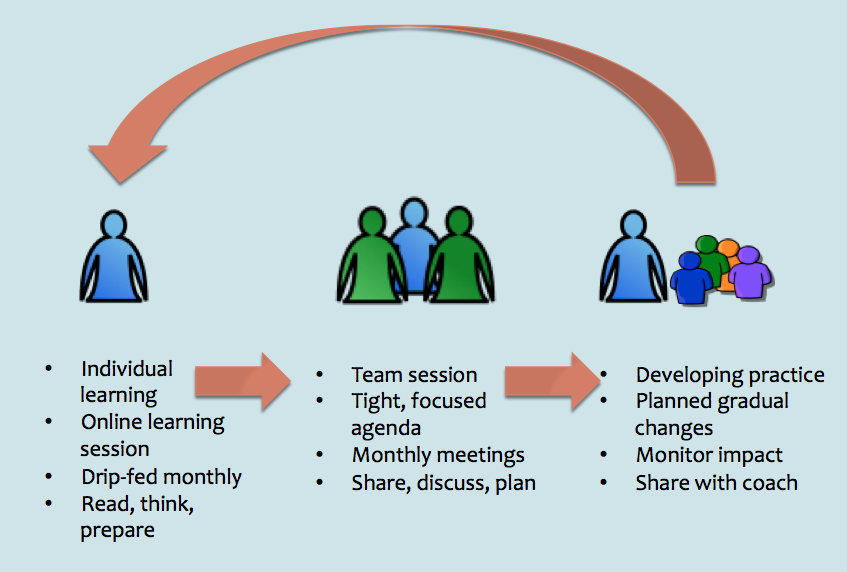
Think of these team meetings as a Teacher Learning Community the essence of which is a small group of teachers who meet together regularly to deepen their understanding of an approach, trying out new things and reflecting on and sharing their experiments with each other.
iv) A ‘teacher learning community’ team session is usually arranged like this…
Introduction to agree aims for the meeting, and quickly offload irritations or frustrations about work that otherwise could hinder the progress of the meeting.
Sharing how things are going Each member gives a summary of what he or she has tried to achieve since the last meeting. Everyone is expected to report back to every meeting. The group question and probe their colleagues’ summaries to encourage analysis and deeper reflection. They use questions such as ‘What do you think is getting in the way? What would make this even better? How could this technique be modified to make it work for you? What do you think made that work so well?’
New learning The middle section of the meeting is where ideas form the Nutshell modules are introduced discussed and decided on. This changing middle section keeps the meetings fresh, but importantly aims to progress the breadth and depth of the approach.
Personal action planning Each member then plans what they intend to try over the next, say, month. This gives teachers time to think and plan in the session itself.
This action planning is essential. It’s really about how teachers are intending to change their practice, try another way of doing something, inject a Visible Learning Routine into their lessons, talk about learning in a more focused way, and so forth. It is these plans, and how they are supported, that are the engines of change.
Review of the meeting
Finally the group reflect on the original objectives of the meeting to see if they have been achieved.
This tight format makes the purpose of the exercise clear and everyone knows what is expected of them.
Meetings such as these have been a prominent feature in many learning powered schools and have helped teachers to share both successes and tricky problems in an atmosphere of trust and commitment.
Operating ground rules.
But apart from the structure it’s a good idea to have some ground rules for such meetings. It’s important in keeping groups both comfortable and purposeful.
Try these ground rules for size and amend at your first meeting to suit your team’s way of working.
Pre-session organisation
All team members to:
Look through the Nutshell materials before a session
bring their previous session’s Personal Action Plan to the meeting
prepare a two-minute input about their lesson experiments to share with the group
In-session climate
Everyone fully engaged in the group
No group member can ‘pass’
Active listening when not your turn
Actively discuss everyone’s input
What is said is confidential to the group
Constructive criticism – developmental not judgemental
No put-downs
Open-mindedness
Respect others’ views and encourage others’ ideas
Post-session activity:
Everyone to undertake their small-scale learning enquiry with a view to feeding back at the next session;
Everyone to undertake the required reading for the next session;
It’s a good idea to review these ground rules occasionally to make sure the team is working well for all its members.
A1. What is the overall purpose and shape of the suite of the eleven Nutshell Phase 1 units?
Once a school has established a commitment to developing students’ learning habits, there is a pressing need to get going, maintain momentum and generate further ideas and enthusiasm.
These online resources answer that need.
The on-line material is designed to;
help teachers explore issues of the what and why of changing their practice and offer practical ideas to try in their classrooms
enable lead teachers to run teacher learning community sessions where staff plan and share their classroom experiments.
The programme kicks off with a key unit about learning friendly cultures. A Culture for Building Powerful Learner ‘ looks at what a learning friendly culture looks, feels and sounds like and how to achieve such a culture. – we recommend that schools start with this module;
There are then:
3 units that relate to shifting classroom cultures to learning friendly
5 units relating to the key learning behaviour of Perseverance and how classrooms need to be if we want perseverance to grow. The content is closely related to what might be described as growth mindset behaviours
The Nutshells Phase 1 programme winds down with an essential unit about reviewing progress, that of teachers’ practice and that of students’ learning behaviours.
Using these materials across all school teams will;
develop team understanding of classroom cultures, learning habits and behaviours and, importantly, how they should develop over time
establish team enthusiasm for refreshing student motivation and learning behaviours
build expertise through guided sessions that stimulate teachers to use the materials and generate their own ideas.
secure a common classroom culture for learning across the school
A2. How do we decide where to start in using the Nutshells Phase 1 units?
Firstly:
Begin by looking at the Culture unit. (A culture to build powerful learners) This unit raises the issue of learning friendly classroom cultures which every teacher and department needs to be familiar with. Only if everyone is encouraged to consider this unit can the school work confidently towards a consistent learning friendly culture across the school. This unit also contains a tool (Culture Tool 1) which will have an influence on which units should be tackled next.
Secondly:
Consider the three units:
Building Active Participation
Building Dialogue and Collaboration
Building Shared Responsibility
These three units can be tackled in any order, and each team might want to tackle them in a different order. However, we suggest that teams work first with the one that is deemed to be needed most. Hints in this direction will have come from considering Culture tools 1 & 2 in the culture unit. Please complete all three before . .
Thirdly:
Work through the information unit
Building progression in Perseverance
for a full and rounded picture of this key learning behaviour in action
This unit is very short and could be combined with one of the following;
Engage students in unsticking their learning
Engage students in rising to challenge
Engage students in managing distractions
Engage students in achieving goals
These can be tackled by the team in any order before . . .
Fourthly:
Spend time on the critical last unit in Nutshells Phase 1
‘Reviewing our Progress’ unit.
Before continuing into Phase 2 it will be important to consider whether what you are doing is making a difference to the classroom cultures, to teachers’ practice and to the students themselves.
You can expect these units to take at least an academic year to fully engage with and derive the benefits of shifting classroom cultures and student expectations. Each unit could take a half term to work through and implement.
3a) Infusing Perseverance into Lessons (Advance organiser)
This Advance Organiser is a little different. Here the materials show you how an ‘infused’ lesson is designed. The resulting lesson is one that you can use or adapt to introduce the idea of growth mindsets.
It is an essential preparation for the Professional Learning Team session in the same course
Session Objectives
By completing the steps in this session you will be able to:
use the given format to plan a Learning Power infused lesson of your own.
use the given sample lesson with your pupils
establish how your pupils view themselves as learners at present
Learning behaviours to help you
notice the essential differences between the BLP planning process and how you plan lessons now
make links between the ideas described and your standard planning format
review your own lesson planning practice
question the practicality of the described methodology
1.Why do we need to infuse learning power into lessons?
There are different ways of designing a lesson on anything with the same content. With the Elizabethan court for example – you could design a lesson to exercise pupils’ ability to accurately transcribe notes and retain information more-or-less verbatim, but another lesson could stretch pupils’ ability to put themselves in the shoes of people with very different views. The same content but a world apart in developing real-world learning habits.
Learning habits form through use and practise, but desirable habits survive and flourish better if pupils are aware of them, realise their value and strive to improve them. The curriculum through its lessons provides the rich and varied occasions for EXERCISING learning habits. What’s more – by infusing learning habits into lessons content understanding is enhanced
The big question for teachers is
Are your teaching habits helping students’ learning habits?”
This session gives you a chance to ask yourself this question, and offers tools for a positive answer.
What do you think?
What strikes you about this explanation of why lessons need to be infused with learning behaviours?
How much of this do you do now?
Make a note of…
any queries about infusion
questions you are asking yourself
your teaching habits
2. Habit change isn’t easy; it doesn’t happen overnight.
When a tennis coach suggests you experiment with a new grip, you often feel awkward, self conscious or even ‘false’ to begin with. You have to work through that feeling, and soon the new way begins to feel quite natural. It is the same with BLP. Being asked to plan a split-screen lesson so that you are simultaneously ‘doing the Tudors’ and ‘stretching their empathy muscles’ can sound strange, and when they first teach such a lesson, many teachers feel that their teaching has become rather stilted or artificial. But such a period of awkwardness soon gives way to a more natural fluency in the language and habits of BLP. And as fluency and familiarity grow, so there is less need to be explicit or ponderous about ‘which learning muscle we are stretching today’.
What do you think?
What strikes you about these thoughts about habit change?
Does that put you off?
Make a note of…
Any positive or negative feelings you might have about changing your teaching habits just now.
3. A turn-around in lesson design.
Learning to be a BLP teacher involves learning to think in two dimensions at once – the content dimension and the learning behaviour dimension. It means turning your thinking around – from teaching to learning. Look at the distillation of these ideas in these two panels.
Or put another way.
What do you think?
What are your first reactions to these ideas?
How is this different to the thinking process you go through now?
Make a note of…
worries
irritations
interesting ideas
4. Putting the ‘turn-around thinking’ into practice.
4.1 Jumping to the heart of the lesson
Let’s just by-pass lesson starters, recalling previous learning, the reflection process and home learning for now and jump to the heart of the matter.
Click on the above image to progress through the slideshow
What has to be achieved or understood by pupils – objectives
By doing what? – task
Using which learning capacities? This is the NEW bit
You already do all the rest!
But it’s this ‘using which learning capacities?’ that will cause you to think differently about the lesson planning.
You ask – as always – what are the anticipated objectives?
The verbs in your resulting objectives will give you clues about the types of task/methodology that will get you there and the sorts of learning behaviours your pupils will need to contribute to this learning endeavour.
You are designing the task in a way that relies on pupils to contribute their learning ‘powers’; muscles, behaviours, call them what you will.
5. Working one through
5.1 The lesson schema.
Click on the above image to progress through the slideshow
Oops! This might look different to your standard lesson planning format. Don’t worry, no need for you to use this format, we are using it so you can see clearly what’s happening.
We’ll build it up bit by bit
Lesson title or sub title and which episode in the lesson
Stimulus on the whiteboard or in reality. Driving questions, resources, objectives, and so on.
What you the teacher will be doing at this point.
What the pupils will be doing at this point.
The learning behaviour you are going to ‘call up’ or activate from pupils to help them reach the learning objectives. The new bit.
How you will be talking – the language you will be using to nudge learning behaviours along. Another new bit.
Time – where you are in the lesson overall.
So, as you can see there are only two new components to think about.
6. Let’s start the lesson proper
In this section we are going to work through planning a learning powered lesson – ie infused with learning power – but where the content itself is about perseverance and growth mindsets. You can use or adapt this lesson with your class; but its function here is to show how a dual focus lesson is made up/planned.
NB. The resources and actual Growth Mindset presentation you can use for this lesson can be found here.
1. Rough cut planning
At this point, before you have thought hard about the outcomes and flow of the lesson, you are jotting down what the lesson will achieve….roughly what you want pupils to achieve
This is something you will revisit later.
2. Beliefs about learning Episode 1
Screen image
The Hook. An intriguing question to make pupils think about learning. You will probably have to say a bit more about learning; where and when it happens, not just in the classrooms and so on.
Teacher Action and Student Action
This first episode is designed to encourage students to think by themselves, about their views about learning, This may be the first time they have ever thought about this. You are inviting them to select which of two statements is most like them. Then in pairs and in 4s to listen carefully to other views and explain their own. Lastly to share these ideas as a class. This may be uncomfortable for some. Respect the fact that not all pupils will want to self-disclose (truthfully) at this point. . It also serves to help the teacher to identify the balance of fixed and growth mindset views in the class, as a prelude to episode 2.
Resource 1 Provocations
Four paired statements describing what pupils might say to themselves about learning, Each pair consists of a negative (fixed) and a positive (growth) statement.
Use either the same pair of statements for all students, or use different pairs of statements for different groups if you wish.
In this episode pupils will be using their social skills of sharing, listening carefully and empathising. NB empathising is about showing understanding of other views not agreeing with them.
Teacher talk
Here we suggest the sort of teacher talk which is designed to nudge the learning behaviours in the right direction, and supportive of the sort of discussion you are trying to orchestrate. This talk will of course be tailored to the age and existing learning behaviours of your group. The examples given in the ‘cloud’ nudge sharing and listening; making sure pupils don’t interrupt each other and listen for the main points.
3. Learning voices. Episode 2
Screen image
Exploring our learning voices.
Teacher and Student Action.
Purpose: To enable students to explore the ‘fixed mindset voice’ that they sometimes hear, and identify which they ‘hear’ most frequently – least frequently. This may be sensitive material for several pupils. Keep the class discussion brief, focused and business like. Don’t get drawn in to any emotional quagmire.
Resource 2
The 10 ‘red’ cards are all fixed mindset feelings. Four relate to how students feel about challenge, three to how they react to setbacks, and three to how they respond to criticism. Give all the cards out (hold the green cards back) and challenge students to rank them from “I often think like this” through to “I rarely think like this”.
Notice what is being ‘said’ and make links to their own feelings about themselves as a learner.
Teacher talk
Suggested ideas for teacher introduction to the PowerPoint slides.
5. Changing minds. Episode 4
Screen image
From the PPT. Presentation Showing VTR “I used to think. Now I think”
Teacher and Student Action
Invite pairs to spend one minute each on using the VTR “I used to think: Now I think.” ie A before the PPt view of what learning & brains were about and a post PPt view. This is to pick up whether any views have changed to being more positive, understanding, hopeful.
Resources
None.
Learning behaviours
In this episode pupils will be using their imagination & self reflection to consider the extent to which their views have changed in the light of the information presented
Teacher talk
Use the opportunity to encourage students to record change in their views and to consider what that might mean for them as learners. This is essentially a revising activity
6. Better ways. Episode 5
Screen image
What can we say to counteract negative feeling about learning?
Teacher and Student Action
In this episode pupils are first of all tapping into good feelings from their new knowledge about learning and thinking what they might say to themselves to counteract their top negative views.
Task 2 is then to try to look at the red cards (negative statements) to see if they can classify into the 3 categories (challenge, setback and criticism) Task might or might not offer pupils the categories into which to sort. This will depend on the maturity of the pupils. Task 3 involves matching the red cards (negative) with the green cards (positive) statements.
In this episode pupils will need to use their questioning capacity (coupled with meta-learning) in understanding their current view of themselves as a learner. Reasoning to try to convince themselves of alternative ways of doing things.
Teacher talk
The statements given range across the tree tasks in this episode – they nudge questioning and some reasoning behaviours. ie things you might say to counteract negative feelings about learning.
Groups – brainstorm ideas for counteracting the high frequency fixed views;
Groups – card sort activity to match fixed and growth statements. Resource 3
7. A resource to remind us. Episode 6
Teacher and student activity
Purpose: To enable students create a learning resource that they can use to remind themselves of what to do when they find themselves taking a negative approach to learning. We suggest this can be any type of resource but that it might be couched in ‘If-Then’ statements (see lesson 2 Using the language of perseverance for further details.)
Resources
As necessary.
Learning behaviours
This episode activates students’ aspects of distilling (getting to the heart of the issues) collaboration, ( particularly agreeing goals and ways of working) and planning ( how to get the job done).
Teacher talk
This needs to be tailored to the age and existing learning behaviours of your group. The examples given nudge collaboration (*2), distilling (*2) and planning (*2).
8. Back to objectives
Having planned the lesson more thoroughly you can now come back to the objectives to make them much more precise and useful.
The set shown here are fairly low level affective and cognitive objectives (using Bloom’s taxonomy) since this is probably the first time your students have met this type of material and thought of themselves in this way. Such material will be more difficult for older pupils to deal with than younger ones.
What do you think?
What do you think about this way of planning a lesson with learning in mind?
Where are the big differences to how you plan now?
Is this a lesson you could use ( or adapt for use) with your pupils
Make a note of…
Ideas that interest you
Things you feel you could do for yourself
Things you might find tricky and would like to talk with others about.
7. Putting the lesson into the wider context
Here’s the lesson story
Big Picture – where the lesson fits into a wider SoW – a holistic context
What the lesson will achieve (objectives, outcomes, success criteria and the like)
How you will connect pupils to previous learning on this topic
The hook – how you will initially engage/interest/make them curious in the subject matter
The activity at the heart of the lesson – where the blending of what and how happens
Reflecting on the process
Reinforcing/transferring through a linked home learning
Look carefully at the seven steps
What do you think?
Can you see how the ‘heart of the lesson’ fits with the wider context of lesson design?
Have you noticed how the running order of the lesson is not the order in which it is planned?
Make a note of…
Any positive or negative feelings you have about planning lessons in this way?
8. Resources you will need if you wish to use this lesson
Summarise your thinking about infused lesson planning for perseverance. List the specific ideas that you wish to try out as a way of extending your classroom practice experiments.
Please bring these noted points with you to the Professional Learning Team Session.
3a) Infusing Collaboration into lessons (Advance organiser)
This Advance Organiser is a little different. The materials show you how an ‘infused’ lesson is designed but here we go a little deeper and include specific aspects of collaboration. The resulting lesson is one that you can use or adapt to develop or assess pupils’ collaborative behaviours.
It is an essential preparation for the Professional Learning Team session in the same course
Session Objectives
By completing the steps in this session you will be able to:
use the ideas to plan a Learning Power infused lesson of your own.
use or adapt the given sample lesson with your pupils
monitor how your pupils behave in a collaborative activity.
Learning behaviours to help you
notice the essential differences between the ‘infused’ planning process and how you plan lessons now
make links between the ideas described and your standard planning format
review your own lesson planning practice
question the practicality of the described methodology
1. A reminder about dual-focused or split-screen lesson design
Jump to section 2 if you feel you understand the design of a split-screen lesson
1a. A turn-around in lesson design.
Learning to be a BLP teacher means learning to think in two dimensions at once – the content dimension and the learning behaviour dimension. It means turning your thinking around – from teaching to learning. Look at the distillation of these ideas in these two panels.
Or put another way…
1b. Putting the ‘turn-around thinking’ into practice.
Jumping to the heart of the lesson
Let’s just by-pass lesson starters and recalling previous learning for now, and jump to the heart of the lesson.
What has to be achieved or understood by pupils – objectives
By doing what? – task
Using which learning capacities? This is the NEW bit
You already do all the rest!
But it’s this ‘using which learning capacities?’ that will cause you to think differently about the lesson planning.
You ask – as always – what are the anticipated objectives?
The verbs in your resulting objectives will give you clues about the types of activities that will achieve the objectives and the sorts of learning behaviours your pupils will need to contribute to this learning endeavour.
You are designing the task in a way that relies on pupils to contribute their learning ‘powers’; muscles, behaviours, call them what you will.
Click on the image below to progress through the slideshow
1c. Working the lesson design through
The lesson schema.
Oops! This might look different to your standard lesson planning format. Don’t worry, no need for you to use this format, we are using it to help you see clearly what’s happening.
We’ll build it up bit by bit
Lesson title or sub title for this part of the lesson
Stimulus on the whiteboard or in reality. This might be a driving questions, a hook, a resource, the objectives, and so on.
What you, the teacher, will be doing at this point.
What the pupils will be doing at this point.
The learning behaviour you are going to ‘call up’ or activate in pupils to help them reach the learning objectives. The new bit.
How you will be talking – the language you will be using to nudge learning behaviours along. Another new bit.
Time –how long this part of the lesson should take.
So, as you can see there are only two new components to think about. (5 and 6) and they are linked together: the learning behaviour being used and how you will talk about it to encourage and nudge its use.
Click on the image below to progress through the slideshow
2. Let’s start the Collaboration lesson proper
In this section we are going to work through planning a lesson that aims to deal with surviving in a desert. To do this we have selected a ranking order type task which will be achieved by pupils using their collaborative behaviours. You could use, or adapt, this lesson with your class to develop collaboration. Alternatively you could use it to monitor pupils’ progress in collaborative skills. Its function here is to show how a dual focus lesson is made up/planned.
The lesson has been structured to bring out various aspects of collaboration.
Episode 1 Noticing detail and a reminder to use teamwork ground rules
Episode 2. Sharing and building ideas
Episode 3. Agreeing a goal and dealing with controversy
Episode 4. Making good decisions in planning and foreseeing obstacles
Episode 5. Assessing individual contributions to the team effort
Episode 6. Assessing team performance
Episode 7. Reviewing team performance in view of knowledge of the experts’ answer
All these aspects of teamwork are taken from the Collaboration Grid
Objectives
In this lesson the teacher is orchestrating the activity – splitting it up into episodes and guiding it along in order to highlight/stretch/provoke particular aspects of collaboration.
But you could run this activity without any structuring, i.e. just set the task, observe the action and let groups know when time is up.
Episode 1 – Setting up the challenge
N.B. We are activating general teamwork conventions here. These are activated through teacher talk
Time 7 minutes
2. Screen image. The hook An intriguing challenge to get pupils engaged. You may want briefly to summarise the task ahead.
3. / 4. Teacher Action and Student Action This first episode is designed to encourage groups to become familiar with the challenge, to begin to think about how they will tackle it, and so resist the temptation to rush into action.
Resources 1 and 2: The learning Challenge – Stranded (R1) and Observation sheet (R2), 1 per group
5) Learning behaviours. In this episode pupils will be using their noticing skills to get under the skin of the challenge and their collaboration skills to identify what the task is about (collaboration purple) and to begin to prioritise action ( collaboration green).
6) Teacher talk:- Here we suggest the sort of teacher talk that is designed to nudge the learning behaviours in the right direction, and supportive of the sort of discussion you are trying to orchestrate. This talk will of course be tailored to the age and existing learning behaviours of your group. The examples given in the teacher talk box nudge students to observe the conventions of group work and to be attentive to detail.
Episode 2 – Possible survival strategies
7) Time 8 mins
2) Screen image – Posing key questions
3/4 Teacher and Student Action. Purpose: To steer students to realise that they cannot begin to rank the relative importance of the items until they have decided together on their strategy for survival – [Walking to the ranch would make the compass and map important, whereas staying put and awaiting rescue would not]. The group activity suggests groups generate at least three possible survival strategies. (Possible strategies could be: go to ranch; stay put; retrace minibus tracks; walk in general direction of hotel; walk to try to find a road . . . . )
(A teaching point – pupils will usually gravitate to the ‘go to the ranch’ strategy, in the expectation of finding people, shelter and water. The unspoken assumption is that it is a working ranch with people at it who can help. To help them to avoid this course of action (which is wrong anyway) you might need to nudge their thinking with comments like ‘what do you actually know about the ranch ?’ and ‘what can you be certain about ?)
5) Learning behaviours: -In this episode pupils will be using their imagination based on information given to generate possible courses of action. In collaboration terms, the team need to share and offer their own views (collaboration purple) and make relevant comments (collaboration blue)
6) Teacher talk:- this needs to be tailored to the age and existing level of questioning behaviours of your group. The examples given in the teacher talk box nudge towards careful consideration of various alternatives.
Episode 3 – What should we do?
7) Time 5 mins
2) Screen image – Time for groups to decide on their strategy
3/4) Teacher and Student Action. Purpose – to require groups to agree on their preferred/agreed survival strategy.
5) Learning behaviours: – In episode 3 students are required to consider the strategies they thought of in episode 2, and to agree which one they intend to adopt. In collaboration terms, they are seeking agreement in setting goals and resolving potential differences of opinion, dealing with possible controversy(collaboration blue and green)
6) Teacher talk:- intervene in groups as and when necessary in order to prompt further consideration and/or to agree a way forward, or ways to resolve conflict.
Episode 4 – What do we need [most]?
7) Time 12 mins – Ensure groups are aware of the time limits in this episode.
2) Screen image – Here groups to identify precisely how they are going to use the items to ensure survival
3/4) Teacher and Student Action. Purpose – to enable groups to plan how they will use the items to give themselves the best chance of survival.
5) Learning behaviours: – In episode 4 groups are required to make good decisions to reach their goal (collaboration yellow) by making links to prior knowledge/experience and by capitalising on the potential uses of the items taken from the bus.
6) Teacher talk:- intervene in groups as and when necessary in order to prompt them to exploit the potential uses of the items.
Watch for how they pull together as a group; how they encourage others to contribute, how they contribute to making good decisions.
Episode 5 – How did I do?
7) Time 3 mins
2) Screen image – Pose the question about individual contributions to the group.
3/4) Teacher and Student Action. The main activity is now finished. Purpose now is to enable individuals to reflect on their personal contribution to, and feelings about, the process. Allow pupils to reflect individually. Could be done as a pair exercise if pupils trust each other. Try to get a sense of how honest pupils are being regarding their contributions
Resource 3 – Post Decision questionnaire, 1 per pupil
5) Learning behaviours: – In episode 5 individuals are required to think about how they have contributed (collaboration purple) to the activity, their feelings about the extent to which a good decision was made and the extent to which their views were respected (collaboration green) .
6) Teacher talk:- intervene only if necessary
Episode 6 – How well did we do as a team?
Time 6 mins
2) Screen image – Time now for observers to feedback on group/individual behaviours and generate evaluative discussion.
3/4) Teacher and Student Action. Purpose – to help groups practise reflecting on their team-working during the activity.
Resource Observing a Learning challenge – stranded
5) Learning behaviours: – In episode 6 the observer/groups will offer/accept feedback on their own and group performance (collaboration blue) and evaluate team effort (collaboration yellow).
6) Teacher talk:- intervene in groups only in order to prompt groups to hear the observer’s feedback with a view to using it to improve.
Episode 7 – What the experts say
Resource – The Learning Challenge: Answer sheet.
Let teams see the experts answer and estimate how close they come to this. Also encourage teams to think about what they might have done differently to achieve a closer answer.
Big Picture – where the lesson fits into a wider SoW – a holistic context
What the lesson will achieve (objectives, outcomes, success criteria and the like)
How you will connect pupils to previous learning on this topic
The hook – how you will initially engage/interest/make them curious about the subject matter
The activity at the heart of the lesson – where the blending of what and how happens
Reflecting on the process
Reinforcing/transferring through a linked home learning
Look carefully at the seven steps
What do you think?
Can you see how the ‘heart of the lesson’ fits with the wider context of lesson design?
Have you noticed how the running order of the lesson is not the order in which it is planned?
Make a note of…
Any positive or negative feelings you have about planning lessons in this way?
Task 1
Summarise your thinking about the infusion of collaboration into the Stranded lesson. List the specific ideas that you wish to try out as a way of extending your classroom practice experiments.
Please bring these noted points with you to the Professional Learning Team Session.
3a) Infusing Questioning into Lessons (Advance organiser)
This advance organiser is a bit different. Here we introduce you to an interesting way to encourage pupils to formulate questions and then show you how this question formation technique can be infused into lessons
This lesson is an essential preparation for the final Professional Team session in this Year 1 programme.
Session Objectives
By completing the steps in this session you will be able to:
Use the Question Formulation Technique (QFT™*) with your pupils
Use or adapt the sample lesson for your pupils
Plan other lessons infused with pupil questioning
Learning behaviours to help you
Notice the essential differences between learning power lesson planning process and how you plan lessons now.
Make links between how you tackle encouraging pupil questioning and the Question Formulation Technique (QFT)
Question the practicality and versatility of the Question Formulation Technique
We have come across an intriguing technique that has been developed by the Right Question Institute over several years. The technique puts pupils into the driving seat of asking their own questions. It helps pupils to learn how to produce their own questions, improve them, and think how best to use them. When pupils know how to ask their own questions, they take greater ownership of their learning, have deeper comprehension and make new connections and discoveries on their own.
The Question Formulation Technique is a step by step process designed to facilitate the asking of many questions by taking pupils through a rigorous process in which they think more deeply about their questions, refine them and prioritise their use. During this process pupils practice divergent and convergent thinking and metacognition (thinking about thinking).
The teacher begins the technique with a sharp enough hook to start the pupils’ questioning process. In brief the process goes like this
The RQI’s Question Formulation Technique
Stage 1: Produce Your Own Questions
Stage 2: Improve Your Questions
Stage 3: Prioritise Your Questions
Stage 1: Produce your Questions
Four essential rules for producing your own questions:
Ask as many questions as you can
Do not stop to discuss, judge or answer the questions
Write down every question exactly as it is stated
Change any statement into a question
Stage 2: Improve Your Questions
Categorise the questions as closed – or open-ended:
Closed-ended questions: They can be answered with yes or no or with one word.
Open-ended questions: They require an explanation and cannot be answered with yes or no or with one word
Find closed- ended questions. Mark them with a ‘C’.
The other questions must be open-ended. Mark them with an ‘O’.
Name the value of each type of question:
The advantages and disadvantages of asking closed-ended questions
The advantages and disadvantages of asking open-ended questions
Change questions from one type to another:
Change closed-ended questions to open-ended.
Change open-ended questions to closed-ended
Stage 3: Prioritise the Questions
Choose your three most important questions:
Why did you choose these three as the most important?
Learning habits form through use and practice, but desirable habits survive and flourish better if pupils are aware of them, realise their value and strive to improve them. The curriculum through its lessons provides the rich and varied occasions for EXERCISING learning habits. What’s more – by infusing learning habits (or meta cognitive behaviours) into lesson content, understanding is deepened and mastery is achieved more comprehensively.
Planning a split-screen or dual focused lesson so that you simultaneously ‘do creative writing’ and ‘stretch their questioning powers’ can feel strange. Don’t worry – it takes time to discard old habits, and even longer to become graceful with new ones! But it starts with having a go and seeing what happens.
A reminder about turn around lesson design
Try thinking in two dimensions at once – the content dimension and the learning behaviour/metacognitive dimension.
Turn your thinking from teaching to learning.
what do pupils need to understand or be able to do? – objectives
which meta cognitive behaviour(s) will best enable this understanding?
what type of task/activity would best enhance and enable this learning?
The second bullet should cause you to think differently about how to design activities because you are aiming to draw pupils fully into the learning process. The activities should ‘make’ pupils use the specific learning behaviour. They will be contributing this to the process and stretching their learning behaviour.
What do you think?
Think back to the last lesson you planned.
What questions did you ask yourself?
How do your questions differ from the 3 above?
Would your lesson be any different using the 3 questions above?
Make a note of…
How your lesson changes when you use the 3 BLP lesson planning questions.
In this session we are using a different template from the one used in the Perseverance and Collaboration modules. This template retains most of the same elements but is more streamlined.
What you do (teacher action)
What pupils do (Student action)
What the learning behaviours being called upon are (learning behaviours)
What you say (commentating) to nudge the learning behaviour along
We have left out the screen image; a small price to pay, we think for a more streamlined and usable format. Our first format was for teaching purposes. Now you know your way around lesson design this simpler format should suffice.
As you can see the new format is still divided into episodes, but only because we want to unpack each episode bit by bit so that you can understand what is happening.
Download a blank lesson plan as a MS Word document: Lesson Planning Grid [.DOC 33KB]
Let’s look at the Questioning lesson proper.
Just look through the lesson below. It uses the rigorous Question Focus Technique (QFT) process, mentioned earlier, to stimulate creative writing.
We observed this lesson being delivered by a Yr 5 teacher at one of our Building Learning Power showcase days at Blakesley Hall Primary School in Birmingham. It caused quite a stir because delegates had never witnessed questioning being ‘taught’ like this before and the questions pupils generated were indeed very impressive!
The objective of the lesson was to use the QFT to generate questions that would inspire and stimulate a piece of creative writing.
Present pupils, in groups of 4/5, with an image in the center of a large piece of paper. Invite them to ask as many questions as they can about the image, following the rules in the pupil action box.
Producing questions Pupils to ask as many questions as possible, using the rules:
a) Ask as many questions as you can; b) Do not stop to answer/discuss the questions; c) Write the question exactly as it is stated; d) Change any statements into questions.
Asking a range of questions. Divergent thinking challenge.
Following a structured process
Guide pupils through the rules, but don’t offer suggestions, comments of approval etc.. Encourage rapid production of questions
What’s happening here?
Time:
Ten minutes
Resource:
An interesting picture secured to a large sheet of sugar paper. 1 per table. This is the Question Focus.
Teacher action:
Invite pupils to generate questions about the picture. Explain the rules.
Pupil action:
The pupils have to generate their own questions using the following rules:
Produce their own questions
As many as they can
Don’t stop, don’t judge, don’t answer the questions
Write each one exactly as stated
Change any statement into a question
Learning behaviours:
Questioning, divergent thinking challenge, keeping to a structured process
Teacher talk:
Not to get involved. Not to be drawn into pupils’ discussions. Not to influence. Simply guide pupils through the the rules.
Phase 2
Teacher action
Pupil Action
Learning behaviours
Teacher talk
Invite students to categorise their questions into open (O) and closed (C). Explain types if necessary.
Improving Questions. Pupils categorise questions as closed or open throughdiscussion
Making Links;Collaboration
What are the advantages of closed questions? Ditto open questions? What do closed/open questions do? Dittoopen?
What’s happening here?
The point here is to improve the questions.
Pupils are asked to categorise questions into open and closed – causing discussion. The teacher may need to introduce a definition of closed and open questions. Closed – can only be answered with yes or no or one word. Open – require and explanation and cannot be answered with yes or no or one word
The teacher then leads a discussion of the advantages and disadvantages of the different types of questions. This causes students to think of the role and purpose of questions.
Phase 3
Teacher action
Pupil Action
Learning behaviours
Teacher talk
Invite pupils to change at least one question from closed to open and vice versa.
Review their questions and discuss what happens when you re-frame them. Identify whether they need to re-frame others.
Checking that the questions will find out. Role of questions and how wording yields certain information. Convergent thinking.
What happens when you change that question? What different sorts of information will it give you now? Which of your questions might need changing?
What’s happening here?
The point here is to appreciate how changing a question makes a difference to the information it yields.
Here the teacher invites pupils to change at least one open question into a closed question and vice versa. This causes students to consider how manipulating the wording of the question can block or yield certain information. The discovery of the nature of questions allows them to think about the enquiry process in a new way. As pupils work on changing the form of a question they think about what they will find out, how it meets their needs. In other words they begin to think convergently
Phase 4
Teacher action
Pupil Action
Learning behaviours
Teacher talk
Challenge pupils to identify 4 or 5 questions. Share the objectives of the lesson and what the questions are for.
Prioritising questions. Discuss and agree on their most useful questions for making a story.
Distilling. Identifying appropriate questions.
Which of these questions are most useful? Which, if answered, would best guide your story?
What’s happening here?
The point here is to look at the relative merits of questions
Pupils are asked to prioritise their questions for the job in hand. This stage is linked to the objectives of the lesson. Prioritisation will differ according to the lesson plan in mind, the nature of the enquiry; the purpose of using QFT.
This causes the pupils to compare their questions and assess which will be most helpful. They also begin to sequence the questions; which would need to be answered first before others could be even considered. Looking at the sequential nature of the questions – in this case to for a story – offers a possible storyline. Used in a different context gives rise to a more focused enquiry.
Phase 5
Teacher action
Pupil Action
Learning behaviours
Teacher talk
Invite pupils to use their questions (and the answers that they create) as a stimulus for a piece of creative writing. Use Story Mountain as planning tool.
Story to be written in next lesson.
Using the questions. Work together to place their top questions on the Story Mountain planning tool (Introduction, Build Up, Problem, Resolution,Ending).
Making Links, collaborating to seek consensus.
Which bit of the story mountain will the answer to this question apply to? Are there bit(s) of the Story Mountain with no question attached? Can you find a question from your brainstorm to fill in any gap(s). How will you agree on the best questions?
What’s happening here?
The point here is to work out how best to use the questions informed by the prioritisation process
In this case for a story. This is now more familiar territory. In this lesson the pupils began to arrange their questions on a Story Mountain planning tool.
The story was to be written during the next lesson
Phase 6
Teacher action
Pupil Action
Learning behaviours
Teacher talk
Give pupils time to consider, individually,howtheywould answer theirquestions.
Pupils work individually to think up answers to their questions for writing their story later.
Imagination, planning, makinglinks.
Close your eyes – what can you see? What are you feeling? What can you hear? Are your answers beginning to link together? How are you planning to begin and end your story? What would you, as the reader, like to know?
Phase 6 in this lesson was used to have pupils thinking up/imagining answers to their questions in readiness for writing their story in the next lesson.
Phase 7
Teacher action
Pupil Action
Learning behaviours
Teacher talk
Reflection invite pupils to think about what and how they have learned…about questioning and about story content.
Pupils to reflect on the process. What they have learned, which was the most useful bit of learning for them.
Reflection, meta-cognition, divergent and convergent thinking.
What do you know now about questions that you didn’t know before. How might you use this again?
What’s happening here?
The point here is to reflect on the precess of generating, improving and prioritising questions.
The teacher guides a discussion about what pupils have learned. how they have learned, what is different about what they know now than at the start of the lesson, how they can use what they know now in terms of content and questioning skills. Here the pupils are engaged in thinking about their thinking and learning process( metacognition)
Lastly they might be asked to name the most important thing they learned.
More about this technique
There is much more detail and sophistication to this technique than we have been able to show here. It has multiple uses across the curriculum. It’s an ideal problem solving tool.
The technique provides:
A clear disciplined structure
Open space for different student and learning and talking styles
Respect for student ideas and ability to work together
High expectations that students can think at very high levels
It will take several go’s at it to begin to reap real benefits but such benefits are well worth the wait. In their book ; Make just one change Dan Rothstein and Luz Santana report that pupils themselves recognised three categories of change in themselves;
better understanding of content
increased confidence, becoming self started, more engaged, take ownership of their learning.
developed lifelong thinking skills
We would urge you to buy their book, learn more about the process in detail and try the ideas with your pupils.
Task 1
Bring one idea for where and how you might use the Question Formulation Technique to the next Professional Learning Team session to share with colleagues.
Please bring any noted points with you to the Professional Learning Team Session.
*QFT™ is a Trademark of The Right Question Institute
This module is about how teachers can link the content to be acquired with the learning behaviours that are being exercised so that the content is acquired more effectively and the associated learning behaviours are stretched and developed, each to mutual advantage. This is because:
Lessons generally are intended to convey some content – be it knowledge, skill, or understanding.
All lessons and the embedded tasks and activities, whether by accident or design, stimulate a range of learning behaviours. This is true whether or not the teacher, or the learners, or both, are aware of this.
This module, ‘Building Learning into Lesson Design’, is intended to help teachers to become increasingly aware of the learning behaviours that will be activated by their teaching, and to consider how these behaviours can be most effectively built into lesson design and delivery so that students become increasingly aware of the learning behaviours they command, are using, and growing.
“Whether we realise it or not, all lessons have a dual purpose, irrespective of the age and ability of the young people or the subject being taught. There is a content dimension, with some material to be mastered, and there is an ‘epistemic dimension’ with some learning skills and habits being exercised. The risk in conventional classrooms, where the teacher remains the focus of attention and the initiator of all activity, and where the epistemic dimension is not acknowledged or made explicit, is that students can be learning habits of compliance and dependence, rather than curiosity and self-reliance. Where teachers are making conscious choices about what habits they will introduce and stretch in the course of a lesson, we call this split screen, or dual focus, lesson design” (page 93)
The very first sentence is the important one – Whether we realise it or not . . .
It reminds us that learning behaviours happen, even if we do not intend that they do, even if we have not planned for them, even if we are unaware of them, even if students are unaware of them. The contention of this module is that learning behaviours are strengthened when students are aware of the behaviours that they are using and are afforded opportunities to reflect on how well they are using them. For that to happen, teachers need to be aware of the behaviours that their lessons are likely to stimulate and to plan opportunities for reflection on the content that is being acquired, on the learning behaviours that are being exercised and strengthened, and on how the content acts as the vehicle for exercising the learning behaviours while the learning behaviours enhance the content understanding.
Content of the module
This session is designed to guide you through a process of better understanding, assessing and improving your lesson and task design.
It invites you to reflect on and clarify the language of learning intentions, and to consider how learning can be infused into lesson design to assist students in both acquiring the content and becoming increasingly aware of the learning behaviours they are exercising and growing.
Work through sections 1 – 4 where you will consider:
The overview of the module: why lesson content needs learning behaviours
A survey of the language around learning intentions, goals, success criteria et al: clarifying the language around aims, objectives, intentions etc etc
Infusing learning into lesson and task design: how to blend content with learning behaviours
Team reflection and planning. Share the results of your culture analysis with colleagues and plan what you all need to do first.
We are awash with terms for what students are expected to learn, how they are expected to learn it, why they are expected to learn it, and what they will be able to do once they have learned it. Some are made public in the classroom, some are not. Some are understood by the teacher only, others by students also. Some are motivating, others less so. Let’s start by surveying the language of ‘intended learning outcomes’ – or whatever your school calls them !
This section contains an introduction to twin focused lessons, followed by three strategies for building learning into lesson and task design:
The first – Split Screen Teaching, Making a Start – is, as it says, a useful place to start. It gets teachers thinking through the types of learner behaviours that will be triggered by the planned lesson.
The second – Moving from Split Screen teaching to Infusion – is about weaving content and learning behaviours together to mutual advantage, with knock-on effects in lesson and task design.
The third – Building Progression into Infusion – is about using progression maps to further refine lesson and task design.
BECAUSE MANY OF THE SECTIONS ARE QUITE LENGTHY, THEY NEED TO BE BROKEN UP AS OVERVIEWS AND SOME ‘READ MORE’ SECTIONS.
THIS WON’T WORK WITH TAB BOXES IF THE TAB BOXES ARE ALREADY NESTED IN A SECTION THAT IS ITSELF TOGGLED
COULD BE THE ORANGE ARROW STYLE, COULD BE LIKE SCOTTISH FORMAT (IE A SEQUENCE OF TAB BOXES, ONE FOR EACH SECTION, EACH WITH A PICTURE TO SEPARATE THE SECTIONS), COULD BE THE ‘ENGAGING IN STUCKNESS’ STYLE OF SECTIONS AND SUB SECTIONS (BUT DON’T KNOW HOW TO CREATE THE STRUCTURE FOR THE LATTER.)
MY P51 RE-WRITE BELOW
BLP is a tapestry of activities on the part of both teachers and students. The warp of Learning Power is made up of emotional engagement, cognitive range, social interaction and strategic responsibility, and their seventeen sub-strands. And these are being developed and woven together by the weft of all the different methods that teachers have at their disposal: the ways in which they subtly move responsibility for learning towards the learner; the language they use and the explicit attention they pay to the ‘how’ of learning; the activities and tasks that they design and make available; the ways in which they convey the true purpose of the classroom to build better learners. To begin with it is useful to focus on these strands, but soon the overall design begins to appear in the tapestry – and then it turns into a magic carpet that enables students to fly to greater learning heights than might have been dreamed possible.
Foreword: Why lesson planning and task design needs to change
Lessons generally are intended to convey some content – be it knowledge, skill, or understanding.
All lessons and the embedded tasks and activities, whether by accident or design, stimulate a range of learning behaviours. This is true whether or not the teacher, or the learners, or both, are aware of this.
This module is about how teachers can link the content to be acquired with the learning behaviours that are being exercised so that the content is acquired more effectively and the associated learning behaviours are stretched and developed, each to mutual advantage.
This module, ‘Building Learning into Lesson Design’, is intended to help teachers to become increasingly aware of the learning behaviours that will be activated by their teaching, and to consider how these behaviours can be most effectively built into lesson design and delivery so that students become increasingly aware of the learning behaviours they command, are using, and growing.
“Whether we realise it or not, all lessons have a dual purpose, irrespective of the age and ability of the young people or the subject being taught. There is a content dimension, with some material to be mastered, and there is an ‘epistemic dimension’ with some learning skills and habits being exercised. The risk in conventional classrooms, where the teacher remains the focus of attention and the initiator of all activity, and where the epistemic dimension is not acknowledged or made explicit, is that students can be learning habits of compliance and dependence, rather than curiosity and self-reliance. Where teachers are making conscious choices about what habits they will introduce and stretch in the course of a lesson, we call this split screen, or dual focus, lesson design” (page 93)
The very first sentence is the important one – Whether we realise it or not . . .
It reminds us that learning behaviours happen, even if we do not intend that they do, even if we have not planned for them, even if we are unaware of them, even if students are unaware of them. The contention of this module is that learning behaviours are strengthened when students are aware of the behaviours that they are using and are afforded opportunities to reflect on how well they are using them. For that to happen, teachers need to be aware of the behaviours that their lessons are likely to stimulate and to plan opportunities for reflection on the content that is being acquired, on the learning behaviours that are being exercised and strengthened, and on how the content acts as the vehicle for exercising the learning behaviours while the learning behaviours enhance the content understanding.
Welcome to xxxxxxxx ?
This session is designed to guide you through a process of better understanding, assessing and improving your lesson and task design.
It invites you to undertake some rich activities in the form of observations and learning experiments in your classroom, helping you to organise your own discoveries and extend your own understanding of the power a learning culture has in building pupils’ learning habits.
Work through sections 1 – 4 where you will consider:
About cultures and learning. Unpick the meaning of classroom cultures, what they might consist of and how they develop to better nurture learning.
Going deeper into a learning culture. Using a learning power culture instrument to assess where your classroom culture is now.
Readying your culture for learning; Initial activities, routines and talk. Look for ideas to strengthen your learner/learning classroom culture.
Team reflection and planning. Share the results of your culture analysis with colleagues and plan what you all need to do first.
Every good teacher is in the habit of planning lessons around the delivery and development of subject specific learning objectives. Too often, what pass for learning objectives are no more than statements of what will be covered during the lesson and what students will have been required to do.
Learning objectives should be concerned with the statement of what will have been achieved and understood by the end of the lesson or unit of learning. In other words, what students will be able to do as a result of their own efforts and the teacher’s effective management of learning.
Learning objectives are sometimes called goals or outcomes or learning intentions. Whichever word is used learning objectives are about what is to be learned, the bit of the curriculum that’s being focused on.
Learning objectives are:
Broad statements
General intentions
Describe what is to be learned
Connect to “big ideas” and prior learning
Often not measurable
But how will we know we have achieved the goal or outcome or objective?
● What shall we count as success ?
● How shall we know we are on the way ?
● What detectable difference do we expect to see?
These questions point to the need for success criteria or ‘what a good one looks like’. Success criteria describe and illuminate the learning objective and can be used to assess progress; they put flesh on the bare bones of a learning objective. Identifying ‘what a good one looks like’, enables students to glimpse the future and think about the upcoming learning journey. Whereas learning objectives tend to outline what is going to be learned, success criteria should describe how well you will be able to do once the learning objectives have been achieved.
Success Criteria are:
Specific
Concrete
Describe what success looks like when the learning goal is reached
Measurable
Rather than presenting learning objectives aridly to students at the beginning of lessons, enable them to realise what the objectives are and how they apply specifically to their individual learning needs. Many of the suggestions in this unit aim to do just that.
The world of goals is flush with terminology which is used indiscriminately, interchangeably and often confusingly. Before anything else it would pay to get the language of goals sorted throughout the school, with everyone using the same terminology in the the same way and to mean the same thing.
Flipping the emphasis in how goals are expressed
Getting student buy-in to goals
Setting a goal that the learner has little or no motivation to achieve is unlikely to lead to success. What is needed is learner buy-in to goals.
Evidence shows that goals that relate to doing something (or researching something, or creating something . . . ) are better motivators than goals that relate to knowing something or passing / doing well in a test.
Putting the ‘how’ before the ‘what’.
So – a goal relating to ‘understanding xxxxx’ or ‘knowing yyyyy’ is less likely to motivate a learner to make the effort than a goal that starts with some indication of the sort of ‘effort’ or way of doing something;
work with a partner to decide why…….
use your problem solving skills to work out……
use your imagination to ….
Where ‘knowing goals’ place the emphasis on the successful acquisition of knowledge or creates a pass/fail scenario, the ‘doing goals’ focus on how – something to do rather than something to know.
Have a look at some real examples just to give you a flavour of this technique
With a partner, use your reasoning skills to explain why all prime numbers, with the exception of 2, are odd.
Use your noticing skills to identify three similarities and three differences between these two images.
By using what you already know and your imagination to generate ideas, tell the story of the fire of London from the perspective of a young child living in London at the time.
What you are doing here is beginning to pay some attention to how students will be learning as well as what they will be learning. This linking of how and what will come to play a central role in building students learning power later in your learning journey.
Goals and Motivation – how each needs the other
A goal without the will is wishful thinking. Will without direction leads to meandering and rapidly fading interest. The goal needs motivation if it is to be realised, motivation needs the goal if it is to remain focused.
Research shows that performance related goals are less likely to engage and motivate than are learning related goals. Goals that relate to knowing stuff or achieving particular outcomes (like a target grade) – performance related goals – are less motivating than goals that relate to being able to do something – learning related goals. Whereas performance goals provide hurdles to be overcome, leading to a focus on ability as defined by one’s hurdle jumping skills, learning related goals encourage effort where success is defined by the sort of effort deployed rather than the height of the hurdle that is cleared.
(This begins to explain why ‘split screen‘ or infused teaching has both motivational and meta-cognitive benefits for learners.)
Creating Success Criteria
Success Criteria, which should be closely tied to the learning objectives / intentions, are specific, concrete and measurable. They describe what success will look like when the learning goal has been reached. In other phases, these are generally determined by teachers and shared with learners, but at this phase the learners themselves can be entrusted, on occasion, to determine their own.
Students at this phase should be encouraged to design their own success criteria, and to assess their own learning against these criteria. It is dependent on students having a reliable sense of standards – it is unlikely to be within the grasp of a learner who does not as yet have a secure sense of ‘what a good one looks like’, or a learner who is happy with ‘good enough’.
needs a reflection activity here, or at the end of each of the tab sections
This section contains an introduction to twin focused lessons, followed by three strategies for building learning into lesson and task design:
The first – Split Screen Teaching, Making a Start – is, as it says, a useful place to start. It gets teachers thinking through the types of learner behaviours that will be triggered by the planned lesson.
The second – Moving from Split Screen teaching to Infusion – is about weaving content and learning behaviours together to mutual advantage, with knock-on effects in lesson and task design.
The third – Building Progression into Infusion – is about using progression maps to further refine lesson and task design.
Use the tabs to explore each strategy.
Introduction to twin focused lessons
Setting goals with learning in mind
Lessons have two key purposes: the first is to enable learners to acquire some knowledge, skills or understanding; the second is to activate the use of a range of learning behaviours in order to access the knowledge/understanding or to practise the skills. This has been true for all time whether or not the teacher (or learners) are aware of the learning behaviours that are being invoked.
In a learning powered lesson, the difference is that the teacher has thought through the learning behaviours that are necessary for successful content acquisition; the design of activities /tasks that will stimulate these behaviours; how learners might be made aware of these behaviours; how learners might be enabled to reflect on and evaluate their use of these behaviours. In other words, the goal of the lesson has both a content and a learning dimension.
In planning terms, the teacher has made a shift from thinking ‘what do I have to teach and how am I going to teach it ?’ to ‘what do I have to teach, how will they best learn it, and how am I going to teach it ?’
Infusing learning with content in lesson design
Lessons have two key purposes: the first is to enable learners to acquire some knowledge, skills or understanding; the second is to activate the use of a range of learning behaviours in order to access the knowledge/understanding or to practise the skills.
Often the knowledge, skills and understandings are determined by the curriculum – it is the ‘what’ of learning. Teachers frequently have little latitude in this as curriculum plans generally reflect an agreed orthodoxy about ‘what’ should be taught, and often this is what is necessary for examination success. The ‘how teachers teach’ bit is less closely prescribed, although again there are standards of classroom practice coupled with expectations of ‘what good teachers do’ that combine to determine teaching behaviours.
However teachers do have relative flexibility over the activities that they design for learners to access the content of the lesson – one teacher might offer an explanation to illustrate a certain point, whereas another might achieve the same outcome through encouraging learners to read, summarise and discuss some text. Neither activity is necessarily preferable to the other, so long as the underlying intention of enabling understanding is realised. But the teacher-led explanation does stimulate a different blend of learning behaviours from the read/summarise/discuss strategy.
Sometimes it is the nature of the content and/or the subject that determines the learning behaviours that will be exercised in the lesson – it is hard to conceive of many maths lessons, for example, that will not at some point require learners to exercise their Reasoning skills; similarly most PE lessons require aspects of Collaborative learning etc etc.
Sometimes it is the activities that the teacher designs and the ways that learners are encouraged to undertake them that determine the blend of required learning behaviours.
Mostly it is a combination of the two – the subject / content and the design of the learning activities together drive the learning behaviours exercised.
This is true whether or not the teacher has thought through or recognised the learning behaviours that their lesson will exercise, and whether or not the learners are aware of the learning behaviours they are using.
It follows that all lessons are functioning on two levels, that they have twin intentions. On the one hand there is content to be acquired, and on the other there are learning behaviours to be exercised in pursuit of this content. The factor that differentiates a standard lesson that effectively ‘delivers the content’ from a learning powered lesson is that the teacher has also considered, in advance:
the learning behaviours that are necessary for successful content acquisition;
the design of activities /tasks that will stimulate these behaviours;
how learners might be made aware of these behaviours;
how learners might be enabled to reflect on and evaluate their use of these behaviours.
Consider, for a moment, intended learning outcomes, learning objectives, call them what you will:
There are many schools where there is an orthodoxy about sharing such objectives at the outset of the lesson. Often written by the teacher, sometimes copied down by the learners (why ?!!), the intention is to frame the upcoming lesson, to tell learners what they will be learning. In a well-balanced lesson, whether it has been learned is reflected on at review points or in a lesson plenary;
This may not always be the best course of action. Sometimes it spoils the surprise, and discussion about what is being learned might be better placed later in the lesson. However it is generally agreed that it is essential that at some point in the lesson what is being learned about and why should become public. Whether this is teacher led or learner generated is not important, but public it needs to become;
But what of the other aspect of this twin focused lesson, the learning behaviours that are required to effectively access the content ? If it is important that learners know what they are learning, why is it not equally important that they understand how they will need to be as learners in order to access the content ? And, of course, if the how of learning is to be included in learning objectives, it will equally be reflected on during review points or plenaries.
Adapting learning objectives to include both the what and the how of learning is not difficult. For example ‘To understand the push and pull factors relating to migration’ becomes:
‘To work with a partner to research the push and pull factors relating to migration’ or
‘To use your Imagination and Empathy skills to consider why people might feel the need to migrate in order to understand the push and pull factors relating to migration’ or
‘To use your Distilling skills to . . . .’ or
‘To make links between . . . .’ etc.
The learning behaviour, of course, depends mostly on the activities that the teacher has designed coupled with the inherent conflict of the push/pull dilemma.
In addition to the content to be explored, the key learning behaviours are signalled, they drive the learning forward during the lesson, and they are reviewed / evaluated at the review point(s).
Split Screen Teaching – Making a Start
Teachers becoming aware of the learning behaviours that will be triggered . . .
Consider a lesson that you have recently planned and delivered. It does not need to be one of your very best – any lesson will do. Ask yourself – which learning behaviour(s), if missing, would have made this lesson impossible for students to be successful ?
For example:
1) The lesson is about watching a You Tube clip about something, and making notes on the most important messages. This would be an impossible task for the students with poor listening and noticing skills who are unable to decide what is, and what is not, important. The activity requires, in BLP terms, Listening, Noticing and Distilling.
2) The lesson is about writing a story from the perspective of someone else. This would be an impossible task for students lacking the ability or inclination to see the world from someone else’s point of view. The activity requires, in BLP terms, Imagination and Empathy.
3) The lesson is a team challenge about designing and making a tall tower strong enough to support a given weight using only paper and sellotape. This is an impossible task for students lacking the ability to think ahead or to refine their plans in light of experience. The activity requires, in BLP terms, Planning and Revising.
4) Here is a real lesson plan. (Leanne to provide a plan that requires problem solving, but with no mention of reasoning). Which learning behaviour(s) do you think are essential for success ? Which one(s) would you select ?
However these lessons also imply the need for other, more basic, learning skills. All require students to persevere to achieve a satisfactory outcome and to make links to what they already know, lessons 1 and 2 require basic literacy skills, lesson 3 requires students to work together. These skills are more generic and a pre-requisite for success in almost all lessons of any type.
But beware –
sometimes the necessary learning behaviours are a function of ‘what’ is being studied (for example, it is difficult to conceive of many Maths lessons that do not require students to be logical and methodical at some point);
sometimes the learning behaviours arise from the activities that the teacher has designed (for example, a lesson that builds in taking time to decide what needs to be done requires students to exercise their planning skills, whereas the teacher who gives students a plan to follow does not enable these planning behaviours);
but usually it is a combination of the two – behaviours that sit well with the subject plus behaviours dictated by the chosen activities/tasks.
Students becoming aware of the required learning behaviours . . . .
At the simplest level, the teacher might just signal the behaviours necessary for success without making any further adjustments to the planned lesson. So
Lesson 1 becomes ‘Use your Listening, Noticing and Distilling skills to . . . . ‘
Lesson 2 becomes ‘Use your Imagination and Empathy skills to . . . ‘ etc
One school has a display in each classroom and the teacher simply draws students’ attention to the ones that will be required for success. (Of course, this assumes that students already understand the school’s chosen language for learning)
But be careful – try to identify only two or three learning behaviours at most, and make sure they are the ones that are specific to the content of the lesson and/or to the types of activity you have planned. Avoid referencing the generic underlying skills, like Perseverance or Managing Distractions, wherever possible.
What do you think?
Think back to a lesson you have recently taught. Look carefully at the lesson plan. Which behaviours, if missing, would have prevented students being successful ? Are these the behaviours that successful learners actually used ? Are these the behaviours that unsuccessful learners failed to engage ?
Now consider a lesson you have planned but have yet to teach. Which behaviours do you think will be essential for success ? (Remember, no more than 2 or 3 !) How will you make students aware that these are the behaviours that they will need to employ ? After you have taught the lesson, reflect on whether these were indeed the key behaviours.
Moving from Split Screen Teaching to Infusion
The relative simplicity of the previous section entitled ‘Split Screen Teaching – Making a Start’ is just that, a good place to start. It helps the teacher to begin to look at lesson design through the lens of learning behaviours rather than teaching behaviours. But it is little more than identifying and signalling related learning behaviours. Lesson design is broadly unchanged, beyond a few tweaks to the intended learning outcomes.
So, having identified the related learning behaviours, how might lesson design be affected beyond the potentially tokenistic addition of ‘Using your Listening/Noticing/Distilling (etc) skills’ to learning objectives ?
A turn-around in lesson design:
need stuff here from 9 thinks, from stage 3 below, from heart of lesson design.
Stage 3 – The content and related learning skills are signalled, and the skill is central to the delivery of the lesson. The pupils are aware of using the skill to help them to access the content more easily. Pupils are helped to reflect on how they are getting on with developing their skills, habits and attitudes as learners, and how they might improve.
The learning skill is signalled, related to content, drives the learning (fits the objective) and distilled.
Stage 3 is the target – content and process developing hand in hand.
Stage 3 infusion – is where we are aiming. Related skills that drive the content learning forward, where the content and the learning process work hand in hand. The content is the vehicle for exercising the learning behaviours, and the learning behaviours accelerate and deepen the content acquisition. Warp and weft, as Guy describes it (BLP in Action, p51)
MY P51 RE-WRITE BELOW
BLP is a tapestry of activities on the part of both teachers and students. The warp of Learning Power is made up of emotional engagement, cognitive range, social interaction and strategic responsibility, and their seventeen sub-strands. And these are being developed and woven together by the weft of all the different methods that teachers have at their disposal: the ways in which they subtly move responsibility for learning towards the learner; the language they use and the explicit attention they pay to the ‘how’ of learning; the activities and tasks that they design and make available; the ways in which they convey the true purpose of the classroom to build better learners. To begin with it is useful to focus on these strands, but soon the overall design begins to appear in the tapestry – and then it turns into a magic carpet that enables students to fly to greater learning heights than might have been dreamed possible.
Building progression in to Infusion
previous section, but with fine grain skills drawn from progression grids as the drivers
#3 Learning Power Tools: equipping learners to achieve learning intentions
Learning-power tools to build mastery goals
If we want young learners to strike out and achieve curriculum goals we need to alert them the tools to do just that. i.e. knowledge, understanding and improvement of their learning behaviours.
Younger learners need physical prompts or hooks for many invisible concepts including learning. Several schools use physical tools since tools are what adults use to help out with many jobs. Tools help children to connect with the idea of their learning powers in a tangible way.
Use real toolboxes from a DIY shop and gather items to represent just some of the learning capacities i.e. those that you are particularly wanting younger children to use each day. For example;
a blindfold for managing distractions
a magnifying glass for noticing details.
a plastic hammer for perseverance.
a giant key for collaboration.
a notebook for planning
Introduce the items to the children one at a time as the learning behaviour it represents fits with a part of the classroom culture you want to strengthen. Later ask children ‘Which learning tools will we need to help us today?’ They are soon able to go and fetch the notebook that represented planning before going outdoors to build a rocket.
is a question that children rarely know the answer to. The most common answer is ‘because my teacher told me’. Children do things on the whole without knowing why. They inhabit a classroom environment whose purpose is activity but don’t know the reason for the activity.
If we want our students to take on learning goals as their own we need to broaden their thinking about why they are doing something. Broaden their perception by seeking to identify the purpose of our thinking and learning.
Discuss things like;
what are we trying to do
what do we want to end up with?
why are we doing this?
what is its purpose?
what else will it help us to do?
would it matter if we couldn’t do this? Why?
Then move into planning mode
Displaying success criteria for mastery goals
A focus on listening should lead to students creating success criteria for good listening. Here they are displayed as listening prompts to aid classroom discussion
What would you add?
How would you rephrase or up-grade these for your students?
Pay attention. Focus on the person and what is being said
Don’t get distracted by other things around you
Show you’re listening by saying uh-huh or nodding your head
Keep quiet while the other person’s talking
Wait to ask a question or give comments that show others that you care about what they’re saying.
[/dropshadowbox]
#2 Sharing curriculum plans
Every classroom in Cadland Primary school has two walls dedicated to curriculum plans, one for maths and one for literacy. The purpose of these displays is to show the stages of what might be termed a unit of work showing;
what the objectives are,
what the success criteria look like;
what the stages of the process consist of
what will be/ is being done at each stage.
prompts about the new things being learned
what the end result might look like
These lively plans are talked about and added to as the class progresses through them. Learning power behaviours are added at each point in the plan. Now students are not only aware of the what they are learning about but the learning behaviour, the how, they will be using to help them get to grips with the content.
These broad brush descriptions of the learning behaviours being used is a first stage in coupling content with process, the what with the how of learning.
The first photograph shows the learning behaviours they anticipate using as they move through the unit. The second photograph shows a reflection on the learning behaviours used and what this accomplished.
Not sure what to do with this yet.NEED TO READ THIS CAREFULLY AND SEE IF ANY CAN BE USED ACROSS THE WHOLE UNIT
GREEN
#4 Link goals to the real world
SOMETHING ON ADDING ‘SO THAT’ WHICH GIVES A REAL PURPOSE TO TH GOAL
Scottish schools are more fortunate than many others in having, in CfE, a curriculum that pays balanced attention both to the higher purposes of educating young people for their future lives, and to the more obvious classroom business of curriculum areas with knowledge and specific skills to be inculcated and acquired.
“Our aspiration for all children and for every young person is that they should be successful learners, confident individuals, responsible citizens and effective contributors to society and at work.”
These four purposes of the curriculum are further exemplified as a range of attributes and capabilities.
But keeping the balance is always challenging. The ever-present pressure of the day-to-day, plus eventual qualifications, can squeeze out attention to the longer-term, higher-order learning and skills.
Yet the two sides can work synergistically instead of competitively, in concert rather than in conflict …
But how?
The development of a set of valuable learning habits, that are seen as essential for learning, life, work and citizenship, has implications not only for ‘what’ is taught and learned but, more importantly, ‘how’ it is taught and learned. Schools and teachers are keen to help realise the four purposes, but seek greater clarity on the practical implications of keeping the balance right. They ask:
What do we need to do differently to fulfil these purposes?
How do we create a blend of the ‘what’ with a more expansive ‘how’ of the curriculum?
Is it possible to do this in the time available and still improve standards?
How will we know whether any changes we make are successful?
An enabling approach that schools and teachers could use to deliver the CfE promise is known as Building Learning Power, which aims to put the ‘how’ of learning at the heart of education and assist learners to be the best they can be.
There is just a lot of learning for a young person to get through in their school career — but powerful learners can expect to learn more, faster, and more thoroughly. Which, by the way, also helps with the ‘outcomes’ side of the curriculum balance.
This set of resources aims to sketch out a practical learning power approach to keeping the curriculum in balance while fulfilling the CfE promise.
Some teachers’ views and concerns about the four purposes.
In conversation with teachers in Scotland, we hear a consistent attitude to these 4 capacities – broad approval, but concern about how to achieve it. It is these persistent concerns that have motivated and emboldened us to offer the ideas embedded in this resource.
“Who would not want their students to be successful, confident learners who contribute effectively and responsibly?”
“The problem is that while I buy into the idea, my students are not as successful, confident, responsible or effective as I would like”
“It’s a bit like apple pie and motherhood – what’s not to like? The problem is that we have no idea how to help our students become more like this!”
“I get good results with my kids, but I am not convinced that they are becoming more proficient [in these 4 capacities].”
“Why has the Government not given any indication of what ‘getting better’ at being a confident individual, for example, looks and feels like? How can we know if our efforts are bringing about the outcomes we desire?”
Building Learning Power puts at the heart of education the development of psychological characteristics that are judged to be of the highest value in young people growing up in a turbulent and increasingly complex world. There are two main parts to the approach:
A: a model of a learner and learning, in terms of a set of characteristics that work together to make a person a highly capable learner; we use ‘learning power’ to describe the effect. [The Supple Learning Mind]
B: a view of the kind of pedagogy that will nurture and strengthen the learning characteristics in young people. [The Teachers’ Palette]
These are bound together by the fundamental idea that ‘learning is a learnable craft’, and by explicit, detailed discussion of how learning works, supported by a rich repertoire of words and actions.
A. The Supple Learning Mind
The Supple Learning Mind framework, originally conceived and researched by Professor Guy Claxton, reveals learning as a complex process that isn’t just about thinking and having a good memory; it includes how we feel, how we think, how we learn with and from others and how we manage the process of learning. It gives the beginnings of a learning language that helps teachers think about how learning behaviours enable students to grow as learners and tackle the curriculum more profitably.
B. The Teachers’ Palette
The Teachers’ Palette provides an overview of aspects of a learning-friendly culture that combine to create the seedbed for building powerful learners. It includes the types of teacher actions that create the conditions necessary for such learning to become habituated – how teachers relate to students, the language they use, the types of tasks they design, and the things they celebrate and value; their teaching mindset.
The Supple Learning Mind framework of high value learning behaviours.
… captures each of the domains of learning:
The Emotional domain of learning (feelings) in order to build Resilience.
The Cognitive domain of learning (thinking) in order to build Resourcefulness.
The Social domain of learning (relating) in order to build Reciprocity.
The Strategic domain of learning (managing learning) in order to build Reflectiveness.
The Teachers’ Palette
Learning-friendly cultures systematically cultivate habits and attitudes that enable young people to face difficulty calmly, confidently and creatively. This often means moving the focus from what teachers do to a focus on what learners do. Moving from a focus on product and performance to a focus on the process of learning. It’s a gradual, sometimes difficult, but hugely worthwhile process of culture change by schools and habit change by teachers.
‘Culture’ concerns the details of the micro-climate that teachers create in their classrooms. What they do and say, what they notice and commend and what they don’t, what kind of role model of a learner they offer: all these are of the essence. And what really matters is how they design and present activities so that, over the course of a term or a year, their students are cumulatively getting a really good all-round mental work-out. All the learning bits of their brains are being stretched and strengthened, one by one and all together.
For learners it’s a place where their role changes from receptivity to activity:
they collaborate and talk about how they understand things
they accept responsibility for learning
they do more of the thinking
they develop curiosity, perseverance, attentiveness, and open-mindedness
they monitor and assess what they do
they talk fluently about their learning behaviours
they value mistakes, challenge, and feedback
they develop their learning behaviours consciously
they regard themselves as improving learners
For teachers it’s a place where their role changes from ‘delivering’ learning to students, to the creation of situations in which students learn. Relationships change from adversaries to collaborators:
the learning process is brought to the surface, given a language, discussed, looked for, celebrated
learning processes are modelled
teachers act as learning coaches
few lessons are simply talk-and chalk
lessons contain challenges and activities that get students thinking and learning for themselves
teachers encourage students to explore a challenging question, problem or assertion
teachers enable students to become observers and regulators of their own learning
teachers keep thinking ‘What’s the least I can do to get productive learning happening (again)?’
This general philosophy is not new of course. There have long been many advocates for learning where students are more active and engaged. But because learning-centred teachers have a particularly rich conception of learning and the habits that underpin it, they are able to design nudges and activities that target quite specific aspects of learning behaviours. Teaching for learning becomes more detailed and forensic.
On the page above you can see an overview of the learning behaviours of the Successful Learners. Use the tabs to find out more
The main learning characteristics that make up a Successful Learner.
Building curious learners (Questioning): Motivated by asking questions of themselves and others, being curious and playful with ideas – delving beneath the surface of things. Exploring possibilities and asking what if.
Building perseverant learners (Perseverance): Being determined to keep going in the face of difficulties, channelling the energy of frustration and effort productively. Knowing what a slow and uncertain process learning often is in achieving success.
Building flexible learners (Revising): Being flexible, revising plans in the light of different circumstances, monitoring and reviewing how things are going and seeing new opportunities and fresh ideas all in pursuit of wanting to be the best they can be.
Building Imaginative learners (Imagination): Using imagination and intuition to put themselves through new experiences or to explore possibilities, Looking at things in different ways without knowing where this may lead. Wondering what if…?
Building interdependence (Interdependence): Knowing when it’s appropriate to learn independently or collaboratively with others. Being able to stand their ground in debate and manage themselves in the give and take of a collaborative venture.
Building reasoning learners (Reasoning): Using logical and rational skills to work things out methodically and rigorously: constructing good arguments and spotting the flaws in others in their evaluation of information or ideas.
Building meaning (Making Links): Seeing connections between disparate events and experiences – building patterns – weaving a web of understanding across subjects and ways of working.
Something to think about . . .
In summary – To attain this view of successful learning, students need to be interested and persistent in learning, taking responsibility for it, be informed and understand how things fit together yet be open to changing ideas, and be able to think in different ways so as to tackle any learning with enthusiasm.
Do you agree that this short paragraph captures the essence of Successful Learning as defined in Curriculum for Excellence?
If not, what would you add or subtract?
Using our definition, or yours, what proportion of your students are like this?
Does this vary by year group? By gender? By perceived ‘ability’?
Do you think that students who attain highly are, by definition, Successful Learners?
Or is it the other way round, that students attain highly because they are Successful Learners?
On the page above you can see the architecture of a learning friendly culture; one that is successful in building better learners. Use the tabs to find out more.
The four cultural shifts – From traditional to learning friendly cultures
In general terms moving to establish learning-friendly cultures entails four shifts. A shift in relationships, a shift in the language, a shift in how learning is constructed, and a shift in what is celebrated – what is seen to matter:
Relating – How you relate to your students; gradually sharing more of the responsibility for learning with them
Talking – How you talk about learning; the sort of learning language content and style you use to enhance and explain learning
Constructing – How you construct learning activities; the tasks and classroom routines you use to build positive learning habits
Celebrating – What you celebrate about learning; what you prize, recognise, display; the outward signs of beliefs about learning
How the teacher’s role might change – Teaching differently
The teacher’s role becomes one of surfacing learning; to make learning public or visible; to train some of the tricky bits; to talk about it; to recognise and celebrate it as it happens; to nudge it along, assisting students to grow their learning behaviours; and to design activity to stretch a wide range of learning habits. This uncovering of the learning process ensures students discover, use, understand and translate their learning behaviours into learning habits. There is a shift in emphasis from performance to learning, from content to process, from teaching to coaching.
How relationships might change – Devolving responsibility
An important way of surfacing learning is to let students do more of it; to become more active in the learning process. Active learners are not only offered more opportunities to decide what to do, but are also actively learning through the explicit review of their own experience.
The focus on students’ activity is learning rather than performing, hence the teacher makes sure that:
there’s plenty of collaborative activity, since this helps students to see each other as resources (not rivals) in learning
students can make choices about what and how to learn (high levels of learner autonomy)
students experience failure as a necessary and useful part of learning (tolerating uncertainty, mess, error and initial failure)
students are given a chance to talk more – and adults talk less
students experience more open-ended activities – and create their own
students have more opportunity to spend longer on an activity, to feed their interest/engagement in it
students establish high-level goals for their own learning, based on challenge and quality feedback, including their own
students have access to learning experiences that are under- rather than over engineered, with elements of ambiguity
students can decide on admissible outcomes
This shift to more learner involvement offers deep professional satisfaction and a new set of learning relationships.
How the language might change – Creating a language for learning
Building Learning Power is all about being able to:
name
recognise
talk about using
select for use when appropriate
become skilled in using
evaluate the effect of…
Students’ learning habits
Using and extending the language adds breadth and depth to how teachers and learners talk about, understand and improve learning.
Emotional language – how we feel The first aspect of the language framework is about helping students to lock onto learning; to resist distraction; to become absorbed and to stay engaged despite the ebb and flow of learning. Learning behaviours include; absorption, managing distraction, attentive noticing, perseverance.
Cognitive language – how we think The second aspect of the learning powered mind is about being able to draw on a wide range of learning methods or ways of thinking. Learning behaviours include; questioning, making links, imagination, reasoning, capitalising.
Social language – how we relate The next aspect of the supple learning mind is about being able to make use of relationships in the pursuit of learning. Learning behaviours include; inter-dependence, collaboration, empathy and attentive listening, imitation.
Strategic language – how we manage our learning The fourth aspect of a supple learning mind is about building the ability to be reflective, to manage the learning process, to think profitably about learning and ourselves as learners; to become meta-learners. Learning behaviours include; planning, revising or refining, distilling, meta-learning.
Use of the language becomes essential in what people notice about learning. When used abundantly it makes learning visible.
How learning might be constructed – Building in reflection
In this dimension the organisation of learning is strongly based on not just ‘doing’ learning but reviewing and reflecting on the process in order to make meaning and apply it elsewhere. In the current language of mastery, in this model, the pursuit of mastery of the ‘how’ of learning is built into the way learning is done.
Students are enabled to speculate, question, and solve problems more readily because knowledge is presented as provisional. Learning activities are designed to stretch and challenge by having a dual focus; to explore content and stretch students’ ability in using their learning behaviours. So, familiar content is coupled with a variety of learning behaviours, using Visible Thinking Routines (VTRs), for example, causing teachers to become more imaginative in their design of learning.
Engagement is seen as a pre-requisite for powerful learning and the value of learning is in pushing yourself so that your capacities are stretched and strengthened. Hence students are helped to get stuck, wrestle with challenges alone or with others, and set themselves challenging goals to achieve greater understanding.
The classroom becomes a place where young people learn that to struggle with a problem is ultimately satisfying and brings its own rewards.
How we might celebrate the Growth of learning habits
The whole point of everything described in the previous sections is to enable young people to become better learners, to grow a supple learning mind, to become a life-long learner. So the growth of learning habits is attended to closely. Successful growth or progression means that not only can students make use of reflection, or imagination, or managing their distraction, but that over time they spontaneously make more and better use of these learning behaviours and tools and secure them as habits. It is this type of growth/ improvement that is acknowledged, recognised, celebrated or praised in some way.
Learning powered classrooms look out for and celebrate three dimensions of progress:
the frequency and strength of the behaviour – how often it is used spontaneously as the need arises
the scope of its use – the range of contexts within which the behaviour is used (from the familiar to new uncharted territory)
the skilfulness of the behaviour – how the behaviour becomes more subtle, more appropriate to circumstances, more sophisticated.
Learning behaviours take time to recognise and grow, and teachers develop maps or progression ‘trajectories’ that surface the steps between, for example, the natural curiosity of a three year-old and the sophisticated skill-set of the consummate questioner. The trajectories allow teachers to identify, nudge and design activity to help students progressively build the fine grain learning behaviours of the effective learner.
What is being celebrated here is how young people are getting better at how, when and where they are using their learning behaviours. It’s the Building bit of Building Learning Power. There would be little point in introducing such learning behaviours if we didn’t attend to supporting their growth.
Something to think about . . .
Let’s focus on the second cultural shift in terms of what is talked about in the classroom.
Does your school have a common language with which to discuss the process of learning?
If yes, do teachers use it with fluency? And, critically, do students use it likewise?
If no, do you think that developing such a language is a high priority?
Listen to yourself as you teach – what is the balance like between talk about what they are learning and talk about how they are learning. Might the balance need to be adjusted?
Look at your written feedback to students – what is the balance like between feedback on what they have achieved and feedback on how they have achieved it?
On the page above you can see just a small selection of learning activities and talk that may help to promote Successful Learner behaviours. Use the tabs to find out more.
Offer learners more choices
Every time you are able to offer learners a choice their engagement is likely to increase and learners set themselves a level of challenge that’s right for them. This doesn’t mean turning lock stock and barrel to child-initiated learning overnight. It is possible to start with small-scale choices, fitting within current practices.
Choices in what to learn.
Which of this set of problems will you begin with?
Where in this text will you start reading?
Which story shall we read to the class at the end of the day?
What questions do you want to address in this topic?
Choices in how to learn.
Which reading place will you choose in the classroom?
Will you present your account to others?
How much shall we operate alone, in small groups, as a class?
What activities will help us learn this the best?
Visible Thinking Routine
See / Think / Wonder
See-Think-Wonder is a visible thinking routine that encourages students to notice attentively and make careful observations (See), to make thoughtful interpretations, to reflect on what they are noticing, to make links to what they already know, and to distil the important bits (Think), and finally to asks question about what has been noticed (Wonder). It helps stimulate curiosity and sets the stage for inquiry. Use this routine when you want students to think carefully about why something looks the way it does or is the way it is. Use the routine at the beginning of a new unit to motivate student interest or try it with an object that connects to a topic during the unit of study. Consider using the routine with an interesting object near the end of a unit to encourage students to further apply their new knowledge and ideas. The routine works best when a student responds by using the three stems together at the same time, i.e., “I see…, I think…, I wonder ...” However, you may find that students begin by using one stem at a time and that you need to scaffold each response with a follow-up question for the next stem.
On this page you can read an overview of progression in learning behaviours and see a sketch of such a progression for Successful Learners. Use the tabs for more information.
Getting better = using it more frequently
The first dimension of progression, and easiest to activate, is frequency/how often. The distinction between skill and habit is important – skills are what you can do, whereas habits are what you do do. A skill that is only rarely employed, or only employed when adult-directed, is at best embryonic. Initially the aim is to activate the skill more frequently through direct intervention with a view to reducing the level of intervention as the skill becomes stronger through more frequent use. The target is to develop the skill into a habit that the student employs frequently, without support, as and when the need arises.
So the message here is to spot students using a learning behaviour and point this out.
Getting better = using it in different contexts
The second dimension of progression relates to the range of contexts within which the skill is deployed. The child who is tenacious and thoughtful on the Play Station can equally be defeatist and impulsive in the classroom – they have the skills, but fail to recognise that the perseverance that leads to success on the Play Station is precisely the same outlook that is needed for success in the literacy lesson. Initially the skill is used only in familiar circumstances, but the aim is to help students to recognise and exploit opportunities to utilise their leaning behaviours in new and uncharted territory.
Again the message is to look out for and comment on students using the behaviour, however tenuously, in different subjects or in the playground.
Getting better = becoming more skilled in its use
The third dimension, and by far the most subtle, is that of skilfulness. While we may start by encouraging students to ask more questions, more often and in different subjects, we rapidly turn our attention to the quality of the questions that are being asked. It is not too difficult to describe the attributes of a high level, sophisticated questioner who is skilled at asking incisive, generative questions, but it is very difficult to map out and sequence the steps between the natural curiosity of a three year-old and the sophisticated skill-set of the consummate question-asker/enquirer. This is the challenge, and why skilfulness is the most complex of the three dimensions. However, once mapped, the impact on how you mentor, set targets, enable self and peer assessment, design tasks, and plan the curriculum etc. is immense.
Helping students become more skilled in their learning behaviours is the role of a teacher in learning-friendly classrooms
Something to think about . . .
Take a look at the Perseverance learning trajectory above.
You will have some students who ‘give up easily, crave constant support and have no coping strategies’, and some others who ‘seek out and relish challenge knowing that they have the skills to succeed’. Ignore these ‘outliers’ for a moment:
Where would you guesstimate the majority of your learners to be on this journey?
Do many of them equate perseverance with success?
How many of them actually act on this?
Do you believe that your students become more perseverant as they move through your school?
On this page you can see an overview of the learning behaviours associated with Effective Contributors. Use the tabs to find out more.
Brief descriptions of the learning behaviours of Effective Contributors.
Building enterprising frames of mind (Capitalising): drawing on the full range of resources from the wider world; making good use of what and who is around you; creating novel solutions.
Building resilient learners (Perseverance): prepared to stick at it in the face of difficulties; enjoying and rising to challenges; having a ‘can do’ outlook.
Building independent learners (Meta Learning): understanding how you best learn and playing to your own learning strengths, able to discuss and reflect on and manage the learning process with precision and fluency.
Building effective communicators (Empathy): understanding others; putting themselves in other people’s shoes, so that they can communicate effectively with a variety of audiences.
Building collaborative learners (Collaboration): working constructively with others; understanding when to step forward, or to lead, or to take more of a back seat when working with others; knowing when and how to stick to their own point of view when others need convincing; being skilled at seeking compromise and building consensus.
Building creativity (Imagining): being prepared to step into the unknown and explore areas of uncertainty; looking at things in different ways, being sufficiently brave to break new ground; producing original, novel and inventive outcomes.
Building critical thinkers (Listening): being able to listen attentively and sensitively yet critically to draw out key information, to hear what is not being said, and to judge the quality of ideas.
Something to think about . . .
In summary – To attain this view of effective contribution, students need to have social awareness, be an effective team player with the ability to lead and manage others through difficulties and have the strength to keep going.
Do you agree that this short paragraph captures the essence of Effective Contribution as defined in Curriculum for Excellence?
If not, what would you add or subtract?
Using our definition, or yours, what proportion of your students are like this?
Does this vary by year group? By gender? By perceived ‘ability’?
On this page you can see the architecture of a learning-friendly culture; one that is successful in building better learners. Use the tabs to find out more.
How the classroom culture might change – Traditional to Learning-friendly cultures
In general terms moving to establish learning-friendly cultures entails four shifts. A shift in relationships, a shift in the language, a shift in how learning is constructed, and a shift in what is celebrated – what is seen to matter:
Relating – How you relate to your students; gradually sharing more of the responsibility for learning with them
Talking – How you talk about learning; the sort of learning language content and style you use to enhance and explain learning
Constructing – How you construct learning activities; the tasks and classroom routines you use to build positive learning habits
Celebrating – What you celebrate about learning; what you prize, recognise, display; the outward signs of beliefs about learning
How the teacher’s role might change – Teaching with a difference
The teacher’s role becomes one of surfacing learning; to make learning public; to train some of the tricky bits; to talk about it; to recognise and celebrate it as it happens; to nudge it along, assisting students to grow their learning behaviours; and to design activity to stretch a wide range of learning habits. This uncovering of learning ensures students discover, use, understand and translate their learning behaviours into learning habits. There is a shift in emphasis from performance to learning, from content to process, from teaching to coaching.
How relationships might change – Promoting Independence
“Independent learners are internally motivated to be reflective, resourceful, and effective as they strive to accomplish worthwhile endeavours when working in isolation or with others – even when challenges arise, they persevere.” (Rose-Duckworth and Ramer)
To what extent does this describe learners in your school?
These skills and dispositions are unlikely to develop and flourish in a classroom culture that is work/performance orientated, coupled with controlling teaching that is directive and evaluative.
To nurture independence, learners need a classroom culture that:
intentionally makes learning a shared responsibility
focuses on finding out rather than being told
values the unique contribution that each learner brings
balances independence with interdependence
provides opportunities for learners to wrestle with difficulty
promotes awareness of self as learner.
To what extent does this describe classrooms in your school?
Something to think about: Firstly, identify the most independent learners in your class.
What actions do they exhibit that makes you identify them as independent?
What stops or inhibits other students from doing these things?
What do you/could you do that would provide opportunities for or facilitate these behaviours?
How talking for learning might change – Prompting learning
The language of learning can help teachers to think about how they might talk in a way that helps to cultivate the learning behaviours and help students to gain a better personalised understanding of content.
Teachers can turn each of the learning habits into sets of casual prompts or nudges to move students along in learning. For example, to nudge curiosity/questioning: “What’s odd about that? What does that make you wonder? What do you want to find out? How else could you do that?”
Teachers’ classroom talk is all focused on the process and experience of learning itself. Sometimes teacher comments encourage students to pay attention to how they are learning. Teacher comments ask them to slow down and notice and appraise the strategies and steps they are using along the way. E.g. “What would have made this easier for you? Where else could you use that?” This helps students to become more reflective and thoughtful about their own learning.
How activities might change – Stretching activities
Learning is always an emotional business and learning how to manage this is best done ‘on the job’ in the course of learning rather than as a separate stand alone activity. Emotional engagement is a prerequisite of powerful learning, it’s what gets you interested enough to be willing to put in the effort to get better and see the value of pushing yourself. So lessons aren’t just designed to make use of different kinds of learning behaviours but to give those behaviours a good work-out. Activities are designed to:
be challenging, where being stuck and confused are regular and fruitful experiences.
give students the opportunity to ‘learn what to do when they don’t know what to do’ – to work on wild tasks, rather than tame ones, where there’s plenty of scope to get lost and perplexed.
“The presence of challenging learning intentions has multiple consequences. Pupils can be induced to invest greater effort, and invest more of their total capacity than under low demand conditions.” (Hattie, Visible Learning)
How what we celebrate might change – Becoming Precise about Effort
Effort is a word we use often without really thinking about what it means. What do children understand by ‘effort’ or ‘try harder’? Using learning power language helps teachers to be much more specific about what sort of effort they suggest students make. As one teacher put it:
‘I often used to just tell students to make more effort, and got blank stares back. But when I started using Building Learning Power language I realised I could be much more specific about “making more effort.” I could turn my prompts and nudges into really useful statements. So now I watch students carefully through the Building Learning Power lens and say things like “how could you use your imagination to…?”, Or, “what questions might be helpful to take you further with this?”. I’ve started defining the sort of effort I want them to make’
Something to think about . . .
Let’s focus on the first cultural shift in terms of the relationships in the classroom.
Is it possible to devolve responsibility to students in a highly teacher-centred classroom?
How are your students currently enabled to take responsibility for their own learning?
Do they enjoy taking on this responsibility, or would many rather that you did it for them?
What one thing could you do differently that would give students increased opportunities for exercising personal responsibility?
On this page you can see just a small selection of learning activities and talk that may help to promote Effective Contributor behaviours. Use the tabs to find out more.
Starting a learning community
The basic building block of a learning community is pair work. Through brief and focused conversations students get the opportunity to voice their thoughts and start a dialogue about them. Such practices have many names; ‘chatterboxes’, ‘talk partners’, ‘study buddies’ and so on. Pair work forms the bridge between private thoughts and public discussion. Students develop their own thoughts, crystallising them as they talk about them, and testing them against the ideas of others. All students are acting as learning coaches.
Thus this often used, but misunderstood, activity gives students a voice, and represents a tiny shift in the relationship between teacher and pupil.
Think Pair Share (Lyman 1988) In its original version this starts with a teacher question
Think about the question individually Pair up with a partner. Explain your answer, listen to your partner’s response, and use this opportunity to clarify their thinking Share your answer or your partner’s if called upon.
You can go on from there varying the structure of thinking. E.g. Question, Summarise, Clarify, Predict for a group discussing a text. The collaborative structure of pairs and small groups is built up using high-level meaning-making tasks; everyone is teaching everyone else. Along the way you will have been encouraging students to use prompts with each other such as:
‘Why is this important?‘ ‘What would happen if?‘ to focus thought provoking ‘What do you think of my idea?‘ ‘It might be that…‘ ‘It seems that....’ to handle differences that might arise ‘I’m confused about...’ ‘I don’t see why...’ ‘It would help me if you could explain….’ to become effective help givers and receivers. ‘I feel…when you….because…..’ to support emotional aspects of interaction.
The Visible Thinking Routine – What’s happening here? What makes you say that?
The first question in this routine is flexible: it is useful when looking at objects such as works of art or historical artefacts, but it can also be used to explore a poem, make scientific observations and hypotheses, or investigate more conceptual ideas (e.g. democracy). The first question invites students to describe what they notice, see or know, but it is the supplementary question (What makes you say that?) that requires them to build explanations. It promotes evidence-based reasoning and when the students share their interpretations it encourages them to understand alternatives and multiple perspectives.
There are, of course, many other ways of encouraging students to move beyond describing what they think and beginning to explain and justify their thinking. Try using prompts like:
On this page you can read an overview of progression in learning behaviours and see a sketch of such a progression for Effective Contributors. Use the tabs for more information.
Overview
Putting the ‘building’ into building better learners requires teachers to assist students to spontaneously make more, wider, and increasingly sophisticated use of the learning behaviours. Ultimately students need to be able to make these behaviours their own; intuitively see the point of them; call them to mind for themselves when needed, and become ever more skilful in their use. That’s what we are all working towards.
Getting better = using it more frequently
The first dimension of progression, and easiest to activate, is frequency/how often. The distinction between skill and habit is important – skills are what you can do, whereas habits are what you do do. A skill that is only rarely employed, or only employed when adult-directed, is at best embryonic. Initially the aim is to activate the skill more frequently through direct intervention with a view to reducing the level of intervention as the skill becomes stronger through more frequent use. The target is to develop the skill into a habit that the student employs frequently, without support, as and when the need arises.
So the message here is to spot students using a learning behaviour and point this out.
Getting better = using it in different contexts
The second dimension of progression relates to the range of contexts within which the skill is deployed. The child who is tenacious and thoughtful on the play station can equally be defeatist and impulsive in the classroom – they have the skills, but fail to recognise that the perseverance that leads to success on the play station is precisely the same outlook that is needed for success in the literacy lesson. Initially the skill is used only in familiar circumstances, but the aim is to help students to recognise and exploit opportunities to utilise their leaning behaviours in new and uncharted territory.
Again the message is to look out for and comment on students using the habit, however tenuously, in different subjects or in the playground.
Getting better = becoming more skilled in its use
The third dimension, and by far the most subtle, is that of skilfulness. While we may start by encouraging students to ask more questions, more often and in different subjects, we rapidly turn our attention to the quality of the questions that are being asked. It is not too difficult to describe the attributes of a high level, sophisticated questioner who is skilled at asking incisive, generative questions, but it is very difficult to map out and sequence the steps between the natural curiosity of a three year-old and the sophisticated skill-set of the consummate question-asker/enquirer. This is the challenge, and why skilfulness is the most complex of the three dimensions. However, once mapped, the impact on how you mentor, set targets, enable self and peer assessment, design tasks, and plan the curriculum etc. is immense.
Helping students become more skilled in their learning behaviours is the role of a teacher in learning-friendly classrooms
Something to think about . . .
Take a look at the Capitalising learning trajectory above.
You will have some students who ‘are unaware of how others do things and like to stick with familiar tools’, and some others who ‘exploit every possible opportunity, create and improvise, find new ways of doing things’. Ignore these ‘outliers’ for a moment:
Where would you guesstimate the majority of your learners to be on this journey?
Do many of them equate the ability to make best use of what/who is available with success?
How many of them actually act on this?
Do you believe that your students become more enterprising as they move through your school?
Why do you think this might be?
Do you have any evidence for this?
Download copies of the Effective Contributor resource here…
On this page you can see an overview of the learning behaviours of the Confident Individuals. Use the tabs to find out more.
Brief descriptions of the learning behaviours of Confident Individuals.
Building learners with self respect (Meta Learning): building a strong and positive view of self; having a strong belief in one’s personal efficacy; learning within a culture of positive relationships which respect and value the unique contribution each student can make.
Building self-confident learners (Collaboration): developing a secure set of values from which to interact with others; being able to explain and defend one’s values and beliefs; developing the ability to act in accordance with one’s personal values.
Building self-managing learners (Interdependence): knowing when to call on others to support and complement their efforts; confident to ask for advice or assistance when appropriate.
Building self-aware learners (Meta Learning): understanding how they learn so that they can play to their strengths and improve on areas of weakness; having a sense of growing as a learner.
Building forward thinking learners (Planning and Revising): being prepared to think ahead before taking action; able to weigh up the pros and cons of possible ways forward; willing to reconsider decisions as new evidence emerges.
Building ambitious learners (Perseverance): having a realistic and achievable life plan; pursuing self-generated goals with tenacity; reaching high, self-imposed standards through focused effort.
Something to think about . . .
In summary – To attain this view of confident individuals students need to have a strong, positive view of self, understand how they achieve success in all areas of their lives and have the skill and disposition to manage themselves; to be self-regulators.
Do you agree that this short paragraph captures the essence of Confident Individuality as defined in Curriculum for Excellence?
If not, what would you add or subtract?
Using our definition, or yours, what proportion of your students are like this?
Does this vary by year group? By gender? By perceived ‘ability’?
Do you think that students who attain highly become confident as a consequence?
Or is it the other way round, that students attain highly because they are Confident?
On this page you can see the architecture of a learning-friendly culture; one that contributes to building Confident Individuals. Use the tabs to find out more.
How classroom culture might change – From traditional to learning-friendly cultures
In general terms moving to establish learning-friendly cultures entails four shifts. A shift in relationships, a shift in the language, a shift in how learning is constructed, and a shift in what is celebrated – what is seen to matter:
Relating – How you relate to your students; gradually sharing more of the responsibility for learning with them
Talking – How you talk about learning; the sort of learning language content and style you use to enhance and explain learning
Constructing – How you construct learning activities; the tasks and classroom routines you use to build positive learning habits
Celebrating – What you celebrate about learning; what you prize, recognise, display; the outward signs of beliefs about learning
How the teacher’s role might change – Teaching differently
The teacher’s role becomes one of surfacing learning; to make learning public; to train some of the tricky bits; to talk about it; to recognise and celebrate it as it happens; to nudge it along, assisting students to grow their learning behaviours; and to design activity to stretch a wide range of learning habits. This uncovering of learning ensures students discover, use, understand and translate their learning behaviours into learning habits. There is a shift in emphasis from performance to learning, from content to process, from teaching to coaching.
How relationships might change – Modelling learning, showing what it means to be a learner
One of the first ways of surfacing learning, putting it on show, is to focus on how you are modelling being a good learner to students. Modelling is all the ways in which teachers demonstrate how they are a learner too; a confident finder outer.
Take your students behind the scenes of learning and sharing with them some of the uncertain thinking of learning.
Learning aloud is a good place to start: take students through how you would work out a problem. Modelling the thought processes (including emotional) that learners go through is important because a lot of the skill of learning only manifests itself in the inner world of the learner.
Expose the thinking, feeling and decision making of a learner-in-action to help students actually see and hear how learning works.
How talking about learning might change – Exploring learning as a process
Deep talk about learning is what sets learning powered classrooms apart. Learning and how it works isn’t just talked about at the beginning of a term or year but is embedded in the everyday conversations of the classroom.
Conversations will include noticing things about learning:
What do we mean when we say learning?
When and where is it best?
What helps you to do it?
How does it feel? What hinders your learning?
It goes on into encouraging students to talk about their learning:
What made it so good?
What did you contribute?
How did you make sense of that?
And later learners can be enabled to become meta-learners with questions such as:
How do you plan to go about learning?
How will you monitor how it’s going?
How can you review how your learning has gone?
All the while a general interest in learning can be kept fresh by references to media reports and articles about the brain and the mind…. visualisation in sport coaching, or what happens to learning in Alzheimer’s Disease, or how babies learn to talk.
Learning as a process is brought to life by making it the subject of conversations.
How planning learning might change – Split screen learning
Whether we realise it or not, all lessons have a dual purpose:
The content dimension, with material to be mastered
The ‘epistemic’ dimension, with some learning skills and habits being exercised.
In conventional lessons where the teacher remains the focus of attention and the initiator of all activity, and where the epistemic dimension is not acknowledged, students gain habits of compliance and dependence, rather than curiosity and self-reliance. In developing learning power, teachers are making conscious choices about which habits to introduce and stretch and how best to couple these with content so that lessons become more interesting and challenging. Through such overt coupling of content and specific types of process, students come to know, understand and take control of their learning behaviours – they knowingly use and develop the whole range of learning behaviours.
How what we celebrate might change – Re-defining classroom learning, flipping what we value
“The hallmark of successful individuals is that they love learning, they seek challenges, they value effort, and they persist in the face of obstacles.” (Carol Dweck, 2000)
Mistakes or errors
“Errors represent invaluable aids with the potential to help us learn. When we see failure in a new light, success becomes a new and exhilarating concept.” (Black Box Thinking: The Surprising Truth About Success, Matthew Syed.)
Making mistakes, and more importantly covering them up – or rubbing them out – is now viewed as wasteful. Mistakes are a natural part of learning and recognised as valuable; something to learn from, something to improve on, something to change and try new ways, taking a risk and then learning from it if it doesn’t work. Mistakes are having a makeover not just in classrooms but in wide range of progressive institutions.
Redefining failure is and will be an essential part of reversing students’ fixed mindsets.
Something to think about . . .
Let’s focus on the third cultural shift in terms of how learning activities are constructed.
Lesson planning is frequently done at the level of ‘what do I have to teach, and how am I going to teach it ?’ How accurately does this reflect your current practice?
Consider changing this to ‘what do I have to teach, how are they best going to learn it, so how am I going to teach it?’ How does that change the lesson planning process?
Having decided the learning behaviours that they will probably need to access the content, how will this be communicated to learners?
How might students be enabled to reflect on the learning behaviours they have been using at plenary and review points?
On this page you can see just a small selection of learning activities and talk that may help to develop Confident Individuals. Use the tabs to find out more.
Talking about learning
One of the key elements in collaborative learning is the promotion of dialogue. Dialogue where learners explain things to each other enhances understanding. As learners become more adept in talking themselves through problems and contexts, their “outer speech” develops, and so does their “inner speech”, giving greater powers of self-direction.
If you have not been used to talking about learning, try opening a discussion about learning itself. What it is, how it feels, what it’s for etc. Here are some starters to think about:
What is learning about?
What is it not?
When is it best?
Where is it best?
What helps your learning?
What steps do you take in learning?
How does it feel?
What surprises have you found?
What hinders learning?
What do you learn for?
What do you do with your learning?
Visible Thinking Routine – I used to think . . . . ., Now I think . . . ,
This routine helps students to reflect on how and why their thinking/understanding is changing:
Remind students of the topic you have been working on.
Ask them to respond to each of the sentence stems: I used to think…, Now, I think…
Alternatively ask students to write down their views at the beginning of a topic. Invite them to revisit & update their answer during and at the end in light of what has been learned.
Or, at the beginning of a lesson ask students to write down what they understand by a particular term that will be explored in the coming lesson (e.g. Phrase (English); Proof (Maths); Power (Science) etc). At the end of the lesson ask them to write down what they now understand by the term.
On this page you can read an overview of progression in learning behaviours and see a sketch of such a progression for Confident Individuals. Use the tabs for more information.
Overview
Putting the ‘building’ into building better learners requires teachers to assist students to spontaneously make more, wider, and increasingly sophisticated use of the learning behaviours. Ultimately students need to be able to make these behaviours their own; intuitively see the point of them; call them to mind for themselves when needed, and become ever more skilful in their use. That’s what we are all working towards.
Getting better = using it more frequently
The first dimension of progression, and easiest to activate, is frequency/how often. The distinction between skill and habit is important – skills are what you can do, whereas habits are what you do do. A skill that is only rarely employed, or only employed when adult-directed, is at best embryonic. Initially the aim is to activate the skill more frequently through direct intervention with a view to reducing the level of intervention as the skill becomes stronger through more frequent use. The target is to develop the skill into a habit that the pupil employs frequently, without support, as and when the need arises.
So the message here is to spot students using a learning behaviour and point this out.
Getting better = using it in different contexts
The second dimension of progression relates to the range of contexts within which the skill is deployed. The child who is tenacious and thoughtful on the Play Station can equally be defeatist and impulsive in the classroom – they have the skills, but fail to recognise that the perseverance that leads to success on the Play Station is precisely the same outlook that is needed for success in the literacy lesson. Initially the skill is used only in familiar circumstances, but the aim is to help students to recognise and exploit opportunities to utilise their leaning behaviours in new and uncharted territory.
Again the message is to look out for and comment on students using the habit, however tenuously, in different subjects or in the playground.
Getting better = becoming more skilled in its use
The third dimension, and by far the most subtle, is that of skilfulness. While we may start by encouraging students to ask more questions, more often and in different subjects, we rapidly turn our attention to the quality of the questions that are being asked. It is not too difficult to describe the attributes of a high level, sophisticated questioner who is skilled at asking incisive, generative questions, but it is very difficult to map out and sequence the steps between the natural curiosity of a three year-old and the sophisticated skill-set of the consummate question-asker/enquirer. This is the challenge, and why skilfulness is the most complex of the three dimensions. However, once mapped, the impact on how you mentor, set targets, enable self and peer assessment, design tasks, and plan the curriculum etc. is immense.
Helping students become more skilled in their learning behaviours is the role of a teacher in learning-friendly classrooms
Something to think about . . .
Take a look at the Meta Learning trajectory above.
You will have some students who ‘have little sense of self as learner, who are unaware of thinking about how they are learning’, and some others who ‘understand how they learn and use this to control how/what they achieve’. Ignore these ‘outliers’ for a moment:
Where would you guesstimate the majority of your learners to be on this journey?
Do many of them equate the need to understand themselves as learners with success?
How many of them actually act on this?
Do you believe that your students become more aware of themselves as learners as they move through your school?
On the page above you can see an overview of the learning behaviours linked to Responsible Citizens. Use the tabs to find out more.
The main learning characteristics that make up a Responsible Citizen.
Building empathetic, ethical outlooks (Empathy): seeing things from other people’s point of view; demonstrating tolerance and empathy for others; listening attentively to understand what is being said and listening critically to evaluate the quality of others’ ideas; forming views with the greater good in mind.
Building outward-looking, reflective learners (Questioning, Revising): being interested in others who hold different views and beliefs; willing to review and weigh the available evidence, making decisions in light of careful reflection; being prepared to change outlook as further evidence emerges; being able to accommodate others’ perspectives into an increasingly diverse personal outlook.
Building future-orientated learners (Reasoning): having a sense of what needs to be achieved and able to adopt a strategic, logical approach to work things out and solve problems; taking sensible, logical action with the end in mind.
Building perceptive learners (Distilling): discerns what is, and what is not, important; able to separate key points from the underlying detail and to explain them with clarity to others.
Building attentive learners (Noticing, Listening): being alert to the implications of what they hear and what they see; attentive to detail, able to sense patterns and make accurate inferences.
Something to think about . . .
In summary – To attain this view of responsible citizenship, students need to take responsibility for their actions, be attentive, open and empathetic to different ideas and views while maintaining a questioning stance in considering the worth and value of something.
Do you agree that this short paragraph captures the essence of Responsible Citizenship as defined in Curriculum for Excellence?
If not, what would you add or subtract?
Using our definition, or yours, what proportion of your students are like this?
Does this vary by year group? By gender? By perceived ‘ability’?
On this page you can see the architecture of a learning friendly culture; one that is associated with nurturing Responsible Citizens. Use the tabs to find out more.
How classroom culture might change – From traditional to learning-friendly cultures
In general terms moving to establish learning-friendly cultures entails four shifts. A shift in relationships, a shift in the language, a shift in how learning is constructed, and a shift in what is celebrated – what is seen to matter:
Relating – How you relate to your students; gradually sharing more of the responsibility for learning with them
Talking – How you talk about learning; the sort of learning language content and style you use to enhance and explain learning
Constructing – How you construct learning activities; the tasks and classroom routines you use to build positive learning habits
Celebrating – What you celebrate about learning; what you prize, recognise, display; the outward signs of beliefs about learning
How the teacher’s role might change – Surfacing the learning
The teacher’s role becomes one of surfacing learning; to make learning public; to train some of the tricky bits; to talk about it; to recognise and celebrate it as it happens; to nudge it along, assisting students to grow their learning behaviours; and to design activity to stretch a wide range of learning habits. This uncovering of learning ensures students discover, use, understand and translate their learning behaviours into learning habits. There is a shift in emphasis from performance to learning, from content to process, from teaching to coaching.
How relationships might change – Developing Coaching approaches
“Expert tutors often do not help very much. They hang back, letting the student manage as much as possible. And when things go awry, rather than help directly they raise questions: ‘Could you explain this step again? How did you…?’ ” (Mark Lepper)
When we are curious we are genuinely interested in learning. Curiosity lies at the heart of coaching, hence coaches are effective listeners and ask questions to open dialogue without sounding like an interrogation. Coaching aims to enable people to see what they are doing more clearly and discover their own ways to improve. A coaching approach:
helps people to explore their challenges, problems and goals
provides an objective view of peoples actions to enable them to see things as they really are
enhances motivation and raises self-esteem
builds curiosity and encourages learning
Above all, coaches resist offering solutions. Offering solutions does little to secure learning as the student hasn’t been allowed to confront and engage with the problem and find their way forward. Learning powered teachers adopt a coaching role.
How feedback might change – Feedback prompts
In the learning-centred classroom feedback can be seen at three levels. Notice that all the prompts ask rather than tell.
Task-Level Feedback prompts (adapted from Nuckles et al, 2009)
• Does this answer meet the success criteria? • Is this right? • Could you elaborate on this answer? • What aspect of your response to this assignment are you pleased with/unhappy about? • What other information do you need to meet the criteria? • What’s the sticking point in this task?
Process-Level Feedback prompts (adapted from Nuckles et al, 2009)
• What strategies are you using? • Are there more efficient strategies you could use? • What other Qns could you ask about this task? • Do you grasp the concept underpinning this task? • Have you done anything similar to this before?
Self-Regulation-Level Feedback prompts (adapted from Nuckles et al, 2009)
• What would be the best way of checking your work? • How could you reflect on these answers? • What happened when you …? • How can you account for …? • What learning goals have you achieved? • How have your ideas changed? • What aspect of this work could you now teach to others?
Research suggests that 90% of feedback in classrooms falls into the first of these three categories. At what level do you currently pitch your feedback ? Could you offer more process level feedback than at present ? Could this lead, in time, to self-regulation level feedback ?
How learning is constructed might change – Models of learning
Active Learning cycle
This familiar learning cycle highlights what is needed in order to learn from experience. By active learning we mean active engagement with materials, with ideas, with relationships and with other resources.
The teacher’s role is to facilitate the cycle using questions such as;
In the DO phase
What’s happening?
What do you notice?
How are you feeling about this?
What else is happening?
In the REVIEW phase
What struck you?
What did you see operating?
How was that significant?
What seemed effective?
In the LEARN/SO WHAT phase
How did you make sense of that?
What does that mean to you?
What might help explain that?
In the APPLY/ NOW WHAT phase
Where does this leave you?
Where does this take you?
Do you know other situations like this?
Meta cycle
It’s not sufficient to simply have an experience in order to learn. Without reflecting on the experience it may quickly be forgotten or its learning potential lost (Gibbs 1988). This is the model that best drives the learning in learning-focused classrooms
How what we display might change – Learning on display
In a learning powered classroom learning will be on display in what you will see, hear and feel. In other words learning is visible in all sorts of ways.
You might find several ways of acknowledging learning on the walls:
useful prompts for use when stuck
a list of agreed ground rules for the social habits the class have created and are focusing on
displays of students efforts showing drafts and examples of work in progress to emphasise the idea of learning as a process
a humorous display of mistakes of the week
a five point scale students have devised about levels of distraction
some If -Then statements to encourage habit formation
whiteboard display of icons showing the learning behaviours they are focusing on just now
photographs taken by some of the students which capture their peers displaying some learning behaviours
statements showing some positive self-talk statements from students
a ladder or learning line showing descriptions of different levels of activity choices (mild, spicy, hot, super hot) which students use at the end of the session to reflect on their efforts.
Something to think about . . .
Let’s focus on the fourth cultural shift in terms of what is celebrated in the classroom.
Take a hard look around your own classroom. What have you considered to be so important that it goes on display?
What have you decided not to display?
Are you happy that what is on the walls of your classroom reflects the commitment to growing Successful Learners, Effective Contributors, Confident Individuals and Responsible Citizens?
How might you adapt your display to better emphasise this commitment?
On this page you can see just a small selection of learning activities and talk that may help to promote Responsible Citizen behaviours. Use the tabs to find out more.
Taking personal responsibility
Creating Responsible Citizens requires helping learners to take responsibility for themselves and for their actions. They are most likely to do this if they:
Know who they want to be – have a life plan; know what is important to them
Know what they want – take decisions that move them closer to the life they want; set effective goals and pursue them
Do not blame others – rather than offset responsibility to others, identify what went wrong so that they can rectify it
Do not blame themselves – know that accepting responsibility is not the same as blaming yourself; take responsibility for the situation, identify the changes they need to make and make them
Are honest with themselves – never resort to excuses; adopt a ‘can-do’ outlook
Recognise that they may have a vested interest in the status quo – refuse to take the easy way out and do nothing through self-interest
Know that they have choices – accept that they have the power to make choices/decisions that will change the situation.
Are your students like this? Are you? How might teachers nurture these behaviours?
The Visible Thinking Routine – ‘Step Inside: Perceive, Know, Care about‘
The visible thinking routine ‘Step Inside: Perceive, Know, Care about‘ helps students to explore different perspectives and viewpoints as they try to imagine things, events, problems, or issues differently.
Three core questions guide students in this routine: • What can the person perceive? • What might the person know about or believe? • What might the person care about?
The routine asks students to step inside the role of a character or object—from a picture they are looking at, a story they have read, an element in a work of art, an historical event being discussed, and so on—and to imagine themselves inside that point of view. Students are asked to then speak or write from that chosen point of view. This routine works well when you want students to open up their thinking and look at things differently. It can be used as an initial kind of problem-solving brainstorm that open ups a topic, issue, or item. It can also be used to help make abstract concepts, pictures, or events come more to life for students.
On this page you can read an overview of progression in learning behaviours and see a sketch of such a progression for Responsible Citizens. Use the tabs for more information.
Getting better = using it more frequently
The first dimension of progression, and easiest to activate, is frequency/how often. The distinction between skill and habit is important – skills are what you can do, whereas habits are what you do do. A skill that is only rarely employed, or only employed when adult-directed, is at best embryonic. Initially the aim is to activate the skill more frequently through direct intervention with a view to reducing the level of intervention as the skill becomes stronger through more frequent use. The target is to develop the skill into a habit that the pupil employs frequently, without support, as and when the need arises.
So the message here is to spot students using a learning behaviour and point this out.
Getting better = using it in different contexts
The second dimension of progression relates to the range of contexts within which the skill is deployed. The child who is tenacious and thoughtful on the Play Station can equally be defeatist and impulsive in the classroom – they have the skills, but fail to recognise that the perseverance that leads to success on the Play Station is precisely the same outlook that is needed for success in the literacy lesson. Initially the skill is used only in familiar circumstances, but the aim is to help students to recognise and exploit opportunities to utilise their leaning behaviours in new and uncharted territory.
Again the message is to look out for and comment on students using the habit, however tenuously, in different subjects or in the playground.
Getting better = becoming more skilled in its use
The third dimension, and by far the most subtle, is that of skilfulness. While we may start by encouraging students to ask more questions, more often and in different subjects, we rapidly turn our attention to the quality of the questions that are being asked. It is not too difficult to describe the attributes of a high level, sophisticated questioner who is skilled at asking incisive, generative questions, but it is very difficult to map out and sequence the steps between the natural curiosity of a three year-old and the sophisticated skill-set of the consummate question-asker/enquirer. This is the challenge, and why skilfulness is the most complex of the three dimensions. However, once mapped, the impact on how you mentor, set targets, enable self and peer assessment, design tasks, and plan the curriculum etc. is immense.
Helping students become more skilled in their learning behaviours is the role of a teacher in learning-friendly classrooms
Something to think about . . .
Take a look at the Empathy and Listening learning trajectory above.
You will have some students who ‘think/act out of self-interest. who hear but do not listen, who are intolerant of others with differing views’, and some others who ‘act from secure principles, listen sensitively to and beyond the words, and respond empathetically’. Ignore these ‘outliers’ for a moment:
Where would you guesstimate the majority of your learners to be on this journey?
Do many of them equate behaving empathetically with success?
How many of them actually act on this?
Do you believe that your students become more empathetic as they move through your school?
Now that you have worked your way through the previous sections you may be wondering, ‘So what?’ or ‘What next?’
This section explains the effort a school, its teachers and its students will need to put in to make learning powered learners and the CfE promise a reality. We are not going to pull any punches and tell you it’s easy because it isn’t. It’s likely to take between three and five years to achieve fluency in the approach across the school. But we can say categorically that the journey will be hugely worthwhile, endlessly interesting and keep you smiling all the way through.
The diagram above offers glimpses of the difference between traditional good teaching and teaching that enables learners to become better learners throughout their lives. Look through the following tabs to find out more about bridging this gap.
Making the shift from traditional good teaching to teaching for learning power.
Developing students as learning powered learners is a long term innovation. It requires far more than reading a few resources like the At-a-Glance cards and trying out a few of the ideas in practice. Even the traditional Inservice training day can only scratch the surface. This is because the approach has implications not just for student learning, but for staff learning too. Teachers’ habits as learners have to become part of the picture – how they go about changing is as relevant as what changes they want to bring about. This isn’t just about teachers knowing more about teaching, it’s about teaching differently.
So, what does this ‘teaching differently’ look like?
Basically, as a teacher you are going to become more forensic about learning, talking about the learning behaviours, stretching them through activities you offer, modelling them, and valuing them as you see learners using and developing them.
Look at the statements and work out:
how often you try to help students develop such behaviours by the way that you teach at present;
how many of your students display these behaviours in the classroom (without knowing it).
Having completed the quiz ask yourself:
From the left hand column:
Which behaviours did you denote OFTEN ?
Which do you RARELY attend to?
Which psychological domain receives most attention? (emotional, cognitive, social, strategic)
What might this reveal about your teaching?
Key Question: How do you know if/how students are improving in these behaviours?
From the right hand column:
Which behaviour was most difficult to assign students to? i.e. the things you may not know about your students
What patterns are emerging?
Is there a link between what you do and how students are as learners?
What is this making you wonder?
How subtle is subtle? Where am I now?
This tool shows just some of the small, yet profound, shifts teachers make when they are surfacing learning.
Each thread explores one of the 12 aspects of the Teachers’ Palette (mentioned in Section 2) and begins to put flesh on the journey towards ‘Bridging the Gap’.
Ask yourself, where is my classroom/school on each of these indicator threads ?
You don’t have to choose one of our descriptors – if you think ‘we are further on than ‘xxx’ but not yet at ‘yyy”, then score yourself accordingly.
As an additional challenge, try to write a descriptor for where you are positioning your classroom/school.
Scoring
If most of your scores are 3 or less, classrooms are still heavily teacher focused.
Scores in the range 4 through 7 suggest that classrooms are becoming increasingly learner focused.
Scores above 7 suggest that the classroom is already learning focused.
Wherever you are now, building pupils as more powerful learners is about ‘Bridging the Gap’ and moving classrooms towards becoming increasingly learning focused.
Making subtle shifts in practice takes a big effort in unlearning.
When teachers want different outcomes for their students it actually involves them in changing their teaching habits. It’s not simply about knowing about new techniques, it is about doing what you do differently. That’s much harder. It involves changes to;
what you know – knowledge
what you believe – feelings or attitudes
what you can do – your skills
what you actually do – putting it all into practice
So changing how you teach is a delicate, complex process……...that’s why it’s hard!
And the hardest thing isn’t getting new ideas into teachers’ heads
It’s getting the old ones out…….that’s why it takes time and effort.
It takes time and practice to undo old habits and become graceful at new ones……that’s why we have based our learning programmes on research into how adults learn and the professional value of teacher learning communities. You will find out more about this in the next section.
A blended learning programme to ensure changes in practice.
The diagram above illustrates the key features of a learning programme designed to bring about changes in classroom practice. Our programme design is built around best practice in professional development to ensure innovative and sustained practice. Use the tab boxes to find out more about the merits of such a design.
What it takes to grow innovative practice
For the school to take on wholeheartedly the new roles and new paradigms that minute-to-minute and day-by-day build better learning requires far more than just the quick exposure to its principles and methods you have seen thus far. Development of this magnitude asks a lot of teachers. They have to go through a process of un-knowing, re-learning, unpacking and re-adjusting.
The programme we have compiled is a careful blend of:
online learning sessions….that faithfully disseminate the researched content for building better learners;
professional learning team sessions ……actioned by the school that provide sustained, meaningful assistance; learning with and from colleagues;
trying things out for yourself in the classroom……because “learning by doing” is integral to the development of expertise and expertise cannot be developed quickly. It can only be developed if teachers have ample opportunity for practice, reflection, and adjustment.
This trio of learning opportunities work together to help teachers replace long-standing habituated practices with more effective ones.
Why online learning ?
The online learning aspect provides the content of the Learning Power approach based on over 20 years of research and development in schools. It attempts to cut the big complex innovation of Building Learning Power into more bite size chunks that schools and teachers can make sense of and implement over time.
You might well wonder why such content merits online modules and why you can’t just read a book about it and get on with it. We’ve discovered over time that:
schools in the past have had a tendency to think of the approach as merely a few tweaks in classroom practice, to make light of its potential and translate ‘lite’ versions of it in schools – versions that inevitably fizzle out;
research has revealed just what it takes to shift classroom cultures to being more learning friendly. This has given the approach a richer, more concrete vision of how to implement it across a school;
unique research into how learners grow and progress as learners…what the ‘better’ bit of better learners looks like at different phases. This has made the approach more purposeful. Not an approach but a way of being. All this new research has added purpose and rigour.
So, what the online courses and sessions are attempting to do is:
to offer bite size chunks for schools implement;
to faithfully offer the researched content in a do-able form i.e. so that you only get the bits we know work which saves you time twiddling about with stuff that may sound good but doesn’t do the job;
structure professional learning team sessions in schools because these are the best way of supporting and delivering changes in classroom practice.
The blended learning courses will enable the school to build better learners right not lite, make a complex set of ideas work on a practical level and, achieve the 4 Purposes of CfE efficiently and effectively.
Why Learning Communities?
All the evidence shows that teachers change their practice when they work together and support each other in trying out new teaching strategies, within a culture of classroom based action research. It is about teachers being empowered to explore together to find out what works with their students, in this context, at this time. As a consequence, the school learns its way forward, together.
Teacher learning communities provide a forum for supporting teachers in converting the information and ideas from the online learning sessions into “lived” practices within their specific subjects and classrooms. Such communities provide a safe forum in which to:
kick around ideas from the online content,
unpack it’s meaning when it’s unclear,
consider what’s do-able and appropriate for your students;
make plans for what and how you might incorporate the ideas into your practice;
share and unpack what you have tried in the classroom;
relate your triumphs and tribulations;
reflect on what you hope you might do differently.
Because Teacher Learning Communities are embedded in the day-to-day realities of classrooms they provide a time and place where teachers can hear real-life stories from colleagues that show the benefits of adopting these techniques in situations similar to your own. They provide local reassurances. As you adjust your practice, you are risking both disorder and less-than-accomplished performance on the part of your students and yourself. Being a member of a community of teacher-learners, engaged together in a change process, provides the support you need to take such risks.
That is why teacher learning communities work, and hence why learning through such communities lies at the heart of these learning programmes. Teacher learning communities are the engines of teacher development.
Classroom practice and monitoring impact
Crucially, real change happens in classrooms but this isn’t left to chance. Teachers are encouraged to plan the development action they will take between team sessions.
Their learning enquiry plans create a record of what will be done and as such is an important document in keeping the changes focused.
Research has shown that it is important to allow teachers:
choice about what they do within the suggested range;
flexibility to adapt a suggested activity to meet the needs of their students;
make the plan specifically focus on development;
concentrate on a small number of actions (3 is good);
shrink overblown plans – keep the change manageable;
structure the action over four weeks;
include what they will monitor…
About themselves:
How their actions change;
How their motivation changes over the 4 weeks and why;
Challenges – anything that didn’t go to plan, things they are finding tricky etc.
About students:
What they are doing/saying differently;
Any changes in their behaviour;
Any reactions, responses to new ways of working. For example: increased attention to detail, more precision in their questions that uncover the required information, reduction in the ‘tell me’ mindset.
Noting such change motivates teachers to continue with their experiments since the changes in pupils are almost always positive.
The plan represents a promise to do it. This promise keeps the plan as a priority in the mind of the teacher.
Stepping Stones phase 1 and Stepping Stones phase 2 are designed to help primary schools move towards a learning focused culture. They attempt to solve the challenge of designing a professional development model that can faithfully disseminate researched content to build better learners, whilst also scaffolding sustained, meaningful support for teachers who are attempting to replace long-standing habituated practices with more effective ones. Hence each is a blended programme of online content and in-school support for learning teams.
The content provides:
useful examples of proven classroom material relevant to all curriculum areas
descriptions of what each well-formed learning habit looks like
progression maps of how the learning behaviours develop over time
activities and routines related to these different phases of development
understanding of a common language for learning across the school
opportunities for teachers to generate their own ideas and teaching material
analysis tools to help teachers estimate their current learning cultures
a range of success criteria to keep a lookout for.
Stepping Stones phase 1 consists of 6 modules:
The first module is devoted to establishing learning friendly classroom cultures;
Four learning behaviour modules address Perseverance, Collaboration, Questioning and Revising;
The sixth module offers ways to review progress to date.
The content and development is expected to take at least a year to complete.
The solid foundation and understanding the school establishes in Stepping Stones Phase 1 means that development in Phase 2 can move more rapidly to introducing a new learning habit each month. You can also select the order of the sessions, so enabling teams to follow their own needs and ensure best fit with their students’ progress.
Stepping Stones phase 2 consists of 9 modules:
Eight learning behaviour modules address Noticing, Listening, Making Links, Imagining, Reasoning, Capitalising, Planning, and Meta Learning;
The ninth module offers ways to review the impact of the changes that have been made.
The content and development is again expected to take about a year to complete
All teachers and support staff are registered to receive the online modules so enabling the whole school to learn together, simultaneously on the same aspect of learning. This ‘togetherness’ ensures swifter, deeper learning across the school.
Each online session is divided into three content sections:
Section 1: How the learning habit develops (with the progression map) Section 2: A learning friendly classroom culture (with a tool to assess current practice) Section 3: Teaching for learning; activities and talk (containing masses of relevant activity ideas)
And one Professional Learning Team meeting section
Section 4: Team reflection and planning (containing session agendas, learning enquiry and planning formats)
Staff work their way through the materials in sections 1 – 3 at a time and place to suit them. The sections will usually take about 45-60 minutes to get your head around the new thinking and practical ideas in preparation for the team session.
Schools have found it useful to tackle one session each month. So, for example staff absorb the online material in week three of the month and the team meetings are held in week four.
It’s important to take your time – there’s no rush. There’s a lot of learning and development in any one session so it’s perfectly understandable to take more than one month to crack it. We have mentioned each phase being designed to take about a year but online sessions don’t just switch off after that time so you go at your own pace and rhythms.
There are 2 Nutshells programmes designed to help a secondary school to move towards a learning focused culture. It attempts to solve the challenge of designing a professional development model that can faithfully disseminate the content of building better learners, while also providing sustained, meaningful assistance to teachers who are attempting to replace long-standing habituated practices with more effective ones. Hence it is a blended programme of online content and in-school support for learning teams.
Nutshells 1 is designed to support a school to move from a highly teacher-centred classroom culture to one that is increasingly learner-centred. Nutshells 1 paves the way for Nutshells 2.
Nutshells 2 is designed to support a school to move to a learning-centred classroom culture. Some schools will need/want to do Nutshells 1 before turning to Nutshells 2, while others may already have a learner-centred culture and wish to start with Nutshells 2 from the outset.
A free online support for senior leaders (called ‘Where do we need to start in building better learners ?’) helps schools to decide at which level they engage with Nutshells.
The content provides:
useful examples of proven classroom material relevant to all curriculum areas
descriptions of what each well-formed learning habit looks like
descriptions of how the learning behaviour develops over time
activities and routines related to these different phases of development
understanding of a common language for learning across the school
opportunities for teachers to generate their own ideas and teaching material
analysis tools to help teachers estimate their current learning cultures
a range of success criteria to keep a lookout for.
The on-line material is designed to enable lead teachers to run training/coaching sessions with school teams that will give teachers practical hands-on experience and a wealth of ideas that they can put rapidly in place in their classrooms.
Alternatively schools may decide to enable teachers to access the material as individuals, coming together for team sessions once a half term or so.
This is for individual schools to decide – both routes are available and supported through Nutshells 1.
There are 11 modules in total, that are tackled broadly in the following order:
Strategic Issues and coaching notes (for senior and team leaders only)
A Culture for Building Learning Power
3 modules that relate to shifting classroom cultures
Building Active Participation
Building Dialogue and Collaboration
Building Shared Responsibility
5 modules relating to the key learning behaviour of Perseverance and how it grows
Building progression in Perseverance
Engage students in unsticking their learning
Engage students in rising to challenge
Engage students in managing distractions
Engage students in achieving goals
Reviewing our Progress
Using these materials will;
Develop team understanding of classroom cultures, learning habits and behaviours and, importantly, how they should develop over time
Establish team enthusiasm for refreshing student motivation and learning behaviours
Build expertise through guided sessions that stimulate teachers to use the materials and generate their own ideas.
Secure a common classroom culture for learning across the school
Pacing the content:
Expect teams to spend the best part of half a term exploring any one module. Do not be tempted to rush the process – it takes time for teachers to get their heads around the materials, consider their existing practice, try out some new ideas, share their successes and failures with colleagues, and slowly but surely adapt their practice so as to build secure, positive learning behaviours in students.
While we have mentioned that Nutshells 1 might take a school a year or so to work through, the online sessions don’t just switch off after that time, so feel free to go at your own pace and rhythms.
The content provides:
useful examples of proven classroom material relevant to all curriculum areas
descriptions of what each well-formed learning habit looks like
descriptions of how the learning behaviour develops over time
activities and routines related to these different phases of development
understanding of a common language for learning across the school
opportunities for teachers to generate their own ideas and teaching material
analysis tools to help teachers estimate their current learning cultures
a range of success criteria to keep a lookout for.
There is no right or wrong way to tackle the Nutshells 2 modules. Most schools choose to work in subject teams on the materials. The reason that a whole-school approach needs to be taken is that Nutshells 2 is not designed to be undertaken by individual teachers exploring the materials on their own. Nutshells 2 is designed to enable teams of teachers to work together on aspects of common concern. How these teams are formed is down to the strategic approach that the school decides upon. But it is not expected that all teachers will consider all of the modules.
Some schools allow subjects to start with modules that seem to fit well with their own subject; others choose to start on a module of common concern – perseverance is a regular favourite.Whichever route you choose, we recommend that everybody does the Culture module first, and then adopt one of the above approaches once the Culture module has been addressed.
The module on classroom culture is the recommended starting point for all teachers, and the reviewing progress module forms a useful end to the programme.
Pacing the content:
Each of the 12 key learning behaviour modules is divided into 4 sections:
The nature of the learning behaviour and how it develops. Unpick the meaning of the learning behaviour being studied, how it develops over time and use the progression chart to plot where your students are now.
Taking the learning behaviour into classroom culture. Think how to improve your classroom culture to better support the behaviour.
Introducing activities and routines. Look for ways to build the learning behaviour into learning activities/tasks.
Team and Individual reflection and planning. Share the impact of your experiments with colleagues and plan what you need to do next.
Expect teams to spend the best part of a term exploring any one learning behaviour. Do not be tempted to rush the process – it takes time for teachers to get their heads around the materials, consider their existing practice, try out some new ideas, share their successes and failures with colleagues, and slowly but surely adapt their practice so as to build secure, positive learning behaviours in pupils.
While we have mentioned that Nutshells 2 might take a team a couple of years to work through, the online sessions don’t just switch off after that time, so feel free to go at your own pace and rhythms.
We would be happy to welcome your school to the growing family of schools that are taking part in the online blended learning programmes. To find out more about how the programmes work, click on the appropriate link below.




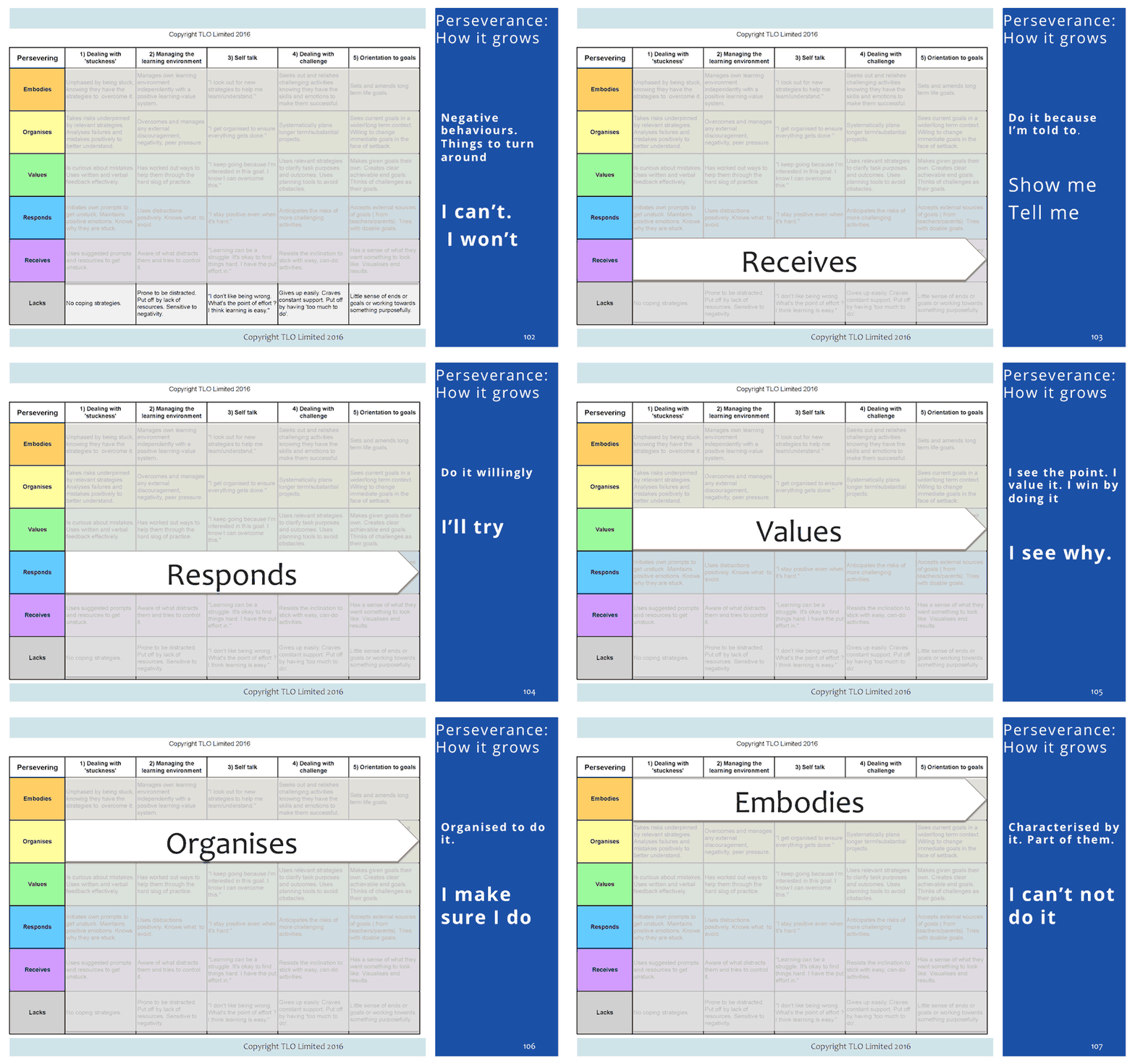
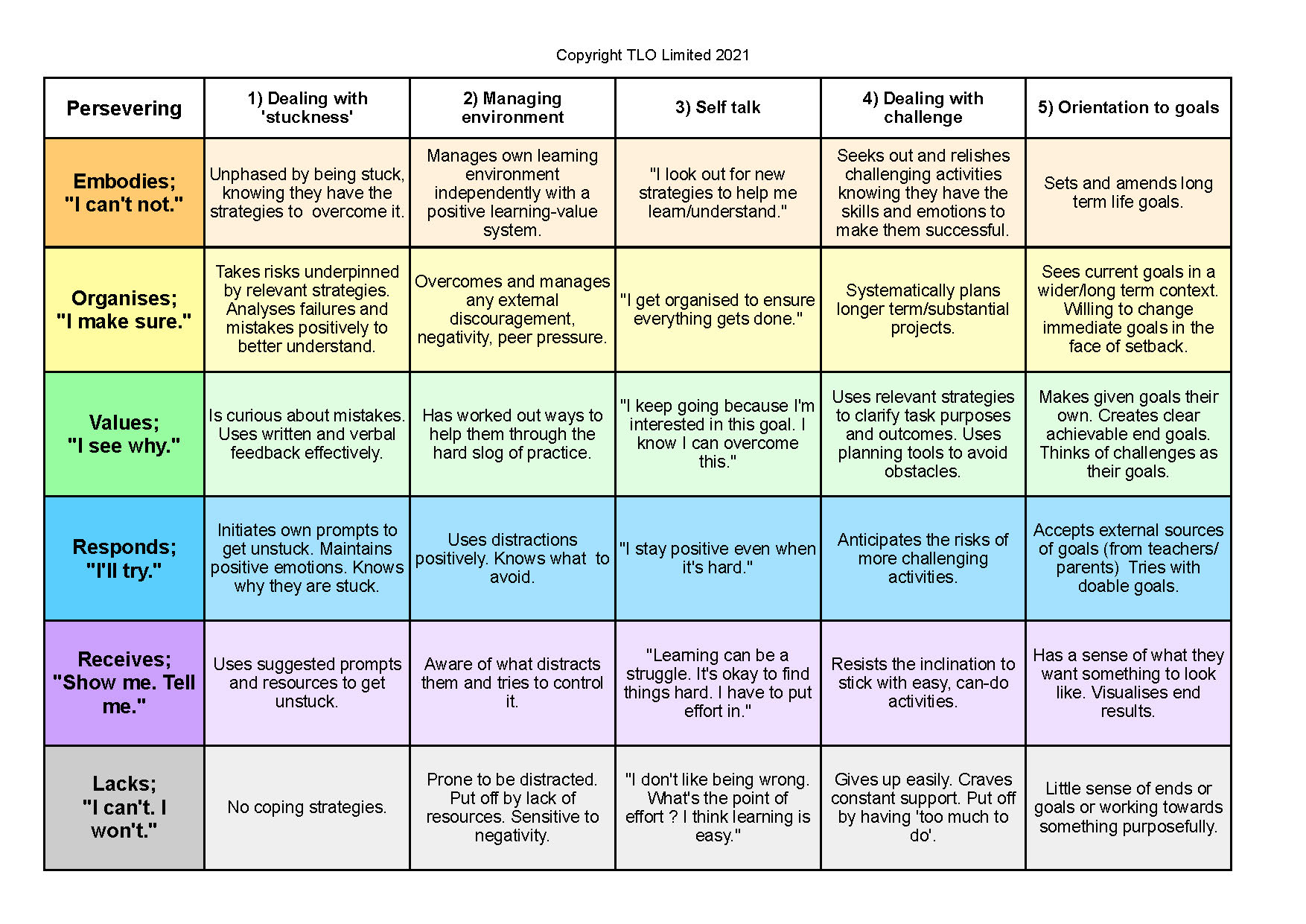
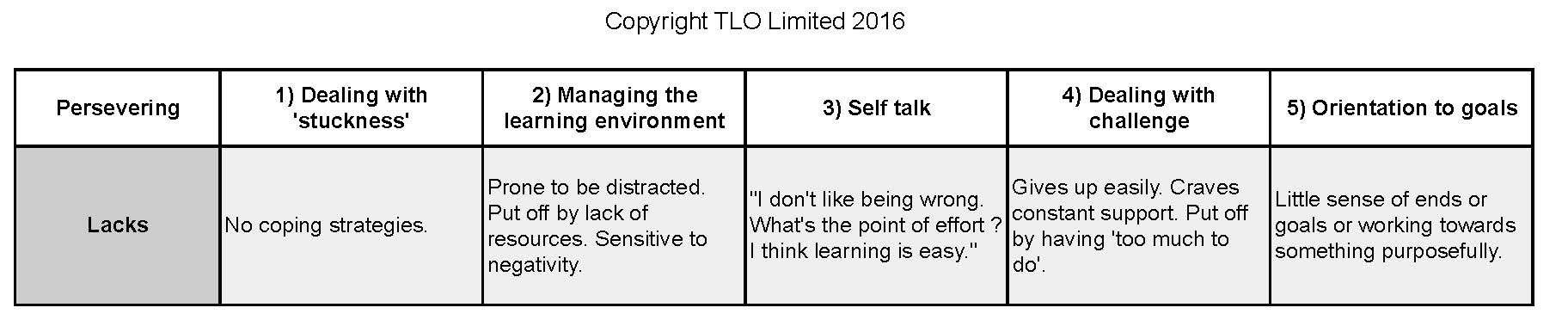
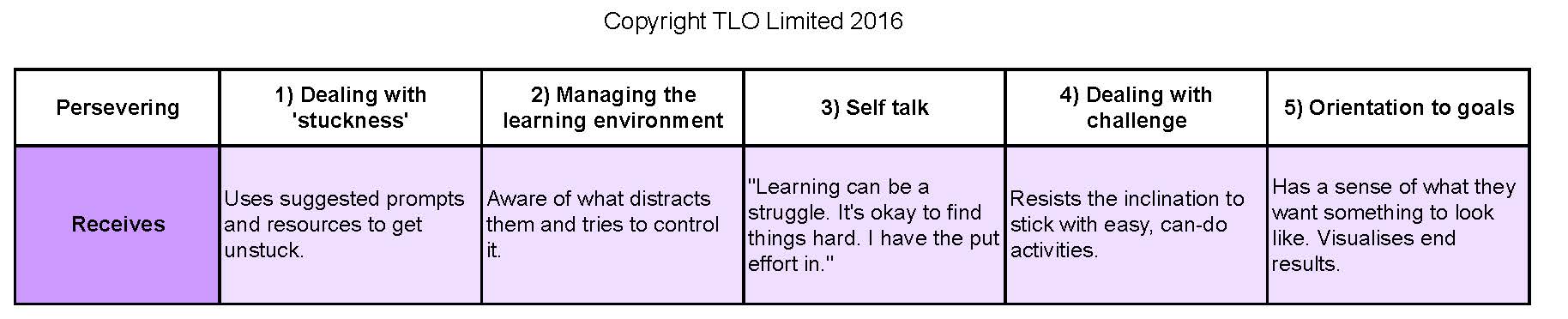
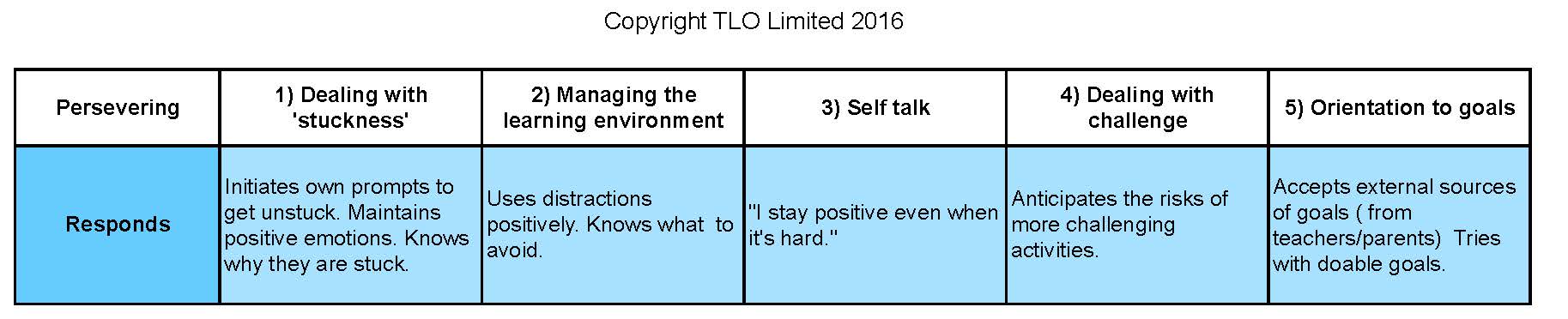
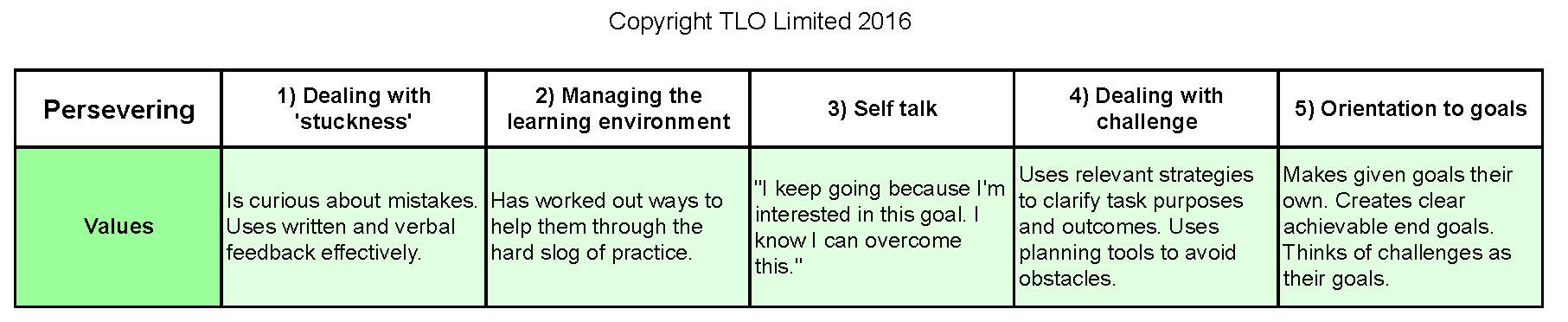
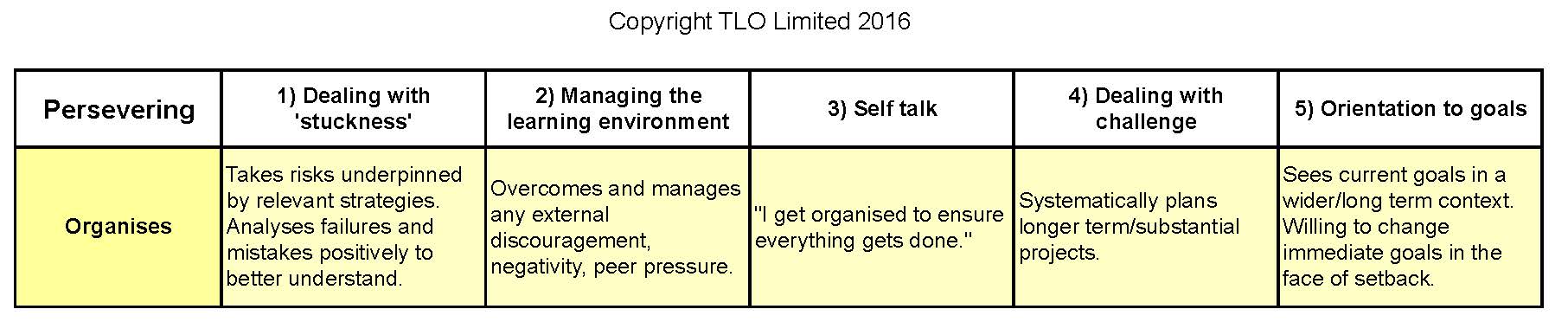
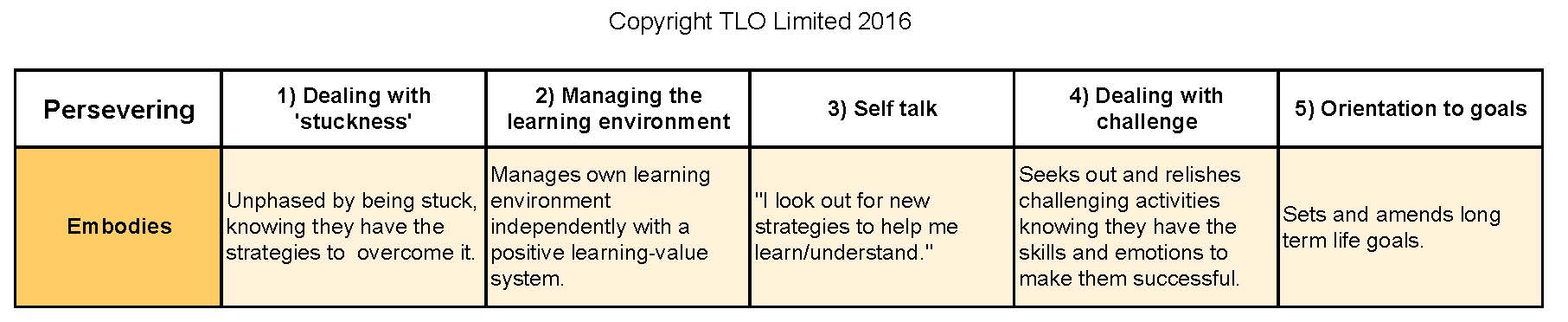
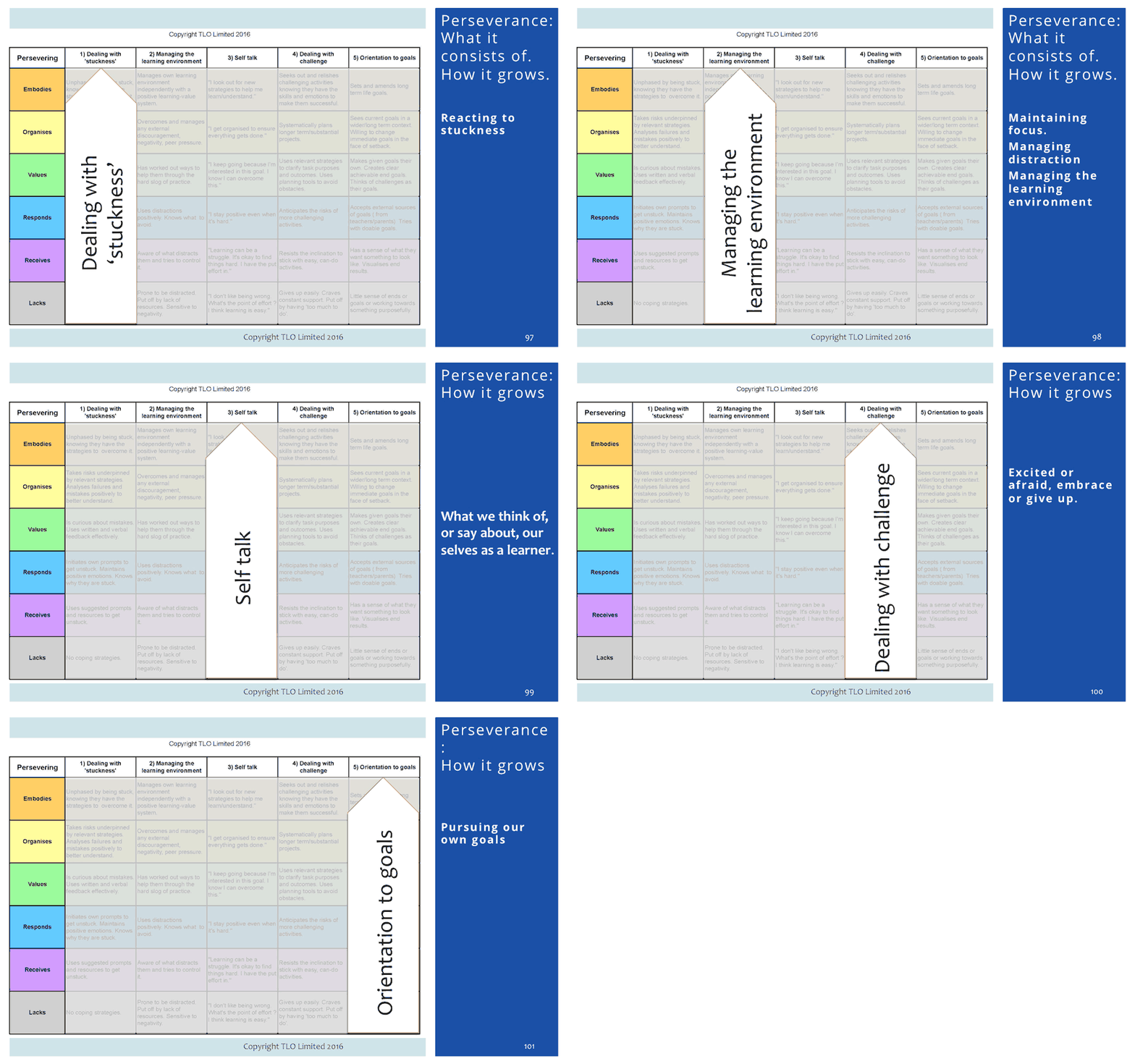

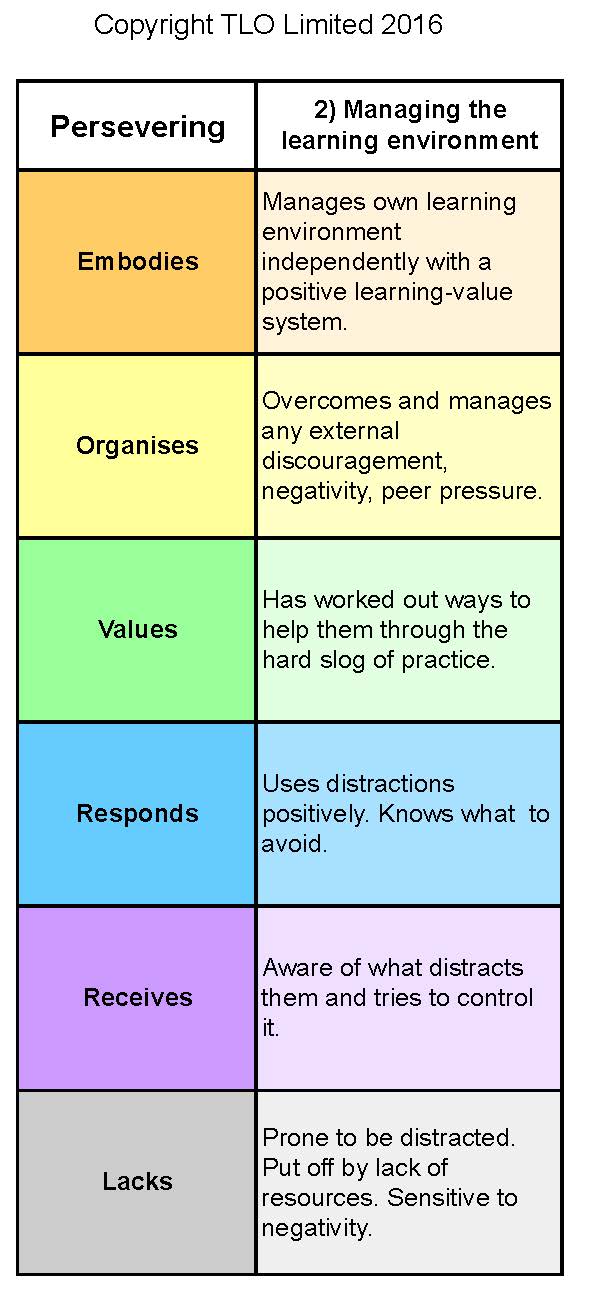
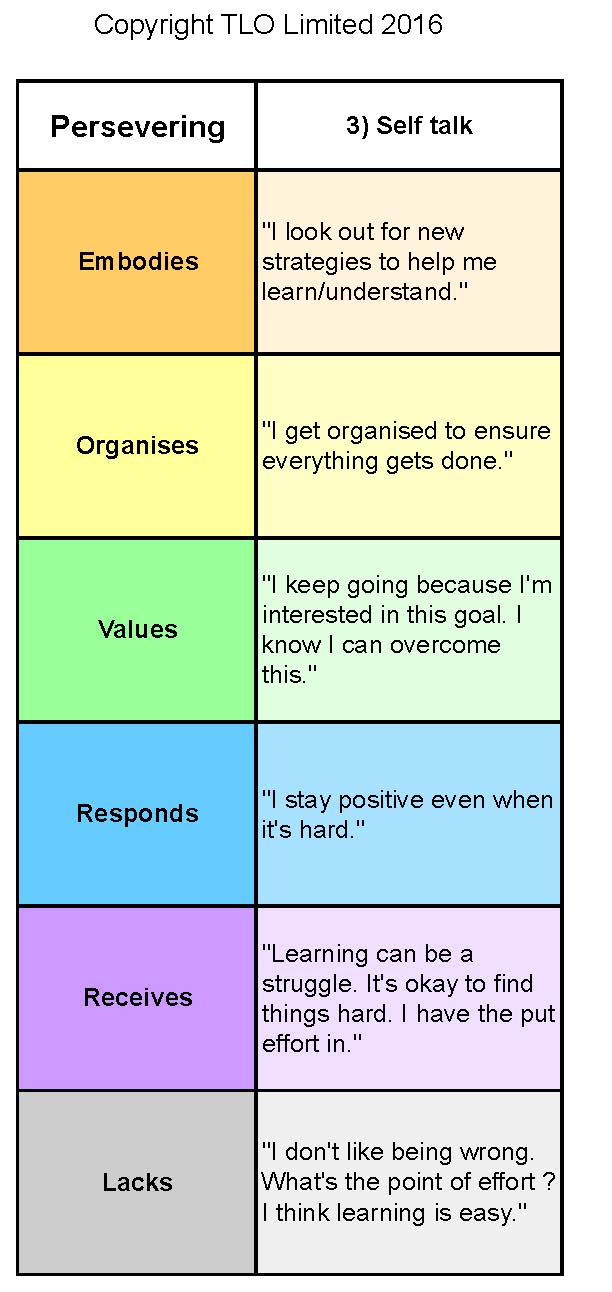

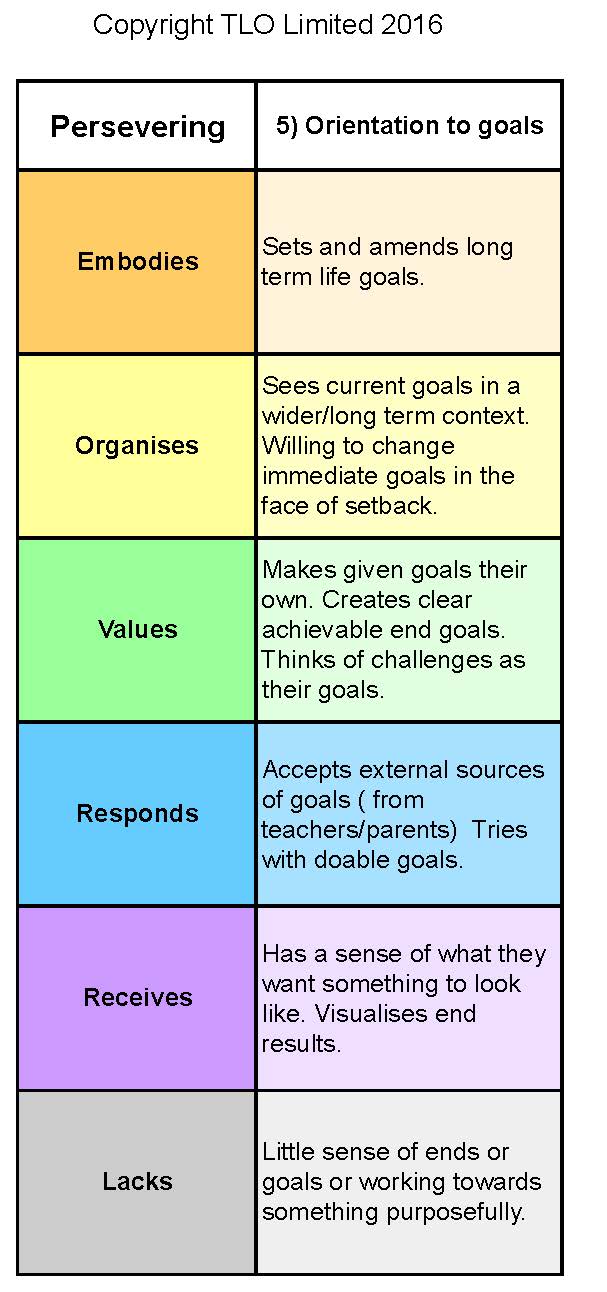










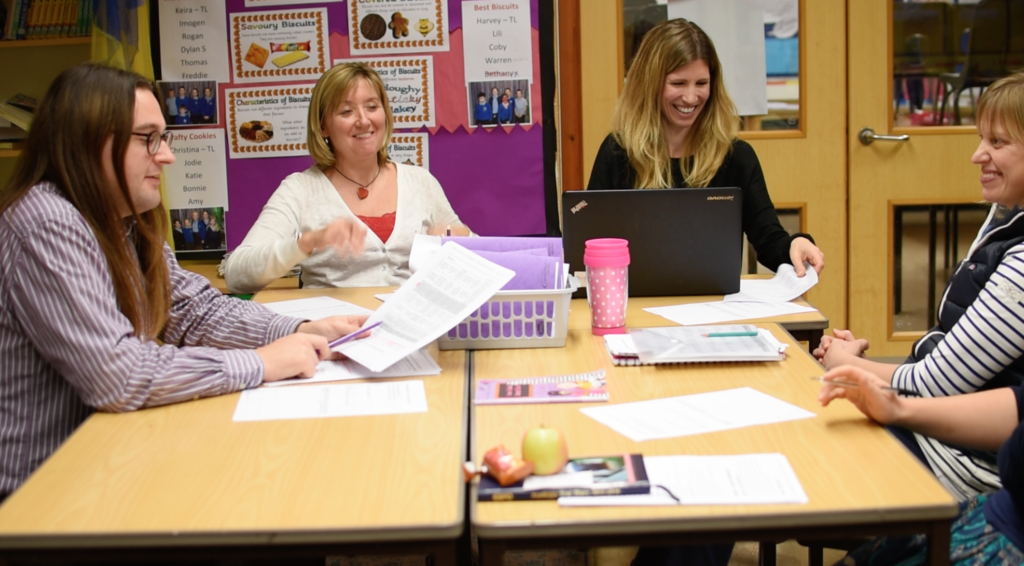





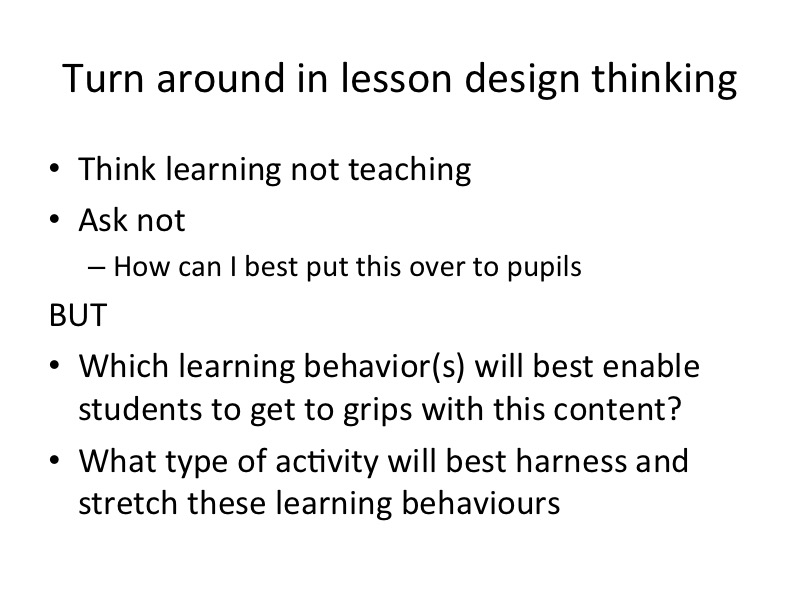
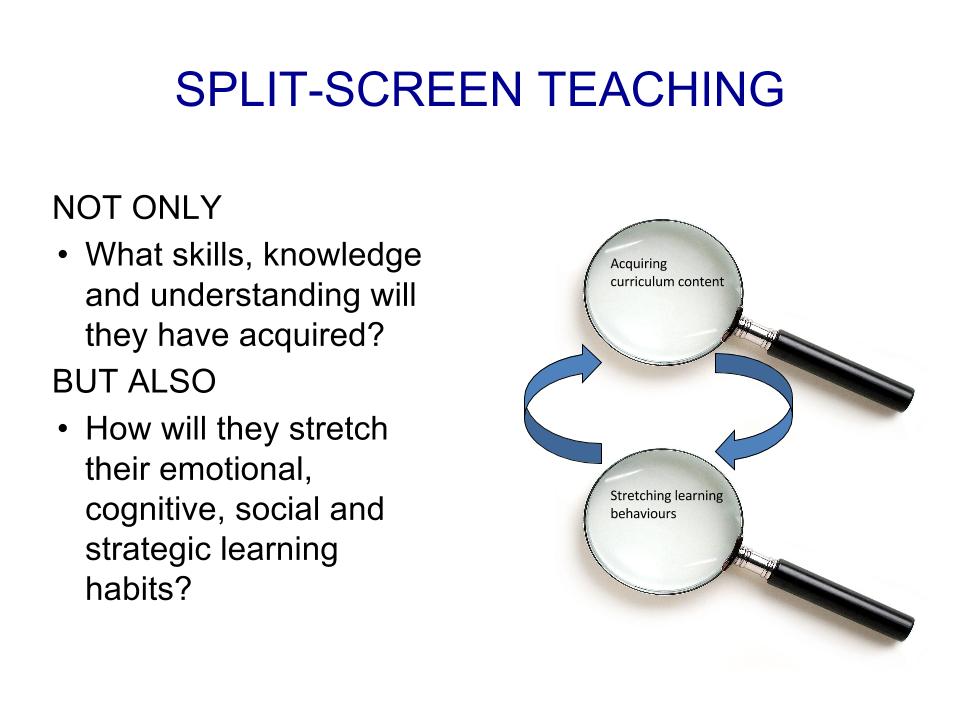


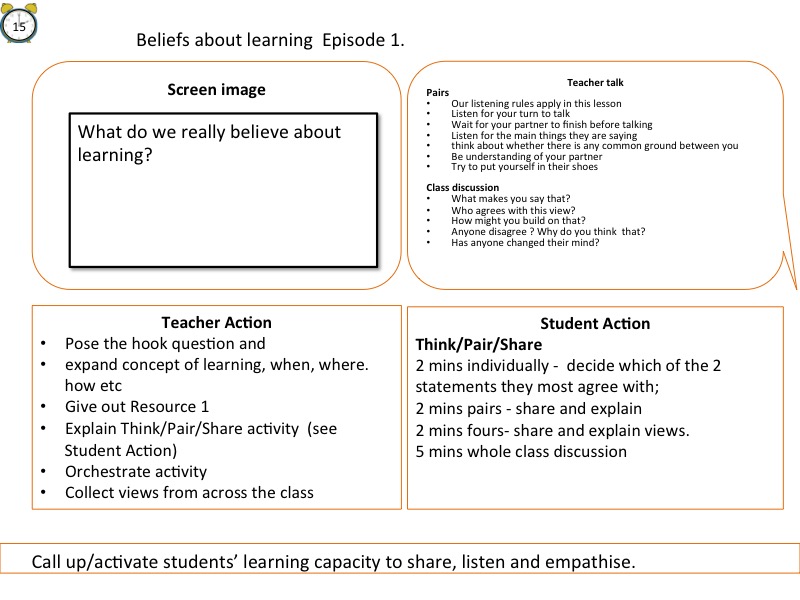
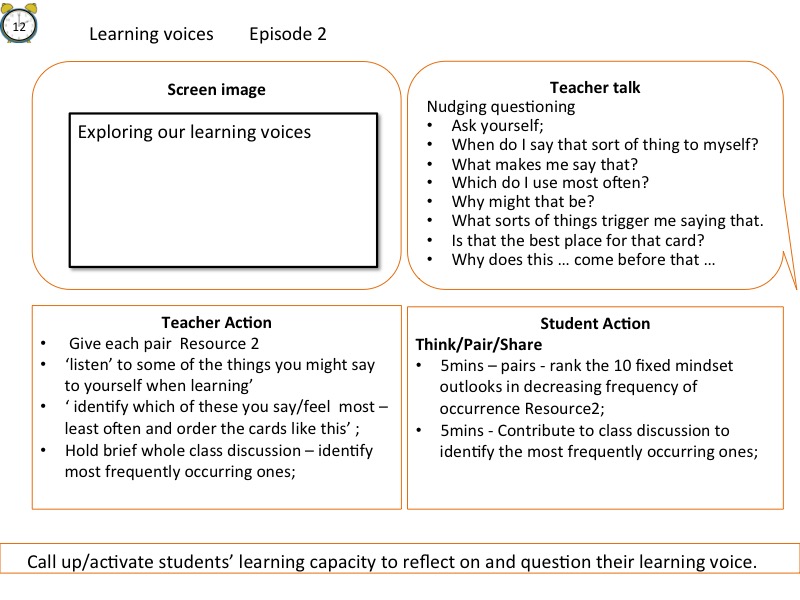
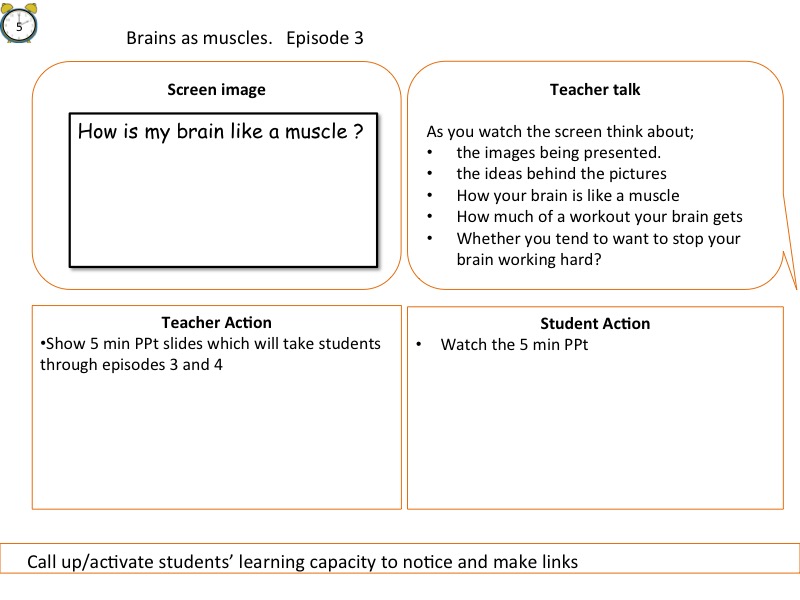
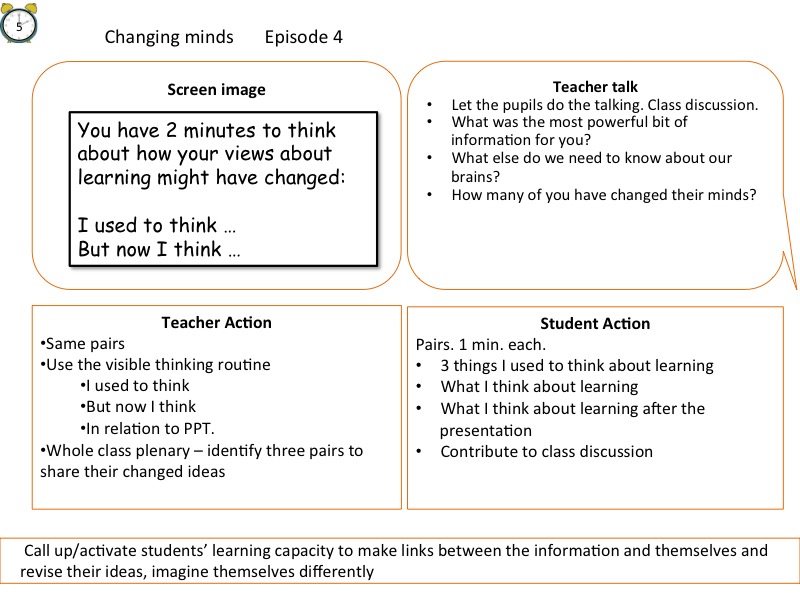
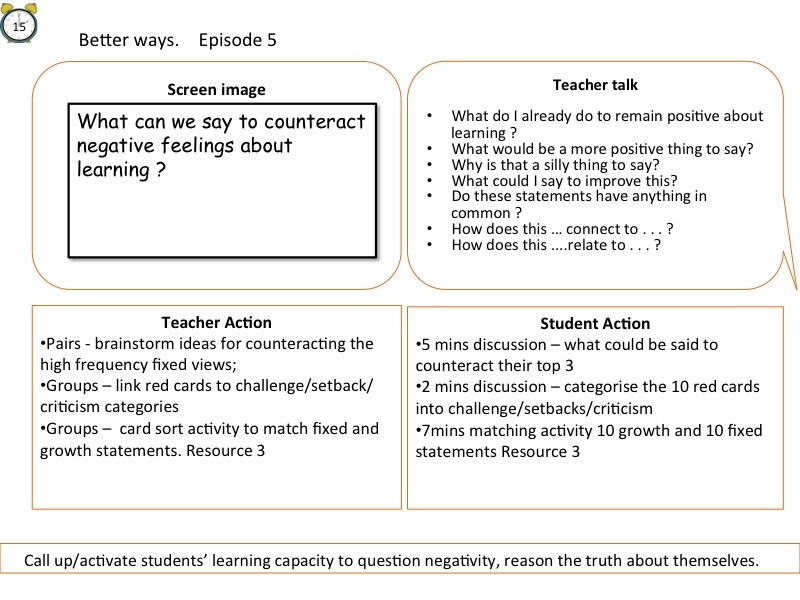

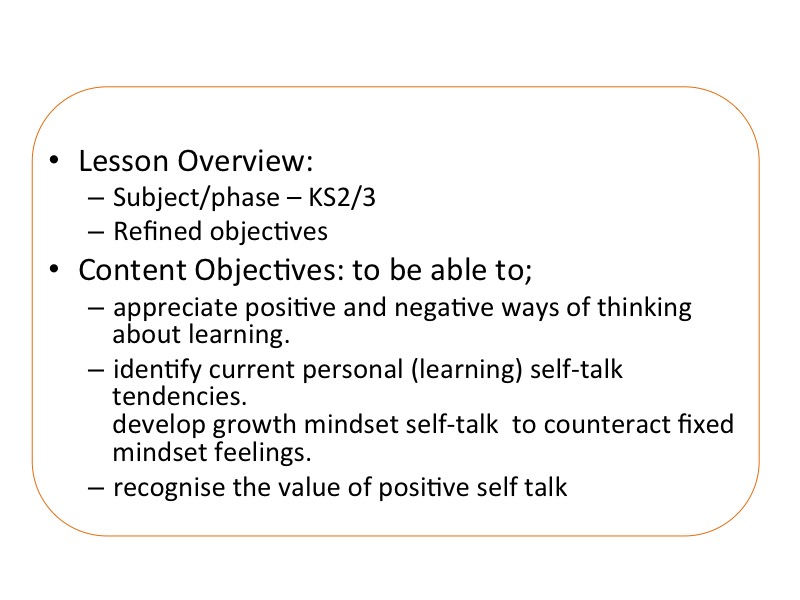
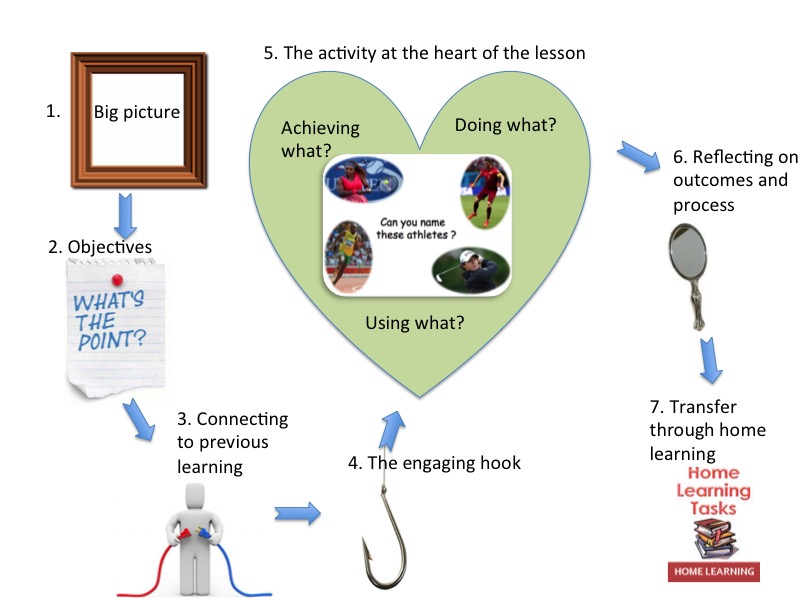
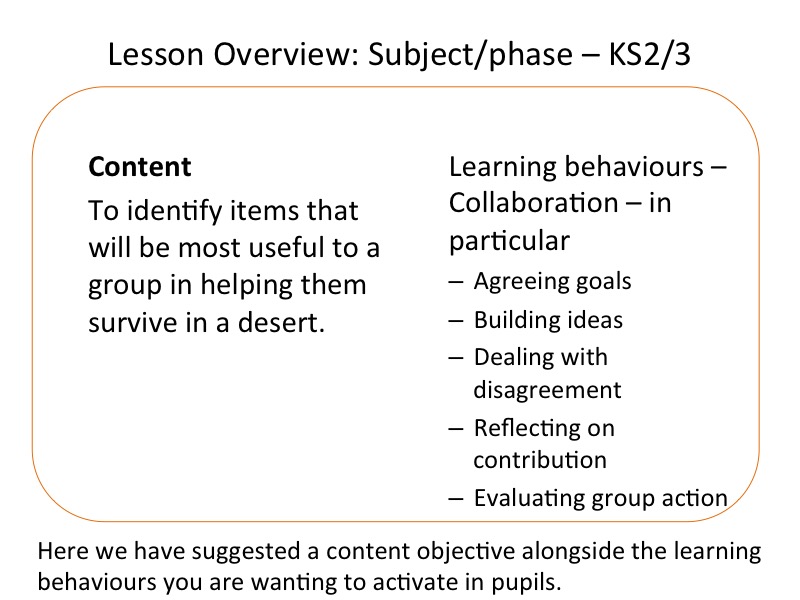

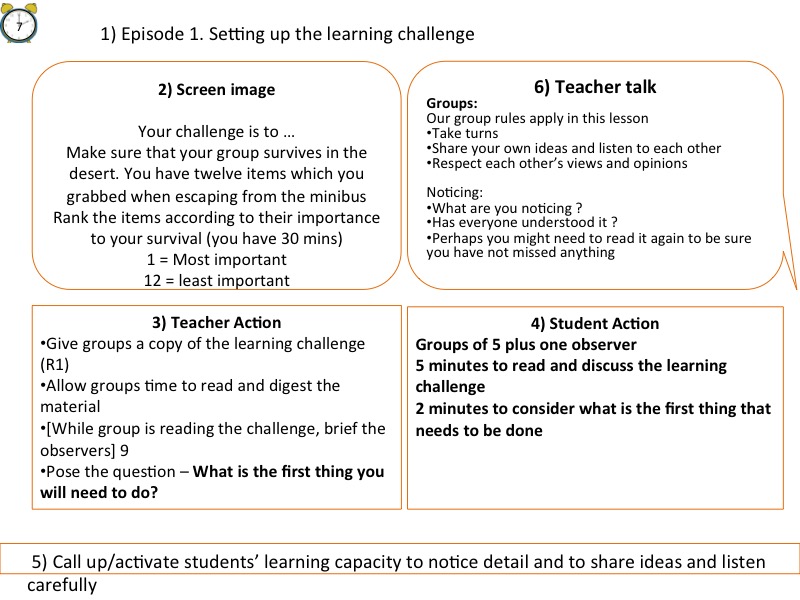
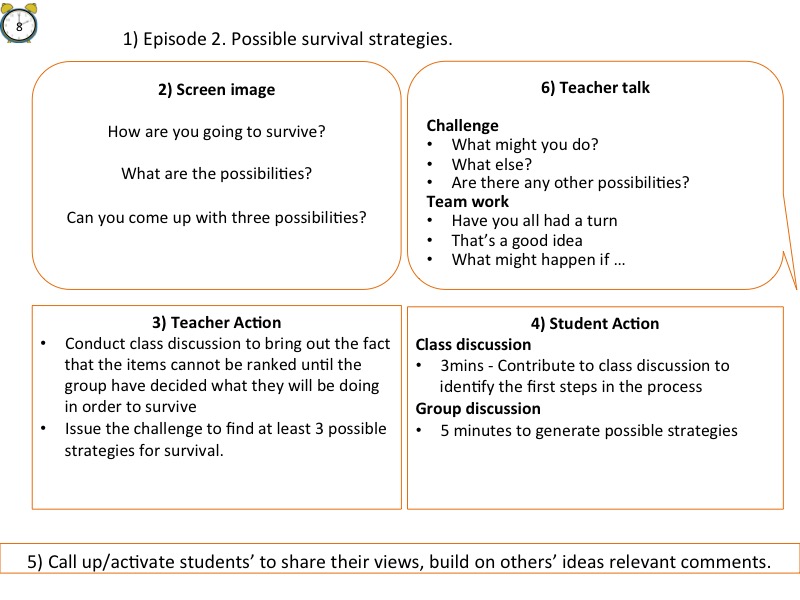
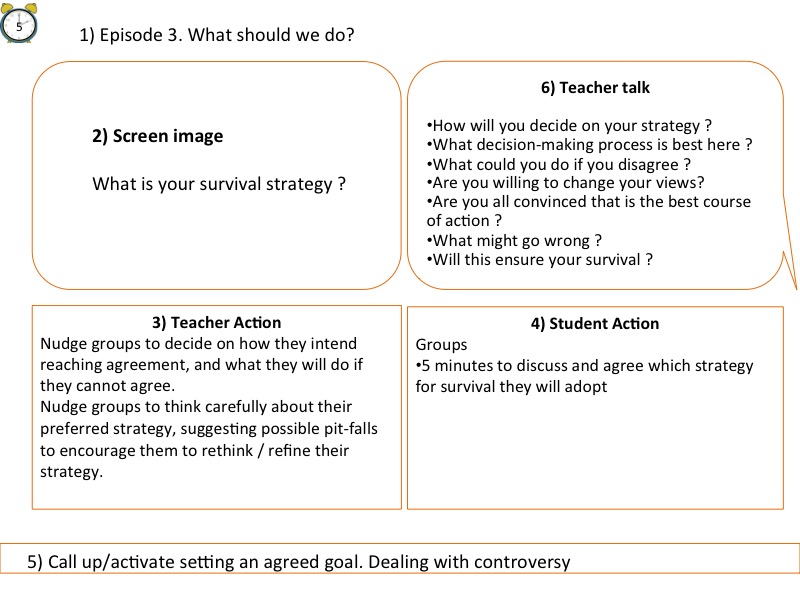
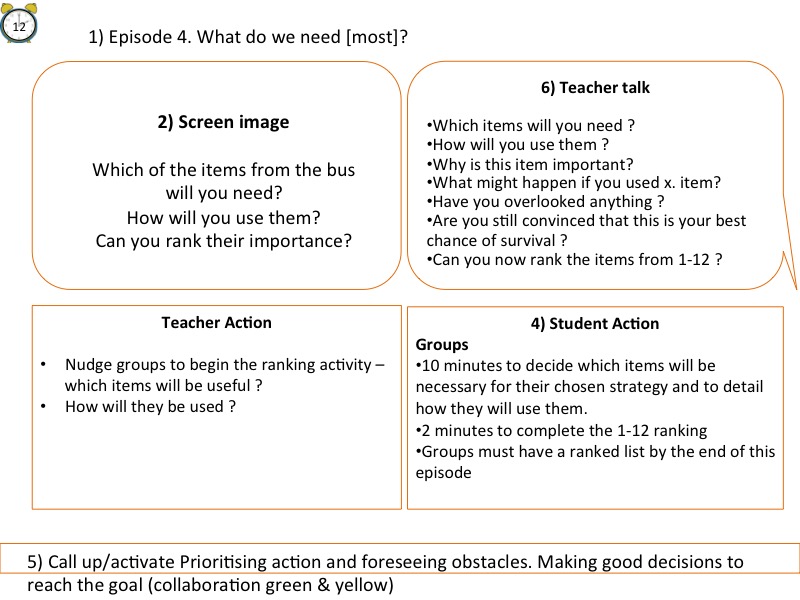
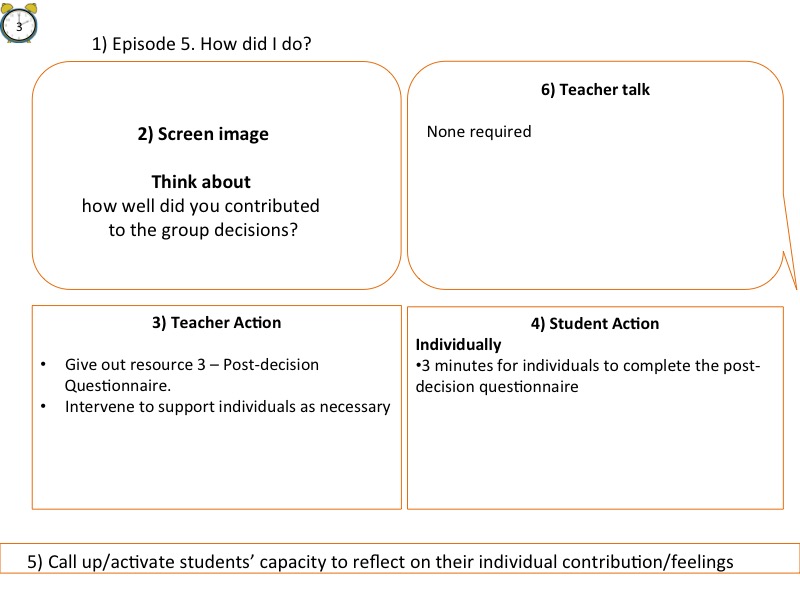

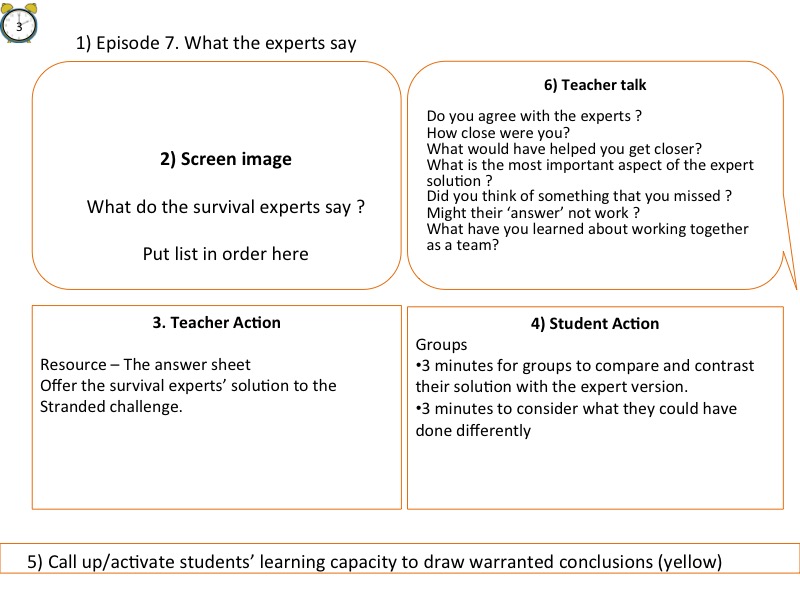
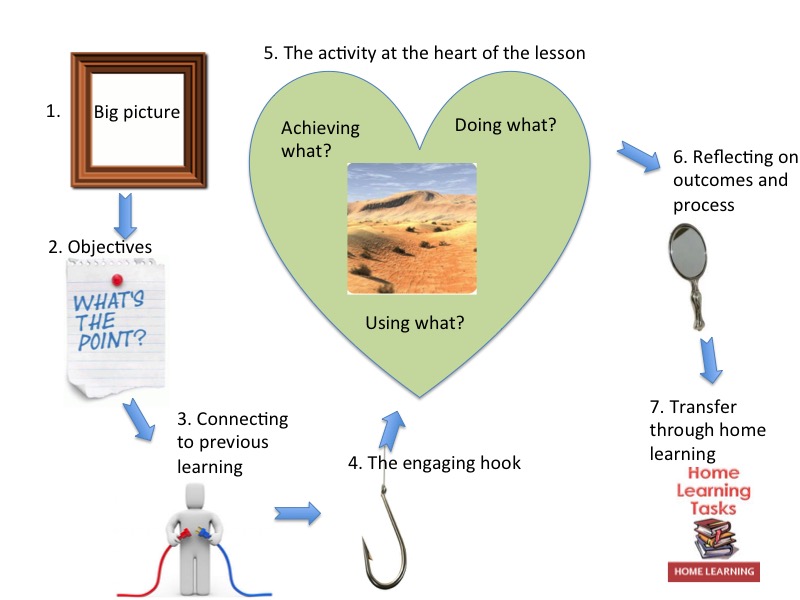

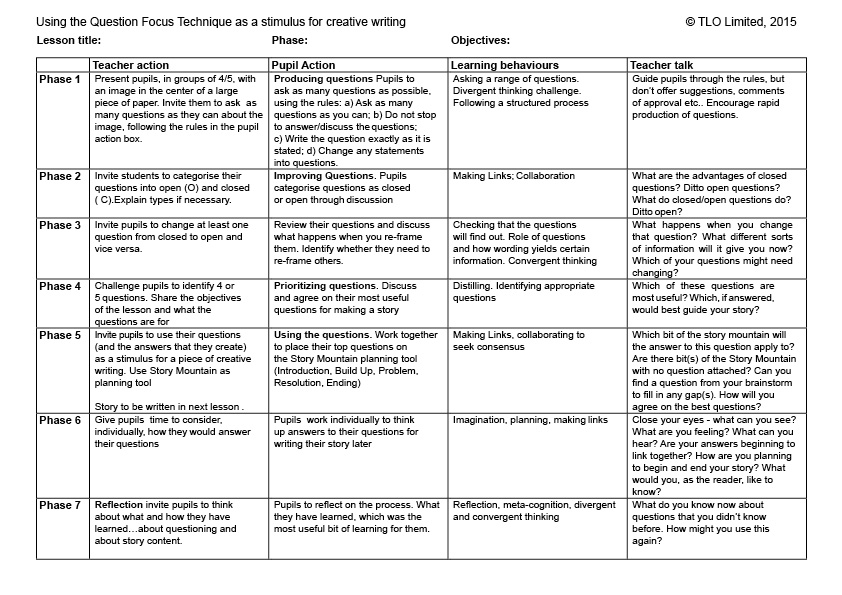



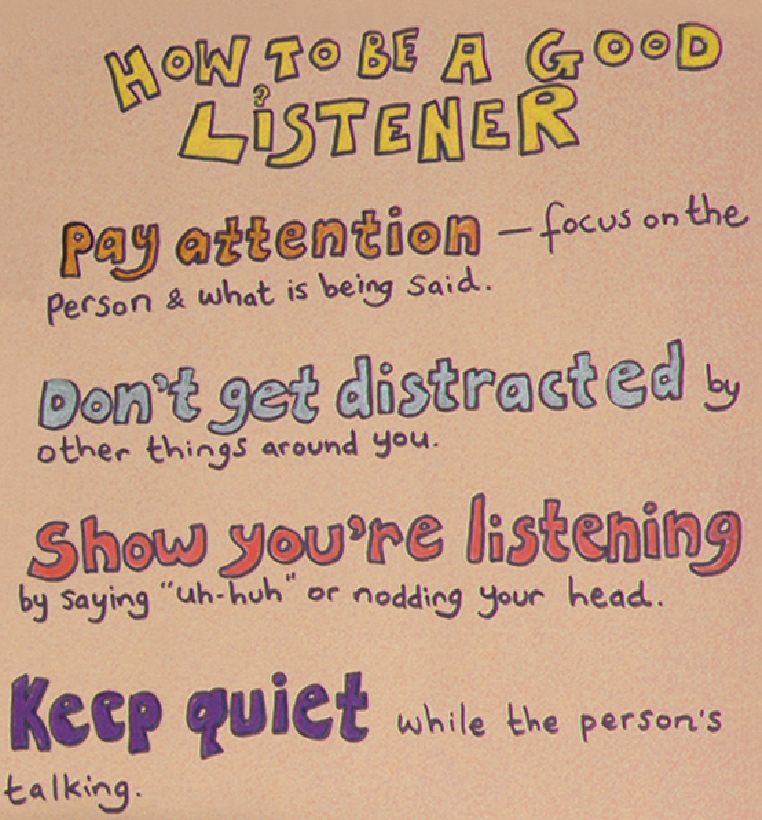
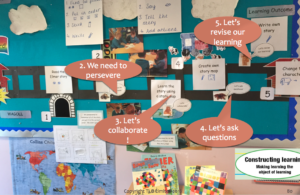
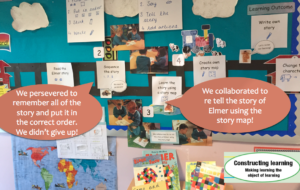


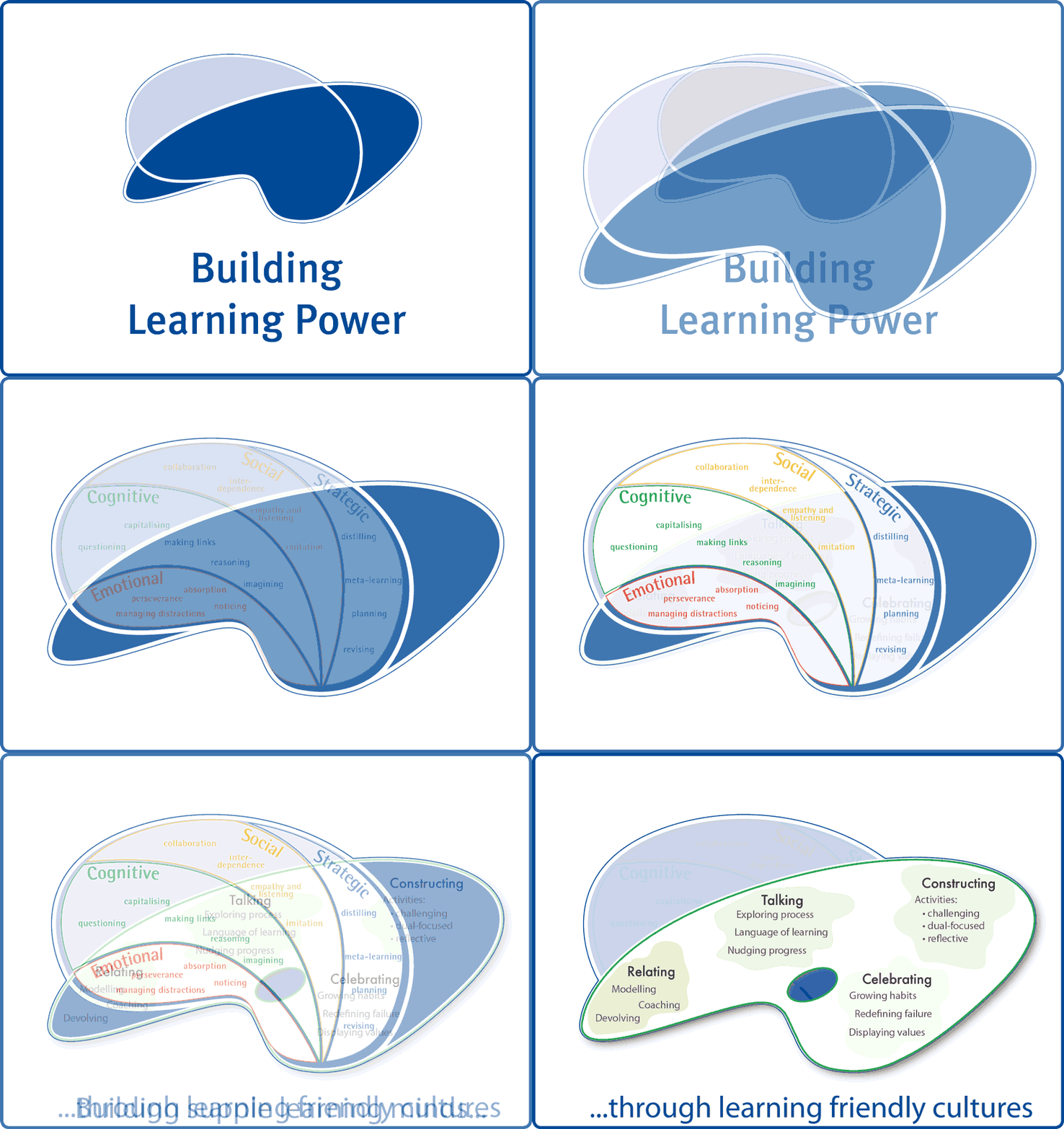
![BLP_Brain_Generic_no-Rs-[Converted]](https://www.buildinglearningpower.com/wp-content/uploads/2016/12/BLP_Brain_Generic_no-Rs-Converted-300x216.png)

![BLP_Brain_Generic_no-Rs-[Converted]](https://www.buildinglearningpower.com/wp-content/uploads/2016/12/BLP_Brain_Generic_no-Rs-Converted.png)