My menu

Sections Archive

3s.

Lesson 3

What this section contains.

This section offers a number of ideas and resources for you to use in constructing a lesson, or even two lessons, to enable students to explore ways to improve Questioning, make a plan of action, and monitor its success.

We leave the specific lesson design to you but offer pointers and resources in the sections below including:

  • suggested information for content areas
  • advice on selecting the appropriate growth phase
  • example Questioning activities for students to practice sorted into growth phases
  • suggestions on how to complete an action plan
  • downloadable resources for use by students (see content area 3)
  • a slide presentation for use in the lesson

update

Download Presentation (pdf)

Suggested content areas

This lesson invites students to think harder about what, when and where they use their learning behaviours; consider some ideas they might try; make a formal 6 month plan with materials to help.

  1. A re-look at where students think they are now
  2. Careful consideration of the phases of growth
  3. Selection of appropriate activities
  4. Construct an action plan
  5. Monitor their success

Your aim for this lesson should be to help students understand:

  • the diversity and choice of Questioning practice across various phases
  • the importance of estimating the most appropriate phase for them as an individual
  • how to construct a simple do-able action plan


Content area 1: Re-look at where students think they are now.

What did you discover about your Questioning habits?

At the end of the last lesson you asked students to use the ‘Spot yourself Questioning’ resource to help them become more aware of themselves as learners. We leave it to you how best to manage this session but we can guarantee the resulting information will be fascinating and useful to both teachers and students.

It is useful to hone the wider discussion to:

  • which aspect of Questioning seemed to be used most often by students
  • which subject seemed to come out well i.e. where students used more of the behaviours
  • which behaviours were used less frequently and call for most improvement.

Whatever the results this research will have made students far more aware of how they learn. They’ll be ready to move on to what they need to improve.


update


Content area 2: Careful consideration of the phases of growth.

Things to remember about the stages

It’s worth thinking and talking about the phases with these overarching ideas in mind.

  • Students’ development as learners isn’t a race and the stages don’t just happen, they have to make them happen.
  • Each stage takes quite a while to work on and become competent in. It’s not about acting in that way once or twice but acting it that way most of the time, consistently, before being ready to move on to the next phase.
  • These Questioning behaviours may look and sound straightforward but they make up one of the most valuable and important learning habits.
  • Working through these stages to become someone who absorbs the various aspects of Questioning into their learning character could easily take four or five years of supported and focused development.

Take time to help students think about how they behave across a range of school subjects and even activities outside school. They need to be honest with themselves before deciding which coloured row or phase best describes their current Questioning habits.

Why do this?

  • Because you are trying to help students to come to know themselves well enough to judge this, and they will gain from seeking advice from friends or their teachers.
  • And secondly, where they decide they are now should determine what they do next.

For example, if they think that the Purple row/phase best describes them at present, then their immediate target should be to consider ideas that will move into the Blue phase.


Content area 2: Careful consideration of the phases.

If you think you have time you might start this further reflection on the phases with a Think Pair Share activity (see slide 5) If not it is worth talking about the issues mentioned below. These are also captured on slides 6 and 7.

Take it steady

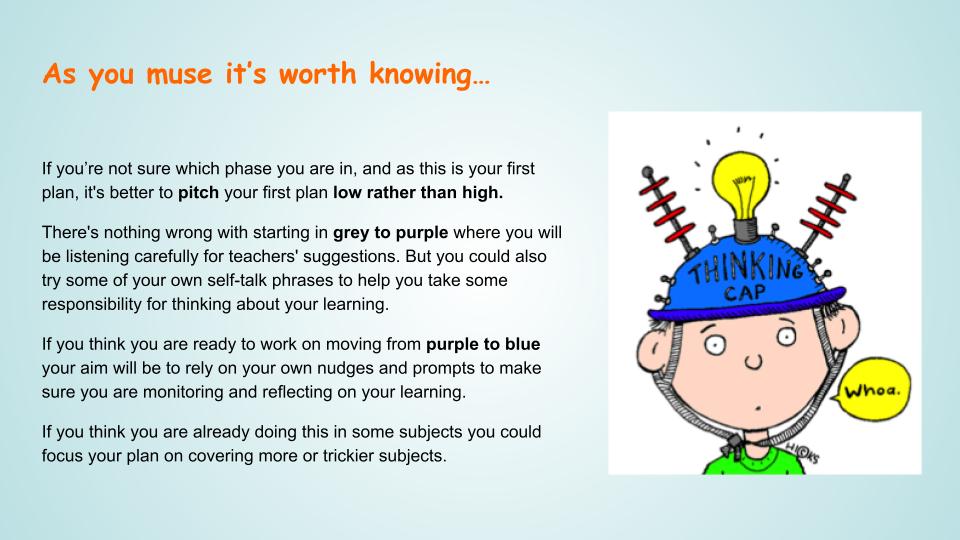
If students aren’t sure where they are on the chart, and as this is their first plan, it’s better to pitch their first plan low rather than high.

There’s nothing wrong with starting in grey to purple where their goal will be to listen carefully for teachers’ suggestions. But they could also try some of their own self-talk phrases to help them take some responsibility for thinking about their learning.

If they think they are ready to work on moving from purple to blue their aim will be to rely on their own nudges and prompts to make sure they are monitoring and reflecting on their learning.

If they think they are already doing this in some subjects they could focus their plan on covering more or trickier subjects.

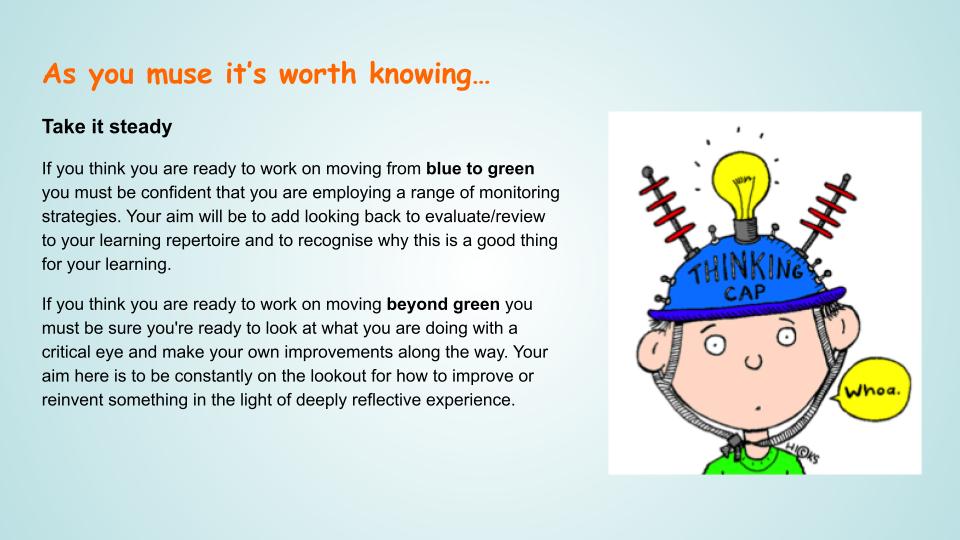
If they think they are ready to work on moving from blue to green they must be confident that they are employing a range of monitoring strategies. Their aim will be to add looking back to evaluate/review to their learning repertoire and to recognise why this is a beneficial thing for their learning.

If they think they are ready to work on moving beyond green they must be sure they’re ready to look at what they are doing with a critical eye and make their own improvements along the way. Their aim here will be to constantly be on the lookout for how to improve or reinvent something in the light of deeply reflective experience.


Content area 3: Select appropriate activities to aid improvement

This is a tricky part of your lesson, and may well depend on:

  • how realistically your students evaluate their starting points for Questioning, and
  • the range of those evaluations.

Things to consider as you plan the lesson is to ensure students achieve a realistic understanding of what they currently do, what they currently do not do, and what actions might improve their Questioning skills:

  • If the overwhelming majority of your students believe they are at the same phase of development, planning, for say, small group discussion, will be straightforward.
  • If there is wide variation on starting points, organising small group discussions will need to consider whether you:
    • partner up students who are at the same phase
    • just run with ‘mixed phase’ groups
    • structure these discussions
    • offer guidance and how much
    • will need to produce the guidance in advance (e.g. download PDF resource below)

Also, ask yourself:

  • Is a whole class discussion viable?
  • What will you do about students who appear to have an unrealistic impression of their Questioning behaviours? [It is highly unlikely that students are already functioning at the Green phase – so be alert to over-optimistic student evaluations! Decide in advance how will you challenge such evaluations.]

Resources

The information in the toggle boxes below give a few suggestions for activities and self-talk for each phase of the growth chart. It’s worth acquainting yourself with the ideas.

The same information is also available in a downloadable PDF resource which you can print for students to use in the lesson.

There are slides of the same information should you want to use them in the lesson.


Ideas to help you to move you from Grey to Purple

Moving yourself from Grey to Purple

What is the main difference between the Grey row and the Purple row?

If you think you are in the Grey row you just do what you want and how you want to do things. You may be reluctant to change the way or how you do things saying ‘I can’t’ or ‘I won’t’.

If you think you are in the Purple row you are becoming familiar with the idea of keeping an eye on how you are learning things, but you need plenty of your teacher’s support to do so.

So – the big difference here is that Purple learners accept advice from their teachers to monitor how they are doing with a view to changing things if it is not going as expected. To be strong in purple you need to be like this in all your learning, not just the subjects you like. Being strong in Purple is the first big step in becoming a good reviser


A couple of useful activities

a) Monitor how you are feeling about your learning.

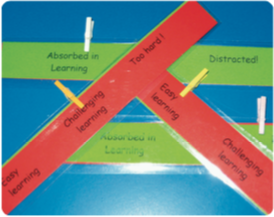
You could cut a strip of card and write on it:

Absorbed……………………………..Distracted OR

Too Easy………………………………Too Hard OR

Interested……………………………Bored

Take the strips to use during lessons to help you monitor and become more conscious of your feelings about learning. This is just a small beginning but will help you get a feel for learning to begin to take more responsibility for it.


b) Use a checklist to monitor how things are going

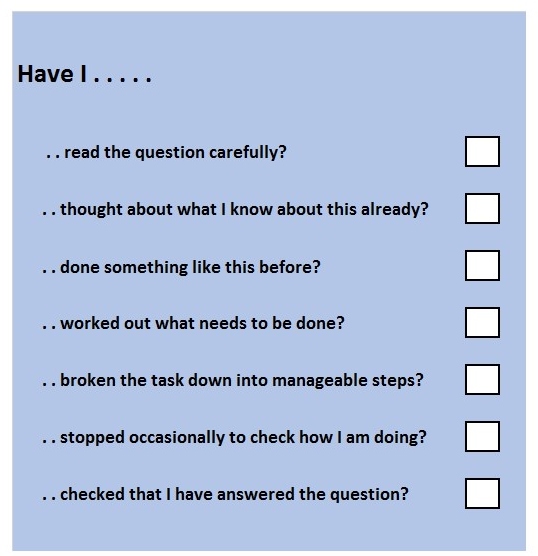
If your teacher offers you a checklist, then take their advice and use it to keep an eye on things. If your teacher does not offer you a checklist, try making a copy of this simple checklist and refer to it in lessons to help you to keep close eye on how things are going. Use the checklist as you are working, and again after you think that you have finished.

update


Become your own learning coach

Things to say to yourself

To help you begin to monitor how things are going

  • How am I getting on?
  • Am I ‘on track’?
  • What is working well for me here?
  • Is this going OK?
  • Do I need to try a different approach?
  • Is this going to be good enough?

To help you begin to think about how it went

  • How did that go?
  • What worked well?
  • Did it go as I expected?
  • Am I happy with that?

Make a quick reflection on what you’ve done become part of your daily or lesson routine.

Your questions might include:

  • Today I have learned….
  • Today I have tried to…
  • My biggest success today has been….
  • What will I tell my family when they ask ‘What did you do at school today’?
  • The most important thing I have learned today.
  • What has inspired me today?

Each, in different ways, encourages you to think about how your thinking / understanding has changed, how you have revised/amended your view of things.


Ideas to help you to move you from Purple to Blue

Moving yourself from Purple to Blue

What is the main difference between the Purple row and the Blue row?

Learners in the Purple row have become familiar with the idea of keeping an eye on how things are going with plenty of help from their teachers.

Learners in the Blue row use a range of strategies to enable them to keep an eye on how things are progressing towards achieving a goal and meeting the required standards.

So – the big difference is that learners in the Blue zone have become far more interested in their learning, monitoring and evaluating what they are doing in order to achieve good standards and without being told / helped to do so. Keeping an eye on how they are learning helps Blue learners to achieve good standards.


A couple of useful activities

a) Create your own checklists

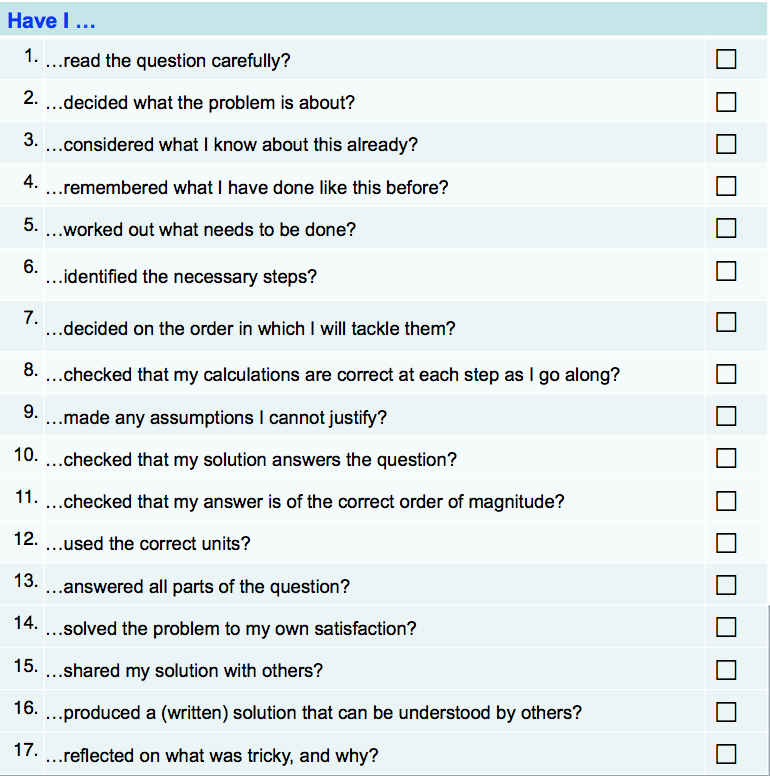
You do not need to wait to be given a checklist by your teacher. Why not create one for yourself?

Suppose that you wanted to create a list that focuses specifically on numeracy/ maths? You might end up with something like the checklist opposite.

Challenge yourself – how would you adapt this checklist to make it relate to literacy rather than numeracy?

b) Trying something different

We all have our preferred ways of working, and if that way is successful we tend to use that method again and again. But what if our preferred way of working is not working as well as we had hoped?

The answer is, of course, to ditch an unsuccessful strategy in favour of a better one.

So where can you find alternative ways of working? Easy – Just stop and look around your class!

Ask yourself:

  • who has found a successful way of doing this?
  • what, precisely, are they doing to be successful?
  • do I need to talk to them to fully understand their approach?
  • how can I copy or imitate their successful strategy?

update


Become your own learning coach

Things to say to yourself

To help you to learn from mistakes

  • What went wrong there?
  • What can I learn from this mistake?
  • If I have another go what would I change?
  • Do I need to try something different?
  • What have I misunderstood here I wonder?

To develop a sense of what ‘good’ looks like

  • What made me think this wasn’t quite right/good enough?
  • Am I (un)happy with this? Why?
  • What hint could I give myself so I can figure it out?
  • Can I do something more/better to meet my success criteria?
  • How you could I improve this.
  • Am I happy with what I’ve achieved?

To explore externally set standards

  • Have I noticed the success criteria?
  • Why do we have success criteria? What are they for?
  • Is it going to be good enough?
  • Is it going to be good enough for me?

Try these If/Thens statements to help you to monitor how things are going:

  • If I am working on something, then I will stop occasionally and ask myself how well I am getting on.
  • If I’m working on something then I will ask myself why I think it’s okay/good/meeting the success criteria.


Ideas to help you to move you from Blue to Green

Moving yourself from Blue to Green

What is the main difference between the Blue row and the Green row?

Learners in the Blue row employ a range of strategies to enable them to keep an eye on how things are progressing towards achieving a goal and meeting the required standard.

Learners in the Green row have come to understand the benefit of monitoring how things are progressing but also take time to look back over what they have done to consider whether they have achieved what they intended and how they might do it differently next time.

So – the big difference is that Green learners not only monitor progress while they are doing something, but also look back to evaluate what they have achieved once they have completed a task. Green learners recognise that doing those things brings worthwhile benefits so they keep on doing them.


A couple of useful activities

a) I used to think . . . Now I think . . .

This routine helps you to reflect on how and why your thinking/understanding is changing. It encourages you to recognise that new learning often requires you to change what you were thinking previously.

For example, at the beginning of a lesson or topic, ask yourself what you understand by one of the key concepts that you will be studying. (e.g. Phrase (English); Proof (Maths); Power (Science) etc). At the end of the lesson/topic ask yourself what you now understand by the term in light of what you have learned.

It is about noticing, acknowledging and celebrating a change of mind.

b) Use a checklist to evaluate a completed piece of work

Monitoring and evaluation are slightly different. You monitor as you go along, as you are doing your learning. Evaluation is what you do after the learning/task has been completed. It involves stopping to look back over what you have done, how you did it, how successful you were, and how you might do it differently next time.

At the end of a substantial piece of work, use the checklist opposite to reflect on what you have achieved.

update


Download as a pdf

Become your own learning coach

Things to say to yourself

To help you begin to evaluate how it went

  • How did that go?
  • What worked well?
  • What didn’t go as I expected?

To check against standards

  • Is this the best it can be?
  • Why do I think this is as good as I can make it?
  • Is it good, or just good enough?
  • Can I visualise how it could be even better?

To make minor changes to tweak

  • I could always say to myself. . ‘Does this meet the criteria?’
  • Could I / do I need to make some small improvements?
  • We never/rarely get it right first time.
  • I could say to myself…’I did this well/right/better because I made XX changes

To reflect on why you did it that way

  • Why am I happy with what I have achieved?
  • Did I meet the success criteria I set myself?
  • Can I think of other ways I might have tackled it?


Ideas to help you to move you beyond Green

Moving myself beyond Green

What is the main difference between the Green row and the rows beyond Green?

Learners in the Green row have come to understand the benefit of monitoring how things are progressing, but also take time to look back over what they have done to consider whether they have achieved what they intended and how they might do it differently next time.

Learners in the rows beyond Green organise themselves to meet their own high standards through a combination of reflecting while they are learning (monitoring) and reflecting after the have learned (evaluation). This reflection sets them on a pathway of change and improvement.

So – the big difference is that learners beyond Green have taken control of their own improvement and use monitoring and reflection independently to ensure that they meet the highest standards.


A couple of activities to try

a) Acting on feedback

Students receive feedback from their teachers, parents and friends. Mostly the feedback is spoken, but some feedback might be offered to you in written form.

Positive feedback is always welcome and tends to make us feel good. But the most valuable feedback you can receive is feedback that points to ways that you can improve. Perhaps not as comfortable as the positive, praise type feedback that gives you that warm glow of satisfaction at a job well-done, the most useful feedback you can receive focuses on how you can do even better next time.

So – be alert to all of the sources of feedback around you, listen very carefully, and, most importantly, act on the feedback. Keep asking yourself: ‘How will I do it differently next time?’

b) Slow down, get creative, look at the options

Often when faced with a task there are one or two obvious courses of action. These tend to be the ones that you have used successfully in the past. But are there any other options that might be even better?

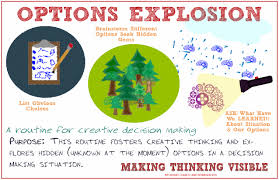
Try the routine ‘Options Explosion’ to explore hidden options before committing to a course of action.

  • Begin by listing the obvious options, then . .
  • Brainstorm all sorts of different options to find the “hidden” options. Often there are hidden options that are the real best choices. Be imaginative! Piggyback on ideas you have already, combine ideas to get new ones, look for ideas of a very different kind. . .
  • And finally, select your course of action.


update


Become your own learning coach

Things to say to yourself

To make choices about standards

  • How will I decide if it is good enough?
  • What standards have I set myself for this?
  • Why did I choose to judge it against these criteria?
  • Are there other criteria I could / should have used?

To detect errors

  • Am I using the most efficient way of doing this?
  • Could / should I change what I am doing here?
  • Can I spot any errors/ a better way to do this/to change my original plan
  • Am I satisfied with this yet?

To challenge accepted ways of doing things

  • How could I have done this differently / better?
  • I need to think outside the box here.
  • Am I sure this amount of change is necessary.
  • Is there another way I could have done this?


Content area 4: Put a do-able plan together

The next stage of the lesson involves students putting an Action Plan together

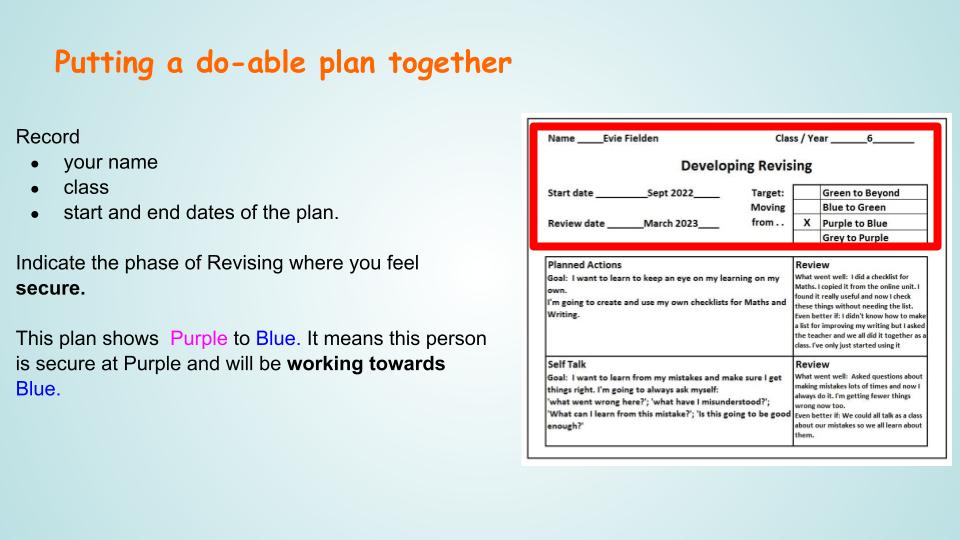
Here is a fairly straightforward six month Action Plan format for students to complete. This means that what they are planning will be put into action by them, over about six months. At the end of six months they will need to review their plan, estimate their progress and then make a new plan. The new plan may tackle the next phase of growth or strengthen the growth in the same phase.

Invite them to:

  • Record name and class
    • the date the plan was made
    • the date the plan will be reviewed
  • In the little table students should indicate the phase of Questioning where they feel secure. This shows their starting point. If they mark Purple to Blue it means they think they are secure at Purple and will be working towards Blue
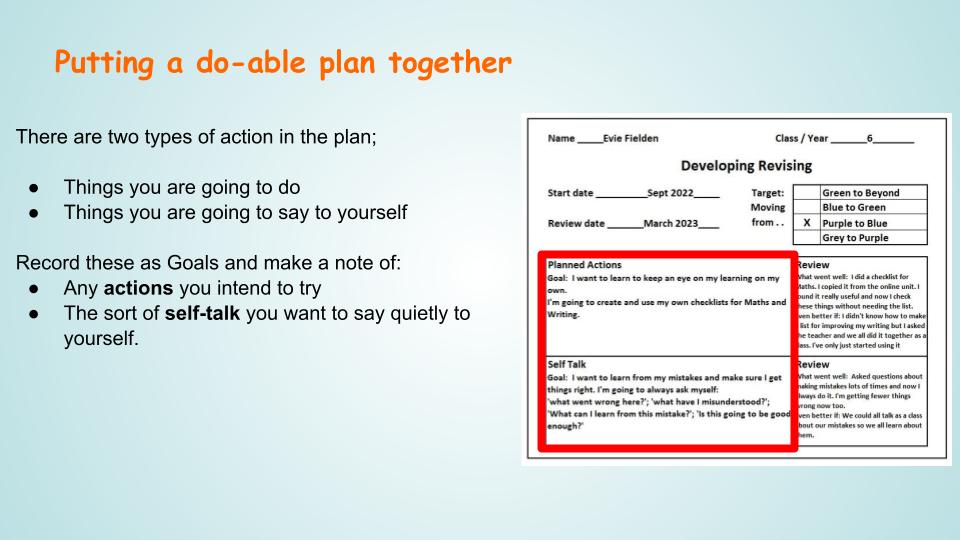
  • What they want to improve should be shown as Goals and notes made of:
    • any actions they intend to try
    • the sort of self-talk they want to say quietly to themselves.

Reviewing the plan:

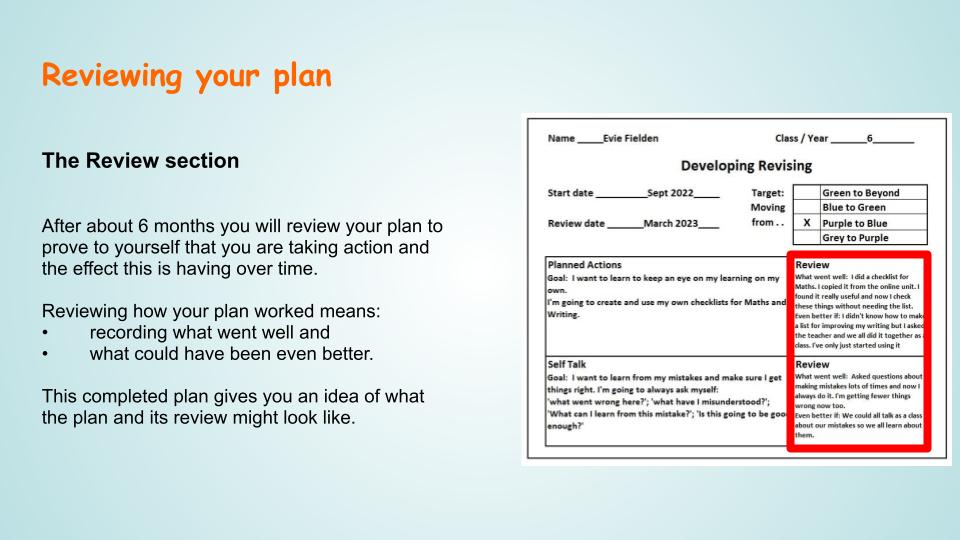
  • After about 6 months the plan should be reviewed to prove to students that they are taking action which is having effect over time.
  • It’s useful to note down how the plan worked:
    • what went well and
    • what could have been even better.

Here’s a completed plan to give you an idea of what the plan and its review might look like. Feel free to design your own Action Plan format.

update

Example completed Action Plan


Read the completed plan Download a blank proforma

Content area 5: Monitoring how it’s going and keeping plans under review

The best way of keeping their plan going will be by students getting used to looking at the changes they are making and their impact on their learning.

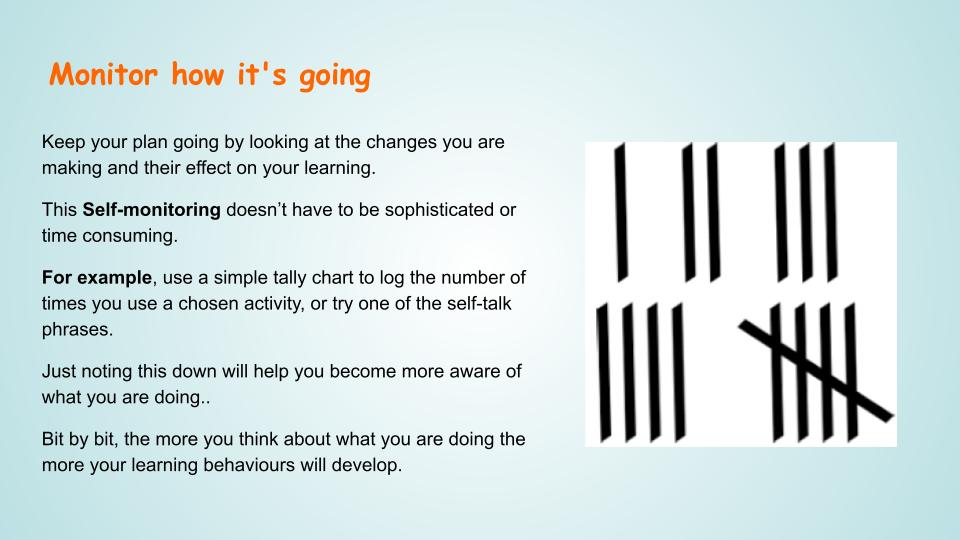
This amounts to Self-monitoring. It’s about students keeping track of the actions or self-talk they are trying in their classrooms. This monitoring doesn’t have to be sophisticated or time consuming. For example, they could use a simple tally chart to log the number of times they use a chosen activity, or try one of the self-talk phrases. Just noting this down can help them become more conscious of the actions they are taking.

Bit by bit, the more they question themselves about what they are doing the more they will consolidate their approaches to developing these learning behaviours into learning habits.

In six months time

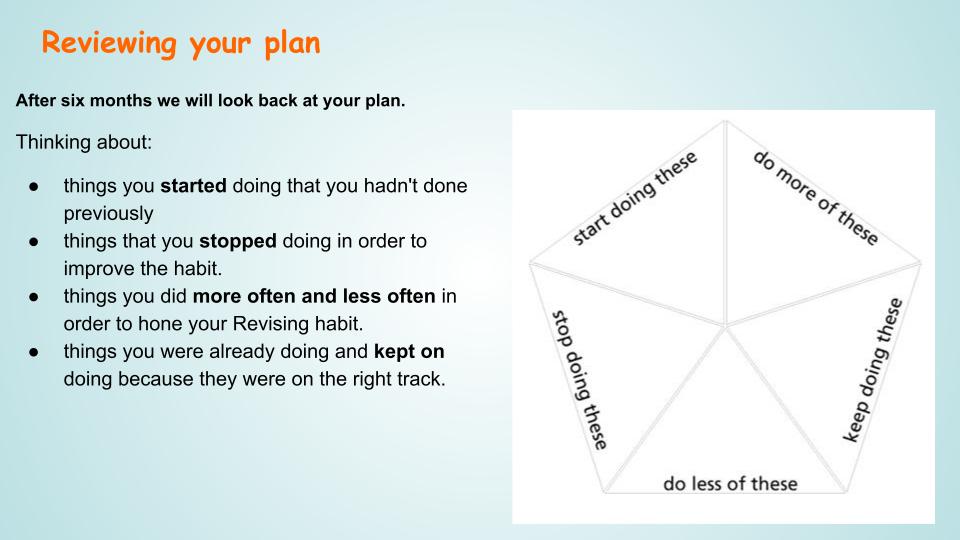
A lesson at the end of the six months should enable students to look back at their plan, and any notes they have made, using this useful technique.

Look closely at what you have changed about your way of working.

Think about:

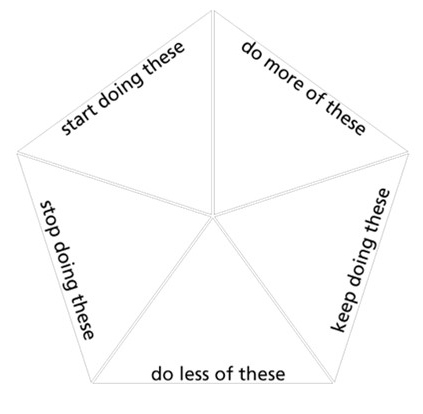
  • Things you started doing that you hadn’t done previously
  • Things that you stopped doing in order to improve the habit.
  • Things you did more often and less often in order to hone the habit.
  • Things you were already doing and kept on doing because they were on the right track.


I stopped . . .

I tried . . .

I used . . .


Continue Reading

2s.

Lesson 2

a) What this section contains.

This section offers ideas and resources for you to use in constructing a lesson, or even two lessons, to enable students explore Questioning and how it grows as an effective learning habit.

We leave the specific lesson design to you but offer pointers and resources in the sections below including:

  • suggested content areas
  • a clear definition of Questioning
  • a list of how teachers help students to use the habit
  • clear explanations of how Questioning develops when encouraged
  • downloadable resources for use by students
  • a slide presentation for use in the lesson

BUTTON UPDATE NEEDED

Download Presentation (pdf)

b) Suggested content areas

  1. What does Questioning mean?
  2. What are the different Questioning habits?
  3. How do teachers help students to develop Questioning habits?
  4. How Questioning habits grow?
  5. Where students’ Questioning strengths lie now.

Your aim for this lesson should be to help students understand:

  • what the learning habit Questioning is really all about
  • how it can develop
  • where they are now in the growth of this habit

In the sections below you will find: explanations of how the learning habit works; a quiz to help students spot themselves Questioning in lessons; ideas about how teachers help students become better at Questioning; a chart showing how Questioning habits grow, given the right circumstances.

Content areas 1 and 2: What being a good Questioner means.

Being ready, willing and able

Revising is about the way we work on something to improve it. Whether it be icing a cake, solving a tricky maths problem or creating a well-crafted essay, all require effort, retries and determination to satisfy ourselves that the result pleases us; that it comes up to scratch. How we tackle such a job isn’t just a case of monitoring as we go along or reviewing the result: it will be influenced by other qualities. Our attitude to change, whether we have a sense of quality and what sort of validation we need.


Being a good Questioning involves:

[GET BELOW FROM 1t, d) ]
  • self-monitoring how things are going, keeping an eye on the goal;
  • expecting the unexpected, being ready to re-shape, re-order, re-form plans to take account of new circumstances;
  • staying alive to new, unforeseen opportunities and ideas;
  • looking at what you are doing with a critical eye;
  • striving to be the best you can be;
  • making sure things are on track and making improvements along the way.

UPDATE

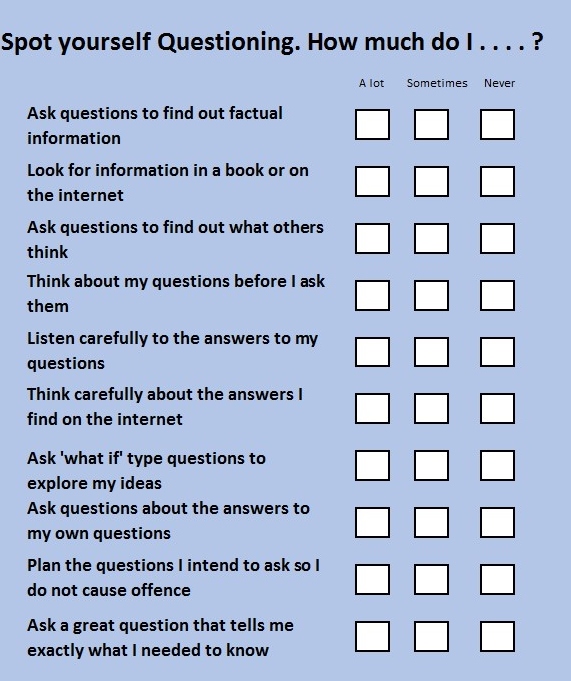
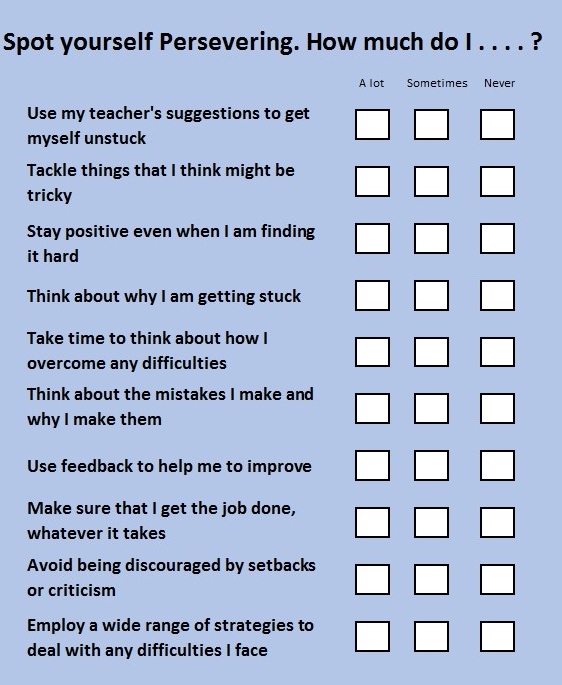
Resource 1 Spot yourself Questioning in lessons

Use this resource to help to get students tuned in – offer them time to think about their Questioning habits. Unpack each of statements. Use of the chart could be extended into other lessons too. At the end of this lesson encourage students to take it with them into lessons and make a note of whether and how often they display these characteristics.

Students will take the outcomes of using this little questionnaire into account when they tackle lesson 3.


UPDATE


Content area 3: How teachers help students become Questioners

As teachers you will:

{UNCERTAIN WHERE THIS CAME FROM]

  • encourage students to change the way you are doing things if necessary
  • help students to view change as a natural part of learning
  • want students to view making corrections as an opportunity to improve
  • focus your feedback on what students need to do to improve, rather than simply praising what they got right
  • offer students checklists that help them to keep an eye on how their work is progressing
  • create opportunities for them to stop and to consider how things are going

Feel free to add your own ideas to this list.

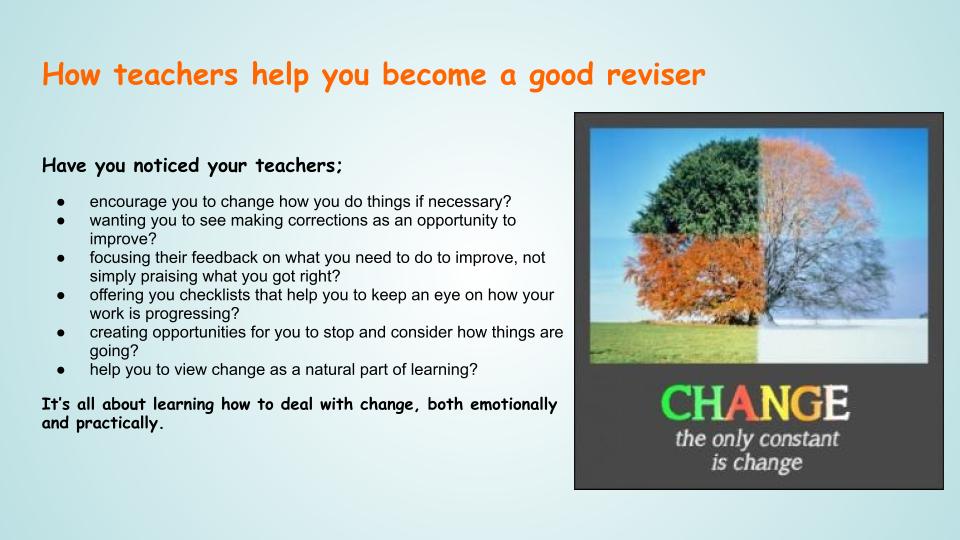
Good revisers have had to learn how to deal with change, both emotionally and practically. If you’re someone who just wants or likes things to stay the same you’re unlikely to recognise the need to change your ideas or the way you do something.

A good reviser needs to know/understand what ‘good’ looks like; how to keep an eye on how things are going; be willing to evaluate how good things are against external standards. Growing students’ revising habits is much more than encouraging them ‘having another go’.


UPDATE


Content area 4 and Resource 2: Progression in Questioning

A progression chart for Questioning

It may be tempting to think that either you do, or you do not, use your Questioning habits – that either you are inflexible and reluctant to change, or that you are flexible and open to change. This could not be further from the truth!

The reality is that there are lots of little steps, skills and attitudes that lie between these two extremes.

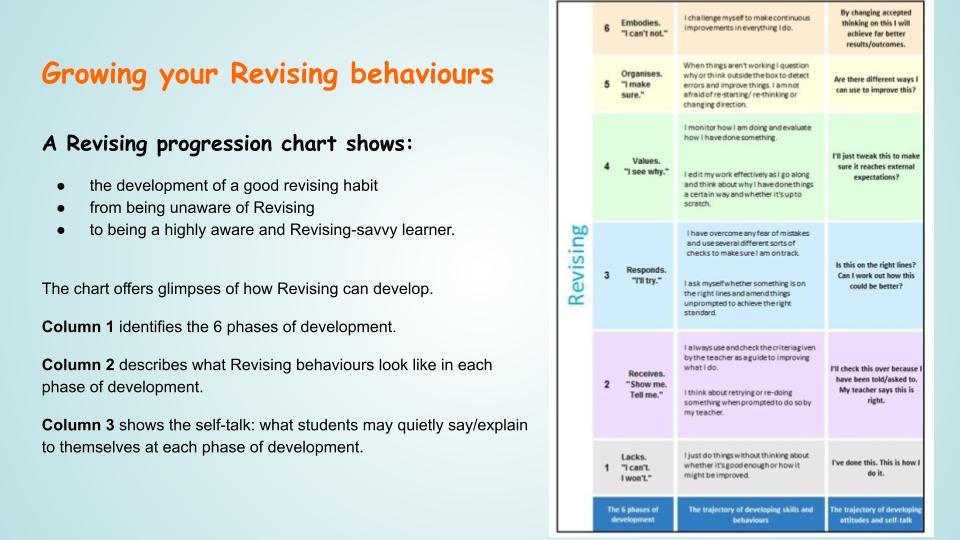
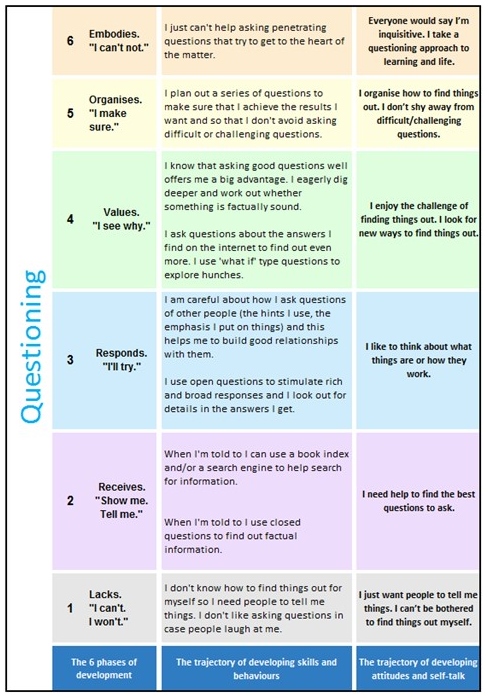
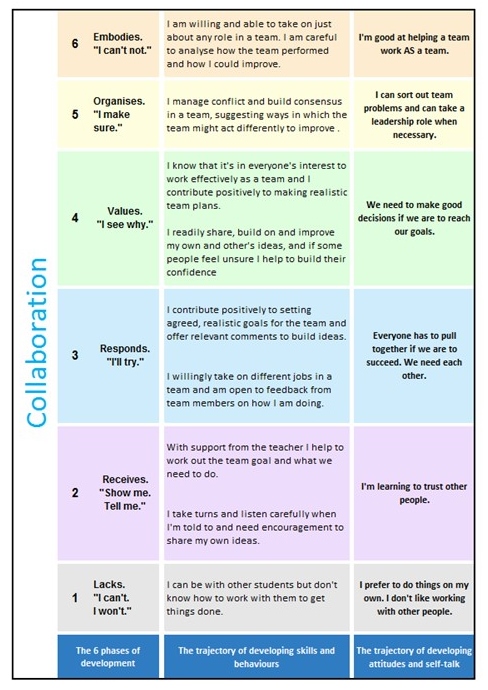
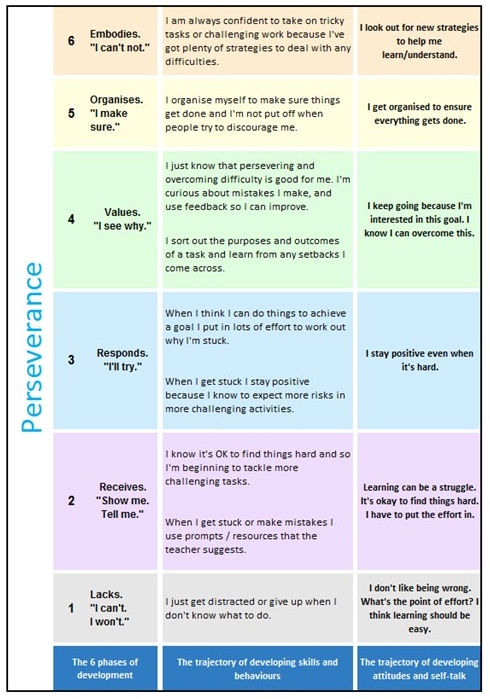
The chart alongside outlines a possible trajectory of the development of a good Questioning habit. It moves from being the learner at the bottom who is unaware of Questioning, to the highly aware and Questioning savvy learner at the top. Between the two lies a progression that can be mapped and described. The statements in the diagram hint at the journey from novice Questioner to an expert Questioner.


UPDATE


Content area 4: What the columns are about

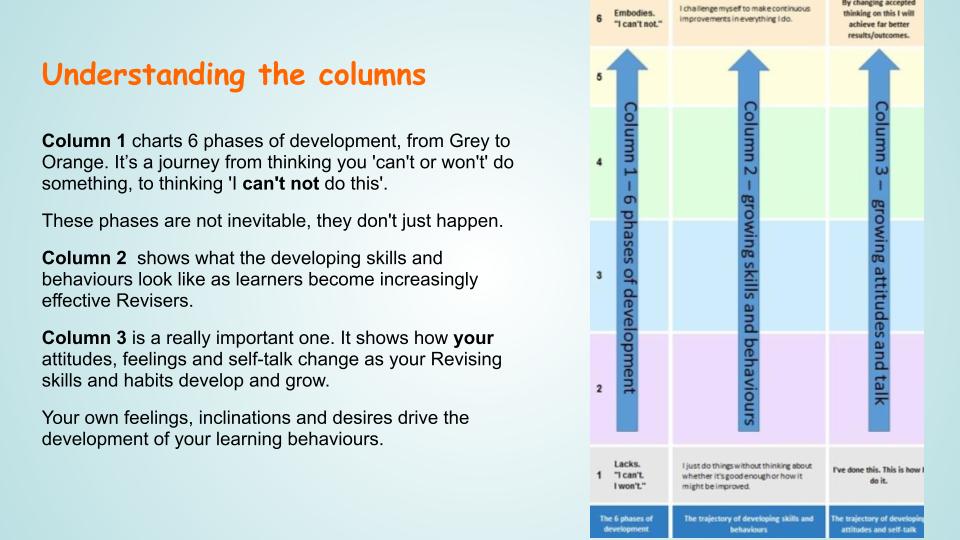
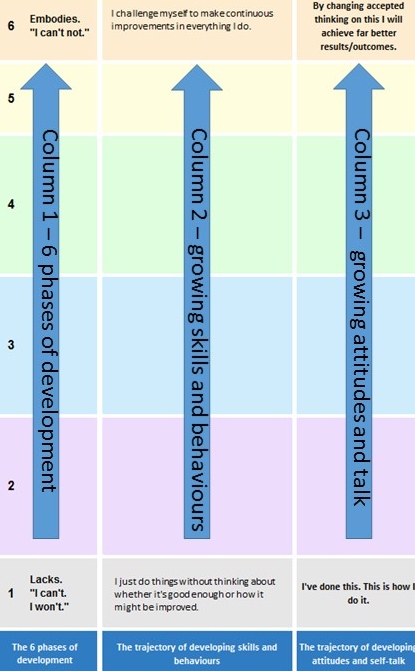
Column 1 charts 6 phases of development, going from Grey at the bottom, through to Orange at the top. These phases describe the journey from an attitude of ‘I can’t / I won’t’ at the bottom, through to ‘I can’t not do this’ at the top. These phases are not inevitable or automatic; they don’t just happen.

Column 2 puts flesh on these phase bones, and identifies what the developing skills, behaviours, habits look like as learners become increasing more effective as Questioning.

Column 3 is a really important one. It shows how attitudes and self-talk change as Questioning skills develop and grow. Interestingly it’s one’s own feelings, inclinations and desires that drive the development of any of the learning behaviours. If you don’t know or care about it it’s unlikely to improve.

UPDATE


Content area 5: Resource 3 Where students’ Questioning strengths lie

To make Questioning come alive and feel real it’s important to offer learners a closer look at each phase. To enable this enquiry we offer two resources. You could use the slides shown below or the same slides presented as a downloadable PDF for you to print. How you explore this information with students we leave to you.

Looking closely at grey from the learners’ viewpoint

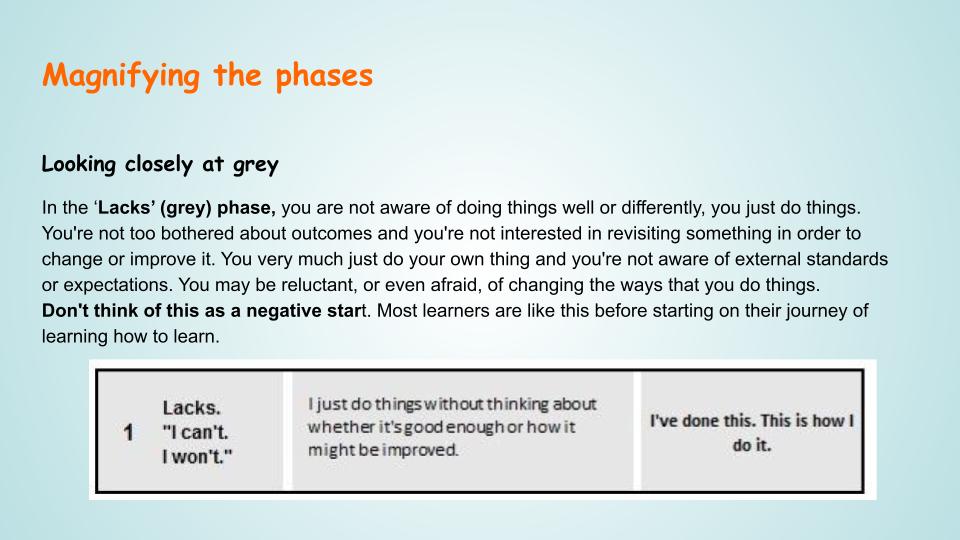
In this ‘Lacks’ (grey) phase, you are not aware of doing things well or differently, you just do things. You’re not too bothered about outcomes and you’re not interested in revisiting something in order to change or improve it. You very much just do your own thing and you’re not aware of external standards or expectations. You may be reluctant, or even afraid, of changing the ways that you do things. But don’t think of this as a negative start. Most learners start like this before making a start on their journey of learning how to learn.


update

Looking closely at purple

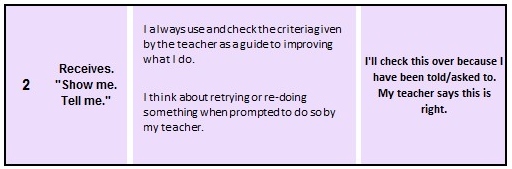
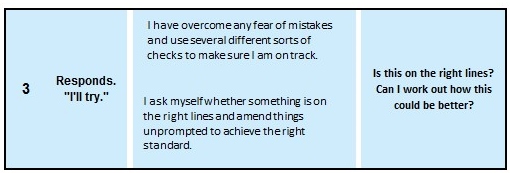
In the Receives (purple) phase, you are beginning to make checks on how you are doing against given criteria when you are prompted to do so. Your teachers are kick starting your Revising learning journey. You can talk about what you did and sometimes how you did it. You rely on your teachers or parents to tell you that what you have done is valuable or worthwhile. You have learned to accept and act on your teacher’s advice to have a second go at something and/or to pause and check how things are going. You have to go through this phase before moving on to the next.


update

Looking closely at blue

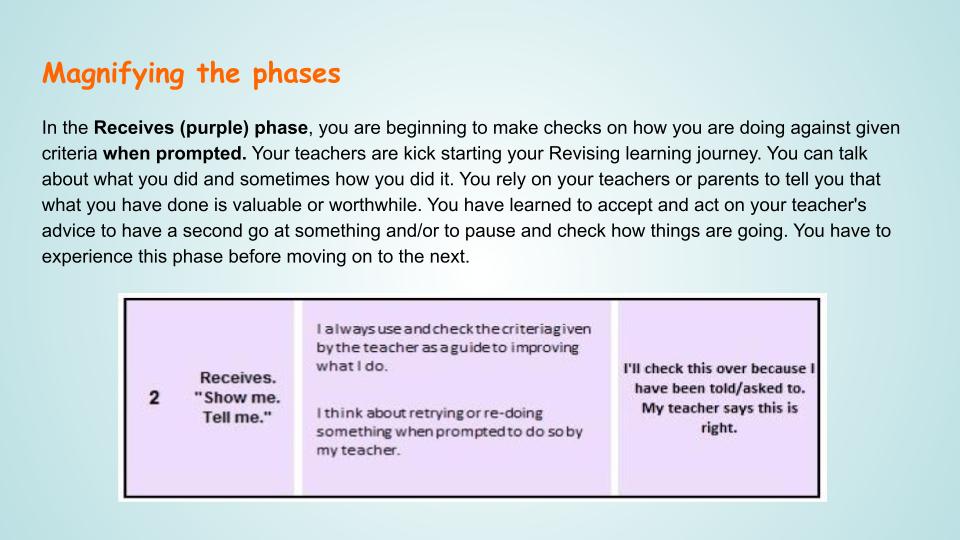
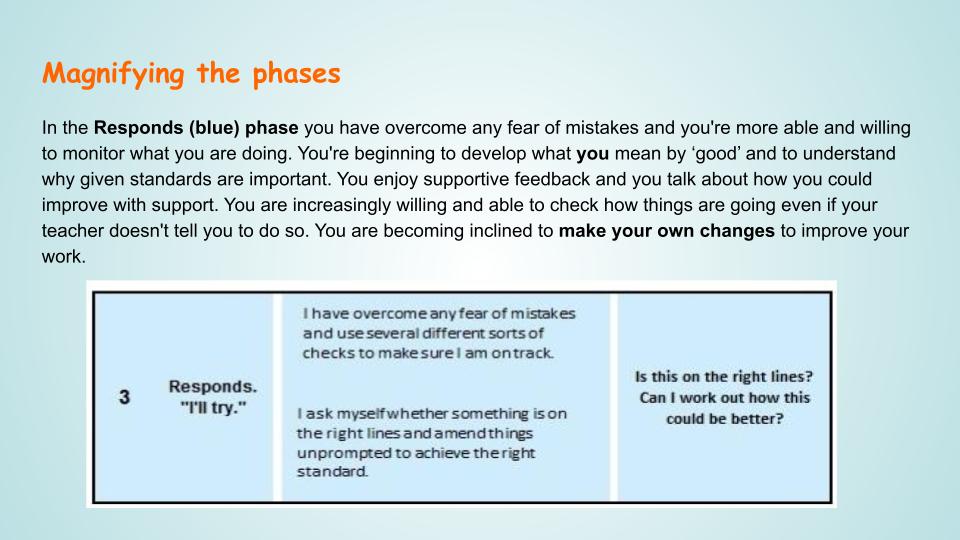
In the Responds (blue) phase you have overcome any fear of mistakes and you’re more able and willing to monitor what you are doing. You’re beginning to develop what you mean by ‘good’ and to understand why given standards are important. You enjoy supportive feedback and you talk about how you could improve with support. You are increasingly willing and able to check how things are going even if your teacher doesn’t tell you to do so. You are becoming inclined to make your own changes to improve your work.

update

Looking closely at green

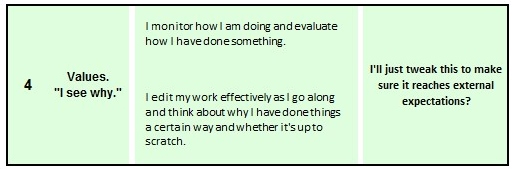
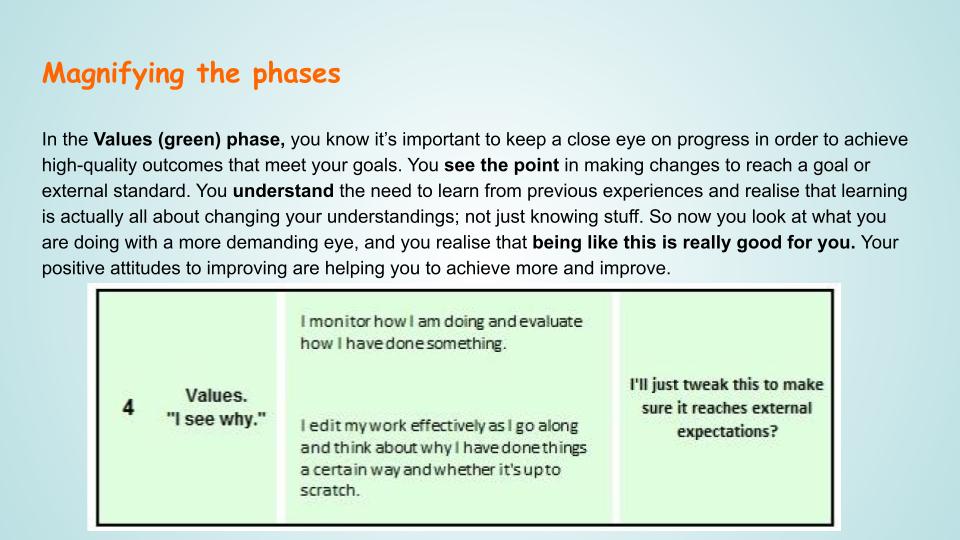
In the Values (green) phase, you understand the importance of keeping a close eye on progress in order to achieve high-quality outcomes that meet your goals. You see the point in making changes to reach a goal or external standard. You understand the need to learn from previous experiences and realise that learning is actually all about changing your understandings; not just knowing stuff. So now you look at what you are doing with a more critical or demanding eye and have realised that being like this this is really good for you. Your positive attitudes to improving are helping you to achieve more and improve.

update

Looking beyond green

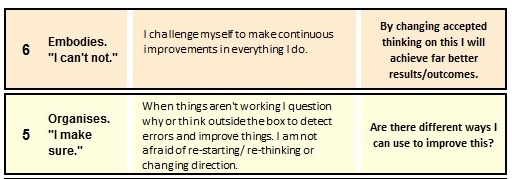
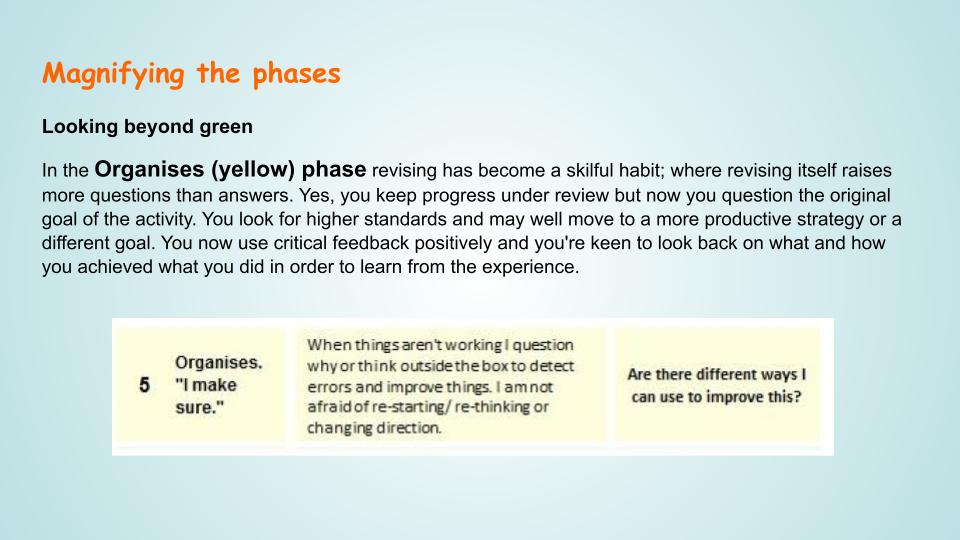
In the Organises (yellow) phase revising has become a skilful habit; where revising itself raises more questions than answers. Yes, you keep progress under review but now you question the original goal of the activity. You look for higher standards and may well move to a more productive strategy or a different goal. You now use critical feedback positively and you’re keen to look back on what and how you achieved what you did in order to learn from the experience.

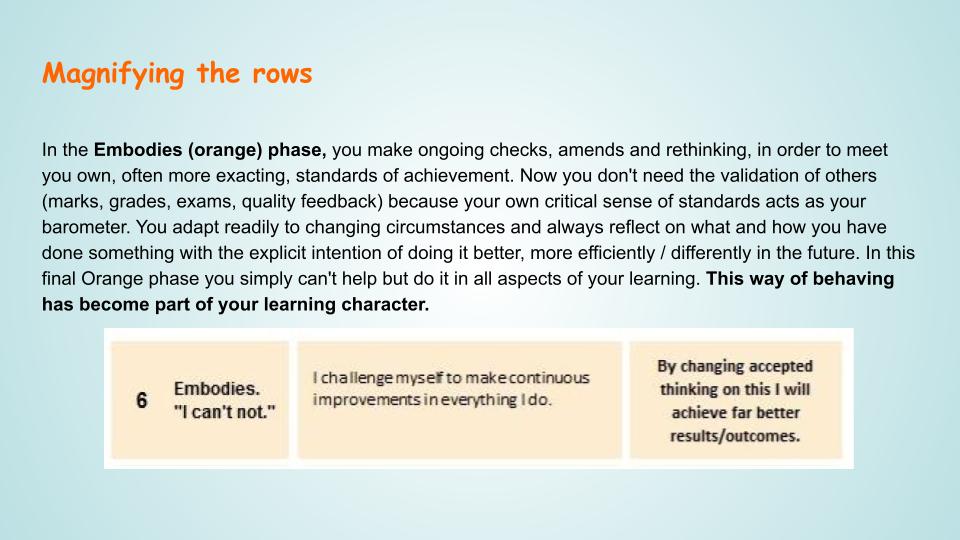
In the Embodies (orange) phase, you make ongoing checks, amends and rethinking, in order to meet you own, often more exacting, standards of achievement. Now you don’t need the validation of others (marks, grades, exams, quality feedback) because your own critical sense of standards acts as your barometer. You adapt readily to changing circumstances and always reflect on what and how you have done something with the explicit intention of doing it better, more efficiently / differently in the future. In this final Orange phase you simply can’t help but do it in all aspects of your learning. This way of behaving has become a defining part of your learning character.


update


Content area 5: Where students’ Questioning strengths lie

Reflecting on learning

Using an effective thinking routine

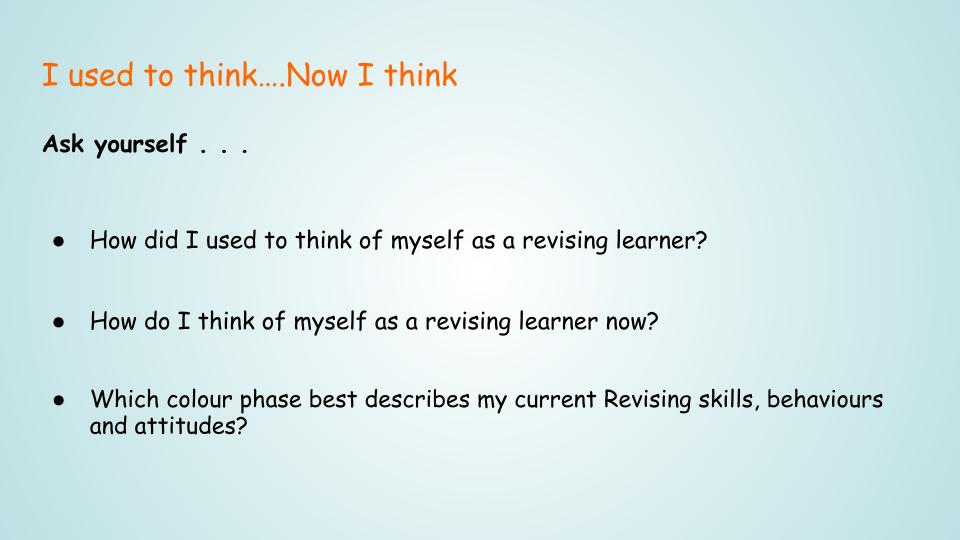
Invite learners to reflect on what they have learned about themselves as a learner by using the Visible Thinking Routine ‘I used to think… Now I think’ . . . before estimating which colour row best describes their current Questioning skills, behaviours, attitudes and habits.

It’s fair to say this first estimate won’t be their last because the next lesson gives time to reassess their decisions. But it gives them a basis to work on before looking more closely at themselves learning during their lessons next week.


update


Keeping awareness alive

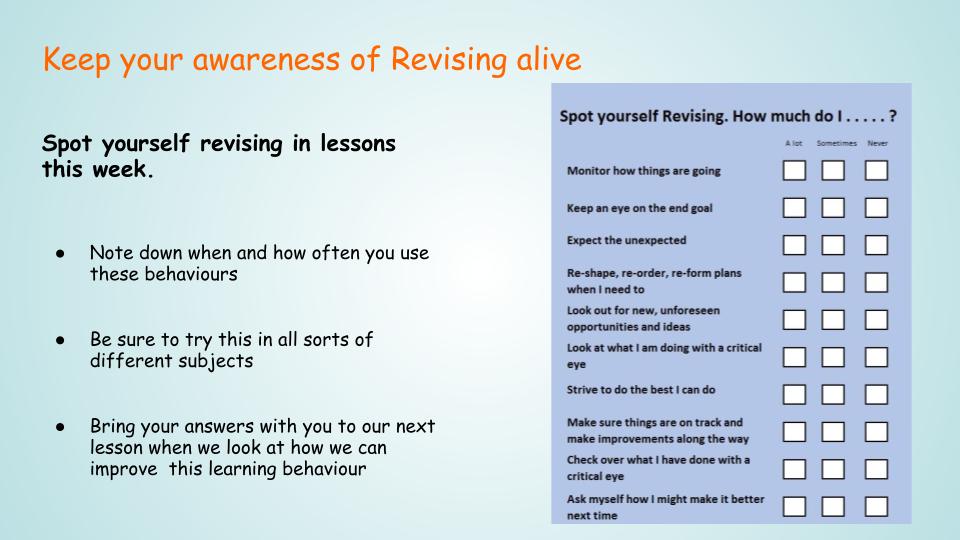
Using the checklist from the beginning of the lesson invite learners to take the resource with them into lessons over the next week. We suggest they use the resource after at least three lessons across the week. You could leave the choice of lessons to them or maybe suggest they select a subject they enjoy/find fulfilling and one they find tricky. Probably wise to advise them to complete the resource after rather than during the lessons.

Emphasise the need to bring the results of their observations to the next lesson on Questioning where they will be used to help them further their understanding of themselves as learners.

update


Lesson 2

a) What this section contains.

This section offers ideas and resources for you to use in constructing a lesson, or even two lessons, to enable students explore Questioning and how it grows as an effective learning habit.

We leave the specific lesson design to you but offer pointers and resources in the sections below including:

  • suggested content areas
  • a clear definition of Questioning
  • clear explanations of how Questioning develops when encouraged
  • downloadable resources for use by students
  • a slide presentation for use in the lesson

b) Suggested content areas

  1. What does Questioning mean?
  2. How do students feel about asking questions?
  3. How Questioning habits grow?
  4. Where students’ Questioning strengths lie now.

Your aim for this lesson should be to help students understand:

  • what the learning habit Questioning is really all about
  • how it can develop
  • where they are now in the growth of this habit

In the sections below you will find: explanations of how the learning habit works; an activity to help students to reflect on their beliefs about Questioning; to a quiz to help students spot themselves Questioning in lessons; a chart showing how Questioning habits grow, given the right circumstances.

1) What being a good Questioner means.

Being ready, willing and able

Questioning is about . . .

Being a good Questioner involves:

  • Be curious about all experiences;
  • Dig beneath the surface, asking why something is happening as it is;
  • Play with ideas and possibilities;
  • Be systematic and adopt a logical approach — exploring a line of thought purposefully; posing questions that follow a rational path towards an emerging goal;
  • Be socially aware in asking questions of others, exhibiting genuine interest in other people;
  • Be comfortable with uncertainty and ambiguity; enjoy different points of view and contrary evidence.


2) How do students feel about asking questions?

Provoke a table-based discussion

a) What do students currently believe?

b) What do good questioners believe?

Create a short ‘quiz’ exploring beliefs about questioning


Resource 1 Spot yourself Questioning in lessons

Use this resource to help to get students tuned in – offer them time to think about their Questioning habits. Unpack each of statements. Use of the chart could be extended into other lessons too. At the end of this lesson encourage students to take it with them into lessons and make a note of whether and how often they display these characteristics.

Students will take the outcomes of using this little questionnaire into account when they tackle lesson 3.


UPDATE


Content area 3: How teachers help students become Questioners

As teachers you will:

{UNCERTAIN WHERE THIS CAME FROM]

  • encourage students to change the way you are doing things if necessary
  • help students to view change as a natural part of learning
  • want students to view making corrections as an opportunity to improve
  • focus your feedback on what students need to do to improve, rather than simply praising what they got right
  • offer students checklists that help them to keep an eye on how their work is progressing
  • create opportunities for them to stop and to consider how things are going

Feel free to add your own ideas to this list.

Good revisers have had to learn how to deal with change, both emotionally and practically. If you’re someone who just wants or likes things to stay the same you’re unlikely to recognise the need to change your ideas or the way you do something.

A good reviser needs to know/understand what ‘good’ looks like; how to keep an eye on how things are going; be willing to evaluate how good things are against external standards. Growing students’ revising habits is much more than encouraging them ‘having another go’.


UPDATE


Content area 4 and Resource 2: Progression in Questioning

A progression chart for Questioning

It may be tempting to think that either you do, or you do not, use your Questioning habits – that either you are inflexible and reluctant to change, or that you are flexible and open to change. This could not be further from the truth!

The reality is that there are lots of little steps, skills and attitudes that lie between these two extremes.

The chart alongside outlines a possible trajectory of the development of a good Questioning habit. It moves from being the learner at the bottom who is unaware of Questioning, to the highly aware and Questioning savvy learner at the top. Between the two lies a progression that can be mapped and described. The statements in the diagram hint at the journey from novice Questioner to an expert Questioner.


UPDATE


Content area 4: What the columns are about

Column 1 charts 6 phases of development, going from Grey at the bottom, through to Orange at the top. These phases describe the journey from an attitude of ‘I can’t / I won’t’ at the bottom, through to ‘I can’t not do this’ at the top. These phases are not inevitable or automatic; they don’t just happen.

Column 2 puts flesh on these phase bones, and identifies what the developing skills, behaviours, habits look like as learners become increasing more effective as Questioning.

Column 3 is a really important one. It shows how attitudes and self-talk change as Questioning skills develop and grow. Interestingly it’s one’s own feelings, inclinations and desires that drive the development of any of the learning behaviours. If you don’t know or care about it it’s unlikely to improve.

UPDATE


Content area 5: Resource 3 Where students’ Questioning strengths lie

To make Questioning come alive and feel real it’s important to offer learners a closer look at each phase. To enable this enquiry we offer two resources. You could use the slides shown below or the same slides presented as a downloadable PDF for you to print. How you explore this information with students we leave to you.

Looking closely at grey from the learners’ viewpoint

In this ‘Lacks’ (grey) phase, you are not aware of doing things well or differently, you just do things. You’re not too bothered about outcomes and you’re not interested in revisiting something in order to change or improve it. You very much just do your own thing and you’re not aware of external standards or expectations. You may be reluctant, or even afraid, of changing the ways that you do things. But don’t think of this as a negative start. Most learners start like this before making a start on their journey of learning how to learn.


update

Looking closely at purple

In the Receives (purple) phase, you are beginning to make checks on how you are doing against given criteria when you are prompted to do so. Your teachers are kick starting your Revising learning journey. You can talk about what you did and sometimes how you did it. You rely on your teachers or parents to tell you that what you have done is valuable or worthwhile. You have learned to accept and act on your teacher’s advice to have a second go at something and/or to pause and check how things are going. You have to go through this phase before moving on to the next.


update

Looking closely at blue

In the Responds (blue) phase you have overcome any fear of mistakes and you’re more able and willing to monitor what you are doing. You’re beginning to develop what you mean by ‘good’ and to understand why given standards are important. You enjoy supportive feedback and you talk about how you could improve with support. You are increasingly willing and able to check how things are going even if your teacher doesn’t tell you to do so. You are becoming inclined to make your own changes to improve your work.

update

Looking closely at green

In the Values (green) phase, you understand the importance of keeping a close eye on progress in order to achieve high-quality outcomes that meet your goals. You see the point in making changes to reach a goal or external standard. You understand the need to learn from previous experiences and realise that learning is actually all about changing your understandings; not just knowing stuff. So now you look at what you are doing with a more critical or demanding eye and have realised that being like this this is really good for you. Your positive attitudes to improving are helping you to achieve more and improve.

update

Looking beyond green

In the Organises (yellow) phase revising has become a skilful habit; where revising itself raises more questions than answers. Yes, you keep progress under review but now you question the original goal of the activity. You look for higher standards and may well move to a more productive strategy or a different goal. You now use critical feedback positively and you’re keen to look back on what and how you achieved what you did in order to learn from the experience.

In the Embodies (orange) phase, you make ongoing checks, amends and rethinking, in order to meet you own, often more exacting, standards of achievement. Now you don’t need the validation of others (marks, grades, exams, quality feedback) because your own critical sense of standards acts as your barometer. You adapt readily to changing circumstances and always reflect on what and how you have done something with the explicit intention of doing it better, more efficiently / differently in the future. In this final Orange phase you simply can’t help but do it in all aspects of your learning. This way of behaving has become a defining part of your learning character.


update


Content area 5: Where students’ Questioning strengths lie

Reflecting on learning

Using an effective thinking routine

Invite learners to reflect on what they have learned about themselves as a learner by using the Visible Thinking Routine ‘I used to think… Now I think’ . . . before estimating which colour row best describes their current Questioning skills, behaviours, attitudes and habits.

It’s fair to say this first estimate won’t be their last because the next lesson gives time to reassess their decisions. But it gives them a basis to work on before looking more closely at themselves learning during their lessons next week.


update


Keeping awareness alive

Using the checklist from the beginning of the lesson invite learners to take the resource with them into lessons over the next week. We suggest they use the resource after at least three lessons across the week. You could leave the choice of lessons to them or maybe suggest they select a subject they enjoy/find fulfilling and one they find tricky. Probably wise to advise them to complete the resource after rather than during the lessons.

Emphasise the need to bring the results of their observations to the next lesson on Questioning where they will be used to help them further their understanding of themselves as learners.

update


Continue Reading

1s.

Lesson 1

a) An activity to introduce students to the idea of Questioning

As a teacher you will gain real understanding of the use and power of learning behaviours when you knowingly use/activate such behaviours in the classroom.

The type of activity given below aims to open up a conversation about Revising and demonstrate how opinions and hypotheses change and are revised as more information becomes available. It underlines the importance of speculative thinking that is unlikely to be right first time; a feature that lies at the heart of Revising.

NEED TO INSERT


20 QUESTIONS ????


b) Many ways to introduce learning habits

There are of course many ways to introduce the habit of Questioning but here are five culture shifts to think about and get you started.

Ask yourself – how might you:

  • Harness display to illustrate that first attempts are rarely the finished article
  • Ensure that students act on your feedback and do things differently next time
  • Encourage students to monitor how things are going, and change tack if necessary
  • Encourage students to evaluate the extent to which they have met the required standards
  • Deliberately create situations that require a change of mind.

See section 4t for practical classroom practice suggestions.


Continue Reading

5t. Develop your practice for Questioning

a) Cultivating learning habits ultimately involves:

  • Providing rich and varied occasions for exercising learning habits;
  • Infusing learning habits into lessons to enhance content understanding;
  • Recognising and celebrating the use and growth of learning habits;
  • Expecting students to take ownership of and responsibility for their own learning habits;
  • Exploring the development of learning habits with students over time.

As a teacher you are an influential character builder and so need to be mindful of how you help students strengthen their learning habits. It takes most teachers between 2 or 3 years to become really fluent with this way of teaching. So, go easy on yourself because small steps often prove to be big levers for change.


b) First develop your coaching language

Below you’ll find a range of things you could say to nudge Questioning. When you use this kind of language you are talking as a learning coach, encouraging your students to think for themselves. Using such statements encourages your students to:

  • imitate you;
  • start to think in this way;
  • become conscious of these phrases and their meaning.

Gradually you will hear some of the ideas pop up in students’ self-talk….in speech or even in writing from time to time, but mostly these will go on inside their heads. As your work on Questioning gathers pace see if you can detect students who talk, or think, in these ways.

c) Teacher talk – as a learning coach

10 ideas to ensure your students do the thinking for themselves

  1. That’s an interesting/insightful question.
  2. What questions did we ask last time?
  3. You might find it useful to try and predict what you think will happen.
  4. Could you speculate about the possible results and solutions.
  5. What sort of questions might help you get a bit further with this problem?
  6. Do you believe that? Might there be more to it?
  7. A closed question might focus your search.
  8. How can you get to the bottom of this?
  9. A hypothetical question might help to stimulate your ideas.
  10. How can you phrase that so that you don’t upset people?

d) Have a think

  • Which of these Questioning nudges might you start using?
  • In which particular lessons would such nudging be most useful?
  • How will most of your students respond to such nudges?
  • Will this way of engaging be more popular with girls or boys?
  • What other nudging ideas might you add to the list?

Make a note of…

Little_r

  • Students’ reactions to the nudges.
  • Ideas about why this might be.
  • Ways in which you could further encourage students to imitate this metacognitive self-talk.
  • Any positive or negative impact of these Questioning behaviours.

e) What to start and stop

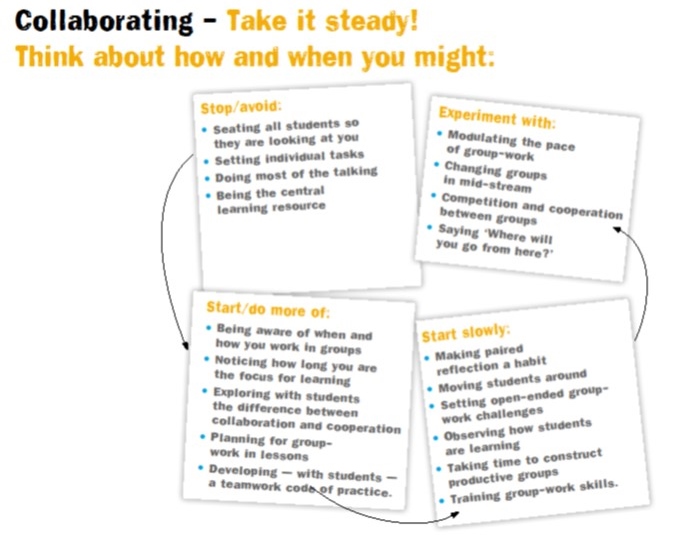
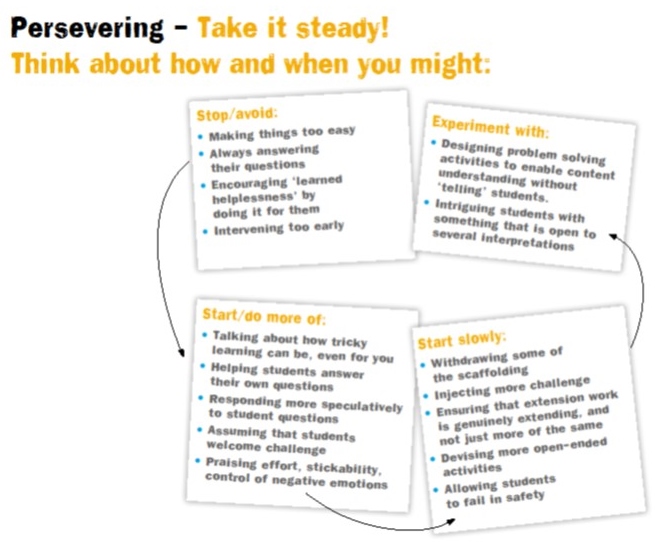
Here are a few more ideas you might want to try. Take it steady, this way of teaching can be a big but exciting shift so it’s worth doing it slowly and thoughtfully. Look first at the Stop/avoid ideas. Some of these are far from trivial but it’s best to try to remove them before starting on the Start/do more of, Start slowly and Experiment with ideas

f) What do you think?

  • Which of the ideas appealed to you most?
  • Can you see ways of incorporating these into your subject/class routines?
  • Which would make the biggest difference to your students?
  • Which would make your life easier?

Make a note of…Little_r

  • Ideas that you want to try and the impact you hope they will have on your teaching and on your students.


Continue Reading

4t. Ideas for classroom practice

a) Ideas to encourage a Questioning frame of mind

In the early stages of building your students’ learning power your role is to:

  • make them aware of the behaviour
  • talk about it (what, how, why, when, if)
  • celebrate its use
  • give opportunities to practise it, both in lessons and elsewhere
  • reflect on it to improve it.

b) Use a staged start for using Questioning…

  1. Firstly... make students aware of the use and importance of Questioning…what, when, where, why, how they are or could be doing it
  2. Then… explore Questioning a little more through the language of Questioning
  3. Try... using Questioning as a lesson starter to tune students into using it
  4. Then start... blending Questioning into the way you teach the content. Use specific Questioning strategies to deepen content understanding.
  5. Ensure... students reflect on the success or otherwise of their Questioning activities.


b1. Make students aware of Questioning

How you make your students aware of the actions and words that describe the behaviour and why it is important to use it.

Primary

Engage with a ‘mystery’ object in a bag

Invite pupils to ask questions to find out what the mystery object is.

  •  Vary the complexity according to age and experience of class. Use clues to narrow down the possibilities for younger children e.g. it’s something you’d find in the garden. Young children will tend to want to ‘guess’. They will need encouragement to ask questions before offering solutions.
  •  Ask talk partners to come up with two ‘I wonder’ questions e.g.” I wonder what it’s made of?”
  •  Set a limit, say 10/15/20 questions allowing the children to guess before showing  the object.
  •  Key is to focus on the questions; acknowledge and reward good questions.
  •  At the end compile a list of some of the useful/unusual/interesting questions that were asked.

Secondary

Question focused research

magnifying

Ask students to;

  • research possible types of questions using the Internet.
  • record and analyse the types of questions used in their peer group
  • compare their research findings and their observations.

Use this to expand the range of questions used in class and to create guidelines for asking good (search) questions.


Primary

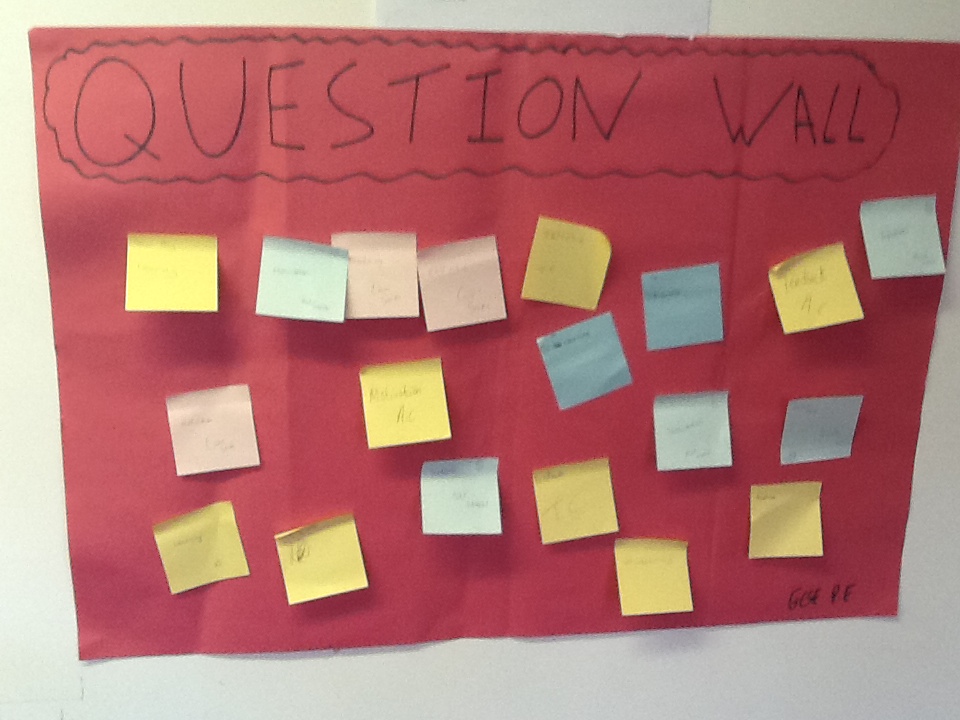
Put questions on display

Click to enlarge

Create a Question Wall in the classroom to illustrate and prompt questioning. For example, the question wall might focus on student generated questions about the topic in hand. Use their questions to help to focus / shape their enquiry.

Establish ground rules for asking questions e.g. speaking clearly, think before you ask…is this an important/relevant question? Do I know the answer? Get to the point. Listen to the answer.


Secondary

Questions on display


Click to enlarge

Create displays to support students’ questioning skills. Go on to

  • Discuss what sort of questions these are — open, closed, speculative, divergent, clarifying, essential, subsidiary
  • How they might lead to different types of information/reactions/strategies to gather information.
  • Draw up and display lists of generic questions to use whenever students undertake certain types of task, e.g. scientific investigation.
  • Refer to and extend these question groups regularly.

Create, with students, a set of questions they might ask when they are stuck. These might include; What did I do last time when  . . . .  ?  What do I already know about this? What should I do first? And next? I am finding this tricky because . . . . Who might know? Where can I look?

b2. Explore the language of Questioning

How you might extend the language and understanding of this behaviour

Primary

The why gameScreen Shot 2015-08-18 at 13.23.50

Start a story with an opening line. Encourage the students to keep on asking each other Why? and giving answers until they have created a story. Opening lines can be a simple

“The red van roared down the street”

but lead to all sorts of questions —“Why was the van red?” “Why was it roaring?” which lead on to other ‘Why?’ questions.

Vary the game by starting with a riddle or conundrum, or requiring different types of questions.

Secondary

Extend the language of questioning

Trainer Notes

Collect ideas about the purpose of questions.

Relate questioning to well known sayings

What do we mean when we say …

Curiosity killed the cat

I need to get to the bottom of this

More questions than answers

b3. Use Questioning as a lesson/project starter

Use a quick starter to key students into the learning behaviour you want to concentrate on in the lesson. i.e. here you are starting up the questioning behaviour

Primary

Is your question important?

quesito everything

Identify a project which the class might investigate. Write a series of questions on separate pieces of cards and give each group a set of the cards. The group shuffle the cards and deal each student one card. They have to decide:

  • the best order for the questions, to do the project well
  • if they have to ask all the questions or whether
    some are irrelevant in the context
  • whether there are any missing questions and if so, what they might be
  • what they have learnt about questions from this.

Secondary

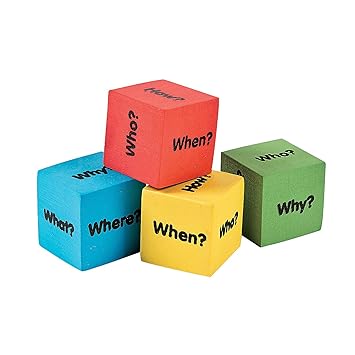
Questions you would like to ask

Image result for question dice

Tell students:

‘In 5 minutes, ‘something’ related to the upcoming lesson will walk in.

What are the three questions that we should ask it ?’

[The ‘something’ might be: a full stop; an improper fraction; osmosis; the Bible; a data base; the renaissance . . . . ] [The ‘three’ is important – it encourages students to prioritise their questions and consider which are most likely to uncover the information they require and discourages ‘random’ asking.]

Here is an idea where, by using questioning, students will gain an understanding of the content AND will develop a questioning habit.

b4. Focus on Questioning as a learning strategy

Draw out the questioning behaviour being used in a thinking routine.

Primary and Secondary

Visible Thinking Routine

Question Starts is a Visible Thinking Routine that provides students with the opportunity to practise developing good questions that provoke thinking and inquiry into a topic by offering a range of interesting question stems. For example:

Brainstorm a list of at least 12 questions about the topic, concept or object. Use these question-starts to help you think of interesting questions:

  • Why…?
  • How would it be different if…?another question mark
  • What are the reasons…?
  • Suppose that…?
  • What if…?
  • What if we knew…?
  • What is the purpose of…?
  • What would change if…?

Review the brainstormed list and star the questions that seem most interesting. Then, select one or more of the starred questions to discuss for a few moments.

Reflect: What new ideas do you have about the topic, concept or object that you didn’t have before?

DO NOT THINK THAT 5 BELOW IS THE RIGHT THING TO MOVE TO 1S. WHAT THINK?

5. An activity to highlight and strengthen questioning

Design specific activities to highlight and strengthen the behaviour

An activity to learn about questioning

Build a three-level ‘questioning habit‘ Image result for arnolfini

‘ReQuest’ is a structured process for deepening questions.

For example, start with a painting, in this case The Arnolfini Wedding by Jan van Eyck:

  • On-the-line questions: ask questions about the picture for which the answers can be seen just by looking closely at the picture: ‘How many candles are there?’ ‘What kind of room is it?’ ‘What is on the wall behind the people?’
  • Between-the-lines questions: questions whose answers can be inferred by looking at the picture: E.g. ‘What is the relationship between the two people?’ ‘How long ago was the picture painted?’ ‘What time of day is it?’
  • Beyond-the-line questions: questions whose answers need to be elicited by making interpretive links from the picture: E.g. ‘What did the artist think of his subjects?’ Is the number of candles significant?’ How does perspective work in the painting?

b5. Reflect on Questioning

Primary

Make reflecting on questioning part of everyday lessons

Here is a practical example of how you might develop the emotional climate of the classroom and make it questioning friendly

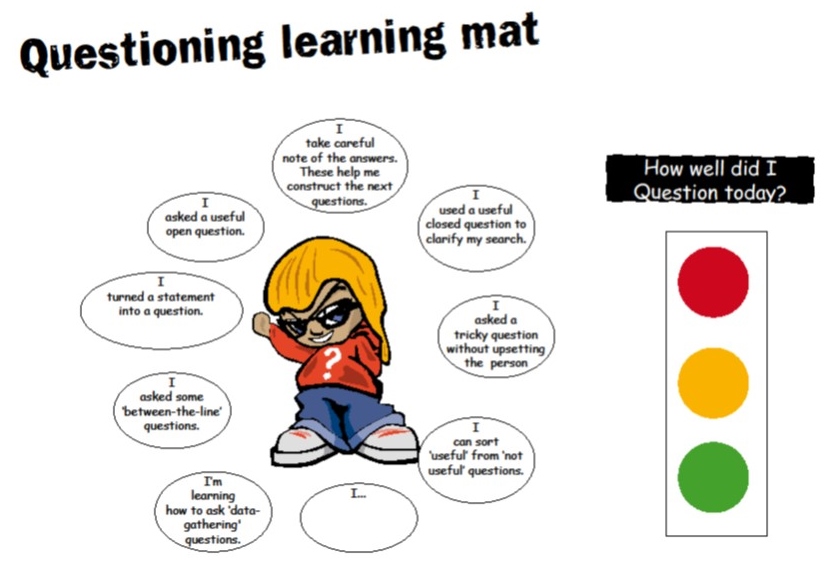
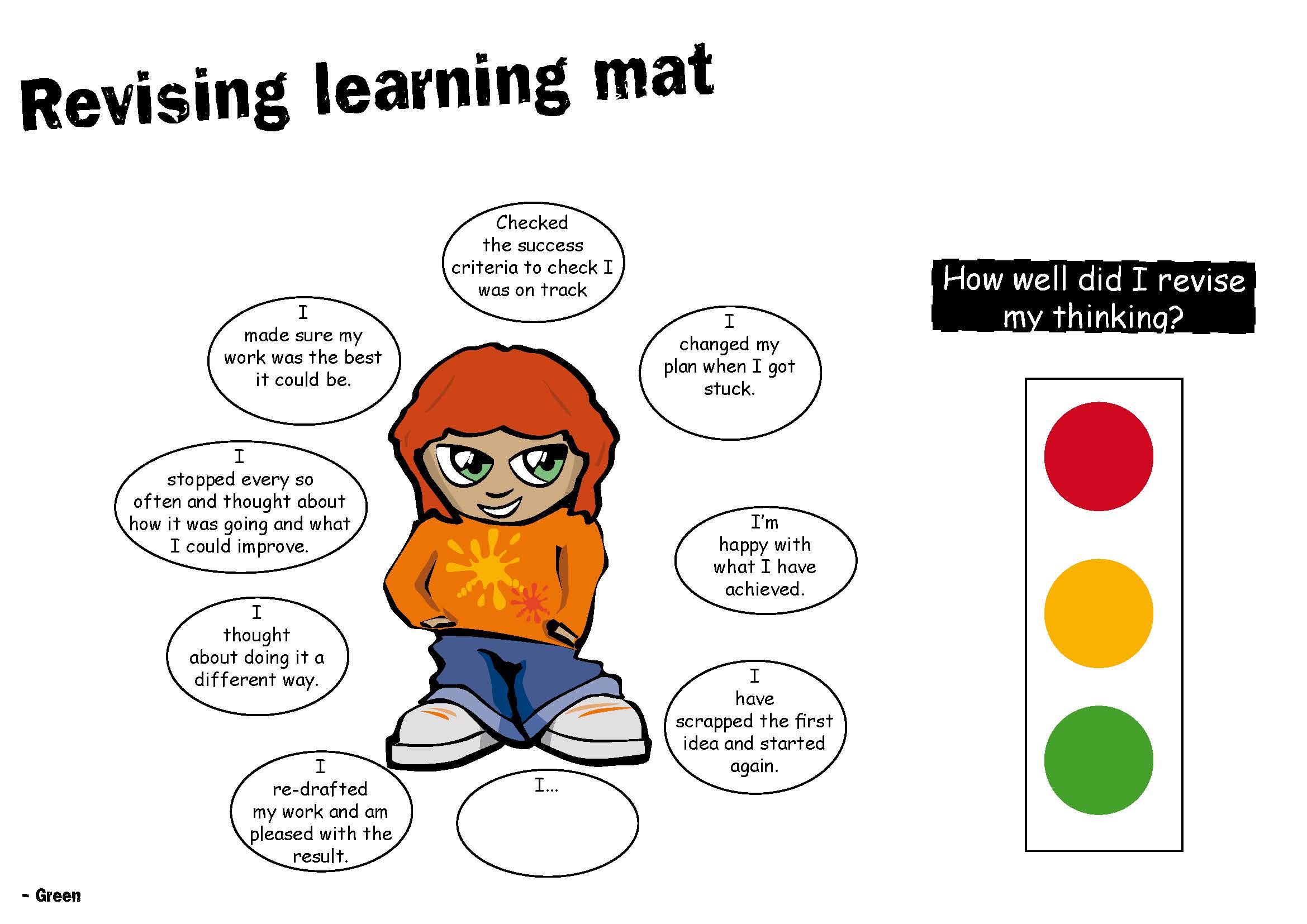
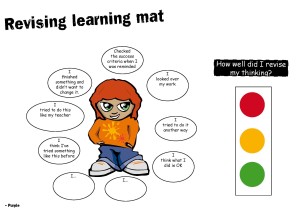
Reflective Learning Mats

Learning mats are A4 laminated sheets that show various aspects of a learning habit. Keep them on desks/tables or as part of a wall display. Students refer to them during lessons, using them as prompts about the finer aspects of a learning habit that is being stretched.

Download

Secondary

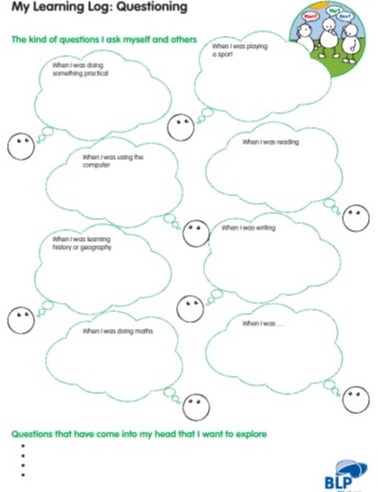
Reflect and build a powerful Question Bank

Give students time to reflect on the questions that students ask of themselves and of others in different situations. Which of these questions, when answered, proved to be the most powerful? Why was that? Which question, if asked, would be most likely to move thinking forward? Encourage students to build a bank of powerful questions that they can refer back to when necessary.

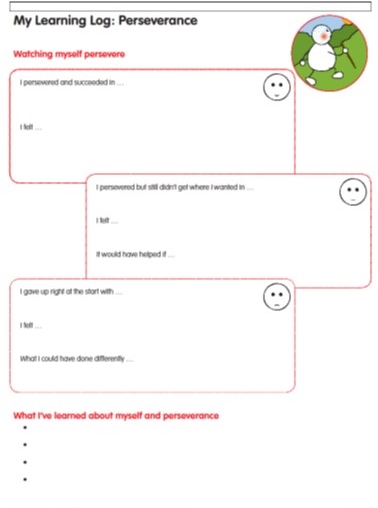
Learning Log

c) What do you think?

  • Can you see a use for any of the suggested activities?
  • Have you raised awareness of Questioning with your students?
  • Does your class have an agreed set of good Questioning strategies?
  • Which two ideas from above do you want to try out?
  • How long will you keep them going before you decide whether they have worked or not?

Make a note of…Little_r

  • What happens in your classroom in response to any of the above ideas.
  • How students’ behaviour changes over about 3 weeks of becoming more familiar and talking about the behaviour.
  • How your behaviour in the classroom changes as you use these ideas over time.


NB. None of the suggestions above will lead to instant understanding in students nor instant changes of behaviour. You will need to drip these, and others, in over time and keep building and refreshing your language of learning.


Continue Reading

3t. Understand how Questioning grows

a) Get a handle on progression

As with all learning behaviours, Questioning is not a case of ‘either you do, or you don’t’. Few learners lack curiosity about almost everything, and equally few are irrepressibly curious in all circumstances. Most lie somewhere between these two extremes. The diagram alongside – Learning: Poles Apart – offers an outline view of the whole journey; building students’ emotional learning habits; building their cognitive/thinking habits; building their social learning habits and their ability to manage the process of their learning. The reluctant learner on the left and the learning powered learner on the right show the beginnings and ends of a long, exciting, but far from inevitable, learning journey.


b) Stages of growth in Questioning

The chart alongside offers a glimpse of how Questioning may grow, given the opportunity and encouragement. It is this scaling of the learning disposition that will help you make sense of the journey as you, and students, track, and influence, learners’ progress over time.

Column 1 identifies 6 phases of development.

Column 2 describes how the behaviours may look if they are enabled to grow over time,

Column 3 captures the self-talk; what students may quietly say/explain to themselves at each phase of development.

c) What are the stages of growth based on?

We’ve borrowed ideas from Benjamin Bloom’s Taxonomy of Objectives of the Affective Domain to generate a very condensed version of the five main phases of growth, namely:

1 ‘Lacks’ (grey) We have added this level where the behaviour is weak and the response is negative. This might translate into “I can’t or I won’t” in student self talk

2. Receiving. (purple)..which involves giving attention to something; becoming aware, not avoiding or rejecting it; being alert to something. This might translate to “Show me or Tell me” in student self talk

3. Responding. (blue)…which involves going beyond merely attending to actively attending; complying; taking more responsibility for and enjoyment in initiating action.This might translate to “I’ll try” in student self talk

4. Valuing. (green)..which involves accepting the worth of something; preferring something; being committed to the value of something.This might translate to “I see why” in student self talk

5. Organisation.(yellow)..which involves adding to, formulating and organising their values into how they live their life.This might translate to “I make sure” in student self talk

6. Embodies. (Characterisation in the original)(orange)…which involves behaving consistently in accordance with their values, living what they stand for.This might translate to “I can’t not do this” in student self talk

This progression is long term and not inevitable. Some phases will take years for people to work through; some will never be worked through. None of the phases are inevitable. There is a lifetime of potential development captured here. But these phases can be nurtured and ensured in what might be called ‘learning friendly’ classrooms.

d) Where are your classes in relation to their levels of Questioning?

Level detail

In the ‘Lacks’ (grey) phase, students are not necessarily aware of doing things well or differently. Once they get going on something they may change it but more for the joy of just doing it. Outcomes maybe rushed or lack finesse, but once completed there may be little interest in revisiting it or in any comments they are offered. External standards of what things might or should look/be like are not yet a feature of their world.

In the Receives (purple) phase, students begin to make checks on how they are doing against given criteria when prompted. They can talk about what they did and sometimes how. They rely on their teachers or parents to validate what they do/have done. So there’s a reliance on others to validate what they are doing.

In the Responds (blue) phase students have overcome a fear of mistakes and are more able and willing to monitor what they are doing. They begin to develop the idea of ‘good’ themselves and to understand why given standards are important. They respond positively to supportive feedback and talk reflectively about how they could improve with encouragement. They are now taking far more responsibility for their learning.

In the Values (green) phase, students understand the importance of keeping a close eye on progress in order to achieve high-quality outcomes that meet their goals. They see the point in making changes in the light of the original goal or external standard or internal feedback. They understand the need to learn from previous experiences and realise that learning is all about changing understandings; not just knowing stuff. In so doing they widen the scope of external validation. Once in the green phase they have taken responsibility for what they are doing because the recognise it as a ‘win’ for them.

In the Organises (yellow) phase revising has become a skilful habit; where revising itself raises more questions than answers. Yes, progress is kept under review but now students are bold enough question the original goal of the activity. They look more widely for validation and may well change to a more productive strategy or a different goal. They use critical feedback positively and are keen to look back on what and how they achieved, what they did in order to learn from the experience. They organise themselves to be like this. Revising has become a habit.

In the Embodies (orange) phase, students make ongoing checks and amends, and major rethinking, in order to meet their own, often more exacting, standards of achievement. Now they tend not to need the validation of others (marks, grades, exams, quality feedback) because their own critical sense of standards acts as their barometer. They adapt readily to changing circumstances and always reflect on what and how they have done something with the explicit intention of doing it better, more efficiently / differently in the future. Revising has become part of the character, they can’t not do it.


Where are your students now?

  • What insight does the progression trajectory yield?
  • Think about a class you know well. Ignore the ‘outliers’ for a moment, which phase(s) do you think best describes the majority of your learners?
  • Where do you think your higher attaining learners sit on this trajectory?
  • Where do you think your lower attaining learners sit on this trajectory?
  • Do you think that your learners are slowly edging up this trajectory as they pass through your school?
  • If yes, why do you think this happens? Are there any interventions that you / the school make to support this?
  • If no, why are learners not improving their skills and attitudes?

Make a note of the skills and attitudes that your learners might need to develop further.

Download as a pdf

Continue Reading

2t. A classroom culture for Questioning

a) A learning classroom culture

Building students’ learning behaviours is about creating a culture in your classrooms – that systematically cultivates habits and attitudes that enable your students to learn confidently and face difficulty calmly and creatively. By a ‘culture’ we mean all the little habits, routines and practices that implicitly convey ‘what we believe and value round here’.

So ‘culture’ concerns the details of the micro-climate that you create in your classrooms. What you do and say, what you notice and commend and what you don’t, what kind of role model of a learner you offer – all these are of the essence. The micro-climate of a classroom can inadvertently stifle, or specifically enhance, the very behaviours you are seeking to promote.


b) What sort of culture are you trying to create?

Bringing learning to the fore is to let students do more of it; to become more active in the learning process. Becoming more active learners involves offering them more opportunities to decide what to do, being given a chance to talk more and actively learn by reviewing their own experience. As students are given more responsibility for their own learning the role of the teacher changes from ‘the sage on the stage’ to ‘the guide by your side’.

What you are doing is developing students as meta-learners who become able to understand and grow themselves as learners.

c) Looking more closely at classroom culture

There are four specific ways in which teachers can create the classroom culture to build learning habits;

  • strategies you could build into the way you teach to stimulate Questioning
  • the sort of language you might use to stimulate Questioning
  • ways in which you might celebrate / praise students’ use of Questioning
  • actions you need to enable students to undertake to build their Questioning habits

d) A graphic summary

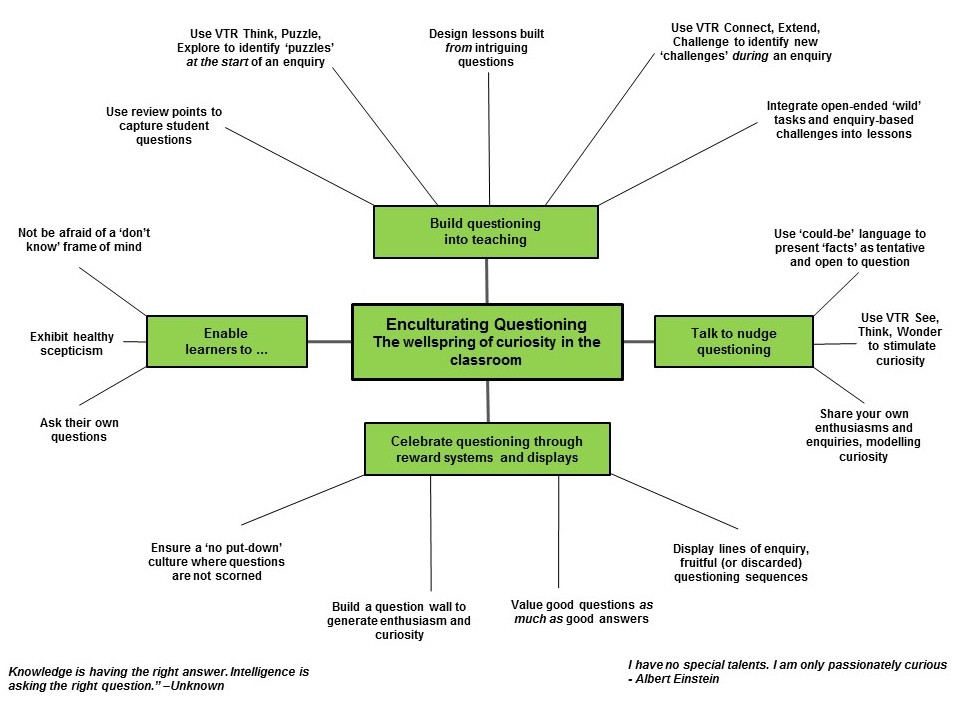
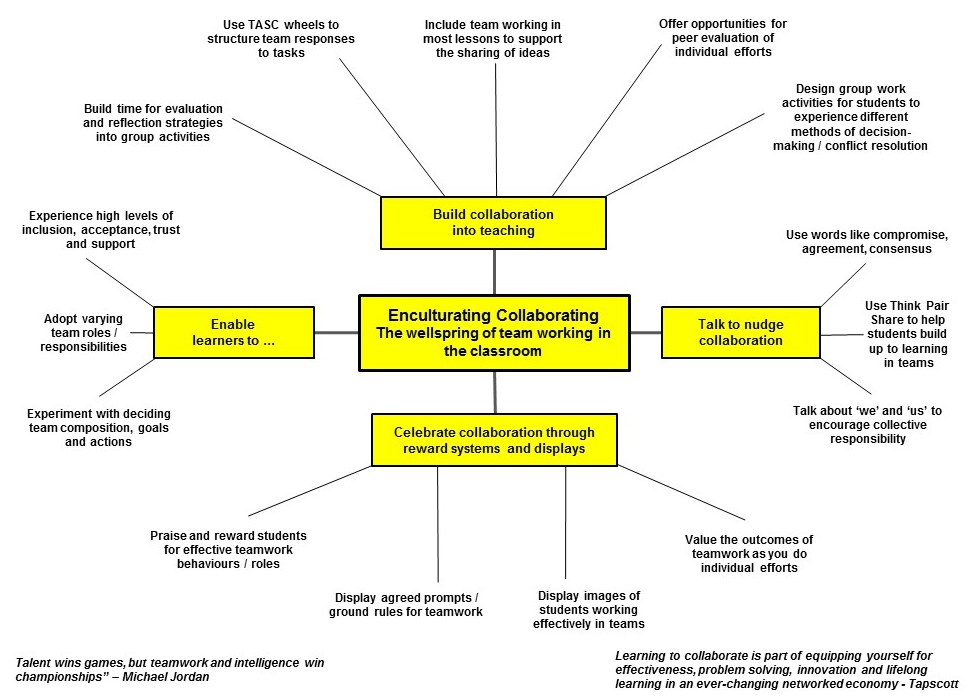
Here we’ve sketched a diagram to identify the prominent features of a classroom culture that’s geared towards growing students’ Questioning habits.

The 4 sections of the diagram are:

  • Top – strategies you could build into the way you teach to stimulate Questioning;
  • Right – indications of the sort of language you might use to stimulate Questioning;
  • Bottom – ways in which you might celebrate / praise students’ use of Questioning;
  • Left – actions that you need to enable students to undertake.

Apply your own attentive noticing skills and consider whether you already use any of these features and which you fancy trying.

In the panels below you will find brief explanations of some of the more unusual terms in the diagram.


d1) Strategies to build into the way you teach

Strategies at the top of the diagram… build into the way you teach to stimulate Questioning

  1. Use review points to capture student questions
  2. Design lessons built from intriguing questions
  3. Use VTR Think, Puzzle, Explore to identify ‘puzzles’ at the start of an enquiry
  4. Use VTR Connect, Extend, Challenge to identify new ‘challenges’ during an enquiry
  5. Integrate open-ended ‘wild’ tasks and enquiry-based challenges into lessons

Visible Thinking Routines (VTR) are easily remembered routines that can be applied in wide range of circumstances. The routine ‘I used to think . . . But now I think’ is explored further in section 5 of this resource. To see more VTRs, go to the VTR website.

‘Traffic Lights’ is a classic AfL strategy – Green = it is fine, Amber = ok-ish, Red = it is going badly. Use it to encourage students to keep an eye on how things are progressing.

A routine that helps students reflect on how and why their thinking/understanding is changing.


d2) The sort of language to stimulate Questioning

Strategies on the right of the diagram… to show the sort of language you might use to stimulate Questioning

  1. Use ‘could-be’ language to present ‘facts’ as tentative and open to question
  2. Use VTR See, Think, Wonder to stimulate curiosity
  3. Share your own enthusiasms and enquiries, modelling curiosity

Learning power is activated by the use of more tentative, could be kinds of language. Specifically, if you say definitively that something is the case, students frequently take it literally and try to remember it. But if you say, of the same thing, that it could be the case, they become more engaged, more thoughtful, more imaginative, and more critical. That ‘could be’ invites students to consider what else it could be, to consider alternatives.

‘Could-Be’ language is well researched. It encourages more genuine engagement with what is being taught.

imgres-7

d3) Ways of celebrating Questioning

Strategies at the bottom of the diagram… ways in which you might celebrate the use of Questioning.

  1. Ensure a ‘no put-down’ culture where questions are not scorned
  2. Build a question wall to generate enthusiasm and curiosity
  3. Value good questions as much as good answers
  4. Display lines of enquiry, fruitful (or discarded) questioning sequences

The ‘Editor’s Desk‘ is an area of the classroom that is reserved for re-crafting and making further improvements – not for ‘doing corrections!

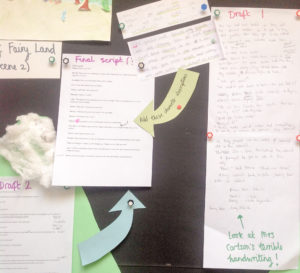
The idea of displaying ‘work in progress’, annotated to illustrate the changes as the work is refined and improved, is in stark contrast to displaying the ‘finished article’. The former emphasises the processes involved in creating a good piece of work, whereas the latter focuses solely on the final product.

Both are explored further in section 5 of this resource.

Rethink displays to illustrate work in progress


d4) Actions you need to enable in students

Strategies on the left of the diagram…actions that you need to enable in students to boost Questioning.

  1. Not be afraid of a ‘don’t know’ frame of mind
  2. Exhibit healthy scepticism
  3. Ask their own questions

By ‘change tack’, we mean being prepared to adopt a different approach when things are not going as well as expected. It requires students to monitor what they are doing as they go along, keep an eye on the end goal, and be sufficiently flexible to re-think a strategy that is not working.


Tools to enable students to join in meta-cognitive talk.

Revising - Learning Mats - purple blue green_Page_3


e) What do you think?

  • Which of the ‘build’ ideas (top) are already features of your teaching?
  • Which of the ‘talk’ prompts (right) do you regularly use when talking about Questioning?
  • Which of the ‘celebrate’ ideas (bottom) are already in evidence your classroom?
  • Which of the ‘enable’ behaviours (left) are you intentionally enabling in your classroom?

Make a note of…

  • Any ideas that look as if they might help your students to become better at Questioning.
  • An idea that you want to start doing.
  • An idea that interests you, but you are uncertain what it means or how you might do it.


Continue Reading

1t. What is good Questioning?

a) About Questioning

Questioning means both the ability to ask good questions and the disposition to do so (which is sometimes called curiosity). Good learners like questions, and are not afraid of the ‘don’t know’ state of mind out of which questions emerge.

Good learners like to wonder about things. For them, it often really is a wonder-ful world. The phrases ‘How come?’ and ‘What if?’ are never far from their lips.

They value getting below the surface of things, and are less likely to accept uncritically what they are told. They like to come to their own conclusions. They are more willing to reveal their questions and uncertainties if they think it will help them learn.

Questioning can be as much non-verbal as it is verbal. Playing around with materials or ideas just to see what happens is a powerful way of asking questions. It is what artists and inventors spend a lot of their time doing. The inclination to ask questions flourishes when you are around people who are also asking questions, and who encourage and appreciate your questions too.


b) A well formed Questioning habit involves being ready, willing, and able to:

  • Be curious about all experiences;
  • Dig beneath the surface, asking why something is happening as it is;
  • Play with ideas and possibilities;
  • Be systematic and adopt a logical approach — exploring a line of thought purposefully; posing questions that follow a rational path towards an emerging goal;
  • Be socially aware in asking questions of others, exhibiting genuine interest in other people;
  • Be comfortable with uncertainty and ambiguity; enjoy different points of view and contrary evidence.

IMAGE


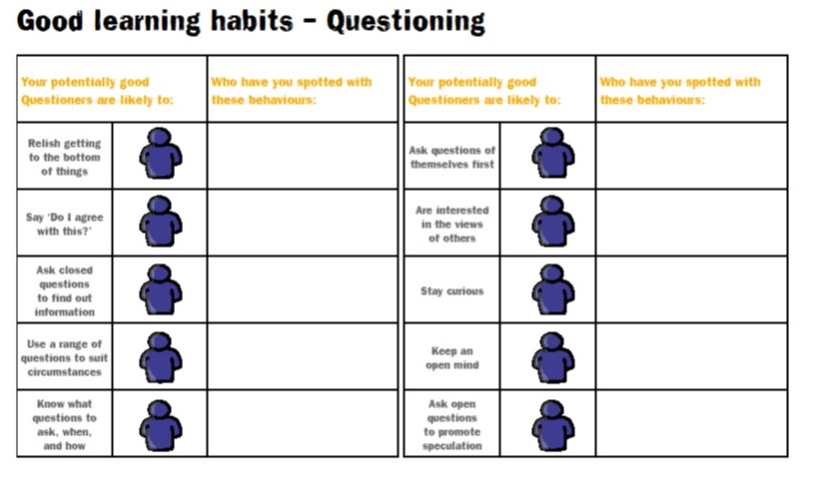
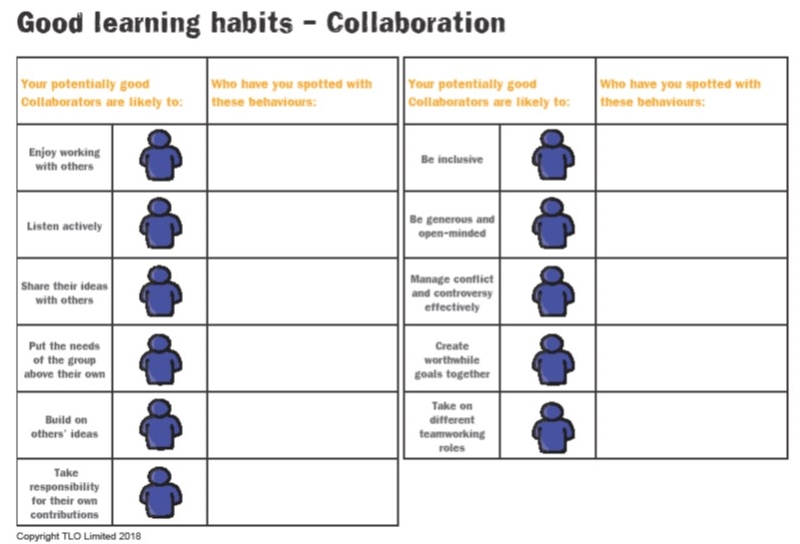
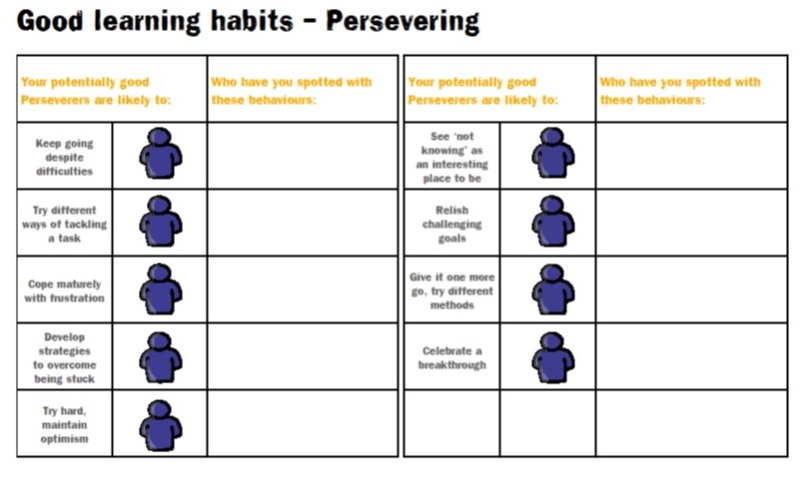
c) Spot the Questioners in your classes

Just to get you tuned in – have a quick think about ‘Questioners you may know’. Make a note of students you know who display these characteristics.

Becoming a teacher who develops students’ learning power means developing a keen awareness of the subtleties of your students’ learning behaviours.

d) What do you think?

  • How many of your students come to mind when looked at through the lens of Questioning?
  • Is there a gender balance or have you noted down more girls than boys or vice versa?
  • Are the students you have noted from across all age groups or do some dominate?
  • How do these Questioning characteristics help these students to be better learners?

Make a note of…

  • Those groups or classes that seem to have lots of good Questioning characteristics.
  • How you think you might capitalise on this.


Continue Reading

3s.

Lesson 3

What this section contains.

This section offers a number of ideas and resources for you to use in constructing a lesson, or even two lessons, to enable students to explore ways to improve Collaboration, make a plan of action, and monitor its success.

We leave the specific lesson design to you but offer pointers and resources in the sections below including:

  • suggested information for content areas
  • advice on selecting the appropriate growth phase
  • example Collaboration activities for students to practice sorted into growth phases
  • suggestions on how to complete an action plan
  • downloadable resources for use by students (see content area 3)
  • a slide presentation for use in the lesson

update

Download Presentation (pdf)

Suggested content areas

This lesson invites students to think harder about what, when and where they use their learning behaviours; consider some ideas they might try; make a formal 6 month plan with materials to help.

  1. A re-look at where students think they are now
  2. Careful consideration of the phases of growth
  3. Selection of appropriate activities
  4. Construct an action plan
  5. Monitor their success

Your aim for this lesson should be to help students understand:

  • the diversity and choice of Collaboration practice across various phases
  • the importance of estimating the most appropriate phase for them as an individual
  • how to construct a simple do-able action plan



Content area 1: Re-look at where students think they are now.

What did you discover about your Collaboration habits?

At the end of the last lesson you asked students to use the ‘Spot yourself Collaborating’ resource to help them become more aware of themselves as learners. We leave it to you how best to manage this session but we can guarantee the resulting information will be fascinating and useful to both teachers and students.

It is useful to hone the wider discussion to:

  • which aspect of Collaboration seemed to be used most often by students
  • which subject seemed to come out well i.e. where students used more of the behaviours
  • which behaviours were used less frequently and call for most improvement.

Whatever the results this research will have made students far more aware of how they learn. They’ll be ready to move on to what they need to improve.


update
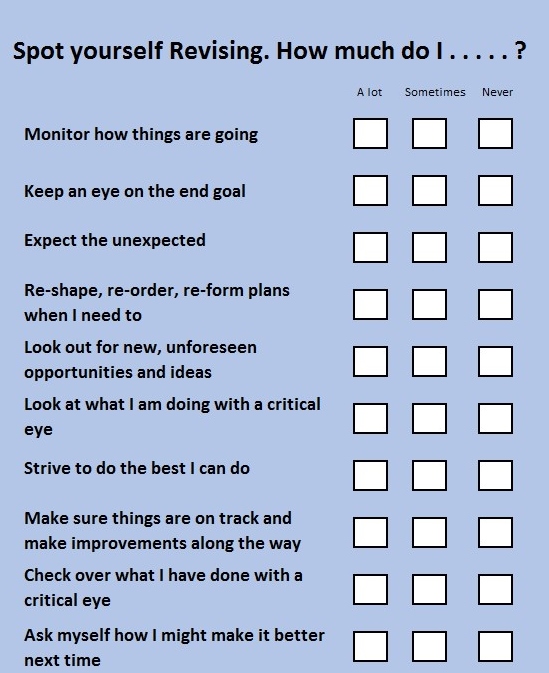


Content area 2: Careful consideration of the phases of growth.

Things to remember about the stages

It’s worth thinking and talking about the phases with these overarching ideas in mind.

  • Students’ development as learners isn’t a race and the stages don’t just happen, they have to make them happen.
  • Each stage takes quite a while to work on and become competent in. It’s not about acting in that way once or twice but acting it that way most of the time, consistently, before being ready to move on to the next phase.
  • These Collaboration behaviours may look and sound straightforward but they make up one of the most valuable and important learning habits.
  • Working through these stages to become someone who absorbs the various aspects of Collaboration into their learning character could easily take four or five years of supported and focused development.

Take time to help students think about how they behave across a range of school subjects and even activities outside school. They need to be honest with themselves before deciding which coloured row or phase best describes their current Collaborative habits.

Why do this?

  • Because you are trying to help students to come to know themselves well enough to judge this, and they will gain from seeking advice from friends or their teachers.
  • And secondly, where they decide they are now should determine what they do next.

For example, if they think that the Purple row/phase best describes them at present, then their immediate target should be to consider ideas that will move into the Blue phase.


Content area 2: Careful consideration of the phases.

If you think you have time you might start this further reflection on the phases with a Think Pair Share activity (see slide 5) If not it is worth talking about the issues mentioned below. These are also captured on slides 6 and 7.

Take it steady

If students aren’t sure where they are on the chart, and as this is their first plan, it’s better to pitch their first plan low rather than high.

There’s nothing wrong with starting in grey to purple where their goal will be to listen carefully for teachers’ suggestions. But they could also try some of their own self-talk phrases to help them take some responsibility for thinking about their learning.

If they think they are ready to work on moving from purple to blue their aim will be to rely on their own nudges and prompts to make sure they are monitoring and reflecting on their learning.

If they think they are already doing this in some subjects they could focus their plan on covering more or trickier subjects.

If they think they are ready to work on moving from blue to green they must be confident that they are employing a range of monitoring strategies. Their aim will be to add looking back to evaluate/review to their learning repertoire and to recognise why this is a beneficial thing for their learning.

If they think they are ready to work on moving beyond green they must be sure they’re ready to look at what they are doing with a critical eye and make their own improvements along the way. Their aim here will be to constantly be on the lookout for how to improve or reinvent something in the light of deeply reflective experience.


Content area 3: Select appropriate activities to aid improvement

This is a tricky part of your lesson, and may well depend on:

  • how realistically your students evaluate their starting points for Collaboration, and
  • the range of those evaluations.

Things to consider as you plan the lesson is to ensure students achieve a realistic understanding of what they currently do, what they currently do not do, and what actions might improve their Collaboration skills:

  • If the overwhelming majority of your students believe they are at the same phase of development, planning, for say, small group discussion, will be straightforward.
  • If there is wide variation on starting points, organising small group discussions will need to consider whether you:
    • partner up students who are at the same phase
    • just run with ‘mixed phase’ groups
    • structure these discussions
    • offer guidance and how much
    • will need to produce the guidance in advance (e.g. download PDF resource below)

Also, ask yourself:

  • Is a whole class discussion viable?
  • What will you do about students who appear to have an unrealistic impression of their Collaborative behaviours? [It is highly unlikely that students are already functioning at the Green phase – so be alert to over-optimistic student evaluations! Decide in advance how will you challenge such evaluations.]

Resources

The information in the toggle boxes below give a few suggestions for activities and self-talk for each phase of the growth chart. It’s worth acquainting yourself with the ideas.

The same information is also available in a downloadable PDF resource which you can print for students to use in the lesson.

There are slides of the same information should you want to use them in the lesson.


Ideas to help you to move you from Grey to Purple

Moving yourself from Grey to Purple

What is the main difference between the Grey row and the Purple row?

If you think you are in the Grey row you just do what you want and how you want to do things. You may be reluctant to change the way or how you do things saying ‘I can’t’ or ‘I won’t’.

If you think you are in the Purple row you are becoming familiar with the idea of keeping an eye on how you are learning things, but you need plenty of your teacher’s support to do so.

So – the big difference here is that Purple learners accept advice from their teachers to monitor how they are doing with a view to changing things if it is not going as expected. To be strong in purple you need to be like this in all your learning, not just the subjects you like. Being strong in Purple is the first big step in becoming a good reviser


A couple of useful activities

a) Monitor how you are feeling about your learning.

You could cut a strip of card and write on it:

Absorbed……………………………..Distracted OR

Too Easy………………………………Too Hard OR

Interested……………………………Bored

Take the strips to use during lessons to help you monitor and become more conscious of your feelings about learning. This is just a small beginning but will help you get a feel for learning to begin to take more responsibility for it.


b) Use a checklist to monitor how things are going

If your teacher offers you a checklist, then take their advice and use it to keep an eye on things. If your teacher does not offer you a checklist, try making a copy of this simple checklist and refer to it in lessons to help you to keep close eye on how things are going. Use the checklist as you are working, and again after you think that you have finished.

update


Become your own learning coach

Things to say to yourself

To help you begin to monitor how things are going

  • How am I getting on?
  • Am I ‘on track’?
  • What is working well for me here?
  • Is this going OK?
  • Do I need to try a different approach?
  • Is this going to be good enough?

To help you begin to think about how it went

  • How did that go?
  • What worked well?
  • Did it go as I expected?
  • Am I happy with that?

Make a quick reflection on what you’ve done become part of your daily or lesson routine.

Your questions might include:

  • Today I have learned….
  • Today I have tried to…
  • My biggest success today has been….
  • What will I tell my family when they ask ‘What did you do at school today’?
  • The most important thing I have learned today.
  • What has inspired me today?

Each, in different ways, encourages you to think about how your thinking / understanding has changed, how you have revised/amended your view of things.


Ideas to help you to move you from Purple to Blue

Moving yourself from Purple to Blue

What is the main difference between the Purple row and the Blue row?

Learners in the Purple row have become familiar with the idea of keeping an eye on how things are going with plenty of help from their teachers.

Learners in the Blue row use a range of strategies to enable them to keep an eye on how things are progressing towards achieving a goal and meeting the required standards.

So – the big difference is that learners in the Blue zone have become far more interested in their learning, monitoring and evaluating what they are doing in order to achieve good standards and without being told / helped to do so. Keeping an eye on how they are learning helps Blue learners to achieve good standards.


A couple of useful activities

a) Create your own checklists

You do not need to wait to be given a checklist by your teacher. Why not create one for yourself?

Suppose that you wanted to create a list that focuses specifically on numeracy/ maths? You might end up with something like the checklist opposite.

Challenge yourself – how would you adapt this checklist to make it relate to literacy rather than numeracy?

b) Trying something different

We all have our preferred ways of working, and if that way is successful we tend to use that method again and again. But what if our preferred way of working is not working as well as we had hoped?

The answer is, of course, to ditch an unsuccessful strategy in favour of a better one.

So where can you find alternative ways of working? Easy – Just stop and look around your class!

Ask yourself:

  • who has found a successful way of doing this?
  • what, precisely, are they doing to be successful?
  • do I need to talk to them to fully understand their approach?
  • how can I copy or imitate their successful strategy?

update


Become your own learning coach

Things to say to yourself

To help you to learn from mistakes

  • What went wrong there?
  • What can I learn from this mistake?
  • If I have another go what would I change?
  • Do I need to try something different?
  • What have I misunderstood here I wonder?

To develop a sense of what ‘good’ looks like

  • What made me think this wasn’t quite right/good enough?
  • Am I (un)happy with this? Why?
  • What hint could I give myself so I can figure it out?
  • Can I do something more/better to meet my success criteria?
  • How you could I improve this.
  • Am I happy with what I’ve achieved?

To explore externally set standards

  • Have I noticed the success criteria?
  • Why do we have success criteria? What are they for?
  • Is it going to be good enough?
  • Is it going to be good enough for me?

Try these If/Thens statements to help you to monitor how things are going:

  • If I am working on something, then I will stop occasionally and ask myself how well I am getting on.
  • If I’m working on something then I will ask myself why I think it’s okay/good/meeting the success criteria.


Ideas to help you to move you from Blue to Green

Moving yourself from Blue to Green

What is the main difference between the Blue row and the Green row?

Learners in the Blue row employ a range of strategies to enable them to keep an eye on how things are progressing towards achieving a goal and meeting the required standard.

Learners in the Green row have come to understand the benefit of monitoring how things are progressing but also take time to look back over what they have done to consider whether they have achieved what they intended and how they might do it differently next time.

So – the big difference is that Green learners not only monitor progress while they are doing something, but also look back to evaluate what they have achieved once they have completed a task. Green learners recognise that doing those things brings worthwhile benefits so they keep on doing them.


A couple of useful activities

a) I used to think . . . Now I think . . .

This routine helps you to reflect on how and why your thinking/understanding is changing. It encourages you to recognise that new learning often requires you to change what you were thinking previously.

For example, at the beginning of a lesson or topic, ask yourself what you understand by one of the key concepts that you will be studying. (e.g. Phrase (English); Proof (Maths); Power (Science) etc). At the end of the lesson/topic ask yourself what you now understand by the term in light of what you have learned.

It is about noticing, acknowledging and celebrating a change of mind.

b) Use a checklist to evaluate a completed piece of work

Monitoring and evaluation are slightly different. You monitor as you go along, as you are doing your learning. Evaluation is what you do after the learning/task has been completed. It involves stopping to look back over what you have done, how you did it, how successful you were, and how you might do it differently next time.

At the end of a substantial piece of work, use the checklist opposite to reflect on what you have achieved.

update


Download as a pdf

Become your own learning coach

Things to say to yourself

To help you begin to evaluate how it went

  • How did that go?
  • What worked well?
  • What didn’t go as I expected?

To check against standards

  • Is this the best it can be?
  • Why do I think this is as good as I can make it?
  • Is it good, or just good enough?
  • Can I visualise how it could be even better?

To make minor changes to tweak

  • I could always say to myself. . ‘Does this meet the criteria?’
  • Could I / do I need to make some small improvements?
  • We never/rarely get it right first time.
  • I could say to myself…’I did this well/right/better because I made XX changes

To reflect on why you did it that way

  • Why am I happy with what I have achieved?
  • Did I meet the success criteria I set myself?
  • Can I think of other ways I might have tackled it?


Ideas to help you to move you beyond Green

Moving myself beyond Green

What is the main difference between the Green row and the rows beyond Green?

Learners in the Green row have come to understand the benefit of monitoring how things are progressing, but also take time to look back over what they have done to consider whether they have achieved what they intended and how they might do it differently next time.

Learners in the rows beyond Green organise themselves to meet their own high standards through a combination of reflecting while they are learning (monitoring) and reflecting after the have learned (evaluation). This reflection sets them on a pathway of change and improvement.

So – the big difference is that learners beyond Green have taken control of their own improvement and use monitoring and reflection independently to ensure that they meet the highest standards.


A couple of activities to try

a) Acting on feedback

Students receive feedback from their teachers, parents and friends. Mostly the feedback is spoken, but some feedback might be offered to you in written form.

Positive feedback is always welcome and tends to make us feel good. But the most valuable feedback you can receive is feedback that points to ways that you can improve. Perhaps not as comfortable as the positive, praise type feedback that gives you that warm glow of satisfaction at a job well-done, the most useful feedback you can receive focuses on how you can do even better next time.

So – be alert to all of the sources of feedback around you, listen very carefully, and, most importantly, act on the feedback. Keep asking yourself: ‘How will I do it differently next time?’

b) Slow down, get creative, look at the options

Often when faced with a task there are one or two obvious courses of action. These tend to be the ones that you have used successfully in the past. But are there any other options that might be even better?

Try the routine ‘Options Explosion’ to explore hidden options before committing to a course of action.

  • Begin by listing the obvious options, then . .
  • Brainstorm all sorts of different options to find the “hidden” options. Often there are hidden options that are the real best choices. Be imaginative! Piggyback on ideas you have already, combine ideas to get new ones, look for ideas of a very different kind. . .
  • And finally, select your course of action.


update


Become your own learning coach

Things to say to yourself

To make choices about standards

  • How will I decide if it is good enough?
  • What standards have I set myself for this?
  • Why did I choose to judge it against these criteria?
  • Are there other criteria I could / should have used?

To detect errors

  • Am I using the most efficient way of doing this?
  • Could / should I change what I am doing here?
  • Can I spot any errors/ a better way to do this/to change my original plan
  • Am I satisfied with this yet?

To challenge accepted ways of doing things

  • How could I have done this differently / better?
  • I need to think outside the box here.
  • Am I sure this amount of change is necessary.
  • Is there another way I could have done this?


Content area 4: Put a do-able plan together

The next stage of the lesson involves students putting an Action Plan together

Here is a fairly straightforward six month Action Plan format for students to complete. This means that what they are planning will be put into action by them, over about six months. At the end of six months they will need to review their plan, estimate their progress and then make a new plan. The new plan may tackle the next phase of growth or strengthen the growth in the same phase.

Invite them to:

  • Record name and class
    • the date the plan was made
    • the date the plan will be reviewed
  • In the little table students should indicate the phase of Collaboration where they feel secure. This shows their starting point. If they mark Purple to Blue it means they think they are secure at Purple and will be working towards Blue
  • What they want to improve should be shown as Goals and notes made of:
    • any actions they intend to try
    • the sort of self-talk they want to say quietly to themselves.

Reviewing the plan:

  • After about 6 months the plan should be reviewed to prove to students that they are taking action which is having effect over time.
  • It’s useful to note down how the plan worked:
    • what went well and
    • what could have been even better.

Here’s a completed plan to give you an idea of what the plan and its review might look like. Feel free to design your own Action Plan format.

update

Example completed Action Plan


Read the completed plan Download a blank proforma

Content area 5: Monitoring how it’s going and keeping plans under review

The best way of keeping their plan going will be by students getting used to looking at the changes they are making and their impact on their learning.

This amounts to Self-monitoring. It’s about students keeping track of the actions or self-talk they are trying in their classrooms. This monitoring doesn’t have to be sophisticated or time consuming. For example, they could use a simple tally chart to log the number of times they use a chosen activity, or try one of the self-talk phrases. Just noting this down can help them become more conscious of the actions they are taking.

Bit by bit, the more they question themselves about what they are doing the more they will consolidate their approaches to developing these learning behaviours into learning habits.

In six months time

A lesson at the end of the six months should enable students to look back at their plan, and any notes they have made, using this useful technique.

Look closely at what you have changed about your way of working.

Think about:

  • Things you started doing that you hadn’t done previously
  • Things that you stopped doing in order to improve the habit.
  • Things you did more often and less often in order to hone the habit.
  • Things you were already doing and kept on doing because they were on the right track.


I stopped . . .

I tried . . .

I used . . .


Continue Reading

2s.

Lesson 2

a) What this section contains.

This section offers ideas and resources for you to use in constructing a lesson, or even two lessons, to enable students explore Collaboration and how it grows as an effective learning habit.

We leave the specific lesson design to you but offer pointers and resources in the sections below including:

  • suggested content areas
  • a clear definition of Collaboration
  • a list of how teachers help students to use the habit
  • clear explanations of how Collaboration develops when encouraged
  • downloadable resources for use by students
  • a slide presentation for use in the lesson

BUTTON UPDATE NEEDED

Download Presentation (pdf)

b) Suggested content areas

  1. What does Collaboration mean?
  2. What are the different Collaboration habits?
  3. How do teachers help students to develop Collaborative habits?
  4. How Collaboration habits grow?
  5. Where students’ Collaboration strengths lie now.

Your aim for this lesson should be to help students understand:

  • what the learning habit Collaboration is really all about
  • how it can develop
  • where they are now in the growth of this habit

In the sections below you will find: explanations of how the learning habit works; a quiz to help students spot themselves Collaboration in lessons; ideas about how teachers help students become better at Collaboration; a chart showing how Collaboration habits grow, given the right circumstances.

Content areas 1 and 2: What being a good Collaborator means.

Being ready, willing and able

Revising is about the way we work on something to improve it. Whether it be icing a cake, solving a tricky maths problem or creating a well-crafted essay, all require effort, retries and determination to satisfy ourselves that the result pleases us; that it comes up to scratch. How we tackle such a job isn’t just a case of monitoring as we go along or reviewing the result: it will be influenced by other qualities. Our attitude to change, whether we have a sense of quality and what sort of validation we need.


Being a good Collaborator involves:

[GET BELOW FROM 1t, d) ]
  • self-monitoring how things are going, keeping an eye on the goal;
  • expecting the unexpected, being ready to re-shape, re-order, re-form plans to take account of new circumstances;
  • staying alive to new, unforeseen opportunities and ideas;
  • looking at what you are doing with a critical eye;
  • striving to be the best you can be;
  • making sure things are on track and making improvements along the way.

UPDATE

Resource 1 Spot yourself Collaborating in lessons

Use this resource to help to get students tuned in – offer them time to think about their Collaboration habits. Unpack each of statements. Use of the chart could be extended into other lessons too. At the end of this lesson encourage students to take it with them into lessons and make a note of whether and how often they display these characteristics.

Students will take the outcomes of using this little questionnaire into account when they tackle lesson 3.


UPDATE


Content area 3: How teachers help students become Collaborative

As teachers you will:

{UNCERTAIN WHERE THIS CAME FROM]

  • encourage students to change the way you are doing things if necessary
  • help students to view change as a natural part of learning
  • want students to view making corrections as an opportunity to improve
  • focus your feedback on what students need to do to improve, rather than simply praising what they got right
  • offer students checklists that help them to keep an eye on how their work is progressing
  • create opportunities for them to stop and to consider how things are going

Feel free to add your own ideas to this list.

Good revisers have had to learn how to deal with change, both emotionally and practically. If you’re someone who just wants or likes things to stay the same you’re unlikely to recognise the need to change your ideas or the way you do something.

A good reviser needs to know/understand what ‘good’ looks like; how to keep an eye on how things are going; be willing to evaluate how good things are against external standards. Growing students’ revising habits is much more than encouraging them ‘having another go’.


UPDATE


Content area 4 and Resource 2: Progression in Collaboration

A progression chart for Collaboration

It may be tempting to think that either you do, or you do not, use your Collaboration habits – that either you are inflexible and reluctant to change, or that you are flexible and open to change. This could not be further from the truth!

The reality is that there are lots of little steps, skills and attitudes that lie between these two extremes.

The chart alongside outlines a possible trajectory of the development of a good Collaboration habit. It moves from being the learner at the bottom who is unaware of Collaboration, to the highly aware and Collaboration savvy learner at the top. Between the two lies a progression that can be mapped and described. The statements in the diagram hint at the journey from novice Collaborator to an expert Collaborator.


UPDATE


Content area 4: What the columns are about

Column 1 charts 6 phases of development, going from Grey at the bottom, through to Orange at the top. These phases describe the journey from an attitude of ‘I can’t / I won’t’ at the bottom, through to ‘I can’t not do this’ at the top. These phases are not inevitable or automatic; they don’t just happen.

Column 2 puts flesh on these phase bones, and identifies what the developing skills, behaviours, habits look like as learners become increasing more effective as Collaboration.

Column 3 is a really important one. It shows how attitudes and self-talk change as Collaboration skills develop and grow. Interestingly it’s one’s own feelings, inclinations and desires that drive the development of any of the learning behaviours. If you don’t know or care about it it’s unlikely to improve.

UPDATE


Content area 5: Resource 3 Where students’ Collaboration strengths lie

To make Collaboration come alive and feel real it’s important to offer learners a closer look at each phase. To enable this enquiry we offer two resources. You could use the slides shown below or the same slides presented as a downloadable PDF for you to print. How you explore this information with students we leave to you.

Looking closely at grey from the learners’ viewpoint

In this ‘Lacks’ (grey) phase, you are not aware of doing things well or differently, you just do things. You’re not too bothered about outcomes and you’re not interested in revisiting something in order to change or improve it. You very much just do your own thing and you’re not aware of external standards or expectations. You may be reluctant, or even afraid, of changing the ways that you do things. But don’t think of this as a negative start. Most learners start like this before making a start on their journey of learning how to learn.


update

Looking closely at purple

In the Receives (purple) phase, you are beginning to make checks on how you are doing against given criteria when you are prompted to do so. Your teachers are kick starting your Revising learning journey. You can talk about what you did and sometimes how you did it. You rely on your teachers or parents to tell you that what you have done is valuable or worthwhile. You have learned to accept and act on your teacher’s advice to have a second go at something and/or to pause and check how things are going. You have to go through this phase before moving on to the next.


update

Looking closely at blue

In the Responds (blue) phase you have overcome any fear of mistakes and you’re more able and willing to monitor what you are doing. You’re beginning to develop what you mean by ‘good’ and to understand why given standards are important. You enjoy supportive feedback and you talk about how you could improve with support. You are increasingly willing and able to check how things are going even if your teacher doesn’t tell you to do so. You are becoming inclined to make your own changes to improve your work.

update

Looking closely at green

In the Values (green) phase, you understand the importance of keeping a close eye on progress in order to achieve high-quality outcomes that meet your goals. You see the point in making changes to reach a goal or external standard. You understand the need to learn from previous experiences and realise that learning is actually all about changing your understandings; not just knowing stuff. So now you look at what you are doing with a more critical or demanding eye and have realised that being like this this is really good for you. Your positive attitudes to improving are helping you to achieve more and improve.

update

Looking beyond green

In the Organises (yellow) phase revising has become a skilful habit; where revising itself raises more questions than answers. Yes, you keep progress under review but now you question the original goal of the activity. You look for higher standards and may well move to a more productive strategy or a different goal. You now use critical feedback positively and you’re keen to look back on what and how you achieved what you did in order to learn from the experience.

In the Embodies (orange) phase, you make ongoing checks, amends and rethinking, in order to meet you own, often more exacting, standards of achievement. Now you don’t need the validation of others (marks, grades, exams, quality feedback) because your own critical sense of standards acts as your barometer. You adapt readily to changing circumstances and always reflect on what and how you have done something with the explicit intention of doing it better, more efficiently / differently in the future. In this final Orange phase you simply can’t help but do it in all aspects of your learning. This way of behaving has become a defining part of your learning character.


update


Content area 5: Where students’ Collaboration strengths lie

Reflecting on learning

Using an effective thinking routine

Invite learners to reflect on what they have learned about themselves as a learner by using the Visible Thinking Routine ‘I used to think… Now I think’ . . . before estimating which colour row best describes their current Collaboration skills, behaviours, attitudes and habits.

It’s fair to say this first estimate won’t be their last because the next lesson gives time to reassess their decisions. But it gives them a basis to work on before looking more closely at themselves learning during their lessons next week.


update


Keeping awareness alive

Using the checklist from the beginning of the lesson invite learners to take the resource with them into lessons over the next week. We suggest they use the resource after at least three lessons across the week. You could leave the choice of lessons to them or maybe suggest they select a subject they enjoy/find fulfilling and one they find tricky. Probably wise to advise them to complete the resource after rather than during the lessons.

Emphasise the need to bring the results of their observations to the next lesson on Collaboration where they will be used to help them further their understanding of themselves as learners.

update


Continue Reading

1s.

Lesson 1

a) An activity to introduce students to the idea of Collaboration

As a teacher you will gain real understanding of the use and power of learning behaviours when you knowingly use/activate such behaviours in the classroom.

The type of activity given below aims to open up a conversation about Revising and demonstrate how opinions and hypotheses change and are revised as more information becomes available. It underlines the importance of speculative thinking that is unlikely to be right first time; a feature that lies at the heart of Revising.

Stranded!

This take on a classic exercise encourages students to listen, share ideas and, hopefully, come to an agreed solution.

Coaching Notes

Coaching Notes

Questionnaire

Questionnaire

Learning Challenge

Learning Challenge

Answer Sheet

Answer Sheet

Observation Sheet

Observation Sheet

b) Many ways to introduce learning habits

There are of course many ways to introduce the habit of Collaboration but here are five culture shifts to think about and get you started.

Ask yourself – how might you:

  • Harness display to illustrate that first attempts are rarely the finished article
  • Ensure that students act on your feedback and do things differently next time
  • Encourage students to monitor how things are going, and change tack if necessary
  • Encourage students to evaluate the extent to which they have met the required standards
  • Deliberately create situations that require a change of mind.

See section 4t for practical classroom practice suggestions.


Continue Reading

5t. Develop your practice for Collaboration

a) Cultivating learning habits ultimately involves:

  • Providing rich and varied occasions for exercising learning habits;
  • Infusing learning habits into lessons to enhance content understanding;
  • Recognising and celebrating the use and growth of learning habits;
  • Expecting students to take ownership of and responsibility for their own learning habits;
  • Exploring the development of learning habits with students over time.

As a teacher you are an influential character builder and so need to be mindful of how you help students strengthen their learning habits. It takes most teachers between 2 or 3 years to become really fluent with this way of teaching. So, go easy on yourself because small steps often prove to be big levers for change.


b) First develop your coaching language

Below you’ll find a range of things you could say to nudge Collaboration. When you use this kind of language you are talking as a learning coach, encouraging your students to think for themselves. Using such statements encourages your students to:

  • imitate you;
  • start to think in this way;
  • become conscious of these phrases and their meaning.

Gradually you will hear some of the ideas pop up in students’ self-talk….in speech or even in writing from time to time, but mostly these will go on inside their heads. As your work on Collaboration gathers pace see if you can detect students who talk, or think, in these ways.

c) Teacher talk – as a learning coach

10 ideas to ensure your students do the thinking for themselves

  1. Choose different groups today so that you work with different people.
  2. Who is going to be responsible for how the team gets on?
  3. Time to check you are on the right lines.
  4. Are you making the most of everybody’s talents?
  5. How will you / did you help your team?
  6. Have you worked together to discover what this task/problem is about?
  7. How can you / did you help to get everyone more involved?
  8. Will you / did you contribute your own ideas and listen to the ideas of others?
  9. How will you find a way to agree / make a decision?
  10. How and why was your team successful?

d) Have a think

  • Which of these Collaboration nudges might you start using?
  • In which particular lessons would such nudging be most useful?
  • How will most of your students respond to such nudges?
  • Will this way of engaging be more popular with girls or boys?
  • What other nudging ideas might you add to the list?

Make a note of…

Little_r

  • Students’ reactions to the nudges.
  • Ideas about why this might be.
  • Ways in which you could further encourage students to imitate this metacognitive self-talk.
  • Any positive or negative impact of these Collaborative behaviours.

e) What to start and stop

Here are a few more ideas you might want to try. Take it steady, this way of teaching can be a big but exciting shift so it’s worth doing it slowly and thoughtfully. Look first at the Stop/avoid ideas. Some of these are far from trivial but it’s best to try to remove them before starting on the Start/do more of, Start slowly and Experiment with ideas

f) What do you think?

  • Which of the ideas appealed to you most?
  • Can you see ways of incorporating these into your subject/class routines?
  • Which would make the biggest difference to your students?
  • Which would make your life easier?

Make a note of…Little_r

  • Ideas that you want to try and the impact you hope they will have on your teaching and on your students.


Continue Reading

4t. Ideas for classroom practice

a) Ideas to encourage a Collaborative frame of mind

In the early stages of building your students’ learning power your role is to:

  • make them aware of the behaviour
  • talk about it (what, how, why, when, if)
  • celebrate its use
  • give opportunities to practise it, both in lessons and elsewhere
  • reflect on it to improve it.

b) Use a staged start for using Collaboration…

  1. Firstly... make students aware of the use and importance of Collaboration…what, when, where, why, how they are or could be doing it
  2. Then… explore Collaboration a little more through the language of Collaboration
  3. Try... using Collaboration as a lesson starter to tune students into using it
  4. Then start... blending Collaboration into the way you teach the content. Use specific Collaboration strategies to deepen content understanding.
  5. Ensure... students reflect on the success or otherwise of their Collaborative activities.


b1. Make students aware of Collaborating

How you make students aware of the words that describe the behaviour and why it is important to use it.

Primary

Give collaborating a high profile

Collaboration Wall

Click to enlarge

Take photographs when you notice children playing and working well together. Place them on a ‘Collaboration Wall’ in the classroom or in a special book that you look at regularly with the children.

Invite the children to suggest captions for the photographs encouraging phrases that exemplify collaboration – sharing ideas, listening carefully, talking turns, everyone involved, etc.

Secondary

Give time to think… and share ideas

An idea to get students thinking about collaboration that could also be used in upper primary classes too.

In pairs – Think of a time when each of you has learned something with others. Take turns to interview each other about;

  • Where you were.
  • How many people were in the group.
  • What you learned from them.
  • How the group worked out the best way forward
  • What you were trying to do.
  • What you did to add to the group’s learning
  • Who you were with.
  • Whether you were able to pick up any good learning habits.
  • Where the group’s best idea came from.

Primary

Introduce games that require collaborative behaviours

Give the children challenges which can only be achieved through collaboration! For example; Ask a group of 10 children to stand on a bench and put themselves in order of height without anyone stepping off and on again. They will have to work cooperatively as a team to meet this challenge.

Secondary

An activity that enables students to recognise that working collaboratively means everyone having a role in success.

Use activities to show everyone has a role in success

Four teams of seven. Explain: “Create a machine with moving parts using yourselves. Each of you is to be part of the machine or something that the machine makes. When you have made it work you will demonstrate it working to the class. You have 10 minutes. The class will try and guess what your machine makes.”

Debrief...how the group work together. Whether a leader emerged? How decisions were made about what the machine should make. How it was decided when the machine would start. How machine parts were assigned. What different people contributed to the team effort? What has been learned about working in a team?

b2. Explore the language of Collaboration

How you might extend the language and scope of collaborating in a team

Primary and Secondary

Explore and use team roles

click to enlarge

Open up a conversation about different team roles with students.
Introduce students to a few essential team roles, for example.

  • Coordinator
  • Resource gatherer
  • Finisher

Many students will, initially, have a preferred role, but over time encourage them to try out other roles to broaden their team working skills. Experiment with allowing individuals to choose their own roles, assigning roles yourself, and allowing teams to assign roles.


b3. Use Collaboration as a way of organising learning

Use a quick starter to key students into the learning behaviour you want to concentrate on in the lesson. i.e. here you are starting up the collaborating behaviour

Primary

Getting ready for teamwork

Try a sharing activity (KS1)


An activity that requires pupils to share what they have in order to finish the task. Use this also to encourage children to think about what they are trying to achieve.

Use harder jigsaws, or groups of information, with older pupils.

Secondary

Building on the answers of others (KS2/3)

Have students work in pairs for 5 minutes to begin a draft answer to a tricky question. Once time is up, partially completed answers are passed to the next pair to be built upon, refined or redrafted, and the process is repeated as many times as necessary. At the end of the process, answers are returned to the original pair who are tasked with using all of the suggestions to draft their final polished version of the answer.

For more on this, read The Teacher’s Toolkit (Paul Ginnis), pages 139/140

35 Pass the Buck

b4. Focus on Collaboration as a learning strategy

Improve collaborating behaviour through the use of a thinking routine.

Primary and Secondary

Visible Thinking Routine

Think, Pair, Share

Offer students a problem or question which is more substantial than simple recall.

Think – Allow plenty of individual think time to engage with the issue.

Pair – Students then try out their ideas, (discuss, clarify, challenge) with a ‘Learning Partner’.

Share – The pair share with another pair, and subsequently with the whole class to arrive at a range of possible answers. They come to know and shape their views by collaborating with others.

Use as a simple strategy to prepare students for working together in teams, having first thought it through for themselves (Think), checked their ideas out with a trusted friend (Pair), before moving on to contributing to a group (Share).

At each point students are exposed to the views of others which encourages them to revise and refine their initial thinking.


And here is an activity that will help students to understand more about collaboration and team work.

b5. Reflect on Collaboration

Primary

Make reflecting on collaboration part of everyday lessons

Here is a practical example of how you might develop the social climate of the classroom and make it collaboration friendly

Learning Mat


Learning mats are  A4 laminated sheets that show various aspects of a learning habit. Keep them on desks/tables or as part of a wall display.

Students can refer to them during lessons as prompts about the finer aspects of collaborating and later for self-reflection on what they have used, whether it was successful and how to improve it.

Download

Secondary

Encourage self reflection on collaboration

click to enlarge

Me-now! is a self-reflective tool for use in either upper primary or secondary schools to focus a discussion. They are useful in encouraging students to consider several aspects of the learning behaviour in question. There are some fairly sophisticated attributes in the list.

How am I at collaborating? Answer with Usually/Sometimes/Rarely/Don’t Know

  • I explore a task and work out what we have to achieve …
  • I help plan how the group will work …
  • I play my part in getting work done …
  • I’m patient whilst others learn …
  • I share what I think or know …
  • I accept ideas that improve on my own …
  • I make suggestions to others for improvements …
  • I contribute to group review …
  • I celebrate others’ achievements …
  • I help to resolve conflict …


c) What do you think?

  • Can you see a use for any of the suggested activities?
  • Have you raised awareness of Collaboration with your students?
  • Does your class have an agreed set of good Collaborative behaviours?
  • Which two ideas from above do you want to try out?
  • How long will you keep them going before you decide whether they have worked or not?

Make a note of…Little_r

  • What happens in your classroom in response to any of the above ideas.
  • How students’ behaviour changes over about 3 weeks of becoming more familiar and talking about the behaviour.
  • How your behaviour in the classroom changes as you use these ideas over time.


NB. None of the suggestions above will lead to instant understanding in students nor instant changes of behaviour. You will need to drip these, and others, in over time and keep building and refreshing your language of learning.


Continue Reading

3t. Understand how Collaboration grows

a) Get a handle on progression

As with all learning behaviours, Collaboration is not a case of ‘either you do, or you don’t’. Few learners are unable and unwilling to work with others in all circumstances, and equally few are consummate team players. Most lie somewhere between these two extremes. The diagram alongside – Learning: Poles Apart – offers an outline view of the whole journey; building students’ emotional learning habits; building their cognitive/thinking habits; building their social learning habits and their ability to manage the process of their learning. The reluctant learner on the left and the learning powered learner on the right show the beginnings and ends of a long, exciting, but far from inevitable, learning journey.


b) Stages of growth in Collaboration

The chart alongside offers a glimpse of how Collaboration may grow, given the opportunity and encouragement. It is this scaling of the learning disposition that will help you make sense of the journey as you, and students, track, and influence, learners’ progress over time.

Column 1 identifies 6 phases of development.

Column 2 describes how the behaviours may look if they are enabled to grow over time,

Column 3 captures the self-talk; what students may quietly say/explain to themselves at each phase of development.

c) What are the stages of growth based on?

We’ve borrowed ideas from Benjamin Bloom’s Taxonomy of Objectives of the Affective Domain to generate a very condensed version of the five main phases of growth, namely:

1 ‘Lacks’ (grey) We have added this level where the behaviour is weak and the response is negative. This might translate into “I can’t or I won’t” in student self talk

2. Receiving. (purple)..which involves giving attention to something; becoming aware, not avoiding or rejecting it; being alert to something. This might translate to “Show me or Tell me” in student self talk

3. Responding. (blue)…which involves going beyond merely attending to actively attending; complying; taking more responsibility for and enjoyment in initiating action.This might translate to “I’ll try” in student self talk

4. Valuing. (green)..which involves accepting the worth of something; preferring something; being committed to the value of something.This might translate to “I see why” in student self talk

5. Organisation.(yellow)..which involves adding to, formulating and organising their values into how they live their life.This might translate to “I make sure” in student self talk

6. Embodies. (Characterisation in the original)(orange)…which involves behaving consistently in accordance with their values, living what they stand for.This might translate to “I can’t not do this” in student self talk

This progression is long term and not inevitable. Some phases will take years for people to work through; some will never be worked through. None of the phases are inevitable. There is a lifetime of potential development captured here. But these phases can be nurtured and ensured in what might be called ‘learning friendly’ classrooms.

d) Where are your classes in relation to their levels of Collaboration?

Level detail

In the ‘Lacks’ (grey) phase, students are not necessarily aware of doing things well or differently. Once they get going on something they may change it but more for the joy of just doing it. Outcomes maybe rushed or lack finesse, but once completed there may be little interest in revisiting it or in any comments they are offered. External standards of what things might or should look/be like are not yet a feature of their world.

In the Receives (purple) phase, students begin to make checks on how they are doing against given criteria when prompted. They can talk about what they did and sometimes how. They rely on their teachers or parents to validate what they do/have done. So there’s a reliance on others to validate what they are doing.

In the Responds (blue) phase students have overcome a fear of mistakes and are more able and willing to monitor what they are doing. They begin to develop the idea of ‘good’ themselves and to understand why given standards are important. They respond positively to supportive feedback and talk reflectively about how they could improve with encouragement. They are now taking far more responsibility for their learning.

In the Values (green) phase, students understand the importance of keeping a close eye on progress in order to achieve high-quality outcomes that meet their goals. They see the point in making changes in the light of the original goal or external standard or internal feedback. They understand the need to learn from previous experiences and realise that learning is all about changing understandings; not just knowing stuff. In so doing they widen the scope of external validation. Once in the green phase they have taken responsibility for what they are doing because the recognise it as a ‘win’ for them.

In the Organises (yellow) phase revising has become a skilful habit; where revising itself raises more questions than answers. Yes, progress is kept under review but now students are bold enough question the original goal of the activity. They look more widely for validation and may well change to a more productive strategy or a different goal. They use critical feedback positively and are keen to look back on what and how they achieved, what they did in order to learn from the experience. They organise themselves to be like this. Revising has become a habit.

In the Embodies (orange) phase, students make ongoing checks and amends, and major rethinking, in order to meet their own, often more exacting, standards of achievement. Now they tend not to need the validation of others (marks, grades, exams, quality feedback) because their own critical sense of standards acts as their barometer. They adapt readily to changing circumstances and always reflect on what and how they have done something with the explicit intention of doing it better, more efficiently / differently in the future. Revising has become part of the character, they can’t not do it.


Where are your students now?


  • What insight does the progression trajectory yield?
  • Think about a class you know well. Ignore the ‘outliers’ for a moment, which phase(s) do you think best describes the majority of your learners?
  • Where do you think your higher attaining learners sit on this trajectory?
  • Where do you think your lower attaining learners sit on this trajectory?
  • Do you think that your learners are slowly edging up this trajectory as they pass through your school?
  • If yes, why do you think this happens? Are there any interventions that you / the school make to support this?
  • If no, why are learners not improving their skills and attitudes?

Make a note of the skills and attitudes that your learners might need to develop further.

Download as a pdf


Continue Reading

2t. A classroom culture for Collaboration

a) A learning classroom culture

Building students’ learning behaviours is about creating a culture in your classrooms – that systematically cultivates habits and attitudes that enable your students to learn confidently and face difficulty calmly and creatively. By a ‘culture’ we mean all the little habits, routines and practices that implicitly convey ‘what we believe and value round here’.

So ‘culture’ concerns the details of the micro-climate that you create in your classrooms. What you do and say, what you notice and commend and what you don’t, what kind of role model of a learner you offer – all these are of the essence. The micro-climate of a classroom can inadvertently stifle, or specifically enhance, the very behaviours you are seeking to promote.


b) What sort of culture are you trying to create?

Bringing learning to the fore is to let students do more of it; to become more active in the learning process. Becoming more active learners involves offering them more opportunities to decide what to do, being given a chance to talk more and actively learn by reviewing their own experience. As students are given more responsibility for their own learning the role of the teacher changes from ‘the sage on the stage’ to ‘the guide by your side’.

What you are doing is developing students as meta-learners who become able to understand and grow themselves as learners.

c) Looking more closely at classroom culture

There are four specific ways in which teachers can create the classroom culture to build learning habits;

  • strategies you could build into the way you teach to stimulate Collaboration
  • the sort of language you might use to stimulate Collaboration
  • ways in which you might celebrate / praise students’ use of Collaboration
  • actions you need to enable students to undertake to build their Collaborative habits

d) A graphic summary

Here we’ve sketched a diagram to identify the prominent features of a classroom culture that’s geared towards growing students’ Collaboration habits.

The 4 sections of the diagram are:

  • Top – strategies you could build into the way you teach to stimulate Collaboration;
  • Right – indications of the sort of language you might use to stimulate Collaboration;
  • Bottom – ways in which you might celebrate / praise students’ use of Collaboration;
  • Left – actions that you need to enable students to undertake.

Apply your own attentive noticing skills and consider whether you already use any of these features and which you fancy trying.

In the panels below you will find brief explanations of some of the more unusual terms in the diagram.


d1) Strategies to build into the way you teach

Strategies at the top of the diagram… build into the way you teach to stimulate Collaboration

  1. Build time for evaluation and reflection strategies into group activities
  2. Use TASC wheels to structure team responses to tasks
  3. Include team working in most lessons to support the sharing of ideas
  4. Offer opportunities for peer evaluation of individual efforts
  5. Design group work activities for students to experience different methods of decision-making / conflict resolution

Visible Thinking Routines (VTR) are easily remembered routines that can be applied in wide range of circumstances. The routine ‘I used to think . . . But now I think’ is explored further in section 5 of this resource. To see more VTRs, go to the VTR website.

‘Traffic Lights’ is a classic AfL strategy – Green = it is fine, Amber = ok-ish, Red = it is going badly. Use it to encourage students to keep an eye on how things are progressing.

A routine that helps students reflect on how and why their thinking/understanding is changing.


d2) The sort of language to stimulate Collaboration

Strategies on the right of the diagram… to show the sort of language you might use to stimulate Collaboration

  1. Use words like compromise, agreement, consensus
  2. Use Think Pair Share to help students build up to learning in teams
  3. Talk about ‘we’ and ‘us’ to encourage collective responsibility

Learning power is activated by the use of more tentative, could be kinds of language. Specifically, if you say definitively that something is the case, students frequently take it literally and try to remember it. But if you say, of the same thing, that it could be the case, they become more engaged, more thoughtful, more imaginative, and more critical. That ‘could be’ invites students to consider what else it could be, to consider alternatives.

‘Could-Be’ language is well researched. It encourages more genuine engagement with what is being taught.

imgres-7

d3) Ways of celebrating Collaboration

Strategies at the bottom of the diagram… ways in which you might celebrate the use of Collaboration.

  1. Praise and reward students for effective teamwork behaviours / roles
  2. Display agreed prompts / ground rules for teamwork
  3. Display images of students working effectively in teams
  4. Value the outcomes of teamwork as you do individual efforts

The ‘Editor’s Desk‘ is an area of the classroom that is reserved for re-crafting and making further improvements – not for ‘doing corrections!

The idea of displaying ‘work in progress’, annotated to illustrate the changes as the work is refined and improved, is in stark contrast to displaying the ‘finished article’. The former emphasises the processes involved in creating a good piece of work, whereas the latter focuses solely on the final product.

Both are explored further in section 5 of this resource.

Rethink displays to illustrate work in progress


d4) Actions you need to enable in students

Strategies on the left of the diagram…actions that you need to enable in students to boost Collaboration.

  1. Experience high levels of inclusion, acceptance, trust and support
  2. Adopt varying team roles / responsibilities
  3. Experiment with deciding team composition, goals and actions

By ‘change tack’, we mean being prepared to adopt a different approach when things are not going as well as expected. It requires students to monitor what they are doing as they go along, keep an eye on the end goal, and be sufficiently flexible to re-think a strategy that is not working.


Tools to enable students to join in meta-cognitive talk.

Revising - Learning Mats - purple blue green_Page_3


e) What do you think?

  • Which of the ‘build’ ideas (top) are already features of your teaching?
  • Which of the ‘talk’ prompts (right) do you regularly use when talking about Collaboration?
  • Which of the ‘celebrate’ ideas (bottom) are already in evidence your classroom?
  • Which of the ‘enable’ behaviours (left) are you intentionally enabling in your classroom?

Make a note of…

  • Any ideas that look as if they might help your students to become better at Collaboration.
  • An idea that you want to start doing.
  • An idea that interests you, but you are uncertain what it means or how you might do it.


Continue Reading

1t. What is good Collaboration?

a) About Collaboration

Collaboration involves knowing how to learn with others. It means being able to work as part of a pair or a team, in a situation where no one person is in possession of all parts of the puzzle, and where the sharing of information and ideas is essential. Collaboration means being willing to share, and having the skills of communication to do so effectively. In many primary schools, Circle Time, for example, is used as a way of cultivating the requisite attitudes and abilities. Classes can be constituted as a group of research teams, each of which has responsibility for finding out part of the answer to a whole-class project, and then sharing that research with the other teams.


b) If you have well formed Collaborating habit you will be ready, willing, and able to:

  • Work effectively with others towards common goals;
  • Seek to understand what others are saying;
  • Share, challenge, support and build on ideas;
  • Adopt different roles and responsibilities in pursuit of team goals;
  • Act responsibly with initiative, and perseveres in the face of difficulties;
  • Hold and express opinions coherently, compromises and adapts to circumstances when appropriate.

Image needed


c) Spot the Collaborative learners in your classes

Just to get you tuned in – have a quick think about ‘Collaborators you may know’. Make a note of students you know who display these characteristics.

Becoming a teacher who develops students’ learning power means developing a keen awareness of the subtleties of your students’ learning behaviours. What you are trying to do is to help them to help themselves to get better at using these behaviours.

d) What do you think?

  • How many of your students come to mind when looked at through the lens of Collaboration?
  • Is there a gender balance or have you noted down more girls than boys or vice versa?
  • Are the students you have noted from across all age groups or do some dominate?
  • How do these Collaborative characteristics help these students to be better learners?

Make a note of…

  • Those groups or classes that seem to have lots of good Collaborative characteristics.
  • How you think you might capitalise on this.


Continue Reading

3s.

Lesson 3

What this section contains.

This section offers a number of ideas and resources for you to use in constructing a lesson, or even two lessons, to enable students to explore ways to improve Perseverance, make a plan of action, and monitor its success.

We leave the specific lesson design to you but offer pointers and resources in the sections below including:

  • suggested information for content areas
  • advice on selecting the appropriate growth phase
  • example Perseverance activities for students to practice sorted into growth phases
  • suggestions on how to complete an action plan
  • downloadable resources for use by students (see content area 3)
  • a slide presentation for use in the lesson

update

Download Presentation (pdf)

Suggested content areas

This lesson invites students to think harder about what, when and where they use their learning behaviours; consider some ideas they might try; make a formal 6 month plan with materials to help.

  1. A re-look at where students think they are now
  2. Careful consideration of the phases of growth
  3. Selection of appropriate activities
  4. Construct an action plan
  5. Monitor their success

Your aim for this lesson should be to help students understand:

  • the diversity and choice of Perseverance practice across various phases
  • the importance of estimating the most appropriate phase for them as an individual
  • how to construct a simple do-able action plan


Content area 1: Re-look at where students think they are now.

What did you discover about your Perseverance habits?

At the end of the last lesson you asked students to use the ‘Spot yourself Persevering’ resource to help them become more aware of themselves as learners. We leave it to you how best to manage this session but we can guarantee the resulting information will be fascinating and useful to both teachers and students.

It is useful to hone the wider discussion to:

  • which aspect of Perseverance seemed to be used most often by students
  • which subject seemed to come out well i.e. where students used more of the behaviours
  • which behaviours were used less frequently and call for most improvement.

Whatever the results this research will have made students far more aware of how they learn. They’ll be ready to move on to what they need to improve.


update
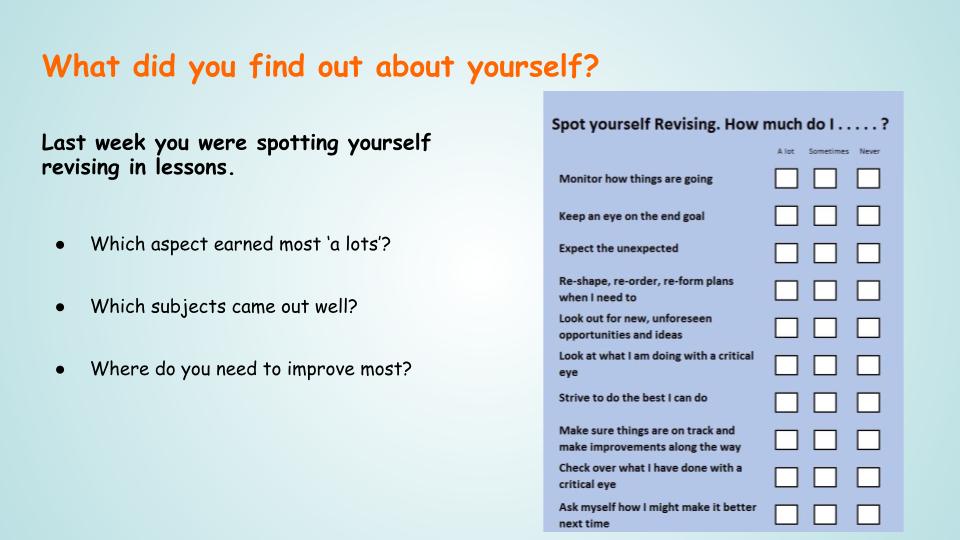


Content area 2: Careful consideration of the phases of growth.

Things to remember about the stages

It’s worth thinking and talking about the phases with these overarching ideas in mind.

  • Students’ development as learners isn’t a race and the stages don’t just happen, they have to make them happen.
  • Each stage takes quite a while to work on and become competent in. It’s not about acting in that way once or twice but acting it that way most of the time, consistently, before being ready to move on to the next phase.
  • These Perseverance behaviours may look and sound straightforward but they make up one of the most valuable and important learning habits.
  • Working through these stages to become someone who absorbs the various aspects of Perseverance into their learning character could easily take four or five years of supported and focused development.

Take time to help students think about how they behave across a range of school subjects and even activities outside school. They need to be honest with themselves before deciding which coloured row or phase best describes their current Perseverance habits.

Why do this?

  • Because you are trying to help students to come to know themselves well enough to judge this, and they will gain from seeking advice from friends or their teachers.
  • And secondly, where they decide they are now should determine what they do next.

For example, if they think that the Purple row/phase best describes them at present, then their immediate target should be to consider ideas that will move into the Blue phase.
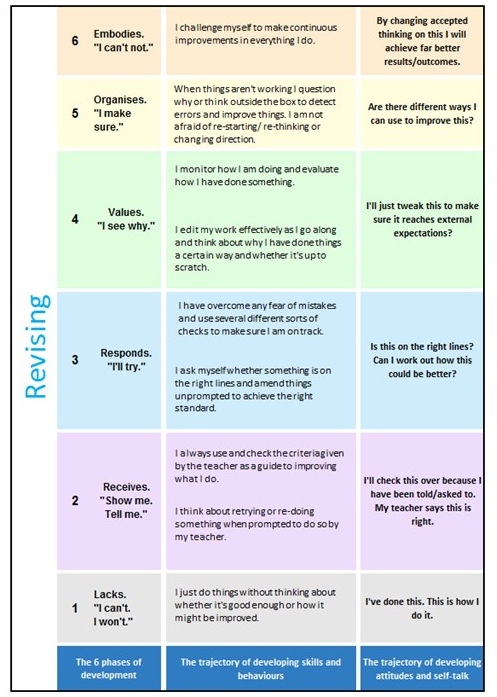
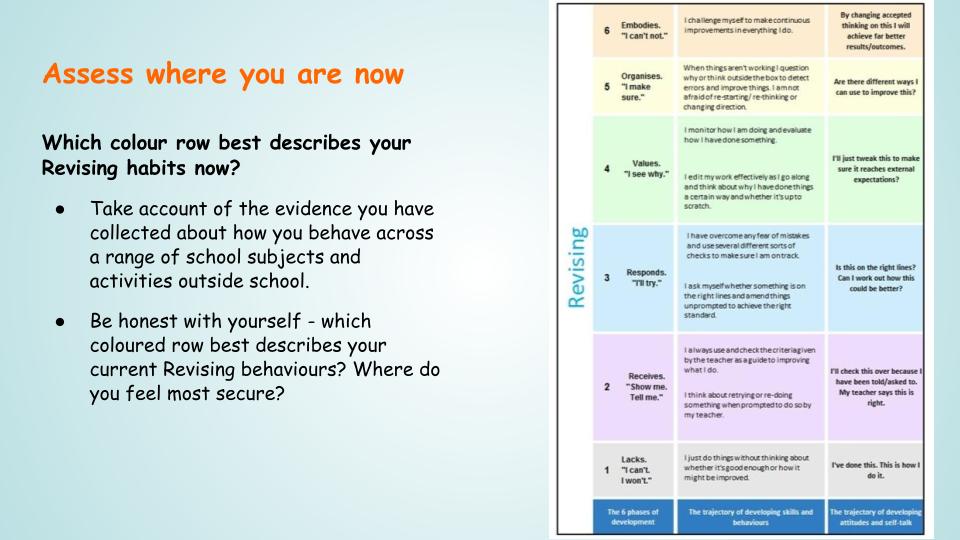
 

Content area 2: Careful consideration of the phases.

If you think you have time you might start this further reflection on the phases with a Think Pair Share activity (see slide 5) If not it is worth talking about the issues mentioned below. These are also captured on slides 6 and 7.

Take it steady

If students aren’t sure where they are on the chart, and as this is their first plan, it’s better to pitch their first plan low rather than high.

There’s nothing wrong with starting in grey to purple where their goal will be to listen carefully for teachers’ suggestions. But they could also try some of their own self-talk phrases to help them take some responsibility for thinking about their learning.

If they think they are ready to work on moving from purple to blue their aim will be to rely on their own nudges and prompts to make sure they are monitoring and reflecting on their learning.

If they think they are already doing this in some subjects they could focus their plan on covering more or trickier subjects.

If they think they are ready to work on moving from blue to green they must be confident that they are employing a range of monitoring strategies. Their aim will be to add looking back to evaluate/review to their learning repertoire and to recognise why this is a beneficial thing for their learning.

If they think they are ready to work on moving beyond green they must be sure they’re ready to look at what they are doing with a critical eye and make their own improvements along the way. Their aim here will be to constantly be on the lookout for how to improve or reinvent something in the light of deeply reflective experience.


Content area 3: Select appropriate activities to aid improvement

This is a tricky part of your lesson, and may well depend on:

  • how realistically your students evaluate their starting points for Perseverance, and
  • the range of those evaluations.

Things to consider as you plan the lesson is to ensure students achieve a realistic understanding of what they currently do, what they currently do not do, and what actions might improve their Perseverance skills:

  • If the overwhelming majority of your students believe they are at the same phase of development, planning, for say, small group discussion, will be straightforward.
  • If there is wide variation on starting points, organising small group discussions will need to consider whether you:
    • partner up students who are at the same phase
    • just run with ‘mixed phase’ groups
    • structure these discussions
    • offer guidance and how much
    • will need to produce the guidance in advance (e.g. download PDF resource below)

Also, ask yourself:

  • Is a whole class discussion viable?
  • What will you do about students who appear to have an unrealistic impression of their Perseverance behaviours? [It is highly unlikely that students are already functioning at the Green phase – so be alert to over-optimistic student evaluations! Decide in advance how will you challenge such evaluations.]

Resources

The information in the toggle boxes below give a few suggestions for activities and self-talk for each phase of the growth chart. It’s worth acquainting yourself with the ideas.

The same information is also available in a downloadable PDF resource which you can print for students to use in the lesson.

There are slides of the same information should you want to use them in the lesson.


Ideas to help you to move you from Grey to Purple

Moving yourself from Grey to Purple

What is the main difference between the Grey row and the Purple row?

If you think you are in the Grey row you just do what you want and how you want to do things. You may be reluctant to change the way or how you do things saying ‘I can’t’ or ‘I won’t’.

If you think you are in the Purple row you are becoming familiar with the idea of keeping an eye on how you are learning things, but you need plenty of your teacher’s support to do so.

So – the big difference here is that Purple learners accept advice from their teachers to monitor how they are doing with a view to changing things if it is not going as expected. To be strong in purple you need to be like this in all your learning, not just the subjects you like. Being strong in Purple is the first big step in becoming a good reviser


A couple of useful activities

a) Monitor how you are feeling about your learning.

You could cut a strip of card and write on it:

Absorbed……………………………..Distracted OR

Too Easy………………………………Too Hard OR

Interested……………………………Bored

Take the strips to use during lessons to help you monitor and become more conscious of your feelings about learning. This is just a small beginning but will help you get a feel for learning to begin to take more responsibility for it.


b) Use a checklist to monitor how things are going

If your teacher offers you a checklist, then take their advice and use it to keep an eye on things. If your teacher does not offer you a checklist, try making a copy of this simple checklist and refer to it in lessons to help you to keep close eye on how things are going. Use the checklist as you are working, and again after you think that you have finished.

update


Become your own learning coach

Things to say to yourself

To help you begin to monitor how things are going

  • How am I getting on?
  • Am I ‘on track’?
  • What is working well for me here?
  • Is this going OK?
  • Do I need to try a different approach?
  • Is this going to be good enough?

To help you begin to think about how it went

  • How did that go?
  • What worked well?
  • Did it go as I expected?
  • Am I happy with that?

Make a quick reflection on what you’ve done become part of your daily or lesson routine.

Your questions might include:

  • Today I have learned….
  • Today I have tried to…
  • My biggest success today has been….
  • What will I tell my family when they ask ‘What did you do at school today’?
  • The most important thing I have learned today.
  • What has inspired me today?

Each, in different ways, encourages you to think about how your thinking / understanding has changed, how you have revised/amended your view of things.


Ideas to help you to move you from Purple to Blue

Moving yourself from Purple to Blue

What is the main difference between the Purple row and the Blue row?

Learners in the Purple row have become familiar with the idea of keeping an eye on how things are going with plenty of help from their teachers.

Learners in the Blue row use a range of strategies to enable them to keep an eye on how things are progressing towards achieving a goal and meeting the required standards.

So – the big difference is that learners in the Blue zone have become far more interested in their learning, monitoring and evaluating what they are doing in order to achieve good standards and without being told / helped to do so. Keeping an eye on how they are learning helps Blue learners to achieve good standards.


A couple of useful activities

a) Create your own checklists

You do not need to wait to be given a checklist by your teacher. Why not create one for yourself?

Suppose that you wanted to create a list that focuses specifically on numeracy/ maths? You might end up with something like the checklist opposite.

Challenge yourself – how would you adapt this checklist to make it relate to literacy rather than numeracy?

b) Trying something different

We all have our preferred ways of working, and if that way is successful we tend to use that method again and again. But what if our preferred way of working is not working as well as we had hoped?

The answer is, of course, to ditch an unsuccessful strategy in favour of a better one.

So where can you find alternative ways of working? Easy – Just stop and look around your class!

Ask yourself:

  • who has found a successful way of doing this?
  • what, precisely, are they doing to be successful?
  • do I need to talk to them to fully understand their approach?
  • how can I copy or imitate their successful strategy?

update


Become your own learning coach

Things to say to yourself

To help you to learn from mistakes

  • What went wrong there?
  • What can I learn from this mistake?
  • If I have another go what would I change?
  • Do I need to try something different?
  • What have I misunderstood here I wonder?

To develop a sense of what ‘good’ looks like

  • What made me think this wasn’t quite right/good enough?
  • Am I (un)happy with this? Why?
  • What hint could I give myself so I can figure it out?
  • Can I do something more/better to meet my success criteria?
  • How you could I improve this.
  • Am I happy with what I’ve achieved?

To explore externally set standards

  • Have I noticed the success criteria?
  • Why do we have success criteria? What are they for?
  • Is it going to be good enough?
  • Is it going to be good enough for me?

Try these If/Thens statements to help you to monitor how things are going:

  • If I am working on something, then I will stop occasionally and ask myself how well I am getting on.
  • If I’m working on something then I will ask myself why I think it’s okay/good/meeting the success criteria.


Ideas to help you to move you from Blue to Green

Moving yourself from Blue to Green

What is the main difference between the Blue row and the Green row?

Learners in the Blue row employ a range of strategies to enable them to keep an eye on how things are progressing towards achieving a goal and meeting the required standard.

Learners in the Green row have come to understand the benefit of monitoring how things are progressing but also take time to look back over what they have done to consider whether they have achieved what they intended and how they might do it differently next time.

So – the big difference is that Green learners not only monitor progress while they are doing something, but also look back to evaluate what they have achieved once they have completed a task. Green learners recognise that doing those things brings worthwhile benefits so they keep on doing them.


A couple of useful activities

a) I used to think . . . Now I think . . .

This routine helps you to reflect on how and why your thinking/understanding is changing. It encourages you to recognise that new learning often requires you to change what you were thinking previously.

For example, at the beginning of a lesson or topic, ask yourself what you understand by one of the key concepts that you will be studying. (e.g. Phrase (English); Proof (Maths); Power (Science) etc). At the end of the lesson/topic ask yourself what you now understand by the term in light of what you have learned.

It is about noticing, acknowledging and celebrating a change of mind.

b) Use a checklist to evaluate a completed piece of work

Monitoring and evaluation are slightly different. You monitor as you go along, as you are doing your learning. Evaluation is what you do after the learning/task has been completed. It involves stopping to look back over what you have done, how you did it, how successful you were, and how you might do it differently next time.

At the end of a substantial piece of work, use the checklist opposite to reflect on what you have achieved.

update


Download as a pdf

Become your own learning coach

Things to say to yourself

To help you begin to evaluate how it went

  • How did that go?
  • What worked well?
  • What didn’t go as I expected?

To check against standards

  • Is this the best it can be?
  • Why do I think this is as good as I can make it?
  • Is it good, or just good enough?
  • Can I visualise how it could be even better?

To make minor changes to tweak

  • I could always say to myself. . ‘Does this meet the criteria?’
  • Could I / do I need to make some small improvements?
  • We never/rarely get it right first time.
  • I could say to myself…’I did this well/right/better because I made XX changes

To reflect on why you did it that way

  • Why am I happy with what I have achieved?
  • Did I meet the success criteria I set myself?
  • Can I think of other ways I might have tackled it?


Ideas to help you to move you beyond Green

Moving myself beyond Green

What is the main difference between the Green row and the rows beyond Green?

Learners in the Green row have come to understand the benefit of monitoring how things are progressing, but also take time to look back over what they have done to consider whether they have achieved what they intended and how they might do it differently next time.

Learners in the rows beyond Green organise themselves to meet their own high standards through a combination of reflecting while they are learning (monitoring) and reflecting after the have learned (evaluation). This reflection sets them on a pathway of change and improvement.

So – the big difference is that learners beyond Green have taken control of their own improvement and use monitoring and reflection independently to ensure that they meet the highest standards.


A couple of activities to try

a) Acting on feedback

Students receive feedback from their teachers, parents and friends. Mostly the feedback is spoken, but some feedback might be offered to you in written form.

Positive feedback is always welcome and tends to make us feel good. But the most valuable feedback you can receive is feedback that points to ways that you can improve. Perhaps not as comfortable as the positive, praise type feedback that gives you that warm glow of satisfaction at a job well-done, the most useful feedback you can receive focuses on how you can do even better next time.

So – be alert to all of the sources of feedback around you, listen very carefully, and, most importantly, act on the feedback. Keep asking yourself: ‘How will I do it differently next time?’

b) Slow down, get creative, look at the options

Often when faced with a task there are one or two obvious courses of action. These tend to be the ones that you have used successfully in the past. But are there any other options that might be even better?

Try the routine ‘Options Explosion’ to explore hidden options before committing to a course of action.

  • Begin by listing the obvious options, then . .
  • Brainstorm all sorts of different options to find the “hidden” options. Often there are hidden options that are the real best choices. Be imaginative! Piggyback on ideas you have already, combine ideas to get new ones, look for ideas of a very different kind. . .
  • And finally, select your course of action.


update


Become your own learning coach

Things to say to yourself

To make choices about standards

  • How will I decide if it is good enough?
  • What standards have I set myself for this?
  • Why did I choose to judge it against these criteria?
  • Are there other criteria I could / should have used?

To detect errors

  • Am I using the most efficient way of doing this?
  • Could / should I change what I am doing here?
  • Can I spot any errors/ a better way to do this/to change my original plan
  • Am I satisfied with this yet?

To challenge accepted ways of doing things

  • How could I have done this differently / better?
  • I need to think outside the box here.
  • Am I sure this amount of change is necessary.
  • Is there another way I could have done this?


Content area 4: Put a do-able plan together

The next stage of the lesson involves students putting an Action Plan together

Here is a fairly straightforward six month Action Plan format for students to complete. This means that what they are planning will be put into action by them, over about six months. At the end of six months they will need to review their plan, estimate their progress and then make a new plan. The new plan may tackle the next phase of growth or strengthen the growth in the same phase.

Invite them to:

  • Record name and class
    • the date the plan was made
    • the date the plan will be reviewed
  • In the little table students should indicate the phase of Perseverance where they feel secure. This shows their starting point. If they mark Purple to Blue it means they think they are secure at Purple and will be working towards Blue
  • What they want to improve should be shown as Goals and notes made of:
    • any actions they intend to try
    • the sort of self-talk they want to say quietly to themselves.

Reviewing the plan:

  • After about 6 months the plan should be reviewed to prove to students that they are taking action which is having effect over time.
  • It’s useful to note down how the plan worked:
    • what went well and
    • what could have been even better.

Here’s a completed plan to give you an idea of what the plan and its review might look like. Feel free to design your own Action Plan format.

update

Example completed Action Plan


Read the completed plan Download a blank proforma

Content area 5: Monitoring how it’s going and keeping plans under review

The best way of keeping their plan going will be by students getting used to looking at the changes they are making and their impact on their learning.

This amounts to Self-monitoring. It’s about students keeping track of the actions or self-talk they are trying in their classrooms. This monitoring doesn’t have to be sophisticated or time consuming. For example, they could use a simple tally chart to log the number of times they use a chosen activity, or try one of the self-talk phrases. Just noting this down can help them become more conscious of the actions they are taking.

Bit by bit, the more they question themselves about what they are doing the more they will consolidate their approaches to developing these learning behaviours into learning habits.

In six months time

A lesson at the end of the six months should enable students to look back at their plan, and any notes they have made, using this useful technique.

Look closely at what you have changed about your way of working.

Think about:

  • Things you started doing that you hadn’t done previously
  • Things that you stopped doing in order to improve the habit.
  • Things you did more often and less often in order to hone the habit.
  • Things you were already doing and kept on doing because they were on the right track.


I stopped . . .

I tried . . .

I used . . .


Continue Reading

2s.

Lesson 2

a) What this section contains.

This section offers ideas and resources for you to use in constructing a lesson, or even two lessons, to enable students explore Perseverance and how it grows as an effective learning habit.

We leave the specific lesson design to you but offer pointers and resources in the sections below including:

  • suggested content areas
  • a clear definition of Perseverance
  • a list of how teachers help students to use the habit
  • clear explanations of how Perseverance develops when encouraged
  • downloadable resources for use by students
  • a slide presentation for use in the lesson

BUTTON UPDATE NEEDED

Download Presentation (pdf)

b) Suggested content areas

  1. What does Perseverance mean?
  2. What are the different Perseverance habits?
  3. How do teachers help students to develop Perseverant habits?
  4. How Perseverance habits grow?
  5. Where students’ Perseverance strengths lie now.

Your aim for this lesson should be to help students understand:

  • what the learning habit Perseverance is really all about
  • how it can develop
  • where they are now in the growth of this habit

In the sections below you will find: explanations of how the learning habit works; a quiz to help students spot themselves Persevering in lessons; ideas about how teachers help students become better at Perseverance; a chart showing how Perseverance habits grow, given the right circumstances.

Content areas 1 and 2: What being a good Perseverer means.

Being ready, willing and able

Revising is about the way we work on something to improve it. Whether it be icing a cake, solving a tricky maths problem or creating a well-crafted essay, all require effort, retries and determination to satisfy ourselves that the result pleases us; that it comes up to scratch. How we tackle such a job isn’t just a case of monitoring as we go along or reviewing the result: it will be influenced by other qualities. Our attitude to change, whether we have a sense of quality and what sort of validation we need.


Being a good Perseverer involves:

[GET BELOW FROM 1t, d) ]
  • self-monitoring how things are going, keeping an eye on the goal;
  • expecting the unexpected, being ready to re-shape, re-order, re-form plans to take account of new circumstances;
  • staying alive to new, unforeseen opportunities and ideas;
  • looking at what you are doing with a critical eye;
  • striving to be the best you can be;
  • making sure things are on track and making improvements along the way.

UPDATE

Resource 1 Spot yourself Persevering in lessons

Use this resource to help to get students tuned in – offer them time to think about their Perseverance habits. Unpack each of statements. Use of the chart could be extended into other lessons too. At the end of this lesson encourage students to take it with them into lessons and make a note of whether and how often they display these characteristics.

Students will take the outcomes of using this little questionnaire into account when they tackle lesson 3.


UPDATE


Content area 3: How teachers help students become Perseverant

As teachers you will:

{UNCERTAIN WHERE THIS CAME FROM]

  • encourage students to change the way you are doing things if necessary
  • help students to view change as a natural part of learning
  • want students to view making corrections as an opportunity to improve
  • focus your feedback on what students need to do to improve, rather than simply praising what they got right
  • offer students checklists that help them to keep an eye on how their work is progressing
  • create opportunities for them to stop and to consider how things are going

Feel free to add your own ideas to this list.

Good revisers have had to learn how to deal with change, both emotionally and practically. If you’re someone who just wants or likes things to stay the same you’re unlikely to recognise the need to change your ideas or the way you do something.

A good reviser needs to know/understand what ‘good’ looks like; how to keep an eye on how things are going; be willing to evaluate how good things are against external standards. Growing students’ revising habits is much more than encouraging them ‘having another go’.


UPDATE


Content area 4 and Resource 2: Progression in Perseverance

A progression chart for Perseverance

It may be tempting to think that either you do, or you do not, use your Perseverance habits – that either you are inflexible and reluctant to change, or that you are flexible and open to change. This could not be further from the truth!

The reality is that there are lots of little steps, skills and attitudes that lie between these two extremes.

The chart alongside outlines a possible trajectory of the development of a good Perseverance habit. It moves from being the learner at the bottom who is unaware of Perseverance, to the highly aware and Perseverance savvy learner at the top. Between the two lies a progression that can be mapped and described. The statements in the diagram hint at the journey from novice Perseverance to an expert Perseverance.


UPDATE


Content area 4: What the columns are about

Column 1 charts 6 phases of development, going from Grey at the bottom, through to Orange at the top. These phases describe the journey from an attitude of ‘I can’t / I won’t’ at the bottom, through to ‘I can’t not do this’ at the top. These phases are not inevitable or automatic; they don’t just happen.

Column 2 puts flesh on these phase bones, and identifies what the developing skills, behaviours, habits look like as learners become increasing more effective as Perseverance.

Column 3 is a really important one. It shows how attitudes and self-talk change as Perseverance skills develop and grow. Interestingly it’s one’s own feelings, inclinations and desires that drive the development of any of the learning behaviours. If you don’t know or care about it it’s unlikely to improve.

UPDATE


Content area 5: Resource 3 Where students’ Perseverance strengths lie

To make Perseverance come alive and feel real it’s important to offer learners a closer look at each phase. To enable this enquiry we offer two resources. You could use the slides shown below or the same slides presented as a downloadable PDF for you to print. How you explore this information with students we leave to you.

Looking closely at grey from the learners’ viewpoint

In this ‘Lacks’ (grey) phase, you are not aware of doing things well or differently, you just do things. You’re not too bothered about outcomes and you’re not interested in revisiting something in order to change or improve it. You very much just do your own thing and you’re not aware of external standards or expectations. You may be reluctant, or even afraid, of changing the ways that you do things. But don’t think of this as a negative start. Most learners start like this before making a start on their journey of learning how to learn.


update

Looking closely at purple

In the Receives (purple) phase, you are beginning to make checks on how you are doing against given criteria when you are prompted to do so. Your teachers are kick starting your Revising learning journey. You can talk about what you did and sometimes how you did it. You rely on your teachers or parents to tell you that what you have done is valuable or worthwhile. You have learned to accept and act on your teacher’s advice to have a second go at something and/or to pause and check how things are going. You have to go through this phase before moving on to the next.


update

Looking closely at blue

In the Responds (blue) phase you have overcome any fear of mistakes and you’re more able and willing to monitor what you are doing. You’re beginning to develop what you mean by ‘good’ and to understand why given standards are important. You enjoy supportive feedback and you talk about how you could improve with support. You are increasingly willing and able to check how things are going even if your teacher doesn’t tell you to do so. You are becoming inclined to make your own changes to improve your work.

update

Looking closely at green

In the Values (green) phase, you understand the importance of keeping a close eye on progress in order to achieve high-quality outcomes that meet your goals. You see the point in making changes to reach a goal or external standard. You understand the need to learn from previous experiences and realise that learning is actually all about changing your understandings; not just knowing stuff. So now you look at what you are doing with a more critical or demanding eye and have realised that being like this this is really good for you. Your positive attitudes to improving are helping you to achieve more and improve.

update

Looking beyond green

In the Organises (yellow) phase revising has become a skilful habit; where revising itself raises more questions than answers. Yes, you keep progress under review but now you question the original goal of the activity. You look for higher standards and may well move to a more productive strategy or a different goal. You now use critical feedback positively and you’re keen to look back on what and how you achieved what you did in order to learn from the experience.

In the Embodies (orange) phase, you make ongoing checks, amends and rethinking, in order to meet you own, often more exacting, standards of achievement. Now you don’t need the validation of others (marks, grades, exams, quality feedback) because your own critical sense of standards acts as your barometer. You adapt readily to changing circumstances and always reflect on what and how you have done something with the explicit intention of doing it better, more efficiently / differently in the future. In this final Orange phase you simply can’t help but do it in all aspects of your learning. This way of behaving has become a defining part of your learning character.


update


Content area 5: Where students’ Perseverance strengths lie

Reflecting on learning

Using an effective thinking routine

Invite learners to reflect on what they have learned about themselves as a learner by using the Visible Thinking Routine ‘I used to think… Now I think’ . . . before estimating which colour row best describes their current Perseverance skills, behaviours, attitudes and habits.

It’s fair to say this first estimate won’t be their last because the next lesson gives time to reassess their decisions. But it gives them a basis to work on before looking more closely at themselves learning during their lessons next week.


update


Keeping awareness alive

Using the checklist from the beginning of the lesson invite learners to take the resource with them into lessons over the next week. We suggest they use the resource after at least three lessons across the week. You could leave the choice of lessons to them or maybe suggest they select a subject they enjoy/find fulfilling and one they find tricky. Probably wise to advise them to complete the resource after rather than during the lessons.

Emphasise the need to bring the results of their observations to the next lesson on Perseverance where they will be used to help them further their understanding of themselves as learners.

update


Continue Reading

1s.

Lesson 1

a) An activity to introduce students to the idea of Perseverance

As a teacher you will gain real understanding of the use and power of learning behaviours when you knowingly use/activate such behaviours in the classroom.

The type of activity given below aims to open up a conversation about Revising and demonstrate how opinions and hypotheses change and are revised as more information becomes available. It underlines the importance of speculative thinking that is unlikely to be right first time; a feature that lies at the heart of Revising.

Use Origami to help students explore keeping going with a challenge.

A seemingly simple task that frequently leads to frustration and the need to have another go. Some students may do it fairly easily, others will give up, and some will struggle through and achieve, almost to their surprise, the desired outcome. Use the task to explore the feelings around stuck, challenge, potential distractions, and trying to achieve a goal.

Use it as an opportunity to explore further with the group — what makes us give up, what helps us keep going?

Coaching notes

Coaching notes

Learning Challenge


Learning Challenge

b) Many ways to introduce learning habits

There are of course many ways to introduce the habit of Perseverance but here are five culture shifts to think about and get you started.

Ask yourself – how might you:

  • Harness display to illustrate that first attempts are rarely the finished article
  • Ensure that students act on your feedback and do things differently next time
  • Encourage students to monitor how things are going, and change tack if necessary
  • Encourage students to evaluate the extent to which they have met the required standards
  • Deliberately create situations that require a change of mind.

See section 4t for practical classroom practice suggestions.


Continue Reading

5t. Develop your practice for Perseverance

a) Cultivating learning habits ultimately involves:

  • Providing rich and varied occasions for exercising learning habits;
  • Infusing learning habits into lessons to enhance content understanding;
  • Recognising and celebrating the use and growth of learning habits;
  • Expecting students to take ownership of and responsibility for their own learning habits;
  • Exploring the development of learning habits with students over time.

As a teacher you are an influential character builder and so need to be mindful of how you help students strengthen their learning habits. It takes most teachers between 2 or 3 years to become really fluent with this way of teaching. So, go easy on yourself because small steps often prove to be big levers for change.


b) First develop your coaching language

Below you’ll find a range of things you could say to nudge Perseverance. When you use this kind of language you are talking as a learning coach, encouraging your students to think for themselves. Using such statements encourages your students to:

  • imitate you;
  • start to think in this way;
  • become conscious of these phrases and their meaning.

Gradually you will hear some of the ideas pop up in students’ self-talk….in speech or even in writing from time to time, but mostly these will go on inside their heads. As your work on Perseverance gathers pace see if you can detect students who talk, or think, in these ways.

c) Teacher talk – as a learning coach

10 ideas to ensure your students do the thinking for themselves

  1. What happened when you got stuck before? What did you do to work it out?
  2. Great! You have come through the confused / stuck feeling. What helped you?
  3. It’s when you get stuck that you really start to learn.
  4. How can you avoid that distraction?
  5. Is this goal worth going for?
  6. What do you know? What do you need to know? How might you bridge the gap?
  7. You can’t do it – yet.
  8. Can you explain why you are stuck?
  9. That’s an interesting mistake.
  10. Give it a go and see what happens.

d) Have a think

  • Which of these Perseverance nudges might you start using?
  • In which particular lessons would such nudging be most useful?
  • How will most of your students respond to such nudges?
  • Will this way of engaging be more popular with girls or boys?
  • What other nudging ideas might you add to the list?

Make a note of…

Little_r

  • Students’ reactions to the nudges.
  • Ideas about why this might be.
  • Ways in which you could further encourage students to imitate this metacognitive self-talk.
  • Any positive or negative impact of these Perseverance behaviours.

e) What to start and stop

Here are a few more ideas you might want to try. Take it steady, this way of teaching can be a big but exciting shift so it’s worth doing it slowly and thoughtfully. Look first at the Stop/avoid ideas. Some of these are far from trivial but it’s best to try to remove them before starting on the Start/do more of, Start slowly and Experiment with ideas

f) What do you think?

  • Which of the ideas appealed to you most?
  • Can you see ways of incorporating these into your subject/class routines?
  • Which would make the biggest difference to your students?
  • Which would make your life easier?

Make a note of…Little_r

  • Ideas that you want to try and the impact you hope they will have on your teaching and on your students.


Continue Reading

4t. Ideas for classroom practice

a) Ideas to encourage a Perseverant frame of mind

In the early stages of building your students’ learning power your role is to:

  • make them aware of the behaviour
  • talk about it (what, how, why, when, if)
  • celebrate its use
  • give opportunities to practise it, both in lessons and elsewhere
  • reflect on it to improve it.

b) Use a staged start for using Perseverance…

  1. Firstly... make students aware of the use and importance of Perseverance…what, when, where, why, how they are or could be doing it
  2. Then… explore Perseverance a little more through the language of Perseverance
  3. Try... using Perseverance as a lesson starter to tune students into using it
  4. Then start... blending Perseverance into the way you teach the content. Use specific Perseverance strategies to deepen content understanding.
  5. Ensure... students reflect on the success or otherwise of their Perseverance.


b1. Make students aware of Persevering

How you make students aware of the words that describe the behaviour and why it is important to use it.

Primary

Develop learning heroes

‘Adopt’ a character – real, imaginary, human or animal – who exhibits the best features of perseverance. Talk about the character until your pupils become familiar with its attributes. When you have set a group to work on a particular task – numeracy, reading, writing etc., leave this character (actual or picture) on their table as a reminder of ‘there are things you can do when you don’t know what to do’


Secondary

Explore strategies for getting unstuck…

…by looking at the hows of being stuck. Different sorts of stuck call for different strategies:

Develop prompts to nudge students’ self talk:

  1. You have forgotten the next step in a process – what might I try next.
  2. You tried something that didn’t work- what would be an alternative strategy?
  3. You don’t understand the problem/objective/goal – I need to re-read the ‘question’.
  4. The problem is presented differently – what does this remind me of? What did I do then?
  5. You don’t know which remedy to choose – what’s the range of possible strategies I could use?
  6. You can’t find a way out, you are in a blind alley – I’ll retrace my steps back to where I first ‘got lost’.
  7. You don’t know where to find more information – where else might I look?

Primary

Enable students to become aware of levels of challenge

Provide a laminated strip of card and a clothes peg. The card is marked ‘Too Easy’, ‘Hard but not too hard’ and ‘Too difficult’

Students move the peg to indicate the difficulty of the task. Good information for the teacher to judge when and how to intervene. A great opportunity for students to become aware of how they assess their own levels of challenge. Invite students to think up their own ideas about achievement. Here are some examples from children.

An achievement is something;

  • you can be really proud of
  • you have never done it before
  • that you kept trying to do and finally succeeded
  • you have done something you found difficult
  • you have worked hard to finish
  • you have done what teachers tell you is good
  • Make sure your praise matches these statements.

Secondary

Introduce the Learning Pit to explore the stuck/struggle journeyScreen Shot 2015-03-26 at 10.44.21

Use the ‘Learning Pit’ as a means of opening up a conversation around the feelings involved with being stuck, and the journey towards getting unstuck – the struggle. It is essential that students know:

  • that the ‘pit’ is only one staging post on the learning journey
  • they can get out by using ‘stuck strategies’ and tools

It is also worth noting that the pit is not necessarily inevitable for all students in all learning – some will fly over the pit in some topics or curriculum areas.

b2. Explore the language of Persevering

How you might extend the language and understanding of this behaviour

Primary

Develop ‘stuck prompts’ together

  • Work with students to find useful questions to ask themselves and helpful strategies for them to use when they are stuck.
  • Ensure that there are plenty of options that come higher on the list than “Ask the teacher”.
  • Create stuck prompts as reminders around the classroom.
  • These are, in effect, low-risk, low-investment levers for creating a shift in students’ sense of what is valued, what is normal, and what is the point of their learning — and thus in the quality of their engagement.


Secondary

Extend the language of persevering


What message is the writer trying to convey?

Consider the postage stamp: its usefulness consists of the ability to stick to one thing ‘til it gets there

Fall seven times, stand up eight

Perseverance is the hard work you do after you get tired of doing the hard work you already did

b3. Counter attitudes that limit perseverance; strengthen the positives.

Consider what your students feel about being stuck, facing challenge, and risking failure. Think how you might adjust your language to re-frame their outlook.

Primary and Secondary

Explore the meaning of effort

Effort is a word that teachers use frequently, but what does it mean? How might students decode this and begin to do it purposefully?

  • Explore what is meant by ‘effort’ with your students, and discuss with them the ways in which they might apply it.
  • Encourage them to come up with a definition of effort and specific examples of what it might look like in the classroom – for example by;
    • trying different strategies to solve a problem,
    • using a Visible Thinking Routine (VTR)
    • aiming to achieve challenging goals, or
    • using different un-sticking techniques when something is tricky.
    • paying attention to whoever is speaking

Targeted Effort is now seen as a path to mastery. Students need to be aware of a connection between effort and improvement; that the sort of effort being used is causing their improvement. This is why it is important to give effort meaning. Meaning often underpins motivation which in turn drives behaviour.

Model getting unstuck

Model being a learner and show how you work things out, get unstuck, learn from mistakes.

Take on the role of an intelligent novice

Model getting unstuck at a slightly higher, more coherent and informed level than is characteristic of your students

Model your ‘think alouds’

If students freeze when perplexed offer supportive questions NOT answers.

  • ‘What do you do next?’
  • and ‘Then what do you do next’
  • and ‘Then what do you do next’

Thus you are encouraging students to take over the job for themselves

Remind students that uncertainty shouldn’t lead to paralysis!

Re-frame Challenge

Give Mistakes a status, a key role in learning

Give mistake quotas. Tell students you expect them to make, say 3 in a lesson. If not, the challenges they are tackling are too easy and they should move to harder ones.

Explore the concept of ‘Good mistakes’ – where the student has misunderstood something thus enabling you and the student to track the issue.

Offer a range of ‘good mistakes’ at the start of a lesson for students to find, explore and correct.

Give time in lessons for students to Trial and Improve something. Discard ‘trial and error’.

b4. Focusing on Persevering as a learning strategy

Draw out the persevering behaviour being used in a thinking routine.

Primary and Secondary

Visible Thinking Routine

From ‘I’m stuck ‘ To ‘I’m stuck because …‘Image result for because

When a student says ‘I’m stuck’, resist the temptation to ask ‘what are you stuck on?’ – you know only too well they will probably reply ‘everything’. Better to explore ‘why’ they are stuck . . . .

Encourage students to identify the cause of their stuckness. Move students from saying “I’m stuck” to ” I’m stuck because…” Naming the problem will often suggest a reasonable next step.

It’s also useful to insist that students can’t call themselves ‘stuck’ unless they have tried to apply at least 1 solution.

b5. Reflecting on Persevering

Primary

Make reflecting on persevering part of everyday lessons

Learning Mats

Learning mats are A4 laminated sheets that show various aspects of a learning habit. Keep them on desks/tables or as part of a wall display.

Students refer to them during lessons, using them as prompts about the finer aspects of a learning habit that is being stretched.

Download

Secondary

A Perseverance Learning Log

Use learning logs such as this to encourage students to reflect on when they did and didn’t persevere, and what happened as a consequence. Use as the basis of discussion.

Learning Log

c) What do you think?

  • Can you see a use for any of the suggested activities?
  • Have you raised awareness of Perseverance with your students?
  • Does your class have an agreed set of good Perseverant behaviours?
  • Which two ideas from above do you want to try out?
  • How long will you keep them going before you decide whether they have worked or not?

Make a note of…Little_r

  • What happens in your classroom in response to any of the above ideas.
  • How students’ behaviour changes over about 3 weeks of becoming more familiar and talking about the behaviour.
  • How your behaviour in the classroom changes as you use these ideas over time.


[/twocol_one]


NB. None of the suggestions above will lead to instant understanding in students nor instant changes of behaviour. You will need to drip these, and others, in over time and keep building and refreshing your language of learning.


Continue Reading

3t. Understand how Perseverance grows

a) Get a handle on progression

As with all learning behaviours, Perseverance is not a case of ‘either you do, or you don’t’. Few learners are afraid of trying and give up at the first sign of difficulty in all aspects of their lives, and equally few have the inclination to be tenacious in every area of learning. Most lie somewhere between these two extremes. The diagram alongside – Learning: Poles Apart – offers an outline view of the whole journey; building students’ emotional learning habits; building their cognitive/thinking habits; building their social learning habits and their ability to manage the process of their learning. The reluctant learner on the left and the learning powered learner on the right show the beginnings and ends of a long, exciting, but far from inevitable, learning journey.


b) Stages of growth in Perseverance

The chart alongside offers a glimpse of how Perseverance may grow, given the opportunity and encouragement. It is this scaling of the learning disposition that will help you make sense of the journey as you, and students, track, and influence, learners’ progress over time.

Column 1 identifies 6 phases of development.

Column 2 describes how the behaviours may look if they are enabled to grow over time,

Column 3 captures the self-talk; what students may quietly say/explain to themselves at each phase of development.

c) What are the stages of growth based on?

We’ve borrowed ideas from Benjamin Bloom’s Taxonomy of Objectives of the Affective Domain to generate a very condensed version of the five main phases of growth, namely:

1 ‘Lacks’ (grey) We have added this level where the behaviour is weak and the response is negative. This might translate into “I can’t or I won’t” in student self talk

2. Receiving. (purple)..which involves giving attention to something; becoming aware, not avoiding or rejecting it; being alert to something. This might translate to “Show me or Tell me” in student self talk

3. Responding. (blue)…which involves going beyond merely attending to actively attending; complying; taking more responsibility for and enjoyment in initiating action.This might translate to “I’ll try” in student self talk

4. Valuing. (green)..which involves accepting the worth of something; preferring something; being committed to the value of something.This might translate to “I see why” in student self talk

5. Organisation.(yellow)..which involves adding to, formulating and organising their values into how they live their life.This might translate to “I make sure” in student self talk

6. Embodies. (Characterisation in the original)(orange)…which involves behaving consistently in accordance with their values, living what they stand for.This might translate to “I can’t not do this” in student self talk

This progression is long term and not inevitable. Some phases will take years for people to work through; some will never be worked through. None of the phases are inevitable. There is a lifetime of potential development captured here. But these phases can be nurtured and ensured in what might be called ‘learning friendly’ classrooms.

d) Where are your classes in relation to their levels of Perseverance?

Level detail

In the ‘Lacks’ (grey) phase, students are not necessarily aware of doing things well or differently. Once they get going on something they may change it but more for the joy of just doing it. Outcomes maybe rushed or lack finesse, but once completed there may be little interest in revisiting it or in any comments they are offered. External standards of what things might or should look/be like are not yet a feature of their world.

In the Receives (purple) phase, students begin to make checks on how they are doing against given criteria when prompted. They can talk about what they did and sometimes how. They rely on their teachers or parents to validate what they do/have done. So there’s a reliance on others to validate what they are doing.

In the Responds (blue) phase students have overcome a fear of mistakes and are more able and willing to monitor what they are doing. They begin to develop the idea of ‘good’ themselves and to understand why given standards are important. They respond positively to supportive feedback and talk reflectively about how they could improve with encouragement. They are now taking far more responsibility for their learning.

In the Values (green) phase, students understand the importance of keeping a close eye on progress in order to achieve high-quality outcomes that meet their goals. They see the point in making changes in the light of the original goal or external standard or internal feedback. They understand the need to learn from previous experiences and realise that learning is all about changing understandings; not just knowing stuff. In so doing they widen the scope of external validation. Once in the green phase they have taken responsibility for what they are doing because the recognise it as a ‘win’ for them.

In the Organises (yellow) phase revising has become a skilful habit; where revising itself raises more questions than answers. Yes, progress is kept under review but now students are bold enough question the original goal of the activity. They look more widely for validation and may well change to a more productive strategy or a different goal. They use critical feedback positively and are keen to look back on what and how they achieved, what they did in order to learn from the experience. They organise themselves to be like this. Revising has become a habit.

In the Embodies (orange) phase, students make ongoing checks and amends, and major rethinking, in order to meet their own, often more exacting, standards of achievement. Now they tend not to need the validation of others (marks, grades, exams, quality feedback) because their own critical sense of standards acts as their barometer. They adapt readily to changing circumstances and always reflect on what and how they have done something with the explicit intention of doing it better, more efficiently / differently in the future. Revising has become part of the character, they can’t not do it.


Where are your students now?

  • What insight does the progression trajectory yield?
  • Think about a class you know well. Ignore the ‘outliers’ for a moment, which phase(s) do you think best describes the majority of your learners?
  • Where do you think your higher attaining learners sit on this trajectory?
  • Where do you think your lower attaining learners sit on this trajectory?
  • Do you think that your learners are slowly edging up this trajectory as they pass through your school?
  • If yes, why do you think this happens? Are there any interventions that you / the school make to support this?
  • If no, why are learners not improving their skills and attitudes?

Make a note of the skills and attitudes that your learners might need to develop further.

Download as a pdf


Continue Reading

2t. A classroom culture for Perseverance

a) A learning classroom culture

Building students’ learning behaviours is about creating a culture in your classrooms – that systematically cultivates habits and attitudes that enable your students to learn confidently and face difficulty calmly and creatively. By a ‘culture’ we mean all the little habits, routines and practices that implicitly convey ‘what we believe and value round here’.

So ‘culture’ concerns the details of the micro-climate that you create in your classrooms. What you do and say, what you notice and commend and what you don’t, what kind of role model of a learner you offer – all these are of the essence. The micro-climate of a classroom can inadvertently stifle, or specifically enhance, the very behaviours you are seeking to promote.


b) What sort of culture are you trying to create?

Bringing learning to the fore is to let students do more of it; to become more active in the learning process. Becoming more active learners involves offering them more opportunities to decide what to do, being given a chance to talk more and actively learn by reviewing their own experience. As students are given more responsibility for their own learning the role of the teacher changes from ‘the sage on the stage’ to ‘the guide by your side’.

What you are doing is developing students as meta-learners who become able to understand and grow themselves as learners.

c) Looking more closely at classroom culture

There are four specific ways in which teachers can create the classroom culture to build learning habits;

  • strategies you could build into the way you teach to stimulate Perseverance
  • the sort of language you might use to stimulate Perseverance
  • ways in which you might celebrate / praise students’ use of Perseverance
  • actions you need to enable students to undertake to build their Perseverance habits

d) A graphic summary

Here we’ve sketched a diagram to identify the prominent features of a classroom culture that’s geared towards growing students’ Perseverance habits.

The 4 sections of the diagram are:

  • Top – strategies you could build into the way you teach to stimulate Perseverance;
  • Right – indications of the sort of language you might use to stimulate Perseverance;
  • Bottom – ways in which you might celebrate / praise students’ use of Perseverance;
  • Left – actions that you need to enable students to undertake.

Apply your own attentive noticing skills and consider whether you already use any of these features and which you fancy trying.

In the panels below you will find brief explanations of some of the more unusual terms in the diagram.


d1) Strategies to build into the way you teach

Strategies at the top of the diagram… build into the way you teach to stimulate Perseverance

  1. Build self-reflection time on effort and challenge into lessons
  2. Resist offering ready solutions and answers automatically
  3. Introduce open-ended or wild challenges
  4. Start with grapple tasks as quests to battle through to encourage sticking with challenges
  5. Offer all access to appropriately challenging material to activate the need for perseverance


Visible Thinking Routines (VTR) are easily remembered routines that can be applied in wide range of circumstances. The routine ‘I used to think . . . But now I think’ is explored further in section 5 of this resource. To see more VTRs, go to the VTR website.

‘Traffic Lights’ is a classic AfL strategy – Green = it is fine, Amber = ok-ish, Red = it is going badly. Use it to encourage students to keep an eye on how things are progressing.

A routine that helps students reflect on how and why their thinking/understanding is changing.


d2) The sort of language to stimulate Perseverance

Strategies on the right of the diagram… to show the sort of language you might use to stimulate Perseverance

  1. Talk about strategies for getting unstuck
  2. Discuss strategies to control negative emotions
  3. Use ‘could be’ language to explore alternative strategies for moving forward

Learning power is activated by the use of more tentative, could be kinds of language. Specifically, if you say definitively that something is the case, students frequently take it literally and try to remember it. But if you say, of the same thing, that it could be the case, they become more engaged, more thoughtful, more imaginative, and more critical. That ‘could be’ invites students to consider what else it could be, to consider alternatives.

‘Could-Be’ language is well researched. It encourages more genuine engagement with what is being taught.

imgres-7

d3) Ways of celebrating Perseverance

Strategies at the bottom of the diagram… ways in which you might celebrate the use of Perseverance.

  1. Reframe challenge as a natural, inevitable aspect of learning
  2. Praise and reward students for effort rather than attainment
  3. Offer praise for overcoming being stuck
  4. Display agreed stuck prompts and tactics such as C3B4Me and Brain/Book/Board/Buddy/Boss

The ‘Editor’s Desk‘ is an area of the classroom that is reserved for re-crafting and making further improvements – not for ‘doing corrections!

The idea of displaying ‘work in progress’, annotated to illustrate the changes as the work is refined and improved, is in stark contrast to displaying the ‘finished article’. The former emphasises the processes involved in creating a good piece of work, whereas the latter focuses solely on the final product.

Both are explored further in section 5 of this resource.

Rethink displays to illustrate work in progress


d4) Actions you need to enable in students

Strategies on the left of the diagram…actions that you need to enable in students to boost Perseverance.

  1. Apply effort in challenging, risky areas of learning
  2. Value effort over performance
  3. View mistakes as opportunities for improvement

By ‘change tack’, we mean being prepared to adopt a different approach when things are not going as well as expected. It requires students to monitor what they are doing as they go along, keep an eye on the end goal, and be sufficiently flexible to re-think a strategy that is not working.


Tools to enable students to join in meta-cognitive talk.

Revising - Learning Mats - purple blue green_Page_3


e) What do you think?

  • Which of the ‘build’ ideas (top) are already features of your teaching?
  • Which of the ‘talk’ prompts (right) do you regularly use when talking about Perseverance?
  • Which of the ‘celebrate’ ideas (bottom) are already in evidence your classroom?
  • Which of the ‘enable’ behaviours (left) are you intentionally enabling in your classroom?

Make a note of…

  • Any ideas that look as if they might help your students to become better at Perseverance.
  • An idea that you want to start doing.
  • An idea that interests you, but you are uncertain what it means or how you might do it.


Continue Reading

1t. What is good Perseverance?

a) About Perseverance

Attention can be broken when learning gets blocked, but good learners have learnt the knack of maintaining or quickly re-establishing their concentration when they get stuck or frustrated. The quality of stickability or perseverance is essential if you are going to get to the bottom of something that doesn’t turn out as quickly or easily as you had thought, or hoped.

If you get upset and start to think there is something wrong with you as soon as you get stuck, you are not going to be able to maintain engagement.

Instead all your energy will go into trying to avoid the uncomfortable feeling, and this may mean drifting off into a daydream, creating a distraction, or blaming somebody else. A great deal of classroom misbehaviour starts this way. If students were better equipped to cope emotionally with the inevitable difficulty of learning, they would mess about less. There is a range of things that teachers can do to strengthen students’ stickability.

Perseverance is often undermined by two common and erroneous beliefs. The first is that learning ought to be easy. If learners think that they will either understand something straight away, or not at all, then there is simply no point in persisting and struggling. The second is that bright people pick things up easily, so if you have to try it means you’re not very bright. Clearly the idea that effort must be symptomatic of a lack of ability makes persevering an unpleasant experience. Good learners develop perseverance when their parents and teachers avoid conveying these messages, even unwittingly.


b) A well formed Persevering habit involves being ready, willing, and able to:

  • Keep going in the face of difficulties;
  • Enjoy working at the edge of our comfort zone;
  • Channel the energy of frustration productively, marshalling positive emotions to succeed;
  • Understand that learning is often a slow and uncertain process that requires grit, risk-taking and different ways of working;
  • Relish working towards ever more challenging goals without fear of ‘failure’.

c) Spot the Perseverant learners in your classes

Just to get you tuned in – have a quick think about ‘Perseverers you may know’. Make a note of students you know who display these characteristics.

Becoming a teacher who develops students’ learning power means developing a keen awareness of the subtleties of your students’ learning behaviours. 

d) What do you think?

  • How many of your students come to mind when looked at through the lens of Perseverance?
  • Is there a gender balance or have you noted down more girls than boys or vice versa?
  • Are the students you have noted from across all age groups or do some dominate?
  • How do these Perseverant characteristics help these students to be better learners?

Make a note of…

  • Those groups or classes that seem to have lots of good Perseverant characteristics.
  • How you think you might capitalise on this.


Continue Reading

3s Planning improvement and checking progress

Section 3s:

  • Needs a full re-write as it impacts on ‘2) section 3.2’ and all of ‘Revising Session 3’

Lesson 3

What this section contains.

This section offers a number of ideas and resources for you to use in constructing a lesson, or even two lessons, to enable students to explore ways to improve XXXX, make a plan of action, and monitor its success.

We leave the specific lesson design to you but offer pointers and resources in the sections below including:

  • suggested information for content areas
  • advice on selecting the appropriate growth phase
  • example XXXX activities for students to practice sorted into growth phases
  • suggestions on how to complete an action plan
  • downloadable resources for use by students (see content area 3)
  • a slide presentation for use in the lesson

update

Download Presentation (pdf)

Suggested content areas

This lesson invites students to think harder about what, when and where they use their learning behaviours; consider some ideas they might try; make a formal 6 month plan with materials to help.

  1. A re-look at where students think they are now
  2. Careful consideration of the phases of growth
  3. Selection of appropriate activities
  4. Construct an action plan
  5. Monitor their success

Your aim for this lesson should be to help students understand:

  • the diversity and choice of XXXX practice across various phases
  • the importance of estimating the most appropriate phase for them as an individual
  • how to construct a simple do-able action plan


Content area 1: Re-look at where students think they are now.

What did you discover about your XXXX habits?

At the end of the last lesson you asked students to use the ‘Spot yourself XXXX’ resource to help them become more aware of themselves as learners. We leave it to you how best to manage this session but we can guarantee the resulting information will be fascinating and useful to both teachers and students.

It is useful to hone the wider discussion to:

  • which aspect of XXXX seemed to be used most often by students
  • which subject seemed to come out well i.e. where students used more of the behaviours
  • which behaviours were used less frequently and call for most improvement.

Whatever the results this research will have made students far more aware of how they learn. They’ll be ready to move on to what they need to improve.


update


Content area 2: Careful consideration of the phases of growth.

Things to remember about the stages

It’s worth thinking and talking about the phases with these overarching ideas in mind.

  • Students’ development as learners isn’t a race and the stages don’t just happen, they have to make them happen.
  • Each stage takes quite a while to work on and become competent in. It’s not about acting in that way once or twice but acting it that way most of the time, consistently, before being ready to move on to the next phase.
  • These XXXX behaviours may look and sound straightforward but they make up one of the most valuable and important learning habits.
  • Working through these stages to become someone who absorbs the various aspects of XXXX into their learning character could easily take four or five years of supported and focused development.

Take time to help students think about how they behave across a range of school subjects and even activities outside school. They need to be honest with themselves before deciding which coloured row or phase best describes their current XXXX habits.

Why do this?

  • Because you are trying to help students to come to know themselves well enough to judge this, and they will gain from seeking advice from friends or their teachers.
  • And secondly, where they decide they are now should determine what they do next.

For example, if they think that the Purple row/phase best describes them at present, then their immediate target should be to consider ideas that will move into the Blue phase.
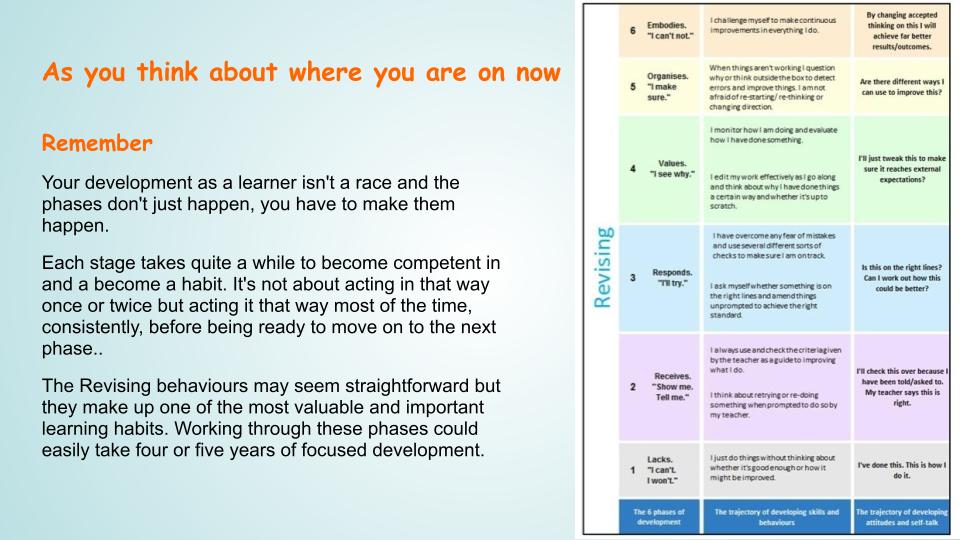
 

Content area 2: Careful consideration of the phases.

If you think you have time you might start this further reflection on the phases with a Think Pair Share activity (see slide 5) If not it is worth talking about the issues mentioned below. These are also captured on slides 6 and 7.

Take it steady

If students aren’t sure where they are on the chart, and as this is their first plan, it’s better to pitch their first plan low rather than high.

There’s nothing wrong with starting in grey to purple where their goal will be to listen carefully for teachers’ suggestions. But they could also try some of their own self-talk phrases to help them take some responsibility for thinking about their learning.

If they think they are ready to work on moving from purple to blue their aim will be to rely on their own nudges and prompts to make sure they are monitoring and reflecting on their learning.

If they think they are already doing this in some subjects they could focus their plan on covering more or trickier subjects.

If they think they are ready to work on moving from blue to green they must be confident that they are employing a range of monitoring strategies. Their aim will be to add looking back to evaluate/review to their learning repertoire and to recognise why this is a beneficial thing for their learning.

If they think they are ready to work on moving beyond green they must be sure they’re ready to look at what they are doing with a critical eye and make their own improvements along the way. Their aim here will be to constantly be on the lookout for how to improve or reinvent something in the light of deeply reflective experience.

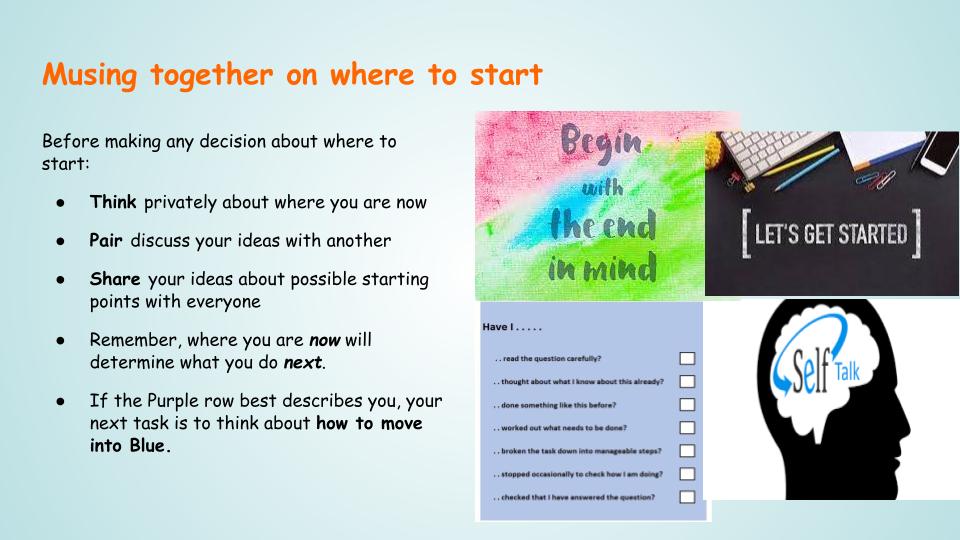


Content area 3: Select appropriate activities to aid improvement

This is a tricky part of your lesson, and may well depend on:

  • how realistically your students evaluate their starting points for XXXX, and
  • the range of those evaluations.

Things to consider as you plan the lesson is to ensure students achieve a realistic understanding of what they currently do, what they currently do not do, and what actions might improve their XXXX skills:

  • If the overwhelming majority of your students believe they are at the same phase of development, planning, for say, small group discussion, will be straightforward.
  • If there is wide variation on starting points, organising small group discussions will need to consider whether you:
    • partner up students who are at the same phase
    • just run with ‘mixed phase’ groups
    • structure these discussions
    • offer guidance and how much
    • will need to produce the guidance in advance (e.g. download PDF resource below)

Also, ask yourself:

  • Is a whole class discussion viable?
  • What will you do about students who appear to have an unrealistic impression of their XXXX behaviours? [It is highly unlikely that students are already functioning at the Green phase – so be alert to over-optimistic student evaluations! Decide in advance how will you challenge such evaluations.]

Resources

The information in the toggle boxes below give a few suggestions for activities and self-talk for each phase of the growth chart. It’s worth acquainting yourself with the ideas.

The same information is also available in a downloadable PDF resource which you can print for students to use in the lesson.

There are slides of the same information should you want to use them in the lesson.
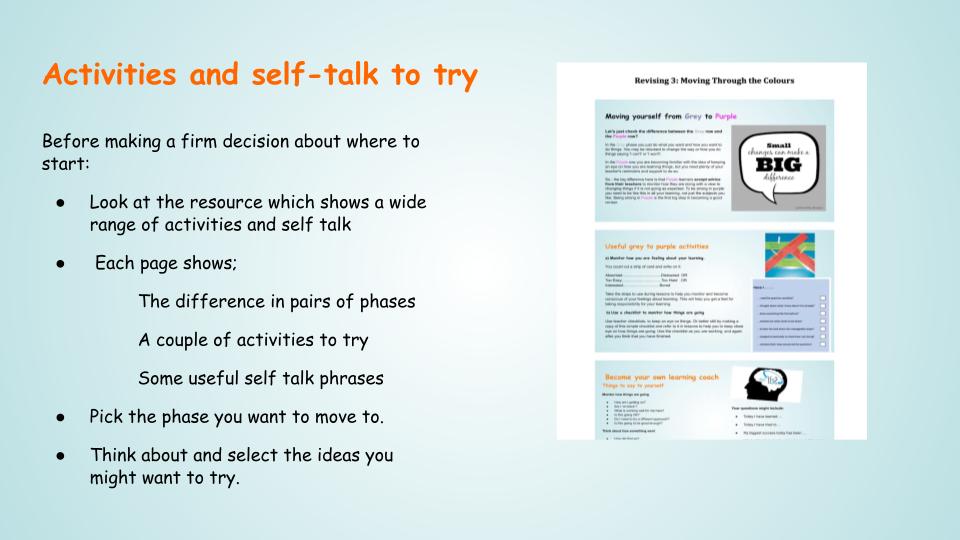
 

Ideas to help you to move you from Grey to Purple

Moving yourself from Grey to Purple

What is the main difference between the Grey row and the Purple row?

If you think you are in the Grey row you just do what you want and how you want to do things. You may be reluctant to change the way or how you do things saying ‘I can’t’ or ‘I won’t’.

If you think you are in the Purple row you are becoming familiar with the idea of keeping an eye on how you are learning things, but you need plenty of your teacher’s support to do so.

So – the big difference here is that Purple learners accept advice from their teachers to monitor how they are doing with a view to changing things if it is not going as expected. To be strong in purple you need to be like this in all your learning, not just the subjects you like. Being strong in Purple is the first big step in becoming a good reviser


A couple of useful activities

a) Monitor how you are feeling about your learning.

You could cut a strip of card and write on it:

Absorbed……………………………..Distracted OR

Too Easy………………………………Too Hard OR

Interested……………………………Bored

Take the strips to use during lessons to help you monitor and become more conscious of your feelings about learning. This is just a small beginning but will help you get a feel for learning to begin to take more responsibility for it.


b) Use a checklist to monitor how things are going

If your teacher offers you a checklist, then take their advice and use it to keep an eye on things. If your teacher does not offer you a checklist, try making a copy of this simple checklist and refer to it in lessons to help you to keep close eye on how things are going. Use the checklist as you are working, and again after you think that you have finished.

update


Become your own learning coach

Things to say to yourself

To help you begin to monitor how things are going

  • How am I getting on?
  • Am I ‘on track’?
  • What is working well for me here?
  • Is this going OK?
  • Do I need to try a different approach?
  • Is this going to be good enough?

To help you begin to think about how it went

  • How did that go?
  • What worked well?
  • Did it go as I expected?
  • Am I happy with that?

Make a quick reflection on what you’ve done become part of your daily or lesson routine.

Your questions might include:

  • Today I have learned….
  • Today I have tried to…
  • My biggest success today has been….
  • What will I tell my family when they ask ‘What did you do at school today’?
  • The most important thing I have learned today.
  • What has inspired me today?

Each, in different ways, encourages you to think about how your thinking / understanding has changed, how you have revised/amended your view of things.



Ideas to help you to move you from Purple to Blue

Moving yourself from Purple to Blue

What is the main difference between the Purple row and the Blue row?

Learners in the Purple row have become familiar with the idea of keeping an eye on how things are going with plenty of help from their teachers.

Learners in the Blue row use a range of strategies to enable them to keep an eye on how things are progressing towards achieving a goal and meeting the required standards.

So – the big difference is that learners in the Blue zone have become far more interested in their learning, monitoring and evaluating what they are doing in order to achieve good standards and without being told / helped to do so. Keeping an eye on how they are learning helps Blue learners to achieve good standards.


A couple of useful activities

a) Create your own checklists

You do not need to wait to be given a checklist by your teacher. Why not create one for yourself?

Suppose that you wanted to create a list that focuses specifically on numeracy/ maths? You might end up with something like the checklist opposite.

Challenge yourself – how would you adapt this checklist to make it relate to literacy rather than numeracy?

b) Trying something different

We all have our preferred ways of working, and if that way is successful we tend to use that method again and again. But what if our preferred way of working is not working as well as we had hoped?

The answer is, of course, to ditch an unsuccessful strategy in favour of a better one.

So where can you find alternative ways of working? Easy – Just stop and look around your class!

Ask yourself:

  • who has found a successful way of doing this?
  • what, precisely, are they doing to be successful?
  • do I need to talk to them to fully understand their approach?
  • how can I copy or imitate their successful strategy?

update
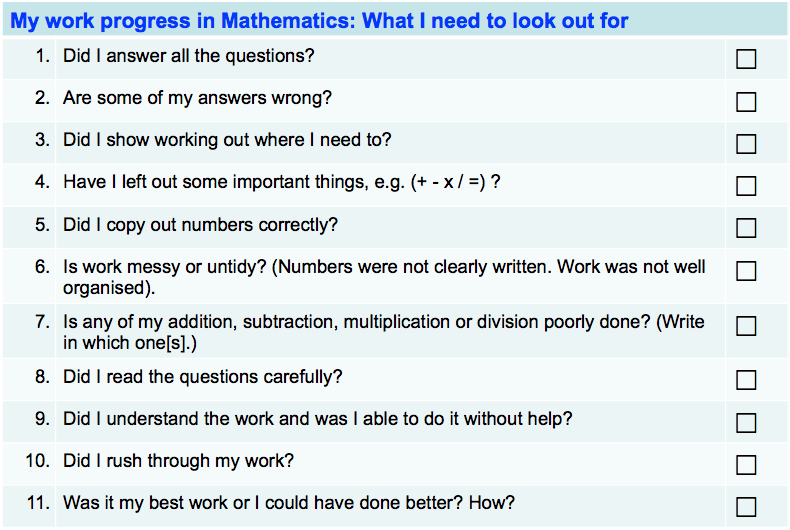


Become your own learning coach

Things to say to yourself

To help you to learn from mistakes

  • What went wrong there?
  • What can I learn from this mistake?
  • If I have another go what would I change?
  • Do I need to try something different?
  • What have I misunderstood here I wonder?

To develop a sense of what ‘good’ looks like

  • What made me think this wasn’t quite right/good enough?
  • Am I (un)happy with this? Why?
  • What hint could I give myself so I can figure it out?
  • Can I do something more/better to meet my success criteria?
  • How you could I improve this.
  • Am I happy with what I’ve achieved?

To explore externally set standards

  • Have I noticed the success criteria?
  • Why do we have success criteria? What are they for?
  • Is it going to be good enough?
  • Is it going to be good enough for me?

Try these If/Thens statements to help you to monitor how things are going:

  • If I am working on something, then I will stop occasionally and ask myself how well I am getting on.
  • If I’m working on something then I will ask myself why I think it’s okay/good/meeting the success criteria.


Ideas to help you to move you from Blue to Green

Moving yourself from Blue to Green

What is the main difference between the Blue row and the Green row?

Learners in the Blue row employ a range of strategies to enable them to keep an eye on how things are progressing towards achieving a goal and meeting the required standard.

Learners in the Green row have come to understand the benefit of monitoring how things are progressing but also take time to look back over what they have done to consider whether they have achieved what they intended and how they might do it differently next time.

So – the big difference is that Green learners not only monitor progress while they are doing something, but also look back to evaluate what they have achieved once they have completed a task. Green learners recognise that doing those things brings worthwhile benefits so they keep on doing them.


A couple of useful activities

a) I used to think . . . Now I think . . .

This routine helps you to reflect on how and why your thinking/understanding is changing. It encourages you to recognise that new learning often requires you to change what you were thinking previously.

For example, at the beginning of a lesson or topic, ask yourself what you understand by one of the key concepts that you will be studying. (e.g. Phrase (English); Proof (Maths); Power (Science) etc). At the end of the lesson/topic ask yourself what you now understand by the term in light of what you have learned.

It is about noticing, acknowledging and celebrating a change of mind.

b) Use a checklist to evaluate a completed piece of work

Monitoring and evaluation are slightly different. You monitor as you go along, as you are doing your learning. Evaluation is what you do after the learning/task has been completed. It involves stopping to look back over what you have done, how you did it, how successful you were, and how you might do it differently next time.

At the end of a substantial piece of work, use the checklist opposite to reflect on what you have achieved.
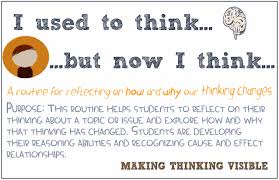
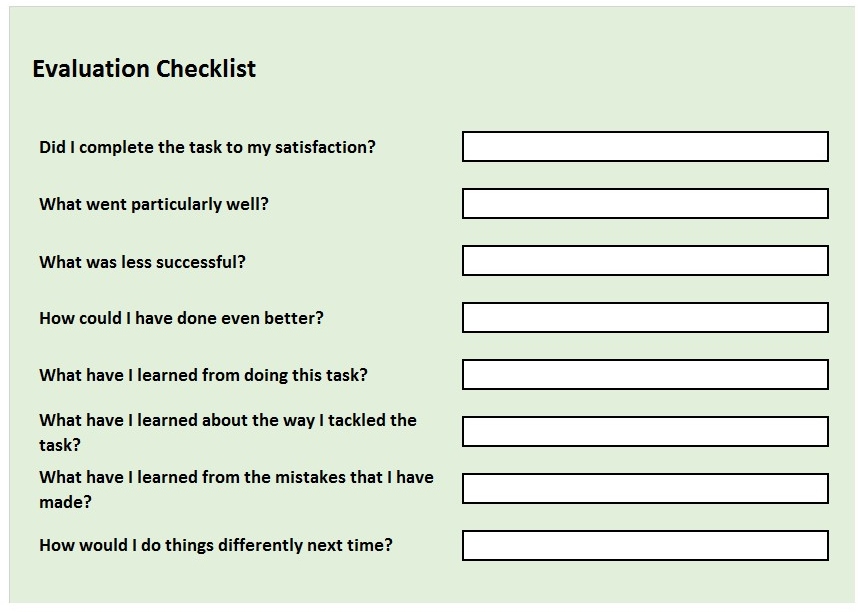
update


Download as a pdf

Become your own learning coach

Things to say to yourself

To help you begin to evaluate how it went

  • How did that go?
  • What worked well?
  • What didn’t go as I expected?

To check against standards

  • Is this the best it can be?
  • Why do I think this is as good as I can make it?
  • Is it good, or just good enough?
  • Can I visualise how it could be even better?

To make minor changes to tweak

  • I could always say to myself. . ‘Does this meet the criteria?’
  • Could I / do I need to make some small improvements?
  • We never/rarely get it right first time.
  • I could say to myself…’I did this well/right/better because I made XX changes

To reflect on why you did it that way

  • Why am I happy with what I have achieved?
  • Did I meet the success criteria I set myself?
  • Can I think of other ways I might have tackled it?


Ideas to help you to move you beyond Green

Moving myself beyond Green

What is the main difference between the Green row and the rows beyond Green?

Learners in the Green row have come to understand the benefit of monitoring how things are progressing, but also take time to look back over what they have done to consider whether they have achieved what they intended and how they might do it differently next time.

Learners in the rows beyond Green organise themselves to meet their own high standards through a combination of reflecting while they are learning (monitoring) and reflecting after the have learned (evaluation). This reflection sets them on a pathway of change and improvement.

So – the big difference is that learners beyond Green have taken control of their own improvement and use monitoring and reflection independently to ensure that they meet the highest standards.


A couple of activities to try

a) Acting on feedback

Students receive feedback from their teachers, parents and friends. Mostly the feedback is spoken, but some feedback might be offered to you in written form.

Positive feedback is always welcome and tends to make us feel good. But the most valuable feedback you can receive is feedback that points to ways that you can improve. Perhaps not as comfortable as the positive, praise type feedback that gives you that warm glow of satisfaction at a job well-done, the most useful feedback you can receive focuses on how you can do even better next time.

So – be alert to all of the sources of feedback around you, listen very carefully, and, most importantly, act on the feedback. Keep asking yourself: ‘How will I do it differently next time?’

b) Slow down, get creative, look at the options

Often when faced with a task there are one or two obvious courses of action. These tend to be the ones that you have used successfully in the past. But are there any other options that might be even better?

Try the routine ‘Options Explosion’ to explore hidden options before committing to a course of action.

  • Begin by listing the obvious options, then . .
  • Brainstorm all sorts of different options to find the “hidden” options. Often there are hidden options that are the real best choices. Be imaginative! Piggyback on ideas you have already, combine ideas to get new ones, look for ideas of a very different kind. . .
  • And finally, select your course of action.


update



Become your own learning coach

Things to say to yourself

To make choices about standards

  • How will I decide if it is good enough?
  • What standards have I set myself for this?
  • Why did I choose to judge it against these criteria?
  • Are there other criteria I could / should have used?

To detect errors

  • Am I using the most efficient way of doing this?
  • Could / should I change what I am doing here?
  • Can I spot any errors/ a better way to do this/to change my original plan
  • Am I satisfied with this yet?

To challenge accepted ways of doing things

  • How could I have done this differently / better?
  • I need to think outside the box here.
  • Am I sure this amount of change is necessary.
  • Is there another way I could have done this?


Content area 4: Put a do-able plan together

The next stage of the lesson involves students putting an Action Plan together

Here is a fairly straightforward six month Action Plan format for students to complete. This means that what they are planning will be put into action by them, over about six months. At the end of six months they will need to review their plan, estimate their progress and then make a new plan. The new plan may tackle the next phase of growth or strengthen the growth in the same phase.

Invite them to:

  • Record name and class
    • the date the plan was made
    • the date the plan will be reviewed
  • In the little table students should indicate the phase of XXXX where they feel secure. This shows their starting point. If they mark Purple to Blue it means they think they are secure at Purple and will be working towards Blue
  • What they want to improve should be shown as Goals and notes made of:
    • any actions they intend to try
    • the sort of self-talk they want to say quietly to themselves.

Reviewing the plan:

  • After about 6 months the plan should be reviewed to prove to students that they are taking action which is having effect over time.
  • It’s useful to note down how the plan worked:
    • what went well and
    • what could have been even better.

Here’s a completed plan to give you an idea of what the plan and its review might look like. Feel free to design your own Action Plan format.
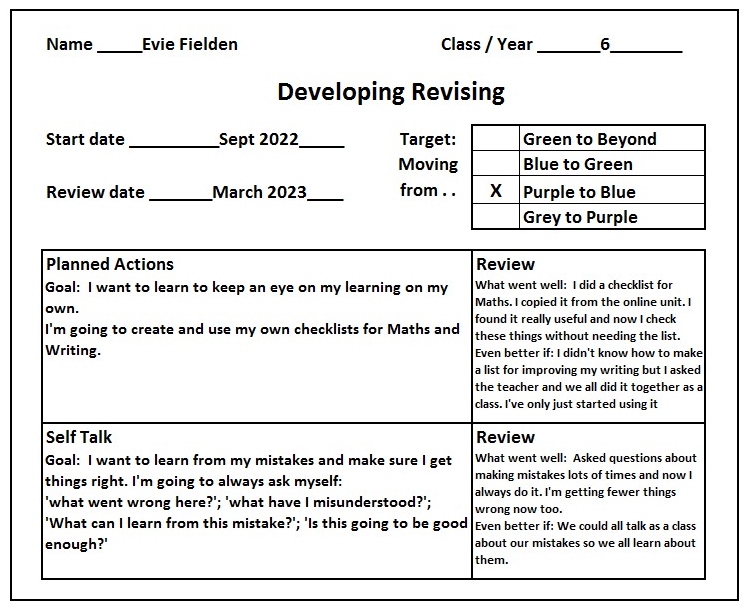
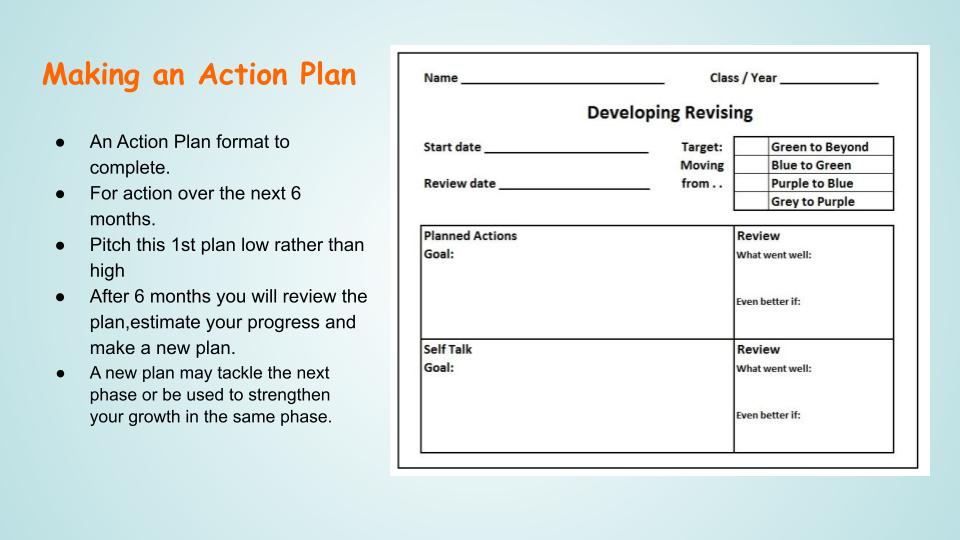
update

Example completed Action Plan


Read the completed plan Download a blank proforma

Content area 5: Monitoring how it’s going and keeping plans under review

The best way of keeping their plan going will be by students getting used to looking at the changes they are making and their impact on their learning.

This amounts to Self-monitoring. It’s about students keeping track of the actions or self-talk they are trying in their classrooms. This monitoring doesn’t have to be sophisticated or time consuming. For example, they could use a simple tally chart to log the number of times they use a chosen activity, or try one of the self-talk phrases. Just noting this down can help them become more conscious of the actions they are taking.

Bit by bit, the more they question themselves about what they are doing the more they will consolidate their approaches to developing these learning behaviours into learning habits.

In six months time

A lesson at the end of the six months should enable students to look back at their plan, and any notes they have made, using this useful technique.

Look closely at what you have changed about your way of working.

Think about:

  • Things you started doing that you hadn’t done previously
  • Things that you stopped doing in order to improve the habit.
  • Things you did more often and less often in order to hone the habit.
  • Things you were already doing and kept on doing because they were on the right track.


I stopped . . .

I tried . . .

I used . . .



Continue Reading

2s Exploring XXXX and how it grows

Section 2s:

  • Needs a full re-write. But see 3t. These are the parent slides for ‘Revising Session 2’


Lesson 2

a) What this section contains.

This section offers ideas and resources for you to use in constructing a lesson, or even two lessons, to enable students explore XXXX and how it grows as an effective learning habit.

We leave the specific lesson design to you but offer pointers and resources in the sections below including:

  • suggested content areas
  • a clear definition of XXXX
  • a list of how teachers help students to use the habit
  • clear explanations of how XXXX develops when encouraged
  • downloadable resources for use by students
  • a slide presentation for use in the lesson

BUTTON UPDATE NEEDED

Download Presentation (pdf)

b) Suggested content areas

  1. What does XXXX mean?
  2. What are the different XXXX habits?
  3. How do teachers help students to develop XXXX habits?
  4. How XXXX habits grow?
  5. Where students’ XXXX strengths lie now.

Your aim for this lesson should be to help students understand:

  • what the learning habit XXXX is really all about
  • how it can develop
  • where they are now in the growth of this habit

In the sections below you will find: explanations of how the learning habit works; a quiz to help students spot themselves XXXX in lessons; ideas about how teachers help students become better at XXXX; a chart showing how XXXX habits grow, given the right circumstances.

Content areas 1 and 2: What being a good XXXX means.

Being ready, willing and able

Revising is about the way we work on something to improve it. Whether it be icing a cake, solving a tricky maths problem or creating a well-crafted essay, all require effort, retries and determination to satisfy ourselves that the result pleases us; that it comes up to scratch. How we tackle such a job isn’t just a case of monitoring as we go along or reviewing the result: it will be influenced by other qualities. Our attitude to change, whether we have a sense of quality and what sort of validation we need.


Being a good XXXX involves:

[GET BELOW FROM 1t, d) ]
  • self-monitoring how things are going, keeping an eye on the goal;
  • expecting the unexpected, being ready to re-shape, re-order, re-form plans to take account of new circumstances;
  • staying alive to new, unforeseen opportunities and ideas;
  • looking at what you are doing with a critical eye;
  • striving to be the best you can be;
  • making sure things are on track and making improvements along the way.

UPDATE

Resource 1 Spot yourself XXXX in lessons

Use this resource to help to get students tuned in – offer them time to think about their XXXX habits. Unpack each of statements. Use of the chart could be extended into other lessons too. At the end of this lesson encourage students to take it with them into lessons and make a note of whether and how often they display these characteristics.

Students will take the outcomes of using this little questionnaire into account when they tackle lesson 3.


UPDATE


Content area 3: How teachers help students become XXXX

As teachers you will:

{UNCERTAIN WHERE THIS CAME FROM]

  • encourage students to change the way you are doing things if necessary
  • help students to view change as a natural part of learning
  • want students to view making corrections as an opportunity to improve
  • focus your feedback on what students need to do to improve, rather than simply praising what they got right
  • offer students checklists that help them to keep an eye on how their work is progressing
  • create opportunities for them to stop and to consider how things are going

Feel free to add your own ideas to this list.

Good revisers have had to learn how to deal with change, both emotionally and practically. If you’re someone who just wants or likes things to stay the same you’re unlikely to recognise the need to change your ideas or the way you do something.

A good reviser needs to know/understand what ‘good’ looks like; how to keep an eye on how things are going; be willing to evaluate how good things are against external standards. Growing students’ revising habits is much more than encouraging them ‘having another go’.


UPDATE


Content area 4 and Resource 2: Progression in XXXX

A progression chart for XXXX

It may be tempting to think that either you do, or you do not, use your XXXX habits – that either you are inflexible and reluctant to change, or that you are flexible and open to change. This could not be further from the truth!

The reality is that there are lots of little steps, skills and attitudes that lie between these two extremes.

The chart alongside outlines a possible trajectory of the development of a good XXXX habit. It moves from being the learner at the bottom who is unaware of XXXX, to the highly aware and XXXX savvy learner at the top. Between the two lies a progression that can be mapped and described. The statements in the diagram hint at the journey from novice XXXX to an expert XXXX.


UPDATE


Content area 4: What the columns are about

Column 1 charts 6 phases of development, going from Grey at the bottom, through to Orange at the top. These phases describe the journey from an attitude of ‘I can’t / I won’t’ at the bottom, through to ‘I can’t not do this’ at the top. These phases are not inevitable or automatic; they don’t just happen.

Column 2 puts flesh on these phase bones, and identifies what the developing skills, behaviours, habits look like as learners become increasing more effective as XXXX.

Column 3 is a really important one. It shows how attitudes and self-talk change as XXXX skills develop and grow. Interestingly it’s one’s own feelings, inclinations and desires that drive the development of any of the learning behaviours. If you don’t know or care about it it’s unlikely to improve.

UPDATE


Content area 5: Resource 3 Where students’ XXXX strengths lie

To make XXXX come alive and feel real it’s important to offer learners a closer look at each phase. To enable this enquiry we offer two resources. You could use the slides shown below or the same slides presented as a downloadable PDF for you to print. How you explore this information with students we leave to you.

Looking closely at grey from the learners’ viewpoint

In this ‘Lacks’ (grey) phase, you are not aware of doing things well or differently, you just do things. You’re not too bothered about outcomes and you’re not interested in revisiting something in order to change or improve it. You very much just do your own thing and you’re not aware of external standards or expectations. You may be reluctant, or even afraid, of changing the ways that you do things. But don’t think of this as a negative start. Most learners start like this before making a start on their journey of learning how to learn.


update

Looking closely at purple

In the Receives (purple) phase, you are beginning to make checks on how you are doing against given criteria when you are prompted to do so. Your teachers are kick starting your Revising learning journey. You can talk about what you did and sometimes how you did it. You rely on your teachers or parents to tell you that what you have done is valuable or worthwhile. You have learned to accept and act on your teacher’s advice to have a second go at something and/or to pause and check how things are going. You have to go through this phase before moving on to the next.


update

Looking closely at blue

In the Responds (blue) phase you have overcome any fear of mistakes and you’re more able and willing to monitor what you are doing. You’re beginning to develop what you mean by ‘good’ and to understand why given standards are important. You enjoy supportive feedback and you talk about how you could improve with support. You are increasingly willing and able to check how things are going even if your teacher doesn’t tell you to do so. You are becoming inclined to make your own changes to improve your work.

update

Looking closely at green

In the Values (green) phase, you understand the importance of keeping a close eye on progress in order to achieve high-quality outcomes that meet your goals. You see the point in making changes to reach a goal or external standard. You understand the need to learn from previous experiences and realise that learning is actually all about changing your understandings; not just knowing stuff. So now you look at what you are doing with a more critical or demanding eye and have realised that being like this this is really good for you. Your positive attitudes to improving are helping you to achieve more and improve.

update

Looking beyond green

In the Organises (yellow) phase revising has become a skilful habit; where revising itself raises more questions than answers. Yes, you keep progress under review but now you question the original goal of the activity. You look for higher standards and may well move to a more productive strategy or a different goal. You now use critical feedback positively and you’re keen to look back on what and how you achieved what you did in order to learn from the experience.

In the Embodies (orange) phase, you make ongoing checks, amends and rethinking, in order to meet you own, often more exacting, standards of achievement. Now you don’t need the validation of others (marks, grades, exams, quality feedback) because your own critical sense of standards acts as your barometer. You adapt readily to changing circumstances and always reflect on what and how you have done something with the explicit intention of doing it better, more efficiently / differently in the future. In this final Orange phase you simply can’t help but do it in all aspects of your learning. This way of behaving has become a defining part of your learning character.


update


Content area 5: Where students’ XXXX strengths lie

Reflecting on learning

Using an effective thinking routine

Invite learners to reflect on what they have learned about themselves as a learner by using the Visible Thinking Routine ‘I used to think… Now I think’ . . . before estimating which colour row best describes their current XXXX skills, behaviours, attitudes and habits.
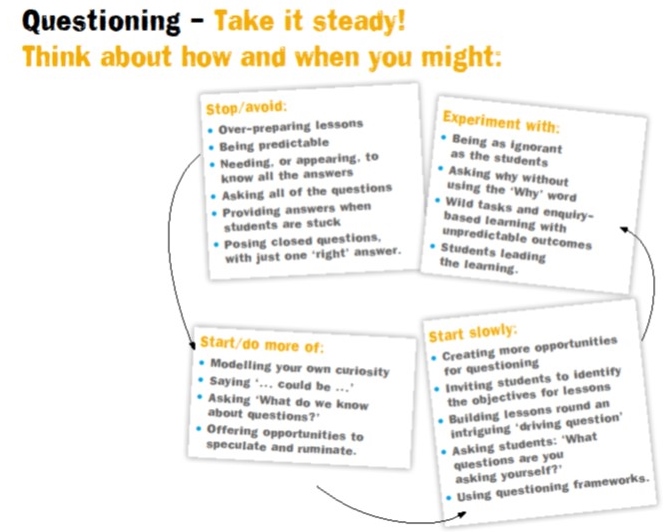
It’s fair to say this first estimate won’t be their last because the next lesson gives time to reassess their decisions. But it gives them a basis to work on before looking more closely at themselves learning during their lessons next week.


update


Keeping awareness alive

Using the checklist from the beginning of the lesson invite learners to take the resource with them into lessons over the next week. We suggest they use the resource after at least three lessons across the week. You could leave the choice of lessons to them or maybe suggest they select a subject they enjoy/find fulfilling and one they find tricky. Probably wise to advise them to complete the resource after rather than during the lessons.

Emphasise the need to bring the results of their observations to the next lesson on XXXX where they will be used to help them further their understanding of themselves as learners.

update


Continue Reading

1s Introducing learners to the idea of XXXX

Section 1s:

Lifted from HYLT (and removed from section 4t above)

Lesson 1

a) An activity to introduce students to the idea of XXXX

As a teacher you will gain real understanding of the use and power of learning behaviours when you knowingly use/activate such behaviours in the classroom.

The type of activity given below aims to open up a conversation about Revising and demonstrate how opinions and hypotheses change and are revised as more information becomes available. It underlines the importance of speculative thinking that is unlikely to be right first time; a feature that lies at the heart of Revising.


b) Many ways to introduce learning habits

There are of course many ways to introduce the habit of XXXX but here are five culture shifts to think about and get you started.

Ask yourself – how might you:

  • Harness display to illustrate that first attempts are rarely the finished article
  • Ensure that students act on your feedback and do things differently next time
  • Encourage students to monitor how things are going, and change tack if necessary
  • Encourage students to evaluate the extent to which they have met the required standards
  • Deliberately create situations that require a change of mind.

See section 4t for practical classroom practice suggestions.


Continue Reading

5t Develop your practice for XXXX

Section 5t:

  • a/b easy

  • c lifted from HYLT section 5

  • d easy

  • e lifted from HYLT section 7

a) Cultivating learning habits ultimately involves:

  • Providing rich and varied occasions for exercising learning habits;
  • Infusing learning habits into lessons to enhance content understanding;
  • Recognising and celebrating the use and growth of learning habits;
  • Expecting students to take ownership of and responsibility for their own learning habits;
  • Exploring the development of learning habits with students over time.

As a teacher you are an influential character builder and so need to be mindful of how you help students strengthen their learning habits. It takes most teachers between 2 or 3 years to become really fluent with this way of teaching. So, go easy on yourself  because small steps often prove to be big levers for change.

UPDATE


Revising - Learning Mats - purple blue green_Page_1


b) First develop your coaching language

Below you’ll find a range of things you could say to nudge XXXX. When you use this kind of language you are talking as a learning coach, encouraging your students to think for themselves. Using such statements encourages your students to:

  • imitate you;
  • start to think in this way;
  • become conscious of these phrases and their meaning.

Gradually you will hear some of the ideas pop up in students’ self-talk….in speech or even in writing from time to time, but mostly these will go on inside their heads. As your work on XXXX gathers pace see if you can detect students who talk, or think, in these ways.

c) Teacher talk – as a learning coach

10 ideas to ensure your students do the thinking for themselves

  1. Good learners are flexible – they watch how they are doing and change things as they go
  2. Are there other ways you might do it?
  3. What can you learn from this mistake?
  4. Ask yourself: ‘Am I happy with what I have achieved?’
  5. Think about your success criteria as you go along. Check that you are still on track to meet them.
  6. Ask yourself from time to time: Is this going ok?
  7. It’s OK to amend your plan and approach it differently.
  8. How can you improve this?
  9. How will you do it differently next time?
  10. How will you act on this feedback?

d) Have a think

  • Which of these XXXX nudges might you start using?
  • In which particular lessons would such nudging be most useful?
  • How will most of your students respond to such nudges?
  • Will this way of engaging be more popular with girls or boys?
  • What other nudging ideas might you add to the list?

Make a note of…

Little_r

  • Students’ reactions to the nudges.
  • Ideas about why this might be.
  • Ways in which you could further encourage students to imitate this metacognitive self-talk.
  • Any positive or negative impact of these XXXX behaviours.

e) What to start and stop

Here are a few more ideas you might want to try. Take it steady, this way of teaching can be a big but exciting shift so it’s worth doing it slowly and thoughtfully. Look first at the Stop/avoid ideas. Some of these are far from trivial but it’s best to try to remove them before starting on the Start/do more of, Start slowly and Experiment with ideas

f) What do you think?

  • Which of the ideas appealed to you most?
  • Can you see ways of incorporating these into your subject/class routines?
  • Which would make the biggest difference to your students?
  • Which would make your life easier?

Make a note of…Little_r

  • Ideas that you want to try and the impact you hope they will have on your teaching and on your students.


Continue Reading

4t Ideas for classroom practice

Section 4t:

Mostly lifted from HYLT

a) Ideas to encourage a XXXX frame of mind

In the early stages of building your students’ learning power your role is to:

  • make them aware of the behaviour
  • talk about it (what, how, why, when, if)
  • celebrate its use
  • give opportunities to practise it, both in lessons and elsewhere
  • reflect on it to improve it.

b) Use a staged start for using XXXX…

  1. Firstly... make students aware of the use and importance of XXXX…what, when, where, why, how they are or could be doing it
  2. Then… explore XXXX a little more through the language of XXXX
  3. Try... using XXXX as a lesson starter to tune students into using it
  4. Then start... blending XXXX into the way you teach the content. Use specific XXXX strategies to deepen content understanding.
  5. Ensure... students reflect on the success or otherwise of their XXXX activities.


IMPORT FROM HYLT BELOW

b1. Make students aware of Revising

How you make students aware of the words that describe the behaviour and why it is important to use it.

Younger students

Explore what it means to revise.

Invite the students to move around a big open space then stop and make the shape you call out.
When they have all made their shape, ask them to look around at each other and then have another go at making the same shape differently.

  • Do this several times.
  • Talk about thinking again and changing one’s first idea of how to do something.
  • Over time get the children to start asking themselves whether they want/need to improve their first go at making the shape -so gaining a sense of an internal ‘good enough’ measure.

Older students

*Give revising a high profile

Display work in progress

  • Collect and display work at different stages of development. Use arrows and notes to highlight the changes and their impact.
  • Renew and refer to these frequently to encourage students to review and amend their work.
  • Show that learning isn’t about perfection at the first attempt!

Younger students

Give revising a special place

The Editor’s Desk

Create an area of the classroom which is dedicated to and celebrates the skills of reviewing and improving.

Set aside a table in the classroom, and equip it as if it were an office – writing equipment, computer, office chair etc.

This is called the ‘Editor’s Desk’, which is set aside for a student to use when they are in editing, drafting, redrafting, correcting or improving mode.

Older students

*Make monitoring checklists

Construct checklists with students itemising the important things to check before they consider something is finished. Here’s just one example:Screen Shot 2016-05-09 at 13.56.32

b2. Exploring the language of Revising

How you might extend the language and understanding of this behaviour

Younger students

*Focus on monitoring: checking as you go along


Older students

Extend the language of Revising


Collect words that describe what a good reviser does. How else might we talk about Revising?

Relate Revising to well-known sayings

What do we mean when we say …

Change tack
Think on your feet
Fine tuning
Back to the drawing board
Keep an open mind

b3. Use Revising as a lesson starter

Use a quick starter to key students into the learning behaviour you want to concentrate on in the lesson. i.e. here you are starting up the revising (Re-thinking) behaviour

Younger students

*Optical Illusions

Use Optical Illusions to remind students that once we have seen something from one perspective, it is hard to change our minds and see it / think about it differently.

Image result for optical illusion old woman

Older students

*What do you see here?

Ready students’ minds for adjusting their point of view, changing their mind or revising their ideas.
The technique, illustrated here through the picture of a dog leaping over First World War trenches, can be applied to any image where there is some kind of unexpected juxtaposition of conflicting aspects within the same picture.
The purpose is to draw students into speculating about various parts of the image before revealing the full image. This will necessarily require them to revise and build on their first impressions. The underlying message is that new information often forces us to change our original understandings.

b4. Focus on Revising as a learning strategy

Use an appropriate thinking routine to practice the behaviour.

All ages

*Visible Thinking Routine

I used to think . . . . . Now I think.



This routine helps students to reflect on how and why their thinking/understanding is changing.
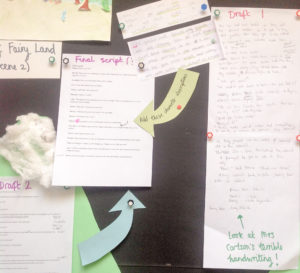
Remind students of the topic you have been working on. Ask them to respond to each of the sentence stems:

I used to think…, Now, I think…

Alternatively ask students to write down their views at the beginning of a topic. Invite them to revisit & update their answer during and at the end in light of what has been learned.

Or, at the beginning of a lesson ask students to write down what they understand by a particular term that will be explored in the coming lesson (e.g. Phrase (English); Proof (Maths); Power (Science) etc). At the end of the lesson, ask them to write down what they now understand by the term.

Read more on the VTR website


b5. Reflect on Revising

Younger students

Make reflecting on Revising behaviours part of everyday lessons

Download

Learning mats are A4 laminated sheets that show various aspects of a learning habit. Keep them on desks/tables or as part of a wall display. Use them during lessons as prompts to promote use. Refer to them at the end of a lesson to assess which were used, which worked and why.

Older students

Get a handle on excellence

The Rating Wheel describes an expert ‘Reviser’. Use the wheel as a reflection tool for students to consider which skills they know about, which they have used and which might need improvement.

Download

b6. Finally, a classroom practice idea that deserves a special place

Ron Berger’s Ethic of Excellence

Build a culture of critique

Plan formal critique sessions, where students may show a piece of work, explaining their ideas and what they were trying to achieve. Students are then encouraged to critique the work, but using the rules that it must be:

  • Kind
  • Specific
  • Helpful

Students should be encouraged to phrase their critique as questions e.g. ‘Have you thought about…..?’  As a result of this feedback from their peers, students improve their work over time.  This is demonstrated brilliantly, by this short video.

Just watch, be amazed and try similar approaches with your students.


c) What do you think?

  • Can you see a use for any of the suggested activities?
  • Have you raised awareness of XXXX with your students?
  • Does your class have an agreed set of good XXXX behaviours?
  • Which two ideas from above do you want to try out?
  • How long will you keep them going before you decide whether they have worked or not?

Make a note of…Little_r

  • What happens in your classroom in response to any of the above ideas.
  • How students’ behaviour changes over about 3 weeks of becoming more familiar and talking about the behaviour.
  • How your behaviour in the classroom changes as you use these ideas over time.


NB. None of the suggestions above will lead to instant understanding in students nor instant changes of behaviour. You will need to drip these, and others, in over time and keep building and refreshing your language of learning.


Continue Reading