d need re-write (but is the ‘parent’ for the first person version in 2s content 5; in section 2 of Getting Better at Revising; and in ‘Revising Session 2’. )
a) Get a handle on progression
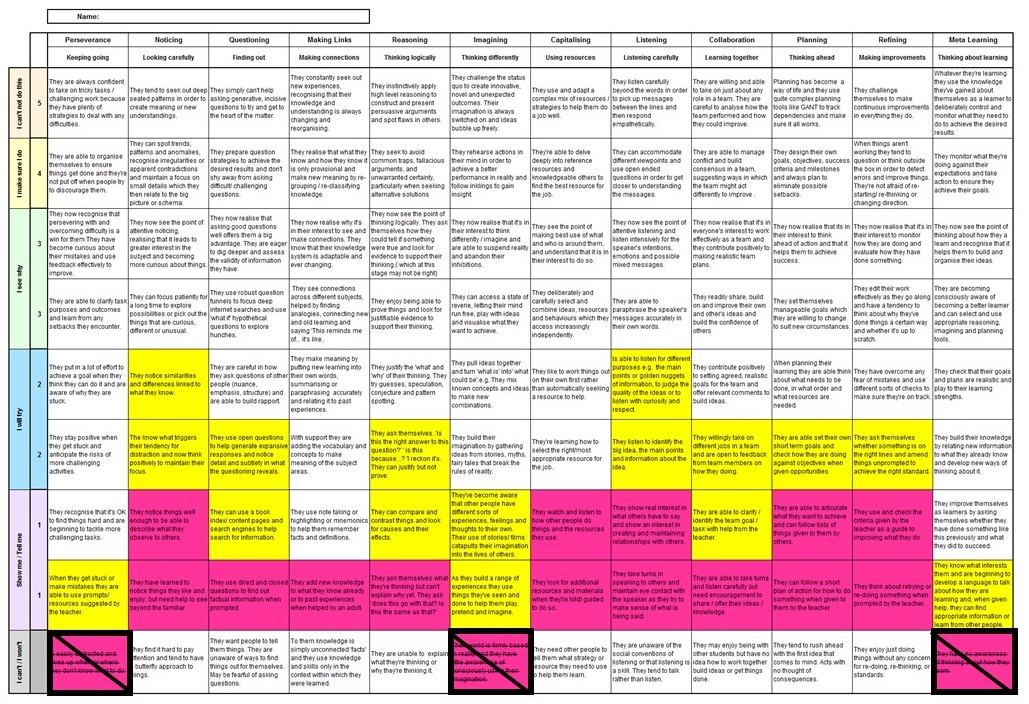
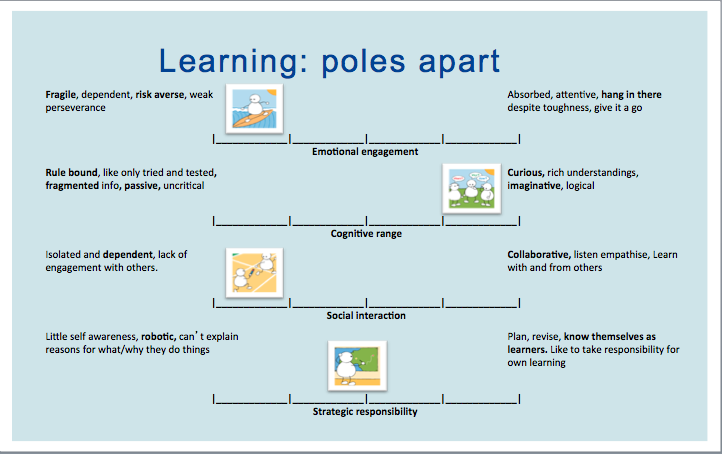
As with all learning behaviours, XXXX is not a case of ‘either you do, or you don’t’. Few learners are inflexible and rule-bound in every circumstance, and equally few are reflective and adaptable in every situation. Most lie somewhere between these two extremes. The diagram alongside – Learning: Poles Apart – offers an outline view of the whole journey; building students’ emotional learning habits; building their cognitive/thinking habits; building their social learning habits and their ability to manage the process of their learning. The reluctant learner on the left and the learning powered learner on the right show the beginnings and ends of a long, exciting, but far from inevitable, learning journey.
b) Stages of growth in XXXX
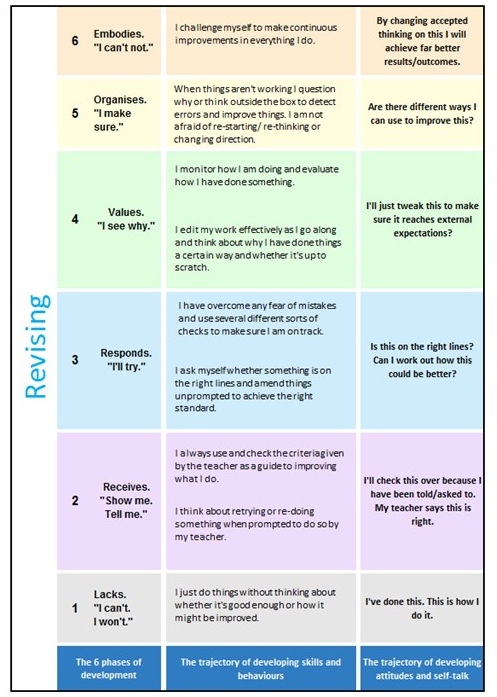
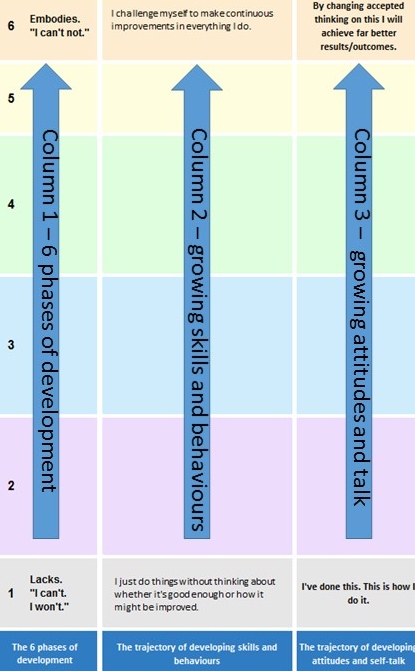
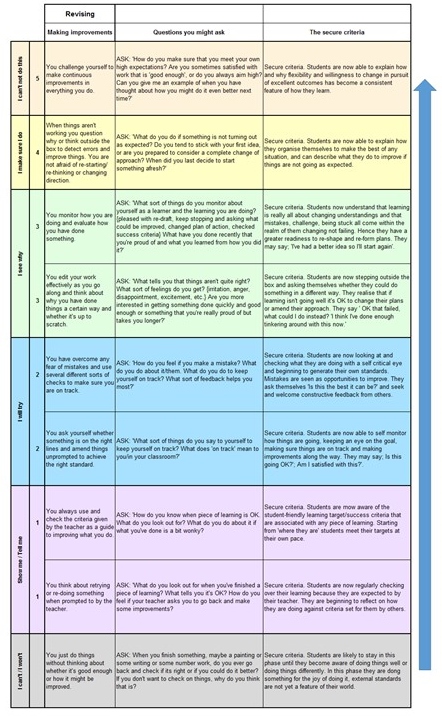
The chart alongside offers a glimpse of how XXXX may grow, given the opportunity and encouragement. It is this scaling of the learning disposition that will help you make sense of the journey as you, and students, track, and influence, learners’ progress over time.
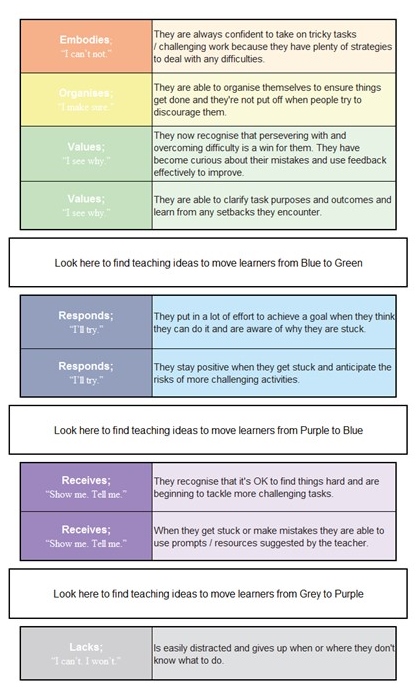
Column 1 identifies 6 phases of development.
Column 2 describes how the behaviours may look if they are enabled to grow over time,
Column 3 captures the self-talk; what students may quietly say/explain to themselves at each phase of development.
We’ve borrowed ideas from Benjamin Bloom’s Taxonomy of Objectives of the Affective Domain to generate a very condensed version of the five main phases of growth, namely:
1 ‘Lacks’ (grey) We have added this level where the behaviour is weak and the response is negative. This might translate into “I can’t or I won’t” in student self talk
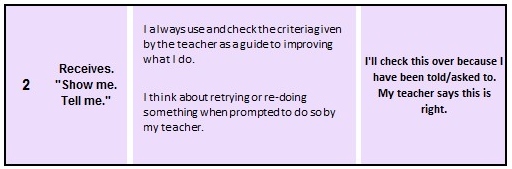
2. Receiving. (purple)..which involves giving attention to something; becoming aware, not avoiding or rejecting it; being alert to something. This might translate to “Show me or Tell me” in student self talk
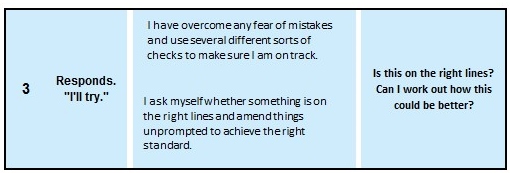
3. Responding. (blue)…which involves going beyond merely attending to actively attending; complying; taking more responsibility for and enjoyment in initiating action.This might translate to “I’ll try” in student self talk
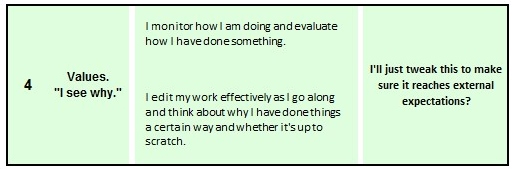
4. Valuing. (green)..which involves accepting the worth of something; preferring something; being committed to the value of something.This might translate to “I see why” in student self talk
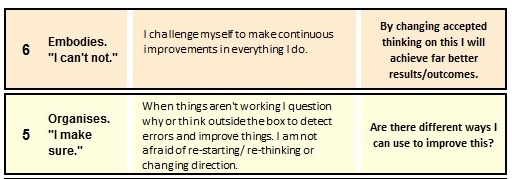
5. Organisation.(yellow)..which involves adding to, formulating and organising their values into how they live their life.This might translate to “I make sure” in student self talk
6. Embodies. (Characterisation in the original)(orange)…which involves behaving consistently in accordance with their values, living what they stand for.This might translate to “I can’t not do this” in student self talk
This progression is long term and not inevitable. Some phases will take years for people to work through; some will never be worked through. None of the phases are inevitable. There is a lifetime of potential development captured here. But these phases can be nurtured and ensured in what might be called ‘learning friendly’ classrooms.
d) Where are your classes in relation to their levels of XXXX?
Level detail
In the ‘Lacks’ (grey) phase, students are not necessarily aware of doing things well or differently. Once they get going on something they may change it but more for the joy of just doing it. Outcomes maybe rushed or lack finesse, but once completed there may be little interest in revisiting it or in any comments they are offered. External standards of what things might or should look/be like are not yet a feature of their world.
In the Receives (purple) phase, students begin to make checks on how they are doing against given criteria when prompted. They can talk about what they did and sometimes how. They rely on their teachers or parents to validate what they do/have done. So there’s a reliance on others to validate what they are doing.
In the Responds (blue) phase students have overcome a fear of mistakes and are more able and willing to monitor what they are doing. They begin to develop the idea of ‘good’ themselves and to understand why given standards are important. They respond positively to supportive feedback and talk reflectively about how they could improve with encouragement. They are now taking far more responsibility for their learning.
In the Values (green) phase, students understand the importance of keeping a close eye on progress in order to achieve high-quality outcomes that meet their goals. They see the point in making changes in the light of the original goal or external standard or internal feedback. They understand the need to learn from previous experiences and realise that learning is all about changing understandings; not just knowing stuff. In so doing they widen the scope of external validation. Once in the green phase they have taken responsibility for what they are doing because the recognise it as a ‘win’ for them.
In the Organises (yellow) phase revising has become a skilful habit; where revising itself raises more questions than answers. Yes, progress is kept under review but now students are bold enough question the original goal of the activity. They look more widely for validation and may well change to a more productive strategy or a different goal. They use critical feedback positively and are keen to look back on what and how they achieved, what they did in order to learn from the experience. They organise themselves to be like this. Revising has become a habit.
In the Embodies (orange) phase, students make ongoing checks and amends, and major rethinking, in order to meet their own, often more exacting, standards of achievement. Now they tend not to need the validation of others (marks, grades, exams, quality feedback) because their own critical sense of standards acts as their barometer. They adapt readily to changing circumstances and always reflect on what and how they have done something with the explicit intention of doing it better, more efficiently / differently in the future. Revising has become part of the character, they can’t not do it.
UPDATE
Where are your students now?
What insight does the progression trajectory yield?
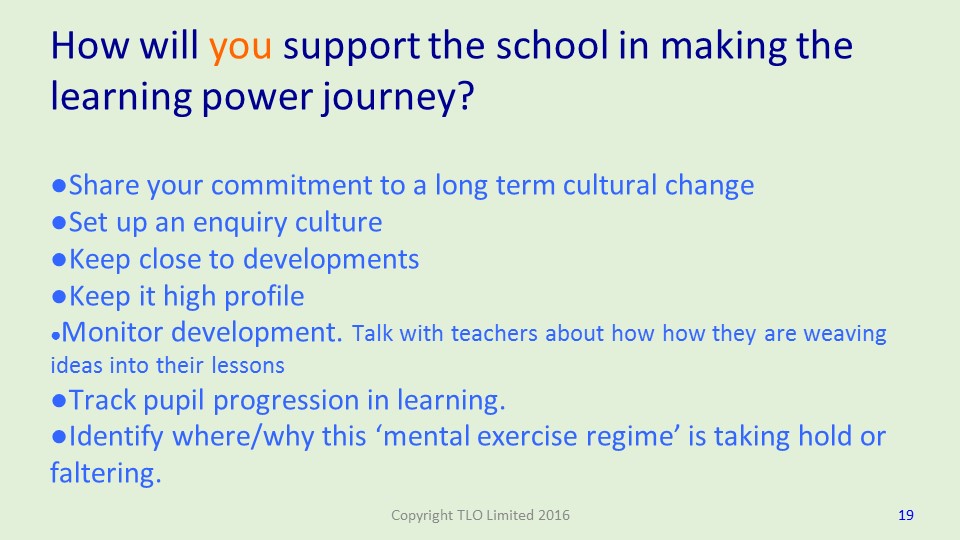
Think about a class you know well. Ignore the ‘outliers’ for a moment, which phase(s) do you think best describes the majority of your learners?
Where do you think your higher attaining learners sit on this trajectory?
Where do you think your lower attaining learners sit on this trajectory?
Do you think that your learners are slowly edging up this trajectory as they pass through your school?
If yes, why do you think this happens? Are there any interventions that you / the school make to support this?
If no, why are learners not improving their skills and attitudes?
Make a note of the skills and attitudes that your learners might need to develop further.
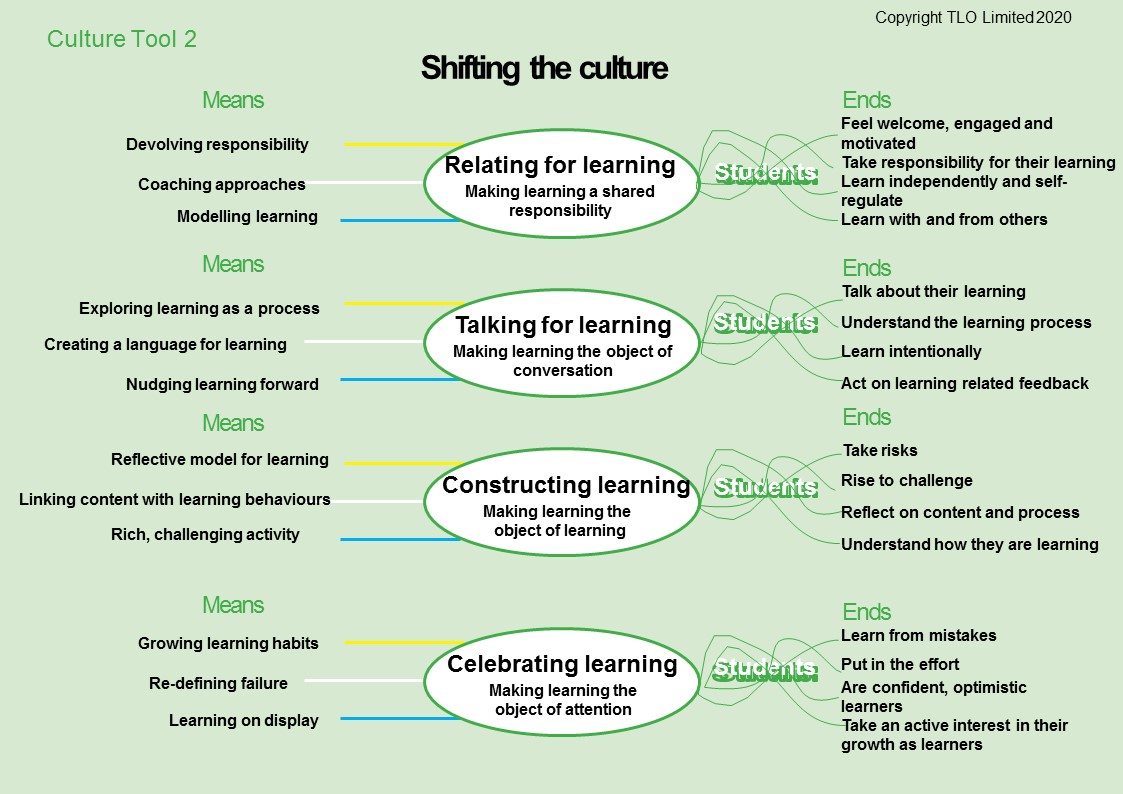
Building students’ learning behaviours is about creating a culture in your classrooms – that systematically cultivates habits and attitudes that enable your students to learn confidently and face difficulty calmly and creatively. By a ‘culture’ we mean all the little habits, routines and practices that implicitly convey ‘what we believe and value round here’.
So ‘culture’ concerns the details of the micro-climate that you create in your classrooms. What you do and say, what you notice and commend and what you don’t, what kind of role model of a learner you offer – all these are of the essence. The micro-climate of a classroom can inadvertently stifle, or specifically enhance, the very behaviours you are seeking to promote.
b) What sort of culture are you trying to create?
Bringing learning to the fore is to let students do more of it; to become more active in the learning process. Becoming more active learners involves offering them more opportunities to decide what to do, being given a chance to talk more and actively learn by reviewing their own experience. As students are given more responsibility for their own learning the role of the teacher changes from ‘the sage on the stage’ to ‘the guide by your side’.
What you are doing is developing students as meta-learners who become able to understand and grow themselves as learners.
c) Looking more closely at classroom culture
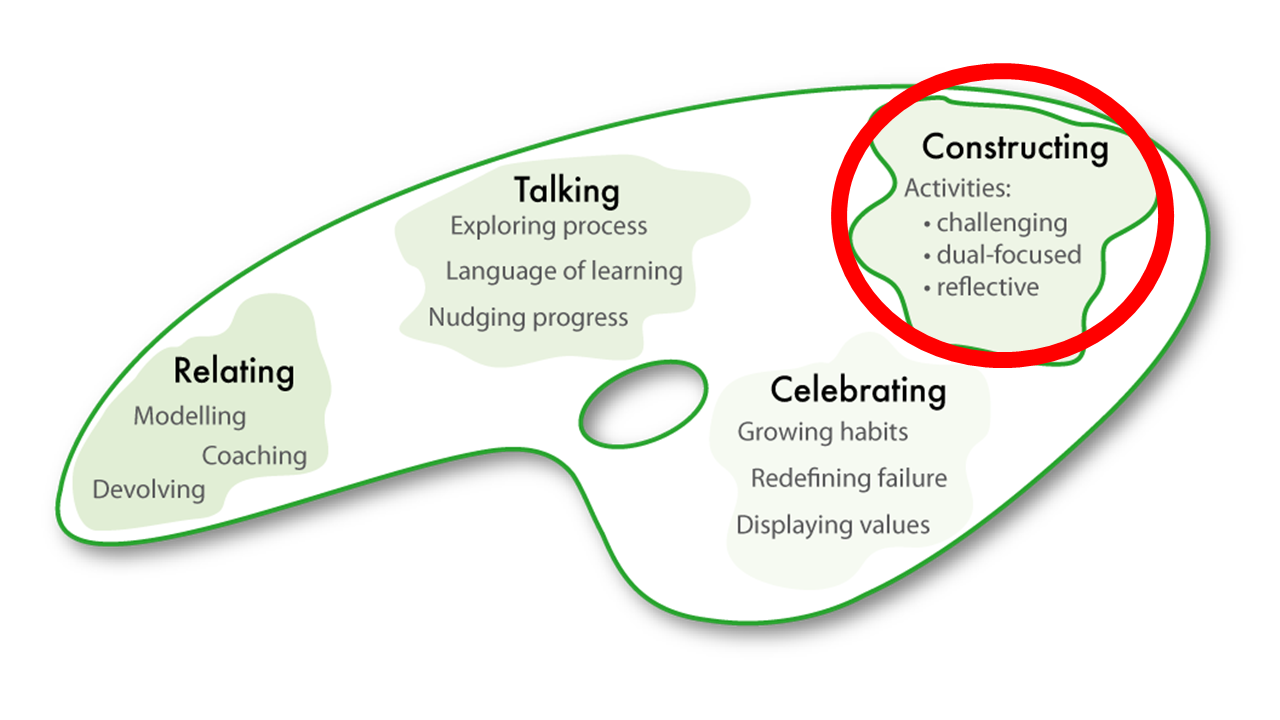
There are four specific ways in which teachers can create the classroom culture to build learning habits;
strategies you could build into the way you teach to stimulate XXXX
the sort of language you might use to stimulate XXXX
ways in which you might celebrate / praise students’ use of XXXX
actions you need to enable students to undertake to build their XXXX habits
d) A graphic summary
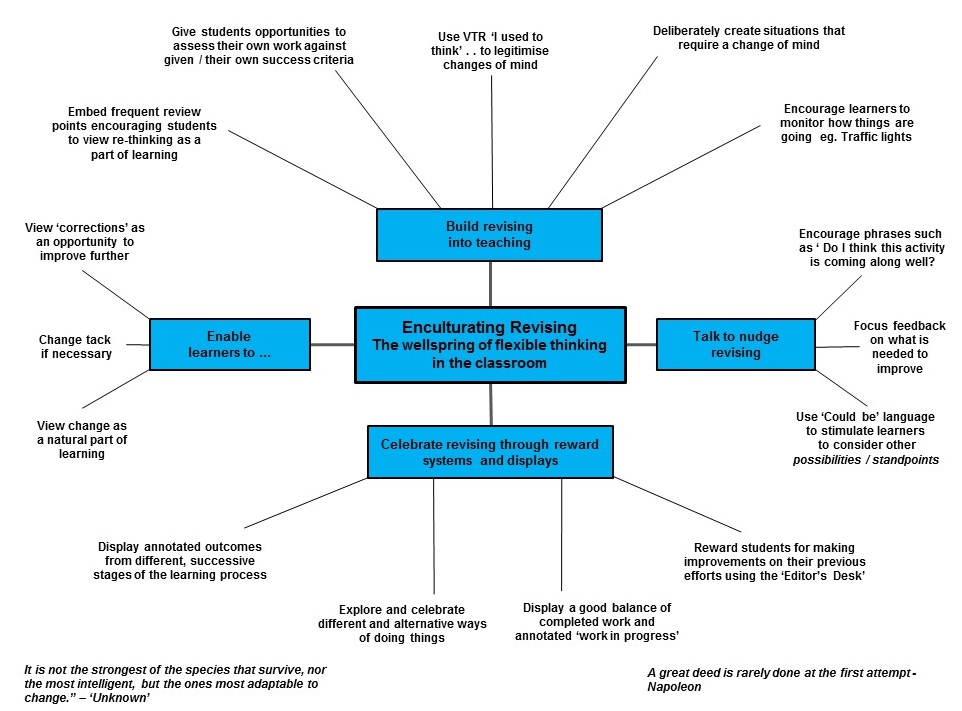
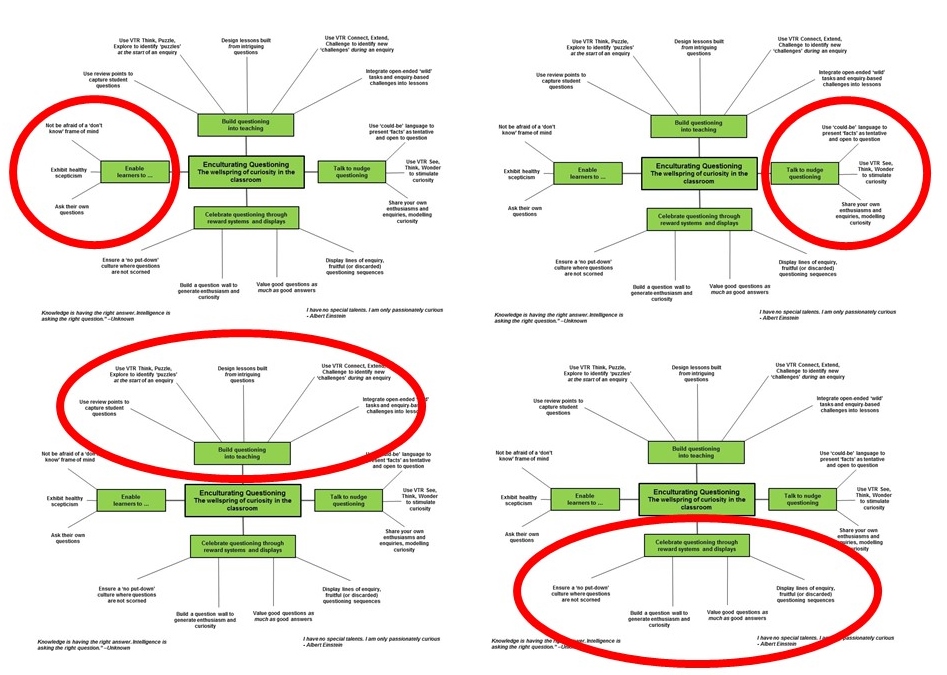
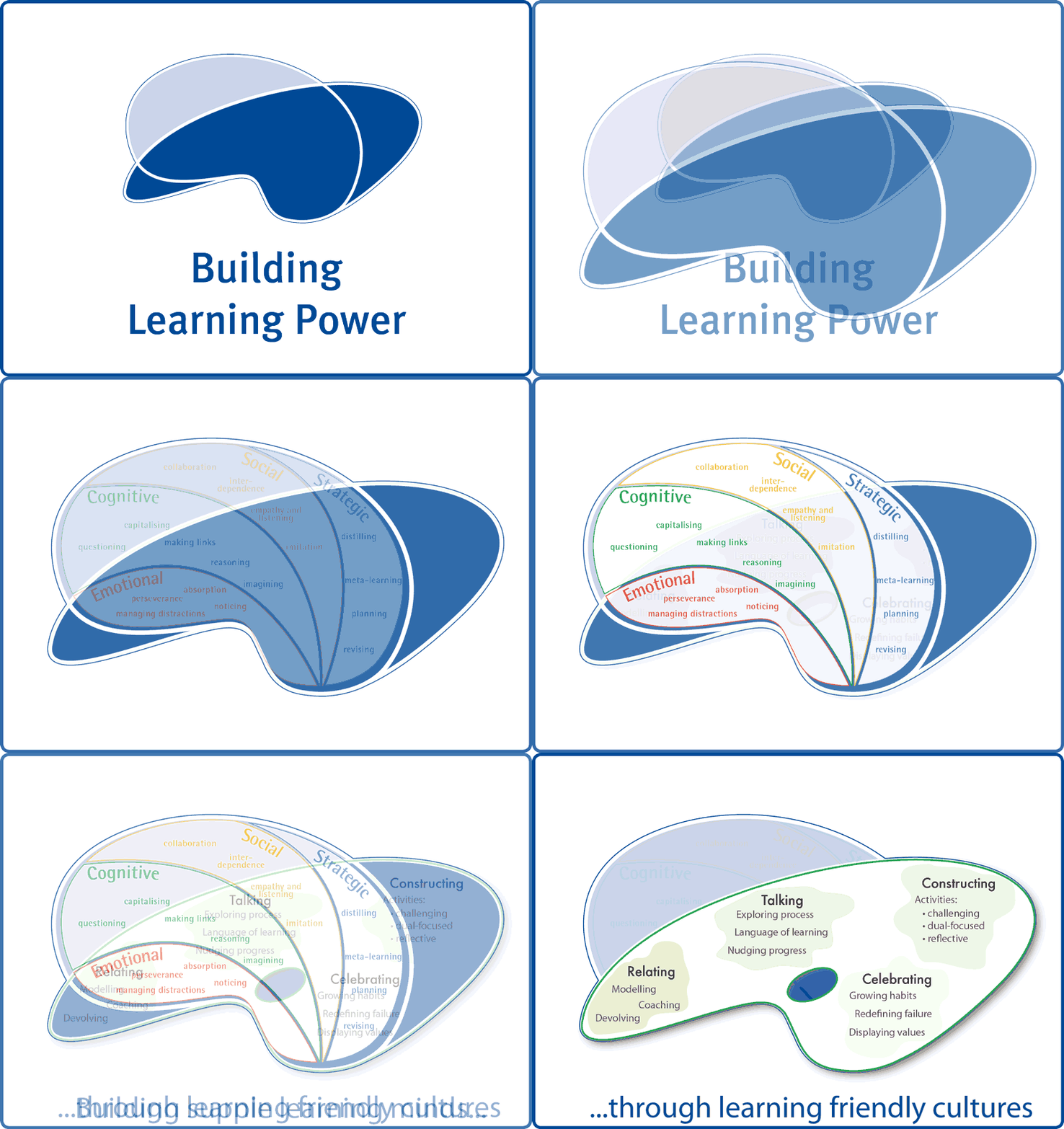
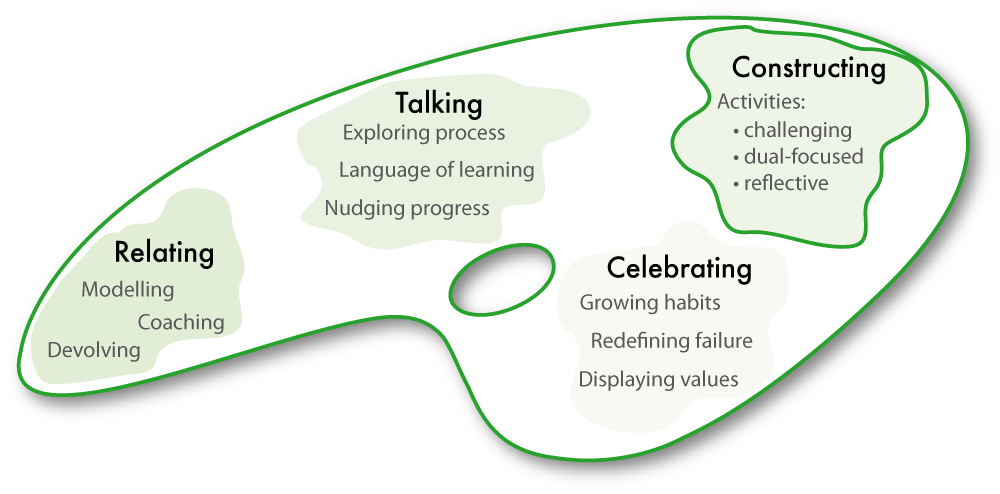
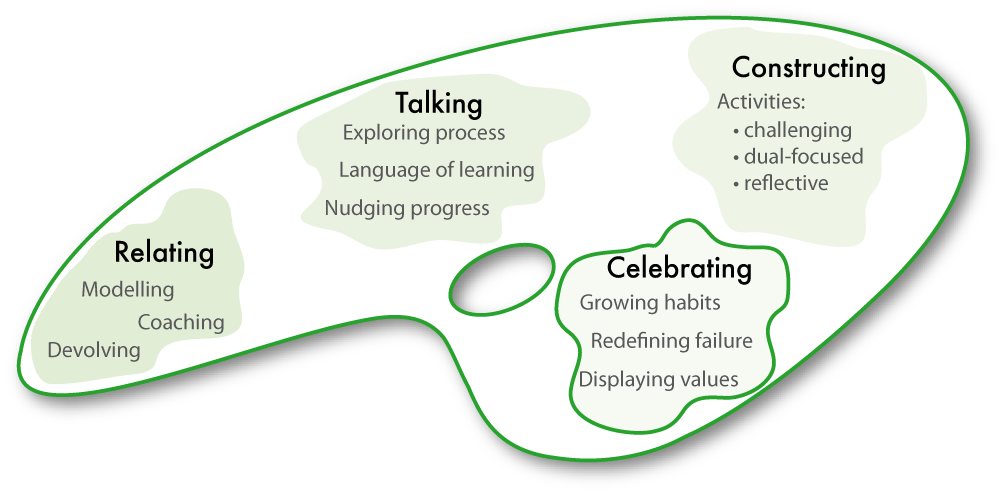
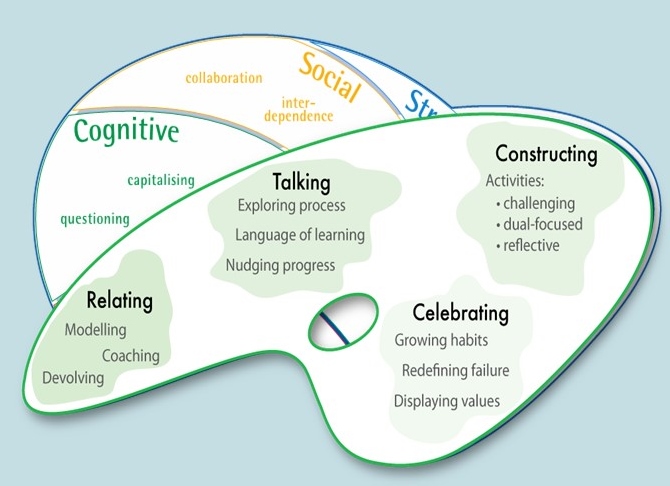
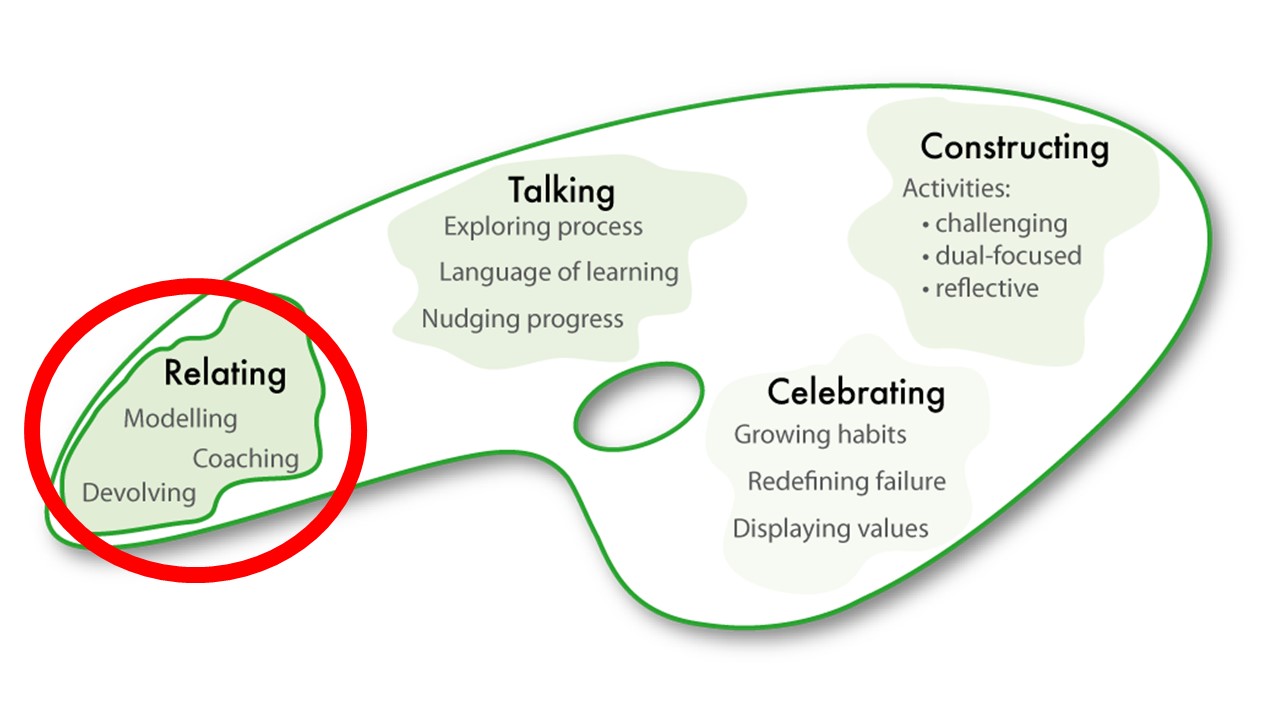
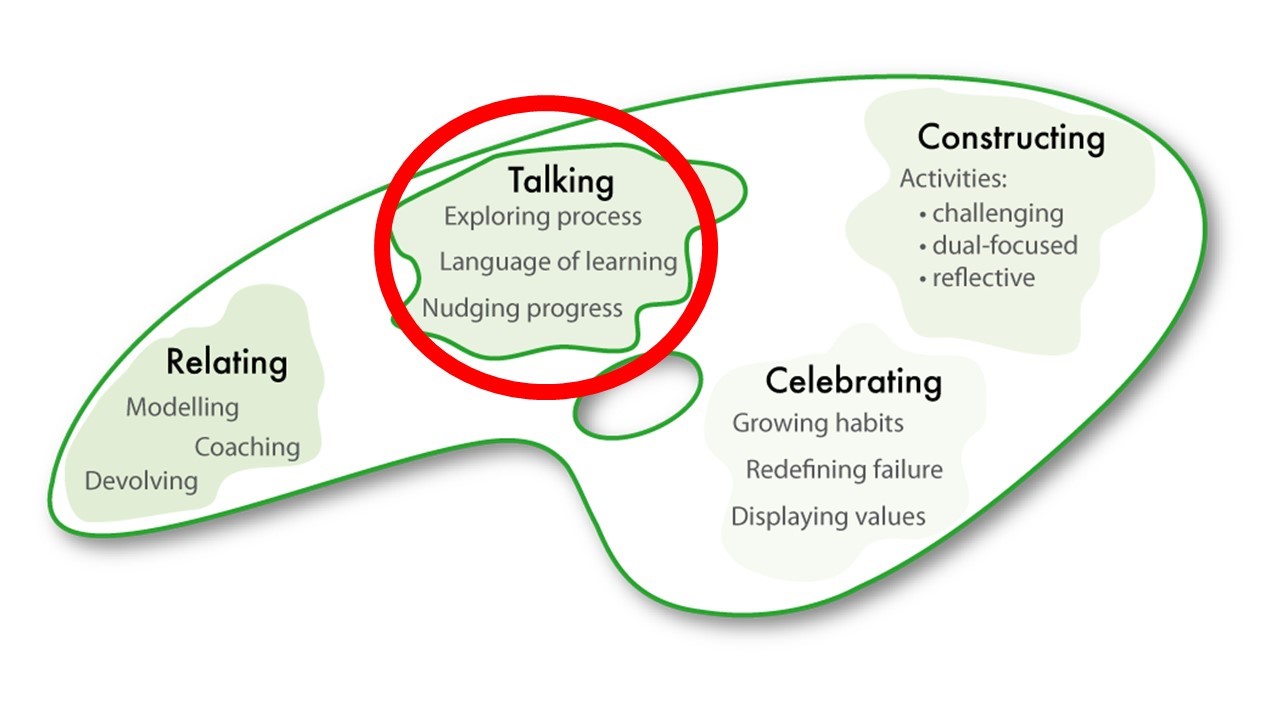
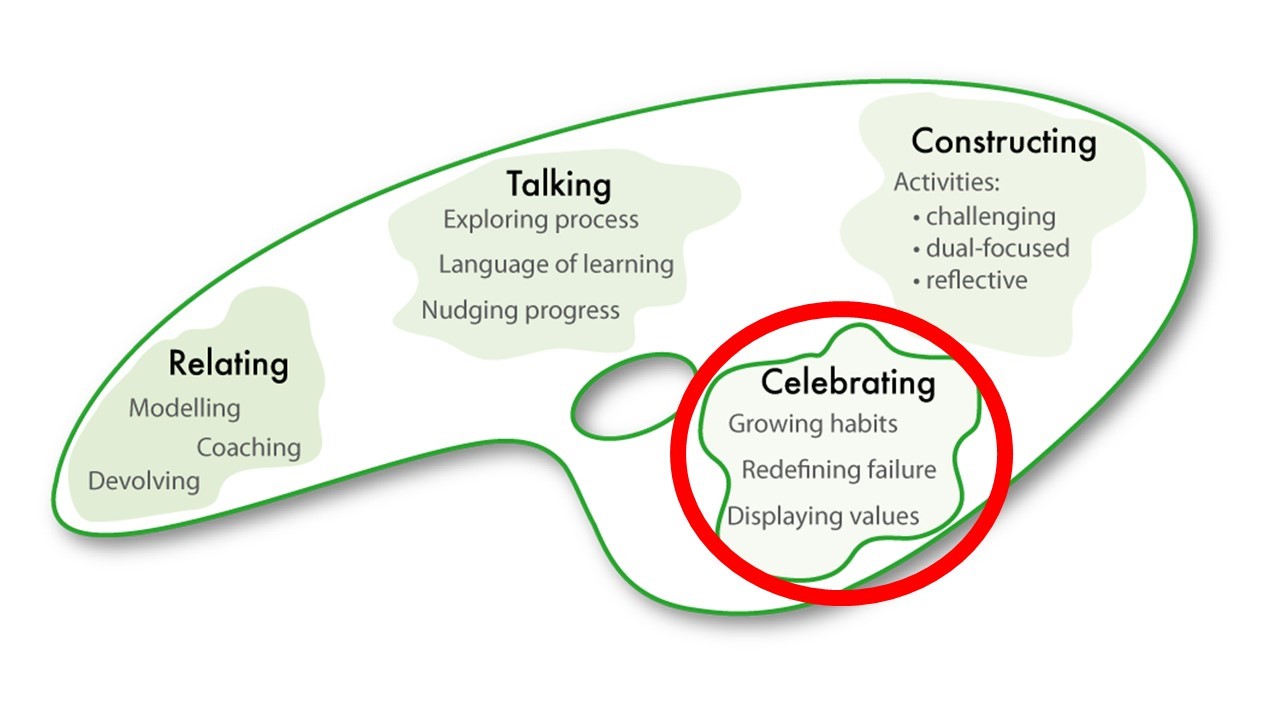
Here we’ve sketched a diagram to identify the prominent features of a classroom culture that’s geared towards growing students’ XXXX habits.
The 4 sections of the diagram are:
Top – strategies you could build into the way you teach to stimulate XXXX;
Right – indications of the sort of language you might use to stimulate XXXX;
Bottom – ways in which you might celebrate / praise students’ use of XXXX;
Left – actions that you need to enable students to undertake.
Apply your own attentive noticing skills and consider whether you already use any of these features and which you fancy trying.
In the panels below you will find brief explanations of some of the more unusual terms in the diagram.
Strategies at the top of the diagram… build into the way you teach to stimulate XXXX
Embed frequent review points encouraging students to view re-thinking as a part of learning
Give students opportunities to assess their own work against given / their own success criteria
Use VTR ‘I used to think’ . . to legitimise changes of mind
Deliberately create situations that require a change of mind
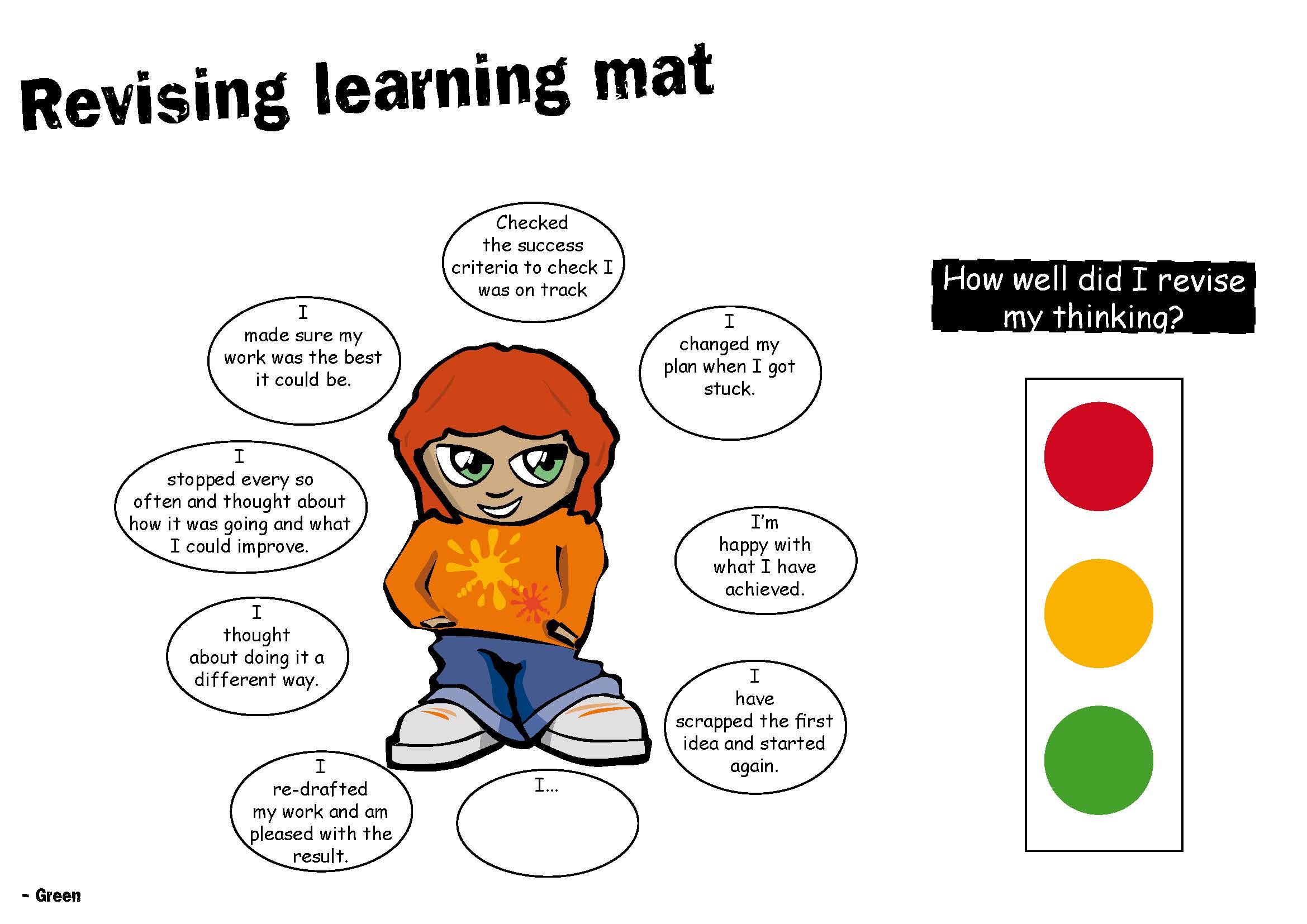
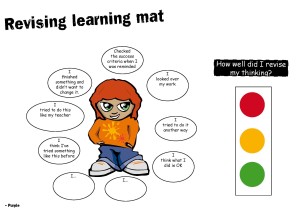
Encourage learners to monitor how things are going eg. Traffic lights
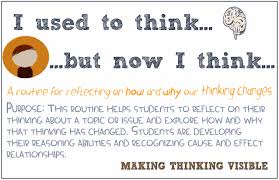
Visible Thinking Routines (VTR) are easily remembered routines that can be applied in wide range of circumstances. The routine ‘I used to think . . . But now I think’ is explored further in section 5 of this resource. To see more VTRs, go to the VTR website.
‘Traffic Lights’ is a classic AfL strategy – Green = it is fine, Amber = ok-ish, Red = it is going badly. Use it to encourage students to keep an eye on how things are progressing.
A routine that helps students reflect on how and why their thinking/understanding is changing.
d2) The sort of language to stimulate revising
Strategies on the right of the diagram… to show the sort of language you might use to stimulate XXXX
Encourage phrases such as ‘ Do I think this activity is coming along well?
Focus feedback on what is needed to improve
Use ‘Could be’ language to stimulate learners to consider other possibilities / standpoints
Learning power is activated by the use of more tentative, could be kinds of language. Specifically, if you say definitively that something is the case, students frequently take it literally and try to remember it. But if you say, of the same thing, that it could be the case, they become more engaged, more thoughtful, more imaginative, and more critical. That ‘could be’ invites students to consider what else it could be, to consider alternatives.
‘Could-Be’ language is well researched. It encourages more genuine engagement with what is being taught.
d3) Ways of celebrating XXXX
Strategies at the bottom of the diagram… ways in which you might celebrate the use of XXXX.
Reward students for making improvements on their previous efforts using the ‘Editor’s Desk’
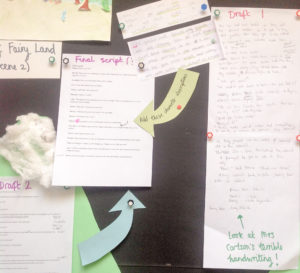
Display a good balance of completed work and annotated ‘work in progress’
Explore and celebrate different and alternative ways of doing things
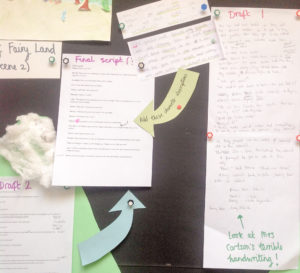
Display annotated outcomes from different, successive stages of the learning process.
The ‘Editor’s Desk‘ is an area of the classroom that is reserved for re-crafting and making further improvements – not for ‘doing corrections!
The idea of displaying ‘work in progress’, annotated to illustrate the changes as the work is refined and improved, is in stark contrast to displaying the ‘finished article’. The former emphasises the processes involved in creating a good piece of work, whereas the latter focuses solely on the final product.
Both are explored further in section 5 of this resource.
Rethink displays to illustrate work in progress
d4) Actions you need to enable in students
Strategies on the left of the diagram…actions that you need to enable in students to boost XXXX.
View ‘corrections’ as an opportunity to improve further
Change tack if necessary
View change as a natural part of learning
By ‘change tack’, we mean being prepared to adopt a different approach when things are not going as well as expected. It requires students to monitor what they are doing as they go along, keep an eye on the end goal, and be sufficiently flexible to re-think a strategy that is not working.
Tools to enable students to join in meta-cognitive talk.
e) What do you think?
Which of the ‘build’ ideas (top) are already features of your teaching?
Which of the ‘talk’ prompts (right) do you regularly use when talking about XXXX?
Which of the ‘celebrate’ ideas (bottom) are already in evidence your classroom?
Which of the ‘enable’ behaviours (left) are you intentionally enabling in your classroom?
Make a note of…
Any ideas that look as if they might help your students to become better at XXXX.
An idea that you want to start doing.
An idea that interests you, but you are uncertain what it means or how you might do it.
The word Revising has unfortunate connotations with Revision [for a test]. What is meant here is being prepared to do things differently in light of feedback, to be adaptable, flexible and open to change.
However well prepared learners are, they have to expect the unexpected. They have to have the readiness to revise / refine as they go along. Good learners are able to change their plans and think on their feet. They are able to be flexible. It may be a good decision to say ‘This is turning out to be far harder than I thought, and I’m getting less help than I imagined, and there are other interesting possibilities opening up, so I think I’ll cut my losses and quit.’ Note that the decision is based on a realistic cost-benefit analysis of the actual situation, not on frustration, pique or a blow to self-esteem.
To be effective at revising, learners need to monitor how things are going and periodically review where they have got to.
b)The first big aspect of Revising…monitoring
Monitoring is the art of looking over your own shoulder as you’re working away at a problem, asking yourself how it’s going.
Getting better at monitoring involves cultivating the little voice of self-awareness that keeps the strategic goals in mind, and is ready to change tack if it seems appropriate. A football manager contemplating making a substitution is monitoring, as is a teacher who decides to throw away the lesson plan on the spur of the moment and go with the interesting discussion which is developing. Students can pick up the habit and the skill of this kind of monitoring by being around people—teachers are ideally placed—who are able to model it, and who have learnt how to learn aloud, i.e. to externalise the thought processes of the vigilant monitor.
UPDATE
c) The second big aspect of Revising…reviewing.
Reviewing means stopping every so often to take stock of progress, and to ensure that any emerging product—an artwork, an essay, a draft business plan—is on track. Reviewing requires the ability to look at your own work with the critical eye of an editor, and not be afraid of the possibility that some corrections may be needed. A writer may put a piece of work aside for a while and then come back to look at it afresh. An athlete may sit down and look at the video of her starting technique to see if any adjustments need to be made. But reviewing is what the low-achieving maths student, for example, is very often unable to do.
Donald Schon called monitoring ‘reflection in action’, and reviewing ‘reflection on action’. Again, modelling and coaching can help develop these abilities.
UPDATE
d) A well formed Revising habit involves being ready, willing, and able to:
Self-monitor how things are going, keeping an eye on the goal;
Expect the unexpected, having a readiness to re-shape, re-order, re-form plans to take account of new circumstances;
Remain alive to new, unforeseen opportunities and ideas;
Look at what you are doing with a critical eye;
Strive to be the best you can be;
Make sure things are on track and make improvements along the way.
e) Spot the XXXX in your classes
Just to get you tuned in – have a quick think about ‘XXXX you may know’. Make a note of students you know who display these characteristics.
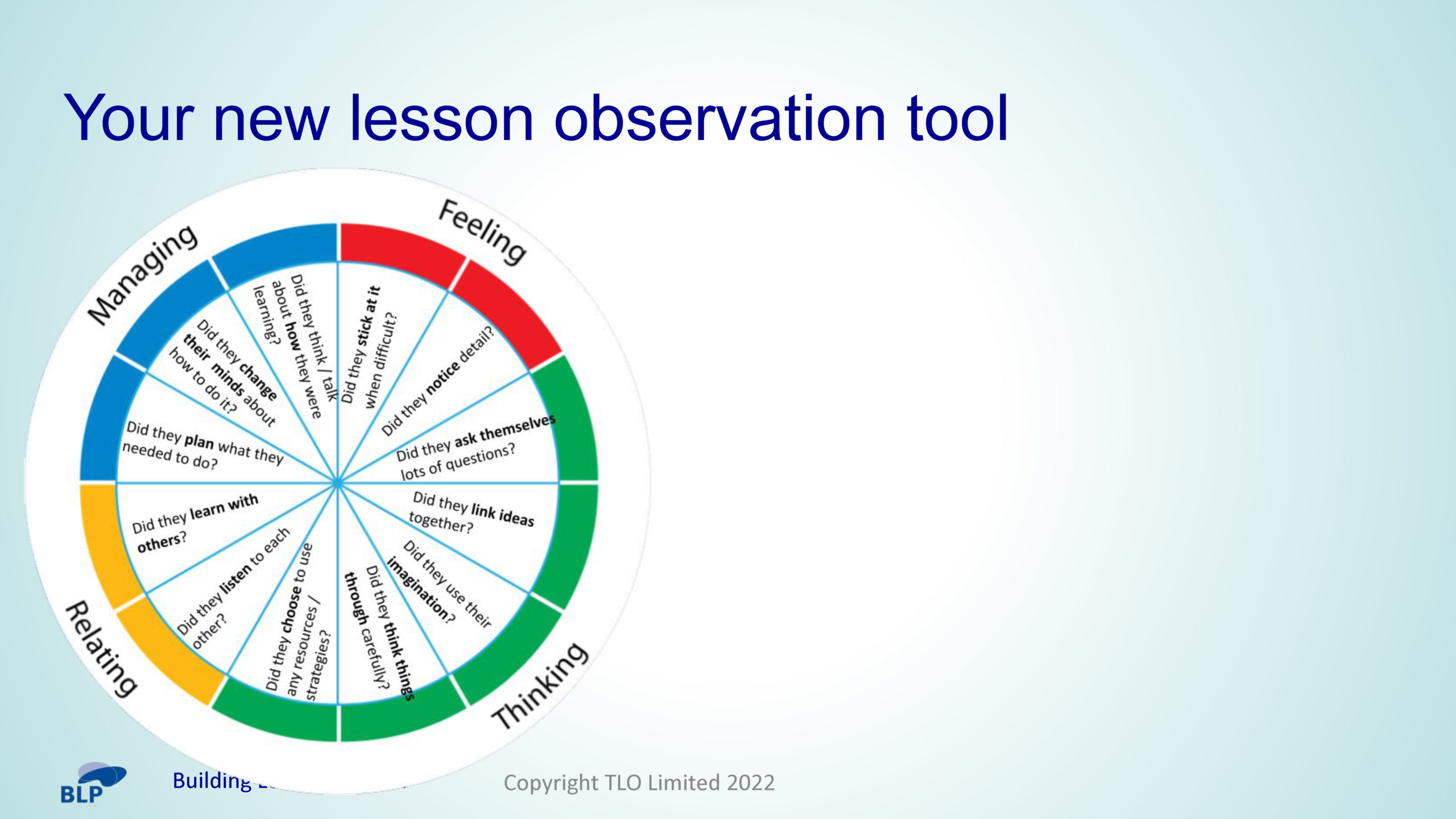
Becoming a teacher who develops students’ learning power means developing a keen awareness of the subtleties of your students’ learning behaviours.
Changing how you learn is a complex process……..that’s why it’s hard!
And the hardest thing isn’t getting the new ideas into your head…
It’s getting the old ones out…….that’s why it takes time and effort.
It takes time and practice to undo old habits and become graceful at new ones……so we have provided materials here to help you to plan the changes you want to make, monitor what happens, and reflect on the impact of those changes; their worth and value.
4.2 Think about where you are on the progression chart
Things to remember about the stages
Think about where you seem to be on the progression chart.
Remember your development as a learner isn’t a race and the stages don’t just happen, you have to make them happen.
Each stage takes quite a while to work through and become competent in. It’s not about acting in that way once or twice but acting it that way most of the time, consistently, before being ready to move on to the next stage.
Take a look back at section 2 to remind yourself of the detailed descriptions of the stages.
These XXXX behaviours may look and sound straightforward but they make up one of the most valuable and important learning habits. Working through these stages to become someone who absorbs the various aspects of XXXX into their learning character could easily take three or four years of supported and focused development.
4.3 Think about the activities and self-talk you might try
Take it steady
If you aren’t sure where you are on the chart, and as this is your first plan, it’s better to pitch your first plan low rather than high.
There’s nothing wrong with starting in grey to purple where you will be listening carefully for teachers’ suggestions. But you could also try some of your own self-talk phrases to help you take some responsibility for thinking about your learning.
If you think you are ready to work on moving from purple to blue your aim will be to rely on your own nudges and prompts to make sure you are monitoring and reflecting on your learning.
If you think you are already doing this in some subjects you could focus your plan on covering more or trickier subjects.
If you think you are ready to work on moving from blue to green you must be confident that you are employing a range of monitoring strategies. Your aim will be to add looking back to evaluate/review to your learning repertoire and to recognise why this is a good thing for your learning.
If you think you are ready to work on moving beyond green you must be sure you’re ready to look at what you are doing with a critical eye and make your own improvements along the way. Your aim here is to be constantly on the lookout for how to improve or reinvent something in the light of deeply reflective experience.
4.4 Put a do-able plan together
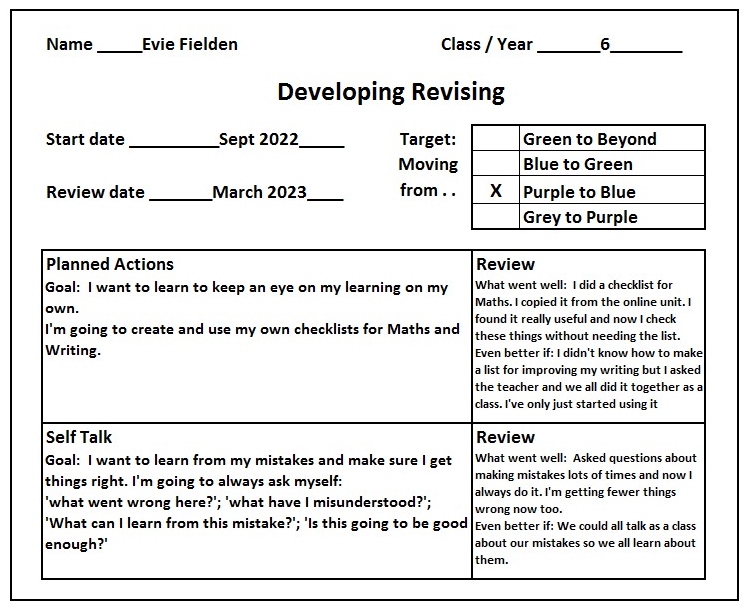
Here is a fairly straightforward six month Action Plan format for you to complete. This means that what you are planning will be put into action, by you, over about six months. At the end of six months you will need to review your plan, estimate your progress and then make a new plan. The new plan may tackle the next phase of growth or more likely strengthen your growth in the same phase.
Filling in the easy bits:
Record your name and class and
the date you made the plan
the date the plan will be reviewed
In the little table indicate the level of XXXX where you feel secure. This shows your starting point. If you mark Purple to Blue it means you think you are secure at Purple and will be working towards Blue
Record the Goals you’ve chosen and make a note of:
any actions you intend to try
the sort of self-talk you want to say quietly to yourself.
Reviewing the plan:
After about 6 months it will be time to review your plan to prove to yourself that you are taking action and the effect this is having over time.
When you review how your plan worked:
write down what went well and
what could have been even better.
Here’s a plan we filled in earlier to give you an idea of what the plan and its review might look like.
The best way of keeping your plan going is by getting used to looking at the changes you are making and their impact on your learning.
Self-monitoring. As your plan unfolds it’s a good idea to keep track of the actions or self-talk you are trying in your classrooms. This monitoring doesn’t have to be sophisticated or time consuming there are some very simple ways of slowing down and getting an objective view of what you are doing.
For example, you could use a simple tally chart to log the number of times you use a chosen activity, or try one of the self-talk phrases. Just noting this down can help you become more consciously competent.
Bit by bit, the more you question yourself about what you are doing the more you will consolidate your approaches to developing your learning behaviours.
I stopped . . .
I tried . . .
I used . . .
4.6 Keeping your plans under review
At the end of the six months take a look back at your plan.
Look closely at what you have changed about your way of working.
Look back at your Action Plan and any notes you made. Think about:
Things you started doing that you hadn’t done previously
Things that you stopped doing in order to improve the habit.
Things you did more often and less often in order to hone the habit.
Things you were already doing and kept on doing because they were on the right track.
Now using the three baskets, offer an overall assessment of the changes you have made. Identify:
things that worked really well. The ones you feel most satisfied with.
things that worked okay but need a bit of finessing.
things that didn’t seem to work and you quietly stopped doing them.
1 easy; the 4 toggles in 3.2 need a re-write based on the contents of ‘1) section 3s’ above
3.1 Confirm where you are now.
Which coloured row best describes your XXXX skills?
You met this progression chart in the previous section.
Take time to think about how you behave across a range of school subjects and activities outside school. Be honest with yourself – which coloured row best describes your current XXXX skills?
Why do this?
Because only you know yourself well enough to judge this, although of course you could seek advice from a friend or your teacher if you find that helpful.
And secondly, where you are now should determine what you do next.
For example, if you think that the Purple row best describes you, then your immediate target should be to consider advice to move into the Blue row.
Look below for ideas to help you to move one level up from your current secure ‘row’.
What is the main difference between the Grey row and the Purple row?
If you think you are in the Grey row you just do what you want and how you want to do things. You maybe reluctant to change the way or how you do things saying ‘I can’t’ or ‘I won’t’.
If you think you are in the Purple row you are becoming familiar with the idea of keeping an eye on how you are learning things, but you need plenty of your teacher’s support to do so.
So – the big difference here is that Purple learners accept advice from their teachers to monitor how they are doing with a view to changing things if it is not going as expected. To be strong in purple you need to be like this in all your learning, not just the subjects you like. Being strong in Purple is the first big step in becoming a good reviser
A couple of useful activities
a) Monitor how you are feeling about your learning.
You could cut a strip of card and write on it:
Absorbed……………………………..Distracted OR
Too Easy………………………………Too Hard OR
Interested……………………………Bored
Take the strips to use during lessons to help you monitor and become more conscious of your feelings about learning. This is just a small beginning but will help you get a feel for learning to begin to take more responsibility for it.
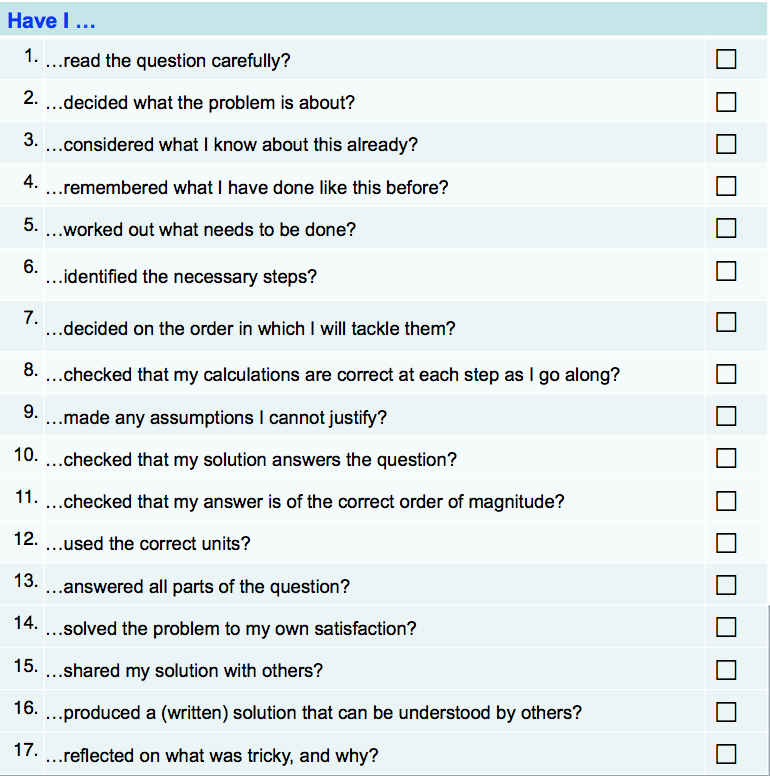
b) Use a checklist to monitor how things are going
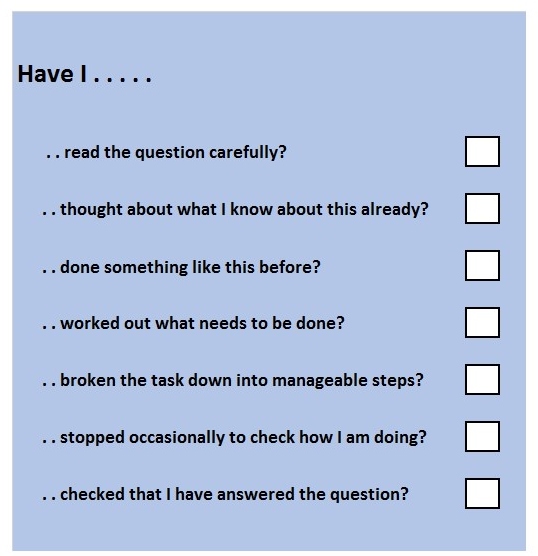
If your teacher offers you a checklist, then take their advice and use it to keep an eye on things. If your teacher does not offer you a checklist, try making a copy of this simple checklist and refer to it in lessons to help you to keep close eye on how things are going. Use the checklist as you are working, and again after you think that you have finished.
Become your own learning coach
Things to say to yourself
To help you begin to monitor how things are going
How am I getting on?
Am I ‘on track?’
What is working well for me here?
Is this going OK?
Do I need to try a different approach?
Is this going to be good enough?
To help you begin to think about how it went
How did that go?
What worked well?
Did it go as I expected?
Am I happy with that?
Make a quick reflection on what you’ve done become part of your daily or lesson routine.
Your questions might include:
Today I have learned….
Today I have tried to…
My biggest success today has been….
What will I tell my family when they ask ‘What did you do at school today’?
The most important thing I have learned today.
What has inspired me today?
Each, in different ways, encourages you to think about how your thinking / understanding has changed, how you have revised/amended your view of things.
What is the main difference between the Purple row and the Blue row?
Learners in the Purple row have become familiar with the idea of keeping an eye on how things are going with plenty of help from their teacher’s.
Learners in the Blue row use a range of strategies to enable them to keep an eye on how things are progressing towards achieving a goal and meeting the required standards.
So – the big difference is that learners in the Blue zone have become far more interested in their learning, monitoring and evaluating what they are doing in order to achieve good standards and without being told / helped to do so. Keeping an eye on how they are learning helps Blue learners to achieve good standards.
A couple of useful activities
a) Create your own checklists
You do not need to wait to be given a checklist by your teacher. Why not create one for yourself?
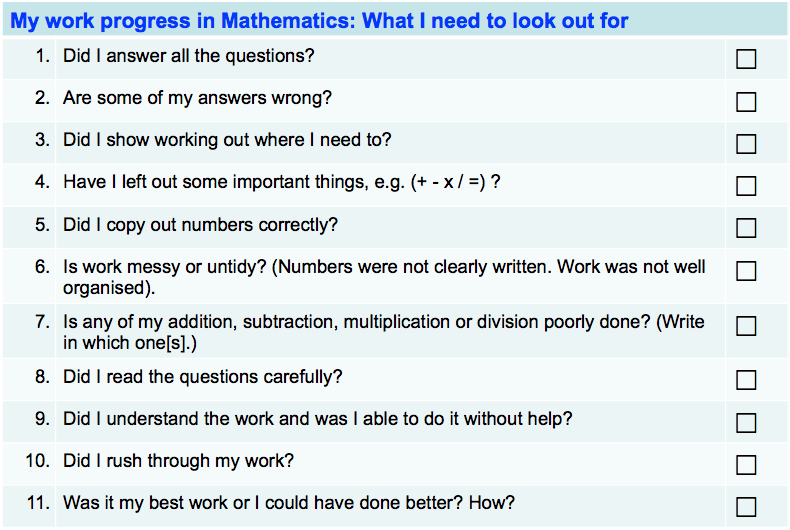
Suppose that you wanted to create a list that focuses specifically on numeracy/ maths? You might end up with something like the checklist opposite.
Challenge yourself – how would you adapt this checklist to make it relate to literacy rather than numeracy?
b) Trying something different
We all have our preferred ways of working, and if that way is successful we tend to use that method again and again. But what if our preferred way of working is not working as well as we had hoped?
The answer is, of course, to ditch an unsuccessful strategy in favour of a better one.
So where can you find alternative ways of working? Easy – Just stop and look around your class!
Ask yourself:
who has found a successful way of doing this?
what, precisely, are they doing to be successful?
do I need to talk to them to fully understand their approach?
how can I copy or imitate their successful strategy?
Become your own learning coach
Things to say to yourself
To help you to learn from mistakes
What went wrong there?
What can I learn from this mistake?
If I have another go what would I change?
Do I need to try something different?
What have I misunderstood here I wonder?
To develop a sense of what ‘good’ looks like
What made me think this wasn’t quite right/good enough?
Am I (un)happy with this? Why?
What hint could I give myself so I can figure it out?
Can I do something more/better to meet my success criteria?
How you could I improve this.
Am I happy with what I’ve achieved?
To explore externally set standards
Have I noticed the success criteria?
Why do we have success criteria? What are they for?
Is it going to be good enough?
Is it going to be good enough for me?
Try these If/Thens statements to help you to monitor how things are going:
If I am working on something, then I will stop occasionally and ask myself how well I am getting on.
If I’m working on something then I will ask myself why I think it’s okay/good/meeting the success criteria.
What is the main difference between the Blue row and the Green row?
Learners in the Blue row employ a range of strategies to enable them to keep an eye on how things are progressing towards achieving a goal and meeting the required standard.
Learners in the Green row have come to understand the benefit of monitoring how things are progressing but also take time to look back over what they have done to consider whether they have achieved what they intended and how they might do it differently next time.
So – the big difference is that Green learners not only monitor progress while they are doing something, but also look back to evaluate what they have achieved once they have completed a task. Green learners recognise that doing those things brings worthwhile benefits so they keep on doing them.
A couple of useful activities
a) I used to think . . . Now I think . . .
This routine helps you to reflect on how and why your thinking/understanding is changing. It encourages you to recognise that new learning often requires you to change what you were thinking previously.
For example, at the beginning of a lesson or topic, ask yourself what you understand by one of the key concepts that you will be studying. (e.g. Phrase (English); Proof (Maths); Power (Science) etc). At the end of the lesson/topic ask yourself what you now understand by the term in light of what you have learned.
It is about noticing, acknowledging and celebrating a change of mind.
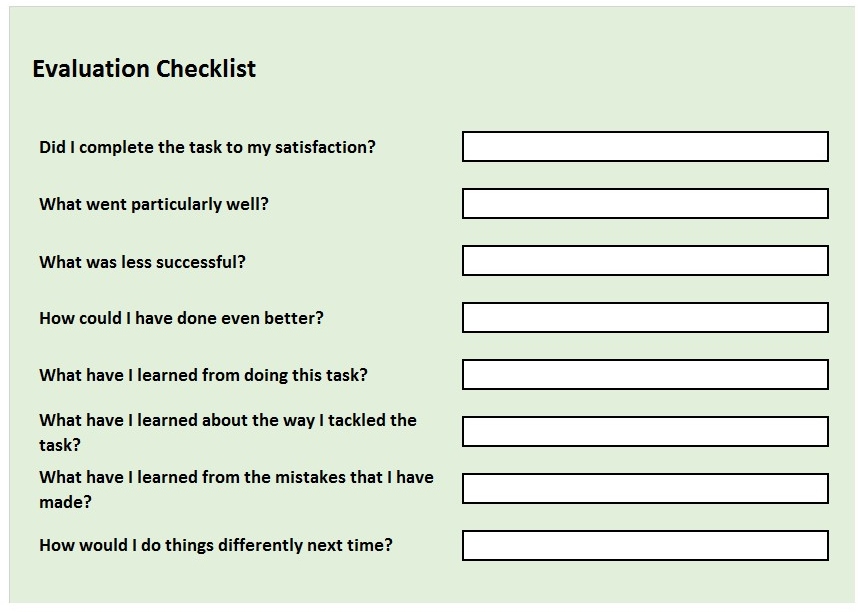
b) Use a checklist to evaluate a completed piece of work
Monitoring and evaluation are slightly different. You monitor as you go along, as you are doing your learning. Evaluation is what you do after the learning/task has been completed. It involves stopping to look back over what you have done, how you did it, how successful you were, and how you might do it differently next time.
At the end of a substantial piece of work, use the checklist opposite to reflect on what you have achieved.
What is the main difference between the Green row and the rows beyond Green?
Learners in the Green row have come to understand the benefit of monitoring how things are progressing, but also take time to look back over what they have done to consider whether they have achieved what they intended and how they might do it differently next time.
Learners in the rows beyond Green organise themselves to meet their own high standards through a combination of reflecting while they are learning (monitoring) and reflecting after the have learned (evaluation). This reflection sets them on a pathway of change and improvement.
So – the big difference is that learners beyond Green have taken control of their own improvement and use monitoring and reflection independently to ensure that they meet the highest standards.
A couple of activities to try
a) Acting on feedback
Students receive feedback from their teachers, parents and friends. Mostly the feedback is spoken, but some feedback might be offered to you in written form.
Positive feedback is always welcome and tends to make us feel good. But the most valuable feedback you can receive is feedback that points to ways that you can improve. Perhaps not as comfortable as the positive, praise type feedback that gives you that warm glow of satisfaction at a job well-done, the most useful feedback you can receive focuses on how you can do even better next time.
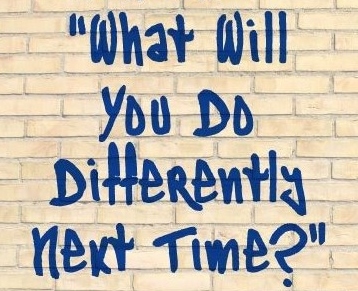
So – be alert to all of the sources of feedback around you, listen very carefully, and, most importantly, act on the feedback. Keep asking yourself: ‘How will I do it differently next time?’
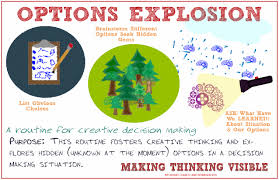
b) Slow down, get creative, look at the options
Often when faced with a task there are one or two obvious courses of action. These tend to be the ones that you have used successfully in the past. But are there any other options that might be even better?
Try the routine ‘Options Explosion’ to explore hidden options before committing to a course of action.
Begin by listing the obvious options, then . .
Brainstorm all sorts of different options to find the “hidden” options. Often there are hidden options that are the real best choices. Be imaginative! Piggyback on ideas you have already, combine ideas to get new ones, look for ideas of a very different kind. . .
And finally, select your course of action.
Become your own learning coach
Things to say to yourself
To make choices about standards
How will I decide if it is good enough?
What standards have I set myself for this?
Why did I choose to judge it against these criteria?
Are there other criteria I could / should have used?
To detect errors
Am I using the most efficient way of doing this?
Could / should I change what I am doing here?
Can I spot any errors/ a better way to do this/to change my original plan
1/2/3 easy to change; 2.4 needs copying from ‘1) section 2s’
2.1 How does XXXX grow?
Growing as a ReviserXXXX
It may be tempting to think that either you do, or you do not, use your XXXX habits – that either you are inflexible and reluctant to change, or that you are flexible and open to change. This could not be further from the truth!
The reality is that there are lots of little steps, skills and attitudes that lie between these two extremes.
In this section, we explore the shifts that gradually transform you into becoming a flexible and adaptable learner.
2.2 Progression in XXXX
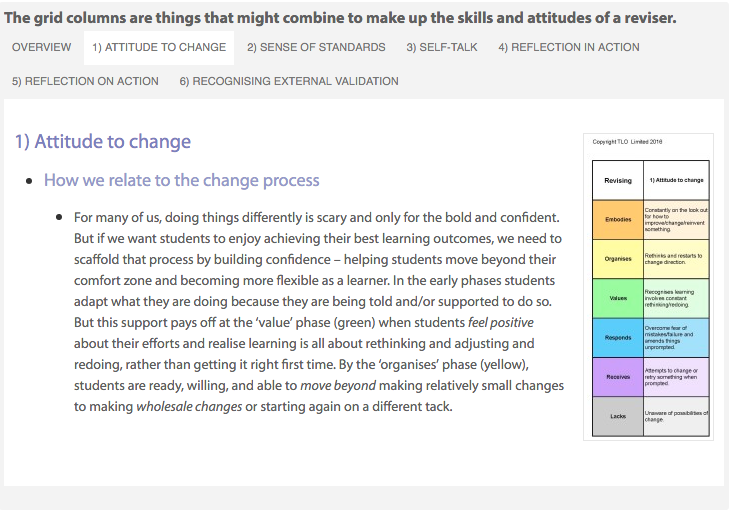
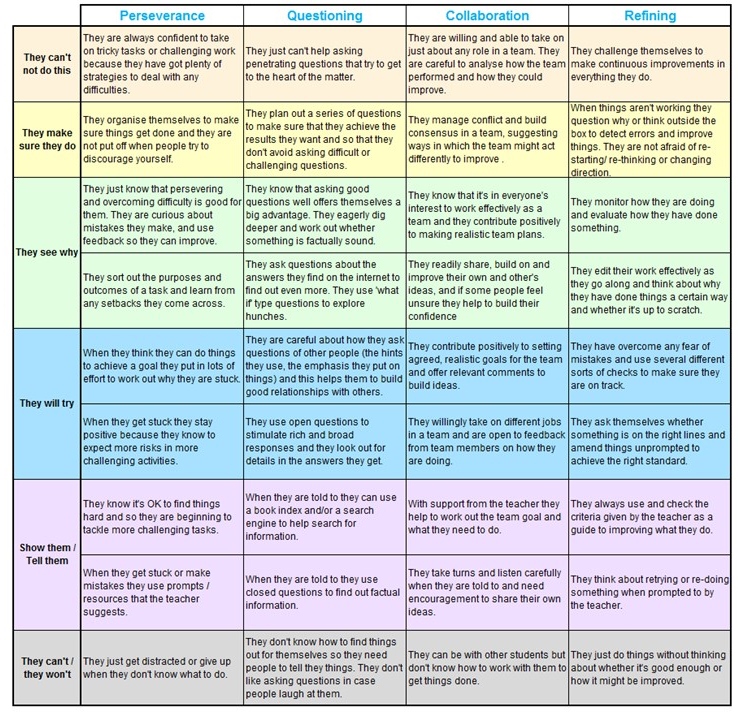
A XXXX progression chart
The chart alongside outlines a possible trajectory of the growth of a good XXXX habit. It moves from being the learner at the bottom who is unaware of XXXX, to the highly aware and XXXX savvy learner at the top. Between the two lies a progression that can be mapped and described. The statements in the diagram hint at the journey from novice ReviserXXXX to an expert ReviserXXXX.
The chart offers glimpses of how XXXX may grow across three columns.
Column 1 identifies 6 phases of development.
Column 2 describes how the skills and behaviours may change and grow over time.
Column 3 shows the self-talk; what students may quietly say/explain to themselves at each phase of development.
Column 1 charts 6 phases of development, going from Grey at the bottom, through to Orange at the top. These phases describe the journey from ‘I can’t / I won’t’ at the bottom, through to ‘I can’t not do this’ at the top. These phases are not inevitable or automatic; they don’t just happen.
Column 2 puts flesh on these phase bones, and identifies what the developing skills and behaviours look like as learners become increasing effective RevisersXXXX.
Column 3 is a really important one. It alerts you to how your attitudes and self-talk change as your XXXX skills develop and grow. Interestingly it’s your own feelings, inclinations and desires that drive the development of any of your learning behaviours. If you don’t care about it it’s unlikely to improve.
UPDATE IMAGE
EVERYTHING AFTER THIS NEEDS UPDATE FROM 2s
2.4 What the rows are about
Looking closely at grey
In this ‘Lacks’ (grey) phase, you are not aware of doing things well or differently, you just do things. You’re not too bothered about outcomes and you’re not interested in revisiting something in order to change or improve it. You very much just do your own thing and you’re not aware of external standards or expectations. You may be reluctant, or even afraid, of changing the ways that you do things. But don’t think of this as a negative start. Most learners start like this before making a start on their journey of learning how to learn.
Looking closely at purple
In the Receives (purple) phase, you are beginning to make checks on how you are doing against given criteria when you are prompted to do so. Your teachers are kick starting your Revising learning journey. You can talk about what you did and sometimes how you did it. You rely on your teachers or parents to tell you that what you have done is valuable or worthwhile. You have learned to accept and act on your teacher’s advice to have a second go at something and/or to pause and check how things are going. You have to go through this phase before moving on to the next.
Looking closely at blue
In the Responds (blue) phase you have overcome any fear of mistakes and you’re more able and willing to monitor what you are doing. You’re beginning to develop what you mean by ‘good’ and to understand why given standards are important. You enjoy supportive feedback and you talk about how you could improve with support. You are increasingly willing and able to check how things are going even if your teacher doesn’t tell you to do so. You are becoming inclined to make your own changes to improve your work.
Looking closely at green
In the Values (green) phase, you understand the importance of keeping a close eye on progress in order to achieve high-quality outcomes that meet your goals. You see the point in making changes to reach a goal or external standard. You understand the need to learn from previous experiences and realise that learning is actually all about changing your understandings; not just knowing stuff. So now you look at what you are doing with a more critical or demanding eye and have realised that being like this this is really good for you. Your positive attitudes to improving are helping you to achieve more and improve.
Looking beyond green
In the Organises (yellow) phase revising has become a skilful habit; where revising itself raises more questions than answers. Yes, you keep progress under review but now you question the original goal of the activity. You look for higher standards and may well move to a more productive strategy or a different goal. You now use critical feedback positively and you’re keen to look back on what and how you achieved what you did in order to learn from the experience.
In the Embodies (orange) phase, you make ongoing checks, amends and rethinking, in order to meet you own, often more exacting, standards of achievement. Now you don’t need the validation of others (marks, grades, exams, quality feedback) because your own critical sense of standards acts as your barometer. You adapt readily to changing circumstances and always reflect on what and how you have done something with the explicit intention of doing it better, more efficiently / differently in the future. In this final Orange phase you simply can’t help but do it in all aspects of your learning. This way of behaving has become part of your learning character.
Ask yourself . . .
Which colour row best describes your current Revising skills, behaviours and attitudes?
Short section, needs complete re-write, much already written elsewhere in HYLT / JG
1.1 What is XXXX?
Revising – Making improvements
There’s more to Revising than you might have thought and it’s not about revising for an exam! A well formed Revising habit involves being ready, willing, and able to:
self-monitor how things are going and keeping an eye on the goal
expecting the unexpected
being willing to re-shape, re-order, re-form plans to take account of new circumstances
remain alive to new, unforeseen opportunities and ideas
look at what you are doing with a critical eye
strive to be the best you can be
make sure things are on track and
make improvements along the way.
It’s all about being adaptable, flexible and open to change.
1.2 What does being a good reviser involve?
Being ready, willing and able
Revising is about the way we work on something to improve it. Whether it be icing a cake, solving a tricky maths problem or creating a well-crafted essay, all require effort, retries and determination to satisfy ourselves that the result pleases us. How we tackle such a job isn’t just a case of monitoring as we go along or reviewing the result: it will be influenced by other qualities. Our attitude to change, whether we have a sense of quality and what sort of validation we need. The growth chart in section 2 intertwines these important contributors to our growth in the habit of Revising.
Being a good reviser involves:
self-monitoring how things are going, keeping an eye on the goal;
expecting the unexpected, being ready to re-shape, re-order, re-form plans to take account of new circumstances;
staying alive to new, unforeseen opportunities and ideas;
looking at what you are doing with a critical eye;
striving to be the best you can be;
making sure things are on track and making improvements along the way.
1.3 Spot yourself revising in lessons
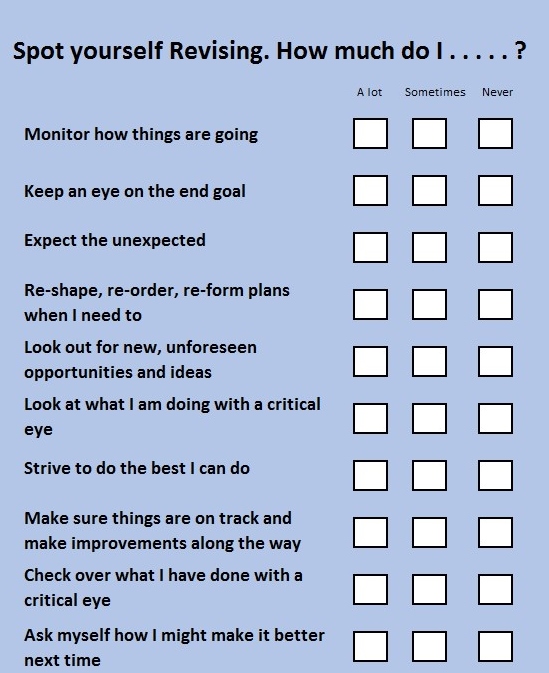
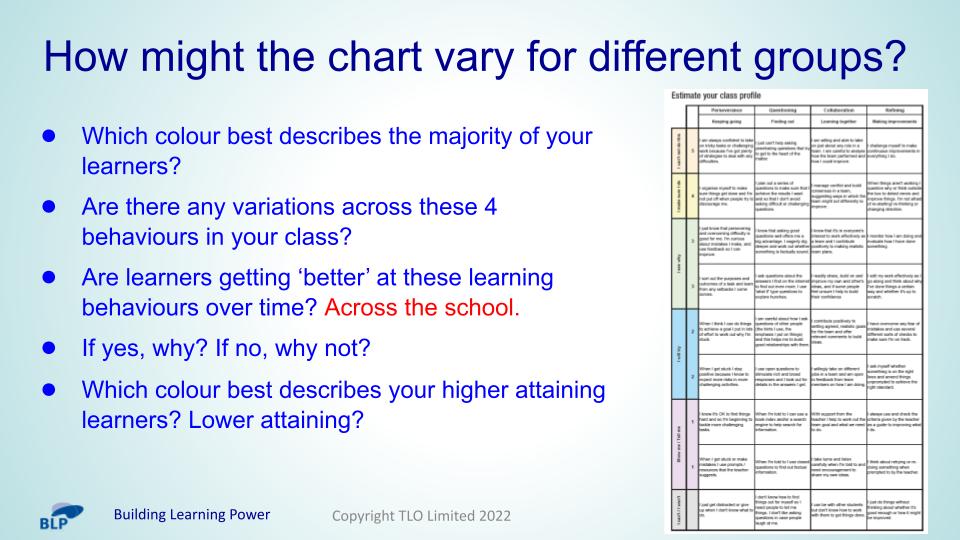
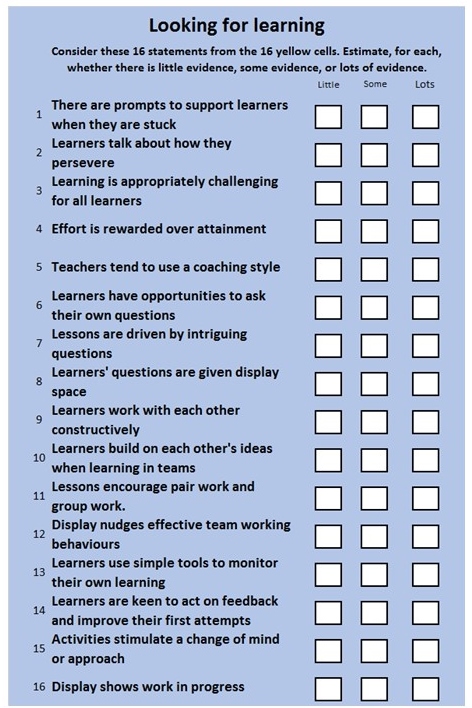
Just to get you tuned in – have a quick think about your revising habits at this stage. Use the chart alongside, take it with you into lessons and make a note of whether and how often you display these characteristics.
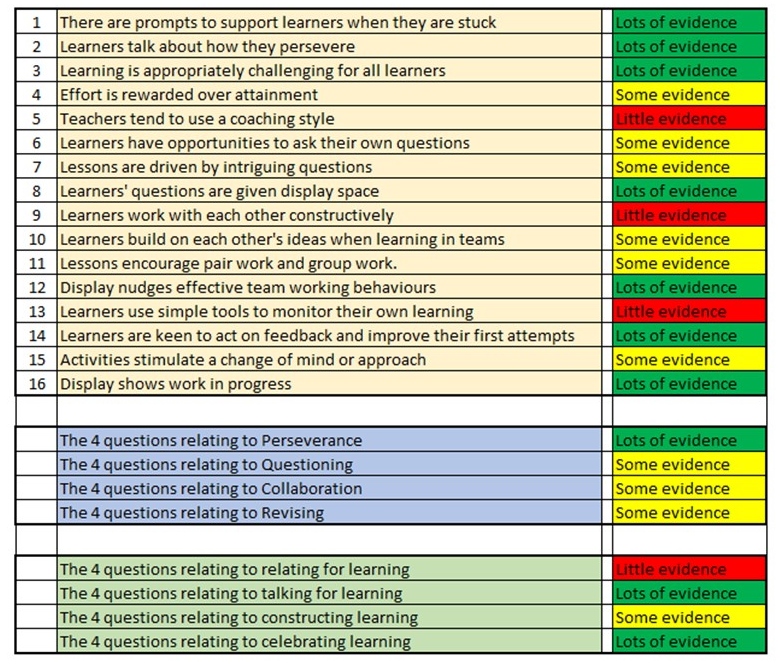
Take the outcomes of this little questionnaire into account when you tackle section 2.
1.4 What teachers can do to help you become a good reviser
Your teachers will:
encourage you to change the way you are doing things if necessary
help you to view change as a natural part of learning
want you to view making corrections as an opportunity to improve
focus their feedback on what you need to do to improve, rather than simply praising what you got right
offer you checklists that help you to keep an eye on how your work is progressing
create opportunities for you to stop and to consider how things are going
Good revisers have had to learn how to deal with change, both emotionally and practically. If you just want or like things to stay the same you are unlikely to recognise the need to change your ideas or the way you do something.
As a good reviser you’ll also need to know what ‘good’ looks like; how to keep an eye on how things are going and be willing to evaluate how good things are against external standards. Growing your revising habits is much more than you ‘having another go’.
There’s more to Revising than you might have thought and it’s not about revising for an exam! A well formed Revising habit involves being ready, willing, and able to:
self-monitor how things are going and keeping an eye on the goal
expecting the unexpected
being willing to re-shape, re-order, re-form plans to take account of new circumstances
remain alive to new, unforeseen opportunities and ideas
look at what you are doing with a critical eye
strive to be the best you can be
make sure things are on track and
make improvements along the way.
It’s all about being adaptable, flexible and open to change.
1.2 What does being a good reviser involve?
Being ready, willing and able
Revising is about the way we work on something to improve it. Whether it be icing a cake, solving a tricky maths problem or creating a well-crafted essay, all require effort, retries and determination to satisfy ourselves that the result pleases us. How we tackle such a job isn’t just a case of monitoring as we go along or reviewing the result: it will be influenced by other qualities. Our attitude to change, whether we have a sense of quality and what sort of validation we need. The growth chart in section 2 intertwines these important contributors to our growth in the habit of Revising.
Being a good reviser involves:
self-monitoring how things are going, keeping an eye on the goal;
expecting the unexpected, being ready to re-shape, re-order, re-form plans to take account of new circumstances;
staying alive to new, unforeseen opportunities and ideas;
looking at what you are doing with a critical eye;
striving to be the best you can be;
making sure things are on track and making improvements along the way.
1.3 Spot yourself revising in lessons
Just to get you tuned in – have a quick think about your revising habits at this stage. Use the chart alongside, take it with you into lessons and make a note of whether and how often you display these characteristics.
Take the outcomes of this little questionnaire into account when you tackle section 2.
1.4 What teachers can do to help you become a good reviser
Your teachers will:
encourage you to change the way you are doing things if necessary
help you to view change as a natural part of learning
want you to view making corrections as an opportunity to improve
focus their feedback on what you need to do to improve, rather than simply praising what you got right
offer you checklists that help you to keep an eye on how your work is progressing
create opportunities for you to stop and to consider how things are going
Good revisers have had to learn how to deal with change, both emotionally and practically. If you just want or like things to stay the same you are unlikely to recognise the need to change your ideas or the way you do something.
As a good reviser you’ll also need to know what ‘good’ looks like; how to keep an eye on how things are going and be willing to evaluate how good things are against external standards. Growing your revising habits is much more than you ‘having another go’.
Developing your professional habits involves un-learning and re-learning: unpicking, readjusting, trying things out and seeing what works. It’s about you using your own learning power to affect changes in yourself. And the desired change is not just in what you think and believe; it is in how you spontaneously talk and act and plan.
In this section you will find:
descriptions of a broader set of modules that make up the next phase of the programme;
brief explanations of why and how the next phase of the programme enables students to become better learners.
Key points in thinking where now and what next
understanding and progressing your own learning dispositions is a game-changer for yourself as well as your students
your habits as a learner become part of the picture; how you go about changing is as relevant as the changes you are aiming to bring about in students
exploring yourself as a learner helps you to design learning experiences that support you and your students
tracking your own progression as a learning powered teacher provides you with a way of seeing yourself both as a learner and a teacher beyond any academic performance.
1. Moving on – The Professional Learning Power Game
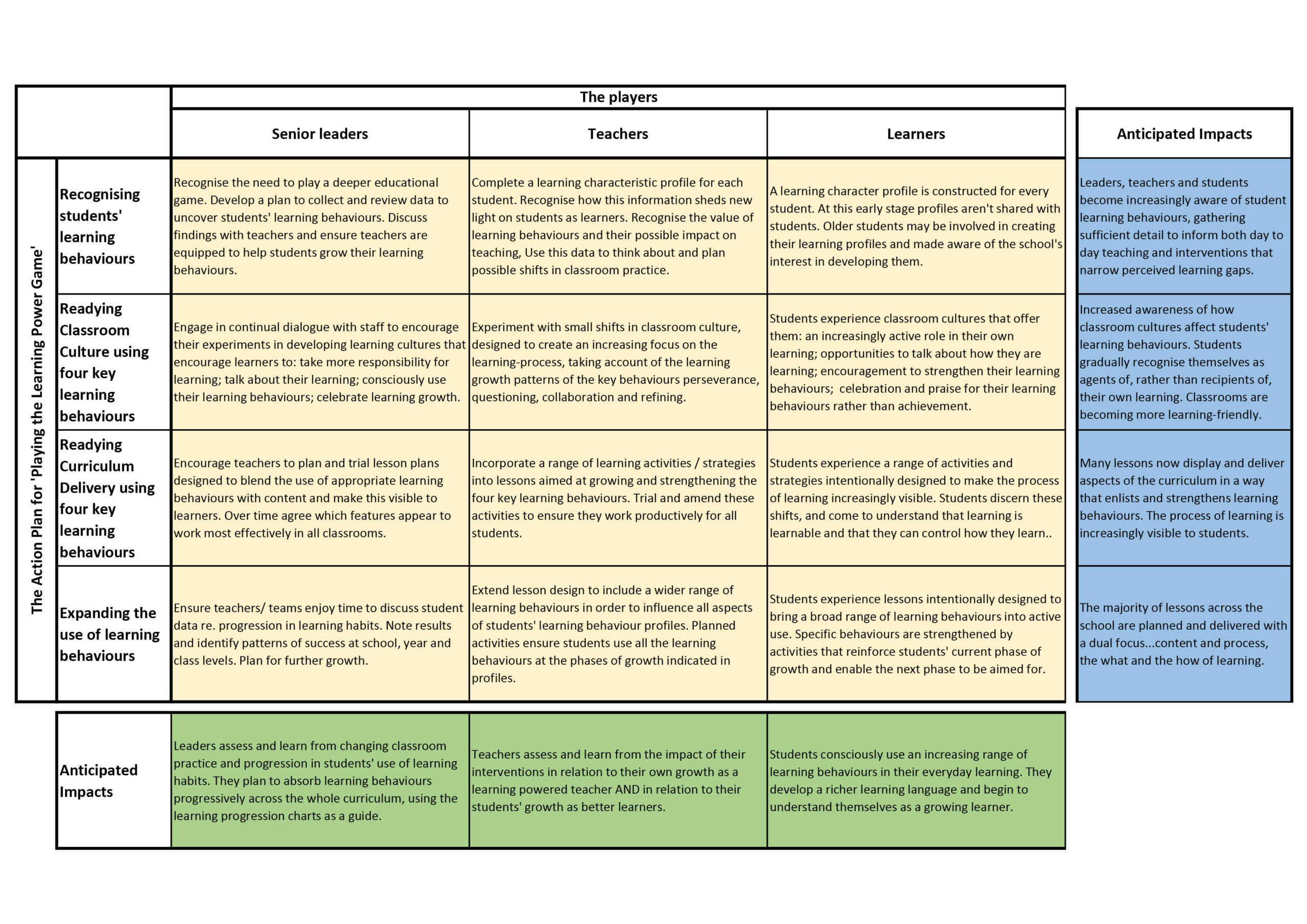
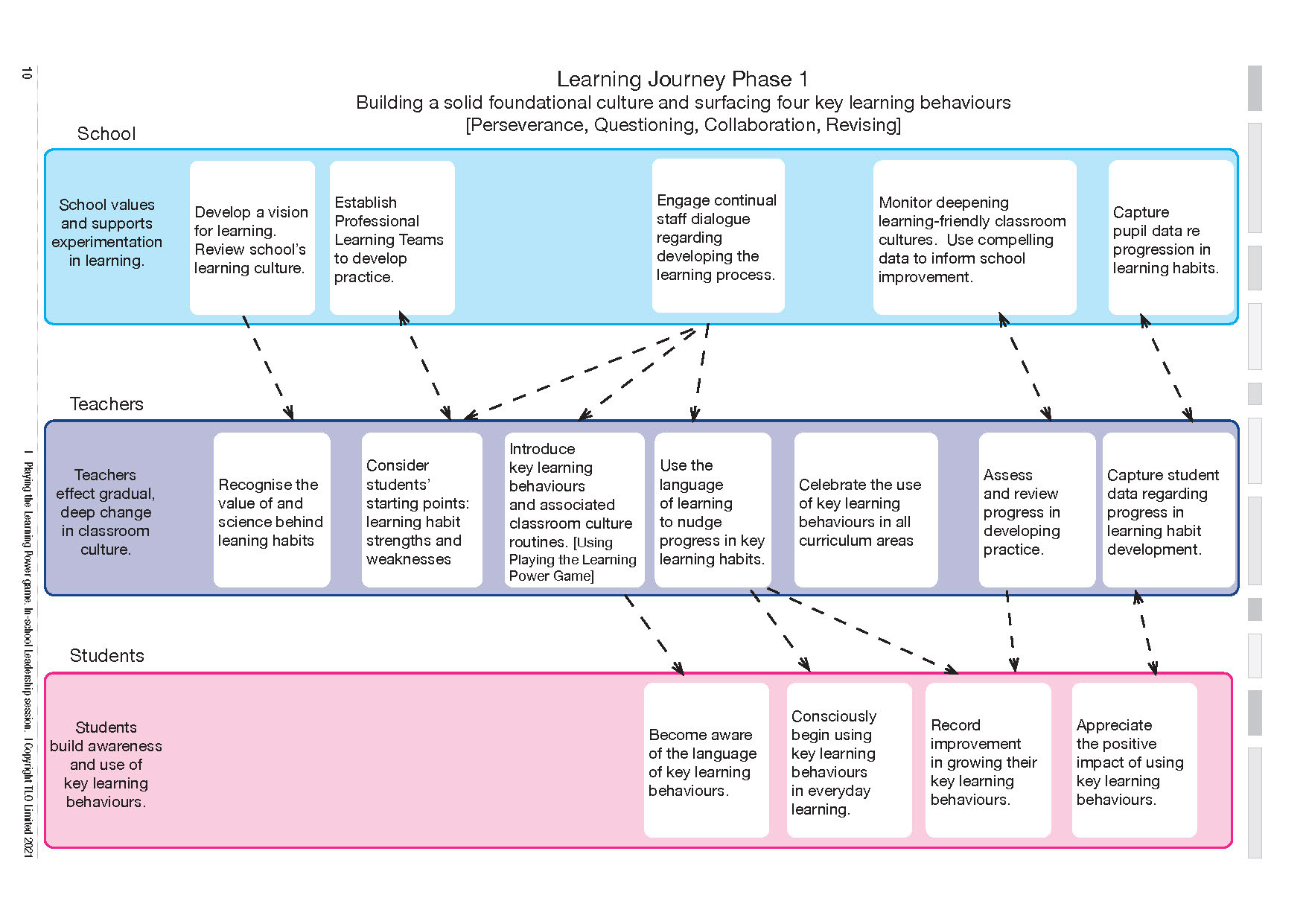
Engaging with ‘Playing the Learning Power Game‘ – the Junior Game as we have occasionally termed it – has readied classroom cultures, teachers and learners to engage successfully with a wider range of learning behaviours, at a deeper level, and to further refine and enhance classroom cultures.
The ‘Junior Game’ has paved the way for ‘The Professional Learning Power Game’.
What comes in the next phase?
How is it similar to the phase 1?
How is it different?
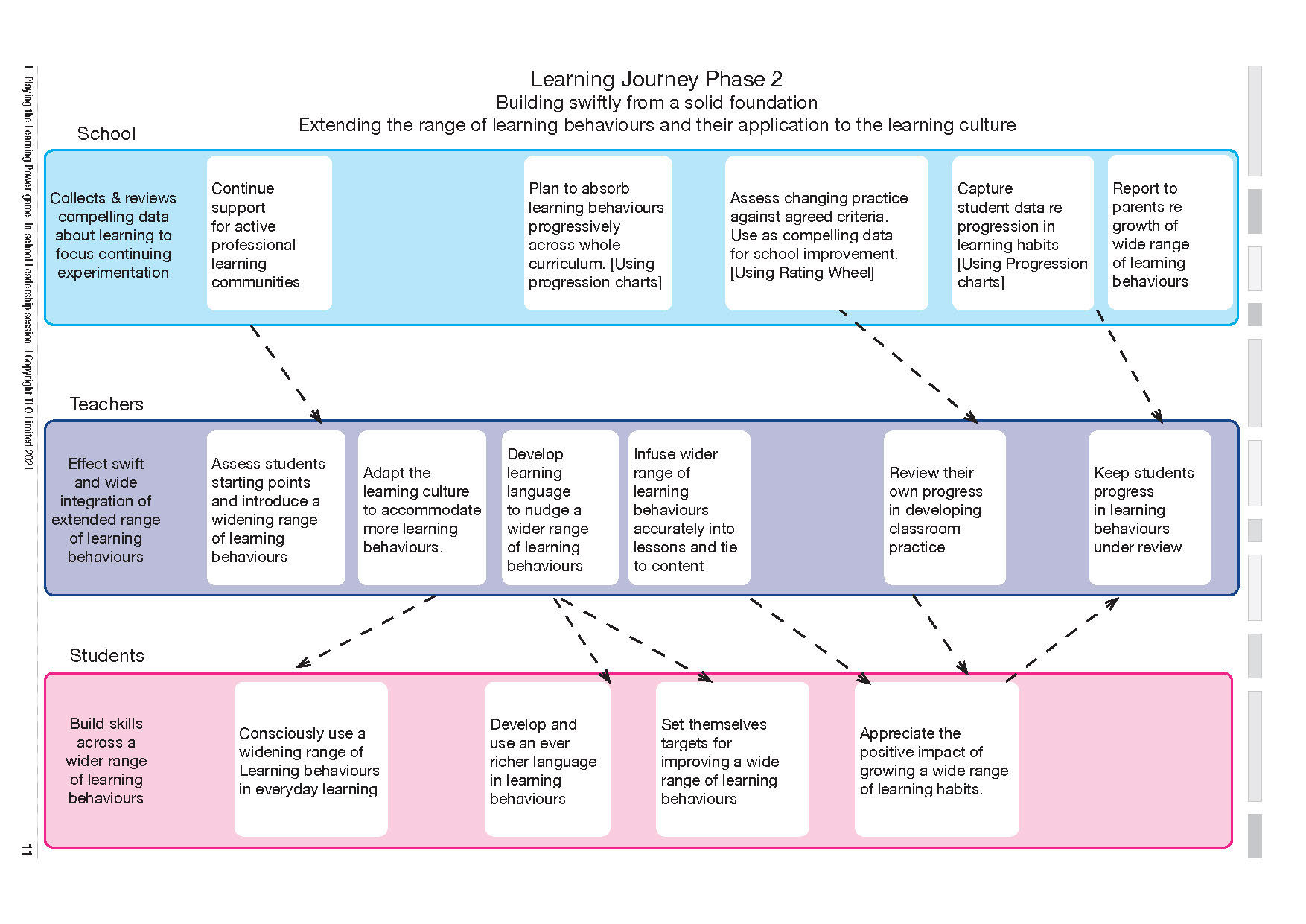
2a. Phase 2 goes broader and deeper:
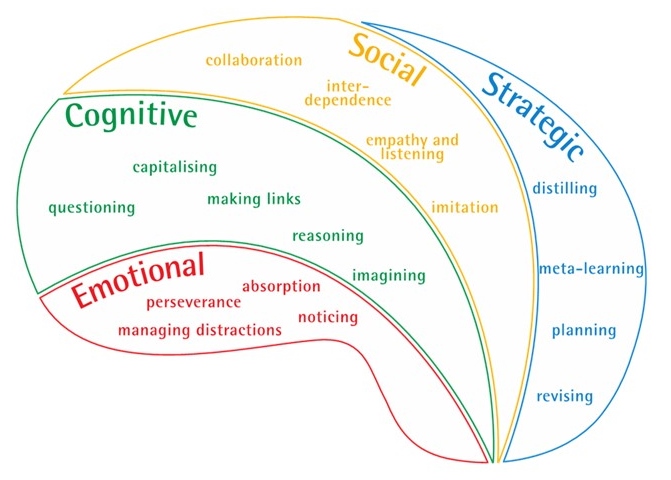
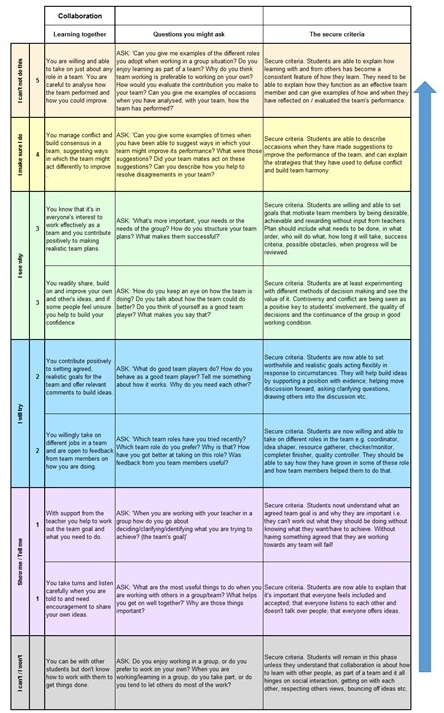
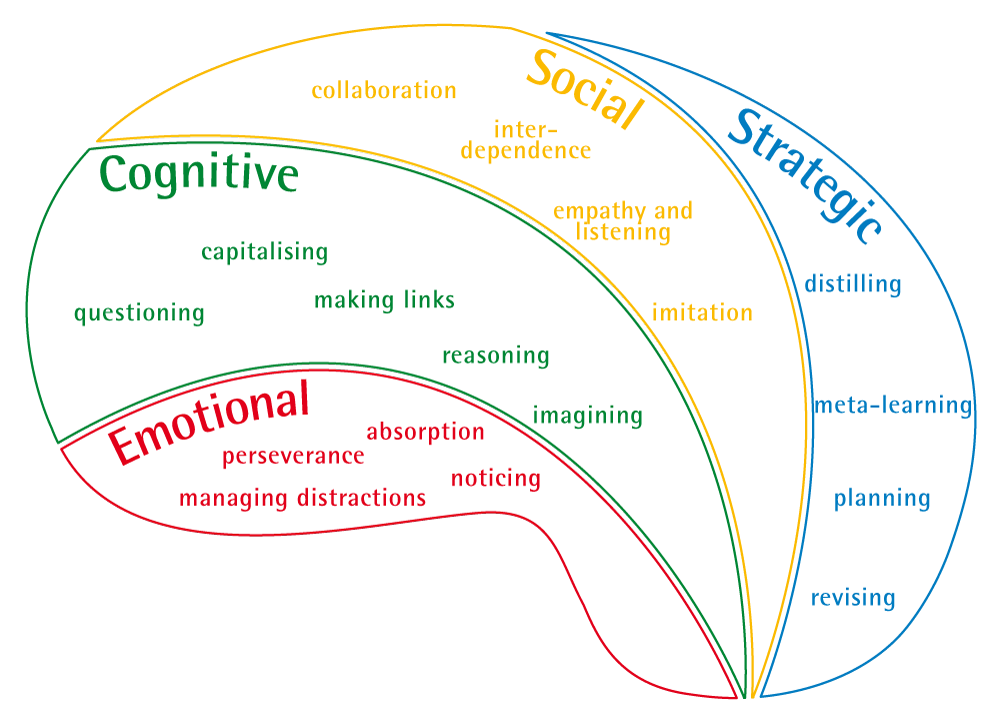
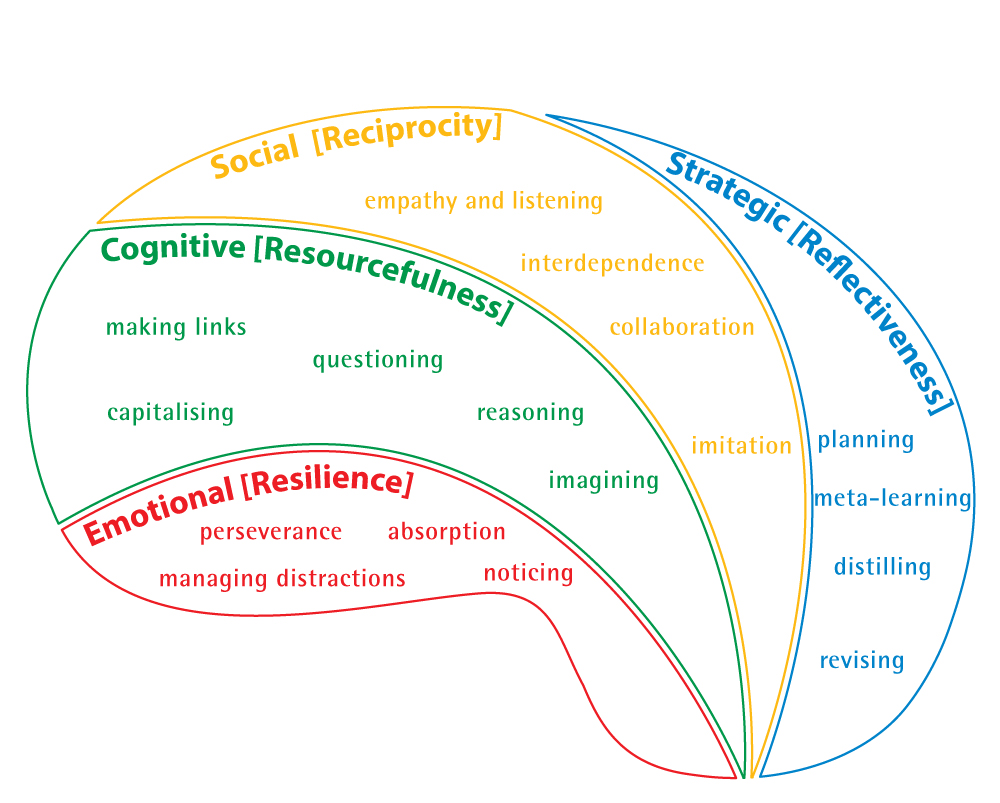
Having made a start on the foundational four learning behaviours, Perseverance, Collaboration, Questioning, Revising, and taken a swift venture into 8 more learning behaviours via the section 6 Catalogue of ideas, your students will now be ready and willing to engage more constructively in their learning. Securing this essential first step of students being ready and willing the next step expands all their emotional, social, cognitive and strategic behaviours, to enhance their supple learning mind and add the all-important able. Learners will broaden their learning repertoire to build a complete learning toolkit, and consequently teachers will broaden the range of behaviours that they surface in lessons.
At the heart of The Professional Learning Power Game lies a deeper concept of progression in learning behaviours. How do you get better at the 12 key learning behaviours? What does ‘getting better’ look like when fleshed out a bit? How does each aspect of progression in each learning behaviour grow over time? It is the focus on a broader sense of progression for the wider group of learning behaviours that makes this next phase in the programme so fascinating and worthwhile.
Understanding this will enable you to change the narrative from, for example, ‘Do my students Persevere?’ to ‘How well do my students Persevere?’ to ‘In which aspectof perseverance?’ Knowing this helps you to plan for the growth of students’ learning behaviours and the language of learning becomes much more specific and helpful.
In turn this enables learners to understand learning at a deeper level and ultimately to make plans for how they can become more effective learners as their skills and learning dispositions both broaden and deepen.
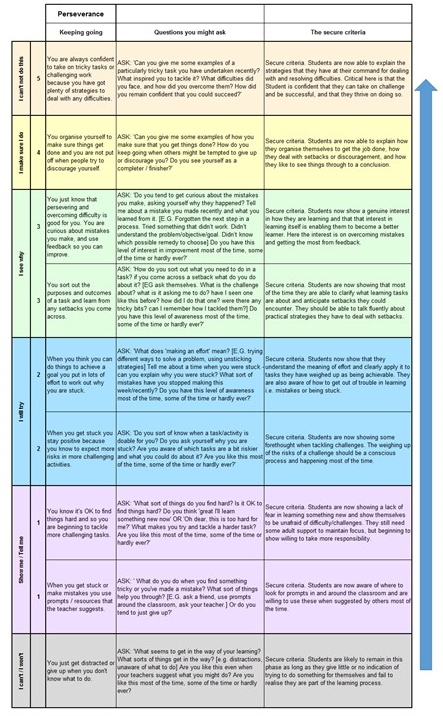
[Take time to explore the progression chart for Perseverance (opposite). It considers how 5 facets of Perseverance (Dealing with stuck; Managing the learning environment; Self talk; Dealing with challenge; Goal orientation) interface with 6 phases of development (From ‘Lacks’ through to ‘Embodies’).]
Ask yourself – how does this progression chart expand your own understanding of Perseverance and how it grows?
1c. Take a look at the depth of content in a module in phase 2
Putting Perseverance into Learning
To give you a flavour of a module in the next phase, take quick look the one that addresses perseverance, a learning behaviour you have already started nudging. This module takes the development of perseverance wider and deeper with an emphasis on progression and learning language.
The module is designed to guide you through a process of building the habit of Perseverance in your students. Sections 1 – 4 consider:
Perseverance and how it develops. Unpick how it develops over time and use the full, extended Progression Chart to plot where your students are now.
Taking Perseverance deeper into classroom culture. A huge range of ideas and talk to deepen and strengthen the disposition to Persevere across all ages.
Blending perseverance with content. How to blend content and process so that opportunities to persevere are embedded in every lesson.
Team reflection and planning. Share the impact of your experiments with colleagues and plan what you need to do next.
All other phase two modules are similarly structured.
View one of the modules in ‘Progressing the Learning Power Game’
Look particularly at Section 2 – where we explicitly link teaching strategies with the various phases of the Perseverance progression chart. This ensures teachers can target their interventions to how their students are as learners and slowly help them to move up the chart.
1d. Phase 2 covers a wide range of learning behaviours
‘The Professional Learning Power Game’ . . . consists of twelve online modules that offer progression charts, activities linked with teacher talk, and frameworks to help design dual focused lessons. They provide a deeper, richer look at learning so that teachers:
gain a better sense of how to steer students growth as learners;
use a richer language of learning effectively;
design a curriculum to promote growth in learning behaviours;
develop their confidence and skill as learning coaches.
The twelve online modules can be used in whatever way the school sees fit. The modules offer easy to access information about one learning behaviour, suggestions for developing classrooms cultures and lots of ideas to try out. Thus teachers are armed with material to support their efforts to apply a more forensic approach to learning.
The 12 modules are:-
the foundational 4:
Perseverance
Questioning
Collaboration
Revising
Taking you deeper into the behaviours you are familiar with . .
plus 8 further key behaviours:
Noticing
Reasoning
Imagining
Making Links
Resourcing Learning
Listening and Empathy
Planning
Meta Learning
Adding a rich range of essential learning behaviours to take on.
The learning habit and how it develops. The Progression Chart.
Section 1 introduces you what the learning behaviour is about and how it might progress or build through 5 phases. Participants are asked to plot where their pupils are now in being able to use the behaviour skilfully.
This section offers a concise way of getting to grips with the learning behaviour and how it progresses. It’s likely to take about 20 mins to get your head around it.
Section 2 Taking the learning habit into classroom culture
2. Taking the learning habit into classroom culture. Classroom activities. This section offers numerous suggestions to develop a friendly culture and build pupils’ learning skills.
Here you will find ideas for lesson starters/quick wins; classroom activities; learning reflection tools; ideas for the appropriate learning language for each progression phase in the learning habit. You are likely to browse in this section for about 30 minutes in preparation for the team meeting.(see below)
Section 3 Blending learning habits with content
3. Example dual focused lesson. This section suggests a series of questions and steps you might use to ensure the development of learning habits claims its place in the curriculum and is designed into lesson/activities to aid understanding.
Here we look closely at how to blend improving pupils’ learning habits into the content you have to teach. The section covers;The principles behind any learning powered lesson. Big questions to ask about lesson design. Lesson planning in action…an exemplar learning habit focused task
Section 4 Team reflection and planning
4. The final section gives a skeleton plan for the Professional Learning Team session. It includes downloadable enquiry question and planning formats. In team sessions you are invited to share the impact of your experiments with colleagues, discuss the online materials, and plan how you might use these to change your classroom practice. All the activities are designed to help you bring the learning behaviour into active use in the classroom. The section also includes a range of indicators that you could start looking for to begin to measure the impact of teacher development across the school The team sessions are timed to last about 75 minutes.
Each unit is accompanied by a Learning Diary. This helps you to distil important messages, home in on the key bits of information and design learning experiments specifically for your pupils.
1e. Phase 2 stays faithful to…
A blended learning approach:
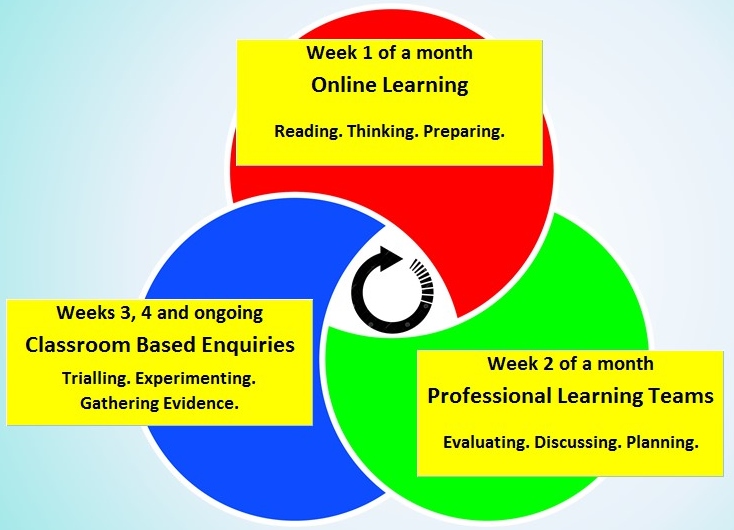
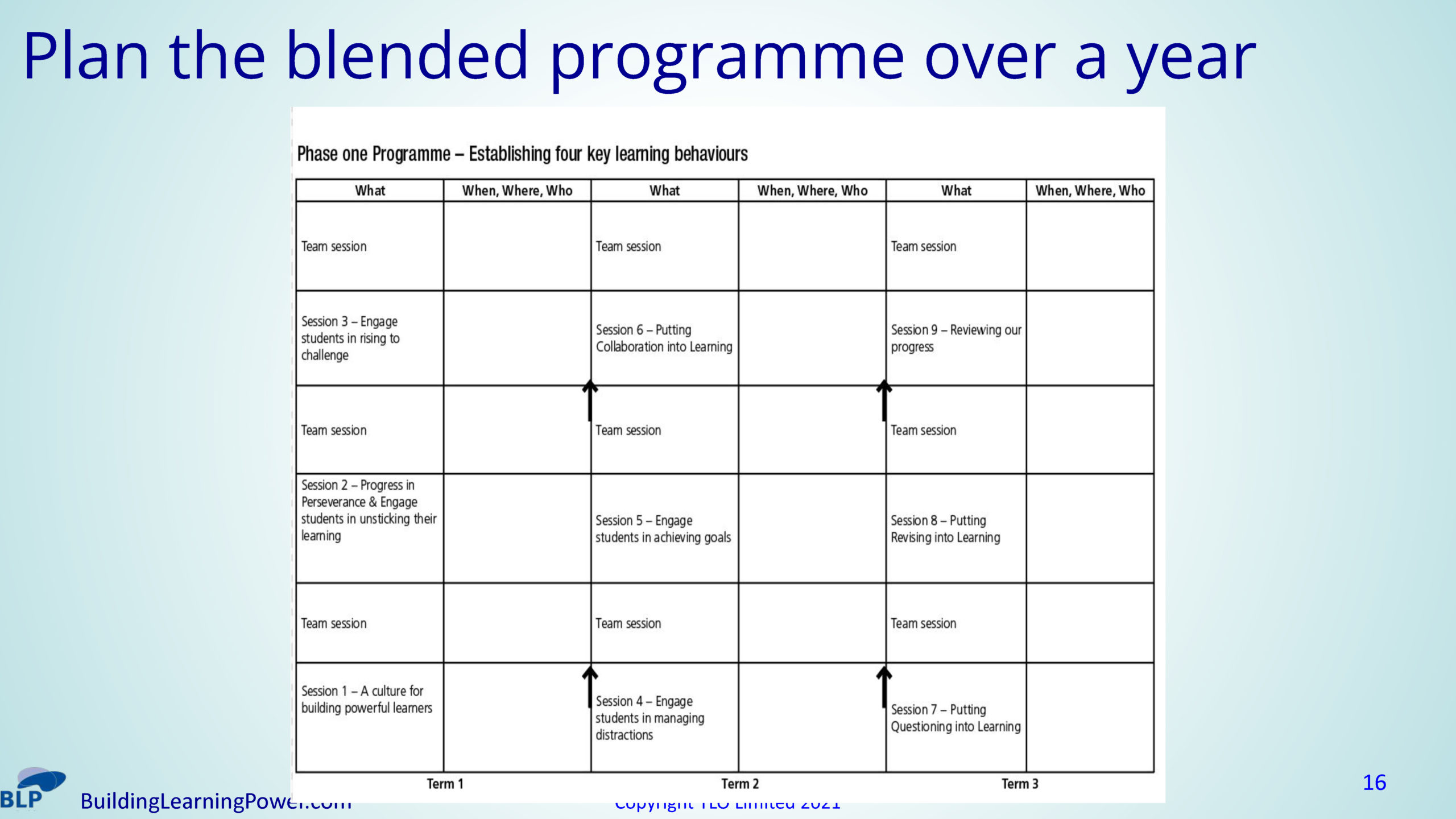
‘The Professional Learning Power Game‘ continues as a blend of online content modules, supportive professional learning teams, and exploratory small-scale classroom enquiries. Hence the ways of working established in phase 1 are continued in phase 2. Teams and the content of what each team is attending to may change, but the rhythm of development remains consistent.
Building classroom learning cultures:
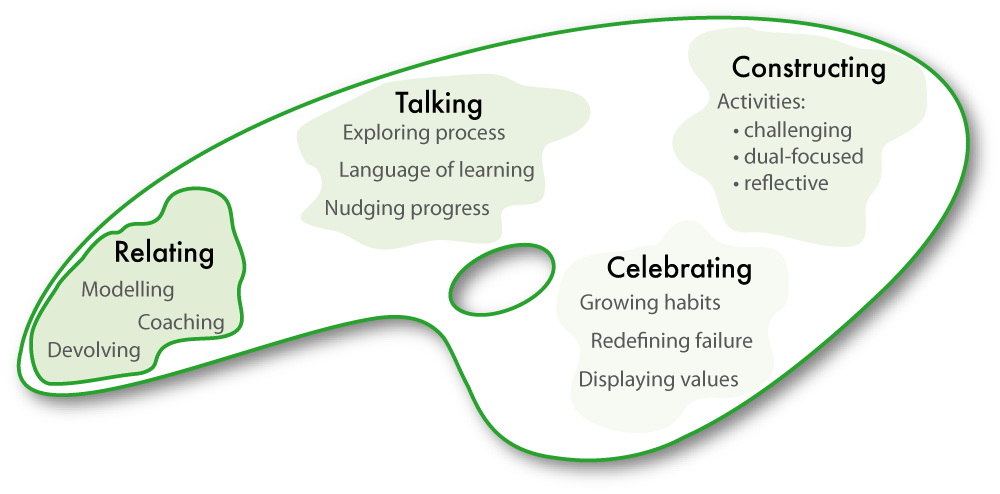
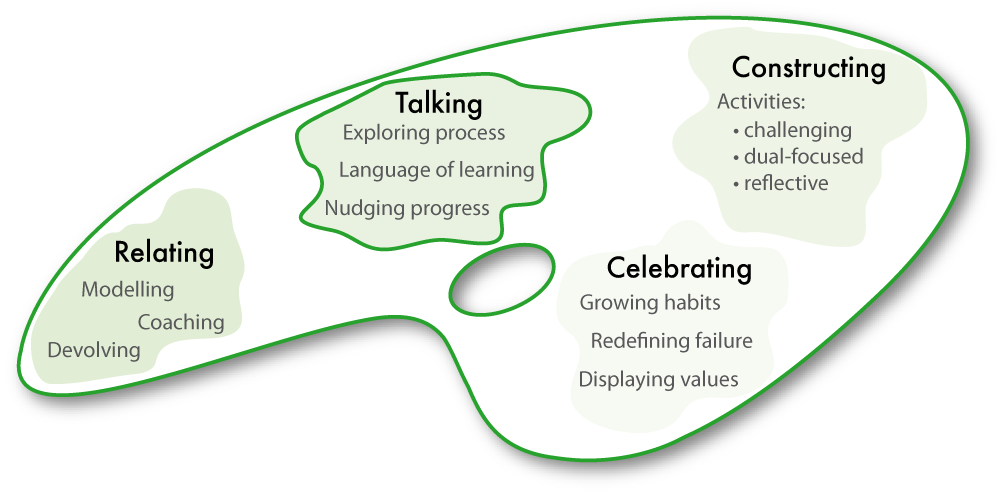
‘The Professional Learning Power Game‘ seeks to build on the culture shift started in phase 1. The Teachers’ Palette continues to underpin the content and thrust of teacher development and classroom culture. The intent in phase 2 is to make practice ever more sophisticated, extended and embedded.
We wish you well on the next stage of this challenging and worthwhile endeavour.
It’s all very well making plans and putting them into action but what difference have they actually made; have your plans and actions worked and how well? This section invites you to consider your progress in 3 aspects – how increasingly learning friendly classroom cultures are working, how students’ learning behaviours are growing, and whether this activity is impacting on attainment.
Here you will find:
a reflection tool to help you consider how your classroom culture has developed and how your students have responded;
a reflection tool to help you to consider how your students’ learning behaviours may have changed;
a reflection piece inviting you to evaluate the impact of the changes you have made on progress and attainment.
1. Impact on classroom culture
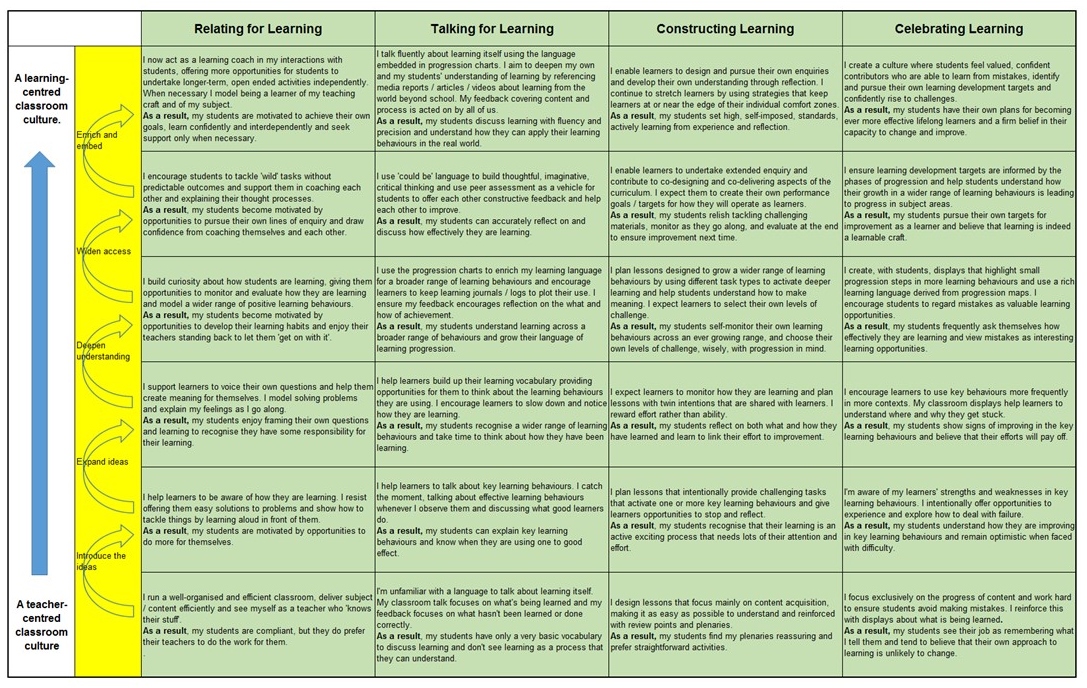
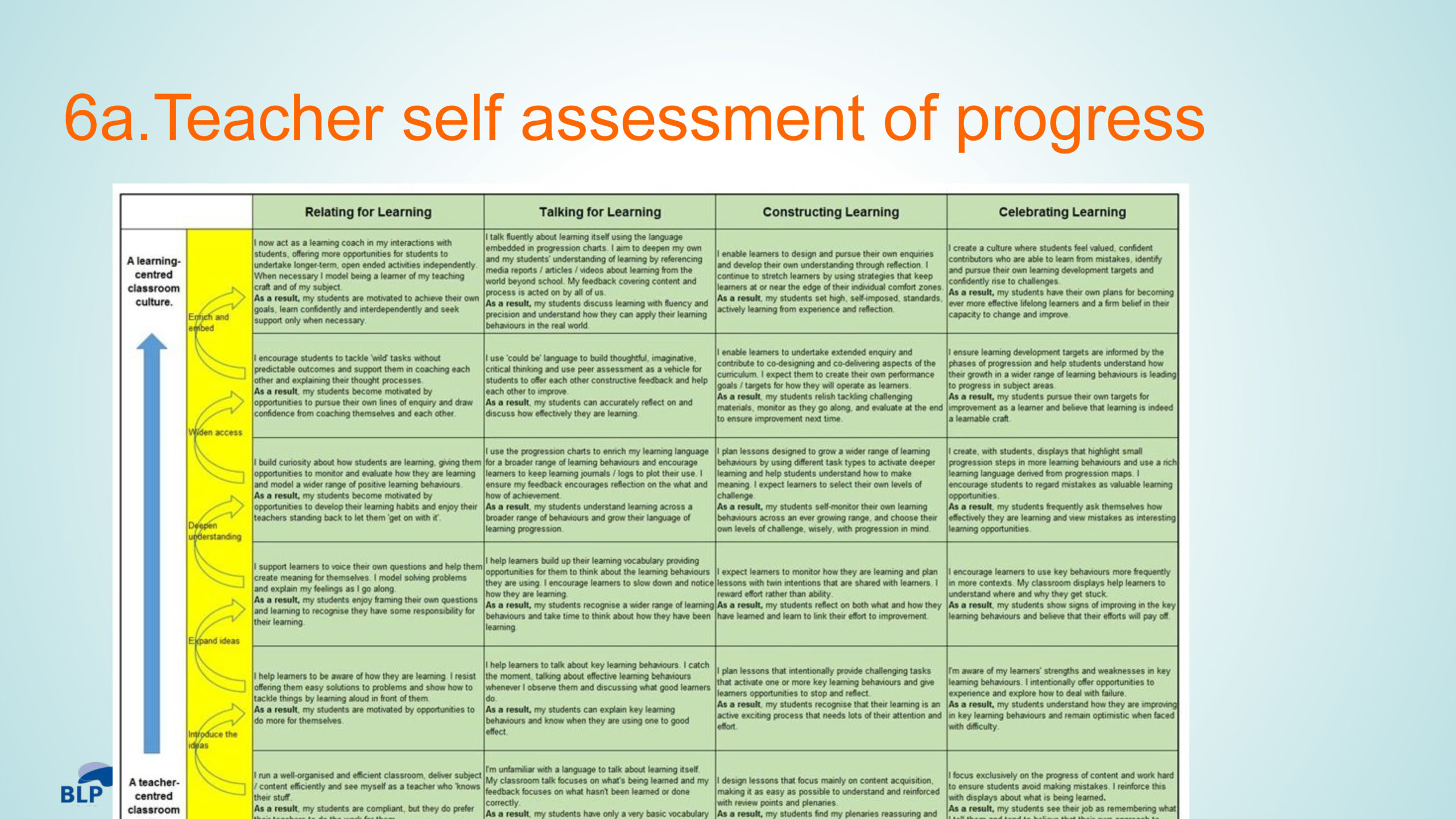
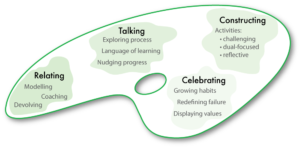
As you worked through sections 2 through 5, you considered the 4 aspects of developing a learning friendly classroom culture. You evaluated your existing classroom culture before embarking on interventions aimed at building student learning behaviours. Now is the time to retrieve those initial judgements so that you can see the extent to which your classroom culture has become more learning friendly over the period of this project. The 4 charts for Relating, Talking, Celebrating and for Constructing that you considered are repeated here, combined as one teacher progression chart. Download the chart, and consider which statements / cells most accurately reflect your current classroom culture, and compare this with the judgements you made at the outset. The differences are an indication of the changes you have made in your classroom culture and how your students have responded. Ask yourself:
In which of the 4 aspects of classroom culture have I made most progress?
Of which changes am I most proud?
Which changes appear to have had the greatest impact a) on you, b) on your class(es)?
How would I describe the impact of my changes in classroom culture on my students? Try to write a short paragraph that describes the changes you have made and the impact that these changes have had on your students.
Are there any aspects where I have made less progress than I might have hoped? What has held me back? What was tricky and why?
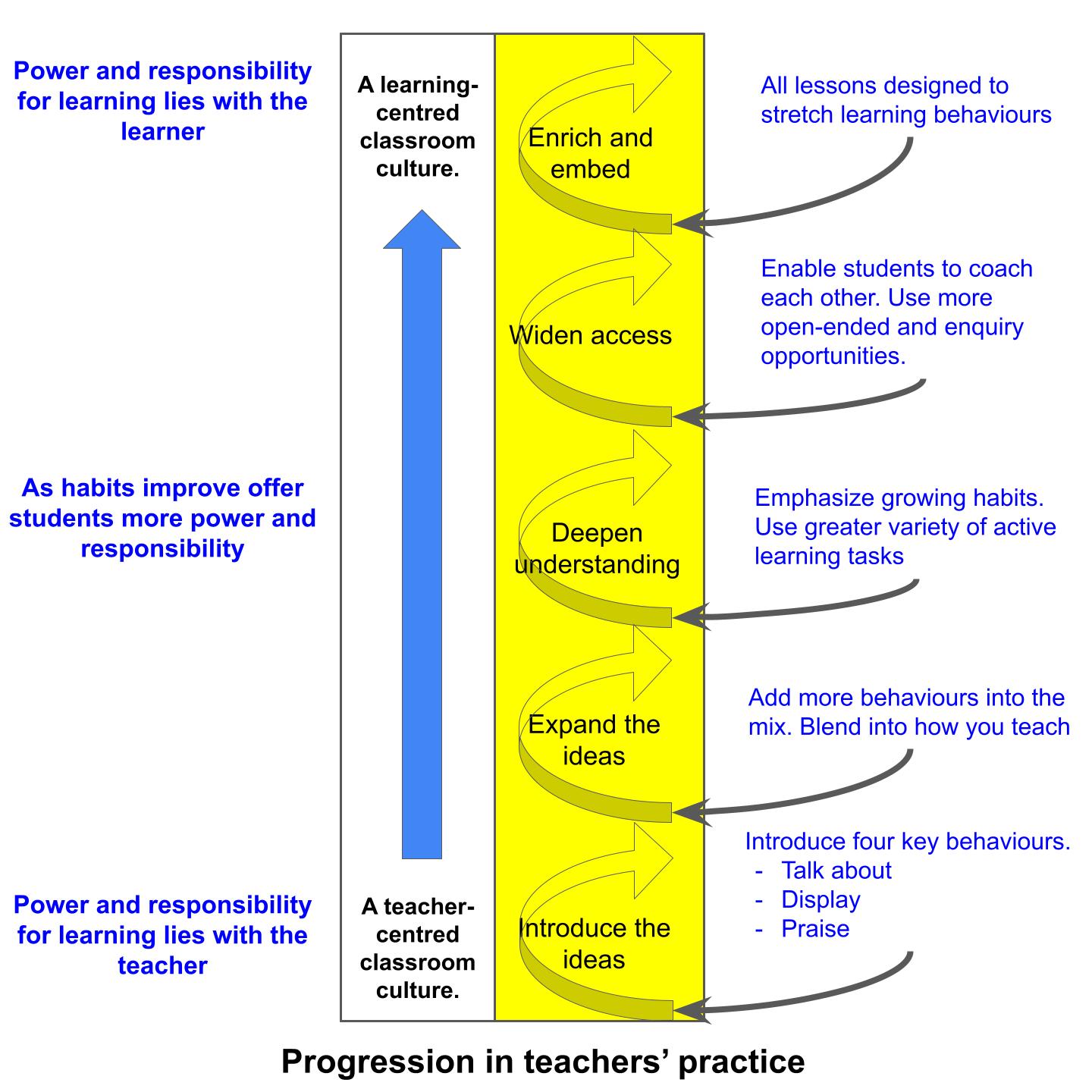
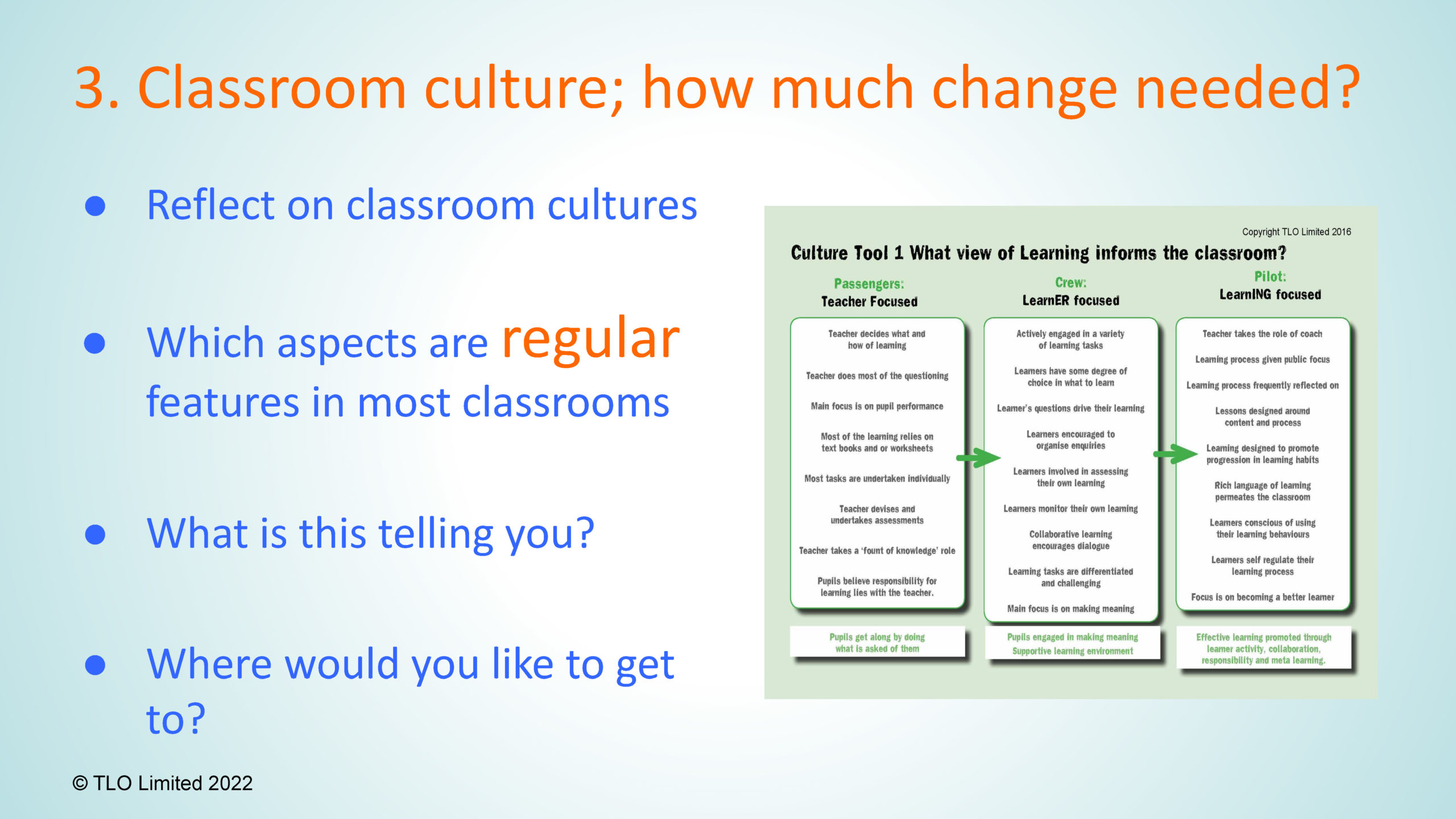
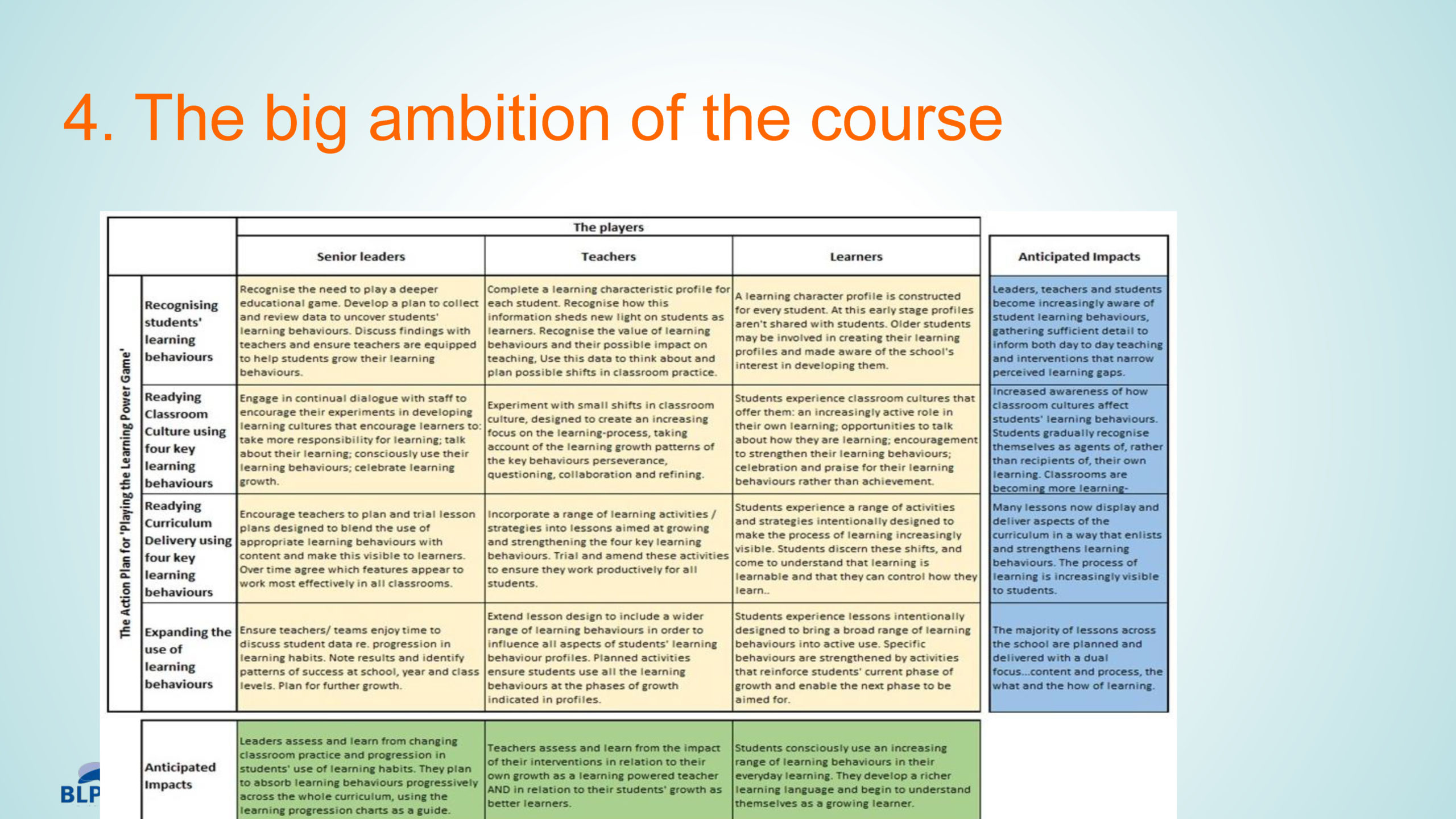
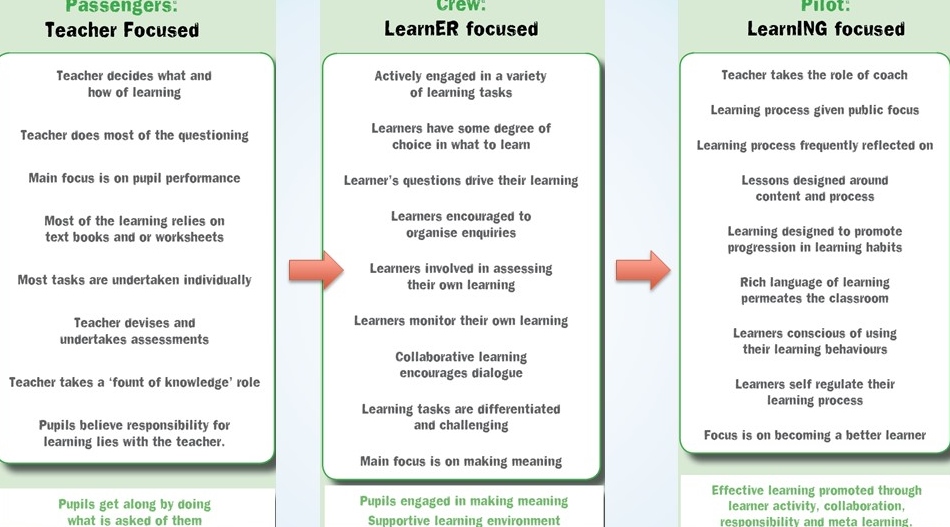
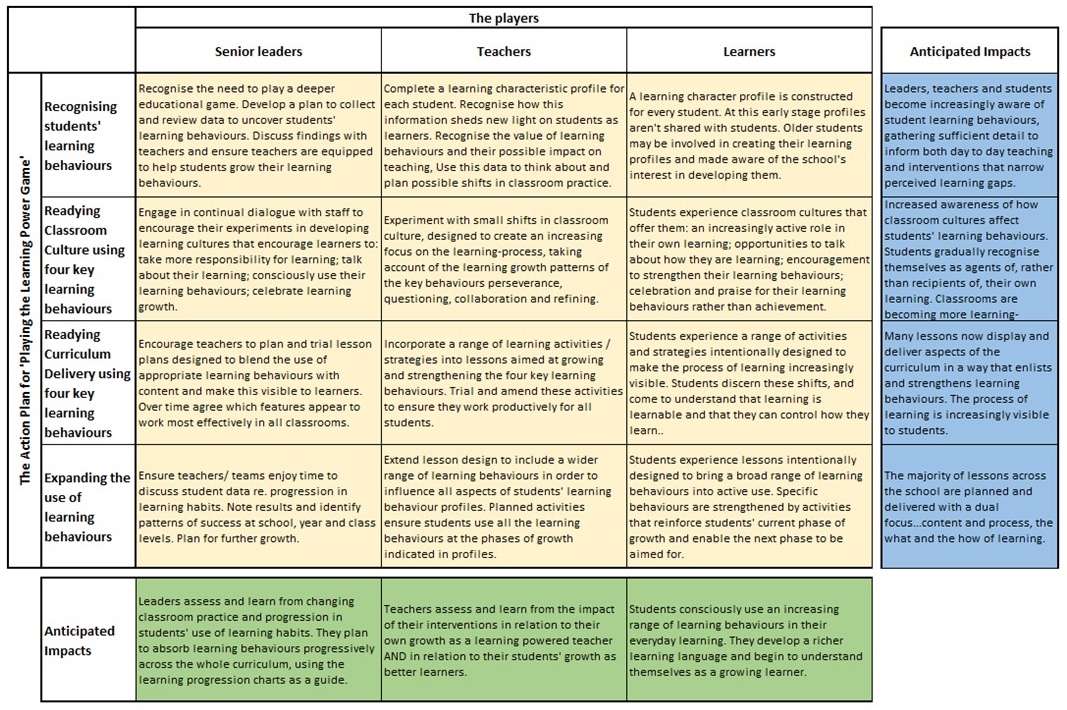
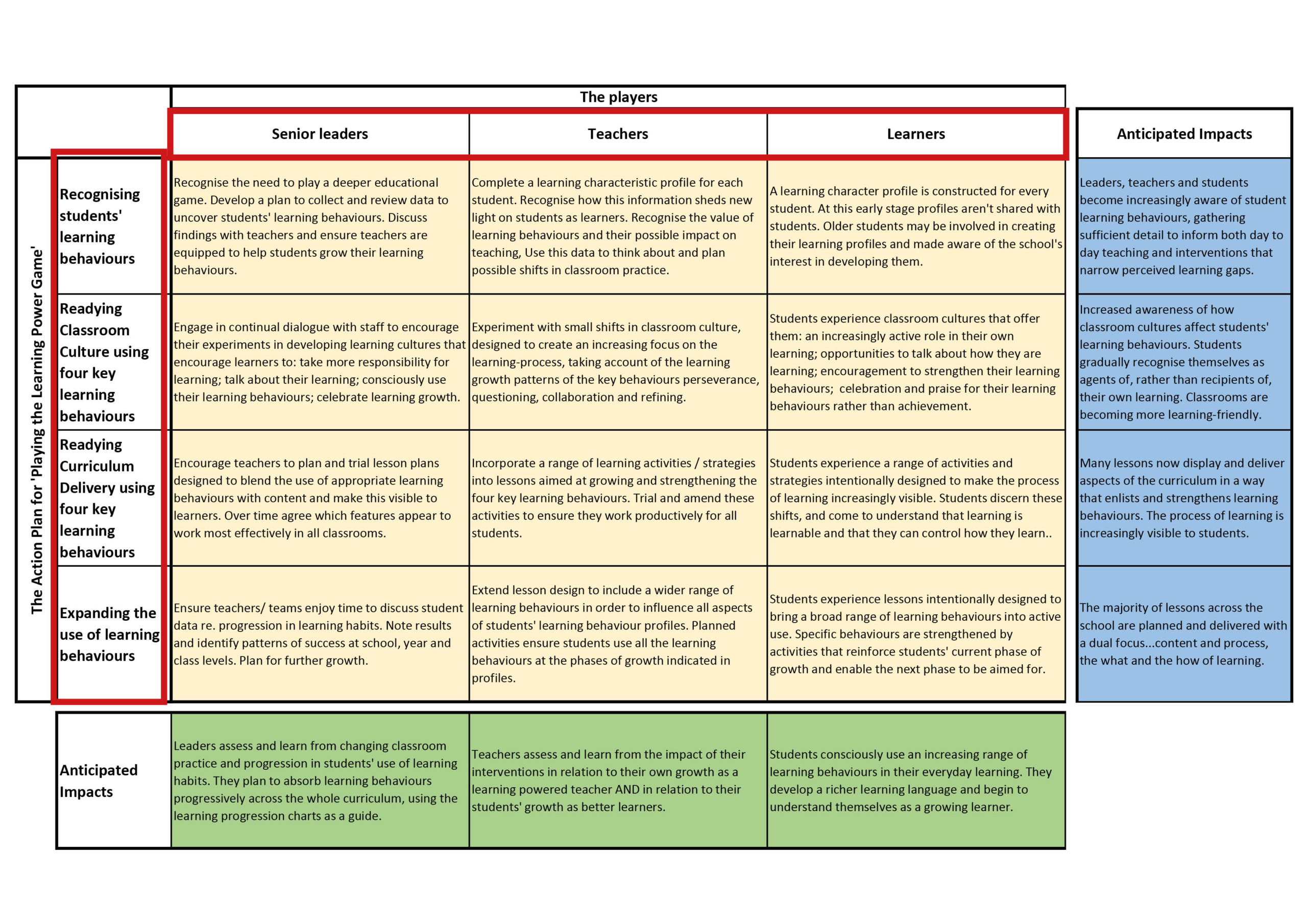
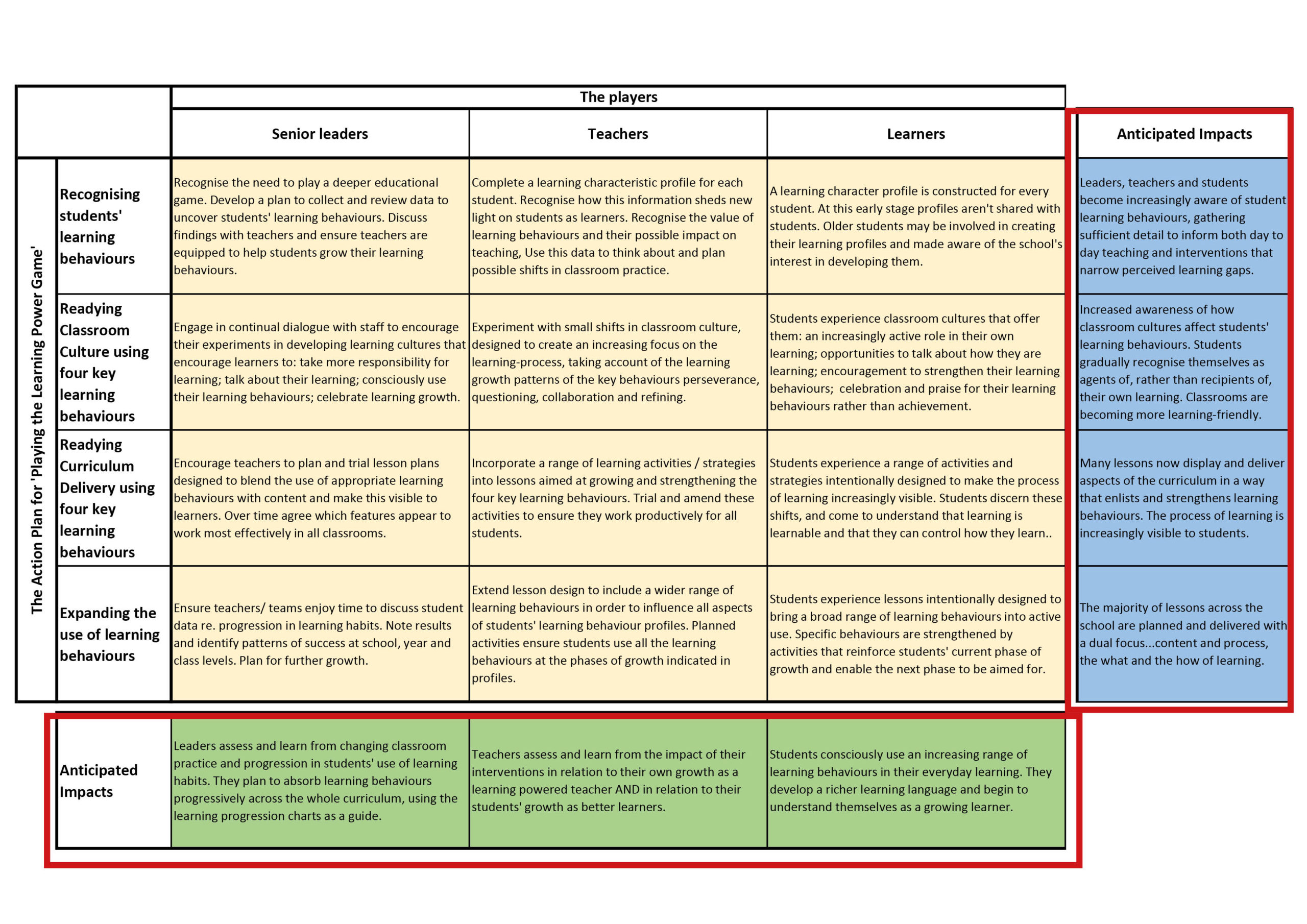
How teachers’ practice progresses; from highly teacher and content focused to a learning-focused culture, and anticipated outcomes for learners. Note – this growth pattern is very different to the growth of learning behaviours for students. At the foot of the column lies a description of a traditional classroom where the power and responsibility for learning lies solely with the teacher and the focus is on the efficient transmission of curriculum content. At the top of the columns lies a brief description of a full-on learning-friendly, learning-centred classroom. If you read across the tops of the columns you’ll see a clear picture of the practice teachers are ultimately aiming for. The cumulative steps in between describe the journey and how it changes in focus. In the early stages you will be concentrating on introducing a carefully chosen but limited set of learning behaviours. Later you will add more learning behaviours to the range, increase your skill and fluency and turn your attention to helping the students use and benefit from the same ideas.
A closer look at the stages of the journey.
Introducing the ideas (at the foot of the column)
The first stage of the journey is simply to introduce the idea of learning powers. This is often limited to a few learning behaviours that you have identified as being in need of attention for your target group of students. At this introductory stage, across all the columns, you are only dealing with these key behaviours. You are developing learning talk for them. You are setting up displays with students to capture their growth in these behaviours. You are developing lessons that use and stretch these behaviours.
Expanding the ideas and the strategies
At the second stage of the journey you add more learning behaviours to the mix. This is a tricky stage because you are becoming more familiar with a wider range of behaviours and becoming more skilful in how you attend to them. It’s a lengthy stage.
Deepening understanding
At this third stage progress across the board hots up. You have got many of the learning behaviours in play now and within any of the columns you are deepening the behaviours. You are more aware of students growing their habits and this is proudly displayed. You are becoming bolder in how much responsibility you are allowing students. Your lessons use a greater variety of active learning tasks and the learning language is richer and mapped with the student progression tables. In areas of assessment too students are taking an active role in assessing each other and critiquing learning.
Widen access
At this fourth stage students are being encouraged and enabled to get in on the act. Coaching isn’t just you coaching students but now includes students coaching each other. In teaching each other, students may have a role in co-designing and co-delivering lessons. Students are offered far more open ended or ‘wild’ tasks and enquiry based learning opportunities. There’s an emphasis on being inquisitive and devolving responsibility to learners.
Enrich and embed (top of the column)
In the final, fifth stage students are in command of their own learning. Teachers and students are able to adapt their coaching style to fit different needs. The language of learning is familiar to everyone and even formal feedback is framed as questions rather than suggestions or answers. All lessons are designed to deal with content and stretch learning behaviours with much of the curriculum covered through an enquiry approach to learning. In such classrooms everyone feels a valued contributor, everyone is alert to and counters unhelpful attitudes to learning and all are becoming experienced independent learners.
2. Impact on student learning behaviours
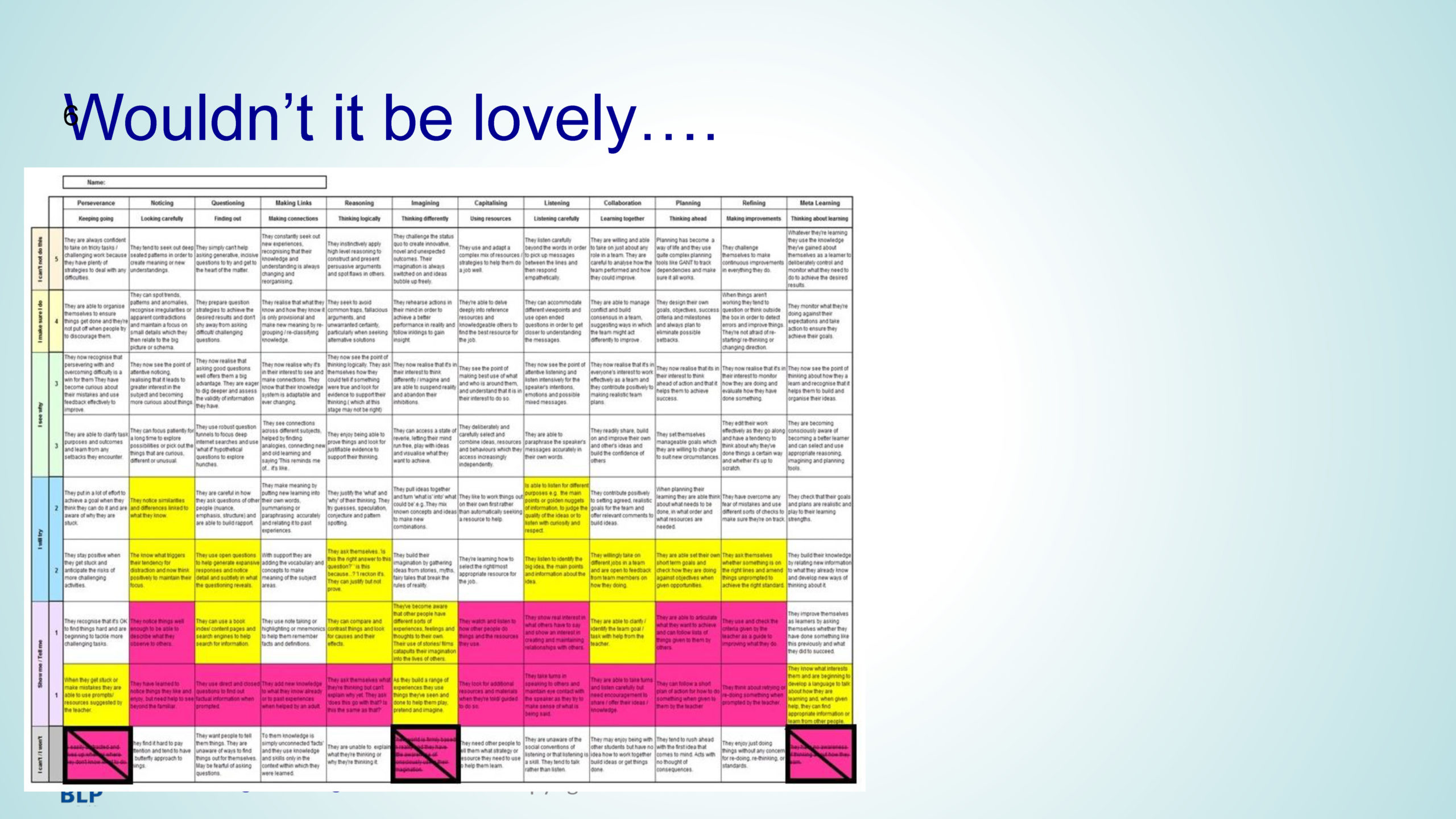
Earlier you created learning profiles for all the students. These profiles will now act as the baseline measure against which you can assess the impact you have had on the students’ learning behaviours. A simple way to do this is to make a copy of each student’s original chart with its completed learner profile. Look carefully at each column and, drawing on your knowledge of the student, begin to colour in, using a different colour, the cells that show where they are now. Compare the new learning profile with the original one. Focus particularly on the learning behaviours you have specifically attended to – the ones that you focused on in section 6.
Remember these single columns can’t show all the nuances of these behaviours so there may be some improvements that don’t show up here
Remember, what you are looking for are changes in attitude and a subsequent improvement in skill
moving from ‘can’t/won’t to ‘show me/tell me’
from ‘show me/tell me’ to ‘I’ll try’
from ‘I’ll try’ to ‘I see why’
Similarly, the steps shown are quite substantial and one step up the chart indicates a significant shift.
Comparing these updated profiles with the ones that you did at the outset will give you an indication of the extent to which their learning behaviours have developed. It might even be a good time to talk with these students to gather their views. Ask yourself:
To what extent have my students’ learning behaviours improved because of the interventions I have made?
Highlighted in pink, the learner’s profile at the outset, in yellow the secure skills after your interventions. At the beginning, this learner was developing at the first (purple) phase, with 3 behaviours still negative in the ‘lacks’ phase. After your interventions, the learner has eliminated the 3 negative behaviours and is broadlysecure at the first (purple) phase of development and showing developing skills at the second (blue) phase. In numerical terms, 16 newly acquired yellow cells averaged over 12 learning behaviours = 1.33 cells per column, which is an improvement of approximately 0.67 of a phase. Learning Behaviour Profile [A4]Learning Behaviour Profile [A3]
3. Impact on attainment
This is, of course, much harder to identify, even if you have solid evidence that your classroom culture has become more learning-friendly, and that your interventions have led to stronger learning behaviours in all students. Suppose you have been looking at year 2 (or year 7) students. In either case, it will take 4 years before their improved learning behaviours will feed through into externally generated performance data. Equally, even if you have been working with year 6 students, six months of interventions may still be too little to overturn years of accumulated under-performance. Hence you will need to rely on your professional judgement. Ask yourself:
Are my students making greater progress than I would have expected without the interventions I have made?
Putting it all together . .
Write a short report focusing on:
what you were hoping to achieve – your intent;
the strategies you chose to implement;
the outcomes of your interventions – your impact.
Your report, coupled with those of other teachers, will provide compelling evidence of your collective efforts.
4. Talk, support and plan with colleagues
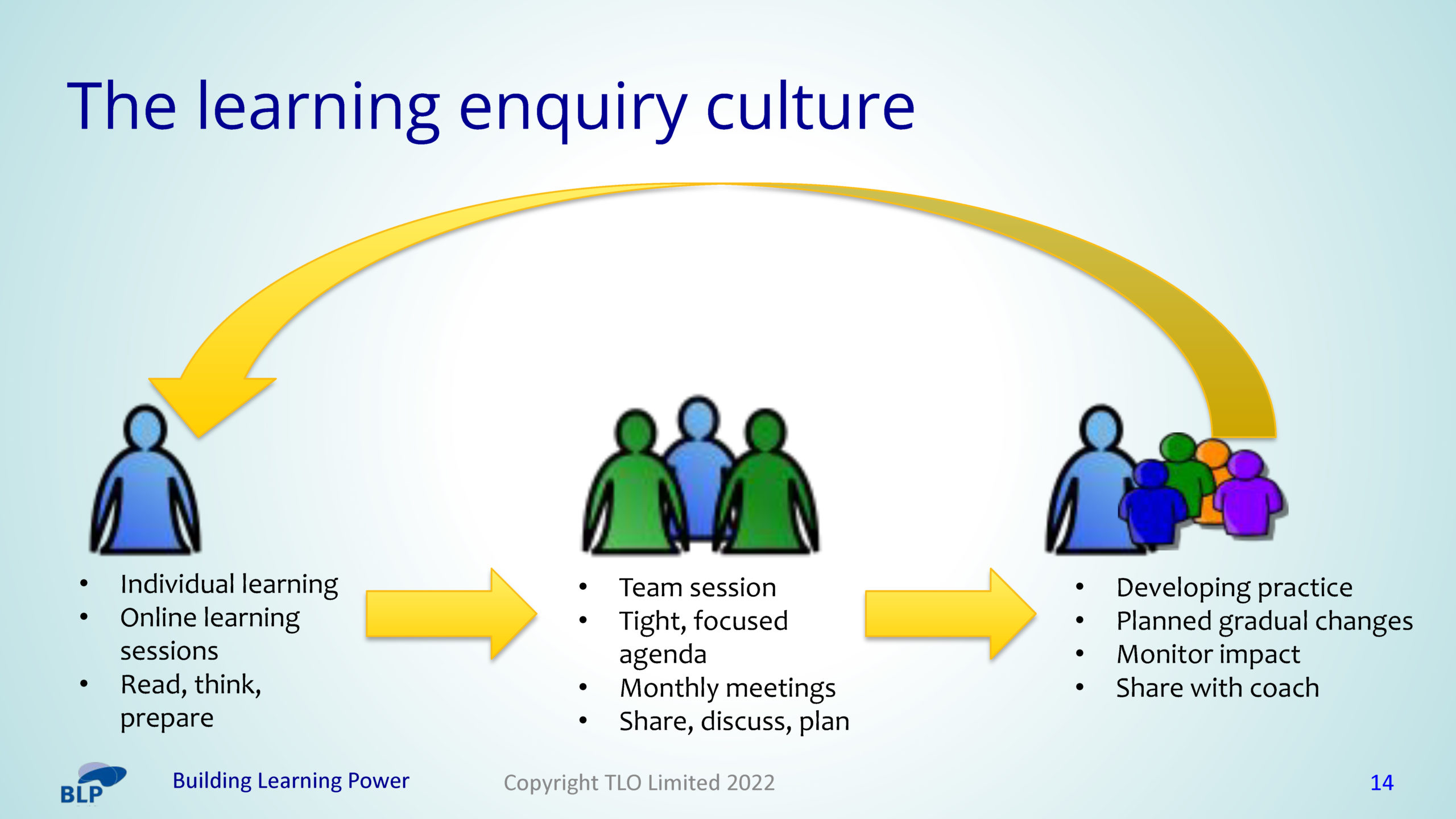
Your Professional Learning Team will give you the support you need to develop your practice. This will support you in converting the information and ideas from the online materials into “lived” practices in your classroom.
Learn with colleagues by;
kicking around ideas from the online content,
unpacking it’s meaning when it’s unclear,
considering what’s do-able and appropriate for your students
making plans for what and how you might incorporate the ideas into your practice
sharing and unpacking what you have tried in the classroom
relating your triumphs and tribulations
supporting colleagues through their changes in practice
reflecting on what you hope you might do, or have done, differently
The format of the agenda below is based on research into teacher learning communities by Dylan Wiliam, of Assessment for Learning (AfL) fame. Teacher learning communities are the engines of teacher development.
Reporting from colleagues about how previous ideas have worked (15 mins)
Re-capping the online materials (10 mins)
Deciding what’s to be done across the school (5 mins)
Personal Action Planning (20 mins)
Evaluating the meeting process (5 mins)
1. Session objectives: What do we want to achieve? (5 mins)
For example;
feel confident about working as a team
learn from what and how enquiry plans have worked in classrooms
feel confident to apply the ideas from the catalogue materials in the classroom
decide the strategic issues that everyone may need to apply in their classroom
plan some do-able shifts in classroom practice
2. Reports from classroom enquiries (15 mins)
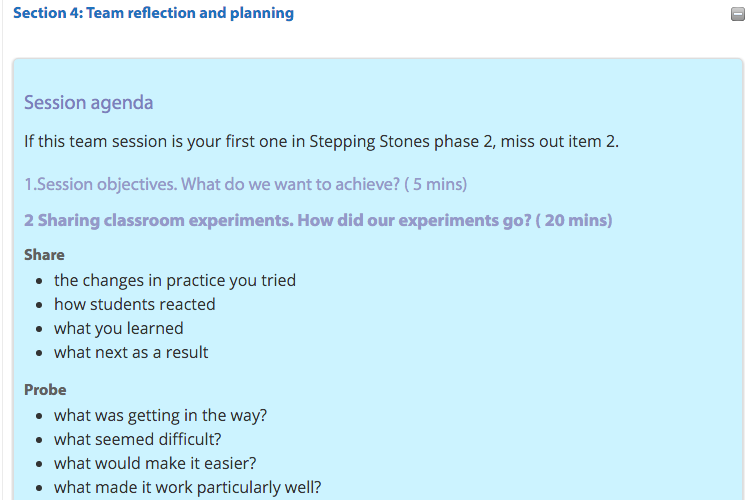
Share, probe, learn about;
what you each tried to implement from The Catalogue
how it worked
what you could change to make it work better
how students reacted
whether there may be longer term benefits for students
Ask questions, offer suggestions and learn from each other.
3. Recapping on-line materials: What the materials made us think (10 mins)
Try a PMI (Plus, minus, interesting) routine to help sort out your thinking. Think about:
how your classroom culture has changed;
how your students’ learning behaviours have changed;
how these changes may be impacting on progress and attainment.
4. Planning what to do across the school. (5 mins)
Decide
Are there any ideas that we should all adopt as whole school strategies?
Should such ideas be woven into school policies?
5. Personal action planning. What am I going to do? (20 mins)
Think about what you are trying to achieve.
Gain more value from a plan by creating it around a question. Why a question? Because this is an enquiry, you want to find out if something will change (student behaviour) when you change something specific. Think of it like this:
If I do XXXX will it improve/develop/enhance YYYY?
This is the crunch question. Students are unlikely to change unless your behaviour changes! Visualise how you want your students to be and then think about what you might do, or say, or model, or celebrate, or whatever…. differently to bring about this change in students. Developing an enquiry question – .pdf
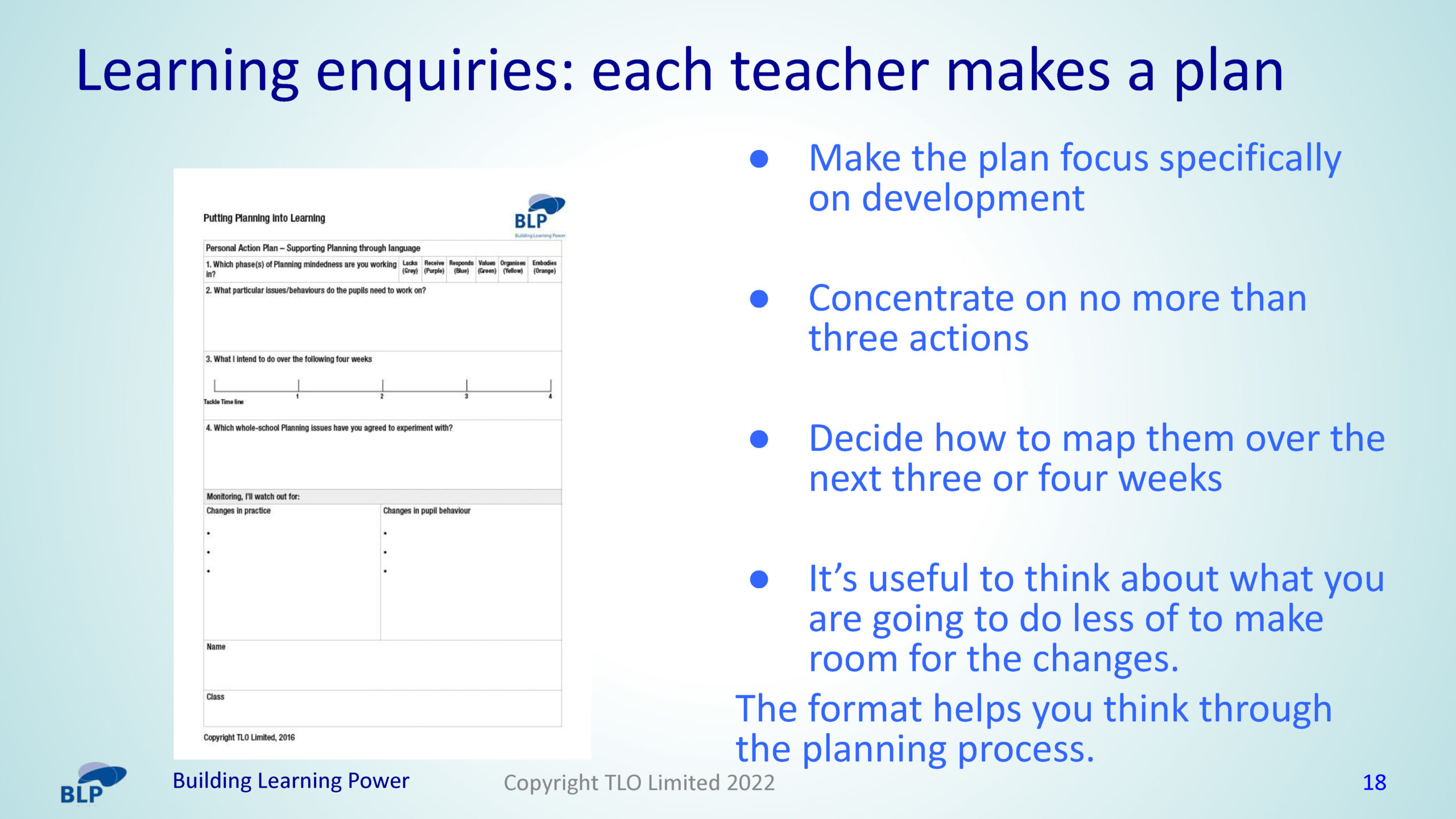
The learning enquiry plan is a record of what you intend to do. It takes your enquiry question from what to how. Remember:
you can adapt the activities/ideas that you chose to ensure they meet the needs of your students;
make the plan specifically focus on development;
concentrate on no more than three actions;.
decide how to map your actions over the next three or four weeks;
It’s useful to think about what you are going to do less of to make room for the changes.
The format below may help you think through the planning process. You can fill in your Personal Action Plan using the word document version.
As part of your plan it’s important to record what you will monitor over the weeks.
Changes you expect to see in your practice. For example what do you expect to;
see yourself doing differently?
hear yourself saying more often, with greater commitment, more effectively?
look out for in order to find out which approach best suits most students?
feel less stressed about? What will indicate that?
monitor to make sure more meta-cognitive talk becomes established?
Changes you expect to see in your students. For example do you expect students to:
see themselves as developing learners;
value effort over easy success;
be less fearful of making mistakes / asking questions;
other.
Noting such changes will motivate you to continue with your experiments because the changes in students are almost always positive. The plan represents a promise to do it. This promise helps you to keep the plan as a priority in your mind.
6. Evaluate team session: How did we do as a team? (5 mins)
Did we achieve our objectives?
Are we comfortable with what we are trying to achieve?
Having worked on shifting the culture of your classroom and introducing your students to the foundational four learning behaviours, Section 7 introduces and encourages you to branch out and focus on building some of the next 8 learning behaviours. This means making more sophisticated shifts in your teaching as mentioned in sections 2 through 5. To aid understanding we have arranged the ideas to highlight the links between classroom cultures and your students’ growth as learners. Here, in section 7, we bring together:
the 12 learning behaviour progression tables;
each interlinked with specific teaching ideas to enable that progression;
and shorthand diagrams that summarise how this all plays out in classroom cultures.
The Catalogue – Progression tables interlinked with teaching ideas . . .
1. Decide which behaviours to make a start on . .
Take a look at the learning profiles of your students. Become curious about what your data is telling you and remember not all learning behaviours are equally important. Some are more critical for success in some subjects than others, while others are critical for success across the curriculum. This table shows the average scores for an imaginary target group.
Find the behaviours to make a start on
You may start by looking at those behaviours that apply more generally and are linked to students’ attention...perseverance, noticing, listening, refining. These alone may account for any under performance.
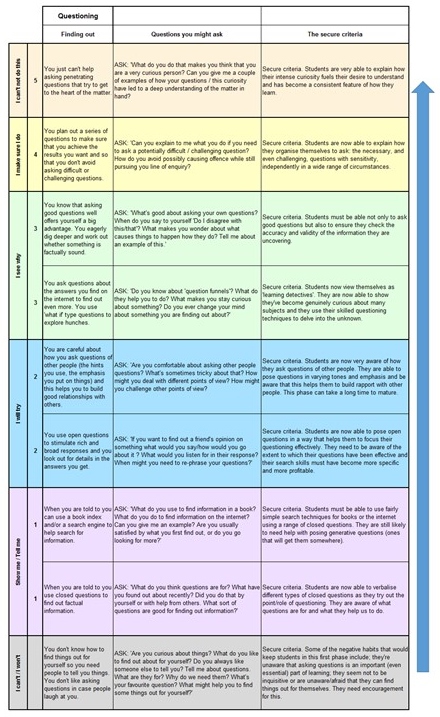
Look particularly at questioning. More curious students are motivated to explore and engage, whereas a student who is lacking curiosity has little enthusiasm for learning.
Remember too, that it’s well-researched that students with well-developed meta-cognitive skills attain more highly than those who don’t. So maybe think hard about including meta learning too.
Select three or four behaviours that seem most appropriate to work on first for your students.
2. Check out your classroom culture
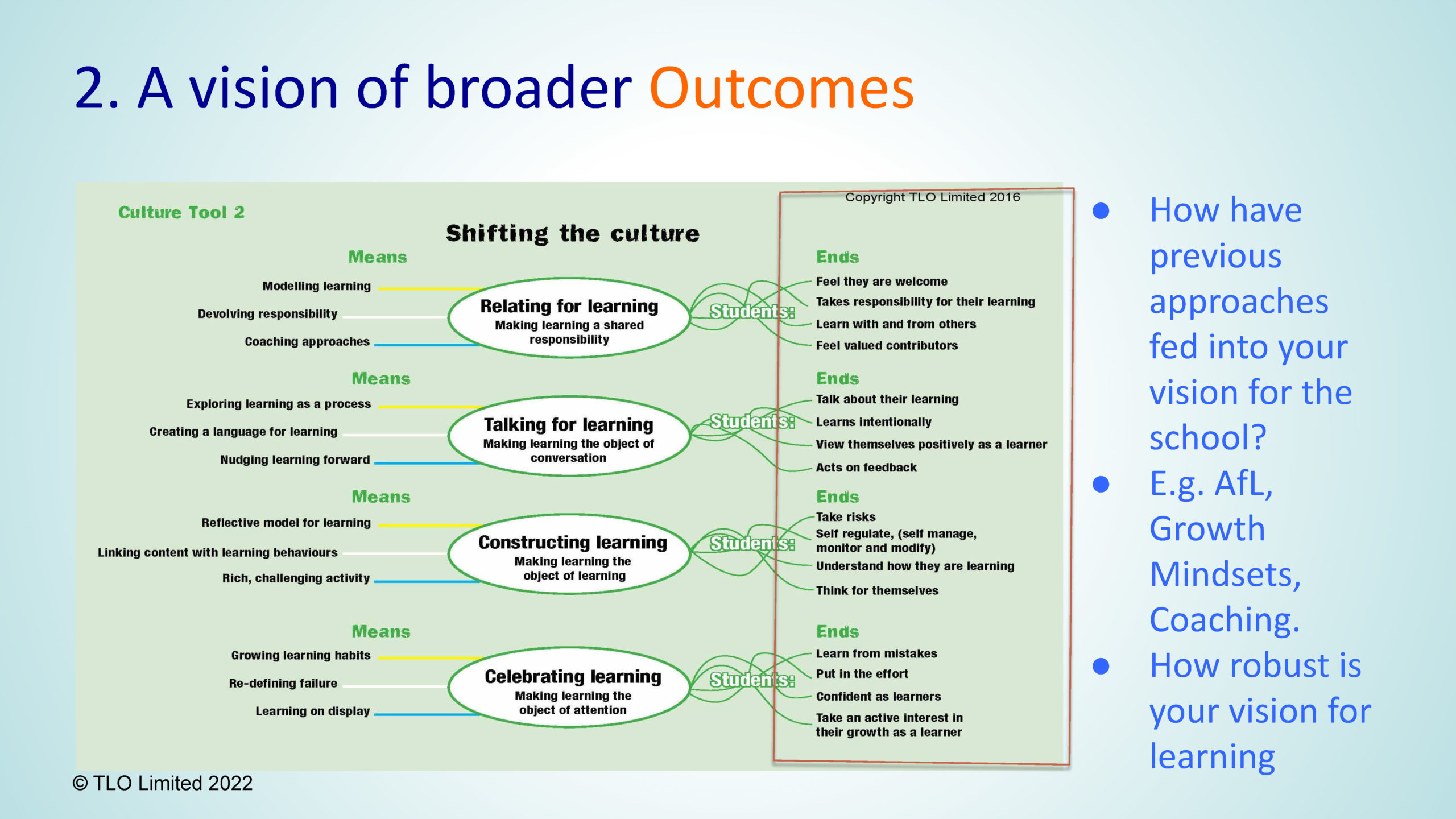
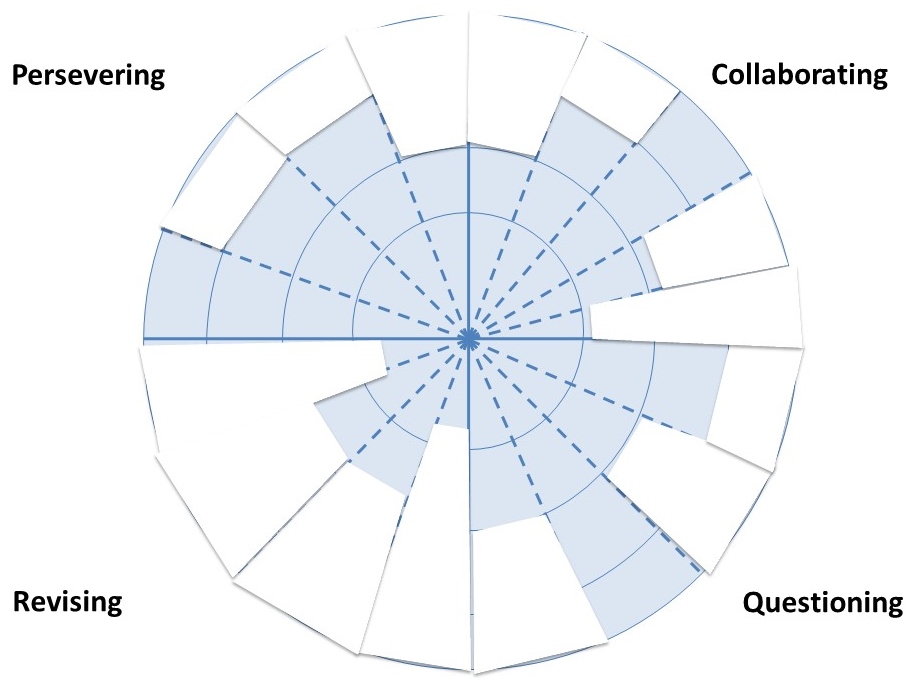
Having already explored classroom culture in sections 2 through 5, you might find it useful to consider the aspects of classroom culture that need to be present for the particular learning behaviour to flourish. The culture diagrams address 4 aspects of classroom culture:
At 9 o’clock – the dispositions, habits and behaviours you are aiming to enable your learners to develop;
At 3 o’clock – how you might talk about the learning behaviours;
At 12 o’clock – how you might organise learning to exercise the behaviours;
And at 6 o’clock – how you might organise your classroom to celebrate the behaviours.
Give time to evaluate your own classroom culture against these 4 aspects, because minor adjustments to classroom culture will make it easier for the teaching ideas that follow to achieve the outcomes you want for your learners.
The classroom culture to foster learners’ curiosity
3. Decide which phases to start on
The next thing to consider is how well are your students disposed to the learning behaviours you have selected. What stage of ‘mindedness’, about this behaviour, have students attained? Roughly, how many of your students are:
unaware and or fearful of the behaviour? (grey);
needing masses of help or reassurance? (purple);
becoming willing to work on/ tackle this? (blue);
‘sold’ on this behaviour because they realise it’s good for them? (green)
Remember, your role will be to ‘work between the lines’. So, if your students are:
still in the grey zone… you need to look at material shown between grey and purple;
in the purple phase…you need to look for ideas between purple and blue;
in the blue zone…you need to look for ideas between blue and green.
green and above you need one of our more sophisticated products!
PS. It’s usually a good idea to start at the bottom and work up. You’ll often find activities that you can adapt or tweak a bit for different phases of growth or different ages of target group.
Remember too, that in these early stages, you’ll be bringing these behaviours out of the shadows in several ways:
making students aware of the behaviour;
talking about it (what, how, why, when, if);
giving them opportunities to practise it, both in lessons and elsewhere;
celebrating its use;
reflecting on it to improve it.
You will find a variety of teacher activities ‘between the lines’ in all twelve behaviour progression tables so enabling you to work on many of these fronts.
Working between the lines
4. Talk, support and plan with colleagues
Your Professional Learning Team will give you the support you need to develop your practice. This will support you in converting the information and ideas from the online materials into “lived” practices in your classroom.
Learn with colleagues by;
kicking around ideas from the online content,
unpacking it’s meaning when it’s unclear,
considering what’s do-able and appropriate for your students
making plans for what and how you might incorporate the ideas into your practice
sharing and unpacking what you have tried in the classroom
relating your triumphs and tribulations
supporting colleagues through their changes in practice
reflecting on what you hope you might do, or have done, differently
The format of the agenda below is based on research into teacher learning communities by Dylan Wiliam, of Assessment for Learning (AfL) fame. Teacher learning communities are the engines of teacher development.
As part of your plan it’s important to record what you will monitor over the weeks. Changes you expect to see in your practice. For example what do you expect to;
see yourself doing differently?
hear yourself saying more often, with greater commitment, more effectively?
look out for in order to find out which approach best suits most students?
feel less stressed about? What will indicate that?
monitor to make sure more meta-cognitive talk becomes established?
Changes you expect to see in your students. For example do you expect students to:
see themselves as developing learners;
value effort over easy success;
be less fearful of making mistakes / asking questions;
other.
Noting such changes will motivate you to continue with your experiments because the changes in students are almost always positive. The plan represents a promise to do it. This promise helps you to keep the plan as a priority in your mind.
6. Evaluate team session: How did we do as a team? (5 mins)
Did we achieve our objectives?
Are we comfortable with what we are trying to achieve?
use the background of how your students are reacting to the changes you’ve been making in classroom culture and lessons to;
extend your thinking about the nature of progression
look hard at the deeper nature of the four learning behaviours
recognise why growth in the charts will be slow
consider whether to reassess the progression charts you originally completed for your students
B. The best way of tackling this section is to..
This section is deceptive. It looks shortish and straightforward but it is packed with deep and essential ideas.
Read though it all fairly quickly to get the gist.
Return to the beginning and muse on how the ideas of scope, frequency and skill change your perceptions of the Learning Progression Charts you completed seven or eight months ago.
Ensure you use the enhanced progression charts to broaden your understanding of what each stage encompasses.
Consider whether the class Learning Profiles need updating.
Team Meeting 6. Scheduled XXXXXXXXXX A month after starting Unit 4????
C. As a result it should have the following impact.
You will;
have gained a much more sophisticated sense how the four learning powers grow and what this looks like.
understand why you are unlikely to see rapid growth up the progression chart but a deeper growth at each stage
act on the decisions of the linked team meeting to either let the original charts pass on to next year’s teachers or to complete and add set of updated charts to the originals
The whole point of what you’ve been doing in your classroom over the last four or five months has been to help shape and strengthen your students’ dispositions for learning. Before that you’d had a stab at estimating the strength of your students’ learning behaviours, using the learning charts, and that deeper awareness of progression has enabled you to focus your efforts more precisely to make a difference for every student.
So now
It would be wise to take look at if or how any of these efforts are having any effect on your students. Because you know that progress up the learning progress charts is measured slowly over time we’ll take a more sophisticated look at how we might look at growth with reference to its frequency, its scope and its skilfulness.
In this section you will find:
an exploration of three aspects of progression – frequency, scope and skilfulness
a re-evaluation of the security of your original:
perseverance profiles
questioning profiles
collaboration profiles
revising profiles
and an examination of the difference your shifts in classroom practice have made to students’ attitudes
Getting your head round progression in learning dispositions
progression in learning dispositions can be a game-changer – for students and teachers
understanding the child’s dispositional journey from ‘I can’t/won’t’ to ‘I can/do’, helps you design more precise learning experiences to generate greater independence
progression trajectories add richness and subtlety to the learning language of classrooms
tracking progression motivates and encourages teachers to put in the effort to continue improving their students learning behaviours
Understanding progression provides you with a way of seeing your students beyond simply academic performance indicators.
1. There’s more to ‘getting better’ than you might think
Supporting students to become better learners actually involves you in assisting them across three dimensions; to spontaneously make more, wider, and increasingly sophisticated use of their learning behaviours. Ultimately students need to be able to make these behaviours their own; intuitively see the point of them; call them to mind for themselves when needed, and become ever more skilful in their use.
There are three key dimensions to the growth of learning behaviours – firstly the frequency/how often the behaviour is being used; secondly the range/scope of contexts in which it is used; and thirdly the skilfulness with which it is employed.
1a. Getting better = using it more frequently The first dimension and easiest to activate, is frequency/how often. The distinction between skill and habit is important – skills are what you can do, whereas habits are what you dodo. A skill that is only rarely employed, or only employed when adult-directed, is at best embryonic. Initially the aim is to activate the skill more frequently through direct intervention with a view to reducing the level of intervention as the skill becomes stronger through more frequent use. The target is to develop the skill into a habit that the student employs frequently, without support, as and when the need arises.
The message here is to spot students using a learning behaviour and point this out.
1b. Getting better = using it in different contexts The second dimension of progression relates to the range of contexts within which the skill is deployed. The child who is tenacious and thoughtful on the play station can equally be defeatist and impulsive in the classroom – they have the skills, but fail to recognise that the perseverance that leads to success on the play station is precisely the same outlook that is needed for success in the literacy lesson. Initially the skill is used only in familiar circumstances, but the aim is to help students to recognise and exploit opportunities to utilise their leaning behaviours in new and uncharted territory.
The message here is to look out for and comment on students using the habit, however tenuously, in different subjects or perhaps in the playground.
1c, Getting better = becoming more skilled in its use The third dimension, and by far the most subtle, is that of skilfulness. While we may start by encouraging students to ask more questions, more often and in different subjects, we rapidly turn our attention to the quality of the questions that are being asked. It is not too difficult to describe the attributes of a high level, sophisticated questioner who is skilled at asking incisive, generative questions, but it is very difficult to map out and sequence the steps between the natural curiosity of a three year-old and the sophisticated skill-set of the consummate question-asker/enquirer. This is the challenge, and why skilfulness is the most complex of the three dimensions. However, once mapped, the impact on how you mentor, set targets, enable self and peer assessment, design tasks, and plan the curriculum etc. is immense.
Helping students become more skilled in their learning behaviours is the role of a teacher in learning-friendly classrooms.
It is only when you see all three dimensions at work, in any phase of growth, can you say that the behaviour is secure.
2. Taking a more informed look at learning profiles
When you first came across the learning behaviour charts you were probably unaware of all three dimensions of progression that are woven into the charts. Now you’ve made some changes in your classroom to grow and strengthen just four learning behaviours it’s a good time to reflect on your class profiles as you build on your growing understanding of progression. It’s important to say that, at this stage, you should not be expecting to see all columns on all the profiles showing an increase. The sort of learning character development you are working on can’t be accomplished in a matter of few weeks. But when you first filled in the charts you may not have thought about how often the students behaved in that way, nor whether that behaviour seemed to apply to most lessons/subject areas. The point here is to take a quick re-look at your charts of the 4 behaviours you’ve been working on and ask yourself;
given what I know now about progression, do any of my earlier judgements need amending?
From the readily distracted and easily defeated, through to the tenacious, determined problem solver, becoming better at perseverance requires students to develop their:
coping strategies;
ability to manage their own learning environment;
appetite for challenge;
ability to work towards longer term goals;
and most importantly, their inclination to deploy abilities as and when they are needed.
This single, much distilled column for perseverance tries to capture the facets of the behaviour shown above. So take a closer overall look at your class profiles you completed a while ago and ask yourself whether you’ve noticed any changes since you started working on perseverance. For example students:
grey… giving up less, being less distracted, needing less support
purple… giving attention to something; becoming aware, not avoiding or rejecting it; being alert to
blue… going beyond merely attending to actively attending; complying; taking more responsibility for and enjoyment in initiating action
green… accepting the worth of something; preferring something; being committed to the value of something
beyond green… organising themselves to persevere more often
The three column resource opposite offers you:
a column showing the growth statements you are trying to re-assess;
a column offering questions you might ask that would give you greater clarity about the behaviour;
a column showing the criteria describing what being secure means.
Use it to reconsider, say, the upper purple phase for perseverance (They know it’s OK to find things hard and so they are beginning to tackle more challenging tasks). Consider the questions column, ask yourself whether the students would be able to answer these convincingly and thereby show/convince you that they meet the success criteria. Furthermore, ask yourself:
Do these questions and secure criteria enrich my understanding of what any of the phase statements mean?
Should I use these questions and secure criteria to re-evaluate my previous impressions of my students’ perseverance in learning?
Here’s a crib sheet to help you check whether your estimate is right; whether the level is indeed secure.
From the accepting, credulous and uncritical, through to the intensely curious and healthily sceptical, becoming better at questioning requires students to develop their:
inclination to show interest in and ask about what is around them;
ability to ask closed questions to find required information, and open questions to explore possibilities;
search skills that enable them to find out for themselves;
ability to ask questions with sensitivity;
and most importantly, their inclination to deploy these abilities as and when they are needed.
This single, much distilled column for questioning tries to capture the facets of the behaviour shown above. So take a closer look at your class profiles and ask yourself whether you’ve noticed students:
grey…needing less support for asking a question
purple… giving attention to the answers as well as the questions themselves
blue… taking more responsibility for asking deeper or more generative questions
green… being committed to the value of asking questions
beyond green… organising themselves to question more deeply and with sensitivity
Furthermore, ask yourself:
Do these questions and secure criteria enrich my understanding of what any of the phase statements mean?
Should I use these questions and secure criteria to re-evaluate my previous impressions of my students’ questioning behaviours?
From the isolated, socially awkward, self-centred and inward looking, through to the generous, networked team player with a sophisticated range of social skills, becoming better at collaborating requires students to develop their:
social interaction skills;
inclination to contribute their ideas to others and build shared understandings;
ability to contribute constructively and flexibly to group work;
team planning skills;
inclination to reflect on how the team is functioning and how it might function better in future;
and most importantly, their inclination to deploy these abilities as and when they are needed.
This single, much distilled column for collaboration tries to capture the facets of the behaviour shown above. So take a closer look at your class profiles and ask yourself whether you’ve noticed students:
grey…accepting help to interact more effectively with other students
purple… giving attention to improving team planning skills
blue… taking more responsibility for trying out more team roles
green… recognising that it’s worth reflecting on how the team is working
beyond green… organising themselves in various ways to collaborate more often
Furthermore, ask yourself:
Do these questions and secure criteria enrich my understanding of what any of the phase statements mean?
Should I use these questions and secure criteria to re-evaluate my previous impressions of my students’ collaborative behaviours?
From the rigid thinker who fails to learn from experience and repeats previous mistakes, through to the flexible, reflective thinker who takes responsibility for their own improvements, becoming better at revising requires students to develop their:
willingness to change;
understanding of what constitutes high standards and the desire to meet them;
inclination to monitor learning as it is happening and to evaluate it after it has happened;
and most importantly, their inclination to deploy these abilities as and when they are needed.
This single, much distilled column for revising tries to capture the facets of the behaviour shown above. So take a closer look at your class profiles and ask yourself whether you’ve noticed:
grey…students showing any willingness to change a bit or need less support
purple… giving more attention to the standard of their work or monitoring what they’re doing
blue… taking more responsibility for and enjoyment in initiating action
green… students always accepting that it’s always worth evaluating their own work
beyond green… organising themselves to achieve high standards more often
Furthermore, ask yourself:
Do these questions and secure criteria enrich my understanding of what any of the phase statements mean?
Should I use these questions and secure criteria to re-evaluate my previous impressions of my students’ revising/refining learning behaviours?
All these charts are really useful resources! Look through them before your next learning team meeting.
We’ve borrowed ideas from Benjamin Bloom’s Taxonomy of Objectives of the Affective Domain to outline the five main phases of growth, namely: Receiving. (purple)…which involves giving attention to something; becoming aware, not avoiding or rejecting it; being alert to something. Responding. (blue)…which involves going beyond merely attending to actively attending; complying; taking more responsibility for and enjoyment in initiating action. Valuing. (green)…which involves accepting the worth of something; preferring something; being committed to the value of something. Organisation. (yellow)…which involves adding to, formulating and organising their values into how they live their life. Embodies. (Characterisation in the original)(orange)…which involves behaving consistently in accordance with their values, living what they stand for.
3. Unit 4, section 1, Team Meeting Agenda 6
Will leave this to you to convert into your pattern for these
Something here re purpose/intentions of the meeting. When it should take place etc
Worth saying that this meeting looks back on their lesson design experiments resulting from Unit 3 work and then picks up on the ‘is it working?’ stuff from Unit 4 section 1.
There are 2 considerations at this meeting.
Concrete..do we need to do anything with the class profiles at this stage?
How have these deeper ideas re progression made you think differently about classroom practice? Plan should reflect more determination about what to look out for
Share reports of how learning powered lesson plans have worked (15 mins)
Re-cap the online materials from Unit 4 Section 1 (10 mins)
Consider possible strategic consequences across the school (5 mins)
Personal Action Planning (20 mins)
Review the meeting process (5 mins)
1. Session objectives: What do we want to achieve? (5 mins)
For example;
learn from what and how our Action Plans have worked in classrooms
feel confident to take forward ideas from online materials into our practice
propose actions that would benefit if everyone applied them in their practice
plan further personal developments in classroom practice
2. Reports from classroom enquiries (15 mins)
Share and discuss teachers’ practice; a valuable source of learning for everyone.
what you each tried to implement using the Unit 3, section 3D, Catalogue of Activities
how they worked
what you could/did change to make it work better
how students reacted
whether there may be longer term benefits for students
Ask each other questions, offer suggestions and learn from each other.
3. Recap on-line materials from Unit 4 Section 1 (10 mins)
Try a PMI (Plus, minus, interesting) routine to help sort out your thinking. Consider:
whether your students’ learning profiles need changing i.e. do you sense some will have to be upgraded showing improvement or downgraded where behaviours aren’t really secure?
which of the frequency, scope and skill ideas really piqued your interest?
which of these, if any, are you seeing more of?
is this related to one or more learning behaviours in particular (questioning, collaborating, persevering, revising)?
are we all finding the same?
how could this understanding of progression impact on future changes to our classroom practice?
which of the four learning behaviours seems to need the most development?
4. Propose what may be needed across the school. (5 mins)
Consider;
Are there any ideas that we all need to adopt?
Should we all amend our learning profiles at this stage?
Do we feel confident about this proposal (whatever it is)
Should such ideas be woven into school policies/directed time?
5. Personal action planning. What am I going to do? (20 mins)
Think about what you are trying to achieve.
Plans at this stage should be linked to what you learned from Unit 4 Section 1.Gain more value from your plan by creating it around a question. Think of it like this:
From a deeper awareness of progression I will focus my efforts more precisely by…
If I do/plan, try xxxx will it improve/develop/ secure/ enhance xxx?
As part of your plan it’s important to record what you will monitor over the weeks.
Changes you expect to see in your classroom practice. For example what do you expect to:
see yourself doing differently?
hear yourself saying more often, with greater commitment, more effectively?
look out for in order to find out which approach best suits most students?
feel less stressed about? What will indicate that?
monitor to make sure that the changes you are making are having an impact of your students?
Changes you expect to see in your students. For example do you expect students to:
begin to take greater responsibility for their own learning;
be more inclined / better able to talk about learning;
be better able to recognise/ describe how they are learning;
show a deeper understanding of the process of learning;
other.
Noting such changes will motivate you to continue with your experiments because the changes in students are almost always positive. The plan represents a promise to do it. This promise helps you to keep the plan as a priority in your mind.
6. Evaluate team session: How did we do as a team? (5 mins)
Did we achieve our objectives?
Are we comfortable with what we are trying to achieve?
You are now in Unit 3. Constructing learning. Introduction.
A. The intention of this introduction is to..
…give you a big picture overview of Unit 3. This unit is possibly the one most teachers need. It will help you to answer the question ‘how do I put a learning powered lesson together?’ or ‘how can I put a lesson together that focuses on, for example, questioning?’.
B. The best way of tackling this Unit is to..
…have a quick look at the contents of each section and decide where you want to start. There’s a logic to the order of the sections but you don’t have to follow it.
Timing. The section descriptions below will take you seconds to read. But the whole of Unit 3 of the programme is worth spending at least two or three months on, and is a unit you will want to keep returning to as your practice grows and improves.
Treat it like an encyclopaedia, somewhere to return to again and again find out more.
Unit 3, Team Meeting 1. Scheduled at the end of Section 3C, probably one month after starting Unit 3.
Unit 3, Team Meeting 2 . Scheduled part way through Section 3D, the Catalogue of Activities.
C. As a result it should have the following impact.
Reading the outlines below will help you decide where to go first in this unit.
You are now in Unit 3 Introduction
Use the Unit Navigation Bar to move from unit to unit.
In unit 2 we looked at three aspects of the framework known as the Teachers’ Palette…relating, talking and celebrating. Now we come to a focal point in that framework, Constructing, where classroom culture meets curriculum culture. What can teachers do with a given curriculum to ensure it is ‘taught’ in a way that will enhance and strengthen students’ learning behaviours?
This unit is about direct teaching, curriculum design and planning lessons. It’s about how you as a teacher handle the day to day, hour by hour stuff that will enable your students to understand themselves as learners. It’s about looking at the curriculum in general and thinking about how to infuse learning behaviours into it. It’s about thinking and planning schemes of work or day to day lessons to ensure students consciously use and improve their learning behaviours. It’s about making learning power come alive across the curriculum.
3A. The big picture of curriculum planning
Absorbing learning habits into the whole curriculum
The level of detail in curriculum plans varies in part due to the time-frame of the plan. A yearly plan for a subject or year group will necessarily be more broad-brush than a medium term plan for a unit of work, which in turn will be less detailed than an individual lesson plan. All such plans identify what is to be taught, and most will indicate how it will be taught and assessed, but fewer identify and plan for the learning behaviours that students will require to access this content, nor for the development of those learning behaviours.
In section 3A we consider the transition from content-only planning through to curriculum planning that integrates progression in content with progression in learning behaviours.
3B. Designing units and lessons
Absorbing learning habits into units of work and lessons
In this section we look at how you might plan a unit of work and then just one lesson to ensure learning behaviours are firmly embedded. In fact without the use of learning behaviours the plan would be unsuccessful. What are the stages of filling in blank unit plans like the one shown here? What are the must haves and top tips to planning a worthwhile lesson? We offer tips, formats and examples to get you going.
3C. Activity types to stimulate learning habits
Absorbing learning-rich activities into lessons
Activities come in all shapes and sizes – some are highly structured by the teacher, while others encourage learners to engage in independent enquiry; some are brief events in a part of a lesson, while others may extend over a period of days or weeks. No activity type is particularly ‘better’ than any other as each serves a different purpose and requires/activates different levels of learner independence. As with most things, variety is key and planning should range across all activity types over a period of time/unit of work.
In section 3C we explore different types of learning activities and the learning behaviours that they stimulate.
3D. A catalogue of activities
Absorbing the foundational four learning behaviours into lessons
Here we offer you a unique catalogue to explore. It has over 100 ideas that you might blend into your lesson designs.
These ideas are organised into 4 categories for each of the 4 foundational learning behaviours. The 4 categories are:
Visible Thinking Routines – Some visible thinking routines to activate each of these learning behaviours;
Classroom Activities – Some activities to strengthen each of these learning behaviours;
Monitoring Strategies – Some strategies for checking how each of these learning behaviours are developing;
Exemplar Lessons – A lesson plan that integrates each of the four learning behaviours into a complete lesson.
It’s your must-have pick and mix. Expect to come back to it frequently.
You are now in Unit 3 Introduction
Use the Section Navigation Bar below to find your way around the sections of unit 3.
an opportunity to briefly reflect on what has been achieved across the school by taking on the blended learning programme ‘Playing the Learning Power Game’;
descriptions of a broader set of modules that make up the next phase of the programme;
brief explanations of why and how the next phase enables students to become better learners.
1. Playing the Learning Power Game – Taking Stock
Congratulations – you are probably nearing the end of your engagement with the first phase of the programme.
Before getting excited about the next phase, take a moment to reflect on what has been achieved so far in terms of classroom cultures, teachers’ learning, students’ learning, and how the school itself has changed.
Your story so far. Get a feel for…
How classroom culture is shifting:
learner dependency is being challenged, responsibilities for learning are being shared;
talk about learning as a process is increasing;
lessons are increasingly designed with learning behaviours in mind;
classrooms are beginning to celebrate learning over performance, effort over attainment.
How teachers are developing through:
a blended learning programme;
accessing practical content online;
the support of a Professional Learning Community;
undertaking small-scale classroom enquiries.
How students’ learning dispositions are changing – becoming increasingly aware of:
the need to take a more active role in their own learning;
learning as a process that they can talk about, understand and control;
the learning behaviours they have at their command.
How the school itself is changing – beginning to find ways to function as a learning organisation where:
its vision for learning is taking shape
it is beginning to take control of and create its own learning destiny;
it is learning its own way forward.
All these add up to quite an achievement in just one year! The foundations are in place and the learning territory is prepared. The benefits of this great start will provide the momentum and human capital to refine and enhance your culture of learning.
2. Moving on – TheProfessional Learning Power Game
Engaging with ‘Playing the Learning Power Game‘ – or the Junior Game as we have occasionally termed it – has readied classroom culture, teachers and learners to engage successfully with a wider range of learning behaviours, at a deeper level, and to further refine and enhance classroom cultures.
The ‘Junior Game’ has paved the way for ‘The Professional Learning Power Game’.
What comes in the next phase?
How is it similar to the phase 1?
How is it different?
2a. Phase 2 goes broader:
Having made a start on the foundational four learning behaviours, Perseverance, Collaboration, Questioning, Revising, students will now be ready and willing to engage more constructively in their learning. Securing this essential first step of students being ready and willing the next step expands all their emotional, social, cognitive and strategic behaviours, to enhance their supple learning mind and adding the all-important able. Learners will broaden their learning repertoire to build a complete learning toolkit, and consequently teachers will broaden the range of behaviours that they surface in lessons.
At the heart of The Professional Learning Power Game lies an even richer concept of progression in learning behaviours. What are the different facets of each of the learning behaviours and how do you get better at persevering, questioning, collaborating and revising? What does getting better look like? How does progression in learning behaviours grow over time? It is this focus that sets the deeper game apart.
Understanding this progression enables teachers to change the narrative from, for example, ‘Do my students Persevere?’ to ‘How well do my students Persevere?’. This enables teachers to plan for the growth of student learning behaviours and the language of learning becomes more specific and more helpful.
In turn this enables learners to understand learning at a deeper level and ultimately to make plans for how they can become more effective learners as their skills and learning dispositions develop.
[Take time to explore the progression chart for Perseverance (opposite). It considers how 5 facets of Perseverance (Dealing with stuck; Managing the learning environment; Self talk; Dealing with challenge; Goal orientation) interface with 6 phases of development (From ‘Lacks’ through to ‘Embodies’).]
Ask yourself – how does this progression chart expand your own understanding of Perseverance and how it grows?
2c. Take a look at the depth of content in a module in phase 2
Putting Perseverance into Learning
To give you a flavour of a ‘deeper game’ module, take quick look at one that addresses perseverance, which you have already started. It takes the development of perseverance wider and deeper with an emphasis on progression and learning language.
The module is designed to guide you through a process of building the habit of Perseverance in your students. Sections 1 – 4 consider:
Perseverance and how it develops. Unpick how it develops over time and use the full Progression Chart to plot where your students are now.
Taking Perseverance deeper into classroom culture. A huge range of ideas and talk to deepen and strengthen the disposition to Persevere across all ages.
Blending perseverance with content. How to blend content and process so that opportunities to persevere are embedded in every lesson.
Team reflection and planning. Share the impact of your experiments with colleagues and plan what you need to do next.
All other Phase 2 modules are similarly structured.
View one of the modules in ‘Progressing the Learning Power Game’
Look particularly at Section 2 – where we explicitly link teaching strategies with the various phases of the Perseverance progression chart. This ensures teachers can target their interventions to how their students are as learners and slowly help them to move up the chart.
2d. Phase 2 covers a broader range of learning behaviours
‘The Professional Learning Power Game’ . . . consists of twelve online modules that offer progression charts, activities linked with teacher talk, and frameworks to help design dual focused lessons. They provide a deeper, richer look at learning so that teachers:
have a better sense of how to steer students growth as learners;
use a richer language of learning effectively;
design a curriculum to promote growth in learning behaviours;
develop their confidence and skill as learning coaches.
The twelve online modules can be used in whatever way the school sees fit. The modules offer easy to access information about one learning behaviour, suggestions for developing classrooms cultures and lots of ideas to try out. Thus teachers are armed with material to support their efforts to apply a more forensic approach to learning.
The 12 modules are:-
the foundational 4:
Perseverance
Questioning
Collaboration
Revising
Taking you deeper into the behaviours you are familiar with . .
plus 8 ‘new’ behaviours:
Noticing
Reasoning
Imagining
Making Links
Resourcing Learning
Listening and Empathy
Planning
Meta Learning
Adding a rich range of essential learning behaviours to take on.
The learning habit and how it develops. The Progression Chart.
Section 1 introduces you what the learning behaviour is about and how it might progress or build through 5 phases. Participants are asked to plot where their pupils are now in being able to use the behaviour skilfully.
This section offers a concise way of getting to grips with the learning behaviour and how it progresses. It’s likely to take about 20 mins to get your head around it.
Section 2 Taking the learning habit into classroom culture
2. Taking the learning habit into classroom culture. Classroom activities. This section offers numerous suggestions to develop a friendly culture and build pupils’ learning skills.
Here you will find ideas for lesson starters/quick wins; classroom activities; learning reflection tools; ideas for the appropriate learning language for each progression phase in the learning habit. You are likely to browse in this section for about 30 minutes in preparation for the team meeting.(see below)
Section 3 Blending learning habits with content
3. Example dual focused lesson. This section suggests a series of questions and steps you might use to ensure the development of learning habits claims its place in the curriculum and is designed into lesson/activities to aid understanding.
Here we look closely at how to blend improving pupils’ learning habits into the content you have to teach. The section covers;The principles behind any learning powered lesson. Big questions to ask about lesson design. Lesson planning in action…an exemplar learning habit focused task
Section 4 Team reflection and planning
4. The final section gives a skeleton plan for the Professional Learning Team session. It includes downloadable enquiry question and planning formats. In team sessions you are invited to share the impact of your experiments with colleagues, discuss the online materials, and plan how you might use these to change your classroom practice. All the activities are designed to help you bring the learning behaviour into active use in the classroom. The section also includes a range of indicators that you could start looking for to begin to measure the impact of teacher development across the school The team sessions are timed to last about 75 minutes.
Each unit is accompanied by a Learning Diary. This helps you to distil important messages, home in on the key bits of information and design learning experiments specifically for your pupils.
2e. Phase 2 stays faithful to…
A blended learning approach:
‘TheProfessional Learning Power Game‘ continues as a blend of online content modules, supportive professional learning teams, and exploratory small-scale classroom enquiries. Hence the ways of working established in phase 1 are continued in phase 2. You may well change the teams and the content of what each team is attending to, but the rhythm of development remains consistent.
Building classroom learning cultures:
‘TheProfessional Learning Power Game‘ seeks to build on the culture shift in phase 1. The Teachers’ Palette continues to underpin the content and thrust of teacher development and classroom culture. The intent in phase 2 is to make practice ever more sophisticated, extended and embedded.
In this afternoon session for leadership teams we consider the sort of school leadership most likely to be effective in embedding the approach to create real-life learners.
Leadership that works
Leadership is more than a technical matter or a personality approach. Vision, stimulating dialogue, creating a culture of enquiry, and keeping an eye on what’s working are all involved here.
Learning from many school leaders who have successfully led the learning power approach, emphasises;
the need for a school vision for learning
the building of dialogue to maintain momentum
the creation of a culture of enquiry
the need to keep monitoring development in classrooms
keeping track of the development of students
These issues will shape our afternoon agenda.
We’ll all learn a lot from each other when;
we all take on a friendly questioning style
we bring along any supporting documents (mentioned in 2b)
we’re we’ve managed to take a look at the other sections of this leadership module
we engage positively with the material and plan to make use of it after the session.
1. The nature of the session
No-one is pretending that the learning power approach is easy to adopt and manage, never mind lead. This session will be devoted to leadership issues but using a coaching, rather than telling, approach.
When we are curious we are genuinely interested in learning. Curiosity lies at the heart of coaching so we will listen carefully and ask questions to open dialogue without it sounding like an interrogation. We are aiming to enable you to see what you are doing more clearly and discover your own ways to improve.
Above all we will resist offering solutions because this doesn’t allow you to confront and engage with the problem and find your way forward. We will, however, offer you some useful tools to give you a start.
What the coaching session aims to achieve
This 2 hour session aims to alert the senior team to the issues and challenges of leading and managing a learning power approach into the school. It concentrates on the challenges of developing classroom practice, planning the blended programme and in particular exploring how Professional Learning Teams work. There are resources to help the team take a closer look at classroom cultures and a clear picture of the three phases involved in creating a learning powered school
2. Preparing for the session
Preamble text
2a The Resource Book
This Resource Book contains all the slides and paper resources for the session. Please ensure each member of the team has a copy of the Resource book.
Some of the pages offer monitoring tools for use at a later date. These can be printed as and when needed.
The feel of this session is more like a friendly, stimulating chat. It helps if the group can all sit around one table in a quiet, friendly space but with access to a screen.
It would be useful to look out and bring along some or all of the following;
latest versions of the school’s Vision and Mission
evidence of surveys of classroom cultures
the school’s Intent, Implementation and Impact statements
any surveys of classroom practice
3. Discussions
3a. The big picture of the strategic journey
The initial part of this learning conversation involves thinking through the size and nature of the strategic journey the school will need to undertake.
A whole school strategy. Where are you now?
The honeycomb diagram pictured here distills changes in students, teachers and the school itself. If appropriate it may help the team to quickly assess where they are now on this strategic journey.
3b. A vision of outcomes
The next aspect of the learning conversation involves thinking about why you want to work on building powerful learners: is it about a wider scope for education and/or is it driven, in the first place, by a concern about student dependency and/or lack of resilience?
What are you trying to achieve?
We’ll take time to consider your own vision for building powerful real-world learners and what it might mean to use a broader range of outcomes as shown in the Culture 2 tool.
3c. Classroom cultures; a quick look
As part of re-envisioning the goals and feel of the school we may take time to revisit the schools’ classroom culture to gauge how big the challenge might be. We need to know what needs tackling.
Our learning culture
The 2 culture tools that were given time in the morning session are briefly revisited to give leaders an opportunity to analyse their implications more deeply and discuss what this may mean for the school.
3d. The big ambition of the programme
Building powerful learners is a serious innovation that takes time and as such has to be staged through several phases. Each phase engages three levels of interaction namely at:
the school leadership level;
staff and classroom practice level;
student understanding and use level.
Here we discuss how the three levels work in concert, each influencing the other, over the course of 3 or more years.
Year 1 emphasis
Vision for learning
Professional learning teams
Attention to 4 key learning behaviours
Learning language established
Classrooms become more learning friendly
Learning behaviour data collected and acted on
3e. Teachers research their own practice
Professional Learning Teams lie at the heart of making Learning Power work
Professional Learning Teams
… operate in a spirit of enquiry. Developing learning power becomes a quest to find out more, to consider what needs to change, to wonder what might work, to track what happens and to refine practice. It’s a process in which teachers investigate their teaching so as to help their students to investigate their learning. In effect teachers become researchers of their own practice.
We’ll discuss setting up Professional Learning Teams
online units are available 24/7 for several years
monthly meetings?
use of the discipline of the tight agenda in the online units
taking an interest in staff learning enquiry plans
requesting feedback on how learning enquiry results are going
discussing and agreeing which ideas (from the online material) should become policy across the school
Here the focus is on how Professional Learning Team agendas work, the nature of designing enquiry questions and the content of teachers’ learning plans.
3f. Planning the blended learning programme
The blended learning programme has 3 aspects. 1 the online coursePlaying the Learning Power game, providing the content. 2 the PD approach of Professional Learning Teams; shown to offer the best way of supporting change in teachers’ practice. 3 a learning enquiry element where teachers experiment with changing their classroom practice.
Here we discuss how you might plan Phase 1 of the blended learning programme.
Organising a calendar rhythm
Many schools have adopted a calendar rhythm such as…Week 1 of a month – staff read and digest the agreed section of the online course. Week 2 of a month – staff attend the learning team meeting. Weeks 2, 3 and 4 – staff carry out classroom enquiry plans. This iterative process continues to deepen teachers’ understanding and practice of learning power across 3 or more years depending on the size and complexity of the school.
3g. Supporting the learning journey
As you move further into the innovation you’ll need to:
keep talking about the vision for learning;
maintain interest and development of this vision of learning through in-school enquiry-led professional development.
Working in this culture of trust and openness, teachers will become increasingly confident to experiment and take risks.
A checklist of leadership jobs
Here we give time to discuss a ‘checklist’ of things that will help to ensure the learning power approach to teaching and learning will prove successful. Our research over 20 yrs has shown the list becomes what might be termed the ‘checklist of success’.
Supporting the learning journey
Share your commitment to a long term cultural change
Set up an enquiry culture
Keep close to developments
Keep it high profile
Monitor development. Talk with teachers about how how they are weaving ideas into their lessons
Track pupil progression in learning.
Identify where/why this ‘mental exercise regime’ is taking hold or faltering.
3h. Keeping track of the learning
It’s all very well making plans and putting them into action but it’s equally important to track the difference they’ve actually made; have your plans and actions worked and how well? Here discussion may turn to tracking changes in increasingly learning friendly classroom cultures, how students’ learning behaviours are growing, and whether this activity is impacting on attainment.
We may consider:
a classroom observation tool to look for use of learning behaviours
a reflection tool to help you consider how classroom cultures are developing and how students have responded
a reflection tool to help you consider how students’ learning behaviours may have changed
The classroom observation tool used in the training with staff has many uses and could become a staple for the next year and more.
The 4 teacher development charts for Relating, Talking, Celebrating and Constructing considered, here combined as one teacher progression chart could be discussed as a tool to discover/mull over progress in classroom culture. Used at intervals through the year will identify the changes made in classroom cultures and how students have responded over time.
Learning profiles for students can now act as the baseline measure against which teachers can assess the impact they have had on their students’ learning behaviours.
This section offers information about the half day introductory training for staff. It includes:
the learning objectives of the session
the resources that will need to be printed
the nature of the activities to be undertaken
1. What the training aims to achieve
The nature of the introductory training
The half-day (4 hour) session is designed to introduce staff to the three big frameworks that underpin the ideas of Learning Power, namely, the Supple Learning Mind (learning habits), the Progression of those habits and the Teachers’ Palette (classroom culture). The session looks at what they are, why they are important and how they work together to develop students as learners.
The session knits together interesting, knowledge based, inputs with engaging interactive activities that serve to reinforce new ideas by applying them to the practical reality of the classroom.
From the start staff are encouraged to contribute their own learning habits to ensure the session is a rich learning opportunity for everyone.
2. Preparing for the session
We would be grateful of your help in making the session work to best advantage. We have designed and made available the essential resources for the session, namely Resource books and activity resources (see below). We ask you to print sufficient copies for the number of staff attending.
2a The Resource Book
The session is supported by a 24 page Resource Book of training material.
The Resource Book is made available as PDFs (colour) for the school to print for staff. It contains most of the PPt slides used in the presentations, the group activities and session tasks. Please ensure that every member of staff has a copy of the Resource Book at the beginning of the morning session…but not before!
The school is responsible for providing the venue and refreshments for this training at no cost to TLO.
This training works best when the room is laid out ‘cabaret style’, i.e. tables of 5-6 participants. Where numbers will allow we find this type of training works far better in the atmosphere of a classroom than large draughty/echoing halls.
Staff are encouraged to sit with colleagues (both teachers and support staff) who work with similar aged pupils.
Audio-visual equipment should include a digital projector and screen, and flip-chart with paper and pens.
3. Session 1 learning activities
During this morning session there will be x group activities interspersed with inputs, and whole school discussion.
Activity 1 (25 Mins including discussion on solutions and patterns of habits used) involves staff looking at comic book pictures, considering clues and putting them into an order to make a credible story line. This task is about staff applying their own learning habits to reason and imagine a solution. Each group of 7 teachers will require a complete pack of 23 pictures.
Activity 2. (2 mins x 4 plus whole group discussion)
This activity aims to help staff to become more aware of their pupils as learners; to think about their tendencies, dispositions and habits and muse on positive and negative characteristics. Participants are invited to;
Think about the learning behaviours associated with the emotional, cognitive, social and strategic domains of learning
Puzzle over what it means to be without these learning behaviours, how not having them gets in the way of learning
Explore and record the names of students who appear to use or don’t use each behaviour
Activity 3
This activity has three stages;
Participants asked to look at themselves as a learner across 12 learning behaviours at 5 levels of competence.
Using page 12 in the resource book estimate the level of just four behaviours for their own class
This discussion is widen to include all participants exploring whether students are improving their learning behaviours as they go through the school.
It is anticipated that this interesting and possibly unique discussion will help staff begin to get to the heart of the ‘what’ of building students’ learning power.
Activity 4 Learning culture tool 1(10 mins including whole group discussion)
This activity sees a shift in focus from children’s learning behaviours to classroom cultures. It highlights 3 different learning cultures and emphasises the teachers’ and students’ role in each one. Participants are invited to;
Highlight all aspects of culture that are a regular feature in their classroom.
Chat to their neighbour
Ask what is this telling you?
Similarities / differences
Surprises
Delights
Shortfalls
Activity 5 Learning culture tool 2 (10 mins including whole group discussion)
This activity centres on the research of Chris Watkins (London Institute of Education). The diagram emphasises the outcomes or ends schools might aspire to in the 21st century, and the means/ways teachers need to use to ensure these outcomes. Participants are invited to;
Discuss together;
What they understand by each of the ‘Ends` statements
Do they want their students to be like this? Why?
Do they become more like this as they pass through the school? How do they know?
How do these Ends chime with the school’s values/vision?
Activity 6 (3 mins x 4, plus whole group discussion)
This activity is interspersed with a presentation that offers numerous examples of how schools have introduced learning behaviours. After a presentation showing several practical ideas for using the ideas of the Teachers’ Palette participants are invited to think about;
What do they do now
Which of the ideas they might try
Whether they foresee any pitfalls
Anything suggested in the presentation that would work better if applied to the whole school rather than tried in individual classes.
Activity 7 (10 mins whole group discussion)
This activity is designed to give staff an opportunity to consider the effectiveness of the session against three criteria;
the extent to which they liked/agreed with the content…what was particularly likeable and why?
the extent to which they are likely to use the ideas…which gained most traction?
the extent to which they disagreed/disliked the content…what was particularly disliked and why?
If this task is undertaken in groups it would help if a member of staff was assigned to distil the feedback/findings and report back on behalf of each group.
Tools that senior leaders might use to ‘look for learning’.
Monitoring the ‘Big Ambition’
Observing learning
Looking at the physical environment
Key points about monitoring learning
Monitoring is best done in a spirit of enquiry rather than judgement
What leaders choose to monitor reveals where their interests lie
An outcome of monitoring should be identifying and sharing existing good practice.
What you’re aiming for
A shift in focus
School leaders generally have responsibility for monitoring and evaluating what’s happening in classrooms. Traditionally this has meant looking at lessons in terms of the quality of the teaching and the whole exercise has moved to one of managing performance rather than developing practice. What is being suggested here is observing classroom practice becomes part of a dynamic, reflective and development process across all levels of the school. As the new culture consolidates, your role will become one of helping people get used to watching out for and recording changes both in their practice and in their students’ learning behaviours.
Our way of understanding classroom observation is that it has three broad purposes:
to help to stimulate and initiate new practice (observation AS development)
to develop current practice (observation FOR development)
to assure standards of practice (observation OF development) associated with performance management.
For the purposes of developing better learners the feel and format of classroom observation should be firmly rooted in the AS and FOR development.
observation AS development, where the focus is on discovery.e.g. how to develop good coaching habits, collaborative habits, problem solving techniques.
observation FOR development, where the focus is on improvement e.g. are students learning effectively from group work, are students’ questioning skills effective, are our approaches to problem solving proving effective?
1. Explore ways of monitoring learning
1a. Keeping an eye on the Big Ambition
This condensed, distilled view shows what you are hoping to see happening in classrooms as a result of staff working through Playing the Learning Power Game modules. The question now is… what are we seeing and how might we improve it?
Try using this observation tool to focus on the 4 key student learning behaviours and the 4 aspects of classroom culture. Each of the 16 prompts refers to one of the central 16 yellow cells in the Big Picture diagram (above).
Be flexible with how you gather information – answers to some of the 16 questions will be directly observed in the lesson / classroom; others may require a quick chat with a few students or a look in some books; while others might need to be confirmed with the teacher.
At the end of your observation, simply record the amount of evidence for each of the 16. Is there little or no evidence; some evidence; or lots of evidence?
Use it as a conversation starter with the teacher.
Alternatively, sit down with the teacher, discuss, and fill it in together.
[Reassure teachers that you are not expecting to see evidence for all of these aspects in a single lesson – indeed a few aspects done well is probably better than many of them done superficially. Observations are a snapshot in time. Beware of making sweeping judgements based on one observation – an aspect that is absent during the observed lesson may well be evident in the following lesson that is not being observed!]
Having collected lots of observations using the ‘Looking for Learning’ sheet above, how might you look for patterns; identify areas of good practice; identify differences between age groups / subjects; check for progress over time?
Any single one of the completed observation sheets gives little insight into what is happening in classrooms. But pooling a significant number of observations will yield rich data that can be interrogated to produce evidence of how the Intent of the Big Ambition is being Implemented in classrooms and the Impact it is having on learners.
Ask yourself – if you are not going to use data like this to evidence the Intent / Implement / Impact of your efforts to build learning friendly classrooms, what will you use?
There are 3 resources to download:
The Demo Data spreadsheet simply illustrates how the data might be recorded / organised;
The Master spreadsheet is for you to record the outcomes of your own observations and to generate an analysis of what you have observed;
The file ‘How to manage data‘ offers some practical advice on how to record the data and how it might be generated and interrogated.
Classroom observation has a chequered history – too often judgemental, too infrequently developmental, too much about teaching and too little about learning.
Try using this observation tool to focus on student learning behaviours.
At the end of your observation, simply colour in each segment of the wheel in relation to how much each learning behaviour was in evidence. You will end up with something like this:
Alternatively, sit down with the teacher and colour it in together.
Use it as a conversation starter with the teacher.
Over time, look over a number of completed ones to get a feel for which behaviours are getting regular exercise, and which ones less so.
[IMPORTANT: It might well be worth completing some of these ‘wheels’ early in the school’s engagement with ‘Playing the Learning Power game’, to achieve a baseline measure of where the learners were before the impact of teaching changes begins to take effect. Keep and, most importantly, date these observations for comparison with others you might make towards the end of this first phase of building powerful learners.]
This tool explores aspects of the 4 key learning behaviours – Questioning, Collaboration, Perseverance and Revising.
3. What does classroom display reveal about learning?
Monitoring classroom display
Classroom display is frequently focused on the ‘what’ of learning – key facts about the subject content, things to be recalled etc. Less frequently does display focus on the ‘how’ of learning. This is potentially a problem as what the teacher chooses to display speaks volumes about what they truly believe to be important. In other words, learning-friendly messages do not thrive in classrooms with content-focused display.
Look out for display evidencing the four aspects of a learning friendly classroom:
devolving responsibility towards the learner: students’ questions and their explanations about getting unstuck
enriching their learning talk and understanding: teacher feedback mentioning the use of a behaviour and displays that help students ‘hook on’ to the learning vocabulary
constructing learning activities: learning behaviours to be used and reflecting on learning together
celebrating the growth of learning dispositions: learning ladders showing students growth in learning; motivational prompts related to the ‘how’ of learning.
Now take a look at the download of the Learning Amble and use it to focus your reflection on the range of displays in your school. What do they reflect about learning values in the school and where does the focus of change need to be?
a consideration of the sort of school leadership that will most likely be effective in embedding the approach to create real-life learners. It’s more than a technical matter or personality approach. Vision, stimulating dialogue, creating a culture of enquiry, and keeping an eye on what’s working are all involved here.
Learning from many school leaders who have successfully led the learning power approach, emphasises;
the need for a school vision for learning
the building of dialogue to maintain momentum
the creation of a culture of enquiry
the need to keep monitoring development in classrooms
keeping track of the development of pupils
Key points
For school leaders building powerful learners is about leading an innovation, not by using a big bang approach but through many and various marginal gains.
As such it involves a clutch of leadership approaches that include:
creating a dialogue;
supporting a culture of enquiry
keeping the learning on track.
It’s about slowly creating a community that thrives on investigation and enquiry.
1. Develop your vision for learning and learners
Clarity about ‘moral purpose’ is really important in leading a learning-powered school because it’s not merely about creating more efficient learning and improved exam results. The goal here is to broaden the scope of education.
Think about why you want to work on building powerful learners: is it about a wider scope for education and/or is it driven, in the first place, by a concern about pupil dependency and/or lack of resilience?
Take time to develop your own vision of building powerful real-world learners. Turn your vision into a narrative that will engage and inspire staff, who are after all, going to make that vision a reality.
3.The SSAT pamphlet What kind of teaching for what kind of learning? by Guy Claxton and Bill Lucas
4. How Children Succeed .. strong on why and how learning characteristics help beyond school. by Paul Tough (Amazon)
5. Helping Children Succeed: What Works and Why.. a short follow up to his earlier book. by Paul Tough (Amazon)
2. Build a dialogue to maintain commitment
The key difference between schools where developing the learning process has been successful and those where it has fizzled out is understanding it as:
whole-school culture change;
something that will take several years to implement and sustain;
Sharing your commitment to a long-term cultural change with staff will be vital for success. Make sure throughout that you frequently, visibly and genuinely express this commitment. Give a clear message – this is not just another initiative. It’s worth following the example of one headteacher.
“Our approach was
1. We all do this together 2. This is for the long term 3. We all start together and learn together”
And as it goes along the big lessons are:
Keep close to the developments;
Keep it high profile in school, visit classrooms regularly;
Talk with teachers about how they are weaving the ideas into their lessons;
Focus on the kinds of learning processes teachers are routinely asking students to use;
Identify where this ‘mental exercise regime’ is really taking hold or is faltering.
3. Create a culture of enquiry
Schools where the approach has been successful focus professional development on growing staff confidence and expertise to develop learning behaviours, usually by creating Professional Learning Communities. This serves to deepen and sustain the dialogue and empower staff to experiment and create their own solutions. A spirit of openness and enquiry increasingly pervades the school.
In the spirit of building powerful learners teachers don’t just ‘learn how to do the approach’ they learn about it, critique it, customise and develop it through this radical rethink in Professional Development practice. This involves regular opportunities to share experiments, successes, failures, doubts and ideas, and then go back to the classroom and have another go.
It’s the development of staff through the blended learning programme that will be the engine of change.
4. Monitor development in classrooms
As you move further into the innovation you will need to:
keep talking about a vision for learning;
maintain interest and development of this vision of learning through in-school enquiry-led professional development.
Working in this culture of trust and openness, teachers and teaching assistants will become increasingly confident to experiment and take risks. But this is no free-for-all: the quality of learning in classrooms and around the school needs to be kept under regular review.
Listen to the headteacher of a primary school in Devon and what her friendly monitoring visits to classrooms uncovered as teachers made shifts in their classroom practice.
See section 5 for further information on monitoring development.
5. Track the development in students
There are several reasons why schools find it useful to start documenting progression in students’ learning behaviours. They find that it:
motivates and encourages students to put in the effort to continue improving their learning behaviours;
gives students feedback on their learning behaviour progress so that they can decide which ‘learning muscles’ they are going to put effort into next;
encourages teachers to realise that their efforts to improve learning behaviours are being effective;
gives teachers information about individual students or classes that will enable them, the teachers, to discuss and guide learning development more precisely and helpfully;
validates the progress made by students in terms of conventional attainment measures.
See section 5 for further information.
6. Phases in the innovation process
Building powerful learners is a serious innovation that takes time and as such can be staged through several phases. Below you will find the essence of each phase and what tends to happen at:
the school leadership level;
staff and classroom practice level;
pupil understanding and use level.
The three levels work in concert, each influencing the other.
Phase 1 is about finding your feet, understanding what it’s all about and getting the change process in gear. This will include the preparatory vision work of the senior team, the sharing of the ideas with staff, the setting up of Professional Learning Teams and the tentative, then strengthening, development in classrooms. Hence this phase concentrates on securing a strong beginning by limiting the learning behaviours being identified and strengthened in classrooms to four: perseverance, because without this emotional engagement little will be learned; collaboration, because it is a ubiquitous method of teaching which could benefit students far more by knowing how to do it well; questioning which is the driving behaviour of learning and which benefits from knowing how to do this well; revising, which is about being a flexible learner, willing to rethink, monitor and try things differently.
By concentrating on these key behaviours teachers polish their use of a learning language and blend this into making the classroom more learning friendly. Although this phase deals with fewer learning behaviours it is the phase of greatest change.
The important aspects towards the end of the phase is the review of progress in the classroom and in students themselves. An analysis of this data shapes the development of the following phase.
Phase 2 picks up the pace on the introduction of learning behaviours. Building on the solid based of phase 1 learning behaviours are added quickly and in an order that suits the school. A school might start with imagination because it recognises that students need more exposure to this flavour of thinking. It may go on to listening and empathy because again this seemed to be a need. So the ordering structure is in the hands of the school. The main shifts in teaching here is in split-screen or dual focused lessons. Now the behaviours are not simply signalled or noticed or talked about or celebrated but they are infused into how the lesson or a piece of content is structured and delivered.
Senior leaders start to look at how different learning behaviours fit best with aspects of the curriculum and how this grows through the years. Another shift in this phase is that the school now begins to report to parents on the development of pupil’s learning behaviours.
Big shifts
Rapid introduction of wide variety of learning behaviours
Ordering the introduction of learning behaviours to meet the needs of the school
An emphasis on dual focus designed teaching
Learning language deepened
Infusing developing learning behaviours into the curriculum
Reporting to parents on the growth of learning behaviours
Phase 3
Phase 3 is about consolidation. Greater fluency of the learning language. More purposeful infusion of learning behaviours into the curriculum and individual learning episodes. Involvement of parents not just in knowing about how their children are progressing in learning behaviours but offering them ways of supporting such behaviours at home. Students come to value their use of such behaviours in a way that they are likely to sustain using them in less supportive milieux, their learning powers have become portable. Furthermore aspects of the school’s infrastructure are adapted to support the culture shift long term; policies such as Learning and Teaching, Assessment, Recording and Reporting, Professional Development, Performance Management and Classroom observation. Classroom observation, the what and the how, undergo a radical rethink to put the spotlight on learning rather than the teacher.
Big shifts
Purposeful infusion of learning behaviours across the curriculum
Pupils consciously valuing the use of the behaviours
School policies adapted to support the approach
Classroom observation looks for learning
Learning becomes visible across the school from hour to hour and day to day
Building the learning habits of students involves amending / changing / growing / adapting the teaching habits of staff. It’s not just about teachers knowing a new teaching technique, or buffing up on content knowledge, it is about managing the classroom differently. That’s much harder and involves changes to;
what teachers know – their knowledge about learning
what they believe – their feelings or attitudes about learning and schooling
what they can do – their skills in enabling learning
what they actually do – putting it all into practice
So changing how teachers teach is a delicate, complex process……...that’s why it’s hard! And the hardest thing isn’t getting new ideas into teachers’ heads. It’s getting the old ones out……. it takes time and effort.
It takes time, practice and support to undo old habits and become graceful at new ones……that’s why we have developed a blended learning programme based on how adults learn. It combines researched classroom approaches with an adaptation of the well-known professional development approach – Teacher Learning Communities- infused with enquiry methods and coaching approaches to learning.
1. A holistic blended learning programme
1.The first aspect of the blended programme is the online coursePlaying the ‘junior’ Learning Power game. This provides the content for introducing the approach into classrooms. Different facets and levels of the approach are grouped into digestible pieces (sections) to help teachers take them on board.
2. The second aspect of the blended programme couples the online content with the PD approach of Professional Learning Team sessions. These offer the best way of supporting and delivering changes in teachers’ classroom practice.
3. The third aspect of the blended programme is a learning enquiry element where teachers try out, monitor and evaluate ideas found in the online course. Such enquiries ensure teachers progress their own learning in a spirit of discovery and adventure.
All three components of the blended learning programme (we’ve purposefully tried not to use the groan worthy word ‘journey’ here) is infused with a coaching approach to learning.
Playing the Learning Power game introduces the ideas of learning power and homes in on 4 foundational learning dispositions that encourage students to be disposed to Persevere, to Question critically, to Collaborate effectively and to Revise their thinking.
To enable these dispositions to flourish the course also introduces the four essential aspects of classroom culture: how teachers relate to students to support learning; how teachers talk to students to enable learning; how teachers construct lessons to stretch learning and how teachers celebrate to acknowledge students’ learning power.
The 6 areas of content are designed to;
to give teachers an idea of the sort of practice they are aiming for
highlight the foremost ideas of each area of content
offer a selection of practical ideas to start things off
offer a sound support system for redesigning practice
A big picture of the course content and ambition
See section 1 for a full explanation of this chart.
2b. Online content: when and how
Making it manageable
Teachers are given access to this online course so that they can access it whenever they wish and choose their own time to become familiar with the content. It will remain accessible for at least a couple of years.
Use of the course is organised such that staff are asked to concentrate on one section each month. They can still access the whole course whenever they wish but dealing with just one section a month avoids overload or confusion. Any one section is likely to take teachers a good hour to read, digest, relate to their classroom practice and consider which ideas might be appropriate for their students.
When approaching ‘Playing the ‘junior’ Learning Power game.’ just read through a whole section fairly rapidly to get a flow of the content. On this first run through it’s best to ignore the toggle boxes; they open up to give more detail than needed at this point – and can be returned to later. It’s worth spending time on the two key models of the approach on the first read through.
Learning alone, anytime.
3a. Learning communities
Changing working practices is hard and delicate work. Research shows it works best when you can meet in a safe professional environment in which to explore and plan how you could change, and then share and probe the triumphs, tribulations and outcomes of the classroom experiments. Research into teacher learning communities by Dylan Wiliam, of Assessment for Learning (AfL) fame, describes such teams as:
a small group of teachers who meet together regularly
to deepen their understanding of an approach,
to commit to trying out new things,
to reflect on and share their experiments with each other.
Teacher learning communities are the engines of teacher development.
See section 3.b for more detail.
3b. Learning communities: when and how
Professional Learning Teams (our term for TLCs) are a built-in and essential feature of this blended learning programme. We strongly recommend that teams of 6 to 8 teachers be formed and enabled to meet monthly for the duration of the whole journey. This monthly meeting is the key-stone that holds the rhythm of the blended learning programme together.
Meetings need to last about 75 minutes to give time for teachers to consider the content of the online course, plan how they might use this in their teaching and, share and analyse their classroom enquiries with each other.
The diagram alongside shows how the monthly team meetings follow on from the online course and lead on to classroom enquiries.
Many schools have adopted a calendar rhythm such as…Week 1 of a month – staff read and digest the agreed section of the online course. Week 2 of a month – staff attend the learning team meeting. Weeks 2, 3 and 4 – staff carry out classroom enquiry plans. This iterative process continues to deepen teachers’ understanding and practice of learning power across 2 to 3 years depending on the size and complexity of the school.
Learning together in learning communities
4a. Classroom enquiries
Professional Learning Teams operate in the spirit of enquiry or some might say action research. There’s a quest to find out more, to consider what needs to change, to wonder what might work, to track what happens and to refine practice. It’s a process in which teachers investigate teaching and learning so as to improve their own and their students’ learning. In effect teachers become researchers of their own practice. They develop new knowledge about their classroom, they become more reflective teachers, they broaden their teaching repertoire. Importantly researching their own teaching puts them in charge of how they teach; becoming very aware of the links between how they teach and how students learn and achieve.
4b. Classroom enquiries: when and how
Researching action is the process that quietly underlies the whole learning programme. It may first be triggered by content in ‘Playing the ‘junior’ Learning Power game causing teachers to;
Consider how things are now
Envisage how you want things to be
Teachers take these issues, ideas, desires with them to the Professional Learning Team session(s) where they;
Construct an enquiry question and
discuss and write an Action Plan
In their classrooms;
Take action to do things differently and
Monitor their actions and students’ responses – collect data, record and interpret data
At the next team meeting teachers
Share and reflect on their interpretation with others and learning together
Plan to reframe their action in an Action Plan that takes account of new ideas from the course
As teachers work through many iterations of the cycle they refine their practice to become learning power practitioners.
Learning on the job, in classrooms, with students.
4c. Classroom enquiries: looking for results
It’s important to keep in mind the whole purpose of why the school and its teachers are all doing this. Basically it’s to benefit students by building their learning habits, so as to improve their real life chances and enable them to contribute more effectively to society. So the sort of results being considered here is how students are changing as learners; are they more aware of themselves as learners; are they improving their disposition to question, to change their minds, to work productively with others and to keep going when the going gets tough?
Even in the six or so months of this first phase of the blended learning programme teachers have reported improved attitudes to learning with students no longer dominated by a focus on attainment. For example students;
Are better focused on their learning strengths and areas for development. NOT comparing themselves to the “golden” child who attains the highest scores.
Take control of their learning – identifying ways they can help themselves without relying on adult support.
Take risks and reflect on the tasks presented rather than charging in and just wanting to finish first.
Set their own targets and identify their own success criteria for learning. The children are better at personalising them to their own needs.
Push their challenge level up and then persevere rather than “playing safe.”
Have greater respect for all learning habits. Understand what others can offer them rather than it being dominated by attainment perception.
5. Coaching – the thread that binds.
A coaching approach to learning is infused and adopted in all the aspects of the blended learning programme; in the online content course; in how the Professional Learning Teams operate; in the learning enquiries that teachers explore in their classrooms. And as new approaches to learning settle in this coaching approach pervades every classroom culture.
When we are curious we are genuinely interested in learning. Curiosity lies at the heart of coaching, hence coaches are effective listeners and ask questions to open dialogue without it sounding like an interrogation. Coaching aims to enable people to see what they are doing more clearly and discover their own ways to improve. A coaching approach:
helps people to explore their challenges, problems and goals
provides an objective view of peoples’ actions to enable them to see things as as they really are
enhances motivation and raises self-esteem
builds curiosity and encourages learning
Above all, coaches resist offering solutions. Offering solutions does little to secure learning as people haven’t been allowed to confront and engage with the problem and find their way forward.
Explorations into Learning Power to help you, as senior leaders, feel confident;
to discuss the basic ideas with staff and governors
about what the approach is and is not
to discuss and share the background to Learning Power where required
Key points
this is an approach that puts high-value psychological characteristics at the heart of education
this means that the school is playing a bigger educational game; beyond raising results
making the journey to a learning culture is a gradual but hugely worthwhile process
teachers become more precise and forensic about how pupils learn
1. Become familiar with the big ideas
Here we take a canter through the big ideas of Learning Power, what it is and how it works for students, in classroom cultures, for teachers and the school.
Ask yourself:
What’s the basic premise of building powerful learners?
A canter through the big picture…what it is and how it works
To achieve learning conscious students
To build powerful learners is to enable students to gain good results AND become learners who are consciously aware of developing learning behaviours such as perseverance, self-control, attentiveness, resilience to adversity, openness to experience, empathy, tolerance to diverse opinions. A wealth of high-value learning habits.
Through learning-centred cultures
Getting this to happen is about creating a culture in classrooms – and the school more widely – that systematically cultivates such habits and attitudes. It involves teachers becoming more precise and forensic about learning behaviours and attitudes, and shifting school cultures to becoming more learning-friendly.
We may of course think we already do this, but how often do we, as teachers, give students a problem and say, “work together and come back with your answer”? The assumption is that the students know how to work effectively in teams, but what appears to be a simple everyday social task has many facets that need to be learned and practised: can they share their ideas effectively, build on the ideas of others, clarify the task, agree on their goals, listen empathetically, change their minds and direction if necessary, stay focussed, monitor their progress and so forth? And all before they have applied the problem-solving skills needed to find the solution. Making the journey to learning-centred cultures is a gradual, sometimes difficult, but hugely worthwhile process of culture change by the school and habit change by teachers.
The learning-friendly classroom culture…
is where learning becomes a shared responsibility, with students being given more responsibility for their own learning. A language for learning is gradually introduced helping students to become conscious of using their learning behaviours. Using and extending this language adds breadth and depth to how teachers and learners talk about, understand and improve learning. Reflecting on and reviewing learning are built into classroom routines; learning activities are designed to stretch and challenge learning behaviours and content acquisition. The underlying learning values become visible through what is recognised, praised, displayed.
Learning-centred teachers
Like it or not, all teachers are in the habit forming business. The way in which students perform and behave is influenced by how teachers talk about learning, what they notice and praise and how they guide learning. Learning enquiries in many schools have shown that even under intense pressure to attain high levels of conventional achievement, small experimental steps can make teachers feel more confident about amending the delivery of the syllabus to make room for students to use a wider selection of their learning behaviours.
Because learning-centred teachers have a particularly rich conception of learning and the habits that underpin it, they are able to design nudges and activities that target quite specific aspects of learning behaviours.
A learning-centred school
To be successful with this approach, the school needs to view the approach as:
a whole-school culture change
a long term innovation, not a quick fix initiative to raise results
putting high-value psychological characteristics at the heart of education
a sustained dialogue amongst staff to focus their professional development
playing a bigger game of education.
2. Become familiar with the basic frameworks
Here we explore the two frameworks that lie behind the approach:
the learning framework known as The Supple Learning Mind
the teaching or classroom culture framework known as The Teachers’ Palette
Ask yourself:
What’s the essence of the two basic models of Learning Power?
How do we get better at learning?
Which learning habits make a difference?
How can teachers help this process?
What changes might we need to make in the classroom?
The framework of learning dispositions, originally conceived and researched by Emeritus Professor Guy Claxton, reveals learning as a complex process that is not simply about having a good memory. It includes how we feel (emotions), how we think (cognition), how we learn with others (social), and how we manage the process of learning (meta-cognition).
It is this framework that offers the start of a learning language. Having a language that captures the richness of learning is used to understand and discuss the learning process, helping teachers and students to uncover learning as a visible process that can improve.
But it’s the building that counts
The whole point of building powerful learners is to do just that, to build students’ learning behaviours. The diagram below – outlines possible starts and ends of a learning journey, the building of students’ emotional, cognitive, social and meta-cognitive learning habits. From the reluctant learner on the left and the learning powered learner on the right lies a progression that can be mapped. Over the last five years this progression has been researched and made available as easy to understand charts. These have helped teachers to understand the development of powerful learners as a worthwhile, long term endeavour.
School mission statements often include words like ‘independent’, ‘confident’ and ‘adaptable’ as skills they aim to impart to their students. The language and approaches of Learning Power is what helps schools to turn that rhetoric into reality.
Would you say you were in agreement with these ideas?
Do these ideas reflect your own beliefs about learning?
What, if anything, concerns you about these ideas?
Building powerful learners is about creating a culture in classrooms – and the school more widely – that systematically cultivates habits and attitudes that will stand students in good stead for a complex world.
In broad terms the teachers’ role becomes one of surfacing the learning; making it public; making it visible to the learner; making students aware of their learning behaviours, thoughts and feelings. In so doing the strategic emphasis of the classroom shifts:
from performance ⟹ learning.
from content ⟹ process.
from teaching ⟹ coaching
There are four areas of change…
1. Relating for learning is about:
learning becoming a shared responsibility;
pupils being given more responsibility for their own learning;
the teacher becoming the learning coach; enabling students to find their own ways to improve
collaborative activity that helps students to see each other as resources for learning
students being given choices about what and how to learn
students talking more, adults talking less
teachers modelling being a learner
Sharing responsibility for learning
2. Talking for learning is about:
learning, rather than performance, becoming the object of conversation
the gradual introduction of a learning language helping students to become conscious of using their learning behaviours
using and extending the language; adding breadth and depth to how students and learners talk about, understand and improve learning
students being encouraged to notice things about how they are learning, talking about the learning process and becoming a meta-learner.
The language of learning revolves around the set of high value psychological characteristics to develop a supple learning mind.
Talking about the learning process
3. Constructing learning is about:
learning, rather than performance, being made the object of learning
reflecting on learning and reviewing learning being built into the learning model used in the classroom
learning activities being designed to stretch and challenge – by having a dual focus to explore content and stretch students’ ability to use their learning behaviours
teachers making conscious choices about which habits/learning behaviours to introduce and stretch and how best to couple these with content so that lessons become more interesting and challenging
Blending content with learning process. The what and how.
4. Celebrating learning is about:
learning, rather than performance, being made the object of attention
the underlying values about learning becoming visible through what is recognised, praised, displayed. For example:-
being stuck being recognised as an interesting – not shameful – place to be
mistakes being recognised as invaluable in learning
effort being unpacked to show how it is channelled
good questions being as important as good answers
using learning behaviours more often and more skilfully being nudged and recognised
The how of learning is closely attended to.
3. What the approach IS and is NOT
It’s not:
a short-term, quick fix for classroom practice
about little tweaks to the how of teaching
about having students just saying “I can’t do this yet”
about students just being able to say ‘collaboration’ or ‘resilience’ without knowing what and how and when
pupils ‘doing’ learning power
about teachers knowing a bit more about learning
about students simply knowing the names of learning behaviours
just about what happens in classrooms
simply offering students harder learning activities
something you can do in a year
an initiative.
It is about:
students developing long term learning habits to stand them in good stead for a complex world
young people becoming better learners (independent, self-regulating, flexible)
learners having the skills to flourish in uncertain times
a way of educating which has learning at its heart
teachers using a forensic and precise understanding of learning in order to enable pupils to grow supple learning minds
teachers becoming learning coaches
a shift that will take most schools about 3 years
schools playing a bigger game of education.
How much time will we need to devote to this?
Because change takes time, and because students changing their learning behaviours only happens as a result of teachers changing their teaching habits, expect the school to take a considerable time working through the ‘Playing the Learning Power game’. It would be impossible to do all sections justice in 6 months. It may well take a couple of terms for the ideas to begin to embed and be ready for deeper work thereafter.
In making a start it’s important that;
staff do not feel that this drive for better learning is in any way due to inadequate or poor teaching
everyone feels that such an approach to learning will benefit children both in school and beyond (i.e. the bigger educational game) and feel proud to be involved
people appreciate this as long term innovation, not an initiative
staff believe they will be supported in making, what may be seen at first as, risky changes in practice
everyone feels that they want to be involved and have a contributory role to play in transforming the culture
staff know what to expect in and from the online materials of the programme
staff feel familiar with the two basic frameworks – the supple learning mind and the learning friendly culture shift.
It’s worth remembering…
4. Explore the research behind Learning Power
Before getting into the ‘how’ of learning power you may, as a school, want to take a closer look at learning and explore;
the nature of commonly held beliefs about learning
the evidence to show that learning is a learnable craft that needs to be nurtured
that young people can be developed as lifelong learners.
Material below will be useful if you think staff would benefit from considering these issues before looking at the psychological characteristics of the Supple Learning Mind or the features of a Learning Friendly Classroom Culture.
If not, just skip this topic.
What’s behind the idea?
This powerpoint and associated resources can be used to introduce colleagues or wider teaching staff to the key ideas behind Learning Power.
This slide deck could be used:
just as it is to introduce the ideas to staff;
to help structure a learning conversation amongst/in teams;
added into the school’s own strategic presentation to ensure staff gain a holistic picture.
Brief explanatory notes can be found under each slide. Fuller supporting information and resources are offered as downloads in ‘Additional Resources’.
What’s in the presentation?
These 19 slides aim to help teachers explore the nature of commonly held beliefs about learning and offer evidence to show that learning is a learnable craft that needs to be nurtured so that young people are developed as 21st century learners. These slides simply open the questions.
Discussion points might include:
What do we know about learning?
Is it possible to get better at learning?
If we spend time on learning to learn will results suffer?
Do students become better learners as they mature?
If we develop growth mindsets is the problem sorted?
In total it’s likely to take around 60 / 75 minutes to work through this with your staff – and we do urge you to include classroom support staff in this.
It could be used on a training day, or in team meetings, or in any other way that works for your school.
This resource takes a leadership perspective on developing students’ learning power and is designed to offer you, as senior leaders, a view of the strategic concerns that will arise when the school takes on ‘Playing the Learning Powergame‘. It offers questions, think pieces, frameworks, slide decks and diagrams to help leaders;
feel reassured about the purpose, benefits and frameworks of learning power
explore important leadership roles when taking on the development of Learning Power through the school
maintain momentum into the future
understand ways forward beyond this initial stages
These issues are considered over 8 sections
Overviews – this section.
Key messages of learning power distilled.
The Blended Learning Programme – key messages.
Leadership strategies to secure Learning Power.
Resources to support keeping track of progress.
In school introductory training: all staff.
In school introductory coaching: leadership team.
Consideration of the next steps on the journey.
2 An overview of the materials that teachers will use in – ‘Playing the Learning Power game’.
The teachers’ course contains all the key elements needed to introduce the values, language and activities for building their students’ learning power.
The teachers’ course contains 9 sections:
Two starting points for building better learners
Shifting the culture of classroom relationships
Shifting the culture of talking about learning
Shifting the culture of celebrating learning
Shifting the design of learning powered lessons
A closer look at students’ learning
Broadening the range of learning behaviours; a catalogue of ideas
Section 1 Two starting points for building better learners
The three subsections of this section draw together previous learning, helping you to link your analyses of your students’ learning power with a teaching framework to help students grow their learning power.
Here you will find:
a brief exploration of your research into your students’ dispositional learning powers
an introduction to a classroom culture framework that builds learning behaviours;
descriptions of 12 learning powers and how they grow. (as section 2 in the Finding Learning Power resource).
Section 2 Shifting the culture of classroom relationships
Important shifts in classroom roles
Here you will find:
examples of the sort of responsibilities teachers might devolve to learners;
examples of different ways to be as a teacher;
modelling the process of learning;
acting as a coach; asking not telling;
enabling greater learner responsibility;
examples of things to try out with your learners to enhance perseverance, questioning, collaboration and revising;
suggestions of ways to plan to expand devolving responsibility to students.
Section 3 Shifting the culture of talking about learning
How and when to talk about learning.
Here you will find:
examples of how learners can talk about themselves as learners;
examples of different ways to talk about learning;
nudging the process;
offering feedback;
encouraging reflective self-talk;
examples of things to try out with your learners to enhance perseverance, questioning, collaborating and revising;
suggestions of ways to plan to expand your learning language.
Section 4 Shifting the culture of celebrating learning
What’s seen as important in learning friendly classrooms.
Here you will find:
examples of how learners can celebrate their learning;
examples of different ways to celebrate learning;
in the growth of learning behaviours;
in re-defining failure;
in displays in the classroom;
encouragement to try things out with your learners;
suggestions of ways to plan to expand what you celebrate about learning.
Section 5 Shifting the design learning powered lessons
How to begin to put dual-focused lessons together.
Here you will find:
examples of how teachers manage learning in their lessons;
a format to assist in planning dual-focused lessons;
activities to help start this journey;
examples of things to try out with your learners to enhance the foundational four learning behaviours;
suggestions of ways to plan to expand your lesson design.
Section 6 A closer look at students’ learning
Extending your thinking on progression in learning.
Here you’ll find:
explanations of three aspects of progression – frequency, scope and skilfulness in use;
deeper guidance on interpreting the phases of growth for;
perseverance
questioning
collaboration
revising
encouragement to consider the impact of shifts in culture on students
an opportunity to reassess your class learning profiles
Section 7 Broadening the range of learning behaviours: a catalogue of ideas
An opportunity to spread your wings and begin to work across all 12 of the learning behaviours.
Here you will find;
A rich catalogue of teaching ideas:
for each of the 12 learning behaviour progression tables
each classified into the specific phases of growth where they may be most useful
and shorthand diagrams that summarise how this all plays out in classroom cultures.
The contents of this section offers enough material to start working across many more learning behaviours and makes this easier to focus more precisely on the phase on development. It helps you work ‘between the lines’
We would suggest you spend 2 or 3 months exploring this catalogue.
Section 8 Impacts on cultures and learners
Here you will find:
a reflection tool to help you consider how your classroom culture has developed and how your students have responded;
a reflection tool to help you to consider how your students’ learning behaviours may have changed;
a reflection tool inviting you to evaluate the impact of the changes you have made on progress and attainment.
Section 9 Where now: where next?
Here you will find:
explorations of ways forward;
descriptions of the next phase of online courses to support teachers’ journey to becoming a skilled learning power practitioner.
3. The Big Picture of the course.
This chart shows the big ambition of the course and distils actions and outcomes.
The online course in a nutshell
The Big Picture of Playing the Learning Power Game.
This chart shows the big ambition of the course and distils what it’s all about.
the yellow boxes capture what leaders, teachers and learners will need to do in:
recognising the role of learning behaviours;
beginning to shift classroom cultures to strengthen 4 key learning behaviours;
beginning to shift how the curriculum is delivered in order to build 4 key learning behaviours;
beginning to expand the number of learning behaviours consciously being used by students;
the blue boxes capture the outcomes such changes could make to classrooms cultures and curriculum delivery.
the green boxes capture the anticipated outcomes for leaders, teachers and learners.
The vertical axis to the left shows the 4 main aims or thrusts of the course. These four components involve:
The formative work of finding out about your students’ learning behaviours. You may have already done this using the module Finding Learning Power;
The practical work of shifting classroom culture to better accommodate learning behaviours, using 4 foundational behaviours to get you started;
The practical work of purposefully blending the use of learning behaviours into lesson design, again focusing on just four foundational behaviours;
The blended work of gradually adding more of the original charted learning behaviours into the mix.
The horizontal axis across the top shows the 3 main groups of players in the game and what they will need to do to make it all work.
The central 12 cells
These cells serve 2 purposes. Firstly:
The text in each cell gives an indication of who needs to do what, in very broad terms, at each stage of this journey;
When looked at vertically down the page, they map out the 4 stages of the first part of the learning power journey;
When looked at horizontally across the page, they show the players in the game and how what they do needs to interact.
The cells to the bottom and to the right
The green cells across the bottom give an outline of how the school’s players will have developed by the time you have finished this first stage course. The blue cells to the far right give an indication of the anticipated outcomes for each part of the journey from; discovering students learning behaviours, to shifts in classroom cultures to support their growth, to early shifts in lesson design accommodating learning behaviours, to the beginning of using a much broader range of learning behaviours across the curriculum
You are now in Unit 1, Section 1A. The warp and weft of learning
A. The intention of this section is to..
…introduce you to the foundational ideas of learning power; the basic ‘must knows’. You may think you have come across these before but some of these ideas have developed in the last few years so it’s worth looking carefully.
B. The best way of tackling this section is to..
Read through the whistle stop tour of the two frameworks that shape the development of students’ dispositional learning powers.
Become familiar with the frameworks of The supple learning mind and The teachers’ palette. No need to learn them off by heart but just to grasp their scope and purpose.
Muse on whether your students would be able to learn without using these learning behaviours.
Timing. We suggest you spend an hour or so exploring these essential shaping ideas before moving on to Unit 1 sections 1B/C/D/E.
C. As a result it should have the following impact.
You may begin to see learning differently and be excited by knowing that learning behaviours are inherent in us all, not fixed at birth and can be developed by everyone regardless of ‘ability’, social background, or age.
There are no limits to extending your students’ learning power, it’s just about you knowing how to unlock and exercise them.
1A1. The warp and weft of Learning Power…
.. is a tapestry of activities on the part of both you and learners. The warp of Learning Power is made up of the learning behaviours you want students to develop. And these are being developed and woven together by the weft of all the different methods that you, as a teacher, have at your disposal: the language you use and the explicit attention you pay to the ‘how’ of learning; the activities you make available, and the way these are framed for students; and the aspects of learning power that you model in a dozen different ways, throughout the school day.
1A2. The warp of learning… high value learning behaviours.
Learning Power has been described as the raw ‘building blocks’ of learning; not abilities, not styles, but the actual components of learning itself; the raw energy of learning. Through a systematic programme of research over several years, and with the co-operation of thousands of research participants, researchers at Bristol University turned this ‘learning power’ inside-out until finally it was broken down into the four domains of learning and seventeen identifiable learning capacities; key psychological characteristics that were and are judged to be of the highest value in helping students to learn and thrive in a complex world. These learning behaviours are inherent in us all, not fixed at birth, or when we leave school: they can be developed by everyone regardless of ‘ability’, social background, or age. There are no limits to extending our learning power.
The Supple Learning Mind framework of high value learning behaviours
A rich framework for learning
The Supple Learning Mind framework uses each of the domains of learning and these are shown in its four parts:
The Emotional domain of learning (where the disposition needed is resilience)
The Cognitive domain of learning (where the disposition needed is resourcefulness)
The Social domain of learning (where the disposition needed is reciprocity)
The Strategic domain of learning (where the disposition needed is reflectiveness)
This learning framework shows that learning isn’t just about having a good memory; it encompasses how we feel, how we think, how we learn alone and with others and how we manage the process of learning. It shows that effective learning is a complex process with a dispositional overlay. Furthermore it provides a language that helps teachers to think about how they cultivate each of the learning behaviours and helps students to gain a better personalised understanding of what they have to do to learn content.
Each learning domain clusters together the high value learning behaviours that best make that domain work well and each of these have a dispositional aspect. For example the social domain is made up of the learning behaviours of being ready, willing and able to be interdependent, to collaborate, to listen and empathise and to imitate.
Attention can be broken when learning gets blocked, but good learners have learnt the knack of maintaining or quickly re-establishing their concentration when they get stuck or frustrated. Perseverance is often undermined by two common and erroneous beliefs. Firstly that learning ought to be easy. If learners think that they will either understand something straight away, or not at all, then there is simply no point in persisting and struggling. Secondly that bright people pick things up easily, so if you have to try it means you’re not very bright. Clearly the idea that effort must be symptomatic of a lack of ability makes persevering an unpleasant experience. Good learners develop perseverance when their parents and teachers avoid conveying these messages, even unwittingly. Perseverance is about:
Keeping going in the face of difficulties; channelling the energy of frustration productively; knowing what a slow and uncertain process learning often is.
Questioning – Finding out
Effective questioners are motivated and not afraid to ask questions about the past, the present and to explore the future. They have an extensive range of question types and techniques at their disposal, which they use with discernment and sensitivity to occasion. A well-formed questioning habit involves being ready, willing and able to; not take things at face value; be less likely to accept answers uncritically; ask questions of oneself as well as of others; get under the surface of things; be comfortable with uncertainty and ambiguity; not be afraid of the ‘don’t know’ state of mind; be playful, yet systematic and analytical; be socially aware of the impact that questions may have on others; challenge others’ thinking; understand and use different types of question for different purposes; recognise that revealing their own uncertainties helps them learn.
Collaboration – Learning together
Effective collaborators are adept at learning with and from others. They help to:
shape the ideas of the team
decide what needs to be done
contribute to getting the job done
keep an eye on how things are going
improve team performance through reflection.
A well-formed collaboration habit includes being ready willing and able to: work effectively with others towards agreed, common goals, acting flexibly in response to circumstances; adopt different roles and responsibilities in pursuit of agreed goals and the well-being of the team; hold and express opinions coherently, compromising and adapting when appropriate; seek to understand what others are saying; sharing, challenging, supporting and building on ideas.
Revising – Making improvements
A well formed Revising habit involves being ready, willing, and able to: self-monitor how things are going, keeping an eye on the goal; expect the unexpected, having a readiness to re-shape, re-order, re-form plans to take account of new circumstances; remain alive to new, unforeseen opportunities and ideas; look at what you are doing with a critical eye; strive to be the best you can be; make sure things are on track and make improvements along the way.
So students need to learn how to deal with change, emotionally and practically. With an inflexible frame of mind they are unlikely to recognise the need to change their ideas or the way they do something. They also need to know what ‘good’ looks like; how to keep an eye on how things are going and the willingness to evaluate how things went against external standards. Growing revising moves well beyond encouraging a student to ‘have another go’.
1A3. The weft of learning…small change: big difference
It may come as a surprise but, as a teacher, you’re an influential habit former. The way you orchestrate and guide learning influences the ways young people perform and behave. This means you’ll need to be mindful of how you help students to form, replace, re-form and strengthen their learning habits.
You might like to ask yourself whether your teaching habits are helping students’ learning habits and what you might need to adapt and change?
Habits form through use and practice (deliberate or otherwise!). But desirable habits will survive and flourish better if students are aware of them, realise their value and strive to improve them.
1A4. The Teachers’ Palette of learning friendly strategies
You can build young people’s learning power by helping them to expand their own learning capacities. This involves the ways in which you relate to students, talk to students, organise your classroom, and design activities, as well as what you notice and celebrate about learning.
Look in the toggle box for an overview of the features of the teachers’ palette.
Unit 2 of the programme unpicks three areas of the palette; relating, talking and celebrating, and offers classroom approaches for you to try.
Unit 3 of the programme unpicks the design of activities and offers approaches for you to try.
Making learning power work involves transforming the culture of the classroom. A common language for learning is adopted; staff shift responsibility for learning to students and model learning by sharing their own difficulties, frustrations and triumphs; students come to understand themselves as growing learners and consciously improve their learning habits; teachers assume the role of learning-power coach, offering students interesting, real and challenging activities to enable them to create their own knowledge and stretch their learning habits. Underpinning this is the obvious reality that students will only change their behaviours once their teachers have changed theirs’.
The culture of the classroom is determined by how you are, the relationships that exist between you and your learners, the ways in which you talk and what you talk about, the extent to which your teaching is designed to ensure both content acquisition and the development of learning behaviours, and the often subliminal messages about you really think is important.
These 4 aspects of culture – Relating, Talking, Constructing and Celebrating – form the basis of The Teachers’ Palette, the second of two key models in Building Learning Power.
1A5. Synthesise your thoughts . . .
Having spent a while exploring the 2 models that underpin learning power – the supple learning mind and the teachers’ palette – take time to capture your thoughts before moving on to section 1B.
Summarise your thoughts about the Supple Learning Mind and about the Teachers’ Palette. Ask yourself:
How are these two models connected to what I already know?
How has this extended my thinking about learning behaviours and about classroom culture?
What questions am I now asking myself?
See opposite for an example Learning Development summary document just to start you off.
Take your completed Summary to the team meeting at the end of Unit 1 so that you can recall and share your first impressions with colleagues.
a) Cultivating learning habits ultimately involves:
Providing rich and varied occasions for exercising learning habits;
Infusing learning habits into lessons to enhance content understanding;
Recognising and celebrating the use and growth of learning habits;
Expecting students to take ownership of and responsibility for their own learning habits;
Exploring the development of learning habits with students over time.
As a teacher you are an influential character builder and so need to be mindful of how you help students strengthen their learning habits. It takes most teachers between 2 or 3 years to become really fluent with this way of teaching. So, go easy on yourself because small steps often prove to be big levers for change.
b) First develop your coaching language
Below you’ll find a range of things you could say to nudge revising. When you use this kind of language you are talking as a learning coach, encouraging your students to think for themselves. Using such statements encourages your students to:
imitate you;
start to think in this way;
become conscious of these phrases and their meaning.
Gradually you will hear some of the ideas pop up in students’ self-talk….in speech or even in writing from time to time, but mostly these will go on inside their heads. As your work on revising gathers pace see if you can detect students who talk, or think, in these ways.
c) Teacher talk – as a learning coach
10 ideas to ensure your students do the thinking for themselves
Good learners are flexible – they watch how they are doing and change things as they go
Are there other ways you might do it?
What can you learn from this mistake?
Ask yourself: ‘Am I happy with what I have achieved?’
Think about your success criteria as you go along. Check that you are still on track to meet them.
Ask yourself from time to time: Is this going ok?
It’s OK to amend your plan and approach it differently.
How can you improve this?
How will you do it differently next time?
How will you act on this feedback?
d) Have a think
Which of these revising nudges might you start using?
In which particular lessons would such nudging be most useful?
How will most of your students respond to such nudges?
Will this way of engaging be more popular with girls or boys?
What other nudging ideas might you add to the list?
Make a note of…
Students’ reactions to the nudges.
Ideas about why this might be.
Ways in which you could further encourage students to imitate this metacognitive self-talk.
Any positive or negative impact of these revising behaviours.
e) What to start and stop
Here are a few more ideas you might want to try. Take it steady, this way of teaching can be a big but exciting shift so it’s worth doing it slowly and thoughtfully. Look first at the Stop/avoid ideas. Some of these are far from trivial but it’s best to try to remove them before starting on the Start/do more of, Start slowly and Experiment with ideas
In the early stages of building your students’ learning power your role is to:
make them aware of the behaviour
talk about it (what, how, why, when, if)
celebrate its use
give opportunities to practise it, both in lessons and elsewhere
reflect on it to improve it.
b) Use a staged start for using Revising…
Firstly... make students aware of the use and importance of revising…what, when, where, why, how they are or could be doing it
Then… explore revising a little more through the language of revising
Try... using revising as a lesson starter to tune students into using it
Then start... blending revising into the way you teach the content. Use specific revising strategies to deepen content understanding.
Ensure... students reflect on the success or otherwise of their revising activities.
b1. Make students aware of Revising
How you make students aware of the words that describe the behaviour and why it is important to use it.
Younger students
Explore what it means to revise.
Invite the students to move around a big open space then stop and make the shape you call out. When they have all made their shape, ask them to look around at each other and then have another go at making the same shape differently.
Do this several times.
Talk about thinking again and changing one’s first idea of how to do something.
Over time get the children to start asking themselves whether they want/need to improve their first go at making the shape -so gaining a sense of an internal ‘good enough’ measure.
Older students
*Give revising a high profile
Display work in progress
Collect and display work at different stages of development. Use arrows and notes to highlight the changes and their impact.
Renew and refer to these frequently to encourage students to review and amend their work.
Show that learning isn’t about perfection at the first attempt!
Younger students
Give revising a special place
The Editor’s Desk
Create an area of the classroom which is dedicated to and celebrates the skills of reviewing and improving.
Set aside a table in the classroom, and equip it as if it were an office – writing equipment, computer, office chair etc.
This is called the ‘Editor’s Desk’, which is set aside for a student to use when they are in editing, drafting, redrafting, correcting or improving mode.
Older students
*Make monitoring checklists
Construct checklists with students itemising the important things to check before they consider something is finished. Here’s just one example:
b2. Exploring the language of Revising
How you might extend the language and understanding of this behaviour
Younger students
*Focus on monitoring: checking as you go along
Older students
Extend the language of Revising
Collect words that describe what a good reviser does. How else might we talk about Revising?
Relate Revising to well-known sayings
What do we mean when we say …
Change tack Think on your feet Fine tuning Back to the drawing board Keep an open mind
b3. Use Revising as a lesson starter
Use a quick starter to key students into the learning behaviour you want to concentrate on in the lesson. i.e. here you are starting up the revising (Re-thinking) behaviour
Younger students
*Optical Illusions
Use Optical Illusions to remind students that once we have seen something from one perspective, it is hard to change our minds and see it / think about it differently.
Older students
*What do you see here?
Ready students’ minds for adjusting their point of view, changing their mind or revising their ideas. The technique, illustrated here through the picture of a dog leaping over First World War trenches, can be applied to any image where there is some kind of unexpected juxtaposition of conflicting aspects within the same picture. The purpose is to draw students into speculating about various parts of the image before revealing the full image. This will necessarily require them to revise and build on their first impressions. The underlying message is that new information often forces us to change our original understandings.
b4. Focus on Revising as a learning strategy
Use an appropriate thinking routine to practice the behaviour.
All ages
*Visible Thinking Routine
I used to think . . . . . Now I think.
This routine helps students to reflect on how and why their thinking/understanding is changing.
Remind students of the topic you have been working on. Ask them to respond to each of the sentence stems:
I used to think…, Now, I think…
Alternatively ask students to write down their views at the beginning of a topic. Invite them to revisit & update their answer during and at the end in light of what has been learned.
Or, at the beginning of a lesson ask students to write down what they understand by a particular term that will be explored in the coming lesson (e.g. Phrase (English); Proof (Maths); Power (Science) etc). At the end of the lesson, ask them to write down what they now understand by the term.
Learning mats are A4 laminated sheets that show various aspects of a learning habit. Keep them on desks/tables or as part of a wall display. Use them during lessons as prompts to promote use. Refer to them at the end of a lesson to assess which were used, which worked and why.
Older students
Get a handle on excellence
The Rating Wheel describes an expert ‘Reviser’. Use the wheel as a reflection tool for students to consider which skills they know about, which they have used and which might need improvement.
b6. Finally, a classroom practice idea that deserves a special place
Ron Berger’s Ethic of Excellence
Build a culture of critique
Plan formal critique sessions, where students may show a piece of work, explaining their ideas and what they were trying to achieve. Students are then encouraged to critique the work, but using the rules that it must be:
Kind
Specific
Helpful
Students should be encouraged to phrase their critique as questions e.g. ‘Have you thought about…..?’ As a result of this feedback from their peers, students improve their work over time. This is demonstrated brilliantly, by this short video.
Just watch, be amazed and try similar approaches with your students.
c) What do you think?
Can you see a use for any of the suggested activities?
Have you raised awareness of revising / refining with your students?
Does your class have an agreed set of good revising / refining behaviours?
Which two ideas from above do you want to try out?
How long will you keep them going before you decide whether they have worked or not?
Make a note of…
What happens in your classroom in response to any of the above ideas.
How students’ behaviour changes over about 3 weeks of becoming more familiar and talking about the behaviour.
How your behaviour in the classroom changes as you use these ideas over time.
NB. None of the suggestions above will lead to instant understanding in students nor instant changes of behaviour. You will need to drip these, and others, in over time and keep building and refreshing your language of learning.
a) An activity to introduce students to the idea of Revising
As a teacher you will gain real understanding of the use and power of learning behaviours when you knowingly use/activate such behaviours in the classroom.
The type of activity given below aims to open up a conversation about Revising and demonstrate how opinions and hypotheses change and are revised as more information becomes available. It underlines the importance of speculative thinking that is unlikely to be right first time; a feature that lies at the heart of Revising.
Per-verse
In this example we have used a poem but you could use other material that can be ‘cut-up’ and recombined.
Groups of three or four. One stanza of a poem to each group. DO NOT REVEAL THE POEM’s TITLE!
Explain: The group has to make assumptions about what they are reading based on the limited information they have.
Ask groups to:
Distil what they know so far, and
List the questions to which they need answers.
Next, exchange stanzas with another group
Does the new information answer any questions?
Are there new questions to find out about?
How do the verses fit together — which comes first?
Repeat the process about four times. Run a formative plenary: What do we know so far? Now issue all groups with the complete but cut up poem and ask students to work towards a sequence that makes sense.
Extend understanding of revising by exploring;
How did opinions change as more information became available?
Were group members willing and able to revise their views?
How flexible was people’s thinking?
What is the wider importance of keeping an open mind?
We have found Mushrooms by Sylvia Plath a useful poem to start with. Download it in cut up form here.
As with all learning behaviours, Revising is not a case of ‘either you do, or you don’t’. Few learners are inflexible and rule-bound in every circumstance, and equally few are reflective and adaptable in every situation. Most lie somewhere between these two extremes. The diagram alongside – Learning: Poles Apart – offers an outline view of the whole journey; building students’ emotional learning habits; building their cognitive/thinking habits; building their social learning habits and their ability to manage the process of their learning. The reluctant learner on the left and the learning powered learner on the right show the beginnings and ends of a long, exciting, but far from inevitable, learning journey.
b) Stages of growth in Revising
The chart alongside offers a glimpse of how Revising may grow, given the opportunity and encouragement. It is this scaling of the learning disposition that will help you make sense of the journey as you, and students, track, and influence, learners’ progress over time.
Column 1 identifies 6 phases of development.
Column 2 describes how the behaviours may look if they are enabled to grow over time,
Column 3 captures the self-talk; what students may quietly say/explain to themselves at each phase of development.
We’ve borrowed ideas from Benjamin Bloom’s Taxonomy of Objectives of the Affective Domain to generate a very condensed version of the five main phases of growth, namely:
1 ‘Lacks’ (grey) We have added this level where the behaviour is weak and the response is negative. This might translate into “I can’t or I won’t” in student self talk
2. Receiving. (purple)..which involves giving attention to something; becoming aware, not avoiding or rejecting it; being alert to something. This might translate to “Show me or Tell me” in student self talk
3. Responding. (blue)…which involves going beyond merely attending to actively attending; complying; taking more responsibility for and enjoyment in initiating action.This might translate to “I’ll try” in student self talk
4. Valuing. (green)..which involves accepting the worth of something; preferring something; being committed to the value of something.This might translate to “I see why” in student self talk
5. Organisation.(yellow)..which involves adding to, formulating and organising their values into how they live their life.This might translate to “I make sure” in student self talk
6. Embodies. (Characterisation in the original)(orange)…which involves behaving consistently in accordance with their values, living what they stand for.This might translate to “I can’t not do this” in student self talk
This progression is long term and not inevitable. Some phases will take years for people to work through; some will never be worked through. None of the phases are inevitable. There is a lifetime of potential development captured here. But these phases can be nurtured and ensured in what might be called ‘learning friendly’ classrooms.
d) Where are your classes in relation to their levels of Revising?
Level detail
In the ‘Lacks’ (grey) phase, students are not necessarily aware of doing things well or differently. Once they get going on something they may change it but more for the joy of just doing it. Outcomes may be rushed or lack finesse, but once completed there may be little interest in revisiting it or in any comments they are offered. External standards of what things might or should look/be like are not yet a feature of their world.
In the Receives (purple) phase, students begin to make checks on how they are doing against given criteria when prompted. They can talk about what they did and sometimes how. They rely on their teachers or parents to validate what they do/have done. So there’s a reliance on others to validate what they are doing.
In the Responds (blue) phase students have overcome a fear of mistakes and are more able and willing to monitor what they are doing. They begin to develop the idea of ‘good’ themselves and to understand why given standards are important. They respond positively to supportive feedback and talk reflectively about how they could improve with encouragement. They are now taking far more responsibility for their learning.
In the Values (green) phase, students understand the importance of keeping a close eye on progress in order to achieve high-quality outcomes that meet their goals. They see the point in making changes in the light of the original goal or external standard or internal feedback. They understand the need to learn from previous experiences and realise that learning is all about changing understandings; not just knowing stuff. In so doing they widen the scope of external validation. Once in the green phase they have taken responsibility for what they are doing because the recognise it as a ‘win’ for them.
In the Organises (yellow) phase revising has become a skilful habit; where revising itself raises more questions than answers. Yes, progress is kept under review but now students are bold enough question the original goal of the activity. They look more widely for validation and may well change to a more productive strategy or a different goal. They use critical feedback positively and are keen to look back on what and how they achieved, what they did in order to learn from the experience. They organise themselves to be like this. Revising has become a habit.
In the Embodies (orange) phase, students make ongoing checks and amends, and major rethinking, in order to meet their own, often more exacting, standards of achievement. Now they tend not to need the validation of others (marks, grades, exams, quality feedback) because their own critical sense of standards acts as their barometer. They adapt readily to changing circumstances and always reflect on what and how they have done something with the explicit intention of doing it better, more efficiently / differently in the future. Revising has become part of the character, they can’t not do it.
Where are your students now?
What insight does the progression trajectory yield?
Think about a class you know well. Ignore the ‘outliers’ for a moment, which phase(s) do you think best describes the majority of your learners?
Where do you think your higher attaining learners sit on this trajectory?
Where do you think your lower attaining learners sit on this trajectory?
Do you think that your learners are slowly edging up this trajectory as they pass through your school?
If yes, why do you think this happens? Are there any interventions that you / the school make to support this?
If no, why are learners not improving their skills and attitudes?
Make a note of the skills and attitudes that your learners might need to develop further.
Building students’ learning behaviours is about creating a culture in your classrooms – that systematically cultivates habits and attitudes that enable your students to learn confidently and face difficulty calmly and creatively. By a ‘culture’ we mean all the little habits, routines and practices that implicitly convey ‘what we believe and value round here’.
So ‘culture’ concerns the details of the micro-climate that you create in your classrooms. What you do and say, what you notice and commend and what you don’t, what kind of role model of a learner you offer – all these are of the essence. The micro-climate of a classroom can inadvertently stifle, or specifically enhance, the very behaviours you are seeking to promote.
b) What sort of culture are you trying to create?
Bringing learning to the fore is to let students do more of it; to become more active in the learning process. Becoming more active learners involves offering them more opportunities to decide what to do, being given a chance to talk more and actively learn by reviewing their own experience. As students are given more responsibility for their own learning the role of the teacher changes from ‘the sage on the stage’ to ‘the guide by your side’.
What you are doing is developing students as meta-learners who become able to understand and grow themselves as learners.
c) Looking more closely at classroom culture
There are four specific ways in which teachers can create the classroom culture to build learning habits;
strategies you could build into the way you teach to stimulate revising
the sort of language you might use to stimulate revising
ways in which you might celebrate / praise students’ use of revising
actions you need to enable students to undertake to build their revising habits
d) A graphic summary
Here we’ve sketched a diagram to identify the prominent features of a classroom culture that’s geared towards growing students’ Revising habits.
The 4 sections of the diagram are:
Top – strategies you could build into the way you teach to stimulate revising;
Right – indications of the sort of language you might use to stimulate revising;
Bottom – ways in which you might celebrate / praise students’ use of revising;
Left – actions that you need to enable students to undertake.
Apply your own attentive noticing skills and consider whether you already use any of these features and which you fancy trying.
In the panels below you will find brief explanations of some of the more unusual terms in the diagram.
Strategies at the top of the diagram… build into the way you teach to stimulate revising
Embed frequent review points encouraging students to view re-thinking as a part of learning
Give students opportunities to assess their own work against given / their own success criteria
Use VTR ‘I used to think’ . . to legitimise changes of mind
Deliberately create situations that require a change of mind
Encourage learners to monitor how things are going eg. Traffic lights
Visible Thinking Routines (VTR) are easily remembered routines that can be applied in wide range of circumstances. The routine ‘I used to think . . . But now I think’ is explored further in section 5 of this resource. To see more VTRs, go to the VTR website.
‘Traffic Lights’ is a classic AfL strategy – Green = it is fine, Amber = ok-ish, Red = it is going badly. Use it to encourage students to keep an eye on how things are progressing.
A routine that helps students reflect on how and why their thinking/understanding is changing.
d2) The sort of language to stimulate revising
Strategies on the right of the diagram… to show the sort of language you might use to stimulate revising
Encourage phrases such as ‘ Do I think this activity is coming along well?
Focus feedback on what is needed to improve
Use ‘Could be’ language to stimulate learners to consider other possibilities / standpoints
Learning power is activated by the use of more tentative, could be kinds of language. Specifically, if you say definitively that something is the case, students frequently take it literally and try to remember it. But if you say, of the same thing, that it could be the case, they become more engaged, more thoughtful, more imaginative, and more critical. That ‘could be’ invites students to consider what else it could be, to consider alternatives.
‘Could-Be’ language is well researched. It encourages more genuine engagement with what is being taught.
d3) Ways of celebrating revising
Strategies at the bottom of the diagram… ways in which you might celebrate the use of revising.
Reward students for making improvements on their previous efforts using the ‘Editor’s Desk’
Display a good balance of completed work and annotated ‘work in progress’
Explore and celebrate different and alternative ways of doing things
Display annotated outcomes from different, successive stages of the learning process.
The ‘Editor’s Desk‘ is an area of the classroom that is reserved for re-crafting and making further improvements – not for ‘doing corrections!
The idea of displaying ‘work in progress’, annotated to illustrate the changes as the work is refined and improved, is in stark contrast to displaying the ‘finished article’. The former emphasises the processes involved in creating a good piece of work, whereas the latter focuses solely on the final product.
Both are explored further in section 5 of this resource.
Rethink displays to illustrate work in progress
d4) Actions you need to enable in students
Strategies on the left of the diagram…actions that you need to enable in students to boost revising.
View ‘corrections’ as an opportunity to improve further
Change tack if necessary
View change as a natural part of learning
By ‘change tack’, we mean being prepared to adopt a different approach when things are not going as well as expected. It requires students to monitor what they are doing as they go along, keep an eye on the end goal, and be sufficiently flexible to re-think a strategy that is not working.
Tools to enable students to join in meta-cognitive talk.
e) What do you think?
Which of the ‘build’ ideas (top) are already features of your teaching?
Which of the ‘talk’ prompts (right) do you regularly use when talking about revising?
Which of the ‘celebrate’ ideas (bottom) are already in evidence your classroom?
Which of the ‘enable’ behaviours (left) are you intentionally enabling in your classroom?
Make a note of…
Any ideas that look as if they might help your students to become better at revising.
An idea that you want to start doing.
An idea that interests you, but you are uncertain what it means or how you might do it.