
3. Questioning – Finding out
Effective questioners are motivated and not afraid to ask questions about the past, the present and to explore the future. They have an extensive range of question types and techniques at their disposal, which they use with discernment and sensitivity to occasion. A well-formed questioning habit involves being ready, willing and able to; not take things at face value; be less likely to accept answers uncritically; ask questions of oneself as well as of others; get under the surface of things; be comfortable with uncertainty and ambiguity; not be afraid of the ‘don’t know’ state of mind; be playful, yet systematic and analytical; be socially aware of the impact that questions may have on others; challenge others’ thinking; understand and use different types of question for different purposes; recognise that revealing their own uncertainties helps them learn. 
How well does your classroom climate encourage Questioning? ⬇️
Does my classroom climate encourage Questioning?
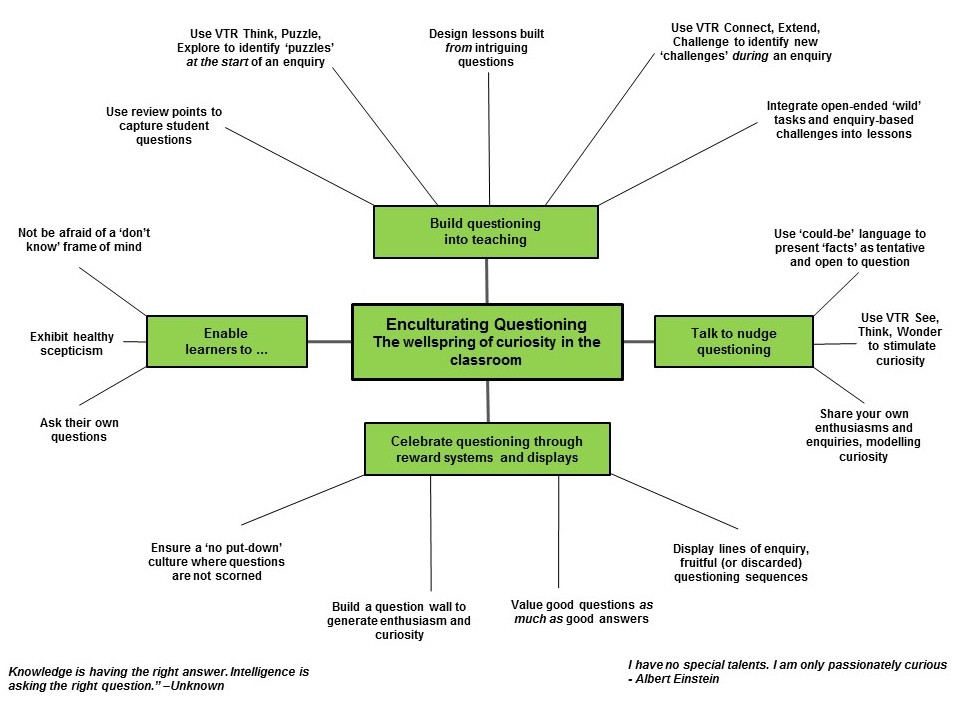
Here is a selection of features that might begin to shape the emotional climate of your classroom to encourage questioning.
The diagram has 4 sections:
- Top – strategies you could build into the way you teach to stimulate questioning;
- Right – indications of the sort of language you might use to stimulate questioning;
- Bottom – ways in which you might celebrate / praise students’ use of questioning;
- Left – things that you need to enable students to do.
Apply your own questioning skills and consider whether you already use any of these features and which you fancy trying.
Bridging the gaps – teaching ideas to cultivate Questioning
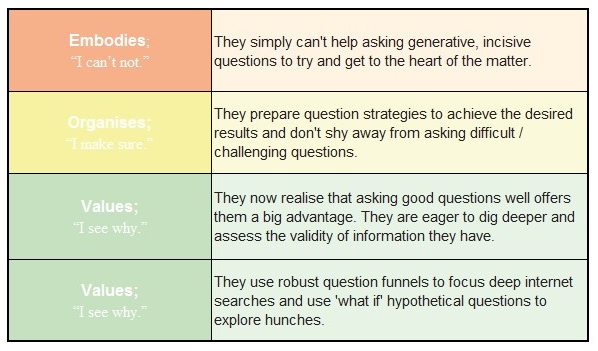
Teaching ideas to move learners from Blue to Green ⬇️
What you are trying to help students achieve
In the Values (green) phase, students come to really understand the value of the skill of asking questions. They like and are able to dig more deeply or expansively to satisfy their curiosity. With greater skill comes more risk taking with questioning that ventures into the unknown. This phase is about honing their detective skills.
Your role as a teacher in this phase is to:
Devolve responsibility for questioning… by exploring the use and value of question funnels
Talk about questioning…by exploring asking hypothetical/what if questions
Give students opportunities to practise questioning…and assess the validity of evidence/information
Celebrate questioning… by reflecting on, praising or displaying its use
1. Devolve responsibility for questioning.
Introduce question funnels
Funnel questions derive from something called “The Funnel Effect”. The Funnel Effect works in three phases, as highlighted opposite.
Step 1: Asking Open Questions – Try to start
with open questions about the subject at hand, as this will give you all the information you require to take the conversation further.
Ask questions like:
- What do you think about xxxxx?
- What do you remember about xxxxx?
- Tell me more about . . . .
Step 2: Asking Probing Questions – These are the questions which will allow you to delve deeper into the students’ answers to your open questions, finding out the reasons and emotions behind those answers.
Examples of probing questions include:
- Could you give me an example of what you mean by…?
- How did you come to know this?
- What makes you think this?
- What do you not understand?
Step 3: Asking Closing Questions – Asking closed questions allows you to check factual information and confirm both your own and the students’ understanding of what has been discussed in that specific line of questioning.
Ask questions like:
- Do you understand xxxxx?
- What do you understand now that you did not before?
When you string together your questions in this fashion, they are known as funnel questions.
Model the use of them yourself as you talk with students, and / or use the idea to develop a framework of questions for students to use.

2. Talk about questioning
Encourage a culture of enquiry
‘Just One More Question…’ (said in the style of Columbo!): Given any topic or subject, students work collaboratively in groups to create an array of quality questions.
Then give them a series of challenging question stems to broaden their range of questions, using the following: What if…?; Suppose we knew…?; What would change if…? </em
- What else might you want to know?
- What does that question lead you to ask next?
- When we find that out?
- What might we ask next?
- Can you think of five questions that would give us the answer to this puzzle?
- Suppose we knew . . . .

3. Give students opportunities to practise questioning.
Hone questioning skills by building a three-level ‘questioning habit’
‘ReQuest’ is a structured process for deepening questions.
For example, start with the painting The Arnolfini Wedding by Jan van Eyck:
- On-the-line questions: ask questions about the picture for which the answers can be seen just by looking closely at the picture: ‘How many candles are there?’ ‘What kind of room is it?’ ‘What is on the wall behind the people?’
- Between-the-lines questions: questions whose answers can be inferred by looking at the picture: E.g. ‘What is the relationship between the two people?’ ‘How long ago was the picture painted?’ ‘What time of day is it?’
- Beyond-the-line questions: questions whose answers need to be elicited by making interpretive links from the picture: E.g. ‘What did the artist think of his subjects?’ Is the number of candles significant?’ How does perspective work in the painting?

4. Celebrate questioning
Use Learning Mats
Learning mats are A4 laminated sheets that show various aspects of a learning habit. Keep them on desks/tables or as part of a wall display.
Students refer to them during lessons, using them as prompts about the finer aspects of a learning habit that is being stretched.
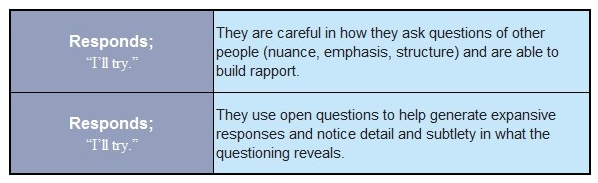
Teaching ideas to move learners from Purple to Blue ⬇️
What you are trying to help students achieve
In the Responds (blue) phase, pupils show more willingness to find things out and learn to focus their questioning efforts more effectively. They become very interested in and aware of the detail or meaning of what their questions reveal. Their search skills are becoming more specific and their convergent and divergent questioning are becoming more profitable. And alongside these closer questioning skills they can vary the tone and emphasis of their questioning in order to build rapport with others.
Your role as a teacher in this phase is to introduce students to the ideas of:
Devolving responsibility for questioning… by exploring different types of questions and what they reveal
Talking about questioning…by exploring the manor of asking questions
Giving students opportunities to practise questioning…by developing search skills
Celebrating questioning… by reflecting on, praising or displaying its use
1. Devolve responsibility for questioning.
Is your question important?
Identify a project which the class might investigate. Write a series of questions on separate pieces of cards and give each group a set of the cards. The group shuffle the cards and deal each student one card. They have to decide:
- the best order for the questions, to do the project well
- if they have to ask all the questions or whether
some are irrelevant in the context - whether there are any missing questions and if so, what they might be
- what they have learnt about questions from this.
Learn to prioritise questions
Questions you would like to ask
Tell students:
‘In 5 minutes, ‘something’ related to the upcoming lesson will walk in.
What are the three questions that we should ask it?’
[The ‘something’ might be: a full stop; an improper fraction; osmosis; the Bible; a data base; the renaissance . . . . ] [The ‘three’ is important – it encourages students to prioritise their questions and consider which are most likely to uncover the information they require and discourages ‘random’ asking.]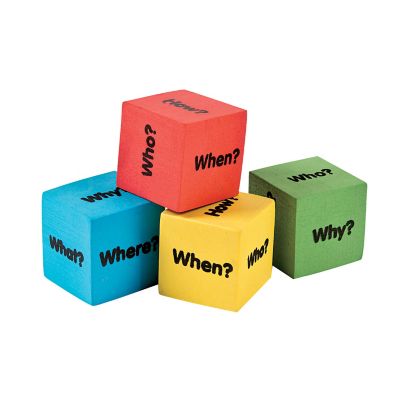
2. Talk about questioning.
Work with your students to establish ground rules for asking questions. These might include:
- Speak clearly;
- Think before you ask;
- Ask yourself – ‘Is this question important/relevant?’
- Ask yourself – ‘Do I already know the answer?’
- Think about your own body language;
- Get to the point;
- Listen to the answer.

3. Give students opportunities to practise questioning
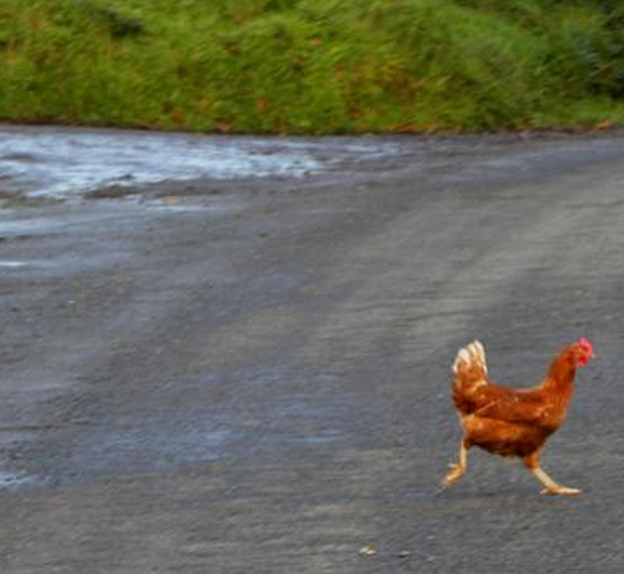
Encourage the ‘why’ question
The why game
Start a story with an opening line. Encourage the students to keep on asking each other Why? and giving answers until they have created a story. Opening lines can be a simple
“The red van roared down the street”
but lead to all sorts of questions —“Why was the van red?” “Why was it roaring?” which lead on to other ‘Why?’ questions.
Vary the game by starting with a riddle or conundrum, or requiring different types of questions.
4. Celebrate questioning.
Reflect and build a powerful Question Bank
Give students time to reflect on the questions that students ask of themselves and of others in different situations. Which of these questions, when answered, proved to be the most powerful? Why was that? Which question, if asked, would be most likely to move thinking forward? Encourage students to build a bank of powerful questions that they can refer back to when necessary.
Teaching ideas to move learners from Grey to Purple ⬇️
What you are trying to help students achieve
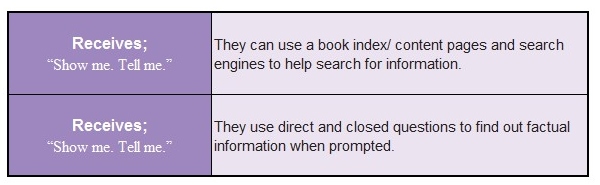
In the Receives (purple) phase, students are shifting from perhaps a general lack of awareness of the role and power of questioning to trying out questioning because they are being required or encouraged or reminded to do so. Here they need help; to ask a ‘good’ question (i.e. generative, will get them somewhere); to become aware of what the questions uncover and whether it was sufficient/good enough/unexpected; to practise using open and closed questions and know what they are for, and to begin to use some simple search techniques.
Your role as a teacher in this phase is to introduce students to the ideas of:
Devolve responsibility for questioning… by exploring closed and open questions
Talk about questioning…by unpacking questioning and noticing answers
Give students opportunities to practise questioning…by developing early finding out skills
Celebrate questioning… by reflecting on, praising or displaying its use
1. Devolve responsibility for questioning
Make enquiring a mystery
‘Mystery’ object in a bag
Invite students to ask questions to find out what the mystery object is.
- Vary the complexity according to age and experience of class. Use clues to narrow down the possibilities for younger students e.g. it’s something you’d find in the garden. Young students will tend to want to ‘guess’. They will need encouragement to ask questions before offering solutions.
- Ask talk partners to come up with two ‘I wonder’ questions e.g.” I wonder what it’s made of?”
- Set a limit, say 10/15/20 questions allowing the students to guess before showing the object.
- Key is to focus on the questions; acknowledge and reward good questions.
- At the end compile a list of some of the useful/unusual/interesting questions that were asked.

2. Talk about questioning
Extend the language of questioning
Trainer NotesCollect ideas about the purpose of questions.
Relate questioning to well-known sayings
What do we mean when we say …
Curiosity killed the cat
I need to get to the bottom of this
More questions than answers

3. Give students opportunities to practise questioning.
Use a Visible Thinking Routine
Question Starts is a Visible Thinking Routine that provides students with the opportunity to practise developing good questions that provoke thinking and inquiry into a topic by offering a range of interesting question stems. For example:
Brainstorm a list of at least 12 questions about the topic, concept or object. Use these question-starts to help you think of interesting questions:
- Why…?
- How would it be different if…?
- What are the reasons…?
- Suppose that…?
- What if…?
- What if we knew…?
- What is the purpose of…?
- What would change if…?
Review the brainstormed list and star the questions that seem most interesting. Then, select one or more of the starred questions to discuss for a few moments.
Reflect: What new ideas do you have about the topic, concept or object that you didn’t have before?

Use question focused research
Ask students to;
- research possible types of questions using the Internet.
- record and analyse the types of questions used in their peer group
- compare their research findings and their observations.
Use this to expand the range of questions used in class and to create guidelines for asking good (search) questions.

4. Celebrate questioning
Put questions on display
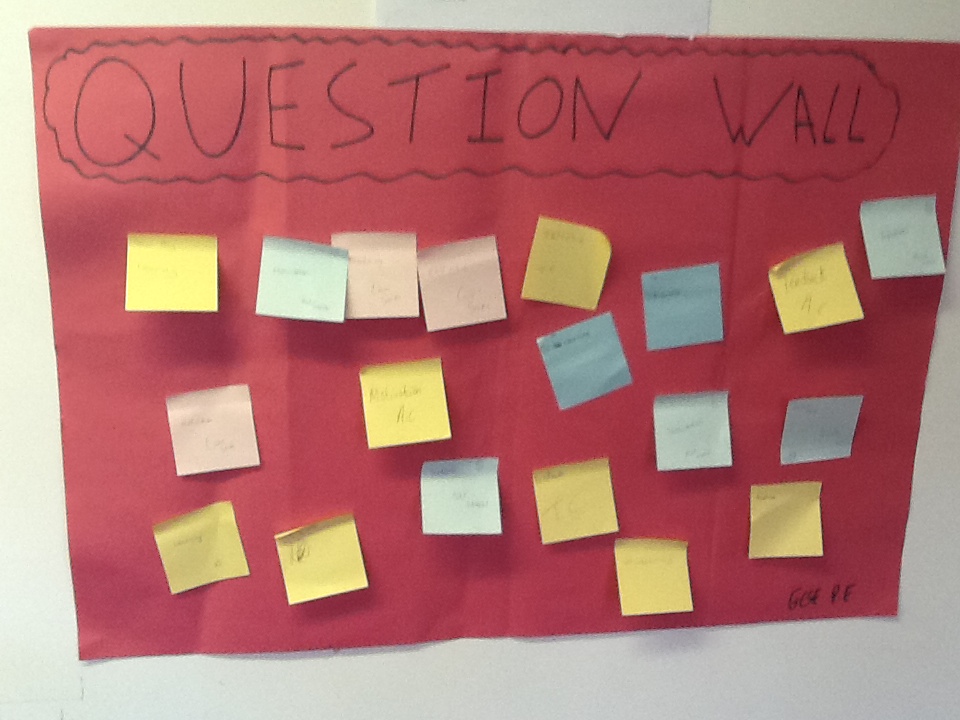
Create a Question Wall in the classroom to illustrate and prompt questioning. For example, the question wall might focus on student generated questions about the topic in hand. Use their questions to help to focus / shape their enquiry.
Click to enlarge
Create displays to support students’ questioning skills.
Go on to;
- Discuss what sort of questions these are — open, closed, speculative, divergent, clarifying, essential, subsidiary
- How they might lead to different types of information/reactions/strategies to gather information.
- Draw up and display lists of generic questions to use whenever students undertake certain types of task, e.g. scientific investigation.
- Refer to and extend these question groups regularly.
Create, with students, a set of questions they might ask when they are stuck. These might include; What did I do last time when . . . . ? What do I already know about this? What should I do first? And next? I am finding this tricky because . . . . Who might know? Where can I look?

Click to enlarge

Comments are closed.