
9. Collaboration – Learning together
Effective collaborators are adept at learning with and from others. They help to: shape the ideas of the team; decide what needs to be done; contribute to getting the job done; keep an eye on how things are going; improve team performance through reflection. A well-formed collaboration habit includes being ready willing and able to: work effectively with others towards agreed, common goals, acting flexibly in response to circumstances; adopt different roles and responsibilities in pursuit of agreed goals and the well-being of the team; hold and express opinions coherently, compromising and adapting when appropriate; seek to understand what others are saying; sharing, challenging, supporting and building on ideas.
How well does your classroom climate encourage Collaborating? ⬇️
Does my classroom climate encourage Collaboration?
Here is a selection of features that might begin to shape the emotional climate of your classroom to encourage collaboration.
The diagram has 4 sections:
- Top – strategies you could build into the way you teach to stimulate collaboration;
- Right – indications of the sort of language you might use to stimulate collaboration;
- Bottom – ways in which you might celebrate / praise students’ use of collaboration;
- Left – things that you need to enable students to do.
Apply your own attentive noticing and consider whether you already use any of these features and which you fancy trying.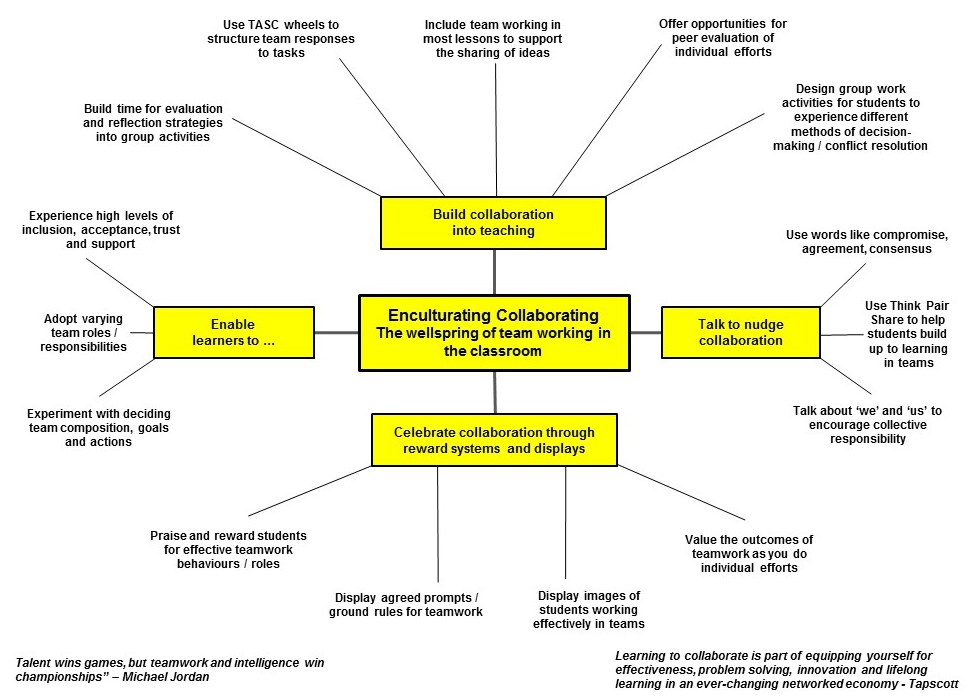
Bridging the gaps – teaching ideas to cultivate Collaboration
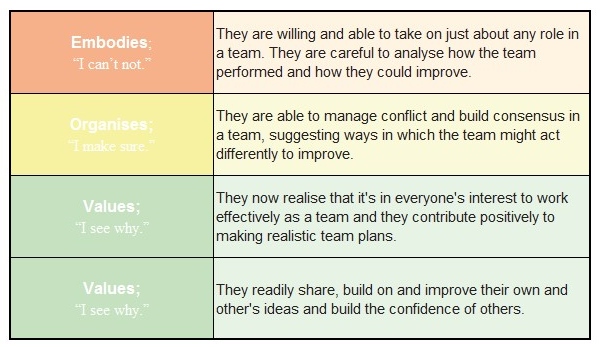
Teaching ideas to move learners from Blue to Green ⬇️
What you are trying to help your students to achieve
In the Values (green) phase students see/appreciate the value of a team member and honing their skills in different roles, planning action more carefully, and being flexible in their own views for the sake of the team. Once this phase is secure students are likely to develop further skills by having opportunities to work in this way.
Your role as a teacher in this phase is to:
Devolve responsibility for collaborating… by offering opportunities to practise team building
Talk about collaborating….and explore the language of planning
Give students opportunities to practise collaborating…emphasising evaluating team behaviour
Celebrate collaborating… by reflecting on, praising or displaying its use
1. Devolving responsibility for collaboration
Building on the answers of others
Have students work in pairs for 5 minutes to begin a draft answer to a tricky question. Once time is up, partially completed answers are passed to the next pair to be built upon, refined or redrafted, and the process is repeated as many times as necessary. At the end of the process, answers are returned to the original pair who are tasked with using all of the suggestions to draft their final polished version of the answer.
For more on this, read The Teacher’s Toolkit (Paul Ginnis), pages 139/140, 35 Pass the Buck
2. Talk for collaboration
Growing the inclination to reflect on team performance
Evaluate the performance of the team
- How well did you do as a team?
- What have you learned about yourself and your team?
- How might you do it differently next time?
- Can I tell you what I noticed about your teamwork?
- How well did you make the most of everyone’s talents?
- Did you meet your own targets?
- Did you complete on time?
- Was the outcome as you had hoped /planned?
3. Give students opportunities to practise collaborating
Encourage self-reflection on collaboration
Me-now! is a self-reflective tool to focus a discussion. It is useful in encouraging students to consider several aspects of the learning behaviour in question. There are some fairly sophisticated attributes in the list.
How am I at collaborating? Answer with Usually/Sometimes/Rarely/Don’t Know
- I explore a task and work out what we have to achieve …
- I help plan how the group will work …
- I play my part in getting work done …
- I’m patient whilst others learn …
- I share what I think or know …
- I accept ideas that improve on my own …
- I make suggestions to others for improvements …
- I contribute to group review …
- I celebrate others’ achievements …
- I help to resolve conflict …

click to enlarge
4. Celebrating collaboration
Learning Mats
Learning mats are A4 laminated sheets that show various aspects of a learning habit. Keep them on desks/tables or as part of a wall display.
Students refer to them during lessons, using them as prompts about the finer aspects of a learning habit that is being stretched.
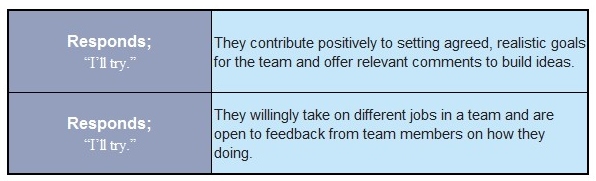
Teaching ideas to move learners from Purple to Blue ⬇️
What you are trying to help your students to achieve
In the Responds (blue) phase students are willing to develop their understanding of what being part of a team involves, agreeing goals together, trying out different roles, broadening social skills to open up others.
Your role as a teacher in this phase is to:
Devolve responsibility for collaborating… by offering opportunities to take on different roles in a team
Talk about collaborating…by exploring the vocabulary of teams/teamness
Give students opportunities to practise collaborating…by focusing on how to develop team goals
Celebrate collaborating… by reflecting on, praising or displaying its use
1. Devolve responsibility for collaboration
Assign Group Roles
Group roles
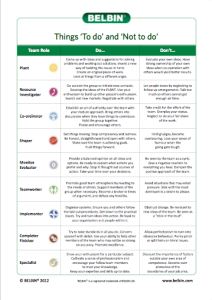
With older students you might want to consider the group roles identified by Belbin. At this stage, students are probably looking only at the ‘To Do’ column, and the language may well need to be made age-appropriate. Also, think about whether it is wise to introduce all of these roles at the same time. If they are to be phased in, the most sensible/ recommended order is:
- the people orientated roles first (coordinator/team-worker/resource-investigator),
- the action orientated roles next (shaper/implementer/completer-finisher), and
- finally the thought orientated roles (plant/monitor-evaluator/specialist).
Sorting the goal
Offer goal planning tools for groups to complete before deciding what to do

2. Talk for collaboration
Growing goal setting / agreeing
Agree Relevant Goals
- What do we think we have to do?
- What’s this task really about?
- What are we trying to end up with?
- What will that look like?
- How will we know we have been successful?
- Which is the best idea so far?
- So, what is our goal?
- Does this goal sound do-able/worthwhile/right for us?
- What do we need to do together?
- How will you agree what needs to be done?
- What will the end product be?
- Does/will that answer the question / solve the problem

3. Give students opportunities to practise collaborating
Agreeing the goal
Offer activities where the goals are not immediately apparent. These may be in the form of fragmented information where each student has some key information, but no student has sufficient information to solve the problem by themselves, or simply where the group is not given a clear steer on what is to be achieved. Insist the group have to agree their goal before making a start on the task.

Visible Thinking Routine
Think, Pair, Share
Offer students a problem or question which is more substantial than simple recall.
Think – Allow plenty of individual think time to engage with the issue.
Pair – Students then try out their ideas, (discuss, clarify, challenge) with a ‘Learning Partner’.
Share – The pair share with another pair, and subsequently with the whole class to arrive at a range of possible answers. They come to know and shape their views by collaborating with others.
Use as a simple strategy to prepare students for working together in teams, having first thought it through for themselves (Think), checked their ideas out with a trusted friend (Pair), before moving on to contributing to a group (Share).
At each point students are exposed to the views of others which encourages them to revise and refine their initial thinking.

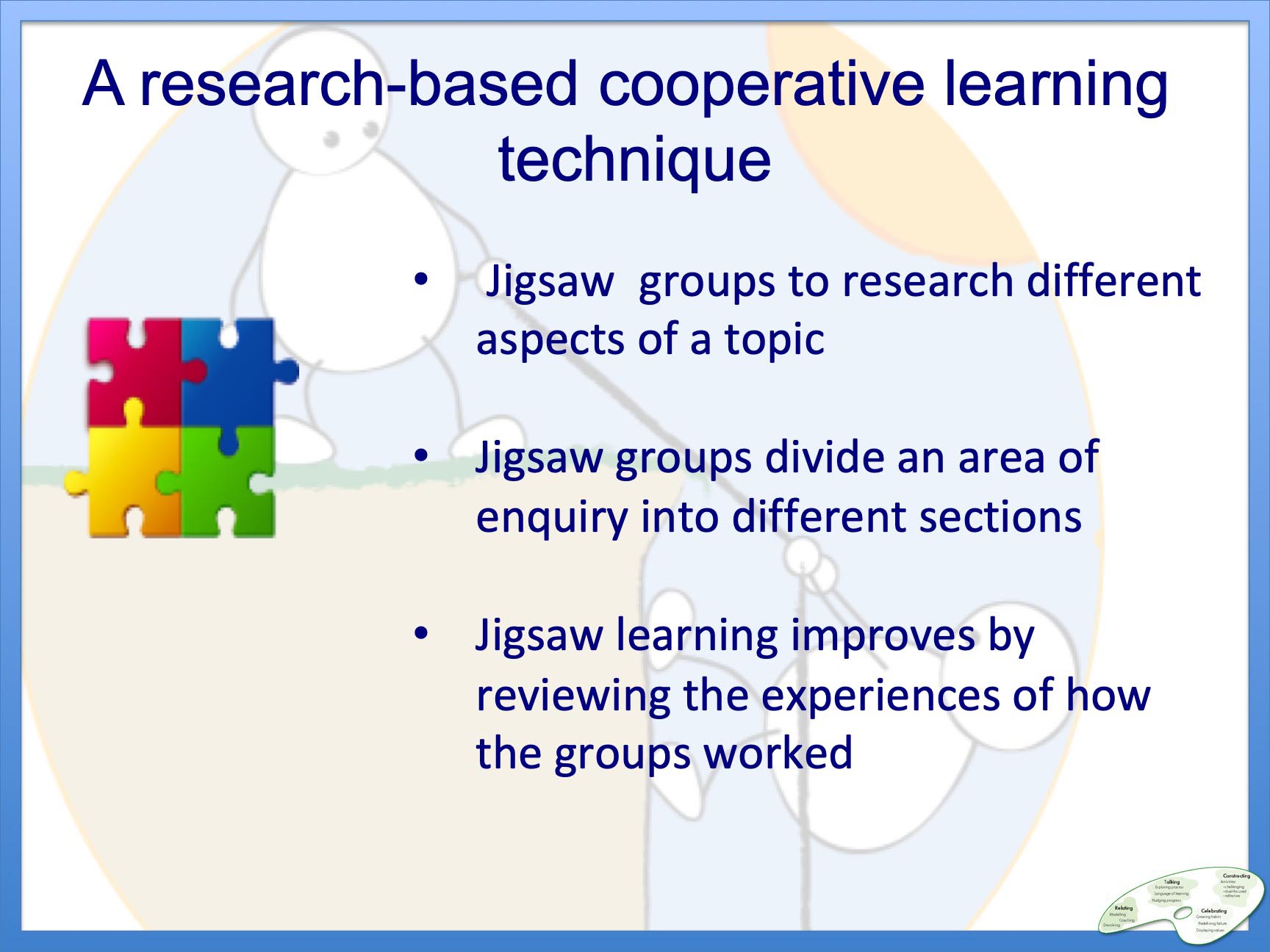
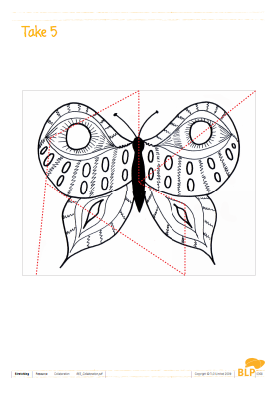
Jigsaw groups
Jigsaw is used to describe the whole class making up a picture from its parts. The idea is to divide an area of enquiry into different sections, each one of which is allocated to a sub-group of the class (Aronson and Patnoe, 1997).
There are two phases to jigsaw groups:
- Phase I, the sub-groups become temporary experts in their section of the project by researching what is needed. Students A,B,C,D, work on a subset of the project
- Phase II the groups are recomposed with one ‘expert’ from each section in the (now) ‘jigsaw’ group, i.e. all the A’s in a group. All the B’s etc.
- Now the big picture of the project focus is created – through students who have now created a grasp of that picture through their own efforts and understandings.
Jigsaw methodology is used in all phases of education and importantly builds a climate of interdependence in the classroom, as each person’s activity is necessary for their colleagues to be able to learn.
The focus shifts from the teacher to the student
- The teacher’s role is to facilitate
- Collective responsibility
- Students’ work judged by peers
- Student participation and interaction increase dramatically
- The process is useful for revision.
Case studies of this effective practice can be found in;
Chris Watkins;Eileen Carnell;Caroline M Lodge. Effective Learning in Classrooms.
4. Celebrate collaborating
Explore interdependence
Help students realise that the contributions of others are essential if you are to overcome a problem successfully.
Contains
Teaching ideas to move learners from Grey to Purple ⬇️
What you are trying to help your students to achieve
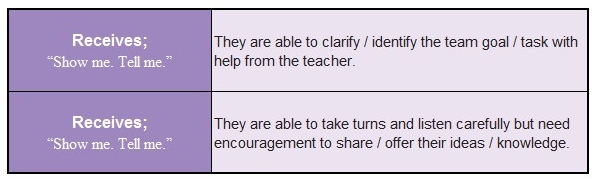
In the Receives (purple) phase, students are making a big leap from being wary of others, being unaware of social conventions or any of the advantages of working/learning with others. Here they are collaborating with others because they are required to. There is much to be done in this phase: social skills, sharing ideas, working out what needs doing, playing their part and even thinking about how they have contributed to the team.
Your role as a teacher in this phase is to:
Devolve responsibility for collaborating… by introducing the concept of collaborating
Talk about collaborating…by focusing on sharing, turn taking and listening .
Give students opportunities to practise collaborating…by introducing the idea of different roles in a group
Celebrate collaborating… by reflecting on, praising or displaying its use
1. Devolve responsibility for collaboration
Introduce games that require collaborative behaviours
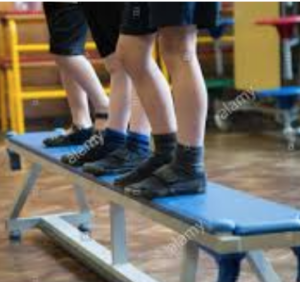
Give the children challenges which can only be achieved through collaboration! For example: Ask a group of 10 children to stand on a bench and put themselves in order of height without anyone stepping off and on again. They will have to work cooperatively as a team to meet this challenge.
Give time to think… and share ideas
An idea to get students thinking about collaboration.
In pairs – Think of a time when each of you has learned something with others. Take turns to interview each other about;
- Where you were.
- How many people were in the group.
- What you learned from them.
- How the group worked out the best way forward
- What you were trying to do.
- What you did to add to the group’s learning
- Who you were with.
- Whether you were able to pick up any good learning habits.
- Where the group’s best idea came from.

2. Talk for collaboration
Explore and use team roles
Open up a conversation about different team roles with students.
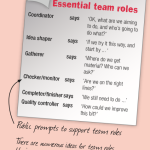
Introduce students to a few essential team roles, for example.
- Coordinator
- Resource gatherer
- Finisher
Many students will, initially, have a preferred role, but over time encourage them to try out other roles to broaden their team working skills. Experiment with allowing individuals to choose their own roles, assigning roles yourself, and allowing teams to assign roles.
click to enlarge
3. Give students opportunities to practise collaborating
Use activities to show everyone has a role in success
Four teams of seven. Explain: “Create a machine with moving parts using yourselves. Each of you is to be part of the machine or something that the machine makes. When you have made it work you will demonstrate it working to the class. You have 10 minutes. The class will try and guess what your machine makes.”
Debrief...how the group work together. Whether a leader emerged? How decisions were made about what the machine should make. How it was decided when the machine would start. How machine parts were assigned. What different people contributed to the team effort? What has been learned about working in a team?
Getting ready for teamwork

Try a sharing activity (KS1)
An activity that requires pupils to share what they have in order to finish the task. Use this also to encourage children to think about what they are trying to achieve.
Use harder jigsaws, or groups of information, with older pupils.
4. Celebrate collaboration
Give collaborating a high profile
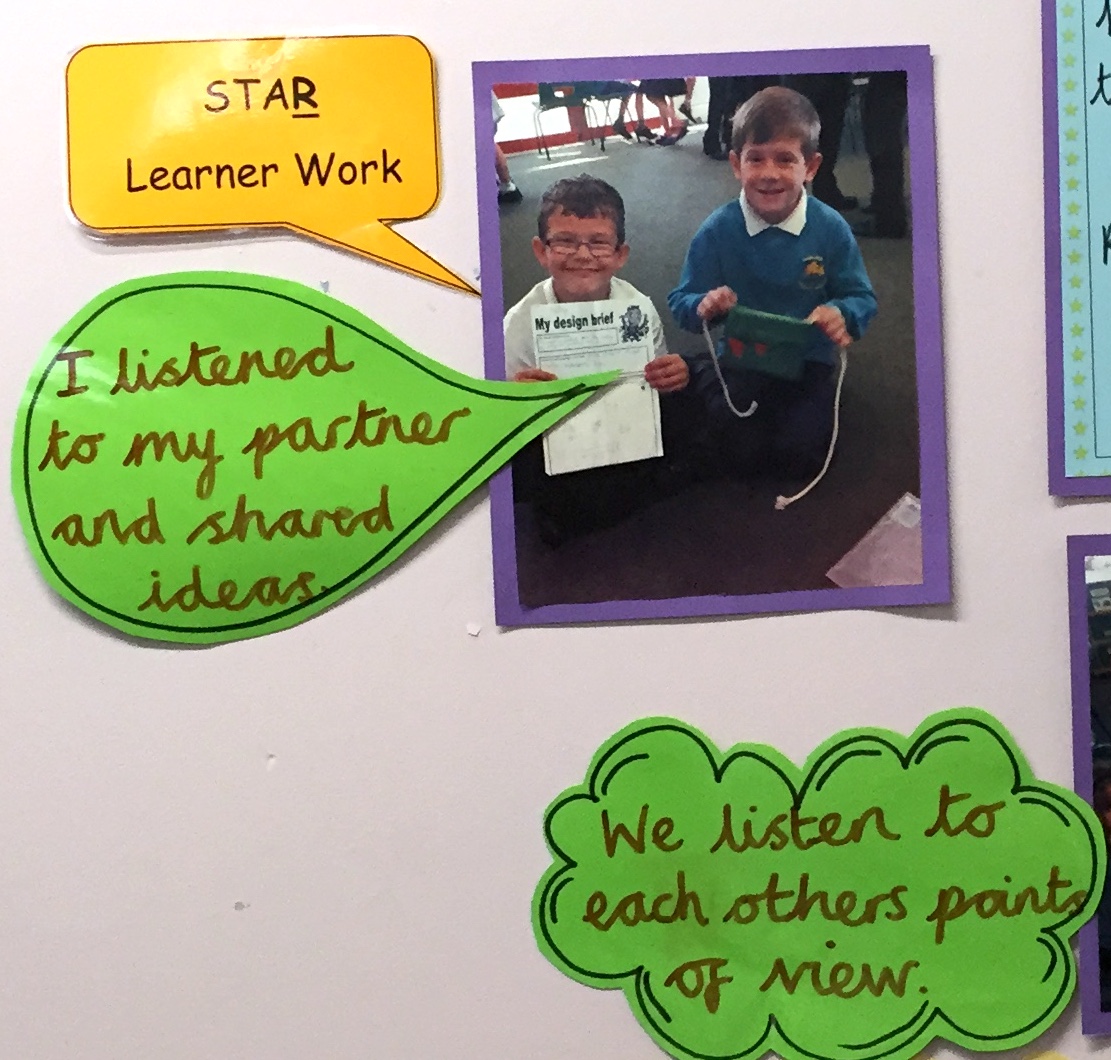
Take photographs when you notice children playing and working well together. Place them on a ‘Collaboration Wall’ in the classroom or in a special book that you look at regularly with the children.
Invite the children to suggest captions for the photographs encouraging phrases that exemplify collaboration – sharing ideas, listening carefully, talking turns, everyone involved, etc.

Comments are closed.