
4. Making Links – Making connections
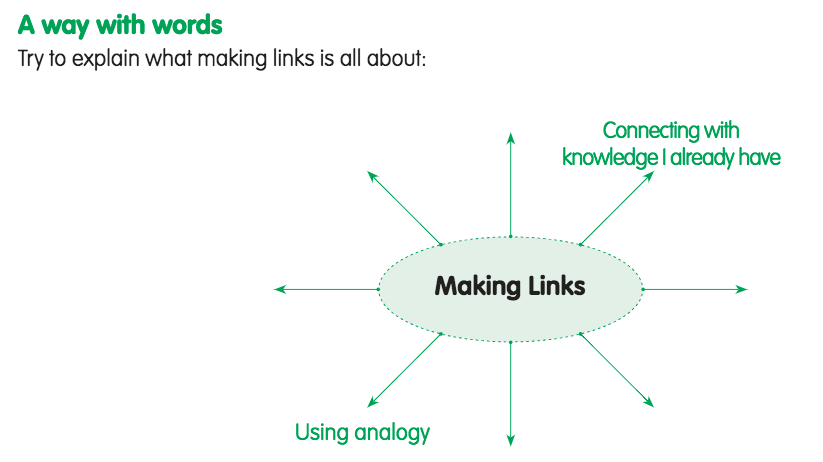
Learning is about making connections – you will experience them through the ‘ah ha’ experience of seeing a connection between two previously isolated concepts, or the satisfaction of seeing the connection between an abstract idea and a ‘hands-on’ concrete experience. It’s how you make sense of the world. To be a good link maker you need to keep stimulating your brain and enriching your experiences because through active learning you quite literally ‘build’ your own mind. At the heart of all this is your attitude to knowledge; whether it is bound up in rules and ‘is-language’, or whether you see knowledge as provisional, ever building and changing. 
How well does your classroom climate encourage Making Links? ⬇️
Does my classroom climate encourage Making Links?
Here is a selection of features that might begin to shape the emotional climate of your classroom to encourage making links.
The diagram has 4 sections:
- Top – strategies you could build into the way you teach to stimulate making links;
- Right – indications of the sort of language you might use to stimulate making links;
- Bottom – ways in which you might celebrate / praise students’ link making;
- Left – things that you need to enable students to do.
Apply your own noticing and consider whether you already use any of these features and which you fancy trying.
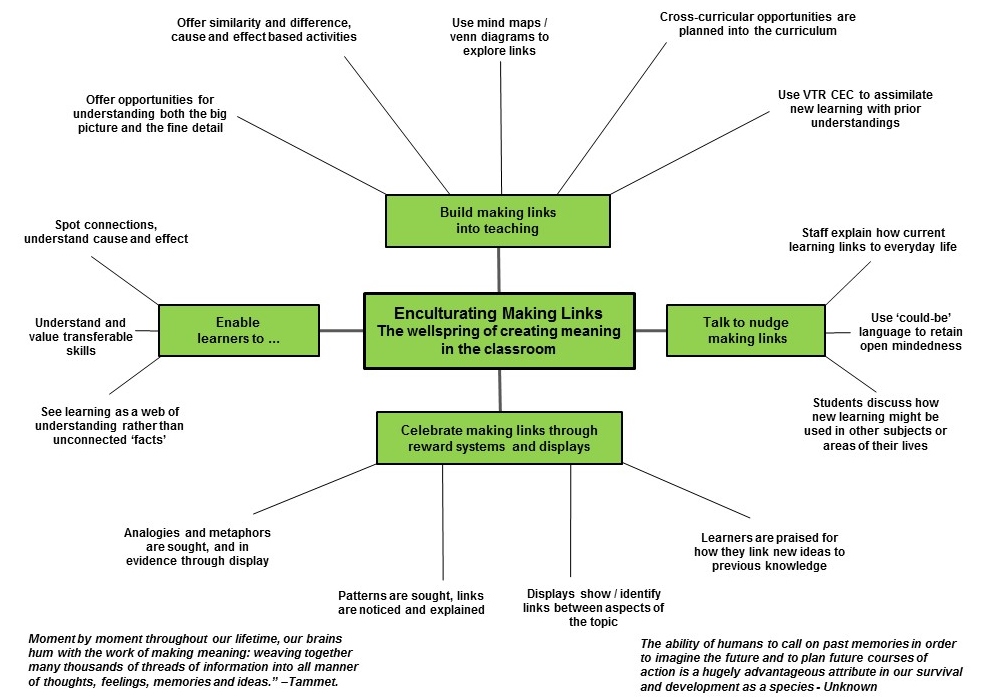
Bridging the gaps – teaching ideas to cultivate Making Links
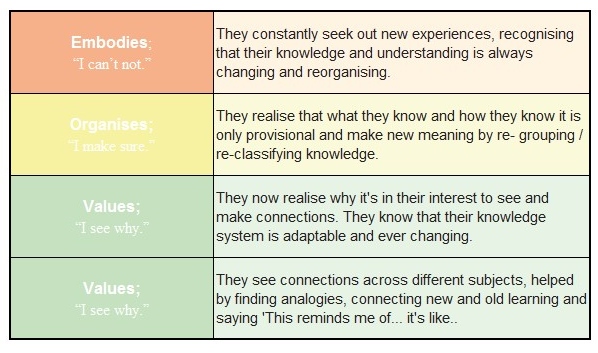
Teaching ideas to move learners from Blue to Green ⬇️
What you are aiming to help students achieve
In the Values (green) phase, students understand the need to learn from previous experiences and realise that learning is all about changing understandings, not just knowing stuff. They might connect new learning to previous learning through the use of analogies and extend what they know through problem-solving with others.
Your role as a teacher in this phase is to introduce students to the ideas of:
Devolve responsibility for making links… by encouraging students to think of analogies to aid understanding
Talk about making links…by exploring how knowledge adapts and changes
Give students opportunities to practise making links…offering problem solving activities to enable link making
Celebrate questioning… by reflecting on, praising or displaying its use
1. Devolve responsibility for making links
Encourage making connections using Odd One Out
Identify four ‘things’ related to your own subject area – this could be 4 images, 4 words, 4 techniques, or anything else that links to your own subject and/or what students are currently learning about.
Invite them to identify the odd one out, and to explain why they think this.
When you can, construct lists where it is possible to justify that each of the items are, in fact, the odd one out.


2. Talk about making links
Brainstorming
Brainstorming is a well-known approach as the first step in exploring possibilities. Make the objectives crystal clear from the start. What are you trying to find/solve? Then uphold four rules:
- go for quantity over quality.
- withhold criticism
- welcome wild ideas
- combine and improve ideas
Problems arise when groups filter out the good ideas from the not-so-good ones out of a fear of rejection or judgement or when most of the input comes from only 60% of participants which prevents other good ideas from coming to light.

Language links
Find words that sound similar in different languages, eg. words ending -ation (pronounced -ayshun in English, -asseeong in French) and -acion (Spanish, -atheeon). Use colour to highlight similar sounds. Work from a Greek or Latin word to find English words that might be related to it. Discuss how languages spread and the links created between cultures when the people who use those languages move around.

3. Give opportunities to practise making links
Match Them Up
Offer students a set of cards that need to be matched up or linked in some way.
It might be:
- a set of pairs of cards like ‘It has been raining’ and ‘The river is flowing fast’ where the student is challenged to decide whether there Must be a connection between the two events, Could be a connection, or No possible connection;
- a problem to select a substance (metal, clay, wax, salt, ice, …) and a change (freezes, dissolves, melts, burns, …) and decide if the change is Reversible or Irreversible;
- a set of cards that students are required to match into pairs – it could be 5 graphs and 5 equations; 5 characters and 5 attitudes; 5 words and 5 definitions etc.
And or So
An activity to encourage students to make imaginative links between seemingly unconnected objects. Who can find the most novel / humorous / unexpected link? Are some objects not linked in any way at all?
Use to explore how most things can be linked together in some way, and how making the links helps us to remember things and maybe see things in new ways.

4. Celebrating link making
Make reflecting on Making Links part of everyday lessons
Here is a very practical example of how you might develop the emotional climate of the classroom and make it Link Making friendly.
Learning Mats
Learning mats are A4 laminated sheets that show various aspects of a learning habit. Keep them on desks/tables or as part of a wall display.
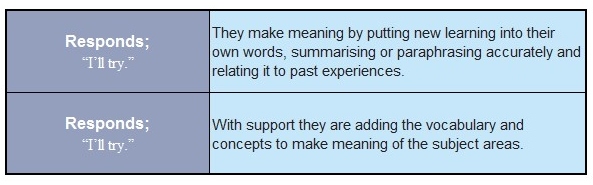
Teaching ideas to move learners from Purple to Blue ⬇️
What you are aiming to help your students to achieve
In the Responds (blue) phase, students are enjoying adding to their knowledge store. They secure their new learning by talking about it and putting it into their own words. This is further refined by monitoring whether they understand something and how it fits with what they already know. Here they are developing the vocabulary and specialised terms of a discipline.
Your role as a teacher in this phase is to:
Devolve responsibility for making links… through building the vocabulary and terminology of different disciplines
Talk about making links…by paraphrasing and summarising their learning
Give students opportunities to practise making links…by checking students’ link of facts and ideas are valid
Celebrate making links… by reflecting on, praising or displaying its use
1. Devolve responsibility for making links
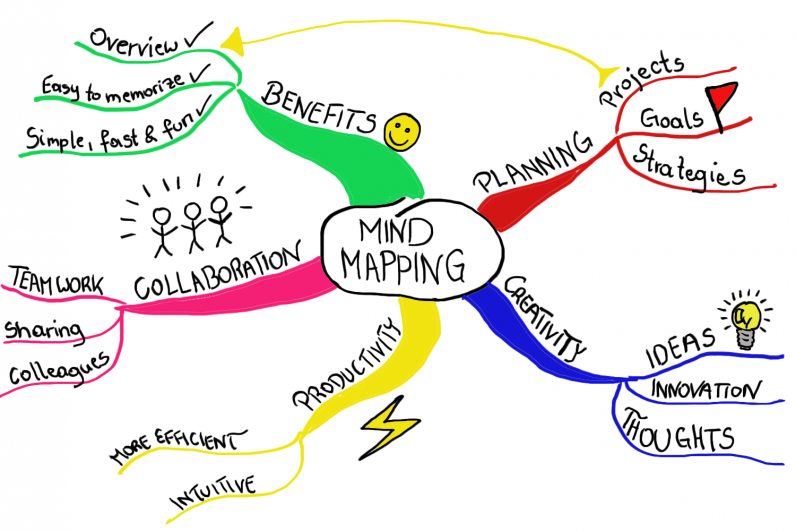
Use mind maps to encourage link making
Use mind maps to encourage students to link and explain how information and ideas seem to be associated.
Use mind mapping at the beginning, middle and end of a unit of study to show how links and understanding change as knowledge grows.
Use a ‘thought shower mind map’ at the outset of a lesson to connect with prior learning and activate link making. Use in the middle to monitor shifts in understanding. Use at the end of a module of learning as a synthesising tool.
2. Talk about making links
Extend the language of Making Links
Collect words that tell you how people learn to make links.
Relate link making to well-known sayings
What do we mean when we say …
Chain reaction
Cause and effect
Seeing the wood and the trees
3. Give opportunities to practise making links
Use Visible Thinking Routines
Connect, Extend, Challenge
This routine helps students make connections between new ideas and prior knowledge. It also encourages them to take stock of ongoing questions, puzzles and difficulties as they reflect on what they are learning.
Connect: How are the ideas and information presented connected to what you already know?
Extend: What new ideas did you get that extended or pushed your thinking in new directions?
Challenge: What is still challenging you or confusing for you to get your mind round? What questions, wondering or puzzles do you now have?
The natural place to use this routine is after students have learned something new. For example: after exploring a work of art, a theory, a method, a piece of evidence. Try it as a reflection during a lesson, after a longer project, or when completing a unit of study. The routine works just as well with the whole class, small groups or individually.
This is one of many visible thinking routines to be found on the visible thinking website
My Grandma went shopping . . .
Recommend group of no more than 12-15
- Start by saying “My grandma went shopping and she bought…” and say an item. Let students take turns and each time one of them adds another item, they have to explain their link to everyone else.
- Encourage the students to think of lots of different ways of linking items and reward their ingenuity.
- To take the learning a little bit further, it could be useful to share a real shopping list with your students and discuss the links that help you when actually shopping.
- For example, perhaps you list all the fruit and vegetables first, if they are found in the first aisle etc. Or perhaps you list all the breakfast foods together…

4. Celebrating link making
Make links across their lives
This Learning Log alerts students to Making Links across various aspects of their learning lives
A useful resource for tutor time to guide reflection and a wide ranging discussion.
Teaching ideas to move learners from Grey to Purple ⬇️
What you are aiming to help students to achieve
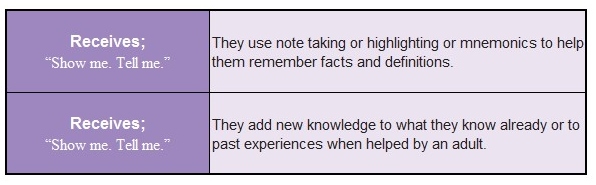
In the Receives (purple) phase, students are still unaware of making links unless it is pointed out to them. They concentrate on learning more but without worrying how things might fit together. Their link making is limited by lack of knowledge and experiences if this isn’t nurtured.
Your role as a teacher in this phase is to:
Devolve responsibility for making links…by introducing the concept to students
Talk about making links…by encouraging students to talk about new experiences
Give students opportunities to practise making links…by encouraging them to link past and present learning
Celebrate making links… by reflecting on, praising or displaying its use
1. Devolve responsibility for making links
Encourage simple link making
Think and Link
Organisation: For groups of 5/6 children.
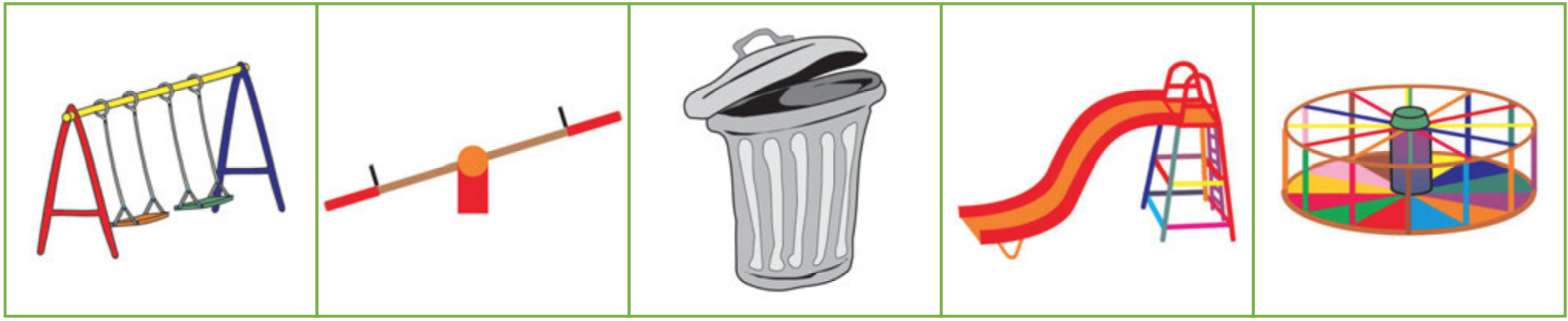
Print out and photocopy the Odd One Out series of pictures. (see resource).
- Each row has 5 pictures in it. Four can be linked together easily but one doesn’t fit readily with the others.
- Encourage the children to find an odd one out and perhaps invent a reason or story about how/why the odd one could be made to ‘fit’.
- Spend plenty of time discussing why the pictures fit together and what the links are. It’s fine if the children can think of different ways to link them as long as they can explain their rationale to you and the other children.
- Keep praising and rewarding the ‘making links’ bit of the activity rather than focusing on getting it right.
- To extend this activity a little and assess their understanding, ask the children to devise a row of pictures of their own and give them to each other as a fresh challenge.
- Join in yourself and model your link making by thinking aloud.
2. Talk about making links
Discuss making links
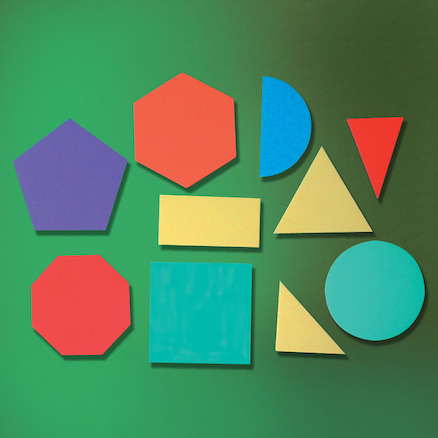
Gather together a really good assortment of shapes: 2D and 3D shapes and different sizes and colours. Using small hoops or different coloured paper circles ask students to take turns to sort the shapes by putting them in the hoops and explain their reasoning for sorting them this way. It should be possible to rearrange the shapes in several different ways as different students take a turn. This can help the students understand that there are often many different ways to link things together.
Building stories
Collect several objects in a bag, the less obviously connected the better. The challenge is to create a story that links all of the objects together in some way. This could be done orally, or in writing. You could reveal all of the objects at once, or bring them out one at a time to build the story. Discuss and reward inventive links or unusual connections.

3. Give opportunities to practise making links
Reconnect with prior learning
In this phase, pupils find it difficult to relate what they are doing / learning to what they have done / learned in the past. Begin lessons with an invitation for pupils to tell you what they were doing in the previous lesson so that they re-connect for themselves. Be prepared to nudge or remind them if they are struggling to do this. Resist the temptation to tell them what they did last lesson – it is they who need to make the link, not you!
Keep asking ‘What does this remind you of?’, ‘When have you seen something like this before?’ etc.

Home in on similarity and difference
Find two images with both similarities and differences. Invite students to work in pairs to identify at least 5 of each, and then work as a four to decide the 3 most important similarities and differences.
Timings could be around 1 minute for the pair work, and 2 minutes for the work in fours.
This will also support the skills of noticing, collaborating, and distilling.

4. Celebrating link making
Help students to remember . .
Help students to organise information to assist them to remember it. Suggest structuring their own notes in a logical linked manner, highlighting key ideas. E.g. clustering information into different sections/ groups, with some bullet points and highlighting to amplify/ explain/ illustrate.


Comments are closed.