My menu

Units Archive

Elli –…5 steps to improve your questioning.

Great! You have completed the ELLI quiz and looked at your personal profile which recorded your current learning power strengths and weaknesses according to the ‘Seven Dimensions of Learning’. The important thing to remember is that your profile is dynamic and you can improve the way you learn in any of the seven dimensions.

This short resource helps you to become more aware and improve your tendency to be curious; to ask questions… Asking questions is an essential strand of your Critical Curiosity; it drives your learning.


Step 1: Watch yourself …questioning

How well do you know yourself as a questioner?

  • Are you a curious about lots of things?
  • Are you reluctant to ask questions?
  • Do you think you ask good questions?
  • Do you like finding out yet more about things?
  • Do you often wonder ‘why’ or ‘how come’ or ‘what if’?

Watch yourself over the next week or so in places such as:

  • in different lessons in school
  • at home with your family
  • when you are with your friends
  • when you are attending after- school activities
  • when you are playing in a team

… and become more aware of yourself as a questioner.

Select the resource below that matches your elli result for Critical Curiosity.

Use the resource to help you note down when and how you use your questioning behaviours and remind yourself about features of questioning that you could watch out for.

FORMAT AND STATEMENTS OF QUESTIONING BEHAVIOURS NEED SORTING IN QUIZZES 

Resource

elli score showed ‘not much like me’

Resource

elli score showed ‘somewhat like me’

Resource

elli score showed ‘a lot like me’


Did you know…An astonishing 40,000 questions are googled ever second. 6,000 have never been asked before.



Step 2: What does this tell you?

What do your observations tell you about your questioning behaviours?

Take a look at the information you recorded about your questioning.  This should give you a sense of the sort of questioning behaviours you use, where/ when you use them and how much you use them. 

Now ask yourself some searching questions about what you noticed:

  • What sort of circumstances seem to stimulate  your curiosity?
  • What sort of circumstances seem to stifle your questioning?
  • What seems to help you carry on questioning?
  • Where do you feel most comfortable asking questions
  • Do most of your questions lead to one word answers?
  • Do most of your questions open possibilities for you?
  • What particular circumstances make questioning easy or more difficult?
  • Are there any circumstances where you feel afraid of asking questions?

WE CAN’T SORT THIS STEP PROPERLY UNTIL WE HAVE RESOLVED THE QUIZ IN STEP 1

Select the resource below that matches your elli result for Critical Curiosity.

Use the resource to muse on what you have discovered about yourself as a questioner and estimate where you sit on each of the scales.

Resource

elli score showed ‘not much like me’

Resource

elli score showed ‘somewhat like me’

Resource

elli score showed ‘a lot like me’


Did you know…

Questioning is a vital skill for navigating life

Being good at questioning isn’t something that switches on on good days and off on bad days it’s like all learning behaviours … it is sensitive to the culture you are in. Your questioning builds and strengthens when it’s nurtured and supported.


Step 3: Why not try…

What could you do to strengthen your questioning?

The resources below offer four suggestions to strengthen your questioning in:

  1.  Becoming more curious
  2. Asking better questions
  3. Asking questions of other people
  4. Keeping your self-talk positive

THESE SHOULD NOT BE LIVE. NEED TO PUT UNDER BUTTONS. THESE SUGGESTIONS NEED SORTING AND ADDING TO FOR 3 LEVELS

Select the resource below that matches your elli result for Critical Curiosity.

Use each, or all, of the suggestions several times and make a mental note of their effect.

Resource

elli score showed ‘not much like me’

Resource

elli score showed ‘somewhat like me’

Resource

elli score showed ‘a lot like me’


Did you know…

The Top ‘How To’ Searches recently included: How to watch Fury vs. Wilder? How to floss dance? How to watch the Champions League final? How to get the old Snapchat back?  How to delete Instagram?

What would yours be?


Step 4: How did that feel?

How did your experiments with questioning go? What’s changed?

Reflect on what you have tried and ask yourself:

  • What did I learn from using the suggestions for:
    • Becoming more curious
    • Asking better questions
    • Asking questions of other people
    • Keeping your self-talk positive
  • What was positive about it?
  • Anything go wrong?
  • Anything I’d like to change?
  • Where might I use these ideas again?

Select the resource below that matches your elli result for Critical Curiosity. Take a look at the scale xxxxxxx and ask yourself:

  • Where have I improved?
  • Which do I do more of?
  • Where else do I need to improve?

NOT QUITE SURE WHAT IS NEEDED HERE. MAYBE A SCALE WITH 2 ENDS AS DISCUSSED. IF WE HAD ONE LIKE IT AT SAY STEP 2 WE COULD REPEAT HERE AND THEY COULD ESTIMATE IF THEIR EXPERIMENTS WITH QUESTIONING HAD MADE ANY DIFFERENCE. BUT IF THEY HAVEN’T WE ARE IN DANGER OF LOOSING THEM. MAYBE WE DON’T NEED ANY RESOURCES HERE.

Resource

elli score showed ‘not much like me’

Resource

elli score showed ‘somewhat like me’

Resource

elli score showed ‘a lot like me’


Did you know…

A study discovered four year old girls are the most curious. They ask an incredible 390 questions per day – averaging a question every 1 minute 56 seconds of their waking day.


Step 5: Take yourself forward

Set yourself some goals

Research on motivation and achieving goals shows that our brain acts on goals only when what to do is clear.So, goals like ‘Eat healthily’ or ‘Exercise more often‘ or ‘Pass the exam‘ are too nebulous. They beg the question ‘how’ or ‘what do I do?’ Here’s a successful way of setting a goal where you specify the situation and what you will do about it.

If (or when) [___situation__], then I will do [___behaviour__]

‘Ifs’ are the situations you want to remind yourself about. They are the triggers that stimulate the ‘Thens’

‘Thens’ are what you will do about something, the action you will take whenever the ‘If’ happens.

The clever bit is that this builds your positive self-talk at the same time. You do what you are telling yourself to do.

Select the resource below that matches your elli result for Critical Curiosity. Create 3  If/When – Then  statements to move your Questioning habits on.

Each resource offers some If-then examples to get you started on improving your questioning behaviours.

Resource

elli score showed ‘not much like me’

Resource

elli score showed ‘somewhat like me’

Resource

elli score showed ‘a lot like me’


Notes only.

If you’re not aware of  the fluid nature of your learning habits they just become routine ways in which you think and act when faced with life’s experiences and challenges…they become second nature. Some of those routinised habits make you productive and effective; other routinised habits cause you to learn in constrained and limited ways. But you can amend and change your learning habits and get better at learning. If, for example you have a well formed habit of being critically  curios, you will tend to use it in all your experiences.

According to your elli profile, where do you need to improve? Where are your lower scores? Where might be a good place to start?

Step1

  • When and where I was:
  •  Curious about what was happening around me,
  • Didn’t accept or agree with what I was being told or finding out
  • Asking questions in my head 
  • Trying to find better or deeper answers to why something wass happening 
    • OR How can this be?
    • OR What causes this to happen?
    • OR  When have things happened like this before?
  • I comfortable with uncertainty and things being unclear.
  • Enjoying different points of view and contrary evidence.
  • I play with ideas and possibilities.
  • Posing questions that followed a rational path of argument.
  • Feeling OK about asking  other people questions 
  • Showing a genuine interest in other people.
  • Challenging others’ points of view
  • Listening to other people’s opinions

Brian I need this list in the style of a Learning log page from the Activity bank with a rating scale under each ‘cloud ‘showing Frequently to Hardly ever. As a download for this section

Step 2

Behaviours you  might notice about yourself might include:

  • You work things out for yourself…………………..You tend to leave working things out to other people
  • You seek out information to understand something……………….
  • You tend not to accept things at face value……………..You tend to accept the first answer you find
  • You drill down into information looking for further clues…………….You’re happy to accept apparent truths
  • You talk about your questions, doubts and uncertainties with others…………..You keep your questions to yourself
  • You don’t worry when you don’t know something……………………………….You worry when you don’t know something
  • You ask lots of useful questions………………..You tend to think you’ll look stupid if you ask questions
  • You’re aware of how your questioning affects other people………………You’re not bothered by how your questions

THIS NOW BECOMES TH DOWNLOAD FOR BOX 2… 

Step4 list same as 1

  • Curious about what was happening around me,
  • Not accepting or agreeing with what I was being told or finding out
  • Asking questions in my head 
  • Trying to find better or deeper answers to why something was happening 
    • OR How can this be?
    • OR What causes this to happen?
    • OR  When have things happened like this before?
  • Being comfortable with uncertainty and things being unclear.
  • Enjoying different points of view and contrary evidence.
  • Playing with ideas and possibilities.
  • Posing questions that follow a rational path of argument.
  • Feeling OK about asking other people questions 
  • Showing a genuine interest in other people.
  • Challenging others’ points of view
  • Listening to other people’s opinions

Brian another download here of this with the Frequently to Hardly Ever    scale.
Continue Reading

L3 Growing learning-friendly classroom cultures DRAFT

The Key Ideas in this unit:

Building learning-friendly classroom cultures

This online session seeks to support teachers to explore and experiment with ideas that help to move their classroom culture to become increasingly learning-friendly.

It explores culture, how culture evolves from teacher centred to learning-friendly, and offers ideas to practise in the classroom to support the culture shift.

If, as a graduate, educator and lifelong learner you find this potentially too demanding, too dull, too long-winded, too likely to ask awkward questions about your classroom practice, go straight to section 2 where you will find a colouring-in activity. It should be right up your street and will eliminate any need for intellectual effort on your part.

For those not afflicted by the need for shallow and effort-free success at the expense of engagement, thought and reflection, read on. . . . .

I bet this bit does not avoid the red pen of revision !!!


This unit explores how you might build a learning-friendly classroom culture.

Sections 1 – 4 look at;

  1. Learning-friendly cultures and how they develop. The Learning Culture progression charts. Unpick the meaning of Learning-friendly classroom culture and how it develops over time.
  2. How learning-friendly is my classroom culture? A chance to reflect. Use the progression charts to plot where your classroom culture is now, and to consider how your learners perceive this culture.
  3. Growing a learning-friendly classroom culture. Classroom activities. Offers suggestions to develop a learning-friendly culture.
  4. Team reflection and planning.  Share the impact of your experiments with colleagues and plan what you need to do next.

The resource materials in the Learning Diary: Learning-friendly classroom cultures  helps you to distil important messages, home in on the key bits of information and design learning experiments specifically for you.

Click here to download your Learning Diary
You will probably need to spend more than an hour on sections 1-3. Section 1 may take about 20 minutes to get your head round.  Section 2 should take you about 20 minutes to brows. Section 3 needs at least a 35 minutes hard thinking and head scratching. Section 4 is a linked Professional Learning Team session which will have been organised to take place sometime after this on-line session, and should take about 75 minutes.  


Below stuff to update the learning diary.


The four dimensions of the learning friendly-classroom

1: Learning is a shared responsibility

You make it clear to pupils that their learning is their own responsibility. Learners relish and accept this responsibility, expecting to do things by and for themselves. Learning has become a shared endeavour, the classroom a community of enquiry.

For example, you: 

  • show yourself to be a lifelong learner and display confident uncertainty;
  • resist the temptation to ‘teach’, intervening only when absolutely necessary;
  • coach whenever possible;
  • do less, as they do more;
  • build learners’ coaching skills so that they can coach each other;
  • offer choice over how, what, when and where to learn;
  • place responsibility with the learner;
  • learn alongside them in a community of enquiry.

2: Learning is audible and visible

You make it clear to pupils which learning habits and processes they are using. You try to make every aspect of the learning process as audible and visible as possible through the language you use and through the words and images you display on the walls.

For example, you: 

  • talk fluently and precisely about the learning process using language drawn from the school’s progression maps;
  • catch them learning and alert them to it;
  • create / exploit opportunities to talk about how learners are learning;
  • discuss and critique learning to encourage reflection on the process of learning and support meta-cognition;
  • offer challenging yet supportive feedback, both oral and written, to alert learners to how they are learning and how they might improve as learners;
  • promote discussion about how effective learning behaviours aid content learning.

3: Learning as a process and learning content are interwoven

You design activities that combine the dual objectives of ‘what’ will be learned and ‘how’ it will be learned. You make sure pupils know that the content they are learning is a way of giving their minds a useful workout. The content is the vehicle for exercising learning behaviours, the learning behaviours accelerate content learning.

For example, you:

  • plan lessons with the intention of stretching both content understanding and learning behaviours;
  • routinely make public the learning behaviour intentions of the lesson at the level of the school’s learning progression map(s);
  • frame such intentions around how learners will learn the content;
  • build in multiple opportunities for reflection on the how of learning, on the what of learning, and on how both might be applied elsewhere;
  • ensure that reflection is done by learners, not for learners;
  • offer challenging, frequently open-ended, tasks designed to stretch both content understanding and learning behaviours.

4: Learning growth is visible

You have realised that ‘having’ effective learning behaviours is less important than ‘building’ effective learning behaviours. Since you see education as a preparation for a learning life, you help learners to understand how they might develop as learners and so take control of their own ongoing growth as a learner. Your classroom celebrates learning rather than performance.

For example, you:

  • know your students as (individual) learners, understand what they need to do to improve further, and intervene to help them to achieve it;
  • support learners to set their own learning behaviour development targets;
  • ensure that learning is sufficiently challenging so that errors will be made that can be explored and critiqued;
  • prize progress over attainment, celebrating and displaying growth in learning behaviours;
  • support learners to understand how growth in learning behaviours impacts on attainment;
  • create a low-stakes learning environment, only occasionally allowing it to become a high-stakes, pass/fail performance zone.


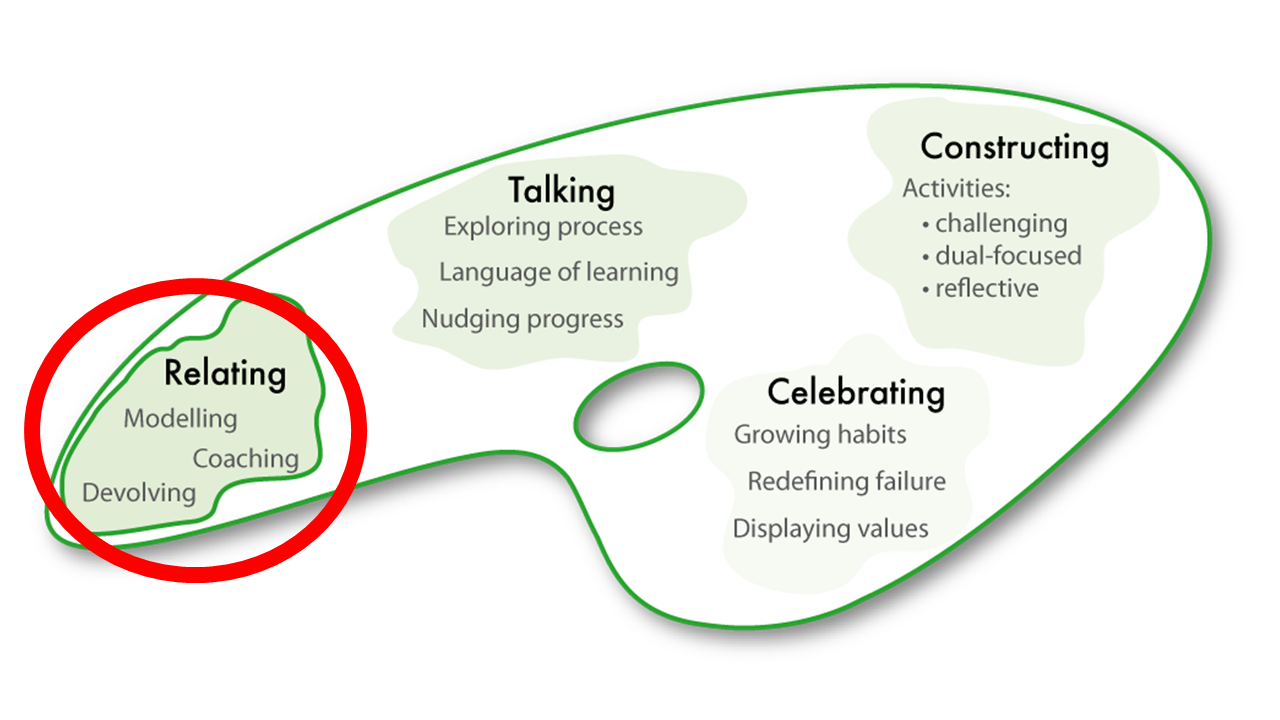
Page n – the Relating grid plus learner behaviours , B&W, copied from section 2

Page n+1 – the Talking grid plus learner behaviours , B&W, copied from section 2

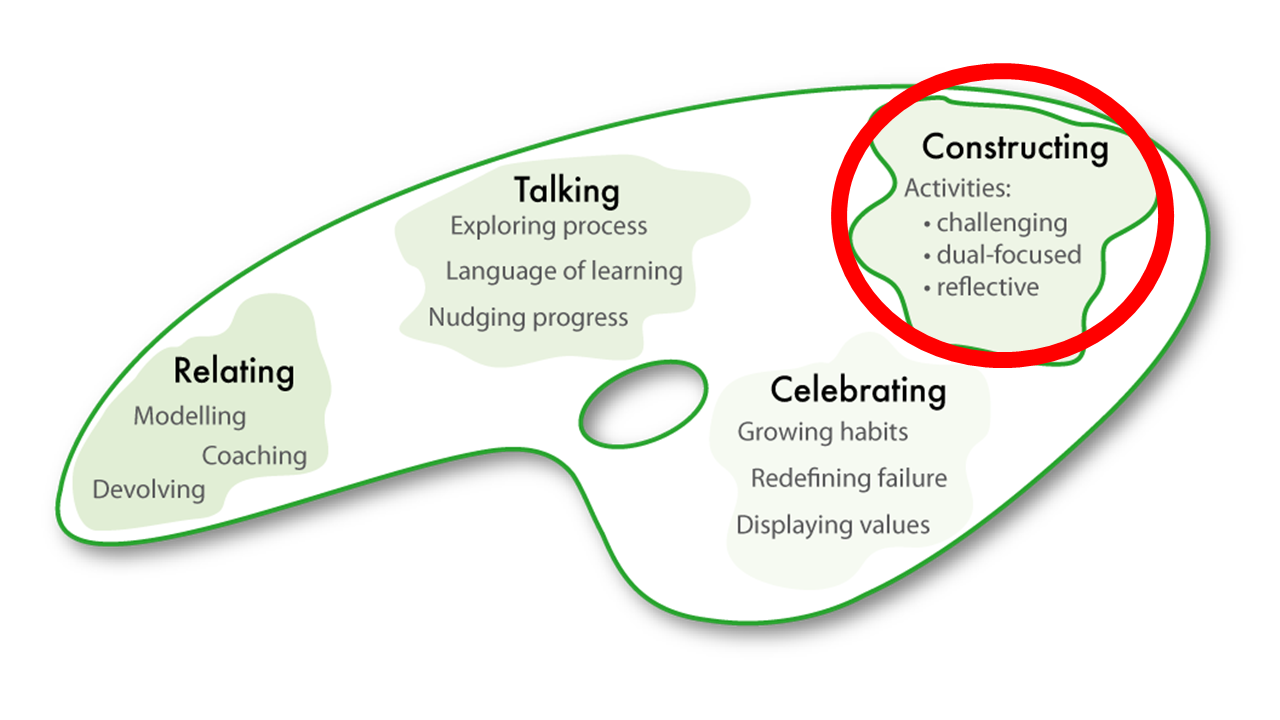
Page n+2 – the Constructing grid plus learner behaviours , B&W, copied from section 2

Page n+3 – the Celebrating grid plus learner behaviours , B&W, copied from section 2

Continue Reading

Putting Perseverance into Learning

This unit explores how you might build the habit of Perseverance in your students.

Sections 1 – 4 look at;

  1. Perseverance and how it develops. Progression Chart Unpick the meaning of Perseverance, how it develops over time and use the Perseverance chart to plot where your students are now.
  2. Taking Perseverance into classroom culture. Classroom Activities Offers numerous suggestions to develop a Perseverance friendly culture and build students’ Perseverance skills.
  3. Blending Perseverance with content. Dual Focus lesson ideas Suggests a series of questions and steps you might use to ensure the development of Perseverance claims its place in the curriculum and is designed into lesson/activities to aid understanding.
  4. Team reflection and planning. Share the impact of your experiments with colleagues and plan what you need to do next.

The resource materials in the Learning Diary: Perseverance help you to distil important messages, home in on the key bits of information and design learning experiments specifically for you.

Learning Diary: Perseverance


To print a copy of the Learning Diary, firstly open it in full screen. Then look for the tiny grey bar across the bottom of the screen – the grey ‘down arrow’ (second from the right hand side of the bar) downloads a PDF of the Diary so that you can print a copy.


You will probably need to spend more than an hour on sections 1-3. Section 1 may take about 20 minutes to get your head round. Section 2 should take you about 20 minutes to browse through. Section 3 needs at least a 35 minutes hard thinking. Section 4 is a linked Professional Learning Team session which will have been organised to take place sometime after this on-line session, and should take about 75 minutes.


Continue Reading

Helping your learners to… develop the integral skills of Critical Thinking and Problem Solving

The focus of this unit is on the development of the integral skills of Critical Thinking and Problem Solving.

Critical Thinking and Problem Solving

When you think critically and solve problems you engage a blend of learning behaviours.

You …

  • know how to work out what you are being asked to do and, when possible, link it to problems that you have previously experienced
  • are able to plan how to tackle the problem
  • have a wide range of reasoning tools and behaviours at your command
  • keep an eye on how it is going and adjust as necessary


The activities, think pieces and questions in this online unit aim to help you to make a start on:

  • introducing students to the key critical thinking and problem solving behaviours;
  • using the language of critical thinking and problem solving effectively with students;
  • designing the use of critical thinking and problem solving into the way you teach;
  • developing the confidence and skill in helping students to grow their critical thinking and problem solving powers.

The following sections will help you to tailor your classroom practice to support the development of these dispositions.

  • Section 1 explores the learning behaviours of critical thinking problem solvers;
  • Section 2 discusses the classroom culture that supports the development;
  • Section 3 offers ideas to practise in your own classroom;
  • Section 4 contains some suggestions about how you might talk to encourage the behaviour
  • Section 5 makes suggestions to move practice on.


About ‘Helping learners to access Successful Futures’ – a reminder

This is one of 12 units in the suite ‘Helping learners to access Successful Futures’. The units address the 4 purposes of the Successful Futures curriculum and the 4 integral skills for modern life and work, and set these requirements into 4 aspects of a learning-friendly classroom culture within which they can thrive.

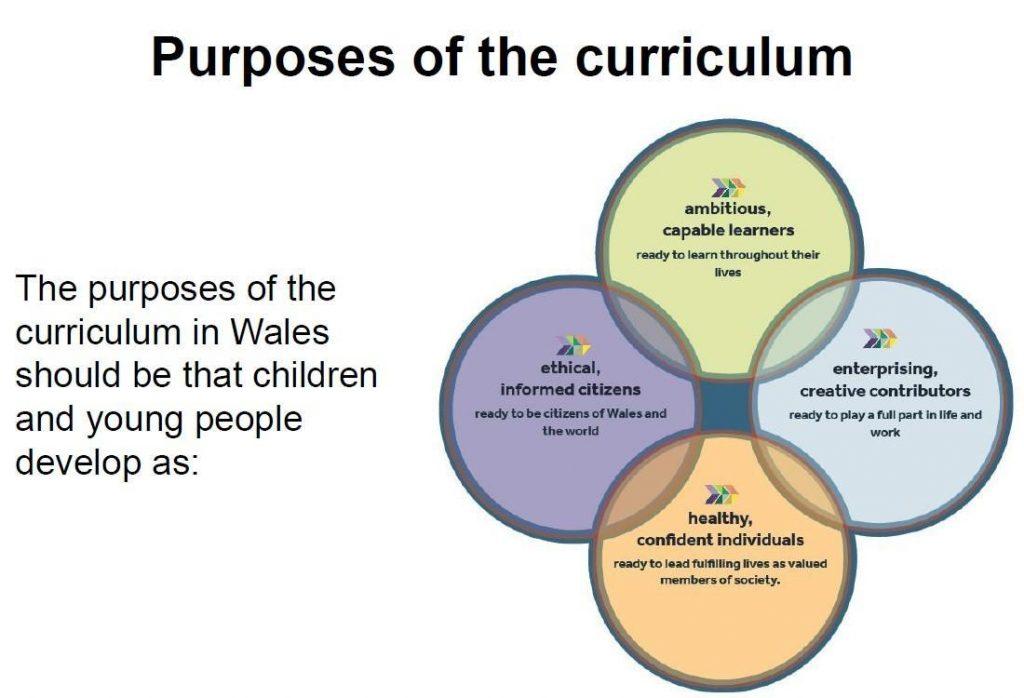
Related imageThe 4 purposes of the curriculum as defined in Successful Futures are that young people should develop as:

  • Ambitious, capable learners;
  • Enterprising, creative contributors;
  • Healthy, confident individuals;
  • Ethical, informed citizens.


Related image

The 4 integral skills necessary for modern life and work are defined as:

  • critical thinking and problem solving – this unit
  • planning and organising
  • creativity and innovation
  • personal effectiveness


The 4 aspects of classroom culture within which these core purposes and wider skills can develop and thrive are:

  • Classroom learning relationships;
  • Classroom talk for learning;
  • How learning is constructed;
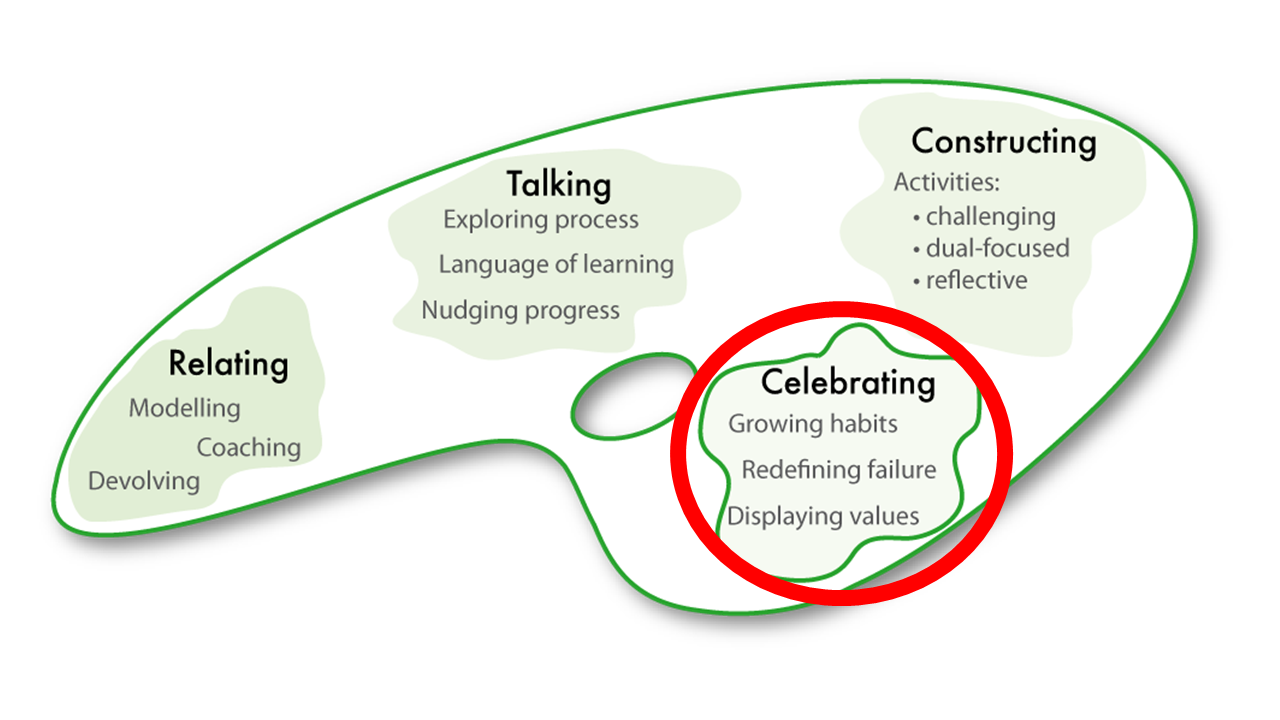
  • How learning is celebrated and grown.


Continue Reading

Coming on board … enabling students to celebrate and value learning behaviours

Classroom Culture

Culture is the curriculum of the classroom, frequently hidden from the external observer, but always all too evident to learners. It is the minute by minute, hour by hour, day by day way that learners come to understand their role as a learner. Culture is the enacted values of the teacher, not the espoused ones – it is the shadow that the teacher casts in the classroom in terms of what they do do and what they do not do, what they say and do not say, what they believe and do not believe, what they value and do not value.

There are four units dealing with shifting to a learning friendly classroom culture:

  • enabling students to take responsibility for their own learning

  • enabling students to develop a language of learning

  • enabling students to consciously practise and improve the process of learning

  • enabling students to celebrate and value their learning behaviours  [This unit]

Find out what this unit is about

‘Enabling students to celebrate and value their learning behaviours.

Open Me

This unit focuses on just one aspect of classroom culture – celebrating and valuing learning behaviours.

The format of the unit will be familiar to you if you have work through other units in this induction pack:

  • Section 1 explores what we mean by ‘celebrating and valuing learning’, details the three aspects of it, and offers some further background reading in the ‘Read More’ sections;
  • Section 2 offers some quick wins to practise;
  • Section 3 offers you a short cut to making your plan of action, with advice on things to stop doing, things that are worth  starting quickly and things you could take your time over doing.

Background information

This short section explains the frameworks that underpin this Induction pack of online units. It outlines the basic values, ideas and research that inform all the practical ‘how to’ ideas for use in classrooms. It’s an essential read if you are new to these units but skip it if you are familiar with its content. 

Open Me

 The frameworks that lie behind the online units.

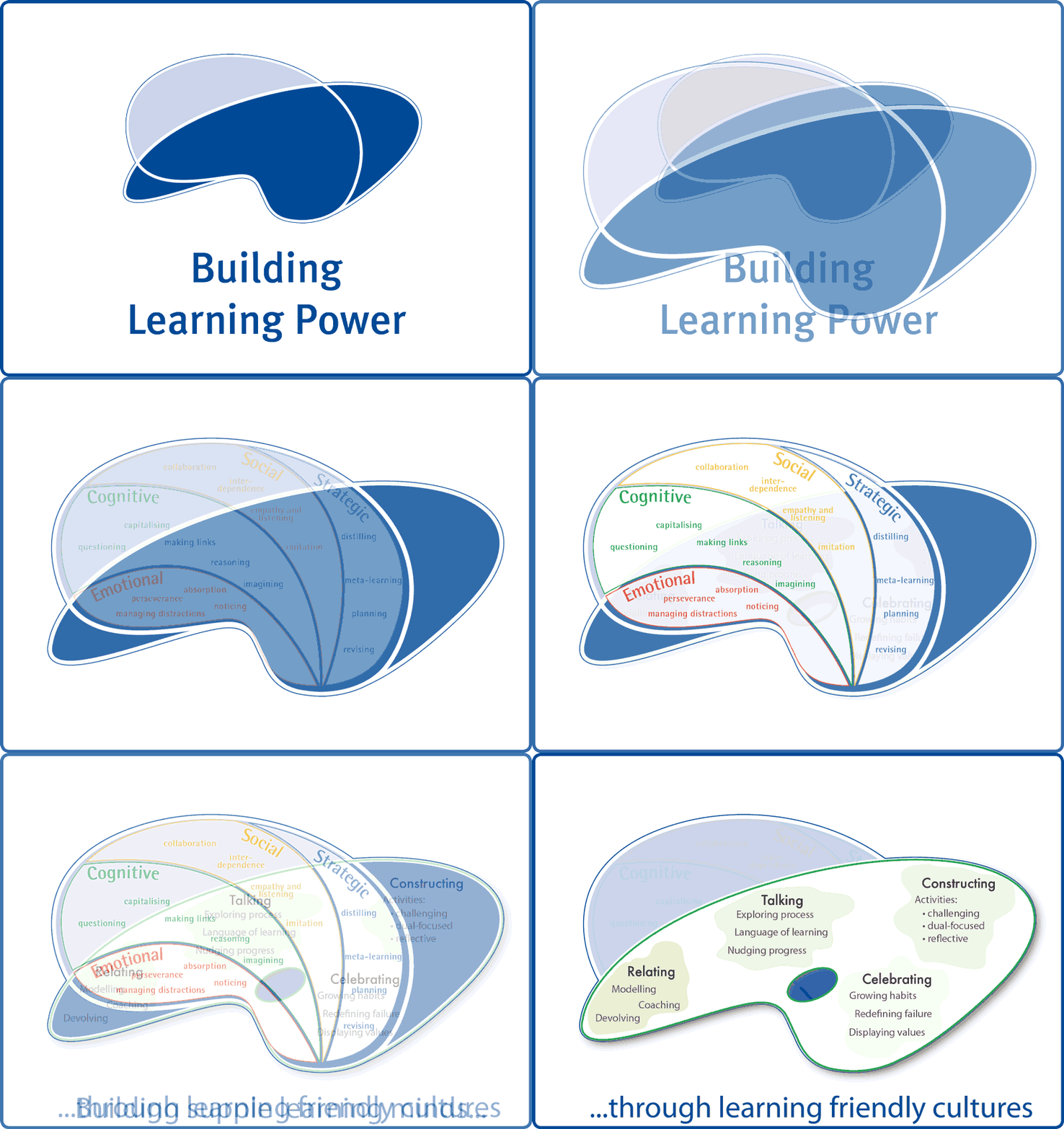
Building Powerful Learners puts at the heart of education the development of psychological characteristics that are judged to be of the highest value in young people growing up in a turbulent and increasingly complex world. There are two main parts to the approach:

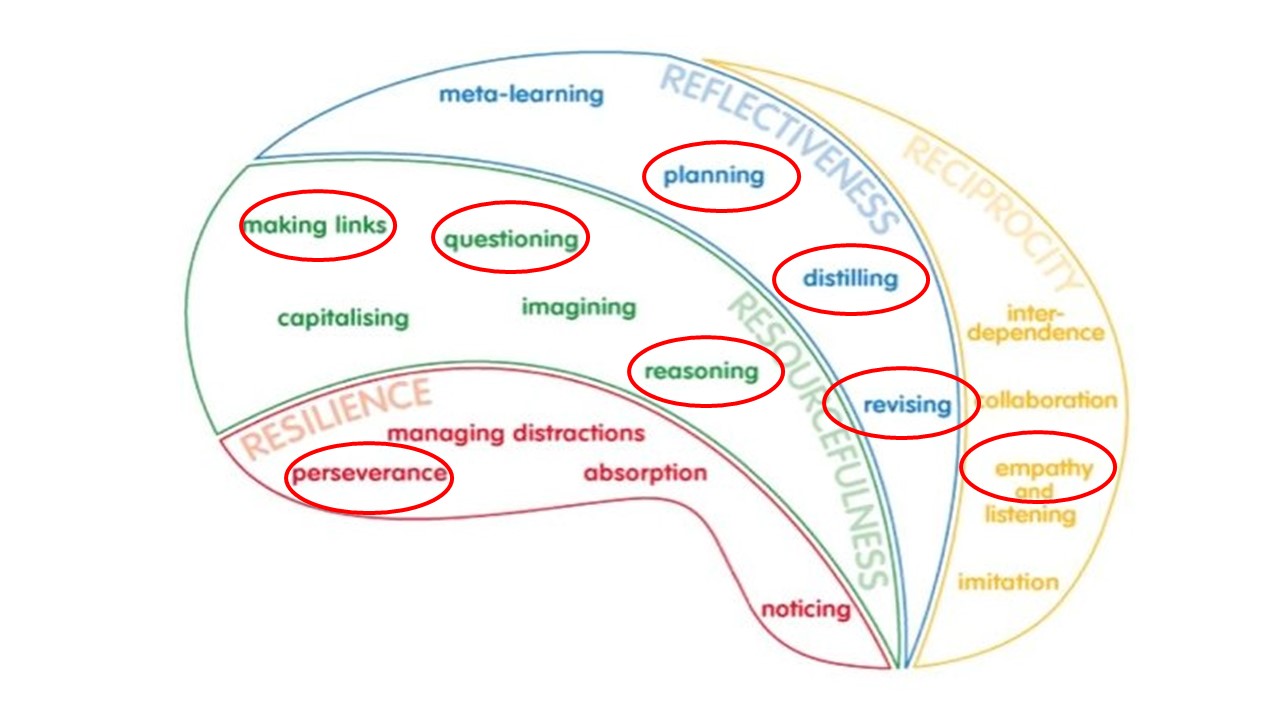
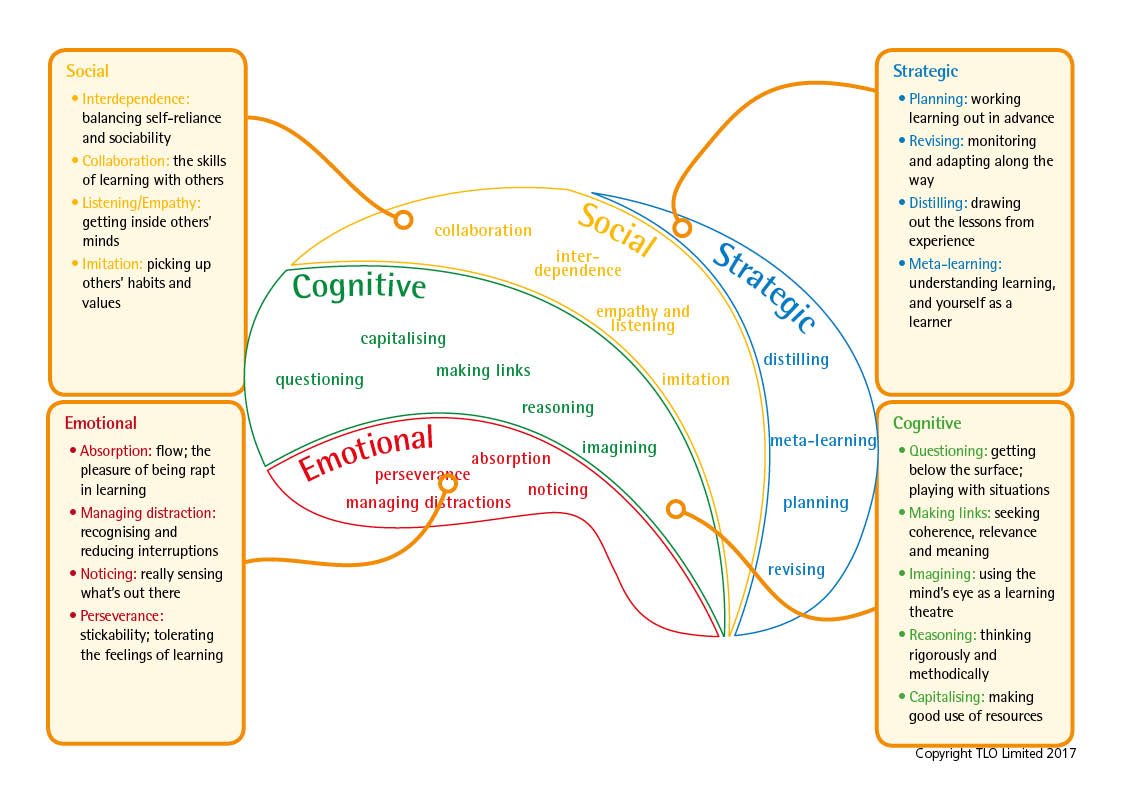
A: a model of a learner and learning, in terms of a set of characteristics that work together to make a person a highly capable learner; we use ‘learning power’ to describe the effect. [Supple Learning Mind]

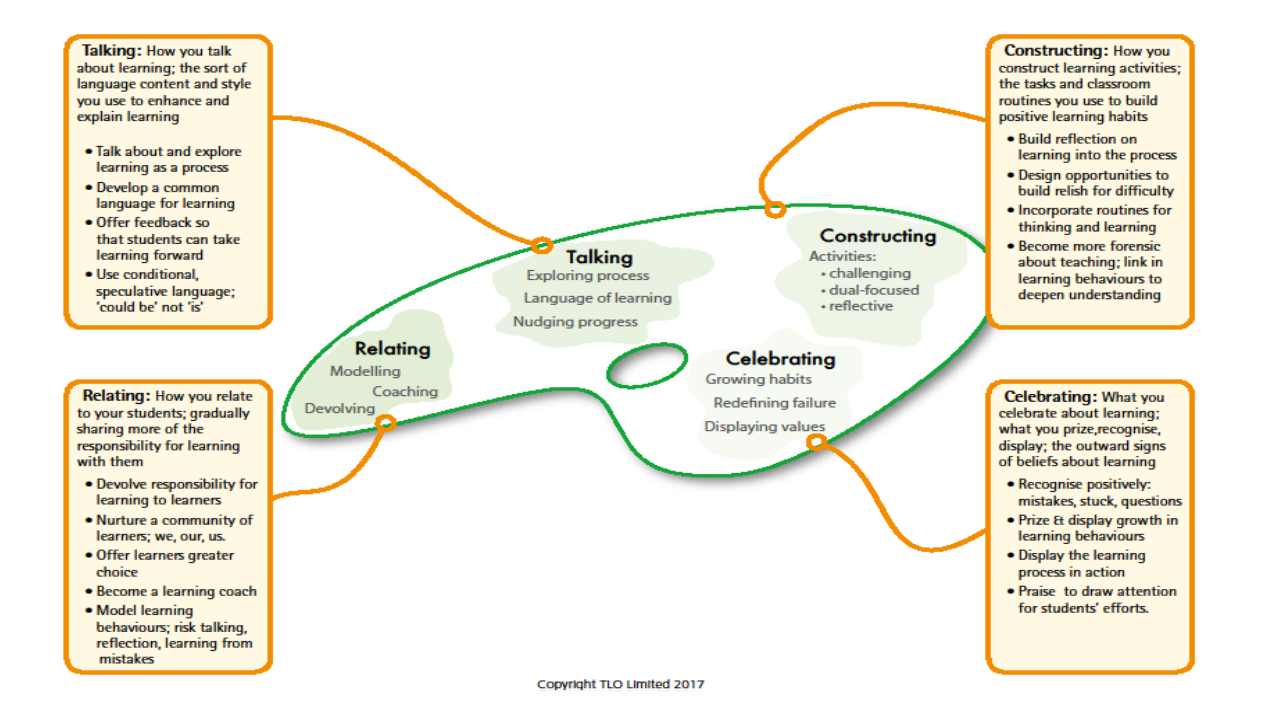
B: a view of the kind of pedagogy that will nurture and strengthen the learning characteristics in young people.[Teachers’ Palette]

These are bound together by the fundamental idea that ‘learning is a learnable craft’

A: What’s the Supple Learning Mind?BLP_Brain_Generic_no-Rs-[Converted]

The Supple Learning Mind framework of high value learning characteristics, originally conceived and researched by Professor Guy Claxton, reveals learning as a complex process that isn’t just about thinking and having a good memory; it includes how we feel, how we think, how we learn with and from others and how we manage the process of learning. It offers the beginnings of a learning language that helps teachers think about how learning  behaviours enable students to grow as learners and tackle the curriculum more profitably.

Each domain of learning…social, cognitive, social and strategic… clusters together the high value learning behaviours that best make that domain work well. For example the social domain is made up of interdependence, collaboration, listening and empathy and imitation.

The Supple Learning Mind diagram_v2


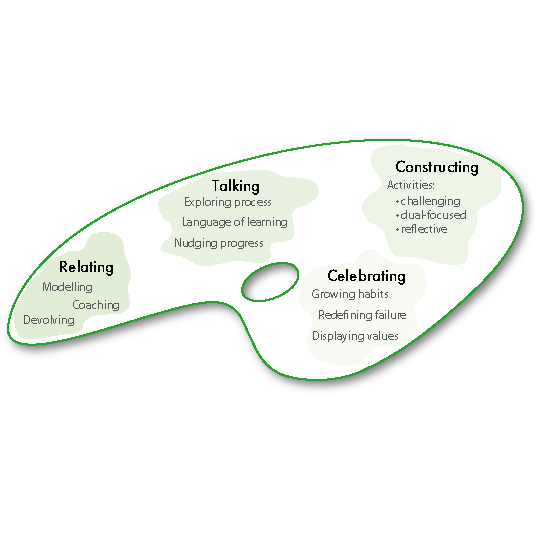
B: What’s the Teachers’ Palette?

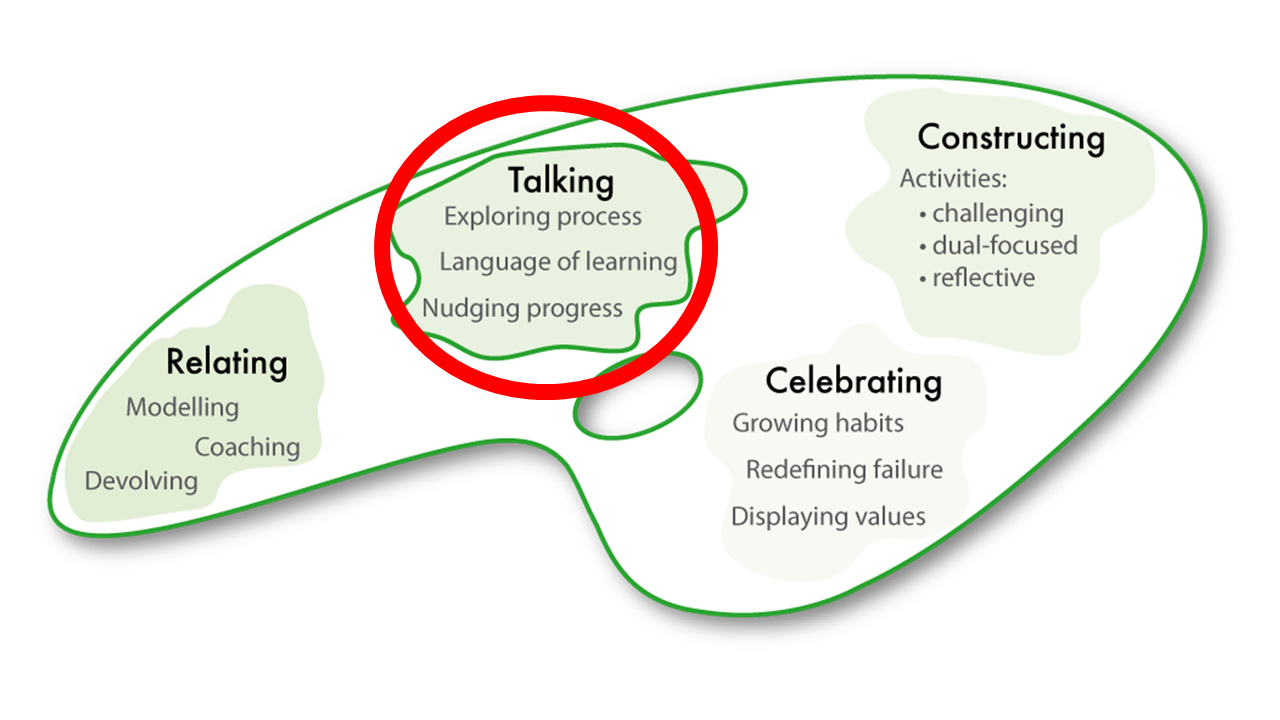
The Teachers’ Palette offers an overview of aspects of a learning friendly culture that combine to create the seedbed for building powerful learners. It includes the types of teacher action that create the conditions necessary for such learning to become habituated – how teachers relate to students,  the language teachers use, the types of tasks teachers design, and the things that teachers truly value.

The teachers’ palette diagram below distils the key teacher behaviours associated with a learning friendly culture.


In Summary: The Supple Mind indicates the learning behaviours that we want learners to acquire, and the Palette indicates the classroom culture within which these behaviours can thrive.

What effect does the approach have on students?

Schools that are able to combine a demanding content curriculum with a focused approach to building students’  learning characteristics can expect learners who are:

  • Committed to learning for life, able to learn, un-learn and re-learn and so thrive in uncertain times
  • Emotionally engaged and willing to learn with enthusiasm and commitment
  • Cognitively skilled, curious, logical and creative thinkers able to build a web of understanding for themselves
  • Socially adept, able to balance sociability and self-reliance
  • Strategically aware, interested in and able to manage their own learning
  • Independent, self-confident, self-aware, reflective and self-regulating
  • Ready, willing, and able to fulfil their potential
  • Ready to play a full role in the learning communities of today and tomorrow.

Continue Reading

Coming on board … enabling students to consciously practise learning

Classroom Culture

Culture is the curriculum of the classroom, frequently hidden from the external observer, but always all too evident to learners. It is the minute by minute, hour by hour, day by day way that learners come to understand their role as a learner. Culture is the enacted values of the teacher, not the espoused ones – it is the shadow that the teacher casts in the classroom in terms of what they do do and what they do not do, what they say and do not say, what they believe and do not believe, what they value and do not value.

There are four units dealing with shifting to a learning friendly classroom culture:

  • enabling students to take responsibility for their own learning

  • enabling students to develop a language of learning

  • enabling students to consciously practise and improve the process of learning [This unit]

  • enabling students to celebrate and value their learning behaviours  

Find out what this unit is about

‘Enabling your learners to consciously practise and improve the process of learning.

Open Me

This unit focuses on just one aspect of classroom culture – consciously practise and improve the process of learning

The format of the unit will be familiar to you if you have worked through other units in this suite:

  • Section 1 explores what we mean by ‘consciously practise and improve the process of learning’, details the three aspects of it, and offers some further background reading in the ‘Read More’ sections;
  • Section 2 offers some quick wins to practise;
  • Section 3 suggests things to stop doing, things to start doing etc. as in other units.

Background information

This short section explains the frameworks that underpin this suite of  online units.  It outlines the basic values, ideas and research that inform all the practical ‘how to’ ideas for use in classrooms. It’s an essential read if you  are new to these units but skip it if you are familiar with its content. 

Open Me

 The frameworks that lie behind this suite of online units.

Building Powerful Learners puts at the heart of education the development of psychological characteristics that are judged to be of the highest value in young people growing up in a turbulent and increasingly complex world. There are two main parts to the approach:

A: a model of a learner and learning, in terms of a set of characteristics that work together to make a person a highly capable learner; we use ‘learning power’ to describe the effect. [Supple Learning Mind]

B: a view of the kind of pedagogy that will nurture and strengthen the learning characteristics in young people.[Teachers’ Palette]

These are bound together by the fundamental idea that ‘learning is a learnable craft’

A: What’s the Supple Learning Mind?BLP_Brain_Generic_no-Rs-[Converted]

The Supple Learning Mind framework of high value learning characteristics, originally conceived and researched by Professor Guy Claxton, reveals learning as a complex process that isn’t just about thinking and having a good memory; it includes how we feel, how we think, how we learn with and from others and how we manage the process of learning. It offers the beginnings of a learning language that helps teachers think about how learning  behaviours enable students to grow as learners and tackle the curriculum more profitably.

Each domain of learning…social, cognitive, social and strategic… clusters together the high value learning behaviours that best make that domain work well. For example the social domain is made up of interdependence, collaboration, listening and empathy and imitation.

The Supple Learning Mind diagram_v2


B: What’s the Teachers’ Palette?

The Teachers’ Palette offers an overview of aspects of a learning friendly culture that combine to create the seedbed for building powerful learners. It includes the types of teacher action that create the conditions necessary for such learning to become habituated – how teachers relate to students,  the language teachers use, the types of tasks teachers design, and the things that teachers truly value.

The teachers’ palette diagram below distils the key teacher behaviours associated with a learning friendly culture.


In Summary: The Supple Mind indicates the learning behaviours that we want learners to acquire, and the Palette indicates the classroom culture within which these behaviours can thrive.

What effect does the approach have on students?

Schools that are able to combine a demanding content curriculum with a focused approach to building students’  learning characteristics can expect learners who are:

  • Committed to learning for life, able to learn, un-learn and re-learn and so thrive in uncertain times
  • Emotionally engaged and willing to learn with enthusiasm and commitment
  • Cognitively skilled, curious, logical and creative thinkers able to build a web of understanding for themselves
  • Socially adept, able to balance sociability and self-reliance
  • Strategically aware, interested in and able to manage their own learning
  • Independent, self-confident, self-aware, reflective and self-regulating
  • Ready, willing, and able to fulfil their potential
  • Ready to play a full role in the learning communities of today and tomorrow.

You’re not currently enrolled in this unit and can’t access the sections of the unit below. Please contact us if you have any questions about accessing this unit.

Continue Reading

Coming on board… enabling students to take responsibility for their own learning

Classroom Culture

Culture is the curriculum of the classroom, frequently hidden from the external observer, but always all too evident to learners. It is the minute by minute, hour by hour, day by day way that learners come to understand their role as a learner. Culture is the enacted values of the teacher, not the espoused ones – it is the shadow that the teacher casts in the classroom in terms of what they do do and what they do not do, what they say and do not say, what they believe and do not believe, what they value and do not value.

There are four units dealing with shifting to a learning friendly classroom culture:

  • enabling students to take responsibility for their own learning [This unit}

  • enabling students to develop a language of learning

  • enabling students to consciously practise and improve the process of learning

  • enabling students to celebrate and value their learning behaviours  


Find out what this unit is about

Enabling students to . . . take responsibility for their own learning.

Open Me

This unit focuses on just one aspect of classroom culture – taking responsibility for their own learning.

The format of the unit will be familiar to you if you have worked through modules in this suite:

  • Section 1 explores what we mean by ‘taking responsibility for their own learning’, details the three aspects of it, and offers some further background reading in the ‘Read More’ sections;
  • Section 2 offers some quick wins to practise;
  • Section 3 suggests things to stop doing, things to start doing etc. as in other modules.

Background information

This short section explains the frameworks that underpin this suite of online units.  It outlines the basic values, ideas and research that inform all the practical ‘how to’ ideas for use in classrooms. It’s an essential read if you  are new to these units but skip it if you are familiar with its content. 

Open Me

 The frameworks that lie behind this suite of online units.

Building Powerful Learners puts at the heart of education the development of psychological characteristics that are judged to be of the highest value in young people growing up in a turbulent and increasingly complex world. There are two main parts to the approach:

A: a model of a learner and learning, in terms of a set of characteristics that work together to make a person a highly capable learner; we use ‘learning power’ to describe the effect. [Supple Learning Mind]

B: a view of the kind of pedagogy that will nurture and strengthen the learning characteristics in young people.[Teachers’ Palette]

These are bound together by the fundamental idea that ‘learning is a learnable craft’

A: What’s the Supple Learning Mind?BLP_Brain_Generic_no-Rs-[Converted]

The Supple Learning Mind framework of high value learning characteristics, originally conceived and researched by Professor Guy Claxton, reveals learning as a complex process that isn’t just about thinking and having a good memory; it includes how we feel, how we think, how we learn with and from others and how we manage the process of learning. It offers the beginnings of a learning language that helps teachers think about how learning  behaviours enable students to grow as learners and tackle the curriculum more profitably.

Each domain of learning…social, cognitive, social and strategic… clusters together the high value learning behaviours that best make that domain work well. For example the social domain is made up of interdependence, collaboration, listening and empathy and imitation.

The Supple Learning Mind diagram_v2


B: What’s the Teachers’ Palette?

The Teachers’ Palette offers an overview of aspects of a learning friendly culture that combine to create the seedbed for building powerful learners. It includes the types of teacher action that create the conditions necessary for such learning to become habituated – how teachers relate to students,  the language teachers use, the types of tasks teachers design, and the things that teachers truly value.

The teachers’ palette diagram below distils the key teacher behaviours associated with a learning friendly culture.


In Summary: The Supple Mind indicates the learning behaviours that we want learners to acquire, and the Palette indicates the classroom culture within which these behaviours can thrive.

What effect does the approach have on students?

Schools that are able to combine a demanding content curriculum with a focused approach to building students’  learning characteristics can expect learners who are:

  • Committed to learning for life, able to learn, un-learn and re-learn and so thrive in uncertain times
  • Emotionally engaged and willing to learn with enthusiasm and commitment
  • Cognitively skilled, curious, logical and creative thinkers able to build a web of understanding for themselves
  • Socially adept, able to balance sociability and self-reliance
  • Strategically aware, interested in and able to manage their own learning
  • Independent, self-confident, self-aware, reflective and self-regulating
  • Ready, willing, and able to fulfil their potential
  • Ready to play a full role in the learning communities of today and tomorrow.

You’re not currently enrolled in this unit and can’t access the sections of the unit below. Please contact us if you have any questions about accessing this unit.

Continue Reading

Coming on board… enabling students to develop a language of learning.

Classroom Culture

Culture is the curriculum of the classroom, frequently hidden from the external observer, but always all too evident to learners. It is the minute by minute, hour by hour, day by day way that learners come to understand their role as a learner. Culture is the enacted values of the teacher, not the espoused ones – it is the shadow that the teacher casts in the classroom in terms of what they do do and what they do not do, what they say and do not say, what they believe and do not believe, what they value and do not value.

There are four units dealing with shifting to a learning friendly classroom culture:

  • enabling students to take responsibility for their own learning [This unit]

  • enabling students to develop a language of learning

  • enabling students to consciously practise and improve the process of learning

  • enabling students to celebrate and value their learning behaviours  

Find out what this unit is about

‘Enabling students to . . .develop a language of learning.

Open Me

This unit focuses on  – talking about the ‘how’ of learning.

The format of the unit will be familiar to you if you have worked through other units in this suite:

  • Section 1 explores what we mean by ‘talking about the ‘how’ of learning’, details the three aspects of it, and offers some further background reading in the ‘Read More’ sections;
  • Section 2 offers some quick wins to practise;
  • Section 3 suggests things to stop doing, things to start doing etc. as in other units.


Background information

This short section explains the frameworks that underpin this suite of online units.  It outlines the basic values, ideas and research that inform all the practical ‘how to’ ideas for use in classrooms. It’s an essential read if you  are new to these units but skip it if you are familiar with its content. 

Open Me

 The frameworks that lie behind this suite of online units.

Building Powerful Learners puts at the heart of education the development of psychological characteristics that are judged to be of the highest value in young people growing up in a turbulent and increasingly complex world. There are two main parts to the approach:

A: a model of a learner and learning, in terms of a set of characteristics that work together to make a person a highly capable learner; we use ‘learning power’ to describe the effect. [Supple Learning Mind]

B: a view of the kind of pedagogy that will nurture and strengthen the learning characteristics in young people.[Teachers’ Palette]

These are bound together by the fundamental idea that ‘learning is a learnable craft’

A: What’s the Supple Learning Mind?

BLP_Brain_Generic_no-Rs-[Converted]

Click to enlarge

The Supple Learning Mind framework of high value learning characteristics, originally conceived and researched by Professor Guy Claxton, reveals learning as a complex process that isn’t just about thinking and having a good memory; it includes how we feel, how we think, how we learn with and from others and how we manage the process of learning. It offers the beginnings of a learning language that helps teachers think about how learning  behaviours enable students to grow as learners and tackle the curriculum more profitably.

Each domain of learning…social, cognitive, social and strategic… clusters together the high value learning behaviours that best make that domain work well. For example the social domain is made up of interdependence, collaboration, listening and empathy and imitation.

The Supple Learning Mind diagram_v2

click to enlarge


B: What’s the Teachers’ Palette?

click to enlarge

The Teachers’ Palette offers an overview of aspects of a learning friendly culture that combine to create the seedbed for building powerful learners. It includes the types of teacher action that create the conditions necessary for such learning to become habituated – how teachers relate to students,  the language teachers use, the types of tasks teachers design, and the things that teachers truly value.

The teachers’ palette diagram below distils the key teacher behaviours associated with a learning friendly culture.

click to enlarge


In Summary: The Supple Mind indicates the learning behaviours that we want learners to acquire, and the Palette indicates the classroom culture within which these behaviours can thrive.

What effect does the approach have on students?

Schools that are able to combine a demanding content curriculum with a focused approach to building students’  learning characteristics can expect learners who are:

  • Committed to learning for life, able to learn, un-learn and re-learn and so thrive in uncertain times
  • Emotionally engaged and willing to learn with enthusiasm and commitment
  • Cognitively skilled, curious, logical and creative thinkers able to build a web of understanding for themselves
  • Socially adept, able to balance sociability and self-reliance
  • Strategically aware, interested in and able to manage their own learning
  • Independent, self-confident, self-aware, reflective and self-regulating
  • Ready, willing, and able to fulfil their potential
  • Ready to play a full role in the learning communities of today and tomorrow.

You’re not currently enrolled in this unit and can’t access the sections of the unit below. Please contact us if you have any questions about accessing this unit.

Continue Reading

Updated culture module for Nutshells phase 1


Welcome to Nutshells Phase 1.

This first session is designed to guide you through a process of understanding, assessing and improving your classroom learning culture, making it more learning friendly in order to build your students’ learning power.

Section 1. Learning cultures. A big shift? Unpick the meaning of classroom cultures, what they might consist of and the big shifts that may be needed to develop better learning. Use the Culture Tool 1 to estimate where your classroom culture is now.

Section 2. Learning friendly cultures; Lots of little shifts. Find out about the four big dimensions of culture and use the culture tool 2 to estimate the sorts of shifts your classroom culture would benefit from.

Section 3. Your classroom culture. Some ideas to get you started. Look for ideas to strengthen your learner/learning classroom culture.

Section 4. Bridging the gap in teaching. Reflect on the difference between traditional good teaching and teaching that enables learners to become better learners throughout their lives.

Section 5. Team reflection and planning. Share the results of your culture analysis with colleagues. Make plans for what everyone needs to do and what you will each do individually.

Continue Reading

Strategic and Coaching notes for senior and team leaders N2.4

This resource aims to help senior and team leaders make the most of the Nutshells Phase 2 material.

It is a must read for senior leaders and team leaders who will be taking a strategic responsibility for building better learners.

Section 1 deals with strategic concerns with information about the content of Nutshells 2, the sequencing of the modules, the purpose of using the materials and, importantly, how the modules might be shared across teams in the school.

Section 2 deals with the more nitty gritty concerns of running team sessions around the module materials to ensure pace, positive impact and happy learning teams.


Continue Reading

Putting Questioning into Learning N2.4

This unit explores how you might build the habit of Questioning in your students.

Sections 1 – 4 look at;

  1. Questioning and how it develops. The Questioning Chart. Unpick the meaning of Questioning, how it develops over time and use the Questioning chart to plot where your students are now.
  2. Taking Questioning into classroom culture. Questioning activities.  Offers numerous suggestions to develop a questioning friendly culture and build students’ questioning skills.
  3. Blending questioning with content. Example dual focused lesson. Suggests a series of questions and steps you might use to ensure the development of questioning claims its place in the curriculum and is designed into lesson/activities to aid understanding. 
  4. Team reflection and planning.  Share the impact of your experiments with colleagues and plan what you need to do next.

The resource materials in the Learning Diary: Questioning  help you to distil important messages, home in on the key bits of information and design learning experiments specifically for you. 

Download
You will probably need to spend about an hour on sections 1-3. Section 1 may take about 15 minutes to get your head round.  Section 2 should take you about 20 minutes to browse through the suggested activities. Section 3 needs about 25 minutes of hard thinking and head scratching. Section 4 is a linked Professional Learning Team session which will have been organised to take place sometime after this on-line session, and should take about 75 minutes.  


Continue Reading

Helping your learners to… Manage Distractions

Managing Distractions

When you use this learning muscle, you …

  • are aware of possible sources of distraction
  • purposefully try to minimise distractions
  • know what conditions help you to learn
  • settle back to learning quickly after an interruption

The activities, think pieces and questions in this online unit aim to help teachers make a start on:

  • introducing students to one of the key learning behaviours;
  • using the language of learning effectively with students;
  • designing the use of learning behaviours into the way they teach;
  • developing the confidence and skill in helping students to grow their learning power.

The purpose of building your students’ Learning Power is to facilitate their growth of high value psychological characteristics and strengthen their learning characters. These skills, attitudes and values, when used with increasing competence and confidence across many learning opportunities, become learning habits; the characteristics of successful lifelong learners. 


You’re not currently enrolled in this unit and can’t access the sections of the unit below. Please contact us if you have any questions about accessing this unit.

[/visitor]

Continue Reading

The Learning Quality Framework

The Key Aspects in this unit:

This unit contains six sections, most with subsections:

  1. Getting your head around the Learning Quality Framework;
  2. Seeing the big picture and getting at the detail;
  3. Getting a handle on where you are, the Audit Process;
  4. Creating a plan of action, the Action Planning Process;
  5. Keeping an eye on how your plan is going, Monitoring and Evaluating progress;
  6. Preparing for and Going for Accreditation.

Initial comments …more to self than anything else. This needs massive chopping. Needs a map of the module so its easy to find your way around.

Want to know what the LQF is, what its for, what it enables before getting into any of text below.

The Learning Quality Framework

A Learning Organisation:

Where people continually expand their capacity to create the results they truly desire, when new and expansive patterns of thinking are nurtured, where collective aspiration is set free, and where people are continually learning to see the whole together. (Peter Senge 1990)

The Learning Quality Framework embraces and applies the sentiments of a learning organisation to a school. However, here the ideas apply not only to staff and organisational learning but, importantly, to how students learn. People’s orientation to learning becomes the core purpose of the school; all are empowered to become better learners by using an understanding of the learning sciences. This affects how learning is understood as a process, how it is led and managed, how it is talked about and celebrated, how it is stretched and grown, how it is tracked and the results used to further enable individual and organisational learning. Given that learning itself is a gradual, sometimes difficult, but hugely worthwhile process the framework depicts how each aspect of a learning school might be at different stages of growth. The stages are cumulative, each growing from the one before. The framework captures aspects of a school’s organisational culture which can be made hospitable, rather than unhelpful, to the development of learners.

It is increasingly evident that the educational methods we have been using for the past 70 years no longer suffice. They are based on the scientific assumptions about…..the learning process that have been eclipsed by new discoveries. Yet changing them has been slow because the nature of educational reform is largely one of tinkering with institutional arrangements. Rarely has reform penetrated the educational core. (Professor Lauren Resnick)

The Learning Quality Framework will enable schools to reach their educational core – that of developing people as better learners; building their confidence, capacity and enthusiasm for learning throughout their lives. Whatever your current approaches to learning — be they Philosophy for Children, Assessment for Learning, SEAL, PLTS, BLP, Habits of Mind, Visible Thinking, Successful Futures, and so on — The Learning Quality Framework guides school development towards the creation of a learning powered culture, offering pathways and stages to drive your development action. Using its twelve clearly defined principles the school can realise and authenticate its prime educational goal of developing better learners. You might think of LQF as a journey planner, a satnav, a Quality Standard. The school has to make the journey but the LQF shows you the whole journey, alerts you to hazards, guides your progression through its stages, and — through the award of a Quality Mark — recognises and rewards your foresight and effort.


Ask yourself . . .

  • What do we understand by the term ‘Learning Organisation’?
  • Are we a learning organisation?

Make a note of…Little_r

  • The questions you are asking yourself.

Continue Reading

Introducing Building Learning Power: a DIY resource pack for Secondary Schools

The Key Ideas in this unit:

This online resource pack introduces school leaders and staff to the why, what, and how of developing a learning powered school experience for students. It is designed for those schools where introductory face to face training for staff and leaders is not possible.

It contains 12 power point presentations, with accompanying presenter notes and supplementary written and online materials, that can be used to introduce Building Learning Power in your school.

The resource introduces the big picture frameworks and principles of Building Learning Power from three perspectives; the big strategic ideas; the implications of these ideas for classroom practice; the management of introducing and sustaining the approach for the long term across the school. Thus the resources prepare leaders, classroom practitioners and managers to get to grips with the basics of the approach in preparation for the follow-on online learning programmes.

The resource pack is arranged in four sections:

The introductory section … Format and content of the resource pack. 

This section explains how the DIY resource pack is organised, the sort of resources to be found in each section and how to make best use of them.

Section 1... Strategic issues and ideas. 

This section will be of particular interest to senior leaders and governors. It offers the main ideas succinctly together with appropriate additional information.

Section 2...Chalkface. Implications for classroom practice. 

This section will be of particular interest to teachers and support staff. It covers the frameworks of the approach and illustrates these with examples of classroom practice…the how to.

Section 3… Management. Implications for supporting change into action. 

This section will be of particular interest to leaders and managers who have been charged with managing the approach into action across the school.

Each section considers building students’ learning power through four topics

Learning power. What and why…considers the need for change and the sort of change learning power offers.

The supple learning mind…looks at the framework of learning behaviours of successful learners; what they are, why they are powerful and how they work together

Learning friendly cultures…takes a more detailed look at the sort of learning culture that best supports the development of learning habits; the how of building powerful learners.

Growing learning habits...this section explores how learning behaviours strengthen into habits and how learning powered teachers support such growth.

Move on to the Introductory section and find out how it all works.


Continue Reading

Introducing Building Learning Power: a DIY resource pack for primary schools

The Key Ideas in this unit:

This online resource pack introduces school leaders and staff to the why, what, and how of developing a learning powered school experience for students. It is designed for those schools where introductory face to face training for staff and leaders is not possible.

It contains 12 power point presentations, with accompanying presenter notes and supplementary written and online materials, that can be used to introduce Building Learning Power in your school.

The resource introduces the big picture frameworks and principles of Building Learning Power from three perspectives; the big strategic ideas; the implications of these ideas for classroom practice; the management of introducing and sustaining the approach for the long term across the school. Thus the resources prepare leaders, classroom practitioners and managers to get to grips with the basics of the approach in preparation for the follow-on online learning programmes.

The resource pack is arranged in four sections:

The introductory section … Format and content of the resource pack. 

This section explains how the DIY resource pack is organised, the sort of resources to be found in each section and how to make best use of them.

Section 1... Strategic issues and ideas. 

This section will be of particular interest to senior leaders and governors. It offers the main ideas succinctly together with appropriate additional information.

Section 2...Chalkface. Implications for classroom practice. 

This section will be of particular interest to teachers and support staff. It covers the frameworks of the approach and illustrates these with examples of classroom practice…the how to.

Section 3… Management. Implications for supporting change into action. 

This section will be of particular interest to leaders and managers who have been charged with managing the approach into action across the school.

Each section considers building students’ learning power through four topics

Learning power. What and why…considers the need for change and the sort of change learning power offers.

The supple learning mind…looks at the framework of learning behaviours of successful learners; what they are, why they are powerful and how they work together

Learning friendly cultures…takes a more detailed look at the sort of learning culture that best supports the development of learning habits; the how of building powerful learners.

Growing learning habits...this section explores how learning behaviours strengthen into habits and how learning powered teachers support such growth.

Move on to the Introductory section and find out how it all works.

Continue Reading

Putting Meta Learning into Learning 2.4

This unit explores how you might build the habit of Meta Learning in your pupils.

Sections 1 – 4 look at;

  1. Meta Learning and how it develops. The Progression Chart. Unpick the meaning of Meta Learning, how it develops over time and use the Meta Learning chart to plot where your pupils are now.
  2. Taking Meta Learning into classroom culture. Classroom Activities. Offers numerous suggestions to develop a Meta Learning friendly culture and build pupils’ Meta Learning skills.
  3. Blending Meta Learning with content. Example dual focused lesson. Suggests a series of questions and steps you might use to ensure the development of Meta Learning claims its place in the curriculum and is designed into lesson/activities to aid understanding.
  4. Team reflection and planning.  Share the impact of your experiments with colleagues and plan what you need to do next.

The resource materials in the Learning Diary: Meta Learning help you to distil important messages, home in on the key bits of information and design learning experiments specifically for you.

Download as a pdf

You will probably need to spend over an hour on sections 1-3. Section 1 may take about 20 minutes to get your head round.  Section 2 should take you about 20 minutes to browse through Section 3 needs at least a half an hour hard thinking and head-scratching. Section 4 is a linked Professional Learning Team session which will have been organised to take place sometime after this on-line session, and should take about 75 minutes.


Continue Reading

Putting Collaboration into Learning 1.4

This unit explores how you might build the habit of Collaboration in your pupils.

Sections 1 – 4 look at;

  1. Collaboration and how it develops. The Collaboration Chart. Unpick the meaning of Collaboration, how it develops over time and use the Collaboration chart to plot where your pupils are now.
  2. Taking Collaboration into classroom culture. Activities for Collaboration. Offers numerous suggestions to develop a Collaboration friendly culture and build pupils’ Collaboration skills.
  3. Blending Collaboration with content. Dual Focused Lesson ideas. Suggests a series of questions and steps you might use to ensure the development of Collaboration claims its place in the curriculum and is designed into lesson/activities to aid understanding.
  4. Team reflection and planning.  Share the impact of your experiments with colleagues and plan what you need to do next.

The resource materials in the Learning Diary: Collaboration  help you to distil important messages, home in on the key bits of information and design learning experiments specifically for you.

Download

You will probably need to spend 45-50 mins on sections 1-3. Section 1 may take about 10 minutes to get your head round.  Section 2 might take you about 20 minutes to browse. Section 3 needs at least  20 minutes of hard thinking . Section 4 is a linked Professional Learning Team session which will have been organised to take place sometime after this on-line session, and should take about 75 minutes.  


Continue Reading

Putting Resourcing (Capitalising) into Learning 2.4

This unit explores how you might build the habit of Resourcing Learning in your pupils.

Sections 1 – 4 look at;

  1. Resourcing Learning and how it develops. Progression Chart. Unpick the meaning of Resourcing Learning, how it develops over time and use the Resourcing Learning chart to plot where your pupils are now.
  2. Taking Resourcing Learning into classroom culture. Classroom activities. Offers numerous suggestions to develop a Resourcing Learning friendly culture and build pupils’ Resourcing Learning skills.
  3. Blending Resourcing Learning with content. Dual focused lesson. Suggests a series of questions and steps you might use to ensure the development of Resourcing Learning claims its place in the curriculum and is designed into lesson/activities to aid understanding.
  4. Team reflection and planning.  Share the impact of your experiments with colleagues and plan what you need to do next.

The resource materials in the Learning Diary: Resourcing Learning  help you to distil important messages, home in on the key bits of information and design learning experiments specifically for you.

Download as a pdf

You will probably need to spend over an hour on sections 1-3. Section 1 may take about 20 minutes to get your head round.  Section 2 should take you about 20 minutes to browse. Section 3 needs at least a 35 minutes of hard thinking and head scratching. Section 4 is a linked Professional Learning Team session which will have been organised to take place sometime after this on-line session, and should take about 75 minutes.  


Continue Reading

Putting Noticing into Learning 2.4

This unit explores how you might build the habit of Noticing in your pupils.

Sections 1 – 4 look at;

  1. Noticing and how it develops. Noticing Progression Chart. Unpick the meaning of Noticing, how it develops over time and use the Noticing chart to plot where your pupils are now.
  2. Taking Noticing into classroom culture. Classroom activities. Offers numerous suggestions to develop a Noticing friendly culture and build pupils’ Noticing skills.
  3. Blending Noticing with content. Dual Focus lesson ideas. Suggests a series of questions and steps you might use to ensure the development of Noticing claims its place in the curriculum and is designed into lesson/activities to aid understanding.
  4. Team reflection and planning.  Share the impact of your experiments with colleagues and plan what you need to do next.

The resource materials in the Learning Diary: Noticing  help you to distil important messages, home in on the key bits of information and design learning experiments specifically for you.

Download as a pdf

You will probably need to spend about an hour on sections 1-3. Section 1 may take about 20 minutes to get your head round.  Section 2 should take you about 20 minutes to browse. Section 3 needs at least  20 minutes hard thinking . Section 4 is a linked Professional Learning Team session which will have been organised to take place sometime after this on-line session, and should take about 75 minutes.  

Continue Reading

Putting Revising into Learning 1.4

This unit explores how you might build the habit of Revising in your pupils.

Sections 1 – 4 look at;

  1. Revising and how it develops. The Revising Chart. Unpick the meaning of Revising, how it develops over time and use the Revising chart to plot where your pupils are now.
  2. Taking Revising into classroom culture. Revising activities. Offers numerous suggestions to develop a Revising friendly culture and build pupils’ Revising skills.
  3. Blending Revising with content. Dual Focused Lesson ideas. Suggests a series of questions and steps you might use to ensure the development of Revising claims its place in the curriculum and is designed into lesson/activities to aid understanding.
  4. Team reflection and planning.  Share the impact of your experiments with colleagues and plan what you need to do next.

The resource materials in the Learning Diary: Revising  help you to distil important messages, home in on the key bits of information and design learning experiments specifically for you.

Download

You will probably need to spend about an hour on sections 1-3. Section 1 may take about 10 minutes to get your head round.  Section 2 should take you about 20 minutes to browse. Section 3 needs at least a 35 minutes hard thinking. Section 4 is a linked Professional Learning Team session which will have been organised to take place sometime after this on-line session, and should take about 75 minutes.  


Continue Reading

Putting Planning into Learning 2.4

This unit explores how you might build the habit of Planning in your pupils.

Sections 1 – 4 look at;

  1. Planning and how it develops. The Progression Chart. Unpick the meaning of Planning, how it develops over time and use the Planning chart to plot where your pupils are now.
  2. Taking Planning into classroom culture. Classroom activities. Offers numerous suggestions to develop a Planning friendly culture and build pupils’ Planning skills.
  3. Blending Planning with content. Dual Focused lesson. Suggests a series of questions and steps you might use to ensure the development of Planning claims its place in the curriculum and is designed into lesson/activities to aid understanding.
  4. Team reflection and planning.  Share the impact of your experiments with colleagues and plan what you need to do next.

The resource materials in the Learning Diary: Planning  help you to distil important messages, home in on the key bits of information and design learning experiments specifically for you.

Download as a pdf

You will probably need to spend a bit over an hour on sections 1-3. Section 1 may take about 20 minutes to get your head round.  Section 2 should take you about another 20 minutes to browse through. Section 3 needs at least a 30 minutes of hard thinking. Section 4 is a linked Professional Learning Team session which will have been organised to take place sometime after this on-line session, and should take about 75 minutes.  


Continue Reading

Putting Imagining into Learning 2.4

This unit explores how you might build the habit of Imagining in your pupils.

Sections 1 – 4 look at;

  1. Imagining and how it develops. The imagining progression chart.Unpick the meaning of Imagining, how it develops over time and use the Imagining chart to plot where your pupils are now.
  2. Taking Imagining into classroom culture. Classroom activities. Offers numerous suggestions to develop an Imagining friendly culture and build pupils’ Imagining skills.
  3. Blending Imagining with content. Example dual-focused lesson.  Suggests a series of questions and steps you might use to ensure the development of Imagining claims its place in the curriculum and is designed into lesson/activities to aid understanding.
  4. Team reflection and planning.  Share the impact of your experiments with colleagues and plan what you need to do next.

The resource materials in the Learning Diary: Imagining  help you to distil important messages, home in on the key bits of information and design learning experiments specifically for you.

Download as a pdf

You will probably need to spend 75 mins on sections 1-3. Section 1 may take about 20 minutes to get your head round.  Section 2 should take you about 20 minutes to browse. Section 3 needs at least a 30 minutes of hard thinking and head scratching. Section 4 is a linked Professional Learning Team session which will have been organised to take place sometime after this on-line session, and should take about 75 minutes.  


Continue Reading

Putting Reasoning into Learning 2.4

This unit explores how you might build the habit of Reasoning in your pupils.

Sections 1 – 4 look at;

  1. Reasoning and how it develops. The Reasoning Chart. Unpick the meaning of Reasoning, how it develops over time and use the Reasoning chart to plot where your pupils are now.
  2. Taking Reasoning into classroom culture. Reasoning activities. Offers numerous suggestions to develop a Reasoning friendly culture and build pupils’ Reasoning skills.
  3. Blending Reasoning with content. Example dual-focused lesson. Suggests a series of questions and steps you might use to ensure the development of Reasoning claims its place in the curriculum and is designed into lesson/activities to aid understanding.
  4. Team reflection and planning.  Share the impact of your experiments with colleagues and plan what you need to do next.

The resource materials in the Learning Diary: Reasoning  help you to distil important messages, home in on the key bits of information and design learning experiments specifically for you.

Download as a pdf

You will probably need to spend 50-75 mins on sections 1-3. Section 1 may take about 15 minutes to get your head round.  Section 2 should take you about 20 minutes. Section 3 needs at least a 40 minutes of hard thinking. Section 4 is a linked Professional Learning Team session which will have been organised to take place sometime after this on-line session, and should take about 75 minutes.  


Continue Reading

Putting Making Links into Learning 2.4

This unit explores how you might build the habit of Making Links in your pupils.

Sections 1 – 4 look at;

  1. Making Links and how it develops. Progression Chart Unpick the meaning of Making Links, how it develops over time and use the Making Links chart to plot where your pupils are now.
  2. Taking Making Links into classroom culture. Classroom Activities Offers numerous suggestions to develop a Making Links friendly culture and build pupils’ Making Links skills.
  3. Blending Making Links with content. Dual Focus lesson ideas Suggests a series of questions and steps you might use to ensure the development of Making Links claims its place in the curriculum and is designed into lesson/activities to aid understanding.
  4. Team reflection and planning.  Share the impact of your experiments with colleagues and plan what you need to do next.

The resource materials in the Learning Diary: Making Links  help you to distil important messages, home in on the key bits of information and design learning experiments specifically for you.

Download as a pdf

You will probably need to spend more than an hour on sections 1-3. Section 1 may take about 20 minutes to get your head round.  Section 2 should take you about 20 minutes to browse through. Section 3 needs at least a 35 minutes hard thinking. Section 4 is a linked Professional Learning Team session which will have been organised to take place sometime after this on-line session, and should take about 75 minutes.  


Continue Reading

Putting Listening into Learning 2.4

This unit explores how you might build the habit of Listening in your pupils.

Sections 1 – 4 look at;

  1. Listening and how it develops. The Listening progression chart. Unpick the meaning of Listening, how it develops over time and use the Listening chart to plot where your pupils are now.
  2. Taking Listening into classroom culture. Classroom activities. Offers numerous suggestions to develop a Listening friendly culture and build pupils’ Listening skills.
  3. Blending Listening with content. Dual focused lesson. Suggests a series of questions and steps you might use to ensure the development of Listening claims its place in the curriculum and is designed into lesson/activities to aid understanding.
  4. Team reflection and planning.  Share the impact of your experiments with colleagues and plan what you need to do next.

The resource materials in the Learning Diary: Listening  help you to distil important messages, home in on the key bits of information and design learning experiments specifically for you.

Download as a pdf

You will probably need to spend more than an hour on sections 1-3. Section 1 may take about 20 minutes to get your head round.  Section 2 should take you about 20 minutes to browse. Section 3 needs at least a 35 minutes hard thinking and head scratching. Section 4 is a linked Professional Learning Team session which will have been organised to take place sometime after this on-line session, and should take about 75 minutes.  


Continue Reading

Putting Meta Learning into Learning N2.4

This unit explores how you might build the habit of Meta Learning in your students.

Sections 1 – 4 look at;

  1. Meta Learning and how it develops. The Meta Learning Chart. Unpick the meaning of Meta Learning, how it develops over time and use the Meta Learning chart to plot where your students are now.
  2. Taking Meta Learning into classroom culture. Activities for Meta Learning. Offers numerous suggestions to develop a Meta Learning friendly culture and build students’ Meta Learning skills.
  3. Blending Meta Learning with content. Dual Focused Lesson ideas. Suggests a series of questions and steps you might use to ensure the development of Meta Learning claims its place in the curriculum and is designed into lesson/activities to aid understanding.
  4. Team reflection and planning.  Share the impact of your experiments with colleagues and plan what you need to do next.

The resource materials in the Learning Diary: Meta Learning help you to distil important messages, home in on the key bits of information and design learning experiments specifically for you.

You will probably need to spend over an hour on sections 1-3. Section 1 may take about 20 minutes to get your head round.  Section 2 should take you about 20 minutes to browse through Section 3 needs at least a half an hour hard thinking and head-scratching. Section 4 is a linked Professional Learning Team session which will have been organised to take place sometime after this on-line session, and should take about 75 minutes.

Continue Reading

Putting Resourcing Learning into Learning N2.4

This unit explores how you might build the habit of Resourcing Learning in your students.

Sections 1 – 4 look at;

  1. Resourcing Learning and how it develops. Progression Chart. Unpick the meaning of Resourcing Learning, how it develops over time and use the Resourcing Learning chart to plot where your students are now.
  2. Taking Resourcing Learning into classroom culture. Classroom activities. Offers numerous suggestions to develop a Resourcing Learning friendly culture and build students’ Resourcing Learning skills.
  3. Blending Resourcing Learning with content. Dual focused lesson. Suggests a series of questions and steps you might use to ensure the development of Resourcing Learning claims its place in the curriculum and is designed into lesson/activities to aid understanding.
  4. Team reflection and planning.  Share the impact of your experiments with colleagues and plan what you need to do next.

The resource materials in the Learning Diary: Resourcing Learning  help you to distil important messages, home in on the key bits of information and design learning experiments specifically for you.

You will probably need to spend over an hour on sections 1-3. Section 1 may take about 20 minutes to get your head round.  Section 2 should take you about 20 minutes to browse. Section 3 needs at least a 35 minutes of hard thinking and head scratching. Section 4 is a linked Professional Learning Team session which will have been organised to take place sometime after this on-line session, and should take about 75 minutes.  

Continue Reading

Putting Collaboration into Learning N2.4

This unit explores how you might build the habit of Collaboration in your students.

Sections 1 – 4 look at;

  1. Collaboration and how it develops. The Collaboration Chart. Unpick the meaning of Collaboration, how it develops over time and use the Collaboration chart to plot where your students are now.
  2. Taking Collaboration into classroom culture. Activities for Collaboration. Offers numerous suggestions to develop a Collaboration friendly culture and build students’ Collaboration skills.
  3. Blending Collaboration with content. Dual Focused Lesson ideas. Suggests a series of questions and steps you might use to ensure the development of Collaboration claims its place in the curriculum and is designed into lesson/activities to aid understanding.
  4. Team reflection and planning.  Share the impact of your experiments with colleagues and plan what you need to do next.

The resource materials in the Learning Diary: Collaboration  help you to distil important messages, home in on the key bits of information and design learning experiments specifically for you.

Download

You will probably need to spend 45-50 mins on sections 1-3. Section 1 may take about 10 minutes to get your head round.  Section 2 might take you about 20 minutes to browse. Section 3 needs at least  20 minutes of hard thinking . Section 4 is a linked Professional Learning Team session which will have been organised to take place sometime after this on-line session, and should take about 75 minutes.  


Continue Reading

Putting Making Links into Learning N2.4

This unit explores how you might build the habit of Making Links in your students.

Sections 1 – 4 look at;

  1. Making Links and how it develops. Unpick the meaning of Making Links, how it develops over time and use the Making Links chart to plot where your students are now.
  2. Taking Making Links into classroom culture. Offers numerous suggestions to develop a questioning friendly culture and build students’ Making Links skills.
  3. Blending Making Links with content. Suggests a series of questions and steps you might use to ensure the development of Making Links claims its place in the curriculum and is designed into lesson/activities to aid understanding.
  4. Team reflection and planning.  Share the impact of your experiments with colleagues and plan what you need to do next.

The resource materials in the Learning Diary: Making Links  help you to distil important messages, home in on the key bits of information and design learning experiments specifically for you.

You will probably need to spend more than an hour on sections 1-3. Section 1 may take about 20 minutes to get your head round.  Section 2 should take you about 20 minutes to browse through. Section 3 needs at least a 35 minutes hard thinking. Section 4 is a linked Professional Learning Team session which will have been organised to take place sometime after this on-line session, and should take about 75 minutes.  


Continue Reading

Putting Planning into Learning N2.4

This unit explores how you might build the habit of Planning in your students.

Sections 1 – 4 look at;

  1. Planning and how it develops. Unpick the meaning of Planning, how it develops over time and use the Planning chart to plot where your students are now.
  2. Taking Planning into classroom culture. Offers numerous suggestions to develop a questioning friendly culture and build students’ Planning skills.
  3. Blending Planning with content. Suggests a series of questions and steps you might use to ensure the development of Planning claims its place in the curriculum and is designed into lesson/activities to aid understanding.
  4. Team reflection and planning.  Share the impact of your experiments with colleagues and plan what you need to do next.

The resource materials in the Learning Diary: Planning  help you to distil important messages, home in on the key bits of information and design learning experiments specifically for you.

You will probably need to spend a bit over an hour on sections 1-3. Section 1 may take about 20 minutes to get your head round.  Section 2 should take you about another 20 minutes to browse through. Section 3 needs at least a 30 minutes of hard thinking. Section 4 is a linked Professional Learning Team session which will have been organised to take place sometime after this on-line session, and should take about 75 minutes.  

Continue Reading