My menu

Sections Archive

In Constructing learning you link content with learning behaviours.

Return to the Constructing Learning Unit

How to use this section profitably.

From Find Out 1 (the green tables) you’ve developed an idea of where your classroom culture is in relation to Constructing Learning. From Find Out 2 (the blue quiz) you have considered how your students are responding to the changes you have made.

Each of the 5 Steps below offer a range of practical ideas to help you shift and develop the learning design of the curriculum and its lessons.

Identify the step that best fits your current curriculum culture and how the majority of your students are responding.

If in doubt, start at the step that most accurately reflects how the majority of your students are responding.

Step 1. Start here if . . .

You create lessons that are designed to ensure the content is acquired efficiently (from Find Out 1).

Aithough as a result, the majority of your students are unaware of the learning behaviours they need to employ (from Find Out 2).

The ideas below will help you to to make basic changes to learning / lesson design

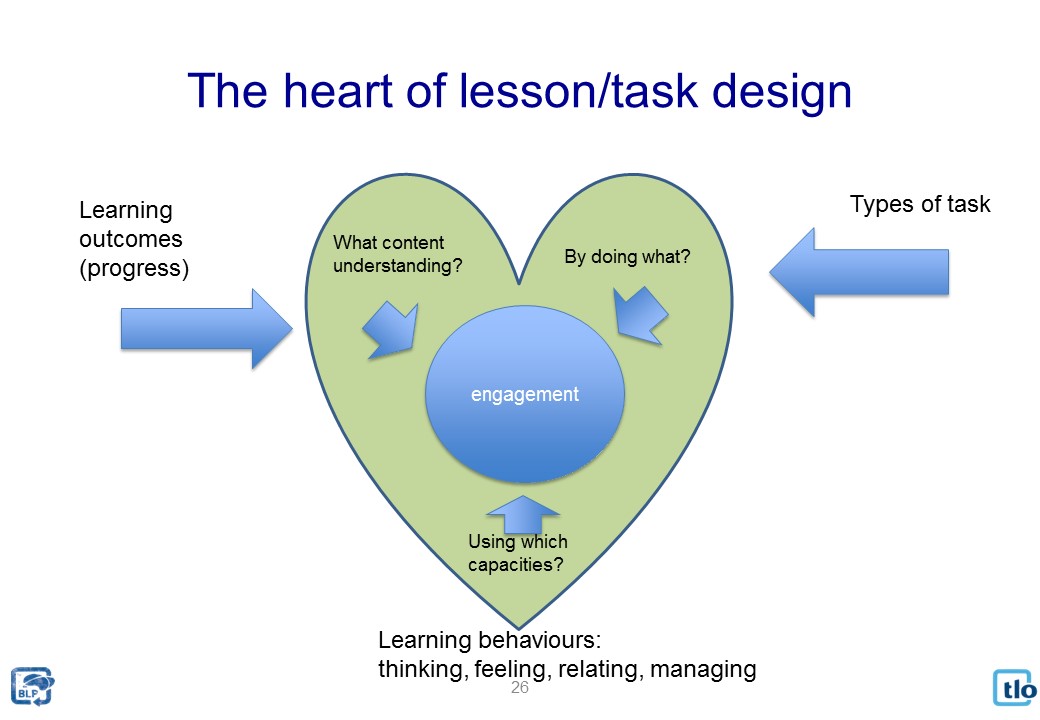
For years we have approached individual lessons, or even whole curriculum design, with questions about ‘what content do we want students to learn?’ And in relatively recent decades we’ve asked ‘by using what sort of task/activity?’. If you think about this you’ll quickly realise that the learner and their learning behaviours have been left out of the equation. If we’re to build students’ learning power we need to ensure we consider learning behaviours to be at the heart of curriculum/lesson planning. What content? Learned by using which behaviours? Learned by doing what sort of tasks? That one question…learned by using which behaviours?…lies at the heart of building students’ learning capacity.

Ideas for linking content with learning behaviours Step 1. ⬇️

Step 1. Make basic design changes to lessons involving the foundational four behaviours

Shift the way you plan

It is through the learning activities teachers plan that learning behaviours get a workout. The role of learning activities is to enable your students to access and wrestle with information and ideas; to help them use and understand something; to ensure their effectiveness as a learner. The ‘right’ activity helps to make new concepts more concrete. The ‘right’ activity provides insights into new ideas and subject matter. The ‘right’ activities need to be carefully chosen and, critically, linked to the learning goal.

Selecting activities

Evidence shows that goals that relate to doing something or researching something, or creating something . . . are better motivators than goals that relate to knowing something. Hence, in putting a lesson together the 3 key questions are:

  • what is to be learned? (goals)
  • by students using which learning behaviour (s)?
  • by doing what sort of activity?

Shifting the way you plan.

Think through lesson planning a bit differently:

  • the learning behaviours that could be useful for getting to grips with the content;
  • how the design of activities /tasks will best stimulate these behaviours;
  • how learners could be made more aware of these behaviours;
  • how learners could be enabled to reflect on and evaluate their use of these behaviours.

In planning terms, you have made a shift from thinking;

  • From ‘what do I have to teach and how am I going to teach it?’
  • To ‘what do students need to learn, how will they best learn it, and how am I going to orchestrate that learning?’

Your lessons are constructed to help students understand how they will be learning the content and learning behaviours are built into lesson objectives. There is a growing recognition that lessons have twin intentions – to learn content and to exercise specific learning behaviours.

Learners are just becoming aware of the learning behaviours they are expected to exercise and are coming to understand that there is more to learning than just ‘knowing stuff’.


Flip the emphasis in how goals are expressed

Getting student buy-in to goals

Setting a goal that the learner has little or no motivation to achieve is unlikely to lead to success. What is needed is learner buy-in to goals.

Evidence shows that goals that relate to doing something or researching something, or creating something . . . ) are better motivators than goals that relate to knowing something or passing / doing well in a test.

Putting the ‘how’ before the ‘what’.

So – a goal relating to ‘understanding xxxxx’ or ‘knowing yyyyy’ is less likely to motivate a learner to make the effort than a goal that starts with some indication of the sort of ‘effort’ or way of doing something;

  • work with a partner to decide why…….
  • use your problem solving skills to work out……
  • use your imagination to ….

Where ‘knowing goals’ place the emphasis on the successful acquisition of knowledge or creates a pass/fail scenario, the ‘doing goals’ focus on how – something to do rather than something to know.

What you are doing here is beginning to pay attention to how students will be learning as well as what they will be learning. This linking of how and what will come to play a central role in building students’ learning power later in your learning journey.

Teacher talk

Some real examples just to give you a flavour of this technique

  • With a partner, use your reasoning skills to explain why all prime numbers, with the exception of 2, are odd.
  • Use your noticing skills to identify three similarities and three differences between these two images.
  • By using what you already know and your imagination to generate ideas, tell the story of the fire of London from the perspective of a young student living in London at the time.

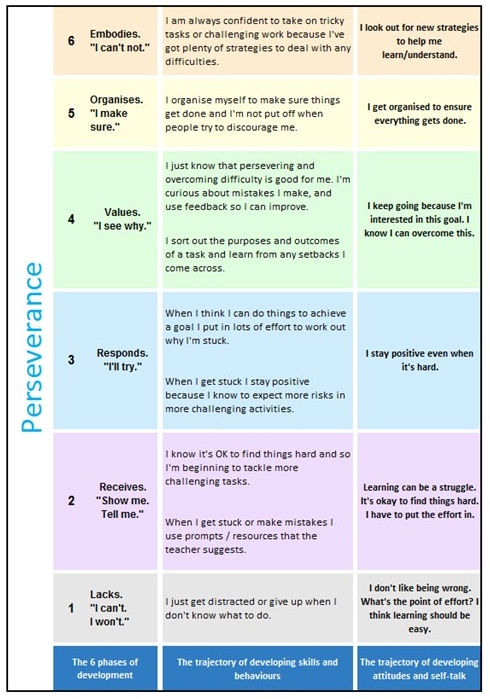
Devolve more responsibility to learners. In this case perseverance.

If we want students to change their behaviour we need to help them to think much more closely about the ‘hows’ and the ‘whats’.

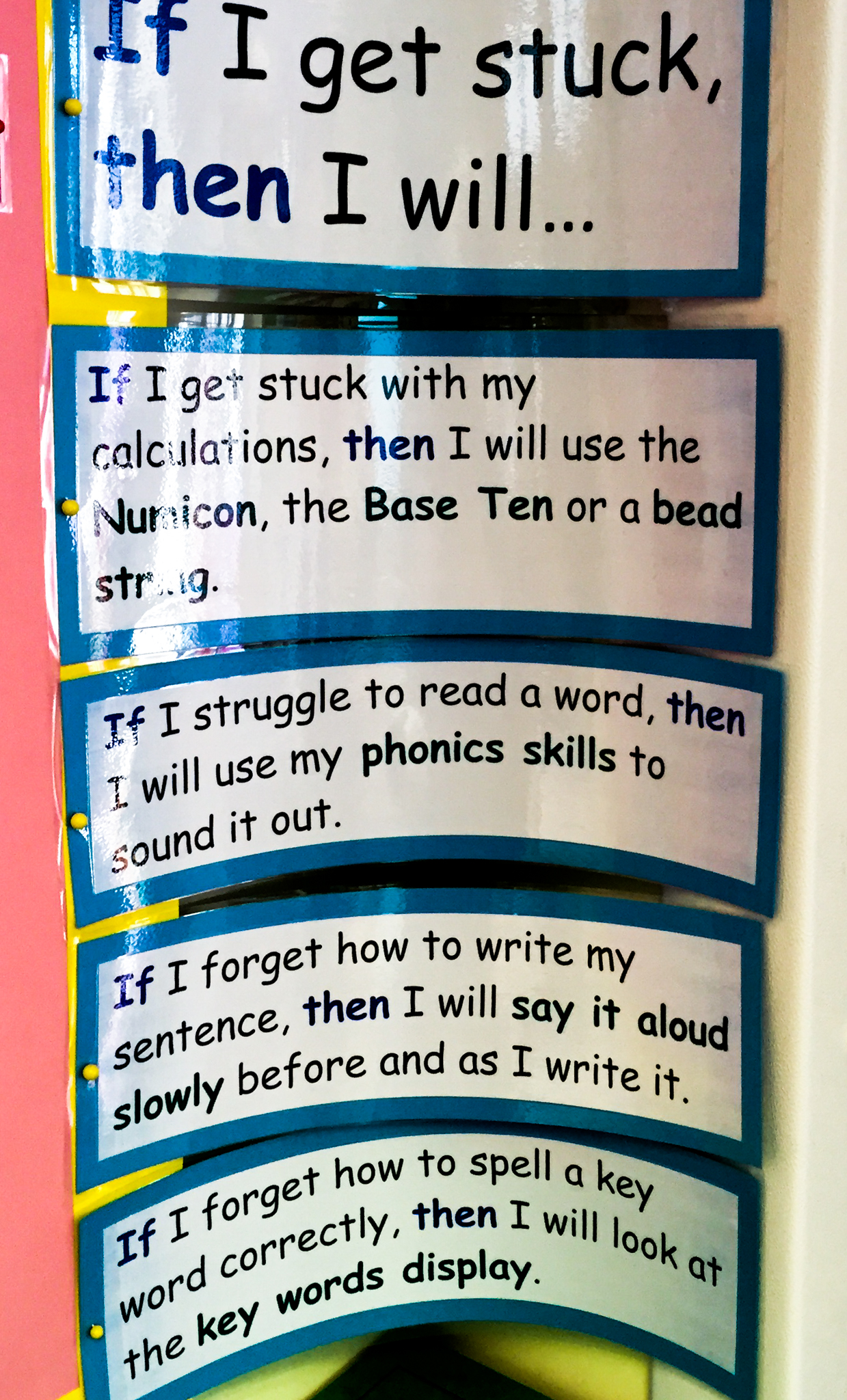
Motivation research proposes an effective solution to this called ‘if-then’ planning.

‘Ifs’ are the situations you want to remind yourself about. In the case of getting unstuck it’s useful to list all the sorts of places this tends happen

‘Thens’ are what you will do about something; the action you will take. Brainstorm a list of the ‘what we might do in response to the Ifs’.

Try putting ‘If-then’ planning into action in your classroom to make stuck solutions more specific and personal.
2016-03-17 11.32.28_FaceBook

Research findings

Research on motivation and goals from Harvard University shows how our brains work to achieve our goals. Basically it says that goals need to be very clear and our brain ignores a goal if it’s unclear about what to do. Brains act on goals only when what to do is clear.

So, goals like ‘Lose weight’ or ‘Exercise more often‘ or even ” I want to feel ok about being stuck‘ are too nebulous. They beg the question ‘how’ or ‘what do I do?’

The how of ‘If-then’ planning

When setting a goal you need to specify not only what you will do but also where and when you will do it.

If (or when) [___situation__], then I will do [___behaviour__]

So if we had a goal about losing weight, we would need to know a great deal about the ‘how’ and the ‘what’ and the ‘how to’ of losing weight.

An If-then statement or goal might be ‘If I get the pudding menu, then I’ll ask for coffee’.

This may sound a bit cumbersome to start with but research suggests far more goals are achieved by using ‘if-then’ planning. And the clever bit is that this builds self talk at the same time. You do what you are telling yourself to do.

The ‘if-then’ plan succeeds because the situation and the action become linked in the mind. The brain recognises the situation as an opportunity to advance the goal. When the situation is detected action is initiated automatically. “If-then’ plans become “instant habits”.

Goal: I want to feel okay about being stuck

If…

…I get stuck in my reading (all the stuck places will need specifying)…

…I get stuck in Maths (specify how you might get stuck)…

…I get into tricky situations in the playground (specify tricky)…

Then…

…I will (Some specific statements to unstick themselves)


Step 2. Start here if . . .

You design activities to introduce students to the four behaviours being unearthed. Lessons emphasise the ‘How’ before the ‘What’ of learning so that students become aware of the sort of effort needed (from Find Out 1).

And as a result, the majority of your students are beginning to understand how they need to use the 4 key learning behaviours (from Find Out 2).

These ideas below will help you to widen the type of activity to accommodate the use of more learning behaviours.

You are now very alert to the transition from content-only planning, to planning that weaves together content, types of activities and learning behaviours being developed. Hence the types of activities becomes the vehicle for growing learning behaviours, Getting better at those learning behaviours aids and speeds content acquisition. At this stage you are adding more learning behaviours into the mix and sharing more of the responsibility for learning with your students. They are becoming increasingly aware that learning isn’t a single activity, that there are many learning behaviours they can use and that they become a better learner by developing a wide range of these behaviours.

Ideas for linking content with learning behaviours Step 2. ⬇️

Step 2. Develop a wider range of learning behaviours.

Organise activities to require more learning behaviours.

You have now introduced students to the foundational four learning behaviours i.e. perseverance, questioning, collaboration and revising. and you are now ready to bring more learning behaviours into play, not just by naming them or noticing them but by bringing them into your teaching style.

Let’s just consider a Science curriculum that might involve your students undertaking a practical experiment. Think first about the learning behaviours students will need to use if you want them to watch you do the experiment so that they can then faithfully recreate it. For this they’ll need skills of observation, listening, following a prescribed plan, attention to detail etc.

Contrast those behaviours with the behaviour required when you, as a teacher, decide to put students into small groups and challenge them to work together to plan how to do the experiment, to identify and gather the resources needed, to conduct the experiment, and to reflect together on how they could have planned it more efficiently.

The same content, the same experiment – but with different learning behaviours stimulated by how  you, the teacher, choose to organise the activity. It’s this sort of thinking that now comes into play in this much more lengthy stage of your development as a teacher.


‘What will it look like when it’s finished?’ (WWILLWIF)

  • Set a task — physical, dramatic, written, practical, spoken, visual — that has clear parameters but which is open-ended.
  • Make WWILLWIF the regular precursor to any action.
  • Ask students to determine WWILLWIF for themselves in conjunction with others.
  • Help them to visualise this in an appropriate form.

Teacher talk

  • Can you imagine your WWILLWIF in your mind’s eye?
  • What features will it have? Suggest a few to get them going.
  • Talk with your partner about these ideas and how they might work
  • Will this be a challenge for you?
  • A ‘just right’ challenge or a ‘too much’ challenge?
 

Image result for begin with the end in mind


A visible thinking routine. Headlines

The visible thinking routine ‘Headlines’ is a useful strategy for encouraging students to notice what is most important. It is how Noticing contributes to students distilling what they have learned and identifying the salient features.

The routine draws on the idea of newspaper-type headlines as a vehicle for summing up and capturing the essence of an event, idea, concept, topic, etc. The routine asks one core question:

  • If you were to write a headline for this topic or issue right now, that captured the most important aspect that should be remembered, what would that headline be?

Consider following it up with the challenge of writing the first paragraph only of the newspaper article, the one that lays out all of the key information relating to the headline.

Go to the Visible Thinking Websitefor more examples and information about visible thinking routines.

To download Headlines from the Visible Thinking Website as a pdf:

Download as a pdf

Teacher talk

  • From what we have been discussing, which are the most important features?
  • How can we distil the key information/ideas?
  • Can we cluster those ideas and formulate a newspaper headline?
  • What would grab people’s attention.


Step 3. Start here if . .

Your lessons invite the use of a much broader range of learning behaviours with opportunities for students to make decisions, think for themselves, wonder ‘what if” (from Find Out 1).

And as a result, the majority of your students understand which learning behaviours they need to use to access the content (from Find Out 2).

The ideas below will help you to strengthen the impact of mobilising students’ learning behaviours by becoming aware of their growth patterns.

This is the most sophisticated point in curriculum planning. Now you’re ready to link sequenced content with a more elaborate understanding of the stages of learning behaviour growth. So, for example, if you were designing activities to strengthen revising/reflecting then, ‘revise what you are doing’ would become something much more specific such as;

  • ‘make use of this checklist of ideas to make sure you’re on track or
  • ‘rethink or retry ideas as you go along’ or
  • ‘I want you to think about why you did it that way’ etc.

Hence, you now deliver the curriculum so that it stretches both content and particular aspects of a range of learning behaviours. 

Ideas for linking content with learning behaviours Step 3. ⬇️

Step 3. Ensure students become aware of how to grow their learning bahaviours.

By this stage the holy grail of curriculum planning becomes:

  • carefully sequenced content related planning
  • that ensures that students’ understanding of their growth as a learner is of equal importance as their progressive understanding of the content matter.

But now you have a much more elaborated understanding of, for example, ‘Reasoning’ through the reasoning progression chart, or Questioning which has a similar chart. Depending on the reasoning skill levels of learners, ‘thinking carefully’ could become more precise by employing learning behaviours embedded in the progression charts.

Look at the lesson plan opposite. In terms of making learning visible, the planning has moved beyond:

  • ‘today you’ll need your reasoning skills’ to . . . 
  • ‘today you will need to make comparisons’
  • or ‘explain why things happen’
  • or ‘offer evidence to explain / justify your thinking’.

You move beyond simply naming the behaviour to identifying a particular aspect of the learning behaviour drawn from the progression charts.

Growth chart for Reasoning.


Structure the hard bits

It’s the hard parts in learning that can cause demotivation in students accompanied by a greater likelihood of distraction. You and your students will need to learn how best to cope with the ‘hard parts’.

Good work on the hard parts is a structural challenge for teaching as well as learning. You’ll need to build in versions of ongoing assessment but assessment that is not concerned with marks /grades or evaluating the how of learning. This is assessment designed to feed into the learning process and make the learning stronger. It’s possible to organise the rhythm of learning so that it embraces;

  • deliberate practice
  • assessment focused on understanding
  • peer and self-assessment
  • communicative feedback

What you’ll need to anticipate is where the sticking points in the content are likely to be, the troublesome knowledge, and then ask;

  • what standard ritual ways of thinking might get in the way?
  • what do students know already that they might not have linked to this topic/knowledge/task?
  • what is getting in the way of them thinking differently about this content to be able to assimilate it?
  • what might they need to unlearn in order to relearn this content?
  • which aspect(s) of the content is conceptually difficult

Here are researched ways of structuring work on the hard parts into the rhythm of the learning.

  1. Vary practice activities and conditions
  2. Interleave rather than block practice
  3. Break down complex problems
  4. Use low stake tests/quizzes with students
  5. Encourage students to self-test
  6. Offer clues rather than solutions


Build imagining into lesson design

It is through learning activities that learning behaviours get a workout. Their role is to enable your students to access and wrestle with information and ideas; to help them use and understand something; to ensure their effectiveness as a learner. The ‘right’ activity helps to make new concepts more concrete. The ‘right’ activity provides insights into new ideas and subject matter. The ‘right’ activities need to be carefully chosen and, critically, linked to the learning goal.

An activity to highlight and strengthen Imagining

What has happened here? Good guy or bad? Can we see any colours? Hear any sounds? Imagine being there….

A quick way to activate the Imagination and explore how we use our senses to imagine.

What you are trying to achieve:

To support students to use their imaginations using all of their senses,

How might you use the technique?

  • As a starter for creative writing
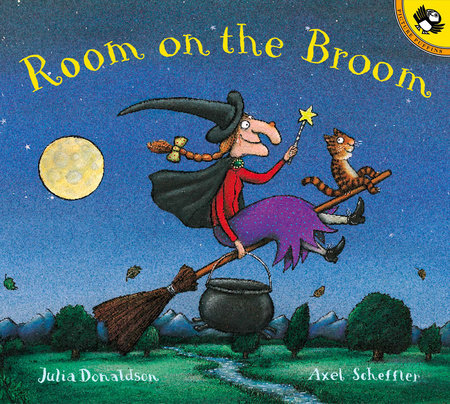
  • As a prelude to reading a book – start with the B&W copy of the dust jacket.
  • To build empathy
  • To scaffold the use of all of the senses
  • To trigger the imagination
Download guidance for the activity


Step 4. Start here if . . .

Across the curriculum you consider the level of learning behaviour(s) needed to reach the required outcome using the levels in progression charts (from Find Out 1).

And as a result, the majority of your students are beginning to understand the required fine-grain learning behaviours from the progression charts (from Find Out 2).

The ideas below will help you to begin to loosen the reins and give students more responsibility for managing their own learning.

This is about handing over the reins somewhat and engaging students in contributing to the what and how of learning. It involves giving your students tools or frameworks to help them take on learning for themselves. How often you use these approaches will depend on how your students are building their learning behaviours. You won’t want them to come up against big problems at this early stage but they will need to be able to handle uncertainty and have had earlier opportunities to manage and organise their own learning.

Ideas for linking content with learning behaviours Step 4. ⬇️

Step 4. Give students more responsibility.

Offer tools to help guide problem based learning

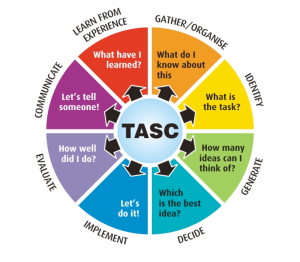
A graphic organiser that is much used in primary schools to help students to plan their approach to an investigation or problem. The TASC wheel, derived from Thinking Actively in a Social Context, is a framework that helps develop thinking and problem-solving skills. With TASC, learners can think through a problem to achieve the best outcome – and understand why it’s the best outcome.

TASC will guide students through the stages of thinking and problem-solving in an organised way, starting at one o’clock working clockwise. If you have a complex or wide-ranging problem you want to tackle, it offers a means of organising and synthesising a range of ideas.

Much like PEE (Point / Evidence / Explain) that helps students to structure a paragraph, the TASC wheel gives a simple way of helping them to sequence what they do to undertake an investigation.
Tasc Planning Wheel

Question Dice

Question Dice 1

Create (or buy) two dice. One has What/Where/Who/Which/Why/How. The other has Is/Was/Could/Would/Should/Might.

Towards the end of a lesson/module, generate question stems comprising a question word and a verb by rolling the 2 dice. Ask students to create a question about the topic in hand using the question stem as a starting point.

  • Which xxxx could….?
  • Why was…….?
  • What might……?

“Is” will generate answers about the present, Was/Did” …..about the past, Can/Could” requires students to explore possibilities, Would” requires students to consider what is probable, Will/Should” requires students to predict/hypothesise, Might” requires students to imagine/speculate.

Teacher talk

  • What/When/Who/Which/Why/How combined with Is/Was/Could/Would/Should/Might


Question Dice 2

Bloom’s Taxonomy identifies six ‘levels’ of activity – Remembering, Understanding, Applying, Analysing, Evaluating and Creating.
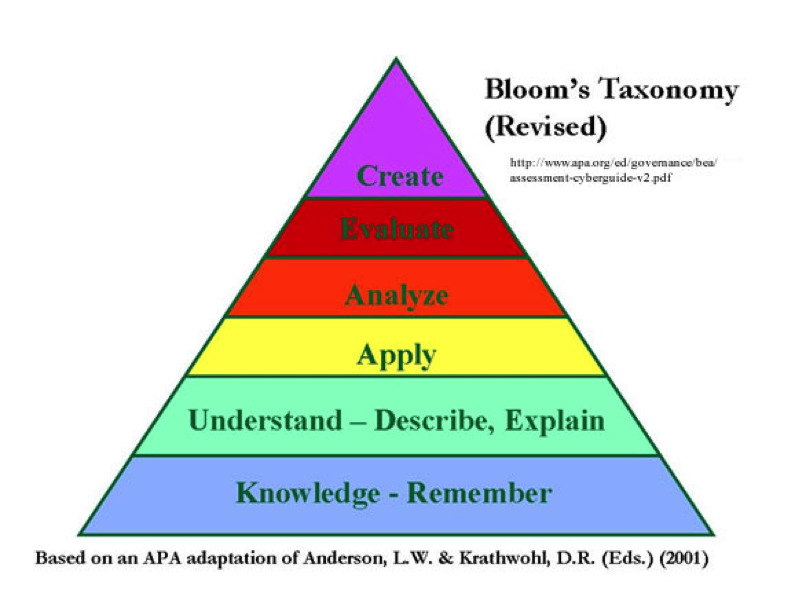
Bloom's Taxonomy

Questions relating to the remembering phase include: Who is; What is; Why does; Where was etc.

(Worryingly, research indicates that between 80 and 90% of all teacher questions fall into this category!)

But what could teachers ask to activate the other (higher) levels?

Google ‘Thinking Dice’ and acquire a set of dice that will support higher-order questioning.

Use the dice to expand your own questioning repertoire, but also use the dice with students to help them to frame their own, increasingly sophisticated questions.

Teacher talk

  • Do you remember . . . ?
  • Can you put that in your own words?
  • How might you use . . . ?
  • Can you explain . . . ?
  • How effective are . . . ?
  • Can you design a . . . ?


Image result for question dice


dice


Step 5. Start here if . . .

You offer students choices in what to learn, ways to contribute, co-design or co-deliver so as to pursue their own improvements in learning behaviours (from Find Out 1).

And, as a result, the majority of your students are able to make their own decisions about which learning behaviours will be required / successful (from Find Out 2).

The ideas below will help you to consolidate and strengthen the delivery of a learning centred curriculum.

Governing the process of Constructing learning activities are 6 principles which stem from the original purpose of building students’ learning behaviours. The principles cover the capacities that will serve learners well in uncertain futures; how best to integrate these ‘knowledge acquiring capacities’ across a curriculum; how such a curriculum can enable students to work alone and interdependently with others, manage and organise their learning and become leaders of their own learning. A big but essential ask.

Ideas for linking content with learning behaviours Step 5. ⬇️

Step 5. Strengthen the delivery of a learning centred curriculum.

Ensure six principles of designing and delivering learning.

One: Make the learning process visible

Students need to be very clear about the learning habits and processes which they are using. Teachers seek to make every aspect of the learning process as visible as possible through the language they use and through the words and images they display on the walls.

Two: Combine the ‘what’ and the ‘how’

Learning activities are designed to combine the dual objectives of ‘what’ will be learned and ‘how’ it will be learned. Students come to know that the content they are studying is a way of giving their minds a useful workout.

Three: Ensure emotional engagement

Teachers design lessons that intrigue their students. Students will not put in the effort to stretch their learning ‘muscles’ unless their energy and attention are captured by what they are doing. Emotional engagement is a prerequisite for learning that stretches and develops students’ powers of learning.

Four: Nurture handling uncertainty

What is engaging tends to be what is challenging. If education is a preparation for a learning life, students have to be helped to learn how to handle increasing degrees of complexity and uncertainty. Hence teachers create challenging tasks that stretch learning ‘muscles’.

Five: Build learning relationships

Learning is both a sociable and a solitary activity, and students need to learn how to move around in the social space of learning to best effect. Teachers enable their students to become interdependent learners who know how to handle themselves in collaborative groups.

Six: Develop reflection and responsibility

Students learn how to manage and organise their learning by being given increasingly demanding opportunities to do so. Teachers encourage their students to take charge of their own learning, planning what they do, distilling meaning from it, and revising it accordingly.

Download and use the Poles Apart diagram to ask yourself where you think you are now in relation to these six principles.

Download the 6 Principles Poles Apart Diagram


Consider ‘Flipping’ the Classroom.

There has been much talk of the flipped classroom and of flipped learning. The terms, which are frequently used interchangeably, concern, at a basic level, what would have otherwise been covered in class being covered at home and in advance, while the subsequently freed-up classroom time is used for coaching, consolidation, practice and exploration. That which would have been classwork is done at home by the student. That which would have been homework is covered in class.

One neat addition to flipped learning is to require students not only to undertake the advance learning but also to come to the lesson with at least one question about the material – thereby building the habits of distilling what they do and do not understand and of framing a question that will help them to uncover one thing that they want to find out, or one thing they do not yet understand. It gives the teacher insight into the areas of uncertainty or interest of students and affords the opportunity to shape the classroom time in order to meet their individual interests – the seeds of co-construction, if you like.

Teacher talk

  • What do you still need to find out / explore / understand?
  • Can anyone help us out with this / Who do you think might be able to help?
  • How might we go about this?


Prepare for deeper independent enquiry

Think, Puzzle, Explore 

At the outset of a topic, ask these three questions:

  1. What do you think you know about this topic?

  2. What questions or puzzles do you have?

  3. How can you explore this topic?

The first helps students to connect with prior knowledge, allowing you to understand what they do and do not already know/understand. This aspect alone should help you to shape the upcoming learning to their existing understandings and so they are making an input into curriculum design. Moreover, it opens up the possibility that what they think may be in need of being revised.

The second invites curiosity and begins to identify lines of enquiry that they might wish to pursue. Their questions, not ours!

The third (which you may choose to delay until questions 1 and 2 have been sorted) offers them the opportunity to make decisions about what they want to explore and how they want to explore it.


Return to the Constructing Learning Unit


Continue Reading

In Constructing Learning you build in a reflective model for learning

Return to the Constructing Learning Unit

How to use this section profitably.

From Find Out 1 (the green tables) you’ve developed an idea of where your classroom culture is in relation to Constructing Learning. From Find Out 2 (the blue quiz) you have considered how your students are responding to the changes you have made.

Each of the 5 Steps below offer a range of practical ideas to help you shift and develop the learning design of the curriculum and its lessons.

Identify the step that best fits your current curriculum culture and how the majority of your students are responding.

If in doubt, start at the step that most accurately reflects how the majority of your students are responding.


Step 1. Start here if . . .

You lead review plenaries to help learners remember what you have taught and memorise what they have learned (from Find Out 1).

And as a result, the majority of your students prefer you to do the reflecting for them (from Find Out 2).

The ideas below will help you to begin to shift responsibility for reflection to learners.

As Mike Hughes comments in his book Tweak to Transform, “Learning without reflection is like trying to fill a bath without putting the plug in”. But often reflection is seen as just something that happens in a few minutes before the end of a lesson. It’s better to think of reflection as a formative activity which you ensure students practise regularly in order to secure their understanding, review their progress and plot any necessary changes in direction. Reflection needs to be woven through every lesson; being done by learners, not for them.

Ideas for building in reflection Step 1. ⬇️

Step 1. Begin to shift responsibility for reflection to students.

Build in lesson review points – so that students reflect for themselves

The problem with lesson review points (or plenaries) is that they are often teacher-led. Too often they are a recap of what the teacher wanted students to learn – little more than a restating of the learning intentions and a quick check of student understanding. Necessary, maybe, but not the opportunity for students to reflect for themselves on what they are learning, have learned or how they are/ have learned it.

Try the simple method of students talking in pairs to distil:

  • three things we have learned so far;
  • three things we still need to find out;
  • three things we hope to do next.

Select one or two pairs to feed their opinions back to the rest of the class. Steer students to explain what they think they have learned rather than to hear what you think you have taught them. Gradually add in questions about the learning behaviours they have been using;

  • three ways we are learning
  • the most useful learning behaviour so far
  • a useful learning behaviour we might need to try

You are beginning to give students a richer language in which to couch their reflective thinking.


Image result for learn from experience


Establish reflecting as a classroom routine – Going for Three

  • Begin each lesson with ‘Tell me Three … things we learned last lesson; ways we learned last lesson; things we still need to find out; things you hope to achieve today’.
  • End each lesson with ‘Tell me Three … things we learned today; learning skills we used today; things we need to do next lesson; ways you could become a more effective learner’ etc.
  • Ensure that students tell you three. Do not lapse into doing it for them!

Teacher talk

  • Have we remembered the 3 most important things?
  • What else do you want to find out about this?
  • So, what are you trying to achieve next?
  • What learning behaviours did you use in achieving that?
  • Which behaviour was most successful/useful/redundant?
  • Have you made a habit of that behaviour yet?


Reflecting on learning behaviours

Offer students the opportunity to reflect on how they use various aspects of the four key learning behaviours – perseverance; collaboration; questioning; revising.

Use the review to help students to:

  • recall some of the aspects of the four key behaviours;
  • reflect on the extent to which they employ these aspects;
  • consider how they might need to change their learning behaviours.

Use their responses to gather feedback on their perceptions and to consider whether you need to adjust your teaching to emphasise / strengthen particular learning behaviours.

Download the review tool

Teacher talk

  • Of the 4 behaviours, which do you use most? Least?
  • Which do you think you could/should use more frequently?
  • Who do you know who does these things well?
  • Which behaviours do you think are your learning strengths?
  • Ditto relative weaknesses?


Step 2. Start here if . . .

You regularly prompt or nudge students to pause and reflect on what they are doing and how they are progressing (from Find Out 1).

And as a result, the majority of your students are beginning to take a degree of responsibility for reflection (from Find Out 2).

The ideas below will help you to encourage reflection on a wider range of learning behaviours.

What you’re trying to do here is to strengthen the reflective process across all lessons and across the new learning behaviours that you are gradually adding into the mix. Reflecting on the process of learning itself helps learners to become aware of which learning behaviours they are using. You can expand their thinking from simply knowing which behaviour they are using to exploring how they are collaborating or how they are reasoning, or how they are making links.

Ideas for building in reflection Step 2. ⬇️

Step 2. Encourage reflection on a wider range of learning behaviours.

Getting to grips with metacognition

In the last few years teachers have come to know and understand much about meta-cognition and self-regulation.

Metacognition...is about monitoring and controlling your thought processes.

Self-regulation...is about monitoring and controlling your feelings and behaviours.

The two come together in Self-regulated learning...the application of metacognition and self-regulation to learning.

These approaches, which have always been at the heart of developing learning power, aim to help students think about their own learning more explicitly, often by teaching them specific strategies for planning, monitoring and evaluating their learning.

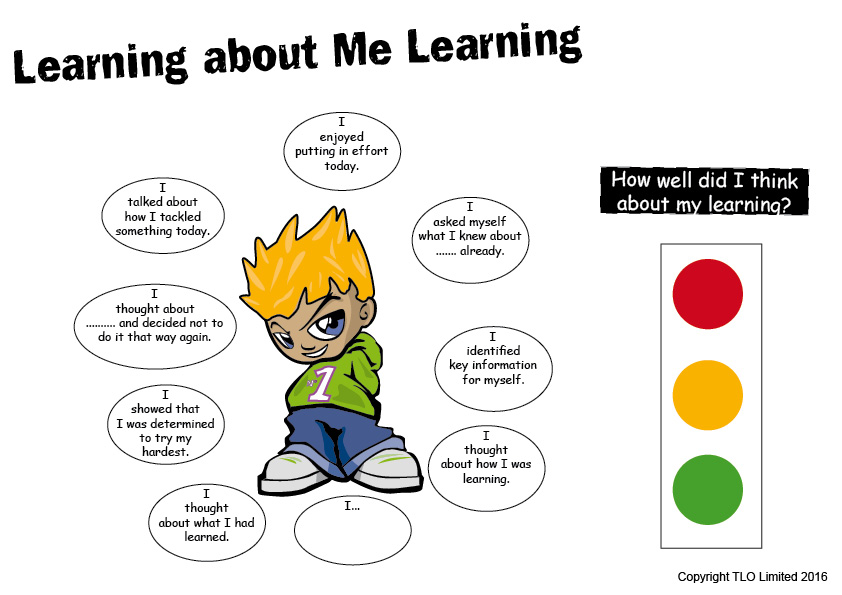
The resource alongside encourages students to become more self-aware of how they are using a learning habit. They are A3 or A4 laminated sheets that show various aspects of a learning habit. Keep on tables or as part of wall display. Students refer to them during lessons, using them as prompts about the finer aspects of a learning habit that is being stretched. They help students to be able to join in meta-cognitive talk.

Download the learning mat


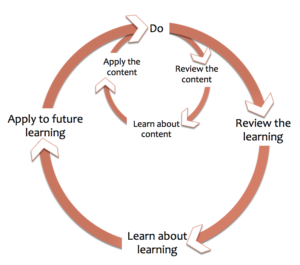
Learning about Me Learning (Meta-learning)


Build in reflection on the learning process itself

The Meta-Learning Cycle, as illustrated opposite, contains the Active Learning Cycle to reflect on content, and (around the outside) enhances it to include reflection on the learning process itself. It helps learners to become aware of which learning behaviours they are employing / have employed.

Initially they might tend to simply name the behaviours – they might, for example, say they collaborated and persevered. Help them to expand their thinking to explain how they collaborated, or how they persevered.

As they develop understanding of the processes of learning, learners will become able to explain both how they collaborated, for example, and how effectively they collaborated. Conversation will move beyond ‘working together’ and ‘group work’ to include references to resolving disagreements, building consensus, building on the ideas of others, taking on roles etc.

Teacher talk

  • How did you Reason / Imagine / Make Links . . . . ?
  • How well did you Reason / Imagine / Make Links . . . . ?
  • What did you do to make sure you were successful?


Think ahead of taking action

How might we tackle this?

A lack of confidence often stems from simply not knowing what to do or how to do it. The task appears overwhelming and otherwise confident individuals become paralysed by the prospect of the task ahead.

At the beginning of a session talk with students about the strategies and things they might use to help them with their learning. Steer talking about how they might tackle this, thinking about strategies that have worked in the past, or speculating on new approaches that might work. It is time spent thinking about tackling the task rather than actually starting to tackle it. It reminds students that they have a range of strategies available and gives confidence that they have the tools for the job in hand.

Teacher talk

  • How might we tackle this?
  • Which learning behaviours may be needed?
  • Have we done something like this before?
  • Which strategy is most likely to be successful?


Rating your learning behaviour

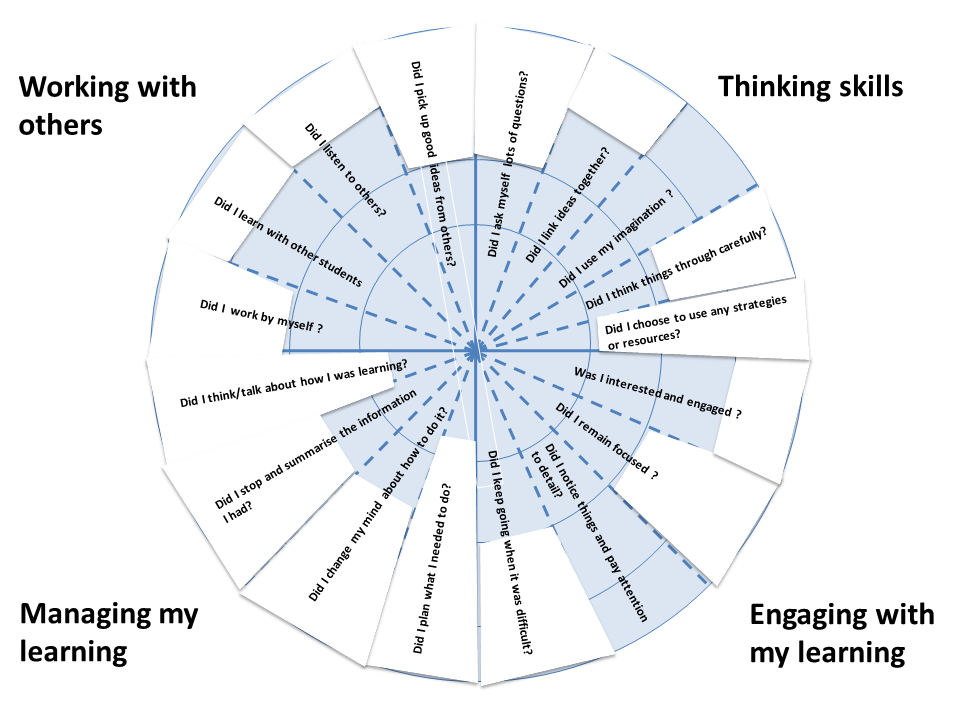
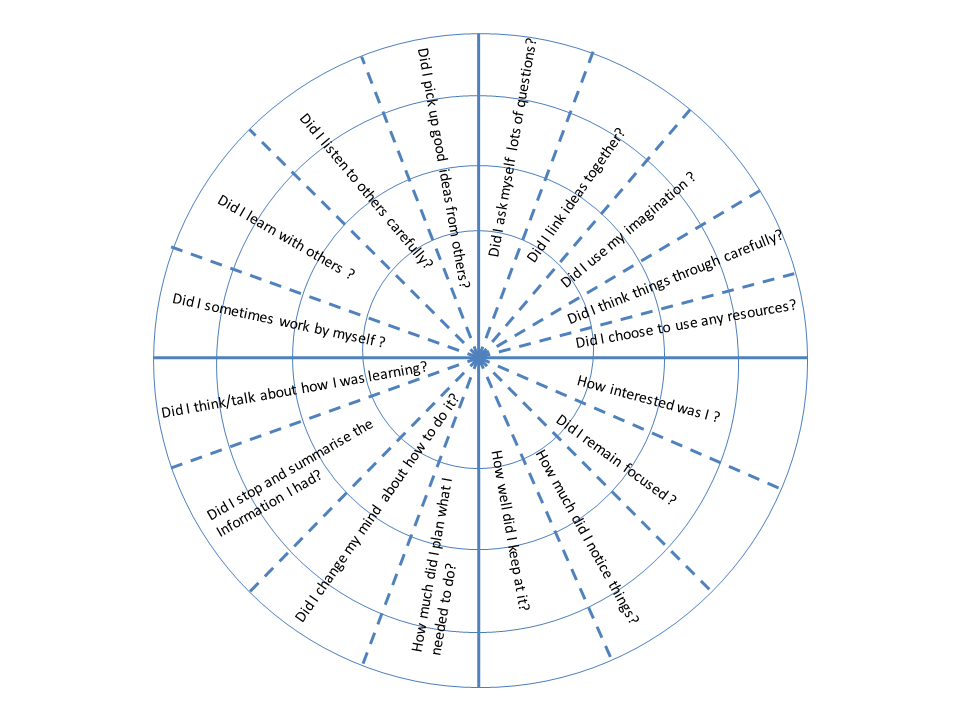
The Rating Wheel enables students to reflect on and record the extent to which they are using their learning behaviours. They colour in each ‘spoke’ depending on how much they believe they have used the behaviour, and end up with something like this:

It can be used to review a particular activity, at the end of the learning day, or even to look back over a week. Alternatively, ask students to think about their learning lives beyond the classroom – where and when do they use these skills when they are not in school?

Download the rating wheel

Teacher talk

  • Which skills did you use?
  • When did you use them?
  • Why did you use them?
  • Which behaviours do you think are your learning strengths?
  • Ditto relative weaknesses?
  • Which do you rarely use?


Step 3. Start here if . . .

You invite students to ‘watch out for’: how they are learning; ways of solving problems; how to get out of difficulties i.e. to monitor, reflect and evaluate it (from Find Out 1).

And as a result, the majority of your students reflect on how they have been learning (from Find Out 2).

The ideas below will help you to embed reflection on both new and prior learning in your classroom.

As students develop understanding of the processes of learning they’ll be able to explain, for example, both how they reflect and how effectively they revise what they are doing. Conversations and actions will move on from ‘reflect on what you are doing’ to being more specific in helping students recognise that learning is a process that needs constant ‘rethinking or redoing’; being able to ‘detect errors in order to improve’; feeling able to ‘challenge accepted ways of doing things’. Statements drawn from the learning growth grids will help you translate the language and action of the classroom, and students will be far more aware of how they are learning.

Ideas for building in reflection Step 3. ⬇️

Step 3. Embed reflection on both new and prior learning.

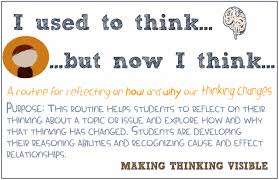
Use the Visible Thinking Routine:

I used to think . . . . ., Now I think . . . ,

This routine helps students to reflect on how and why their thinking/understanding is changing:

  • Remind students of the topic you have been working on.
  • Ask them to respond to each of the sentence stems: I used to think…, Now, I think…

Alternatively ask students to write down their views at the beginning of a topic. Invite them to revisit; update their answer during and at the end in light of what has been learned.

Or, at the beginning of a lesson ask students to write down what they understand by a particular term that will be explored in the coming lesson (e.g. Phrase (English); Proof (Maths); Power (Science) etc). At the end of the lesson ask them to write down what they now understand by the term.

Use it as a means of encouraging reflection on how new learning has led to a change in previous understandings.

Go to the Visible Thinking Websitefor more examples and information about visible thinking routines.

To download ‘I used to think’ from the Visible Thinking Website as a pdf:

Download ‘I used to think’

Teacher talk

  • It’s OK to change your mind.
  • What made you change your mind about this?
  • How has your understanding of xxx changed?


Use the VTR: Think, Puzzle, Explore…

Think, Puzzle, Explore is a visible thinking routine that encourages students to connect to prior knowledge, to stimulate curiosity and to lay the groundwork for independent inquiry. The 3 questions are:

  • What do you think you know about this topic?
  • What questions or puzzles do you have?
  • How can you explore this topic?

Use it at the beginning of a topic as a means of connecting with prior learning and setting the stage for deeper enquiry.

To download Think Puzzle Explore from the Visible Thinking Website as a pdf:

Download as a pdf

Teacher talk

  • What do you know? What don’t you know? How might you find out?
  • Develop questions that open up possibilities
    • Can you give me a bit more on that?
    • What do you think about . . .?
    • Can you expand on that?
    • What is your opinion?
    • What do you think might happen next?
    • What is your hypothesis?
    • So what do you expect will happen then?
    • What are the possibilities?
    • Are there any others?


Use the VTR: Connect, Extend, Challenge

This routine helps students make connections between new ideas and prior knowledge. It also encourages them to take stock of ongoing questions, puzzles and difficulties as they reflect on what they are learning.

  • Connect:
    • How are the ideas and information presented connected to what you already know?
  • Extend:
    • What new ideas did you get that extended or pushed your thinking in new directions?
  • Challenge:
    • What is still challenging you or confusing for you to get your mind round? What questions, wondering or puzzles do you now have?

Use it after learning has already happened as a means of connecting new learning with prior learning.

For example: after exploring a work of art, a theory, a method, a piece of evidence. Try it as a reflection during a lesson, after a longer project, or when completing a unit of study.

The routine works just as well with the whole class, small groups or individually.

To download Connect Extend Challenge from the Visible Thinking Website as a pdf:

Download as a pdf

Teacher Talk

  • When have you done / seen something like this before?
  • What does it remind you of?
  • It’s a bit like xxx isn’t it?
  • What does … tell you about … ?
  • How does knowing … help you to … ?
  • How/where could you use this?
  • How has this changed your ideas?
  • Is there anything that’s still puzzling you?
  • Can you see a link between what you did in . . and this ?


Step 4. Start here if . . .

You prompt learners to reflect on how they are learning as they go along, i.e. are they are keeping to plans, why and how have these changed (from Find Out 1).

And as a result, the majority of your students take time to monitor their learning as they go along (from Find Out 2).

The ideas below will help you to begin to differentiate between monitoring and evaluation.

As you begin to give more control of their learning away to students it makes sense to build a climate of collaboration and interdependency. Working with others, being part of a team, are essential life as well as learning skills. Think, pair, share will have been a favourite for years but there are other researched forms of group learning that are worth bringing into play every now and again.

Ideas for building in reflection Step 4. ⬇️

Step 4. Distinguish between Monitoring and Evaluating.

Use two types of reflection:

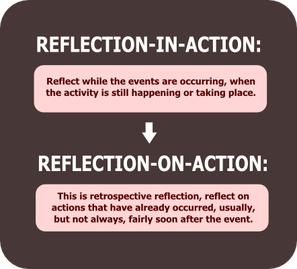
The two aspects to reflection –

  • reflection In action (or monitoring) undertaken in the hurly-burly of the process of learning,
  • reflection On action (or evaluating) a retrospective focusing on what happened, what worked and to how to do it better next time.

Being able to reflect on, refine and review your ideas is a key learning characteristic. Students need to be taught:

  • not to wait till they’ve finished before checking how they are getting on;
  • to keep making small checks and revisions all the time as they go along …am I on the right track? Is there something I’m missing? (Reflection In action)
  • to check what they have done at the end…is this as good as I can make it? (A bit of both depending on whether it needs further adjustments or not)
  • and at the end, to think about whether there’s a better way to do it? (Reflection On action)

Teacher talk to support Monitoring

  • Are you checking whether this is OK?
  • So, by checking all the steps/sections you have achieved a great outcome
  • Can you think of other ways you might do it?
  • Check your success criteria and that you are still on track
  • Does this need fine-tuning?

Teacher talk to support Evaluating

  • How did it go?
  • Are you pleased with the outcome?
  • Could it have been better? How?
  • Tell me how you did that
  • Think about how you did it and tell your friend about it
  • Are there other ways you might have done it?


Click to enlarge


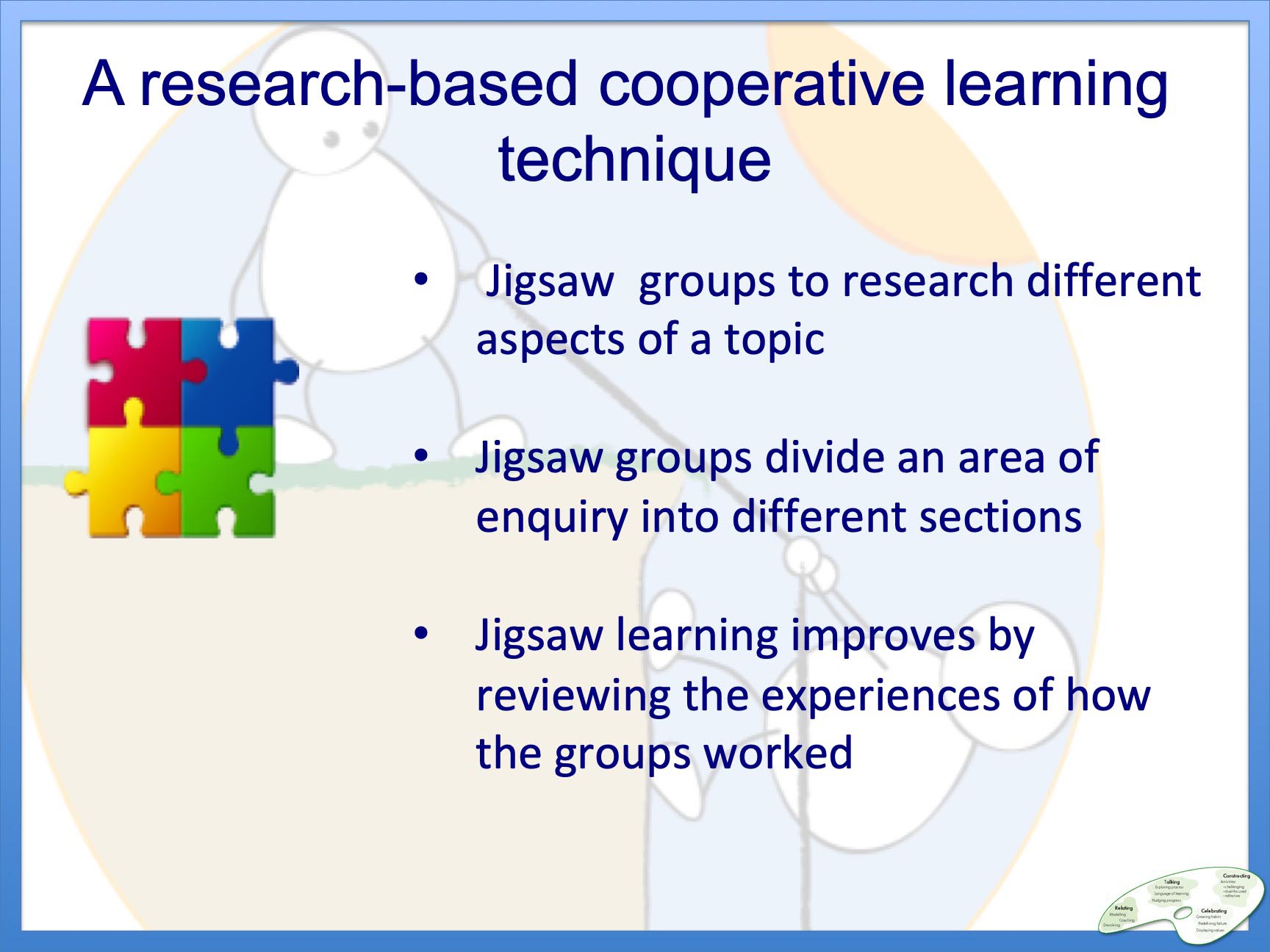
Try Jigsaw groups to scaffold content and build interdependence

  • Jigsaw methodology is used in all phases of education and importantly builds a climate of interdependence in the classroom, as each person’s activity is necessary for their colleagues to be able to learn.
  • The Jigsaw idea is to divide an area of enquiry into different sections, each one of which is allocated to a sub-group of the class (Aronson and Patnoe, 1997).
  • There are two phases to jigsaw groups:
    • Phase I, the sub-groups become temporary experts in their section of the project by researching what is needed. i.e. Red group with students A,B,C,D, work on one subset of the project. Blue group with students A,B,C,D, work on another subset of the project and so on
    • Phase II a new set of groups is then put together, each new group made up from ‘experts’ from each subset of the project i.e. all the A’s in a group. All the B’s etc.
    • Now the big picture of the project focus is created – students begin to create a grasp of the whole picture through each of their own efforts and understandings.
  • Invite students to reflect on their learning to:
    • compare intended with actual outcomes
    • evaluate their metacognitive strategies…what helped us to collaborate when? how did we handle disagreement?
    • analyse and draw causal relationships
    • pull together meanings
    • apply their learning to new situations
    • gain personal insights and learn from all their experiences.


Jigsaw listening

A listening-based variation on jigsaw groups . . .

Form groups of students, each group tasked with listening for a different aspect of what is being said. (e.g. facts, opinions, emotions, false evidence, mixed messages etc.) After listening they agree as a group what they have heard. The groups then ‘jigsaw’ into new groupings each containing at least one member of the original groups, where they put together the different aspects that have been heard.

Teacher talk

  • Form yourselves into four groups A, B, C, D.
  • Group A are listening for… B for…
  • It might be helpful if you note down the particular things you have been asked to listen for
  • After the input each group checks out if, between the members, they have captured what they were asked to
  • What did you miss? Which aspect (A,B,C,or D) proved the most difficult to capture
  • Now jigsaw into new groups with an A,B,C,D member in each to put what you heard back together
  • Paraphrase what you have and report back.
  • What can you conclude from your discussions?


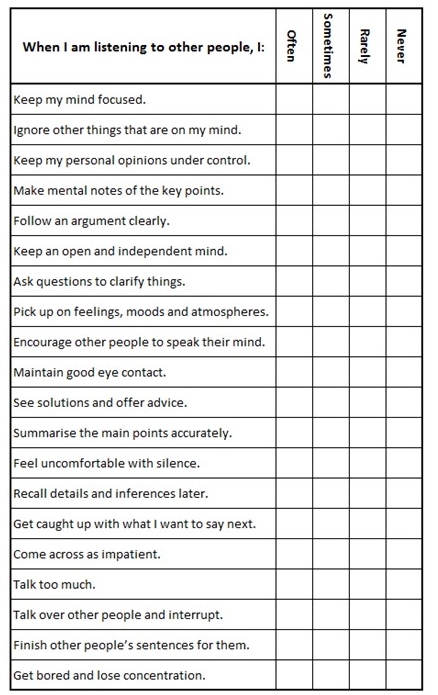
You could add in student self-evaluation of listening . . .

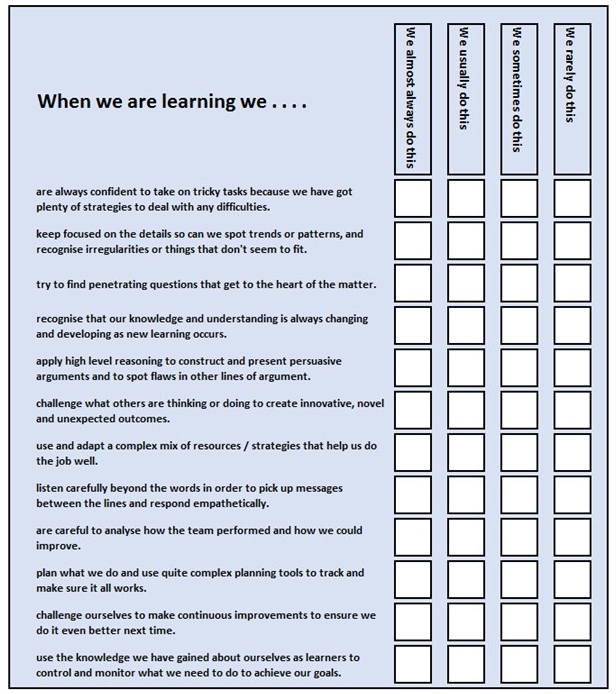
Have students use this or similar checklist to build greater awareness of their listening skills and their importance. Use the tool to focus discussion, to analyse any patterns of use, to isolate and prioritise things to work on.

Download the checklist

Teacher talk

  • Where are your listening strengths?
  • Can you see any patterns in your listening behaviour?
  • Are you aware of behaving differently in with different people/places?
  • Where/who with do you do your best listening?
  • Why might that be?


Jigsaw-Puzzle


Step 5. Start here if . . .

You give students freedom to select, plan, organise, adjust and evaluate their learning. This enhances their power of reflection (from Find Out 1).

And, as a result, the majority of your students accept the challenge of planning, monitoring and evaluating their own learning (from Find Out 2).

The ideas below will help you to secure and further deepen reflection.

Over time you’ve helped your students to learn how to manage and organise their learning by being given increasingly demanding opportunities to do so. You’ve encouraged students to take charge of their own learning, planning what they do, distilling meaning from it, and revising it accordingly. You have given them the skills to assess what they are achieving and the willingness to look at it critically in an effort to improve.

Ideas for building in reflection Step 5. ⬇️

Step 5. Further deepen reflection.

Have students analyse their own performance.

In order to reach the goals of progressing in their learning – be it content or process – students must be able to self-regulate their own learning. Providing feedback that enables students to do this includes;

  • Share assessment criteria with students and ask them to assess/comment on the (imperfect) solutions you provide. Invite them to produce improvements based on their own feedback.(as a class exercise)
  • Share assessment criteria with students and invite them to assess/comment on their own work, and amend it if necessary, before submitting it.
  • Ensure that your written comments are framed as questions to which your students are required to respond. “What do you think you need to do to make this section more convincing?” is preferable to “This section needs more explanation”, as it moves responsibility to the learner to identify what more needs to be done.

Insist that when students respond to your feedback they indicate what they will do differently next time. Get students into the habit of acting on feedback rather than merely reading it. ‘What they will do differently next time’ is their self-generated target for development.


Self-analysis of performance and creation of feedback

In order to reach the goals of progressing in their learning – be it content or process – students must be able to self-regulate their own learning. Teachers need to provide helpful feedback to enable students to do this.

  • Share assessment criteria with students and ask them to assess/comment on the (imperfect) solutions you provide. Invite them to produce improvements based on their own feedback.
  • Share assessment criteria with students and require them to assess/comment on their own work, and amend it if necessary, before submitting it.
  • Ensure that your written comments are framed as questions to which your students are required to respond. “What do you think you need to do to make this section more convincing?” is preferable to “This section needs more explanation”, as it moves responsibility to the learner to identify what more needs to be done.

Teacher talk

  • What feedback would you give on this short assignment . . . . ?
  • Now use that feedback to help you improve it?
  • Remember to check your own assignment against the criteria before handing them in.
  • What might you do differently in this writing to make it more factual/vivid/joyful…


Build your coaching talk to enhance student reflection.

Select from the phrases below to nudge students to reflect on how they are learning, and to help them to better understand their own learning behaviours and its growth.

To maintain motivation

  • What’s your secret of keeping going on this ?
  • Is this working for you? Do you ever get downhearted? And then what do you do?
  • Believe in yourself and what you are doing

To realise their own learning goals

  • How do you know how best to solve this problem?
  • What connections are making sense to you now?
  • What might you need to do more of to figure this out?
  • It’s interesting how you have put those two ideas together. What made you do that?
  • What have you got in mind to improve this even more?

To learn purposefully with others

  • Who will you choose to work / learn with on this?
  • Do their skills complement yours?
  • Who else might you need to involve?

To regulate their own learning

  • When do you find it best to take a moment to review what you have done and how you have done it?
  • Give yourself some ‘think time’ if you feel you need it
  • Play to your strengths

To understand themselves as learners

  • What sort of motivational things do you say to yourself to keep going?
  • Do you use some sort of reward system to get you through the tedious bits?
  • Which way of working is working best for you? Why?
  • What sort of self-talk would be useful for other people to use/try?

To control their own learning growth

  • What would you do differently in the future?
  • What bits of your personal learning style are you having to rein in on this project? Why is that?
  • How do you tackle it when things go too slowly/seem insurmountable/ are coming out wrong/are not as good as you want them to be?
  • What didn’t work so well? Why do you think that is?

Try these If/Thens to help students to move forward:

  • If I am near to finishing something, then I will stop and ask myself whether it will meet my expectations.
  • If I complete a piece of work, then I will ask myself what I have learned from the way I chose to tackle it.
  • If I am struggling, then I will seek out experts who can help me.


Image result for if then icon


Return to the Constructing Learning Unit


Continue Reading

In Talking for Learning you nudge learning forward.

Return to the Talking for Learning Unit

How to use this section profitably.

From Find Out 1 (the green tables) you’ve developed an idea of where your classroom culture is in relation to Talking for Learning. From Find Out 2 (the blue quiz) you have considered how your students are responding to the changes you have made.

Each of the 5 Steps below offer a range of practical ideas to help you shift and develop the learning language of your classroom.

Identify the step that best fits your current classroom culture and how the majority of your students are responding.

If in doubt, start at the step that most accurately reflects how the majority of your students are responding.


Step 1. Start here if . . .

Your feedback focuses on what has been learned, errors that need correction, and what needs to be learned / done next (from Find Out 1).

And, as a result, the majority of your students expect feedback to identify errors that need correcting (from Find Out 2).

The ideas below will help you to talk about learning behaviours, giving them a shape and a purpose.

Research has shown that there are two words, ‘never’ and ‘always’, which can be toxic and damaging to students. Hence right at the start of introducing a learning language it’s important to help students reframe reactions like ‘I can never understand’ or ‘I always find maths too hard’, which breed a kind of learned helplessness. Turn the tables by emphasising positive learning capacities that will ensure success or increase their skills. A further early stage is to gradually involve students in developing a list of the features of a learning behaviour, or the rights and responsibilities ground rules of its use. You are giving each learning behaviour familiarity, a shape and a purpose.

Ideas for nudging learning forward Step 1. ⬇️

Step 1. Talk to give learning a shape and purpose.

Develop rights and responsibilities

Have students work in pairs or small groups to suggest a charter of matching rights and responsibilities or ground rules for collaboration. If everyone has a right to have their voice heard, everyone also has a responsibility to listen attentively to others and wait until they have finished speaking. This provokes interesting discussions, builds understanding and conveys the importance of learning behaviours.

misc-teleportation-script-imbued


Turning pessimistic to optimistic student talk

Words like ‘never’ and ‘always’ can be damaging to learners. When students say ‘I can never understand what my teacher is going on about’, or ‘Maths is always too hard for me’, it suggests a pessimistic view of learning. How can we help to turn that into an optimistic view of learning?

Open and read the short article below.

Read more

Noticing learning

Spend time with your class just noticing learning, talking about how it feels and when it’s best. Then ask the class to talk about what helped their learning, the ingredients of learning.

Capture what students say and make lists of:

  • Doing words such as
    • sharing
    • focusing
    • listening
    • talking
    • practising
    • quiet thinking
  • Feeling words such as
    • energy
    • support
    • happy
    • patient
  • Words relating to things such as
    • number lines
    • computers
    • TV
    • books
  • People words such as
    • brothers
    • sisters
    • parents
    • doctors

You will be pleasantly surprised by the number of words offered for processes, and the great range of items that students find helpful when learning. Make the lists into posters and display in the classroom, as a public support to continuing the dialogue about learning. It’s also worth reviewing and developing the lists at a later date.

Teacher talk

  • What helps you to learn?
  • Can we make a list of all the things that help us to learn?
  • What sort of feelings help us to learn?
  • What sort of things do we do when we are learning well?
  • Who helps us to learn?


Step 2. Start here if . . .

You ensure students grow an optimistic, not pessimistic, view of learning by praising use of key learning behaviours (from Find Out 1).

And, as a result, the majority of your students appreciate praise for how they are using the 4 key learning behaviours (from Find Out 2).

The ideas below enable you to help students become more aware of a greater variety of their own learning behaviours.

Here you are slowing things down just a little in order to draw students’ attention to their own use of a learning behaviour. You are saying, for example, ‘how did you do that?’ which encourages students to slow down, notice and appraise steps and strategies. Or, ‘what would have made that easier for you?’ which encourages looking for alternative ways of proceeding.

Ideas for nudging learning forward Step 2. ⬇️

Step 2. Draw students attention to their own use of a learning behaviour.

The questions in the panel alongside illustrate the kinds of things that teachers can encourage students to pay attention to. Instead of skipping quickly to ‘the right answer’ ask them to slow down and notice and appraise strategies and steps they are using along the way. This helps students become more reflective and thoughtful about their own learning. You’re encouraging them to explore and compare different strategies for making progress. This helps them become more flexible and resourceful in the face of difficulty, and to get into the habit of looking for alternative ways of proceeding if their first idea doesn’t work. You’re encouraging them to develop the habit of thinking for themselves about what helpful knowledge or strategies they might already have that could help them out in this situation. Slowly they become more independent and resourceful.

View the page

Point out learning behaviours in written feedback

Using the learning language enables you to be more precise about the sort of learning effort a student has used. Beneficially this also means that you notice more precisely how students are learning.

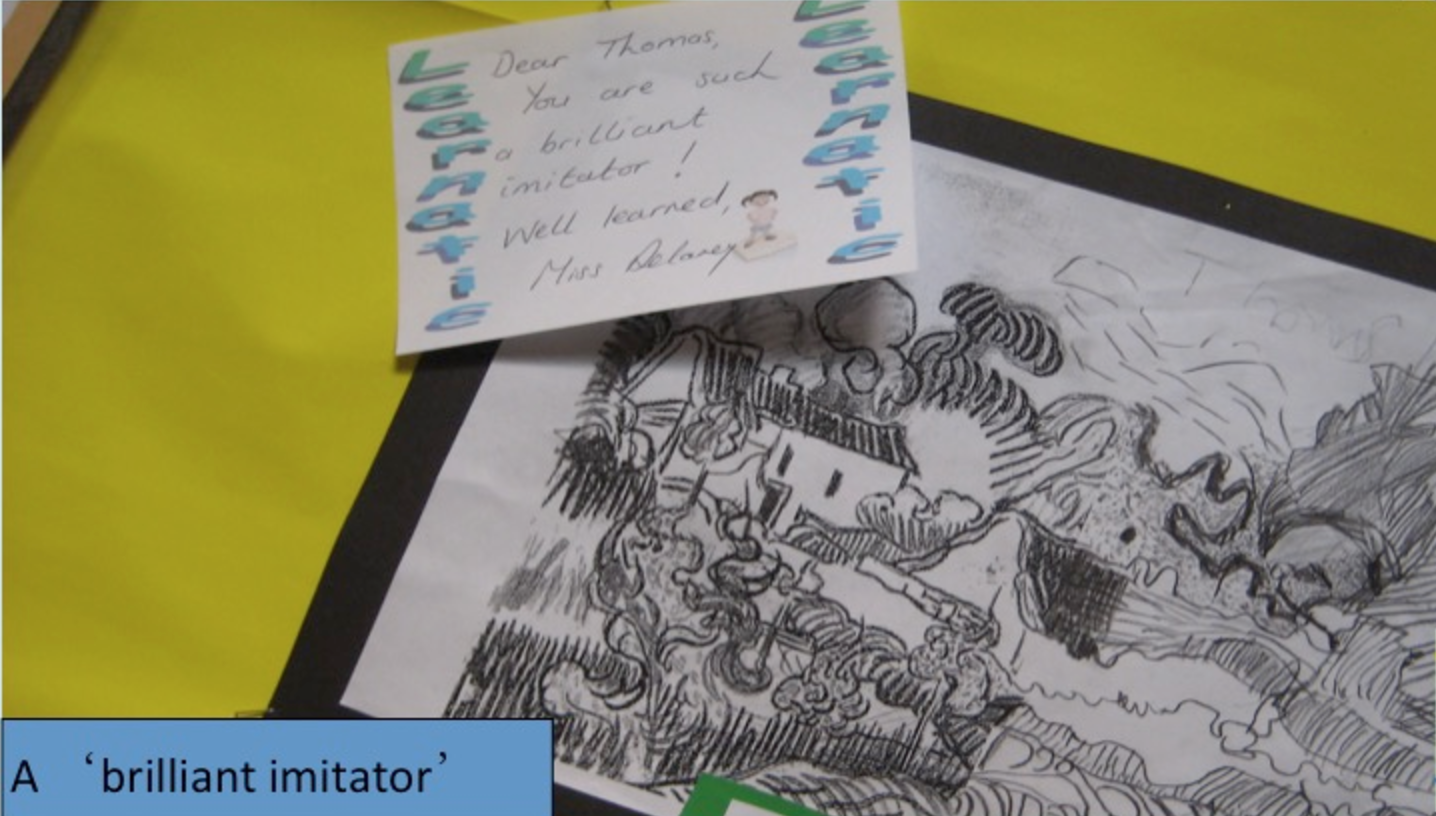
Give written feedback naming the types of learning behaviours being used.Here for example Thomas is being told he is a brilliant imitator. The teacher noticed that he successfully used his Imitation ‘muscle’ to draw like Van Gogh. She is making him aware of this, and praising him for it.

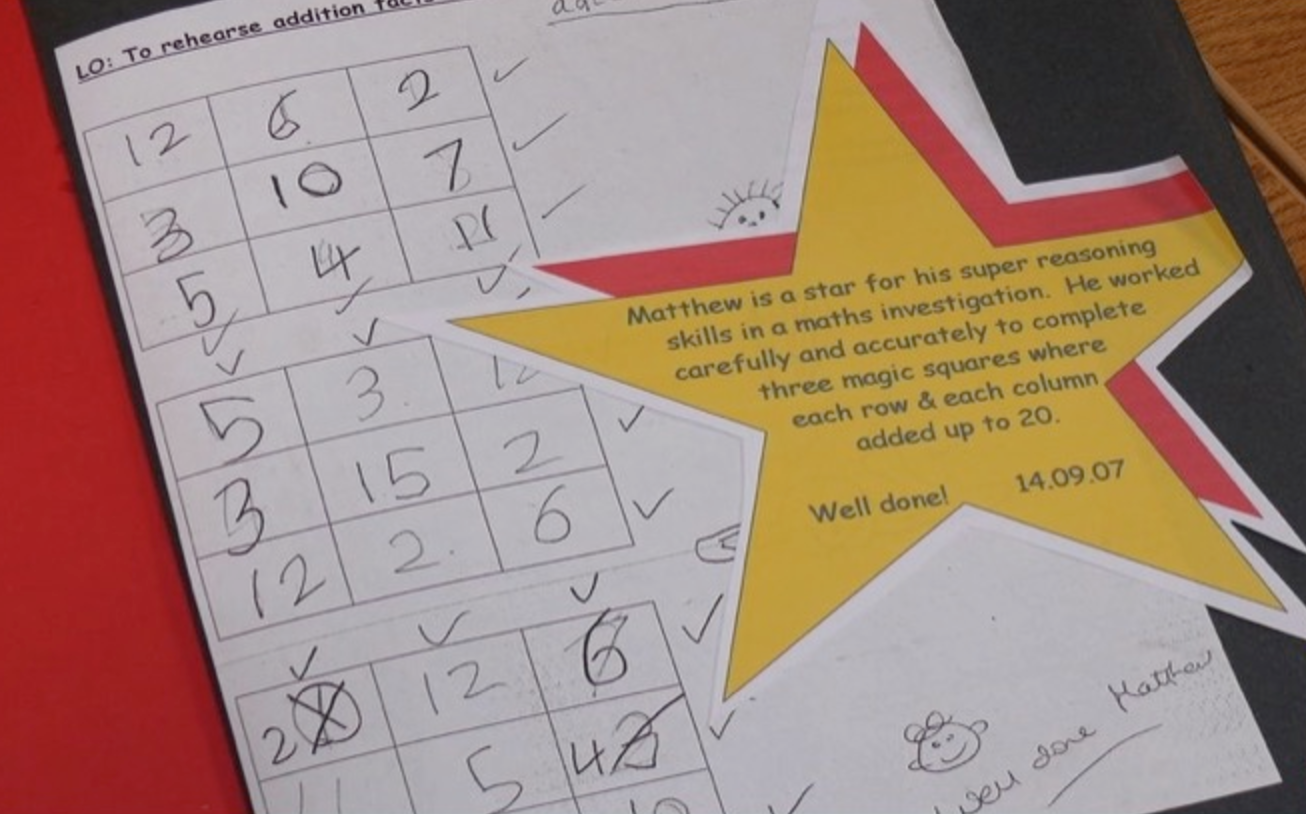
And here, written feedback helps Matthew to understand how his ‘super reasoning skills’ helped to assure success. The teacher is intentionally linking these learning behaviours and curricular success.


Screen Shot 2017-01-25 at 11.09.23

click to enlarge

Screen Shot 2017-01-25 at 11.09.42

click to enlarge

Point out learning behaviours in oral feedback

Oral feedback

Looking out for learning behaviour, noticing students doing it, talking about it and nudging them forward is the name of the game.

For example, if you were wanting to help students to evaluate progress towards a goal, you might use phrases like:

  • Do you think that’s coming along well?
  • Have you checked your emerging outcome against your original goals?
  • Are you still on track?
  • What would make you change tack?
  • Did you have to amend your goals part way through? Why was that?
  • What are you going to do about . . . . . ?
  • Do you think there’s anything you could have done better, differently?
  • How might you get better at that? What would be a better/alternative way of doing it?
  • Are you satisfied with how it is going?

But what prompts/nudges would you use in relation to the effectiveness of a team? Or to the quality of the questions being generated? Or the extent to which the work was sufficiently challenging?

To what extent would you need to ‘plan’ your informal oral feedback?


Step 3. Start here if . . .

Your language helps students to slow down and notice / appraise the strategies they are using across a broadening range of learning behaviours (from Find Out 1).

And, as a result, the majority of your students use my feedback to consider the learning strategies they are using (from Find Out 2).

These ideas will help you to offer students a range of motivating feedback.

Here you are looking at learning in the round by offering feedback on three aspects of learning. The point here is to support the student in the use of their learning behaviours. It involves prompting students in three ways; how well the task has been done, the dispositions or learning behaviours the student used, and encouraging their self-motivation.

Ideas for nudging learning forward Step 3. ⬇️

Step 3. Offer students a range of motivating feedback.

Encouraging feedback to support the use of learning behaviours

Differentiate your written feedback:

  • For novice learners, focus on task-related feedback;
  • For more experienced learners, widen feedback to include process-related feedback;
  • And for the most proficient learners, include self-regulation feedback.

Task-Level Feedback Prompts (adapted from Nuckles et al, 2009)

  • Does this answer meet the success criteria?
  • Is this right?
  • Could you elaborate on this answer?
  • What aspect of your response to this assignment are you pleased with/unhappy about?
  • What other information do you need to meet the criteria?
  • What’s the sticking point in this task?

Process-Level Feedback Prompts (adapted from Nuckles et al, 2009)

  • What strategies are you using?
  • Are there more efficient strategies you could use?
  • What other questions could you ask about this task?
  • Do you grasp the concept underpinning this task?
  • Have you done anything similar to this before?

Self-Regulation-Level Feedback prompts (adapted from Nuckles et al, 2009)

  • What would be the best way of checking your work?
  • How could you reflect on these answers?
  • What happened when you …?
  • How can you account for …?
  • What learning goals have you achieved?
  • How have your ideas changed?
  • What aspect of this work could you now teach to others?


Introduce students to themselves as learners

Here is an activity you might use to introduce the concept of learning and explore how students feel about it.

To open up a conversation with students about how they perceive themselves to be as learners, invite them to complete the ‘How’s My Learning Fitness’ quiz.

Hows-your-learning-fitness.pdf

Students complete the quiz individually and score themselves against the 4 domains of learning – emotional engagement, cognitive range, social involvement and strategic responsibility.

The conversation that follows is as important as the quiz itself. The conversation may be adult-led, or peer to peer.

Teacher / peer talk

  • What are your areas of learning strength?
  • Ditto relative weaknesses?
  • Is this something you recognised in yourself before doing the quiz?
  • Have you ever looked at yourself like this before?
  • What might you do as a result of this?
  • What one thing might you need to work on?
  • Be more precise – exactly what will you do?
  • Who might be able to help you?
  • Do you know anyone else who is good at this? What do they do?

Who does this well ?

Keep asking the question ‘Who does this well?’ to encourage students to study the successful learning behaviours of others. Use supplementary questions like ‘what is (s)he doing that you are not?’

Teacher talk

  • Perhaps you could ask … to show you how they do it.
  • This XX idea of yours is successful but what else do you need now?
  • Look very carefully at someone you think is doing …… really well and think about how you might do it like that
  • What would you like to be able to do that ….. can do?
  • What did … do to succeed?


Step 4. Start here if . . .

You offer encouraging feedback on both the completed Task, the effectiveness of the Process and how the process has been Self-Regulated (from Find Out 1).

And, as a result, the majority of your students act on my task, process and self-regulation feedback (from Find Out 2).

The ideas below will help you to begin to enable learners to become their own critical friend.

Although we are raising this idea here we recognise that you may have introduced the well-known ‘3 stars and a wish’ much earlier. However, what you are trying to do here is to enable students to become their own critical friend; a judge of their own learning and a fixer of their own learning problems. Over time you have given students a rich language of learning with words to describe and understand not only learning behaviours but how they are disposed to use them. Students can use this rich thinking and vocabulary to analyse their learning and themselves as a learner.

Ideas for nudging learning forward Step 4. ⬇️

Step 4. Help learners to become their own critical friend.

Harness the power of 3 stars and a wish

The well-known Assessment for Learning technique of 3 stars and a wish is frequently used by teachers to fashion their feedback to learners, but here we are suggesting that learners use it themselves to structure feedback to each other. The strategy fits well with feedback that is Kind, Specific and Helpful as considered in ‘Austin’s Butterfly’.

But here you are playing a longer game. While in the early stages students give and receive feedback from their peers, you are really laying the foundations for students to act as their own ‘critical friend’, judging their own efforts (3 stars) and considering what more needs to be done (a wish). It is a shift of responsibility towards the learner to evaluate their efforts against the agreed success criteria and, eventually, against their own self-imposed standards.

Image result for three stars and a wish

Self reflection

By and large, students who are able to, reach higher levels of Meta Learning by themselves although relatively few people naturally behave like this in virtually any circumstance. The classroom cultures established in the previous phases are designed to give students the best chance of achieving Meta Learning behaviours, so there’s little need for direct teacher intervention in the higher phases. Rather, the role of the teacher/ coach/mentor becomes one of:

  • ensuring there are sufficient opportunities available to display the high level behaviours;
  • nudging, praising and supporting people to exercise them;
  • modelling these behaviours themselves in their everyday interactions.

Now it’s worth asking yourself:

  • Does the classroom culture actively support meta-learning to develop further?
  • Does it need to?
  • Is my own ‘nudging meta-learning’ language precise enough to keep moving students to become highly-skilled meta-learners?
  • How well do I model these highly skilled meta-learning behaviours myself ?
  • What phase of meta-learning behaviour have I reached?

Image result for self reflection

Reviewing collaborative behaviours

It’s a good idea to establish that at the end of a group task the whole group reflects together on;

  • how they functioned as a group and
  • agree a development target.

Choose the review tool that best fits your students’ current collaborative behaviours for the selection below.

Download a review tool for novice collaborators Download a review tool for developing collaborators Download a review tool for sophisticated collaborators

Teacher talk

  • How well did that go?
  • Was the outcome as you had hoped /planned?
  • Did you meet your own targets? If not, why?
  • What did you learn from doing it that way?
  • How well did you do ‘as a team’?
  • Is there anything else you could have done as a team?
  • How else could you have tackled this?


Step 5. Start here if . . .

You create regular opportunities for students to evaluate their own and others’ work using constructive feedback (from Find Out 1).

And, as a result, the majority of your students offer learning-related feedback to each other (from Find Out 2).

The ideas below will help you and your colleagues to ensure this philosophy of learning is working its way into changing the culture of the school.

Building Learning Power has a clear, well-articulated vision of education as a preparation for living in a turbulent world, where the major challenges are those of dealing with high levels of uncertainty, complexity, opportunity and responsibility. In coping with this young people need to be helped to learn how to reason, imagine, persist, evaluate and collaborate; the life skills of learning which are a school’s business to concentrate on. Making it successful means working this philosophy and practice into the mainstream thinking of the school.

While these well-developed online tools and illustrations will help you to develop your teaching techniques, the best way of ensuring these work in changing the culture of the school, is by working collaboratively with colleagues.

Phase 1 of this programme offered carefully structured learning team meetings. Phase 2 has no given structure because the path you take will now be driven by the needs of your students. But in order to ensure a holistic approach, we urge you to continue sharing what you are doing with other colleagues.

Ideas for nudging learning forward Step 5. ⬇️

Step 5. Work with colleagues to ensure the learning power philosophy impacts the school culture.

Meet with colleagues to consider/select on-line materials to make use of.

Consider what you have each been trying out over the last month or so and what else you want to experiment with.

Try a PMI (Plus, minus, interesting) routine to help sort out your thinking.

Think about:

  • how the ideas would suit your students as learners
  • which are realistic both for you and your students
  • how the ideas would impact on your classroom culture and the students view of themselves as learners
  • which ideas are front runners and why?

Use the decision making pentagon for deciding what you might try. Note down a couple of:

  • things you want to start doing
  • things you think you need to stop doing (that’s harder)
  • things you want to keep doing
  • things you want to do more often
  • things you want to do less

Extend your thinking with a Learning Culture Review.

Conduct a Learning Culture Review in your own classroom. If possible, discuss the outcomes with other colleagues – what is emerging from your reflections in relation to a) your own classroom, b) the school more widely?

Download the Learning culture review

Is your school really a learning organisation?

Some schools are going further by looking at the school itself as a learning organisation. Download these 2 pages from ‘The Learning Powered School’ to gain a flavour of the questions that these schools are asking themselves. How would you answer them about your own school?

Download page 192 Download page 193


Return to the Talking for Learning Unit


Continue Reading

In Talking for Learning you begin to explore learning as a process

Return to the Talking for Learning Unit

How to use this section profitably.

From Find Out 1 (the green tables) you’ve developed an idea of where your classroom culture is in relation to Talking for Learning. From Find Out 2 (the blue quiz) you have considered how your students are responding to the changes you have made.

Each of the 5 Steps below offer a range of practical ideas to help you shift and develop the learning language of your classroom.

Identify the step that best fits your current classroom culture and how the majority of your students are responding.

If in doubt, start at the step that most accurately reflects how the majority of your students are responding.

Step 1. Start here if . . .

Your talk about learning focuses on what is being, or has been, learned and how this needs to improve (from Find Out 1).

And, as a result, the majority of your students have little understanding of the learning process (from Find Out 2).

These ideas will help you to bring the first four learning behaviours out into the open.

At this early stage you will need to train yourself to keep an eye on the learning behaviours that your students are using, and then take the opportunity to talk with them about them just ‘in the moment’. Students at this stage won’t be very conscious of Persevering or Questioning etc. even though they are using them. So just slow things down and open up discussions on the behaviours you have spotted. This will help students to notice when they are using a learning behaviour.

Ideas for exploring learning as a process Step 1. ⬇️

Step 1. Begin identifying the first four learning behaviours being brought into use.

Couple seeing and talking about behaviours.

Keep an eye on the learning behaviours that your students are using, and take the opportunity to talk to them about it. Hard to plan for, because it is ‘in the moment’ opportunism, and easy to forget in the hurly burly of the busy classroom. Even if learners do not, as yet, fully understand the key learning behaviours of Perseverance, Questioning, Collaborating and Revising, they will exhibit these behaviours, even if they are not conscious of doing so. Use these opportunities to slow the classroom down and open up a short discussion about the successful behaviour that you have spotted. Such interludes have a number of benefits:

  • It signals to learners the teacher’s interest in learning behaviours.
  • It alerts learners to the behaviours that they already command.
  • It begins to explore the complexity of the 4 key behaviours.
  • It encourages students to observe and learn from the successful habits of others.
  • It opens up opportunities for meta cognitive talk.

By the way you express yourself you create a potent milieu that teaches students what kinds of learning are valued ’round here’, what their role is with respect to knowledge and what aspects of learning are worth paying attention to.

Learning Detectives

What do I need ? A phone/camera that takes video footage

What is it for ? Capturing learning in action

How might I use it ?

Arm students with a phone/camera. Dedicate time for them to record successful learning moments in their class, and elsewhere around the school.

Appoint some as Learning Observers whose role it is to video learning and to feedback on what they have seen and why they chose to record it.

Consider creating a prompt sheet to formally record information relating to the footage.

Build a video montage of learning in your classroom/school. Use it to illustrate good learning behaviours and to encourage students to reflect on their own role, strengths and weaknesses as learners.

Teacher talk

  • What learning behaviours can we notice in this clip?
  • What are the learners doing?
  • Why did you think this was good learning?
  • How could this learning be improved?

Looking for Learning

As soon as a learning behaviour has been introduced, encourage the children to notice when they use it, and to briefly record what they have done—imagined something, used a good question, managed a distraction and so on —on a sticky note and stick these on a Learning Tree wall display.

As a teacher you’ll need to be on a constant look-out for the behaviours you’ve been explaining, encouraging and enabling. You might capture these through photographs or on sticky notes and add these to the Learning Tree. This ‘looking for learning’ can be further enhanced by ‘learning detectives’: two children who are assigned this role each day to look for good learning behaviours in others and again add them to the Learning Tree. By the end of the day the Learning Tree offers a rich source of information to reflect on, explain, and reinforce using whole-class learning power discussion.

At the end of the week the sticky notes can be carefully saved in a large scrapbook. This gives teachers a running record of what students have been doing and noticing about themselves. After a term or so you could begin using your analysis of the weekly data to plan further development.

Teacher talk

  • How are you learning?
  • What did you do?
  • How did you do it?
  • Why was it successful?


Step 2. Start here if . . .

You have introduced talking about learning itself, bringing attention to the process of learning. “What does it feel like?’ ‘How did using xxx feel/work?’ (from Find Out 1).

And, as a result, the majority of your students are becoming aware of the 4 key learning behaviours and how they use them (from Find Out 2).

These ideas below will help you to prompt the use of more learning behaviours.

Here you are beginning to incorporate the language of learning into your natural classroom talk. You can turn your prompts and nudges into really useful statements by watching carefully through a LP lens and say ‘ how could you use your imagination to…?, Or, ‘What sort of questions might be helpful to take you further here?’ Your language is defining the sort of effort you want students to make. You are using this language of learning to nudge these positive learning tendencies.

Ideas for exploring learning as a process Step 2. ⬇️

Phase 2. Use the learning language to prompt the use of more learning behaviours.

Discuss planning

Design a planning sheet to use with students when you are planning an activity with them. You might include these and other headings:

  • What are we trying to achieve? (agreed goal, outcome)
  • How will we know we have been successful? (success criteria)
  • What do we need to do? (actions, jobs)
  • What will help us? (resources)
  • What might be a problem? (traps, obstacles)
  • What will we do about it? (What- if or contingency plans)
  • Who will do what? (roles) [Simplify according to age range.]

Use display to record key learning

Set aside an area of display where students are asked to share any strategies or ‘top tips’ that they have found particularly helpful in their own learning. For those offering the ‘top tip’, it is a distilling activity, but the resulting gallery of ‘top tips’ invites students to adopt the successful strategies of others.

This will also support the skills of noticing, collaborating, and distilling.

Teacher talk

  • Who has a top tip to add to the board today?
  • What made you think of that way of doing it?
  • Well done, you worked this out for yourself.
  • Can you try to do this without that tool? Can you work it out in your head?
  • What else might be helpful?

How will you find that out?

This routine helps students to take stock of what they need to find out and to consider the strategies they might use to achieve it. It encourages metacognitive thinking about which learning strategy is most likely to lead to success. The routine has two questions:

  • What do you need to know / understand ?
  • Which strategy is most likely to be successful ?

The natural place to use this routine is when students are beginning to understand what they need to find out but before they make a choice from a range of learning strategies.

Teacher Talk

  • What do you need to know about this?
  • Is that important?
  • What sort of things might you need to find out?
  • So how/where will you look for ideas?
  • What are the options?
  • Which will be quicker?
  • Where are you likely to find more detail?
  • Do you need detail at this stage?

Image result for find out

Exploring attentiveness

To get students to explore good noticing

Ask students if they can think of an animal, bird or person who is good at noticing. Their answers will help you assess their understanding of the concept. They will have lots of good ideas and you will end up with a character who is an expert noticer.
Maybe it will be an owl who can turn its head right round to look for things, a cat with great big eyes or a long eared hare ….. Red Riding Hood is always a good stand by, as well as Mr. Nosey of course!

Teacher talk

  • Who / what is good at noticing?
  • Why do you think that?
  • Is noticing the same as looking?


Listening for purpose

Listening for a purpose is about sharing the reason for or purpose of listening. At this stage it’s about making the distinction between hearing and listening; saying why we are listening and what we are listening for.

With younger students this may just involve talking about what we do when we listen rather than just hear.

For older students it’s about being clear about the specific purpose of listening…what to listen for as part of the learning objective. For example you may give students specific questions at the start of a lesson, expect them to listen for the answers in the lesson input and require them to answer the questions later in a reflection journal.

Teacher talk

  • Today we are going to see if we can spot what we do when we listen
  • Listen out for the main/important ideas here
  • Today I want you to listen for….
  • As I go through this I want you to listen for information/facts about ….. so that you can….

eagle


Related image


Step 3. Start here if . . .

You have enabled students to reflect on the effectiveness of new learning behaviours by considering how they used it and when to use it again (from Find Out 1).

And, as a result, the majority of your students are developing an understanding of a wide range of learning behaviours (from Find Out 2).

These ideas below will help you to enable students reflect on and recognise the value of learning behaviours.

By now it’s a good idea to involve students in reflecting on their learning behaviours. Introducing learning scrapbooks has proved useful; indeed research showed secondary science students showed dramatic improvements, the journals helping them to develop more sophisticated conceptions of learning. Ask your students to record their thoughts and strategies for learning which they can refer back to at any time. It works best when they are given freedom about what and how to record, but encouragement to include text, diagrams, pictures and examples of the behaviours in action seals success.

Ideas for exploring learning as a process Step 3. ⬇️

Phase 3. Ensure students reflect on and recognise the value of learning behaviours.

Using learning power scrapbooks

to build self-awareness and capture behaviours. Here students record their thoughts, feelings, and progress about learning. Some schools use the more formalised learning log pages from TLO’s on-line Transition Activity Bank. Different pages prompt students to notice themselves using a learning behaviour over the course of a week—at school, at home, and elsewhere—and to note briefly what they did. For example, for Making Links they might note; ‘When I built on the knowledge I already had’, ‘When I used an analogy to better understand something’, ‘When I met something new and asked myself how is this the same, and how is it different from things I already know?’

Expert interviews

  • Set up interviews with people who can do something really well.
  • Develop a series of questions with students to uncover exactly what the ‘expert’ does. E.g. What sort of preparation is there? What does it feel like? What sort of thinking, habits of mind, values or beliefs are helpful?
  • Create a checklist of key aspects to imitate.
  • Extend with students in the role of real or imaginary expert, encouraging them to assess their own subconscious knowledge of how to succeed.

Teacher talk

  • Who do you think might know something about this?
  • Who could help you?
  • What’s the most important skill to imitate here?
  • Which learning habits does this job need to do it well?

Introduce stages of planning

Assist students to recognise what planning consists of and that it has a number of stages, from exploring possibilities to defining exactly what has to be done.

  • Group sits in a circle.
  • Group or teacher identifies a problem or issue — school-based or wider world.
  • Person nearest the door states their ‘could be’ solution.
  • Each subsequent group member (to left) adds their own view, using as many ideas from the previous speaker as possible.
  • Continue process until a plan generally acceptable to all group members is arrived at.
  • When a member can’t add anything new they pass.
  • When ideas run out, break into groups of four:
    • distil what we have
    • summarise group plan of action
    • share all plans and see if one plan emerges.

Teacher talk

  • What happened in our discussion?
  • What are the stages in coming up with a plan?
  • How did you feel …when your idea was taken on, or rejected?
  • Did we build on the good ideas?
  • Did we have any wild ideas?
  • What happened to them?
  • How can we present the plan effectively (flow diagrams etc.)


Step 4. Start here if . . .

You’ve encouraged students to capture their learning journey and understanding by use of Learning Journals / Logs (from Find Out 1).

And, as a result, the majority of your students reflect on how they are learning and how their understanding is growing (from Find Out 2).

These ideas below will help you to begin involving your students in peer assessing others.

So far you’ve done most of the talking in helping students to learn, but there comes a time when learners themselves can profitably join the endeavour by learning more about themselves as a learner and helping others to learn too. A technique known as ‘building a culture of critique’, made famous by educator Ron Berger, proved to be an effective way of engaging students in effective learning talk with the added purpose of giving effective feedback. It will take a while to make it work effectively but it’s well worth the effort for everyone involved.

Ideas for exploring learning as a process Step 4. ⬇️

Step 4. Involve students in peer assessing others.

Read and reflect on the many facets of Peer Assessment / Peer Review

“Peer assessment or peer review provides a structured learning process for students to critique and provide feedback to each other on their work. It helps students develop lifelong skills in assessing and providing feedback to others, and also equips them with skills to self-assess and improve their own work.

Peer assessment can:

  • Empower students to take responsibility for and manage their own learning.
  • Enable students to learn to assess and give others constructive feedback to develop lifelong assessment skills.
  • Enhance students’ learning through knowledge diffusion and exchange of ideas.
  • Motivate students to engage with course material more deeply.”

From The Centre for Teaching Innovation. For further reading, explore their website:

Go to the CfTI website

Engage students giving feedback that is kind, specific and helpful.

Recall Ron Berger’s Ethic of Excellence (first seen in phase 1 of this programme)

Build a culture of critique

Plan formal critique sessions, where students may show a piece of work, explaining their ideas and what they were trying to achieve. Students are then encouraged to critique the work, but using the rules that it must be:

  • Kind
  • Specific
  • Helpful

Students should be encouraged to phrase their critique as questions e.g. ‘Have you thought about…..?’ As a result of this feedback from their peers, students improve their work over time. This is demonstrated brilliantly, by this short video.

Just watch, be amazed and try similar approaches with students.

Search for Austin’s Butterfly to discover more detailed analysis of the Models of Excellence approach.

Presenting to a wider audience.

Begin to share outcomes with a wider audience

To move beyond peer assessment towards whole group assessment:

Set this up with plenty of notice and make it clear to students that their work will be seen by an audience.

Agree with students a valid set of success criteria for their work. This could then be used to drive and sustain their progress through the unit. Include opportunities to draft/edit/improve

Use Kind, Specific, Helpful critique for feedback (as in Ron Berger’s Austin’s Butterfly above).

The audiences could be:

  • another teacher;
  • a visitor;
  • members of SLT willing to come and witness the ‘performance’;
  • all the school.

The ‘performance’ could become a ‘pop-up’ learning exhibition somewhere in the school where students create and include QR code links to their displays and invite Kind, Specific, Helpful comments from all who see them.


Step 5. Start here if . . .

You have introduced strategies to encourage students to peer assess others’ learning development and build a spirit of shared endeavour (from Find Out 1).

And, as a result, the majority of your students are becoming able to support each others’ learning development in a spirit of shared endeavour (from Find Out 2).

The ideas below will help you explore learning as a subject and help students to monitor their own learning development.

In previous steps you have enabled learners themselves to learn more about themselves as a learner and help others to learn too. If you have established a ‘culture of critique’ where your students are effective in learning talk and giving effective feedback its now time to help students monitor their own learning development. It will take a while to make it work effectively but you’ll find it well worth the effort for everyone involved.


Ideas for exploring learning as a process Step 5. ⬇️

Step 5. Explore learning as a subject and help students to monitor their own learning development.

Supporting small teams of students to monitor and evaluate their own learning development.

By this stage, students’ learning behaviours are growing strongly. They have developed a clear understanding of what effective learning looks and feels like and how they are developing towards becoming highly effective learners. In small groups they can be encouraged to keep an eye out for these high level behaviours in action, to evaluate their effectiveness, and to support each other in using them.

Invite small teams to complete the learning quiz opposite, to identify the high level behaviours in which they are already skilled, and to set themselves targets for further growth. The completed quiz will act as their reminder of the higher level learning behaviours to which they aspire and help them to focus on the ones that they still need to secure.


[The learning behaviours in the quiz opposite are drawn from the upper reaches of the progression charts for the foundational 4 learning behaviours and the additional 8 behaviours that you have, over time, added to the mix.

If these learning behaviours are, for your students, pitched at too high a level in this quiz, download an editable copy of the quiz below and modify the statements to better suit your students’ current development targets.]


Download the editable version


Teacher talk to support students to reflect on their learning development.

The classroom cultures established in the previous steps are designed to give students the best chance of achieving Meta Learning behaviours, so there’s little need for direct teacher intervention in the higher phases. Rather, the role of the teacher/ coach/mentor becomes one of spotting higher level learning behaviours and pointing them out to students – making the learning visible.

Use language like this to support these higher level learning behaviours:

To reflect on the learning process

  • Now that you are really well on with knowing yourself as a learner, what are you saying to yourself?
  • Do you ask yourself about what you’ve learned from the way you did that?
  • What lessons have you learned from this?
  • Think back to when you . . . What did you learn from that?

To realise their own learning goals

  • How do you know how best to solve this problem?
  • What connections are making sense to you now?
  • What might you need to do more of to figure this out?
  • It’s interesting how you have put those two ideas together. What made you do that?
  • What have you got in mind to improve this even more?

To learn purposefully with others

  • Who will you choose to work / learn with on this?
  • Do their skills complement yours?
  • Who else might you need to involve?

To regulate their own learning

  • When do you find it best to take a moment to review what you have done and how you have done it?
  • Give yourself some ‘think time’ if you feel you need it
  • Play to your strengths

To understand themselves as learners

  • What sort of motivational things do you say to yourself to keep going?
  • Do you use some sort of reward system to get you through the tedious bits?
  • Which way of working is working best for you? Why?
  • What sort of self-talk would be useful for other people to use/try?

To control their own learning growth

  • What would you do differently in the future?
  • What bits of your personal learning style are you having to rein in on this project? Why is that?
  • How do you tackle it when things go too slowly/seem insurmountable/ are coming out wrong/are not as good as you want them to be?
  • What didn’t work so well? Why do you think that is?


Return to the Talking for Learning Unit

 

Continue Reading

In Talking for Learning you create a language for learning

Return to the Talking for Learning Unit

How to use this section profitably.

From Find Out 1 (the green tables) you’ve developed an idea of where your classroom culture is in relation to Talking for Learning. From Find Out 2 (the blue quiz) you have considered how your students are responding to the changes you have made.

Each of the 5 Steps below offer a range of practical ideas to help you shift and develop the learning language of your classroom.

Identify the step that best fits your current classroom culture and how the majority of your students are responding.

If in doubt, start at the step that most accurately reflects how the majority of your students are responding.


Step 1. Start here if . . .

Your talk about ‘what’ is being learned is sophisticated, but your talk about the ‘how‘ of learning is infrequent and/or stilted (from Find Out 1).

And as a result, the majority of your students have a limited language to talk about their learning (from Find Out 2).

These ideas will help you to introduce students to a language about the how of learning.

Here you’re at the start of making a big shift in the language of the classroom. The words you share with students to describe, explore and develop specific learning capacities will gradually have a profound effect on how students understand themselves as learners. The most useful start is to shift the traditional talk about ‘work‘( ‘how’s your work coming along’) by referring to it simply as ‘learning‘. Research shows that this simple language shift helps students to become more locked on to learning, their minds to wander less, their imagination to be more active and to learn more. This simple shift just goes to show the importance of the language of learning.

Ideas for creating a language for learning Step 1. ⬇️

Step 1. Introduce students to the language of learning.

Make learning behaviours memorable using toys

Help younger students to understand the names of learning behaviours (like Collaborating, Persevering or Questioning) by having toys that are endowed with the behaviours. It may well be that you start with one or two soft toys and add to them over time.

The toys help students make ready links between the behaviour and the toys. However, these will work even better if the toy…animal, bird, fish etc… is, in nature, actually invested with the characteristics of that learning behaviour. Don’t just work with alliterations like…cat and capitalising. Better to ask yourself or the students which creature seems to be, for example, perseverant or seems to be collaborative and use those suggestions to represent the idea of a learning capacity..

Clip Art icons

You could simply ‘borrow’ these, but much better to involve students in designing and agreeing their own as a means of developing a conversation about the meaning of learning and growing their own learning language.

Having agreed a set of icons, helps students think about how they could use them to remind themselves of how they need to be / are learning.

Work versus Learning

From:

Work

Using the word work to describe classroom activity.

For example “Get on with your work” or “Have you finished your work” or “Where is your homework?”

To:

Learning

Using the word learning to describe classroom activity.

For example “How is your learning coming along?” or “Is this piece of learning finished” or Home learning

Teachers have traditionally talked much more about ‘work’ than they have about ‘learning’. One study carried out in London schools in 2002 compared the frequency of use of these two words, and found that ‘work’ was used 98% of the time, and ‘learning’ only 2%.

Research has found that when classroom activity is called learning or ‘play’ groups find the activity more pleasurable than when it’s referred to as ‘work’. Students also become much more locked on to it, their minds wander much less, they are more imaginative, and they learn more from the activity.

Now there is nothing wrong with the word ‘work’ but it doesn’t invite you to get interested in the activity itself. You will be pleasantly surprised at the effect on your students if you talk less about ‘work’ and more about the process of learning itself.

Teacher talk

  • How about undertaking some research in your own classroom?

  • How frequently do you use the word ‘work’ compared to how frequently you use the word ‘learn’?
  • Could you get a TA to monitor this for you?
  • What do you think / hope the outcome would be?

Explore what do good learners actually do

Open up a conversation with students about what good learners do. At this phase their answers are likely to be shallow and lack precision. This will be because they’ve not really thought of themselves as learners as yet, preferring perhaps to view themselves as people who are taught things. Equally the lack of a language with which to discuss the process of learning will be a second inhibiting factor.

Focus on someone they perceive to be a good learner. Ask questions like:

  • What do they do ?
  • What don’t they do ?
  • What makes them successful ?
  • What do they believe ?
  • How do they approach their work ?

Answers will, at this stage, be weak. Try to move students beyond simplistic notions of ‘(s)he is a good learner because they are clever’ to exploring what they actually do in order to succeed – shift the focus from ability to effort.

Create a ‘What good learners do’ display, and add to it as ideas develop over time.

Teacher talk

  • What do good learners do?
  • How do you know that?
  • What do good learners not do?
  • When do you think you are successful at learning?
  • Is learning easy?
  • Do we need to learn how to learn better?


Step 2. Start here if . . .

You have used metaphors and stories to introduce the language of the four foundational learning behaviours enabling students to recognise them in use (from Find Out 1).

And as a result, the majority of your students are becoming able to talk about the 4 key learning behaviours (from Find Out 2).

These ideas below will help you to use language to introduce a greater range of learning behaviours.

Having established the foundational four learning behaviours so that students are fully aware of using them and know what ‘getting better’ looks like, it’s now time to introduce at least some of the other eight behaviours. Hence at this point you are giving the language of learning a very big boost. Each learning behaviour brings a language of its own and each aspect of that language will need to be shared with students at its introductory stage.

Ideas for creating a language for learning Step 2. ⬇️

Step 2. Introduce the language for more learning behaviours

Link learning behaviours to understanding famous characters.

Schools have found it useful to enable students to make links between familiar famous characters and the learning behaviours that they may have possessed.

The famous character might be a prominent sporting hero, someone from TV, a politician, a character being studied in a novel, a well-known person from History. . .

The point is to help students to understand how the learning behaviours are linked and contribute to the success of the chosen character.

In one school Father Christmas was attributed with Planning, Perseverance, Revising and Capitalising; while Winston Churchill helped win WW2 by Reasoning, Making Links, Capitalising, Imagining, Planning and Questioning. This approach to history proved highly popular. Seeing things from someone else’s perspective enabled them to develop a real understanding of what it means to use your imagination.

Learning Power Heroes. Read more about Learning Heroes in this book.


Delve into books

Stories are opportunities for students to practise perspective-taking skills. What do the characters think, believe, want, or feel? And how do we know it?

What could we make of the collaborative behaviours of the dog, cat, frog and bird in Room on the Broom when they combine to save the witch from the dragon?

Which of the books you are currently reading with your students could be used in this way?

Teacher talk

  • Do these characters like each other?
  • What tells us that?
  • Do they help each other?
  • How do they do that? and so on.

A Learning Toolbox

Discuss learning behaviours and link each one with a tool, following children’s ideas about the links. Display pictures of the tools labelled with the behaviour they represent. Collect real tools to be handled in class. When talking about learning behaviours ask children which tool would help them to learn something and why.

They will soon be able to go and fetch, say, a notebook representing planning before going outdoors to build a rocket, or the mirror of imitation if they were going to learn by watching someone else first.

Teacher talk

When students are familiar with the uses of the tools, ask questions like;

  • Which learning tools will we need to help us today?
  • In this learning challenge which learning tool would be most useful?
  • Why is that tool just right?
  • Why won’t that tool help you with that?
  • Will you need more than one tool for that?


Step 3. Start here if . .

You have introduced a broadening range of learning behaviours to build understanding of various curriculum needs. e.g. imagining, reasoning, planning, listening (from Find Out 1).

And as a result, the majority of your students are able to talk about a wide range of learning behaviours (from Find Out 2).

These ideas will help you to talk about what ‘getting better at learning’ consists of.

As you begin to introduce and use more of the learning behaviours you will need to find out more about how they grow and how to use them in your teaching. A quick way to find this information, and indeed broaden the way you’re able to talk about learning, is to refer to the progression charts for each behaviour. Here you will find a rich set of statements that will give you all sorts of ideas for developing questions and conversations about aspects and stages of a learning behaviour.

Ideas for creating a language for learning Step 3. ⬇️

Step 3. Enrich your learning language using the progression charts as a guide.

A key teaching strategy

Meta-learning involves drawing out of your learning experience a more general, explicit understanding of the process of learning, and specific knowledge about yourself as a learner. Let’s take these two aspects of meta-learning in turn.

There is a wealth of research which shows that good learners know a lot about learning.

They possess a vocabulary for talking about the process of learning itself, and are able to articulate how learning works.

Good readers, even quite young ones, are often able tell you half-a-dozen things they can do when they come across an unfamiliar word: they sound it out, break it down into bits, re-read the previous sentence, read on to see if the meaning becomes clear, look at the picture and think about it, and so on. And so, more generally, for good learners. The more able they are to talk about their learning, the more likely they are to be able to apply their knowledge to new domains too: meta-learning increases generalisation.

And good learners also need an accurate sense of themselves as learners. Being a good learner means being able to take your own strengths and weaknesses into account as you are weighing up a learning challenge, or deciding on a course of ‘professional development.’

The skills and dispositions of meta-learning can be cultivated simply by a teacher’s persistent use of questions such as ‘How did you go about finding that out?’ or ‘How would you go about teaching that to other people?’

Deepen the language of progression.

A key consideration of learning power is how the dispositions grow and how students become more skilled over time. In terms of Perseverance, teachers’ language may, at first, be restricted to encouraging learners to ‘stick at it’ or ‘have another go’. Learners’ understanding will inevitably suffer from these limitations.

Consider the single column progression charts for the 12 learning behaviours. Could you use tem to create an age and language appropriate progression ‘ladders’ for your learners?

Using the progression charts to talk about and explore learning enriches the learning language. Think about how the progression steps will provoke the broadening and deepening of your learning language. Work together to figure out how you could create and enrich your understanding of these behaviours by creating a language for how you talk about them.

How would you use these trajectories to deepen your students’ understanding and enrich their learning language?

It’s also worth thinking about using the ideas and phrases in the progression charts/ladders to:

  • enrich your reports to parents;
  • support target setting;
  • enhance academic mentoring;
  • refine intended learning outcomes.

Teacher talk

In terms of a language to support, for example, Perseverance . . .

  • What might you do to get unstuck?
  • You could use the stuck poster for an idea
  • What is putting you off? How might you deal with this?
  • What are you looking to achieve?
  • If it is not difficult, you are practising what you can already do!
  • That is an interesting mistake.
  • What might you do to avoid that mistake in future?
  • How are you going to make sure you get this done?
  • This is tricky, but I can see you are enjoying the struggle.


View ladders for all 12 learning behaviours

Check that students understand, for example, listening

Check that students have reflected on what “listening” actually means! It’s a simple verb, but actually it’s a complex process.

  • Try playing the ‘odd one out’ game with the words “listening”, “hearing” and “noticing”.
  • Which is the odd one out, and why?
  • Ask for a reason for each answer offered
  • Ask students to summarise their ideas in a “definition” of listening.

Be sure to have your own definitions sorted before you try this exercise.

Teacher Talk

  • Which is the odd one out?
  • What makes you say that?
  • In what way is listening different to hearing?
  • Might noticing be part of listening?

Repeat for other combinations, for example:

  • Looking, Seeing, Noticing;
  • Monitoring, Evaluating, Reflecting;
  • Reasoning, Hypothesising, Speculating.

Image result for odd one out


Step 4. Start here if . . .

You have deepened and expanded how you talk about learning using appropriate levels of the progression charts for all learning behaviours (from Find Out 1).

And as a result, the majority of your students are developing a sophisticated language for learning drawn from progression charts (from Find Out 2)

These ideas will help you to begin to support a knowledge creating community.

This stage of development supports students in being brave in their learning by encouraging them to ask more, and more penetrating questions. You are encouraging them not to simply accept information at face value, but supporting them to be determined to look beneath the surface. It’s about shifting the tone to being more tentative or provisional and leaves open the possibility things are less cut and dried. It’s all about developing student’s critical curiosity and creating a knowledge creating community.

Ideas for creating a language for learning Step 4. ⬇️

Step 4. Develop student’s critical curiosity and develop a knowledge creating community

Building Critical Curiosity

Critical Curiosity is about asking questions. It is to wonder who, why, what, when, where, if and how. It is the refusal simply to accept information at face value, and the determination to look beneath the surface. It knows that asking questions might ultimately be more valuable than having all the answers.

Critical Curiosity might be thought of as the Enthusiasm to Learn.

Read more about Critical Curiosity

If / Thens to encourage critical curiosity

  • If there is a question in my head, then I will make sure that I ask it of my friend / neighbour.
  • When someone asks if I have any questions, I’ll be brave enough to ask what is on my mind.
  • If I am uncertain about something, then I will make sure I ask about it to clarify my thinking
  • If I hear something that sounds obvious, then I will ask myself if it is true in all circumstances.

A Visible Thinking Routine: ‘Claim, Support, Question’

Claim Support Question – A routine for clarifying truth claims.

1. Make a claim about the topic (An explanation or interpretation of some aspect of the topic)
2 Identify support for your claim (Things you see, feel, and know that support your claim)
3 Ask a question related to your claim (What’s left hanging? What isn’t explained? What new reasons does your claim raise?)

The routine helps students develop thoughtful interpretations by encouraging them to reason with evidence. Students learn to identify truth claims and explore strategies for uncovering truth. It can be used with topics in the curriculum that invite explanation or are open to interpretation.

Go to the Visible Thinking Websitefor more examples and information about visible thinking routines.

To download Claim / Support / Question from the Visible Thinking Website as a pdf:

Download as a pdf

Teacher talk

  • What evidence can you give to support your claim?
  • Where would you look for evidence?
  • What would it take to convince you?
  • Do you have good reasons for…?
  • What does…tell us about…?

Continue using ‘Could Be’ language to stimulate critical curiosity.

The importance of using ‘Could-Be’ language is well researched. It encourages more genuine engagement with what is being taught; how students will question and solve problems more readily if knowledge is presented as provisional. It’s about shifting the tone to more tentative, less cut and dried. The opposite is ‘Is’ language which positions the learner as knowledge consumers where their job is to try and understand and remember. ‘Could be’ language immediately invites students to be more thoughtful, critical or imaginative about what they are hearing or reading. For more on using ‘could be’ language, see page 69-71 in The Learning Powered School.

Could be language includes phrase like;

  • In most cases
  • may on occasion
  • wide variety
  • could be
  • probably
  • possibly
  • most often
  • there are other ways
  • one of which
  • some people think that…

If you say definitively that something is the case, students take it literally and try to remember it. But if you say, of the same thing, that it could be the case, they become more engaged, more thoughtful, more imaginative, and more critical. That ‘could be’ invites students to become more active, inquisitive members of the knowledge-checking, knowledge-developing community, rather than to see themselves as merely doing their best to understand and remember something that is already cut and dried.

The illustration alongside shows an example of how textbook knowledge, which is often presented as cut-and-dried, brook-no-questions language, can be softened and made more conditional, tentative, or open in a variety of simple ways.

View the page


Step 5. Start here if . . .

Your strategies enable students to be more thoughtful, inquisitive, imaginative and critical, in a knowledge checking/developing community of enquiry (from Find Out 1).

And as a result, the majority of your students use their critical curiosity to contribute to a knowledge creating community of enquiry (from Find Out 2).

These ideas will help you to secure a more pervasive knowledge creating community of enquiry.

Your students are now fully aware of themselves as learners, the learning behaviours they use, when they use them, what they find difficult about them or even how well they think they use them. Here you could use some Learning Wheels because these can support students in thinking through, either alone or with others, how well they use the behaviours. The resulting wheel patterns always cause lots of interest, debate and plans for improvement.

Ideas for creating a language for learning Step 5. ⬇️

Step 5. Use learning tools to cause interest and debate about developing learning behaviours.

Take the conversation to another level . . . .

Thus far students have been reflecting on whether and / or how frequently they have been using various learning behaviours. Use this Rating Wheel to get them to reflect on how well they have used these behaviours.

Challenge students to explain why they believe they have used the behaviour effectively. How could you use their answers to build definitions of effective learning behaviours?

Teacher talk

  • Which learning behaviours have you had occasion to use today/this week?
  • Which have you used most often?
  • I notice you have completely coloured in the reasoning segment. So what does that mean? What does good reasoning mean to you?
  • Which one of the learning behaviours do you want to improve and learn to do better?
How well wheel


Take your own learning language to another level . . . .

Teachers who have become confident with BLP almost always find that the kind of language they use is different from what it was before. Their classroom talk is all focused on the process and the experience of learning itself. During an activity, as teachers go around helping students and checking on their progress, they quite easily start using more of the kinds of prompts and questions that are shown overleaf. They have, in effect, started to speak ‘Learnish’!

View the page

Teacher talk

Nudging connecting

  • What does that remind you of?
  • What do you know that might help?
  • What would be a good analogy for that?

Nudging self-evaluation

  • Tell me about that
  • What are you not so pleased with?
  • How would you do it differently next time?
  • What would even better look like?

Nudging self-awareness

  • Does this way of working play to your strengths?
  • How could you organise yourself to help you learn better?
  • What learning behaviours would it help you to strengthen?

Deepening talk about planning

Just as we tend to recognise that skills like creativity, analysis or writing come much easier to some than to others, ease with planning, it appears, is something that we’re either born with or we’re not. However, we can develop those skills by actively building neural-connections in our brain through persistent practice.

Here are some key steps for using knowledge of your natural brain strength to build your planning skills.

Recognise your strengths and weaknesses… work out which aspects of planning are strengths or weaknesses.

Accept the difficulty… If we think something should be easy when it’s hard, we tend to get upset and are more likely to give up. But if we set expectations that a task will be difficult, we may still flounder, but we’re more willing to work through any issues, since we understand that challenge is part of the process.

Let go of all-or-nothing thinking… Some people think that they must follow their plans perfectly, or their efforts have been wasted. Instead, try to view learning as a process where improvement counts and every day matters. This will build your resilience because you won’t beat yourself up as much when you deviate from your plan, and in turn, you will find it easier to get back on track.

Borrow other people’s brains… If you know people who excel in planning or have good organisational skills, ask for their advice and insight. They may be able to offer solutions to problems that overwhelm you.

Keep trying… When you find yourself getting frustrated in the process of planning, have self-compassion when you make mistakes, refocus when you get distracted and adjust your plan when new issues crop up.

Understanding what’s going on in your brain as you acquire time management skills can make a dramatic difference in your ability to plan. When you convince yourself that you can change and accept that you’ll need to work harder than most, you’ll have a much higher chance of improving your planning. Adapted from Harvard Business Review 2017

Elizabeth Grace Saunders is a time coach and the founder of Real Life E Time Coaching & Training.

Image result for bad planning


Return to the Talking for Learning Unit
 

Continue Reading

In Relating for Learning you model yourself as a learner

Return to the Relating for Learning Unit
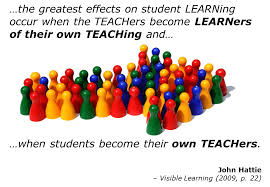
How to use this section profitably.

From Find Out 1 (the green tables) you’ve developed an idea of where your classroom culture is in relation to Developing Responsibility for Learning. From Find Out 2 (the blue quiz) you have considered how your students are responding to the changes you have made.

Each of the 5 Steps below offer a range of practical ideas to help you shift and develop the learning language of your classroom.

Identify the step that best fits your current classroom culture and how the majority of your students are responding.

If in doubt, start at the step that most accurately reflects how the majority of your students are responding.

Step 1. Start here if . . .

You react with assurance and confidence based on your sound subject knowledge, and learners are reassured that you ‘know your stuff’ (from Find Out 1).

And as a result, the majority of your students expect you to know all of the answers (from Find Out 2).

The ideas below will help you to demonstrate that you also have to think hard to solve problems.

This first step will involve modelling / showing yourself as a learner. You may well introduce the first four learning behaviours by modelling ways to use them. For example… what you might do when you get stuck (perseverance) or modelling being part of a team (collaborating) or modelling revising your own learning. Essentially you will be showing how best to use the learning behaviours you are introducing in step1 i.e. persevering, questioning, collaborating and revising.

Ideas for modelling yourself as a learner Step 1. ⬇️

Step 1. Show yourself as a learner.

Modelling ‘how to’

Whatever the subject, modelling ‘how to’ is given added value when linked to the learning behaviours that make for successful performance. Take on the role of an intelligent novice and model performance at a slightly higher, more coherent and informed level than is characteristic of your students. Model your ‘think alouds’.

Try the following steps for whatever skill you are modelling;

  • introduce the skill e.g. how to find something in an index;
  • explain the skill, explaining why the information is important;
  • model the skill, showing how you do it;
  • review what you have done, ask students to tell you what you did;
  • reflect on the use of the skill, where else the skill can be applied.

Unstuck demo

Show students how you personally get stuck, and what strategies you have for getting unstuck, by demonstrating a piece of tricky learning. The idea is that sharing these experiences encourages students to imitate getting unstuck.

One of the first ways of surfacing learning, putting it on show, is to focus on how you are modelling being a good learner to students. Modelling is effectively demonstrating how you are a learner too; a confident finder-outer.

  • Take your students behind the scenes of learning and share with them some of the uncertain thinking of learning.
  • Learning aloud is a good place to start: take students through how you would work out a problem. Modelling the thought processes (including emotional) that learners go through is important because a lot of the skill of learning only manifests itself in the inner world of the learner.
  • Expose the thinking, feeling and decision making of a learner-in-action to help students actually see and hear how learning works.

Teacher talk

  • Hmm. what is this all about?
  • Have I seen/tried something like this before?
  • What did I do then/last time?
  • I wonder what would happen if I just tried xxx?
  • Did that work?
  • Good. That seemed to work
  • Oh! this is fun…

Explore distractions

An activity to identify a wide range of things that distract students, recognise which distractors are most powerful and appreciate the need to manage distractions.

Begin by outlining the things that distract you. Not too much detail, just sufficient to focus students’ thinking.

Then – Divide the group into threes or fours. Provide each group with paper and writing/drawing implements. Request groups to construct a mind map of what distracts them when they are trying to do something: – at home – at school – in class, etc.

Share information • Gallery the mind maps. • Invite students to comment on them.

Explore issues which were not clear cut, such as;

  • friends who were both a distraction and a source of inspiration, and whether fiddling was a distraction or an aid to concentration
  • different learning environments that might be appropriate for different types of learning, both in school and at home
  • internal distractions, such as hunger, tiredness, emotions, failure.

Teacher talk

  • Are all distractions a bad thing?
  • When might distractions be useful?
  • What are the most common distractions?
  • Which distractions could be avoided?
  • Which distractions are the most difficult to manage? •
  • Which would you most like to be free of?
  • How do we feel when we are distracted?
  • Which are BIG or LITTLE distractions?
  • How can we better manage distractions?

Image result for being distracted


Step 2. Start here if . . .

You modelled how to use ‘new’ learning behaviours as a way of introducing them to students (from Find Out 1).

And as a result, the majority of your students enjoy it when you ‘learn aloud’ to explain and model how to solve a problem (from Find Out 2).

The ideas below will help your students to understand the range of emotions involved in problem solving.

In step 2 you will be modelling just about any learning behaviour that you wish to introduce. The context for this modelling will be important. You may well use modelling as a way of introducing a new learning behaviour or, you might use modelling to illustrate using just one aspect of a behaviour. Modelling being a learner will gradually become part of how you are as a teacher. This is likely to be a lengthy stage since there are another 8 learning behaviours to gradually add into the mix.

Ideas for modelling yourself as a learner Step 2. ⬇️

Step 2. Model the process and the emotions of being a learner.

Modelling uncertain thinking

The attitudes, values and interests that you display in the classroom, knowingly or not, constitute arguably the most powerful medium through which the messages of learning rub off on students. To encourage students to engage in the effort necessary in rising to challenge, you need to externalise your exploratory thinking; thinking through a problem out loud:

  • demonstrate the habit and inclinations of a good learner
    • What’s this problem about?
    • Have I seen/done one like this before?
    • What am I trying to achieve?
    • How will I know when I have achieved what I need to do?
    • So, how might I set about it?
  • talk about the challenges you have faced and how you overcome them
    • What happens if I do xxx or yyy?
    • Does that work?
    • Why not?
    • What else could I try?
    • OK that seems to work so what’s the next step?
  • show that you too have to put in effort to be successful
    • I’ve re-done that bit a couple of times but it’s still not looking as good/sound/right as I think it should.
    • What else could I try?
    • Ahh! that’s looking/feeling/behaving better now.
    • I think that’s going to work
  • show interest in the mistakes you make
    • Oh! what’s happened here?
    • Why doesn’t that work?
    • That’s interesting. I’ll need to remember that for next time.
    • but that mistake has got me thinking about…..

At this stage modelling moves up a notch from showing how to do something correctly to explaining how you are thinking through the problem in order to get it right.


Reveal how things are organised

Help students to see how your equipment is organised in a stock cupboard, or how books are organised in a library.

Teacher Talk

  • What lives on this shelf
  • Why do you think these things have been put together like this?
  • Things in this place are very different, why are they stored like this?
  • What sort of books are these?
  • Where should this book go?

Explore how we learn best …

Firstly, share what you know about yourself as a learner. No need to go into too much detail or it may limit students’ ideas – just enough to get them going. Try things like ‘I learn best when I think ahead’, or ‘I learn best when I think about what I already know about this.’ etc.

Then have students work with a partner. One talks about when they learn best, while the other produces a spider diagram capturing the main points. Then they swap places so that each generates their partner’s spider diagram.

Use the spider diagrams as a basis for exploring similarities (and differences), and to produce a class spider diagram showing ‘how we learn best’. Make it into a display that can be referred to by yourself and by students.

Teacher talk

  • What are you doing in order to be successful?
  • Which of the learning behaviours are your strong points?
  • As a class, we need to get better at a particular aspect of learning. How might we do that?
  • What do good (collaborators, listeners, imaginers, questioners etc.) do?


Step 3. Start here if . . .

You model and explain your own feelings as you show how to solve problems (from Find Out 1).

And as a result, the majority of your students enjoy it when you share your uncertainties and explain your feelings as you model solving problems (from Find Out 2).

The ideas below will help your students to expand their problem solving strategies.

In step 3 you’ll be introducing students to particular aspects of the learning behaviours. It will be a good idea to isolate and model some of the deeper skills that are embedded in and part of one of the behaviours as a whole. You will also be coupling aspects of learning behaviours together such as some of the skills of planning coupled with some of collaboration. Much of your modelling beyond this stage will be more associated with the tricky aspects of a whole behaviour.

Ideas for modelling yourself as a learner Step 3. ⬇️

Step 3. Model the process to expand students’ problem solving skills.

Show yourself as a good planner

Students learn by imitating others and so will learn much from absorbing your own planning skills.

Try setting up a challenge that requires students to create a plan of action and join in the group as a learner, without taking over or leading the activity;

During the challenge try to act out some of these positive learning behaviours:

  • organising what needs to be done in what order – what must we do? what must we do first? second?;
  • deciding success criteria – how will we know if our plan is working?;
  • thinking about how long it will take – how long do we think this will take us?;
  • agreeing milestones and how the plan will be monitored – when will we stop to see how things are going?;
  • deciding who will be doing what – who will take the lead on this?;
  • looking out for possible sticking points / obstacles – what might get in the way?;
  • keeping an eye to ensure the emerging plan meets the original objectives – are we still on track?

A Visible Thinking Routine

  • What’s happening here?

  • What makes you say that?

This is one of many visible thinking routines to be found on the visible thinking website.

The first question in this routine is flexible: it is useful when looking at objects such as works of art or historical artefacts, but it can also be used to explore a poem, make scientific observations and hypotheses, or investigate more conceptual ideas (i.e., democracy).
The first question invites students to describe what they notice, see or know, but it is the supplementary question (What makes you say that?) that requires them to build explanations. It promotes evidence-based reasoning and when the students share their interpretations it encourages them to understand alternatives and multiple perspectives.

Go to the Visible Thinking Websitefor more examples and information about visible thinking routines.

To download ‘What makes you say that’ from the Visible Thinking Website as a pdf:

Download as a pdf

Teacher talk to model this visible thinking routine

  • Why do I think that?
  • The evidence for that is . . . .
  • I have good reasons for saying / thinking this
  • Let me try to convince you . . .

Leading to Teacher Talk that encourages students to support their views with evidence . .

  • Why do you think that?
  • What evidence do you have for . . .
  • What are your reasons for saying / thinking this
  • How would you convince me that . . .


Model dealing with challenge

Model how you might think about challenges:

Things you might ask yourself

  • what is the challenge about?
  • what is it asking me to do?
  • have I seen one like this before?
  • how did I do that one?
  • were there any tricky bits?
  • can I remember how I tackled them

How you might check out your feelings

  • do I feel I can do this?
  • will it matter if I get this wrong?
  • no, I can always try again
  • how will I make sure I stay positive?
  • I don’t need to feel negative about this because I am learning how to do this

Turn it into a story

Teacher talk

Continue talking it through to make the challenge work

  • can I spot the key words or symbols here?
  • what might the end result look like?
  • what’s the first step?
  • and what’s the next step?
  • what should I do if/when I get stuck?
  • what’s the best way round this tricky bit?
  • I could do…….
  • or I could try….
  • which would be best?
  • Oh! I remember this idea from…
  • and so forth


Step 4. Start here if . . .

You model how to use the broader range of learning behaviours being introduced (from Find Out 1).

And as a result, the majority of your students find it instructive when you explain, model and promote new, useful learning strategies (from Find Out 2).

The ideas below will help your students to structure and explain their own thinking to others.

In this step you will first be showing and then encouraging your students to ‘show’ or ‘explain’ by modelling what they do. In other words your students will be slowly understanding themselves as a learner and will be able to pass on hints and tips to others. They might be confident to show or explain how they do something, they may want to share how they research a topic or how they say or play something. You will be creating a classroom full of confident learners all helping each other to learn. This learning culture takes a while to create but becomes very powerful.

Ideas for modelling yourself as a learner Step 4. ⬇️

Step 4. Help students to explain their thinking to others.

First steps in helping students to model their thinking

Get into the habit of asking students to tell their partner what they are thinking and, whenever possible, to describe and explain why they are thinking it.

The role of the partner is to get their partner to model their thinking, and to probe this thinking with ‘why’ type questions. The right ‘probe’ questions will move the response from being a description to being an explanation. The routine encourages students to explore and talk about what they are thinking, thereby surfacing that which is frequently sub-conscious. The more you become conscious of what you think and/or do the stronger and more routine it will become.

Encourage this process with ‘why’ questions such as;

  • Can you describe this …?
  • Why has it got a….?
  • Why does it look like that?
  • Why is it made of…?


A graphic organiser

PEE – a routine for structuring a response popular in many English classrooms can easily be adapted in any subject to encourage students to support the point they are making with evidence and to explain why this evidence is relevant.

PointEvidenceExplain
Sum up the main ideaProvide evidence for the point you are makingWhy is the quotation significant?

What effect does the quotation have on the reader?

Why has the writer used this technique?

•In my opinion…

•Arguably…

•The writer uses…

•Similarly…

•Both…

•In contrast…

•One of the language features used is…

•For example…

•An example of this is…

•This is shown…

•This can be seen…

•This is demonstrated when…

•We know this because…

•The evidence for this is…

•This shows…

•This suggests…

•This implies…

•This is effective because…

•The writer has chosen this technique because..

•This would make the reader feel…

•This has been used because…

Teacher talk

  • Are you convinced?
  • Is the evidence convincing?
  • You explained that really well
  • Why do you think that happened?
  • Why do you think this?

Noticing subtle detail

The visible thinking routine ‘The Explanation Game’ is a useful strategy to encourage students to notice subtle detail and to generate and share their hypotheses about what they are noticing.

The routine focuses first on identifying something interesting about an object or idea:

“I notice that…”

And then following that observation with the question:

“Why is it that way?” or “Why did it happen that way?”

This is a routine for understanding why something is the way it is. This routine can get at either causal explanation, or explanation in terms of purposes, or both.

Go to the Visible Thinking Websitefor more examples and information about visible thinking routines.

To download The Explanation Game from the Visible Thinking Website as a pdf:

Download as a pdf

Teacher talk

  • What makes you say that?
  • What does this suggest to you?
  • What is going on?
  • Why is it like that?
  • What do you think has happened?
  • What caused that?
  • What evidence do you have that makes you think that?


Step 5. Start here if . . .

You encourage students to model and explain their thoughts and thinking processes to others (from Find Out 1).

And, as a result, the majority of your students are able to articulate their thinking processes with clarity (from Find Out 2).

The ideas below will offer you further suggestions for how you might model yourself as a lifelong learner.

Step 5 is the effective destination of a long and worthwhile journey. You will have turned yourself into a confident learner who is willing to show and share the difficulties of learning and the triumphs of overcoming them. Not only that, by your careful guidance your students are fast becoming skilful, confident learners. This step is simply concerned with ensuring you don’t plateau in your development as a teacher but stay learning and improving.

Ideas for modelling yourself as a learner Step 5. ⬇️

Step 5. Continue to build and model yourself as a lifelong learning.

Learning more about the craft of teaching – a reflection piece for teachers

Research shows that after the first couple of years working in a profession, performance usually plateaus. This has been shown to be true in teaching, general medicine, nursing and other fields, and it happens because once we think we have become good enough, adequate, then we stop spending time in the learning zone. We focus all our time on just doing our job, performing, which turns out not to be a great way to improve. But the people who continue to spend time in the learning zone do continue to always improve.

Ask yourself the hard questions:

  • Am I as good a teacher as I want / hope to be?
  • Do I spend sufficient time in my own professional learning zone?
  • How effectively do I model to my own students that I am still learning about the craft of the classroom?
  • How do I create, for my professional self, low-stakes islands in otherwise high stakes seas?

Listen to the Ted Talk, How to get better at the things you care about through the lens of your own development as a teacher. After all – if teachers are not keen on lifelong learning, why should our students buy into the idea?

Watch the Ted Talk Read the Ted Talk


More ideas about modelling

For more ideas about modelling yourself as a learner, read pages 80 to 83 of ‘The Learning Powered School’.

Read pages 80 to 82 View page 83

7 Ways to Make Good Choices

Support your learners to understand that making good choices begins with taking charge of the decision-making process. Here are 7 steps to making good choices. Model / discuss how you use these 7 ways in your own professional and personal life.

  1. Manage the big stuff. It’s very easy to get side-tracked by insignificant issues in life. If you spend a lot of time on trivial stuff, you won’t have time to contemplate things that matter.
  2. Values matter. Make decisions that are consistent with your core beliefs and values. The alternative invariably leads to regret.
  3. Learn from the past. Learn from your experiences and the experiences of others. Identify situations where you’ve had a similar choice in the past. How can you apply those lessons learned to the existing situation?
  4. Know what you know and what you don’t know. Don’t try to be an expert in everything. Seek input and advice when variables lie outside your comfort zone.
  5. Keep the right perspective. View an issue from every vantage point. What do the facts say? What is your intuition telling you? Is your conscience trying to tell you something? Listen up.
  6. Don’t procrastinate. You’ll rarely have all the information that you need to make a “perfect” decision. So don’t demand perfection. The philosopher Voltaire warned against letting the perfect be the enemy of the good and this still holds true today.
  7. Once you make a decision, don’t look back, make it work. Don’t second-guess yourself. You can’t relive the past. It’s a waste of valuable time and energy.

Teacher Talk

  • What’s the most important?
  • Does that matter to you?
  • What did you learn from doing this before?
  • Seek help, but only when you need it.
  • Look at this from all angles
  • Just bite the bullet and get on with it.
  • Just keep going

Image result for good choices


Return to the Relating for Learning Unit
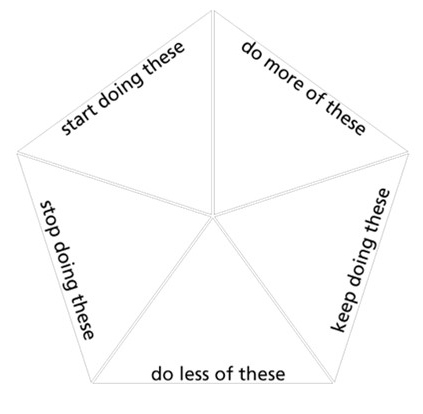


Continue Reading

In Relating for Learning you develop a coaching approach.

Return to the Relating for Learning Unit

How to use this section profitably.

From Find Out 1 (the green tables) you’ve developed an idea of where your classroom culture is in relation to Developing Responsibility for Learning. From Find Out 2 (the blue quiz) you have considered how your students are responding to the changes you have made.

Each of the 5 Steps below offer a range of practical ideas to help you shift and develop the learning language of your classroom.

Identify the step that best fits your current classroom culture and how the majority of your students are responding.

If in doubt, start at the step that most accurately reflects how the majority of your students are responding.

Step 1. Start here if . . .

You have excellent subject knowledge which you skilfully convey to students (from Find Out 1).

And as a result, the majority of your students expect and prefer you to tell them everything they need to know (from Find Out 2).

These ideas will help you to begin to make students less dependent on you.

Here you are at the beginning of your journey as a learning coach. It’s about you gradually moving away from giving all the answers and moving your students to a position where they can help themselves. It’s about enabling your students to see what they are doing more clearly and discovering ways to improve. This support to continue routine is an effective starting point.

Ideas for developing coaching approaches Step 1. ⬇️

Step 1. Make students less dependent on you.

Nudging improvement in the skill: self-recovery from being ‘stuck’

Support to continue: questions not answers

If students freeze when they are stuck, offer supportive questions not answers. A basic support to continue is ‘What do you do next?’, and when this has been done ask the question again, and then again.

Support to continue’ prompts are seen as helpful by students. You are encouraging them to take over the job themselves and reminding them that uncertainty shouldn’t lead to paralysis. It’s about weaning students off depending on you and activating their positive self-talk about learning.

The advantage of asking questions over telling is that you are in a better position to monitor how students are learning when they are doing the explaining.

Support students to think why

From ‘I’m stuck’ to ‘I’m stuck because …’

Encourage students to identify the cause of their stuckness. Move students from saying “I’m stuck” to ” I’m stuck because…” Naming the problem will often suggest a reasonable next step.
It’s also useful at this stage to insist that students can’t call themselves ‘stuck’ unless they have tried to apply at least 1 solution.

Teacher talk

  • Can you tell me why you think you are stuck?
  • What seems to be getting you stuck?
  • Is it because…?
  • What have you tried so far?

Image result for because

Finding Out About

Coach learners to find things out for themselves.

  • Choose an easy theme like food (something related to a class topic) and encourage the students to collect and share different sources of information.
  • Start a display of leaflets, information books, printed pages from the internet, photographs, advertisements from magazines, recipe books, fruit and vegetable gardening catalogues etc.
  • Ask students if they know of people who might be able to give them more information e.g. greengrocer, cook, gardener; and where else they might look.
  • Make a large mind map or flowchart of all the resources available, with pictures

Teacher talk

  • Where might we find information about….?
  • Fred has found a catalogue about flowers.
  • What else might we find?
  • Do we have any photographs?


Step 2. Start here if . . .

When coaching you resist offering solutions and encourage students to find answers for themselves (from Find Out 1).

And as a result, the majority of your students expect you to make suggestions rather than give them answers (from Find Out 2).

The ideas below will help your students to self recover and become increasingly self-reliant.

Here you are using your coaching approach across the much broader range of learning behaviours. You might use coaching to help students re-frame challenge or getting unstuck. Or, you could use it to introduce new learning behaviours such as planning or noticing into the mix.

Ideas for developing coaching approaches Step 2. ⬇️

Step 2. Encourage students to self recover and become increasingly self-reliant.

Re-frame challenge: explore learning how to overcome a struggle

Use the ‘Learning Pit’ as a means of opening up a conversation around the feelings involved when struggling with learning, and the journey to overcoming the struggle. It is essential that students know:

  • that the ‘pit’ is only one staging post on the learning journey
  • they can get out by using ‘stuck strategies’ and tools

It is also worth noting that the pit is not necessarily inevitable for all students in all learning – some will fly over the pit in some topics or curriculum areas.

The ability to cope with and overcome difficulty and challenge is a key aspect to becoming a successful learner.

James Nottingham introduced the idea of the Learning Pit as a way to explain that struggling is part of learning and that if we are to understand something we need to struggle with it first. Students move from unconsciously incompetent (an emotionally ‘safe’ area before learning), to consciously incompetent (the emotionally tricky “pit”), to consciously competent (the far side, after the learning has happened).

Find out more by visiting:

Learningpit.org

Taking Think Pair Share towards coaching

Pair work forms the bridge between private thoughts and public discussion. Students develop their own thoughts, crystallising them as they talk about them, and testing them against the ideas of others. All students are acting as learning coaches.

  • Offer students a problem or question which is more substantial than simple recall.
  • Allow individual think time to engage with the question.
  • Students turn to their ‘Learning Partner’ and share ideas, discuss, clarify, challenge etc.
  • The pair share with another pair, and subsequently with the whole class to arrive at a range of possible answers.
  • At each point students are exposed to the views of others which encourages them to revise and refine their initial thinking.

Vary the structure of thinking. e.g. Question, Summarise, Clarify, Predict for a group discussing a text.

Teacher talk

Encourage students to use prompts with each other such as:

  • Why is this important?‘ ‘What would happen if?‘ to focus thought provoking
    What do you think of my idea?‘ ‘It might be that…‘ ‘It seems that....’ to handle differences that might arise
    I’m confused about...’ ‘I don’t see why...’ ‘It would help me if you could explain….’ to become effective help givers and receivers.
    I feel…when you….because…..’ to support emotional aspects of interaction.


think share pair 2

Engaging all the senses to trigger the imagination

Show a black and white image.

Activity 1:

Say ‘I want you to be nosy – notice anything about the picture, and when you have done that, share what you have noticed with your partner’

Activity 2:

Ask participants to study the picture/painting in silence for 20 secs. This time, invite them to see the picture in colour – ‘turn up the colours in your head and tell me what you notice’.

Activity 3:

Again 20 secs silence before responding:

Now turn up the sounds coming out of the picture – and when you have heard them, tell me what you hear.

Activity 4:

Now I am going to count to 3. On the count of 3 I want you to jump into the picture and stand somewhere in the picture. When you notice something new, share it with your partner. Ok 1,2,3 Go!

Teacher coaching talk

Activity 1:

  • What do you think is happening here?
  • What clues led you to that conclusion?
  • ‘What makes you say that’?
  • ‘Because?’ to deepen thinking.
  • Are there alternative explanations?
  • What else could that be?

Activity 2:

  • Who can see colours (some can, some can’t!)
  • what can you see in colour?
  • Respond to answers by probing for more detail to deepen thinking
  • Is it a dark blue?
  • How would you describe it?

Activity 3:

Probe detail

  • what can you hear?
  • How long is the sound?
  • Broken or continuous?
  • Volume? Pitch?
  • What can you compare it to?

Activity 4:

Share ideas in whole group. Probe with:

  • Where did you stand? Why?
  • What can you smell?
  • How do you feel?

If the opportunity presents itself, try to cross-reference the senses: If someone says it is cold, ask what is the shape of cold; or the taste of cold, or the sound etc.


b and w


Step 3. Start here if . . .

You have extended your coaching, helping students to draw out meaning for themselves (from Find Out 1).

And as a result, the majority of your students expect to work it out and understand it for themselves (from Find Out 2).

The ideas below will help you to support students to undertake a wider range of self-guided, independent activities.

. As a teacher you can use the ideas below to support and strengthen your coaching approach. Take, for example, the first idea of a Learning Mat. You could simply turn any of the statements on the card into a coaching question: ‘Did it turn out how you expected it to?’ ‘What other possibilities did you consider, and why did you reject them?’ ‘What makes this original?’. In designing sophisticated learning mats you’ve also made yourself a useful coaching tool.

Ideas for developing coaching approaches Step 3. ⬇️

Step 3. Supporting students to undertake a wider range of self-guided activities.

Learning mats…a key development strategy

Learning Mats… are simple tools to introduce learning habits and enable students to become more self-aware about how or where or whether they are using a learning habit. These effective tools, often placed on tables, remind students to monitor their use of particular behaviours; in this case those associated with imagining,

An A3 or A4 laminated sheet kept on tables or used as part of a wall display. Shows various aspects of a learning habit.

Students:

  • refer to them during lessons;
  • use them as prompts;
  • use them as self-assessment tools;
  • use them as reflection tools;
  • help them join in meta-cognitive talk.

As a teachers you can use them as an audit tool to support your planning. i.e. which of the skills are implied in the lesson plan and therefore how they will be surfaced in what I draw attention to and how I orchestrate the lesson.

Download the Imagining Mat

Learning about Imagining

Coaching Collaboration

To get your students tuned in – encourage them to have a quick think about their collaborative habits at this stage. Using the chart alongside, they refer to it in lessons and consider how often they display these characteristics.

As a result of their self-evaluations, coach students to create a target for their own development as a collaborator by identifying something that they do sometimes that they would like to do more frequently.

These collaborative behaviours tend to become more subtle and challenging as you move down this list, so it’s better to set targets relating to doing more of what they currently ‘sometimes’ do, rather than trying to jump towards the bottom of the list and tackle a behaviour they currently ‘never’ employ.

Download as a pdf

Teacher talk

  • Which collaborative behaviours are your strengths?
  • What makes you say that?
  • What would you like to get better at?
  • Who do you know who does this well?
  • What will you do differently in future?


A range of classroom strategies that can form the basis for coaching conversations

  1. Design tasks that require the use of a range of resources and gradually expect the students to select what they need.
  2. At the beginning of a session talk with the students about the things they might use to help them with their learning.
  3. Talk to the students frequently about where they might find information or help. Offer a range of rich and varied sources.
  4. Regularly invite visitors into the classroom. Plan these visits with the students and talk about capitalising on other people’s experience and knowledge.
  5. Model capitalising for students by discussing ways in which you have found out about something that you are sharing with them, like a recipe from your friend or the way your mum showed you how to draw a frog!
  6. Reward students for showing initiative when you see them capitalising on a situation or making the most of an opportunity.
  7. As students’ understanding grows, introduce the idea of “learning tools” and start filling a plastic toolbox with things like a ruler, calculator, notepad and pencil. Keep asking students for new ideas and regularly look through it together.

And, plan outings and trips as often as possible and reflect on how the shared experience has helped you all with your learning.

Teacher talk

  • Can you find the best resource to help you?
  • How did that resource help you out ….?
  • Which resource might be better here….?
  • I used xxx to help me learn about yyy.


Screen Shot 2016-07-22 at 11.08.24


Step 4. Start here if . . .

You listen, question, stimulate and walk away– letting students know responsibility for learning lies with them (from Find Out 1).

And as a result, the majority of your students are curious about their own learning and enjoy self-guided activities (from Find Out 2).

The ideas below will help you assist your students to develop their own coaching skills.

By this stage you will have introduced, to some extent at least, all the learning capacities your students will need to become successful learners. Throughout much of this journey you have been playing the role of a learning coach nudging your students to help themselves. This now seems an appropriate time to introduce these skills to students themselves in order to help them become their own teachers. This won’t happen overnight, indeed, this sort of self-help regime will need to continue across all subjects for years to ensure competence and success.

Ideas for developing coaching approaches Step 4. ⬇️

Step 4. Assist students to develop their own coaching skills.

Train students as learning coaches

You are already a skilful coach, but the next step is to train your students to coach each other, using the same techniques that you use. Peer coaching is a beginning, but ideally you are seeking to help students, in the long term, to be able to coach themselves.

Teach your students to coach each other. Coaching is basically a structured conversation where one person, the coach, helps the other person, the coachee, to find out their own answers. The coach asks questions and listens but does not offer suggestions.

The GROW structure is widely used —

  • set the Goal..“What is it that you want to do?”
  • find out the Reality“What’s it like at the moment?”
  • think of Options“What might you do to improve?”
  • commit to the Way forward“So what are you going to do and when are you going to do it?”

Try organising speed coaching between students lasting 10 minutes each way – it can be really effective.


Enable students to select their own level of challenge

Design tasks for different levels of challenge

For the same bit of curriculum content, provide tasks that are designed to offer low, medium and high challenge and encourage students to decide on the level of challenge they wish to undertake. Use this as an opportunity to encourage them to set their own learning goals.

The SOLO Taxonomy (structure of observed learning outcomes) is sometimes used to help teachers to structure tasks with varying levels of challenge.

At the unistructural level, only key aspects of the task are explored

[ie: How did the fire of London start ? ]

At the multistructural level, several aspects of the task are explored but their relationships to each other and the whole are not.

[ie: What factors contributed to the spread of the fire of London ?]

At the relational level, the aspects are linked and integrated, and contribute to a deeper and more coherent understanding of the whole.

[ie: How did these factors combine to cause so much damage ?]

At the extended abstract level, the new understanding at the relational level is re-thought at another conceptual level, looked at in a new way, and used as the basis for prediction, generalisation, reflection, or creation of new understanding.

[ie: What could have been done at the time to prevent the fire of London spreading so quickly ?]

Four levels of challenge. Four goals for students to choose between.


Developing listening skills through coaching

Listening is one of the key skills in coaching. If you are training your students to act as coaches this may make a useful discussion tool.

The following is an extract from Pathways to Coaching. The list forms a sound basis for discussion about the listening and interactive skills of the coach. Sometimes lists like these sound good and worthy but when you really unpack them they need more attention to practical detail. Here we have added questions you might want to explore with your student coaches.

Coaches are curious, they:

  • listen in order to understand…what does that mean? How do I do that?
  • absorb what is being said…how do they do that?
  • comment in order to affirm and clarify…when might that be necessary?
  • pick up nuances and respond to them…how do you get good at doing that?
  • stay silent until speaking is useful…how do you know when it’s useful?
  • ask questions to open possibilities, generate a search, create learning…what sort of questions will do that?
  • trust themselves to say the right thing…how can I become that confident?
  • build safe relationships…what does this mean?
  • allow people to reveal themselves in an unchallenged way… how is this done?
  • allow people to explore and discover… so what do I do?
  • do not have all the answers… does that mean ‘don’t tell?

Teacher talk

  • How should I respond?
  • What would be appropriate?
  • I need to pay attention to
  • I listen to understand…how?


Step 5. Start here if . . .

You have enabled students to give effective feedback to each other (from Find Out 1).

And, as a result, the majority of your students are becoming effective coaches, able to coach themselves and each other (from Find Out 2).

These ideas below will help you to secure and further develop students as self-coaches.

The skill of helping others to help themselves lies at the heart of coaching and over the last few stages you have been using this approach and even introducing it to your students. Two factors are critical in how people approach their development…their level of skill and their motivation, hence there’s a need to develop and adapt coaching styles to accommodate different coaching needs. We have found the Skill/Will model useful for both teachers and older students helping them to coach themselves or each other.

Ideas for developing coaching approaches Step 5. ⬇️

Stage 5. Further develop students as self-coaches.

Students as coaches

Use the ‘Skill: Will’ matrix to help students develop ways of reflecting on their own performance. Using the matrix helps students judge their levels of accomplishment and motivation in any area of the curriculum or indeed life beyond school. Students can support or coach each other to complete the grid objectively and then identify for themselves small steps to create the desired movement. Each of the quadrants requires a different coaching approach.

  • Direct – set short-term goals, structure learning tasks and monitor progress closely.
  • Inspire – rekindle interest, set short term actions and accentuate positives.
  • Guide – envision the future when skill levels are raised, secure appropriate learning opportunities and provide reflective feedback.
  • Delegate – encourage experimentation and further challenges to maintain interest.

Planning for risk

By this stage students should be planning for risk and asking themselves questions such as;

  • What are the dangers?
  • What might go wrong?
  • How can that be avoided?
  • What’s the worst thing that could go wrong?
  • How do I make sure it doesn’t happen?
  • What’s the ideal outcome?
  • What’s the most likely outcome?

Self coaching questions

Encourage students to think about challenges:

  • What I think
    • what is the challenge about?
    • what is it asking me to do?
    • have I seen one like this before?
    • how did I do that one?
    • were there any tricky bits?
    • can I remember how I tackled them
  • How I feel
    • do I feel I can do this?
    • will it matter if I get this wrong?
    • no, I can always try again
    • how will I make sure I stay positive?
    • I don’t need to feel negative about this because I am learning how to do this
  • What I need to do to make the challenge work
    • can I spot the key words or symbols here?
    • what might the end result look like?
    • what’s the first step?
    • and what’s the next step?
    • what should I do if/when I get stuck?
    • what’s the best way round this tricky bit?
    • I could do…….
    • or I could try….
    • which would be best?
    • Oh! I remember this idea from…
    • and so forth
  • Turn it into a story


Return to the Relating for Learning Unit
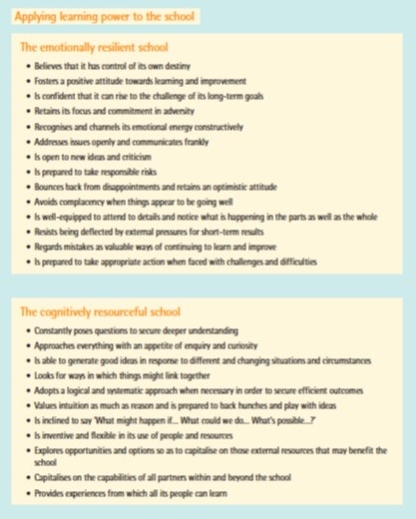


Continue Reading

In Relating for Learning you gradually devolve responsibility for learning

Return to the Relating for Learning Unit

How to use this section profitably.

From Find Out 1 (the green tables) you’ve developed an idea of where your classroom culture is in relation to Developing Responsibility for Learning. From Find Out 2 (the blue quiz) you have considered how your students are responding to the changes you have made.

Each of the 5 Steps below offer a range of practical ideas to help you shift and develop the learning language of your classroom.

Identify the step that best fits your current classroom culture and how the majority of your students are responding.

If in doubt, start at the step that most accurately reflects how the majority of your students are responding.

Step 1. Start here if . . .

You run a well organised, efficient classroom where learners broadly expect you to help them to be successful (from Find Out 1).

And as a result, the majority of your students like you to do most of the work and make learning easy for them (from Find Out 2).

These ideas below will help you to begin to move responsibility for learning towards learners by introducing them to learning behaviours.

The first step in the journey is about introducing the idea of learning behaviours ;

  • perseverance, collaboration, questioning and revising.

You are at the beginning of a long journey to bring learning how to learn alive for students and in particular how you can begin to gradually hand over responsibility for learning to them. An early move will be to make students aware of what they do or how they are feeling when they are learning. It will be a gentle introduction to a complex process of awakening the learning capacities students have within themselves.

Ideas for extending students' responsibilities Step 1. ⬇️

Step 1. Introduce students to key learning behaviours.

Use laminated card and a clothes peg. Print on;

  • Absorbed – Distracted or
  • Too Easy – Too Hard or
  • Stuck – Doing Fine?
  • Interested – Bored etc.

Laminate and provide a peg. Have students use them during lessons to help them monitor and become more conscious of their feelings about learning. This is just a small beginning in devolving the responsibility for learning towards the learners.

Develop ‘stuck prompts’ together

  • Work with students to find useful questions to ask themselves and helpful strategies for them to use when they are stuck.
  • Ensure that there are plenty of options that come higher on the list than “Ask the teacher”.
  • Create stuck prompts as reminders around the classroom.
  • These are, in effect, low-risk, low-investment levers for creating a shift in students’ sense of what is valued, what is normal, and what is the point of their learning — and thus in the quality of their engagement.

Use collaboration as a learning strategy

Offer students a problem or question which is more substantial than simple recall.

Think – Allow plenty of individual think time to engage with the issue.

Pair – Students then try out their ideas, (discuss, clarify, challenge) with a ‘Learning Partner’.

Share – The pair share with another pair, and subsequently with the whole class to arrive at a range of possible answers. They come to know and shape their views by collaborating with others.

Use as a simple strategy to prepare students for working together in teams, having first thought it through for themselves (Think), checked their ideas out with a trusted friend (Pair), before moving on to contributing to a group (Share).

At each point students are exposed to the views of others which encourages them to revise and refine their initial thinking. It is an essential preparation for collaborative teamworking activity.


Step 2. Start here if . . .

You introduce students to simple self monitoring tools to help them become aware of what’s happening as they learn (from Find Out 1).

And as a result, the majority of your students are becoming aware of how they are learning and are not afraid of difficulty or getting stuck (from Find Out 2).

The ideas below will help you to move responsibility for learning towards learners by introducing many more learning behaviours.

At this second step of the journey you have already introduced the four foundational behaviours, making ‘stuck’ acceptable and interesting, but you will be adding more learning behaviours to the mix. This doesn’t mean students will be fully conversant with the original four but it will allow you to bring more of the curriculum into play…it’s hard to do maths without using reasoning or creative writing without imagining! How you select these will be up to you but your curriculum plans should give you clues. This will be a lengthy stage since you and your students will be getting more familiar with a much wider range of behaviours.

Ideas for extending students' responsibilities Step 2. ⬇️

Step 2. Build awareness of more learning behaviours.

Bring more of the curriculum into play using a broader range of learning behaviours.

We move on now to introducing more learning behaviours. This doesn’t mean students will be fully conversant with the original four (persevering, questioning, collaborating and revising) but it allows you to bring more of the curriculum into play…it’s hard to do maths without using reasoning or creative writing without imagining! We leave it up to you which behaviours to add when and in what order, but students’ learning behaviours and your curriculum plans should give you clues.

For example, introduce listening by creating ‘Good listener’ prompts

Invite students to make suggestions about feature of good listening:

  • Pay attention. Focus on the person and what is being said
  • Don’t get distracted by other things around you
  • Show you’re listening by saying uh-huh or nodding your head
  • Keep quiet while the other person’s talking
  • Wait to ask a question or give comments that show others that you care about what they’re saying.

Make these into a public display and refer to them often. This is an example from a group of 9 year olds.

Teacher Talk

  • What have we learned about how to listen well from our listening challenges?
  • What do we need to remember to do to be a good listener?
  • What about looking at each other…
  • How might we show we are listening?
  • …and so on


Screen Shot 2015-04-16 at 16.59.49

Adopt a character to help to anchor, in this case, noticing

‘Adopt’ a character – real, imaginary, human or animal – who/that exhibits the best features of noticing. Talk about the character until your students become familiar with its attributes. Leave the character (actual / picture) on tables when you have set a group to work on using particular learning behaviour in – numeracy, reading, writing etc., as a reminder.

Teacher talk

  • What is noticing all about?
  • Why do we need to notice things?
  • What will help us to notice?
  • It’s all about looking carefully
  • But is it just about seeing?

Of course, a similar approach could be taken with all of the other learning behaviours. Which character would you and your class choose to exhibit the best features of Reasoning? Or Planning? . . .


Build in Wait Time

Let students think it through for themselves

What we should do. Research suggests that the optimum time that teachers should wait after asking a closed question relating to factual recall is approximately 3 seconds. For an open question that requires a more elaborate response students should be given around 10 seconds of thinking time.

What we actually do. Research into the actual wait time that teachers give students before accepting an answer is closer, on average, to 1 second, irrespective of whether the question is closed or open.

In other words, students aren’t being given sufficient time to think things through for themselves. Q&A sessions become an exchange between teachers and the intellectually fleet of foot and/or impulsive students. Students who want or need time to think it over and come up with their considered answer are denied the opportunity to do so.

Image result for wait time


Step 3. Start here if . . .

You scanned the curriculum for opportunities to gradually introduce a broader range of learning behaviours (from Find Out 1).

And as a result, the majority of your students are now aware of a wide and growing range of learning behaviours they are using (from Find Out 2).

The ideas below will help you to ensure your students can monitor and evaluate their own work.

In step 3 you will be trying to move yet more responsibility for learning towards your students. The point here is to progress by deepening the use of learning behaviours across the board. You will have got many of the learning behaviours in play now and you’ll need now to become bolder in how much responsibility you allow students. One way of doing this will be to experiment with various self monitoring tools and work towards expecting them to take on the job of assessing and critiquing their own learning.

Ideas for extending students' responsibilities Step 3. ⬇️

Step 3. Ensure students can monitor and evaluate their own learning

Putting ‘If-then’ planning into action.

If we want students to change their behaviour we need to help them to think much more closely about the ‘hows’ and the ‘whats’. Motivation research proposes an effective solution to this called ‘If-then’ planning. ‘Ifs’ are the situations you want to remind yourself about. ‘Thens’ are what you will do about something; the action you will take. Brainstorm a list of the ‘what we might do in response to the Ifs’.

Research findings

Research on motivation and goals from Harvard University shows how our brains work to achieve our goals. Basically it says that goals need to be very clear and our brain ignores a goal if it’s unclear about what to do. Brains act on goals only when what to do is clear. So, goals like ‘Lose weight’ or ‘Exercise more often‘ or even ‘I want to feel ok about being stuck‘ are too nebulous. They beg the question ‘how’ or ‘what do I do?’

The how to ‘If-then’ planning

When setting a goal you need to specify not only what you will do but also where and when you will do it.

If (or when) [___situation__], then I will do [___behaviour__] So a goal about losing weight, your brain would need to know much more about the ‘how’ and the ‘what’ of losing weight. An If-then statement or goal might be ‘If I get the pudding menu, then I’ll ask for coffee’.

This may sound a bit cumbersome to start with but research suggests far more goals are achieved by using ‘if-then’ planning. And the clever bit is that this builds self-talk at the same time. You do what you are telling yourself to do. The ‘if-then’ plan succeeds because the situation and the action become linked in the mind. The brain recognises the situation as an opportunity to advance the goal. When the situation is detected action is initiated automatically. “If-then’ plans become “instant habits”.

Build in opportunities for students to self-check their work

Monitoring checklists

Construct checklists with students itemising the important things to check before they consider something is finished. Students should use such checklists as they work through something, and again as a final check before they submit work for assessment.

How we relate to standards of excellence, quality, and correctness is key. It is about developing a sense of standards; a view of what’s good, bad or indifferent. Initially students accept what they are told by teachers about what something needs to look like, be like, feel like. But with support and encouragement students are able to begin to think for themselves about what makes something good and eventually determine their own standards.

Screen Shot 2016-05-09 at 13.56.32

Screen Shot 2016-05-06 at 14.34.55

How will you find that out?

Keep asking the question ‘How will you find that out?’. It makes clear that the responsibility for finding out sits with the students and they are expected to find out for themselves from the many sources that are available to them.

Teacher talk

  • Is there anything else that you could use?
  • Are you sure that this is the best tool for the job?
  • If you could use anything you wanted, what would you use?


Step 4. Start here if . . .

You encourage students to monitor and evaluate an increasing variety of learning behaviours (from Find Out 1).

And as a result, the majority of your students monitor and evaluate their own learning and work towards achieving ‘if -then’ learning targets (from Find Out 2).

These ideas will help you to raise students expectations of themselves.

In this step 4, when you think your students are confident enough to try something a bit more edgy you will be introducing ‘wild’ tasks; those that have no predetermined outcomes, and will give learners free rein to explore areas of their own interest. These are not for every day, but you’ll need to spend time on goal setting, planning and revising habits before these tasks will work well. Introducing ‘Wild’ tasks will be an important step in you letting go of the reins. In this stage students will be coaching each other and even have a role in co-designing and co-delivering lessons.

Ideas for extending students' responsibilities Step 4. ⬇️

Step 4. Increase responsibility for learning by raising students’ expectations of themselves.

Design ‘wild tasks’.

What if we occasionally designed tasks that are ‘wild’, that have no predetermined outcomes, that give learners free rein to explore areas of their own interest?

  • Begin by asking students to identify questions to which they would like to know the answer – as one school calls them, ‘big awe and wonder questions’.
  • Sift them so that everyone chooses from a range of questions that the class consider of greatest interest rather than allow complete freedom of choice.
  • Students then design and undertake their own enquiry into their preferred area of interest as a home learning project.

Not for every day AND remember that you can’t start this sort of discovery task until students are equipped with sufficient goal setting, planning and revising habits.

Here’s a classical word problem that could act as a way into Wild Tasks. Why not have one a week and let students become intrigued.

The broken egg problem.

A farmer is taking her eggs to the market when her cart hits a pothole. The cart tips over and every egg is broken. For insurance purposes she needs to know how many eggs she had. Unfortunately she doesn’t know, but remembers something from various ways she tried packing the eggs. When she put the eggs in groups of two, three, four, five and six, there was one egg left over, but when she put them in groups of seven they ended up in complete groups with no eggs left over.

What can the farmer figure out from this information about the number of eggs she had? Is there more than one answer?

FAME planning

It’s important that plans provide a starting point. A clear beginning or focus shows a student where and how to start and what to do, and what steps or actions to take. The aim of the plan is to liberate the student from direct teacher assistance. Plans are not only a teaching device but aim to provide a means for independent learning.

A good plan contains;

  • a thinking component
  • an action component
  • a monitoring component, which means providing metacognitive steps to help make judgements about what they are doing
  • an evaluation component

Without the monitoring and evaluation components the plan remains just a set of directions for a given task. A good plan is strategic and includes skills that can be applied in a number of contexts. FAME –

  • Focus, what is your focus, what do you want to achieve?
  • Act, what action steps do you need to take to get there?
  • Monitor, what will you need to keep checking along the way?
  • Evaluate, what will make you pleased with yourself when you have finished?

Include more steps e.g. 2 for focusing or 3 for acting but having too many steps becomes confusing. Keep the magic number 7 in mind.

A good way to introduce this type of planning is for you to do a very detailed one and then ask students to simplify the steps in their own words.

Once students understand the planning process and have used them for a number of purposes they will become more proficient and confident, developing skills in;

  • knowledge of what plans are
  • formulating plans for different purposes
  • understanding when planning would or would not be useful/appropriate
  • being mindful (strategic) in undertaking tasks and solving problems.

Image result for FAME

Deepen this through Future-Based Planning

Future based planning asks students to envisage what their goal will look like when they have achieved it and planning back from that achievement to now. This is a powerful technique because it is about planning from the strength and confidence of achievement rather than from uncertainty of just starting out. It’s harder than you might imagine but worth the effort. Take students through the following steps:

  • Step into the future. Imagine you have achieved your goals
  • Bring back to mind your ideas about goals, and describe them as though they are happening now
  • Describe how it is: –
    • what is in place
    • what is happening
    • how are you feeling
    • how are you behaving
    • what can you do
  • Establish a picture of success – think it, feel it, see it.
  • From your viewpoint in the future, think about what you did to get there:
    • What did you do the day before handing it in?
    • What did you do the day/week before that?
    • What did you do the day/week before that?
    • When were different ideas introduced and finished?
    • What resistors were overcome, when and how?
  • Plot the broad path of each aspect of your plan backwards from the future, take each aspect in turn.
    • researching
    • building lines of argument
    • drafts
    • illustrations/maps
    • monitoring points
    • revising points
  • Look across the aspects:
    • Is there coherence?
    • Does it make sense?
    • Are some things dependent on others and is the ordering right?
    • Have you thought about resisting factors?
    • Is this manageable, where are the possible overload points?
  • Amend the timing of these aspects accordingly.
  • Record this broad outline of action.

Write or draw it on a flipchart sheet with a target date.


Image result for target


Stop, Look, Listen

The Stop Look Listen routine helps students investigate truth claims and issues related to truth. It allows students to stand back and think about ways to obtain information when trying to find out about the truth of something. Students are encouraged to think critically about sources and to uncover minute detail. It helps students appreciate the deeper complexity of truth situations by addressing issues of bias and objectivity.

Go to Visible Thinking Websitefor more examples and information about visible thinking routines.

To download Stop Look Listen from the Visible Thinking Website as a pdf:

Download as a pdf


Step 5. Start here if . . .

You offer students opportunities to tackle ‘wild-tasks’ without predictable outcomes (from Find Out 1).

And, as a result, the majority of your students are becoming autonomous, independent learners (from Find Out 2).

These ideas will help you to secure and embrace students as autonomous independent learners.

In the final fifth step you will be letting go of the reins and students will be taking greater charge of their own learning. You and your students will be working towards being able to adapt their coaching style to fit different needs. The language of learning will now be familiar to everyone. All lessons will be designed to deal with content and stretch learning behaviours with much of the curriculum covered through enquiry based learning. In such classrooms everyone will work to become experienced independent learners. After time most of the students will have many, if not all, of the skills and attitudes to manage their own learning.

Ideas for extending students' responsibilities Step 5. ⬇️

Step 5. Embrace students as autonomous independent learners.

Design tasks to encourage independence.

In order to help learners to become increasingly independent and self-sufficient, you’ll need to design tasks that, over time, afford learners opportunities to do more for themselves as the teaching scaffold is slowly reduced.

In the early stages, tasks may be highly structured with the whole class following a path pre-determined by the teacher. As the amount of teacher direction reduces, you may still set the agenda and provide the necessary resources to answer the questions that they set, but how the questions are to be tackled is beginning to shift towards the learner-controlled enquiry. At the level of guided enquiry, you will still identify the topic / area of study, but learners decide how to tackle it. And at the level of free, independent enquiry, learners determine the area of study and how they wish to pursue it.

Ask yourself the hard questions:

  • Which type(s) of enquiry are evident in your classroom?
  • How could you begin to gradually shift task design away from Structured Enquiry and towards Free Enquiry?
  • Think about the oldest students in your school – which level of Enquiry might they be capable of working at? How will you plan, at whole-school level, to achieve this?


Who are the experts, and what do they think?

Keep asking the question ‘Who are the experts, and what do they think?’ in order to encourage students to look deeply into a question, to research it, and to draw on pertinent expertise.

Teacher talk

  • If you could find people/sources who have thought about this problem before, who would you turn to?
  • How might you amend XX’s ideas to suit your style/purposes?
  • That’s a brilliant adaptation of XX. What inspired you to try that?
  • I can see this essay/drawing/experiment/ calculation/piece has been influenced by XX’s work/ideas. How have you made it work for you?

Take the panic out of a major stuck problem

Being in a serious stuck problem calls for serious questions. Serious because you have come to a halt with a major piece of learning, where there may be a need to rethink what you are doing, or restart, or even give up. Help students to explore the reality of the situation through these questions.

10 points to explore;

  1. Can I explain to myself what’s really going on here?
  2. Am I keeping to the original intention?
  3. Have I read and understood the question/problem properly?
  4. Am I applying the right principles? Have I, roughly, got the right ideas?
  5. Does anything stand out as simply wrong/inappropriate?
  6. Have I forgotten/left out something obvious?
  7. Have I veered off course? Am I down a rabbit hole?
  8. Am I making this too complicated? Or too simple? Do I need to go back to basics?
  9. What would a distilled list of key stages or points look like?
  10. Is this worth continuing with in this way? Why/why not? What could I do instead?

Students need to learn how to deal with change, emotionally and practically. Undertaking this analysis relies on a student’s inclination to self-monitor, being ready to re-shape things, being willing to be self-critical and be the best they can be. With an inflexible frame of mind they are unlikely to recognise the need to change their ideas or the way they do something.

learning unstuck growth mindset


Return to the Relating for Learning Unit

 

Continue Reading

Phase 1; Building Powerful Learners – A Unit by Unit guide for Senior Leaders
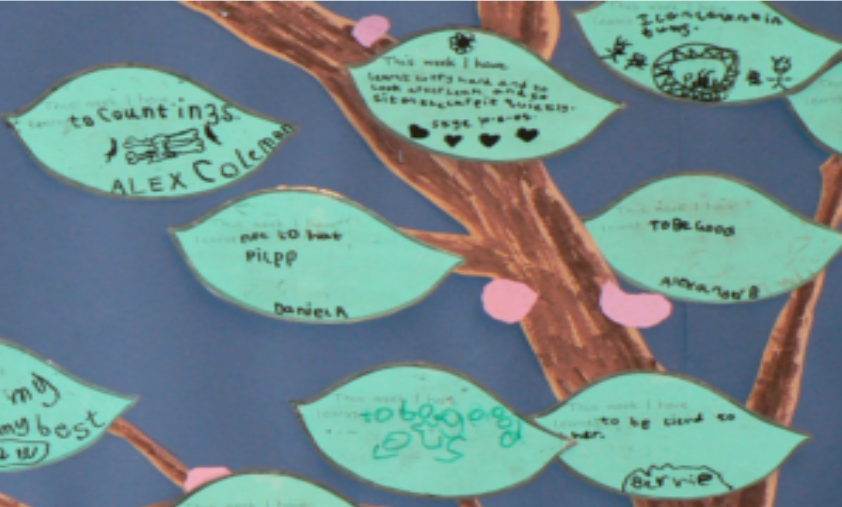
Phase 1 of a school’s learning journey.

Unit 1 The big picture of learning

The course starts not in the classroom but in looking at the learning mind and how we learn. Unit 1 introduces The Supple Learning Mind framework which classifies the learning behaviours identified by research. The framework illustrates that learning isn’t just about having a good memory but involves how we feel, how we think, how we learn with others and how we manage the process of learning (meta-learning)

Unit 1 engages staff in:

  • looking at their own learning habits;
  • considering the learning behaviours of their students;
  • exploring with their class what they think good learners do;
  • trying out activities that specifically engage various aspects of learning;
  • monitoring which type of learning behaviours are being used most and least across several weeks.
  • a structured team meeting to share and build understanding.


Unit 2 The big picture of classroom culture

Unit 2 takes a closer look at teaching and the role of the teacher in a learning focused classroom. How do teachers need to behave in order to enable their students to become good learners? How this endeavour affects the culture of the classroom; how teachers relate to students; how they talk to students about learning; how they structure learning activities, and how they celebrate learning.

Unit 2 engages staff in:

  • exploring their learning culture now;
  • recognising the features of a learning culture; its relationships, the talk, the lesson design, the celebration;
  • trying out activities designed to enhance student’s perseverance, questioning, collaboration and revising;
  • monitoring their development and rating how the classroom learning culture is shifting;
  • a structured team meeting where teachers share and build their understanding.


Unit 3 The big picture of progression in learning

In Unit 3 we look at how learning habits grow, what the growth journey looks like in different learning behaviours and different learners. This initial course concentrates on four key learning behaviours, one from each learning domain. From the Emotional domain – Persevering, from the Cognitive domain Questioning, from the Social domain Collaborating, and from the Strategic domain Revising. The foundational four.

Unit 3 engages staff in:

  • discovering the stages of learning power growth;
  • developing their own learning growth profile for the four behaviours;
  • developing a variety of student learning behaviour profiles;
  • recognising how their students differ in their progression in learning behaviours;
  • experimenting with activities designed to strengthen learning behaviours;
  • a structured team meeting to share understanding about student’s learning behaviours.

Growth chart for the four foundational learning behaviours


Units 4/5/6/7 Building the habit of…

In Units 4, 5, 6 & 7 teachers are invited to explore each of the 4 key learning behaviours – Persevering, Questioning, Collaborating and Revising respectively – through the lens of the 4 aspects of classroom culture – how they relate and talk to students, and how they construct learning activities and celebrate learning.

In each unit, they:

  • learn more about each of the foundational learning behaviours;
  • discover how confident their students are in each of the four behaviours;
  • consider how they could embed the learning behaviour into their teaching;
  • think about things they should stop and start doing to create a classroom culture within which the learning behaviour might flourish;
  • attend four structured team meetings to share experience and build understanding.


Unit 8 Looking Back; and Moving Forward

In Unit 8 teachers are invited to assess and analyse their actions, their understandings and their possible ways forward.

  • Section 1 invites teachers to look back over the past few months and to evaluate the impact of:
    • what they have learned;
    • the ideas that they have tried out;
    • how these changes have impacted on their students’ learning behaviours.
  • Section 2 distils the key messages for teaching and classroom culture and explores what teachers might do next to consolidate the positive changes they have already made.
  • Section 3 signposts the way ahead and opens up further possible avenues of enquiry.

At this point there are a number of different routes open to schools in phase 2 of the journey.


Return to the Senior Leaders’ Guide


Continue Reading

Help your learners to . . . Imagine

Imagining

When you use this learning muscle, you …

  • picture how things might look, sound, feel, be
  • let your mind explore and play with possibilities and ideas
  • build up stories around objects, facts, theories or other stimuli
  • rehearse things in your mind before doing them for real

The activities, think pieces and questions in this online unit aim to help you, as a teacher, to make a start on:

  • introducing your students to one of the key learning behaviours;
  • using the language of learning effectively with your students;
  • designing the use of learning behaviours into the way you teach;
  • developing the confidence and skill in helping your students to grow their learning habits.

The purpose of building your students’ Learning Power is to facilitate the growth of high value psychological characteristics in order to strengthen their learning character. These skills, attitudes and values, when used with increasing competence and confidence across many learning opportunities, become learning habits; the characteristics of successful lifelong learners.

How to navigate the module. Ignore if you are familiar with this advice.

Ideas in this module may take you into a new way of thinking about learning. The notes below will help you gain a coherent feel for how the material fits together and apply in your classroom practice.

  • Take it slowly and try to avoid any inclination to skim through the whole resource.
  • Spend about 15 mins on each of the 5 steps below; sufficient time to both read, think about and note down your learning.

Start with section 1.

  • Read – ‘What is . . . ?’
  • Maybe go over it again because there may well be some features of this behaviour that you haven’t met before.
  • Spot the imaginers in a class you know well and fill in the names of your learners.
  • Ask yourself:
    • Which of my learners appear to do all / most of these things already?
    • Which of my learners don’t appear to exhibit any of these positive learning behaviours?
    • What you’re discovering.

Make a note of your musings ready for discussion at the Professional Learning Team meeting.


Now go to section 3.

  • Carefully read ‘Understand how Imagining grows’, this is likely to be brand new information
  • Take time to find out how the phases of growth work (see toggle box)
  • Focus on the class you know well and think about where they might fit on this trajectory
  • Think through the questions shown below the trajectory but don’t assume higher achievers will automatically be further up the trajectory than lower achievers
  • Ask yourself the hard question – could my learners make progress up this trajectory this year?
  • If yes, how might I help make this happen?
  • If no, what might I do to make learners more secure at their current stage?

Make a note of your musings ready for discussion at the Professional Learning Team meeting.


Now go to section 2.

  • Get a sense of what is meant by classroom culture and look at the diagram that shows some aspects of culture that encourage and enable imagination to flourish. . . ‘
  • Think about your own classroom culture:
    • which of these aspects are a regular feature in your own classroom?
    • which might you consider introducing into your classroom?
    • which sound interesting but you do not understand what they might look like in practice?

Make a note of your musings ready for discussion at the Professional Learning Team meeting.

You’ve now looked at the nature of the learning behaviour, considered how it might grow, and looked at features the classroom culture that supports it.


Now turn to section 4 to explore some teaching ideas that could be used to build these behaviours in your own classroom.

  • Read through section 4 – Ideas for classroom practice
    • look at both the primary and secondary columns because many of the ideas can be amended to fit different ages
  • Which of these ideas might fit your needs or simply appeal to you?
  • Which do you already use?
  • Which might work well in your own classroom?

Make a note of your musings ready for discussion at the Professional Learning Team meeting.


Section 5 Develop your talk to support imagination

Take a look at a few statements you could use to nudge the behaviour. Using this language can be a big shift for many teachers because what you are doing here is talking in a way that will nudge the use of a particular learning behaviour. This is intentional and precise learning language.

Ask yourself:

  • How much do you currently talk about the process of learning, as opposed to the outcomes of learning?
  • Have you ever considered, in advance, how you might talk about the process of learning, or do you tend to just ‘trust yourself to say the right thing at the right time’?
  • Might you need to make a conscious decision to prepare in advance the language that you use?
  • Which of the suggested phrases/comments would best resonate with your students and fit with any of the teaching ideas you might try from section 4?

Make a note of your musings ready for discussion at the Professional Learning Team meeting.


Continue Reading

Strategic


Title

Sub heading

lhs text

pic


Title

Sub heading

lhs text

pic


Title

Sub heading

lhs text

pic


Title

Sub heading

lhs text

pic


Title

Sub heading

lhs text

pic


Title

Sub heading

lhs text

pic


Title

Sub heading

lhs text

pic


Title

Sub heading

lhs text

pic


Title

Sub heading

lhs text

pic


Title

Sub heading

lhs text

pic


Title

Sub heading

lhs text

pic


Title

Sub heading

lhs text

pic


Title

Sub heading

lhs text

pic


Title

Sub heading

lhs text

pic


Title

Sub heading

lhs text

pic


Title

Sub heading

lhs text

pic


Download


Continue Reading

Social


Title

Sub heading

lhs text

pic


Title

Sub heading

lhs text

pic


Title

Sub heading

lhs text

pic


Title

Sub heading

lhs text

pic


Title

Sub heading

lhs text

pic


Title

Sub heading

lhs text

pic


Title

Sub heading

lhs text

pic


Title

Sub heading

lhs text

pic


Title

Sub heading

lhs text

pic


Title

Sub heading

lhs text

pic


Title

Sub heading

lhs text

pic


Title

Sub heading

lhs text

pic


Title

Sub heading

lhs text

pic


Title

Sub heading

lhs text

pic


Title

Sub heading

lhs text

pic


Title

Sub heading

lhs text

pic


Download


Continue Reading

Cognitive


Title

Sub heading

lhs text

pic


Title

Sub heading

lhs text

pic


Title

Sub heading

lhs text

pic


Title

Sub heading

lhs text

pic


Title

Sub heading

lhs text

pic


Title

Sub heading

lhs text

pic


Title

Sub heading

lhs text

pic


Title

Sub heading

lhs text

pic


Title

Sub heading

lhs text

pic


Title

Sub heading

lhs text

pic


Title

Sub heading

lhs text

pic


Title

Sub heading

lhs text

pic


Title

Sub heading

lhs text

pic


Title

Sub heading

lhs text

pic


Title

Sub heading

lhs text

pic


Title

Sub heading

lhs text

pic


Download


Continue Reading

Emotional


Title

Sub heading

lhs text

pic


Title

Sub heading

lhs text

pic


Title

Sub heading

lhs text

pic


Title

Sub heading

lhs text

pic


Title

Sub heading

lhs text

pic


Title

Sub heading

lhs text

pic


Title

Sub heading

lhs text

pic


Title

Sub heading

lhs text

pic


Title

Sub heading

lhs text

pic


Title

Sub heading

lhs text

pic


Title

Sub heading

lhs text

pic


Title

Sub heading

lhs text

pic


Title

Sub heading

lhs text

pic


Title

Sub heading

lhs text

pic


Title

Sub heading

lhs text

pic


Title

Sub heading

lhs text

pic


Download


Continue Reading

A culture to support collaboration

Welcome to Building Powerful Learners Unit 6 online resource which aims to;

  • assist you in enabling your students become learners who learn collaboratively
  • offer well researched ideas for you to try with your students
  • strengthen your understanding of the theoretical ideas

We hope you find these resources stimulating and helpful.

1. Unit 6 content

Sub heading

Things for you to find out about;

Both of these ‘find out about’ issues were raised at the end of the first meeting. It would be wise to tackle these first and use the results to help you select teaching ideas to try in items 4 & 5

Item 2. Get curious about your students’ attitudes to learning

Item 3. Learning behaviours in action ( the wheel)

Things for you to try;

All the items here have been selected their ease of application in the early stages of introducing students to their learning behaviours. You don’t have to use them all but we suggest you track what happens and share this at the next meeting.

Item 4…

Item 5..

Things to remind you of why;

The items below are included to either remind you of issues briefly covered in the meeting or offer deeper information for those of you whose interest has been piqued. These are reference rather than ‘to do’ activities.

Item 6. Framework of high value teaching behaviours. (useful reference tool)

Item 7. The importance of dispositions and the ??? of the approach.(long useful read)

Item 8. A reminder of why all this matters.(short read)

Item 9. A reassurance of the benefits. (short read


pic


Title

Sub heading

lhs text

pic


Title

Sub heading

lhs text

pic


Title

Sub heading

lhs text

pic


Title

Sub heading

lhs text

pic


Title

Sub heading

lhs text

pic


Title

Sub heading

lhs text

pic


Title

Sub heading

lhs text

pic


Title

Sub heading

lhs text

pic


Title

Sub heading

lhs text

pic


Title

Sub heading

lhs text

pic


Title

Sub heading

lhs text

pic


Title

Sub heading

lhs text

pic


Title

Sub heading

lhs text

pic


Title

Sub heading

lhs text

pic


Title

Sub heading

lhs text

pic


Title

Sub heading

lhs text

pic


Download


Continue Reading

A culture to support revising/refining.


Welcome to Building Powerful Learners Unit 5 online resource which aims to;

  • assist you in enabling your students become learners who revise and refine their learning
  • offer well researched ideas for you to try with your students
  • strengthen your understanding of the theoretical ideas

We hope you find these resources stimulating and helpful.

1. Unit 5 content

Sub heading

Things for you to find out about;

Both of these ‘find out about’ issues were raised at the end of the first meeting. It would be wise to tackle these first and use the results to help you select teaching ideas to try in items 4 & 5

Item 2. Get curious about your students’ attitudes to learning

Item 3. Learning behaviours in action ( the wheel)

Things for you to try;

All the items here have been selected their ease of application in the early stages of introducing students to their learning behaviours. You don’t have to use them all but we suggest you track what happens and share this at the next meeting.

Item 4…

Item 5..

Things to remind you of why;

The items below are included to either remind you of issues briefly covered in the meeting or offer deeper information for those of you whose interest has been piqued. These are reference rather than ‘to do’ activities.

Item 6. Framework of high value teaching behaviours. (useful reference tool)

Item 7. The importance of dispositions and the ??? of the approach.(long useful read)

Item 8. A reminder of why all this matters.(short read)

Item 9. A reassurance of the benefits. (short read


pic


Title

Sub heading

lhs text

pic


Title

Sub heading

lhs text

pic


Title

Sub heading

lhs text

pic


Title

Sub heading

lhs text

pic


Title

Sub heading

lhs text

pic


Title

Sub heading

lhs text

pic


Title

Sub heading

lhs text

pic


Title

Sub heading

lhs text

pic


Title

Sub heading

lhs text

pic


Title

Sub heading

lhs text

pic


Title

Sub heading

lhs text

pic


Title

Sub heading

lhs text

pic


Title

Sub heading

lhs text

pic


Title

Sub heading

lhs text

pic


Title

Sub heading

lhs text

pic


Title

Sub heading

lhs text

pic


Download


Continue Reading

Unit 3 A culture to support perseverance

Welcome to Building Powerful Learners Unit 3 online resource which aims to;

  • assist you in enabling your students become perseverant learners
  • offer well researched ideas for you to try with your students
  • strengthen your understanding of  the theoretical ideas

We hope you find these resources stimulating and helpful.

1. Unit 3 content

Sub heading

Things for you to find out about;

Both of these ‘find out about’ issues were raised at the end of the first meeting. It would be wise to tackle these first and use the results to help you select teaching ideas to try in items 4 & 5

Item 2. Get curious about your students’ attitudes to learning

Item 3. Learning behaviours in action ( the wheel)

Things for you to try;

All the items here have been selected their ease of application in the early stages of introducing students to their learning behaviours. You don’t have to use them all but we suggest you track what happens and share this at the next meeting.

Item 4…

Item 5..

Things to remind you of why;

The items below are included to either remind you of issues briefly covered in the meeting or offer deeper information for those of you whose interest has been piqued. These are reference rather than ‘to do’ activities.

Item 6. Framework of high value teaching behaviours. (useful reference tool)

Item 7. The importance of dispositions and the ??? of the approach.(long useful read)

Item 8. A reminder of why all this matters.(short read)

Item 9. A reassurance of the benefits. (short read


pic


Title

Sub heading

lhs text

pic


Title

Sub heading

lhs text

pic


Title

Sub heading

lhs text

pic


Title

Sub heading

lhs text

pic


Title

Sub heading

lhs text

pic


Title

Sub heading

lhs text

pic


Title

Sub heading

lhs text

pic


Title

Sub heading

lhs text

pic


Title

Sub heading

lhs text

pic


Title

Sub heading

lhs text

pic


Title

Sub heading

lhs text

pic


Title

Sub heading

lhs text

pic


Title

Sub heading

lhs text

pic


Title

Sub heading

lhs text

pic


Title

Sub heading

lhs text

pic


Download


Continue Reading

Unit 4 A culture to support questioning

Welcome to Building Powerful Learners Unit 4 online resource which aims to;
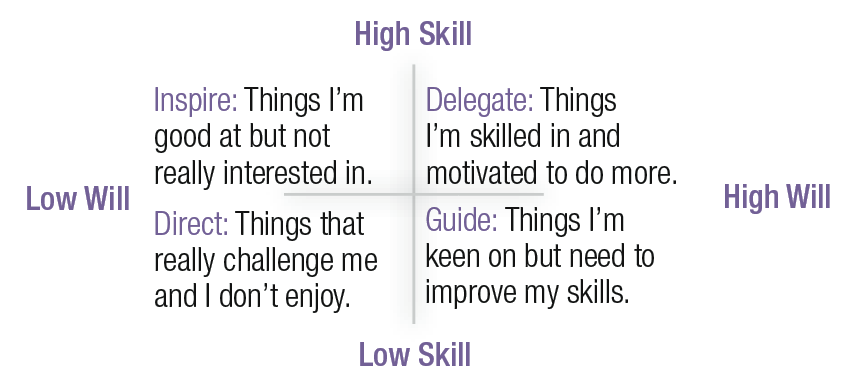
  • assist you in enabling your students become learners who question
  • offer well researched ideas for you to try with your students
  • strengthen your understanding of the theoretical ideas

We hope you find these resources stimulating and helpful.

1. Unit 4 content

Sub heading

Things for you to find out about;

Both of these ‘find out about’ issues were raised at the end of the first meeting. It would be wise to tackle these first and use the results to help you select teaching ideas to try in items 4 & 5

Item 2. Get curious about your students’ attitudes to learning

Item 3. Learning behaviours in action ( the wheel)

Things for you to try;

All the items here have been selected their ease of application in the early stages of introducing students to their learning behaviours. You don’t have to use them all but we suggest you track what happens and share this at the next meeting.

Item 4…

Item 5..

Things to remind you of why;

The items below are included to either remind you of issues briefly covered in the meeting or offer deeper information for those of you whose interest has been piqued. These are reference rather than ‘to do’ activities.

Item 6. Framework of high value teaching behaviours. (useful reference tool)

Item 7. The importance of dispositions and the ??? of the approach.(long useful read)

Item 8. A reminder of why all this matters.(short read)

Item 9. A reassurance of the benefits. (short read


pic


Title

Sub heading

lhs text

pic


Title

Sub heading

lhs text

pic


Title

Sub heading

lhs text

pic


Title

Sub heading

lhs text

pic


Title

Sub heading

lhs text

pic


Title

Sub heading

lhs text

pic


Title

Sub heading

lhs text

pic


Title

Sub heading

lhs text

pic


Title

Sub heading

lhs text

pic


Title

Sub heading

lhs text

pic


Title

Sub heading

lhs text

pic


Title

Sub heading

lhs text

pic


Title

Sub heading

lhs text

pic


Title

Sub heading

lhs text

pic


Title

Sub heading

lhs text

pic


Title

Sub heading

lhs text

pic


Download


Continue Reading

Session 2


Title

Sub heading

lhs text

pic


Title

Sub heading

lhs text

pic


Title

Sub heading

lhs text

pic


Title

Sub heading

lhs text

pic


Title

Sub heading

lhs text

pic


Title

Sub heading

lhs text

pic


Title

Sub heading

lhs text

pic


Title

Sub heading

lhs text

pic


Title

Sub heading

lhs text

pic


Title

Sub heading

lhs text

pic


Title

Sub heading

lhs text

pic


Title

Sub heading

lhs text

pic


Title

Sub heading

lhs text

pic


Title

Sub heading

lhs text

pic


Title

Sub heading

lhs text

pic


Title

Sub heading

lhs text

pic


Download


Continue Reading

Session 1


Title

Sub heading

lhs text

pic


Title

Sub heading

lhs text

pic


Title

Sub heading

lhs text

pic


Title

Sub heading

lhs text

pic


Title

Sub heading

lhs text

pic


Title

Sub heading

lhs text

pic


Title

Sub heading

lhs text

pic


Title

Sub heading

lhs text

pic


Title

Sub heading

lhs text

pic


Title

Sub heading

lhs text

pic


Title

Sub heading

lhs text

pic


Title

Sub heading

lhs text

pic


Title

Sub heading

lhs text

pic


Title

Sub heading

lhs text

pic


Title

Sub heading

lhs text

pic


Title

Sub heading

lhs text

pic


Download


Continue Reading

Steve Temp Playground

Go to the Visible Thinking Websitefor more examples and information about visible thinking routines.

To download xxx from the Visible Thinking Website as a pdf:

Download as a pdf


Perseverance Green

Use the Green Navigation Bar below to find your way around the different sections of the module.

Return to ‘the professional learning power game route map’Return to ‘Putting Perseverance into Learning’Section 1 – Perseverance and how it developsSection 2 – Building Perseverance friendly classroom culturesSection 3 – Blending Perseverance with contentSection 4 – Team reflection and planning


Perseverance Yellow

You are now in section 2, Building Perseverance friendly classroom cultures, moving from xx to yy

Use the Section Navigation Bar below to find your way around the different phases of development.

Return to Perseverance section 2Section 2/1 Moving from Grey to PurpleSection 2/2 Moving from Purple to BlueSection 2/3 Moving from Blue to GreenSection 2/4 Moving beyond Green

Noticing Green

Use the Green Navigation Bar below to find your way around the different sections of the module.

Return to ‘the professional learning power game route map’Return to ‘Putting Noticing into Learning’Section 1 – Noticing and how it developsSection 2 – Building Noticing friendly classroom culturesSection 3 – Blending Noticing with contentSection 4 – Team reflection and planning


noticing Yellow

You are now in section 2, Building Noticing friendly classroom cultures, moving from xx to yy

Use the Section Navigation Bar below to find your way around the different phases of development.

Return to Noticing section 2Section 2/1 Moving from Grey to PurpleSection 2/2 Moving from Purple to BlueSection 2/3 Moving from Blue to GreenSection 2/4 Moving beyond Green

Questioning Green

Use the Green Navigation Bar below to find your way around the different sections of the module.

Return to ‘the professional learning power game route map’Return to ‘Putting Questioning into Learning’Section 1 – Questioning and how it developsSection 2 – Building Questioning friendly classroom culturesSection 3 – Blending Questioning with contentSection 4 – Team reflection and planning


Questioning Yellow

You are now in section 2, Building Questioning friendly classroom cultures, moving from xx to yy

Use the Section Navigation Bar below to find your way around the different phases of development.

Return to Questioning section 2Section 2/1 Moving from Grey to PurpleSection 2/2 Moving from Purple to BlueSection 2/3 Moving from Blue to GreenSection 2/4 Moving beyond Green

Making Links Green
Use the Green Navigation Bar below to find your way around the different sections of the module.

Return to ‘the professional learning power game route map’Return to ‘Putting Making Links into Learning’Section 1 – Making Links and how it developsSection 2 – Building Making Links friendly classroom culturesSection 3 – Blending Making Links with contentSection 4 – Team reflection and planning


Making Links Yellow

You are now in section 2, Building Link Making friendly classroom cultures, moving from xx to yy

Use the Section Navigation Bar below to find your way around the different phases of development.

Return to Making Links section 2Section 2/1 Moving from Grey to PurpleSection 2/2 Moving from Purple to BlueSection 2/3 Moving from Blue to GreenSection 2/4 Moving beyond Green

Reasoning Green
Use the Green Navigation Bar below to find your way around the different sections of the module.

Return to ‘the professional learning power game route map’Return to ‘Putting Reasoning into Learning’Section 1 – Reasoning and how it developsSection 2 – Building Reasoning friendly classroom culturesSection 3 – Blending Reasoning with contentSection 4 – Team reflection and planning


Reasoning Yellow

You are now in section 2, Building Reasoning friendly classroom cultures, moving from xx to yy

Use the Section Navigation Bar below to find your way around the different phases of development.

Return to Reasoning section 2Section 2/1 Moving from Grey to PurpleSection 2/2 Moving from Purple to BlueSection 2/3 Moving from Blue to GreenSection 2/4 Moving beyond Green

Imagining Green
Use the Green Navigation Bar below to find your way around the different sections of the module.

Return to ‘the professional learning power game route map’Return to ‘Putting Imagining into Learning’Section 1 – Imagining and how it developsSection 2 – Building Imagining friendly classroom culturesSection 3 – Blending Imagining with contentSection 4 – Team reflection and planning


Master Yellow

You are now in section 2, Building Imagining friendly classroom cultures, moving from xx to yy

Use the Section Navigation Bar below to find your way around the different phases of development.

Return to Imagining section 2Section 2/1 Moving from Grey to PurpleSection 2/2 Moving from Purple to BlueSection 2/3 Moving from Blue to GreenSection 2/4 Moving beyond Green

Capitalising Green
Use the Green Navigation Bar below to find your way around the different sections of the module.

Return to ‘the professional learning power game route map’Return to ‘Putting Resourcing (Capitalising) into Learning’Section 1 – Resourcing and how it developsSection 2 – Building Resourcing Learning friendly classroom culturesSection 3 – Blending Resourcing Learning with contentSection 4 – Team reflection and planning


Capitalising Yellow

You are now in section 2, Building Capitalising friendly classroom cultures, moving from xx to yy

Use the Section Navigation Bar below to find your way around the different phases of development.

Return to Resourcing (Capitalising) section 2Section 2/1 Moving from Grey to PurpleSection 2/2 Moving from Purple to BlueSection 2/3 Moving from Blue to GreenSection 2/4 Moving beyond Green

Listening Green
Use the Green Navigation Bar below to find your way around the different sections of the module.

Return to ‘the professional learning power game route map’Return to ‘Putting Listening into Learning’Section 1 – Listening and how it developsSection 2 – Building Listening friendly classroom culturesSection 3 – Blending Listening with contentSection 4 – Team reflection and planning


Listening Yellow

You are now in section 2, Building Listening friendly classroom cultures, moving from xx to yy

Use the Section Navigation Bar below to find your way around the different phases of development.

Return to Listening section 2Section 2/1 Moving from Grey to PurpleSection 2/2 Moving from Purple to BlueSection 2/3 Moving from Blue to GreenSection 2/4 Moving beyond Green

Collaboration Green
Use the Green Navigation Bar below to find your way around the different sections of the module.

Return to ‘the professional learning power game route map’Return to ‘Putting Collaboration into Learning’Section 1 – Collaboration and how it developsSection 2 – Building Collaboration friendly classroom culturesSection 3 – Blending Collaboration with contentSection 4 – Team reflection and planning


Collaboration Yellow

You are now in section 2, Building Collaboration friendly classroom cultures, moving from xx to yy

Use the Section Navigation Bar below to find your way around the different phases of development.

Return to Collaboration
section 2
Section 2/1 Moving from Grey to PurpleSection 2/2 Moving from Purple to BlueSection 2/3 Moving from Blue to GreenSection 2/4 Moving beyond Green

Planning Green
Use the Green Navigation Bar below to find your way around the different sections of the module.

Return to ‘the professional learning power game route map’Return to ‘Putting Planning into Learning’Section 1 – Planning and how it developsSection 2 – Building Planning friendly classroom culturesSection 3 – Blending Planning with contentSection 4 – Team reflection and planning


Planning Yellow

You are now in section 2, Building Planning friendly classroom cultures, moving from xx to yy

Use the Section Navigation Bar below to find your way around the different phases of development.

Return to Planning section 2Section 2/1 Moving from Grey to PurpleSection 2/2 Moving from Purple to BlueSection 2/3 Moving from Blue to GreenSection 2/4 Moving beyond Green

Revising Green
Use the Green Navigation Bar below to find your way around the different sections of the module.

Return to ‘the professional learning power game route map’Return to ‘Putting Revising into Learning’Section 1 – Revising and how it developsSection 2 – Building Revising friendly classroom culturesSection 3 – Blending Revising with contentSection 4 – Team reflection and planning


Revising Yellow

You are now in section 2, Building Revising friendly classroom cultures, moving from xx to yy

Use the Section Navigation Bar below to find your way around the different phases of development.

Return to Revising section 2Section 2/1 Moving from Grey to PurpleSection 2/2 Moving from Purple to BlueSection 2/3 Moving from Blue to GreenSection 2/4 Moving beyond Green

Meta Learning Green
Use the Green Navigation Bar below to find your way around the different sections of the module.

Return to ‘the professional learning power game route map’Return to ‘Putting Meta Learning into Learning’Section 1 – Meta Learning and how it developsSection 2 – Building Meta Learning friendly classroom culturesSection 3 – Blending Meta Learning with contentSection 4 – Team reflection and planning


Meta Learning Yellow

You are now in section 2, Building Meta Learning friendly classroom cultures, moving from xx to yy

Use the Section Navigation Bar below to find your way around the different phases of development.

Return to Meta Learning section 2Section 2/1 Moving from Grey to PurpleSection 2/2 Moving from Purple to BlueSection 2/3 Moving from Blue to GreenSection 2/4 Moving beyond Green


You are now in ‘Putting Perseverance into Learning’

You are now in section 1, Perseverance and how it develops.

You are now in section 2, Building Perseverance friendly classroom cultures.

You are now in section 3, Blending Perseverance with content.

You are now in section 4, Team reflection and planning.

You are now in section 2, Building Perseverance friendly classroom cultures, moving from Grey to Purple.

You are now in section 2, Building Perseverance friendly classroom cultures, moving from Purple to Blue.

You are now in section 2, Building Perseverance friendly classroom cultures, moving from Blue to Green.

You are now in section 2, Building Perseverance friendly classroom cultures, moving beyond Green.


You are now in ‘Putting Noticing into Learning’

You are now in section 1, Noticing and how it develops.

You are now in section 2, Building Noticing friendly classroom cultures.

You are now in section 3, Blending Noticing with content.

You are now in section 4, Team reflection and planning.

You are now in section 2, Building Noticing friendly classroom cultures, moving from Grey to Purple.

You are now in section 2, Building Noticing friendly classroom cultures, moving from Purple to Blue.

You are now in section 2, Building Noticing friendly classroom cultures, moving from Blue to Green.

You are now in section 2, Building Noticing friendly classroom cultures, moving beyond Green.


You are now in ‘Putting Questioning into Learning’

You are now in section 1, Questioning and how it develops.

You are now in section 2, Building Questioning friendly classroom cultures.

You are now in section 3, Blending Questioning with content.

You are now in section 4, Team reflection and planning.

You are now in section 2, Building Questioning friendly classroom cultures, moving from Grey to Purple.

You are now in section 2, Building Questioning friendly classroom cultures, moving from Purple to Blue.

You are now in section 2, Building Questioning friendly classroom cultures, moving from Blue to Green.

You are now in section 2, Building Questioning friendly classroom cultures, moving beyond Green.


You are now in ‘Putting Making Links into Learning’

You are now in section 1, Making Links and how it develops.

You are now in section 2, Building Making Links friendly classroom cultures.

You are now in section 3, Blending Making Links with content.

You are now in section 4, Team reflection and planning.

You are now in section 2, Building Making Links friendly classroom cultures, moving from Grey to Purple.

You are now in section 2, Building Making Links friendly classroom cultures, moving from Purple to Blue.

You are now in section 2, Building Making Links friendly classroom cultures, moving from Blue to Green.

You are now in section 2, Building Making Links friendly classroom cultures, moving beyond Green.


You are now in ‘Putting Reasoning into Learning’

You are now in section 1, Reasoning and how it develops.

You are now in section 2, Building Reasoning friendly classroom cultures.

You are now in section 3, Blending Reasoning with content.

You are now in section 4, Team reflection and planning.

You are now in section 2, Building Reasoning friendly classroom cultures, moving from Grey to Purple.

You are now in section 2, Building Reasoning friendly classroom cultures, moving from Purple to Blue.

You are now in section 2, Building Reasoning friendly classroom cultures, moving from Blue to Green.

You are now in section 2, Building Reasoning friendly classroom cultures, moving beyond Green.


You are now in ‘Putting Imagining into Learning’

You are now in section 1, Imagining and how it develops.

You are now in section 2, Building Imagining friendly classroom cultures.

You are now in section 3, Blending Imagining with content.

You are now in section 4, Team reflection and planning.

You are now in section 2, Building Imagining friendly classroom cultures, moving from Grey to Purple.

You are now in section 2, Building Imagining friendly classroom cultures, moving from Purple to Blue.

You are now in section 2, Building Imagining friendly classroom cultures, moving from Blue to Green.

You are now in section 2, Building Imagining friendly classroom cultures, moving beyond Green.


You are now in ‘Putting Capitalising into Learning’

You are now in section 1, Capitalising and how it develops.

You are now in section 2, Building Capitalising friendly classroom cultures.

You are now in section 3, Blending Capitalising with content.

You are now in section 4, Team reflection and planning.

You are now in section 2, Building Capitalising friendly classroom cultures, moving from Grey to Purple.

You are now in section 2, Building Capitalising friendly classroom cultures, moving from Purple to Blue.

You are now in section 2, Building Capitalising friendly classroom cultures, moving from Blue to Green.

You are now in section 2, Building Capitalising friendly classroom cultures, moving beyond Green.


You are now in ‘Putting Collaboration into Learning’

You are now in section 1, Collaboration and how it develops.

You are now in section 2, Building Collaboration friendly classroom cultures.

You are now in section 3, Blending Collaboration with content.

You are now in section 4, Team reflection and planning.

You are now in section 2, Building Collaboration friendly classroom cultures, moving from Grey to Purple.

You are now in section 2, Building Collaboration friendly classroom cultures, moving from Purple to Blue.

You are now in section 2, Building Collaboration friendly classroom cultures, moving from Blue to Green.

You are now in section 2, Building Collaboration friendly classroom cultures, moving beyond Green.

You are now in ‘Putting Listening into Learning’

You are now in section 1, Listening and how it develops.

You are now in section 2, Building Listening friendly classroom cultures.

You are now in section 3, Blending Listening with content.

You are now in section 4, Team reflection and planning.

You are now in section 2, Building Listening friendly classroom cultures, moving from Grey to Purple.

You are now in section 2, Building Listening friendly classroom cultures, moving from Purple to Blue.

You are now in section 2, Building Listening friendly classroom cultures, moving from Blue to Green.

You are now in section 2, Building Listening friendly classroom cultures, moving beyond Green.


You are now in ‘Putting Planning into Learning’

You are now in section 1, Planning and how it develops.

You are now in section 2, Building Planning friendly classroom cultures.

You are now in section 3, Blending Planning with content.

You are now in section 4, Team reflection and planning.

You are now in section 2, Building Planning friendly classroom cultures, moving from Grey to Purple.

You are now in section 2, Building Planning friendly classroom cultures, moving from Purple to Blue.

You are now in section 2, Building Planning friendly classroom cultures, moving from Blue to Green.

You are now in section 2, Building Planning friendly classroom cultures, moving beyond Green.


You are now in ‘Putting Revising into Learning’

You are now in section 1, Revising and how it develops.

You are now in section 2, Building Revising friendly classroom cultures.

You are now in section 3, Blending Revising with content.

You are now in section 4, Team reflection and planning.

You are now in section 2, Building Revising friendly classroom cultures, moving from Grey to Purple.

You are now in section 2, Building Revising friendly classroom cultures, moving from Purple to Blue.

You are now in section 2, Building Revising friendly classroom cultures, moving from Blue to Green.

You are now in section 2, Building Revising friendly classroom cultures, moving beyond Green.


You are now in ‘Putting Meta Learning into Learning’

You are now in section 1, Meta Learning and how it develops.

You are now in section 2, Building Meta Learning friendly classroom cultures.

You are now in section 3, Blending Meta Learning with content.

You are now in section 4, Team reflection and planning.

You are now in section 2, Building Meta Learning friendly classroom cultures, moving from Grey to Purple.

You are now in section 2, Building Meta Learning friendly classroom cultures, moving from Purple to Blue.

You are now in section 2, Building Meta Learning friendly classroom cultures, moving from Blue to Green.

You are now in section 2, Building Meta Learning friendly classroom cultures, moving beyond Green.


You are now in ‘Putting xxx into Learning’

You are now in section 1, xxx and how it develops.

You are now in section 2, Building xxx friendly classroom cultures.

You are now in section 3, Blending xxx with content.

You are now in section 4, Team reflection and planning.

You are now in section 2, Building xxx friendly classroom cultures, moving from Grey to Purple.

You are now in section 2, Building xxx friendly classroom cultures, moving from Purple to Blue.

You are now in section 2, Building xxx friendly classroom cultures, moving from Blue to Green.

You are now in section 2, Building xxx friendly classroom cultures, moving beyond Green.


Master Green


Return to ‘the professional learning power game route map’Return to ‘Putting xxx into Learning’Section 1 – xxx and how it developsSection 2 – Building xxx friendly classroom culturesSection 3 – Blending xxx with contentSection 4 – Team reflection and planning


Master Yellow

You are now in section 2, Building xxx friendly classroom cultures, moving from xx to yy

Use the Section Navigation Bar below to find your way around the different phases of development.

Return to xxx section 2Section 2/1 Moving from Grey to PurpleSection 2/2 Moving from Purple to BlueSection 2/3 Moving from Blue to GreenSection 2/4 Moving beyond Green


Continue Reading

Meta-Learning

You are now in Unit 4, Broadening the range, Meta Learning

A. The intention of this section is to..

..help you to introduce the learning behaviour of Meta Learning to your students. The suggested activities could be introduced singly, in various combinations or in the staged start suggested. Together they make up gentle start to introducing a new learning behaviour into the mix.

B. The best way of tackling this section is to..

..simply read through the suggestions and use them to decide when would be a useful time to begin using them.

C. As a result it should have the following impact.
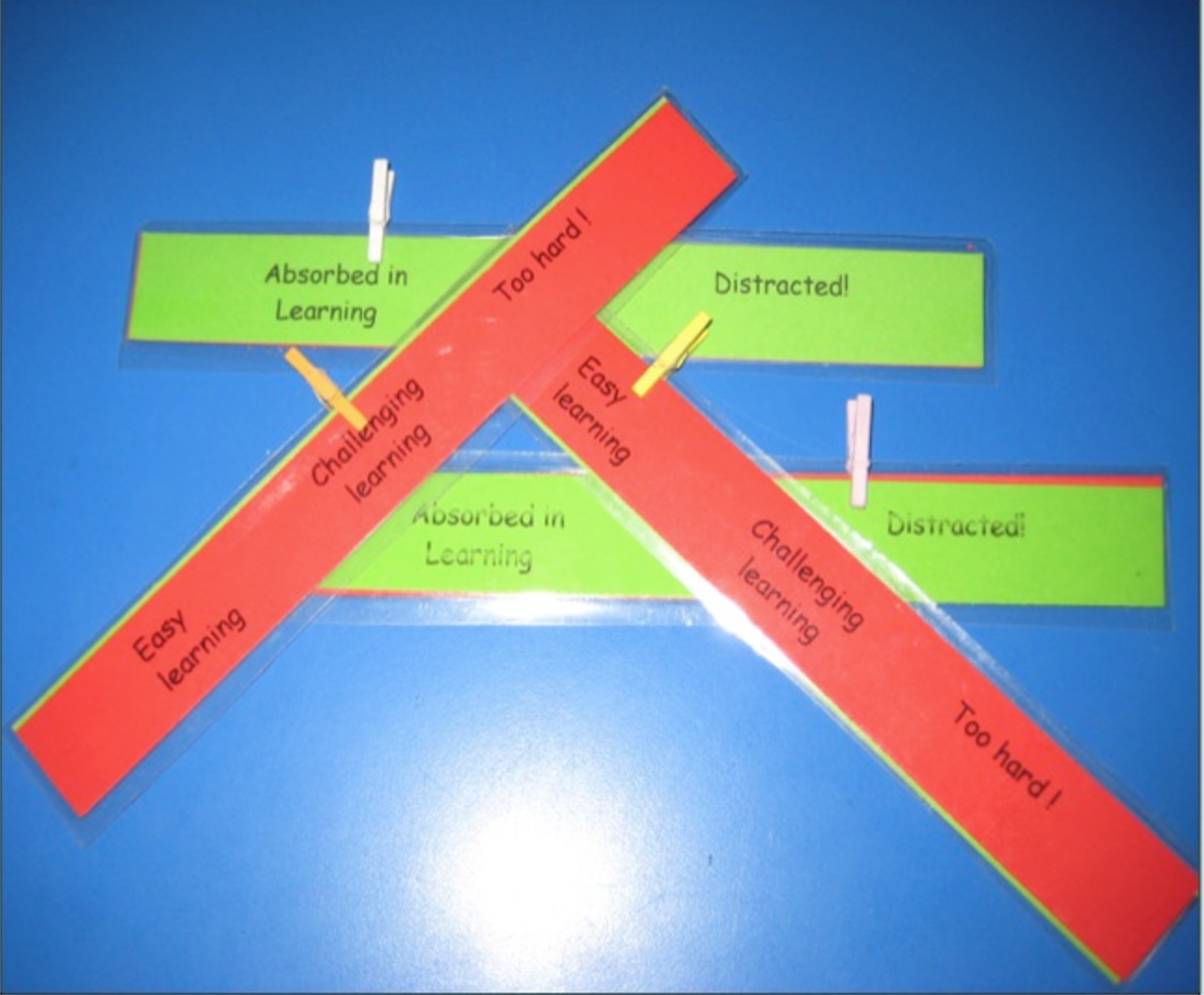
You are now confident about introducing a further learning behaviour, Meta Learning, to enrich the learning language of the classroom and enhance students’ understanding of learning.
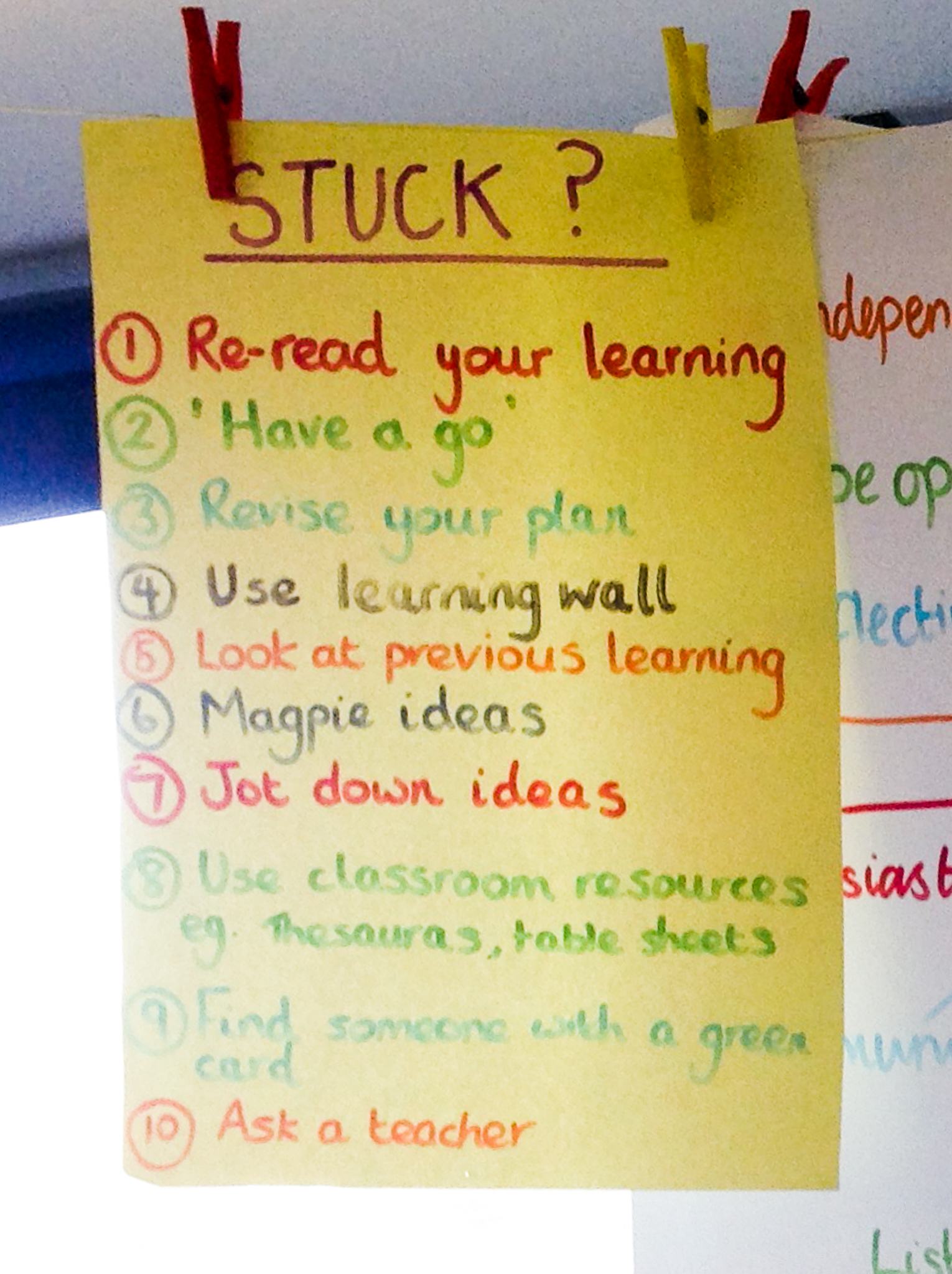
Meta Learning – Thinking about learning


Becoming a meta-learner is about being able to assess the effectiveness of your own learning process and regulate it for greater success. It has several strands; how you become and stay motivated and plan your learning, how you build and organise your ideas; how you learn with and from others; how you manage your learning environment and how you monitor your learning process itself in order to improve. When looked at from these diverse angles, growing meta-learning moves well beyond encouraging a student to ‘think about your learning’.


Firstly, take a quick look at your classroom culture to discover whether it has features that encourage Meta Learning.

How well does your classroom climate encourage Meta-learning? ⬇️

Does my classroom culture encourage Meta Learning?

Here is a selection of features that might begin to shape the emotional climate of your classroom to encourage meta learning.

The diagram has 4 sections:

  • Top – strategies you could build into the way you teach to stimulate meta learning;
  • Right – indications of the sort of language you might use to stimulate meta learning;
  • Bottom – ways in which you might celebrate / praise students’ use of meta learning;
  • Left – things that you need to enable students to do.

Apply your own noticing and consider whether you already use any of these features and which you fancy trying.

Download as a pdf


Some ideas to encourage a Meta Learning frame of mind.

In the early stages of building your students’ learning power your role is to;

  • make them aware of the behaviour
  • talk about it (what, how, why, when, if)
  • celebrate its use
  • give opportunities to practise it, both in lessons and elsewhere
  • reflect on it to improve it.

This staged start is reflected below…

  1. Firstly... make students aware of the use and importance of meta-learning…when, where, why, how they are or could be doing it. Model being a meta-learner.
  2. Then... explore meta learning a little more through the language of meta learning
  3. Try... using meta learning as a lesson starter to tune students into using it
  4. Then start… blending meta learning into the way you teach the content. Encourage learners to plan, monitor and evaluate their learning.
  5. Ensure… students reflect on the success or otherwise of their meta learning frame of mind

1. Make students aware of Meta-Learning

How you make your students aware of the words that describe the behaviour, why it is important to use it and what it helps them to do.

Younger students

Give pupils a practical understanding of tools for learning


Discuss learning behaviours and link each one with a practical tool, following children’s ideas about the links. Display pictures of the tools labelled with the behaviour they represent. Collect real tools to be handled in class. When talking about learning behaviours ask pupils which tool would help them to learn something and why.

They will soon able to go and fetch say, a notebook representing planning, before going outdoors to build a rocket, or the mirror of imitation if they were going to learn by watching someone else first.


Older students

Find out what students know about themselves as learners

A learning fitness quiz

Use this quiz to get students thinking about the process of learning and how they are as learners.

Download

Younger students

Introduce learning through story

Our learning friend

The purpose of this story is to introduce thinking about learning. It doesn’t by any means introduce all the learning ‘muscles’ but it begins to focus thinking about how we learn and what it is that good learners do. It offers a way to introduce the idea that there are very particular things that we can learn how to do that will help us to become better learners.

Does your class need a ‘learning friend’?

Story Guide & Story: ‘Our Learning Friend’

Older students

Create opportunities for reflection

Pay equal attention to what has been learned and how it has been learned in plenaries and review points. Encourage students to describe and discuss the learning behaviours they have been employing. Build in such moments for reflection whenever possible.

You might use a Rating Wheel to capture their thinking – colour in the segments according to how much they feel they have used the learning behaviour.

Rating Wheel

Download

2. Explore the language of Meta-Learning

How you might extend the language and understanding of this behaviour

Younger students

Encourage pupils to see themselves as learners

Related image

Invite pupils to make themselves a ‘Things I have Learned in my Life’ scroll or book.

  • Encourage them to get as much help as they can from friends and family in order to make the most comprehensive list they could.
  • Give them time to share their lists with one another so that one idea inspires another until they feel their list is as complete as it can be.
  • Each time they learn something new, in or out of school, they add it to their list.
  • This can prove be a super weekly celebration to hear about, talk about and congratulate additions.


Older students

Explore successful learning

Time to think … and share ideas

In a small group — Think of something that one of you is good at that the others would like to learn … could be a sport or a school subject, playing an instrument, playing a game, making a drawing.

Interview this person about what goes on in their head when they are practising the skill.

Try questions like;

  • “ What have you tried that didn’t work? ”
  • “ Can you describe what ‘better’ means? ”
  • “ What goes on in your head when you are doing it? ”
  • “ Do you talk to yourself whilst you are learning? – What do you say? ”
  • “ How do you get better at this? ”
  • “ What different ways do you try?”
  • ” When is it best?”
  • “What hinders your learning?”
  • “What helps you to learn?”

3. Use Meta Learning as a lesson starter

Use a quick starter to key students into the learning behaviour you want to concentrate on in the lesson. i.e. here you are starting up the meta learning behaviour

All students

Linking ‘Learning Objectives’ and ‘Learning Behaviours’

Rather than telling students how they will need to be as learners to be successful, share your Learning Objectives / Success Criteria and invite them to discuss and agree the types of learning behaviours that they expect they will need to use in the upcoming lesson / activity.

Ask:

  • Why did they choose those particular behaviours?
  • Have they missed any key ones?
  • How precisely will they use these key behaviours?
  • How will they monitor the use?
  • What are their Success Criteria for the use of these key behaviours?
  • What are my own?

As you develop greater understanding of learning you might design learning activities which, by their very nature, will deepen students’ tendency to become more aware of how they are learning and the effect this is having on their understanding of the content.

4. Focusing on Meta Learning as a learning strategy

Draw out the meta learning behaviour being used in a thinking routine.

All students

Visible Thinking Routine

Establish reflecting as a classroom routine

  • Begin each lesson with ‘Tell me Three … things we learned last lesson; ways we learned last lesson; things we still need to find out; things you hope to achieve today’.
  • End each lesson with ‘Tell me Three … things we learned today; learning skills we used today; things we need to do next lesson; ways you could become a more effective learner’ etc.
  • Ensure that pupils tell you three. Do not lapse into doing it for them!

Teacher talk to make it work

  • Have we remembered the 3 most important things?
  • What else do you want to find out about this?
  • So, what are you trying to achieve next?
  • What learning behaviours did you use in achieving that?
  • Which behaviour was most successful/useful/redundant?
  • Have you made a habit of that behaviour yet?


And here is an idea that will help students to consider how they plan to improve as a learner.

5. An activity to highlight and strengthen Meta Learning

How do you want / need to improve as a learner?

The question itself is deep and searching. It requires the student to have an accurate assessment of their existing learning strengths and weaknesses, and to have identified particular aspects on which they wish / need to work.

Supplementary questions along the lines of ‘what are you actually going to do to achieve that?’ forces the move from wishful thinking to action planning. Such questions, asked to students who understand their learning strengths and relative weaknesses, should elicit fluent responses. But for many, initially, you will need to be prepared to scaffold the conversation, to provide suggestions and to offer strategies that might be employed.

Teacher talk

  • What about your perseverance levels? What do you find tricky there?
  • What do you usually try to do to overcome that?
  • What else might you try to do to overcome that?
  • Who do you know who seems to be good at persevering?
  • followed by 2 supplementary questions . . .
  • What do they do that you don’t?
  • What do you do that they don’t?
  • What will you try to do differently in future?
  • [The same sequence of questions could also be used for any other learning behaviour].

6. Reflecting on Meta Learning

Younger students

Make reflecting on Meta Learning part of everyday lessons

Here is a very practical example of how you might develop the emotional climate of the classroom and make it Meta Learning friendly

Learning Mats

Learning mats are A4 laminated sheets that show various aspects of a learning habit. Keep them on desks/tables or as part of a wall display.

Download

Older students

Taking reflection to another level . . . .

Thus far students have been reflecting on whether and / or how frequently they have been using various learning behaviours. Use this Rating Wheel to get them reflecting on how well they have used these behaviours. Challenge them to explain why they believe they have used the behaviour effectively. How could you use their answers to build definitions of effective learning behaviours?

Download

All students

What do you think?

  • Can you see a use for any of the suggested activities?
  • Have you raised awareness of meta learning with your students?
  • Does your class have an agreed set of good meta learning behaviours?
  • Which two ideas from above do you want to try out?
  • How long will you keep them going before you decide whether they have worked or not?

Make a note of…Little_r

  • What happens in your classroom in response to any of the above ideas.
  • How students’ behaviour changes over about 3 weeks of becoming more familiar and talking about the behaviour.
  • How your behaviour in the classroom changes as you use these ideas over time.

NB. None of the suggestions above will lead to instant understanding in students nor instant changes of behaviour. You will need to drip these and other ideas in over time and keep building and refreshing your language of learning.


Return to: Broadening the rangeNoticing: Looking carefullyMaking Links: Making connectionsReasoning: Thinking logicallyImagining: Thinking differentlyCapitalising: Using resourcesListening: Listening carefullyPlanning Thinking aheadMeta-learning: Thinking about learning
Continue Reading

Planning

You are now in Unit 4, Broadening the range, Planning

A. The intention of this section is to..

..help you to introduce the learning behaviour of Planning to your students. The suggested activities could be introduced singly, in various combinations or in the staged start suggested. Together they make up gentle start to introducing a new learning behaviour into the mix.

B. The best way of tackling this section is to..

..simply read through the suggestions and use them to decide when would be a useful time to begin using them.

C. As a result it should have the following impact.

You are now confident about introducing a further learning behaviour, Planning, to enrich the learning language of the classroom and enhance students’ understanding of learning.

Planning – Thinking ahead


Training the process of thinking ahead often starts simply by asking students to find the resources they will need to carry out a task. But planning your own learning is a sophisticated task. It involves a personal, silent assessment of your learning skills (‘What can I feasibly achieve? What am I capable of doing? What resources would bolster my chances of success?’) The more timid, less confident or lower achieving students may find such planning a daunting prospect. Introducing and requiring students to work learning out for themselves will take time and careful planning on the part the teacher.


Firstly, take a quick look at your classroom culture to discover whether it has features that encourage Planning.

How well does your classroom climate encourage Planning? ⬇️

Does my classroom climate encourage Planning?

Here is a selection of features that might begin to shape the emotional climate of your classroom to encourage planning.

The diagram has 4 sections:

  • Top – strategies you could build into the way you teach to stimulate planning;
  • Right – indications of the sort of language you might use to stimulate planning;
  • Bottom – ways in which you might celebrate / praise students’ use of planning;
  • Left – things that you need to enable students to do.

Apply your own noticing and consider whether you already use any of these features and which you fancy trying.

Download as a pdf


Some ideas to encourage a Planning frame of mind.

In the early stages of building your students’ learning power your role is to:

  • make them aware of the behaviour
  • talk about it (what, how, why, when, if)
  • celebrate its use
  • give opportunities to practise it, both in lessons and elsewhere
  • reflect on it to improve it.

This staged start is reflected below…

  1. Firstly… make students aware of the use and importance of planning…when, where, why, how they are or could use it
  2. Then... explore planning a little more through the language of planning
  3. Try... using planning as a lesson starter to tune students into using it
  4. Then start... blending planning into the way you teach the content. Use specific planning strategies to deepen content understanding.
  5. Ensure... students reflect on the success or otherwise of their planning frame of mind.


1. Make students aware of Planning

How you make your students aware of the words that describe the behaviour, why it is important to use it and what it helps them to do.

Younger students

Plan a picnic for teddies

  • Ask children to suggest things that might need doing and record on flip chart using picture prompts. They may well come up with ideas like food, games, music, invitations…
  • Have different groups to plan each part. Support each group in turn
  • Discuss what needs doing for one aspect of the picnic and act as their scribe. Summarise their plan back to them when everything is agreed.
  • Bring everyone back together and share each aspect of the plan.
  • Ask the children how they think they can work together to get everything ready for the party. Keep referring to the plan.
  • This is also a very good exercise in collaboration and will offer lots of opportunities for revising as well when things need changing from the original idea.

Older students

Jumbled up planning

click to enlarge

Can you put these jumbled aspects of planning into a sensible order? Could you use the outcomes to create a planning flowchart with your class to guide future planning?


Younger students

Timetables . .

Click to enlarge

Ask the children to think of other things that need a timetable or plan. Start a display table and board of anything the children suggest or collect. You could find some bus and train timetables, a plan of the school and playground or a dinner menu for the term and so on.

Follow a treasure map

Plan a treasure hunt around the school. This could have a seasonal theme or simply be a fun one. Use a small area of the school and make a very simple large scale plan. Attach photographs or drawings to help the children follow the plan. Take them on the treasure hunt in small groups and regularly refer to the Treasure Map as a plan.

Older students

Structure an extended project

Give students a pack of cards that describe the 10 or so sections in an extended project based on the Driving Question: Where’s the safest place to live? Ask them to sequence the material to make clearest sense. Ask them to give each section a generic heading.

Challenge students to prepare the outline structure for a response to other Driving Questions, for example, ‘Is Planet Earth injury prone?’ ‘Where did the dinosaurs go?’ ‘Why don’t people stay at home?’ ‘Should we choose to end a human life?’ ‘Is the idea of God more trouble than it’s worth?’

Agree with the class the generic headings for an extended piece of work – display it as an aide-memoire in the future.


2. Explore the language of Planning

How you might extend the language and understanding of this behaviour

Younger students

Discuss planning

Design a planning sheet to use with the children when you are planning an activity with them. You might include these and other headings:

  • What are we trying to achieve? (agreed goal, outcome)
  • How will we know we have been successful? (success criteria)
  • What do we need to do? (actions, jobs)
  • What will help us? (resources)
  • What might be a problem? (traps, obstacles)
  • What will we do about it? (What- if or contingency plans)
  • Who will do what? (roles) [Simplify according to age range.]

Older students

Extend the language of planning

Collect words that tell you how people plan.

click to enlarge

Relate planning to well-known sayings …

If you fail to plan, you plan to fail.

Hit the ground running.

Cross that bridge when you come to it.

3. Use Planning as a lesson starter

Use a quick starter to key students into the learning behaviour you want to concentrate on in the lesson. i.e. here you are starting up the planning behaviour

Younger students

Clapping a pattern

Planning a short rhythm

  • Sit pupils in a circle. You are going to clap a short rhythm for them, but first of all you are going to plan it.
  • Think aloud as you plan what you are going to do. Mention “Beginning”, “Middle” and “End”. Then clap the pattern you have planned.
  • Ask if they want to listen again and then have a go with you. Explain you remember it because you planned.
  • Pupils to work in pairs to plan a short clapping pattern of their own. Practise with their fingertips on their palms so that they don’t disturb each other too much.
  • Ask them to perform their rhythm in pairs for everyone to listen to. Some may also like to try to teach it!
  • The emphasis is on planning what they are going to clap rather than just clapping straight off.
  • You may want to encourage pupils to make some kind of paper plan with a mark for every clap.

Older students

‘What will it look like when it’s finished?’

Too often students start a task without giving thought to what it will look like when it has been completed, what a good one will look like. Some find it easier to plan ‘in reverse’ – working backwards from the finished article to where they are now to establish a sensible plan of action.

Make WWILLWIF the regular precursor to any action. Ask students to determine WWILLWIF for themselves in conjunction with others. Help them to visualise this in an appropriate form.

As you develop greater understanding of planning you will need to design learning activities which, by their very nature, will deepen students’ ability to plan AND their understanding of the content.

Here is an idea where, by using planning, students will gain an understanding of the content AND will develop a planning habit.

4. Focus on Planning as a learning strategy

Draw out the planning behaviour being used in a thinking routine.

All students

Visible Thinking Routine

How long will it take ?

This routine helps students to anticipate what needs doing and how long it might take. It also encourages them to consider the sequencing of the activity. There are three questions:

  • What needs to be done ?
  • What order will you do it in ?
  • How long do you think it might take ?

The natural place to use this routine is prior to embarking on a piece of extended work in order to slow the impulse to ‘get on with it’ and to encourage a more strategic approach.


And here is an idea that will help students to understand the planning process.

5. An activity to experience and strengthen Planning

Design specific activities to highlight and strengthen the behaviour

The London Game

Your challenge is to plan a two-day visit to London for a group from the school.

Seven events are to be scheduled over two days, and two of the events are already fixed. Creating a plan is not too difficult, but then one of the venues has to close unexpectedly…

How will you need to revise your plan in light of this?

Coaching Notes Learning Challenge Resource DIY


6. Reflect on Planning

Younger students

Make reflecting on planning part of everyday lessons

Here is a very practical example of how you might develop the emotional climate of the classroom and make it planning friendly

Learning Mats

Learning mats are A4 laminated sheets that show various aspects of a learning habit. Keep them on desks/tables or as part of a wall display.

Download

Older students

A Learning Log to alert students to Planning across various aspects of their learning lives

A useful resource for tutor time to guide reflection and a wide ranging discussion.

Learning Log

All students

What do you think?

  • Can you see a use for any of the suggested activities?
  • Have you raised awareness of planning with your students?
  • Does your class have an agreed set of good planning behaviours?
  • Which two ideas from above do you want to try out?
  • How long will you keep them going before you decide whether they have worked or not?

Make a note of…Little_r

  • What happens in your classroom in response to any of the above ideas.
  • How students’ behaviour changes over about 3 weeks of becoming more familiar and talking about the behaviour.
  • How your behaviour in the classroom changes as you use these ideas over time.

NB. None of the suggestions above will lead to instant understanding nor instant changes in student’s behaviour. You will need to drip these and others in over time and keep building and refreshing your language of learning.

Return to: Broadening the rangeNoticing: Looking carefullyMaking Links: Making connectionsReasoning: Thinking logicallyImagining: Thinking differentlyCapitalising: Using resourcesListening: Listening carefullyPlanning Thinking aheadMeta-learning: Thinking about learning
Continue Reading

Listening

You are now in Unit 4, Broadening the range, Listening

A. The intention of this section is to..

..help you to introduce the learning behaviour of Listening to your students. The suggested activities could be introduced singly, in various combinations or in the staged start suggested. Together they make up gentle start to introducing a new learning behaviour into the mix.

B. The best way of tackling this section is to..

..simply read through the suggestions and use them to decide when would be a useful time to begin using them.

C. As a result it should have the following impact.

You are now confident about introducing a further learning behaviour, Listening, to enrich the learning language of the classroom and enhance students’ understanding of learning.

Listening – Listening carefully


To be a good listener you need to be able to listen for information, listen to judge the quality of the information and listen empathetically to build a relationship and help solve a problem. When looked at from these diverse angles, growing Listening moves well beyond encouraging a student to ‘do good listening’ or ‘now listen carefully’.


Firstly, take a quick look at your classroom culture to discover whether it has features that encourage Listening.

How well does your classroom climate encourage Listening? ⬇️

Does my classroom climate encourage Listening?

Here is a selection of features that might begin to shape the emotional climate of your classroom to encourage listening.

The diagram has 4 sections:

  • Top – strategies you could build into the way you teach to stimulate listening;
  • Right – indications of the sort of language you might use to stimulate listening;
  • Bottom – ways in which you might celebrate / praise students’ attentive listening;
  • Left – things that you need to enable students to do.

Apply your own noticing and consider whether you already use any of these features and which you fancy trying.

Download as a pdf


Some ideas to encourage a Listening frame of mind

In the early stages of building your students’ learning power your role is to;

  • make them aware of the capacity;
  • talk about it (what, how, why, when, if);
  • celebrate its use;
  • give opportunities to practise it, both in lessons and elsewhere;
  • reflect on it to improve it.

This staged start is reflected below…

  1. Firstly... make students aware of the use and importance of listening…when, where, why, how they are or could be doing it
  2. Then… explore listening a little more through the language of listening
  3. Try... using listening as a lesson starter to tune students into using it
  4. Then start… blending listening into the way you teach the content. Use specific listening strategies to deepen content understanding.
  5. Ensure… students reflect on the success or otherwise of their listening frame of mind.


1. Make students aware of Listening

How you make your students aware of the words that describe the behaviour, why it is important to use it and what it helps them to do.

Younger students

Make students aware of listening

Who said “Sausages”?

An activity to encourage good listening skills.

  • First, try a quiet activity to help the children focus on the physical sensation of intent listening.
  • Ask the children to move round to sit in a circle.
  • Ask them to close their eyes and clasp their hands gently on their laps.
  • Tell them you are going to chime an Indian bell and that they should listen as carefully as they can and only open their eyes when they can no longer hear the sound.
  • Ask them to be very, very quiet so that they do not disturb each other.
  • Now move on to a simple listening game.
  • Children remain sitting in their circle. They take turns to sit blindfolded in the middle.
  • Point to a child in the circle who then says “sausages.” The blindfolded child has to guess whose voice it is.
  • As the children become more familiar with this game, they will deliberately alter their voices and it can be a lot of fun.
  • Regularly remind the children of the skills they are using and reward really good listening!
  • After playing this game, you may be able to agree some good listening tips with the children.

Now think about how you could extend this into other listening activities.

Older students

Offer ways to focus on listening

What Can You Hear?


A short listening activity to help students to recognise that attentive listening enables them to centre themselves, focus on what is really happening and take possession of themselves as learners.

Coaching notes


Younger students

Listening for Inference and Understanding

Explore sentences spoken with different stress, tone, pace and emphasis, to yield different meanings.

For example:

  • ‘I don’t know why you didn’t go.’
  • ‘How can I answer that?’


Older students

Become aware of the effect of sounds

Silent Film Show

Related image

Play a two-minute scene from a film, without the visuals.

Listen for clues in sound effects, voices, soundtrack.

Predict / speculate what is happening.

Show the film and attend to the way in which sounds contributed to meaning.

2. Explore the language of Listening

How you might extend the language and understanding of this behaviour

Younger students

Discuss listening and tone of voice.

Model different tones of voice. Start with ones that are easy to recognise and understand, like a cross voice or a scared one. Gradually build up this repertoire of voices and use them in stories and songs. Talk about when we use these different tones of voice and why. Ask the children to listen carefully to the way people talk at different times and spot their feelings.

Expand further by inventing voices that you can use for different activities: imagine the voices for different toys or puppets you may have in the classroom; count like robots of a day; recite a rhyme like the big bad wolf. The children will have fun inventing a wide and wonderful assortment of voices whilst refining their listening skills.

Older students

Expand the listening vocabulary

Collect words that tell you how people learn to listen attentively.

Relate listening to well known sayings

What do we mean when we say …

Being all ears

Listening between the lines

3. Use Listening as a lesson starter

Use a quick starter to key your students into the learning behaviour you want to concentrate on in the lesson. i.e. here you are starting up their listening behaviour.

Younger students

Centring Activities

Use centring activities at the beginning of lessons to focus minds before the learning begins. Play music and ask students to focus on the associations that it conjures about places, people, moods and atmospheres.

Something wrong here ?

Read a sentence or statement without expression, then read it again, once, with changes; no further repetition. Students have to spot the changes.


Older students

Listen for inference and understanding

Play recordings of, for example:

  • One end of a telephone conversation: Who’s on the other end… What’s being said… How do you know?
  • A dialogue: What’s just happened… What happens next… How do you know?
  • Recognisable people: Who are they… What’s the evidence… How do you know?
  • Unknown individuals talking: What do you know… Who could they be… How do you know?

As you develop greater understanding of listening you will need to design learning activities which, by their very nature, will deepen students’ tendency to Listen AND their understanding of the content.

Here is an idea where, by using listening students will gain an understanding of the content AND will develop a listening habit.

4. Focusing on Listening as a learning strategy

Draw out the listening behaviour being used in a thinking routine.

All students

Visible Thinking Routine

What did (s)he say ?

This routine helps students to listen carefully for and to understand important factual information. It also encourages them to distil key points as they listen for key messages. The routine has two questions:

  • What are the big ideas ?
  • What are the big ideas in your own words ?

The natural place to use this routine is before students are about to listen to something – it could be a video, a You Tube clip, or even teacher exposition. The routine works just as well with small groups or individually.


And here is an idea that will help students to understand the listening process.

5. An activity to highlight and strengthen Listening

Design specific activities to highlight and strengthen the behaviour

Listen and Draw

A short and enjoyable task that can only be achieved through careful explanation and attentive listening. Use it to stimulate a discussion about jumping to conclusions based on partial information.

Coaching Notes


Learning Challenge


DIY

6. Reflect on Listening

Younger students

Here is a very practical example of how you might develop the emotional climate of the classroom and make it listening friendly

Make reflecting on listening part of everyday lessons

Learning Mats

Learning mats are A4 laminated sheets that show various aspects of a learning habit. Keep them on desks/tables or as part of a wall display.

Download

Older students

A Learning Log to alert students to Listening across various aspects of their learning lives

A useful resource for tutor time to guide reflection and a wide ranging discussion.

Learning Log

Now wonder about..

What do you think?

  • Can you see a use for any of the suggested activities?
  • Have you raised awareness of attentive listening with your students?
  • Does your class have an agreed set of good listening behaviours?
  • Which two ideas from above do you want to try out?
  • How long will you keep them going before you decide whether they have worked or not?

Make a note of…Little_r

  • What happens in your classroom in response to any of the above ideas.
  • How students’ behaviour changes over about 3 weeks of becoming more familiar and talking about the behaviour.
  • How your behaviour in the classroom changes as you use these ideas over time.

NB. None of the suggestions above will lead to instant understanding in students nor instant changes of behaviour. You will need to drip these and others in over time and keep building and refreshing your language of learning.

Return to: Broadening the rangeNoticing: Looking carefullyMaking Links: Making connectionsReasoning: Thinking logicallyImagining: Thinking differentlyCapitalising: Using resourcesListening: Listening carefullyPlanning Thinking aheadMeta-learning: Thinking about learning
Continue Reading

Capitalising

You are now in Unit 4, Broadening the range, Capitalising

A. The intention of this section is to..

..help you to introduce the learning behaviour of Capitalising to your students. The suggested activities could be introduced singly, in various combinations or in the staged start suggested. Together they make up gentle start to introducing a new learning behaviour into the mix.

B. The best way of tackling this section is to..

..simply read through the suggestions and use them to decide when would be a useful time to begin using them.

C. As a result it should have the following impact.

You are now confident about introducing a further learning behaviour, Capitalising, to enrich the learning language of the classroom and enhance students’ understanding of learning.

Capitalising – Using resources

Effective resource users learn with the help of many different sources –other people, books, the internet, music, the environment, experience…and making intelligent use of all kinds of strategies and things to aid learning. In the early stages, it means selecting and making the best use of known strategies and classroom resources but this swiftly moves on to embracing a much wider and varied range of possibilities. This involves being able to seek novel ways of solving problems by exploiting the potential of known strategies and what is around them including things they may never have thought of as a resource.

In order to capitalise on what other people have to offer, skilful capitalisers are attentive to what others are doing and how they are doing it. They look out for the successful attitudes and strategies of others so that they can adapt them, adopt them and make them their own.


Firstly, take a quick look at your classroom culture to discover whether it has features that encourage Capitalising.

How well does your classroom climate encourage Capitalising? ⬇️

Does my classroom climate encourage Capitalising?

Here is a selection of features that might begin to shape the emotional climate of your classroom to encourage capitalising.

The diagram has 4 sections:

  • Top – strategies you could build into the way you teach to stimulate capitalising;
  • Right – indications of the sort of language you might use to stimulate capitalising;
  • Bottom – ways in which you might celebrate / praise students’ use of capitalising;
  • Left – things that you need to enable students to do.

Apply your own noticing and consider whether you already use any of these features and which you fancy trying.

Download as a pdf

Some ideas to encourage a Capitalising frame of mind.

In the early stages of building your students’ learning power your role is to;

  • make them aware of the behaviour; talk about it (what, how, why, when, if);
  • celebrate its use;
  • give opportunities to practise it, both in lessons and elsewhere;
  • reflect on it to improve it.

This staged start is reflected below…

  1. Firstly… make students aware of the use and importance of capitalising…when, where, why, how they are or could be doing it
  2. Then... explore capitalising a little more through the language of capitalising
  3. Try... using capitalising as a lesson starter to tune students into using it
  4. Then start… blending capitalising into the way you teach the content. Use specific capitalising strategies to deepen content understanding.
  5. Ensure… students reflect on the success or otherwise of their capitalising frame of mind.


1. Make students aware of Capitalising

How you make your students aware of the words that describe the behaviour, why it is important to use it and what it helps them to do.

Younger students

Organise the classroom for easy access to resources

The obvious starting point is to organise classrooms in such a way that students are able to select, get and return the resources they need.

Design tasks that require the use of a range of resources and gradually expect the children to select what they need.

At the beginning of a session talk with the children about the things they might use to help them with their learning.

As the students’ understanding grows introduce the idea of “learning tools” and start filling a plastic toolbox with things like a ruler, calculator, notepad and pencil. Keep asking the children for new ideas and regularly look through it together.

Older students

Learn from expert interviews

Set up interviews with people who can do something really well. Develop a series of questions with students to uncover exactly what the ‘expert’ does. E.g. What sort of preparation is there? What resources are needed? What does it feel like? What sort of thinking, habits of mind, values or beliefs are helpful?

Create a checklist of key aspects to imitate.

Extend with students in the role of real or imaginary expert, encouraging them to assess their own subconscious knowledge of how to succeed.

Younger students

Use display to share key learning

Image result for top tips

Set aside an area of display where students are asked to share any strategies or ‘top tips’ that they have found particularly helpful in their own learning.

Set up a Helpful Habit board for tips from students to others about habits which might help them to achieve their long or short term goals. For those offering the ‘top tip’ it is a distilling activity, but the resulting gallery of ‘top tips’ invites students to adopt the successful strategies of others.


Older students

Explore how things can be used

Image result for scrap heapCollect a pile of unrelated objects, or ask students to bring in one object each and mix them in random groupings – eg a copper tube, piece of cloth, felt pen, blu-tack.

Challenge students to make as many things as they can from the objects, using all of them but nothing else.

Discuss examples of particularly imaginative / effective use of materials and whether these ideas can be used in another context.

2. Exploring the language of Capitalising

How you might extend the language and understanding of this behaviour

Younger students

Discuss capitalising

Use language to encourage thinking about capitalising. Build these into your learning language:

  • Have you thought about what would help you to do this?
  • Just think about all the things we have in the classroom that might be useful.
  • How else might you do it?
  • What is everyone else doing?
  • Is there anything else that you could use?
  • There may be other people who could help you with this.
  • Who do you think might know something about this?
  • Where could you find out more about this?
  • Which of the things you used did you find the most useful?
  • If you had to do this again is there anything else you might use to help you?

Older students

Extend the language of capitalising


click to enlarge

Collect words and phrases that tell you how people learn to Capitalise on what is around them.

Relate capitalising to well known sayings

There is more than one way to skin a cat

Making the best of a bad job

A bit ‘Heath Robinson’

3. Using Capitalising as a lesson starter

Use a quick starter to key students into the learning behaviour you want to concentrate on in the lesson. i.e. here you are starting up the Capitalising behaviour

Younger students

How might we tackle this?


At the beginning of a session talk with the children about the strategies and things they might use to help them with their learning.

Talk to the children frequently about where they might find information or help.

Offer the children a rich and varied curriculum so that they can start to appreciate that they are learning from lots of different sources using a range of learning strategies.

Older students

How many uses for . . . .

Image result for conkers

To get students thinking about how resources can be used in many different ways.

As you develop greater understanding of capitalising you will need to design learning activities which, by their very nature, will deepen students’ tendency to capitalise AND their understanding of the content.

4. Focusing on Capitalising as a learning strategy

Draw out the capitalising behaviour being used in a thinking routine.

All students

Visible Thinking Routine

How will you find that out ? This routine helps students to take stock of what they need to find out and to consider the strategies they might use to achieve it. It encourages metacognitive thinking about which learning strategy is most likely to lead to success. The routine has two questions:

  • What do you need to know / understand?
  • Which strategy is most likely to be successful?

The natural place to use this routine is when students understand what they need to find out but before they make a choice from a range of learning strategies.


And here is an idea that will help students to understand the capitalising process.

5. An activity to highlight and strengthen Capitalising

Design specific activities to highlight and strengthen the behaviour

Icarus All-Sorts

  • Show a painting or picture or passage of text or diagram.
  • Don’t give its title.
  • Ask students to examine the picture/passage/score etc, and notice and make observations.
  • Accept observations from paired discussion – encourage curiosity – take all offers at face value.
  • Ask class to consider “What could we find out about this picture/object etc. ?”
  • “Where could we find out about it?”
  • Capitalise on using resources available in the school (internet, library, the relevant department …)
  • Develop by offering the artist’s/composer’s name and encourage further research possibilities.
  • Offer, or allow the discovery of, the object’s title. Ask: “What does the title mean? How can we find out …?”
  • As suggestions and realisations occur prompt curiosity about subject (e.g. Icarus – as the myth emerges)
  • [Encourage enquiries into what the myth has to do with the picture … and what the artist may have had in mind.]
  • Distil all of the resources – from memory, to other people, to books and the internet, that have been used or could be used to fully explore what challenges are offered by the picture/diagram/score.
  • Go on to discuss… internal capacities students drew and the external resources they turned to?
  • How were external resources used – by being selective – skimming for information – going deeper to find out more – linking ideas and information?
  • What are the first things to do when set a challenge that requires you to capitalise on all possible sources?We have an image, but we do not know what it is called. Where might we look? How might we find out?

The activity leads to a recognition of the range of resources that can be called upon when seeking to acquire new knowledge, understand the unfamiliar and respond to challenges.

Download the Resource

6. Reflecting on Capitalising

Younger students

Make reflecting on Capitalising part of everyday lessons

Here is a very practical example of how you might develop the emotional climate of the classroom and make it capitalising friendly

Learning Mats

Learning mats are A4 laminated sheets that show various aspects of a learning habit. Keep them on desks/tables or as part of a wall display.

Download

Older students

A Learning Log to alert students to Capitalising across subjects

A useful resource for tutor time to guide reflection and a wide ranging discussion.

Learning Log

Now wonder about..

What do you think?

  • Can you see a use for any of the suggested activities?
  • Have you raised awareness of capitalising with your students?
  • Does your class have an agreed set of good capitalising behaviours?
  • Which two ideas from above do you want to try out?
  • How long will you keep them going before you decide whether they have worked or not?

Make a note of…Little_r

  • What happens in your classroom in response to any of the above ideas.
  • How students’ behaviour changes over about 3 weeks of becoming more familiar and talking about the behaviour.
  • How your behaviour in the classroom changes as you use these ideas over time.

NB. None of the behaviours above will lead to instant understanding in students nor instant changes of behaviour. You will need to drip them in over time and keep building and refreshing your language of learning.

Return to: Broadening the rangeNoticing: Looking carefullyMaking Links: Making connectionsReasoning: Thinking logicallyImagining: Thinking differentlyCapitalising: Using resourcesListening: Listening carefullyPlanning Thinking aheadMeta-learning: Thinking about learning
Continue Reading