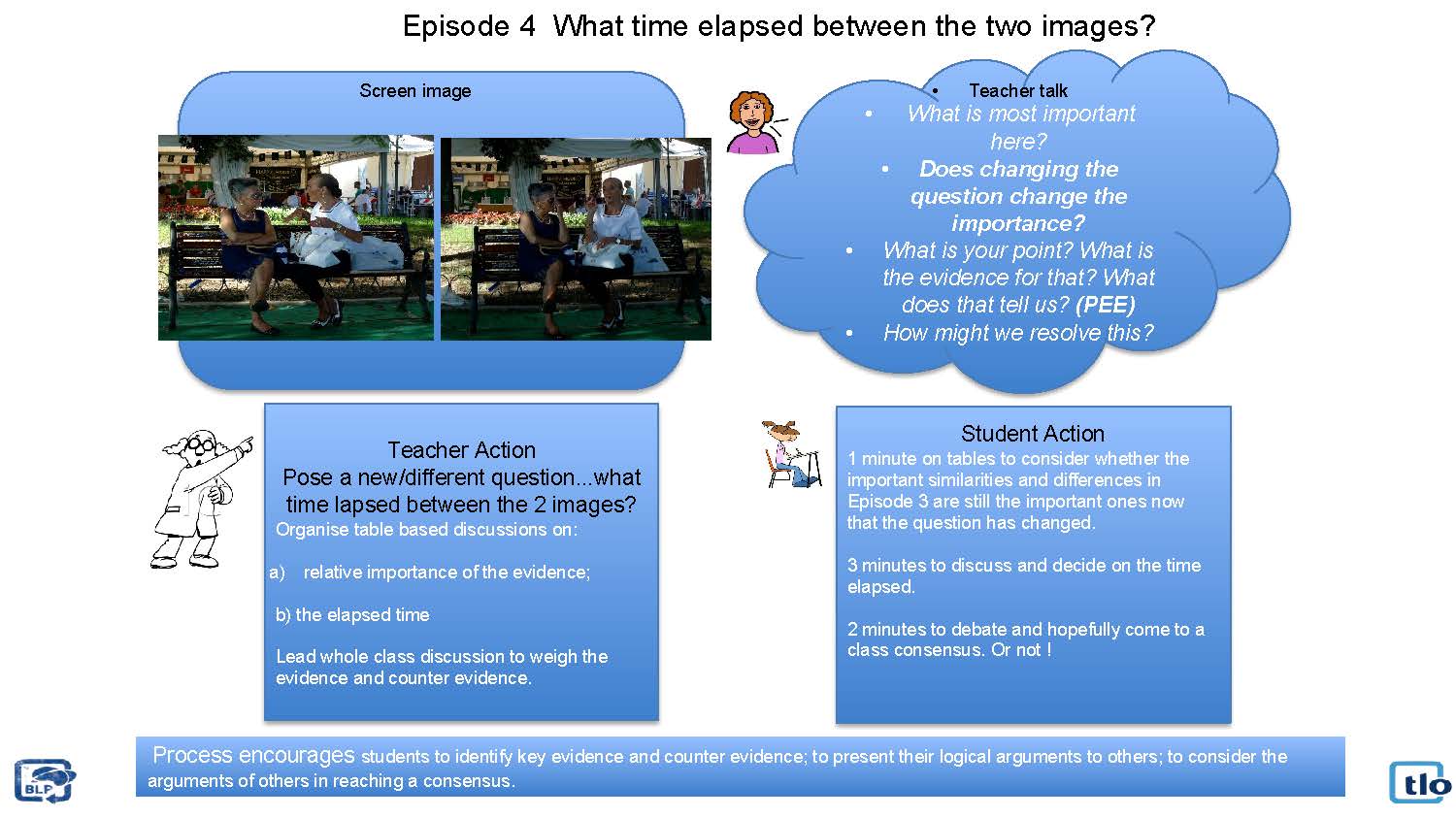
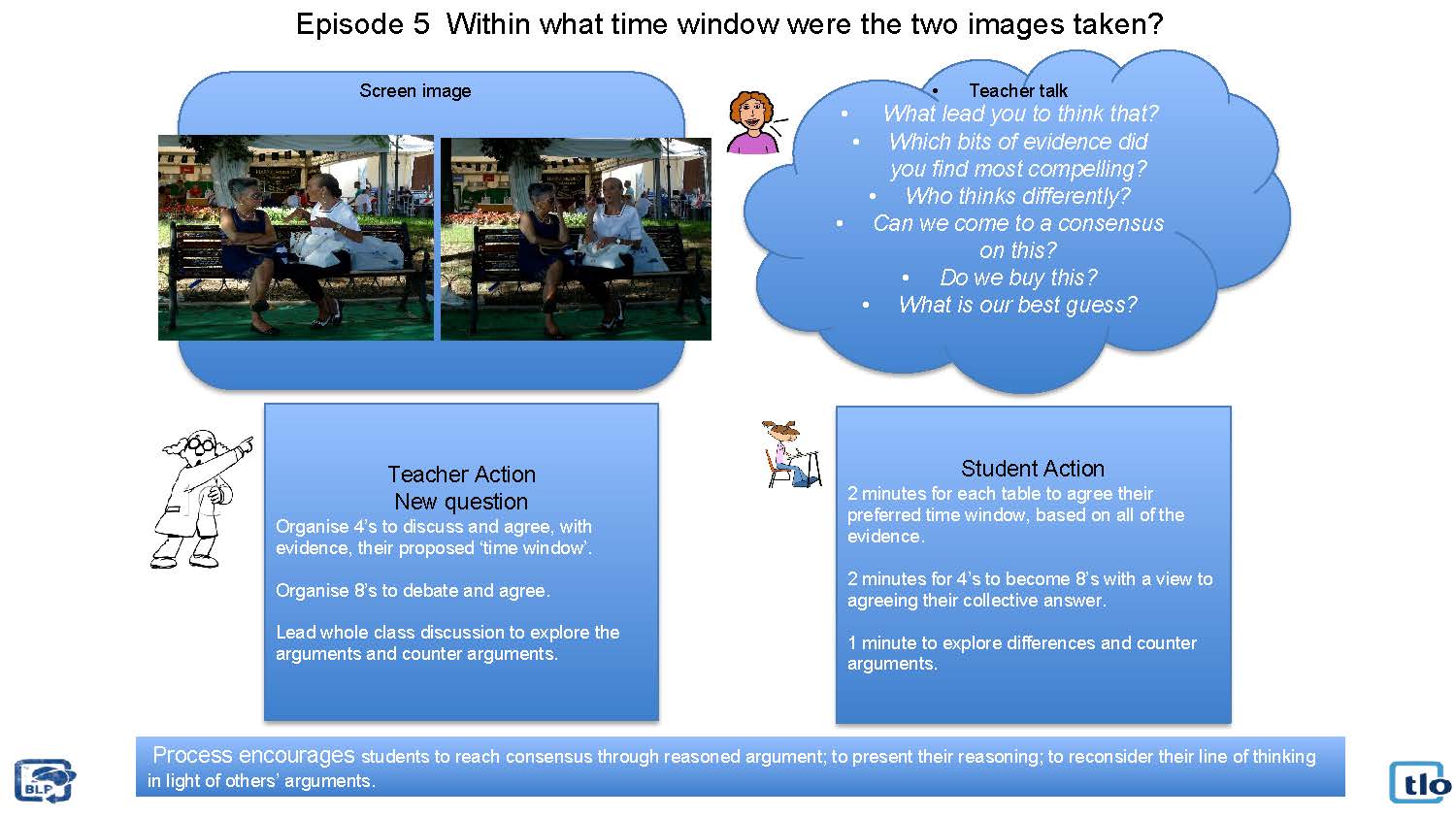
About Section 3. The Content of Units 3 and 4 of the programme.
Below you’ll find glimpses of the content of Units 3 and 4.
Unit 3 involves teachers exploring the fourth aspect of classroom culture – how teachers weave learning behaviours into their curriculum, lesson and activity planning, trying out a range of catalogued ideas that have been found to integrate building students’ learning behaviours with curriculum content. It is expected staff will spend about 3 months working on this, but they are likely to keep returning to it over time. There are 2 Professional Learning Community meetings embedded in this Unit.
Unit 4 involves teachers broadening the range of learning behaviours that they are planning to develop in their students. Unit 4 acts as a bridge into Phase 2 of Playing the Learning Power Game, which develops these behaviours to the same depth as the 4 key learning behaviours attended to in Units 2 and 3. It is expected staff will spend about 2 months working on this, and there are 2 Professional Learning Community meetings embedded in this Unit.
Use the navigation bar to move between sections.
Unit 3. Constructing Learning
A deeper look at learning
This Unit is possibly the one most teachers need. It will help them to answer the question ‘how do I put a learning powered lesson together?’ or ‘how can I put a lesson together that focuses on, for example, questioning?’
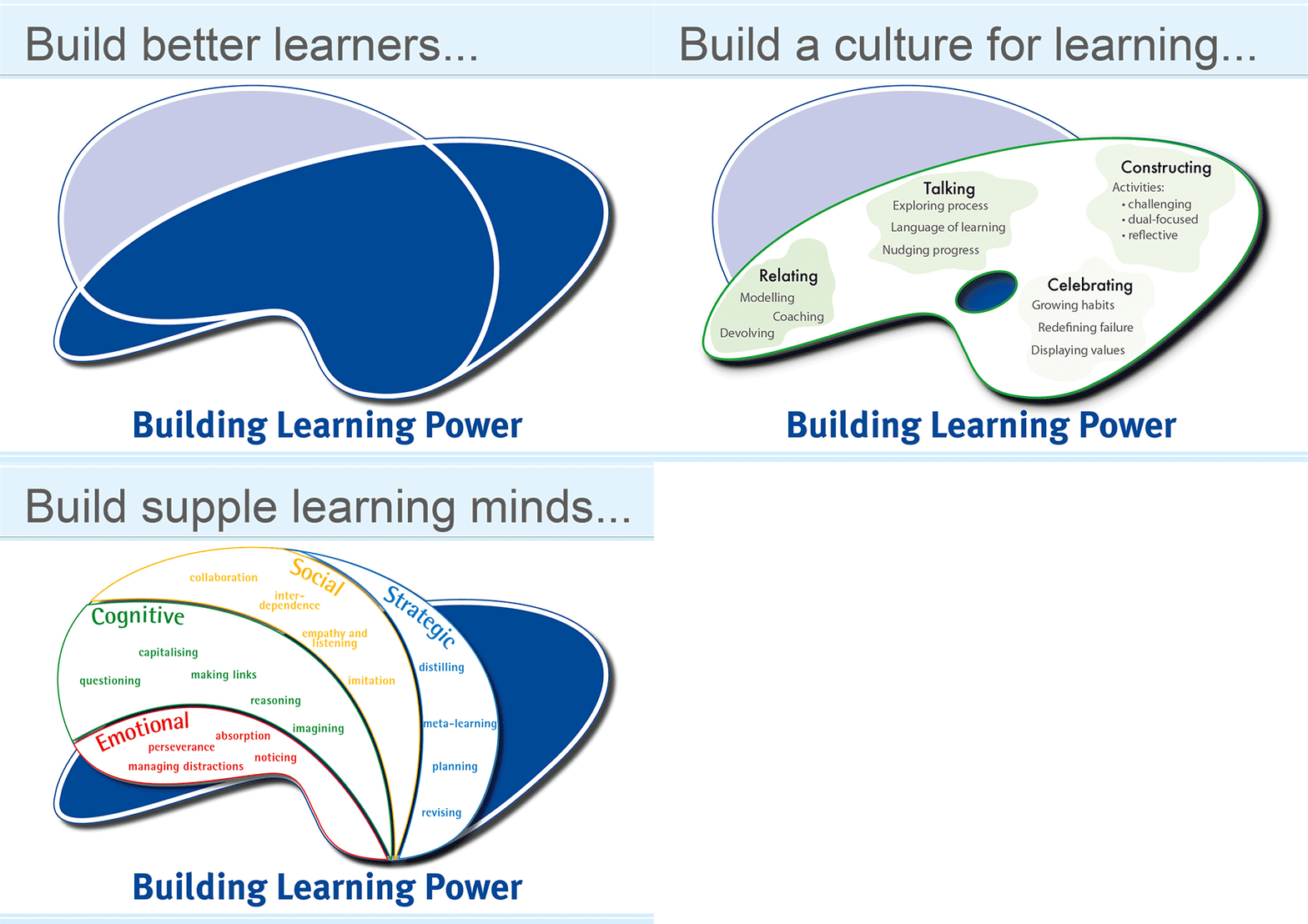
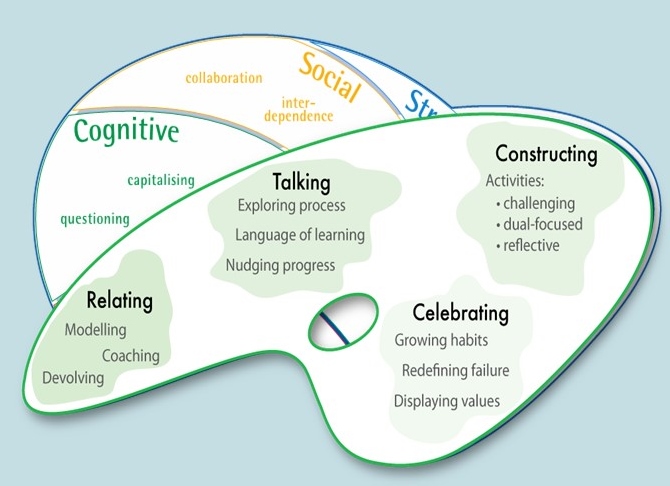
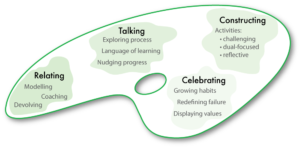
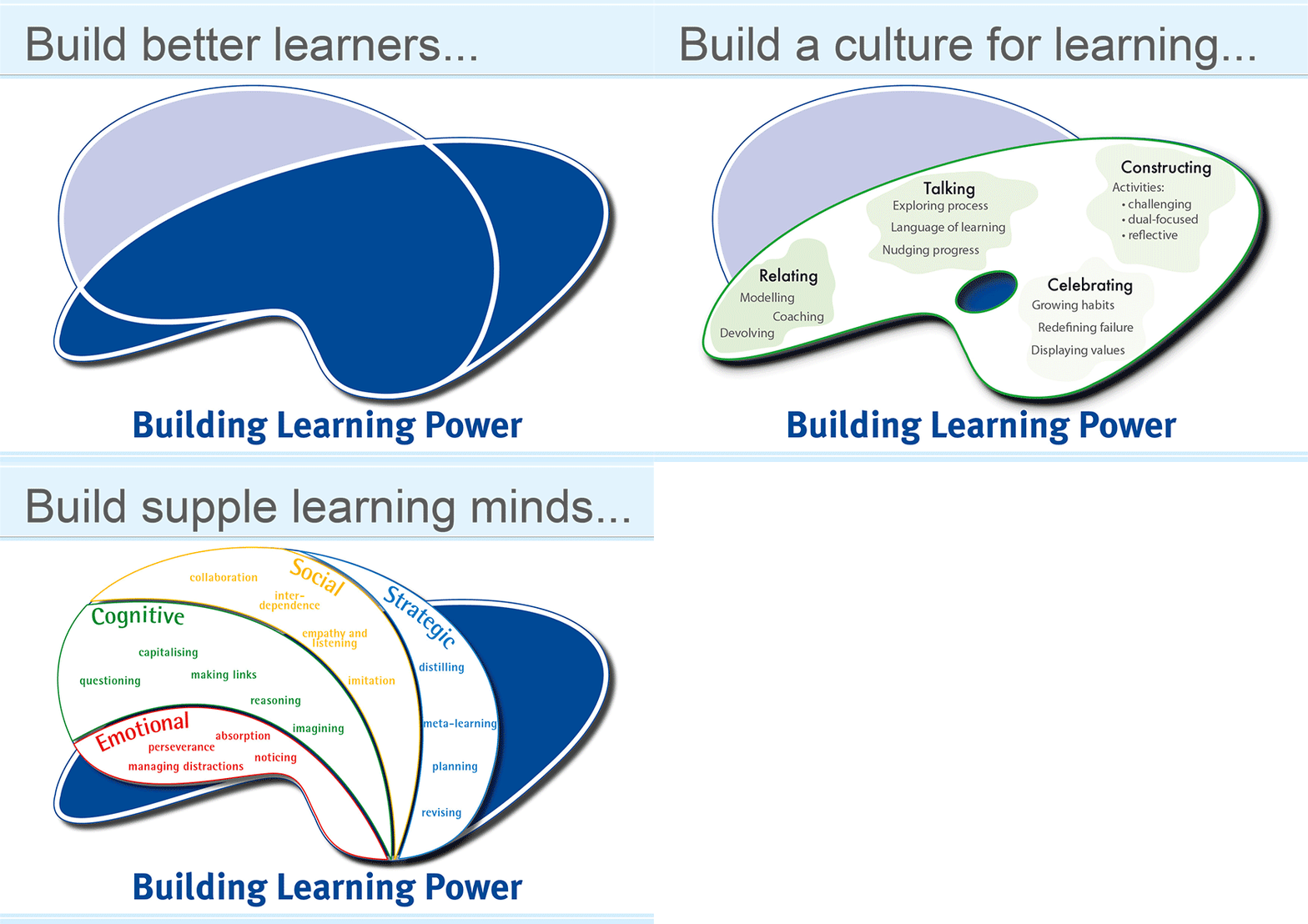
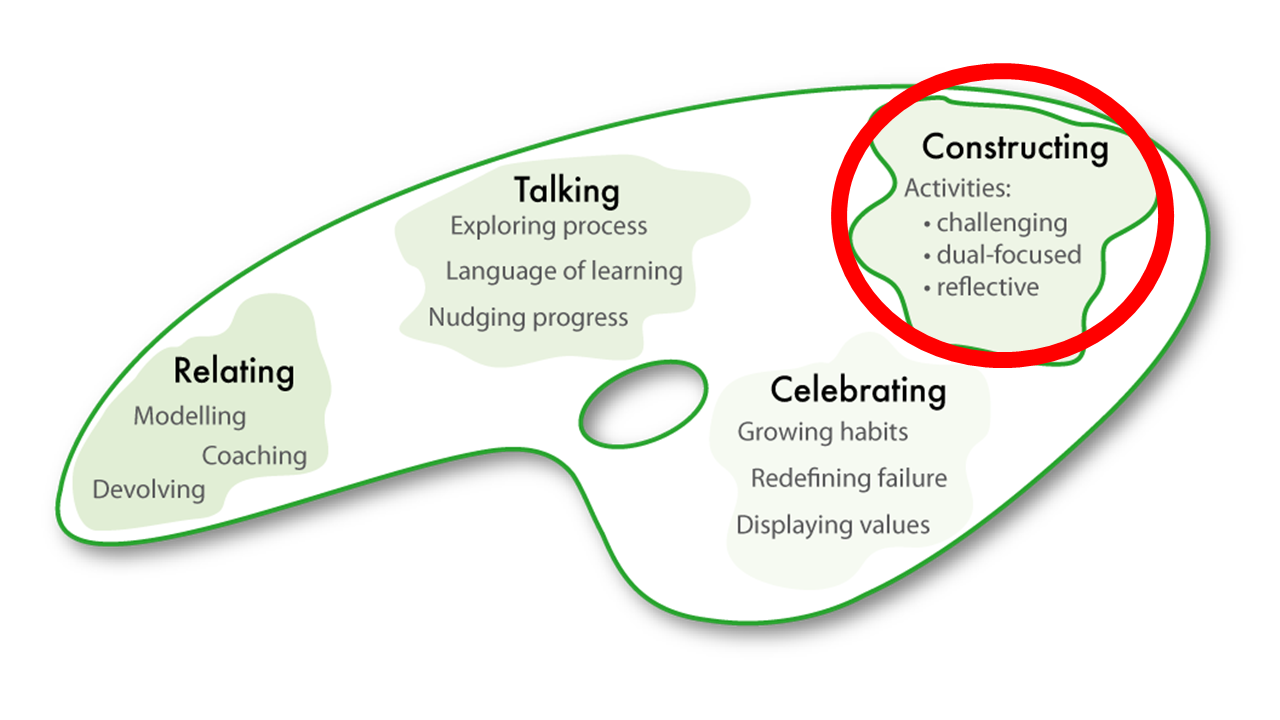
Unit 2 of Playing the Learning Power Game looked at three aspects of the Teachers’ Palette framework…relating, talking and celebrating. Unit 3 concentrates on the focal point in that framework, Constructing, where classroom culture meets curriculum culture. What can teachers do with a given curriculum to ensure it is ‘taught’ or perhaps ‘learnt’ in a way that will enhance and strengthen students’ learning behaviours?
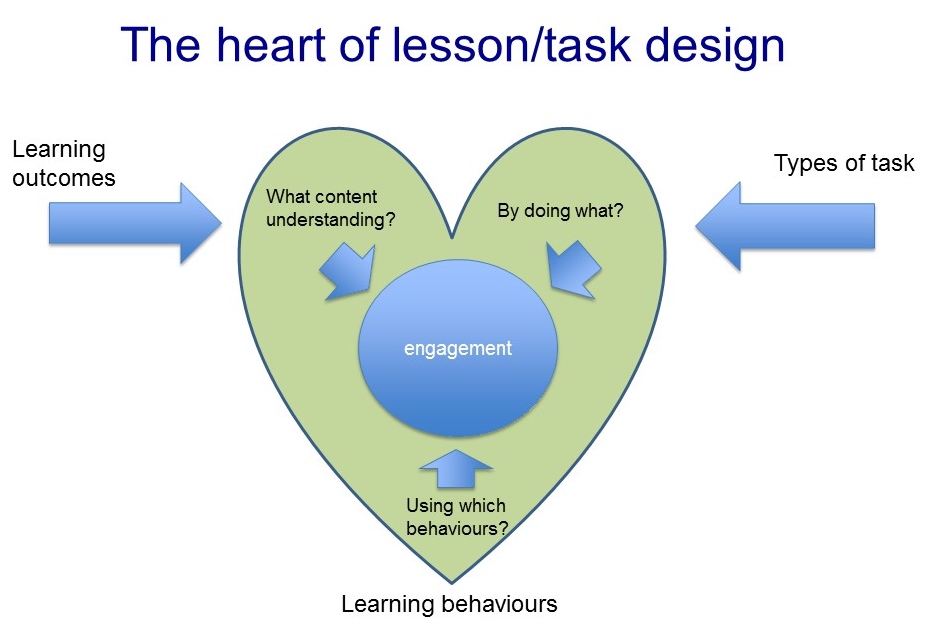
This unit is about direct teaching, curriculum design and planning lessons. It’s about how teachers handle the day to day, hour by hour stuff that will enable their students to understand themselves as learners. It’s about looking at the curriculum in general and thinking about how to infuse learning behaviours into it. It’s about thinking and planning schemes of work or day to day lessons to ensure students consciously use and improve their learning behaviours. It’s about making learning power come alive across the curriculum.
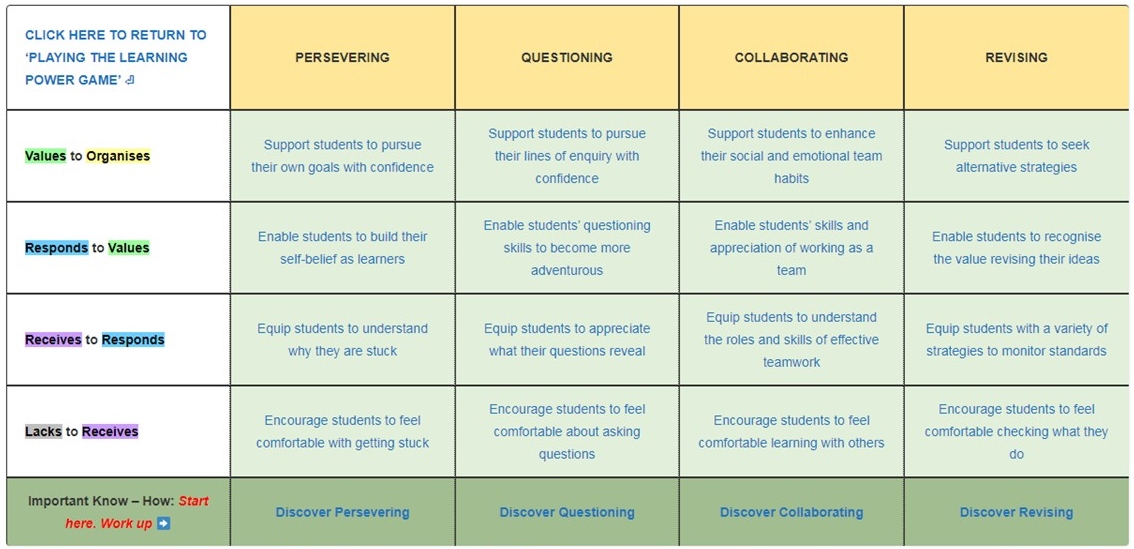
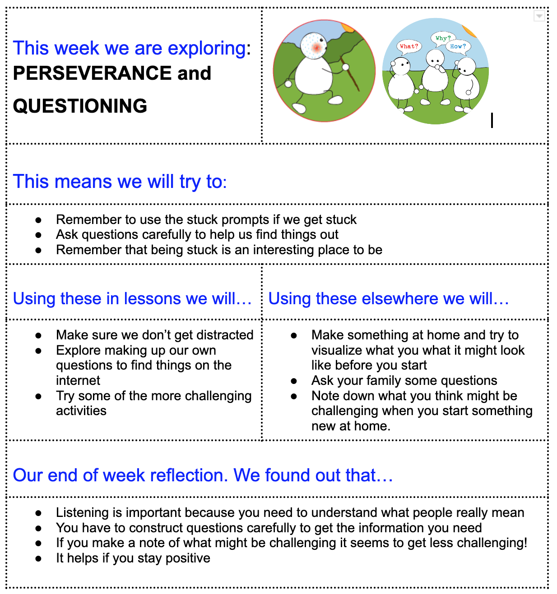
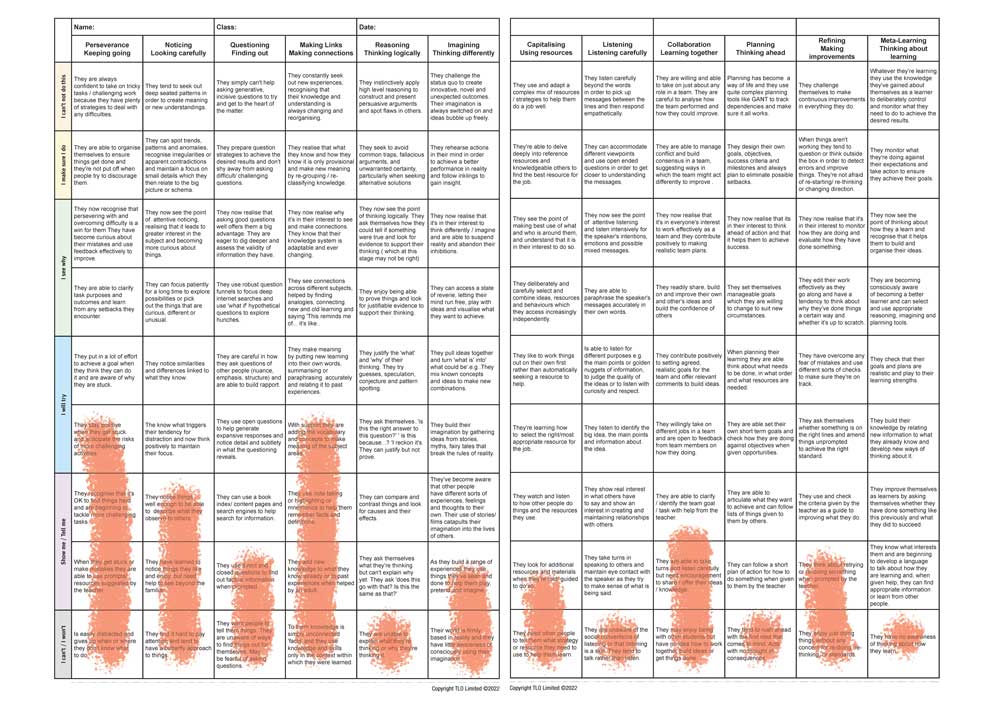
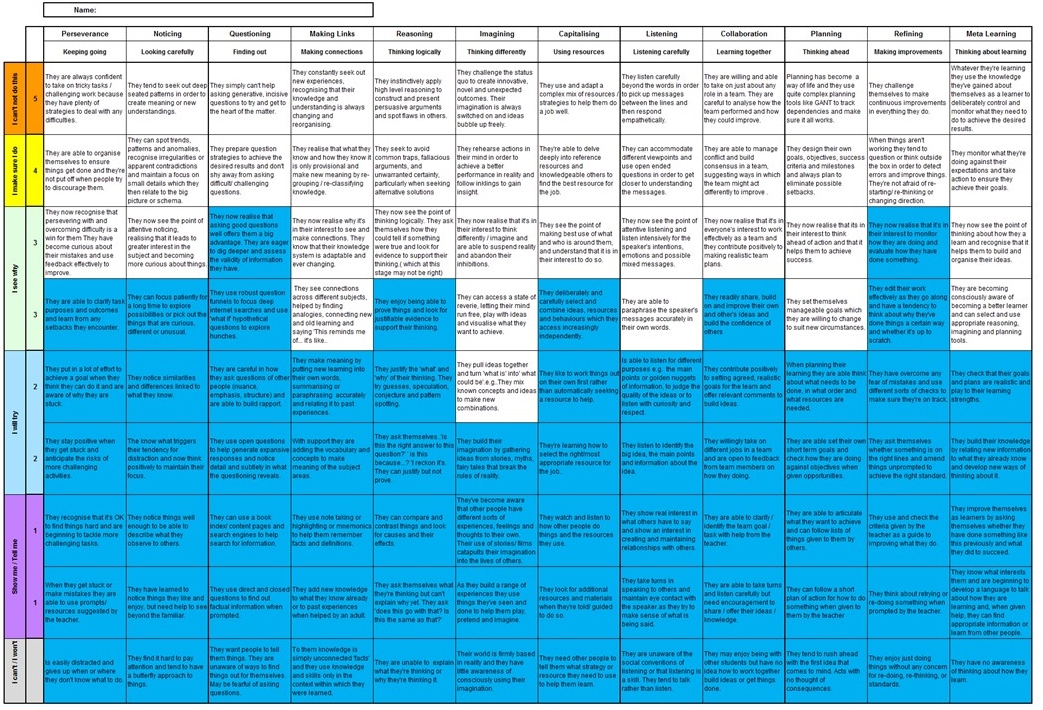
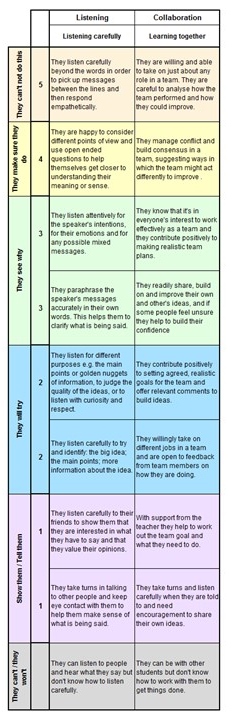
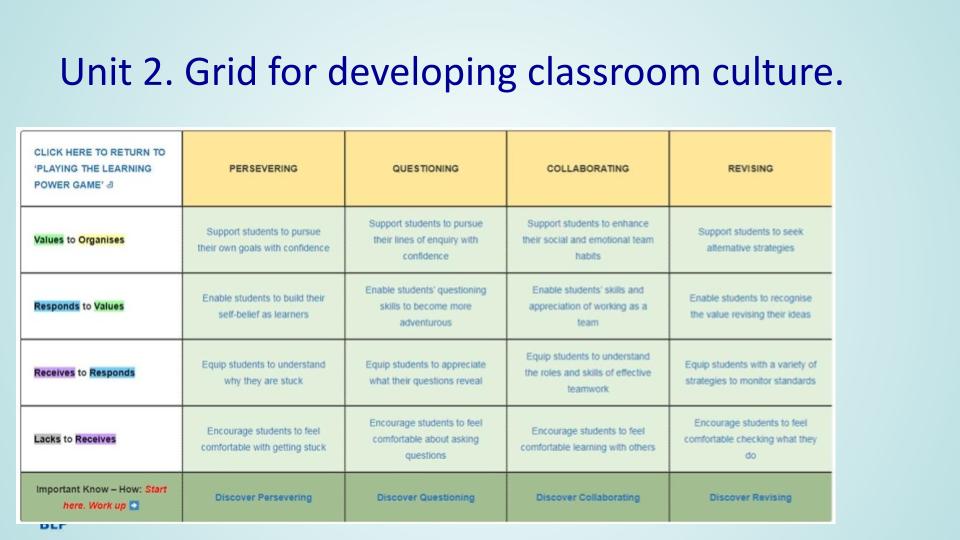
As with Unit 2, Unit 3 considers Constructing through the lens of the 4 key learning behaviours – perseverance, questioning, collaboration and revising.

The big picture of curriculum planning
Absorbing learning habits into the whole curriculum
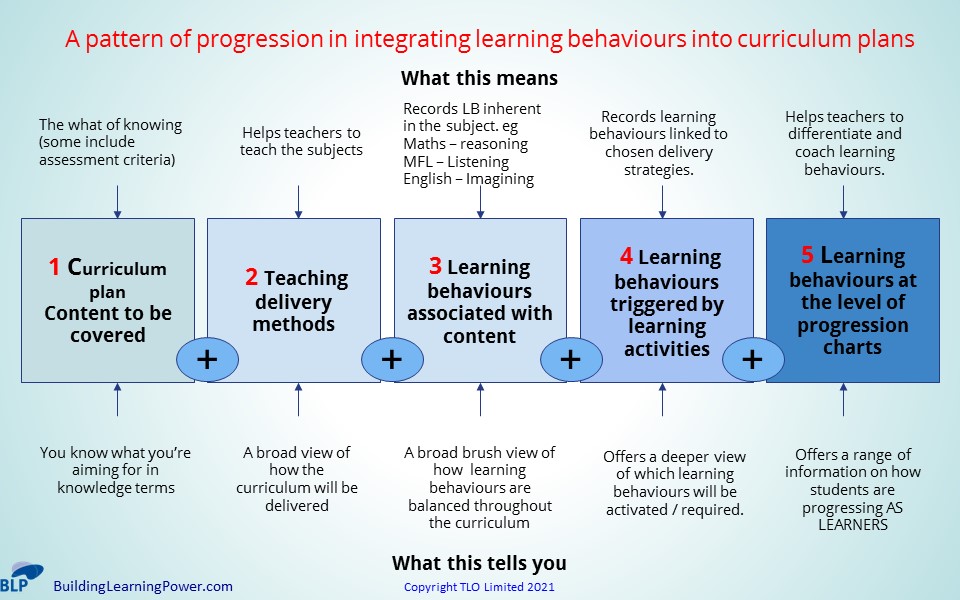
Section 3A of the programme considers the transition from content-only planning through to curriculum planning that integrates progression in content with progression in learning behaviours.
The level of detail in curriculum plans varies in part due to the time-frame of the plan. A yearly plan for a subject or year group will necessarily be more broad-brush than a medium term plan for a unit of work, which in turn will be less detailed than an individual lesson plan. All such plans identify what is to be taught, and most will indicate how it will be taught and assessed, but fewer identify and plan for the learning behaviours that students will require to access this content, nor for the development of those learning behaviours.
This aspect of the programme is of particular interest to senior managers.
Designing units and lessons
Absorbing learning habits into units of work and lessons
Section 3B considers how teachers might plan a unit of work and then just one lesson to ensure learning behaviours are firmly embedded. In fact without the use of learning behaviours the plan would be unsuccessful. It looks at what the stages of filling in blank unit plans might be? It looks at possible must haves and top tips for planning a worthwhile lesson. Teachers will find all sorts of tips, formats and examples to get them going.

Activity types to stimulate learning habits
Absorbing learning-rich activities into lessons
Section 3C explores different types of learning activities and the learning behaviours that they stimulate.
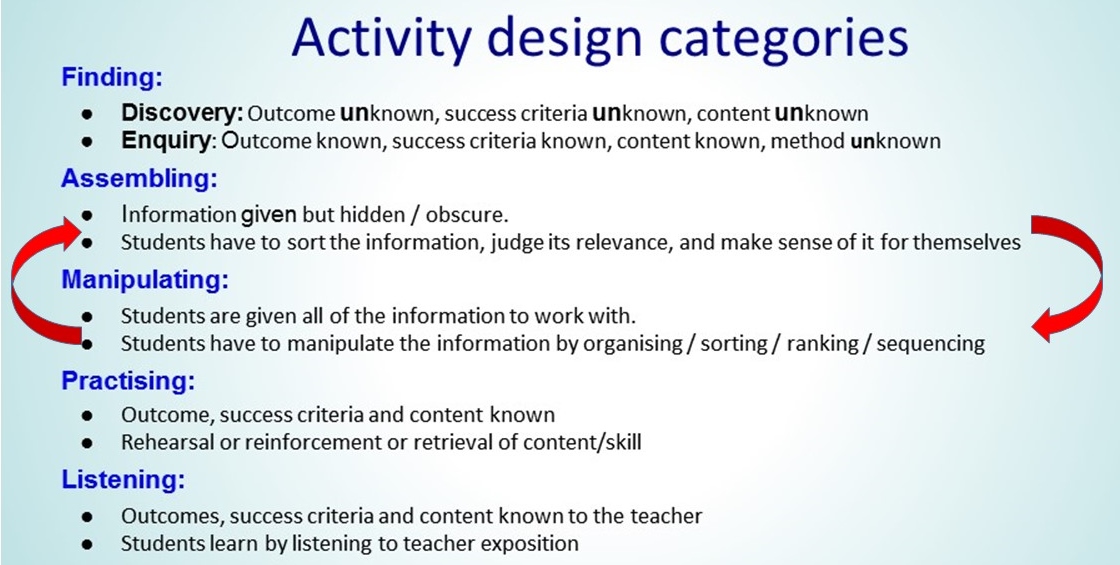
Activities come in all shapes and sizes – some are highly structured by the teacher, while others encourage learners to engage in independent enquiry; some are brief events in a part of a lesson, while others may extend over a period of days or weeks. No activity type is particularly ‘better’ than any other as each serves a different purpose and requires/activates different levels of learner independence. As with most things, variety is key and planning should range across all activity types over a period of time/unit of work.

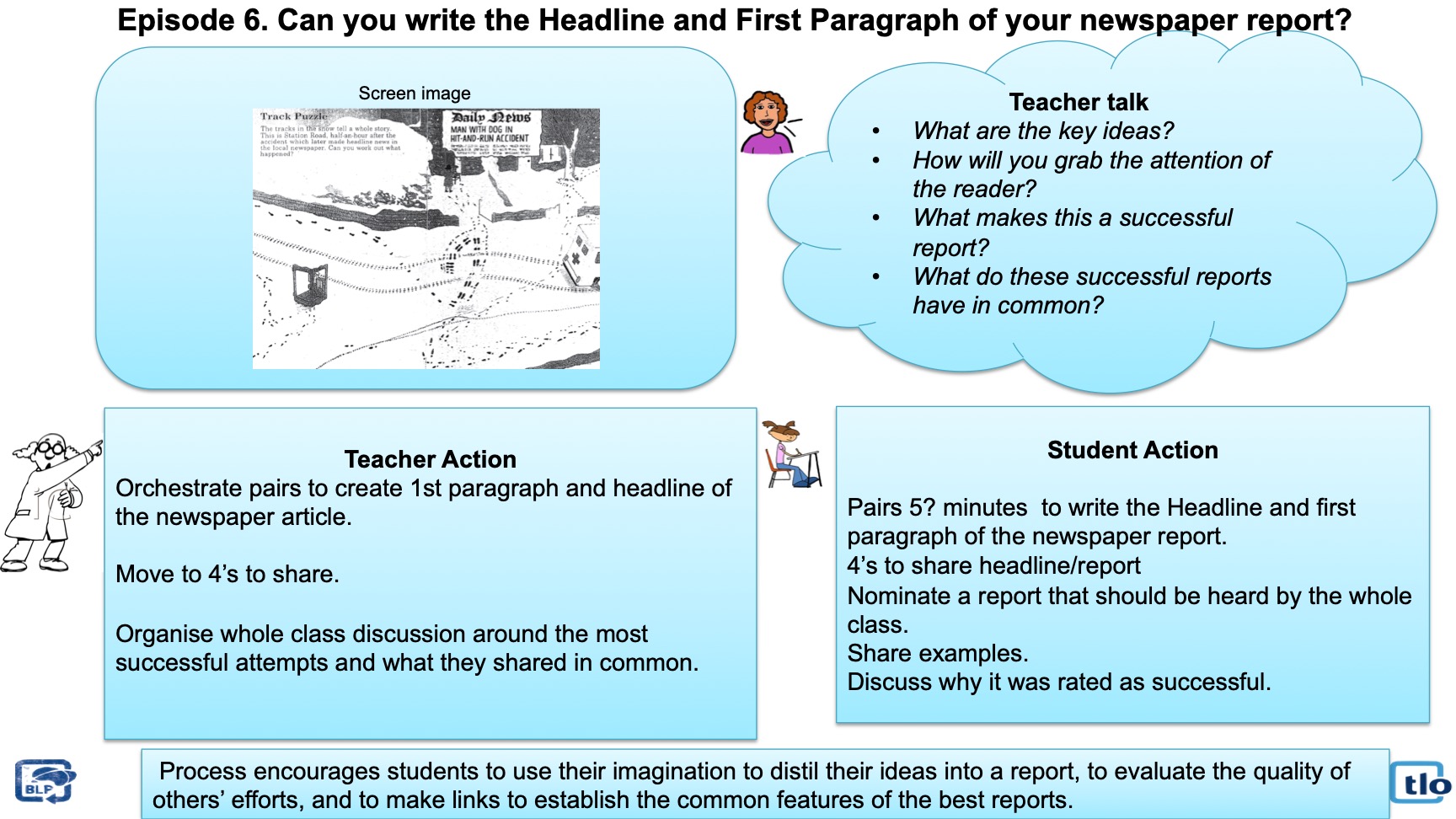
An example of activity types
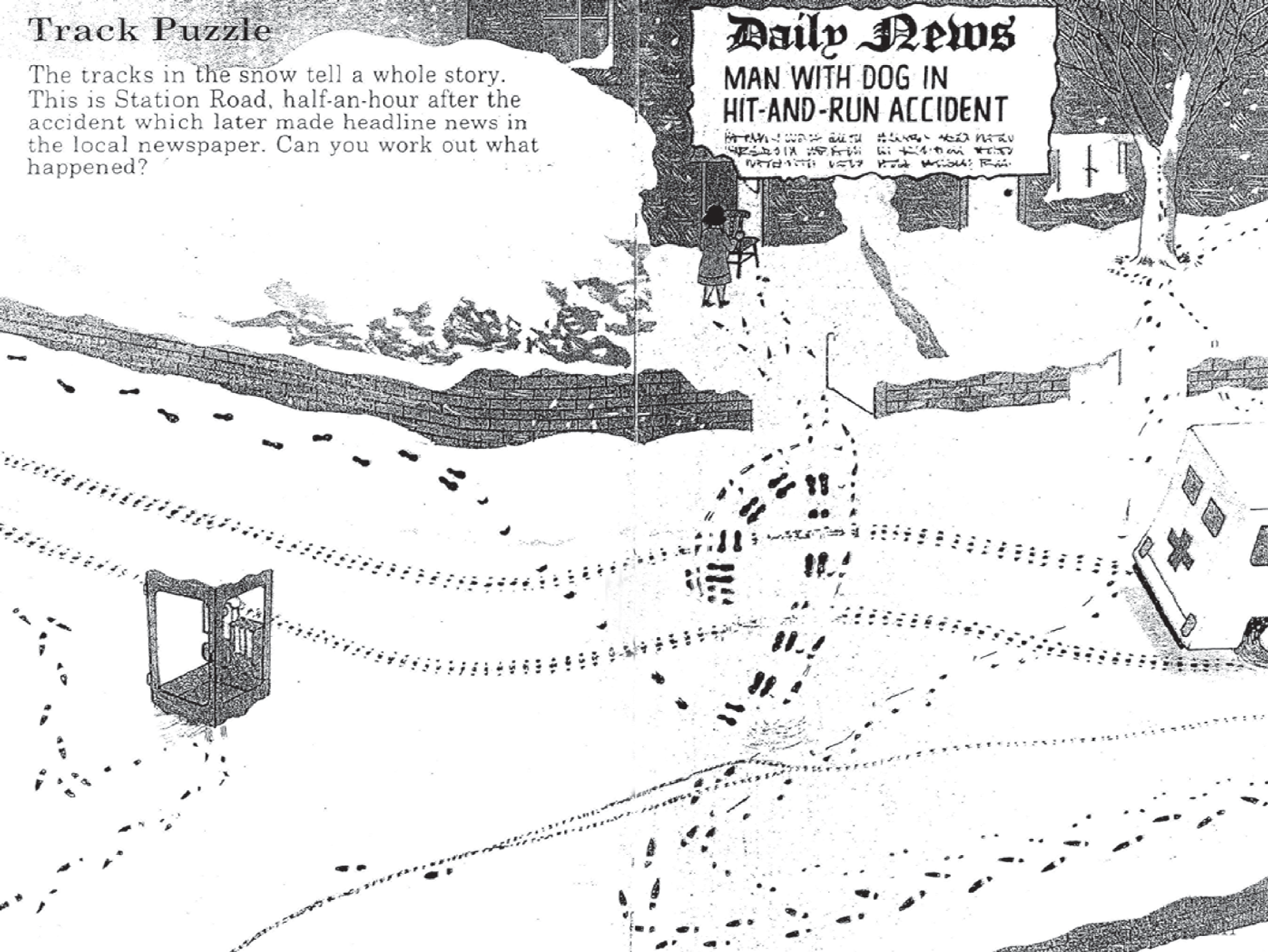
‘Murder Hunt’ (see below) is an ‘Assembling’ activity because students need to identify and eliminate all of the irrelevant information and red herrings. Remove the irrelevant information in advance and it becomes a ‘Manipulating’ activity, organising the relevant clues without the need to think critically about their relevance.
Likewise, a ‘Manipulating’ activity can be turned into an ‘Assembling’ activity with a few tweaks. In its ‘Manipulating’ format, rebuilding a cut up Tin Tin cartoon is little more than a jigsaw puzzle. But – adding a couple of pieces from a similar but different Tin Tin cartoon, or even removing a couple of key pieces and inviting students to create their own replacements, introduces the need for a more critical, ‘Assembling’ type approach.
For more ideas, there are a number of ‘Assembling’ type activities in The Teachers’ Toolkit (by Paul Ginnis), including ‘Murder Hunt’.
A catalogue of activities
Absorbing the foundational four learning behaviours into lessons
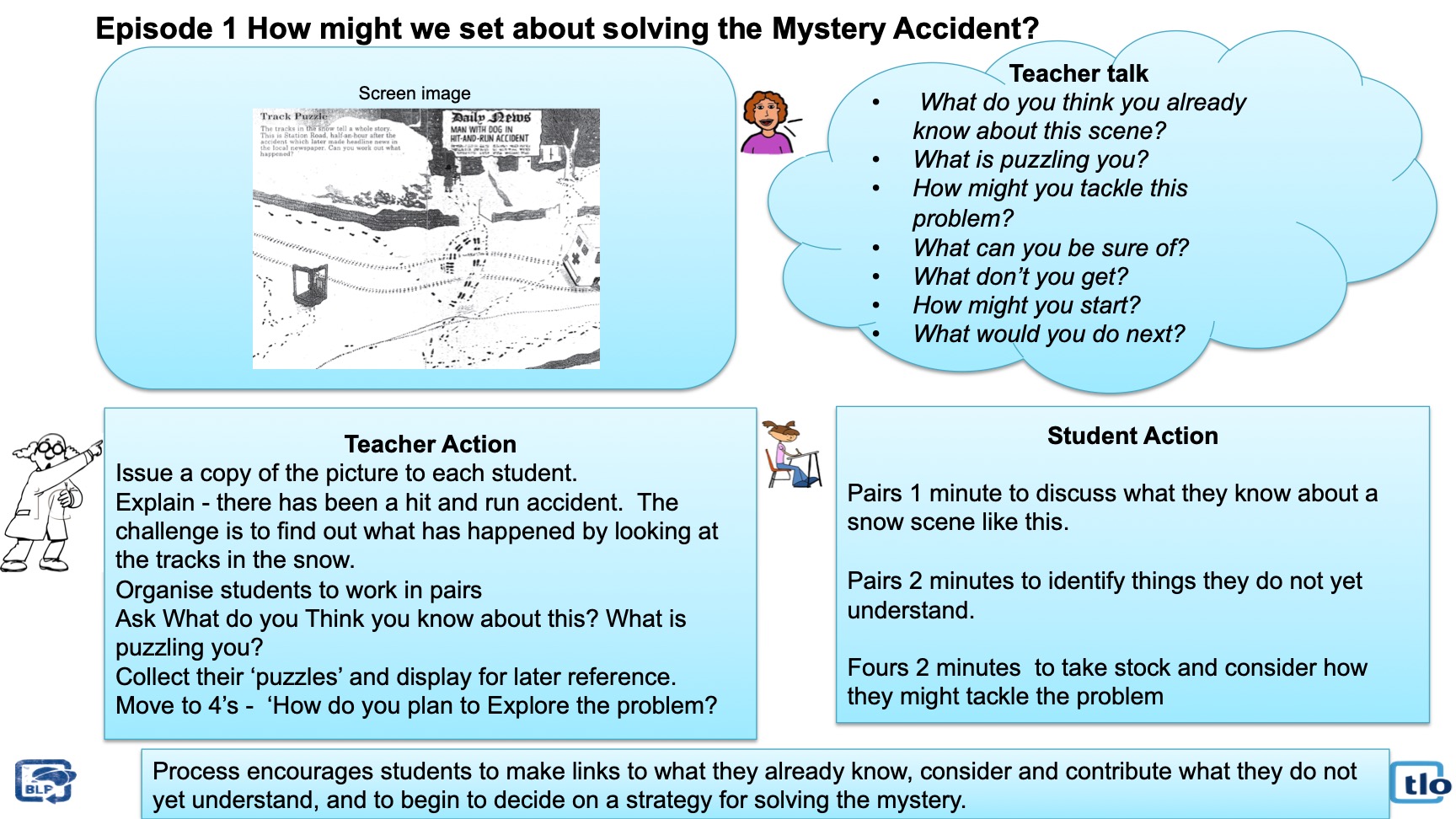
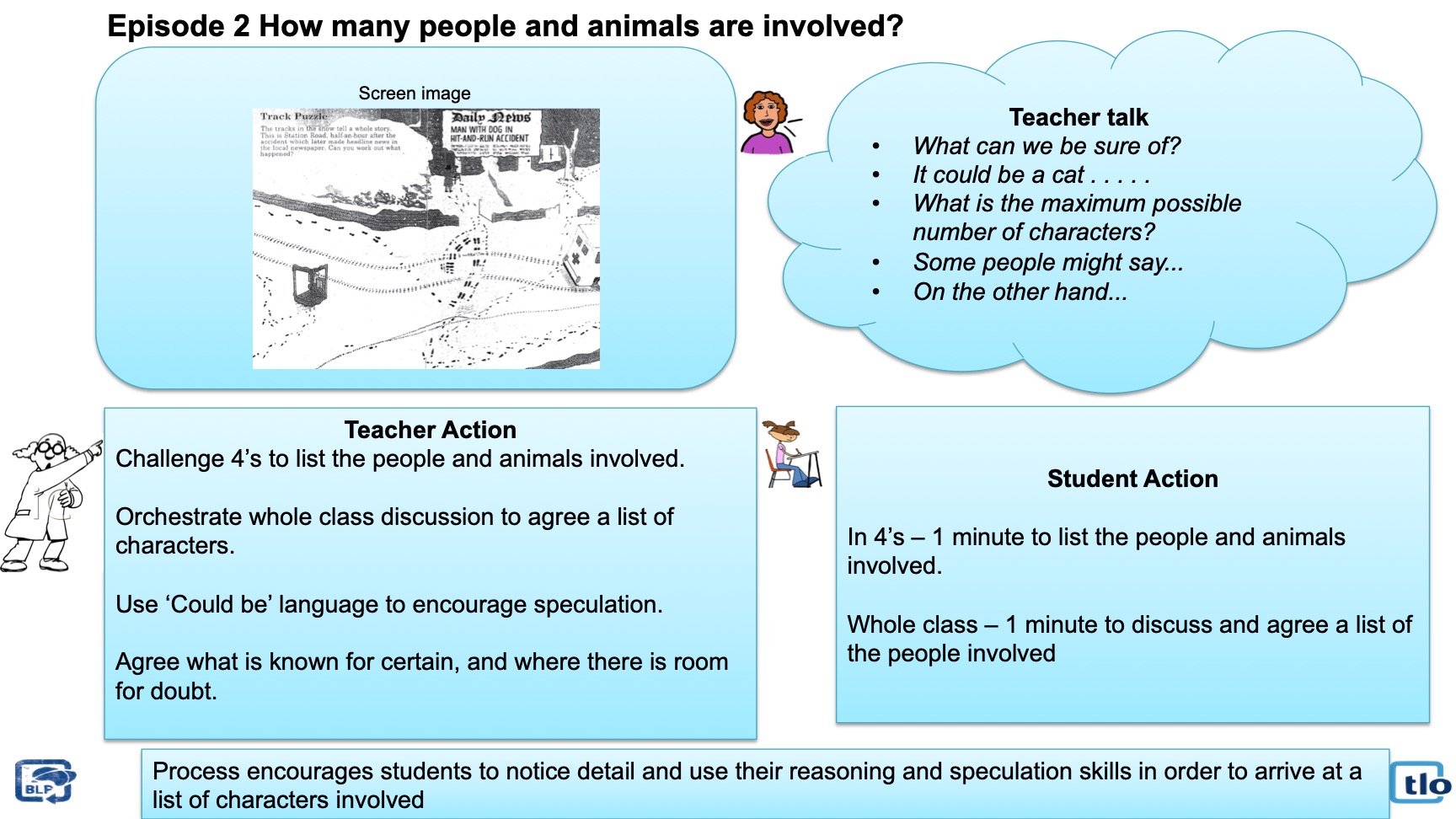
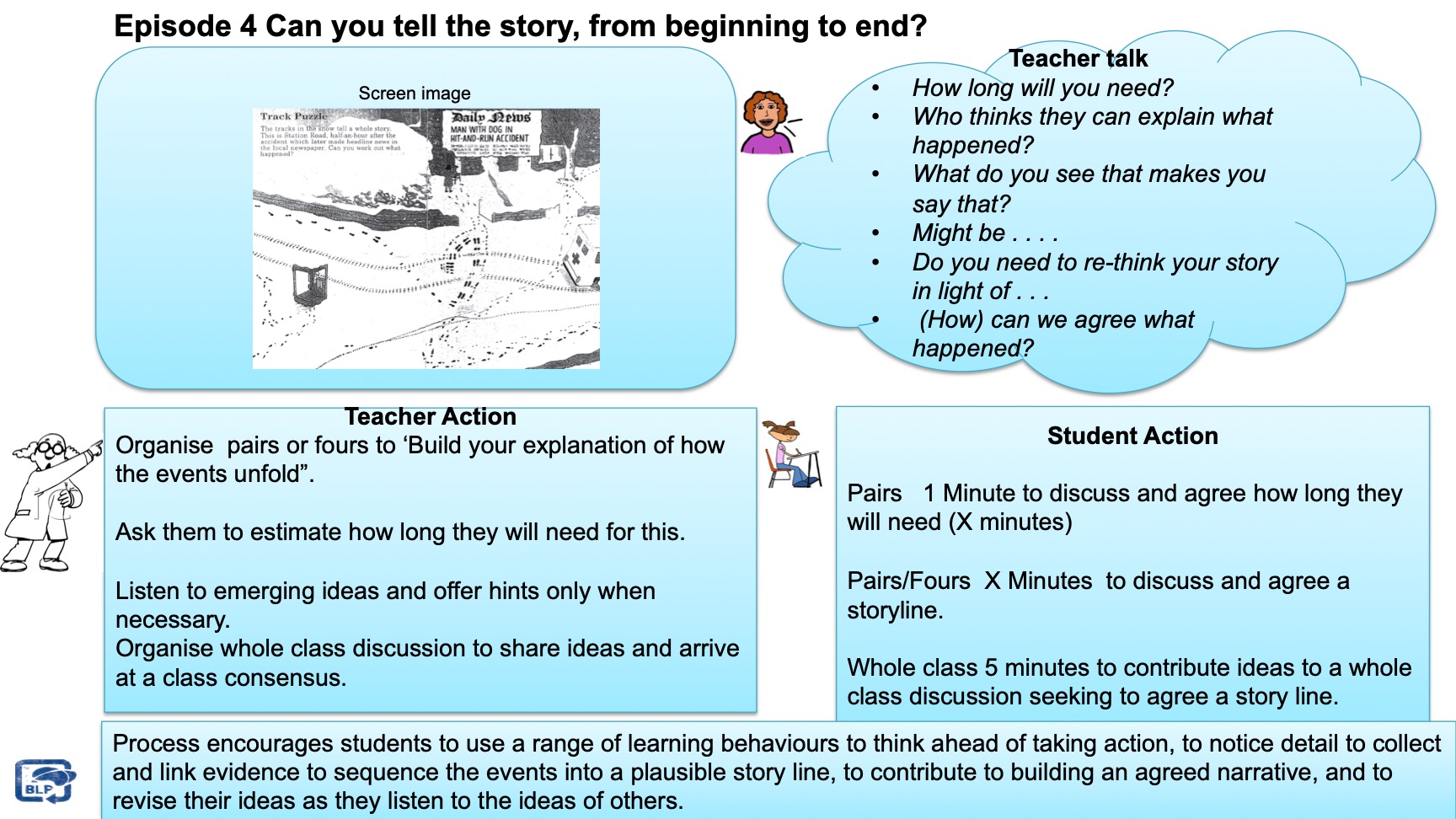
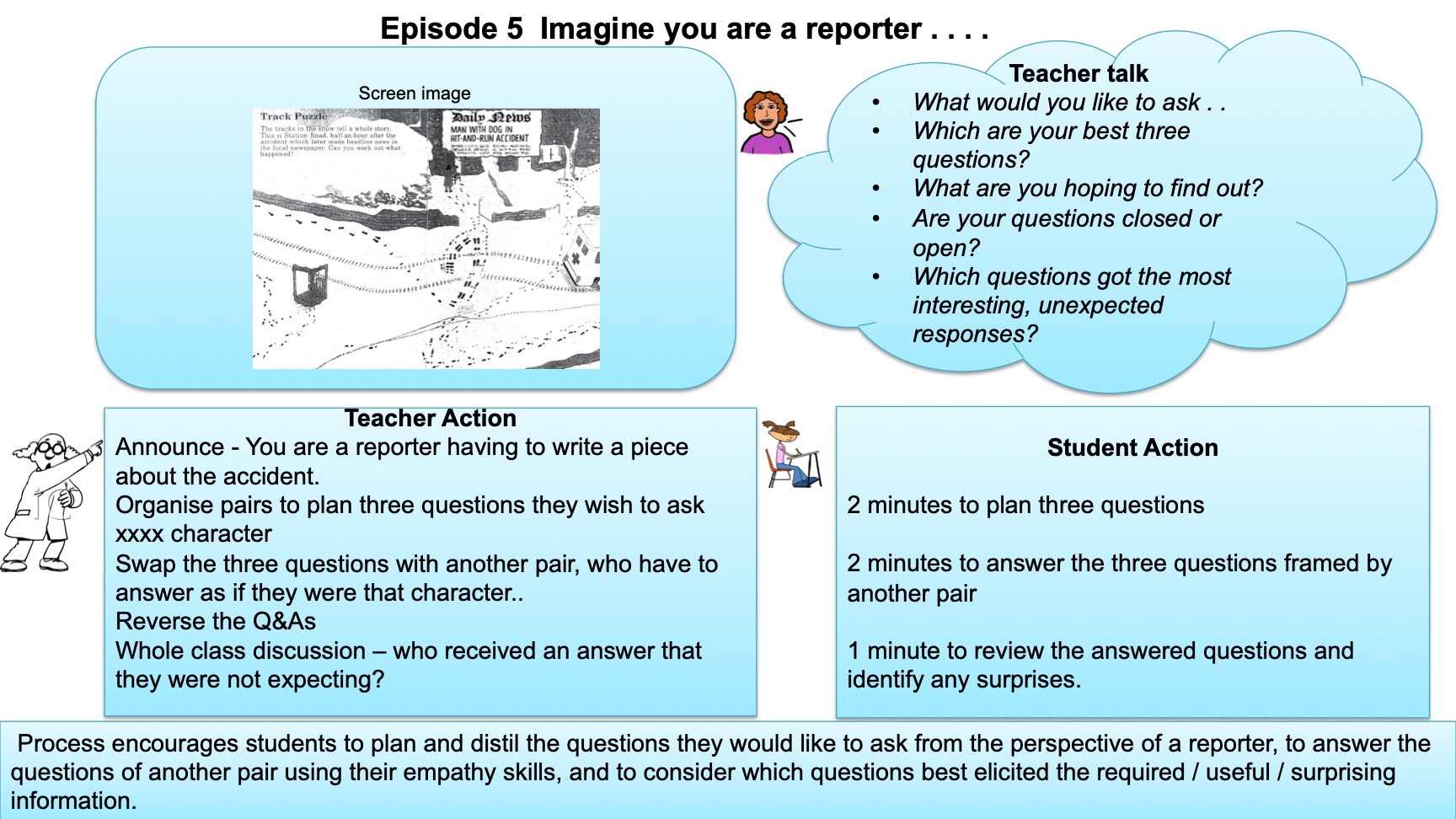
Here teachers will find a unique catalogue to explore. It has over 100 ideas that they might blend into theirr lesson designs.
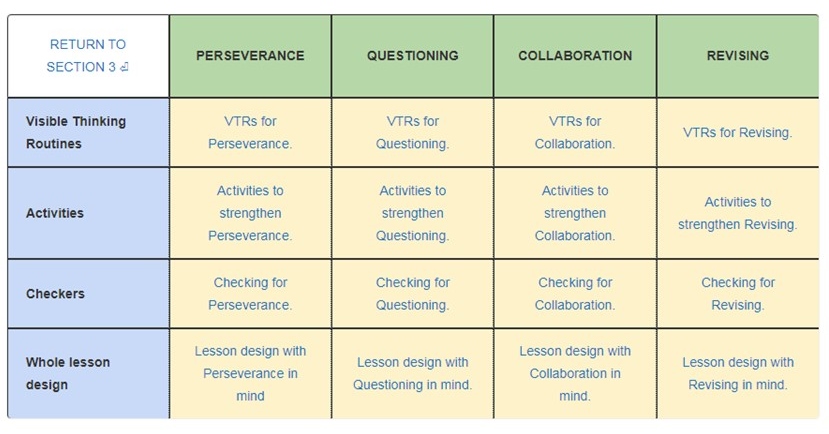
These ideas are organised into 4 categories for each of the 4 foundational learning behaviours. The 4 categories are:
- Visible Thinking Routines – Some visible thinking routines to activate each of these learning behaviours;
- Classroom Activities – Some activities to strengthen each of these learning behaviours;
- Monitoring Strategies – Some strategies for checking how each of these learning behaviours are developing;
- Exemplar Lessons – A lesson plan that integrates each of the four learning behaviours into a complete lesson.
It’s a must-have pick and mix. Expect staff to come back to it frequently.
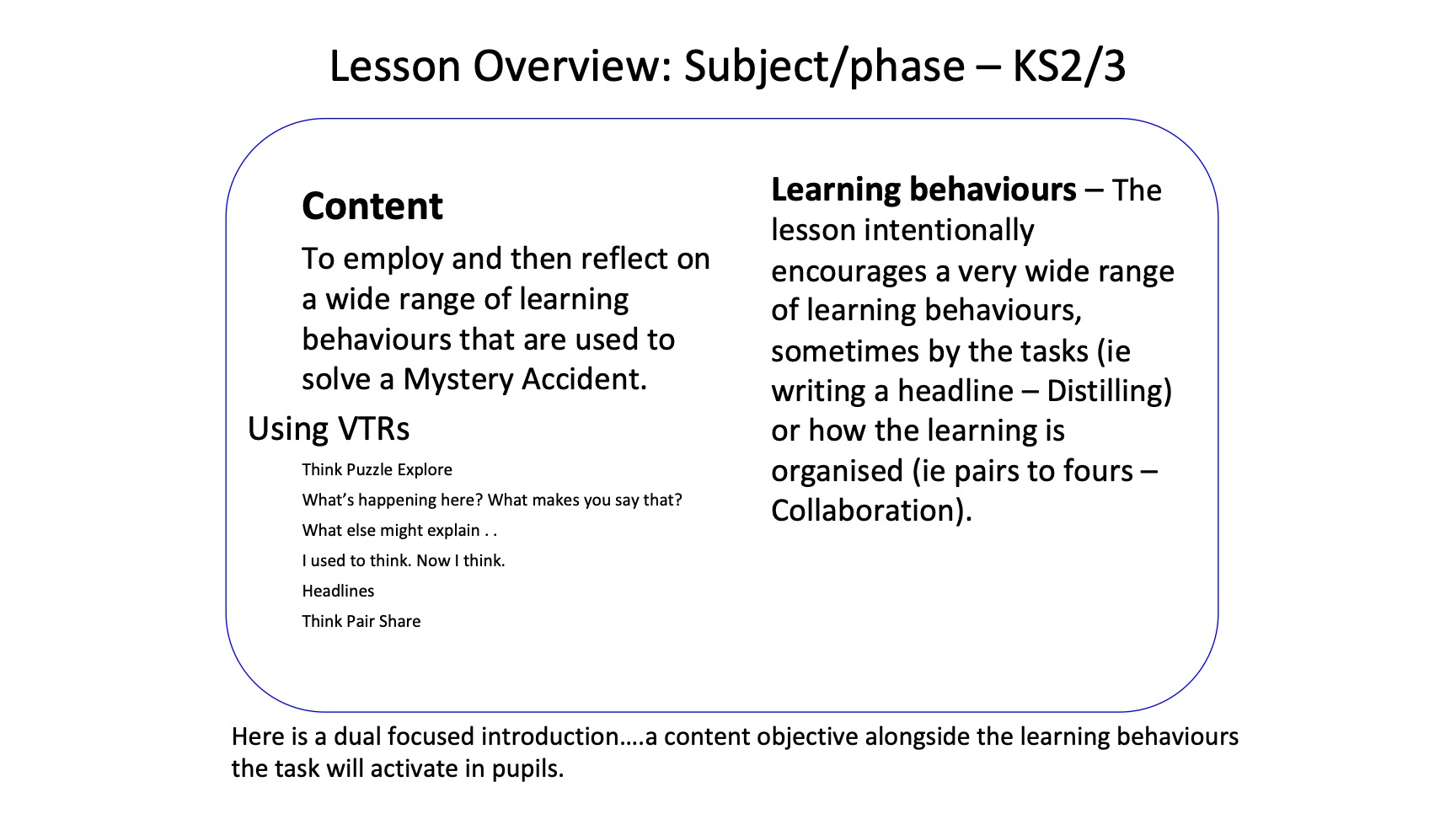
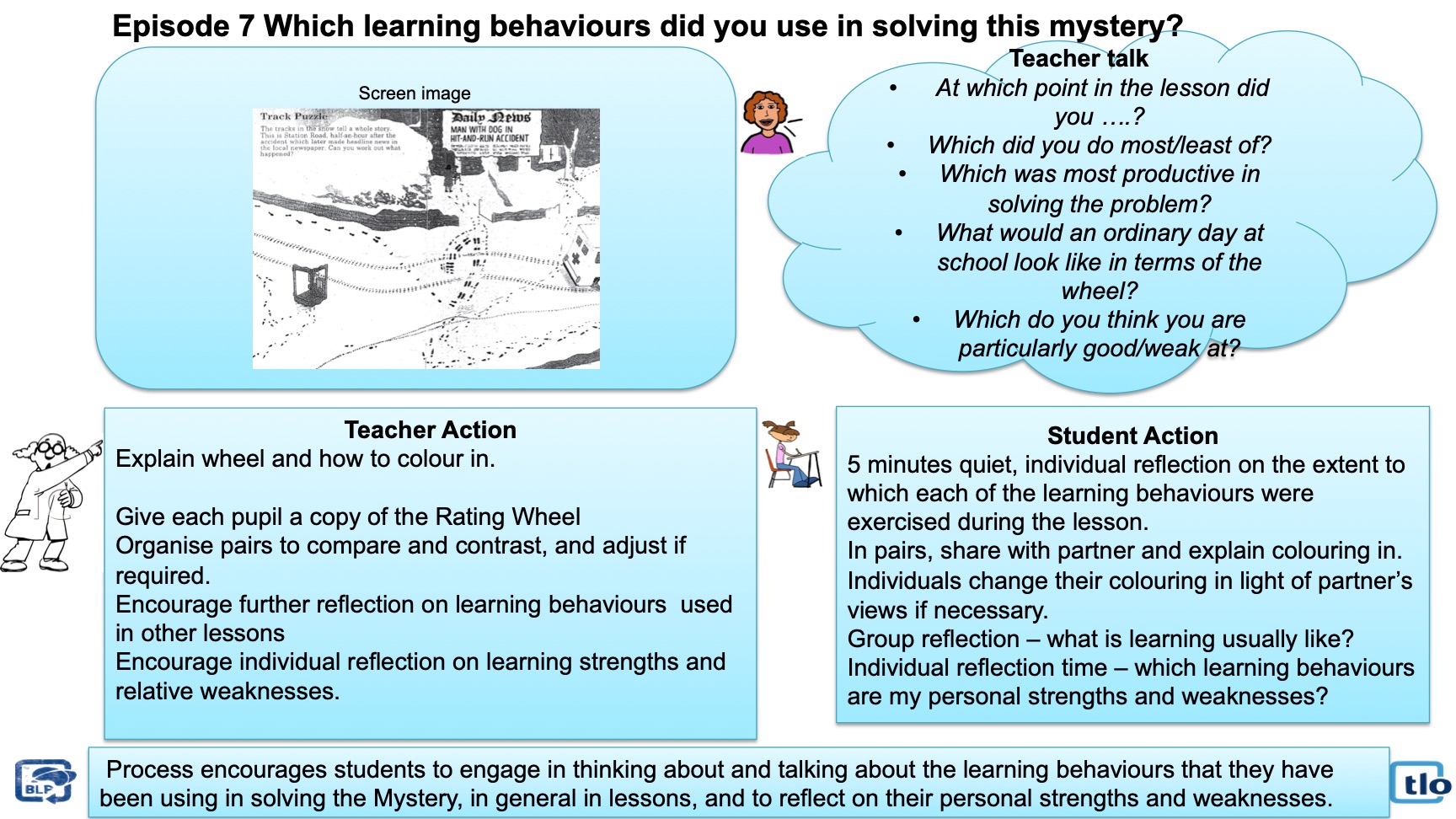
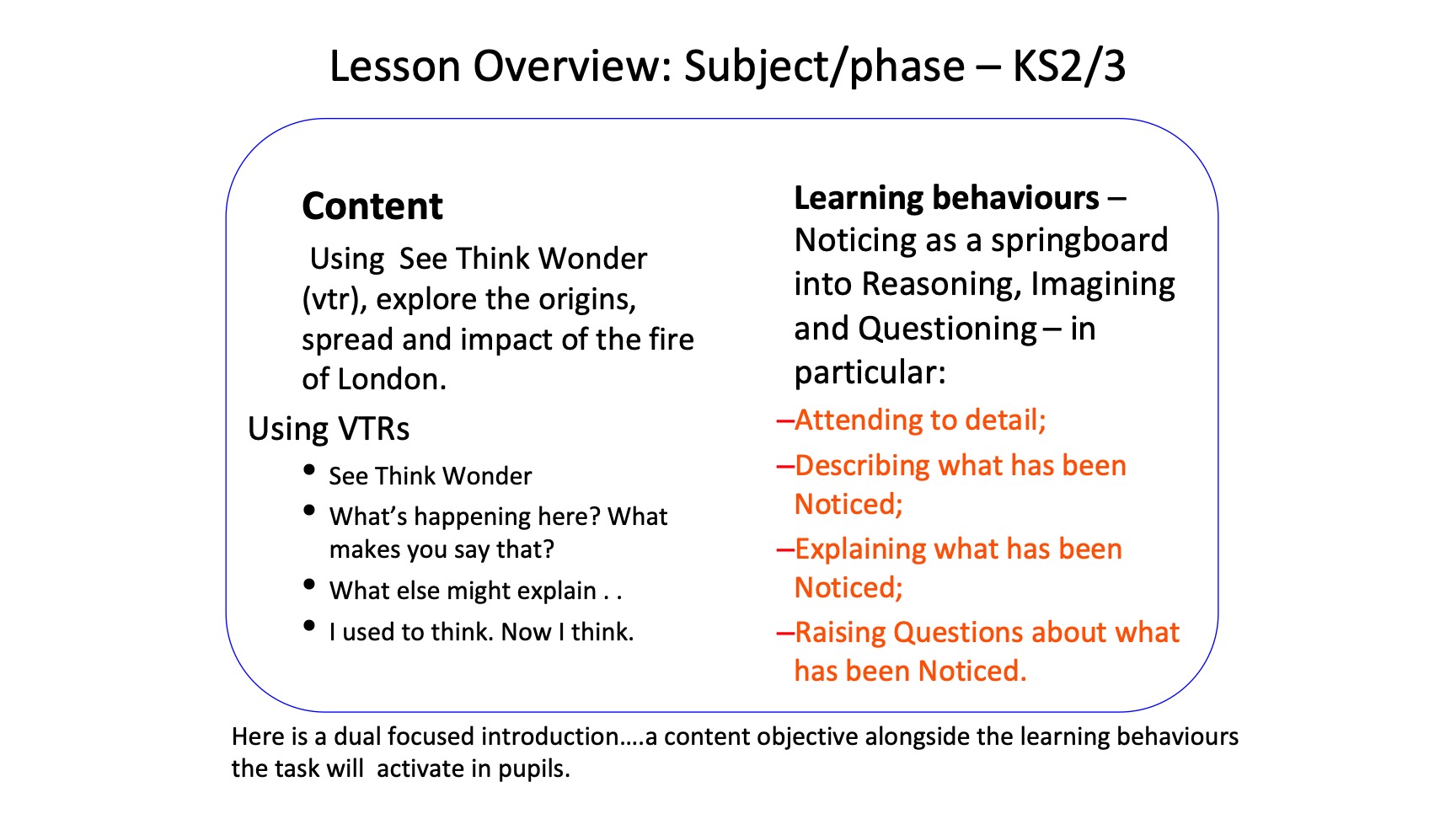
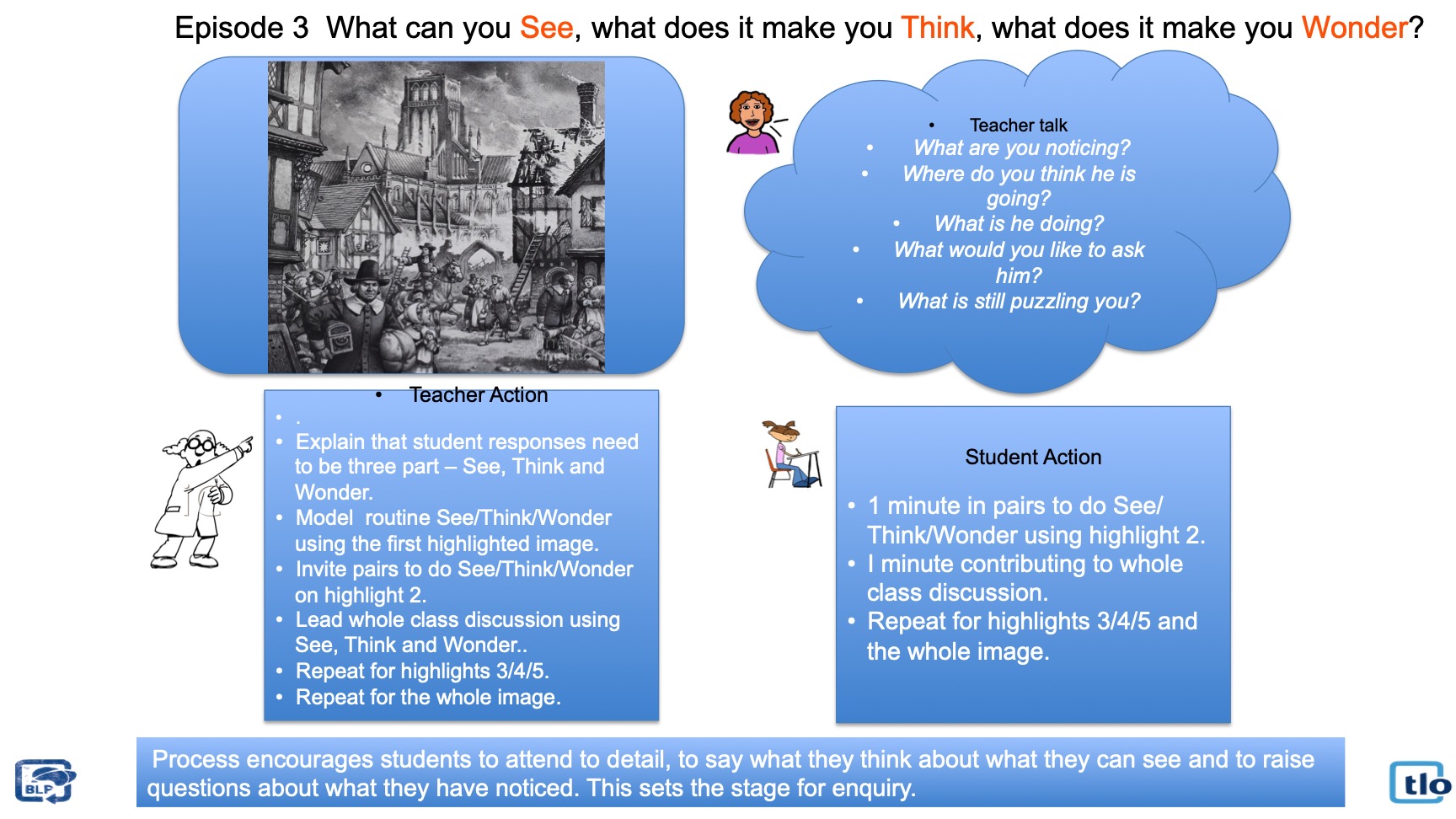
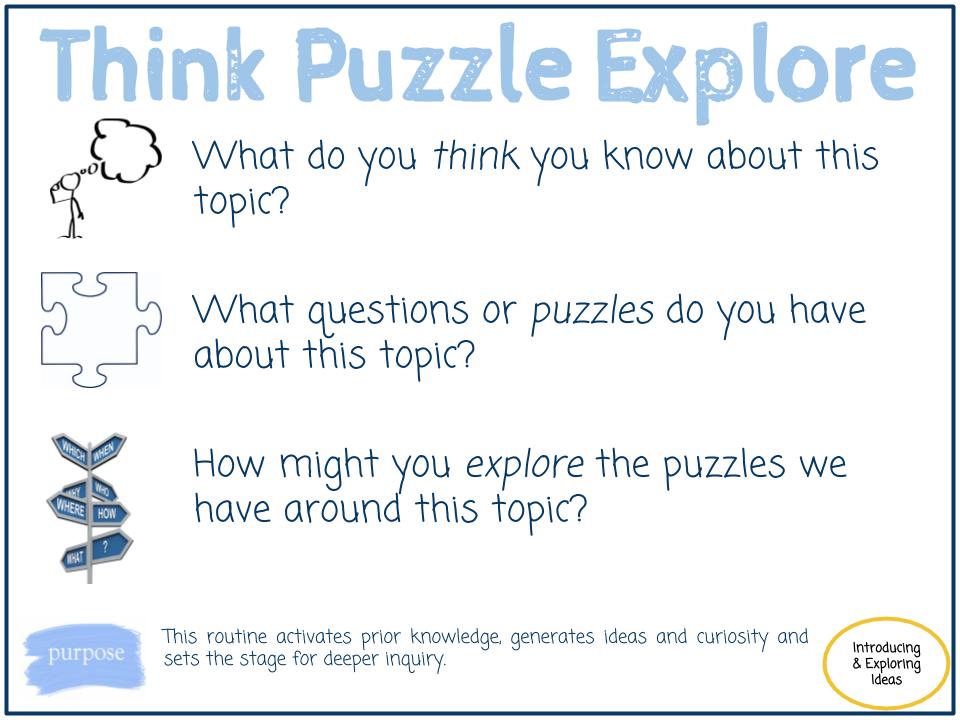
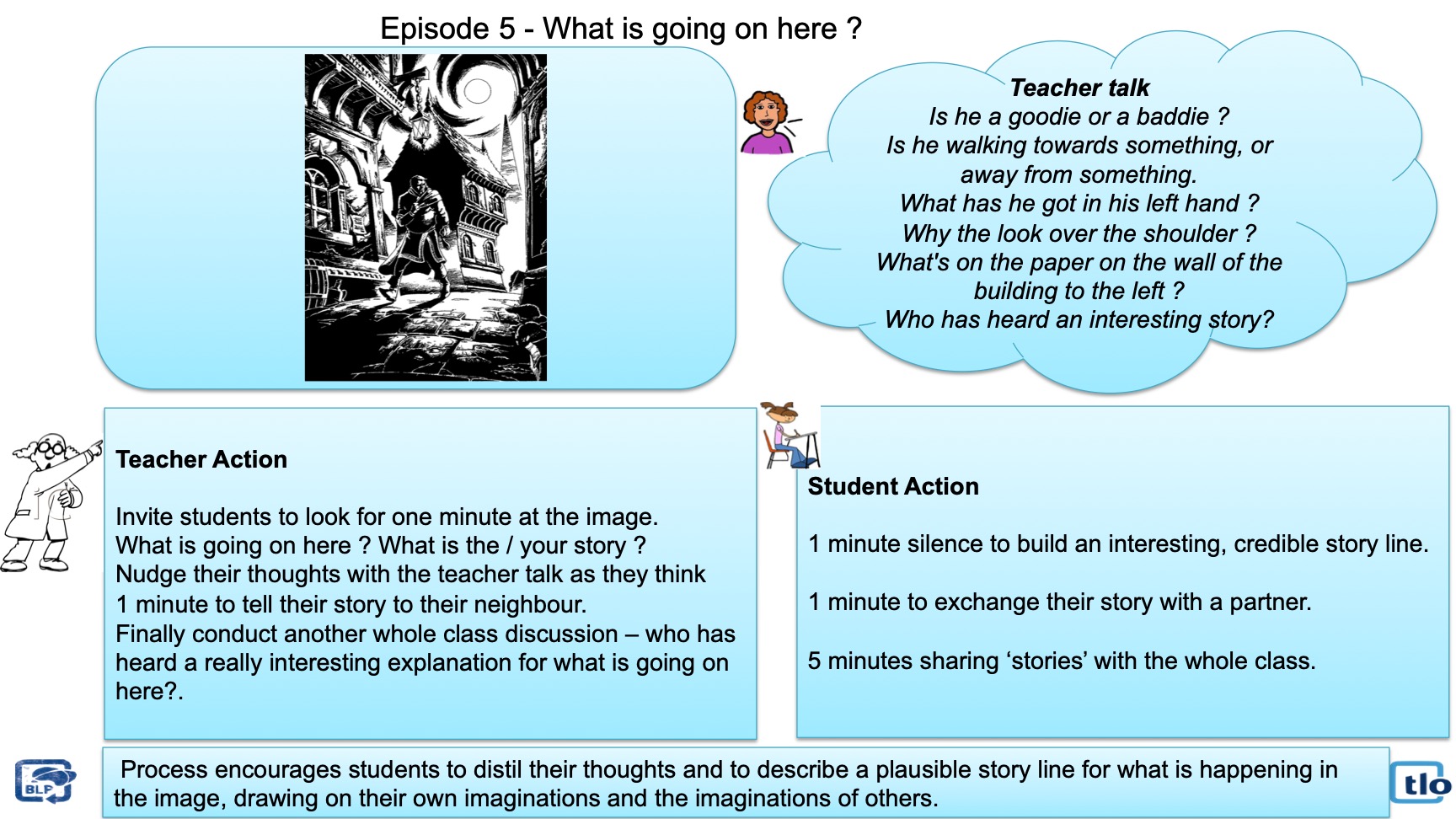
An example of a Visible Thinking Routine
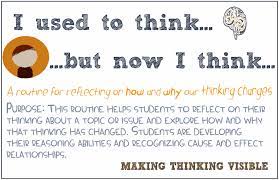
This routine helps students to reflect on how and why their thinking/understanding is changing.
Remind students of the topic you have been working on. Ask them to respond to each of the sentence stems: I used to think…, Now, I think…
Alternatively ask students to write down their views at the beginning of a topic. Invite them to revisit & update their answer during and at the end in light of what has been learned.
Or, at the beginning of a lesson ask students to write down what they understand by a particular term that will be explored in the coming lesson (e.g. Phrase (English); Proof (Maths); Power (Science) etc). At the end of the lesson, ask them to write down what they now understand by the term.
Unit 4. Broadening the range
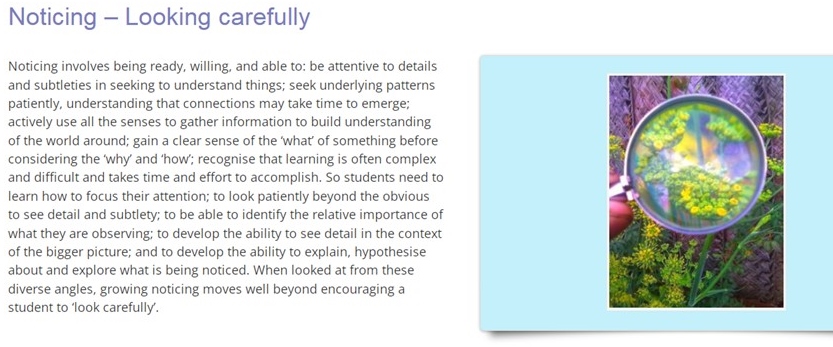
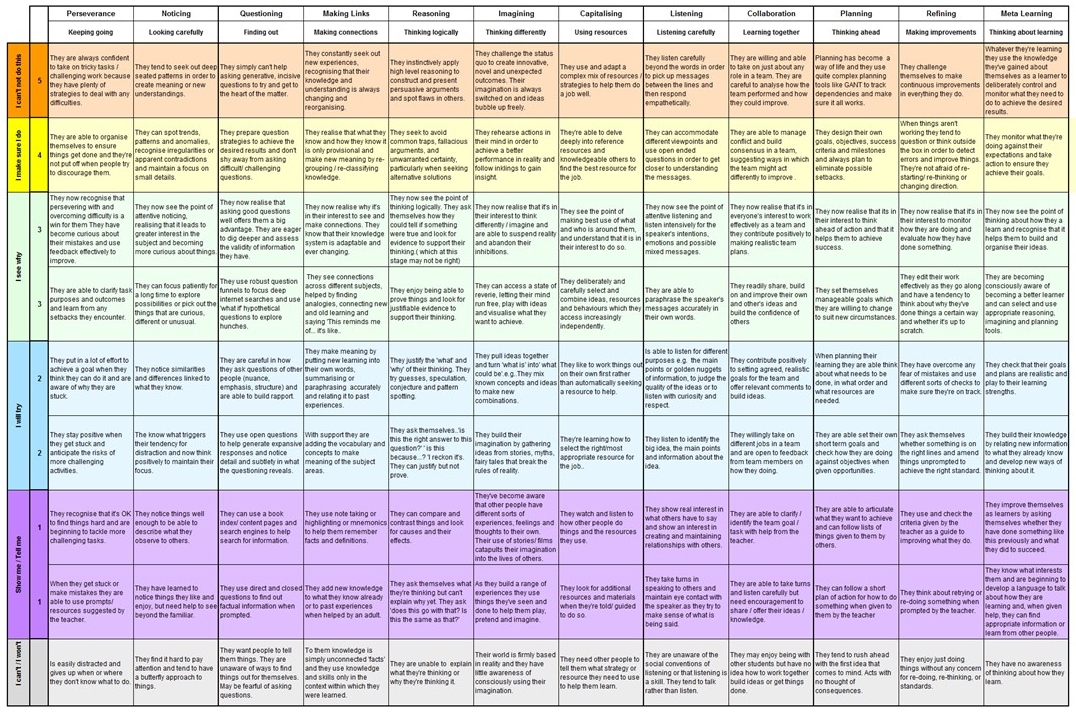
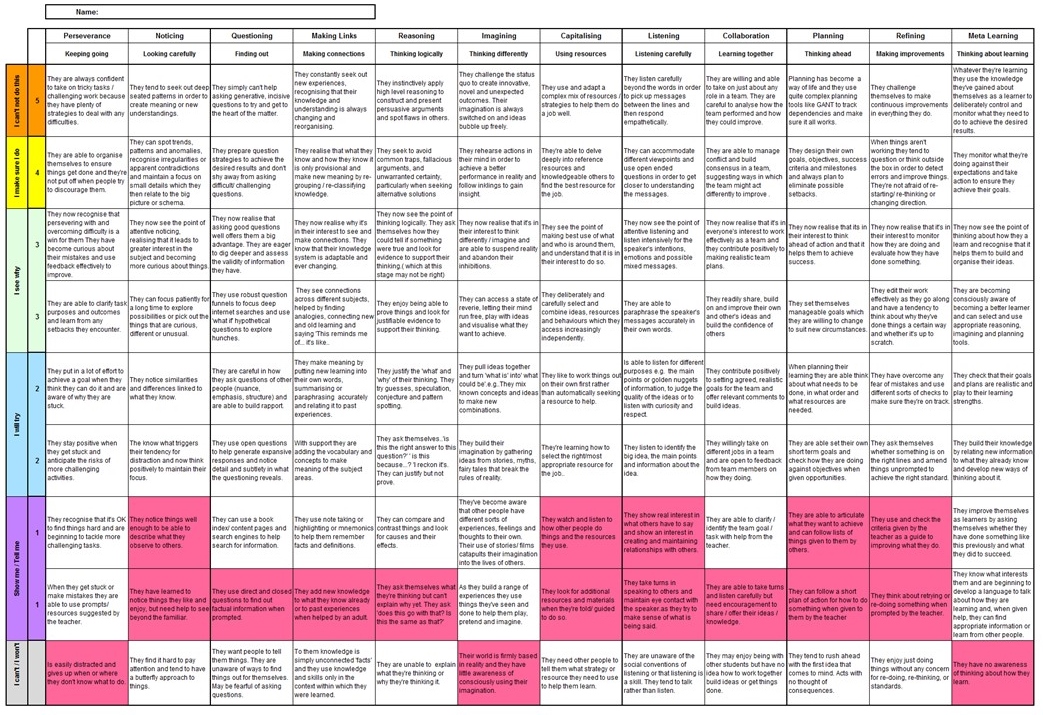
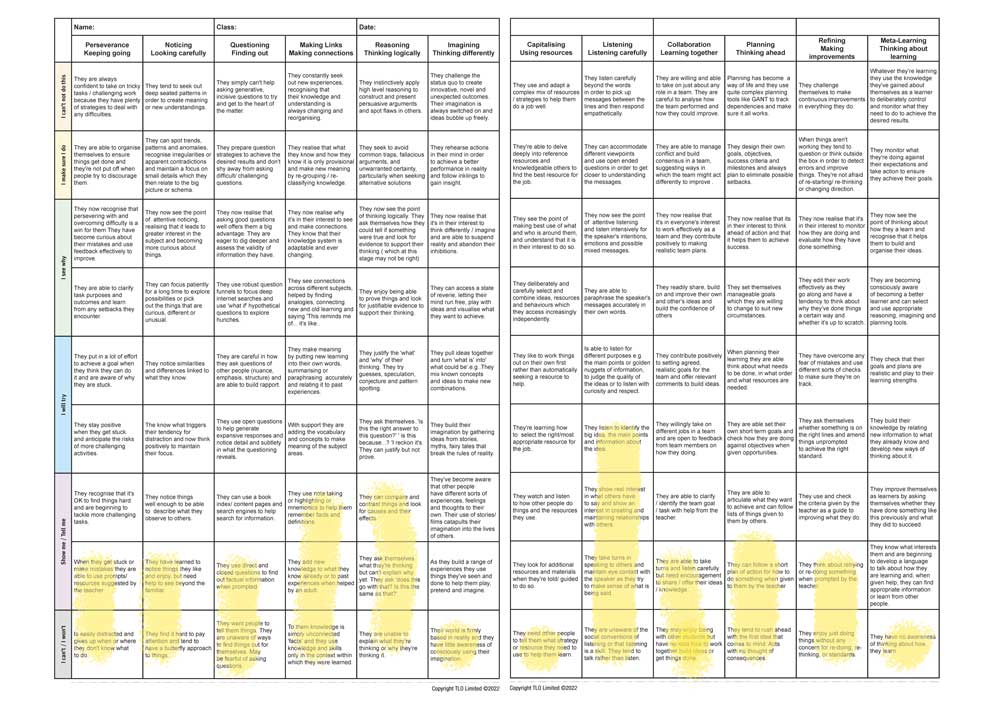
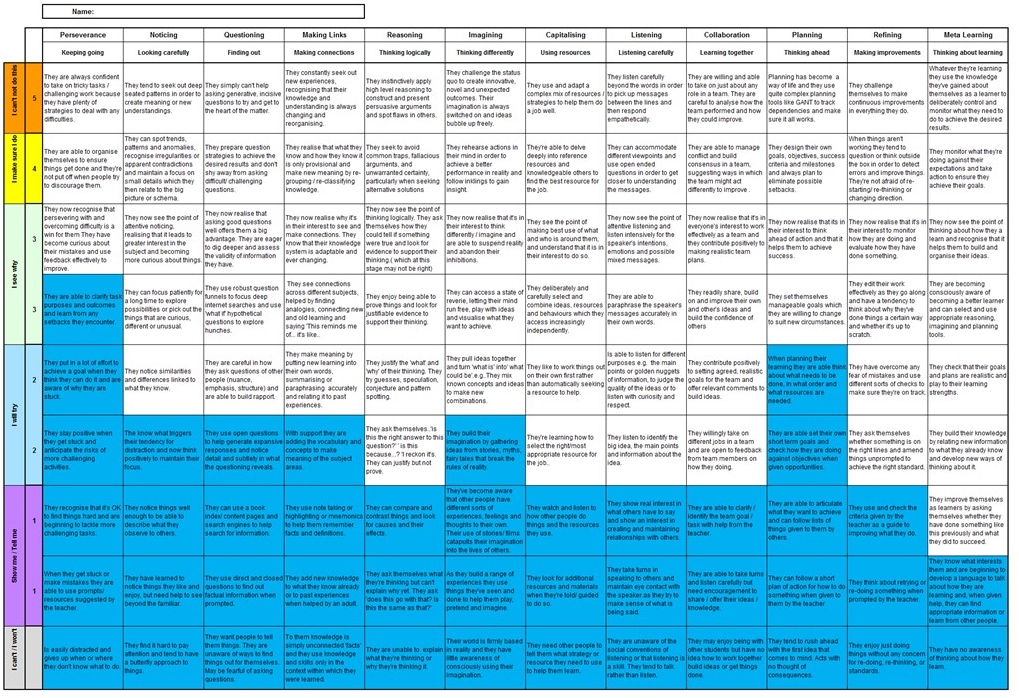
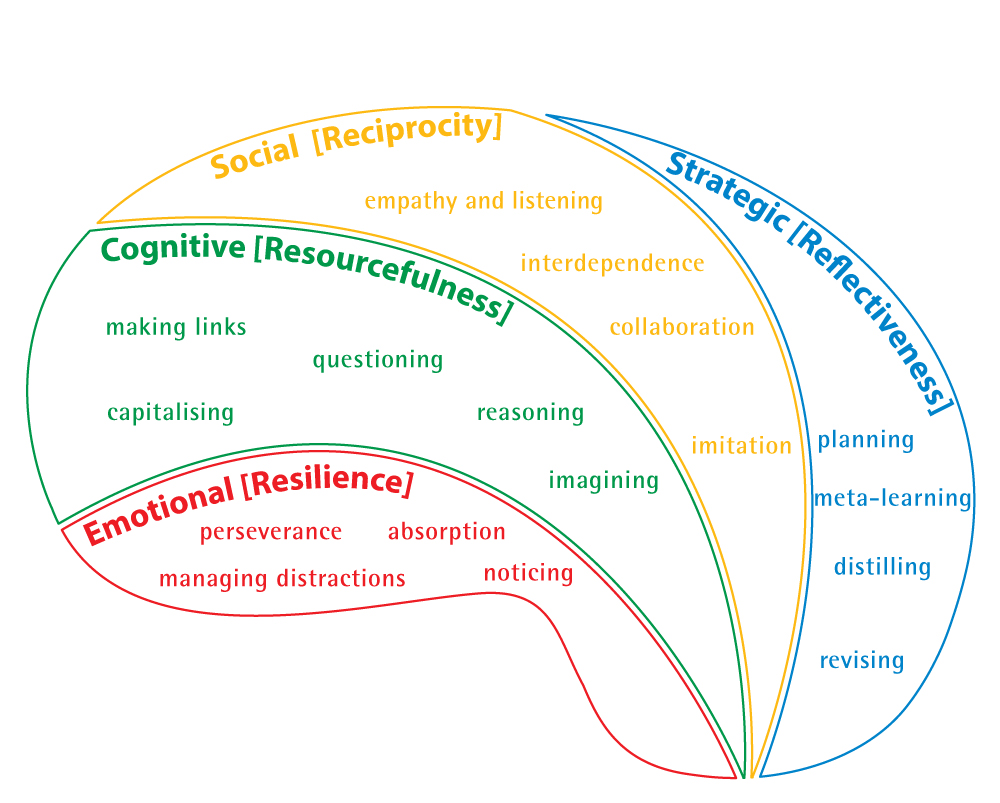
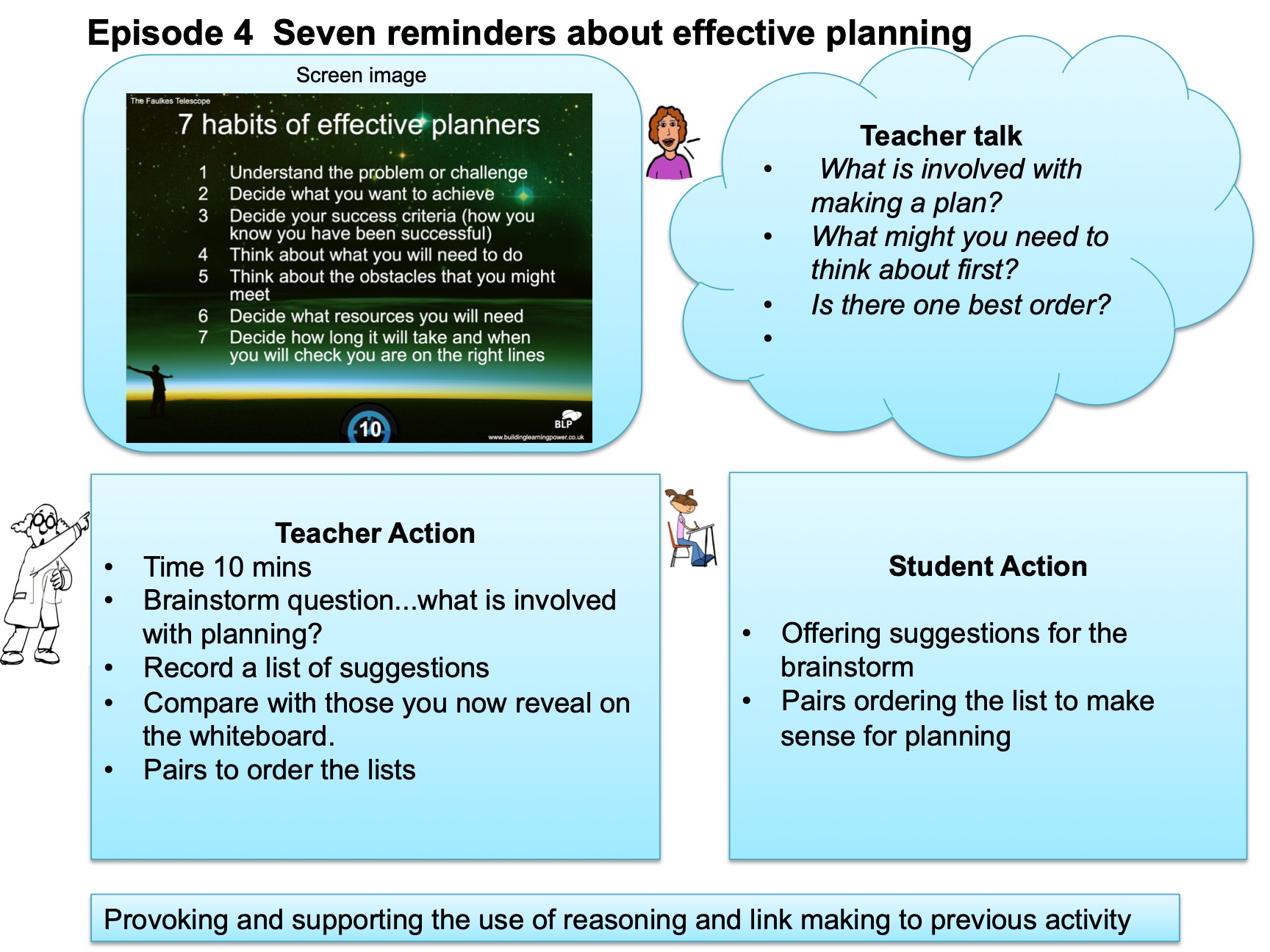
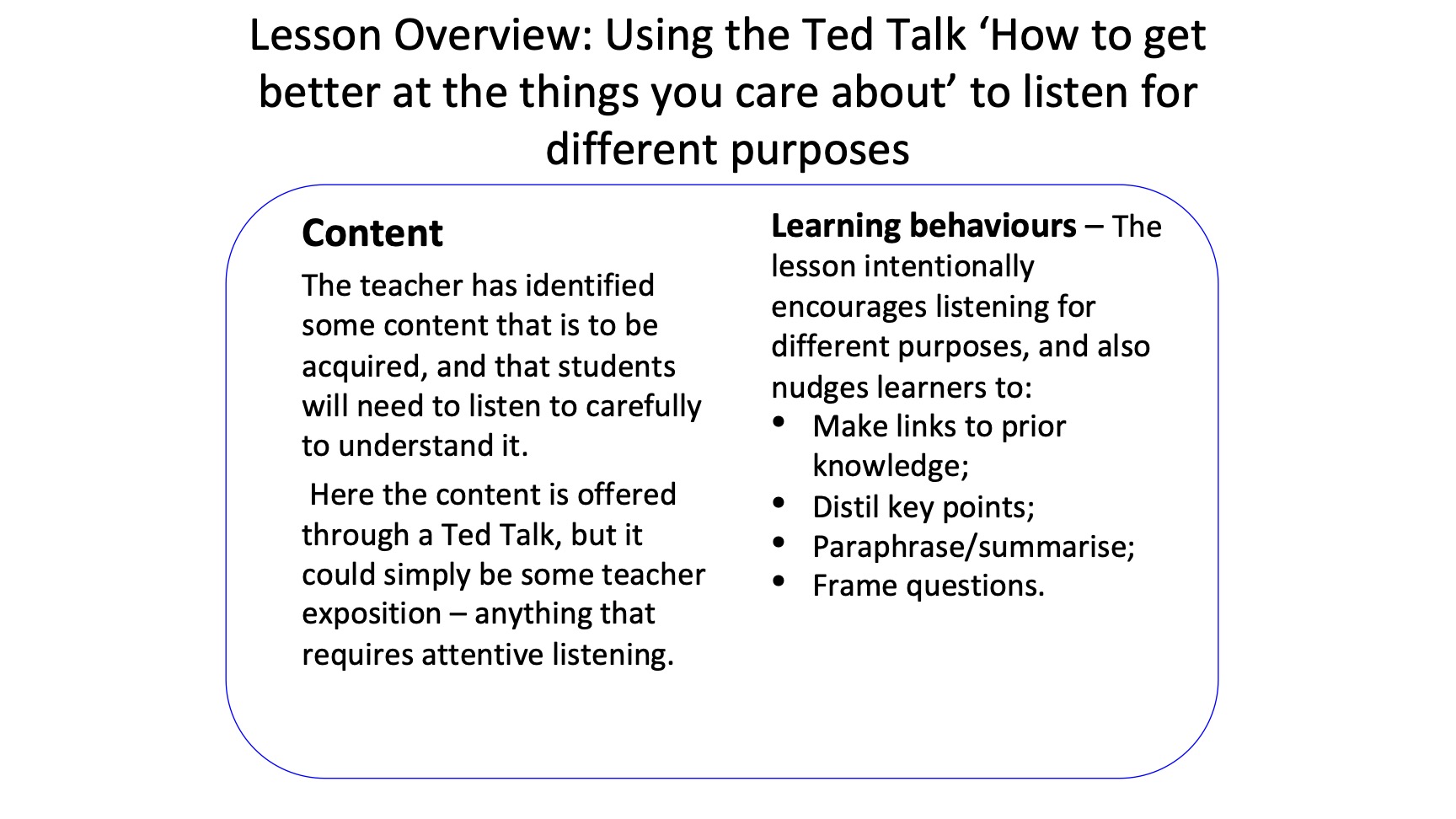
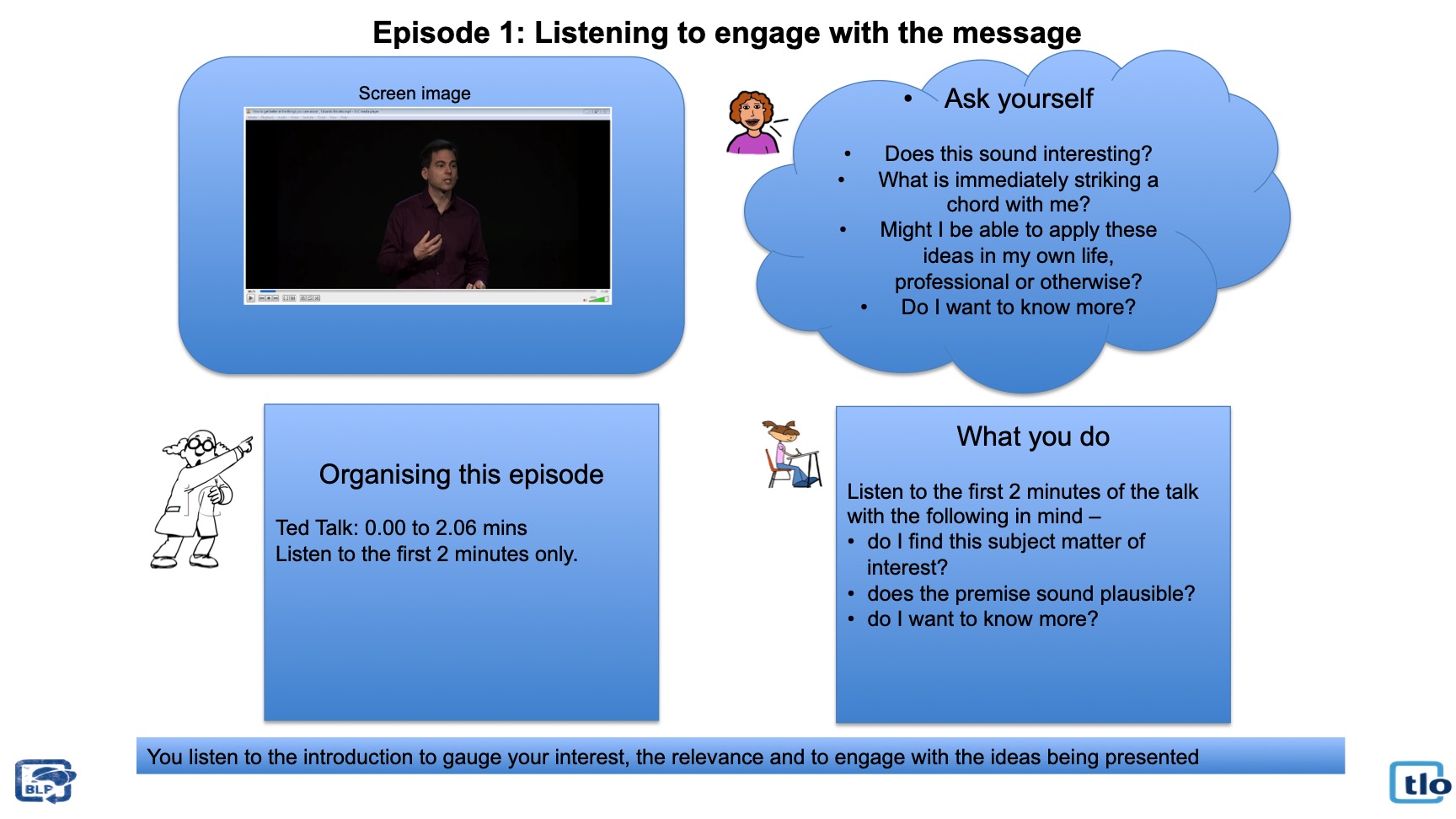
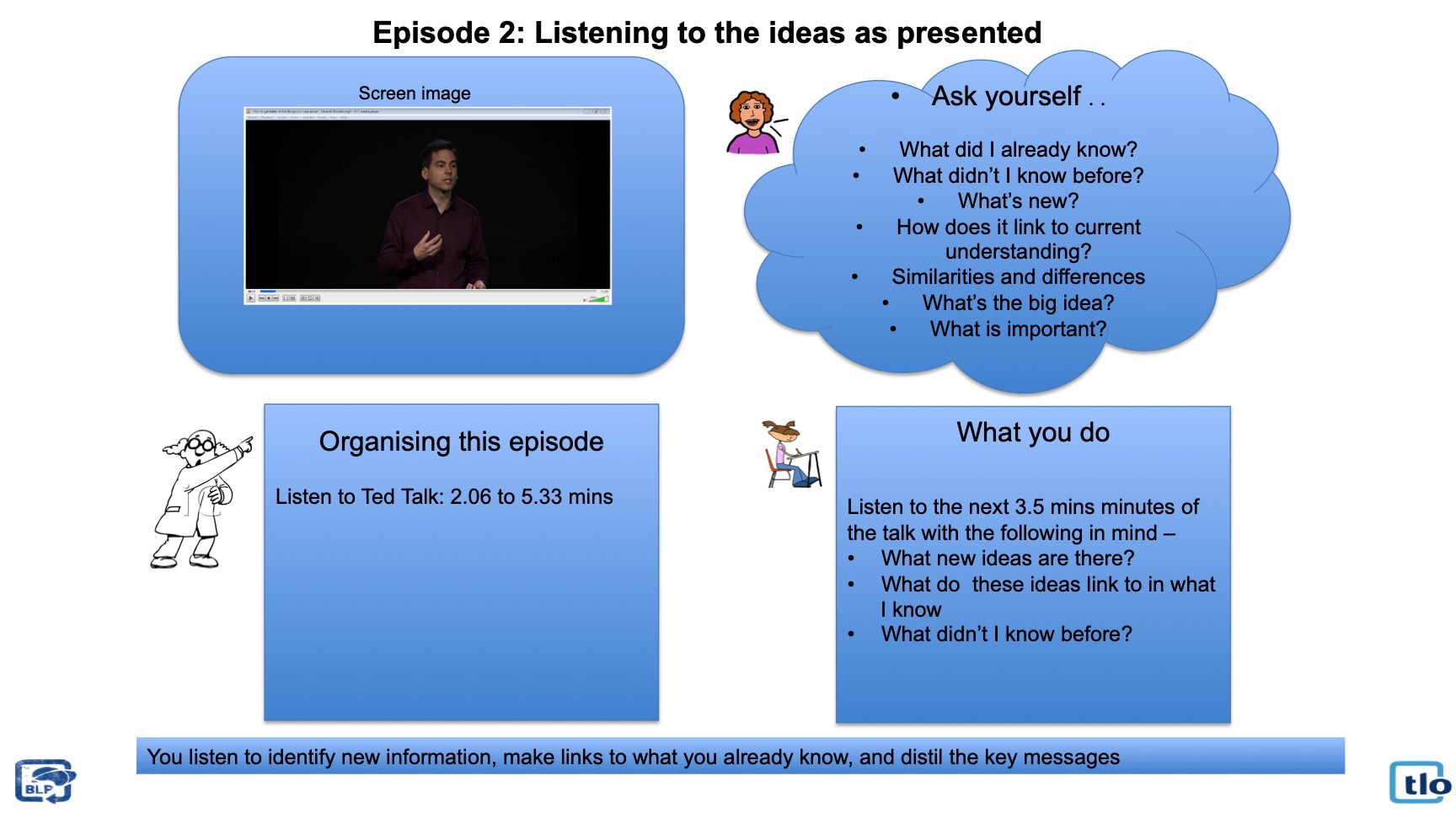
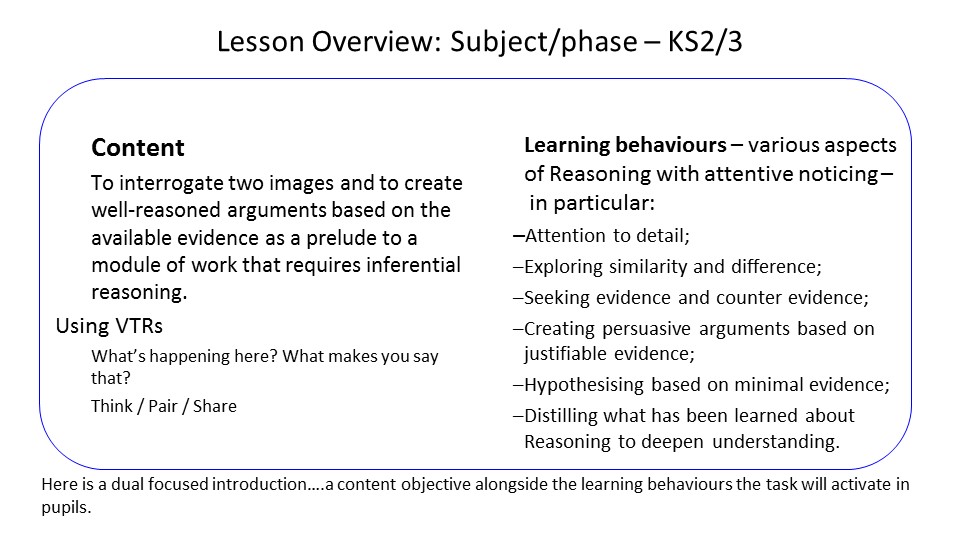
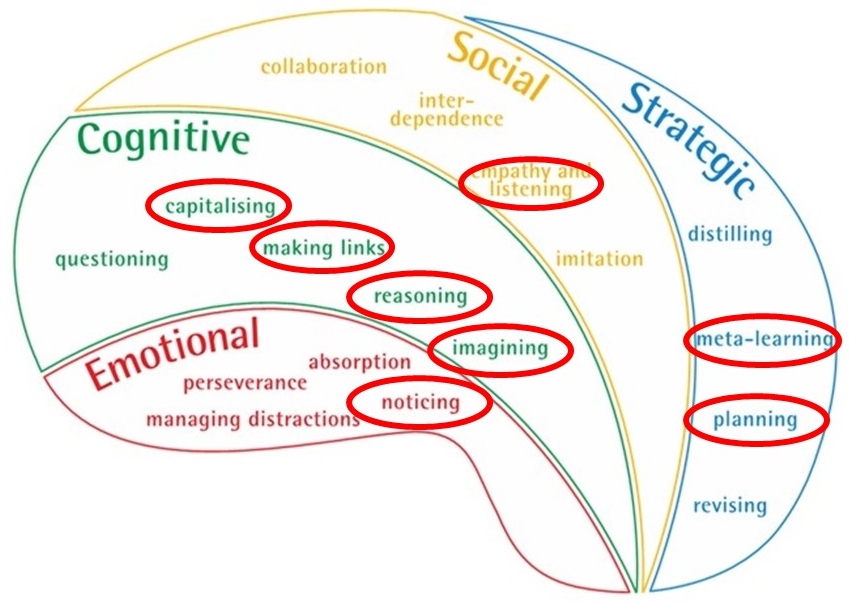
This unit offers teachers an opportunity to spread their wings and begin to work across another 8 of the learning behaviours.It has 8 small sections, each based on one learning behaviour – Noticing; Making links; Reasoning; Imagining; Capitalising; Listening; Planning, Meta Learning.
Here teachers will find, for each of the 8 behaviours:
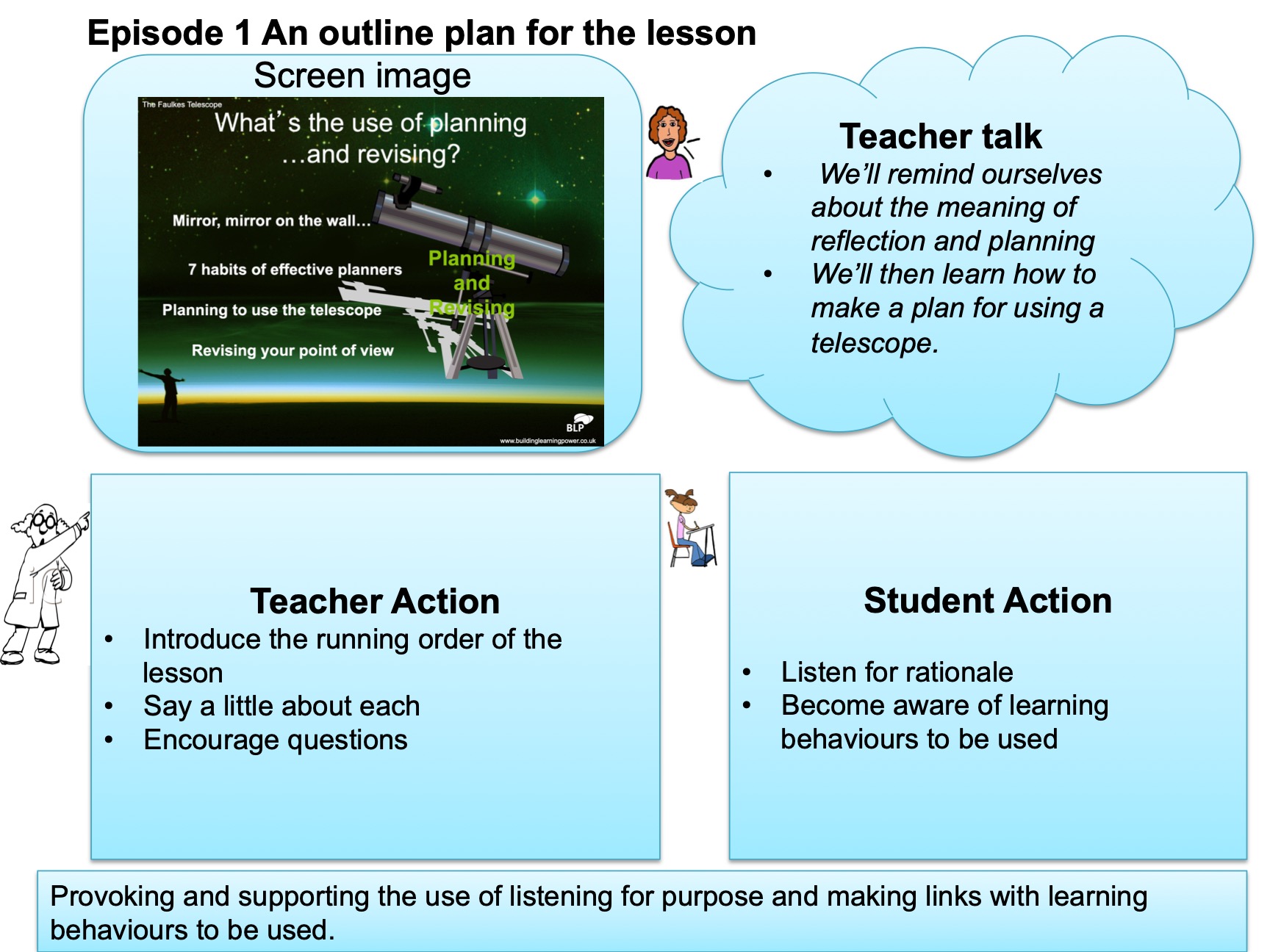
A staged way of introducing the behaviour by:
- Firstly… making students aware of the use and importance of a habit…when, where, why, how they could be using it;
- Then... exploring the learning habit a little more through its language;
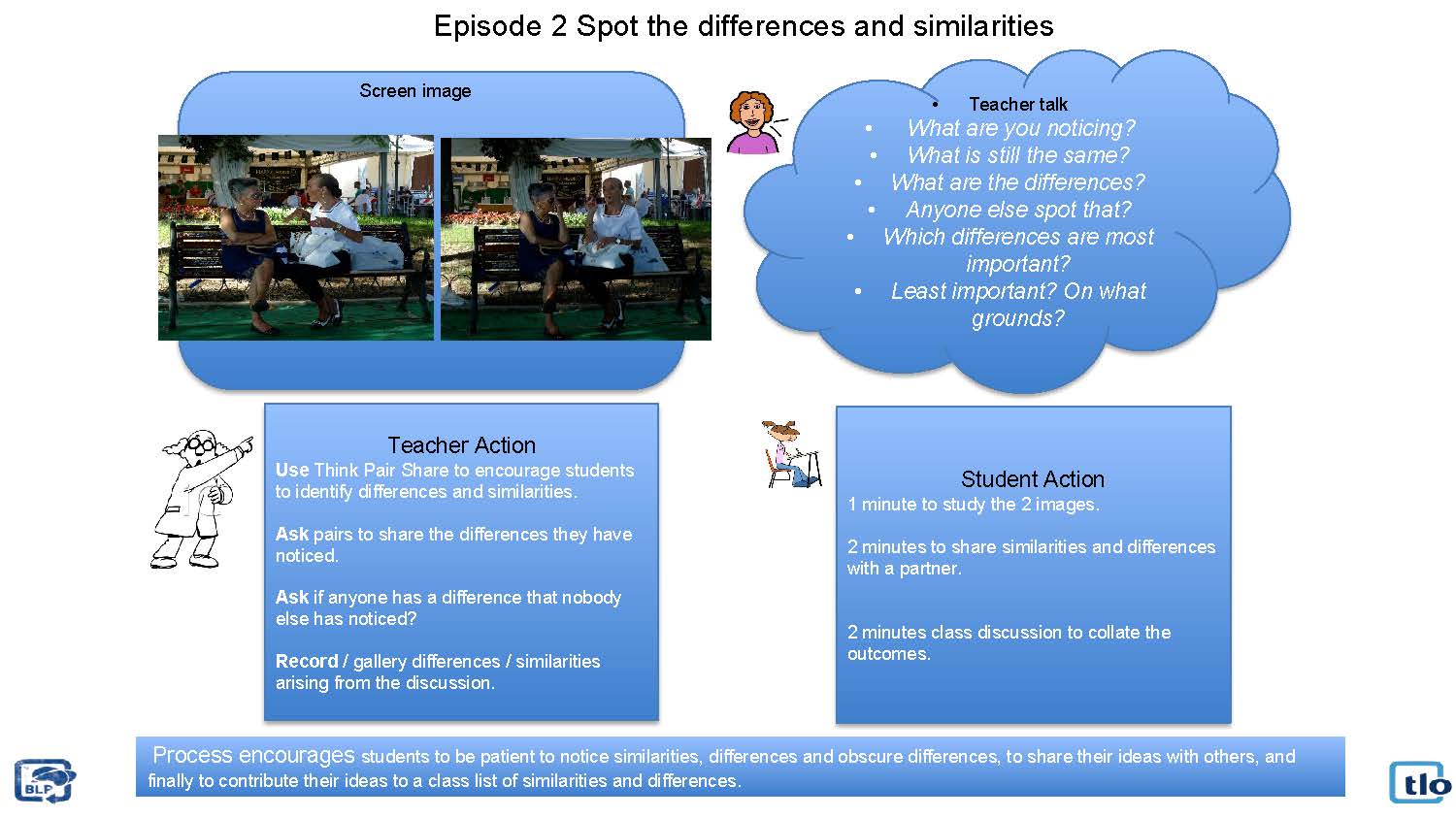
- Try... using the behaviour as a lesson starter to tune students into using it;
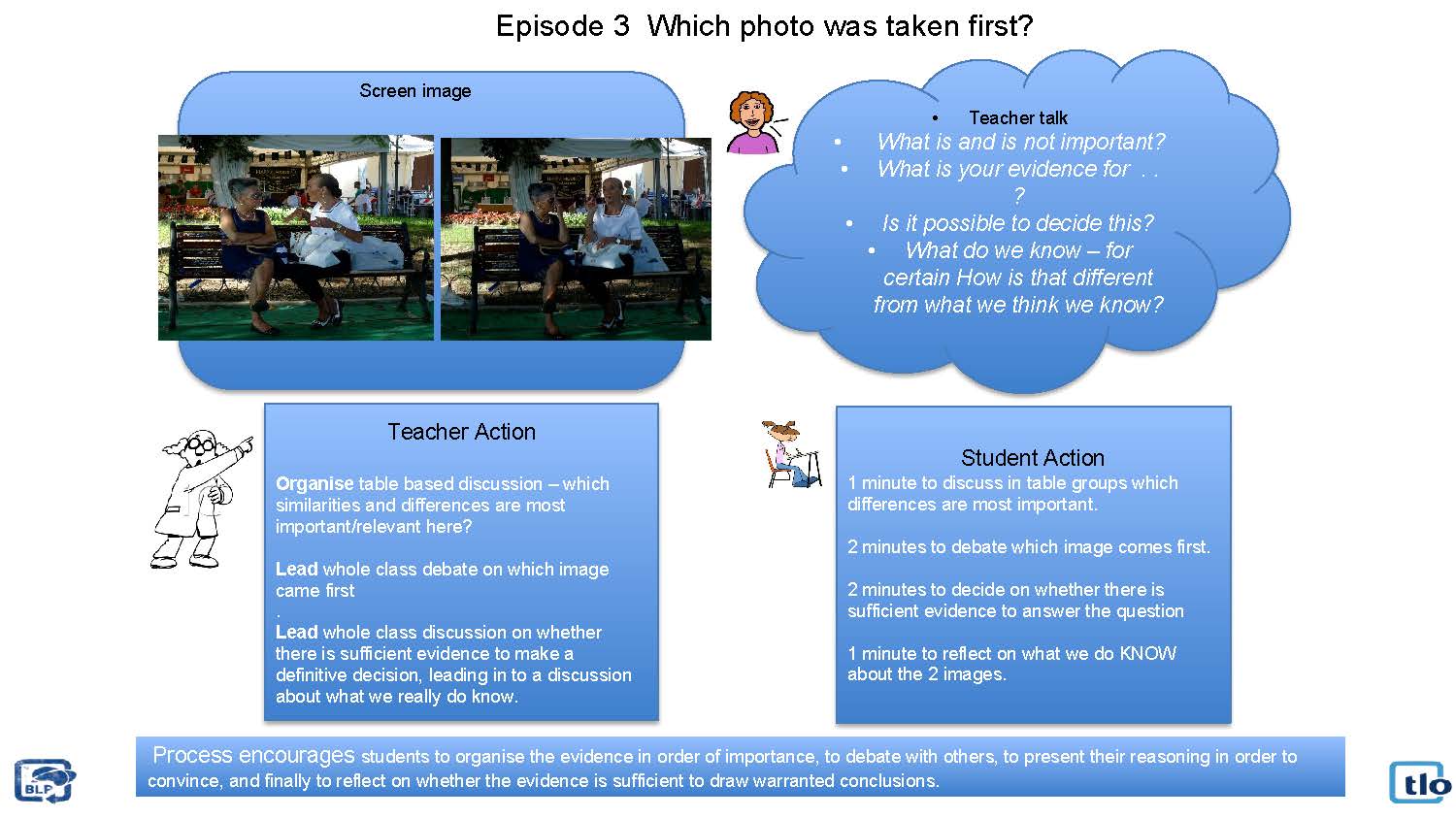
- Then start... blending the behaviour into the way teachers teach content, using specific strategies to deepen content understanding;
- Ensure… students reflect on the success or otherwise of their new frame of mind as a result of consciously using the behaviour.
The content of this section encourages teachers to play with introducing more learning behaviours.
The contents of each of these 8 small sections
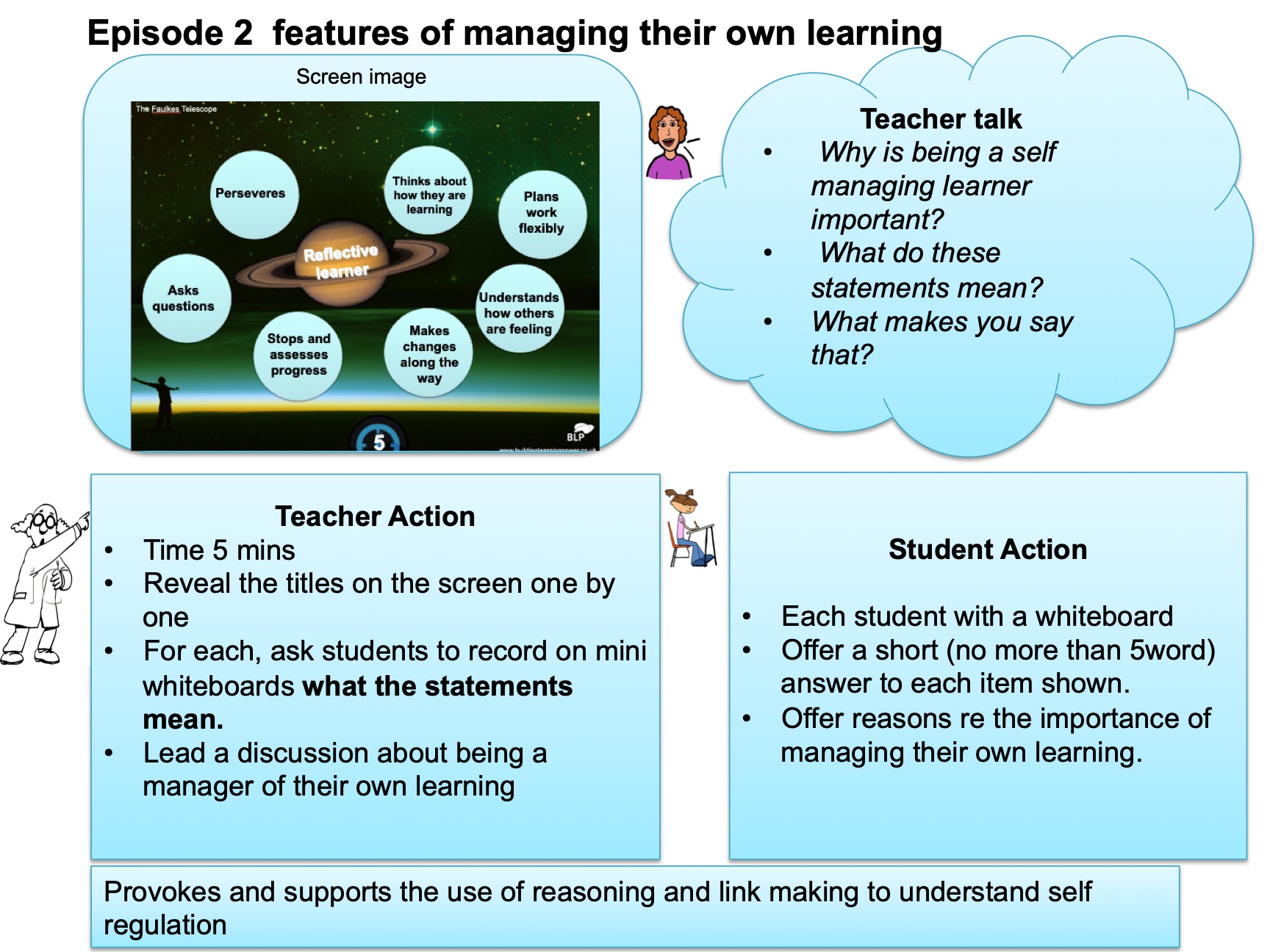
All 8 sections follow the same pattern:
- a short description / reminder of the learning behaviour;
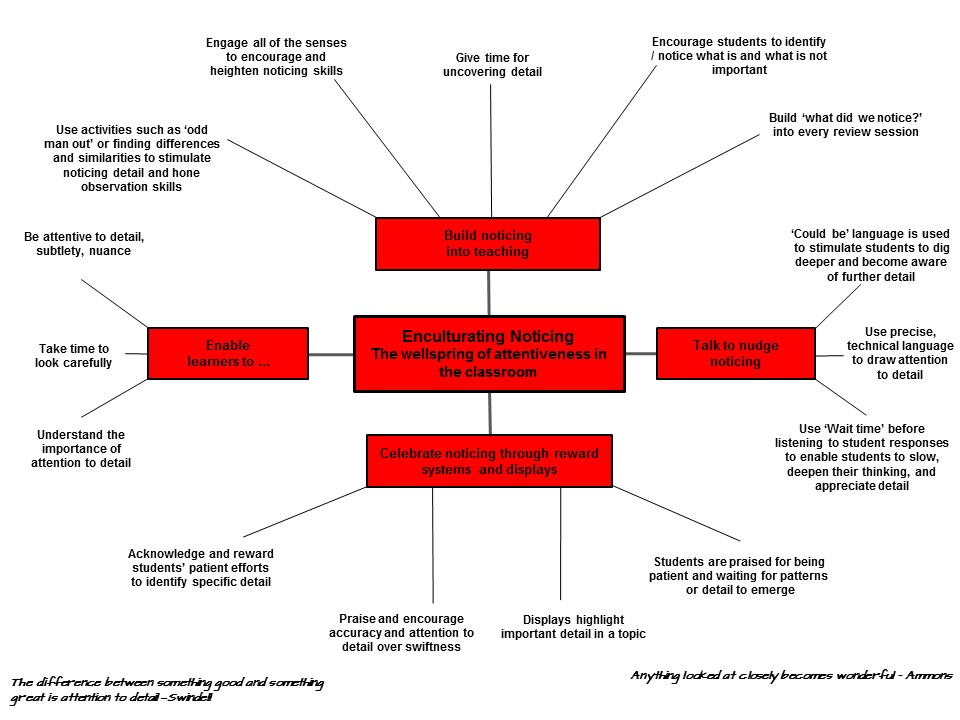
- an indication of the classroom culture that will support and encourage the learning behaviour (see examples to the right);
- some ideas for introducing and talking about the behaviour, with age-appropriate suggestions for younger and older students;
- some lesson starter activities using the behaviour;
- a visible thinking routine and a classroom activity to develop the behaviour;
- and resources for helping students to reflect on how they have been using the behaviour.