C. Lesson planning in action – an exemplar, link making, task.
How do we design tasks that stretch Link Making and assist pupils to approach the content more productively? We cover this in four ways:
- 1 describes the Connect/Extend/Challenge visible thinking routine;
- 2 shows the phases of a lesson where Connect/Extend/Challenge is embedded;
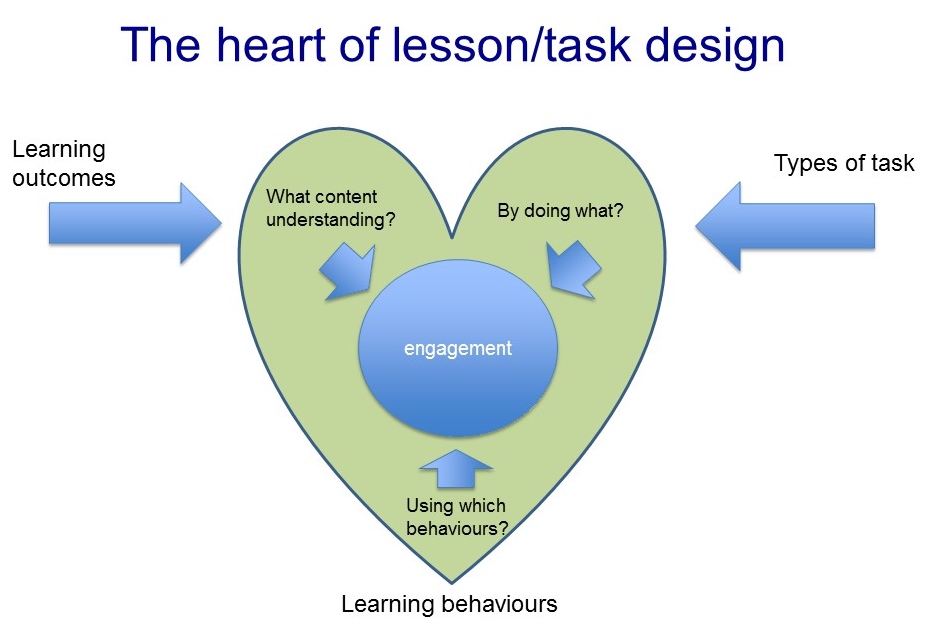
- 3 considers a simple lesson plan template that can be used for any lesson and distils the Link Making lesson into this format;
- 4 invites you to extend your thinking about the Connect/Extend/Challenge technique into other aspects of the curriculum.
1. A description of the Connect / Extend / Challenge thinking routine
The following lesson is based around a visible thinking routine from the Visible Thinking website.
[Follow the link to see C/E/C and all of the other Visible Thinking routines.]Connect Extend Challenge – A routine for connecting new ideas to prior knowledge.
The routine uses three questions:
- How are the ideas and information presented CONNECTED to what you already knew?
- What new ideas did you get that EXTENDED or pushed your thinking in new directions?
- What is still CHALLENGING or confusing for you to get your mind around? What questions, wonderings or puzzles do you now have?
Purpose: What kind of thinking does this routine encourage?
The routine helps pupils make connections between new ideas and prior knowledge. It also encourages them to take stock of ongoing questions, puzzles and difficulties as they reflect on what they are learning.
Application: When and Where can it be used?
The natural place to use the Connect-Extend-Challenge routine is after pupils have learned something new. It doesn’t matter how much they have learned – it can be a lesson’s worth, or a unit’s worth. The routine is broadly applicable: Use it after pupils have explored a work of art, or anything else in the curriculum. Try it as a reflection during a lesson, after a longer project, or when completing a unit of study.
Launch: Some tips for starting and using this routine.
This routine works well with the whole class, in small groups or individually. Keep a visible record of pupils’ ideas. If you are working in a group, ask pupils to share some of their thoughts and collect a list of ideas in each of the three categories Or have pupils write their individual responses on post-it notes and add them to a class chart. Keep pupils’ visible thinking alive over time: Continually add new ideas to the lists and revisit the ideas and questions on the chart as pupils’ understanding around a topic develops
2. A lesson that has uses Connect / Extend / Challenge to support curriculum understanding.
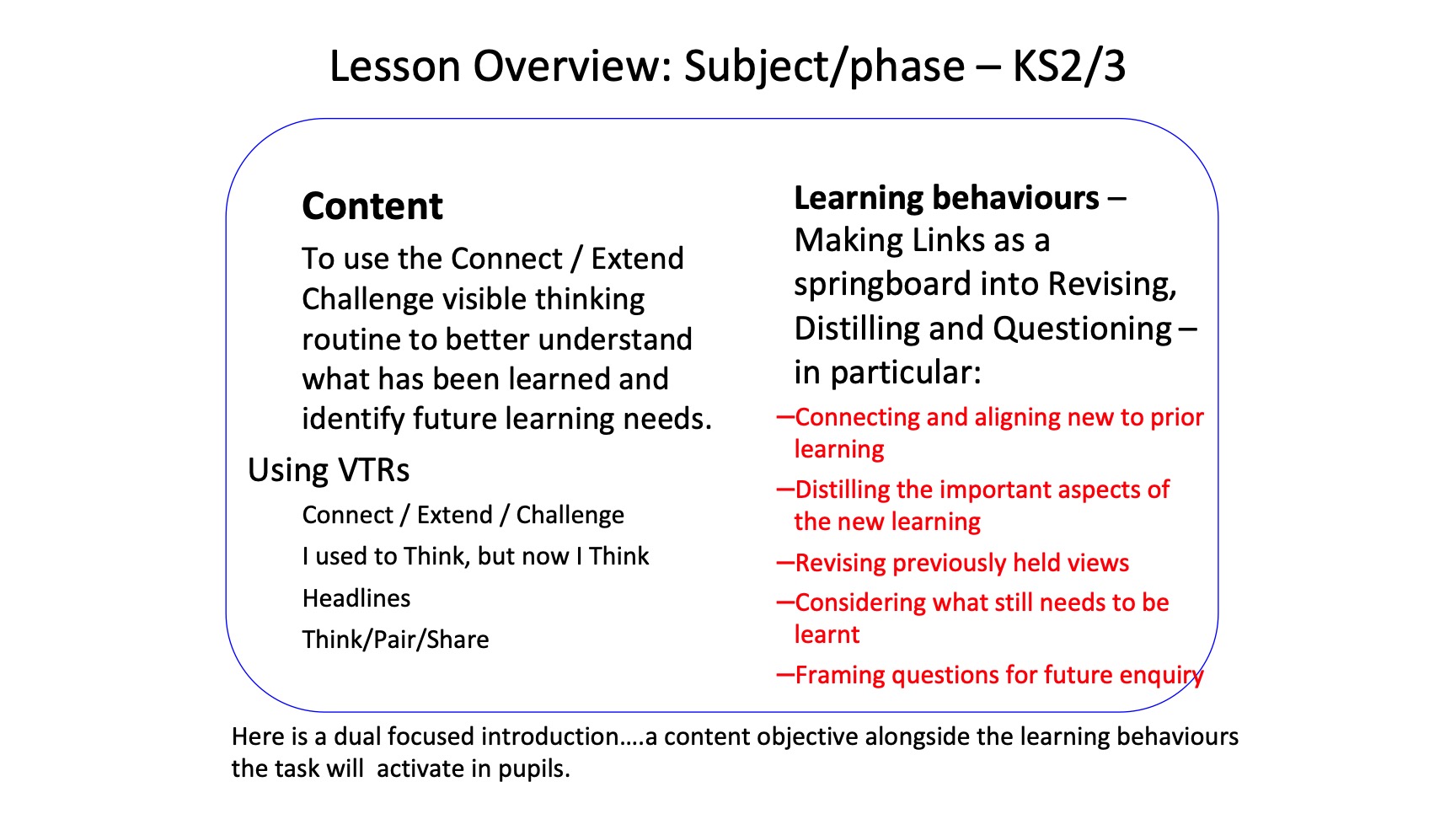
Overview of lesson plan:
[Previous Episodes – Learning some curriculum content
What is happening here?
This is standard fayre – your class have been studying something and you want them to reflect on what they have learned, how it changes what they previously thought they knew, and what they still need to understand. The duration of this study may simply be a lesson, or it may be a series of lessons.
The critical aspect is that Connect/Extend/Challenge is used after some new learning has happened, otherwise it is impossible to access the Connect and Extend aspects.
Timings for the 3 Episodes depend on how much new learning has been achieved, which must, in part at least, be a consequence of the duration of the learning experience. Using Connect/Extend/Challenge as a review point towards the end of a lesson might only be a 5 minute plenary activity designed to alert pupils to what has been learned and to look forward to the upcoming learning in the next lesson. However if used after an extended project, the routine might well extend to 30 minutes due to the amount of new learning to be considered.
In the lesson illustrated below, we assume the 5 minute plenary format. Simply extend the timings if you are applying it to a more substantial piece of learning.]
Episode 1 – How are the ideas and information presented CONNECTED to what you already knew?
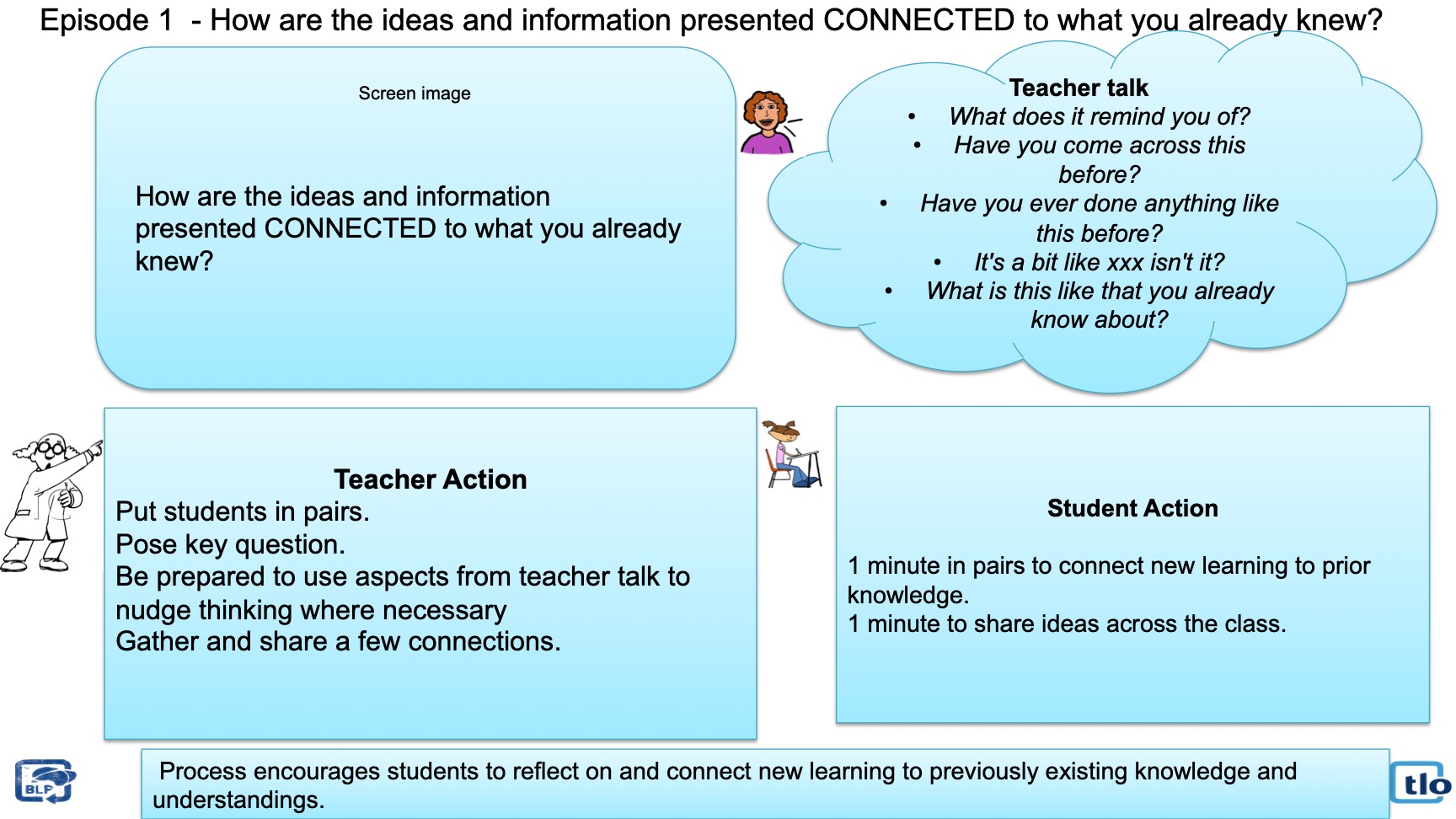
What is happening here?
In this Episode, pupils are encouraged to think back to their prior understanding of the content / topic.
[This would obviously not work if they had no prior knowledge of the topic being studied. It may have been worth checking this out before embarking on the lesson/topic by asking pupils to record their answers to the question: ‘what do you think you already know about . . . . . ?’ – It is a classic way of identifying misconceptions that can be addressed through the upcoming session(s). It is also the first step in the visible thinking routine Think/ Puzzle/ Explore – more of which later].Here, pupils are invited to connect their new learning to their prior understandings, so helping them to see learning as an integrated whole rather than a series of unconnected ‘facts’ to be memorised.
In the bottom blue box, the Learning Behaviours being activated are simply identified as:
- To reflect on and connect new learning to previously existing knowledge and understandings.
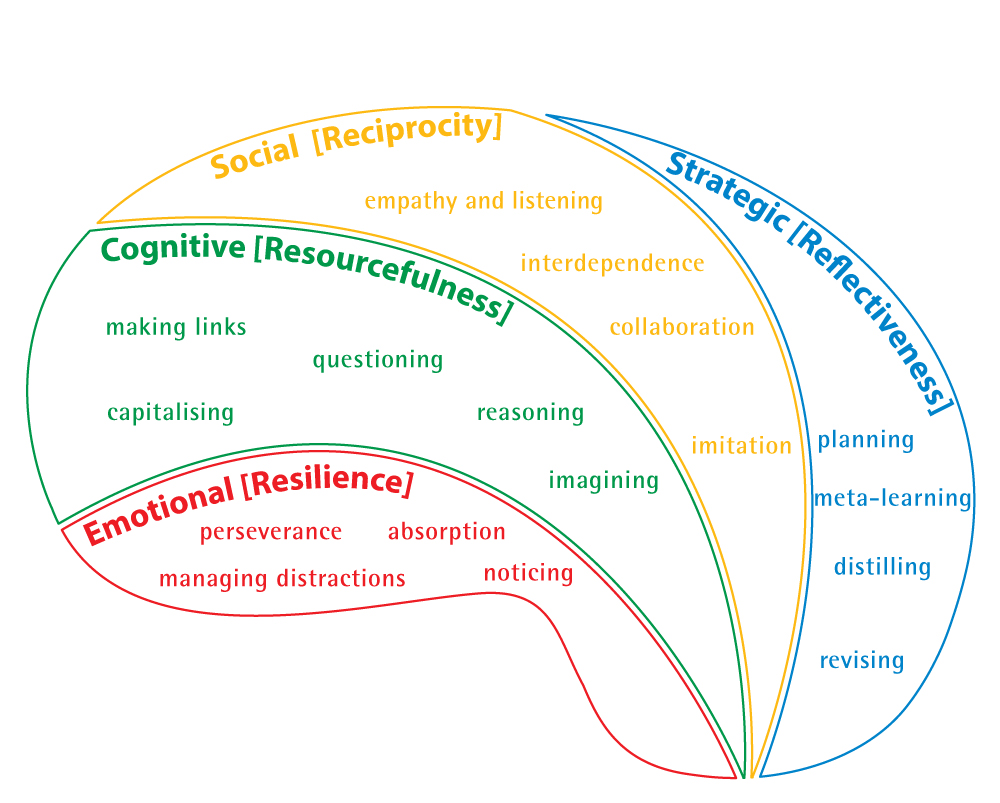
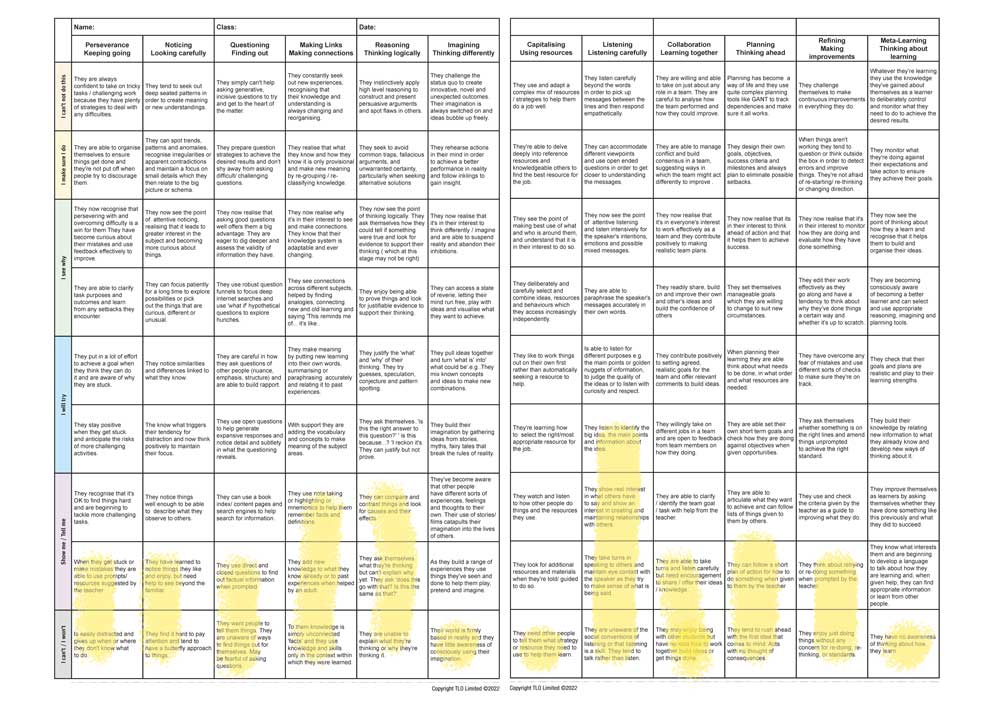
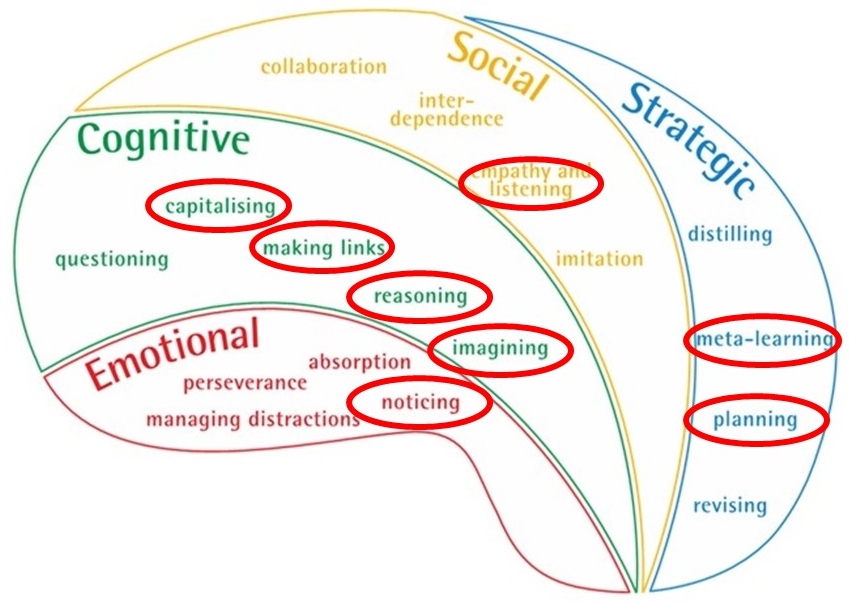
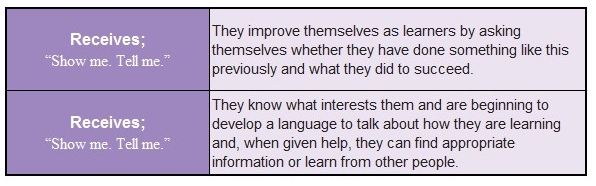
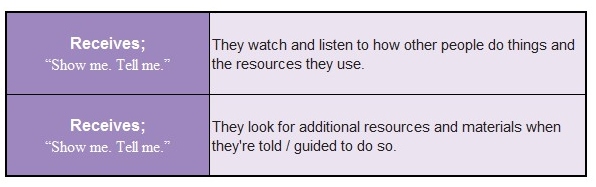
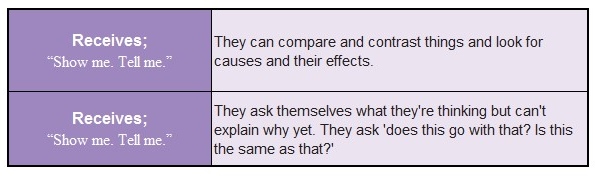
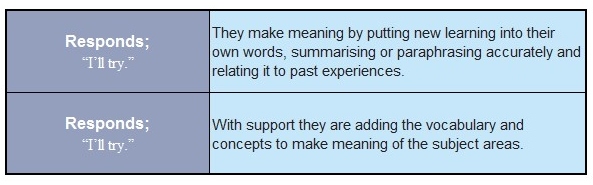
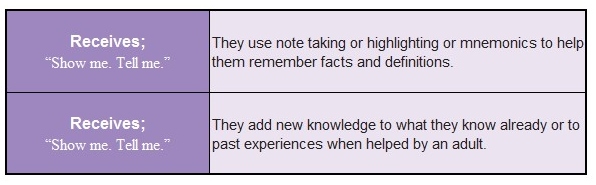
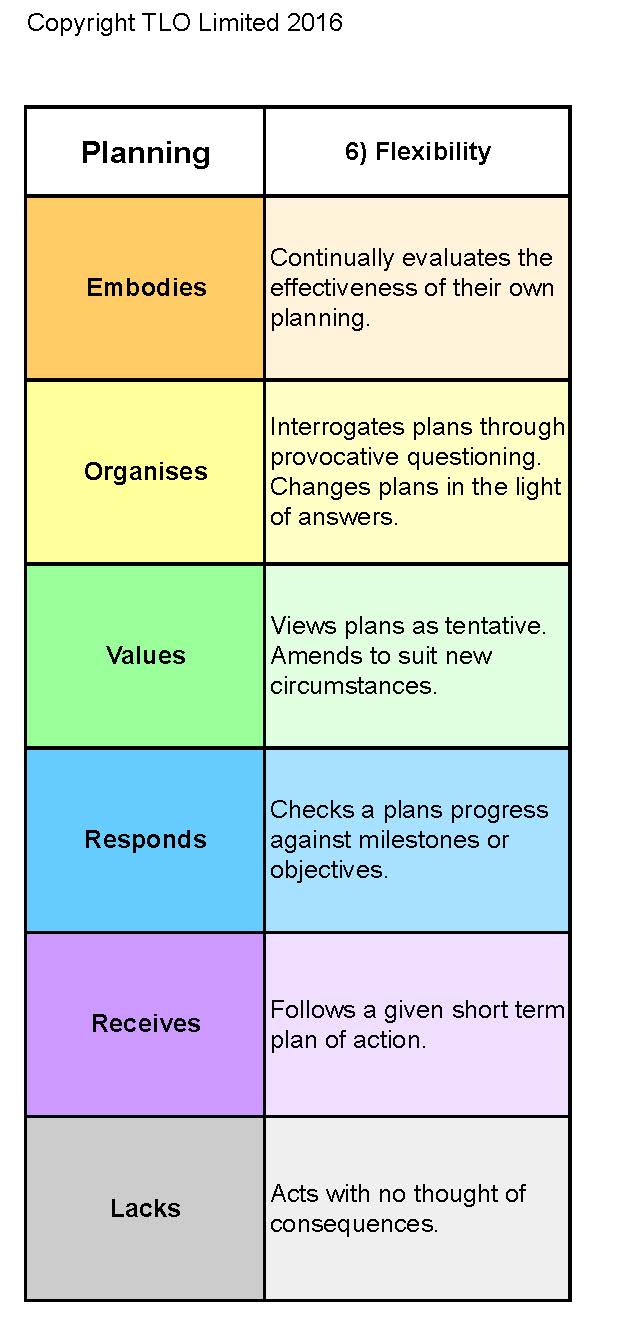
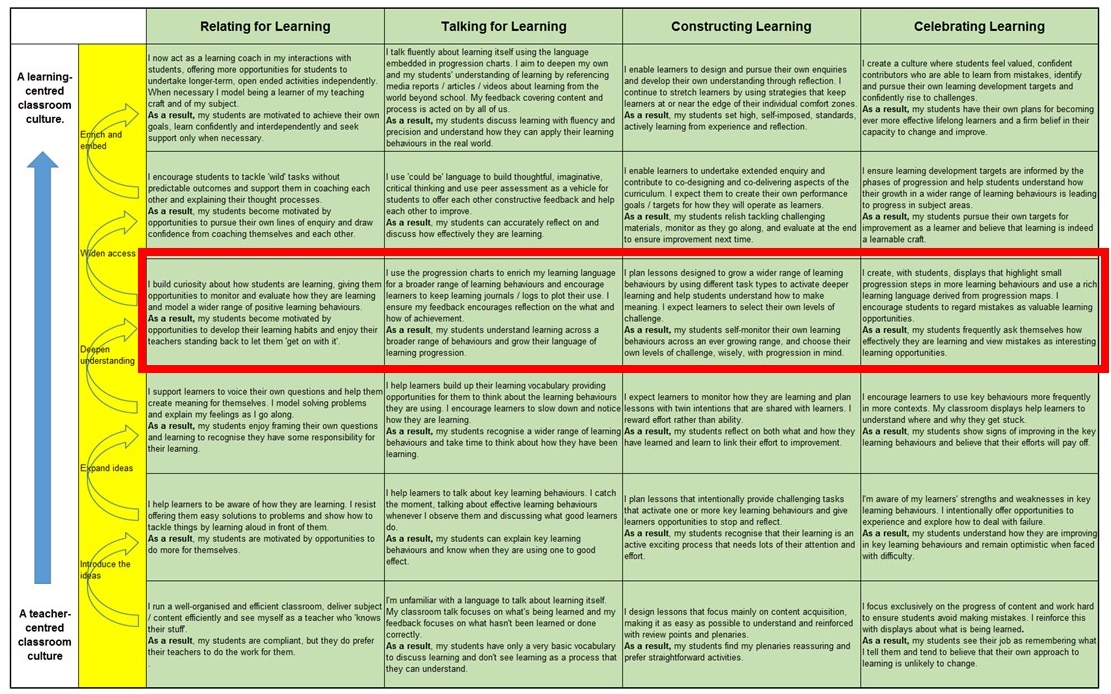
In Link Making terms, it moves learners from ‘knowing stuff’ to thinking about how the new learning connects to what they already know/knew. It encourages them to ‘Relate what they are learning to past experiences with adult support’ [Making Links grid, Ways of Making Meaning column, Receives/Purple phase].
Episode 2 – What new ideas did you get that EXTENDED or pushed your thinking in new directions?
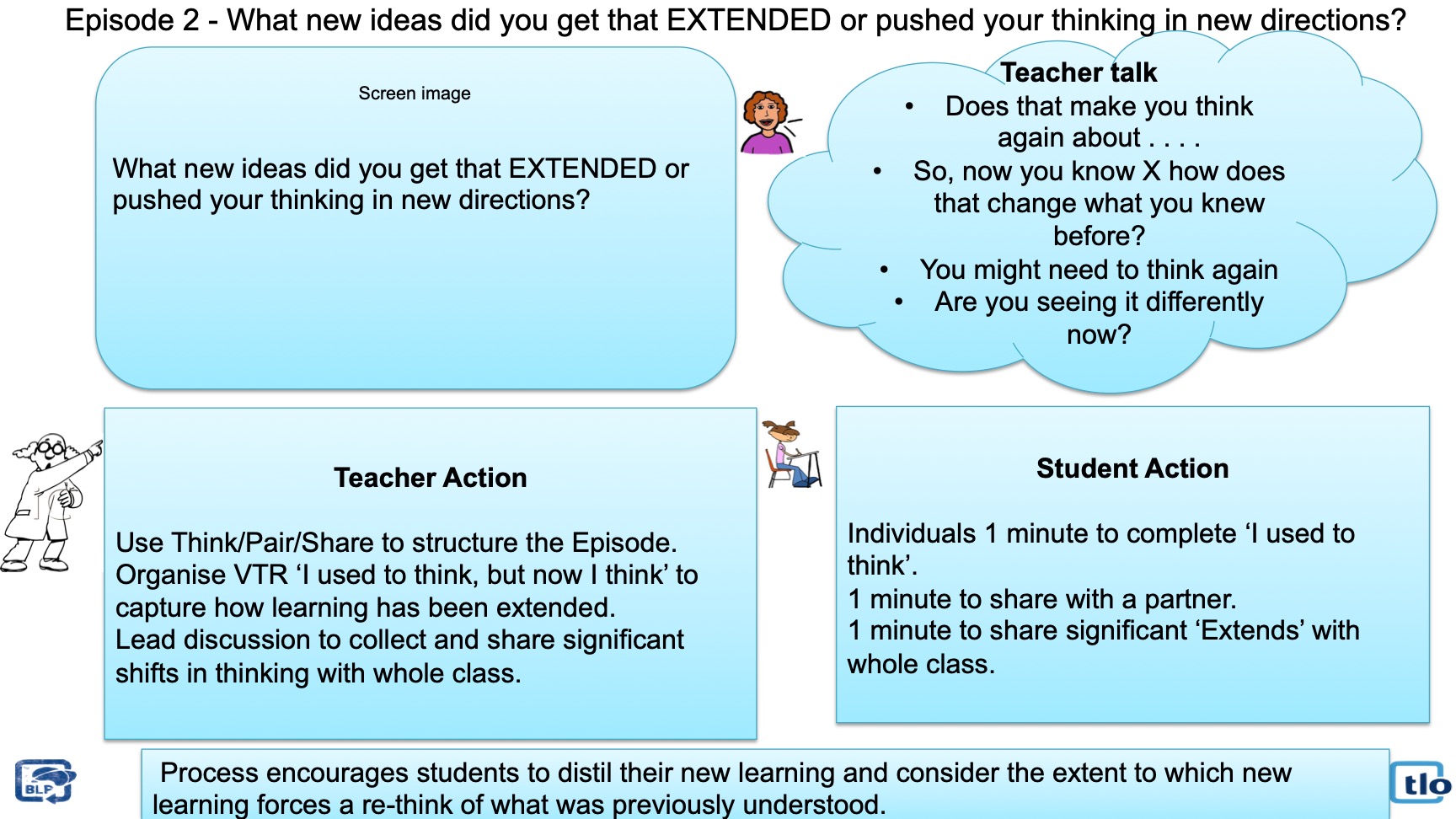
What is happening here?
Having used the Connect phase to remind pupils of a) what they used to know and b) what they now know about a topic, the Extend phase encourages pupils to reflect on how the new learning may force a change in what they thought they knew previously. It is a revising activity where learners have to connect and align their prior understandings with their new learning. It is the point at which the gap between what was known at the outset and what is known now is identified (progress, as we would call it), and also where earlier misconceptions are refined in light of the new learning.
In the bottom blue box, the Learning Behaviours being activated are summarised as:
- To distil their new learning and consider the extent to which new learning forces a re-think of what was previously understood.
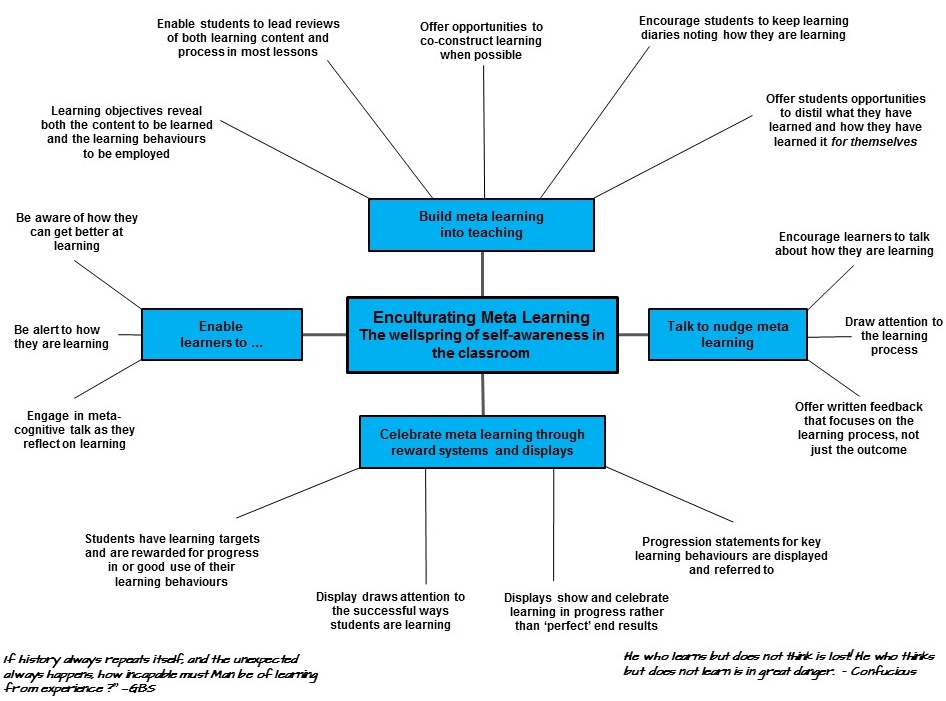
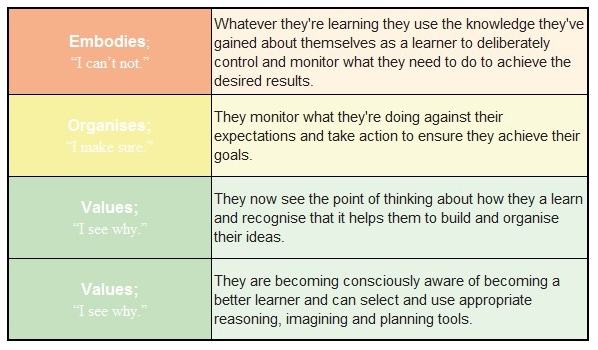
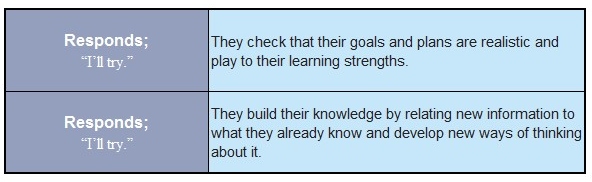
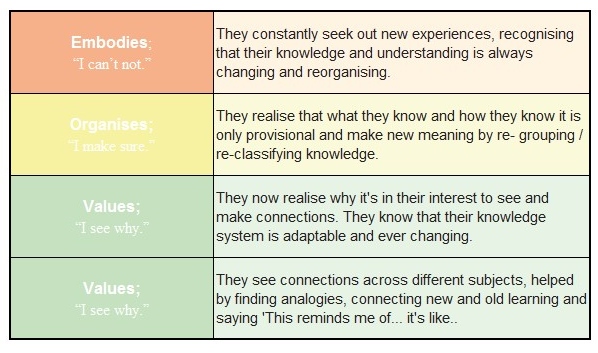
Essentially, the addition of the ‘Extend’ aspect of CEC lifts the requirements further. Episode 2 encourages pupils to ‘Use new learning to review prior learning’ (Making Links, Responds/Blue phase), and also to ‘link new information to what they already know and develop new ways of thinking about it’ (Meta Learning, Responds/Blue phase) in order to ‘Recognise learning involves constant rethinking / redoing’ (Revising, Values/Green phase).
Episode 3 – What is still CHALLENGING or confusing for you to get your mind around? What questions, wonderings or puzzles do you now have?
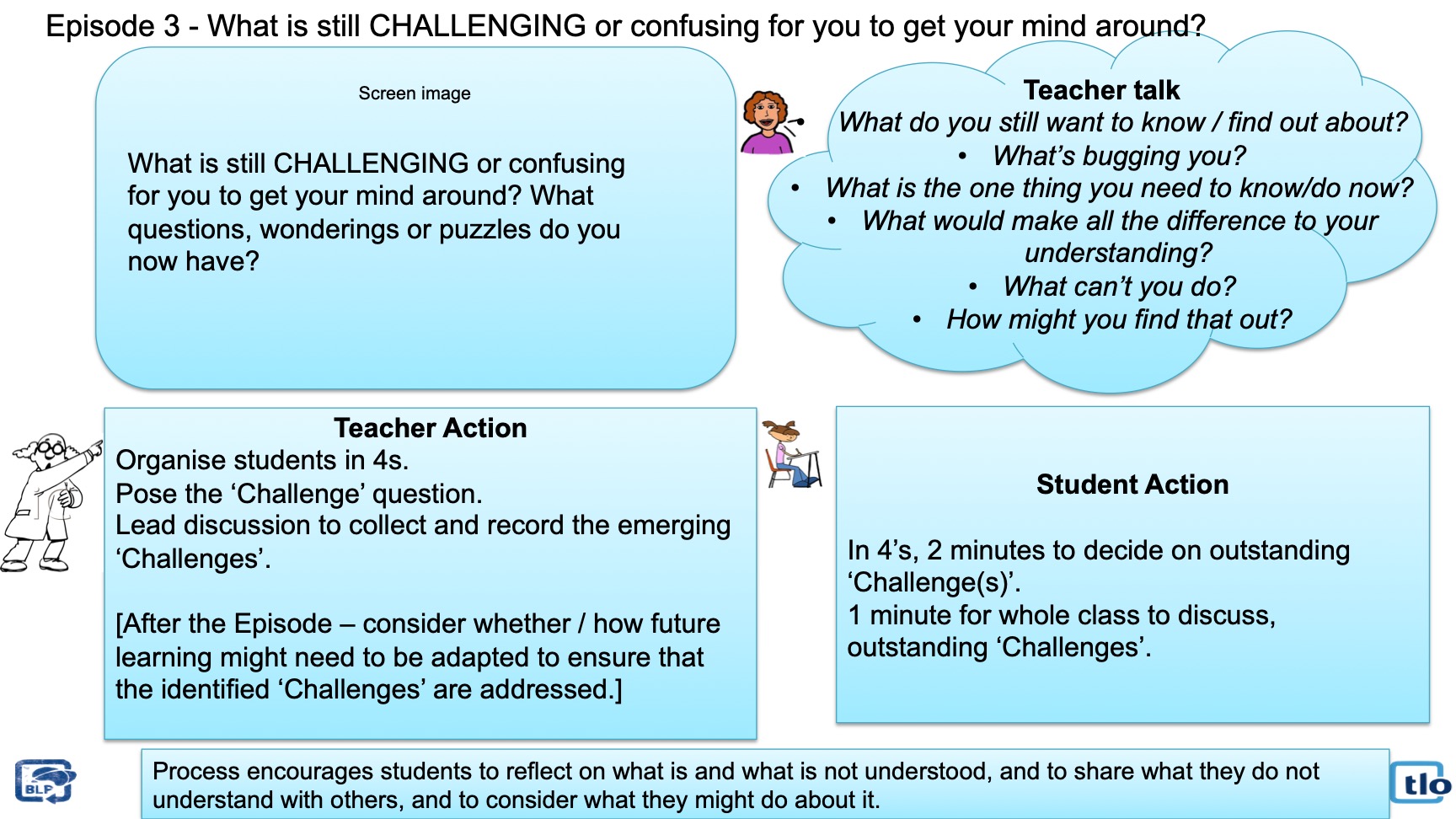
What is happening here?
Having used the Connect phase to remind pupils of a) what they used to know and b) what they now know about a topic, and the Extend phase to refine thinking in the light of new learning, the previous 2 Episodes were focusing on what was previously, and what is now, known.
In the Challenge phase, pupils are encouraged to consider what it is they do not yet know.
Pupils find it relatively easy to say what it is they know they do not know (the known unknowns), but cannot possibly say what they don’t know they do not know (the unknown unknowns). It is here that the skilled teacher judges how many more ‘unknowns’ it is sensible to throw into the mix.
In the bottom blue box, the Learning Behaviours being activated are summarised as:
- To reflect on what is and what is not understood, and to share what they do not understand with others, and to consider what they might do about it.
The ‘Challenge’ aspect of CEC encourages pupils to consider ‘What do I need to know’ (Meta Learning grid, Responds/Blue phase), to explain what they do and do not understand, and, ideally, to identify and think about how to bridge the gap between what they do know and what they need to know – all high level meta-cognitive skills.
The powerpoint can be downloaded here if you wish:
Download PowerPointWhat do you think?
- Can you think of a situation in which you could use Connect/Extend/Challenge to advantage in your own classroom?
Make a note of…

- When you might try this.
- How you capture the ‘challenges’.
- How you will adapt your planning to address them.