My menu

Units Archive

Formatting for Re Engaging and random stuff


C. Lesson planning in action – an exemplar perseverance task.

How do we design tasks that stretch perseverance and assist pupils to approach the content more productively? We cover this in four ways:

  • 1 describes the Think/Puzzle/Explore visible thinking routine;
  • 2 shows the phases of a lesson where Think/Puzzle/Explore is embedded;
  • 3 invites you to extend your thinking about the Think/Puzzle/Explore technique and introduces another subtly different thinking routine.


Open Me

Prelude

Because appropriate levels of challenge, for each individual learner – hard, but not too hard  – should be a feature of all lessons, it follows that rising to challenge and persevering in the face of difficulty should be a feature of learning in all such lessons. The reality is often that a few learners are indeed appropriately challenged, whereas others are faced with work that no amount of effort and perseverance will conquer as the subject matter is beyond their extended grasp, while others effortlessly cruise through the material with no need for perseverance in tackling tasks / concepts that they find undemanding.

When teachers link perseverance to a piece of curriculum content, too often they mean that they want their learners to ‘try hard’, rather than develop a particular skill / attitude from the perseverance progression chart. This begs the question ‘what type of trying hard are we talking about?, and the answer may be that learners need to ‘try hard’ by using their reasoning skills, or their listening skills, or their noticing skills etc. It follows that explicitly linking reasoning, or listening, or noticing etc, would be more appropriate. It is for this reason that some schools advise teachers not to link perseverance to content as it can conceal rather than illuminate the type of effort that is required.

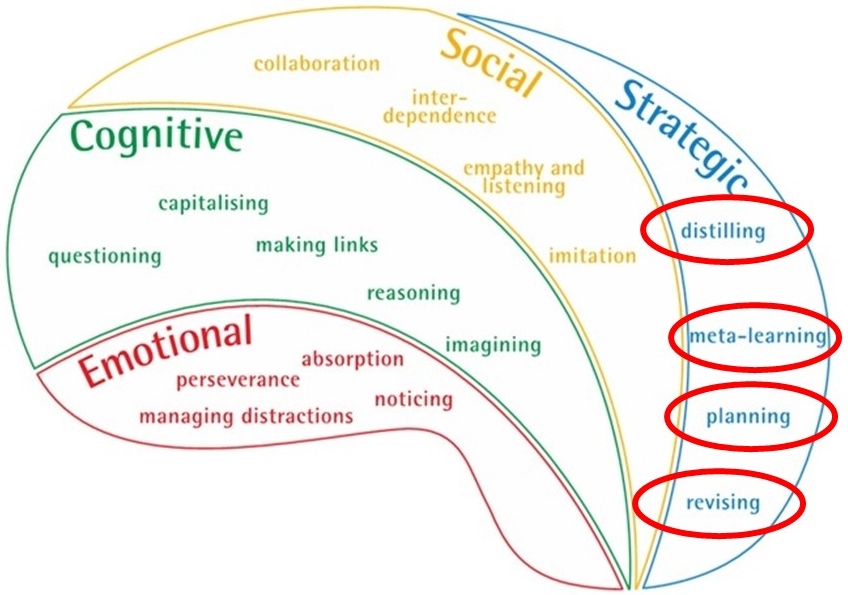
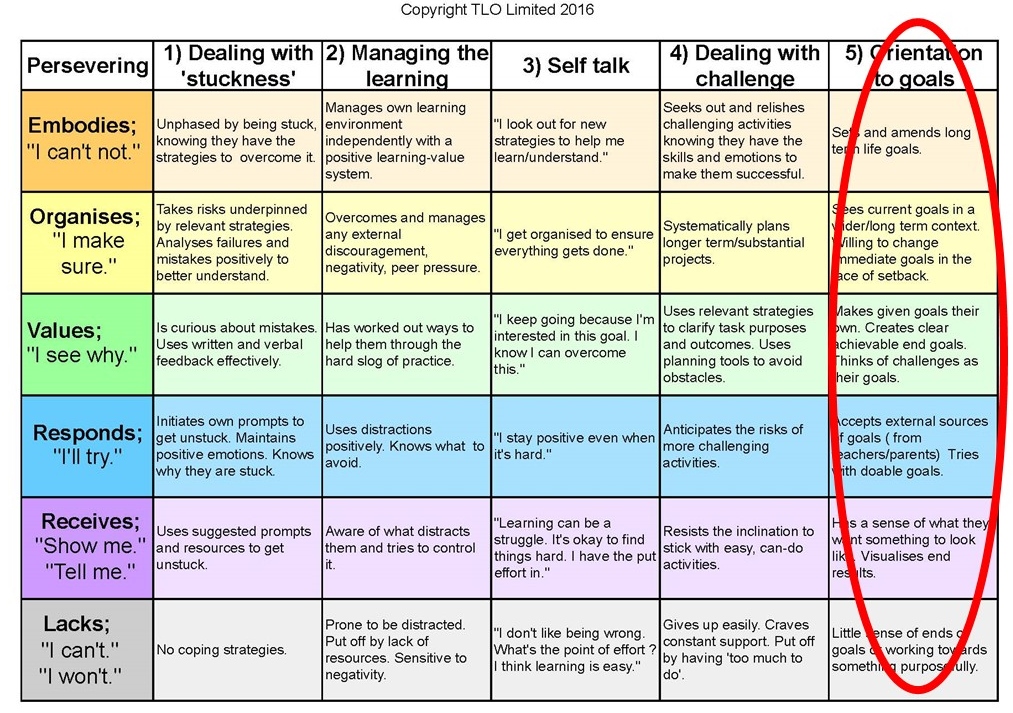
Here we focus on a visible thinking routine that encourages learners to develop skills drawn from the ‘Orientation to Goals’ column of the perseverance chart.


1. A description of the Think / Puzzle / Explore thinking routine

The following lesson is based around a visible thinking routine from the Visible Thinking website.

visiblethinking website

[Follow the link to see T/P/E and all of the other Visible Thinking routines.]

Think / Puzzle / Explore  – A routine that sets the stage for deeper inquiry.

The routine uses three questions:

  1. What do you think you know about this topic?
  2. What questions or puzzles do you have?
  3. What does the topic make you want to explore?

Purpose: What kind of thinking does this routine encourage?

This routine activates prior knowledge, generates ideas and curiosity, and sets the stage for deeper inquiry.

Application: When and where can I use it?

This routine works especially well when introducing a new topic, concept, or theme in the classroom. It helps students take stock of what they already know and then pushes students to identify puzzling questions or areas of interest to pursue. Teachers can get a good sense of where students are on a conceptual level and, by returning to the routine over the course of study, they can identify development and progress. The third question is useful in helping students lay the ground work for independent inquiry.

Launch: What are some tips for starting and using this routine?

With the introduction of a new topic—for example, earth, leaves, fractions, Buddhism—the class can engage in the routine together to create a group list of ideas. Between each phase of the routine, that is with each question, adequate time needs to be given for individuals to think and identify their ideas. You may even want to have students write down their individual ideas before sharing them out as a class. In some cases, you may want to have students carry out the routine individually on paper or in their heads before working on a new area.

Keep a visible record of students’ ideas. If you are working in a group, ask students to share some of their thoughts and collect a broad list of ideas about the topic on chart paper. Or students can write their individual responses on post-it notes and later add them to a class list of ideas.

Note that it is common for students to have misconceptions at this point—include them on the list so all ideas are available for consideration after further study. Students may at first list seemingly simplistic ideas and questions. Include these on the whole class list but push students to think about things that are truly puzzling or interesting to them.

2. A lesson that has uses Think / Puzzle /Explore to support curriculum understanding.

Overview of lesson plan:
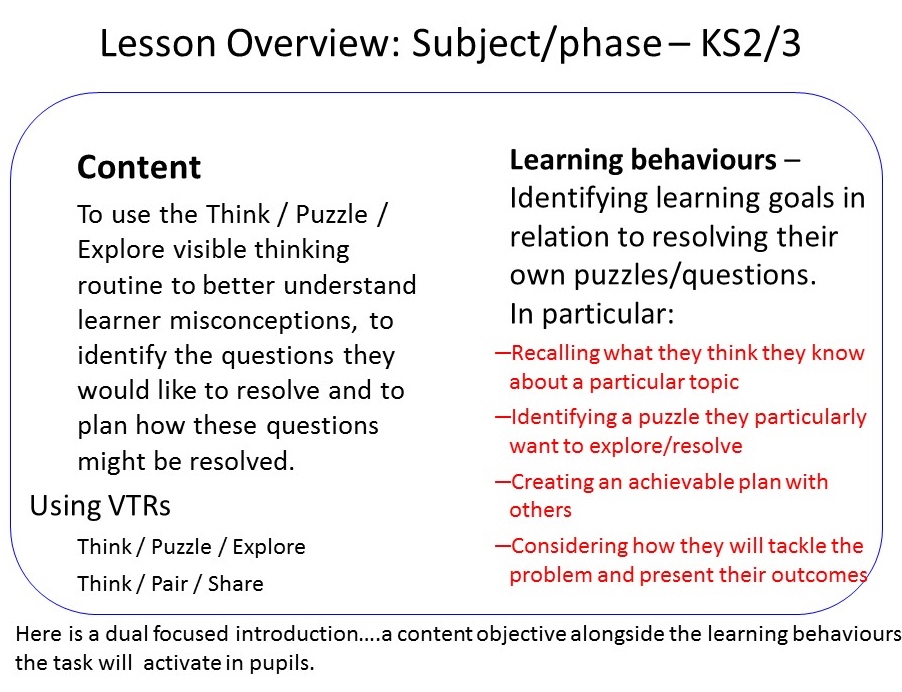
[Previous Episodes – Learning something about upcoming curriculum content

What is happening here?

The routine Think/Puzzle/Explore is used before some new learning takes place, but only if learners have some previous knowledge of the content in hand. This knowledge may have been acquired earlier in school, or it may simply be something they know about from personal experience. Without such prior knowledge, it is impossible to access the Think stage, and maybe even the Puzzle stage.]


Episode 1 – What do you think you know about xxx?
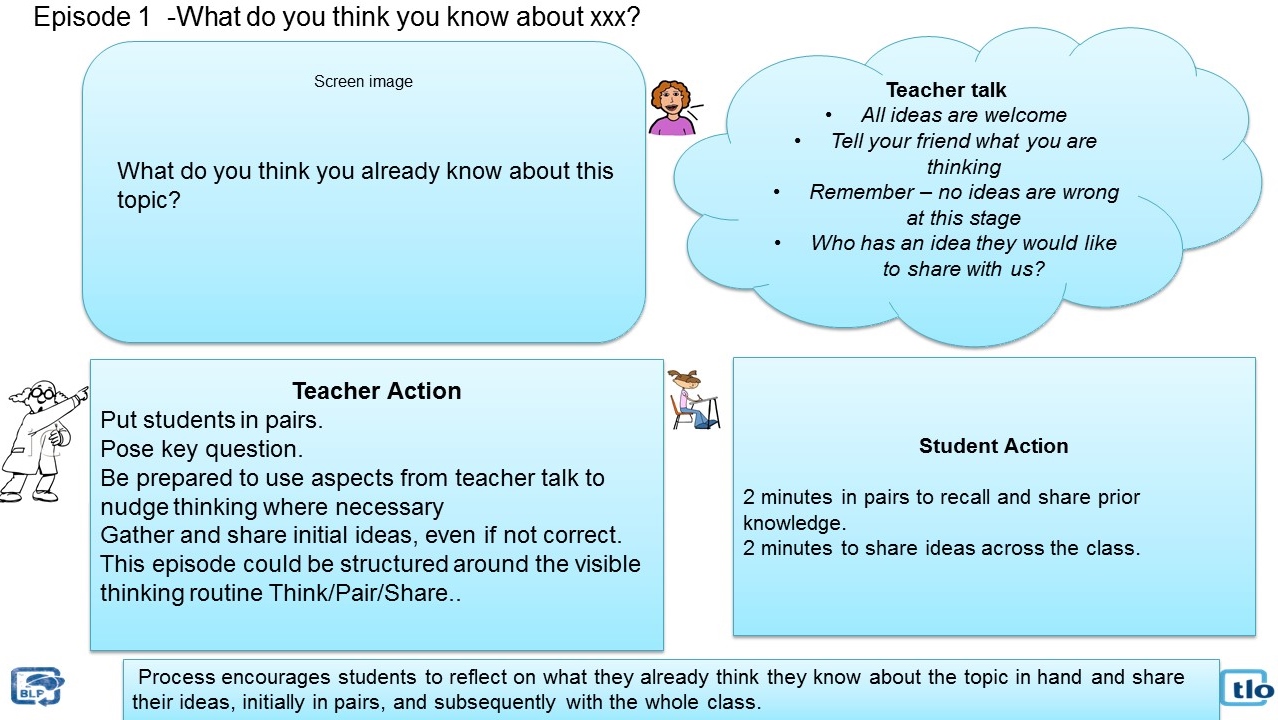
What is happening here?

In this Episode, pupils are encouraged to think back to what they already know of the content / topic.

[This would obviously not work if they had no prior knowledge of the topic being studied. It may have been worth checking this out before embarking on the lesson/topic by asking pupils informally what they know about xxx. It is a classic way of identifying misconceptions that can be addressed through the upcoming session(s)].

In the bottom blue box, the Learning Behaviours being activated are simply identified as:

  • Process encourages students to reflect on what they already think they know about the topic in hand and share their ideas, initially in pairs, and subsequently with the whole class. 

This phase of the lesson is not activating much in the way of working towards goals, but it is creating buy-in by signalling that the lesson is going to relate to what they already know rather than what the teacher intends to teach. Nonetheless, a blend of recall and social behaviours is being activated in the Think phase.


Episode 2 –  What puzzles and questions do you have about this topic?
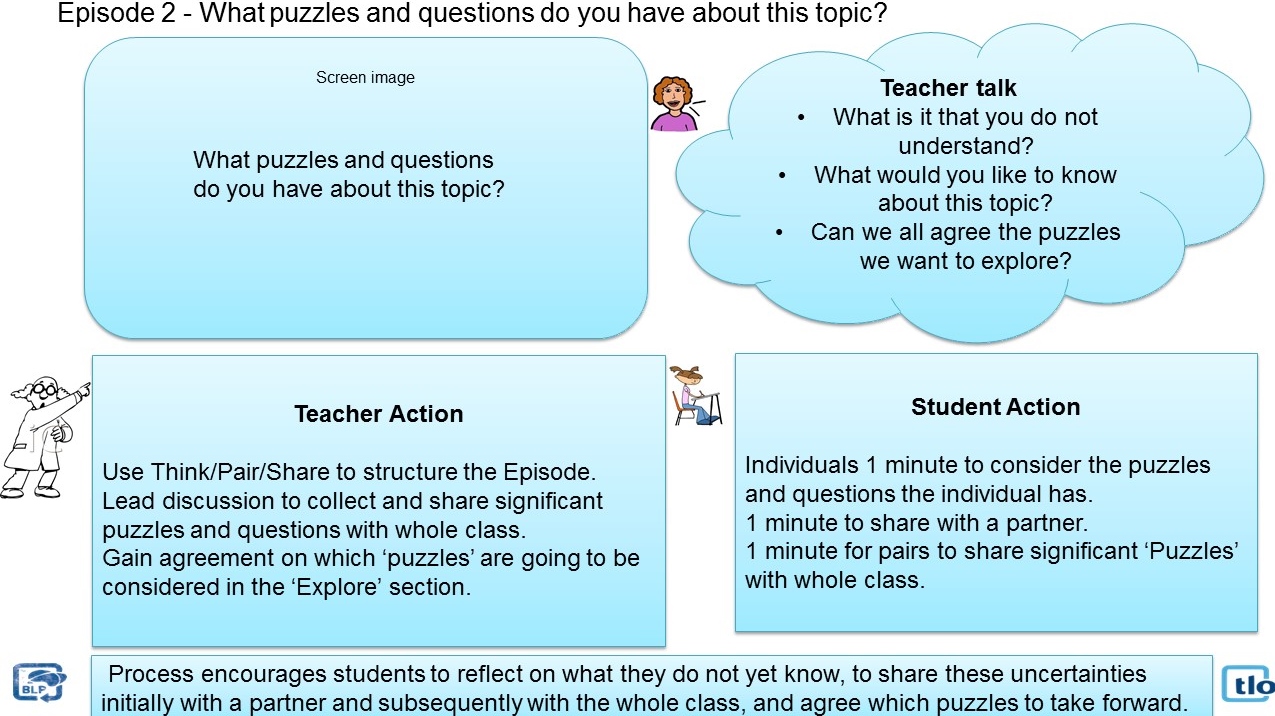
 

What is happening here?

Having used the Think phase to remind pupils of what they think they know about the topic, the Puzzle phase encourages pupils to consider whet they do not yet know, the questions that are bubbling up in their thoughts, and the things that they are interested in resolving. Where Episode 1 was looking backwards, Episode 2 turns to lens to considering the future.

Some initial misconceptions may have been resolved by the contributions of other learners. Equally some new Puzzles may have arisen from these contributions.

In the bottom blue box, the Learning Behaviours being activated are summarised as:

  • To encourage students to reflect on what they do not yet know, to share these uncertainties initially with a partner and subsequently with the whole class, and agree which puzzles to take forward. 

Essentially, the addition of the ‘Puzzle’ aspect of T/P/E lifts the requirements further. Episode 2 encourages pupils to consider what they do not yet know rather than, as in Episode 1, what they think they know. They are invited to share their uncertainties, to discuss and agree which ‘puzzles’ are worthy of further investigation. As in Episode 1, the message is that the learning is to rooted in what they want to find out.

Episode 3 – How might you explore this topic?


What is happening here?

Having used the Think phase to help students to make links to what they already think they know, and the Puzzle phase to identify future learning, Episode 3 puts like-minded students into groups to plan how to explore a Puzzle that they are all interested in.

In the Explore phase, pupils are encouraged to consider how, together, they will go about resolving their particular puzzle.

In the bottom blue box, the Learning Behaviours being activated are summarised as:

  • To encourage students to visualise what they seeking to achieve and to create achievable plans to realise their goals.

The ‘Explore’ aspect of T/P/E encourages pupils to develop a sense of what they want something to look like and visualise end results (Orientation to Goals, Purple phase on the Perseverance chart) and to create clear achievable end goals that they think of as their goals (Orientation to Goals, Green phase).

Can you see how this is a much more forensic approach to building perseverant learning behaviours than simply encouraging students to ‘keep going’ or ‘try hard’?

The powerpoint can be downloaded here if you wish:

Download PowerPoint

What do you think?

  • Can you think of a situation in which you could use Think/Puzzle/Explore to advantage in your own classroom?

Make a note of…Little_r

  • When you might try this.
  • How you capture the ‘Puzzles’.


3 Extend your thinking about the Think/Puzzle/Explore visible thinking routine

Introducing another visible thinking routine:

Connect Extend Challenge  – A routine for connecting new ideas to prior knowledge.

The routine uses three questions:

  • How are the ideas and information presented CONNECTED to what you already knew?
  • What new ideas did you get that EXTENDED or pushed your thinking in new directions?
  • What is still CHALLENGING or confusing for you to get your mind around? What questions, wonderings or puzzles do you now have?

Purpose: What kind of thinking does this routine encourage?
The routine helps pupils make connections between new ideas and prior knowledge. It also encourages them to take stock of ongoing questions, puzzles and difficulties as they reflect on what they are learning.

Why use Connect/Extend/Challenge?

The whole point of the strategy is not that it should be used occasionally at the end of a project as a sort of topic plenary, rather it should be used frequently so that it should in time become habituated so that pupils’ responses to all new learning is to use it to further enhance and refine their web of understanding. Furthermore, the ‘challenges’ that arise help to focus the next steps for both teaching and learning.


Think/Puzzle/Explore
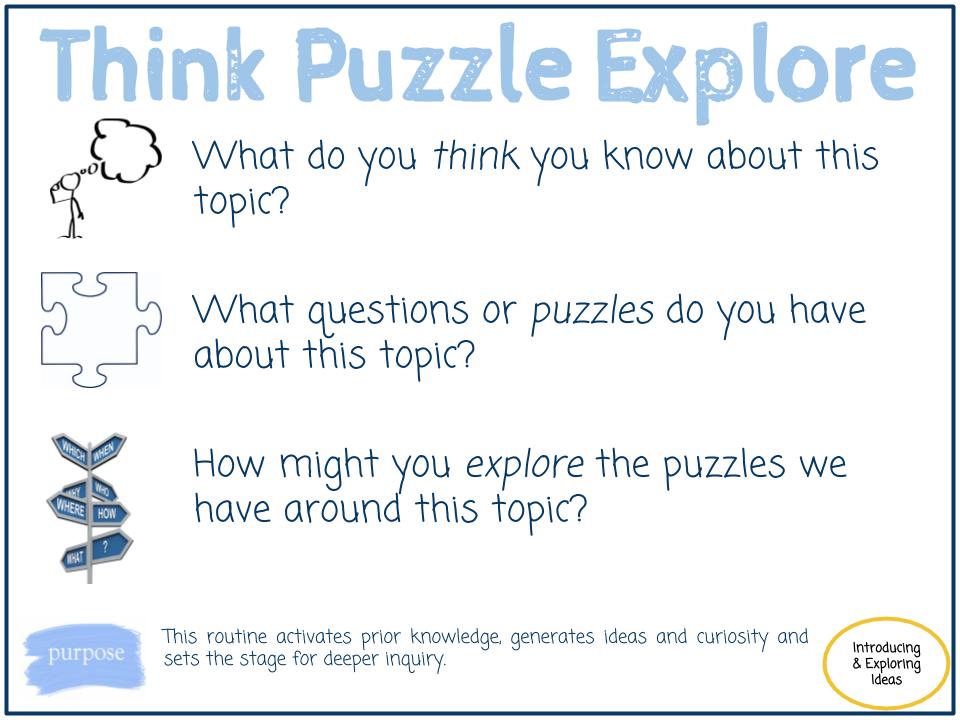
The visible thinking routine Think/Puzzle/Explore has three driving questions:

  1. What do you think you know about this topic?
  2. What questions or puzzles do you have?
  3. How can you explore this topic?

It is similar to but subtly different from Connect/Extend/Challenge. On the surface, ‘Connect’ and ‘Think’ are similar, as are ‘Challenge’ and ‘Puzzles’. Extend is missing from T/P/E because it is designed to be used before the new learning takes place, whereas C/E/C is used after new learning has taken place. The addition of ‘Explore’ encourages and sets the scene for higher levels of learner independence than C/E/C, which is more heavily teacher directed.

As learners mature, it should be possible to use T/P/E as a stimulus to independent enquiry, and C/E/C as an ongoing review tool during such enquiry.


What do you think?

  • Where / when / why might you use T/P/E?
  • Where / when / why might you use C/E/C?
  • Which of these routines do you think would work best with your students? How will you find out?
  • How will you use the ‘puzzles/challenges’ that are generated?
  • How will these ‘puzzles/challenges’ inform your planning?
  • How will you enable pupils to undertake what they would like to ‘Explore’ so as to support their growth as independent enquirers?

Make a note of…Little_r

  • Which class you might try these visible thinking routines with.
  • When you will try it.


Broaden your repertoire - Meta Learning

Having a language to talk about the learning process is the first stage in understanding the learning process and yourself as a learner, hence why it is so important that teachers talk ‘learnish'(section 3) and that students’ language and understanding is further enriched by an understanding of progression and what becoming better actually looks and feels like.

What do we mean by Meta Learning ?

Becoming a meta-learner involves drawing out of your learning experience a more general, explicit understanding of the process of learning, and specific knowledge about yourself as a learner. Let’s take these two aspects of meta-learning in turn.

There is a wealth of research which shows that good learners know a lot about learning.

They possess a vocabulary for talking about the process of learning itself, and are able to articulate how learning works.

Good readers, even quite young ones, are often able tell you half-a-dozen things they can do when they come across an unfamiliar word: they sound it out, break it down into bits, re-read the previous sentence, read on to see if the meaning becomes clear, look at the picture and think about it, and so on. And so, more generally, for good learners. The more able they are to talk about their learning, the more likely they are to be able to apply their knowledge to new domains too: meta-learning increases generalisation.

And good learners also need an accurate sense of themselves as learners. Being a good learner means being able to take your own strengths and weaknesses into account as you are weighing up a learning challenge, or deciding on a course of ‘professional development.’ In the business world, it is common now for people to take a job (if they are lucky enough to have a choice) partly on the basis of what they hope to learn from it. To make that decision well, they need not only to be able to plan their learning career, but also to base their decision on a realistic assessment of what they need and are ready to learn. Again, plenty of practice in thinking and talking about oneself as a learner at school is good preparation for the future.

The skills and dispositions of meta-learning can be cultivated simply by a teacher’s persistent use of questions such as ‘How did you go about finding that out?’ or ‘How would you go about teaching that to other people?’

What does being a good Meta-Learner involve ?

A well formed Meta-Learner’s habit involves being ready, willing, and able to:

  • Use a well-formed vocabulary to talk about the process of learning and how learning works;
  • Understand how you learn, playing to your strengths and improving areas of weakness;
  • Learn from learning itself, mulling things over, and learning from experiences in order to avoid mistakes in the future;
  • Reflect on and draw out useful lessons from experiences and identify key features that might be useful elsewhere.

Spotting the Meta-Learners in your classes

Just to get you tuned in – have a quick think about ‘Me learners you may know’. Make a note of students you know who display these characteristics.

Becoming a teacher who develops students’ learning power means developing a keen awareness of the subtleties of your students’ learning behaviours.

Download Spotting the meta learners in your classes


Does my classroom climate encourage Meta Learning ?

Building students’ Learning Power is about creating a culture in your classrooms – that systematically cultivates habits and attitudes that enable your students to learn confidently and face difficulty calmly and creatively. By a ‘culture’ we mean all the little habits, routines and practices that implicitly convey ‘what we believe and value round here’.

So ‘culture’ concerns the details of the micro-climate that you create in your classrooms. What you do and say, what you notice and commend and what you don’t, what kind of role model of a learner you offer – all these are of the essence. The micro-climate of a classroom can inadvertently stifle, or specifically enhance, the very behaviours you are seeking to promote.

Here is a selection of features which might begin to shape the emotional climate of the classroom to encourage meta learning.

Apply your own meta-learning and consider whether you already use any of these features and which you fancy trying.

Download Meta Learning classroom climate

What to stop and start

Cultivating learning habits ultimately involves:

  • Providing rich and varied occasions for exercising learning habits;
  • Infusing learning habits into lessons to enhance content understanding;
  • Recognising and celebrating the use and growth of learning habits;
  • Expecting students to take ownership of and responsibility for their own learning habits;
  • Exploring the development of learning habits with students over time.

As a teacher you are an influential character builder and so need to be mindful of how you help students form, replace, re-form and strengthen their learning habits.

But don’t worry, you’re not there yet. It takes most teachers between 2 and 3 years to become really fluent with this way of teaching. So, go easy on yourself. Feel determined because small steps often prove to be big levers for change. Have a think about what you might do…

Here are a few ideas you might want to try. Take it steady, this way of teaching can be a big but exciting shift so it’s worth doing it slowly and thoughtfully.

Look first at the Stop/avoid ideas. Some of these are far from trivial but it’s best to try to remove them before starting on the Start/do more of, Start slowly and Experiment with ideas.

Download Meta Learning Stop Start


Broaden your repertoire - Reasoning

Reasoning—the kind of logical, analytical, explicit disciplined thinking that schools often focus on, and that can easily built into learning objectives.

What do we mean by Reasoning ?

There is a lot of interest at the moment in ways of teaching thinking, and in building students’ Learning Power, such ‘Show your working’ kinds of thinking are a very important part of the good learner’s toolkit, although not the be-all and end-all of learning. In fact, research suggests that secondary schools have not been very successful at developing students’ ability to think logically in real life.

It turns out to be quite difficult to free any kind of thinking or learning skill from its ties to the particular setting and subject matter in which it was originally practised.

Nevertheless, being able to construct logical arguments or make practical use of Venn diagrams, for example, is very useful, and good learners need practice at using such tools in the context of their real-life concerns.

What does being a good Reasoner involve ?

A well formed Reasoning habit involves being ready, willing, and able to:

  • Resist jumping to conclusions;
  • Seek justifiable evidence to shape sound, well-honed arguments;
  • Scrutinise your assumptions;
  • Seek evidence and counter evidence, look for false steps and carefully draw conclusions;
  • Remain suspicious, doubting and self-doubting in order to avoid unwarranted certainty;
  • Convey your logical thinking clearly, through dialogue, symbols, analogies, prose and pictures.

So, at a less abstract level, students need to learn the inclination to resist impulsive responses; to respond logically and thoughtfully; to apply logic by explaining, justifying and, ultimately, proving what they think; to utilise a range of reasoning tools; and to develop strategies for presenting their reasoning to others persuasively. When looked at from these diverse angles growing reasoning moves well beyond encouraging a student to ‘think it through’.

Spot the Reasoners in your classes

Just to get you tuned in – have a quick think about ‘Reasoners you may know’. Make a note of students you know who display these characteristics.

Becoming a teacher who develops students’ learning power means developing a keen awareness of the subtleties of your students’ learning behaviours.

Download Spotting the reasoners in your classes


Does my classroom climate encourage Reasoning ?

Building students’ Learning Power is about creating a culture in your classrooms – that systematically cultivates habits and attitudes that enable your students to learn confidently and face difficulty calmly and creatively. By a ‘culture’ we mean all the little habits, routines and practices that implicitly convey ‘what we believe and value round here’.

So ‘culture’ concerns the details of the micro-climate that you create in your classrooms. What you do and say, what you notice and commend and what you don’t, what kind of role model of a learner you offer – all these are of the essence. The micro-climate of a classroom can inadvertently stifle, or specifically enhance,  the very behaviours you are seeking to promote.

Here is a selection of features that might begin to shape the emotional climate of your classroom to encourage reasoning.

Apply your own reasoning and consider whether you already use any of these features and which you fancy trying.

Download Reasoning classroom climate

What to stop and start

Cultivating learning habits ultimately involves:

  • Providing rich and varied occasions for exercising learning habits;
  • Infusing learning habits into lessons to enhance content understanding;
  • Recognising and celebrating the use and growth of learning habits;
  • Expecting students to take ownership of and responsibility for their own learning habits;
  • Exploring the development of learning habits with students over time.

As a teacher you are an influential character builder and so need to be mindful of how you help students form, replace, re-form and strengthen their learning habits. But don’t worry, you’re not there yet. It takes most teachers between 2 and 3 years to become really fluent with this way of teaching. So, go easy on yourself. Feel determined because small steps often prove to be big levers for change. Have a think about what you might do…

Here are a few ideas you might want to try. Take it steady, this way of teaching can be a big but exciting shift so it’s worth doing it slowly and thoughtfully. Look first at the Stop/avoid ideas. Some of these are far from trivial but it’s best to try to remove them before starting on the Start/do more of, Start slowly and Experiment with ideas.

Download Reasoning Stop Start


Broaden your repertoire - Capitalising

How can teachers create classrooms that encourage learners to capitalise on the hints and strategies that are displayed?

What do we mean by Capitalising ?

Capitalising means being on the lookout for strategies, materials, resources and forms of support in the environment that can help you in your current learning or problem- solving. Traditional schooling assumes that intelligence is all in the head. But recent studies show that it is much fairer and more accurate to see good learners as people who are ready and able to make intelligent use of all kinds of things around them – books, phones, social media, e-mail, the internet, and, of course, a range of learning strategies and other people. Everyone needs to be good at finding and using the learning resources available in the world, so it is obviously a good idea to start developing this habit at school.

The forms of assessment we use in schools have a powerful influence on the kinds of learning that students do, and the kinds of teaching their teachers use. If the good learner is essentially the person plus their resources (and their ability to draw on them), our methods of testing should encourage teachers and students to value and practise capitalising. In today’s world, it makes as much sense to sit 15-year-olds down at solitary desks and ask them to display their knowledge and skill as it would to take away Wayne Rooney’s football and tell him to perform.

What does being a good at Capitalising involve ?

A well formed Capitalising habit involves being ready, willing, and able to:

  • Recognise that we learn from many different sources – other people, books, the internet, music, the environment, experience…
  • Select appropriately from a range of learning strategies;
  • Keep a purposeful look-out for useful learning aids;
  • Adapt and adopt the successful habits and values of others into their own learning repertoire;
  • Make intelligent use of all kinds of things to aid learning;
  • Use resources in novel ways to solve problems.

Spotting the Capitalisers in your classes

Just to get you tuned in – have a quick think about ‘capitalisers you may know’. Make a note of students you know who display these characteristics.

Becoming a teacher who develops students’ learning power means developing a keen awareness of the subtleties of your students’ learning behaviours.

Download Spotting the capitalisers in your classes


Does my classroom climate encourage Capitalising ?

Building students’ Learning Power is about creating a culture in your classrooms – that systematically cultivates habits and attitudes that enable your students to learn confidently and face difficulty calmly and creatively. By a ‘culture’ we mean all the little habits, routines and practices that implicitly convey ‘what we believe and value round here’. 

So ‘culture’ concerns the details of the micro-climate that you create in your classrooms. What you do and say, what you notice and commend and what you don’t, what kind of role model of a learner you offer – all these are of the essence. The micro-climate of a classroom can inadvertently stifle, or specifically enhance,  the very behaviours you are seeking to promote.

Here is a selection of features that might begin to shape the emotional climate of your classroom to encourage capitalising.

Apply your own attentive noticing and consider whether you already use any of these features and which you fancy trying.

Download Capitalising classroom climate

What to stop and start

Cultivating learning habits ultimately involves:

  • Providing rich and varied occasions for exercising learning habits;
  • Infusing learning habits into lessons to enhance content understanding;
  • Recognising and celebrating the use and growth of learning habits;
  • Expecting students to take ownership of and responsibility for their own learning habits;
  • Exploring the development of learning habits with students over time.

As a teacher you are an influential character builder and so need to be mindful of how you help students form, replace, re-form and strengthen their learning habits. But don’t worry, you’re not there yet. It takes most teachers between 2 and 3 years to become really fluent with this way of teaching. So, go easy on yourself. Feel determined because small steps often prove to be big levers for change. Have a think about what you might do…

Here are a few ideas you might want to try. Take it steady, this way of teaching can be a big  but exciting shift so its worth doing it slowly and thoughtfully. Look first at the Stop/avoid ideas. Some of these are far from trivial but it’s best to try to remove them before starting on the Start/do more of, Start slowly and Experiment with ideas.

Download Capitalising Stop Start


Broaden your repertoire - Listening

Having a language to talk about the learning process is the first stage in understanding the learning process and yourself as a learner, hence why it is so important that teachers talk ‘learnish’. But are students attentive to these changes that teachers are making? Are they really listening to what is being said?

What do we mean by Listening ?

Understanding how to listen effectively is an essential skill that benefits everything from family life to business. It’s one of the most critical skills for working effectively in teams. Hearing and listening are different. There’s all sorts of faulty listening. Sometimes we fake it or pretend to listen; sometimes we only respond to the remarks we are interested in and reject the rest. Sometimes we listen defensively and take innocent remarks as personal attacks. Or, we listen to collect information to use to attack the speaker, or we avoid particular topics, or we listen insensitively and can’t look beyond the words for other meanings, or we turn the conversation to ourselves. So, listening is hard and requires effort. To be a good listener you need to be able to listen for information, listen to judge the quality of the information and listen empathetically to build a relationship and help solve a problem. When looked at from these diverse angles growing Listening moves well beyond encouraging a student to ‘do good listening’.

What does being a good Listener involve ?

A well formed Listening habit involves being ready, willing, and able to:

  • Be genuinely interested in other people and what they are saying;
  • Focus on the current moment, being attentive and responsive to visual cues and atmosphere;
  • Notice subtle details and nuances in what is being said;
  • Know when to make well-judged interventions to elucidate, probe or challenge;
  • Manage distractions constructively;
  • Be comfortable with silence and attend actively to what is being said.

Spot the Listeners in your classes

Just to get you tuned in – have a quick think about ‘listeners you may know’. Make a note of students you know who display these characteristics.

Becoming a teacher who develops students’ learning power means developing a keen awareness of the subtleties of your students’ learning behaviours.

Download Spotting the listeners in your classes


Does my classroom climate encourage Listening ?

Building students’ Learning Power is about creating a culture in your classrooms – that systematically cultivates habits and attitudes that enable your students to learn confidently and face difficulty calmly, and creatively. By a ‘culture’ we mean all the little habits, routines and practices that implicitly convey ‘what we believe and value round here’.

So ‘culture’ concerns the details of the micro-climate that you create in your classrooms. What you do and say, what you notice and commend and what you don’t, what kind of role model of a learner you offer – all these are of the essence. The micro-climate of a classroom can inadvertently stifle, or specifically enhance,  the very behaviours you are seeking to promote.

Here is a selection of features that might begin to shape the emotional climate of your classroom to encourage Listening.

Apply your own learning habits and consider whether you already use any of these features and which you fancy trying.

Download Listening classroom climate

What to stop and start

Cultivating learning habits ultimately involves:

  • Providing rich and varied occasions for exercising learning habits;
  • Infusing learning habits into lessons to enhance content understanding;
  • Recognising and celebrating the use and growth of learning habits;
  • Expecting students to take ownership of and responsibility for their own learning habits;
  • Exploring the development of learning habits with students over time.

As a teacher you are an influential character builder and so need to be mindful of how you help students form, replace, re-form and strengthen their learning habits.

But don’t worry, you’re not expected to be there yet. It takes most teachers between 2 and 3 years to become really fluent with this way of teaching. So, go easy on yourself. Feel determined because small steps often prove to be big levers for change. Have a think about what you might do…

Here are a few ideas you might want to try. Take it steady, this way of teaching can be a big but exciting shift so it’s worth doing it slowly and thoughtfully.

Look first at the Stop/avoid ideas. Some of these are far from trivial but it’s best to try to remove them before starting on the Start/do more of, Start slowly and Experiment with ideas.

Download Listening Stop Start

Broaden your repertoire - xxxx

Some text linking the learning behaviour to the section

What do we mean by


Download Spotting the planners in your classes


Does my classroom climate encourage


Download Planning classroom climate

What to stop and start


Download Planning Stop Start

Below are the 3 standard layouts we have used.


1) STANDARD LHS AND RHS


Title

Text across the top

LHS Title

LHS Text

RHS Title

RHS text / pic

Things to download

Download Download


2) STANDARD TOGGLE BOX


Read more

Title

text


3) TOGGLE BOX WITH TABS


toggle box with tabs


Heading

This section pulls together the ideas that will best help students to xxxxxxxxx. The cluster headings are:

  • Over to you
  • Talk learnish
  • Lessons
  • Displays


DELETE FROM HERE ON ONCE ABOVE IS AGREED


Where next page as at 6 July before restore


Where Next Orig

Interest piqued?

Students re-energised?

Job completed?

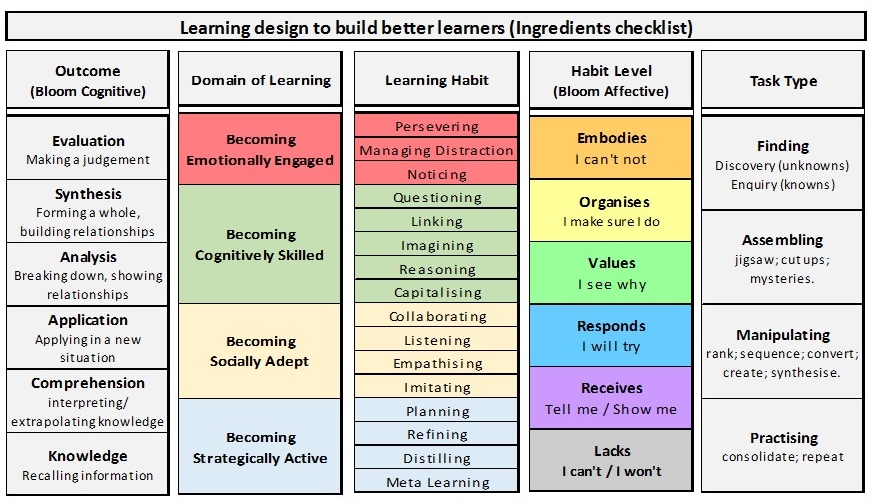
No, there’s so much more you could do to help your students engage with their learning. You’ve taken the first essential step with their Emotional engagement; without that students wouldn’t be ready, willing or able to engage other productive learning behaviours. It’s been a great place to start but an awful way to finish. What are those ‘other productive learning behaviour’, and how might you enable your students to use them?


Take a look at a couple of suggestions about what you could do next.

I think this should be an engaging picture of someone who is questioning/musing/wondering what next.


Suggestion 1: Playing the whole Learning Power game

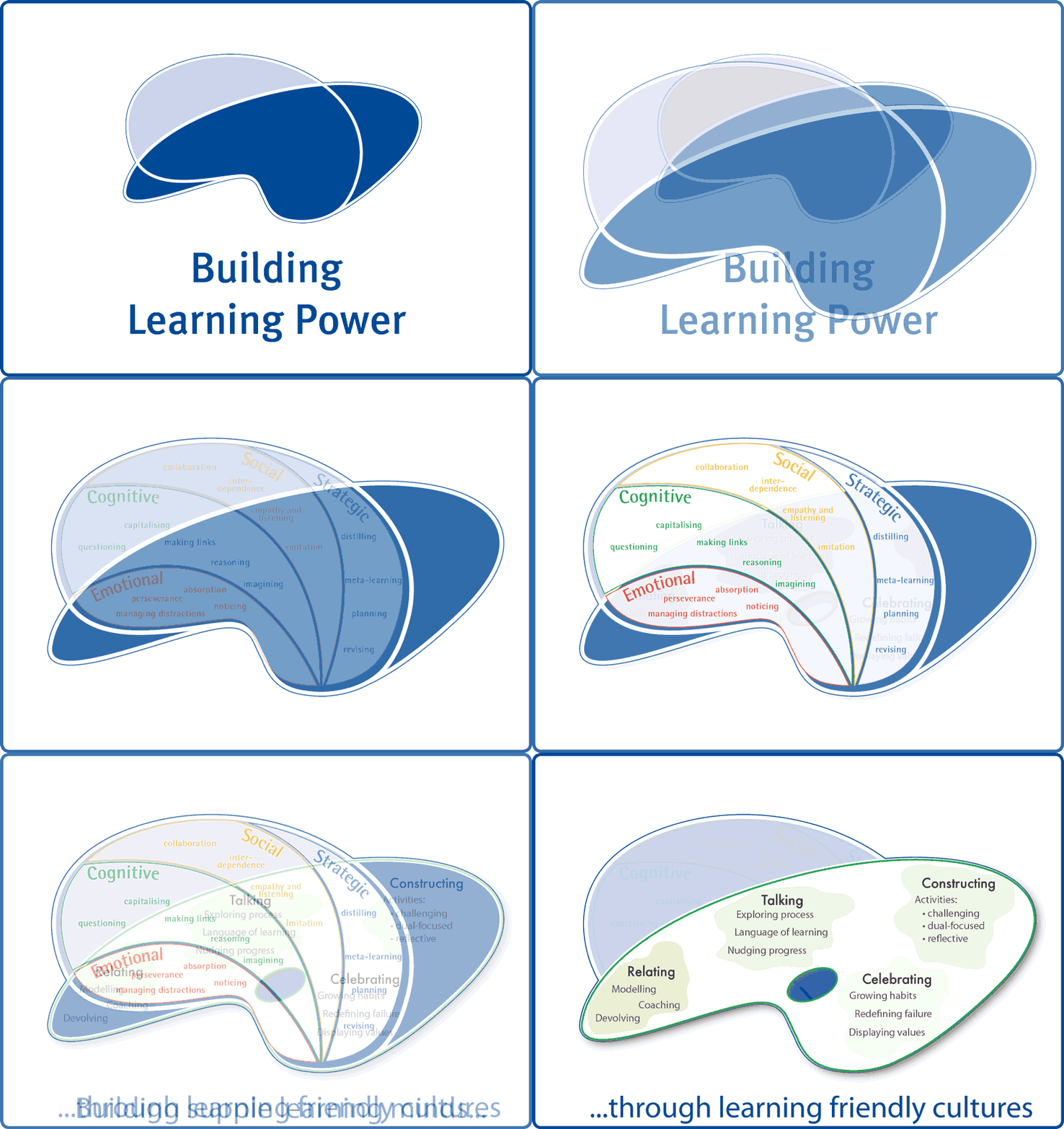
‘Playing the whole Learning Power game’ helps a school to take a school-wide, strategic approach to building better learners in learning-friendly classroom cultures.

It has two parts, one for classroom practitioners and one for senior leaders

Playing the Learning Power game ( classroom practitioners) offers you around a year’s worth of development materials, all designed to make your classrooms more learning-friendly. Since it’s about the ‘whole game’ of learning power rather than just bits and pieces, it introduces all the key learning behaviours before focusing on the four most important for your students’ emotional engagement, their cognitive range, their social adeptness and, critically, their strategic awareness: Curiosity; Collaboration; Perseverance and Revising.

The programme is laid out in the same way as the materials in this course so you will be able to find your way around it very easily. We estimate each section will take about an hour to read and digest and has enough material for you to trial and perfect in your classroom over several weeks. You are unlikely to need deeper material for at least a couple of terms.


Playing the Learning Power game ( strategic issues) is designed to give senior leaders an overview of the strategic issues involved in taking ‘Playing the Learning Power game’ on board. It provides resources that leaders might use to introduce the purpose benefits and frameworks of learning power to staff, and to maintain momentum into the future. It has a key section that supports senior leaders to think through how they intend to start and sustain interest in ‘Playing the Learning Power game’ and resources such as PPts and resource books to aid an introduction to staff.



Things to download

Download

Things to download

Download

LINK TO JUNIOR LANDING PAGE


Suggestion 2: Helping your learners to…

The ‘Help your learners to . . . ‘ modules offer activities, think pieces and questions to help teachers make a start on:

  • introducing students to one of the key learning behaviours;
  • using the language of learning effectively with students;
  • designing the use of learning behaviours into the way they teach;
  • developing the confidence and skill in helping students to grow their learning power.

They are suitable for both primary and secondary schools with example activities for both

There are 3 bundles of modules to choose from, or, better still, get them all and enjoy a significant discount.

Bundle 1: Helping your learners to . . . . . Question, Make links, Reason, Imagine and Resource learning

This suite of 5 online modules serves to help teachers to assist students to develop their dispositions and inclinations in the cognitive or thinking aspects of learning.

Bundle #2: Helping your learners to…. Collaborate, Listen, Empathise and Learn independently

This bundle of 4 online modules serves to serves to help teachers to assist students to develop their dispositions and inclinations in the social aspects of learning.

Bundle #3: Helping your learners to…. Plan, Revise, Distil and Meta Learn.

This bundle of 4 online modules serves to serves to help teachers to assist students to develop their dispositions and inclinations in the meta-cognitive aspects of learning.

The BIG Bundle #4: All 13 modules.

All these modules tackle introducing learning behaviours, spotting them in your students, using them productively in lessons, talking about them confidently and planning their use alongside other colleagues. This route is broader than ‘Playing the whole Learning Power game’, but goes into less depth and does not cover progression.

Take a look

Helping your learners to Notice

To give you a flavour of a ‘Help your learners to . . . ‘ module, take a look at this one free of charge. It addresses how teachers might help learners to develop the habit of attentive noticing.

All other ‘Help your learners to’ modules are similarly structured.


Things to download

LINK TO ORDERING/LANDING PAGE

Link to Help your learners to Notice Download


The layout of the resource

The four key sections of this resource are laid out identically to ensure consistency and to make them easier to navigate.


Text on the left hand side

Text on the left hand side is for information. It gives an overview of what the section is about.

On the right hand side . .

There might be:

  • further text;
  • key points;
  • a video to watch;
  • an illustration / image.


Below the blue box on the right

Where appropriate, there are one or two download buttons that might lead you to:

  • something to view, download or print;
  • a quiz;
  • a link to a blog.

Things you can download look like this:


Download Download


After each subsection there are Read More panels containing ‘how to’ ideas, further examples and deeper explanations.

There are two types of Read More panels:

  • All panels that are named ‘Ideas for nudging . . . . . . ‘ contain differentiated ideas for classroom practice;
  • All other panels offer further examples and/or deeper explanations.

Read More panels look like this:


How to make it work best

  1. Read the introduction and think about which of the four ‘re-engagements’ is needed first by your students.
  2. Go to the appropriate section and skim down the content just to get the hang of the structure and line of argument. Don’t take any detours into ‘Read more’ sections on this first time through or look at the downloads where relevant.
  3. Look through the section again, still fairly rapidly but now taking in the more extensive information in the ‘Read more’ boxes.
  4. Then look at things more closely with the intention of using the material. Use the questionnaires, consider the results and decide on the phase of development (grey to purple, purple to blue etc) you want to look at in detail for your students.
  5. Go to the relevant phase (grey to purple, purple to blue etc) and select three or four ideas that you think might help and try them with your students for three or four weeks.
  6. Remember it takes about 21 days for a new habit to become solid practice so you’ll need to be patient. You’ll need to give your students lots of opportunities to behave in these new ways with plenty of encouragement from you. However, it will be well worth it for you and your students as you gradually see their engagement with learning grow.
  7. As you see and hear students’ engagement strengthening and improving take a look at more advanced ideas (e.g. blue to green) and effectively repeat No 5 above.
 

[/twocol_one_last]


Continue Reading

Re-energising your learners’ resilience [2020]

How the resource is structured and how to make it work best for you

The Re-energising resource structure

The introduction talks about what the resource is about with some research to back it up.

Sections 1 to 4 each deal with a key aspect of understanding resilience, namely re-engaging with:

  • unsticking learning
  • managing distractions
  • rising to the challenge
  • achieving goals

Each section has exactly the same structure so that you quickly become familiar with the material and you won’t get lost. Each section gives you:

  •  a view of the sort of practice to aim for
  •  questionnaires to help establish the current state of play
  •  what ‘getting better’ at engaging this aspect of resilience looks like in students
  • a selection of practical ideas to help students help themselves engage more strongly
  • a nudge to make a few valuable changes in your practice

Blue box resources include . .

  • further information

  • key points

  • a video of practice

  • an illustration / image

Read More – reveals… for when you need more information or inspiration.

Links to other resources look like this:

Link to . . . .

How to make it work best

1. Read the introduction and think about which of  the four ‘re-energising’ will most benefit your students in the first instance.

2. Go to the appropriate section and skim down the content to get the hang of the structure and line of argument. Don’t take any detours into ‘Read more’ sections on this first time through, or look at any downloads.

3. Look through the section again, still fairly rapidly but considering the more extensive information in the ‘Read more’ boxes.

4. Time now to look more closely at how you will use the material. Use the questionnaires, consider the results and decide which phase of development (grey to purple, purple to blue, etc.) you want to look at in detail for your students.

5. Go to the relevant phase (grey to purple, etc.) and select three or four ideas that you think might help.

6. Try them with your students! Spread them over perhaps three or four weeks.

6. Remember it takes about 21 days for a new habit to become solid practice, so you’ll need to be patient. Give your students lots of opportunities to behave in these new ways, and plenty of encouragement from you. Reward yourself by observing your students gradually increasing their engagement with their learning.

7a. As you see and hear students’ engagement strengthening and improving take a look at more advanced ideas (e.g. blue to green) and repeat steps 5 and 6.

7b. Alternatively, switch back to step 1 and consider whether one of the other aspects of resilience may be the best next stage.


Continue Reading

A route map for teachers: Growing your development

Growing your development.

How times have changed

We used to think that children behaved badly or flunked a test because (a) they weren’t very bright; (b) they didn’t try; (c) they got in with a bad crowd, had trouble at home or had a bad teacher. Now research tells us that our personalities and mental aptitudes change and develop over our lifespan. What this means is that teachers have an opportunity to deliberately influence the development of these habits and dispositions in positive directions. This is what building powerful learners is all about.

Building every student’s learning power might sound obvious and sensible, but how on earth do we go about it?

What you’ve been up to thus far

Over the last few months you have been trying out some approaches to help your students become more able to sort things out for themselves, to become more questioning, to appraise their own and each other’s learning. You will have noticed that this type of learning didn’t compete for your time. You didn’t have to stop practising tables in order to work on resilience. Your children’s resilience was being strengthened by the way you were ‘doing tables’. You have encouraged children to be more tolerant of their mistakes and to fix them themselves. Your children are now less passive and less dependent on you.

So where next?

As a teacher you can’t not be affecting their habits of mind that slowly develop over time. So, having made a good start – where next, what now? Is it just a case of trial and error or might there be some pointers, some pathways, some inklings of a journey or even a potential route?

This resource has two main aims:

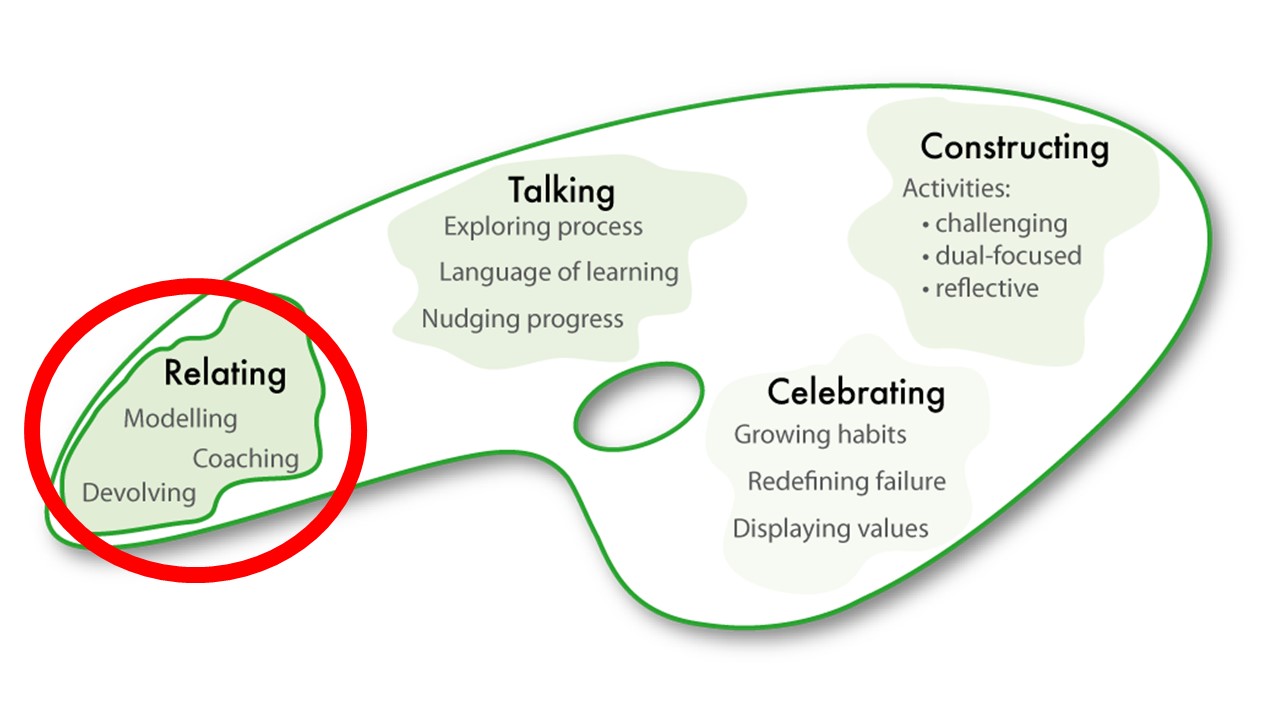
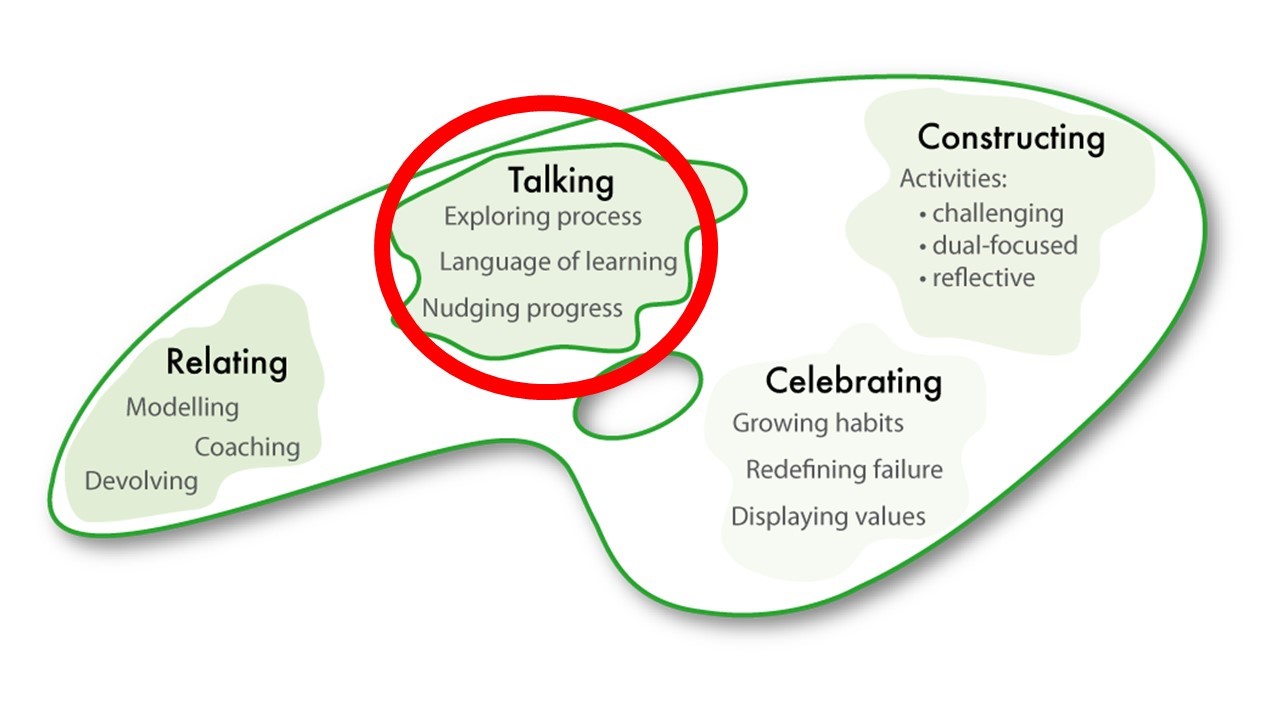
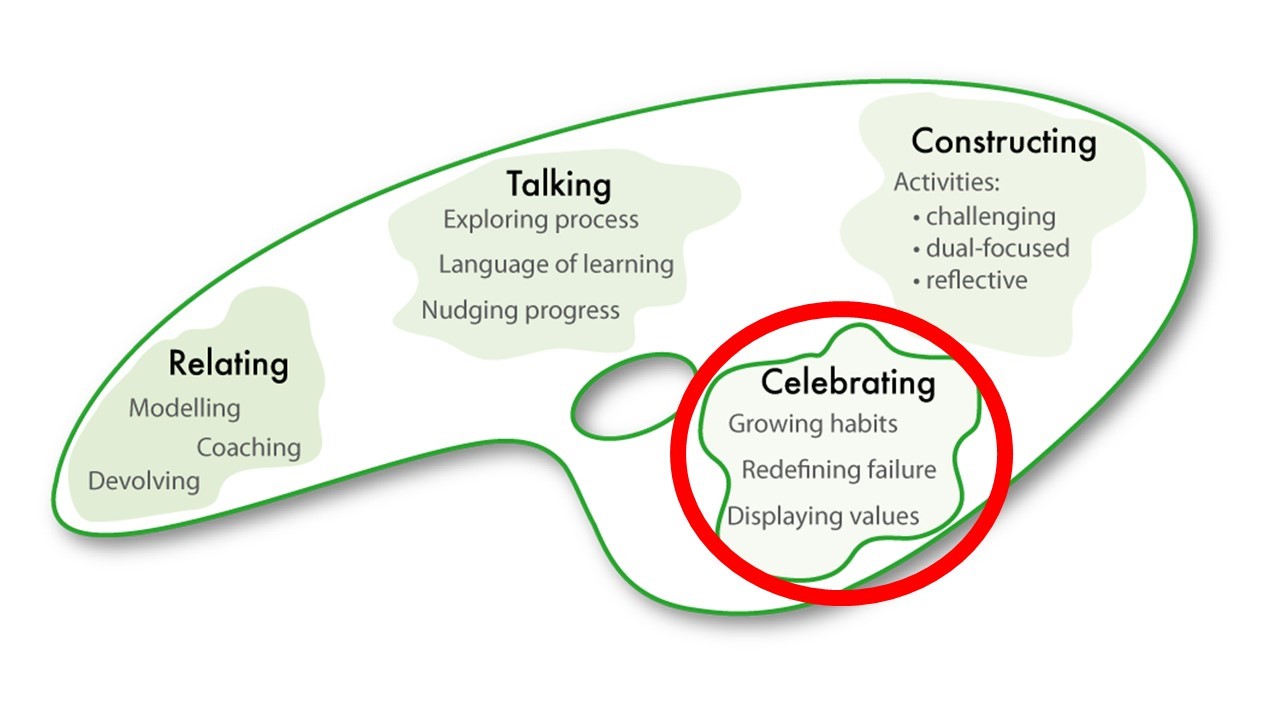
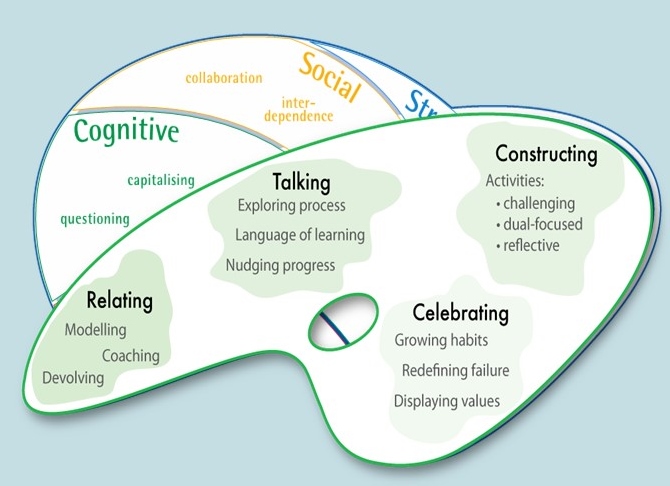
  1. To help you grow your practice in a deliberate and measured way, across every aspect of the Teachers’ Palette. It draws on the effective practice we have observed over almost 20 years of BLP practice in schools. It’s something we hope you will debate, share, try out, add to or tweak, as you work to develop as a learning power practitioner.
  2. To help you find a way through and select from a massive range of classroom based ideas and possibilities as you create a culture that draws students towards becoming more independent, engrossed, inquisitive, reflective, more imaginative and empathetic.

Find a stage on the journey, consider using the ideas shown and then seek other ideas from the considerable range of resources that you now have access to in modules titled ‘Putting xxx into Learning’.

There are five sections:

  • Section 1 explores the big picture of teachers’ behaviour and talk that strengthen students’ power to learn over time.

  • Sections 2,3,4 and 5 home in on developing your practice across four aspects of creating learning-friendly classrooms:

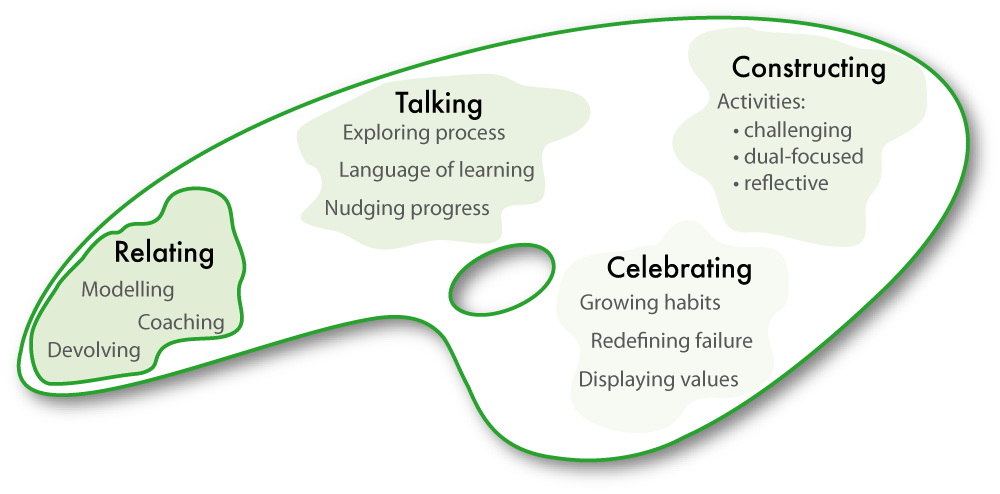
    • Relating for Learning; gradual steps you might take in devolving more responsibility to learners

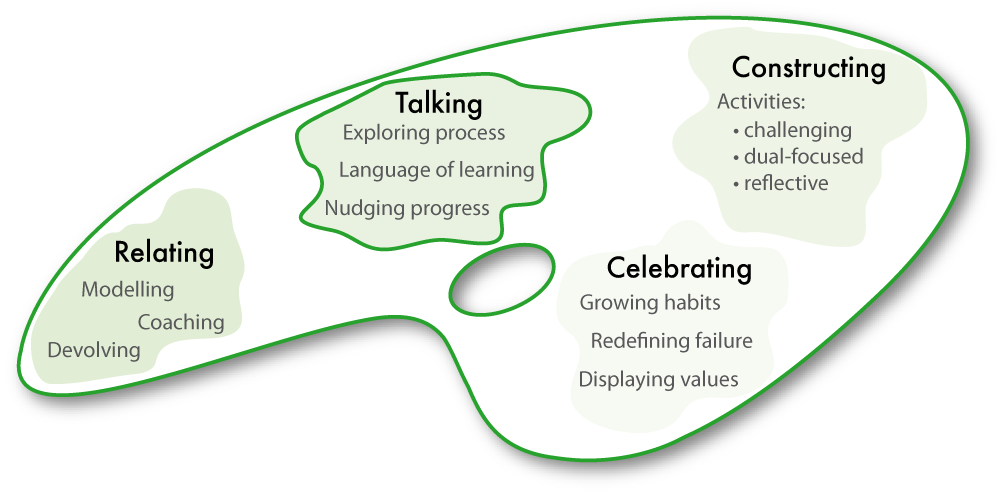
    • Talking for Learning; gradual changes you might use to influence how learning is understood

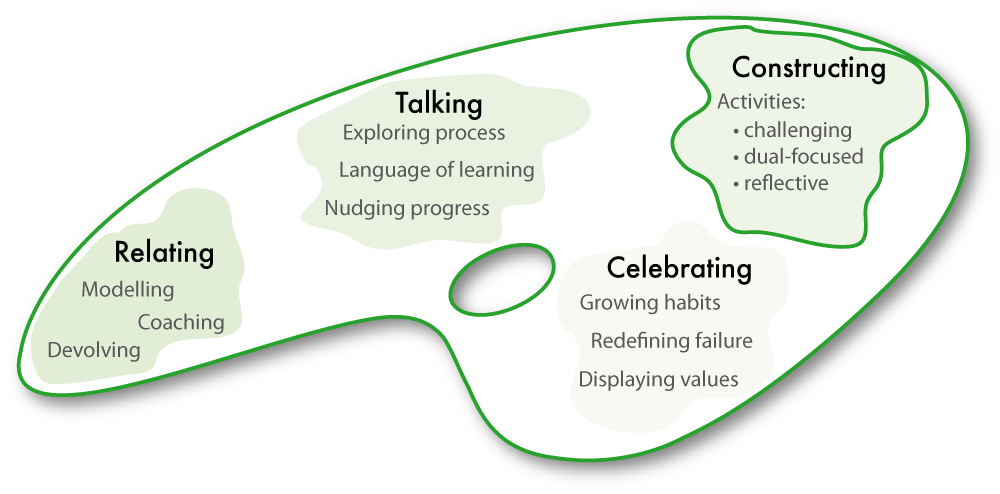
    • Constructing Learning; how you might gradually shift your design of learning to enable independence

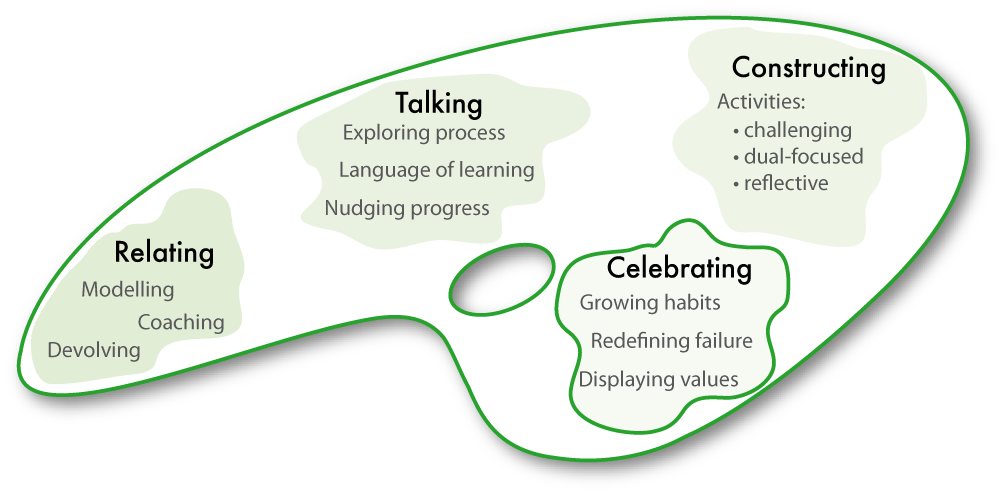
    • Celebrating Learning; how you might transform the look and feel of the classroom to encourage the growth of students’ learning habits

Each section offers just a few teaching ideas, some of which you may have tried, to help you to move your classroom culture ever closer to being learning-friendly.

Continue Reading

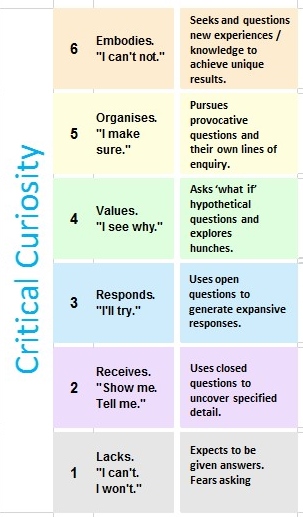
Building Critical Curiosity

Key Question:

How do we counter passive acceptance and build critical curiosity ?

This online resource seeks to support senior leaders and teachers to explore and experiment with ideas that build critical curiosity. There are 7 sections:

  1. Exploring what we mean by critical curiosity;
  2. How does Building Learning Power link with critical curiosity ?;
  3. Reflecting on where we are now;
  4. Some ideas to practise in the classroom;
  5. A look at progression
  6. Action planning
  7. Evaluation and reflection
Continue Reading

Building my critical curiosity

Explore your powers of critical curiosity and how you might strengthen them.

Great! You have completed the ELLI quiz and have looked at your feedback on the seven dimensions of your learning power – Changing and Learning; Critical Curiosity; Creativity; Meaning Making; Strategic Awareness; Learning Relationships; and Resilience. This resource helps you look more deeply at just one of those dimensions – Critical Curiosity.

 Explore, experiment with and build your critical curiosity. 

In the four sections you can:

Section 1  Find out more about what critical curiosity means;

Section 2  Pick out aspects you need to strengthen;

Section 3  Select  some ideas you could use to power up your critical curiosity;

Section 4  Plan some action and watch yourself improving.

Continue Reading

Building Changing and Learning

Key Question:

How do we counter being a static, fixed learner and build changing and learning ?

This online resource seeks to support senior leaders and teachers to explore and experiment with ideas that build changing and learning. There are 7 sections:

  1. Exploring what we mean by changing and learning;
  2. How does Building Learning Power link with changing and learning ?;
  3. Reflecting on where we are now;
  4. Some ideas to practise in the classroom;
  5. A look at progression
  6. Action planning
  7. Evaluation and reflection
Continue Reading

Building my Changing and Learning

Explore your powers of Changing and Learning and how you might strengthen them.

You have completed the ELLI quiz and have already received your feedback on the seven dimensions of your learning power – Changing and Learning; Critical Curiosity; Creativity; Meaning Making; Strategic Awareness; Learning Relationships; and Resilience. This resource looks more deeply at just one of those dimensions – Changing and Learning.

This resource is designed to help you explore, experiment with and build your Changing and Learning. 

There are four sections:

Section 1  Find out more about what Changing and Learning means;

Section 2  Pick out some of the aspects of Changing and Learning you need to strengthen;

Section 3  Take a look at some ideas you could use to power up your Changing and Learning;

Section 4  Make an action plan and watch yourself improving.

Continue Reading

Building Learning Relationships

Key Question:

How do we counter isolation or over-dependency and build learning relationships ?

This online resource seeks to support senior leaders and teachers to explore and experiment with ideas that build learning relationships. There are 7 sections:

  1. Exploring what we mean by learning relationships;
  2. How does Building Learning Power link with learning relationships ?;
  3. Reflecting on where we are now;
  4. Some ideas to practise in the classroom;
  5. A look at progression
  6. Action planning
  7. Evaluation and reflection
Continue Reading

Building my Learning Relationships

Explore your powers of Learning Relationships and how you might strengthen them.

You have completed the ELLI quiz and have already received your feedback on the seven dimensions of your learning power – Changing and Learning; Critical Curiosity; Creativity; Meaning Making; Strategic Awareness; Learning Relationships; and Resilience. This resource looks more deeply at just one of those dimensions – Learning Relationships.

This resource is designed to help you explore, experiment with and build your Learning Relationships. 

There are four sections:

Section 1  Find out more about what Learning Relationships means;

Section 2  Pick out some of the aspects of Learning Relationships you need to strengthen;

Section 3  Take a look at some ideas you could use to power up your Learning Relationships;

Section 4  Make an action plan and watch yourself improving.

Continue Reading

Building Resilience

Key Question:

How do we counter fragility and dependency and build resilience ?

This online resource seeks to support senior leaders and teachers to explore and experiment with ideas that build resilience. There are 7 sections:

  1. Exploring what we mean by resilience;
  2. How does Building Learning Power link with resilience?;
  3. Reflecting on where we are now;
  4. Some ideas to practise in the classroom;
  5. A look at progression
  6. Action planning
  7. Evaluation and reflection
Continue Reading

Building my Resilience

Explore your powers of Resilience and how you might strengthen them.

You have completed the ELLI quiz and have already received your feedback on the seven dimensions of your learning power – Changing and Learning; Critical Curiosity; Creativity; Meaning Making; Strategic Awareness; Learning Relationships; and Resilience. This resource looks more deeply at just one of those dimensions – Resilience.

This resource is designed to help you explore, experiment with and build your Resilience. 

There are four sections:

Section 1  Find out more about what Resilience means;

Section 2  Pick out some of the aspects of Resilience you need to strengthen;

Section 3  Take a look at some ideas you could use to power up your Resilience;

Section 4  Make an action plan and watch yourself improving.

Continue Reading

Building Strategic Awareness

Key Question:

How do we counter a tendency to learn robotically without reflection and build strategic awareness ?

This online resource seeks to support senior leaders and teachers to explore and experiment with ideas that build strategic awareness. There are 7 sections:

  1. Exploring what we mean by strategic awareness;
  2. How does Building Learning Power link with strategic awareness ?;
  3. Reflecting on where we are now;
  4. Some ideas to practise in the classroom;
  5. A look at progression
  6. Action planning
  7. Evaluation and reflection
Continue Reading

Building my Strategic Awareness

Explore your powers of Strategic Awareness and how you might strengthen them.

You have completed the ELLI quiz and have already received your feedback on the seven dimensions of your learning power – Changing and Learning; Critical Curiosity; Creativity; Meaning Making; Strategic Awareness; Learning Relationships; and Resilience. This resource looks more deeply at just one of those dimensions – Strategic Awareness.

This resource is designed to help you explore, experiment with and build your Strategic Awareness. 

There are four sections:

Section 1  Find out more about what Strategic Awareness means;

Section 2  Pick out some of the aspects of Strategic Awareness you need to strengthen;

Section 3  Take a look at some ideas you could use to power up your Strategic Awareness;

Section 4  Make an action plan and watch yourself improving.

Continue Reading

Building Meaning Making

Key Question:

How do we counter the collection of fragmented ‘facts’ and build meaning making ?

This online resource seeks to support senior leaders and teachers to explore and experiment with ideas that build meaning making. There are 7 sections:

  1. Exploring what we mean by meaning making;
  2. How does Building Learning Power link with meaning making ?;
  3. Reflecting on where we are now;
  4. Some ideas to practise in the classroom;
  5. A look at progression
  6. Action planning
  7. Evaluation and reflection
Continue Reading

Building my Meaning Making

Explore your powers of Meaning Making and how you might strengthen them.

You have completed the ELLI quiz and have already received your feedback on the seven dimensions of your learning power – Changing and Learning; Critical Curiosity; Creativity; Meaning Making; Strategic Awareness; Learning Relationships; and Resilience. This resource looks more deeply at just one of those dimensions – Meaning Making.

This resource is designed to help you explore, experiment with and build your Meaning Making. 

There are four sections:

Section 1  Find out more about what Meaning Making means;

Section 2  Pick out some of the aspects of Meaning Making you need to strengthen;

Section 3  Take a look at some ideas you could use to power up your Meaning Making;

Section 4  Make an action plan and watch yourself improving.

Continue Reading

Building Creativity

Key Question:

How do we counter over-reliance on the tried and tested and build creativity ?

This online resource seeks to support senior leaders and teachers to explore and experiment with ideas that build creativity. There are 7 sections:

  1. Exploring what we mean by creativity;
  2. How does Building Learning Power link with creativity ?;
  3. Reflecting on where we are now;
  4. Some ideas to practise in the classroom;
  5. A look at progression
  6. Action planning
  7. Evaluation and reflection
Continue Reading

Building my creativity

Explore your powers of Creativity and how you might strengthen them.

You have completed the ELLI quiz and have received your feedback on the seven dimensions of your learning power – Changing and Learning; Critical Curiosity; Creativity; Meaning Making; Strategic Awareness; Learning Relationships; and Resilience. This resource looks more deeply at just one of those dimensions – Creativity.

This resource is designed to help you explore, experiment with and build your Creativity. 

There are four sections:

Section 1  Find out more about what Creativity means;

Section 2  Pick out some of the aspects of Creativity you need to strengthen;

Section 3  Take a look at some ideas you could use to power up your Creativity;

Section 4  Make an action plan and watch yourself improving.

Continue Reading

Playing the Learning Power game ELLI MODULE

The Junior Game

 The job of any teacher is to give learners as real or as ‘whole’ an experience of learning as possible. So as writers of this introductory course about building better learners we wanted to do just that. We don’t think you would gain a deep sense of your role in developing students’ Learning Power if we simply provided you with examples of three or four things to do in your classroom. If you were learning to play Scrabble you wouldn’t get far if all you were given to learn were lists of three, four and five letter words. Far better to start straight away by playing ‘Junior Scrabble’, so you get the feel for the whole game, and then build up your sophistication as you play.

So you might think of this course as the junior game of learning power. Here you will find all the key elements you will need to introduce the values and activities of building your students’ learning power.

How the course is designed

All sections 1–7…

have exactly the same structure in order to ease your familiarity with the material and guard against getting lost. Each deals with a key aspect of understanding learning power and has:

    • an introduction to what the section is about … take particular note of the key points
    • part 1 aims to give you an idea of the sort of practice you are aiming to achieve
    • part 2 highlights the main ideas of the section’s content
    • part 3 offers a few practical ideas to start things off
    • part 4 broaches the idea of redesigning your practice and invites you to make a plan

Illustrations, videos, pictures.NEED THIS PICTURE TO HAVE  THE ELLI BRAIN BEHIND AND MOVING

Things to download

Download

The Read More panels between each part offer real examples of the ideas in use in schools and deeper material to enhance and strengthen understanding.

Look through each section fairly quickly to gain a sense of the what, why and how.

We estimate each section will take about 45 minutes to read and digest. Each has enough material for you to trial and perfect in your classroom over several weeks. You are unlikely to need deeper material for a couple of terms.

The content of the course

Section 1 What do we mean by learning power?

The underlying ideas, research and models

Here you will find:

  • the two interlinking models of building better learners
  • examples of how the models work in practice;
    • the  learning dimensions you might start on
    • the essential aspects of classroom practice
    • links with educational research
  • encouragement to try things out with your learners
  • suggestions for how amendments to your teaching will help students to be better learners
AMENDED DIAGRAM HERE

Section 2 Classroom relationships

Important shifts in classroom roles

Here you will find:

  • examples of the sort of responsibilities teachers might devolve to learners
  • examples of different ways to be as a teacher
    • modelling the process of learning
    • acting as a coach; asking not telling
    • enabling greater learner responsibility
  • encouragement to try things out with your learners
  • suggestions of ways to plan to expand devolving responsibility to students


Section 3 Talking about learning power

How and when to talk learnish.

Here you will find:

  • examples of how learners can talk about learning
  • examples of different ways to talk about learning
    • nudging the process
    • offering feedback
    • encouraging reflective self-talk
  • encouragement to try things out with your learners
  • suggestions of ways to plan to expand your learning language


Section 4 Designing learning powered lessons

How to put dual-focused lessons together

Here you will find:

  • examples of how teachers manage learning
  • explanations of different ways to plan for learning
    • long term planning
    • medium term planning
    • lesson planning
  • a format to assist in planning dual-focused lessons
  • activities to help start this journey
  • encouragement to try things out with your learners
  • suggestions of ways to plan to expand your lesson design


Section 5 Celebrating learning power

What’s seen as important in learning friendly classrooms

Here you will find:

  • examples of how learners can celebrate their learning
  • examples of different ways to celebrate learning
    • in the growth of learning behaviours
    • in re-defining failure
    • in displays in the classroom
  • encouragement to try things out with your learners
  • suggestions of ways to plan to expand what you celebrate about learning


Section 6 How are our learners developing?

What to look for and record about better learning

Here you will find:

  • explanations of three aspects of progression – frequency, scope and skilfulness
  • Charts showing what the phases of growth look like in relation to;
    • Critical Curiosity
    • Learning Relationships
    • Resilience
    • Strategic Awareness
  • examples of things to try out with your learners
  • ways of tracking the growth of learning dimensions over time
  • suggestions of ways to plan to expand what you might track about learning


Section 7 Where next?

Here you will find:

  • explorations of ways forward
  • tools to help you consider your growth and development as a teacher, focusing on;
    • devolving greater responsibility for learning to students
    • introducing more talk about the learning process
    • designing deeper dual focused lessons
    • celebrating more differentiated growth in learning power
  • descriptions of the next stage online modules that might best support your needs
  • a quick look at professional development approaches you might favour
  • encouragement to further boost your teaching.


Continue Reading

Playing the Learning Power Game

Why a learning power ‘game’?

Games can be used as a metaphor for learning anything and you tend to get better at anything if you treat it as a game. This programme is about learning to play the familiar game of learning but with an additional ingredient; that of learning dispositions or powers. This subtle addition changes the game of education to one of building learning character at the same time as building knowledge. So the programme explores certain guidelines and conventions that help to frame learning in ways that allow positive learning dispositions to flourish…how you might set up the game, get to grips with some new rules and tactics and learn to appreciate how you score it’s all important new endgame…that of the self-managed learner.

As with any game, it helps if you’re enabled to play the whole game from the start. If you were learning to play Scrabble you wouldn’t get far if all you were given to learn were lists of three, four and five letter words. Far better to start straight away by playing ‘Junior Scrabble’, so you get the feel for the whole game, and then build up your sophistication as you play.

So you might look on the programme you’re about to follow as the junior game of learning power. It has all the elements you will need to introduce the values and activities of building your students’ learning power. This junior game lays the foundation for greater sophistication in further programmes.


1. How the online course is designed

Section structure…

Each section deals with a key aspect of understanding learning power and has:

    • an introduction to what it is about … followed by some suggestions about how to ‘navigate’ the content
    • part 1 aims to give you an idea of the sort of practice you are aiming for
    • part 2 highlights the main ideas of the section’s content
    • part 3 offers a few practical ideas to start things off
    • part 4 offers a couple of tools to help you evaluate what you have read 
    • part 5 offers an agenda for a Professional Learning Team meeting


Find out more about the content of each section of the online course

The content of each section of the course

Section 1 What do we mean by learning power?

The underlying ideas, research and models

Here you will find:

  • the two interlinking models of building better learners
  • examples of how the models work in practice;
    • the four learning behaviours to make a start on – perseverance, questioning, collaborating and revising
    • the essential aspects of classroom practice
    • links with educational research
  • encouragement to try things out with your learners
  • suggestions for how amendments to your teaching will help students to be better learners

Section 2 Classroom relationships

Important shifts in classroom roles

Here you will find:

  • examples of the sort of responsibilities teachers might devolve to learners
  • examples of different ways to be as a teacher
    • modelling the process of learning
    • acting as a coach; asking not telling
    • enabling greater learner responsibility
  • examples of things to try out with your learners to enhance perseverance, questioning, collaboration and revising
  • suggestions of ways to plan to expand devolving responsibility to students

Section 3 Talking about learning power

How and when to talk about learning.

Here you will find:

  • examples of how learners can talk about themselves as learners
  • examples of different ways to talk about learning
    • nudging the process
    • offering feedback
    • encouraging reflective self-talk
  • examples of things to try out with your learners to enhance perseverance, questioning, collaborating and revising
  • suggestions of ways to plan to expand your learning language

Section 4 Designing learning powered lessons

How to begin to put dual-focused lessons together

Here you will find:

  • examples of how teachers manage learning in their lessons
  • explanations of different ways to plan for learning
    • long term planning
    • medium term planning
    • lesson planning
  • a format to assist in planning dual-focused lessons
  • activities to help start this journey
  • examples of things to try out with your learners to enhance the foundational four learning behaviours
  • suggestions of ways to plan to expand your lesson design

Section 5 Celebrating learning power

What’s seen as important in learning friendly classrooms

Here you will find:

  • examples of how learners can celebrate their learning
  • examples of different ways to celebrate learning
    • in the growth of learning behaviours
    • in re-defining failure
    • in displays in the classroom
  • encouragement to try things out with your learners
  • suggestions of ways to plan to expand what you celebrate about learning

Section 6 How are our learners developing?

What to look for and record about better learning

Here you will find:

  • explanations of three aspects of progression – frequency, scope and skilfulness in use
  • Charts showing what the phases of growth look like in relation to;
    • questioning
    • collaboration
    • perseverance
    • revising
  • examples of things to try out with your learners
  • ways of tracking the growth of learning dispositions over time
  • suggestions of ways to plan to expand what you might track about learning

Section 7 Where now: what next?

Here you will find:

  • explorations of ways forward
  • tools to help you consider your growth and development as a teacher
  • descriptions of the next stage online courses to support teachers’ journey to becoming a skilled learning power practitioner
  • a quick look at professional development approaches you might use in furthering your journey

2. How the wider blended learning programme works

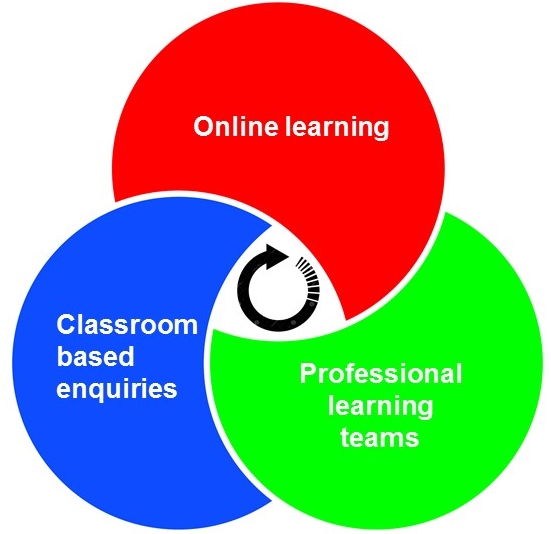
‘Playing the Learning Power Game’ is simply the online content aspect of the blended learning programme which, unless it’s blended with Professional Learning Teams and Classroom Based Enquiries is unlikely to help you achieve the desired outcomes.

A Professional Learning Team is your support mechanism in the blended learning cycle. We hope that time for PLTs has been built into the rhythm of the school’s meeting cycle, and offer you a safe, supportive space to discuss and explore the craft of the classroom. We hope to that PLTs will encourage you to learn with and from your colleagues – to become, in John Hattie’s words, ‘learners of their own teaching’.

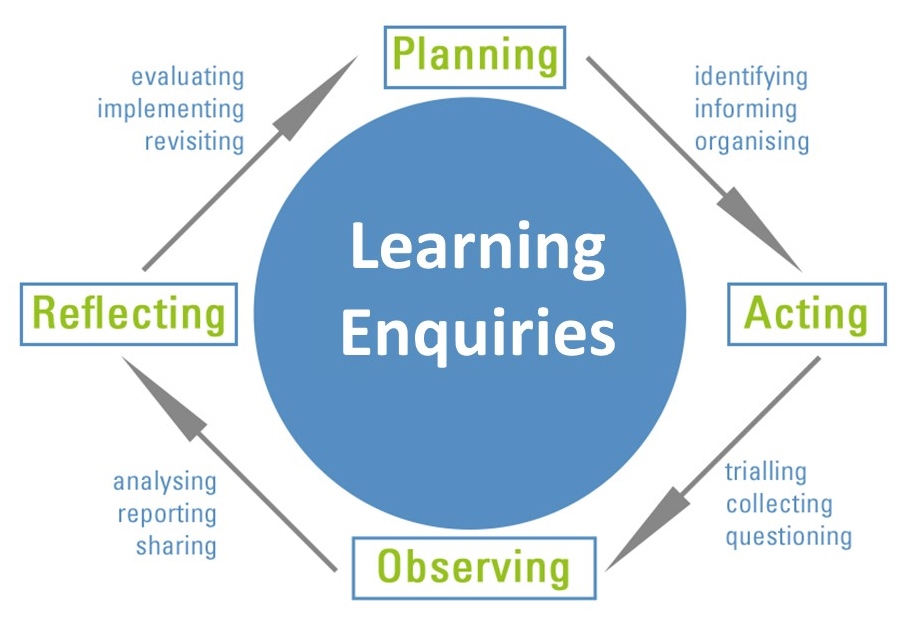
Classroom Based Enquiries are the third aspect of the blended learning programme. Sometimes known as Action Research, classroom based enquiries involve changing aspects of your practice in order to develop student learning behaviours. Enquiries are likely to involve you in making small changes, monitoring the impact of those changes, and sharing these outcomes at the next team meeting for professional discussion.

Most schools tend to blend these 3 aspects into a 4-week cycle.


2a. Talk, support and plan with colleagues

Professional Learning Teams; small groups of teachers who meet together regularly (usually monthly) to deepen their understanding of learning and how, by developing their classroom practice, they can make the learning process more visible and relevant to students.

The team learns and develops by:

  • discussing and unpacking the online information;
  • planning how to make use of it in their classrooms;
  • questioning and probing their classroom experiments.

The delicate, hard work of changing practice requires a safe professional environment in which to explore and understand classroom triumphs and tribulations. The short guidelines (see download) are designed to be help a team set a collaborative, working climate to support the conversion of information and ideas in the online materials into “lived” practices in classrooms.

The format of a meeting agenda below is based on research into teacher learning communities by Dylan Wiliam, of Assessment for Learning (AfL) fame.

Learning Team meeting agenda. A resource to help structure PLT meeting

This team session is your first one in Playing the Learning Power game so it will be essential to spend the first part of the meeting considering the purpose and working guidelines for the team.

Session agenda

  1. Agreeing objectives and agenda (5 mins)
  2. Considering working practices (15 mins)
  3. Re-capping the on-line materials (15 mins)
  4. Personal Action Planning (20 mins)
  5. Evaluating the meeting process (5 mins)

1. Session objectives: What do we want to achieve? (5 mins)

  • Feel confident about working as a team
  • Feel able to apply the on-line materials in the classroom
  • Decide the strategic cultural issues that everyone needs to apply in their classroom
  • Plan some do-able shifts in classroom practice

2. Consider the working practices of the team (15 mins)

  • Purposes of the group
  • Format of the sessions
  • Ground rules for working
  • Expectations of outcomes
  • See What-Why-How of PLT notes above for ideas

3. Recapping on-line materials: What did the content make us think? (15 mins)

Thoughts about:

  • the progression from teacher focused cultures to learning focused cultures (section 2e)Culture review tool 1 ( three panels)
  • where do most classrooms operate in relation to the three panels?
  • which of the four learning behaviours need most assistance? (perseverance, questioning, collaborating, revising)
  • things that are in place, things that need attention now/soon, things that will take longer to establish.
  • ideas you picked up from the content that you could use immediately.

4. Personal action planning: What am I going to do? (20 mins)

While we haven’t highlighted any specific ideas to try in this section the material will have triggered some…’what if I tried’.. thoughts.

Think of;

  • how you want to strengthen your classroom culture to encourage students to become more learning friendly?
  • What you are going to do to bring this about?
  • Develop an enquiry question.

You’ll gain more value from a plan by creating it around a question. Why a question? Because this is an enquiry, you want to find out if something will change (student behaviour) when you change something specific. Think of it like this:

If I do XXXX will it improve/develop/enhance YYYY?

This is the crunch question – the moment of truth. Students are unlikely to change unless your behaviour changes! Visualise how you want your students to be and then think about what you might do, or say, or model, or celebrate, or whatever…. differently to bring about this change in students. Developing an enquiry question – .pdf

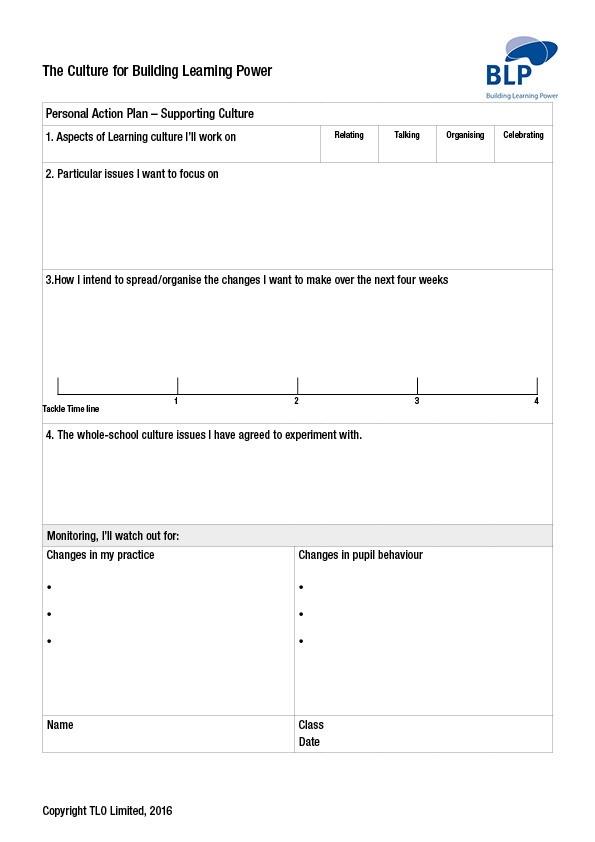
The learning enquiry plan is a record of what you intend to do. It takes your enquiry question from what to how. The format below may help you think through the planning process. You can fill in your Personal Action Plan using the word document version.

Download MS Word version

Remember;

  • you can adapt the activities/ideas that you chose to ensure they meet the needs of your students;
  • make the plan specifically focus on development;
  • concentrate on no more than three actions;.
  • decide how to map your actions over the next three or four weeks;
  • It’s useful to think about what you are going to do less of to make room for the changes.

DEVELOPING-AN-ENQUIRY-QUESTION-CULTURE.PDF.


personal-action-plan-culture PERSONAL-ACTION-PLAN-CULTURE.PDF

For the monitoring bits of your plan you might want to look out for:

  • an improvement in how students engage with learning
  • improvement in behaviour
  • showing less stress or worry about learning generally
  • increased focus when working with other students
  • reduced reliance on teacher support

5. Evaluate team session: How did we do as a team? (5 mins)

  • Did we achieve our objectives?
  • Are we comfortable with what we are trying to achieve?
  • Any concerns at this point?
  • Next meeting date and time.


2b. Classroom based enquiries

Classroom based enquiries operate in the spirit of enquiry or some would say action research. It’s a quest to find out more, to consider what needs to change, to wonder what might work, to track what happens and to refine practice. It’s a process in which you, as a teacher, investigate teaching and learning so as to improve your own and your students’ learning. In effect you become a researcher of your own practice. It helps you to develop new knowledge about your classroom, you become a reflective teacher who broadens your own teaching repertoire. Importantly it puts you in charge of how you teach and become very aware of the links between how you teach and how your students learn and achieve.

3. The online course in a nutshell

For those of you who like to see big pictures before the detail here is…

3a. The Big Picture of Playing the (Junior) Learning Power Game.

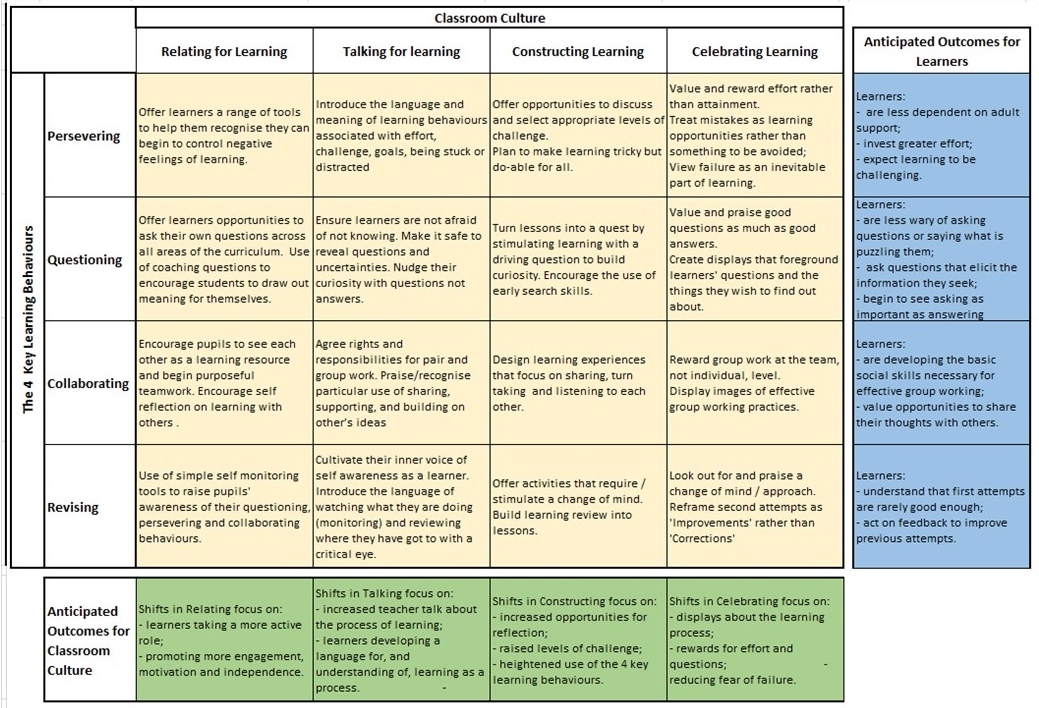
This chart distils what this course is all about;

  • what it hopes to enable teachers to do (in the yellow boxes)
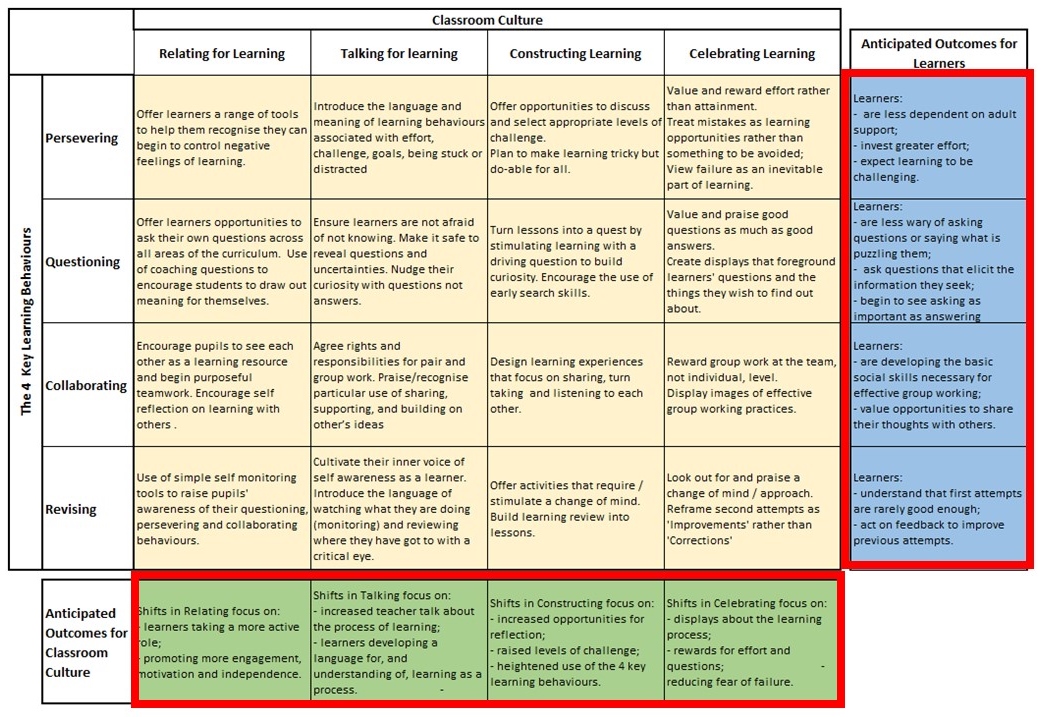
  • what outcomes such changes could make in the classroom culture (in green boxes)
  • the anticipated outcomes for learners (in blue boxes)

The downloadable spreadsheet will also reveal a practical idea for each yellow box. So this chart offers you an ‘at a glance’ resource to help you reflect on what and how you may be adapting your teaching over the next few months. See below for more details.

Read more about the big picture at your leisure

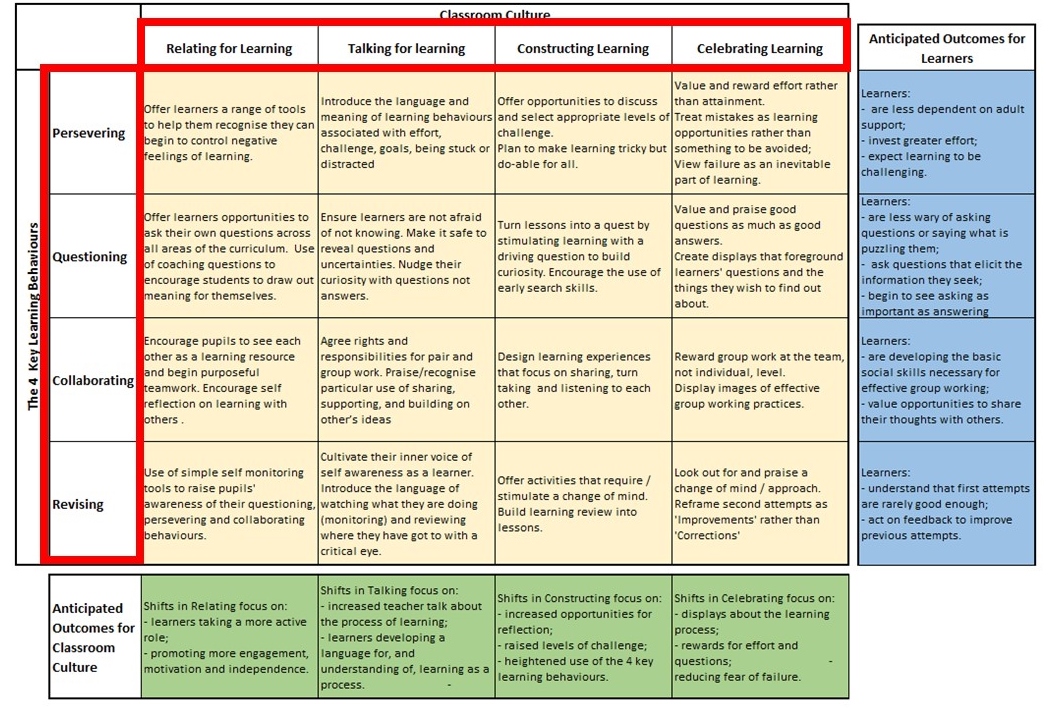
3b. The vertical and horizontal axes of the grid

The vertical axis to the left shows the 4 learning habits you will be working to improve. The horizontal axis across the top shows the 4 aspects of classroom culture that you will be shifting. On the downloaded spreadsheet, click on the Enable Editing tab to reveal reminders by hovering over the cells.

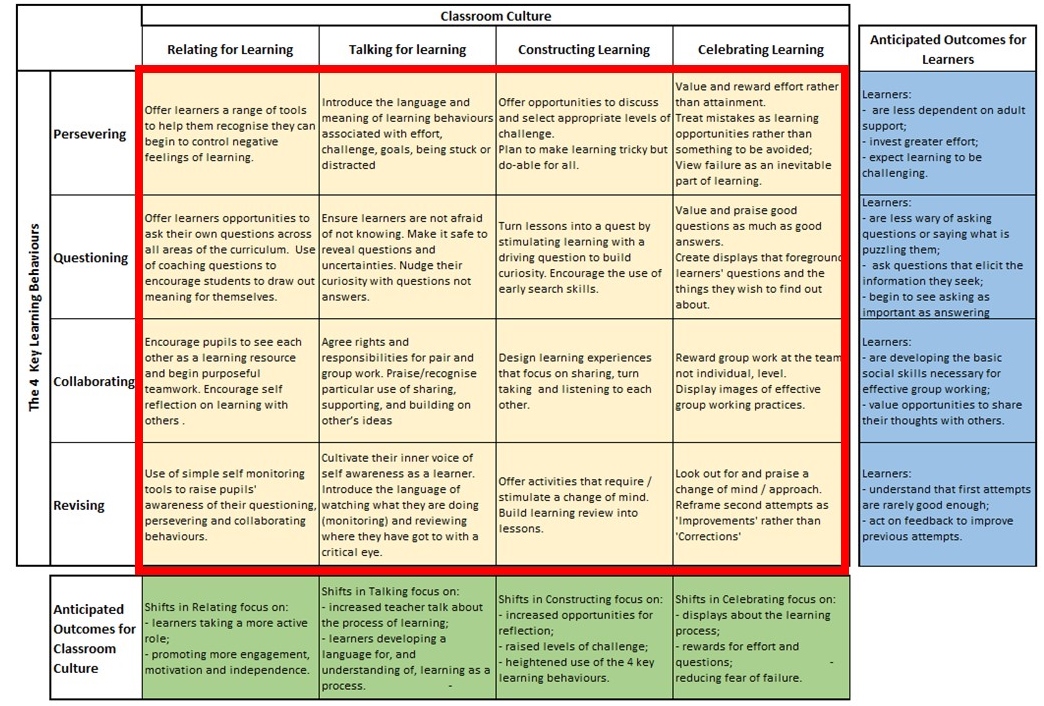
3c. The central 16 cells

These cells serve 2 purposes. Firstly:

  • The text in each cell gives an indication of the classroom culture that needs to be in place for learners to learn how to learn.
  • When looked at vertically down the page, they map out the 4 aspects of classroom culture.
  • When looked at horizontally across the page, they hint at the ways in which classrooms need to change to enable the 4 key learning behaviours to flourish.

Secondly:

  • On the downloaded spreadsheet, hovering over each cell reveals a teaching idea taken from The Learning Power Game module.
  • These teaching ideas are key to unlocking each cell. There are many other ideas in the module for each cell, but these are the ‘must do’ strategies.

3d. The cells to the bottom and to the right

The green cells across the bottom give an outline of how the teacher’s role develops as they make changes in how they relate and talk to learners and how they construct and celebrate learning. Hovering over each cell gives more detail. The blue cells to the far right give an indication of the anticipated outcomes for learners in terms of the 4 important learning behaviours and hovering over each cell suggests what you might look for in students. As you hover over these cells, you will gain a sense of what you might look out for in terms of classroom culture and student learning behaviours.


So – are you ready to make a start?

The first section of online learning is called ‘What do we mean by learning power?’

You can access it by using the ‘Unit Navigation’ box (top right on your screen).

Resist the temptation to skim read other sections – focus your efforts on ‘What do we mean by learning power?’ in preparation for your first Professional Learning Team meeting.

____________________________________________________

Continue Reading

DIY Playing the Learning Power game – strategic issues

The purpose of this module

This is the companion module to ‘Playing the Learning Power game’. It is designed to support senior leaders in introducing teachers to their module and to take a strategic approach to sustaining momentum as the teachers’ programme develops.


This companion module has 7 sections:

  1. Overview: strategic issues and a programme for staff
  2. A distillation of key messages of Learning Power
  3. Leadership strategies to secure Learning Power
  4. Introducing The Supple Learning Mind to teachers
  5. Introducing learning friendly cultures to teachers
  6. Keeping an eye on progress
  7. Where now: what next?

Continue Reading

Big 7

7 big questions

This module explores 7 big questions about how classrooms can help students to develop and grow positive learning behaviours that can sustain them for a lifetime of learning.

The 7 questions are:

1 What’s the distinction between learning more, learning better and becoming a better learner?

2 What are the important Behaviours of successful learners and which are the most important to start on?

3 What small yet profound shifts in teaching methodology will make students’ learning more conscious and articulate?

4 How can teachers explicitly surface and deepen successful learning habits in students?

5 What fast-track tactics will hasten students’ grasp of the meaning of some learning habits. What routine will guide and direct thinking?

6 How through gradual and relentless exposure to ‘stretching’ learning opportunities, do young peoples’ learning habits progress?

7 With all this in mind how do classrooms and teaching need to change? What can we each do? What can we collectively do?


Continue Reading

Coming on board … developing students’ reflective behaviour

Reflection

When you use these learning behaviours, you …

  • think ahead of taking action;
  • monitor how things are going and change tack if necessary;
  • mull over and draw out useful lessons from experience;
  • talk about and understand how you learn and how you are improving as a learner.


The activities, think pieces and questions in this online unit aim to help teachers make a start on:

  • introducing your students to one of the four domains of learning;
  • using the language of learning effectively with your students;
  • designing the use of learning behaviours into the way you teach;
  • developing the confidence and behaviour in helping your students to grow their learning habits.

The purpose of building your students’ Learning Power is to facilitate the growth of high value psychological characteristics and strengthen their learning characters. These behaviours, attitudes and values, when used with increasing competence and confidence across many learning opportunities, become learning habits; the characteristics of successful lifelong learners. 


Continue Reading

Toes in the water: start-up resource package – 2020

This online resource pack introduces school leaders and staff to the why, what, and how of developing  powerful learners. The big picture frameworks of Building Better Learners are explained and illustrated with practical ideas. The materials will enable schools to get their collective heads around a learning centred approach to teaching and begin to try out some of the ideas in practice. It will set schools off on shifting the learning culture to helping students become better at learning.

For leaders this culture shift means being able to lead innovation. For teachers it amounts to significant changes in practice. For students it amounts to enabling them to become confident lifelong learners. There’s no insignificance here; no little tweaks; no golden flecks; no trivia. Taking on improving learners’ command of the learning process is a substantial but hugely worthwhile undertaking for everyone involved.

Modules 1 & 2  are written for senior leaders and consider the strategic change management issues of taking on and sustaining this innovation.

Modules 3 & 4 are written for all staff and explain the frameworks of learning habits for better learning together with practical ideas for how to make a start on developing these in the classroom.

Module 5 briefly explores the challenges of changing classroom practice and ways of doing this successfully. This section explains follow-on online programmes for schools that want to take the approach further than this resource pack allows.

Continue Reading

Culture Progression – SLT support

Creating a Learning-Focused Classroom Culture

Culture is the curriculum of the classroom, frequently hidden from the external observer, but always all too evident to learners. It is the minute by minute, hour by hour, day by day way that learners come to understand their role as a learner. Culture is the enacted values of the teacher, not the espoused ones – it is the shadow that the teacher casts in the classroom in terms of what they do do and what they do not do, what they say and do not say, what they believe and do not believe, what they value and do not value.

There are four sections in this module designed to offer support for senior leaders as they oversee the move towards a learning friendly classroom culture:

  • About classroom culture: explores the necessary shifts in teaching behaviours and learning behaviours;

  • Support for auditing existing practice and monitoring future developments;

  • Leadership issues around Initial Considerations; Where and How to start; Maintaining Momentum;

  • And finally a section to help you to create a plan of action.


Continue Reading

Understanding the 4 key learning behaviours

Key Question:

How do we phase in the introduction of learning behaviours to our students ?

This online resource seeks to support senior leaders and teachers to explore and reflect on 4 key learning behaviours that will form the bedrock onto which further behaviours can be grafted as and when necessary.

There are 4 sections, each exploring one of these key learning behaviours:

  1. Understanding perseverance;
  2. Understanding collaboration;
  3. Understanding questioning / curiosity;
  4. Understanding reflecting.


These are considered the 4 key learning behaviours because . . .

  • Without perseverance, learners are unlikely to apply meaningful effort;
  • Without collaboration, learners are denied access to dialogue and the thoughts of others;
  • Without curiosity, learners lack motivation and engagement;
  • Without reflection, learners fail to develop meta-cognition.

Continue Reading

Culture progression

Creating a Learning-Focused Classroom Culture

Culture is the curriculum of the classroom, frequently hidden from the external observer, but always all too evident to learners. It is the minute by minute, hour by hour, day by day way that learners come to understand their role as a learner. Culture is the enacted values of the teacher, not the espoused ones – it is the shadow that the teacher casts in the classroom in terms of what they do do and what they do not do, what they say and do not say, what they believe and do not believe, what they value and do not value.

There are six sections in this module dealing with shifting to a learning friendly classroom culture:

  • About classroom culture: describes the necessary shifts in teaching behaviours and learning behaviours;

  • Plus 4 sections dealing with Relating for Learning; Talking for Learning; Constructing Learning; and Celebrating Learning. Each section offers teaching ideas to help teachers to move gradually ever closer to a learning-friendly culture;

  • And finally a section to help you to create a plan of action.


Continue Reading

Shaping the future of learning in England Ofsted Version

Title


Side title

Related image


Original

Why change?

Creating confident, resilient, independent learners should have long since been a core purpose of schooling. But a near complete focus on the standards agenda has, thus far, sidelined this core purpose. The curriculum in England is in stark contrast to many other countries, like Wales, Scotland, USA, Australia, New Zealand, who are moving, or have already moved, to a curriculum based around learner competencies rather than a body of knowledge to be acquired.

But the 2019 Ofsted Inspection Framework heralds a shift of focus. Standards are still there, quite rightly, but henceforth Ofsted will also make a judgement on the personal development of learners by evaluating the extent to which ‘the curriculum and the provider’s wider work support learners to develop their character – including their resilience, confidence and independence’.

It should always have been a core purpose of schooling. Ofsted are now intending to judge it. Moreover, in the information-rich and fast moving world, knowledge alone is no longer the reliable source of advantage it once was: it must now be partnered by the development of learning dispositions or habits. —  This means helping students build up the mental, emotional and social resources to become confident, resilient, independent learners. That’s why.

Related image

What change?

The curriculum prepares students for the changes they will need to embrace in their lives after school. Preparing for a complex life involves the development of the habits or dispositions of learning…those attributes of character that make you more or less likely to; persevere and learn well with others; check out and change you’re learning as you go along; think carefully and question things critically. These are the ‘hows’ of being a successful learner. Research shows these learning habits having strong effects on educational attainment and additional positive effects on life outcomes beyond school. Dispositions aren’t fixed at birth, they change over time in response to the environment. And so it’s the school and it’s classroom cultures that will have a major influence on developing students’ learning character. It is learning cultures that make the difference.

How can we make it work?

As a Headteacher you are now involved in shaping the future of learning in your school. Proposed new content combinations and approaches to assessment will help structure the future of learning but much is left for the school to shape. At the heart of it all, the engine that will make it work, will be your learning friendly classroom cultures; cultures that will ensure students intentionally learn how to become increasingly confident, resilient and independent.


By broadening the framework to include learning character, Ofsted have, in their own terms, expanded the Intent of the curriculum. This resource begins to explore how schools might Implement this expanded intent and what the Impact might be. It goes to the heart of the Quality of Education.


This short resource raises eight key questions which, as a Headteacher, you will want to consider in the run up to adapting the curriculum to intentionally develop learning character, including confidence, resilience and independence. The questions revolve around growing learning habits and creating classroom and school cultures strong enough to nurture those ambitions.

This is NOT a resource about the content of the curriculum. Instead it goes to key aspect of any change strategy…that of developing positive learning dispositions in students, staff and the school more widely. It simply opens the box and offers you a map of the territory, food for thought, ideas to try, and tools to use to make a confident start on your journey.


The why, the what, and the how

Related image


Continue Reading

Shaping the future of learning in England Copy SHORTENED VERSION

Why change?

Creating confident, resilient, independent learners should have long since been a core purpose of schooling. But a near complete focus on the standards agenda has, thus far, sidelined this core purpose. The curriculum in England is in stark contrast to many other countries, like Wales, Scotland, USA, Australia, New Zealand, who are moving, or have already moved, to a curriculum based around learner competencies rather than a body of knowledge to be acquired.

But the 2019 Ofsted Inspection Framework heralds a shift of focus. Standards are still there, quite rightly, but henceforth Ofsted will also make a judgement on the personal development of learners by evaluating the extent to which ‘the curriculum and the provider’s wider work support learners to develop their character – including their resilience, confidence and independence’.

It should always have been a core purpose of schooling. Ofsted are now intending to judge it. Moreover, in the information-rich and fast moving world, knowledge alone is no longer the reliable source of advantage it once was: it must now be partnered by the development of learning dispositions or habits. —  This means helping students build up the mental, emotional and social resources to become confident, resilient, independent learners. That’s why.

Related image

What change?

The curriculum prepares students for the changes they will need to embrace in their lives after school. Preparing for a complex life involves the development of the habits or dispositions of learning…those attributes of character that make you more or less likely to; persevere and learn well with others; check out and change you’re learning as you go along; think carefully and question things critically. These are the ‘hows’ of being a successful learner. Research shows these learning habits having strong effects on educational attainment and additional positive effects on life outcomes beyond school. Dispositions aren’t fixed at birth, they change over time in response to the environment. And so it’s the school and it’s classroom cultures that will have a major influence on developing students’ learning character. It is learning cultures that make the difference.

How can we make it work?

As a Headteacher you are now involved in shaping the future of learning in your school. Proposed new content combinations and approaches to assessment will help structure the future of learning but much is left for the school to shape. At the heart of it all, the engine that will make it work, will be your learning friendly classroom cultures; cultures that will ensure students intentionally learn how to become increasingly confident, resilient and independent.

This short resource raises eight key questions which, as a Headteacher, you will want to consider in the run up to adapting the curriculum to intentionally develop confidence, resilience and independence. The questions revolve around growing learning habits and creating classroom and school cultures strong enough to nurture those ambitions.

This is NOT a resource about the content of the curriculum. Instead it goes to the heart of any change strategy…that of developing positive learning dispositions in students, staff and the school more widely. It simply opens the box and offers you a map of the territory, food for thought, ideas to try, and tools to use to make a confident start on your journey.


The why, the what, and the how

Related image


Continue Reading

ELLI – A Guide for Coaches

This unit is designed to support tutors when using the ELLI (Effective Lifelong Learning Inventory) profile with their students. This is a development version, still with some rough edges, and is being offered to schools for trial and feedback.

The excel file ‘ELLI Quiz and Feedback.xlsx’ accompanies this unit.

There are 9 sections in total:

  • Section 1 is a very quick overview of the 7 dimensions of learning in ELLI
  • Section 2 is detailed guidance for coaches, and is a must read before starting ELLI with students
  • Sections 3 through 9 deal with each dimension in turn and each contains:
    • an overview of the dimension
    • a deeper exploration of the dimension
    • an information section simply showing the range of feedback the learner can receive
    • activities that might be suggested to support the dimension
    • resources for tutors to print if required.


Continue Reading