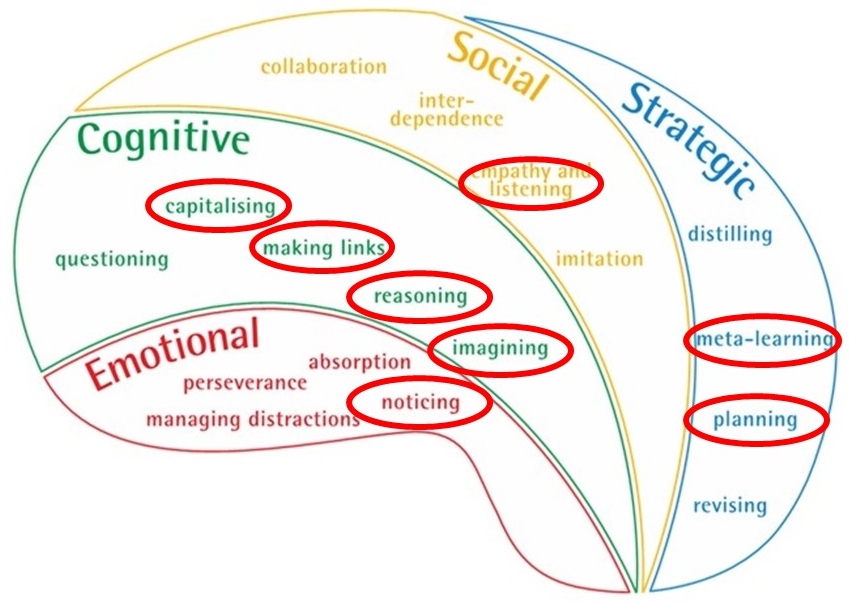
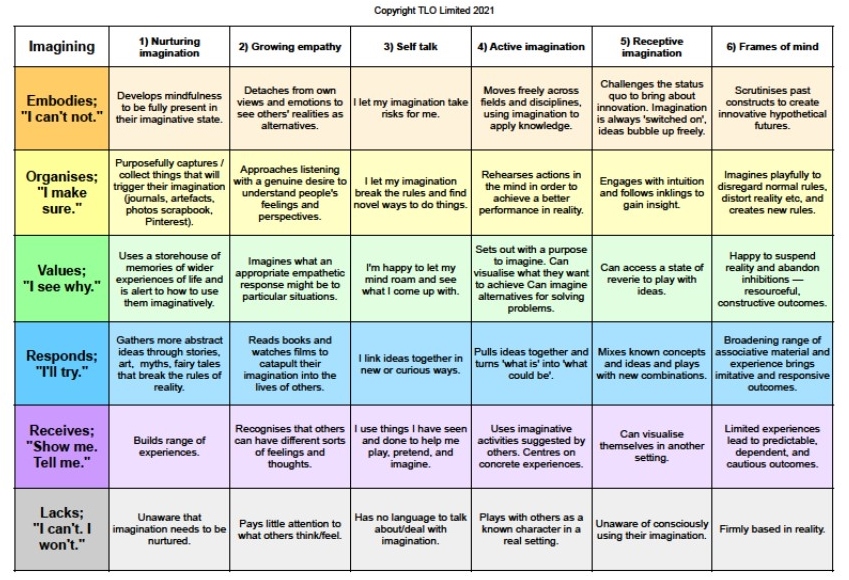
You are now in Unit 4, Broadening the range, Imagining
A. The intention of this section is to..
..help you to introduce the learning behaviour of Imagining to your students. The suggested activities could be introduced singly, in various combinations or in the staged start suggested. Together they make up gentle start to introducing a new learning behaviour into the mix.
B. The best way of tackling this section is to..
..simply read through the suggestions and use them to decide when would be a useful time to begin using them.
C. As a result it should have the following impact.
You are now confident about introducing a further learning behaviour, Imagining, to enrich the learning language of the classroom and enhance students’ understanding of learning.
Imagining – Thinking differently
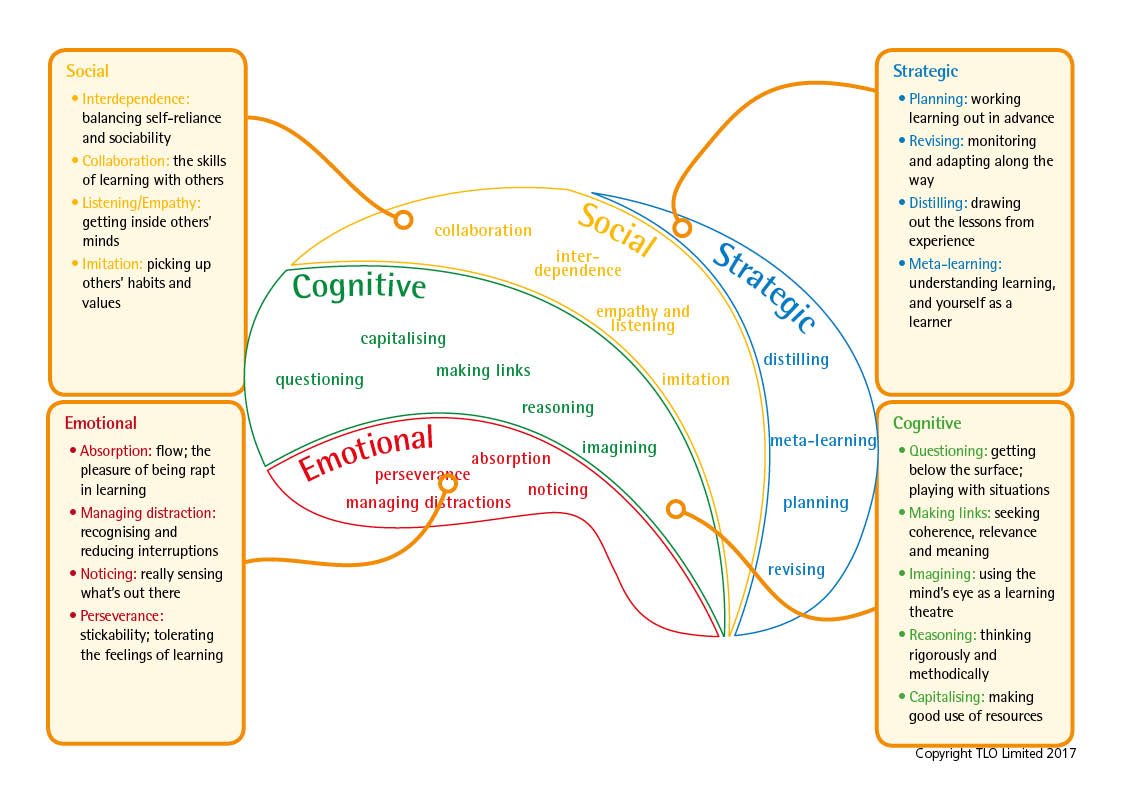
A well formed Imagining habit involves being ready, willing, and able to: use the mind as a theatre in which to play out ideas and possible actions experimentally; use a rich variety of visual, aural and sensory experiences to trigger creative and lateral thinking: explore possibilities speculatively, saying ‘What might …’, ‘What could …’ and ‘What if …?’ rather than being constrained by what is; retain a childlike playfulness when confronted with challenges and difficulties; be aware of intended outcomes whilst adopting a flexible approach to realising goals; rehearse actions in the mind before performing them in reality.
Firstly, take a quick look at your classroom culture to discover whether it has features that encourage Imagining.
Some ideas to encourage an Imagining frame of mind.
In the early stages of building your students’ learning power your role is to;
make them aware of the behaviour;
talk about it (what, how, why, when, if);
celebrate its use;
give opportunities to practise it, both in lessons and elsewhere;
reflect on it to improve it.
This staged start is reflected below…
First... make your students aware of the use and importance of imagining…when, where, why, how they are or could be using it
Then... explore imagining a little more through the language of imagining
Try... using imagining as a lesson starter to tune students into using it
Then start… blending imagining into the way you teach the content. Use specific imagining strategies to deepen content understanding.
Ensure... students reflect on the success or otherwise of their imagining frame of mind.
1. Make students aware of Imagining
How you make your students aware of the words that describe the behaviour, why it is important to use it and what it helps them to do.
Younger students
The Mind’s Eye
Introduce pupils to the idea of the mind’s eye: Talk about the fact that we all have 2 eyes which we use all the time but that everyone also has a third, hidden, mind’s eye. Talk about how we can use this secret third eye to imagine and create pictures and ideas inside our minds.
Invite pupils to close their eyes and imagine they are using their third eye. Describe something in great detail and ask them to try and see it with their third eye.
For example: Close your eyes tightly and imagine my alien. It has a large, round, green body with lots of arms and legs. On the top of the round, green body is a huge pink and purple head with spiky yellow hair and 4 great big blue eyes. It has long, pink fingers on its hands and short, purple toes on its big feet. When it walks along it makes a high squeaky sound and it smells just like fish and chips!
You could ask pupils to draw their idea of the alien, concentrating on their ideas rather than an exact representation of your description.
Ask pupils to imagine something for themselves- unprompted by you. Invite them to describe what they are imagining.
Talk about what seems to happen in their mind when they imagine.
Talk about when our ability to imagine can be useful.
Ask, “When do you use your imagination?”
Older students
Guided Visualisation
Invite students to visualise, for example, a snowy mountain peak until the image fades – discuss how long this could be sustained.
Now visualise hovering over the mountain and exploring the terrain by helicopter – the experience will have lasted longer.
Now provide students with a guided visualisation of the mountain that triggers their imaginative faculties – discuss the features of this experience.
Enable students to identify the ways of triggering their own imaginations when provided with stimuli. Invite them into a city at night, or the alimentary canal, . . .
Stimulating the imagination
Use music to create atmosphere and stimulate imaginative thinking.
Provide varied, unexpected and ever-changing visual experiences — on whiteboards, classroom walls, in ideas banks, through web-links, etc.
Read vivid prose and poetry that captures details, moods and atmospheres.
Younger students
Capture ideas
Encourage pupils to brainstorm or mind-map and keep notebooks or Post-its of interesting ideas to feed their creativity. Do this collectively and individually.
Elect one pupil as ‘Plant of the Day’, whose job it is to suggest unlikely ideas.
Older students
Play the prediction game, emphasise mental rehearsal
Show video clips of e.g. rugby or football heroes preparing to kick a ball, as well as other sports and entertainment people rehearsing ahead of action.
Discuss what they are doing to ‘play the movie’ in their heads before they act.
Explore occasions when this could be useful in students’ own lives. Identify the triggers and habits required when anticipating the right action.
2. Explore the language of Imagining
How you might extend the language and understanding of this behaviour
Younger students
Talk about how things might look, feel, sound.
Give pupils a familiar object – a pencil, hairbrush, scissors, toilet roll, cushion – whatever comes to hand.
Then pose the question: ‘What else could it be?’ or ‘What could this become’
Discuss and praise the most imaginative ideas.
What you are trying to develop in young learners is:
An awareness of the power of imagination;
The ability to use their imagination to picture how things might look, sound, feel or be;
The willingness to talk imaginatively about situations, events, characters, etc.
Older students
Expand the vocabulary of imagining
A way with words . . .
Visualise, Envisage, Picture, See in the Mind’s Eye, Conjure up, Dream up, Think up, Make up, Create, Pretend, Fanatacize, Day dream . . .
How many more can students find?
Relate imagining to well known sayings
What do we mean when we say …
In my mind’s eye
Thinking outside the box
3. Use Imagining as a lesson starter
Use a quick starter to key your students into the learning behaviour you want to concentrate on in the lesson. i.e. here you are starting up their imagining behaviour
Younger students
Extend imaginative thinking by telling stories
Provide a stem statement…
A man walks into a room with a suitcase in his hand…
Invite one student to carry it on. Each student continues from where the previous one left off.
Or . .
Create a scenario…There are no windows, water drips into a bucket, two people are seated back to back…what might be happening? What might happen next? Can you improvise the dialogue between the people?
Older students
Trigger imagination with ‘What if …’ challenges
Provoke students to think ‘What if… we ran out of oil in 25 years… we lived in a two-dimensional world… we all lived for exactly 70 years… tennis balls were heavier… we had two moons…’
Encourage students to build collaborative spider diagrams that explore the possible ramifications of such eventualities. Extend the imagining in creative presentations using a variety of media.
As you develop greater understanding of imagining you will need to design learning activities which, by their very nature, will deepen students’ tendency to be imaginative AND their understanding of the content.
4. Focus on Imagining as a learning strategy
Draw out the Imagining behaviour being used in a thinking routine.
All students
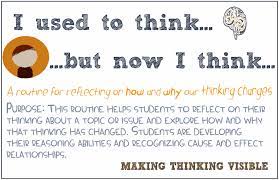
Visible Thinking Routine
Creative Questions
Creative Questions is a visible thinking routine that encourages students to create interesting questions and then imaginatively mess around with them for a while in order to explore their creative possibilities:
Pick an everyday object or topic and brainstorm a list of questions about it.
Look over the list and transform some of the questions into questions that challenge the imagination. Do this by transforming questions along the lines of:
What would it be like if…
How would it be different if…
Suppose that …
What would change if …
How would it look differently if …
Choose a question to imaginatively explore. Explore it by imaginatively playing out its possibilities. Do this by: Writing a story or essay, drawing a picture, creating a play or dialogue, inventing a scenario, conducting an imaginary interview, conducting a thought experiment . . . .
Reflect: What new ideas do you have about the topic, concept or object that you didn’t have before?
Can you see a use for any of the suggested activities?
Have you raised awareness of imagining with your students?
Does your class have an agreed set of good imaginative behaviours?
Which two ideas from above do you want to try out?
How long will you keep them going before you decide whether they have worked or not?
Make a note of…
What happens in your classroom in response to any of the above ideas.
How students’ behaviour changes over about 3 weeks of becoming more familiar and talking about the behaviour.
How your behaviour in the classroom changes as you use these ideas over time.
NB. None of the suggestions above will lead to instant understanding in students nor instant changes in their behaviours. You will need to drip these and other activities in over time and keep building and refreshing your language of learning.
You are now in Unit 4, Broadening the range, Reasoning
A. The intention of this section is to..
..help you to introduce the learning behaviour of Reasoning to your students. The suggested activities could be introduced singly, in various combinations or in the staged start suggested. Together they make up gentle start to introducing a new learning behaviour into the mix.
B. The best way of tackling this section is to..
..simply read through the suggestions and use them to decide when would be a useful time to begin using them.
C. As a result it should have the following impact.
You are now confident about introducing a further learning behaviour, Reasoning, to enrich the learning language of the classroom and enhance students’ understanding of learning.
Reasoning – Thinking logically
A well formed Reasoning habit involves being ready, willing, and able to: resist jumping to conclusions; seek justifiable evidence to shape sound, well-honed arguments; scrutinise your assumptions; seek evidence and counter evidence, look for false steps and carefully draw conclusions; remain suspicious, doubting and self-doubting in order to avoid unwarranted certainty; convey your logical thinking clearly, through dialogue, symbols, analogies, prose and pictures. So, at a less abstract level, students need to learn the inclination to resist impulsive responses; to respond logically and thoughtfully; to apply logic by explaining, justifying and, ultimately, proving what they think; to utilise a range of reasoning tools; and to develop strategies for presenting their reasoning to others persuasively.
Firstly, take a quick look at your classroom culture to discover whether it has features that encourage Reasoning.
Some ideas to encourage a Reasoning frame of mind.
In the early stages of building your students‘ learning power your role is to;
make them aware of the capacity;
talk about it (what, how, why, when, if);
celebrate its use; give opportunities to practise it, both in lessons and elsewhere;
reflect on it to improve it.
This staged start is reflected below…
First… make students aware of the use and importance of reasoning…when, where, why, how they are or could be using it
Then… explore reasoning a little more through the language of reasoning
Try... using reasoning as a lesson starter to tune students into using it
Then start… blending reasoning into the way you teach the content. Use specific reasoning strategies to deepen content understanding.
Ensure… students reflect on the success or otherwise of their reasoning frame of mind.
1. Make students aware of Reasoning
How you make your students aware of the words that describe the behaviour, why it is important to use it and what it helps them to do.
Younger students
Get a feel for thinking logically using Mazes
Have a go at solving some simple mazes with small groups of children. Finding the way through a maze is a fun approach to helping young children with logical thinking.
You could also ask your Y5 or Y6 colleagues to engage their children in planning and designing 3D mazes for the younger children to solve. This would be an excellent open ended design DT project guaranteed to need lots of planning and revising!
You might also be lucky enough to find real mazes near enough for a visit with your class.
Older students
Draw out reasoning in Strategy Games
Use games that require strategy and logical thinking. From noughts and crosses to chess, from hangman to backgammon, such games help to develop and refine reasoning skills.
Many appear in the form of maths investigations and problems: Frogs; Tower of Hanoi; Nim; Connect 4; etc.
Younger students
Explore reasoning through stories
Hide and Seek
In this story about Aneeta and Nanda, Aneeta loses her very special doll, Maya. The whole family has to do some good thinking to discover where she is. This story is a reminder that the best thinking is done when we are calm and focused. To find out where Maya is, dad starts everyone thinking logically by working backwards, step by step. We see how that approach helps Aneeta, Nanda and their mum to remember what was going on, so that eventually they are able to find Maya. Clear thinking and this ‘step by step’ approach can help us solve all kinds of problems.
Present students with coded messages and require them to work them out using their deductive skills.
Start with simple substitution codes where, for example, each letter is replaced by the one after it in the alphabet. (i.e. b replaces a, c replaces b etc. etc.) Increase difficulty by using more complex ciphers.
2. Explore the language of Reasoning
How you might extend the language and understanding of this behaviour
Younger students
Draw out the language of reasoning through jigsaws
Sit at the jigsaw table with groups of children and work on the jigsaws together. Model your reasoning out loud to the children explaining what you did first second, third, etc. so that they begin to understand a methodical, step by step approach. Explain why you put a piece in a certain place and why it couldn’t go elsewhere. Develop conversations around…What can we see? Why does this fit here? What tells you it is right? Does this make sense? and so on.
Older students
Explore the meaning of reasoning
Collect words that tell you how people learn to Reason.
Relate reasoning to well known sayings
What do we mean when we say …
On the one hand . . .
One step at a time
It adds up
3. Use Reasoning as a lesson starter
Use a quick starter to key students into the learning behaviour you want to concentrate on in the lesson. i.e. here you are starting up the Reasoning behaviour
Younger students
Sequencing
Cut up;
a cartoon,
series of pictures of a production process,
a flow diagram,
a mathematical proof,
a story line,
a musical score,
a poem,
a sequence of events, and so on.
Invite students to reassemble the pieces in what they think is a viable order and explain their reasons for this. Model and listen for the language of reasoning to strengthen the process.
[Lift the level of challenge by omitting one or two of the pieces, or by including a red herring or two, or by interleaving two sequences that need to be separated before the sequencing can be completed.]
Older students
Ranking
Offer students pieces of information or ideas or pictures or statements as a set of separate items, usually on cards.
The subject could be: possible causes of global warming; the sayings of a religious leader; discoveries of the last 20 years; the music of Gershwin; causes of WW1; poems of Sylvia Plath; healthy lifestyle indicators; famous people etc.
The criterion for ranking the cards is given or negotiated with students. For example rank the cards in order of;
importance
appeal
relevance
how controversial
any other appropriate criterion.
The point of the activity is to debate the relative merits, place them in rank order according to the chosen criterion, and to be able to explain and justify the ranking based on evidence rather than opinion.
As you develop greater understanding of reasoning you will need to design learning activities which, by their very nature, will deepen students’ tendency to Reason AND their understanding of the content.
4. Focus on Reasoning as a learning strategy
Draw out the reasoning behaviour being used in a thinking routine.
The first question in this routine is flexible: it is useful when looking at objects such as works of art or historical artefacts, but it can also be used to explore a poem, make scientific observations and hypotheses, or investigate more conceptual ideas (i.e., democracy). The first question invites students to describe what they notice, see or know, but it is the supplementary question (What makes you say that?) that requires them to build explanations. It promotes evidence-based reasoning and when the students share their interpretations it encourages them to understand alternatives and multiple perspectives.
And here is an idea that will help students to understand the reasoning process.
5. An activity to highlight and strengthen Reasoning
Liepz & Bounz
A jumble of clues to unravel and make sense of. Are there any red herrings? Did we make any assumptions, and were they valid? Did we miss anything vital? Did we ‘get it right’? Can we convince others that our answer is correct?
Use Liepz and Bounz to explore how we have to use our reasoning skills to solve problems.
Make reflecting on Reasoning part of everyday lessons
Here is a very practical example of how you might develop the emotional climate of the classroom and make it reasoning friendly
Learning Mats
Learning mats are A4 laminated sheets that show various aspects of a learning habit. Keep them as prompts on desks/tables or as part of a wall display.
Can you see a use for any of the suggested activities?
Have you raised awareness of reasoning with your students?
Does your class have an agreed set of good reasoning behaviours?
Which two ideas from above do you want to try out?
How long will you keep them going before you decide whether they have worked or not?
Make a note of…
What happens in your classroom in response to any of the above ideas.
How students’ behaviour changes over about 3 weeks of becoming more familiar and talking about the behaviour.
How your behaviour in the classroom changes as you use these ideas over time.
NB. None of the suggestions above will lead to instant understanding in students nor instant changes of behaviour. You will need to drip these and similar ideas in over time and keep building and refreshing your language of learning.
You are now in Unit 4, Broadening the range, Making Links
A. The intention of this section is to..
..help you to introduce the learning behaviour of Making Linksto your students. The suggested activities could be introduced singly, in various combinations or in the staged start suggested. Together they make up gentle start to introducing a new learning behaviour into the mix.
B. The best way of tackling this section is to..
..simply read through the suggestions and use them to decide when might be a useful time to begin using them.
C. As a result it should have the following impact.
You are now confident about introducing a further learning behaviour, Making Links, to enrich the learning language of the classroom and enhance students’ understanding of learning.
Making Links – Making connections
Learning is about making connections – you will experience them through the ‘ah ha’ experience of seeing a connection between two previously isolated concepts, or the satisfaction of seeing the connection between an abstract idea and a ‘hands-on’ concrete experience. It’s how you make sense of the world. To be a good link maker you need to keep stimulating your brain and enriching your experiences because through active learning you quite literally ‘build’ your own mind. At the heart of all this is your attitude to knowledge; whether it is bound up in rules and ‘is-language’, or whether you see knowledge as provisional, ever building and changing.
Firstly, take a quick look at your classroom culture to discover whether it has features that encourage Making Links.
Some ideas to encourage a Link Making frame of mind.
In the early stages of building your students’ learning power your role is to; make them aware of the capacity; talk about it (what, how, why, when, if); celebrate its use; give opportunities to practise it, both in lessons and elsewhere; reflect on it to improve it. This staged start is reflected below…
Firstly… make students aware of the use and importance of making links…when, where, why, how they are or could be doing it.
Then… explore making links a little more through the language of making links
Try... using link making as a lesson starter to tune students into using it
Then start… blending making links into the way you teach the content. Use specific link making strategies to deepen content understanding.
Ensure... students reflect on the success or otherwise of their link making frame of mind.
1. Make students aware of Making Links
How you make your students aware of the words that describe the behaviour, why it is important to use it and what it helps them to do.
Younger students
My Grandma went shopping . . .
Recommend group of no more than 12-15
Start by saying “My grandma went shopping and she bought…” and say an item. Let pupils take turns and each time one of them adds another item, they have to explain their link to everyone else.
Encourage the children to think of lots of different ways of linking items and reward their ingenuity.
To take the learning a little bit further, it could be useful to share a real shopping list with your children and discuss the links that help you when actually shopping.
For example, perhaps you list all the fruit and vegetables first, if they are found in the first aisle etc. Or perhaps you list all the breakfast foods together…
Older students
Mind Maps for link making
Use mind maps to encourage students to link and explain how information and ideas seem to be associated.
Use mind mapping at the beginning, middle and end of a unit of study to show how links and understanding change as knowledge grows.
Use a ‘thought shower mind map’ at the outset of a lesson to connect with prior learning and activate link making. Use in the middle to monitor shifts in understanding. Use at the end of a module of learning as a synthesising tool.
Younger students
Think and Link
Organisation: For groups of 5/6 children.
Print out and photocopy the Odd One Out series of pictures. (see resource).
Each row has 5 pictures in it. Four can be linked together easily but one doesn’t fit readily with the others.
Encourage the children to find an odd one out and perhaps invent a reason or story about how/why the odd one could be made to ‘fit’.
Spend plenty of time discussing why the pictures fit together and what the links are. It’s fine if the children can think of different ways to link them as long as they can explain their rationale to you and the other children.
Keep praising and rewarding the ‘making links’ bit of the activity rather than focusing on getting it right.
To extend this activity a little and assess their understanding, ask the children to devise a row of pictures of their own and give them to each other as a fresh challenge.
Join in yourself and model your link making by thinking aloud.
Older students
Match Them Up
Offer students a set of cards that need to be matched up or linked in some way.
It might be:
a set of pairs of cards like ‘It has been raining’ and ‘The river is flowing fast’ where the student is challenged to decide whether there Must be a connection between the two events, Could be a connection, or No possible connection;
a problem to select a substance (metal, clay, wax, salt, ice, …) and a change (freezes, dissolves, melts, burns, …) and decide if the change is Reversible or Irreversible;
a set of cards that students are required to match into pairs – it could be 5 graphs and 5 equations; 5 characters and 5 attitudes; 5 words and 5 definitions etc.
[The ‘Thinking Through’ series edited by David Leat has individual books for Geography, History, RE, MFL, English, Maths, Science and PSHE which all contain subject specific examples.]
2. Explore the language of Making Links
How you might extend the language and understanding of this behaviour
Younger students
Discuss making links
Gather together a really good assortment of shapes: 2D and 3D shapes and different sizes and colours. Using small hoops or different coloured paper circles ask pupils to take turns to sort the shapes by putting them in the hoops and explain their reasoning for sorting them this way. It should be possible to rearrange the shapes in several different ways as different children take a turn. This can help the children understand that there are often many different ways to link things together.
Older students
Extend the language of Making Links
Collect words that tell you how people learn to make links.
Relate link making to well known sayings
What do we mean when we say …
Chain reaction
Cause and effect
Seeing the wood and the trees
3. Use Making Links as a lesson starter
Use a quick starter to key your students into the learning behaviour you want to concentrate on in the lesson. i.e. here you are starting up the link making behaviour
Younger students
Similarity and Difference
Find two images with both similarities and differences. Invite students to work in pairs to identify at least 5 of each, and then work as a four to decide the 3 most important similarities and differences.
Timings could be around 1 minute for the pair work, and 2 minutes for the work in fours.
This will also support the skills of noticing, collaborating, and distilling.
Older students
Odd One Out
Identify four ‘things’ related to your own subject area – this could be 4 images, 4 words, 4 techniques, or anything else that links to your own subject and/or what students are currently learning about.
Invite them to identify the odd one out, and to explain why they think this.
When you can, construct lists where it is possible to justify that each of the items are, in fact, the odd one out.
As you develop greater understanding of making links you will need to design learning activities which, by their very nature, will deepen students’ tendency to Make Links AND their understanding of the content.
Here is an idea where, by using making links, students will gain an understanding of the content AND will develop a making links habit.
4. Focus on Making Links as a learning strategy
Draw out the making links behaviour being used in a thinking routine.
All students
Visible Thinking Routine
Connect, Extend, Challenge
This routine helps students make connections between new ideas and prior knowledge. It also encourages them to take stock of ongoing questions, puzzles and difficulties as they reflect on what they are learning.
Connect: How are the ideas and information presented connected to what you already know?
Extend: What new ideas did you get that extended or pushed your thinking in new directions?
Challenge: What is still challenging you or confusing for you to get your mind round? What questions, wondering or puzzles do you now have?
The natural place to use this routine is after students have learned something new. For example: after exploring a work of art, a theory, a method, a piece of evidence. Try it as a reflection during a lesson, after a longer project, or when completing a unit of study. The routine works just as well with the whole class, small groups or individually.
And here is an idea that will help students to understand the link making process.
5. An activity to highlight and strengthen Making Links
And or So
An activity to encourage students to make imaginative links between seemingly unconnected objects. Who can find the most novel / humorous / unexpected link ? Are some objects not linked in any way at all ?
Use to explore how most things can be linked together in some way, and how making the links helps us to remember things and maybe see things in new ways.
Can you see a use for any of the suggested activities?
Have you raised awareness of making links with your students?
Does your class have an agreed set of good link making behaviours?
Which two ideas from above do you want to try out?
How long will you keep them going before you decide whether they have worked or not?
Make a note of…
What happens in your classroom in response to any of the above ideas.
How students’ behaviour changes over about 3 weeks of becoming more familiar and talking about the behaviour.
How your behaviour in the classroom changes as you use these ideas over time.
NB. None of the suggestions above will lead to instant understanding in students nor instant changes of behaviour. You will need to drip these and similar ideas in over time and keep building and refreshing your language of learning..
You are now in Unit 4, Broadening the range, Noticing
A. The intention of this section is to..
..help you to introduce the learning behaviour of noticing to your students. The suggested activities could be introduced singly, in various combinations or in the staged start suggested. Together they make up gentle start to introducing a new learning behaviour into the mix.
B. The best way of tackling this section is to..
..simply read through the suggestions and use them to decide when would be a useful time to begin using them.
C. As a result it should have the following impact.
You are now confident about introducing a further learning behaviour, Noticing, to enrich the learning language of the classroom and enhance students’ understanding of learning.
Noticing – Looking carefully
Noticing involves being ready, willing, and able to: be attentive to details and subtleties in seeking to understand things; seek underlying patterns patiently, understanding that connections may take time to emerge; actively use all the senses to gather information to build understanding of the world around; gain a clear sense of the ‘what’ of something before considering the ‘why’ and ‘how’; recognise that learning is often complex and difficult and takes time and effort to accomplish. So students need to learn how to focus their attention; to look patiently beyond the obvious to see detail and subtlety; to be able to identify the relative importance of what they are observing; to develop the ability to see detail in the context of the bigger picture; and to develop the ability to explain, hypothesise about and explore what is being noticed. When looked at from these diverse angles, growing noticing moves well beyond encouraging a student to ‘look carefully’.
Take a quick look at your classroom culture to discover whether it has features that encourage Noticing.
In the early stages of building your students’ learning power your role is to;
make them aware of the behaviour;
talk about it (what, how, why, when, if);
celebrate its use;
give opportunities to practise it, both in lessons and elsewhere;
reflect on it to improve it.
This staged start is reflected below…
Firstly… make students aware of the use and importance of noticing…when, where, why, how they are or could be doing it
Then... explore noticing a little more through the language of noticing
Try... using noticing as a lesson starter to tune students into using it
Then start... blending noticing into the way you teach the content. Use specific noticing strategies to deepen content understanding.
Ensure… students reflect on the success or otherwise of their noticing frame of mind.
1. Make students aware of Noticing
How you make your students aware of the words that describe the behaviour, why it is important to use it and what it helps them to do.
Younger students
Give noticing a high profile
For example, create a Noticing table with magnifying glasses and interesting objects …. shells, coins, dead insects, flowers …… and lots more! Spend a few minutes each day for children to report on what new things they have noticed about the objects.
Older students
Give time to think … and share ideas
What do experts notice? – A painter will notice subtle differences in colour, shape or texture. What about other experts … gardeners, doctors, musicians, drivers, sports-people, actors, cooks, mechanics?
Choose a couple of experts from the list or from your own ideas and think about what they notice and how and why they might have learned this.
Younger students
Introduce games that require noticing behaviours
For example… use the familiar Kim’s game where students have to look carefully for a given time and then try to remember the group of articles. This simple format has numerous variations…what’s missing, what’s been added, what’s the odd one out?
Older students
Introduce intriguing pictures to provoke noticing
2. Explore the language of Noticing
How you might extend the language and understanding of this behaviour
Younger students
Discuss noticing others
Invite some students to be Learning Detectives. Task them with watching how children play team games. Their job is to watch out for how to do the activity best, what works and what doesn’t work. You will need to model this regularly, it won’t matter whether they are throwing bean bags into buckets, jumping through hoops or balancing on bars, the noticing and coaching will make a real difference to their learning. If possible capture examples of effective learning on camera / video. Build the outcomes into a display that helps all students to become more aware of the effective habits of others.
Older students
Extend the language of noticing
Collect words that tell you how people learn to notice detail.
Relate noticing to well known sayings
What do we mean when we say …
Eagle-eyed.
I’ve gone through it with a fine-tooth comb.
Keep your eyes peeled
3. Use Noticing as a lesson starter
Use a quick starter to key your students into the learning behaviour you want to concentrate on in the lesson. i.e. here you are starting up their noticing behaviour
Younger students
Intriguing Images
For example have an intriguing picture ready on the whiteboard before the lesson starts. Students look forward to looking carefully at pictures where all is not as it seems.
Older students
Finding shapes
Offer students a random set of dots (or picture of the night sky). Invite them to seek items such as:
A letter of the alphabet
An animal
A regular shape
A face
Or something linked to the content of the forthcoming lesson
As you develop greater understanding of noticing you will need to design learning activities which, by their very nature, will deepen students’ tendency to Notice AND their understanding of the content.
Here is an idea where, by using noticing, students will gain an understanding of the content AND will develop a Noticing habit.
4. Focus on Noticing as a learning strategy
Draw out the noticing behaviour being used in a thinking routine.
All students
Visible Thinking Routine
See, Think, Wonder:
Invite students to make an observation (see) about an object (artwork, image, artifact) or topic.
Follow up with what they think might be going on. Encourage backing up their interpretation with reasons.
Ask students to think about what this makes them wonder about the object or topic.
The routine works best when a student responds by using the three stems together at the same time, i.e., “I see…, I think…, I wonder…”. If not you need to scaffold each response with a follow up question for the next stem.
This routine encourages careful observations and thoughtful interpretations. It helps stimulate curiosity and sets the stage for inquiry. Use it at the beginning of a new unit to motivate student interest. Try it with an object that connects to a topic during the unit of study. Use the routine with an interesting object near the end of a unit to encourage students to further apply their new knowledge and ideas. Go to visible thinking website for more examples and information about thinking routines.
And here is an idea that will help students to understand the noticing process.
5. An activity to highlight and strengthen Noticing
Design specific activities to highlight and strengthen the behaviour
Viewing Frames:
Use sets of interesting pictures together with cards with a viewing window cut into them. Students place the viewing card over the picture in seeking a range of different features. E.g. something red, made of xx, something denoting happiness, something which suggests what might happen next. It’s a good idea to look firstly for concrete features before moving on to abstract features. You could:
use a poem. Use the viewer to find the stanza that is most descriptive, that makes them happy, that uses the best simile…
or use a geometrical image, use the viewer to find corresponding angles, perpendicular lines, a reflex angle…
or an image of the water cycle, use the viewer to find where water vapour is rising, where water is moving downwards, where it would be best to site a farm, a village, a wind turbine…
or . . . .
6. Reflect on Noticing
Younger students
Make reflecting on noticing part of everyday lessons
Here is a very practical example of how you might develop the emotional climate of the classroom and make it Noticing friendly
Learning mats are A4 laminated sheets that show various aspects of a learning habit. Keep them on desks/tables or as part of a wall display.
Older students
Alert students to noticing across subjects
A useful resource for tutor time to guide a wide ranging discussion
Time to reflect
What do you think?
Can you see a use for any of the suggested activities?
Have you raised awareness of attentive noticing with your students?
Does your class have an agreed set of good noticing behaviours?
Which two ideas from above do you want to try out?
How long will you keep them going before you decide whether they have worked or not?
Make a note of…
What happens in your classroom in response to any of the above ideas.
How students’ behaviour changes over about 3 weeks of becoming more familiar and talking about the behaviour.
How your behaviour in the classroom changes as you use these ideas over time.
NB. None of the suggestions above will lead to instant understanding in students nor instant changes of behaviour. You will need to drip these and similar ideas in over time and keep building and refreshing your language of learning.
You are now in Unit 3, section 3D. A catalogue of activities
A. The intention of this section is to..
…offer a huge number and range of teaching ideas that will help you to blend the 4 key learning behaviours into your curriculum planning.
The catalogue of ideas is organised into 4 sections – Activities to try; Visible Thinking Routines; Reviewing/Checking strategies; plus a fully worked up lesson plan – for each of the 4 key learning behaviours.
B. The best way of tackling this section is to..
…begin by exploring the encyclopaedia of ideas. Spend an hour or so having look at what is there, maybe picking out a couple of things you might fancy trying out in your classroom.
In the longer term, you will become more forensic in your approach and return here time and again to find an activity, a VTR or a checking tool to fit a particular purpose.
Timing. This section lies at the heart of Unit 3. It may take you 2 or 3 months to familiarise yourself with the materials and begin to strategically integrate them into your planning and practice. And even then, you will return here for ideas as you work on unit 4.
Unit 3, Team Meeting 2. Scheduled about a month after starting on section 3D.
C. As a result it should have the following impact.
You will be able to intentionally blend activities that trigger, support or extend the 4 key learning behaviours into your curriculum planning.
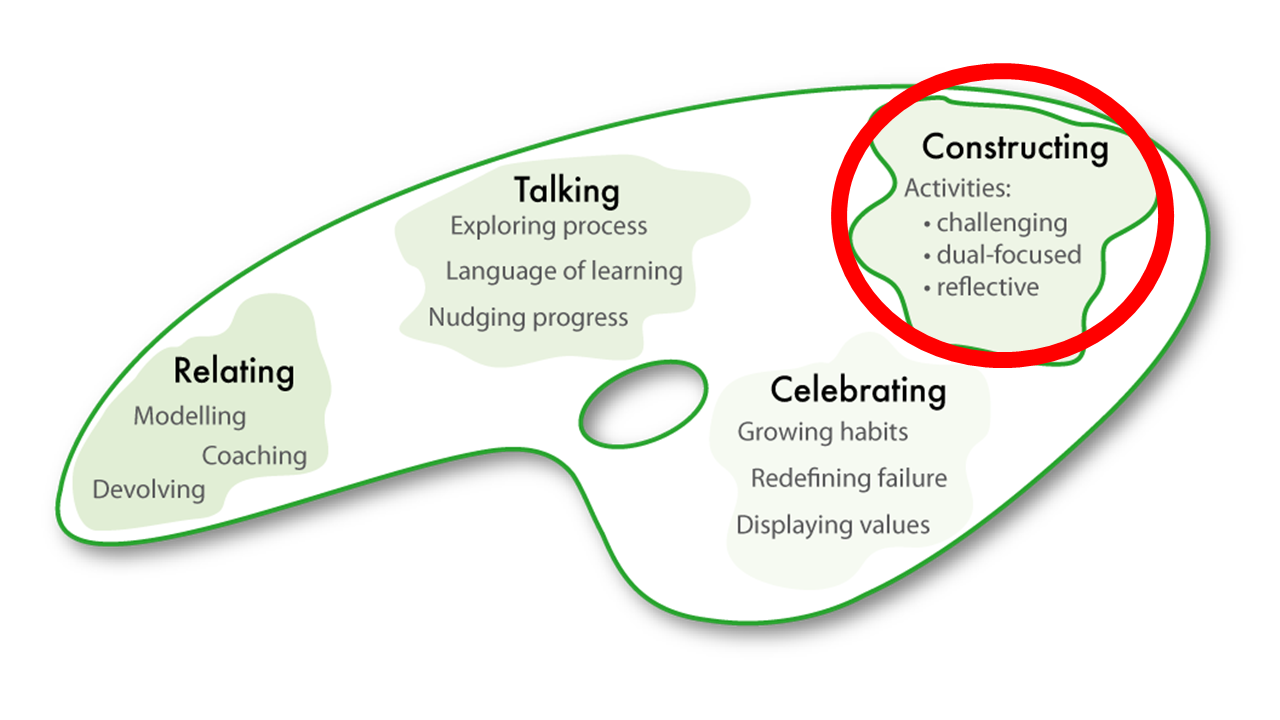
Constructing lessons with learning in mind
Use the interactive grid below to navigate this section. Clicking on any of the cells with blue text takes you to one of the 16 sections – 4 learning behaviours, each with 4 categories.
For each of the 4 foundational learning behaviours you will find 4 categories:
Some visible thinking routines to activate each behaviour;
Some activities to strengthen each behaviour;
Some strategies for checking how each behaviour is developing;
And a complete lesson designed to activate each behaviour.
Explore over 100 ideas that help you to blend learning behaviours into lesson design.
This meeting explores the activities that you can use to blend content and learning behaviours.
This meeting is positioned and designed to enable you to:
Look back over and discuss with colleagues the progress you have made with your personal action plans relating to Unit 3, sections 3A, B and C, that you devised at the previous meeting, and . . .
Share your responses to your reading in Unit 3, section 3D.
Draw up a personal action plan for how you will take your practice forward based on further exploration of the ideas in 3D.
Share reports of how learning powered lesson plans have worked (20 mins)
Discuss the online materials that people have looked at in Unit 3D (15 mins)
Consider possible policy issues for the school (5 mins)
Personal Action Planning (20 mins)
Review the meeting process (5 mins)
1. Session objectives: What do we want to achieve? (5 mins)
Objectives should include:
learning from what and how our Action Plans have worked in different classrooms;
feeling confident to take forward ideas from online materials into our practice;
proposing actions that would benefit if everyone applied them in their practice;
planning further personal developments in classroom practice.
2. Reports from classroom enquiries (15 mins)
Share and discuss teachers’ practice; a valuable source of learning for everyone.
what you each tried to change or try out in your lesson planning
how it worked
what you could/did change to make it work better
how students reacted
whether there may be longer term benefits for students
Ask each other questions, offer suggestions and learn from each other.
Remember…everyone is supposed to report back to every meeting.
This isn’t a simple show-and-tell session but one where the group question and probe their colleagues’ summaries of what they have done to encourage analysis and deeper reflection.
Questions to encourage deeper thinking include:
What do you think is getting in the way?
What would make this better?
How did students react to that change?
How could this technique be modified to make it work better for you?
What do you think made that work so well?
3. Recap on-line materials in Unit 3, section 3D: What the materials made us think (15 mins)
You will have been looking at and using the Catalogue of activities for a month or so now. What have you been trying out? What more do you want to experiment with?
Try a PMI (Plus, minus, interesting) routine to help sort out your thinking.
Think about:
how the ideas would suit your students as learners
which are realistic both for you and your students
how the ideas would impact on your classroom culture and the students view of themselves as learners
which ideas are front runners and why?
Use this decision making pentagon in deciding what to do you might try.
Note down a couple of:
things you want to start doing
things you think you need to stop doing (that’s harder)
things you want to keep doing
things you want to do more often
things you want to do less
4. Propose what may be needed across the school. (5 mins)
The point here is to identify ideas that are sufficiently important that they;
should be included in everyone’s action plan
i.e. you are sufficiently keen on some of the ideas that you all want to try them in one form or another
should be adopted by everyone as a whole school strategy
i.e. when discussions over time have concluded that some ideas have proved so useful across the school they should be woven into school policies or procedures.
Some of the ideas suggested in the on-line materials are likely to make greater impact if they were to be adopted by everyone across the school. For example, you could all agree to adopt 2 or 3 Visible Thinking Routines that appear to be making an impact and trial them with all classes as and when appropriate.
5. Personal action planning. What am I going to do? (20 mins)
Think about what you are trying to achieve.
Plans at this stage should be linked to what you are learning from section 3D, but also linked to what you discovered in sections 3A/B/C. Gain more value from your plan by creating it around a question. Think of it as an If:Then problem.
For example:
If I make frequent use of the VTR ‘See, Think, Wonder’, will it develop my students’ attentive noticing as a springboard into improving their thinking skills?
(See this VTR in Unit 3, Section 3D, Catalogue of Activities, VTR Questioning)
The learning enquiry plan is a record of what you intend to do. It takes your enquiry question from what to how. Remember:
you can choose which aspect(s) of classroom practice to focus on;
think about the aspect that is likely to have the greatest benefit for your students;
make the plan specifically focus on development;
concentrate on no more than two or three actions;
decide how to map your actions over the next three or four weeks;
it’s useful to think about what you are going to do less of to make room for the changes.
As part of your plan it’s important to record what you will monitor over the weeks.
Changes you expect to see in your classroom practice. For example what do you expect to:
see yourself doing differently?
hear yourself saying more often, with greater commitment, more effectively?
look out for in order to find out which approach best suits most students?
feel less stressed about? What will indicate that?
monitor to make sure that the changes you are making are having an impact of your students?
Changes you expect to see in your students. For example do you expect students to:
begin to take greater responsibility for their own learning;
be more inclined / better able to talk about learning;
be better able to recognise/ describe how they are learning;
show a deeper understanding of the process of learning;
other.
Noting such changes will motivate you to continue with your experiments because the changes in students are almost always positive. The plan represents a promise to do it. This promise helps you to keep the plan as a priority in your mind.
The level of critical analysis which is part of small research projects has been designed/built into the Enquiry Question and Action Planning forms. In other words their very design helps you to develop effective research focused questions and provoke evidenced based reflection.
6. Evaluate team session: How did we do as a team? (5 mins)
Did we achieve our objectives?
Are we comfortable with what we are trying to achieve?
Any concerns at this point?
Next meeting date and time.
You are now in Unit 3, section 3D.
Use the Section Navigation Bar below to find your way around the sections of Unit 3.
You are now in Unit 3, section 3C. Activity design to stimulate learning habits
A. The intention of this section is to..
…introduce you to descriptions of different groups/types of learning activities, and to invite you to reflect on the types of activities that you routinely organise for your students. The different activity types are ordered to illustrate increasing levels of learner independence.
B. The best way of tackling this section is to..
…read through the descriptions of activity types, thinking about which activity types you tend to favour in your own planning.
Timing. This will be a relatively quick read, but the analysis of activities in a unit of work (3C.8) might take a little longer and may benefit from being undertaken with a colleague.
While this looks like a relatively quick and interesting read it’s packed with information you may not have come across in this form previously. It’s a section you may want to return to for reminders again and again.
Unit 3, Team Meeting 1. Scheduled at the end of this section, considering Unit 3, Sections 3A, 3B and 3C.
C. As a result it should have the following impact.
You will have a heightened awareness of the activities you tend to gravitate to, and an understanding of how you might broaden your repertoire .i.e. your learning here is for later use.
3C1. Activity design categories
Types of Activities
All teachers design activities to help their students to access and understand the content of the lesson. These activities lie at the heart of lesson planning, linking what is to be learned with how it will be learned. While it is impossible to list all such activities, is it possible to discern some different types of activities, to identify some overarching categories or groups of activities?
Here we try to suggest a hierarchy of activity types, going from ‘Listening’, through to ‘Discovery’. This progression of activities: demands more of students; activates a wider/richer range of learning behaviours; and is underpinned by a shift of responsibility from the teacher towards the learner.
As you read through this section, think of the activities that you plan for your students and ask yourself which activity types you tend to favour. Also consider how you might adapt/tweak your usual activity types to offer students greater responsibility for their own learning.
3C2. Activity Type – ‘Listening’
The characteristics of a ‘Listening’ type activity are that:
the outcomes, success criteria and content known to the teacher;
students learn by listening to teacher exposition.
Essentially a relatively passive experience for learners unless the teacher overlays an activity that requires students to do more than simply listen. Nonetheless the fact that the activity is rooted in the exposition of ‘an expert’ (this ‘expert’ could be the teacher, or a U tube clip, or some other source of ‘expertise’) means that levels of learner independence are limited and the classroom culture is heavily teacher-focused.
This is not necessarily a bad thing – there are occasions when teachers must tell students ‘stuff’, and this is particularly the case when students would have no way of discovering the information for themselves. Used sparingly and only when necessary it is a valuable tool in the teacher’s arsenal, but used excessively or when not necessary it reduces students to being spectators rather than participators.
3C3. Activity Type – ‘Practising’
The characteristics of a ‘Practising’ type activity are that:
the outcome, success criteria and content are known to learners;
students engage in rehearsal or reinforcement or retrieval of content/skill.
Strategies might include: Past papers; Practice tests; Multiple choice tests; Quizzes; Writing an essay; Answering a spoken question; Testing yourself on your notes / flash cards; Creating (and answering) your own questions; Testing others and/or being tested by others.
Used for consolidation rather than new learning, ‘Practising’ is about helping students to struggle to recall something. When we struggle to remember something, it primes our brain to remember it more easily the next time we look. The brain gets the message that this memory must be important because we are looking for it. The more times we try and retrieve something, the stronger the memory gets. But it is the struggle that is important. If we reteach content instead of getting students to try and retrieve stuff they’ve probably forgotten, the memory does not get strengthened in the same way. It seems kinder but actually does students no favours.
The retrieval effect is stronger if we allow a bit of forgetting to happen before getting students to retrieve. Memories get stronger once retrieved if we have had time to forget them – bizarre as that sounds. Hence the need to spread such activities out into future lessons, spaced learning as it is sometimes called.
3C4. Activity Type – ‘Manipulating’
The characteristics of a ‘Manipulating’ type activity are that:
students are given all of the information to work with;
students have to manipulate the information by organising / sorting / ranking / sequencing.
Students begin ‘Manipulating’ type activities having been given all of the necessary information, usually broken up into smaller pieces. The task is to make sense of these pieces and to re-build the whole. Re-building may require students to: sequence the information (a story or poem or historical events etc.); rank the information using some agreed criteria (Ranking); sort any information with an underlying pattern that can be discerned or created (Mushrooms – see ‘Activities to strengthen Revising’ in section 3d for detail on this activity).
For more ideas, there are a number of ‘Manipulating’ type activities in The Teachers’ Toolkit (by Paul Ginnis), including ‘Ranking’.
The characteristics of an ‘Assembling’ type activity are that:
the information is given but is hidden / obscured;
students have to sort the information, judge its relevance, and make sense of it for themselves.
Like ‘Manipulating’ in some ways, ‘Assembling’ differs in that although all the information is provided, it is obscured and students need to make judgements about its importance / relevance. It is this need for a critical appraisal of the information provided that sets ‘Assembling’ apart from ‘Manipulating’.
Consider the example given opposite – building a credible account from a range of sometimes conflicting eye witness statements. Remove all of the conflicting or possibly biased statements and the task is reduced to synthesising similar statements into a credible account. No need to think critically about the statements, just create a summary. The effect is to reduce an ‘Assembling’ type task into a ‘Manipulating’ task.
‘Murder Hunt’ (see below) is an ‘Assembling’ activity because students need to identify and eliminate all of the irrelevant information and red herrings. Remove the irrelevant information in advance and it becomes a ‘Manipulating’ activity, organising the relevant clues without the need to think critically about their relevance.
Likewise, a ‘Manipulating’ activity can be turned into an ‘Assembling’ activity with a few tweaks. In its ‘Manipulating’ format, Tin Tin is little more than a jigsaw puzzle. But – adding a couple of pieces from a similar but different Tin Tin cartoon, or even removing a couple of key pieces and inviting students to create their own replacements, introduces the need for a more critical, ‘Assembling’ type approach.
For more ideas, there are a number of ‘Assembling’ type activities in The Teachers’ Toolkit (by Paul Ginnis), including ‘Murder Hunt’.
The characteristics of an ‘Enquiry’ type activity are that:
the outcome is known, success criteria are known, content is known, but the method is unknown;
students determine their method for themselves.
The ‘Rock Salt’ activity was planned by a teacher in Glasgow who was exploring how he could give more control to his students. Read more about it and the impact it had on both himself and his students in the toggle below.
What price control? How one school is starting to do things differently.
One of our consultants was working recently with a school that provides education for secondary aged children with social, emotional and behavioural needs, on full and part time placements. Additionally it offers support for primary aged pupils on a similar basis. They had undertaken a couple of days training, and the 12 teachers were set the challenge of undertaking a learning enquiry.
Typically such an enquiry is conducted in an area of interest for the individual teacher, and might be along the lines of:
‘If I assign roles to individuals before starting group work, will their inclination to engage purposefully with each other improve?’ or ‘If I stop repeating myself, will their listening skills improve?’ etc.
Notice that the teacher makes a conscious decision to change one of their existing teaching behaviours and monitors the impact that this has on their students.
The third day began with all 12 feeding back on their enquiries and the impact on their students. The feedback was fascinating in that all teachers had devised, quite independently, an enquiry that required students to take a greater responsibility for themselves as learners.
A science teacher described one of the enquiries thus:
“I’ve got my kids to do the experiment where they make salt from rock salt for years. Thus far I would tell them all they need to know to be successful, demonstrate the experiment to the whole class, and then ask them to repeat the experiment exactly as I had done it. It gave me control, took care of safety issues, and was as boring as it can get! Why, if you have just seen someone else do the experiment, would anyone be motivated to repeat it for themselves?
I explored my rationale for teaching in this way, and realised that, control aside, I believed that it enabled me to ‘deliver the course’, to ‘make sure’ they all had the revision notes they need, and to ‘convince myself’ that I had taught it well so that they simply must have learned it well. On reflection, this strategy was failing on all counts. Either I would have to re-double my efforts and ‘teach’ even more/better, or maybe there was another way . . . .
With trepidation, I went in with a lump of rock salt and a bowl of salt, and set them the challenge ‘I want you to find out how to make this (salt) from that (rock salt)’. I then sat down, refused to answer any further questions or offer guidance – and it was agony for someone so used to being the font of information in the classroom!
(I admit to making a couple of interventions relating to the safe use of Bunsen burners, but that aside I just let them get on with it.)
What a revelation! They all devised ways to make salt; they discovered the science behind it; they needed minimal external control; and I got a bit of a rest.
The students reported increased enjoyment levels, I reported reduced stress levels, and tests revealed a deeper scientific understanding than was previously the case.
My kids are challenging and frequently disruptive, so much so that mainstream schooling cannot handle them. How amazing that I gained more control and they achieved deeper learning when I stopped teaching for control and started letting them learn.
I realised that these kids need challenge and engagement, not control and instruction. I was afraid this change of approach would slow content learning down, but I was wrong. The learning was deeper and faster because they had done it for themselves, rather than observed it through the eyes of a science teacher. My kids were being scientists, not learning science.”
The room erupted with similar stories of potentially difficult students rising to challenge and ‘doing it for themselves’. One teacher commented “We never really believed our students could do this, but we were wrong!”
When asked what the common threads were through all of their enquiries, one teacher simply said “student power – give them responsibility and they will rise to it”.
Ask yourself what a comparable enquiry type activity in your own classroom might look like. What might be holding you back from giving it a go, or from using an activity of this type more frequently?
3C7. Activity Type – ‘Finding – Discovery’
The characteristics of a ‘Discovery’ type activity are that:
the outcomes are unknown, the success criteria are unknown, the content is unknown, or at most loosely defined;
students determine their own intended outcomes, success criteria, content and method for themselves.
Designing ‘wild tasks’.
Much of the time, classrooms are structured to ‘deliver’ the curriculum. Tasks are carefully designed by teachers to ensure that every child gets their pre-determined dose of curriculum content, content that can be assessed so that progress can be evidenced. But what if we occasionally design tasks that are ‘wild’, that have no pre-determined outcomes, that give learners free rein to explore areas of their own interest?
Begin by asking students to identify questions to which they would like to know the answer – as one school calls them, ‘big awe and wonder questions’. You may choose to sift them so that everyone chooses from a range of questions that the class consider of greatest interest rather than allow complete freedom of choice. Students then design and undertake their own enquiry into their preferred area of interest as a home learning project. Agreed, you could not operate like this all of the time (or could you??!!), but once in a while? What could possibly go wrong? What might the benefits be?
3C8. Survey your curriculum for task types
Take a look at a unit of work you have taught recently or are about to. Use this task type wheel to try and estimate how much use you make of these different types of tasks.
What might the ideal pattern look like for a unit of work for different subjects?
If your results show mainly listening and practising how might you start thinking more widely? Take a look at the selection of teaching activities shown in section 3D.
So far you have been developing your practice to ensure that your classroom culture becomes increasingly learning-friendly. This meeting begins the process of how you can construct curriculum plans that blend content and learning behaviours.
This meeting is positioned and designed to enable you to:
Look back over and discuss with colleagues the progress you have made with your personal action plans relating to Unit 2, classroom culture that you devised at the previous meeting, and . . .
Share your responses to your reading in Unit 3, sections 3A, 3B and 3C and…
Draw up a personal action plan for how you will take your practice forward based on further exploration of the ideas in 3A/B and C.
Share reports of how learning powered lesson plans have worked (20 mins)
Discuss the online materials that people have looked at in Unit 3, sections 3 A, B and C (15 mins)
Consider possible policy issues for the school (5 mins)
Personal Action Planning (20 mins)
Review the meeting process (5 mins)
1. Session objectives: What do we want to achieve? (5 mins)
Objectives should include:
learning from what and how our Action Plans have worked in different classrooms;
feeling confident to take forward ideas from online materials into our practice;
proposing actions that would benefit if everyone applied them in their practice;
planning further personal developments in classroom practice.
2. Reports from classroom enquiries (15 mins)
Share and discuss teachers’ practice; a valuable source of learning for everyone.
This involves thinking back to what you have been putting into practice over the last few weeks from your last Action Plan. It covers;
what you each tried to implement using ideas from Unit 2, section 2D, a catalogue of ideas
how they worked
what you could/did change to make it work better
how students reacted
whether there may be longer term benefits for students
Ask each other questions, offer suggestions and learn from each other.
Remember…everyone is supposed to report back to every meeting.
This isn’t a simple show-and-tell session but one where the group question and probe their colleagues’ summaries of what they have done to encourage analysis and deeper reflection.
Questions to encourage deeper thinking include:
What do you think is getting in the way?
What would make this better?
How did students react to that change?
How could this technique be modified to make it work better for you?
What do you think made that work so well?
3. Recap on-line materials in Unit 3, sections 3A, 3B and 3C: What the materials made us think (15 mins)
The materials in these sections concentrated on the stages before actually teaching i.e. giving learning behaviours recognition and value by embedding them ever more skilfully into curriculum and lesson plans.
Try a PMI (Plus, minus, interesting) routine to help sort out your thinking.
Think about:
how the different task types would suit your students as learners
which task types of curriculum planning ideas are realistic both for you and your students
how the ideas would impact on your planning and classroom culture
which ideas are front runners for you and why?
Use this decision making pentagon in deciding what to do you might try.
Note down a couple of:
things you want to start doing
things you think you need to stop doing (that’s harder)
things you want to keep doing
things you want to do more often
things you want to do less
4. Propose what may be needed across the school. (5 mins)
The point here is to identify ideas that are sufficiently important that they;
should be included in everyone’s action plan
i.e. you are sufficiently keen on some of the ideas that you all want to try them in one form or another
should be adopted by everyone as a whole school strategy
i.e. when discussions over time have concluded that some ideas have proved so useful across the school they should be woven into school policies or procedures.
Some of the ideas suggested in the on-line materials are likely to make greater impact if they were to be adopted by everyone across the school. For example if you all decide to begin planning learning behaviours into lesson plans, it may be necessary to adapt the school’s existing planning proforma to ensure a consistency of approach.
5. Personal action planning. What am I going to do? (20 mins)
Think about what you are trying to achieve.
Plans at this stage should be linked to what you learned from Unit 3 Sections A.B.C. Gain more value from your plan by creating it around a question. Think of it as an If:Then problem.
If I introduce ‘Mystery object in a bag’ will it strengthen my students’ tendency to question?
(Find this activity in the Unit 3, Section 3D, Catalogue of Activities, Activities to strengthen Questioning)
The learning enquiry plan is a record of what you intend to do. It takes your enquiry question from what to how. Remember:
you can choose which aspect(s) of classroom practice to focus on;
think about the aspect that is likely to have the greatest benefit for your students;
make the plan specifically focus on development;
concentrate on no more than two or three actions;
decide how to map your actions over the next three or four weeks;
it’s useful to think about what you are going to do less of to make room for the changes.
As part of your plan it’s important to record what you will monitor over the weeks.
Changes you expect to see in your classroom practice. For example what do you expect to:
see yourself doing differently?
hear yourself saying more often, with greater commitment, more effectively?
look out for in order to find out which approach best suits most students?
feel less stressed about? What will indicate that?
monitor to make sure that the changes you are making are having an impact of your students?
Changes you expect to see in your students. For example do you expect students to:
begin to take greater responsibility for their own learning;
be more inclined / better able to talk about learning;
be better able to recognise/ describe how they are learning;
show a deeper understanding of the process of learning;
other.
Noting such changes will motivate you to continue with your experiments because the changes in students are almost always positive. The plan represents a promise to do it. This promise helps you to keep the plan as a priority in your mind.
The level of critical analysis which is part of small research projects has been designed/built into the Enquiry Question and Action Planning forms. In other words their very design helps you to develop effective research focused questions and provoke evidenced based reflection.
6. Evaluate team session: How did we do as a team? (5 mins)
Did we achieve our objectives?
Are we comfortable with what we are trying to achieve?
Any concerns at this point?
Next meeting date and time.
You are now in Unit 3, section 3C.
Use the Section Navigation Bar below to find your way around the sections of Unit 3.
You are now in Unit 3, section 3B. Designing units and lessons
A. The intention of this section is to..
..explain how you might begin to integrate learning behaviours into units of work and lessons. In a sense it lies at the core of learning power.
It’s a significant content rich section and essential pre-reading before looking at the Activity Catalogue in section 3D.
B. The best way of tackling this section is to..
Read it straight through first. Identify how this process differs from the one you currently use for lesson design. Work through it again and identify any sticking points.
Note the questions you may have about this process and discuss these at your next Team meeting.
C. As a result it should have the following impact.
Try this unit and lesson planning process when you come to section 3D, the Catalogue of Activities where you will find lots of suggestions.
It’s fair to say that learning to integrate the development of learning power into lessons will take some time and may feel strange at first. Be kind to yourself and allow yourself plenty of time to become skilful.
3B1. Shaping schemes of work
Planning schemes or units of work has become more complicated over the last few years of the ‘knowledge rich’ curriculum. Time must now be given to the ideas of interleaving, retrieval practice and meta-cognition to name but three. With all this to accommodate in a crowded curriculum one can be forgiven for thinking there can’t possibly be room for more. How and where can we give room to building learners learning power?
In sections 3B3 to 3B5 we tackle schemes of work
In sections 3B6 to 3B10 we tackle lesson planning
The complexity of planning!
3B2. Making a start
Many schools have adopted the interesting planning sequence shown on this diagram. Firstly the block of time (say 6 weeks or 12 weeks) is broken into three types of purpose;
Connecting to (or Finding) content using an open ended challenge to find out what students know already
Stretching.. ways of delivering content using all sorts of activities but which stretch the students’ learning behaviours (see section 3C)
Transfer… which is an open ended task used to see if students can apply what they have learned.
So the broad sequence of a scheme of work consists of …
a connecting activity to start it off
a block of time using both connecting and stretching activities to build knowledge
a transfer activity somewhere in the middle to see how things are going
the addition of trips or visits to enhance the learning activities
another block of time for stretching activities
ending with an open ended transfer activity to evaluate, knowledge, skills, concepts
The broad curriculum function map.
3B3. Stages of making Unit and Lesson plans
The stages of planning, with learning behaviours added in, goes like this;
Scope the content…what has to be covered?…what do we need to teach?
Scope broad curriculum learning goals…what do students need to learn, be able to do?
Incorporate interleaving and retrieval practice…how can we ensure students’ learning is sound?
Add broad brush learning behaviours suggested by learning goals…which learning behaviours fit best, where?
Add learning activities…what types of activities, using these behaviours, will challenge students?
NOW Move into lesson planning (see3B6 below)
Develop learning goals linked to learning behaviours
Include learning activities (increasingly open-ended)
Deepen learning behaviours to the level of the progression charts
Routinely include reflection
So that students strengthen as independent, self-regulated learners and so learn how to manage a knowledge rich curriculum.
The daunting yet exciting challenge of filling this in!
3B4. Map in content, goals, and retrieval practice
Take a look at the plan alongside. Notice first that the columns, each relating to a period of time (e.g. a lesson, or 2 lesson block or an afternoon) have been divided into the Connect, Stretch, Transfer phases. This gives you an idea of what type of learning activities you might be looking for in those slots.
Areas of content are carefully structured into the time slots and then divided into content to be taught and content for retrieval practice (content to be checked). Hence content on Circulation is taught in slot 4 and then recalled again in slots 5,6,7 and assessed in slot 8. Finally circulation is the subject of a Transfer task in slot 10 which means an open ended task that will show whether students can apply what they have learned. This sort of pattern is replicated for some other content areas across the unit.
Retrieval practice
Retrieval practice is a strategy in which bringing information to mind enhances and boosts learning. Deliberately recalling information forces us to pull our knowledge “out” and examine what we know.
Most importantly, any retrieval practice exercises should always be low stakes – they are not graded.
Notice how spacing, interleaving and retrieval practice spaced across content and time slots
3B5. Add broad brush learning behaviours
A later iteration of the unit plan shows slight changes in checking learning with more emphasis being given to assessment in slot 5 and 8. But the big addition here is the addition of learning behaviours. Although not evident in this paperwork the learning behaviours to be used have emerged from the learning goals for each slot. Teachers asked themselves ‘if we want students to achieve xxx what sort of learning behaviour(s) will they need to use to really understand this content?’. Note that at this stage all we know is the name of the learning behaviour to be used but not how it will be used.
As you may have noticed from section 3A we are now at stage 4 planning. We need to move into planning for each session to move into stage 5 planning.
The addition of learning behaviours
3B6. Move into lesson design
All lessons function on two levels, they have twin intentions. On the one hand there’s content to be acquired, and on the other there are learning behaviours being exercised in pursuit of this content. What differentiates learning powered lessons is that teachers actively plan for both.
Three fundamentals of lesson design
Fundamental 1: Ask just one more question
The diagram alongside shows the questions teachers need to ask themselves when designing learning activities;
1. What do students need to understand about/from this content? i.e. the learning outcomes or goals
2. Using which learning behaviour? i.e. which behaviour would be the most useful/valuable
3. By doing what? What sort/type of learning activity fits best here?
You are used to asking questions 1 and 3 but question 2 is new; it forces you to think about which learning behaviour would be the most appropriate.
Fundamental 2: Design increasingly open-ended activities
to engage, to stretch and to challenge. Try not to over-scaffold the learning, making sure the inherent difficulties in the learning are not avoided or diluted by an overly-helpful teacher. The activities you offer should stretch and challenge both content understanding and learning behaviours.
Fundamental 3: Routinely build in reflection
on content and reflection on learning behaviours into lessons. Review points, rather than the formulaic plenary, should focus students on what they have learned and how they have learned it. Try to ensure reflection is undertaken by students for themselves, not by you on their behalf.
Design your lessons so that they intentionally deliver content and to exercise learning behaviours, and make your students aware of both. The learning behaviours drive the content acquisition, the content is the exercise regime for the learning behaviours, each enhancing the other.
Whether we realise it or not, all lessons have a dual purpose:
The content dimension, with material to be mastered
The ‘epistemic’ dimension, with some learning skills and habits being exercised.
But which learning behaviours do we need to exercise?
In conventional lessons where a teacher remains the focus of attention and the initiator of all activity, and where the epistemic dimension is not acknowledged, students can gain habits of compliance and dependence, rather than curiosity and self-reliance.
In developing learning power, you, the teacher, are making conscious choices about which habits to introduce and stretch and how best to couple these with content so that lessons become more interesting and challenging. Through such overt coupling of content and specific types of process, students come to know, understand and take control of their learning behaviours – they knowingly use and develop the whole range of learning behaviours.
Ask yourself:
‘How are my students going to learn it?’ rather than ‘How am I going to teach it?’
2: Rich and challenging activities
Here the idea is to gradually design more open-ended activities to engage, to stretch and to challenge. Try not to over-scaffold the learning, making sure the inherent difficulties in the learning are not avoided or diluted by you being overly-helpful. The activities you offer should stretch and challenge both content understanding and learning behaviours.
Learning is always an emotional business and learning how to manage this is best done in the course of learning. Emotional engagement is a prerequisite of powerful learning, it’s what gets you interested enough to be willing to put in the effort to get better and see the value of pushing yourself. So your lessons aren’t just designed to make use of different kinds of learning behaviours but to give those behaviours a good work-out. Activities are designed to:
be challenging, where being stuck and confused are regular and fruitful experiences.
give students the opportunity to ‘learn what to do when they don’t know what to do’ – to work on wild tasks, rather than tame ones, where there’s plenty of scope to get lost and perplexed.
“The presence of challenging learning intentions has multiple consequences. Students can be induced to invest greater effort, and invest more of their total capacity than under low demand conditions.”
(Hattie, Visible Learning)
Ask yourself:
What proportion of tasks in my lessons are rich and challenging?
3: Lessons with in-built reflection
Build in reflection on content and reflection on learning behaviours routinely into lessons. Review points, rather than the formulaic plenary, should focus students on what they have learned and how they have learned it. Reflection should be done by students for themselves, not by you on their behalf.
Build in lesson review points – so that students reflect for themselves
The importance of reflection in the learning process is well documented. We don’t learn simply by doing, we learn by doing and by reflecting on what we have done and how we have done it. But lesson review points (or plenaries) are often teacher-led. Too often reflections are a just a recap of what teachers wanted students to learn – little more than a restating of the learning intentions and a quick check of student understanding. Students need the opportunity to reflect for themselves on what they have learned and how they have learned it.
It might be as simple as students talking in pairs to distil:
three things they have learned today;
three things they still need to find out;
three ways they learned today;
three things they hope to do next lesson.
Select a couple of pairs to feed their opinions back to the class. The advantages for you are:
You get to hear what students think they have learned, as opposed to them getting to hear what you think you have taught them;
You get a rest at the end of the lesson while they do their reflection activity.
Ask yourself:
To what extent is Reflection on either content or process a consistent feature in your classroom?
3B7. A note about learning goals
Link goals and activity
Evidence shows that goals that relate to doing something or researching something, or creating something . . . are better motivators than goals that relate to knowing something. Hence, in putting a lesson together the 3 key questions are;
what is to be learned? (goals)
by students using which learning behaviour (s)?
by doing what sort of activity?
Put the ‘how’ before the ‘what’.
A goal relating to ‘understanding xxxxx’ or ‘knowing yyyyy’ is less likely to motivate a learner to make the effort than a goal that starts with some indication of the sort of ‘effort’ or way of doing something. For lessons where you are engaging students’ questioning habits, set the lesson off with goals that start by picking out the questioning skills they will need to use to complete the task effectively. For example;
using your xxx (closed/open/sifting) questioning skills work out/identify…
Use 5 closed questions to see what you can discover about…..using xxx resource
use at least 5 open questions and xxx resource to find out why…….
using no more than 10 ‘what if’ questions, see if, together, you can improve this account of…
work out your questioning strategy to work out the truth about…
Goals should start with the sort of effort you want them to make.
Learning intentions need to pay attention to how students will be learning as well as what they will be learning.
3B8. Activities
Section 3C explores different activity types, and considers how these activity types trigger and require varying levels of learner independence. From highly teacher-focused activities that demand little more than attentive listening of the learner, through to ‘Finding’ type activities that depend on both high levels of learner independence and that learners are capable of accessing the content with minimal direct instruction, the activities that teachers choose are critical to the success of their lessons.
To select appropriately challenging activities you, the teacher, need to have a good understanding of the content matter and where the tricky bits are likely to lie, and also a deep understanding of your learners’ current understandings and levels of independence. The holy grail is to select learning activities that make accessing the content both demanding and achievable.
As one teacher said to us recently, “I became a better teacher the day I stopped thinking ‘have I made it easy enough for them to understand?’ and started thinking ‘have I made it hard enough to stretch them?'”
The greatest mistake that teachers can make when selecting activities is to depend too heavily on the types of activities that sit well with their preferred teaching style – variety is key, so that the chosen activities are well-matched to learners and offer the full range of activity types over a series of lessons.
Go to section 3C for more detail on activity types.
3B9. Deepening progression levels
The first of the 3 fundamentals of lesson design in section 3B6 above, is that all lessons have a dual purpose:
The content dimension, with material to be mastered
The ‘epistemic’ dimension, with some learning skills and habits being exercised.
Itemising these ‘learning skills and habits’ at the unit planning stage is likely to be at the ‘broad brush’ level, whereas planning at the level of individual lessons requires greater precision. While it may be sufficient to identify ‘Collaboration’ as a learning behaviour in the unit plan, once teachers are planning at the level of the individual lesson, simply saying ‘and today we will need to use our collaboration skills’ is not overly helpful. Students need to be aware of which particular collaboration skills are required.
In other words, the unit plan may mention a learning skill like ‘collaboration’, but the lesson plan will identify specific learning skills drawn from the collaboration progression chart.
Read more about planning that infuses learning behaviours into lessons in section 3A.
3B10. Make reflection routine
In the last few years teachers have come to know and understand much about meta-cognition and self-regulation.
Metacognition…is about monitoring and controlling your thought processes.
Self-regulation…is about monitoring and controlling your feelings and behaviours.
The two come together in Self-regulated learning…the application of metacognition and self-regulation to learning.
These approaches, which have always been at the heart of developing learning power, aim to help students think about their own learning more explicitly, often by teaching them specific strategies for planning, monitoring and evaluating their learning.
The resource alongside, which may sit on a table or be displayed on the classroom wall, is designed to enable students to reflect on their use of their collaborative learning behaviours in a lesson or over a day.
In the catalogue of activities in 3D you’ll find several similar useful tools to aid meta-cognition.
You are already highly skilled in putting together and delivering lessons that are planned to enhance and further your students’ knowledge. So, you may well ask what more is needed, what more is worthwhile? The ‘what more’ has to do with helping students to become better learners; to unlock their learning behaviours so that students become aware of what these behaviours are, know how they work, sense when to use them and want to improve them. All you have to do to your lesson planning is to become aware of which different types of activities stimulate which learning behaviours and plan them into your lessons!
It sounds straightforward, even easy, but we have learned from experience that it takes a while to become graceful at designing and running such lessons. To help you out we put together a self-coaching sheet offering you the questions you need to ask yourself in designing a learning powered lesson. We have also added some suggestions of where to go looking for solutions in the Catalogue of Activities in Section 3D.
Some pointers
Aim to build knowledge and offer students more control i.e.help them become meta-cognitive, self-regulated learners.
Be clear about which learning behaviours you want students to use and match your language to them.
Ensure students are actively engaged and curious to make sense of what is happening.
Start with a Connect task to find out what students can do.
Grapple Tasks are useful when you make sure it relates to and tees up the upcoming learning.
Think Pair Share can encourage students to think about and discuss their grappling efforts.
New and extending information can be delivered via teacher exposition but also via a range of ‘manipulating’ and ‘assembling’ activities.
Tune your language to student questions, what they notice, how they work in a group, how their understanding develops as they wrestle with further examples.
Ensure reflection and review focuses on their use of learning behaviours as well as content understanding.
You are now in Unit 3, section 3A. The big picture of curriculum planning
A. The intention of this section is to..
…alert you to the transition from content-only planning, through to planning that weaves together the content to be acquired, the planned activities and the learning behaviours that are being developed and grown. Ultimately it is about the content being the vehicle for growing learning behaviours, while the developing learning behaviours aid and speed the content acquisition.
B. The best way of tackling this section is to..
…read it through, thinking about your own curriculum planning and where it fits in this pattern of progression in integrating learning behaviours into curriculum plans.
Timing. A short read and awareness raising section.
C. As a result it should have the following impact.
In the longer-term there are implications for how you plan your curriculum, medium term plans, and individual lessons as you become increasingly aware of the learning behaviours needed to access the curriculum and/or activated by the planned activities.
Essentially you will come to a stark reality….that unless you plan as described by level 5 (shown in 3A6 below) the delivery of your curriculum will have little impact on students’ learning behaviours.
3A1. The whole picture
Traditionally curriculum planning has identified what is going to be taught, how it is going to be taught, and how success is going to be assessed. Such planning has traditionally been wholly content and teaching related, with no reference to the learning behaviours necessary for accessing the content.
In this section we consider the transitionfrom content-only planning through to curriculum planning that integrates progression in content with progression in learning behaviours.
Here’s an outline of the whole transitional journey.
3A2. Knowledge you are aiming for.
Planning at this simplistic level describes what is to be taught, and in what order. The content is defined and sequenced. There’s little reference to how the curriculum might be delivered or how it might be assessed, and certainly no reference to the learning behaviours necessary for success.
In terms of the teachers’ palette diagram:
Outcomes for teaching…responsibility for learning lies exclusively with the teacher, talk is about content, lessons are constructed to ‘deliver’ the curriculum according to individual teacher’s preferred delivery styles, performance is celebrated.
Outcomes for learning…students are there to be taught what they need to know, students don’t think about or know how they learn, learning is about knowing stuff and getting it right.
3A3. The ‘how’ of delivery
Adding the ‘how’ of delivery to the content to be delivered serves to guide teaching and maybe define the activities that will be undertaken. This level of planning ensures greater consistency of delivery across different teaching groups, but is still teaching-focused.
In terms of classroom culture, this level of planning creates a teacher-focused classroom, and depending on the nature of the planned activities, some limited elements of the learner-focused classroom.
Outcomes for teaching…responsibility still lies exclusively with the teacher, talk is still about content, lessons are constructed to ‘deliver’ the curriculum, but delivery is less dependent on individual teacher’s preferred delivery styles and activities are planned / agreed in advance of delivery, successful content acquisition is celebrated.
Outcomes for learning…learning is still focused on content, learners have no awareness of the learning behaviours they are exercising, learning activities are becoming more consistent and engaging.
3A4. Linking subjects and learning behaviours
Linking subjects and learning behaviours can be seen as a step-change in terms of curriculum planning.
At this level, consideration is given in advance to how students will need to be as learners in order to access the prescribed content.
Mostly this is at the level of identifying the key learning behaviours necessary for or activated by different subjects. For example, Mathematics frequently requires students to employ their reasoning and their pattern seeking skills, but some maths topics may also require attentive noticing, or critical curiosity etc. Other subjects will have a different blend of learning behaviours that they exercise on a regular basis.
Still at an early stage, planning now links content with learning behaviours, but at a fairly simplistic level. Subject planning is beginning to include ‘go-to’ learning behaviours, but at least these behaviours are being identified in advance and as such it is now possible to alert students to the learning behaviours that they are expected to employ – it fosters the beginning of dual-focused teaching (sometimes called split-screen teaching), in which both the content to be studied and the learning behaviours to be employed can be built into lesson planning.
Learning is brought out of the shadows and made visible, to both students and teachers.
[A short lesson plan which is part of a unit on ‘Blood and the Circulatory System’ is shown opposite, with learning behaviours shown highlighted yellow.]
Outcomes for teaching…responsibility is beginning to shift towards the learner, talk is predominantly about content, but learning behaviours are beginning to figure in classroom discourse, lessons are constructed to help students to understand how they will be learning the content and learning behaviours are built into lesson objectives. There is a growing recognition that lessons have twin intentions – to learn content and to exercise specific learning behaviours. Successful learning behaviours are discussed and celebrated.
Outcomes for learning…learners are becoming aware of the learning behaviours they are expected to exercise and are coming to understand that there is more to learning than just ‘knowing stuff’. They are beginning to be able to talk about the process of learning, although in relatively simple terms at this stage. Their role is changing as they begin to understand that success is dependent on their learning behaviours.
3A5. Learning behaviours linked to delivery strategies
Linking learning behaviours to delivery strategies takes planning beyond linking learning behaviours to the content that is to be delivered. It recognises that the way that the content is delivered also activates / requires learning behaviours that could / should be identified, planned for and made visible in advance.
Consider a Science curriculum that involves, at some stage, students undertaking a practical experiment.
The skills required to observe the teacher conduct the experiment and then faithfully recreate the experiment as an individual requires skills of observation, listening, attention to detail, following a prescribed plan etc.
Contrast that with the skills required when the teacher puts students into small groups and challenges them to work together to plan how to do the experiment, to identify and gather the resources needed, to conduct the experiment, and to reflect together on how they could have planned it more efficiently.
Same experiment – with different learning behaviours stimulated by how the teacher chooses to organise the activity.
At this phase, the learning behaviours identified will be drawn from a framework like the Supple Learning Mind.
[The same lesson, which is part of a unit on ‘Blood and the Circulatory System’, is shown opposite, with content related learning behaviours and activity related behaviours shown highlighted yellow.]
Outcomes for teaching…responsibility is becoming increasingly shared, teachers are expecting more of learners, direct teaching is diminishing, and teachers increasingly see their role as a learning coach, guiding both content acquisition and understanding of learning, talk is a balance between what is being learned and how it is being learned, and the learning language is becoming ever more sophisticated, lesson construction is dual-focused and makes both the content to be learned and the learning behaviours to be employed visible to learners. A wide range of learning behaviours are noticed, discussed and celebrated.
Outcomes for learning…learners have sensed a shift of focus, away from ‘being taught’, towards taking responsibility for their own learning, they are increasingly aware of their learning strengths and relative weaknesses, they are coming to understand the learning process and themselves as learners, and understand that learning about learning is at least as important as ‘knowing stuff’.
Learning behaviours of the supple learning mind
3A6. Learning behaviours linked to their progress
The holy grail of curriculum planning is: carefully sequenced content related planning that ensures that students’ understanding of their growth as a learner is of equal importance as their progressive understanding of the content matter.
Consider the example of the science planning in 3A5, above. The second strategy included ‘working together’ [or Collaboration as we would call it in terms of the Supple Learning Mind].
But we have a much more elaborated understanding of ‘Collaboration’ through the collaboration progression chart. Depending on the collaboration skill levels of learners, ‘working together’ might become ‘listen carefully to others and share your own ideas’ or ‘contribute to creating and agreeing a realistic team plan’ etc.
At this depth of planning, both the content specific learning behaviours and the activity specific learning behaviours are differentiated by reference to learning behaviours drawn from the relevant progression trajectories.
In terms of making learning visible, planning has moved beyond ‘today you will need your reasoning skills’ to ‘today you will need to able explain your thinking to neighbour and offer evidence to support your thinking’. We have moved beyond simply naming the skill to identifying a particular aspect of the learning behaviour.
Where 3A5, above, was a little blunt-edged, here references to learning behaviours are specific and differentiated to support learner progress.
[The same lesson, which is part of a unit on ‘Blood and the Circulatory System’, is shown opposite, with content related learning behaviours and activity related behaviours drawn from progression charts shown highlighted yellow.]
Outcomes for teaching… learning is a shared responsibility, and has become a shared endeavour between teachers and learners. Teachers make learning and how to get better at learning visible to learners – through talk, feedback and display. Teachers ensure that the curriculum is constructed so that it stretches both content and learning behaviours. Teachers value the growth of learning behaviours equally alongside progress and attainment. The growth in a wide range of learning behaviours is noticed, discussed and celebrated.
Outcomes for learning…learners have taken control their own development as learners. They have a deep understanding of, and can talk fluently about, the process of learning. They are aware of their learning strengths and which aspects of learning behaviours they are seeking to improve, and understand how improving as a learner supports and strengthens their progress and attainment.
You are now in Unit 3, section 3A.
Use the Section Navigation Bar below to find your way around the sections of Unit 3.
You are now in Unit 2, section 2D. Readying your classroom culture
A. The intention of this section is to..
offer a catalogue of teaching ideas, clustered into the 4 foundational learning behaviours . . .
differentiated by the phases of learner development.
It builds on what you discovered about your students’ learning characteristics in Unit 1 and suggests interventions tailored to particular levels of learner development.
B. The best way of tackling this section is to..
Explore the interactive navigation grid. Start with the dark green ‘Discovering’ cells, before homing in on the suggestions for your own students’ levels of learning development (this is informed by your research in finding your students’ learning characteristics in Unit 1, section 1E, Finding Learning Characteristics).
As you read try to pick out several little shifts your classroom culture might benefit from. Plan to put one into action every couple of weeks and note the positives or negatives of making such a change.
Unit 2, Team Meeting 1. (One month after starting unit 2)
Unit 2, Team Meeting 2. (Two months after starting unit 2)
Timing. This is the substantial part of Unit 2, as you begin to integrate some ideas into your everyday practice. It’s worth taking a term or three months over this ‘integrating’ phase. As you trial ideas, undertake small enquiries, evaluate impact, talk with colleagues, and slowly begin to make your classroom increasingly learning-friendly. Remember – culture shift takes time!
C. As a result it should have the following impact.
Your classroom will be well on the way to being able to cultivate learning behaviours – it is about readying your classroom culture for intentionally blending content and with learning behaviours, which we tackle in Unit 3.
Getting started in your classroom . . .
The table below is the means of navigating this section about classroom culture and it only appears in this section. The light and dark green cells are interactive; clicking on the text will take you to where you think you want to go. Clicking top left will bring you back to this page.
Importantly, before you dive in, please start each column with the dark green cell in the bottom row – labelled ‘Discover xxx’. It offers useful starting points for exploring the classroom culture ideas that lie behind the 16 light green cells.
Four stages of developing students’ learning attitudes;
Lacks to Receives (grey to purple)
Receives to Responds (purple to blue)
Responds to Values (blue to green)
Values to Organises (green to yellow)
Within each cell you will find ‘how-to’ ideas;
organised into three aspects of teaching;
relating, talking, celebrating
Clicking on any one of the sixteen light green cells will take you into the corresponding package. The pattern of these activities is consistent across all sixteen packages, so you will quickly become familiar with the approach.
NB. The ‘Constructing’ aspect of the Teachers’ Palette has a section all of its own…Unit 3, ‘Constructing learning’.
So far you have been developing your understanding of learning power and your students’ learning behaviours. Here you begin to create action plans for developing your practice in order to make your classroom increasingly learning-friendly.
This meeting is positioned and designed to enable you to:
Share your responses to your reading thus far in Unit 2, and…
Draw up a personal action plan for how you will take your practice forward based on your exploration of section 2D in light of what you have already learned about your students’ learning behaviours in Unit 1.
Discuss the online materials that people have looked at and trialled in Unit 2 (15 mins)
Consider possible policy issues for the school (5 mins)
Personal Action Planning (20 mins)
Review the meeting process (5 mins)
Item 1. Session objectives: What do we want to achieve? (5 mins)
Objectives should include:
learning from what has already been trialled in different classrooms;
feeling confident to take forward ideas from online materials into our practice;
proposing actions that would benefit if everyone applied them in their practice;
planning further personal developments in classroom practice.
Item 2. Recap on-line materials in Unit 2: What the materials made us think (15 mins)
This is an opportunity to check out what you have been reading and absorbing from the on-line materials. It’s a chance to share or check out your understanding. It is these ideas that will be absorbed into your next Action Plan.
Try a PMI (Plus, minus, interesting) routine to help sort out your thinking.
Think about:
what was understandable or tricky to understand;
how the ideas would suit your students as learners;
which are realistic both for you and your students;
how the ideas would impact on your classroom culture;
which ideas are front runners and why?
which aspect of relating, teacher talk or celebration seems the place to start?
Use this decision making pentagon in deciding what you might try.
Note down a couple of:
things you want to start doing
things you think you need to stop doing (that’s harder)
things you want to keep doing
things you want to do more often
things you want to do less
Item 3. Propose what may be needed across the school. (5 mins)
The point here is to identify ideas that are sufficiently important that they;
should be included in everyone’s action plan
i.e. you are sufficiently keen on some of the ideas that you all want to try them in one form or another
should be adopted by everyone as a whole school strategy
i.e. when discussions over time have concluded that some ideas have proved so useful across the school they should be woven into school policies or procedures.
Some of the ideas suggested in the on-line materials are likely to make more impact if they were to be adopted by everyone across the school. For example, if someone has already trialled an idea from section 2D that worked really well (for example, the introduction of a ‘Stuck’ poster), it may be worth everyone agreeing to give it a go with their own class. Of course they don’t need to look the same in every classroom but the ideas they contain need to ‘grow up’ through the age ranges. What do you expect students to be able to try for themselves as they grow up through the school?
Item 4. Personal action planning. What am I going to do? (20 mins)
This is the point when everyone in the team makes an action plan which they will implement over the next few weeks.
A. It starts with a question
The key to developing your practice, is to think first of the need (what needs to change in students) and then think what could be done to achieve it. The knack lies in developing enquiry questions to sort out what you want to do.
Why a question? Because this is an enquiry! You want to find out if something (student behaviour) will change/improve if you change something specific.
Research suggests that you’ll gain more value from your plan by creating it around a question. Think of it like this:
If I do/plan, try xxxx will it improve/develop/ secure/ enhance xxx?
For example, if you were planning to have a go with the ‘Stuck Poster’ idea above, your enquiry question could be:
If I develop ‘Stuck’ prompts with my class, will it reduce my students’ dependency on my help?
(Find ideas in Unit 2. Section 2D. Perseverance, Lacks to Receives)
Try the planning sheet opposite.
B. Now think about a plan
But remember what you are trying to achieve.
Plans at this stage should be linked to what you are reading in Unit 2.
The learning enquiry plan is a record of what you intend to do. It takes your enquiry question from what to how. Remember:
you can choose which aspect(s) of classroom practice to focus on;
think about the aspect that is likely to have the greatest benefit for your students;
make the plan specifically focus on development;
concentrate on no more than two or three actions;
decide how to map your actions over the next three or four weeks;
it’s useful to think about what you are going to do less of to make room for the changes.
See format alongside to help you think through the planning process. You can fill in your Personal Action Plan using the word document version.
Also record what you will monitor over the weeks.
Changes you expect to see in your classroom practice. For example what do you expect to:
see yourself doing differently?
hear yourself saying more often, with greater commitment, more effectively?
look out for in order to find out which approach best suits most students?
feel less stressed about? What will indicate that?
monitor to make sure that the changes you are making are having an impact of your students?
Changes you expect to see in your students. For example do you expect students to:
begin to take greater responsibility for their own learning;
be more inclined / better able to talk about learning;
be better able to recognise/ describe how they are learning;
show a deeper understanding of the process of learning;
other.
Noting such changes will motivate you to continue with your experiments because the changes in students are almost always positive. The plan represents a promise to do it. This promise helps you to keep the plan as a priority in your mind.
The level of critical analysis which is part of small research projects has been designed/built into the Enquiry Question and Action Planning forms. In other words their very design helps you to develop effective research focused questions and provoke evidenced based reflection.
Item 5. Evaluate team session: How did we do as a team? (5 mins)
Did we achieve our objectives?
Are we comfortable with what we are trying to achieve?
Any concerns at this point?
Next meeting date and time.
Unit 2, Team Meeting Agenda 2
So far you have been developing your practice to ensure that your classroom culture becomes increasingly learning-friendly.
This meeting is positioned and designed to enable you to:
Look back over and discuss with colleagues the progress you have made with your personal action plans, relating to classroom culture, that you devised at the previous meeting, and . . .
Share your responses to your further reading in Unit 2, section 2D and…
Draw up a personal action plan for how you will take your practice forward based on further exploration of the catalogue of ideas in section 2D.
Share reports of how learning powered lesson plans have worked (20 mins)
Discuss the online materials that people have looked at in Unit 2 (15 mins)
Consider possible policy issues for the school (5 mins)
Personal Action Planning (20 mins)
Review the meeting process (5 mins)
Item 1. Session objectives: What do we want to achieve? (5 mins)
Objectives should include:
learning from what and how our Action Plans have worked in different classrooms;
feeling confident to take forward ideas from online materials into our practice;
proposing actions that would benefit if everyone applied them in their practice;
planning further personal developments in classroom practice.
Item 2. Reports from classroom enquiries (15 mins)
This is the first time this item has appeared on the agenda. It will remain for the rest of the series.
Share and discuss teachers’ practice; a valuable source of learning for everyone.
This involves thinking back to what you have been putting into practice over the last few weeks from your last Action Plan. It covers;
what you each tried to implement using ideas from Unit 2 Classroom Culture
how they worked
what you could/did change to make it work better
how students reacted
whether there may be longer term benefits for students
Ask each other questions, offer suggestions and learn from each other.
Remember…everyone is supposed to report back to every meeting.
This isn’t a simple show-and-tell session but one where the group question and probe their colleagues’ summaries of what they have done to encourage analysis and deeper reflection.
Questions to encourage deeper thinking include:
What do you think is getting in the way?
What would make this better?
How did students react to that change?
How could this technique be modified to make it work better for you?
What do you think made that work so well?
Item 3. Recap on-line materials in Unit 2: What the materials made us think (15 mins)
This is an opportunity to check out what you have been reading and absorbing from the on-line materials. It’s a chance to share or check out your understanding. It is these ideas that will be absorbed into your next Action Plan.
Try a PMI (Plus, minus, interesting) routine to help sort out your thinking.
Think about:
what was understandable or tricky to understand;
how the ideas would suit your students as learners;
which are realistic both for you and your students;
how the ideas would impact on your classroom culture for developing the language;
which ideas are front runners and why?
which aspect of relating, teacher talk or celebration seems the place to start?
Use this decision making pentagon in deciding what you might try.
Note down a couple of:
things you want to start doing
things you think you need to stop doing (that’s harder)
things you want to keep doing
things you want to do more often
things you want to do less
4. Propose what may be needed across the school. (5 mins)
The point here is to identify ideas that are sufficiently important that they;
should be included in everyone’s action plan
i.e. you are sufficiently keen on some of the ideas that you all want to try them in one form or another
should be adopted by everyone as a whole school strategy
i.e. when discussions over time have concluded that some ideas have proved so useful across the school they should be woven into school policies or procedures.
Some of the ideas suggested in the on-line materials are likely to make more impact if they were to be adopted by everyone across the school. If we want students to change their behaviour we need to help them to think much more closely about the ‘hows’ and the ‘whats’. Motivation research proposes an effective solution to this called ‘if-then’ planning. ‘Ifs’ are the situations you want to remind yourself about. In the case getting unstuck it’s useful to list all the sorts of places this tends happen‘Thens’ are what you will do about something; the action you will take. This simple approach (shown in Perseverance, Receives to Responds) would have a far greater impact if it were replicated in every classroom; it’s a strategic approach that can be calibrated for different ages and stages.
Item 5. Personal action planning. What am I going to do? (20 mins)
This is the point when everyone in the team makes an action plan which they will implement over the next few weeks.
A. It starts with a question
The key to developing your practice, is to think first of the need (what needs to change in students) and then think what could be done to achieve it. The knack lies in developing enquiry questions to sort out what you want to do.
Why a question? Because this is an enquiry! You want to find out if something (student behaviour) will change/improve if you change something specific.
Research suggests that you’ll gain more value from your plan by creating it around a question. Think of it like this:
If I do/plan, try xxxx will it improve/develop/ secure/ enhance xxx?
For example:
If I select and implement 5 ideas about ‘learning on display’ will this provoke curiosity and make learning more visible to my students?
(Find ideas for Learning on Display in Unit 2, Section 2D. Perseverance, Responds to Values, Things to Display 3.)
Try the planning sheet opposite.
B. Now think about a plan
But remember what you are trying to achieve.
Plans at this stage should be linked to what you learned from Unit 2.
The learning enquiry plan is a record of what you intend to do. It takes your enquiry question from what to how. Remember:
you can choose which aspect(s) of classroom practice to focus on;
think about the aspect that is likely to have the greatest benefit for your students;
make the plan specifically focus on development;
concentrate on no more than two or three actions;
decide how to map your actions over the next three or four weeks;
it’s useful to think about what you are going to do less of to make room for the changes.
See format alongside to help you think through the planning process. You can fill in your Personal Action Plan using the word document version.
Also record what you will monitor over the weeks.
Changes you expect to see in your classroom practice. For example what do you expect to:
see yourself doing differently?
hear yourself saying more often, with greater commitment, more effectively?
look out for in order to find out which approach best suits most students?
feel less stressed about? What will indicate that?
monitor to make sure that the changes you are making are having an impact of your students?
Changes you expect to see in your students. For example do you expect students to:
begin to take greater responsibility for their own learning;
be more inclined / better able to talk about learning;
be better able to recognise/ describe how they are learning;
show a deeper understanding of the process of learning;
other.
Noting such changes will motivate you to continue with your experiments because the changes in students are almost always positive. The plan represents a promise to do it. This promise helps you to keep the plan as a priority in your mind.
The level of critical analysis which is part of small research projects has been designed/built into the Enquiry Question and Action Planning forms. In other words their very design helps you to develop effective research focused questions and provoke evidenced based reflection.
Item 6. Evaluate team session: How did we do as a team? (5 mins)
Did we achieve our objectives?
Are we comfortable with what we are trying to achieve?
You are now in Unit 2, section 2C. Celebrating Learning
A. The intention of this section is to. . .
deepen your understanding of Celebrating Learning . . .
by exploring the 3 aspects of Celebrating Learning.
B. The best way of tackling this section is to..
Read through the section. As you read, think which of these aspects of classroom culture are already in evidence in your classroom. Spend time to reflect on the extent to which your own classroom celebrates learning as opposed to performance.
Timing. This is a short read in preparation for section 2D, the substantial part of Unit 2.
C. As a result it should have the following impact.
You will begin to reflect on how your classroom already celebrates learning.
Celebrating learning
Celebrating and valuing learning is about making learning the object of attention. The values of learning bubble up and show themselves in what you attend to, what you recognise, what you praise, what you display and celebrate. In learning friendly classrooms failure, mistakes, being stuck and effort are re-framed so that learners come to view these old adversaries as valuable, interesting and essential. Furthermore, in the learning friendly classroom the development and growth of learning behaviours themselves is given attention, praise and recognition.
3a. Aspects of celebrating
Aspect 1: Growing Learning habits – finding ways to notice, track, record and celebrate learning behaviour growth. It implies that teachers and learners have a good understanding of themselves as learners and of what ‘getting better’ at learning looks and feels like. In the same way that attainment is routinely tracked, recorded and celebrated, so is learning itself.
Ask yourself:
Are students in our school becoming increasingly skilful as learners during their time with us?
What evidence do we have for this?
Aspect 2: Re-defining failure– turning the lens around: mistakes become learning opportunities; difficulty is when learning happens; struggle is to be expected; asking questions shows curiosity, not a lack of intelligence; effort not just talent is what leads to success. It is about ensuring that hard won gains over the difficult are preferable to effortless success over the easy.
Ask yourself:
How do I treat ‘stuck’, ‘mistakes’ and praise in my classroom?
How much have we re-defined failure?
Aspect 3: Displaying values – the process of learning (as opposed to the finished outcomes of learning) are on display. Annotated work in progress, first attempts, revisions, failed lines of enquiry, leading, of course, to the finished article. What we choose to display tells students a lot about what we truly believe: displaying/praising only the finished article suggests that whatever we might say, we are more interested in the outcome than the process. In such ways are the underlying values of the classroom revealed to learners.
Ask yourself:
What does the display in my classroom reveal about my priorities and my commitment to keeping the process of learning in the foreground?
A small primary school near Carlisle has been developing its students’ learning power for more than ten years. This tiny school offers a first class example of what it takes to ensure its students become lifelong learners. Let’s start with something obvious like the use of wall displays – often easy to dismiss as simply wallpaper. Displays across the school illustrate just how deeply the school understands and is committed to learning; turning its students into lifelong learners. Ideas from the Building Learning Power stable blend perfectly with the ideas from Growth Mindsets – both woven together to show a picture of a powerful learner.
Here we see the school’s interpretation of growth mindset on a display in the hall. The fixed mindset brain is dull and uninteresting while the growth mindset brain is bold and varied. Both sides show what the learner might be saying to themselves; the voice of self-awareness.
Deeper into the school on a classroom door we catch a glimpse of two learning characters: Orla the orangutan who is a ‘bad’ learner, and Colin the crow who is a ‘good’ learner – and again the display shows the things these learners say to themselves; how they see themselves as learners.
In this KS1 classroom, every day, Orla the ‘bad’ learner is brought to life through their teacher Clare. Orla sets the children a problem which she can’t manage – Are the numbers in the right order? And off the students go to work it out for themselves.
In this short video clip from the end of this maths lesson Orla is wanting to know what’s been going on. The children gather together to discuss what and how they have been learning. Can the children explain to Orla how they have done something? Notice that Orla wears a school shirt, she’s seen as one of them. Through the use of Orla’s questions this relaxed and purposeful metacognitive activity is helping the children to reflect, revise, reinforce and understand their learning. The what and the how. The language of learning is being skilfully and fluently brought to life by the teacher, Orla and the pupils. It all looks effortless, but as usual when you see experts at work, it’s all the result of lots of purposeful practice and rigorous, careful planning.
And as we watch transfixed, we notice a class book on the floor which the teacher sometimes refers to. This is Orla’s maths book and the children record the answer and how they found out about it each day.
Looking at displays elsewhere we see the all-familiar original Building Learning Power learning behaviours have been depicted as animals. They are high up on the wall now because the children are familiar with them all – what they mean, how they use them, where they are useful and even how to get better at them.
On another wall we see these same learning characters but here the dry conceptual language explaining a learning behaviour is brought to life again in a sentence to show what they say – the self-talk that teachers are trying to cultivate in establishing pupils’ growth mindset.
And furthermore, in the KS2 classroom we notice Self-Talk translated into a progression of statements – ever more sophisticated and skilful things to say to yourself when you are persevering or listening or noticing or collaborating. It is this type of learning language – born out of learning behaviours – that you hear children using and understanding in this school. Wall displays prompt and stimulate them into taking learning action and grow their learning mindsets.
You could look at the walls and see a lot of apparently disconnected bright, colourful displays about growth mindset, or learning behaviours, or independent learning or learning outside school or learning ladders. But as you look closely and make links you see a long and powerful learning journey. From the standard learning behaviour concepts, to a translation of learning behaviours into simple self-talk statements, which become ever more searching and sophisticated; acting as something for students to aim for as their self-awareness grows. And in talking to the children you realise that what is on the walls has fully migrated into how they think about themselves and act as learners. However, while the wall displays may reveal the journey of the language of learning in this school, it’s the classroom culture and the coaching based teaching that make that journey happen. This is but a snippet of what sophisticated learning powered classrooms are about. It takes time, commitment and perseverance to cultivate but even seeing the pictures maybe enough to inspire your own learning journey.
What view of Learning informs these classrooms?
Consider 3 different types of classroom cultures:
A teacher focused classroom, where effective teaching is paramount;
A learner focused classroom that engages and supports learners to learn better;
A learning focused classroom with a focus on becoming a better learner.
Download a copy of the classroom culture diagram on the right. Think about the aspects of classroom culture in the three panels, and reflect on how classrooms at Hallbankgate are learning focused.
You are now in Unit 2, section 2B. Talking for Learning
A. The intention of this section is to..
deepen your understanding of Talking for Learning . .
by exploring the 3 aspects of Talking for Learning.
B. The best way of tackling this section is to..
Read through the section. As you read, think which of these aspects of classroom culture are already in evidence in your classroom.
Timing. This is a short read in preparation for section 2D, the substantial part of Unit 2.
C. As a result it should have the following impact.
You will begin to reflect on how your classroom already develops Talking for Learning.
Talking for learning
Talking for learning – making learning the object of conversation: the sort of language content and style to enhance learning. The way we express ourselves in the classroom creates a powerful linguistic environment that teaches young people the best of what we know about learning. The language of learning helps students to discuss, understand, and become conscious of using their learning behaviours.
2a. Aspects of talking
How might you catch learners actually learning, alert them to it, remind them about it, and suggest how they might get better at it?
You could consider:
Aspect 1 Nudging the process. Turn each of the learning behaviours into sets of casual prompts or nudges to move students along in learning.
Aspect 2 Encouraging reflective self-talk. Encourage your students to pay attention to how they are learning, to slow down and notice steps they are using along the way.
Aspect 3 Offering feedback. Angle your feedback prompts at three levels…about the task, about the process, about self-regulation Notice that all the prompts ask rather than tell. [Read more in ‘feedback talk’ below].
For example, to nudge curiosity/questioning:
What’s odd about that?
What does that make you wonder?
What do you want to find out?
How else could you do that?
See more ideas in Nudges download
For example to slow learners down
What would have made this easier for you?
Where else could you use that?
What’s making you do it that way?
This helps students to become more reflective and thoughtful about their own learning.
For example: You might reinforce getting unstuck with supportive marking comments that focus on the process used rather than the outcome:I know that you found this tricky. I can see that you used . . . [one of the stuck prompts] . . to get through it – well done!Even though this was difficult, you remained upbeat and positive. It was this that led to your success – great stuff!
Having a language that captures the richness of learning helps you and your students to uncover learning as a visible process that can improve. The learning language offers you, and your students, a way of talking about what learners actually do, and this in itself enables them to expand their capacity and appetite for learning.
The language of learning has many uses. It helps;
The Supple Learning Mind ingredients
you to think about how you might talk in a way that helps to cultivate each of the learning behaviours.
students to notice and recognise learning behaviours they were unaware of.
students to gain a better personalised understanding of content by consciously engaging the behaviours.
to name learning behaviours explicitly so that students (and their parents) know what it is you are noticing and valuing.
to know which learning habits and attitudes are being exercised by the way subjects are being presented, taught and assessed.
you to become aware of which learning behaviours you routinely require students to use in lessons — and then to think more carefully about whether there might be others you could profitably call on instead.
you todesign activities that stretch and strengthen learning behaviours so that they become student’s learning habits. You begin to think;
How is learning happening?
What habits of mind am I cultivating in students by the way we I’m designing and delivering the curriculum/this lesson?
Which learning behaviours need to be used more often so that they become habits?
It’s not only the words themselves that are powerful but the variety of functions they have in making learning behaviours visible, learnable and habitual. The learning behaviours themselves become even more useful when brought to life through everyday phrases that promote, encourage and strengthen them.
You are now in Unit 2, section 2A. Relating for Learning
A. The intention of this section is to..
deepen your understanding of Relating for Learning . .
by exploring the 3 aspects of Relating for Learning.
B. The best way of tackling this section is to..
Read through the section. As you read, think which of these aspects of classroom culture are already in evidence in your classroom.
Timing. This is a short read in preparation for section 2D, the substantial part of Unit 2.
C. As a result it should have the following impact.
You will begin to reflect on how your classroom already develops Relating for Learning.
Relating for learning
Relating for learning – making learning a shared responsibility: the changing roles and responsibilities of teachers and learners, where learning becomes a shared responsibility. Students are given more responsibility for their own learning, the role of the teacher changes from ‘the sage on the stage’ to ‘the guide by your side’; the role of the student moves from ‘passenger’ to ‘crew’ and ultimately ‘pilots of their own learning’.
The teachers’ palette to build classroom culture.
1a. Aspects of Relating
How might you cultivate learners to take responsibility for their learning, alert them to productive learning attitudes, remind them about it, and suggest how they might get better at it?
You could consider:
Devolving responsibility – by shifting the emphasis towards learners taking increasing responsibility for their own development. It includes a shift towards students asking more of the questions, monitoring their own learning, doing more of the work, making more choices, pursuing their own lines of enquiry.
Using a coaching approach – by moving away from ‘telling’ whenever possible. It is one of the hardest of balancing acts: knowing when you can coach and when you have to tell requires the teacher to have a deep understanding of both the subject matter and the learner.
Modelling the learning process – by showing ways in which you, too, are a learner. It’s a shift away from teachers being ‘all-knowing subject specialists’ to displaying uncertainty, to sharing their own learning stories, to learning ‘aloud’, to learning alongside your students.
“Expert tutors often do not help very much. They hang back, letting the student manage as much as possible. And when things go awry, rather than help directly they raise questions: ‘Could you explain this step again? How did you… ?’” (Mark Lepper) When we are curious we are genuinely interested in learning. Curiosity lies at the heart of coaching, hence coaches are effective listeners and ask questions to open dialogue without sounding like an interrogation. Coaching aims to enable people to see what they are doing more clearly and discover their own ways to improve. A coaching approach:
helps people to explore their challenges, problems and goals
provides an objective view of peoples actions to enable them to see things as they really are
enhances motivation and raises self-esteem
builds curiosity and encourages learning
Above all, coaches resist offering solutions. Offering solutions does little to secure learning as the student hasn’t been allowed to confront and engage with the problem and find their way forward. Learning powered teachers adopt a coaching role. But…
the content /skill needs to be discoverable so teachers need to know the subject well
the learner needs to be able to discover it for themselves hence teachers need to know learners well.
The key is knowing when to coach and when to teach/tell. Hence coaching is one of the highest teaching skills, requiring both a deep understanding of both subject content and the students as learners.
The skills of effective coaches.
Effective coaches create learning by:
Asking permission to give feedback—‘I’d like your permission to. . . ‘
Offering information in a form that students can make use of: structuring it from their viewpoint, breaking it up into digestible chunks.
Being specific and objective. Concentrating on the issues, not the person—what happened, when, how—in order to avoid appearing judgemental.
Owning the feedback—‘I saw’, ‘I heard’, ‘I found’, and allowing students to choose how to use the information.
Encouraging dialogue about the evidence—‘What might this mean?’ ‘Why do you think that happened?’ ‘How does this relate to that?’
Building up confidence, giving encouragement and combating self-criticism: confident people learn better.
Being prepared to address problems and difficulties, and allowing students to be open about their feelings.
Allowing time for students to generate their own suggestions, alternatives, solutions.
Offering suggestions only when requested.
Using their knowledge of a student’s skills, experience in other aspects of their life to draw out possible solutions—‘I know you have … before. How might that experience contribute to this issue?’
Coaching is at its most effective when the person being coached has the skills and inclination to find out for themselves. Mentoring, which is frequently confused with coaching, is employed to raise skill and/or inclination so that coaching can resume. Highly effective coaches are alert to when they can afford to coach and when they have to mentor. It is about striking the balance between teachers teaching and learners learning.
Modelling ‘how to’
By Lori Yerdon
Whatever the subject, modelling ‘how to’ is given added value when linked to the learning behaviours that make for successful performance. Take on the role of an intelligent novice and model performance at a slightly higher, more coherent and informed level than is characteristic of your students. Model your ‘think alouds’.
Try the following steps for whatever skill you are modelling;
introduce the skill e.g. how to find something in an index;
explain the skill, explaining why the information is important;
model the skill, showing how you do it;
review what you have done, ask students to tell you what you did;
reflect on the use of the skill, where else the skill can be applied.
..set you up with intriguing, new and valuable information about your students. To help you discover different aspects of your students as learners.
It’s a long section and will take some time to complete.
B. The best way of tackling this section is to..
We suggest you approach this as if it were two parts. On your first visit work down to and including 1E5. Read it, absorb it, download the resource and collect the data. Given the importance of this data collection it would be wise to discuss it at a staff meeting with follow-up meetings for whatever staff development support has been put in place for this programme. e.g. learning teams or coaching partnerships.
On your second visit start at 1E6. After reading it decide on the group of students you want to need to look at closely. We would suggest you consider at least comparing profiles of boys and girls, high and low achievers, pupil premium and others. There may also be other groups your school is interested in.
Timing. This section of the programme will be the biggest call on your time; not in reading the material but in collecting the data. You will only need to do this once in the year. As a school you should have finished the data collection and analysis within half a term. So you should have 5 or 6 weeks to complete this heavy lifting work.
Team Meeting 1 is situated at the end of this section i.e. two months into the programme.
C. As a result it should have the following impact.
You should be fascinated by your data analysis and the interesting patterns it will have thrown up.
Armed with that information you will be looking forward to considering how your practice can begin to make a difference.
1E1. Which learning characteristics do our students display?
The growth charts you used in the last section have the power to reveal interesting and vital information about students’ learning. They are suitable for use with any class or a sub-group of students.
Work through the sections 3.4.1 to 3.4.5 and then collect the data. Then work through 3.4.6 to 3.4.8 to help you to synthesise your views in readiness for sharing these views with colleagues including senior leaders.
Gaps to discover
This section helps you to answer the question:
What are the learning highs and lows of my/our students?
1E2. A new type of data
In the last section you considered a couple of students in your class using the Learning Chart. It’s now time to give the same consideration to all the students in your class. As you start colouring in, keep an eye out for any emerging patterns;
for areas of learning strength
for areas of learning weakness
for fallow areas
for significant variations for some students or groups of students.
for things that just make you feel uneasy
Ask yourself – ‘What questions are bubbling up in my mind?’ as you work through your class one by one. You’ll find yourself beginning to form some tentative hypotheses about your students’ learning behaviours.
1E3. Generate data for each student
Download and print sufficient charts – one for each student in your group. You’ll need to think carefully about each student in relation to each of their 12 learning behaviours. Colour in the behaviours that you think are secure. By secure, we mean that these are behaviours that the student consistently exhibits in a range of different circumstances. BUT if they use a behaviour in, say, maths but not in other subject areas you cannot count it as secure. You might find it easier later if you use different colours for say, boys and girls etc.
Things to consider in gathering the data:
can / will I involve TA’s and other staff in order to gain other perspective(s)?
if so will we do it together or at different times
might I need to discuss these students with their previous or other teachers?
am I confident about what is ‘a secure behaviour’? How frequently, and in how many different circumstances, do I need to see a behaviour to consider it ‘secure’?
Download as pdf [When printing this pdf, it is best done on A3 paper, landscape (in the print settings)]
1E4. Interpret individual student profiles
When completed the learning behaviour profiles for each of your students will look something like the one to the right – some cells identified as ‘this is a secure skill / behaviour’ with others left blank. (Here the ‘secure’ cells are coloured pink).
[You may even have some of the grey ‘Lacks’ cells coloured in where there are no secure positive behaviours. Where the ‘Lacks’ stage is not coloured in, it indicates that the student no longer behaves in this negative way.]
Ultimately you need to be able to answer the question:
What is this profile telling me about this student?
Explore each student profile and ask yourself:
Which behaviours appear relatively weaker/stronger? Well developed, hardly started?
Which behaviours appear to explain why this student is successful / unsuccessful, effective/ineffective?
Which is the weakest domain for this student (emotional, cognitive, social, strategic)?
How might I help this student to help themselves to become a more effective learner?
What does this profile tell me?
1E5. Begin to notice and wonder about your class as a whole
Now that you have had a close look at each individual student you will have noticed several things, more of an inkling really, that seem to be showing up across the group. So before getting into a rigorous class analysis it will be useful to let your mind go into that receptive kind of imagination that’s a bit like daydreaming. Let the problem slip to the back of your mind and let your mind play with ideas and images about your class of students and their learning behaviours.
Play with what you have recorded and wonder:
are there any patterns that I’m picking up
what if I just think about girls and boys?
are there really any significant differences?
what if I just imagine summer borns?
do they seem disadvantaged?
which column has scored lowest on most charts?
which colour (phase) is the most prevalent across the class?
what are my overall thoughts about the learning characteristics of the class?
In the next section we will help you build on this reverie and make a close interrogation of the patterns.
1E6. Interpret your profiles for groups of students
Having been through the important stage of reverie it’s now time to take a hard look and jot a few things down. First, you’ll need to interrogate your data through the lens of different groups of students. It might be an idea to take your pile of charts and divide them firstly into girls and boys, then into high and low attainers (however you designate that label), then isolate, separately, groups like Pupil Premium. EAL, SEND, G&T, (if you still use this), and other groups that may have significance in your area.
Ultimately you need to be able to answer the question:
Can I discern any patterns across groups of learning profiles?
Ask yourself:
What questions would I want to ask myself about each of these groups?
What do I suspect might be happening?
What are the learning behaviours of successful learners that appear lacking in less successful learners?
Is there a phase of learning behaviour that seems to help students make confident moves forward?
You might be thinking:
How do my higher attaining learners differ from my lower attaining learners?
i.e. do they score higher in the columns? Is the range of higher scoring columns different in the 2 groups?
How do my boys’ learning behaviours seem to differ from my girls’?
use the same ways of looking as above.
Do my pupil premium learners’ behaviours differ from other students?
if so how? Is this more about progress in learning behaviours or using a different range of learning behaviours?
Move on to look at other groups if you are interested or think they may be relevant in your school
Do my EAL learners’ behaviours differ from others?
Do my SEND learners’ behaviours differ from others?
Do my G&T learners’ behaviours differ from others?
Are there any ethnicity related differences?
Do my summer-born learners differ from older learners?
Or you may want to explore another pattern that you suspect might be relevant to your class.
Whatever your area of interest, shuffle the profiles and look for common features in one group of profiles that are different from the other group of profiles.
What do these profiles tell me about a particular group of learners?
Do my pupil premium learners’ behaviours differ from other students?
What sort of learning patterns can I detect between high and low attainers?
1E7. Interpret your profiles through a learning domain lens
The second way you will find interesting to interrogate your data is through the lens of different learning domains, i.e. emotional, cognitive, social and strategic, and their learning behaviours. Ultimately you want to be able to answer the question:
Can I discern any patterns across groups of learning behaviours?
Some big questions:
Which of the learning domains (emotional, cognitive, social and strategic) seems consistently low across most groups of students?
Which of the learning domains (emotional, cognitive, social and strategic) seems consistently high?
Which learning behaviour overall, across all groups, comes out weakest?
What do I suspect might be happening?
What are the learning behaviours of successful learners that appear lacking in less successful learners?
Further interesting questions might include:
Which learning domain is strong in higher attaining learners
How does this differ in lower attaining learners?
Which learning domain do my boys seem to be strong in?
Is there a different pattern of learning domain strength in my girls?
Is there a different pattern of learning domain strength in my pupil premium learners?
Is there a different pattern of learning domain strength in my EAL/SEND/G&T learners?
Are there any ethnicity related differences?
How do my summer-born learners differ from older learners in term of stronger or weaker domains of learning?
Or explore any other pattern that you suspect might be relevant to your class.
Whatever your area of interest, shuffle the profiles and look for common features in one group of profiles that are different from the other group of profiles.
See the toggle boxes below which take a closer look at the four domains of learning. Each contains just one practical idea you might use to helping student move on.
Which learning behaviour overall, across all groups, comes out weakest?
Which learning domain do the boys seem to be strong in? Is there a different pattern of learning domain strength in my pupil premium students?
Interpreting students’ Learning Profiles for emotional learning.
In the emotional domain where students have;
a negative attitude to persevering. This could, on its own, account for any under-performance. This learning behaviour is that important! After all if the student has relatively few coping strategies to deal with challenge and complexity, many areas of learning will be denied them.
Building students persevering skills and dispositions will be central to their future learning development across the board.
a lack of awareness of noticing is common and this will be denying students the opportunity to be attentive to details which will help them to understand things. In the early stages help students to learn how to focus their noticing and encourage them to look for detail, subtlety and the absurd. Having fun with noticing will move students on from relying too heavily on adult support.
Interpreting students’ Learning Profiles for cognitive learning.
In the cognitive domain where students have;
a limited grasp on what questions are or are for, tending to ask only closed questions or rarely give enough attention to the answers can swiftly leave students at a disadvantage in their learning. Questioning is a key behaviour. A curious student is frequently motivated to explore and engage, whereas those lacking curiosity have little enthusiasm for learning. It will be important to help these students get under the surface of things and not be afraid of the ‘don’t know state of mind’?
The skill of link making skills is essential in building up your mind and making sense of the world. Where they are relatively weak or in need of adult help to recognise how things fit together it will be important to enrich and talk about their experiences and become more active in their learning?
relatively weak low level reasoning skills they find it difficult to explain what they are thinking. When this is put alongside making links it suggests the child might struggle with mathematics and science. It will first be important to help these students to resist jumping to conclusions and enjoy looking for evidence.
lower levels of interest in imagination and find it difficult to play out ideas in their mind. They may be fearful of that important ‘could be’ frame of mind. This crucial behaviour helps children to release themselves from a constraining ‘what is’. It will be important to help these students to use their mind as a place to play out ideas and trigger creative thinking.
a limited grasp of capitalising and how all sorts of things around us can help us to learn. This may show that students seem unable to take advantage of classroom resources as extensions to their brains. Help your learners take advantage of classroom resources by ensuring they can gradually select and make best use of appropriate resources and learning strategies?
Interpreting students’ Learning Profiles for social learning.
In the social domain where students have;
relatively weak listening skills and need adult help to recognise the social conventions of listening. This may show that students need to focus on the moment and be responsive to cues. Students need to be able to not only listen for information but to judge its quality and build relationships. Help your students to become genuinely interested in what other people are saying and how they might recognise and respond to visual cues.
little understanding of collaborative behaviours and how they help them learn with and from other people. This may show that students need reminding of basic social skills and how to work together towards common goals. Making these learning behaviours stick is a long term project and includes helping them understand the meaning of team goals and how to ‘work as a team’ rather than ‘in a team’.
Interpreting students’ Learning Profiles for strategic learning.
In the strategic domain where students have;
a limited grasp on planning or thinking ahead. More timid, less confident or lower achieving students often find planning their learning a daunting prospect. Planning involves being able to identify goals, organise action and timescales and anticipate difficulties. You will need to enable your students to work learning out for themselves using manageable goals and being flexible about how things might happen.
relatively low refining or making improvement behaviours. This is a tricky skill about looking at what you’re doing with a critical eye and self-monitoring how things are going. For pupils to do this well involves being able to deal with change, both emotionally and practically. Help your students to self-monitor, enabling them to keep their eye on the goal and to accept the need to re-shape what they are doing. Re-shaping doesn’t equal failing.
a limited grasp of meta-learning or thinking about yourself as a learner is to be expected because until recently it was neglected throughout education. It is now well-researched as a behaviour that helps students’ attainment and is often referred to as meta-cognition. Essentially it’s about understanding how you learn such that you consciously learn from experiences and avoid mistakes in the future. It’s now considered the essential key skill. Help your students to come to know themselves as learners is a gradual process made possible by making your students aware of all the learning behaviours and how they are useful in learning.
1E8. Synthesise your thoughts . . .
Having spent an interesting hour or so looking at your students’ learning charts it would be well worth your while to try and capture some of your main findings. You will have discovered far more than you can capture in your short term memory so a quick synthesising exercise would be well worthwhile.
Summarise your findings about:
What you noticed about the individual learning profiles of your students? E.g. Which phase of behaviours appear to be more / less secure across the board? Which learning behaviour is the least well developed across the whole class?
What you have learned about groups of students. E.g. boys/girls, pupil premium, and others. Have you noticed any significant differences that merit further investigation? E.g. the differences in types and phases of learning behaviours used by high and low achieving students?
Share with colleagues, find out more and become totally intrigued. Ask yourself:
What are the main similarities between your impressions of student learning behaviours and those of your colleagues?
Ditto the main differences?
Are others sensing the same issues for groups of students as you are?
Are students becoming better learners as they move through the school? E.g. are the phases of growth used by Yr 6 students higher than Yr 3?
What questions does this raise for you?
These are just a few questions to set you off. As you get going, your data and interest will stimulate an almost never ending stream of them.
See opposite for an example Learning Development summary document just to start you off.
Take your completed Summary to the team meeting so that you can share your impressions with colleagues.
Agree ground rules, objectives and agenda (15 mins only for 1st meeting)
Discuss your first impressions of Unit 1, section 1A, the Warp and Weft of Learning (10 mins)
Re-cap and reflect on the online materials from Unit 1, sections 1B to 1E (20 mins)
Consider possible strategic consequences across the school (5 mins)
Review the meeting process (5 mins)
Reading in advance of the meeting.
[As this is the team’s first meeting please read these guidelines beforehand]
The delicate, hard work of changing practice requires a safe professional environment in which to explore and understand both triumphs and tribulations. These short guidelines may be helpful in setting a climate for the team itself.
NB. This first meeting does not follow all the aspects of Learning Team meetings as described in this paper. The full meeting pattern will be in operation at the next meeting. Unit 2 Section 2D.
Item 1. Ground rules and objectives.
What ground rules should we adopt and what do we want to achieve? (15 mins)
This first item invites you to explore how you want to be as a learning team. See download above for some suggested ground rules
Meeting objectives might include:
learn from how our actions have worked;
feel confident to take forward ideas from online materials into our practice;
propose actions that would benefit if everyone applied them in their practice;
plan further personal developments in classroom practice.
Outcome. You have decided how your learning team will operate henceforth.
Item 2. Reports from the Warp and Weft of Learning (15 mins)
Explore together your initial understanding of and reaction to the two foundational frameworks… the Supple Learning Mind and the Teachers’ Palette (Unit 1 section 1A)
what were your first impressions?
what do you still need to get your head around?
what excites you about this?
what worries you?
speculate on how these 2 models might change your teaching.
Outcome. You will have a clearer understanding of the foundational thinking behind the ideas of Learning Power.
Item 3. Reports from class profile data (30 mins)
Share and discuss teachers’ practice; making your own experience a valuable source of learning for everyone.
what you each experienced in completing each student’s learning profile. i.e. trying to implement Unit 1, section 1E, Finding Learning Characteristics
how the process worked
what you could/did change to make it work better
what you have discovered about your learners
what surprised or baffled you
how valuable you think this information to be i.e. the point of collecting and recording it
whether you feel there may be longer term benefits for students
Ask each other questions, offer suggestions and learn from each other. At this stage it’s valuable to note which of the foundational four learning behaviours your own class need to work on. Which stage from grey to green (From ‘I can’t TO ‘I see why’) do most of your students work at?
Outcome. You will have begun to understand your learners’ deeper behaviours and challenges. This will focus your looking when you start Unit 2, Classroom culture.
Item 4. Consider what may be needed across the school. (5 mins)
Think about;
As a result of recording and analysing the learner profiles consider;
Are there easier ways of doing this?
Are there ways of doing it we could all learn from and adopt?
Do we feel confident about our results
Should this idea be woven into school policies/directed time?
At this stage it’s valuable to note ideas arising from this discussion. Those relating to the final point could be passed to school managers just for discussion at this point.
Outcome. You will have a considered view of how such student data might be collected and stored.
While there are many ideas suggested in the on-line materials that will make a greater impact if they were adopted by everyone across the school the actual collection and storage of student data remains a school organisation issue. But the use of student learning profile data is a key factor in shaping the programme’s central idea of building students’ learning power. Without this data you’d never know how best to select activities. However, even at this early stage, you may be realising that your students’ learning profiles will need to be kept up to date so that they can act as a transfer document when they move on next year. It might be an area to raise tentatively at this point.
Item 5. Evaluate team session: How did we do as a team? (5 mins)
Did we achieve our objectives?
Are we comfortable with what we are trying to achieve?
Any concerns at this point?
Next meeting date and time.
We suggest that you schedule two team meetings now for your work in Unit 2 about classroom culture. You will find their agendas in Unit 2 Section 3C and Section 3D
You are now in Unit 1 Section 1E
Use the Section Navigation Bar below to find your way around the sections of unit 1.
Begin your voyage of discovery. It’s about taking what you have learned about the learning habits and thinking about how these ideas apply to yourself and then a couple of your students.
You’ll be able to use the relatively simple twelve learning habit charts and turn them into learning profiles
B. The best way of tackling this section is to..
Read through the whole section first just to get the feel of it.
Approach developing your own profile with an open mind. Have fun with it. Talk with your partner or friends about it. Do they see you as you see yourself?
Create a couple more profiles, this time of students you know well. Useful to chart your thoughts about a high achiever and a low achiever.
The profiles themselves won’t take up much time to produce, but it will be worth spending time on asking questions and wondering about this fascinating data.
Timing. Well worth spending half an hour or so creating three profiles followed by another half hour and more asking yourself lots of questions. We suggest loads of questions but you will have more.
C. As a result it should have the following impact.
Totally intrigued by what you are finding and spurred on to do more. There might also be a buzz about this in the staff room as you all begin to see your students through a different lens.
1D1. This section gives you opportunities to…
discover and understand what ‘good learners’ tend to be like
look at yourself through a learning behaviour lens
tentatively consider the learning behaviours of a couple of students
remind yourself of how learning behaviours progress
Perhaps the best way of really getting to grips with the growth of learning power is to take a personal look at yourself as a learner and the learning behaviours you tend to use. What might your learning profile look like; where are your strengths, what are the behaviours you find tricky; which would you like to improve?
Having got the idea we then invite you to look at just a couple of your students; a low and a high attaining student. This should give you a glimpse of what it is that makes the difference in how students approach and achieve in learning.
1D2. Remind yourself how learning behaviours progress
Being an effective learner isn’t something that switches on on good days and off on bad days; it grows and builds when it’s nurtured and supported. Furthermore, being a learning powered learner involves gaining control of a range of linked dispositions and skills and emotions.
Over the last seven years we’ve tried to capture the essence of that growth and make it useful for teachers and learners. Take a look at the progressionchart alongside. Here you can see all 12 key learning behaviours together.
Each of the 12 learning behaviours are briefly described at one of 5 levels of development shown in the rows. These levels of development grow and flourish when they are cultivated by teachers in learning friendly classrooms and supported by families.
Download the chart and take a closer look at it. You’ve probably never considered yourself, let alone any students, in this way before. Take your time just absorbing what you see. Don’t think too hard about the progression levels at this stage, but rather try to absorb the nature of the descriptions of learning behaviours and the different areas of learning.
Twelve learning behaviours with five levels of development
Download as pdf [When printing this pdf, it is best done on A3 paper, landscape (in the print settings)]
1D3. Discover yourself as a learner
To get a better sense of these learning behaviours and their growth use the chart to think about yourself as a learner. Start slowly. Refer to the learning behaviour descriptions and progression notes in section 2 for help. Now just think:
where would I place myself on each of these 12 trajectories?
do I understand the statements well enough to answer? Which ones will I need to check?
can I really say that this/that statement is secure? Does it actually describe what I do most of the time, or does it describe something I can do but tend not to? (what I do do, rather than what I can do).
have I ever thought about myself like this before?
would my partner / colleagues see me in the same way?
colour in your secure statements on The Learning Behaviour Chart. This becomes your Learning Behaviour Profile. Now ask…
which learning domain is the strongest? (emotional, cognitive, social, strategic)
which learning domain is the weakest?
which particular learning behaviour is strong or weak?
am I substantially lower or higher in some? Which?
are there any surprises or disappointments?
what questions is this raising for me?
where would I like to improve?
what may have shaped my current learning characteristics?
When you think you understand the progression charts well enough try using them to consider a couple of students.
Think of two students you know fairly well, but whose attainment differs.
Download two learning behaviour charts (describing 12 learning behaviours) and indicate which descriptors seem best to describe each student’s current secure behaviours.
Come back to them after a day or so and check them again to convince yourself that you’ve identified the most appropriate descriptors.
It might be useful to have a word with a colleague who also knows the student well, especially if you’re uncertain about your answers.
[The profiles opposite illustrate:
Pink… a relatively weak learner, still negative aspects of learning (perseverance, imagining, meta learning) and elsewhere in need of adult support (ie they are broadly just into the purple phase);
Blue…illustrates a well-rounded learner, secure at the purple phase, and moving well into the blue phase for many behaviours. This might be typical of a well-rounded, high attaining learner who is disposed to behave in learning-positive ways. Do not expect to see much beyond the green phase, as the uppermost 2 phases require levels of maturity and independence rarely accessed by younger learners.]
Ask yourself:
what do these profiles tell me about these students as learners?
do the students appear to do things differently?
do any of the columns seem to show use of later phases of growth for the higher achieving student?
which learning behaviours appear to make the higher attaining student more successful?
does any learning domain (emotional, cognitive, social, strategic) dominate for either student?
which learning behaviours appear to need boosting most for either student?
Finding learning characteristics in the secondary school differs from the approach that is taken in primary schools . . .
Think of two students you know fairly well, but whose attainment differs. What might their learning profiles look like?
If you were a primary school teacher who spends the majority of their week with the same class, you would have a rounded view of each student as a learner. Completing a profile for a couple of learners would be a relatively easy task.
But you are a secondary school teacher! Even students who you think you know well will spend much of their time each week learning other subjects with other teachers. You cannot possibly know how these students learn in a wide range of differing contexts.
So – how might you go about completing a learning profile for your two chosen students without the near impossible task of consulting all of their other teachers?
The key is to ask your chosen students to help you.
Organise a time when you can sit down with each student and seek their views on which cell(s) in each column best describe how they usually learn in a wide range of contexts.
We advise strongly against simply asking students to fill in the profile by themselves – it is written in ‘teacher speak’ and will require you to interpret it for them and to nudge their thinking.
At this stage, you do not need a ‘script’ to ensure a consistency of approach across all such learning conversations – just trust yourself to share the progression chart with the students, and to talk with them about their learning, column by column.
It is probably a learning conversation the like of which neither you nor they have ever had. You will learn lots about how they see themselves as a learner. Equally they will gain an insight into the process of learning and how they might get better at it.
Download print and, as a result of your learning conversation with the student, agree and complete a learning profile for each student.
Some practical considerations:
treat the learning conversation as a conversation – it is not an interrogation;
reassure the student that they are helping you to better understand them as a learner;
reassure the student that their answers are confidential and will not be shared with others;
give sufficient time for the conversation – it may well take up to 30 minutes;
think – where will the conversation be held? how will you ensure that you are not interrupted?
You are now in Unit 1 Section 1D
Use the Section Navigation Bar below to find your way around the sections of unit 1.
..help you become aware of how learning behaviours grow and develop. It’s an eye-opening read about the complex nature of each of the twelve habits. But it’s also a reference section that you will want to come back to again and again to check things out.
B. The best way of tackling this section is to..
Read through the whole section and just let the big messages about growth sink in gradually.
Spend time getting your head around the growth phases and what they represent.
Timing. This section is worth an hour or so of your time just to read through and make the odd note of things you want to remember.
C. As a result it should have the following impact.
You are actually amazed by the breadth, scope and importance of these learning behaviours. You will probably have had some real ‘Ahah, now I understand’ moments.
1C1. Learn how learning behaviours strengthen and grow.
Now that we have moved beyond seeing learning as a performance to it being an interesting process going on in our brains, we turn towards the growth of this supple learning mind. The whole point of building learning powers is to do just that, to build the learning behaviours, not simply to name them. The diagram alongside – Learning: Poles Apart – offers an outline view of this journey; building students’ emotional learning habits; building their cognitive/thinking habits; building their social learning habits and their ability to manage the process of their learning. The reluctant learner on the left and the learning powered learner on the right show the beginnings and ends of a long, exciting, but far from inevitable, learning journey.
Our understanding of what the journey might look like in practice has emerged and taken shape over the past seven years. The stages of the journey are ‘borrowed’ from Bloom’s taxonomy of the affective domain of learning and summarised opposite. It is this scaling of the learning dispositions that will help you make sense of the journey as you track, and influence, your learners’ progress over time.
To help schools make the collection of learning data more manageable we have selected 12 of the original 17 characteristics for you to take a closer look at over time. In this section you can find out more about these fascinating learning characteristics and how they grow under the influence of a learning friendly environment. Understanding more about them will increase your confidence to collect valid data about how these characteristics are growing in your students.
We’ve borrowed ideas from Benjamin Bloom’s Taxonomy of Objectives of the Affective Domain to generate a very condensed version of the five main phases of growth, namely:
Receiving. (purple)..which involves giving attention to something; becoming aware, not avoiding or rejecting it; being alert to something. The student needs lots of help, relying on “Show me or Tell me”
Responding. (blue)…which involves going beyond merely attending to actively attending; complying; taking more responsibility for and enjoyment in initiating action. Here the student is putting more of themselves into it saying ” I’ll try”
Valuing. (green)..which involves accepting the worth of something; preferring something; being committed to the value of something. At this stage they say ” I see why” because they see the value of something to them.
Organisation.(yellow)..which involves adding to, formulating and organising their values into how they live their life. At this stage they may say “I’ll make sure I do.”
Embodies. (Characterisation in the original)(orange)…which involves behaving consistently in accordance with their values, living what they stand for. At this stage they say “I can’t not do this.”
We have simplified and applied these highbrow ideas to the affective development (emotional) of learning behaviours. We’ve also added a negative phase labelled Lacks where learners are unaware, show no interest in or avoid or reject the learning behaviour.
Take a look at the phases shown above, but start at the bottom and work up.
We urge you to see this progression as long term.
Some phases will take years for people to work through.
Some will never be worked through or achieved.
None of the phases are inevitable.
There is a lifetime of development captured here.
Nevertheless your role as a teacher or parent should surely be to encourage and enable this journey.
It’s worth getting your head around the outline of these phases of development. They apply to any of the learning behaviours as we show in the toggle boxes as you scroll down.
1C2. The emotional aspects of learning
Perseverance – Keeping going
Attention can be broken when learning gets blocked, but good learners have learnt the knack of maintaining or quickly re-establishing their concentration when they get stuck or frustrated. Perseverance is often undermined by two common and erroneous beliefs. Firstly that learning ought to be easy. If learners think that they will either understand something straight away, or not at all, then there is simply no point in persisting and struggling. Secondly that bright people pick things up easily, so if you have to try it means you’re not very bright. Clearly the idea that effort must be symptomatic of a lack of ability makes persevering an unpleasant experience. Good learners develop perseverance when their parents and teachers avoid conveying these messages, even unwittingly. Perseverance is about:
Keeping going in the face of difficulties; channelling the energy of frustration productively; knowing what a slow and uncertain process learning often is.
Noticing – Looking carefully
Noticing involves being ready, willing, and able to: be attentive to details and subtleties in seeking to understand things; seek underlying patterns patiently, understanding that connections may take time to emerge; actively use all the senses to gather information to build understanding of the world around; gain a clear sense of the ‘what’ of something before considering the ‘why’ and ‘how’; recognise that learning is often complex and difficult and takes time and effort to accomplish. So students need to learn how to focus their attention; to look patiently beyond the obvious to see detail and subtlety; to be able to identify the relative importance of what they are observing; to develop the ability to see detail in the context of the bigger picture; and to develop the ability to explain, hypothesise about and explore what is being noticed. When looked at from these diverse angles, growing noticing moves well beyond encouraging a student to ‘look carefully’.
How these emotional domain learning behaviours grow
Growing perseverance and noticing
These two complex learning behaviours are part of the emotional domain of learning. Each has been reduced to a single column which attempts to capture enough detail for you to recognise the behaviours as you witness them in your classroom. They follow the pattern of development described in the Phases of growth toggle box above.
Note also that the actions going up the columns become more skilled and sophisticated. Purple, blue and green phases have two descriptions which belong to the same phase but the lower ones in each colour tend to happen first.
Perseverance involves a great deal of emotional involvement and its growth will rely heavily on an emotionally supportive classroom culture. Much of this behaviour relies on students’ feelings, how ‘failure’ is handled and how they are supported through difficulty and challenge
Noticing. This column of development focuses on the ‘how’ of noticing. It is a behaviour that’s often taken for granted and left to its own devices. This column gives teachers hints about what learners need help with if they are to make the most of this behaviour.
Effective questioners are motivated and not afraid to ask questions about the past, the present and to explore the future. They have an extensive range of question types and techniques at their disposal, which they use with discernment and sensitivity to occasion. A well-formed questioning habit involves being ready, willing and able to; not take things at face value; be less likely to accept answers uncritically; ask questions of oneself as well as of others; get under the surface of things; be comfortable with uncertainty and ambiguity; not be afraid of the ‘don’t know’ state of mind; be playful, yet systematic and analytical; be socially aware of the impact that questions may have on others; challenge others’ thinking; understand and use different types of question for different purposes; recognise that revealing their own uncertainties helps them learn.
Making Links – Making connections
Making links between different things comprises not only the ability to see or make relationships but also the inclination to look for them. Trying to hook up new experiences with what you already know is what some people call ‘making meaning’. New ideas become meaningful to the extent that we can incorporate them within our own mental webs of associations and significances. Good learners get pleasure from seeing how things fit together. They are interested in the big picture, and how new learning expands it. They experience them through the ‘ah ha’ experience of seeing a connection between two previously isolated concepts, or the satisfaction of seeing the connection between an abstract idea and a ‘hands-on’ concrete experience. It’s how you make sense of the world. To be a good link maker you need to keep stimulating your brain and enriching your experiences because through active learning you quite literally ‘build’ your own mind. At the heart of all this is your attitude to knowledge; whether it is bound up in rules and ‘is-language’, or whether you see knowledge as provisional, ever building and changing.
Reasoning – Thinking logically
A well formed Reasoning habit involves being ready, willing, and able to: resist jumping to conclusions; seek justifiable evidence to shape sound, well-honed arguments; scrutinise your assumptions; seek evidence and counter evidence, look for false steps and carefully draw conclusions; remain suspicious, doubting and self-doubting in order to avoid unwarranted certainty; convey your logical thinking clearly, through dialogue, symbols, analogies, prose and pictures. So, at a less abstract level, students need to learn the inclination to resist impulsive responses; to respond logically and thoughtfully; to apply logic by explaining, justifying and, ultimately, proving what they think; to utilise a range of reasoning tools; and to develop strategies for presenting their reasoning to others persuasively.
Imagining – Thinking differently
Imagining is an important way of thinking but one that seems to be afforded too few opportunities in classrooms. Imagination isn’t just a cute faculty that children use to weave fantasies: it is one of the most effective tools in the learner’s toolbox. Scientists, designers and executives need a powerful imagination just as much as painters and novelists.There are two kinds of imagination: active and receptive. In active imagination, you deliberately create a scenario to run in your mind’s eye. Sports people use this kind of mental rehearsal and experiments have shown it to be very effective at improving their level of skill. The second kind of imagination is more receptive, like daydreaming: letting a problem slip to the back of your mind, and then just sliding into a kind of semi-awake reverie, where the mind plays with ideas and images without much control on your part
A well formed Imagining habit involves being ready, willing, and able to: use the mind as a theatre in which to play out ideas and possible actions experimentally; use a rich variety of visual, aural and sensory experiences to trigger creative and lateral thinking: explore possibilities speculatively, saying ‘What might …’, ‘What could …’ and ‘What if …?’ rather than being constrained by what is; retain a childlike playfulness when confronted with challenges and difficulties; be aware of intended outcomes whilst adopting a flexible approach to realising goals; rehearse actions in the mind before performing them in reality.
Capitalising – Using resources
Effective resource users learn with the help of many different sources – other people, books, the internet, music, the environment, experience…and making intelligent use of all kinds of strategies and things to aid learning. In the early stages, it means selecting and making the best use of known strategies and classroom resources but this swiftly moves on to embracing a much wider and varied range of possibilities. This involves being able to seek novel ways of solving problems by exploiting the potential of known strategies and what is around them including things they may never have thought of as a resource.
How these cognitive domain learning behaviours grow
Growing questioning, making links, reasoning, imagining and capitalising
These five complex learning behaviours make up the cognitive domain of learning. Each has been reduced to a single column which attempts to capture enough detail for you to recognise the behaviours as you might witness them in your classroom. They follow the pattern of development described in the Phases of growth toggle box above.
Note also that the actions going up the columns become more skilled and sophisticated. Purple, blue and green phases have two descriptions which belong to the same phase but the lower ones in each colour tend to happen first.
Questioning drives our learning; that curiosity to find out. The column focuses on skills that enable students to find things out for themselves and emphasises getting under the surface of things and assessing the validity of information.
Making Links shows the growing complexity involved in link making and how, when done well, it builds their minds. There is an emphasis on connecting old and new and that what they know now will forever be adapting and changing.
Reasoning is strong on finding proof and evidence and being able to justify their thinking. Often seen as the territory of Maths, these skills and the inclination to use them apply to all aspects of the curriculum.
Imagining is about triggering creative and lateral thinking. The column traces the stages of stepping outside their own reality and catapult themselves into other situations.
Capitalising recognises that effective learning is helped by many other resources. The column charts learners growing awareness, skill and inclination to make the best use of resources to help learning.
Hearing and listening are different. Whereas hearing is a automatic and effortless process when sound waves strike the ear drum and cause vibrations in the brain, listening is about the brain giving those sounds meaning. It’s unnatural, and it requires effort. There’s all sorts of faulty listening. Sometimes we fake it or pretend to listen; sometimes we only respond to the remarks we are interested in and reject the rest. Sometimes we listen defensively and take innocent remarks as personal attacks. Or, we listen to collect information to use to attack the speaker, or we avoid particular topics, or we listen insensitively and can’t look beyond the words for other meanings, or we turn the conversation to ourselves. So, listening is indeed hard and requires effort. To be a good listener you need to be able to listen for information, listen to judge the quality of the information and listen empathetically to build a relationship and help solve a problem. When looked at from these diverse angles, growing Listening moves well beyond encouraging a student to ‘do good listening’ or ‘now listen carefully’.
Collaboration – Learning together
Effective collaborators are adept at learning with and from others. They help to:
shape the ideas of the team
decide what needs to be done
contribute to getting the job done
keep an eye on how things are going
improve team performance through reflection.
A well-formed collaboration habit includes being ready willing and able to: work effectively with others towards agreed, common goals, acting flexibly in response to circumstances; adopt different roles and responsibilities in pursuit of agreed goals and the well-being of the team; hold and express opinions coherently, compromising and adapting when appropriate; seek to understand what others are saying; sharing, challenging, supporting and building on ideas.
These two complex learning behaviours are part of the social domain of learning. Each has been reduced to a single column which attempts to capture enough detail for you to recognise the behaviours as you witness them in your classroom. They follow the pattern of development described in the Phases of growth toggle box above.
Note also that the actions going up the columns become more skilled and sophisticated. Purple, blue and green phases have two descriptions which belong to the same phase but the lower ones in each colour tend to happen first.
Listening effectively requires a great deal of effort which is rarely referred to beyond ‘good listening’. The column captures various flavours and skills of listening and in doing so offers clues for how listening can be designed into classroom activities.
Collaboration is often thought of as a natural skill but as the column shows it is highly sophisticated and will take time to become productive. Here the skills of working with others as a team is given centre stage.
Planning, is the ability to take a strategic overview of your learning, and make sensible decisions. It means:
taking stock of the problem and the parameters within which you must work
assessing the available resources, both inner and outer, and deciding which you think are going to be needed
making an estimate of the time the learning will take, and the competing priorities that may have to be delayed or sacrificed
imagining a route-map for the learning
anticipating hurdles or problems that may arise along the way.
Good learners like taking responsibility for planning and organising their learning. They welcome opportunities to decide for themselves when, where, why and how they are going to learn—and to get better at doing so. Research shows, for example, that people who can make a reasonable estimate of how long a task will take are more likely to finish on time, and to do better work.Training the process of thinking ahead often starts simply by asking students to find the resources they will need to carry out a task. But planning your own learning is a sophisticated task. It involves a personal, silent assessment of your learning skills (‘What can I feasibly achieve? What am I capable of doing? What resources would bolster my chances of success?’) The more timid, less confident or lower achieving students may find such planning a daunting prospect. Introducing and requiring students to work learning out for themselves will take time and careful planning on the part the teacher.
Refining – Making improvements
A well formed Refining habit involves being ready, willing, and able to: self-monitor how things are going, keeping an eye on the goal; expect the unexpected, having a readiness to re-shape, re-order, re-form plans to take account of new circumstances; remain alive to new, unforeseen opportunities and ideas; look at what you are doing with a critical eye; strive to be the best you can be; make sure things are on track and make improvements along the way.
So students need to learn how to deal with change, emotionally and practically. With an inflexible frame of mind they are unlikely to recognise the need to change their ideas or the way they do something. They also need to know what ‘good’ looks like; how to keep an eye on how things are going and the willingness to evaluate how things went against external standards. Growing revising moves well beyond encouraging a student to ‘have another go’.
Meta Learning – Thinking about learning
Meta-learning involves drawing out of your learning experience a more general, explicit understanding of the process of learning, and specific knowledge about yourself as a learner. Becoming a meta-learner is about being able to assess the effectiveness of your own learning process and regulate it for greater success. It has several strands; how you become and stay motivated and plan your learning, how you build and organise your ideas; how you learn with and from others; how you manage your learning environment and how you monitor your learning process itself in order to improve. When looked at from these diverse angles, growing meta-learning moves well beyond encouraging a student to ‘think about your learning’.
How these strategic domain learning behaviours grow
Growing planning, revising and meta-learning
These three complex learning behaviours are part of the strategic domain of learning. Each has been reduced to a single column which attempts to capture enough detail for you to recognise the behaviours as you witness them in your classroom. They follow the pattern of development described in the Phases of growth toggle box above.
Note also that the actions going up the columns become more skilled and sophisticated. Purple, blue and green phases have two descriptions which belong to the same phase but the lower ones in each colour tend to happen first.
Planning. The extent to which students can plan their own learning will largely rely of the opportunities they have for doing so. The column charts effective steps that students will need to take to become effective planners of their own learning
Revising. This critical learning skill has been given a new lease of life recently, often evoked by metacognition. The column charts the type of skills students will need to embrace to become an effective self-monitor and evaluator of their own learning.
Meta-learning or thinking about learning is the coming together of the currently popular concepts metacognition and self-regulation; it’s the two rolled into one. The column draws together and orders a complex range of skills expressed in plain language.
Give you confidence that the approach is valid with a long history of research and development.
B. The best way of tackling this section is to..
Treat it as a quick and reassuring read. The long interesting piece on the history of learning to learn is something you can come back to when time allows.
Timing. You will probably polish this section off in a few minutes but it may be one you want to return to at intervals.
C. As a result it should have the following impact.
You are feeling confident about moving into the detail of taking learning habits forward.
1B1. Where has the approach come from?
From there to here
An enthusiasm for ‘better learning’ has motivated teachers for a long time. In attempts to help students learn more or learn better, teachers tried to understand learning styles, multiple intelligences, and the like. In attempts to help students improve their organisation of knowledge or the effectiveness of their memory, teachers used tools like mind maps, mnemonics, and other study skills. These approaches laid the ground for a deeper, more permanent set of approaches, whose aim is to get beyond learning more, or learning better, to helping students to help themselves become better learners.
“I can’t think of anything more worth learning than learning to learn. It’s like having money in the bank at compound interest” David Perkins. Project Zero, Harvard University
Research in the learning sciences shows that learning is itself a learnable craft; that we can all get better at learning. This means that schools, teachers and parents can enable young people to help themselves to develop as better, more effective learners.
Skills and techniques aren’t enough. Students must not only possess the requisite capabilities; they must be ready, willing and able to use them when the time is right.
Dispositions to learning should be key performance indicators of the outcomes of schooling. Many teachers believe that, if achievement is enhanced, there is a ripple effect to these dispositions. However, such a belief is not defensible. Such dispositions need planned interventions. John Hattie.
We need to move from thinking about learning as a set of techniques and skills that can be ‘trained’, to a set of dispositions, interests and values that need to be ‘cultivated’. David Perkins
1B2. From learning more, to learning better, to becoming better learners
Learning more: an interest in raising achievement
Outcome of schooling (e.g. KS2 SATs results)
‘Good teaching’ was about content and acquisition
‘Good teachers’ could put across information, develop literacy and numeracy, etc.
When schools’ prospectuses first started talking a lot about ‘improving the quality of students’ learning’ what they really meant was ‘raising attainment’. ‘Learning’ was only used to refer to the outcome of schooling, learning as performance rather than learning as a process. There was no recognition of ‘learning’ as an interesting process going on in students’ brains.
Learning better: developing study skills
Hints and tips on retaining and recalling for tests
Practising techniques
‘Good teaching’ was still content focused, plus delivering study skills based on practical things that students could do to improve the organisation of their knowledge, their memories, or the effectiveness of their revision. The concern with ‘improving learning’ was linked to exams with numerous hints and tips on how best to retain and recall what had been learned.
Learning better: styles and self-esteem
Characteristic ways of learning (e.g. multiple intelligences)
‘Good teaching’ included reducing stress levels and helping students raise their attainment levels
Concern shifts to the ‘how’ of teaching
The concern with the emotional aspects of learning led to a tsunami of approaches but lacked an overall framework. Mind maps to help organise and retrieve knowledge; bottled water to lubricate students’ brain cells to ensure they didn’t ‘dry up’; learning styles of overall learning strengths (auditory, visual, kinaesthetic) which people were encouraged to play to; background classical music; the centrality of bolstering students’ self-esteem. L2L manuals became fashionable but the focus was on how the teacher could ‘teach’ better, rather than on how students could be helped to become better learners.
Becoming better learners: involving students in their learning
Concerned with how students can be helped to help themselves (e.g. think creatively)
Teachers themselves involved in becoming better learners
Developmental and cumulative — encouraging the ‘ready and willing’, not just the ‘able’
Why the shift in focus? A glance at the research
When we all believed that ‘intelligence’ was fixed at birth there seemed little point in trying to cultivate it. Now we know just how learnable learning is we are realising that there’s a place for developing how we learn. Research at Bristol University uncovered seven dimensions or energies or powers that can be used to shape how we learn. This was the beginning of shaping a good route map of how children’s learning power grows: a route map to do with the growth of our resilience in learning, our learning relationships, our thinking skills and how we manage our learning. The route map causes questions such as:
What does resilience mean to a four-year-old, or ten-year-old, and how can it be appropriately stretched?
What kinds of thinking skills will help students become better learners
Questions such as this explain why this ‘learning power’ approach is often referred to as ‘building’ learning power.
The secret of learning power: disposition to make use of skill
Underlying this approach is a recognition that learning how to learn involves more than skills. How, and how well, children learn can’t be reduced to a matter of ‘skill’; it involves their attitudes, values, interests and beliefs as well. For example…
Kamini believes that ‘Maths isn’t for girls’ so she is not predisposed to try hard tasks. Neither is Fred, but for a different reason: he believes that ‘If you can’t solve it in a minute, you can’t solve it at all’. Evie thinks that ‘Bright people never have to try’, so she feels stupid when she can’t do something easily, and gives up too.
Think of ‘dispositions’ as indicators of the degree to which one is disposed to make use of that skill or knowledge. Rather than nouns, ‘dispositions’ are adverbs — those little signifiers of ‘time, manner and place’ that modify the verbs they accompany.To be disposed to persist, for example, is simply
to show persistence across a broad rather than a narrow range of occasions;
to tend to persist in the face of more severe obstacles or frustrations; and
to have a rich repertoire of ways of supporting and encouraging one’s own persistence.
To be disposed to ask questions is to
tend to ask questions in English as well as in maths
to ask questions despite a degree of discouragement or fear.
When one is ‘disposed’ to self-evaluation you
stand back from time to time and ask yourself how it is going
self-evaluation has become routine, second nature, and across the board.
This shift in terminology reflects the influence of a particular strand of research that has emphasised the difference between skills and dispositions. David Perkins of Harvard University and others have shown that people often appear less capable than they are, not because they don’t possess the skill they need, but because they don’t realise that now is the right moment to call that skill to mind and make use of it. They lack what Perkins calls ‘sensitivity to occasion’.Skills and techniques aren’t enough. Students must not only possess the requisite capabilities; they must be ready, willing and able to use them when the time is right.
We need to move from thinking about learning as a set of techniques and skills that can be ‘trained’, to a set of dispositions, interests and values that need to be ‘cultivated’.
1B3. Dispositions; the essentials of the approach
Underlying this approach is a recognition that learning how to learn involves more than skills, it involves students’ attitudes, values, interests and beliefs as well. It’s about helping students to help themselves to be disposed to persist, to question and be curious, to collaborate harmoniously and to be open to new ideas.
It may be that some of the girls in your classes believe that ‘Maths isn’t for girls’ or that some students think that ‘If you can’t solve it in a minute, you can’t solve it at all’ or that ‘Bright people never have to try’. All these erroneous ideas cause students to be disposed to give up easily, to feel stupid, to feel disengaged. You can think of ‘dispositions’ as indicators of the degree to which one is disposed to make use of a skill or knowledge.
But as mentioned previously the good thing is that these dispositions can be developed by all of us regardless of ‘ability’, social background or age when we encounter learning friendly cultures.
1B4. Why it matters
Schools today need to be educating not just for exam results but for a life of learning. To thrive in the twenty-first century, it is not enough to leave school with a clutch of examination certificates. Students need to have learnt how to be tenacious and resourceful, imaginative and logical, self-disciplined and self-aware, collaborative and inquisitive.
‘Students throughout the world need now to reach higher levels of achievement, not only to find fulfilling work but also to empower themselves to thrive in an increasingly complex world’ – Dylan Wiliam
Employment requires being able to enhance and transfer knowledge and to operate collaboratively.
The capacity to learn and adapt needs to be lifelong because change is a permanent state, and the pace of change is moving more rapidly.
And more recently we now have the rise and rise of AI to cope with, making it all the more important for students to be aware of its downsides and relentlessly seek for truth.
The core purpose of education is to prepare young people for life after school; to get them ready, as Art Costa, an American educator with similar views, says, ‘not just for a life of tests, but for the tests of life’. This means helping them build up the mental, emotional, and social resources to enjoy challenge and cope well with uncertainty and complexity. If you strip away political dogma, the evidence is overwhelming that this aim is not currently being achieved for very many students. Of course, this has to be done in a way that also develops literacy and numeracy, and gets young people the best test results possible.
1B5. To sum up…what do the essentials look like?
The essentials of building powerful learners:
learning is a learnable craft;
learning how to learn involves attitudes, values, interests and beliefs;
developing better learners is done with and by learners rather than to learners;
it involves cultivating dispositions and values rather than training skills;
it is not an inevitable by-product of ‘traditional effective teaching’;
it is about making students ready and willing as well as able to learn.
1B6. So now ask yourself…
What sort of learning character do my learners have?
What sort of learning characteristics do my more successful learners have?
Which characteristics or behaviours do my struggling learners have?
Which learning behaviour contributes to the success of most of my learners?
Which learning behaviour is used less than any of the others?
How do the answers to these, and similar questions, apply to me, my teaching and the curriculum?
The next section will help you make a start on addressing these questions.
Use a rich picture of your students’ learning behaviours to underpin your approach to improve, develop or catch up on their learning.
You are now in Unit 1 Section 1B
Use the Section Navigation Bar below to find your way around the sections of unit 1.
You are now in Unit 1, Section 1A. The warp and weft of learning
A. The intention of this section is to..
…introduce you to the foundational ideas of learning power; the basic ‘must knows’. You may think you have come across these before but some of these ideas have developed in the last few years so it’s worth looking carefully.
B. The best way of tackling this section is to..
Read through the whistle stop tour of the two frameworks that shape the development of students’ dispositional learning powers.
Become familiar with the frameworks of The supple learning mind and The teachers’ palette. No need to learn them off by heart but just to grasp their scope and purpose.
Muse on whether your students would be able to learn without using these learning behaviours.
Timing. We suggest you spend an hour or so exploring these essential shaping ideas before moving on to Unit 1 sections 1B/C/D/E.
C. As a result it should have the following impact.
You may begin to see learning differently and be excited by knowing that learning behaviours are inherent in us all, not fixed at birth and can be developed by everyone regardless of ‘ability’, social background, or age.
There are no limits to extending your students’ learning power, it’s just about you knowing how to unlock and exercise them.
1A1. The warp and weft of Learning Power…
.. is a tapestry of activities on the part of both you and learners. The warp of Learning Power is made up of the learning behaviours you want students to develop. And these are being developed and woven together by the weft of all the different methods that you, as a teacher, have at your disposal: the language you use and the explicit attention you pay to the ‘how’ of learning; the activities you make available, and the way these are framed for students; and the aspects of learning power that you model in a dozen different ways, throughout the school day.
1A2. The warp of learning… high value learning behaviours.
Learning Power has been described as the raw ‘building blocks’ of learning; not abilities, not styles, but the actual components of learning itself; the raw energy of learning. Through a systematic programme of research over several years, and with the co-operation of thousands of research participants, researchers at Bristol University turned this ‘learning power’ inside-out until finally it was broken down into the four domains of learning and seventeen identifiable learning capacities; key psychological characteristics that were and are judged to be of the highest value in helping students to learn and thrive in a complex world. These learning behaviours are inherent in us all, not fixed at birth, or when we leave school: they can be developed by everyone regardless of ‘ability’, social background, or age. There are no limits to extending our learning power.
The Supple Learning Mind framework of high value learning behaviours
A rich framework for learning
The Supple Learning Mind framework uses each of the domains of learning and these are shown in its four parts:
The Emotional domain of learning (where the disposition needed is resilience)
The Cognitive domain of learning (where the disposition needed is resourcefulness)
The Social domain of learning (where the disposition needed is reciprocity)
The Strategic domain of learning (where the disposition needed is reflectiveness)
This learning framework shows that learning isn’t just about having a good memory; it encompasses how we feel, how we think, how we learn alone and with others and how we manage the process of learning. It shows that effective learning is a complex process with a dispositional overlay. Furthermore it provides a language that helps teachers to think about how they cultivate each of the learning behaviours and helps students to gain a better personalised understanding of what they have to do to learn content.
Each learning domain clusters together the high value learning behaviours that best make that domain work well and each of these have a dispositional aspect. For example the social domain is made up of the learning behaviours of being ready, willing and able to be interdependent, to collaborate, to listen and empathise and to imitate.
Attention can be broken when learning gets blocked, but good learners have learnt the knack of maintaining or quickly re-establishing their concentration when they get stuck or frustrated. Perseverance is often undermined by two common and erroneous beliefs. Firstly that learning ought to be easy. If learners think that they will either understand something straight away, or not at all, then there is simply no point in persisting and struggling. Secondly that bright people pick things up easily, so if you have to try it means you’re not very bright. Clearly the idea that effort must be symptomatic of a lack of ability makes persevering an unpleasant experience. Good learners develop perseverance when their parents and teachers avoid conveying these messages, even unwittingly. Perseverance is about:
Keeping going in the face of difficulties; channelling the energy of frustration productively; knowing what a slow and uncertain process learning often is.
Questioning – Finding out
Effective questioners are motivated and not afraid to ask questions about the past, the present and to explore the future. They have an extensive range of question types and techniques at their disposal, which they use with discernment and sensitivity to occasion. A well-formed questioning habit involves being ready, willing and able to; not take things at face value; be less likely to accept answers uncritically; ask questions of oneself as well as of others; get under the surface of things; be comfortable with uncertainty and ambiguity; not be afraid of the ‘don’t know’ state of mind; be playful, yet systematic and analytical; be socially aware of the impact that questions may have on others; challenge others’ thinking; understand and use different types of question for different purposes; recognise that revealing their own uncertainties helps them learn.
Collaboration – Learning together
Effective collaborators are adept at learning with and from others. They help to:
shape the ideas of the team
decide what needs to be done
contribute to getting the job done
keep an eye on how things are going
improve team performance through reflection.
A well-formed collaboration habit includes being ready willing and able to: work effectively with others towards agreed, common goals, acting flexibly in response to circumstances; adopt different roles and responsibilities in pursuit of agreed goals and the well-being of the team; hold and express opinions coherently, compromising and adapting when appropriate; seek to understand what others are saying; sharing, challenging, supporting and building on ideas.
Revising – Making improvements
A well formed Revising habit involves being ready, willing, and able to: self-monitor how things are going, keeping an eye on the goal; expect the unexpected, having a readiness to re-shape, re-order, re-form plans to take account of new circumstances; remain alive to new, unforeseen opportunities and ideas; look at what you are doing with a critical eye; strive to be the best you can be; make sure things are on track and make improvements along the way.
So students need to learn how to deal with change, emotionally and practically. With an inflexible frame of mind they are unlikely to recognise the need to change their ideas or the way they do something. They also need to know what ‘good’ looks like; how to keep an eye on how things are going and the willingness to evaluate how things went against external standards. Growing revising moves well beyond encouraging a student to ‘have another go’.
1A3. The weft of learning…small change: big difference
It may come as a surprise but, as a teacher, you’re an influential habit former. The way you orchestrate and guide learning influences the ways young people perform and behave. This means you’ll need to be mindful of how you help students to form, replace, re-form and strengthen their learning habits.
You might like to ask yourself whether your teaching habits are helping students’ learning habits and what you might need to adapt and change?
Habits form through use and practice (deliberate or otherwise!). But desirable habits will survive and flourish better if students are aware of them, realise their value and strive to improve them.
1A4. The Teachers’ Palette of learning friendly strategies
You can build young people’s learning power by helping them to expand their own learning capacities. This involves the ways in which you relate to students, talk to students, organise your classroom, and design activities, as well as what you notice and celebrate about learning.
Look in the toggle box for an overview of the features of the teachers’ palette.
Unit 2 of the programme unpicks three areas of the palette; relating, talking and celebrating, and offers classroom approaches for you to try.
Unit 3 of the programme unpicks the design of activities and offers approaches for you to try.
Making learning power work involves transforming the culture of the classroom. A common language for learning is adopted; staff shift responsibility for learning to students and model learning by sharing their own difficulties, frustrations and triumphs; students come to understand themselves as growing learners and consciously improve their learning habits; teachers assume the role of learning-power coach, offering students interesting, real and challenging activities to enable them to create their own knowledge and stretch their learning habits. Underpinning this is the obvious reality that students will only change their behaviours once their teachers have changed theirs’.
The culture of the classroom is determined by how you are, the relationships that exist between you and your learners, the ways in which you talk and what you talk about, the extent to which your teaching is designed to ensure both content acquisition and the development of learning behaviours, and the often subliminal messages about you really think is important.
These 4 aspects of culture – Relating, Talking, Constructing and Celebrating – form the basis of The Teachers’ Palette, the second of two key models in Building Learning Power.
1A5. Synthesise your thoughts . . .
Having spent a while exploring the 2 models that underpin learning power – the supple learning mind and the teachers’ palette – take time to capture your thoughts before moving on to section 1B.
Summarise your thoughts about the Supple Learning Mind and about the Teachers’ Palette. Ask yourself:
How are these two models connected to what I already know?
How has this extended my thinking about learning behaviours and about classroom culture?
What questions am I now asking myself?
See opposite for an example Learning Development summary document just to start you off.
Take your completed Summary to the team meeting at the end of Unit 1 so that you can recall and share your first impressions with colleagues.
…alert you to the transition from content-only planning, through to planning that weaves together the content to be acquired, the planned activities and the learning behaviours that are being developed and grown. Ultimately it is about the content being the vehicle for growing learning behaviours, while the developing learning behaviours aid and speed the content acquisition.
B. The best way of tackling this section is to..
…read it through, thinking about your own curriculum planning and where it fits in this pattern of progression in integrating learning behaviours into curriculum plans.
C. As a result it should have the following impact.
In the longer-term there are implications for how you plan your curriculum, medium term plans, and individual lessons as you become increasingly aware of the learning behaviours needed to access the curriculum and/or activated by the planned activities.
Essentially you will come to a stark reality….that unless you plan as described by level 5 (shown in 3A6 below) your curriculum will have little impact on students’ learning behaviours.
3A1. The whole picture
Traditionally curriculum planning has identified what is going to be taught, how it is going to be taught, and how success is going to be assessed. Such planning has traditionally been wholly content and teaching related, with no reference to the learning behaviours necessary for accessing the content.
In this section we consider the transitionfrom content-only planning through to curriculum planning that integrates progression in content with progression in learning behaviours.
Here’s an outline of the whole transitional journey.
3A2. Knowledge you are aiming for.
Planning at this simplistic level describes what is to be taught, and in what order. The content is defined and sequenced. There’s little reference to how the curriculum might be delivered or how it might be assessed, and certainly no reference to the learning behaviours necessary for success.
In terms of the teachers’ palette diagram:
Outcomes for teaching…responsibility for learning lies exclusively with the teacher, talk is about content, lessons are constructed to ‘deliver’ the curriculum according to individual teacher’s preferred delivery styles, performance is celebrated.
Outcomes for learning…students are there to be taught what they need to know, students don’t think about or know how they learn, learning is about knowing stuff and getting it right.
3A3. The ‘how’ of delivery
Adding the ‘how’ of delivery to the content to be delivered serves to guide teaching and maybe define the activities that will be undertaken. This level of planning ensures greater consistency of delivery across different teaching groups, but is still teaching-focused.
In terms of classroom culture, this level of planning creates a teacher-focused classroom, and depending on the nature of the planned activities, some limited elements of the learner-focused classroom.
Outcomes for teaching…responsibility still lies exclusively with the teacher, talk is still about content, lessons are constructed to ‘deliver’ the curriculum, but delivery is less dependent on individual teacher’s preferred delivery styles and activities are planned / agreed in advance of delivery, successful content acquisition is celebrated.
Outcomes for learning…learning is still focused on content, learners have no awareness of the learning behaviours they are exercising, learning activities are becoming more consistent and engaging.
3A4. Linking subjects and learning behaviours
Linking subjects and learning behaviours can be seen as a step-change in terms of curriculum planning.
At this level, consideration is given in advance to how students will need to be as learners in order to access the prescribed content.
Mostly this is at the level of identifying the key learning behaviours necessary for or activated by different subjects. For example, Mathematics frequently requires students to employ their reasoning and their pattern seeking skills, but some maths topics may also require attentive noticing, or critical curiosity etc. Other subjects will have a different blend of learning behaviours that they exercise on a regular basis.
Still at an early stage, planning now links content with learning behaviours, but at a fairly simplistic level. Subject planning is beginning to include ‘go-to’ learning behaviours, but at least these behaviours are being identified in advance and as such it is now possible to alert students to the learning behaviours that they are expected to employ – it fosters the beginning of dual-focused teaching (sometimes called split-screen teaching), in which both the content to be studied and the learning behaviours to be employed can be built into lesson planning.
Learning is brought out of the shadows and made visible, to both students and teachers.
[A short lesson plan which is part of a unit on ‘Blood and the Circulatory System’ is shown opposite, with learning behaviours shown highlighted yellow.]
Outcomes for teaching…responsibility is beginning to shift towards the learner, talk is predominantly about content, but learning behaviours are beginning to figure in classroom discourse, lessons are constructed to help students to understand how they will be learning the content and learning behaviours are built into lesson objectives. There is a growing recognition that lessons have twin intentions – to learn content and to exercise specific learning behaviours. Successful learning behaviours are discussed and celebrated.
Outcomes for learning…learners are becoming aware of the learning behaviours they are expected to exercise and are coming to understand that there is more to learning than just ‘knowing stuff’. They are beginning to be able to talk about the process of learning, although in relatively simple terms at this stage. Their role is changing as they begin to understand that success is dependent on their learning behaviours.
3A5. Learning behaviours linked to delivery strategies
Linking learning behaviours to delivery strategies takes planning beyond linking learning behaviours to the content that is to be delivered. It recognises that the way that the content is delivered also activates / requires learning behaviours that could / should be identified, planned for and made visible in advance.
Consider a Science curriculum that involves, at some stage, students undertaking a practical experiment.
The skills required to observe the teacher conduct the experiment and then faithfully recreate the experiment as an individual requires skills of observation, listening, attention to detail, following a prescribed plan etc.
Contrast that with the skills required when the teacher puts students into small groups and challenges them to work together to plan how to do the experiment, to identify and gather the resources needed, to conduct the experiment, and to reflect together on how they could have planned it more efficiently.
Same experiment – with different learning behaviours stimulated by how the teacher chooses to organise the activity.
At this phase, the learning behaviours identified will be drawn from a framework like the Supple Learning Mind.
[The same lesson, which is part of a unit on ‘Blood and the Circulatory System’, is shown opposite, with content related learning behaviours and activity related behaviours shown highlighted yellow.]
Outcomes for teaching…responsibility is becoming increasingly shared, teachers are expecting more of learners, direct teaching is diminishing, and teachers increasingly see their role as a learning coach, guiding both content acquisition and understanding of learning, talk is a balance between what is being learned and how it is being learned, and the learning language is becoming ever more sophisticated, lesson construction is dual-focused and makes both the content to be learned and the learning behaviours to be employed visible to learners. A wide range of learning behaviours are noticed, discussed and celebrated.
Outcomes for learning…learners have sensed a shift of focus, away from ‘being taught’, towards taking responsibility for their own learning, they are increasingly aware of their learning strengths and relative weaknesses, they are coming to understand the learning process and themselves as learners, and understand that learning about learning is at least as important as ‘knowing stuff’.
Learning behaviours of the supple learning mind
3A6. Learning behaviours linked to their progress
The holy grail of curriculum planning is: carefully sequenced content related planning that ensures that students’ understanding of their growth as a learner is of equal importance as their progressive understanding of the content matter.
Consider the example of the science planning in 3A5, above. The second strategy included ‘working together’ [or Collaboration as we would call it in terms of the Supple Learning Mind].
But we have a much more elaborated understanding of ‘Collaboration’ through the collaboration progression chart. Depending on the collaboration skill levels of learners, ‘working together’ might become ‘listen carefully to others and share your own ideas’ or ‘contribute to creating and agreeing a realistic team plan’ etc.
At this depth of planning, both the content specific learning behaviours and the activity specific learning behaviours are differentiated by reference to learning behaviours drawn from the relevant progression trajectories.
In terms of making learning visible, planning has moved beyond ‘today you will need your reasoning skills’ to ‘today you will need to able explain your thinking to neighbour and offer evidence to support your thinking’. We have moved beyond simply naming the skill to identifying a particular aspect of the learning behaviour.
Where 3A5, above, was a little blunt-edged, here references to learning behaviours are specific and differentiated to support learner progress.
[The same lesson, which is part of a unit on ‘Blood and the Circulatory System’, is shown opposite, with content related learning behaviours and activity related behaviours drawn from progression charts shown highlighted yellow.]
Outcomes for teaching… learning is a shared responsibility, and has become a shared endeavour between teachers and learners. Teachers make learning and how to get better at learning visible to learners – through talk, feedback and display. Teachers ensure that the curriculum is constructed so that it stretches both content and learning behaviours. Teachers value the growth of learning behaviours equally alongside progress and attainment. The growth in a wide range of learning behaviours is noticed, discussed and celebrated.
Outcomes for learning…learners have taken control their own development as learners. They have a deep understanding of, and can talk fluently about, the process of learning. They are aware of their learning strengths and which aspects of learning behaviours they are seeking to improve, and understand how improving as a learner supports and strengthens their progress and attainment.
Practical ways to grow your practice in growing learning habits
STAGE 1 Introduce four key learning behaviours.
I’m aware of my learners’ strengths and weaknesses in key learning behaviours. I intentionally offer opportunities to experience and explore how to deal with failure. Classroom displays support the ‘how’ of learning growth and ‘failure’ is now used positively as something we can learn from.
As a result, all my students feel comfortable in my classroom, understand how they are improving in key learning behaviours and remain optimistic when faced with difficulty.
1. Introduce students to becoming aware of using learning behaviours. (GROWTH)
Students’ learning profiles made me realise how students benefit from or are limited by their use of learning behaviours. I observe the effects of introducing four learning behaviours and use this knowledge to shape my classroom practice.
You are at the very beginning of your journey building your students’ learning power.You have come to see your students through a different lens by plotting their learning profiles and you’ve recognised just how powerful these learning profiles could be in helping them to become better learners.
Your first job is to introduce students to one of the four foundational learning behaviours. By far the most popular starting point being Perseverance.
Below you will find references to key ideas you may have already met in Phase 1 materials and some further ideas from Phase 2 of the programme.
A key teaching strategy
lhs textNEW TEXT?
rhs imageA learning profile?
Teaching ideas to consolidate this stage.
The key teaching strategy
The idea of students xxx is introduced in the Perseverance module, section 2, i) Moving from Grey to Purple.
rhs image
Further Teaching Ideas
The idea of students xxx is introduced in the Perseverance module, section 2, i) Moving from Grey to Purple.
rhs image
The idea of students xxx is introduced in the Perseverance module, section 2, i) Moving from Grey to Purple.
rhs image
The idea of students xxx is introduced in the Perseverance module, section 2, i) Moving from Grey to Purple.
a) Celebrate growth in learning behaviours…however obvious or ‘everyday’
In this display, group working behaviours are being noticed and celebrated.
Even everyday behaviours such as listening to a partner are being recognised and publicly celebrated by a framed and displayed photograph.
It is in ways such as this that you show the value of positive learning behaviours and keep alerting students to what effective learners do.
b) Watch your learners carefully
Learning observation tools.
Use this or a similar observation tool to reflect on how your students are learning in terms of their Perseverance, Collaboration, Questioning and Revising. Colour in each ‘segment’ of the wheel depending on the extent to which learners are using the skill – use the concentric circles to convey frequency / effectiveness. You will soon get a picture of how your students are as learners.
If you feel your students are capable, engage them in monitoring their own learning behaviours using the same wheel, but this time written as ‘Did I . . ‘ rather than ‘Did they . . . ‘.
For the segments that you are struggling to colour in because your learners don’t currently do this, ask yourself whether you are providing sufficient opportunities for them to practise this behaviour?
Where to search for similar ideas to extend your practice
The idea of Rating Wheels is introduced in the Meta Learning module, section 2, i) Moving from Grey to Purple.
1. Introduce ways to be confident about learning. (REDEFINE FAILURE)
I give students opportunities to experience failure as an essential part of learning. I emphasise and promote being stuck as an interesting place to be and encourage the effective use of learning resources.
You have learned that students have to understand ‘being stuck’ or making mistakes as perfectly normal, acceptable or even interesting places to be…somewhere where they might uncover something new or learn more about themselves. It’s important to stop mistakes or being stuck being experienced as negative indicators of ‘ability’. Instead of avoiding the risk of making mistakes you want your students to give something a go. When that happens, research tells us, perseverance goes up.
Below you will find references to key ideas you may have already met in Phase 1 of the programme and some further ideas from Phase 2 of the programme.
BUT I ALSO LIKE THE LEARNING?PERFORMANCE ZONE STUFF AND THINK ITS WORTH KEEPING IN HERE.
A key teaching strategy
Give mistakes high status
Teaching ideas to consolidate this stage.
The key teaching strategy
The idea of students xxx is introduced in the Perseverance module, section 2, i) Moving from Grey to Purple.
rhs image
Further Teaching Ideas
The idea of students xxx is introduced in the Perseverance module, section 2, i) Moving from Grey to Purple.
rhs image
The idea of students xxx is introduced in the Perseverance module, section 2, i) Moving from Grey to Purple.
rhs image
The idea of students xxx is introduced in the Perseverance module, section 2, i) Moving from Grey to Purple.
a) Differentiate between learning time (zone) and performance time (zone)
This cultural shift is THE essential aspect of friendly classroom cultures. We can do no better than suggest you watch this video by way of explanation.
Set aside some quality time to watch an 11 minute TED Talk by Eduardo Briceno called ‘How to get better at the things you care about’. Prepare to spend time in your own learning zone, and temporarily abandon your performance zone. Consider particularly how you might “create low stakes islands in otherwise high stakes seas” in your own classroom. Ask yourself if your students might benefit from watching this? What would you hope that they might learn? How might it help them to attempt and to relish greater challenge?
b) Give mistakes high status, a key role in learning
Say that you expect students to make, for example, 3 in a lesson. If they haven’t made the quota of mistakes they are to ask for harder work
Make a ‘Mistakes of the Week’ display.
identify Good mistakes – as misconceptions and discuss them
Offer a range of examples of good mistakes as lesson starters for students to find and discuss.
Model making mistakes and how you learn from them.
c) Recognise the big link between emotional engagement and challenge
Learning is always an emotional business and learning how to manage this is best done ‘on the job’ in the course of learning rather than as a separate stand-alone activity. Emotional engagement is a prerequisite of powerful learning, it’s what gets you interested enough to be willing to put in the effort to get better and see the value of pushing yourself. So lessons aren’t just designed to make use of different kinds of learning behaviours but to give those behaviours a good work-out. Activities are designed to:
be challenging, where being stuck and confused are regular and fruitful experiences.
give students the opportunity to ‘learn what to do when they don’t know what to do’ – to work on wild tasks, rather than tame ones, where there’s plenty of scope to get lost and perplexed.
Or, as a teacher said to us recently:
“I became a better teacher the day I stopped thinking ‘have I made it easy enough for them to understand it?’ and started thinking ‘have I made it hard enough to stretch them?'”
Try these ideas to support challenge
Make positive connections between making mistakes and challenge
Model how to think about and work through challenges
Create a challenge wall; put up questions, extension tasks, riddles, problems. A go-to place for another challenge when other learning is finished
Display work that shows students have improved mistakes etc.
Stimulate using ‘Stingray’ questions…What if...(something they thought they knew from a different angle – What if gravity was twice as strong ?)
Use the ‘learning pit’ to talk through what to do to overcome/surmount a challenge.
Where to search for similar ideas to extend your practice
The Ted Talk is explored in depth in the Listening module, section 3.
The idea of the Learning Pit is introduced in the Perseverance module, section 2, i) Moving from Grey to Purple.
Start there for more teaching ideas.
1. Introduce wall displays to support the ‘how’ of learning (CELEBRATE)
I use a variety of displays to support what we are discovering about learning. Displays might include; Stuck prompts, Curiosity corner, ‘Smart’ mistakes, Rights and Responsibilities of learners.
In these early stages of building students’ learning power classroom walls become vibrant places where the messages, the philosophy, the ‘how to’ ideas, the stages of growth etc. all find a space and echo the culture of learning power loud and clear. You will always know when you’ve walked into a learning powered classroom.
Below you will find references to key ideas you may have already met in Phase 1 materials and some further ideas from Phase 2 of the programme.
A key teaching strategy
lhs text
Teaching ideas to consolidate this stage.
The key teaching strategy
The idea of students xxx is introduced in the Perseverance module, section 2, i) Moving from Grey to Purple.
rhs image
Further Teaching Ideas
The idea of students xxx is introduced in the Perseverance module, section 2, i) Moving from Grey to Purple.
rhs image
The idea of students xxx is introduced in the Perseverance module, section 2, i) Moving from Grey to Purple.
rhs image
The idea of students xxx is introduced in the Perseverance module, section 2, i) Moving from Grey to Purple.
Work with students to find useful questions for them to ask themselves and helpful strategies which they might take when they are stuck. Ensure that there are plenty of options that come higher on the list than “Ask the teacher”. Create displays as reminders.
Here is an example generated by a year 7 class:
So called Stuck posters or prompts come in various shapes and sizes, but essentially they are simply home-made lists of what students can try when they get stuck with their learning.
To begin with, the teacher trains the students to make use of this information by greeting every request for prompting with; ‘Have you looked at the poster?’ After a while, looking at the poster becomes routine, and eventually, when the habit of self-unsticking becomes second nature, even the poster becomes redundant. It does not take long, in such a classroom, before ‘Ask the teacher’ becomes a last-ditch strategy, to be engaged only when all else has failed.
b) Curiosity corner
Create a Curiosity Corner with magnifying glasses and interesting objects …. shells, coins, dead insects, flowers …… and lots more! Spend a few minutes each day for children to report what new things they have noticed and the questions they have asked themselves about the objects.
c) Display the use of learning behaviours…..in this case Noticing
“We used our Noticing skills to find the different fruits and vegetables Archimboldo used in his portrait”
Where to search for similar ideas to extend your practice
The idea of the Stuck Poster is introduced in the Perseverance module, section 2, i) Moving from Grey to Purple.
Start there for more teaching ideas.
STAGE 2 Add a broader range of learning behaviours.
I encourage learners to use an ever growing range of key behaviours more frequently in more contexts. My classroom displays help learners to understand where and why they become stuck and ways of grappling with a task.
As a result, my students show signs of improving in a growing range of learning behaviours and believe that their efforts will pay off.
2. Support the learning growth of a broader range of learning behaviours (GROWTH)
I enable, encourage and monitor the growth of students’ use of a broadening range of learning behaviours covering thinking, feeling, relating and managing learning as called for by the curriculum.
NEW DIAGRAM NEEDED
MUST ADMIT I’M NOT SURE WHAT SHOULD /COULD GO HERE.
This stage represents a big leap forward because now you are beginning to add more learning behaviours into the mix.Information on which to add when is given in XXXXX but here you are just keeping an eye on what effect adding a new learning behaviour seems to have on students. What beneficial effect has adding planning, for example, on your students’ learning?
Below you will find references to key ideas you may have already met in Phase 1 materials and some further ideas from Phase 2 of the programme.
A key teaching strategy
lhs text
rhs image
Teaching ideas to consolidate this stage.
The key teaching strategy
The idea of students xxx is introduced in the Perseverance module, section 2, i) Moving from Grey to Purple.
rhs image
Further Teaching Ideas
The idea of students xxx is introduced in the Perseverance module, section 2, i) Moving from Grey to Purple.
rhs image
The idea of students xxx is introduced in the Perseverance module, section 2, i) Moving from Grey to Purple.
rhs image
The idea of students xxx is introduced in the Perseverance module, section 2, i) Moving from Grey to Purple.
a) Enable learners to monitor their own progress in the key learning behaviours
Use either of these self-evaluation tools to encourage students to think about how they are exercising various aspects of the 4 key learning behaviours – Persevering, Collaborating, Questioning and Revising. The first tool would be more useful for gaining a baseline evaluation of students and for tracking changes during the early stages of development, whereas the second tool is targeted at students with more extensive exposure to the concepts. Simply choose the one that you feel best fits your students.
Use the outcomes to:
initiate learning conversations with students;
track changes in perceptions over time by using it more than once;
b) Learning stickers and awards to recognise learning
Many schools have set up pupil awards for learning well and/or for being good at spotting when they are using different learning muscles. They use stickers, certificates, a mention in assembly, or tea with the headteacher. Self-awareness and understanding of the detail of the learning process is further developed by asking pupils to articulate what they have done to earn the award.
Where to search for similar ideas to extend your practice
Similar ideas are introduced in the Meta Learning module, section 2, i) Moving from Grey to Purple, and developed in ii) and iii).
Look there for more ideas.
2. Broaden re-defining failure across more learning behaviours. (REDEFINE)
I encourage students to work out why things seem to be going wrong or why they are stuck. I engage them in the process of finding a way through and modify classroom language to emphasise making an effort over achievement.
As part of your strategy to re-define failure you are putting more emphasis on students finding their own way through with minimal help from yourself. This of course only works when ‘being wrong or stuck’ is seen as an interesting not shameful place to be.
Below you will find references to key ideas you may have already met in Phase 1 of the programme and some further ideas from Phase 2 of the programme
A key teaching strategy
lhs text
Teaching ideas to consolidate this stage.
The key teaching strategy
The idea of students xxx is introduced in the Perseverance module, section 2, i) Moving from Grey to Purple.
rhs image
Further Teaching Ideas
The idea of students xxx is introduced in the Perseverance module, section 2, i) Moving from Grey to Purple.
rhs image
The idea of students xxx is introduced in the Perseverance module, section 2, i) Moving from Grey to Purple.
rhs image
The idea of students xxx is introduced in the Perseverance module, section 2, i) Moving from Grey to Purple.
When a student says ‘I’m stuck’, resist the temptation to ask ‘what are you stuck on?’ – you know only too well they will probably reply ‘everything’. Better to explore ‘why’ they are stuck . . . .
Encourage students to identify the cause of their stuckness. Move students from saying “I’m stuck” to ” I’m stuck because…” Naming the problem will often suggest a reasonable next step.
It’s also useful to insist that students can’t call themselves ‘stuck’ unless they have tried to apply at least 1 solution.
and/or
b) Stuck of the Week
Regularly encourage students to think about a moment when they were stuck and how they got around it. Celebrate the unusual ones by displaying them on a ‘stuck wall’. Students should develop an interest in their ability to overcome stuckness.
By celebrating the moment of being stuck, students are reminded that stuck is not a place of shame, rather that it is part of the journey. It is equally important to celebrate the unsticking strategy so that students can see that there is always a way forward.
Where to search for similar ideas to extend your practice
The idea of ‘Stuck because’ is introduced in the Perseverance module, section 2, i) Moving from Grey to Purple.
Start there for more teaching ideas.
2. Broaden displays to cover the growing range of behaviours in use. (DISPLAY)
I celebrate our ‘learning to learn’ values through a growing range of displays which may include: Questioning walls; If-Then statements; learning stretch ladders; drafts of work in progress.
What you put on your walls now has no bounds because you are gradually adding more learning behaviours into the mix. Display now turns more towards the ‘how to’ plan or listen, or the stages of reasoning, or the value of imagining. Your classroom walls become a treasure trove of learning to learn ideas.
Below you will find references to key ideas you may have already met in Phase 1 materials and some further ideas from Phase 2 of the programme.
A key teaching strategy
lhs text
rhs image
Teaching ideas to consolidate this stage.
The key teaching strategy
The idea of students xxx is introduced in the Perseverance module, section 2, i) Moving from Grey to Purple.
rhs image
Further Teaching Ideas
The idea of students xxx is introduced in the Perseverance module, section 2, i) Moving from Grey to Purple.
rhs image
The idea of students xxx is introduced in the Perseverance module, section 2, i) Moving from Grey to Purple.
rhs image
The idea of students xxx is introduced in the Perseverance module, section 2, i) Moving from Grey to Purple.
a) Questions on display. Make the classroom question friendly.
Create question walls in the classroom to illustrate and prompt questioning. Display, for example:
Pupil-posted questions about current topics that need resolution.
‘The Question of The Day’.
Different types and purposes of questions.
Questioning routines that the class have defined.
A lexicon of questions for use when exploring and enquiring.
A list of questions for use to get started, or unstuck.
Annotated pupil work and pictures to provoke questioning.
b) Question walls…exploring question types
At the start of a topic call for and display questions which pupils think might be answered during a topic. Go on to;
Discuss what sort of questions these are — open, closed, speculative, divergent, clarifying, essential, subsidiary.
how they might lead to different types of information/reactions/strategies to gather information.
Draw up and display lists of generic questions to use whenever pupils undertake certain types of task, e.g. scientific investigation.
Refer to and extend these question groups regularly.
c) Create displays to highlight changes and revisions.THINK THIS MIGHT BE USEFUL EARLIER
Collect and display work at different stages of development.
Use arrows and notes to highlight the changes and their impact. Renew and refer to these frequently to encourage students to review and amend their work.
Show that you do not expect perfection at the first attempt!
Where to search for similar ideas to extend your practice
The idea of displays of work in progress is introduced in the Revising module, section 2, ii) Moving from Purple to Blue.
Start there for more teaching ideas.
The idea of Question Walls are explored in the Questioning module, section 2, i) Moving from Grey to Purple and also in ii).
Start there for more teaching ideas.
STAGE 3 Deepen understanding of the how of learning.
I create, with students, displays that highlight small progression steps in an increasing range of learning behaviours and use a rich learning language derived from progression maps. I encourage students to regard mistakes as valuable learning opportunities.
As a result, my students frequently ask themselves how effectively they are learning and view mistakes as interesting learning opportunities.
3. Deepen supporting learning growth (GROWTH)
My learning language and view of students is now enriched by the school’s learning behaviour progression maps. These offer me and students a richer understanding of learning and what getting better looks like.
Stage 3 is all about deepening the approach across the whole curriculum and really ensuring that students know and can feel when they are improving and making valiant steps in recognising their progress in becoming a stronger learner. This may be proclaimed loudly through wall displays or quietly through discussion and feedback.
Below you will find references to key ideas you may have already met in Phase 1 materials and some further ideas from Phase 2 of the programme.
A key teaching strategy
lhs textSEE COMMENTS BELOW
rhs image
Teaching ideas to consolidate this stage.
The key teaching strategy
The idea of students xxx is introduced in the Perseverance module, section 2, i) Moving from Grey to Purple.
rhs image
Further Teaching Ideas
The idea of students xxx is introduced in the Perseverance module, section 2, i) Moving from Grey to Purple.
rhs image
The idea of students xxx is introduced in the Perseverance module, section 2, i) Moving from Grey to Purple.
rhs image
The idea of students xxx is introduced in the Perseverance module, section 2, i) Moving from Grey to Purple.
I’VE LONG LIKED THIS ONE BUT REALISE NOW THAT THE GOALS RELATE MOSTLY TO PERSEVERANCE. IT WOULD BE GOOD TO JUST MAKE UP A WIDER RANGING LIST BASED ON SOME OF THE ROWS IN THE GRIDS
Give each student a coloured piece of A4 paper on the classroom wall. Attach an envelope to the paper containing a piece of card cut up into five pieces. Each piece of card has a student generated ‘learning how’ goal. For example:
I can take turns in a group.
I can ignore things that distract me.
I can keep calm when I get stuck.
I found a way of getting unstuck.
I learned to how to improve something after making a mistake.
I built on other people’s ideas.
When a student achieves a stated behaviour the card is taken out of the envelope and stuck to their piece of paper. The aim is to have all five pieces of card making up a completed jigsaw on the wall in a given time. e.g. a fortnight.
This is an example of public recognition being given to learning behaviour goals.
b) Celebrate growth in the skill
Schools have found intriguing ways of celebrating and depicting the growth in learning habits. The display shown here is about the growth of questioning skills. Each aspect of the learning behaviour is explained on a leaf and students put a small picture of themselves onto the leaf when they feel they are using this skill effectively. In this way students become aware and conscious of their development and their next step.
Where to search for similar ideas to extend your practice
Go to any of the modules, section 1.
Use the progression grids to help you to structure what goes on your displays.
3. Deepen understanding of re-defining failure (REDEFINE)
A rich understanding of how to view, avoid or recalculate failure informs practice. Mistakes are seen as valuable learning opportunities, feedback concentrates on what was right and why, more than on what was incorrect. Students have strategies for spotting mistakes.
You introduced these ideas some time ago, possibly as long as 18months to 2 years but its always a good idea to bring these essential ideas back into focus and ensure they are working at their best. So emphasising the value of mistakes or how to get round tricky learning are things that should always bubble along in the background.
Below you will find references to key ideas you may have already met in Phase 1 materials and some further ideas from Phase 2 of the programme.
A key teaching strategy
lhs textCreate a challenge wall
rhs image
Teaching ideas to consolidate this stage.
The key teaching strategy
The idea of students xxx is introduced in the Perseverance module, section 2, i) Moving from Grey to Purple.
rhs image
Further Teaching Ideas
The idea of students xxx is introduced in the Perseverance module, section 2, i) Moving from Grey to Purple.
rhs image
The idea of students xxx is introduced in the Perseverance module, section 2, i) Moving from Grey to Purple.
rhs image
The idea of students xxx is introduced in the Perseverance module, section 2, i) Moving from Grey to Purple.
Offer students examples of written work with different numbers of mistakes in them. Challenge students to work in pairs to correctly identify the mistakes in each example. When complete tell pairs if they have found the right number of mistakes but if not don’t discuss which, if any, they have overlooked.
b) Display and celebrate mistakes
Give mistakes high status, a key role in learning:
Say that you expect pupils to make, for example, 3 in a lesson. If they haven’t made the quota of mistakes they are to ask for harder work.
Make a ‘Mistakes of the Week’ display.
Identify ‘Good’ mistakes – as misconceptions and discuss them.
Offer a range of examples of good mistakes as lesson starters for pupils to find and discuss.
Model making mistakes and how you learn from them.
c) Create a challenge wall
Make the Challenge wall the focal point for your challenge culture. Make sure you add and refer to it frequently. For example:
Invite students to post up the most challenging questions they can think of. Allocate time to discuss them. The wall becomes a challenging talking point.
Cover the wall with challenges. questions, extension tasks, riddles, puzzles etc. These could be used by students who have finished their tasks early. Alternatively, set aside lesson time to for the whole class to discuss a challenge they select.
Display students’ work which shows mistakes they have learned from. This would include problems which students have persisted with or work that has been revised and edited to improve it.
What we notice and what we talk about matters. Students are ever-alert to the underlying culture of the classroom – ‘does this teacher really want me to make mistakes, or is she more interested in me getting it right?’
What’s more, you can say you want them to make mistakes as often as you like, but if your reward systems are tilted towards ‘correct’ answers, they will readily sense the inconsistency.
How do you / will you show your sustained commitment to students making mistakes and learning from them?
d) Sharing mistakes
Make mistakes useful. Create a ‘Beware board’ in the classroom and invite pupils to share their mistakes on Post-its. Talk about why the mistake was made, what thinking led to the confusion and how it could be avoided in the future. Bringing mistakes into the open and discussing them helps other students to avoid them while recognising their value.
Where to search for similar ideas to extend your practice
See more in the Perseverance module, section 2, ii) Moving from Purple to Blue.
Start there for more teaching ideas.
3. Deepen displays of learning. (DISPLAY)
Classroom displays offer a rich array of advice on ‘how to’: use learning behaviours; avoid wobble; find successful learning strategies; improve results; and understand their progression in learning behaviours.
Hallbankgate Village School have developed ladders for learning behaviours they are focusing on – the ones illustrated relate to aspects of Collaboration and Perseverance.
Beside the ladders, students are writing about themselves and where they are now. They are:
self-assessing;
explaining which of the skills they believe they use a lot;
offering evidence for when and how they did it.
This shows progression in learning and reflection on the process… in action!
b) Make learning lines public
Rather than displaying progression lines in classrooms, Landau Forte College in Derby display theirs in public circulation areas – strategically placed. Reasoning is near Maths and Science, Collaboration near P/E and Drama, Noticing near Art & Design etc.
Such lines are an alternative way of bringing the growth of learning behaviours to students’ attention? Also, they are an important message about what the school believes to be important.
Take a look around the public circulation areas in your own school – what do they reveal, intentionally or otherwise, about the school’s priorities?
c) Build and display your own learning trajectories – perhaps your students could help?
Get beyond the headline words like ‘Questioning’, and challenge yourself to create progression ladders that go from, for example, ‘Afraid of asking questions, unable to frame questions that get the required information’ to ‘Asks incisive questions with sensitivity to fuel insatiable curiosity’. What are the stepping stones that lie in between, and in broadly what order will they be acquired?
On the right is the perseverance ladder you saw in the Talking for Learning, Creating a language section. All of the learning behaviours will, eventually, need to be unpacked in a similar manner. It is only when you have done this that you (and your students) will fully understand learning and how it grows.
Where to search for similar ideas to extend your practice
The idea of progression in learning behaviours is explored in all modules, section 1.
STAGE 4 Embed opportunities for independent learning.
I ensure we celebrate learning development targets that are informed by the phases of progression. I help students understanding how their growth in a wider range of learning behaviours is leading to progress in subject areas.
As a result, my students pursue their own targets for improvement as a learner and believe that learning is indeed a learnable craft.
4. Embed strengthening of learning growth. (GROWTH)
Students’ agreed learning development goals are guided by the school’s maps of progression. Greater recognition is given to improving learning habits and traditional ‘test’ performances are used to help identify learning behaviours that need strengthening.
Sometimes a lack of confidence or understanding in a critical aspect of a learning behaviour can make a difference in progress. It might be being able to visualise what we want to achieve, make or create.(Imagining,Green,Values) or being confident to justify and say why we are thinking something (Reasoning,Blue, Responds) Hence at this stage you will be using the learning behaviours in the progression charts to help students improve
Below you will find references to key ideas you may have already met in Phase 1 materials and some further ideas from Phase 2 of the programme.
A key teaching strategy
lhs text
rhs image
Teaching ideas to consolidate this stage.
The key teaching strategy
The idea of students xxx is introduced in the Perseverance module, section 2, i) Moving from Grey to Purple.
rhs image
Further Teaching Ideas
The idea of students xxx is introduced in the Perseverance module, section 2, i) Moving from Grey to Purple.
rhs image
The idea of students xxx is introduced in the Perseverance module, section 2, i) Moving from Grey to Purple.
rhs image
The idea of students xxx is introduced in the Perseverance module, section 2, i) Moving from Grey to Purple.
a) Have students work out a hierarchy for their learning goals . . . .
10 statements relating to asking questions drawn from the progression map for questioning. Offer them to students in no particular order.
Ask students to categorise them into 3 groups for a classroom display
basic questioning skills
developing questioning skills
higher level questioning skills
I ask closed questions to gather factual information.
I can tell the difference between open and closed questions.
I ask questions when I want to find something out.
I am good at finding information on the internet.
I ask open questions to encourage others to tell me what they think.
I think about how I am asking questions to make sure I don’t upset anyone.
I am not afraid of asking questions in class.
I ask ‘what if . . . ‘ type questions to explore possibilities
I ask myself if the answer is true and if it tells me what I need to know.
I can use a book index to help me find information.
Use these categorised lists to:
display in your classroom
to ‘set and agree intentions for developing students’ learning behaviours’?
change each of these statements into an If / Then target?
create something similar for a different learning behaviour – say for Collaboration? Or for Reasoning?
For more on If /Then targets:
Look in Section 2, Relating for Learning –
Or in this section, 5, Celebrating Learning –
Where to search for similar ideas to extend your practice
Progression in Questioning is explored in the Questioning module, section 1.
Progression in all other learning behaviours are likewise explored in section 1 of their respective modules.
4. Embed access to pinpointed learning behaviours REDEFINE Failure
I focus the classroom climate around the particular learning strategies, attitudes or behaviours that seem to lie behind students’ progress needs. I share this approach with parents as well as students.
Your emphasis here is on ways to be successful rather than a concern with failure. By becoming familiar with the detail of the learning charts all aspects of your teaching will become more focused. Furthermore the detailed learning charts offer ideas that you might share with parents and encourage them to support at home.
Below you will find references to key ideas you may have already met in Phase 1 materials and some further ideas from Phase 2 of the programme.
A key teaching strategy
lhs text
rhs image
Teaching ideas to consolidate this stage.
The key teaching strategy
The idea of students xxx is introduced in the Perseverance module, section 2, i) Moving from Grey to Purple.
rhs image
Further Teaching Ideas
The idea of students xxx is introduced in the Perseverance module, section 2, i) Moving from Grey to Purple.
rhs image
The idea of students xxx is introduced in the Perseverance module, section 2, i) Moving from Grey to Purple.
rhs image
The idea of students xxx is introduced in the Perseverance module, section 2, i) Moving from Grey to Purple.
a) Identifying and celebrating high level learning skills in an ever wider range of behaviours and linking these skills to curriculum progress
The intention here is to celebrate how high level thinking skills are linked to and result in curriculum progress.
The ideas presented here link across all aspects of this module. They:
encourage teachers to widen their attention beyond the key 4 behaviours to include the cognitive aspects of Reasoning, Imagining and Making Links (see Relating for Learning);
are framed in the form of ‘nudging learning’ through feedback and expand the classroom’s learning language (see Talking for Learning);
make explicit links between what has been learned and how it has been learned (see Constructing Learning);
focus on the school’s progression maps to identify and celebrate higher-level learning behaviours (see Celebrating Learning);
contribute to making learning visible (which is a facet of all 4).
Higher level Reasoning skills include:
creating sound arguments back by evidence;
balancing differing possibilities;
using ‘if . . . then . . . ‘ type reasoning;
detecting flaws in logic.
Higher level Imagining skills include:
visualising the future to enhance performance;
breaking the ‘rules’ to achieve novel outcomes;
being willing and prepared to follow one’s intuition;
disregarding conventional wisdom.
Higher level Link Making skills include:
keeping an open mind;
seeing connections between different disciplines;
using analogies make links between new and older learning;
applying ‘school learning’ to real world problems.
Go to the progression charts that are in section 1 of the Reasoning / Imagining / Making Links Stepping Stones and Nutshells modules.
Ask yourself – how have the charts been used to generate these speech bubbles?
[For example, the comment about ‘Rehearsing in your mind’s eye . . ‘ (in Celebrating Imagining above) is derived from the Imagining chart, 4) Active Imagination column, Yellow (Organises) row.]
Can you match the other speech bubbles to other cells on these charts?
Suppose you were looking to create some celebratory comments relating to the Blue (Responds) rows – what would they be?
Where to search for similar ideas to extend your practice
Go to section 1 of any modules and use the progression charts for ideas on higher level learning skills.
4. Embed the interaction of learning behaviours and curriculum in classroom display. (DISPLAY)
Together with my students, we create displays that illustrate how learning behaviours and content learning are inter-related and growing strongly.
Sometimes it’s very useful for students to understand the relationships between what is being learned, i.e.the curriculum content and the learning behaviours being used. Displays such as the one shown here are rare but we share it because such displays proved very helpful for staff, students and indeed parents.
Below you will find references to key ideas you may have already met in Phase 1 materials and some further ideas from Phase 2 of the programme.
A key teaching strategy
Make coupling content and process public
rhs image
Teaching ideas to consolidate this stage.
The key teaching strategy
The idea of students xxx is introduced in the Perseverance module, section 2, i) Moving from Grey to Purple.
rhs image
Further Teaching Ideas
The idea of students xxx is introduced in the Perseverance module, section 2, i) Moving from Grey to Purple.
rhs image
The idea of students xxx is introduced in the Perseverance module, section 2, i) Moving from Grey to Purple.
rhs image
The idea of students xxx is introduced in the Perseverance module, section 2, i) Moving from Grey to Purple.
Every classroom in Cadland Primary school has two walls dedicated to current curriculum plans, one for maths and one for literacy. The purpose of these displays is to show the journey of the current a unit of work. They show;
what the objectives are;
what the success criteria look like;
what the stages of the process consist of;
what is being learned at each stage;
prompts about the new things being learned;
what the end result might look like.
These visual journeys are talked about and added to as the class progresses through the unit content. Learning behaviours are added to each point in the plan. Now students are not only aware of what they are learning about but the learning behaviours they are using to help them get to grips with the content.
The broad brush descriptions of the learning behaviours being used is a powerful, visual coupling of content and process; the what with the how of learning.
The first photograph shows the learning behaviours they are using as they move through the unit. The second photograph shows a reflection on the learning behaviours used and what this accomplished.
Click to enlarge
Click to enlarge
Where to search for similar ideas to extend your practice
The idea of creating displays that link content and learning behaviours is introduced in the Meta Learning module, section 2, iii) Moving from Blue to Green.
STAGE 5 Securing effective independent learners.
I have created a culture where students feel valued, confident contributors who are able to learn from mistakes, identify and pursue their own learning development targets and confidently rise to challenges.
As a result, my students have their own plans for becoming ever more effective lifelong learners and a firm belief in their wide range of capacities to change and improve.
5. Secure the growth of learning behaviours. (GROWTH)
I encourage and enable students to identify and pursue their own learning behaviour development targets. They now understand how they need to improve and how to go about it.
By this stage your students are very aware of the range and development of their learning behaviours. They should now be able to take control of their own learning journey. One way to help students take control is by introducing them in motivation research and an effective solution called ‘if-then’ planning.
Below you will find references to key ideas you may have already met in Phase 1 materials and some further ideas from Phase 2 of the programme.
A key teaching strategy
lhs text
Teaching ideas to consolidate this stage.
The key teaching strategy
The idea of students xxx is introduced in the Perseverance module, section 2, i) Moving from Grey to Purple.
rhs image
Further Teaching Ideas
The idea of students xxx is introduced in the Perseverance module, section 2, i) Moving from Grey to Purple.
rhs image
The idea of students xxx is introduced in the Perseverance module, section 2, i) Moving from Grey to Purple.
rhs image
The idea of students xxx is introduced in the Perseverance module, section 2, i) Moving from Grey to Purple.
Advice about ‘making more effort’ or ‘asking more questions in class’ are almost never effective because they are ill-defined and beg more questions than answers – how much more effort? what kind of effort? / how many more questions? what type of questions?
If we want students to grow their learning behaviours we need to help them to think much more closely about the ‘hows’ and the ‘whats’. Motivation research proposes an effective solution to this called ‘if-then’ planning.
‘Ifs’ are the situations you want to remind yourself about. It is the bit that reminds you about the target.
‘Thens’ are what you will do about something, the action you will take.
a) Create if/then targets for, in this case, collaboration:
For the emerging collaborator, choose from:
If a friend does not allow me to have my turn → Then I will remind them that is fair that we all have a go.
If I am working with a partner → Then I will make sure that I say what I think.
If we are working together → Then I will do what the team needs me to do.
If we don’t seem to know what to do → Then I will suggest that we need to work out what the task is really about.
If I have been in a team → Then I will think about how well I contributed.
For the developing collaborator, choose from:
If I’m losing patience with what someone is saying → Then I will take a deep breath and keep quiet.
If a group member is not saying anything → Then I will ask them what they want to say.
If I’m working as a team → Then I will ask to take on a different role from last time.
If we are deciding what to do → Then I will make certain that what we are suggesting is realistic.
If others suggest how I might have contributed more effectively → Then I will listen patiently and think carefully about what they have said.
For the good collaborator, choose from:
If a team member makes a really good comment → Then I will make sure that I congratulate them for it.
If I hear a good idea → Then I will try to help to improve the idea further.
If our team is working together → Then I will suggest how I can be of most help to the group.
If we are making plans → Then I will remind others that we need to decide on the order we intend to do things.
If we have finished → Then I will remind myself and others to think about how well we worked together.
And for the already sophisticated collaborator, choose from:
If someone is getting angry → Then I will remind them that we have ways of managing conflict.
If someone is having trouble saying what they think → Then I will try to help them, even if I do not fully agree with them.
If our team is deciding roles → Then I will ask to undertake a role that I wish to get better at.
If we are working together → Then I will suggest that we check to see how things are going.
If we have finished → Then I will ask how the way we worked helped us to achieve our goals.
If a job needs doing → Then I will volunteer to do it myself if no one else offers.
If I think we can do it even better → Then I will try to convince others that we should make some changes.
If I am in a new team → Then I will do my best to support the team in any way that I can.
If we have nearly finished → Then I will remind the team to check that we have achieved what we set out to do.
If we have finished → Then I will ask how we could do it even better next time.
Could you, with your colleagues, develop a similar set of levelled if /then targets for the other behaviours that you are developing?
Where to search for similar ideas to extend your practice
Go to any of the modules, section 1.
Use the progression grids to help you to structure your if/then statements.
5. Secure the development of success. (REDEFINE)
I ensure students feel able to learn from mistakes and are valued confident contributors to learning. Everyone is alert to, and counter, all manner of unhelpful attitudes to learning.
Effectively seeing mistakes or getting things wrong negatively are long gone. They are now viewed as valuable opportunities for learning and students are well equipped to learn from them profitably.
Below you will find references to key ideas you may have already met in Phase 1 materials and some further ideas from Phase 2 of the programme.
A key teaching strategy
lhs text
rhs image
Teaching ideas to consolidate this stage.
The key teaching strategy
The idea of students xxx is introduced in the Perseverance module, section 2, i) Moving from Grey to Purple.
rhs image
Further Teaching Ideas
The idea of students xxx is introduced in the Perseverance module, section 2, i) Moving from Grey to Purple.
rhs image
The idea of students xxx is introduced in the Perseverance module, section 2, i) Moving from Grey to Purple.
rhs image
The idea of students xxx is introduced in the Perseverance module, section 2, i) Moving from Grey to Purple.
How are you most likely to describe your usual classroom?
My classroom?
Our classroom?
Their classroom?
And does it make any difference?
In his book, ‘Creating Cultures of Thinking’, Ron Ritchhart argues that the pronouns we use, like my/your/our and 1/you/we/us, betray our deep-seated views and belief systems. Most of us are completely oblivious to how we talk in terms of the pronouns we use, but our choices, he argues, convey a powerful if hidden message to students.
Consider for a moment the teacher who asks:
What are you noticing?
[This may be a question of an individual (the singular ‘you’) or of more than one person (the plural ‘you’). Some students even interpret it as a question for other people, but not for them.]
Contrast that with essentially the same question:
What are we noticing?
[This time it is definitely plural, and includes the teacher. It is a clear invitation to shared endeavour.]
Likewise the phrases ‘your success criteria’ or ‘the success criteria’ are very similar to, but subtly different from, ‘our success criteria’
Will marginal shifts in language like this make a significant difference on their own? Almost certainly not, Ritchhart argues. But if we are serious about beginning to share responsibility with students we need to make sure that our language reflects that commitment rather than, unintentionally, undermining it.
Where to search for similar ideas to extend your practice
The idea of a community of learners is explored in the Collaboration module, section 2, iv) Moving Beyond Green.
Start there for more teaching ideas.
5. Secure learning to learn values. (DISPLAY)
I ensure ‘learning to learn’ values are alive: on classroom walls; in how feedback is offered; in how written work is commented on; in how students are grouped; in how learning is viewed from the learner’s perspective.
Learning to learn values have been secured and can be witnessed in every aspect of classroom culture, in relationships with students and throughout the curriculum.
A key teaching strategy
lhs text
rhs image
Teaching ideas to consolidate this stage.
The key teaching strategy
The idea of students xxx is introduced in the Perseverance module, section 2, i) Moving from Grey to Purple.
rhs image
Further Teaching Ideas
The idea of students xxx is introduced in the Perseverance module, section 2, i) Moving from Grey to Purple.
rhs image
The idea of students xxx is introduced in the Perseverance module, section 2, i) Moving from Grey to Purple.
rhs image
The idea of students xxx is introduced in the Perseverance module, section 2, i) Moving from Grey to Purple.
We need a big bold sophisticated example to put here. Low level stuck prompts won’t cut it
For example…
A learning-friendly culture is for living, not for laminating.
Do displays support your desire to build a learning-friendly culture? Beware displays that are jaded, too high on walls, rarely referred to, laminated to lengthen their life, bought in from Twinkle and don’t reflect the underlying culture. Here’s a typical example of a potentially ‘lazy’ display where the sentiments behind the words may not be understood and the classroom organisation may not allow the implications to happen.
BBBBB is a well-known alternative to the more detailed, home grown stuck poster. If BBBBB is to be anything more than a nod to learning power the implicit issues need to be explored and made possible in the classroom. It invites students to:
use their Brain…what does this mean to the students in practice?
check in “the Book”… are students allowed to move around to find these resources, and are they readily available?
look on the (White/Smart)Board…do you always put useful stuff here?
ask their partner/another student (“Buddy”)…is this allowed and how likely is it to be useful?
ask the ‘Boss’ (teacher) for help…how available are you throughout a lesson?
Make sure displays mirror culture. Display does not, by itself, change the learning (and teaching) habits in the classroom. A learning-friendly culture is for living, not for laminating.
Where to search for similar ideas to extend your practice
The idea of BBBBB and C3B4Me are explored in the Perseverance module, section 2, ii) Moving from Purple to Blue.
Research shows that the language we use to talk about education and learning deeply affects how individuals see themselves as learners. Even something as simple as changing ‘is’ to ‘could’ or talking about ‘learning’ rather than ‘work’ can make a difference. In this section we offer a rich vocabulary for thinking and talking about what learners actually do, and this in itself enables them to expand their capacity and appetite for learning
Practical ways to grow your practice in creating the language of learning
STAGE 1 Introduce four key learning behaviours.
I encourage learners to understand and talk about four key learning behaviours. I catch the moment and explore effective learning behaviours whenever I observe them. We have established rights and responsibilities in using these behaviours and frequently reflect on how students are using them.
As a result, my students can explain key learning behaviours and know when they are using one to good effect.
1. Introduce the language of the four learning behaviours being considered.
I use metaphors and stories to introduce the language and meaning of the four foundational learning behaviours to enable students to talk about and recognise these behaviours in use.
Can we some how blend these pics together maybe side bt side??
You are at the beginning of a big shift in the language of the classroom. The words you share with students to describe, explore and develop specific learning capacities will gradually have a profound effect on how students understand themselves as learners. The most useful start is to shift the traditional talk about ‘work’ to referring to it as ‘learning’. Research shows that this simple language shift helps students to become more locked on to learning, their minds to wander less, their imagination to be more active and to learn more. This goes to show the importance of the language of learning.
A key teaching strategy
Make learning behaviours memorable.
Toys
Help students to understand the names of learning behaviours (like Collaborating, Persevering or Questioning) by having toys that are endowed with the behaviours. It may well be that you start with one or two soft toys and add to them over time.
The toys help students make ready links between the behaviour and the toys. However, these will work even better if the toy…animal, bird, fish etc… is in nature actually invested with the characteristics of that learning behaviour. Don’t just work with alliterations like…cat and capitalising. Better to ask yourself or the students which animal is perseverant and should represent that big idea.
Clip Art icons
You could simply ‘borrow’ these, but much better to get students to design and agree their own as a means of developing a conversation about the meaning of learning and growing your own learning language.
Having agreed a set of icons, helps students think about how they could use them to remind themselves of how they need to be / are learning.
Teaching ideas to consolidate this stage.
The key teaching strategy
The idea of students xxx is introduced in the Perseverance module, section 2, i) Moving from Grey to Purple.
rhs image
Further Teaching Ideas
The idea of students xxx is introduced in the Perseverance module, section 2, i) Moving from Grey to Purple.
rhs image
The idea of students xxx is introduced in the Perseverance module, section 2, i) Moving from Grey to Purple.
rhs image
The idea of students xxx is introduced in the Perseverance module, section 2, i) Moving from Grey to Purple.
Using the word work to describe classroom activity.
For example “Get on with your work” or “Have you finished your work” or “Where is your homework?”
To:
Learning
Using the word learning to describe classroom activity.
For example “How is your learning coming along?” or “Is this piece of learning finished” or Home learning
Teachers have traditionally talked much more about ‘work’ than they have about ‘learning’. One study carried out in London schools in 2002 compared the frequency of use of these two words, and found that ‘work’ was used 98% of the time, and ‘learning’ only 2%.
Research has found that when classroom activity is called learning or ‘play’ groups find the activity more pleasurable than when it’s referred to as ‘work’. Students also become much more locked on to it, their minds wander much less, they are more imaginative, and they learn more from the activity.
Now there is nothing wrong with the word ‘work’ but it doesn’t invite you to get interested in the activity itself. You will be pleasantly surprised at the effect on your students if you talk less about ‘work’ and more about the process of learning itself.
b) Invest toys or puppets with learning habits
Help students to understand the learning behaviours (like Collaborating, Persevering or Questioning) by having toys that are endowed with the behaviours. It may well be that you start with only a few behaviours / soft toys which are added to over time.
The toys help students make ready links between the behaviour and the toys. However, these will work even better if the toy…animal, bird, fish etc… is in nature invested with the characteristics of that learning behaviour. Don’t just work with alliterations like…cat and capitalising. Better to have an Emperor Penguin to represent Interdependence…and why would that be?
c) Use Clip Art icons as an aide-memoire for learning behaviours
You could simply ‘borrow’ these, but much better to get students to design and agree their own as a means of developing a conversation about the meaning of learning and growing your own learning language.
Having agreed a set of icons, think about how you could use them to remind students of how they need to be / are learning.
Where to search for similar ideas to extend your practice
The idea of using Animals / puppets / icons to scaffold students’ thinking is introduced in the Meta Learning module, section 2, i) Moving from Grey to Purple.
Start there for more teaching ideas.
1. Introduce and promote noticing learning.
I introduce talking about learning itself, sometimes stopping the flow of a lesson to bring attention to the process of learning. “What does it feel like?’ ‘How did using xxx feel/work?’
At this early stage you will need to train yourself to keep an eye on the learning behaviours that your students are using, and then take the opportunity to talk with them about them just ‘in the moment’. Students at this stage won’t be very conscious of Persevering or Questioning etc but will be using them. So just slow things down and open up discussions on the behaviours you have spotted. This will help students to notice when they are using a learning behaviour.
A key teaching strategy
lhs text
Teaching ideas to consolidate this stage.
The key teaching strategy
The idea of students xxx is introduced in the Perseverance module, section 2, i) Moving from Grey to Purple.
rhs image
Further Teaching Ideas
The idea of students xxx is introduced in the Perseverance module, section 2, i) Moving from Grey to Purple.
rhs image
The idea of students xxx is introduced in the Perseverance module, section 2, i) Moving from Grey to Purple.
rhs image
The idea of students xxx is introduced in the Perseverance module, section 2, i) Moving from Grey to Purple.
Keep an eye on the learning behaviours that your students are using, and take the opportunity to talk to them about it. Hard to plan for, because it is ‘in the moment’ opportunism, and easy to forget in the hurly burly of the busy classroom. Even if learners do not, as yet, fully understand the key learning behaviours of Perseverance, Questioning, Collaborating and Revising, they will exhibit these behaviours, even if they are not conscious of doing so. Use these opportunities to slow the classroom down and open up a short discussion about the successful behaviour that you have spotted. Such interludes have a number of benefits:
It signals to learners the teacher’s interest in learning behaviours.
It alerts learners to the behaviours that they already command.
It begins to explore the complexity of the 4 key behaviours.
It encourages students to observe and learn from the successful habits of others.
It opens up opportunities for meta cognitive talk.
b) Students looking for learning.
As you introduce a learning behaviour encourage students to notice when they use it and to briefly record what they have done—imagined something, used a good question, managed a distraction and so on —on a sticky note which they stick on a Learning Tree wall display.
Be on a constant look-out for the behaviours you have been explaining, encouraging and enabling, which students too capture through photographs or on sticky notes and add to the Learning Tree. This ‘looking for learning’ is further enhanced by ‘learning detectives’: two children who are assigned this role each day and who look for good learning behaviours in others and again add them to the Learning Tree. At the end of the day the Learning Tree offers a rich source of information to reflect on, explain, and reinforce through a whole-class learning power discussion.
Where to search for similar ideas to extend your practice
Explore these ideas further in the Meta Learning module, section 2, ii) Moving from Purple to Blue.
Start there for more teaching ideas.
1. Introduce how to recognise a learning behaviour.
I praise students when they use a specific key learning behaviour effectively and work with them to establish learners’ rights and responsibilities for using these four learning behaviours.
Work in pairs and small groups to suggest a charter of matching rights and responsibilities or ground rules for collaboration. If everyone has a right to have their voice heard, everyone also has a responsibility to listen attentively to others and wait until they have finished speaking. What else might be important and why?
b) Talk to learn purposefully with others
Who will you choose to work / learn with on this?
Do their skills complement yours?
Who else might you need to involve?
Where to search for similar ideas to extend your practice
The idea of students deciding ‘Rights and Responsibilities’ is introduced in the Collaboration module, section 2, i) Moving from Grey to Purple.
Start there for more teaching ideas.
STAGE 2 Add a broader range of learning behaviours.
I help learners build up their learning vocabulary by gradually providing opportunities to think about a further eight learning behaviours. I encourage learners to slow down and notice how they are learning talk about the learning behaviours they are using and reflecting on their use.
As a result, my students recognise a wider range of learning behaviours and take time to think about how they have been learning.
2. Broaden the learning language across a wide range of behaviours.
I introduce the language and meaning of a broader range of learning behaviours to build students’ understanding of learning behaviours appropriate for different curriculum needs. e.g. imagining, reasoning, planning, listening.
Having established the foundational four learning capacities such that students a fully aware of using them and know what ‘getting better’ looks like, it’s now time to introduce at least some of the other eight capacities. This gives the language of learning a big boost. Each capacity bring a language of its own. Each capacity language needs sharing with students at the introductory stage.
WE MIGHT NEED TO INTRODUCE SOMEWHERE THE LANGUAGE OF SUCCESS AND FAILURE. LEARNISH. COULD BE LANGUAGE. LEARNING V WORK, NEVER AND ALWAYS, BLP LANGUAGE ( WHERE DO THEY GO TO FIND IT IN OUR STUFF?
A key teaching strategy
lhs text
rhs image
Teaching ideas to consolidate this stage.
The key teaching strategy
The idea of students xxx is introduced in the Perseverance module, section 2, i) Moving from Grey to Purple.
rhs image
Further Teaching Ideas
The idea of students xxx is introduced in the Perseverance module, section 2, i) Moving from Grey to Purple.
rhs image
The idea of students xxx is introduced in the Perseverance module, section 2, i) Moving from Grey to Purple.
rhs image
The idea of students xxx is introduced in the Perseverance module, section 2, i) Moving from Grey to Purple.
a) Extend talk about learning behaviours… turn fictional characters into learning heroes
click to enlarge
A popular way to extend familiarity with learning behaviours is to consider the learning behaviours of well-known fictional characters. Look at characters from children’s books through the lens of learning power – which learning powers does the cat possess in Room on the Broom or the fox in Fantastic Mr Fox and so forth.
IF WE USE THIS WE NEED TO EMPHASISE THE LANGUAGE MORE.SADLY I DON’T KNOW ENOUGH ABOUT THESE CHARACTERS TO ASCRIBE LEARNING CAPACITY LANGUAGE TO THEM. IDEAS? BETTER PICS??
b) Extend understanding of learning behaviours…link them to understanding famous characters.
Help students to make links between familiar famous characters and the learning behaviours that they may have possessed.
The famous character might be a prominent sporting hero, someone from TV, a politician, a character being studied in a novel, a well-known person from History. . .
The point is to help students to understand how the learning behaviours are linked and contribute to the success of the chosen character.
Where to search for similar ideas to extend your practice
Learning Power Heroes. Read more about Learning Heroes in this book:
2. Broaden the language of reflection across more learning behaviours.
I enable students to reflect on the effectiveness of any new learning behaviour being introduced by considering how they are using it; how they applied it; when to use it again etc. Learning is becoming a part of students’ language.
Here you are beginning to incorporate the language of learning into your natural classroom talk. You can turn your prompts and nudges into really useful statements by watching carefully through a LP lens and say ‘ how could you use your imagination to…?, Or, “What sort of questions might be helpful to take you further here?’ You are defining the sort of effort you want students to make. You are nudging these tendencies.
A key teaching strategy
lhs text
rhs image
Teaching ideas to consolidate this stage.
The key teaching strategy
The idea of students xxx is introduced in the Perseverance module, section 2, i) Moving from Grey to Purple.
rhs image
Further Teaching Ideas
The idea of students xxx is introduced in the Perseverance module, section 2, i) Moving from Grey to Purple.
rhs image
The idea of students xxx is introduced in the Perseverance module, section 2, i) Moving from Grey to Purple.
rhs image
The idea of students xxx is introduced in the Perseverance module, section 2, i) Moving from Grey to Purple.
Set aside an area of display where students are asked to share any strategies or ‘top tips’ that they have found particularly helpful in their own learning. For those offering the ‘top tip’, it is a distilling activity, but the resulting gallery of ‘top tips’ invites students to adopt the successful strategies of others.
This will also support the skills of noticing, collaborating, and distilling.
Teacher talk
Who has a top tip to add to the board today?
What made you think of that way of doing it?
Well done, you worked this out for yourself.
Can you try to do this without that tool? Can you work it out in your head?
What else might be helpful?
b) How will you find that out?
This routine helps students to take stock of what they need to find out and to consider the strategies they might use to achieve it. It encourages metacognitive thinking about which learning strategy is most likely to lead to success. The routine has two questions:
What do you need to know / understand ?
Which strategy is most likely to be successful ?
The natural place to use this routine is when students are beginning to understand what they need to find out but before they make a choice from a range of learning strategies.
Teacher Talk
What do you need to know about this?
Is that important?
What sort of things might you need to find out?
So how/where will you look for ideas?
What are the options?
Which will be quicker?
Where are you likely to find more detail?
Do you need detail at this stage?
To distil and communicate new learning
You could ask yourself why this makes sense/looks right/sounds right to you.
You could ask yourself whether this will make sense/look right/sound right to others. And whether that matters.
If you had to sum this up, what would you say?
Could you distil/refine these ideas any further?
Where to search for similar ideas to extend your practice
The idea of students choosing between different strategies is introduced in the Capitalising module, section 2, ii) Moving from Purple to Blue, and further developed Beyond Green.
Start there for more teaching ideas.
2. Broaden the language of noticing action across more learning behaviours.
I use language to suggest students slow down in order to notice and appraise the strategies and steps they are using in learning across a broadening range of learning behaviours.
Here you are slowing things down just a little in order to draw students attention to their own use of a learning behaviour. You are saying, for example, ‘how did you do that?’ which encourages students to slow down, notice and appraise steps and strategies. Or, ‘what would have made that easier for you?’ which encourages looking for alternative ways of proceeding.
A key teaching strategy
lhs textPAGE 76 IN THE LEARNING POWERED SCHOOL IS WORTH SHOWING HERE
rhs image
Teaching ideas to consolidate this stage.
The key teaching strategy
The idea of students xxx is introduced in the Perseverance module, section 2, i) Moving from Grey to Purple.
rhs image
Further Teaching Ideas
The idea of students xxx is introduced in the Perseverance module, section 2, i) Moving from Grey to Purple.
rhs image
The idea of students xxx is introduced in the Perseverance module, section 2, i) Moving from Grey to Purple.
rhs image
The idea of students xxx is introduced in the Perseverance module, section 2, i) Moving from Grey to Purple.
Examples of written feedback that name the types of learning behaviours being used. Using the learning language enables you to be more precise about the sort of learning effort a student has used. Beneficially this means that you notice more precisely how students are learning.
click to enlarge
Here, Miss Delaney tells Thomas he is a brilliant imitator. She has noticed that he successfully used his Imitation ‘muscle’ to draw like Van Gogh. She is making him aware of this, and praising him for it.
click to enlarge
And here, feedback helps Matthew to understand how his ‘super reasoning skills’ helped to assure success. The teacher is intentionally linking these learning behaviours and curricular success.
b) Point out learning behaviours being used.
In Oral feedback
Looking out for learning behaviour, noticing students doing it, talking about it and nudging them forward is the name of the game.
For example, if you were wanting to help students to evaluate progress towards a goal, you might use phrases like:
Do you think that’s coming along well?
Have you checked your emerging outcome against your original goals?
Are you still on track?
What would make you change tack?
Did you have to amend your goals part way through? Why was that?
What are you going to do about . . . . . ?
Do you think there’s anything you could have done better, differently?
How might you get better at that? What would be a better/alternative way of doing it?
Are you satisfied with how it is going?
But what prompts/nudges would you use in relation the effectiveness of a team? Or to the quality of the questions being generated? Or the extent to which the work was sufficiently challenging?
Ask – To what extent would you need to ‘plan’ your informal oral feedback?
Where to search for similar ideas to extend your practice
All modules, section 2, i) / ii) / iii) / iv) conclude the ‘More ideas to choose from’ section with ideas for teacher talk and if/then targets that are learning behaviour specific and tailored to the phase of development.
STAGE 3 Deepen understanding of the how of learning.
I use the progression charts to enrich my own learning language for the broader range of learning behaviours. I ensure my feedback encourages reflection on the ‘what’ and ‘how’ of achievement and links their use of learning behaviours to their curriculum success. I encourage learners to keep learning journals / logs to plot their use of learning behaviours.
As a result, my students understand learning across a broader range of behaviours and grow a sense of progression through their learning language.
3. Deepen the lexicon of learning language.
I deepen and expand how I talk about learning by using / referencing appropriate levels of the progression charts for all key learning behaviours.
THIS IS QUITE USEFUL BUT WILL NEED TO INCLUDE ONE OF THE FURTHER 8 BEHAVIOURS AND 2 CHARTS
a) Deepen the language of progression.
A key consideration of learning power is how the dispositions grow and how students become more skilled over time. In terms of the 4 key learning behaviours, teachers’ language may, at first, be restricted to encouraging learners to ‘stick at it’ or to ‘work in a group’ or ‘ask more questions’ or ‘think about what you have learned’. Learners’ understanding will inevitably suffer from these limitations.
Using the progression charts to talk about and explore learning enriches the learning language.
In increasing students’ disposition to persevere…what was previously ‘stick at it’ becomes:
What might you do to get unstuck?
You could use the stuck poster for an idea
What is putting you off? How might you deal with this?
What are you looking to achieve?
If it is not difficult, you are practising what you can already do!
That is an interesting mistake.
What might you do to avoid that mistake in future?
How are you going to make sure you get this done?
This is tricky, but I can see you are enjoying the struggle.
The same, of course, would happen using similar trajectories for the other key behaviours. Take a look at the progression charts for questioning, collaboration and revising in the Putting xxx into Learning modules. Think about how the progression steps will provoke the broadening and deepening of your learning language. Work together to figure out how you could create and enrich your understanding of these behaviours by creating a language for how you talk about them. How would you use these trajectories to deepen your students’ understanding and enrich their learning language?
It’s also worth thinking about using the ideas and phrases in the progression charts to:
enrich your reports to parents;
support target setting;
enhance academic mentoring;
refine intended learning outcomes.
Where to search for similar ideas to extend your practice
Progression charts for learning behaviours are in section 1 of each module.
3. Deepen understanding of learning by reflecting at a distance.
I encourage and enable students to use Learning Journals / Logs to capture their learning journey and recognise new understandings about their learning.
WE HAVE A MUCH BETTER MORE RECENT PIC OF A JOURNAL BUT GOODNESS KNOWS WHERE
At this point it’s often a good idea to involve students in a child-led way of reflecting on their learning behaviours. Introducing learning scrapbooks has proved useful. Students are asked to record their thoughts and strategies for learning which they can refer back to at any time. It works best when they are given freedom about what and how to record, but encouragement to include text, diagrams, pictures and examples of the behaviours in action seals success. Encourage use of scrapbooks once a week, sometimes teacher directed sometimes student led.This approach has been very successful in schools where there’s been a mixture of teacher direction and students own reflections.
A key teaching strategy
lhs text
rhs image
Teaching ideas to consolidate this stage.
The key teaching strategy
The idea of students xxx is introduced in the Perseverance module, section 2, i) Moving from Grey to Purple.
rhs image
Further Teaching Ideas
The idea of students xxx is introduced in the Perseverance module, section 2, i) Moving from Grey to Purple.
rhs image
The idea of students xxx is introduced in the Perseverance module, section 2, i) Moving from Grey to Purple.
rhs image
The idea of students xxx is introduced in the Perseverance module, section 2, i) Moving from Grey to Purple.
to build self-awareness and capture behaviours. Here students record their thoughts, feelings, and progress about learning. Some schools use the more formalised learning log pages from TLO’s on-line Transition Activity Bank. Different pages prompt students to notice themselves using a learning behaviour over the course of a week—at school, at home, and elsewhere—and to note briefly what they did. For example, for Making Links they might note; ‘When I built on the knowledge I already had’, ‘When I used an analogy to better understand something’, ‘When I met something new and asked myself how is this the same, and how is it different from things I already know?’
Where to search for similar ideas to extend your practice
The idea of using learning journals is expanded on in the Revising module, section 2, ii) Moving from Purple to Blue.
a) Encouraging feedback to support the use of learning behaviours
Supportive marking comments
If developing learning is to be as important as successfully acquiring knowledge and skills, your feedback needs to reflect this.
Task related feedback might include:
Does this answer meet the success criteria?
Is this right?
Could you elaborate on this answer?
What aspect of your response to this assignment are you pleased with/unhappy about?
What other information do you need to meet the criteria?
What’s the sticking point in this task?
Feedback to support the process of learning might include:
What strategies are you using?
Are there more efficient strategies you could use?
What other Qs could you ask about this task?
Do you grasp the concept underpinning this task?
Have you done anything similar to this before?
Feedback to support Self-regulation might include:
How could you reflect on these answers?
What happened when you …?
How can you account for …?
What learning goals have you achieved?
How have your ideas changed?
What aspect of this work could you now teach to others?
What would be the best way of checking your work?
b) Talk to access appropriate expertise
Where will you look for the information you need?
You could check your ideas out with….
If xx thinks differently about this what will you do?
Would you stick with your ideas, shift them a bit or switch to their ideas? How confident are you about this?
If you ask lots of other knowledgeable people/go to other sources and they are all a bit different how will you reconcile that?
Who is best placed to help you?
How will you use xxx’s ideas in future?
Where to search for similar ideas to extend your practice
The idea of using Task, Process and Self-Regulation levels of feedback is introduced in the Perseverance module, section 2, iv) Moving beyond Green.
Start there for more teaching ideas.
STAGE 4 Embed the language for effective independent learning.
I use ‘could be’ language to build thoughtful, imaginative, critical thinking and use peer assessment as a vehicle for students to offer each other constructive feedback and help each other to improve.
As a result, my students can accurately reflect on and discuss how effectively they are learning as they now have fluency in the language of learning.
4. Embed a rich language of learning to promote inquisitive learning.
I use ‘Could-be’ language to enable students to be more thoughtful, imaginative and critical. I invite them to be more inquisitive members of a knowledge-checking, knowledge-developing community.
The importance of using ‘Could-Be’ language is well researched. It encourages more genuine engagement with what is being taught; how pupils will question and solve problems more readily if knowledge is presented as provisional. It’s about shifting the tone to more tentative, less cut and dried. The opposite is ‘Is’ language which positions the learner as knowledge consumers where their job is to try and understand and remember. ‘Could be’ language immediately invites pupils to be more thoughtful, critical or imaginative about what they are hearing or reading. For more on using ‘could be’ language, see page 69-71 in The Learning Powered School
Could be language includes phrase like;
In most case
may on occasion
wide variety
could be
probably
possibly
most often
there are other ways
one of which
some people think that…
If you say definitively that something is the case, students take it literally and try to remember it. But if you say, of the same thing, that it could be the case, they become more engaged, more thoughtful, more imaginative, and more critical. That ‘could be’ invites students to become more active, inquisitive members of the knowledge-checking, knowledge-developing community, rather than to see themselves as merely doing their best to understand and remember something that is already cut and dried.
b) Turn pessimistic to optimistic student talk.
From:
Pessimistic student talk
‘I can never understand what my teacher is going on about’, or ‘Maths is always too hard for me’
To:
Optimistic student talk
‘I am finding it really hard to understand this today; maybe I should look back at what I did last time.’
‘I know I can get stressed when I have to calculate angles, so I’ll look at my checklist to remind me how I get started.’
Words like ‘never’ and ‘always’ can be damaging to learners. When students say ‘I can never understand what my teacher is going on about’, or ‘Maths is always too hard for me’, it suggests a pessimistic view of learning that’s unlikely to cultivate persistence, and if it goes on it assumes the status of something that is permanent and unalterable. If ‘always’ or ‘never’ become sentences to fail for ever they breed a kind of learned helplessness. Keep a look out for such perceptions and help students to re-frame them.
Dialogue in which learners explain things to each other enhances understanding. As learners become more adept in talking themselves through problems and contexts, their “outer speech” develops, and so does their “inner speech”, giving greater power of self-direction.
Where to search for similar ideas to extend your practice
The idea of using ‘Could Be’ is introduced in the Imagining module, section 2, ii) Moving from Purple to Blue
Start there for more teaching ideas.
4. Embed language that enables students to reflect profitably on others’ learning.
I introduce peer assessment / critique and emphasise the language of being Kind, Specific and Helpful. I ensure all students benefit from being taught how to help each other improve.
To move beyond peer assessment towards whole group assessment:
Set this up with plenty of notice and make it clear to students that their work will be seen by an audience.
Agree with students a valid set of success criteria for their work. This could then be used to drive and sustain their progress through the unit. Include opportunities to draft/edit/improve
Use Kind, Specific, Helpful critique for feedback (as in Ron Berger’s Austin’s Butterfly – see below)
The audiences could be:
another teacher.
a visitor.
members of SLT willing to come and witness the ‘performance’.
all the school.
‘performance’ becomes a ‘pop-up’ learning exhibition somewhere in the school.
students create and include QR code links to their displays and invite Kind, Specific, Helpful comments from all who see them.
students show their learning in silence to each other and provides KSH feedback on sticky-notes. Feedback is collated and acted on in silence.
b) Engage students giving feedback that is kind, specific and helpful
Ron Berger’s Ethic of Excellence
Build a culture of critique
Plan formal critique sessions, where students may show a piece of work, explaining their ideas and what they were trying to achieve. Students are then encouraged to critique the work, but using the rules that it must be:
Kind
Specific
Helpful
Students should be encouraged to phrase their critique as questions e.g. ‘Have you thought about…..?’ As a result of this feedback from their peers, students improve their work over time. This is demonstrated brilliantly, by this short video.
Just watch, be amazed and try similar approaches with students.
c) Use talk like this to engage learners in meta-cognitive talk:
To maintain motivation when the going is tough
How could you use what you sorted out in your head last week to help you now?
I can see that you are really enjoying wrestling with . . .
What are you doing to keep yourself going?
I used to……..and found it really helpful for getting me through the tricky patches
What’s your secret of keeping going on this?
Is this working for you? Do you ever get downhearted? And then what do you do?
Believe in yourself and what you are doing.
Where to search for similar ideas to extend your practice
The idea of using peer feedback is introduced in the Revising module, section 2, iii) Moving from Blue to Green.
Start there for more teaching ideas.
4. Embed the language and practice of self-nudging.
I create regular opportunities for students to evaluate their own and others’ work using constructive feedback. Talk Partners develop feedback processes to ensure a constructive and accurate exchange.
The well-known Assessment for Learning technique of 3 stars and a wish is frequently used by teachers to fashion their feedback to learners, but here we are suggesting that learners use it themselves to structure feedback to each other. The strategy fits well with feedback that is Kind, Specific and Helpful as considered in ‘Austin’s Butterfly’.
But you are playing a longer game here. While in the early stages students give and receive feedback from their peers, you are really laying the foundations of students acting as their own ‘critical friend’, judging their own efforts (3 stars) and considering what more needs to be done (a wish). It is a shift of responsibility towards the learner to evaluate their efforts against the agreed success criteria and, eventually, against their own self-imposed standards.
b)Talk to regulate their own learning
When do you find it best to take a moment to review what you have done and how you have done it?
Give yourself some ‘think time’ if you feel you need it
Play to your strengths
Where to search for similar ideas to extend your practice
Look in the Revising module, section 2, iii) and iv) for similar ideas.
Start there for more teaching ideas.
STAGE 5 Securing effective independent learners.
I talk fluently about learning itself using the language embedded in progression charts. I aim to deepen my own and my students’ understanding of learning by referencing media reports / articles / videos about learning from the world beyond school. My feedback covering content and process is acted on by all of us.
As a result, my students discuss learning with fluency and precision and understand how they can apply their learning behaviours in the real world.
5. Secure a rich learning language.
I use the language of learning fluently for the whole range of learning behaviours. This stimulates effective learning and ensures students imitate the use of learning-friendly language.
Teachers who have become confident with BLP almost always find that the kind of language they use is different from what it was before. Their classroom talk is all focused on the process and the experience of learning itself. During an activity, as teachers go around helping students and checking on their progress, they quite easily start using more of the kinds of prompts and questions that are shown overleaf. They have, in effect, started to speak ‘Learnish’!
Nudging connecting
What does that remind you of?
What do you know that might help?
What would be a good analogy for that?
Nudging self-evaluation
Tell me about that
What are you not so pleased with?
How would you do it differently next time?
What would even better look like?
Nudging self awareness?
Does this way of working play to your strengths?
How could you organise yourself to help you learn better?
What learning behaviours would it help you to strengthen?
b) Take the conversation to another level . . . .
Thus far students have been reflecting on whether and / or how frequently they have been using various learning behaviours. Use this Rating Wheel to get them reflecting on how well they have used these behaviours.
Challenge students to explain why they believe they have used the behaviour effectively. How could you use their answers to build definitions of effective learning behaviours?
Teacher talk
Which learning behaviours have you had occasion to use today/this week?
Which have you used most often?
I notice you have completely coloured in the reasoning segment. So what does that mean? What does good reasoning mean to you?
Which one of the learning behaviours do you want to improve and learn to do better?
Where to search for similar ideas to extend your practice
The ‘How Well’ rating wheel is introduced in the Meta Learning module, section 2, iv) Moving Beyond Green.
Start there for more teaching ideas.
5. Secure learning as a life skill by drawing on current accounts.
I feed students’ understanding of learning as a life skill using related media reports on brain, mind, visualisation and so forth.
Use articles such as these (Science Daily) to develop conversations about learning. Explore it as a subject of vital and ongoing research and interest.
Oct. 14, 2020 — Although experts say using electronic media while doing schoolwork negatively impacts learning, many students believe they’re immune to any ill effects because they’re good multitaskers, …
Oct. 13, 2020 — An expert in creativity and innovation is calling for schools and universities to increase their emphasis on teaching creativity, as new research shows it is a core competency across all disciplines …
b) Find professional articles for discussion with both colleagues and students
c) Find or make inspirational quotes about learning
Where to search for similar ideas to extend your practice
Keep an eye on the newspapers and TV news.
Pintrest has lots of motivational stuff, but select with care!
Ted Talks are worth exploring on You Tube.
5. Secure your feedback to make a difference.
I offer feedback that alters what I and students do next both in relation to content and process. I frame feedback as questions to continually provoke curiosity. e.g. ‘How could you make that more expressive?’
a) Use feedback to link learning behaviours to curriculum success.
What you feel is sufficiently important to give written feedback on speaks volumes about what you believe is important. Does your feedback adequately reflect your commitment to building better learners?
Your well-reasoned argument is well researched and convincing. A couple of other sources would be useful.
I want you to look critically at this piece of learning. Does it meet the criteria? Is it good enough for you? How could it be even better?
Are you happy that this meets the standards that you have set for yourself? Does it accomplish what you intended? How would you assess the piece against your own criteria?
b) Talk to evaluate progress towards the goal
Do you think that’s coming along well?
Have you checked your emerging outcome against your original goals?
Are you still on track?
What would make you change track?
Did you have to amend your goals part way through? Why was that?
What are you going to do about . . . . . ?
Do you think there’s anything you could have done better, differently?
How might you get better at that? What would be a better/alternative way of doing it?
Are you satisfied with how it is going?
Where to search for similar ideas to extend your practice
A challenge plan is introduced in the Planning module, section 2, iii) Moving from Blue to Green.
When completed the learning behaviour profiles for each of your students will look something like the one to the right – some cells identified as ‘this is a secure skill / behaviour’ with others left blank. (Here the ‘secure’ cells are coloured pink).
[You may even have some of the grey ‘Lacks’ cells coloured in where there are no secure positive behaviours. Where the ‘Lacks’ stage is not coloured in, it indicates that the student no longer behaves in this negative way.]
Ultimately you need to be able to answer the question:
What is this profile telling me about this student?
Explore each student profile and ask yourself:
Which behaviours appear relatively weaker/stronger? Well developed, hardly started?
Which behaviours appear to explain why this student is successful / unsuccessful, effective/ineffective?
Which is the weakest domain for this student (emotional, cognitive, social, strategic)?
How might I help this student to help themselves to become a more effective learner?
What does this profile tell me?
1E5. Begin to notice and wonder about your class as a whole
Now that you have had a close look at each individual student you will have noticed several things, more of an inkling really, that seem to be showing up across the group. So before getting into a rigorous class analysis it will be useful to let your mind go into that receptive kind of imagination that’s a bit like daydreaming. Let the problem slip to the back of your mind and let your mind play with ideas and images about your class of students and their learning behaviours.
Play with what you have recorded and wonder:
are there any patterns that I’m picking up
what if I just think about girls and boys?
are there really any significant differences?
what if I just imagine summer borns?
do they seem disadvantaged?
which column has scored lowest on most charts?
which colour (phase) is the most prevalent across the class?
what are my overall thoughts about the learning characteristics of the class?
In the next section we will help you build on this reverie and make a close interrogation of the patterns.
1E6. Interpret your profiles for groups of students
Having been through the important stage of reverie it’s now time to take a hard look and jot a few things down. First, you’ll need to interrogate your data through the lens of different groups of students. It might be an idea to take your pile of charts and divide them firstly into girls and boys, then into high and low attainers (however you designate that label), then isolate, separately, groups like Pupil Premium. EAL, SEND, G&T, (if you still use this), and other groups that may have significance in your area.
Ultimately you need to be able to answer the question:
Can I discern any patterns across groups of learning profiles?
Ask yourself:
What questions would I want to ask myself about each of these groups?
What do I suspect might be happening?
What are the learning behaviours of successful learners that appear lacking in less successful learners?
Is there a phase of learning behaviour that seems to help students make confident moves forward?
You might be thinking:
How do my higher attaining learners differ from my lower attaining learners?
i.e. do they score higher in the columns? Is the range of higher scoring columns different in the 2 groups?
How do my boys’ learning behaviours seem to differ from my girls’?
use the same ways of looking as above.
Do my pupil premium learners’ behaviours differ from other students?
if so how? Is this more about progress in learning behaviours or using a different range of learning behaviours?
Move on to look at other groups if you are interested or think they may be relevant in your school
Do my EAL learners’ behaviours differ from others?
Do my SEND learners’ behaviours differ from others?
Do my G&T learners’ behaviours differ from others?
Are there any ethnicity related differences?
Do my summer-born learners differ from older learners?
Or you may want to explore another pattern that you suspect might be relevant to your class.
Whatever your area of interest, shuffle the profiles and look for common features in one group of profiles that are different from the other group of profiles.
What do these profiles tell me about a particular group of learners?
Do my pupil premium learners’ behaviours differ from other students?
What sort of learning patterns can I detect between high and low attainers?
Practical ways to grow your practice in lesson design
STAGE 1 Introduce four key learning behaviours.
I plan lessons that intentionally provide challenging tasks that activate one or more key learning behaviours and give learners opportunities to stop and reflect. I build learning behaviours into lesson objectives and gain students’ interest/attention by building lessons from intriguing questions.
As a result, my students recognise that their learning is an active, exciting process that needs lots of their attention and effort as understanding of their learning behaviours grows.
1. Introduce four learning behaviours into the ‘how’ of teaching REFLECTIVE MODELS
I begin to shape classroom activities based on the how of learning, using four foundational learning behaviours. I build in points of reflection to help students become aware of how they are learning.
What you are doing here is just beginning to shift..responsibility for learning to students. Your talk is predominantly about content, but learning behaviours and reflection on learning are beginning to figure in classroom discourse. Your lessons are constructed to help students to understand how they will be learning the content and learning behaviours are built into lesson objectives. There is a growing recognition that lessons have twin intentions – to learn content and to exercise specific learning behaviours. Success in the four learning behaviours being introduced are discussed and celebrated.
Learners are just becoming aware of the learning behaviours they are expected to exercise and are coming to understand that there is more to learning than just ‘knowing stuff’. They are beginning to be able to talk about the process of learning, although in relatively simple terms at this stage. Their role is changing as they begin to understand that success is dependent on their learning behaviours.
Dual-focused learning
Learning activities are designed to combine the dual objectives of ‘what’ will be learned and ‘how’ it will be learned. Students come to know that the content they are studying is a way of giving their learning capacities a useful workout.
Build reflection on content and reflection on learning behaviours routinely into lessons. Review points, rather than the formulaic plenary, should focus students on what they have learned and how they have learned it. Reflection should be done by students for themselves, not by you on their behalf.
Build review points into lessons – so that students reflect for themselves
The simple method of students talking in pairs to distil the content:
three things they have learned today;
three things they still need to find out;
three things they hope to do next lesson.
is lifted to meta-cognitive reflection by the addition of:
three ways in which we learned today
one way of learning you want to improve on tomorrow
Select one or two pairs to feed their opinions back to the rest of the class.
Pick up what they think they have learned and how they learned it.
Where to search for similar ideas to extend your practice
Beginning with the end in mind is introduced in the Planning module, section 2, ii) Moving from Purple to Blue.
Start there for more teaching ideas.
The Headlines routine is introduced in the Noticing module, section 2, iii) Moving from Blue to Green.
1. Introduce activities planned to activate learning disposition. ( LINKING LEARNING AND CONTENT)
I ensure activities are designed to ensure students make use of one or more of the behaviours being introduced. Lessons are developed from intriguing questions in order to build students’ interest and curiosity.
the learning behaviours that could be useful for getting to grips with the content;
how the design of activities /tasks will best stimulate these behaviours;
how learners could be made more aware of these behaviours;
how learners could be enabled to reflect on and evaluate their use of these behaviours.
In planning terms, you have made a shift from thinking;
From ‘what do I have to teach and how am I going to teach it?’
To ‘what do students need to learn, how will they best learn it, and how am I going to orchestrate that learning?’
……………………………………………………………………………………………………………………
Here’s a VTR to quip students with Revising habits
Use the Visible Thinking Routine:**
I used to think . . . . . Now I think. This routine helps students to reflect on how and why their thinking/understanding is changing. Remind students of the topic you have been working on. Ask them to respond to each of the sentence stems: I used to think…, Now, I think… Alternatively ask students to write down their views at the beginning of a topic. Invite them to revisit & update their answer during and at the end in light of what has been learned. Or, at the beginning of a lesson ask students to write down what they understand by a particular term that will be explored in the coming lesson (e.g. Phrase (English); Proof (Maths); Power (Science) etc). At the end of the lesson, ask them to write down what they now understand by the term.
Where to search for similar ideas to extend your practice
Planning with learning in mind is explored in all modules, section 3.
1. Enrich the lesson’s learning objectives (RICH CHALLENGING ACTIVITIES)
I create lesson objectives/goals that put the ‘how’ before the ‘what’ of learning. They express doing, or researching, or creating something and so indicate the sort of effort I want students to make..
Teaching objectives that put the ‘how’ before the ‘what’
Put the ‘how’ before the ‘what’.REWRITE THIS BIT
because evidence shows they are better motivators than objectives that simply relate to knowing something. My objectives now indicate the sort of effort I want students to make
A goal relating to ‘understanding xxxxx’ or ‘knowing yyyyy’ is less likely to motivate a learner to make the effort, or even know ‘how to’ make the effort, than a goal that starts with some indication of the sort of ‘effort’ to be made. For lessons where you are engaging students’ questioning habits, set lessons off with goals that start by picking out the questioning skills they will need to use to complete the task effectively. For example;
using your xxx (closed/open/sifting) questioning skills work out/identify…
Use 5 closed questions to see what you can discover about…..using xxx resource
use at least 5 open questions and xxx resource to find out why…….
using no more that 10 ‘what if’ questions, see if, together, you can improve this account of…
plan out your questioning strategy to work out the truth about…
Or some broader starters could be;
work with a partner to decide why…….
use your problem solving skills to work out……
use your imagination to …
with a partner, use your reasoning skills to explain why all prime numbers, with the exception of 2, are odd.
use your noticing skills to identify three similarities and three differences between these two images.
by using what you already know and your imagination to generate ideas, tell the story of the fire of London from the perspective of a young child living in London at the time.
Where ‘knowing goals’ place the emphasis on the successful acquisition of knowledge or creates a pass/fail scenario, the ‘doing goals’ focus on how – something to do rather than something to know.
By devising objectives such as these you are paying some attention to how students will be learning as well as what they will be learning.
Start lessons with a grapple task NOT SURE WHAT TO DO WITH THIS AS YET
A good grapple problem is challenging. It’s something that the students might have an idea about but might entail something they haven’t come across or done before. A good grapple task centres on learning that is just beyond the students’ reach/experience. They give students a chance to wrestle with the problem before they have been taught methods for tackling it. They are allowed to solve it in any way they want and in doing so they are discovering their own approaches and exposing their own tricky bits.
Blend grapple tasks with Think Pair Share…giving students time to think by themselves, share ideas with a partner before discussing it more widely. By using grapple tasks you are getting the students:
to build resilience;
to develop problem solving skills;
enhance collaboration and listening;
cultivate ‘having a go’;
lessen fear of mistakes.
Don’t forget to discuss which strategies were used, which were successful/effective and why.
Where to search for similar ideas to extend your practice
Explore further in the Collaborating module, section 2, ii) Moving from Purple to Blue.
Start there for more teaching ideas.
STAGE 2 Add a broader range of learning behaviours.
I now plan lessons using a broader range of learning behaviours. My lesson plans have twin intentions that emphasise both the ‘how’ and the ‘what’ of learning. I expect learners to monitor how they are learning and reward effort rather than ability.
As a result, my students reflect on both what and how they have learned and learn to link their increasingly wide range of learning behaviours to their effort to improve.
2. Introduce active reflection across a broader range of learning behaviours. REFLECTIVE MODELS
I enable students to ‘watch out for’ how they are learning into lessons, be it solving problems or getting out of difficulties. Hence students monitor their learning process and reflect on how they are learning.
Outcomes for teaching…responsibility is becoming increasingly shared, teachers are expecting more of learners, direct teaching is diminishing, and teachers increasingly see their role as a learning coach, guiding both content acquisition and understanding of learning, talk is a balance between what is being learned and how it is being learned, and the learning language is becoming ever more sophisticated, lesson construction is dual-focused and makes both the content to be learned and the learning behaviours to be employed visible to learners. A wide range of learning behaviours are noticed, discussed and celebrated.
Outcomes for learning…learners have sensed a shift of focus, away from ‘being taught’, towards taking responsibility for their own learning, they are increasingly aware of their learning strengths and relative weaknesses, they are coming to understand the learning process and themselves as learners, and understand that learning about learning is at least as important as ‘knowing stuff’.
Building in reflection of the learning process itself.
Reflection on the learning process itself helps learners to become aware of which learning behaviours they are using / have used.
At this stage they might be able to simply name the behaviours – they might, for example say they collaborated and persevered. Help them to expand their thinking to explain how they collaborated, or how they persevered.
As they develop understanding of the processes of learning, learners will become able to explain both how they collaborated, for example, and how effectively they collaborated. Conversation will move beyond ‘working together’ and ‘group work’ to include references to resolving disagreements, building consensus, building on the ideas of others, taking on roles etc.
Think about tackling a task.
A lack of confidence often stems from simply not knowing what to do or how to do it. The task appears overwhelming and otherwise confident individuals become paralysed by the prospect of the task ahead.
At the beginning of a session talk with students about the strategies and things they might use to help them with their learning. Steer talking about how they might tackle this, thinking about strategies that have worked in the past, or speculating on new approaches that might work. It is time spent thinking about tackling the task rather than actually starting to tackle it. It reminds students that they have a range of strategies available and gives confidence that they have the tools for the job in hand.
Where to search for similar ideas to extend your practice
The idea of students reflecting on how they are learning is introduced in the Meta Learning module, section 2, ii) Moving from Purple to Blue, and iii) and iv).
Start there for more teaching ideas.
2. Broaden the range of learning behaviours being used. LINKING LEARNING AND CONTENT)
Lesson activities now invite the use of a far broader range of learning behaviours hence objectives have a broader set of the ‘How of learning’ to drive the ‘What is to be learned’, so drawing in broader areas of the curriculum.
Design tasks to encourage questioning and making links
For example…Match Them Up
Offer students a set of cards that need to be matched up or linked in some way.
It might be:
a set of pairs of cards like ‘It has been raining’ and ‘The river is flowing fast’ where the student is challenged to decide whether there Must be a connection between the two events, Could be a connection, or No possible connection;
a problem to select a substance (metal, clay, wax, salt, ice, …) and a change (freezes, dissolves, melts, burns, …) and decide if the change is Reversible or Irreversible;
a set of cards that students are required to match into pairs – it could be 5 graphs and 5 equations; 5 characters and 5 attitudes; 5 words and 5 definitions etc.
[The ‘Thinking Through’ series edited by David Leat has individual books for Geography, History, RE, MFL, English, Maths, Science and PSHE which all contain subject specific examples.]
Where to search for similar ideas to extend your practice
MORE?????
Start there for more teaching ideas.
2. Build self-help support for challenging activities. RICH CHALLENGING ACTIVITIES)
I explore the meaning of effort with students including using different strategies, using trial / error, checking success criteria or asking for feedback. I offer levels of challenge that ensure the need for perseverance and praise effort rather than ability.
Effort is a word that teachers use frequently, but what does it mean? How might students decode this and begin to do it purposefully?
Explore what is meant by ‘effort’ with your students, and discuss with them the ways in which they might apply it.
Encourage them to come up with a definition of effort and specific examples of what it might look like in the classroom – for example by;
trying different strategies to solve a problem,
using a Visible Thinking Routine (VTR)
aiming to achieve challenging goals, or
using different un-sticking techniques when something is tricky.
paying attention to whoever is speaking.
Targeted Effort is now seen as a path to mastery. Students need to be aware of a connection between effort and improvement; that their effort is causing their improvement. This is why it is important to give effort meaning. Meaning often underpins motivation which in turn drives behaviour.
Targeted effort is effort that has direction and purpose. It is underpinned by clear guidance and the specific goal to be achieved.
What you are doing here is giving effort a size and direction. What students need to understand is that their effort has a size and a purpose.
Give students an idea of what effort looks like in practice.
Demonstrating a task which you expect them to complete later in the lesson.
Explain what you are doing, in terms of effort, as you go along.
Your commentary might include:
referring to success criteria to plan and direct your actions
using an unsticking strategy when you come across something tricky
looking for feedback from the class on your efforts, and adjusting your course in the face of that feedback
reminding yourself to refocus when a distraction comes along.
c) Create an effort checklist.
Create a prompt checklist of the ways you have introduced that will help focus effort.
Where to search for similar ideas to extend your practice
Effort is explored in the Perseverance module, section 2, ii) Moving from Purple to Blue.
Start there for more teaching ideas.
STAGE 3 Deepen understanding of the how of learning.
I design lessons, schemes of work or medium term plans to grow a deeper understanding of learning behaviours. I use a wide range of task types to activate deeper learning and expect learners to select their own levels of challenge.
As a result, my students self-monitor their own learning behaviours across an ever growing range, choosing their own levels of challenge, wisely, with progression in mind.
3. Deepen active reflection to on sense making. ?? REFLECTIVE MODELS
I design a wider variety of active learning tasks so as to include the use of an ever broadening range of learning habits. I enable students to monitor how different task types help them to improve.
Outcomes for teaching… learning is a shared responsibility, and has become a shared endeavour between teachers and learners. Teachers make learning and how to get better at learning visible to learners – through talk, feedback and display. Teachers ensure that the curriculum is constructed so that it stretches both content and learning behaviours. Teachers value the growth of learning behaviours equally alongside progress and attainment. The growth in a wide range of learning behaviours is noticed, discussed and celebrated.
Outcomes for learning…learners have taken control their own development as learners. They have a deep understanding of, and can talk fluently about, the process of learning. They are aware of their learning strengths and which aspects of learning behaviours they are seeking to improve, and understand how improving as a learner supports and strengthens their progress and attainment.
NEED A REFLECTION ACTIVITY HERE
For example
A Visible Thinking Routine – Think, Puzzle, Explore – A routine that sets the stage for deeper, independent inquiry.
At the outset of a topic, ask these three questions:
What do you think you know about this topic?
What questions or puzzles do you have?
How can you explore this topic?
The first helps students to connect with prior knowledge, allowing you to understand what they do and do not already know/understand. This aspect alone helps us to shape the upcoming learning to their existing understandings and so they are making an input in to curriculum design.
The second invites curiosity and begins to identify lines of enquiry that they might wish to pursue. Their questions, not ours!
The third (which you may choose to delay until questions 1 and 2 have been sorted) offers them the opportunity to make decisions about what they want to explore and how they want to explore it.
a) Connect, Extend, Challenge
This routine helps students make connections between new ideas and prior knowledge. It also encourages them to take stock of ongoing questions, puzzles and difficulties as they reflect on what they are learning.
Connect:
How are the ideas and information presented connected to what you already know?
Extend:
What new ideas did you get that extended or pushed your thinking in new directions?
Challenge:
What is still challenging you or confusing for you to get your mind round? What questions, wondering or puzzles do you now have?
The natural place to use this routine is after students have learned something new. For example: after exploring a work of art, a theory, a method, a piece of evidence. Try it as a reflection during a lesson, after a longer project, or when completing a unit of study. The routine works just as well with the whole class, small groups or individually.
b) Use a wider range of learning behaviours i.e. Reasoning (sequencing) and task designs to enhance making links
Cut up;
a cartoon,
series of pictures of a production process,
a flow diagram,
a mathematical proof,
a story line,
a musical score,
a poem,
a sequence of events, and so on.
Invite students to reassemble the pieces in what they think is a viable order and explain their reasons for this. Model and listen for the language of reasoning to strengthen the process.
[Lift the level of challenge by omitting one or two of the pieces, or by including a red herring or two, or by interleaving two sequences that need to be separated before the sequencing can be completed.]
Where to search for similar ideas to extend your practice
Connect, Extend, Challenge is introduced in the Making Links module, section 2, ii) Moving from Purple to Blue.
Start there for more teaching ideas.
3. Deepen blending the ‘what’ and the ‘how’. LINKING LEARNING AND CONTENT)
I lessen scaffolding and give more emphasis to problem solving and enquiry based learning. I use appropriate VTRs to support and guide the growth of learning behaviours.
All teachers want to develop knowledge, skills and understanding in their students. They design lessons, tasks and activities that will support students to achieve this. Sometimes these are wild and open ended, but more frequently they are carefully structured to ensure the curriculum is ‘covered’ and the ‘right’ knowledge, skills and understandings are at least offered if not acquired. Indeed, it’s the mark of a good teacher that they are able to design lessons that help to achieve this – imagine for a moment a teacher who is incapable of designing such learning experiences!
But herein lies a dilemma. Teachers can design lessons, tasks and activities that scaffold the learning to the extent that the learner is given little room for manoeuvre, placing them effectively in a learning straight-jacket that ensures they follow the path, chosen by the teacher, to success. Despite the fact that they can, the question becomes should theyalways scaffold the learning so deliberately?
Classrooms are full of overly helpful adults: differentiating a little too much; explaining a little too much; talking a little too much; helping a little too much; intervening a little too often. They work with students who expect: learning to be easy; that their teacher will do the thinking for them; that their job is simply to listen.
While some lessons inevitably fall into this mode, what should the balance be like?
Introduce Visible Thinking Routines
What are Visible Thinking Routines?
VTRs are simple routines that apply across a wide range of subjects and contexts, and require students to think in a variety of different ways. They are used so regularly by teachers that they become woven into the fabric of the classroom culture and progressively hard-wired into the thinking practices of students. These are ways in which different ways of thinking can become routine in classrooms. They become part of the learning culture.
To be effective such routines need to be;
Direct, guide, support, encourage thinking
Short, memorable, few steps
Used over and over again
Useful in a variety of contexts
Facilitate connections, generating ideas, using knowledge
Find out more: Google ‘Visible thinking routines’
See / Think / Wonder
See Think Wonder is a visible thinking routine that encourages students to;
notice attentively and make careful observations (See)
make thoughtful interpretations
reflect on what they are noticing
make links to what they already know
distil the important bits (Think)
ask a question about what has been noticed (Wonder).
It helps stimulate curiosity and sets the stage for inquiry.
Use this routine when you want students to think carefully about why something looks the way it does or is the way it is.
Use at the beginning of a new unit to motivate student interest or try it with an object that connects to a topic during the unit of study.
Consider using it with an interesting object near the end of a unit to encourage students to further apply their new knowledge and ideas.
The routine works best when a student responds by using the three stems together at the same time, i.e., “I see…, I think…, I wonder …. “ However, you may find that students begin by using one stem at a time, and that you need to scaffold each response with a follow up question for the next stem. See/Think/Wonder is a David Perkins visible thinking routine, to be found at his visible thinking website.
The first question in this routine is flexible: it is useful when looking at objects such as works of art or historical artefacts, but it can also be used to explore a poem, make scientific observations and hypotheses, or investigate more conceptual ideas (i.e., democracy). The first question invites students to describe what they notice, see or know, but it is the supplementary question (What makes you say that?) that requires them to build explanations. It promotes evidence-based reasoning and when the students share their interpretations it encourages them to understand alternatives and multiple perspectives.
Where to search for similar ideas to extend your practice
See Think Wonder is introduced in the Noticing module, section 2, ii) Moving from Purple to Blue, and further developed in iii). It also forms the basis of section 3 in Noticing.
Start there for more teaching ideas.
‘What makes you say that?’ is introduced in the Reasoning module, section 2, ii) Moving from Purple to Blue.
3. Deepen students’ management of challenge. RICH CHALLENGING ACTIVITIES)
I create challenge checklists to help scaffold greater challenge. e.g. key words to look for, steps to take, questions to ask. I encourage students to select their own level of challenge and expect them to learn from making mistakes or getting stuck.
I THINK THIS IS WEAK BUT I’VE RUN OUT OF THINKING POWER FOR NOW. ANY IDEAS??
a) It is the age-old challenge of differentiation – how do we keep the learning in the extended grasp of the learner? Goldilocks difficulty – not too easy, not too hard, just right!
A teacher recently said to us:
“I became a better teacher the day I stopped thinking ‘have I made it easy enough for them to understand’ and started thinking ‘have I made it hard enough to stretch them?'”
What changes could you make in your classroom to make the learning less easy, more stretching?
b) Offer tools to guide problem based learning
A graphic organiser that is much used in primary schools to help pupils to plan their approach to an investigation or problem. The TASC wheel, derived from Thinking Actively in a Social Context, is a framework that helps develop thinking and problem-solving skills. With TASC, learners can think through a problem to the best outcome – and understand why it’s the best outcome.
TASC will guide pupils through the stages of thinking and problem-solving in an organised way, starting at one o’clock working clockwise. If you have a complex or wide-ranging problem you want to tackle, it offers a means of organising and synthesising a range of ideas.
Much like PEE (Point / Evidence / Explain) that helps pupils to structure a paragraph, the TASC wheel gives a simple way of helping pupils to sequence what they do to undertake an investigation.
Where to search for similar ideas to extend your practice
The TASC wheel is explored in the Planning module, section 2, ii) Moving from Purple to Blue, and developed further in iii).
Start there for more teaching ideas.
STAGE 4 Embed opportunities for independent learning.
I enable learners to undertake extended enquiry-based learning and contribute to co-designing and co-delivering aspects of the curriculum. I expect them to create their own performance goals / targets for how they will operate as learners.
As a result, my students relish tackling challenging materials, monitor as they go along, and evaluate at the end to ensure improvement next time. They have acquired a deep understanding of themselves as a learner and how to continue improving.
4. Embed access to action-reflection learning. REFLECTIVE MODELS
I extend the variety of task types to include active experimentation, inquiry and reflection. Teams and individuals engage in and reflect on open-ended experiments as a key way of gaining knowledge.
reflection In action (or monitoring) undertaken in the hurly-burly of the process of learning,
reflection On action (or evaluating) a retrospective focusing on what happened, what worked and to how to do it better next time.
Being able to reflect on, refine and review your ideas is a key learning characteristic. Students need to be taught:
not to wait till they’ve finished before checking how they are getting on;
to keep making small checks and revisions all the time as they go along …am I on the right track? Is there something I’m missing? (Reflection In action)
to check what they have done at the end…is this as good as I can make it? (A bit of both depending on whether it needs further adjustments or not)
and at the end, to think about whether there’s a better way to do it? (Reflection On action)
b) Try enquiry-based learning
Developing curiosity, independence, and transferable research skills is at the heart of ‘enquiry-based learning’ (EBL) This intent can be explained as:
‘committed to creating a challenging environment where innovation and flexibility are celebrated. An approach to learning that focuses on student enquiry provides both teachers and students with an opportunity to think outside the normal confines of the curriculum. Teachers are encouraged to work collaboratively to break free from content-driven curriculum planning, and to focus on the skills that they would like their learners to develop.’
For example…Students in Years 7, 8 and 9 could experience several weeks each term when different curriculum areas come together to provide investigative work designed to generate a spirit of enquiry and experimentation. The humanities come together for an eight-week block to explore issues of migration under the driving question: Why don’t people stay at home? Science, PE and Mathematics have combined for a unit called A Question of Sport where students investigate the science and maths of certain sports. They experiment, for example, with the ways tennis would change if ball weight and racquet sizes changed. RE and Humanities come together to consider a wide range of disastrous events—a tsunami, the Holocaust, the crucifixion, and explore the question: Does every cloud have a silver lining? After two weeks of research, groups present their findings to their peers, parents and teachers.
Where to search for similar ideas to extend your practice
The idea of students reflecting in action and on action is introduced in the Perseverance module, section 2, iv) Moving Beyond Green.
Start there for more teaching ideas.
4. Embed access to leading lessons LINKING LEARNING AND CONTENT)
I offer students choices in what to learn and increase opportunities to contribute, co-design and co-deliver aspects of learning in some areas of the curriculum. I use Jigsaw groups to facilitate collective responsibility.
a) Offer rich activities to structure whole-class collaboration.
Jigsaw methodology is used in all phases of education and importantly builds a climate of interdependence in the classroom, as each person’s activity is necessary for their colleagues to be able to learn.
The Jigsaw idea is to divide an area of enquiry into different sections, each one of which is allocated to a sub-group of the class (Aronson and Patnoe, 1997).
There are two phases to jigsaw groups:
Phase I, the sub-groups become temporary experts in their section of the project by researching what is needed. i.e. Red group with students A,B,C,D, work on one subset of the project. Blue group with students A,B,C,D, work on another subset of the project and so on
Phase II a new set of groups is then put together, each new group made up from ‘experts’ from each subset of the project i.e. all the A’s in a group. All the B’s etc.
Now the big picture of the project focus is created – students begin to create a grasp of the whole picture through each of their own efforts and understandings.
Invite students to reflect on their learning to:
compare intended with actual outcomes
evaluate their metacognitive strategies…what helped us to collaborate when? how did we handle disagreement?
analyse and draw causal relationships
pull together meanings
apply their learning to new situations
gain personal insights and learn from all their experiences.
b) Find ways to shape the curriculum around learners’ questions.
Question Dice 1
Create (or buy) two dice. One has What/Where/Who/Which/Why/How. The other has Is/Was/Could/Would/Should/Might.
Towards the end of a lesson/module, generate question stems comprising a question word and a verb by rolling the 2 dice. Ask students to create a question about the topic in hand using the question stem as a starting point.
Which xxxx could….?
Why was…….?
What might……?
“Is” will generate answers about the present, “Was/Did” …..about the past, “Can/Could” requires students to explore possibilities, “Would” requires students to consider what is probable, “Will/Should” requires students to predict/hypothesise, “Might” requires students to imagine/speculate.
Use the learners’ questions to frame the next lesson.
c) Consider ‘flipping’ the classroom.
There is much talk of the flipped classroom and of flipped learning. The terms, which are frequently used interchangeably, concern, at a basic level, what would have otherwise been covered in class being covered at home and in advance, while the subsequently freed-up classroom time is used for coaching, consolidation, practice and exploration. That which would have been classwork is done at home by the student. That which would have been homework is covered in class.
One neat addition to flipped learning is to require students not only to undertake the advance learning but also to come to the lesson with at least one question about the material – thereby building the habits of distilling what they do and do not understand and of framing a question that will help them to uncover one thing that they want to find out, or one thing they do not yet understand. It gives the teacher insight into the areas of uncertainty or interest of students and affords the opportunity to shape the classroom time in order to meet their individual interests – the seeds of co-construction, if you like.
Where to search for similar ideas to extend your practice
Jigsaw Groups are introduced in the Collaborating module, section 2, ii) Moving from Purple to Blue.
[Jigsaw Listening is introduced in the Listening module, section 2, ii) Moving from Purple to Blue.]
Question Dice are introduced in the Questioning module, section 2, iv) Moving Beyond Green.
4. Embed access to overcoming challenge. RICH CHALLENGING ACTIVITIES)
I enable/allow students to plan their own performance goals/targets for projects etc. and pursue necessary improvements in their learning behaviours, so as to enable them to tackle trickier challenges.
Encourage students to create their own plans for seeking and engaging with challenge. These plans should include:
What’s the goal?
What are the success criteria?
What is the time frame?
Gather information about the tasks
Link new information to what I already know
Where am I expecting difficulties – blocks and obstacles?
Are there any dependencies? If this….then that….
Use the expert knowledge of others to help distil and refine my ideas
Review where I’ve got to and check my thinking against the original success criteria
Evaluate emerging outcomes against my expectations
Amend the plan or goal if necessary
Hand in on time!
b) De-structure investigations
Turn the planning of investigations in maths to students to do on their own. Just give them heaps of data and have them work in groups to plan their own investigation. Give students a list of ‘learning capacities’ they will need to use and have them identify the ones they did use.
This way of working has shown that students learn more when left to work things out for themselves and learn from their own mistakes.
Where to search for similar ideas to extend your practice
A challenge plan is introduced in the Planning module, section 2, iii) Moving from Blue to Green.
Start there for more teaching ideas.
STAGE 5 Securing effective independent learners.
I enable learners to design and pursue their own enquiries and develop their own understanding through reflection. I continue to stretch learners by using strategies that keep learners at or near the edge of their individual comfort zones.
As a result, my students set high, self-imposed, standards, actively learning from experience and reflection.
5. Secure the use of action-reflection learning. REFLECTIVE MODELS
I engage individuals and teams in ever more learner driven active participation, exploration and research in order to develop understanding and create personal meaning through reflection.
a) Build ‘What I would do differently next time?’ into learners’ responses to feedback
Insist that when students respond to your feedback they indicate what they will do differently next time. Get students into the habit of acting on feedback rather than merely reading it. ‘What they will do differently next time’ is their self-generated target for development.
Teacher talk
b) Have students analysing their own performance
Self-analysis of performance and creation of feedback
In order to reach the goals of progressing in their learning – be it content or process – students must be able to self-regulate their own learning. Providing helpful feedback enables students to do this.
Share assessment criteria with students and ask them to assess/comment on the (imperfect) solutions you provide. Invite them to produce improvements based on their own feedback.
Share assessment criteria with students and require them to assess/comment on their own work, and amend it if necessary, before submitting it.
Ensure that your written comments are framed as questions to which your students are required to respond. “What do you think you need to do to make this section more convincing?” is preferable to “This section needs more explanation”, as it moves responsibility to the learner to identify what more needs to be done.
Teacher talk
Where to search for similar ideas to extend your practice
The idea of ‘doing it differently next time’ is introduced in the Revising module, section 2, iv) Moving Beyond Green.
Start there for more teaching ideas.
5. Secure blending the ‘how’ with the ‘what’ of learning. LINKING LEARNING AND CONTENT)
I ensure every learning opportunity brings learning to the surface, blends content and process, captures student attention, strengthens the handling of uncertainty and working together, and guides reflection.
think all this stuff ( which is from The Learning Powered School) should be removed. It’s too late in the process to introduce it. It may be possible to chop it up and scatter it about.?????
For example…
Use the six principles of learning power lesson design
One: Make the learning process visible
Students need to be very clear about the learning habits and processes which they are using. Teachers seek to make every aspect of the learning process as visible as possible through the language they use and through the words and images they display on the walls.
Two: Combine the ‘what’ and the ‘how’
Learning activities are designed to combine the dual objectives of ‘what’ will be learned and ‘how’ it will be learned. Students come to know that the content they are studying is a way of giving their minds a useful workout.
Three: Ensure emotional engagement
Teachers design lessons that intrigue their students. Students will not put in the effort to stretch their learning ‘muscles’ unless their energy and attention are captured by what they are doing. Emotional engagement is a prerequisite for learning that stretches and develops students’ powers of learning.
Four: Nurture handling uncertainty
What is engaging tends to be what is challenging. If education is a preparation for a learning life, students have to be helped to learn how to handle increasing degrees of complexity and uncertainty. Hence teachers create challenging tasks that stretch learning ‘muscles’.
Five: Build learning relationships
Learning is both a sociable and a solitary activity, and students need to learn how to move around in the social space of learning to best effect. Teachers enable their students to become interdependent learners who know how to handle themselves in collaborative groups.
Six: Develop reflection and responsibility
Students learn how to manage and organise their learning by being given increasingly demanding opportunities to do so. Teachers encourage their students to take charge of their own learning, planning what they do, distilling meaning from it, and revising it accordingly.
Where to search for similar ideas to extend your practice
The 6 principles are explored in all modules, section 3.
5. Secure the climate for relishing challenge. RICH CHALLENGING ACTIVITIES)
The classroom climate of trust is enabling students to relish greater challenge and Enquiry based learning predominates across all areas of the curriculum.
“Appreciative inquiry” in which people are invited to;
inquire into their best experiences
imagine what might be if more of these occurred
innovate by identifying how to get more
implement changes in this cycle.
Its four stages are Discover, Dream, Design, and Destiny (Do it). The AI model is normally used by organisations but could also apply to improving team learning. AI assumes that teams have many strengths which can be harnessed to meet new challenges. The trick, therefore, is to for the team to ask themselves;
‘What are we most proud of?’
‘What do we do best in terms of how we develop our learning?’ ‘
What is it that we do that most helps to develop ourselves as a powerful team?’
‘What is the most empowering team quest we have undertaken recently?’
Rather than problematising issues, AI begins by trying to identify what happens when the team and individuals in it are working really well. This process could involve a series of interviews, the outputs of which are stories, pictures, and key-words describing things that are already going well in the desired direction of travel.
The only rule for such enquiry is that it has to begin by being wholly positive. For some people this is surprisingly difficult; it often tends to be easier to talk about problems than strengths. It’s not that people are forbidden to talk about what is not going well; rather, discussions are framed so that when they do move into more critical mode they do so in a spirit of pride and optimism, having confirmed all the many good things they are already doing. And this can make a huge difference.
After ‘Discover’ you Dream: creating a wish-list of what the team would like to do (with current constraints removed). This frees people’s minds to think more creatively. After these first two stages, the team has an agenda for action and change that isn’t encumbered by the usual excuses for inaction. From here the team moves into familiar territory—Design, a key element of any development work, and Doing that is reflective and optimistic.
Appreciative inquiry could also be applied to any aspect of teachers’ professional practice or to school practice.
Where to search for similar ideas to extend your practice
The basic building block of collaboration is pair work. Through brief and focused conversations, peers get the opportunity to voice their thoughts and start a dialogue about them. TPS is a well-known strategy for ensuring that students build up to learning in a team. One way of using this might be to; Pose a question or problem, give pupils 1 minute to think individually about their own personal response; give 2 minutes in pairs to compare their first reactions with a partner; give fours 3 minutes to share their views in a group. Use as a simple strategy to prepare pupils for working together in teams. As an alternative, try Think/Link/Together which achieves the same outcomes. Think Link Together [pdf]
Build reflection into lessons
A reflective model of learning, like the Active Learning Cycle opposite, is a long-established feature of effective learning experiences. As Mike Hughes comments in Tweak to Transform, “Learning without reflection is like trying to fill a bath without putting the plug in”. And yet, reflection in lessons is frequently neglected for one of two reasons, and sometimes both:
Reflection time often comes after the learning has happened – towards the end of the lesson. Hence if the lesson overruns, the reflection time gets squeezed, or indeed is simply lost. Teachers who plan in lesson review points rather than the more traditional ‘plenary’ ensure that reflection is an integral part of their lessons, rather than a bolt-on at the end.
Even in lessons with review points, reflection is often done by teachers rather than by learners. Frequently teachers use review points to check understanding, and they do most of the talking and most of the questioning. Too often such intervals are reduced to time for teachers to say (again) what they intended to teach, rather than time for learners to reflect on and explain what they have learned. Reflection should be done by learners, not for learners.
At this stage, reflection will mostly be about what has been learned, the content. Learners may not, at this stage, have sufficient awareness of learning as a process to engage in reflection on the learning process itself.
Plan. Do. Review.
Plan What will it look like when it’s finished?’ (WWILLWIF)
Set a task — physical, dramatic, written, practical, spoken, visual — that has clear parameters.
Make WWILLWIF the regular precursor to any action.
Ask students to determine WWILLWIF for themselves and in conjunction with others.
Help them to visualise this in an appropriate form.
Build WWILLWIF into a list of stuck prompts, as a reminder to think ahead, but also to help students to get unstuck by visualising what the finished article might look like.
With older students, you might consider exploring one of Stephen Covey’s Habits of Highly Effective People – to ‘Begin with the end in Mind’.
Do Visible Thinking Routine. Headlines: a routine for capturing Essence.
This routine draws on the idea of newspaper-type headlines as a vehicle for summing up and capturing the essence of an event, idea, concept, topic, etc. The routine asks one core question:
If you were to write a headline for this topic or issue right now that captured the most important aspect that should be remembered, what would that headline be?
Consider following it up with the challenge of writing the first paragraph only of the newspaper article, the one that lays out all of the key information relating to the headline.
Could also be used as a lesson starter to frame students’ minds to be ready to adjust their point of view; to change their mind or ideas.
Teacher talk
Review Build in Lesson review points – so that students reflect for themselves
But lesson review points (or plenaries) are often teacher-led. Too often they are a recap of what the teacher wanted students to learn – little more than a restating of the learning intentions and a quick check of student understanding. Necessary, maybe, but not the opportunity for students to reflect for themselves on what they have learned and how they have learned it.
Try the simple method of students talking in pairs to distil:
three things they have learned today;
three things they still need to find out;
three things they hope to do next lesson.
Select one or two pairs to feed their opinions back to the rest of the class. Steer students to explain what they think they have learned rather than to hear what you think you have taught them.
JUST PUTTING IT HERE TILL IT FINDS ITS NATURAL HOME.
Coaching approaches and talk
Model the visible thinking routine….What do I know? What do I need to know? What techniques do I have for bridging the gap? This helps students to develop their own internal dialogue for combating stuckness.
Encourage students to identify the cause of their stuckness. Move students from saying “I’m stuck” to saying ” I’m stuck because…” Naming the problem will often suggest a reasonable next step.
Ask students how they might check their answers or why they think they are right or wrong. Have them work with each other on this to encourage a learning community rather than just teacher-student dialogues. Coaches are effective listeners and ask questions to open dialogue without it sounding like an interrogation.
Ideas for developing students’ sense of autonomy in learning by gradually devolving responsibility to them
STAGE 1 Introduce four key learning behaviours.
I make learners aware of how, by using four of their learning capacities, they can begin to take greater control of their own learning. I model being a learner, learning aloud and showing how to tackle things in front of them. I’m beginning to introduce a coaching approach to my teaching.
As a result, my students are aware of and motivated by opportunities to do more for themselves.
1.Introducehow to become aware of themselves learning.
I introduce students to simple self-monitoring tools which help them to become more aware of what’s happening as they learn. I endeavour to make being ‘stuck’ acceptable, normal and interesting.
You are at the beginning of a long journey to bring learning to learn alive for students and in particular how you begin to hand over responsibility for learning to them. An early move may be to make students aware of what they do or how they are feeling when they are learning. It’s a gentle introduction to a complex process and the capacities they have within themselves to make it work.
Below you will find references to key ideas you may have already met in Phase 1 materials and some further ideas from Phase 2 of the programme.
A key teaching strategy
Have students monitor their own learning climate.
Use laminated card and a clothes peg. Print on Absorbed – Distracted or Too Easy – Too Hard or Stuck – Doing Fine? Interested – Bored. etc. Laminate and provide a peg. Have students use them during lessons to help them monitor and become more conscious of their feelings about learning. This is just a small beginning in devolving the responsibility for learning towards the learners.
Teaching ideas to consolidate this stage.
The key teaching strategy
The idea of students using laminated card and clothes pegs as markers is introduced in the Perseverance module, section 2, i) Moving from Grey to Purple.
Further Teaching Ideas
The idea of students self-monitoring learning is introduced in the Revising module, section 2, i) Moving from Grey to Purple.
The idea of students xxx is introduced in the Perseverance module, section 2, i) Moving from Grey to Purple.
rhs image
The idea of students xxx is introduced in the Perseverance module, section 2, i) Moving from Grey to Purple.
Use laminated card and a clothes peg. Print on Absorbed – Distracted or Too Easy – Too Hard or Stuck – Doing Fine? Interested – Bored. etc. Laminate and provide a peg. Have students use them during lessons to help them monitor and become more conscious of their feelings about learning. This is just a small beginning in devolving the responsibility for learning towards the learners.
Make being stuck acceptable, normal and interesting
Create stuck prompts in all shapes and sizes
These might include:
Quick reminder sheets on group tables
A special Stuck Table with plenty of resources
Stuck Prompts
Containers (e.g. wellies) holding laminated reminders of things to do – Spots=numeracy, Stripes=literacy
Stuck Walls with multiple displays of Stuck Posters, ‘stuck-of-the-week’, the Learning Pit and so forth
During lessons students post up stuck problems and other students suggest solutions (see below)
Ensure students are involved in creating stuck prompts.
THERE ARE 2 IMAGES MISSING HERE
Where to search for similar ideas to extend your practice
The idea of students self-monitoring learning is introduced in the Revising module, section 2, i) Moving from Grey to Purple.
Start there for more teaching ideas.
The idea of students using laminated card and clothes pegs as markers is introduced in the Perseverance module, section 2, i) Moving from Grey to Purple.
1. Introduce a coaching approach.
In coaching I resist offering solutions to problems, encouraging students to find answers within themselves. I offer students support to continue their thinking rather than just giving them the answers.
Here you are at the beginning of your journey as a learning coach. It’s about you gradually moving away from giving all the answers and moving your students to a position where they can help themselves. It’s about enabling your students to see what they are doing more clearly and discovering ways to improve. This support to continue routine is an effective starting point.
Below you will find references to key ideas you may have already met in Phase 1 materials and some further ideas from Phase 2 of the programme.
A key teaching strategy
Nudging improvement in the skill: self-recovery from being ‘stuck’
Support to continue: questions not answers
If students freeze when they are stuck, offer supportive questions not answers. A basic support to continue is ‘What do you do next?’, and when this has been done ask the question again, and then again
Support to continue’ prompts are seen as helpful by students. You are encouraging them to take over the job themselves and reminding them that uncertainty shouldn’t lead to paralysis. It’s about weaning students off depending on you and activating their positive self-talk about learning.
The advantage of asking questions over telling is that you are in a better position to monitor how students are learning when they are doing the explaining.
Teaching ideas to consolidate this stage.
The key teaching strategy
The idea of support to Continue is introduced in the Perseverance module, section 2, ii) Moving from Purple to Blue.
Further Teaching Ideas
The idea of students explaining why they are stuck is also introduced in the Perseverance module, section 2, ii) Moving from Purple to Blue.
The idea of students xxx is introduced in the Perseverance module, section 2, i) Moving from Grey to Purple.
rhs image
The idea of students xxx is introduced in the Perseverance module, section 2, i) Moving from Grey to Purple.
Nudging improvement in the skill: self-recovery from being ‘stuck’
Support to continue: questions not answers
If students freeze when they are stuck, offer supportive questions not answers. A basic support to continue is ‘What do you do next?’, and when this has been done ask the question again, and then again
Support to continue’ prompts are seen as helpful by students. You are encouraging them to take over the job themselves and reminding them that uncertainty shouldn’t lead to paralysis. It’s about weaning students off depending on you and activating their positive self-talk about learning.
The advantage of asking questions over telling is that you are in a better position to monitor how students are learning when they are doing the explaining.
Have students think why
From ‘I’m stuck’ to ‘I’m stuck because …’
Encourage your students to identify the cause of their stuckness. Move students from saying “I’m stuck” to ” I’m stuck because…” Naming the problem will often suggest a reasonable next step. It’s also useful at this stage to insist that students can’t call themselves ‘stuck’ unless they have tried to apply at least 1 solution.
It is the beginnings of them realising that it is not enough to just say ‘I’m stuck’!
Teacher talk
Can you tell me why you think you are stuck?
What seems to be getting you stuck?
Is it because…?
What have you tried so far?
Where to search for similar ideas to extend your practice
Support to Continue is introduced in the Perseverance module, section 2, ii) Moving from Purple to Blue.
Start here for more teaching ideas.
1. Introduce modelling a way to do a task or carry out a skill.
I model or ‘learn aloud’ how to work out a problem. I explain the skill and then model how to use it, review it and evaluate it. I model how to use ‘new’ learning behaviours as a way of introducing them to students.
Modelling is about you showing yourself as a learner. In these early phases you may be modelling what you might do when you get stuck or perhaps modelling being part of a team or modelling revising your own learning. You are showing how best to use the learning behaviours you are introducing. At this stage – persevering, questioning, collaborating and revising.
Below you will find references to key ideas you may have already met in Phase 1 materials and some further ideas from Phase 2 of the programme.
A key teaching strategy
Modelling ‘how to’
Whatever the subject, modelling ‘how to’ is given added value when linked to the learning behaviours that make for successful performance. Take on the role of an intelligent novice and model performance at a slightly higher, more coherent and informed level than is characteristic of your students. Model your ‘think alouds’.
Try the following steps for whatever skill you are modelling;
introduce the skill e.g. how to find something in an index;
explain the skill, explaining why the information is important;
model the skill, showing how you do it;
review what you have done, ask students to tell you what you did;
reflect on the use of the skill, where else the skill can be applied.
THE PIC FURTHER DOWN WITH A TEACHER SHOWING SOME STEP MOVES, AND THAT FITS WITH THE TEXT I’VE PUT HERE, IS POOR, CAN WE FIND A NEW MODELLING PIC?
Teaching ideas to consolidate this stage.
The key teaching strategy
The idea of modelling ‘how to’ is explored in the Relating for Learning section of ‘Playing the Learning Power Game’.
Further Teaching Ideas
The idea of modelling how you get yourself unstuck is introduced in the Perseverance module, section 2, i) Moving from Grey to Purple.
The idea of students xxx is introduced in the Perseverance module, section 2, i) Moving from Grey to Purple.
rhs image
The idea of students xxx is introduced in the Perseverance module, section 2, i) Moving from Grey to Purple.
Show students how you personally get stuck, and what strategies you have for getting unstuck, by demonstrating a piece of tricky learning. The idea is that sharing these experiences encourages students to imitate getting unstuck.
One of the first ways of surfacing learning, putting it on show, is to focus on how you are modelling being a good learner to students. Modelling is effectively you demonstrating how you are a learner too; a confident finder-outer.
Take your students behind the scenes of learning and share with them some of the uncertain thinking of learning.
Learning aloud is a good place to start: take students through how you would work out a problem. Modelling the thought processes (including emotional) that learners go through is important because a lot of the skill of learning only manifests itself in the inner world of the learner.
Expose the thinking, feeling and decision making of a learner-in-action to help students actually see and hear how learning works.
Teacher talk
Hmm. what is this all about?
Have I seen/tried something like this before?
What did I do then/last time?
What would happen if I just tried xxx
Did that work?
Good. That seemed to work
Oh! this is fun…
Model ‘how to’
Whatever the subject, modelling ‘how to’ is given added value when linked to the learning behaviours that make for successful performance. Take on the role of an intelligent novice and model performance at a slightly higher, more coherent and informed level than is characteristic of your students. Model your ‘think alouds’.
Try the following steps for whatever skill you are modelling;
introduce the skill e.g. how to find something in an index;
explain the skill, explaining why the information is important;
model the skill, showing how you do it;
review what you have done, ask students to tell you what you did;
reflect on the use of the skill, where else the skill can be applied.
Where to search for similar ideas to extend your practice
This is introduced in the Perseverance module, section 2, i) Moving from Grey to Purple.
Start here for more teaching ideas.
STAGE 2 Add a broader range of learning behaviours.
I’m gradually introducing students to a broader range of their learning behaviours. I’m able to model solving problems using more learning behaviours and I explain my feelings as I go along. I’m developing my coaching skills to help students voice their own questions and draw out meaning for themselves.
As a result, my students enjoy framing their own questions and learning to recognise they have responsibility and can take control of their learning.
2. Broaden students’ opportunities to use more of their learning behaviours.
I scan the curriculum for opportunities to introduce a broadening range of learning behaviours to students. Students gradually realise they have an array of capacities through which to control their own learning.
We move on now to introducing more learning behaviours beyond the foundational four of Phase 1. This doesn’t mean students will be fully conversant with the original four but it allows you to bring more of the curriculum into play…it’s hard to do maths without using reasoning or creative writing without imagining! We leave it up to you which behaviours to add when and in what order, but students’ learning behaviour profiles and your curriculum plans should give you clues.
Below you will find references to key ideas you may have already met in Phase 1 materials and some further ideas from Phase 2 of the programme.
A key teaching strategy
Introduce a broader range of learning behaviours. For example Listening:
Good listener prompts
Invite students make suggestions about good listening:
Pay attention. Focus on the person and what is being said
Don’t get distracted by other things around you
Show you’re listening by saying uh-huh or nodding your head
Keep quiet while the other person’s talking
Wait to ask a question or give comments that show others that you care about what they’re saying.
Make these into a public display and refer to them often. This is an example from a group of 9 year olds.
Teacher Talk
What have we learned about how to listen well from our listening challenges?
What do we need to remember to do to be a good listener?
What about looking at each other…
How might we show we are listening?
…and so on
Teaching ideas to consolidate this stage.
The key teaching strategy
The idea of students creating listening prompts is introduced in the Listening module, section 2, i) Moving from Grey to Purple.
Further Teaching Ideas
The idea of building in wait time is explored in Playing the Learning Power Game.
The idea of students xxx is introduced in the Perseverance module, section 2, i) Moving from Grey to Purple.
rhs image
The idea of students xxx is introduced in the Perseverance module, section 2, i) Moving from Grey to Purple.
In doing so I’m also developing my coaching approaches of helping others to help themselves.
Build in Wait Time
Let students think it through for themselves
What we should do. Research suggests that the optimum time that teachers should wait after asking a closed question relating to factual recall is approximately 3 seconds. For an open question that requires a more elaborate response students should be given around 10 seconds of thinking time.
What we actually do Research into the actual wait time that teachers give students before accepting an answer is closer, on average, to 1 second, irrespective of whether the question is closed or open.
In other words, students aren’t being given sufficient time to think things through for themselves. Q&A sessions become an exchange between teachers and the intellectually fleet of foot and/or impulsive students. Students who want or need time to think it over and come up with their considered answer are denied the opportunity to do so.
A tough question: How long do you routinely give your students to think through an answer before they give it? Are you one of the 3 second / 10 second teachers, or have you lapsed into pursuing pace at the expense of giving time for thought? Most teachers won’t know the answer, but it might be worth finding out!
A challenge – ask a close colleague to monitor the time that you tend to give students to respond to your questions. If you find that you are in the 3 second / 10 second group – great! But if you find that you are giving too little time for student responses, you might consider how changing your practice might improve your students’ responses.
Introduce a broader range of learning behaviours. For example Listening
Good listener prompts
Invite students make suggestions about good listening:
Pay attention. Focus on the person and what is being said
Don’t get distracted by other things around you
Show you’re listening by saying uh-huh or nodding your head
Keep quiet while the other person’s talking
Wait to ask a question or give comments that show others that you care about what they’re saying.
Make these into a public display and refer to them often. This is an example from a group of 9 year olds.
Teacher Talk
What have we learned about how to listen well from our listening challenges?
What do we need to remember to do to be a good listener?
What about looking at each other…
How might we show we are listening?
…and so on
Where to search for similar ideas to extend your practice
Think Puzzle Explore is introduced in the Questioning module, section 2, ii) Moving from Purple to Blue.
Start there for more teaching ideas.
We need to send readers to early ideas for at least some of the next 8 behaviours…
Think Pair Share is introduced in the Collaboration module, section 2, ii) Moving from Purple to Blue.
2. Develop coaching students to manage a broader range of learning behaviours.
I extend my coaching approaches across a broader range of learning behaviours. I help students to re-frame their experiences so that they can draw out meaning for themselves.
Here you are using your coaching approach across the much broader range of learning behaviours. You might use the approach to help students re-frame challenge or getting stuck. Or, you could use it to introduce new learning behaviours such as planning or noticing into the mix.
Below you will find references to key ideas you may have already met in Phase 1 materials and some further ideas from Phase 2 of the programme
SEE COPIOUS NOTES BELOW
A key teaching strategy
lhs text
r
Teaching ideas to consolidate this stage.
The key teaching strategy
The idea of students xxx is introduced in the Perseverance module, section 2, i) Moving from Grey to Purple.
rhs image
Further Teaching Ideas
The idea of students xxx is introduced in the Perseverance module, section 2, i) Moving from Grey to Purple.
rhs image
The idea of students xxx is introduced in the Perseverance module, section 2, i) Moving from Grey to Purple.
rhs image
The idea of students xxx is introduced in the Perseverance module, section 2, i) Moving from Grey to Purple.
STEVE I’ve been looking at this bit below for a while and now really don’t think this description of coaching is what we need here. We aren’t talking about one on one coaching sessions but rather using a questioning, expansionist approach to helping students think for themselves. WHERE does this bit come from in our stuff? Could we re-write it there or here?
??WHERE DOES WHAT COME FROM IN OUR STUFF??
I pose questions such as ‘What could you try?’ and/or ‘What have you tried in the past?’
Expand your coaching skills
Coaching is basically a structured conversation where one person, the coach, helps the other person, the coachee, to find out their own answers. The coach asks questions and listens but does not offer suggestions.
The GROW structure is widely used —
set the Goal...“What is it that you want to do?”
find out the Reality…“What’s it like at the moment?”
think of Options…“What might you do to improve?”
commit to the Way forward.… “So what are you going to do and when are you going to do it?”
Give thought to when you have to tell, and when you can afford to coach. The critical factor is whether the learner has sufficient skill and understanding to find out for themselves. If they have, coaching will work and at the same time shifts responsibility towards the learner. If they do not, then a more teacher-led, mentoring or even telling approach may be called for.
Re-frame challenge: explore learning how to overcome a struggle
The Learning Pit: from struggle to success
Use the ‘Learning Pit’ as a means of opening up a conversation around the feelings involved when struggling with learning, and the journey to overcoming the struggle. It is essential that students know:
that the ‘pit’ is only one staging post on the learning journey
they can get out by using ‘stuck strategies’ and tools
It is also worth noting that the pit is not necessarily inevitable for all students in all learning – some will fly over the pit in some topics or curriculum areas.
The ability to cope with and overcome difficulty and challenge is a key aspect to becoming a successful learner.
James Nottingham introduced the idea of the Learning Pit as a way to explain that struggling is part of learning and that if we are to understand something we need to struggle with it first. Students move from unconsciously incompetent (an emotionally ‘safe’ area before learning), to consciously incompetent (the emotionally tricky “pit”), to consciously competent (the far side, after the learning has happened).
Where to search for similar ideas to extend your practice
The GROW model is introduced in the Revising module, section 2, iii) Moving from Blue to Green.
Start here for more teaching ideas.
AGAIN NEED WIDER RANGE OF BEHAVIOURS HERE
The idea of the Learning Pit is introduced in the Perseverance module, section 2, i) Moving from Grey to Purple.
2. Broaden modelling to use the uncertain thinking in tackling problems.
I demonstrate tackling things that appear difficult. I share uncertainties and explore different learning behaviours that might be needed. I make my thinking visible and explain my feelings throughout the process.
Effectively this is about you modelling just about any learning behaviour. The context for this modelling will be important. You might use modelling as a way of introducing a new learning behaviour or, you might use modelling to illustrate using just an aspect of a behaviour. Modelling being a learner becomes part of how you are as a teacher.
Below you will find references to key ideas you may have already met in Phase 1 materials and some further ideas from Phase 2 of the programme
A key teaching strategy
Modelling uncertain thinking
The attitudes, values and interests that you display in the classroom, knowingly or not, constitute arguably the most powerful medium through which the messages of learning rub off on students. To encourage students to engage in the effort necessary in rising to challenge, you need to externalise your exploratory thinking; thinking through a problem out loud:
demonstrate the habit and inclinations of a good learner
What’s this problem about?
Have I seen/done one like this before?
What am I trying to achieve?
How will I know when I have achieved what I need to do?
So, how might I set about it?
talk about the challenges you have faced and how you overcome them
What happens if I do xxx or yyy?
Does that work?
Why not?
What else could I try?
OK that seems to work so what’s the next step?
show that you too have to put in effort to be successful
I’ve re-done that bit a couple of times but it’s still not looking as good/sound/right as I think it should.
What else could I try?
Ahh! that’s looking/feeling/behaving better now.
I think that’s going to work
show interest in the mistakes you make
Oh! what’s happened here?
Why doesn’t that work?
That’s interesting. I’ll need to remember that for next time.
but that mistake has got me thinking about…..
At this stage modelling moves up a notch from showing how to do something correctly to explaining how you are thinking through the problem in order to get it right.
Teaching ideas to consolidate this stage.
The key teaching strategy
Modelling being stuck is introduced in the Perseverance module, section 2, i) Moving from Grey to Purple.
Further Teaching Ideas
The idea of modelling how you link things together is introduced in the Making Links module, section 2, i) Moving from Grey to Purple.
The idea of students xxx is introduced in the Perseverance module, section 2, i) Moving from Grey to Purple.
rhs image
The idea of students xxx is introduced in the Perseverance module, section 2, i) Moving from Grey to Purple.
The attitudes, values and interests that you display in the classroom, knowingly or not, constitute arguably the most powerful medium through which the messages of learning rub off on students. To encourage students to engage in the effort necessary in rising to challenge, you need to externalise your exploratory thinking; thinking through a problem out loud:
demonstrate the habit and inclinations of a good learner
What’s this problem about?
Have I seen/done one like this before?
What am I trying to achieve?
How will I know when I have achieved what I need to do?
So, how might I set about it?
talk about the challenges you have faced and how you overcome them
What happens if I do xxx or yyy?
Does that work?
Why not?
What else could I try?
OK that seems to work so what’s the next step?
show that you too have to put in effort to be successful
I’ve re-done that bit a couple of times but it’s still not looking as good/sound/right as I think it should.
What else could I try?
Ahh! that’s looking/feeling/behaving better now.
I think that’s going to work
show interest in the mistakes you make
Oh! what’s happened here?
Why doesn’t that work?
That’s interesting. I’ll need to remember that for next time.
but that mistake has got me thinking about…..
At this stage modelling moves up a notch from showing how to do something correctly to explaining how you are thinking through the problem in order to get it right.
Where to search for similar ideas to extend your practice
Modelling being stuck is introduced in the Perseverance module, section 2, i) Moving from Grey to Purple.
Start here for more teaching ideas.
STAGE 3 Deepen understanding of the how of learning.
I build students’ curiosity about how they are learning by giving them opportunities to monitor and evaluate their learning, modelling a broader range of positive learning behaviours and offering opportunities to experience self-guided activities.
As a result, my students become motivated by opportunities to develop their learning habits and enjoy their teachers standing back to let them ‘get on with it’.
3.Deepen students’ experience of monitoring learning behaviours.
I encourage students to monitor and evaluate their use of an increasing variety of learning behaviours. I harness their motivation by encouraging their use of tools like ‘If-Then’ planning.
If you want your students to change their behaviours you’ll need to help them to think much more closely about the ‘hows’ and the ‘whats’. As it happens motivation research has come up with an effective solution called ‘If-then’ planning. It’s worked so well in schools that have tried it that we have included it as one of the ‘really useful’ ideas to try.
Below you will find references to key ideas you may have already met in Phase 1 materials and some further ideas from Phase 2 of the programme
A key teaching strategy
Putting If Then planning into action
Teaching ideas to consolidate this stage.
The key teaching strategy
The idea of students xxx is introduced in the Perseverance module, section 2, i) Moving from Grey to Purple.
rhs image
Further Teaching Ideas
The idea of students xxx is introduced in the Perseverance module, section 2, i) Moving from Grey to Purple.
rhs image
The idea of students xxx is introduced in the Perseverance module, section 2, i) Moving from Grey to Purple.
rhs image
The idea of students xxx is introduced in the Perseverance module, section 2, i) Moving from Grey to Purple.
Putting ‘If-then’ planning into action helps to build habits quickly.
If we want students to change their behaviour we need to help them to think much more closely about the ‘hows’ and the ‘whats’. Motivation research proposes an effective solution to this called ‘If-then’ planning.‘Ifs’ are the situations you want to remind yourself about. ‘Thens’ are what you will do about something; the action you will take. Brainstorm a list of the ‘what we might do in response to the Ifs’.
Research findings
Research on motivation and goals from Harvard University shows how our brains work to achieve our goals. Basically it says that goals need to be very clear and our brain ignores a goal if it’s unclear about what to do. Brains act on goals only when what to do is clear. So, goals like ‘Lose weight’ or ‘Exercise more often‘ or even ‘I want to feel ok about being stuck‘ are too nebulous. They beg the question ‘how’ or ‘what do I do?’
The how to ‘If-then’ planning
When setting a goal you need to specify not only what you will do but also where and when you will do it.
If (or when) [___situation__], then I will do [___behaviour__] So a goal about losing weight, your brain would need to know much more about the ‘how’ and the ‘what’ of losing weight. An If-then statement or goal might be ‘If I get the pudding menu, then I’ll ask for coffee’.
This may sound a bit cumbersome to start with but research suggests far more goals are achieved by using ‘if-then’ planning. And the clever bit is that this builds self-talk at the same time. You do what you are telling yourself to do. The ‘if-then’ plan succeeds because the situation and the action become linked in the mind. The brain recognises the situation as an opportunity to advance the goal. When the situation is detected action is initiated automatically. “If-then’ plans become “instant habits”.
Build in opportunities for students to self-check their work
Monitoring checklists
Construct checklists with students itemising the important things to check before they consider something is finished. Students should use such checklists as they work through something, and again as a final check before they submit work for assessment.
How we relate to standards of excellence, quality, and correctness is key. It is about developing a sense of standards; a view of what’s good, bad or indifferent. Initially students accept what they are told by teachers about what something needs to look like, be like, feel like. But with support and encouragement students are able to begin to think for themselves about what makes something good and eventually determine their own standards.
Where to search for similar ideas to extend your practice
If/Then planning is introduced in the Perseverance module, section 2, ii) Moving from Purple to Blue.
WIDER RANGE NEEDED eg planning or imagining or making links????
3. Deepen coaching approaches to raise curiosity in the learning.
I help students to become intrigued about their own learning by raising questions to explore how learning is working and offering opportunities for them to experience self-guided activities.
The picture alongside shows a learning mat, a simple but effective tool, often placed on tables, to remind students to monitor their use of particular behaviours; in this case those associated with meta-learning. But similarly you as a teacher might use them to support your coaching by turning any of these statements into a coaching question. ‘How have you identified the key information?’ ‘What made you decide not to do it that way again.’ ‘Why do you think it was the right decision not to do it that way again?’ In designing sophisticated learning mats you have made yourself a useful coaching tool.
Below you will find references to key ideas you may have already met in Phase 1 materials and some further ideas from Phase 2 of the programme
A key teaching strategy
lhs text
Teaching ideas to consolidate this stage.
The key teaching strategy
The idea of students xxx is introduced in the Perseverance module, section 2, i) Moving from Grey to Purple.
rhs image
Further Teaching Ideas
The idea of students xxx is introduced in the Perseverance module, section 2, i) Moving from Grey to Purple.
rhs image
The idea of students xxx is introduced in the Perseverance module, section 2, i) Moving from Grey to Purple.
rhs image
The idea of students xxx is introduced in the Perseverance module, section 2, i) Moving from Grey to Purple.
‘ReQuest’ is a structured process for deepening questions.
For example, start with a painting, in this case The Arnolfini Wedding by Jan van Eyck:
On-the-line questions: ask questions about the picture for which the answers can be seen just by looking closely at the picture: ‘How many candles are there?’ ‘What kind of room is it?’ ‘What is on the wall behind the people?’
Between-the-lines questions: questions whose answers can be inferred by looking at the picture: E.g. ‘What is the relationship between the two people?’ ‘How long ago was the picture painted?’ ‘What time of day is it?’
Beyond-the-line questions: questions whose answers need to be elicited by making interpretive links from the picture: E.g. ‘What did the artist think of his subjects?’ Is the number of candles significant?’ How does perspective work in the painting?
A useful reflection tool
Learning Mat… a simple tool to encourage students to become more self-aware of how they are using a learning habit. An A3 or A4 laminated sheet kept on tables or used as part of a wall display. Shows various aspects of a learning habit.
Students:
refer to them during lessons;
use them as prompts;
use them as self-assessment tools;
use them as reflection tools;
join in meta-cognitive talk.
Teachers can use them as an audit tool to support their planning. i.e. which of the skills are implied in the lesson plan and therefore how will they be surfaced in what you draw attention to and how you orchestrate the lesson.
In this stage you’ll be introducing students to a further eight learning capacities. While explaining the overall behaviour may be straightforward it’s often a good idea to isolate and model some of the deeper skills that are embedded in and part of the behaviour as a whole. Here we have isolated some of the skills of planning and coupled them with collaboration. Much of your modelling beyond this stage will be associated with tricky aspects of a whole behaviour.
Below you will find references to key ideas you may have already met in Phase 1 materials and some further ideas from Phase 2 of the programme.
A key teaching strategy
lhs text
Teaching ideas to consolidate this stage.
The key teaching strategy
The idea of students xxx is introduced in the Perseverance module, section 2, i) Moving from Grey to Purple.
rhs image
Further Teaching Ideas
The idea of students xxx is introduced in the Perseverance module, section 2, i) Moving from Grey to Purple.
rhs image
The idea of students xxx is introduced in the Perseverance module, section 2, i) Moving from Grey to Purple.
rhs image
The idea of students xxx is introduced in the Perseverance module, section 2, i) Moving from Grey to Purple.
Students learn much by imitating others and so will learn much from absorbing your own planning skills.
Try setting up a challenge that requires students to create a plan of action and join in the group as a learner, without taking over or leading the activity;
During the challenge try to act out some of these positive learning behaviours:
organising what needs to be done in what order – what must we do? what must we do first? second?;
deciding success criteria – how will we know if our plan is working?;
thinking about how long it will take – how long do we think this will take us?;
agreeing milestones and how the plan will be monitored – when will we stop to see how things are going?;
deciding who will be doing what – who will take the lead on this?;
looking out for possible sticking points / obstacles – what might get in the way?;
keeping an eye to ensure the emerging plan meets the original objectives – are we still on track?
What’s happening here?
What makes you say that?
This is one of many visible thinking routines to be found on the visible thinking website:
The first question in this routine is flexible: it is useful when looking at objects such as works of art or historical artefacts, but it can also be used to explore a poem, make scientific observations and hypotheses, or investigate more conceptual ideas (i.e., democracy). The first question invites pupils to describe what they notice, see or know, but it is the supplementary question (What makes you say that?) that requires them to build explanations. It promotes evidence-based reasoning and when the pupils share their interpretations it encourages them to understand alternatives and multiple perspectives.
Teacher talk
Why is that?
What evidence can you give to support that?
Do you have good reasons for…?
How do you mean?
Where to search for similar ideas to extend your practice
These ideas are introduced in the Planning module, sections 1 and 2.
Start here for more about Planning and how it develops.
STAGE 4 Embed opportunities for independent learning.
I offer opportunities to experience open-ended activities and encourage students to tackle more ‘wild’ tasks without predictable outcomes. I support them in coaching each other and explaining their thought processes.
As a result, my students become motivated by opportunities to pursue their own lines of enquiry and draw confidence from coaching themselves and each other.
4. Embed experience of self-guided activities to students.
I offer students opportunities to tackle ‘wild’ rather than ‘tame’ tasks and expect them to develop their own high level goals and success criteria.
By this stage, when you think your students are confident enough to try something a bit more edgy you might introduce a ‘wild’ task. ‘Wild’ tasks have no pre-determined outcomes, and give learners free rein to explore areas of their own interest. Not for everyday, and students need to be equipped with sufficient goal setting, planning and revising habits before these tasks will work. But introducing ‘Wild’ tasks is an important step in letting go of the reins.
Below you will find references to key ideas you may have already met in Phase 1 materials and some further ideas from Phase 2 of the programme.
A key teaching strategy
lhs text
Teaching ideas to consolidate this stage.
The key teaching strategy
The idea of students xxx is introduced in the Perseverance module, section 2, i) Moving from Grey to Purple.
rhs image
Further Teaching Ideas
The idea of students xxx is introduced in the Perseverance module, section 2, i) Moving from Grey to Purple.
rhs image
The idea of students xxx is introduced in the Perseverance module, section 2, i) Moving from Grey to Purple.
rhs image
The idea of students xxx is introduced in the Perseverance module, section 2, i) Moving from Grey to Purple.
What if we occasionally designed tasks that are ‘wild’, that have no pre-determined outcomes, that give learners free rein to explore areas of their own interest?
Begin by asking students to identify questions to which they would like to know the answer – as one school calls them, ‘big awe and wonder questions’.
Sift them so that everyone chooses from a range of questions that the class consider of greatest interest rather than allow complete freedom of choice.
Students then design and undertake their own enquiry into their preferred area of interest as a home learning project.
Not for every day AND remember that you can’t start this sort of discovery task until students are equipped with sufficient goal setting, planning and revising habits.
Here’s a classical word problem that could act as a way into Wild Tasks. Why not have one a week and let students become intrigued.
The broken egg problem.
A farmer is taking her eggs to the market when her cart hits a pothole. The cart tips over and every egg is broken. For insurance purposes she needs to know how many eggs she had. Unfortunately she doesn’t know, but remembers something from various ways she tried packing the eggs. When she put the eggs in groups of two, three, four, five and six, there was one egg left over, but when she put them in groups of seven they ended up in complete groups with no eggs left over.
What can the farmer figure out from this information about the number of eggs she had? Is there more than one answer?
Where to search for similar ideas to extend your practice
For teaching ideas at the same level, see the Perseverance module, section 2, iii) Moving from Blue to Green.
b) Hallbankgate Primary, a school close to the Cumbrian fells. Here’s how they structure a home learning project focused on ‘the world around me’.
Children are challenged to design independently a home learning activity that are inspired by ‘big’ awe and wonder questions about the world around them. They draft various questions before deciding which one would stretch their learning and knowledge of the wider world the most. The children then select the most appropriate ‘learning muscle’ to simultaneously stretch during their home-learning challenge. Using a planning tool, the children list the resources they will need to capitalise on: this links to the ‘Planning the job’ element of the Planning progression ladder, i.e. foreseeing possible obstacles and identifying possible solutions from the outset.
The children are fully in control of their home learning projects, communicating and sharing their plans with their family. Examples of projects include, ‘What if there was no rain?’, ‘Why is the world a sphere?’, ‘Which season was Newcastle United’s best in my lifetime?’, ‘How bad is the traffic where I live?’, ‘What if the sun went out for the day?’, ‘Can humans live on Mars?’ and ‘How can we protect endangered animals?’.
The children complete their home-learning projects in a variety of ways: some children made formal presentations of what they had discovered, some created 3D models of ‘what if…’ possibilities. Children also wrote fictional stories and made computer presentations, information booklets and surveys. Across all ages, there was a wide variety of questions posed by the children: some children were inspired by their learning in school (plastics and pollution, the changes in Britain during the industrial revolution, the changes throughout history for those who were rich and those who were poor in society, statistics in maths and space in science).
4. Embed training for students as coaches.
I train students to give effective feedback to each other. e.g. listening to gain insight, questions to open dialogue and how to offer non-judgemental feedback to each other.
By this stage you will have introduced, to some extent at least, all the learning capacities your students will need to use to become successful learners. Throughout much of this journey you have been playing the role of a learning coach nudging your students to help themselves. This now seems an appropriate time to introduce these skill to your students to help them become their own teachers. This won’t happen overnight, indeed, this sort of self-help regime will need to continue across all subjects for years to ensure success.
Below you will find references to key ideas you may have already met in Phase 1 materials and some further ideas from Phase 2 of the programme.
A key teaching strategy
Train students as learning coaches
Teaching ideas to consolidate this stage.
The key teaching strategy
The idea of students xxx is introduced in the Perseverance module, section 2, i) Moving from Grey to Purple.
rhs image
Further Teaching Ideas
The idea of students xxx is introduced in the Perseverance module, section 2, i) Moving from Grey to Purple.
rhs image
The idea of students xxx is introduced in the Perseverance module, section 2, i) Moving from Grey to Purple.
rhs image
The idea of students xxx is introduced in the Perseverance module, section 2, i) Moving from Grey to Purple.
You are already a skilful coach, but the next step is to train your students to coach each other, using the same techniques that you use. Peer coaching is a beginning, but ideally you are seeking to help students, in the long term, to be able to coach themselves.
Teach your students to coach each other. Coaching is basically a structured conversation where one person, the coach, helps the other person, the coachee, to find out their own answers. The coach asks questions and listens but does not offer suggestions.
The GROW structure is widely used —
set the Goal..“What is it that you want to do?”
find out the Reality…“What’s it like at the moment?”
think of Options…“What might you do to improve?”
commit to the Way forward… “So what are you going to do and when are you going to do it?”
Try organising speed coaching between students lasting 10 minutes each way – it can be really effective.
Where to search for similar ideas to extend your practice
Further ideas can be found in the Revising module, section 2, iii) Moving from Blue to Green.
Start here for more teaching ideas.
Further ideas can be found in the Listening module, section 2, iii) Moving from Blue to Green.
4. Embed the skill of modelling in students.
I train and encourage students to model and explain their thoughts and thinking processes clearly to others.
xxxxxxxxxNEW PIC BUT TEXT THAT FITTED OLD ONE IS OK
a) Enable students to describe and explain their thinking
Get into the habit of asking students to tell their partner what they are thinking and, whenever possible, to explain why they are thinking it. The role of the partner is to probe with ‘why’ type questions to move the response from description to explanation. The routine encourages students to talk about what they are thinking, thereby surfacing that which is frequently sub-conscious.
Teacher talk
Can you describe this …?
Why has it got a….?
Why does it look like that?
Why is it made of…?
b) A Visible Thinking Routine . . WHY HERE? WHERE WOULD BE BEST?
sometimes used by teachers to help students to structure a short paragraph that identifies and describes a point the learner wishes to make; offers evidence to support it; and explains why they have used it.
Point
Evidence
Explain
Sum up the main idea
Provide evidence for the point you are making
Why is the quotation significant?What effect does the quotation have on the reader?Why has the writer used this technique?
•In my opinion… •Arguably… •The writer uses… •Similarly… •Both… •In contrast… •One of the language features used is…
•For example… •An example of this is… •This is shown… •This can be seen… •This is demonstrated when… •We know this because… •The evidence for this is…
•This shows… •This suggests… •This implies… •This is effective because… •The writer has chosen this technique because.. •This would make the reader feel… •This has been used because…
Teacher talk
Are you convinced?
Is the evidence convincing?
You explained that really well.
Why do you think that happened?
Why do you think this?
Where to search for similar ideas to extend your practice
Helping learners to move from Describing to Explaining is introduced in the Reasoning module, section 2, i) Moving from Grey to Purple.
PEE and ‘Why do you say that?’ are introduced in the Reasoning module, section 2, ii) Moving from Purple to Blue.
STAGE 5 Securing effective independent learners.
I now act as a learning coach in my interactions with students, offering more opportunities for students to undertake longer-term, open ended activities independently. When necessary I model being a learner of my teaching craft and of my subject.
As a result, my students are motivated to achieve their own goals, learn confidently and interdependently and seek support only when necessary.
5. Secure greater student responsibility for learning.
I offer students frequent opportunities to experience; open-ended activities, spend longer on tasks and to decide on admissible outcomes. Students are coming to realise they are in-charge of their own learning.
You are letting go of the reins. Your students now have many if not all of the skills and attitudes to manage their own learning. In this final stage its about keeping close to the learning culture you have created and ensuring learners retain self-sufficiency. You should have done enough by now to avoid them ever sliding back.
Below you will find references to key ideas you may have already met in Phase 1 materials and some further ideas from Phase 2 of the programme.
A key teaching strategy
lhs text
Teaching ideas to consolidate this stage.
The key teaching strategy
The idea of students xxx is introduced in the Perseverance module, section 2, i) Moving from Grey to Purple.
rhs image
Further Teaching Ideas
The idea of students xxx is introduced in the Perseverance module, section 2, i) Moving from Grey to Purple.
rhs image
The idea of students xxx is introduced in the Perseverance module, section 2, i) Moving from Grey to Purple.
rhs image
The idea of students xxx is introduced in the Perseverance module, section 2, i) Moving from Grey to Purple.
In order to help learners to become increasingly independent and self-sufficient, you’ll need to design tasks that, over time, afford learners opportunities to do more for themselves as the teaching scaffold is slowly reduced.
In the early stages, tasks may be highly structured with the whole class following a path pre-determined by the teacher. As the amount of teacher direction reduces, you may still set the agenda and provide the necessary resources to answer the questions that they set, but how the questions are to be tackled is beginning to shift towards the learner – controlled enquiry. At the level of guided enquiry, you will still identify the topic / area of study, but learners decide how to tackle it. And at the level of free, independent enquiry, learners determine the area of study and how they wish to pursue it.
Ask yourself the hard questions:
Which type(s) of enquiry are evident in your classroom?
How could you begin to gradually shift task design away from Structured Enquiry and towards Free Enquiry?
Think about the oldest students in your school – which level of Enquiry might they be capable of working at? How will you plan, at whole-school level, to achieve this?
Where to search for similar ideas to extend your practice
Linked ideas appear in the Capitalising/Resourcing module, section 2, iv) Moving Beyond Green.
5. Secure student fluency in various coaching styles.
I aim to help students to develop and adapt their coaching style to enable them to respond to different coaching needs. E.g. sometimes to inspire, sometimes to direct or to guide, and sometimes to delegate responsibility.
The skill of helping others to help themselves lies at the heart of coaching and over the last few stages you have been using this approach and even introducing it to your students. Two factors are critical in how people approach their development…their level of skill and their motivation hence there’s a need to develop and adapt coaching styles to accommodate different coaching needs. We have found this Skill/Will model useful for both teachers and older students.
A key teaching strategy
lhs text
rhs image
Teaching ideas to consolidate this stage.
The key teaching strategy
The idea of students xxx is introduced in the Perseverance module, section 2, i) Moving from Grey to Purple.
rhs image
Further Teaching Ideas
The idea of students xxx is introduced in the Perseverance module, section 2, i) Moving from Grey to Purple.
rhs image
The idea of students xxx is introduced in the Perseverance module, section 2, i) Moving from Grey to Purple.
rhs image
The idea of students xxx is introduced in the Perseverance module, section 2, i) Moving from Grey to Purple.
Use the familiar ‘Skill: Will’ matrix to help students develop ways of reflecting on their own performance. Using the matrix (see below), students judge their levels of accomplishment and motivation in any area of the curriculum or indeed life beyond school. Students can support or coach each other to complete the grid objectively and then identify for themselves small steps to create the desired movement. Each of the quadrants requires a different coaching approach.
Direct – set short-term goals, structure learning tasks and monitor progress closely.
Inspire – re-kindle interest, set short term actions and accentuate positives.
Guide – envision the future when skill levels are raised, secure appropriate learning opportunities and provide reflective feedback.
Delegate – encourage experimentation and further challenges to maintain interest.
Where to search for similar ideas to extend your practice
Further ideas can be found in the Revising module, section 2, iii) Moving from Blue to Green.
Further ideas can be found in the Listening module, section 2, iv) Moving Beyond Green.
5. Secure student fluency in a range of modelling styles.
I show myself as confident finder outer, willing to own up to ignorance, uncertainty and mistakes. I have become fluent in working through the uncertain thinking of challenges in front of students and I’m encouraging students to do likewise.
In effect this is the destination of a long and worthwhile journey. You have turn yourself into a confident learner who is willing to show and share the difficulties of learning and the triumphs of overcoming them. Not only that, by your careful guidance your students too are fast becoming skilful, confident learners.
A key teaching strategy
lhs text
rhs image
Teaching ideas to consolidate this stage.
The key teaching strategy
The idea of students xxx is introduced in the Perseverance module, section 2, i) Moving from Grey to Purple.
rhs image
Further Teaching Ideas
The idea of students xxx is introduced in the Perseverance module, section 2, i) Moving from Grey to Purple.
rhs image
The idea of students xxx is introduced in the Perseverance module, section 2, i) Moving from Grey to Purple.
rhs image
The idea of students xxx is introduced in the Perseverance module, section 2, i) Moving from Grey to Purple.
a) Show yourself as a practising subject specialist
Your students spend much of their time watching you teach a subject… be it Maths, or Science, or History or . . . . But when do they get to see teachers being Mathematicians, or Scientists, or Historians, practising their subject specialism rather than purveying it; wrestling with it rather than effortlessly talking about it; making mistakes and working at the edge of their comfort zone rather than repeating things that were mastered long ago? Inspire your students to become mathematicians, or scientists, or historians, by finding occasions when you can model this in real time;
learn alongside students
demonstrate the attitudes of a lifelong learner
make mistakes
talk through pros and cons of various actions
work at the edge of your comfort zone.
We have come across science teachers who always have an experiment of their own on the go; English teachers who write poetry alongside their students; Artists who undertake the same activities as their classes; Mathematicians who are publicly exploring taxing problems together etc. Can you find opportunities to model yourself not as a subject teacher, but as a lifelong student of your subject?
Where to search for similar ideas to extend your practice
For more ideas about modelling yourself as a learner, read pages 80 to 83 of ‘The Learning Powered School’.
Building Better Learners is a whole-school programme for all your educational staff, that looks afresh at learning itself from both the learner and teacher perspectives. It aims to enable teachers to learn and work together in the shared endeavour of building their students’ lifelong learning behaviours.
This endeavour isn’t simply a matter of staff reading and absorbing the online ideas, trying out a couple, seeing what happens and wondering whether it worked. It’s a longer, slower, more particular process that relies on a symbiotic relationship between the online material and how this is supported by the school. The programme is:
reliably guided by research into learning;
built around three content models;
structured to support collaborative staff learning taking hold in the classroom;
evidenced in the tangibly improving student learning behaviours charts.
It offers a timely big ambition of enabling your students to become better lifelong learners; better prepared for an uncertain future.
Explore the big ideas that have shaped the what and how of the programme below and see more detail on the content of each phase of the programme in Sections 4 and 5.
You are now in section 1. Overview of Building Better Learners
Building Better Learners is a blended learning programme that aims to help teachers discover their students’ learning behaviours and use that knowledge to fashion their classroom culture and teaching methodologies to ensure students, knowingly, become better learners.
1.1 The foundations of the programme
Three models underpin the whole programme.
The Supple Learning Mind: the ‘Brain diagram’ describes the capacities that make up an individual student’s character as a learner
The Phases of Learning Growth describe the extent to which an individual learner uses each of their learning capacities,
The Teachers’ Palette describes four aspects of how a teacher creates a classroom culture in which learning will flourish.
These three models capture the What, the How well, and the How do we achieve it, of building better learners. They are described briefly below, and explained in more detail in Section 4.
Underpinning all of this is the idea that students who understand themselves as learners will become better learners faster and more readily.
Model 1. The Supple Learning Mind framework of high-value learning behaviours
A rich framework for learning
The Supple Learning Mind framework has four parts, embracing four domains of learning:
The Emotional domain of learning (sometimes called Resilience)
The Cognitive domain of learning (sometimes called Resourcefulness)
The Social domain of learning (sometimes called Reciprocity)
The Strategic domain of learning (sometimes called Reflectiveness)
This learning framework includes how we feel, how we think, how we learn with others and how we manage the process of learning. It provides a language that both helps teachers to think about how they cultivate each of the learning behaviours, and students to understand of how they can become more effective learners inside and beyond the classroom.
Each domain clusters together for or five high value learning behaviours. For example the social domain is made up of the learning behaviours of interdependence, collaboration, listening and empathy and imitation.
(The Supple Learning Mind framework was originally conceived and researched by Professor Guy Claxton, to capture the key psychological characteristics that enable people to learn and thrive in a complex world. These capacities are inherent in us all. They can be developed regardless of ‘ability’, social background or age.)
The whole point of building learning powers is to do just that, to build the learning behaviours, not simply to name them.
Our understanding of what the journey to build students’ learning habits might look like in practice has developed over the past ten years based on the stages of a journey ‘borrowed’ from Bloom’s taxonomy of the affective domain of learning. It is this scaling of the learning dispositions that increases teachers’ confidence and focuses their influence over time.
We’ve borrowed ideas from Benjamin Bloom’s Taxonomy of Objectives of the Affective Domain to generate a very condensed version of the five main phases of growth, namely:
Receiving. (purple)..which involves giving attention to something; becoming aware, not avoiding or rejecting it; being alert to something.
Responding. (blue)…which involves going beyond merely attending to actively attending; complying; taking more responsibility for and enjoyment in initiating action.
Valuing. (green)..which involves accepting the worth of something; preferring something; being committed to the value of something.
Organisation.(yellow)..which involves adding to, formulating and organising their values into how they live their life.
Embodies. (Characterisation in the original)(orange)…which involves behaving consistently in accordance with their values, living what they stand for.
We have simplified and applied these ideas to the affective development (emotional) of learning behaviours. We’ve also added a negative first phase labelled Lacks where learners are unaware, show no interest in, avoid, or reject the learning behaviour.
Take a look at the phases shown above, but start at the bottom and work up.
We urge you to see this progression as long term.
Some phases may take years for people to work through.
Some will never be worked through or achieved.
None of the phases are inevitable.
There is a lifetime of development captured here.
Nevertheless your role as a teacher or parent should surely be to encourage and enable this journey.
It’s worth getting your head around the outline of these phases of development. They apply to any of the learning behaviours.
Model 3. The Teachers’ Palette: learning-friendly strategies
As a teacher you can build young people’s learning power by helping them to expand their own learning capacities. This involves the ways in which you relate to students, talk to students, organise your classroom, and design activities, as well as what you notice and celebrate about learning
Making learning power work involves transforming the culture of the classroom. A common language for learning is adopted; staff shift responsibility for learning to students and model learning by sharing their own difficulties, frustrations and triumphs; students come to understand themselves as growing learners and consciously improve their learning habits; teachers assume the role of learning-power coach, offering students interesting, real and challenging activities to enable them to create their own knowledge and stretch their learning habits. Underpinning this is the obvious reality that students will only change their behaviours once their teachers have changed theirs’.
The culture of the classroom is determined by how teachers are, the relationships that exist between the teacher and the learners, the ways in which the teacher talks and what the teacher talks about, the extent to which teaching is designed to ensure both content acquisition and the development of learning behaviours, and the often subliminal messages about what the teacher really thinks is important.
These 4 aspects of culture – Relating, Talking, Constructing and Celebrating – form the basis of The Teachers’ Palette, the second of two key models in Building Learning Power.
Principles of effective professional development help structure the programme
While the online content of the programme provides teachers with the research and classroom ideas that work the ideas alone can’t bring about change in classrooms. There’s a long road between teachers ‘knowing’, teachers ‘doing’ and teachers ‘doing things differently’ which this programme is designed to support.
Teachers need support to ensure these ideas take root in classrooms so, our use of Professional Learning Teams, based on the work of Dylan Wiliam, is built into the very structure of the programme.
The programme is a careful blend of learning:
online learning units that… are available at any time, faithfully present researched content, are broken into manageable chunks and encourage the use of prior knowledge;
professional learning team sessions that……are strategically placed throughout the programme, provide a structured agenda to ensure effective meetings, offer social support with prompts for setting and agreeing learning goals, work as a forum for affirming and reinforcing progress;
trying things out in classrooms where…teachers follow their plans and monitor their actions because “learning by doing” is integral to the development of expertise and expertise needs ample opportunities for practice, reflection, and adjustment.
This trio of learning opportunities work together to help teachers replace long-standing habituated practices with more effective ones.
A combination of online content learning, learning with and from colleagues, and learning from small scale enquiries in classrooms.
1.2 What TLO provides
On-line programme for all teachers
The core component of Building Better Learners is an online programme designed to help teachers develop their understanding and use of Building Learning Power. The programme is presented in two phases, Playing the Learning Power Game (Phase 1) and The Professional Learning Power Game (Phase 2).
Each phase consists of a number of course units. These are intended to feed into a regular cycle of collaborative staff development by what we call professional learning teams. Each unit corresponds to either one or two meeting cycles.
The units in Phase 1 are designed to be taken in sequence. In Phase 2, the units are independent of each other and may be taken in any order.
The units are intended as live resources for teachers — individually, or perhaps as professional learning teams — to revisit and refer to throughout a school’s participation. Teachers have access to all the Phase 1 units for the full duration of the school’s involvement, and to Phase 2 units from the time that the school decides to make them available.
Online course material feeding into a a regular cycle of collaborative staff development
Online resources for school leaders
Each phase has an accompanying unit aimed at guiding school leaders in implementing the programme across the school:
Leading Playing the Learning Power Game, for Phase 1; and
Leading the Professional Learning Power Game, for Phase 2
Resources and live support for launching the programme
As preparation for the course, and indeed the whole programme, there is a choice of three ways of launching it.
‘Do It Yourself’: In school launch led by senior leaders using the comprehensive launch-related resources provided within Leading the Learning Power Game.
‘Zoom-assisted’ launch: this includes a small number of live virtual consultancy and training sessions, for both leadership staff and general teaching staff. Sessions are typically scheduled to last 75–90 minutes.
In-school launch by TLO trainers, typically a full school-closure day.
Optional additional resources and live support for the programme
Both phases of the core programme can be optionally augmented by further live virtual consultancy sessions, typically scheduled to last 75–90 minutes, and with associated resources. See section 2 for details.
Other items that may be helpful include the online BLP Activity Banks; the downloadable Learning Habits at a Glance cards; books and classroom posters. Information about all these can be found in the Publications section of the BLP website. As a client for the Building Better Learners programme you are entitled to a 20% discount on the website prices.
In particular, a standard but optional starter pack of printed publications — books, posters, etc. — is offered with Phase 1 of Building Better Learners.
1.3 Phase 1. Playing the Learning Power Game:a tight focused start
The programme introduces the holistic ideas of learning power and helps teachers adapt their classroom culture and lesson design in order to grow positive dispositions in four foundational learning behaviours: Perseverance, Questioning, Collaboration and Revising.
Five important features of Phase 1;
1. Phase 1 puts students’ learning behaviours (not attainment) front and centre in the school’s approach to improving learning, enabling teachers to become familiar with the underlying concepts of Learning Power. They gain insights into the 3 models of learning power – the strength and range of their students’ learning behaviours and the classroom culture that supports the growth of those learning behaviours – and record their students’ current learning behaviours. These student learning profiles offer teachers some of the most influential data they’ve ever had to shape their classroom practice.
2. To avoid overload and confusion the Phase 1 programme concentrates on developing the four foundational learning behaviours, one from each of the four domains of learning. Perseverance from the emotional domain, questioning from the cognitive domain, collaboration from the social domain and revising from the strategic domain of learning.
3. Phase 1 has four units and a suggested timetable for how these might be structured across a year. i.e.
Unit 1 two months, covers understanding and capturing students’ learning profiles, with one learning team meeting;
Unit 2 three months, covers the development of the learning culture, with two learning team meetings;
Unit 3 three months, covers the design of learning powered lessons, with two learning team meetings;
Unit 4 two months, encourages teachers to branch out and introduce more learning behaviours , with two learning team meetings.
4. The units contain rich catalogues of activities matched to levels of learner development. This means that teachers can use their interventions more carefully and raise students’ awareness of how they can take control and build their learning behaviours. It’s students’ learning profiles that guide teachers in designing their classroom culture. These rich catalogues are treasure troves that will see teachers returning to them again and again in years to come.
5. Towards the end of the phase Unit 4 encourages teachers to branch out and play with a couple of the next 8 behaviours shown in their student’s learning profiles. This will give teachers a feel for using other learning behaviours in preparation for Phase 2 of the programme and is so rich in content it could well run into year 2.
Learning Profiles
Catalogues of activities
Lesson designs
And when you’re ready to move on…
1.4 Phase 2. The Professional Learning Power Game: gradually broadening the impact
Having worked on introducing students to the foundational four learning behaviours, Phase 2 enables teachers to extend their classroom practice by working more deeply with a further 8 learning behaviours. Each of the twelve units contain more extensive descriptions of the behaviours themselves together with a rich bank of activities. The phase looks to marry curriculum design and the development of more sophisticated nuanced learning behaviours.
Four important features of Phase 2
1. It builds on data about students’ learning characteristics. You begin to see and record your students’ growth.
2. The materials in Phase 2 move beyond the experimental stage helping teachers to broaden and improve their skills. It offers a profile for teachers’ development so enabling them to manage their own journey.
3. It is infinitely flexible and the school chooses its own route. The twelve learning behaviour modules can be considered in any order, by anyone, to meet the needs of the school. You can go as quickly or a slowly as you want but to help you engage purposefully the online material will remain available to you for at least two years.
4. It is deeper, wider and even more fascinating than Phase 1. Of the thirteen units, four will deepen the four behaviours already introduced in Phase 1, while eight units will deepen the learning powers that were not considered in Phase 1. A further unit offers tools to review and evaluate progress in terms of classroom culture and student learning behaviours.
Each unit has a Professional Learning Team agenda to ensure staff continue to benefit from learning together.
Richer views of learning behaviour development
You are now in section 1. Overview of Building Better Learners
About Section 2. Launching and sustaining the journey
You may well be intrigued by many of the ‘learning power’ ideas but that’s a world away from introducing and supporting the programme over time.
So to ensure the success of the programme we can offer a range of unique pick and mix support packages for leaders and learning champions. You can shape your own support package to ensure it will be just right for your school and its budget. The support package will assist you with:
introducing the approach to staff (see section 1 below)
sustaining the smooth running of the whole endeavour (see section 2 below)
These two aspects of the support packages for Phase 1 of the programme are outlined below. It’s up to you to pick and mix them to suit your needs.
To ensure your programme makes a solid start we offer four different flavours of making a start.
A. Launching the programme yourself (DIY)
The DIY offer has resources you could use to introduce the programme to staff and others e.g. governors. There are slide decks, resource booklets and activities designed to enable you to put your own introductory training together for the programme as a whole and later for each unit of the programme. These resources don’t just amount to simple show and tell sessions – they are designed to provoke deep thinking about each aspect of the programme: its aims; learning and how it grows; the culture of the classroom; the design of lessons.
There are 5 slide decks:
Introducing ‘Playing the Learning Power Game‘ i.e. the whole programme
Introducing each of Units 1, 2, 3 and 4 in Phase 1
Each has a pack of resources containing;
a slide deck with notes
further explanatory / commentary notes
activities to deepen thinking
B. Launching the programme via Zoom
If you don’t feel comfortable enough to introduce the programme yourself you can request our assistance via Zoom training. The most popular time for such Zoom sessions has been after school on Tuesday, Wednesday or Thursdays. Talk with us about what’s convenient for your school.
The ‘Zoom introductory training’ pack consists of:
two 75 ish minute Zoom sessions, a couple of weeks apart
Online pre-session preparation packs, sent to each participant a week before each event, containing;
short pre-session introductory film, quizzes and activities to try
a resource booklet to download and print
the session timetable and its activities
two post session tasks to be completed fairly promptly
an overview description of the programme staff are about to embark on.
During these two sessions staff will come to understand their own students as learners and be ready to start on the programme at Phase 1 Unit 2.
C. Managing the programme via Learning Champions
Getting something new going evenly and consistently across a large school can be tricky. To overcome this many larger primary schools and secondary schools often prefer to spread the load of managing the programme. This can be done by identifying a group of staff, who we’ll call ‘Learning Champions’, who learn together by working their way through part of ‘Playing the Learning Power Game’ programme before using this experience to involve all staff. Thereafter they manage the Professional Learning Team sessions. This package includes a separate on-line resource especially for ‘Learning Champions’.
Learning Champions:
need a 3 month lead time to become familiar with ‘Playing the Learning Power Game‘ and the opportunity to iron out any practical problems. i.e. they start at least 3 months before the rest of the school
create practical experience of the approach within the school which can act as a ‘go to’ resource for other staff
offers senior leaders a significant group of teachers ready, willing and able to support / encourage others
The slides from the DIY package are also made available for this team.
D. Launching the programme with an in-school training day
Alternatively you might want to assign one of your 5 training days to launch the programme with staff. Such days at the beginning of terms are in very short supply and early booking would be essential. This in-school training day is designed to introduce staff to how students’ learning behaviours develop, how knowing that will influence the idea of learning friendly classrooms and their role as the teacher.
The four hour morning session knits together research based inputs with interactive analytical activities. These serve to encourage staff to consider their own teaching style, its impact in the classroom and what they might do to change this for the benefit of learning behaviours. From the start staff are encouraged to contribute their own learning habits to ensure the session is a rich learning opportunity for everyone.
The two hour afternoon session is reserved for the leadership team. Discussion concentrates on their role of supporting and managing the development of students’ learning characters, how this might affect classroom culture and curriculum design.
Each member of staff will use a richly illustrated resource book which will act as a reference text for months to come.
2. Support to keep things going smoothly
Both phases of the core programme can be optionally augmented by further live virtual consultancy sessions, typically scheduled to last 75–90 minutes, and with associated resources.
All the following support packages are conducted via Zoom sessions at times to suit schools.
1. Keeping it on track (leaders)
How it works.
This support package consists of three 75 minute Zoom sessionsfor leaders spread through the first year. These are scheduled to coincide with key Phase 1 milestones namely…
after the first couple of months when staff have completed their students’ learning profiles (e.g. start Nov), to ponder/discuss student profiles and what they reveal
three months later when teachers have had time to make shifts in their classroom culture and are about to start applying the ideas to curriculum/lesson plans (e.g. start March), to discuss progress in classroom culture.
three or four months later when staff are exploring more learning behaviours and preparing for phase two of the programme (e.g. start June), to discuss lesson design and steps to prepare for Phase 2.
Possible subjects include;
Managing our expectations
Highlights and concerns
Changing the focus of classroom observation
What are we learning from looking for learning?
Engaging parents with Learning Power
Tools to remind you of what you are looking for.
2. How’s it going? (teachers)
How it works
The emphasis of this support package is on teachers monitoring their own development. It consists of three 75 minute Zoom sessions for a group of about 8-10 teachers spread across the year. These can be scheduled to coincide with key Phase 1 milestones…
when staff have completed their students’ learning profiles.
when teachers have had time to make shifts in their classroom culture.
when staff are exploring more learning behaviours in preparation for phase two of the programme.
Possible subjects include;
What have we learned from students’ learning profiles?
Tools and techniques for observing learning power in lessons;
Designing lessons to enhance learning powers
Self-monitoring tools
3. Learning Champion support.
How it works
The Learning Champion route is aimed at larger schools. It’s important that this team itself feels supported and stretched. To enable this we have prepared a specialised on-line resource for the start of their journey; this is part of the package. Thereafter as Champions begin to lead learning teams across the school it’s important that support for them continues.
Possible subjects include;
Learning Champion support consists of five 75 minute Zoom conversations across 4 terms covering;
Becoming a team and the job to be done ( an introduction to the programme and their role)
Overcoming difficulties of drawing up student learning profiles (after a couple of months)
Lessons from becoming and developing as a team (things to take forward as they begin to lead other teams)
Keeping track and celebrating progress (things to be aware of or watch out for as teams progress)
Where to next? (an introduction to Phase 2 of the programme)
3. Dedicated leadership resources
Leading Playing the Learning Power Game and Leading The Professional Learning Power Game are on-line resources that support the leadership of the two phases of the programme.
Both are designed to offer you, as senior leaders, a view of the strategic concerns that will arise when the school takes on a whole school programme to develop powerful learners. They offer questions, think pieces, frameworks, slide decks, diagrams and monitoring tools to help leaders:
feel reassured about the purpose, benefits and frameworks of learning power;
explore important leadership roles when taking on the development of Learning Power through the school;
introduce units of the programme to staff;
maintain a secure momentum into the future;
understand ways forward beyond the initial stage;
monitor the progress and value of the whole enterprise.
Every school starting the programme will receive the Leading Playing the Learning Power Game resource. This will be customised to the specific variety of launch package the school has selected to meet their needs.
Taking the programme on board will inevitably raise some vital leadership questions:
From
how will the school benefit from this programme?
To
what changes to the school’s operations will need to be accommodated?
To help structure these management issues we’ve used the successful McKinsey 7-S Change Management Model to help schools structure their thinking to plan and implement organisational change.
In the section below we simply alert you to theleadership considerations that, when answered, will lay the foundations of success.
It’s worth taking a few minutes to reflect on these 7 leadership aspects and how they might apply to your school. Sorting out the answers will lay the foundations of success.
Further help is at hand. Over the years we have learned that it’s the leadership and management of development programmes that has the greatest influence on their success. Hence, as part of the programme, we now include detailed consideration of the 7 leadership aspects for both Phase 1 and 2 in separate leadership modules. These are outline, and suggest some answers to all of the leadership considerations necessary for the successful implementation of ‘Building Better Learners’
Just raising, not answering, the vital leadership questions.
1. How does this programme fit with our school values?
Having met an outline of the programme earlier the first questions you will want to muse on are:
How does ‘Building Better Learners’ fit with our school’s ethos?
Will this programme strengthen our values and organisation?
How will we ensure stakeholders buy in to it?
Shared values govern any school’s health and when implementing change the expectation is often that teachers will change/adapt their teaching behaviours. As research has made clear this is only possible where there’s a change culture together with real, lived school values. Taking on the values of ‘Building Better Learners‘ is about preparing students for a lifetime of learning; to enable students to get better at learning; to empower them to lead a productive lifetime of learning. When considering all the questions below, they should all be seen to fit with your school’s values. Shared values is not so much a place to start but the one that will have a guiding influence over all your other questions.
2. What sort of skills/competencies does the programme enhance?
Having thought about how the programme fits with school values your next questions may well revolve around staff and learner competencies, wondering how you can gauge what your classroom cultures and students’ learning behaviours are really like now?
You may want to muse on:
What are our students’ learning behaviours like now?
What are our classroom cultures like now?
Of course the programme helps you both ask and answer such questions but here are a couple of short questionnaires to point you in a realistic direction to kick start your thinking.
3. How could we accommodate the staff development approaches suggested?
If you’ve mused on the skills and competencies that the programme will enhance you might then wonder how you go about enhancing staff skills. There are staff development approaches embedded in the programme so you may want to consider:
Could we manage the suggested staff development?
What’s the best way to organise the development of staff across the school?
How will we achieve high levels of engagement with the programme?
The way that the school decides to organise staff to engage with the programme and learn together impacts heavily on its success. Hence how the programme will be led, who will lead it, and how it will be resourced in terms of directed time become essential questions. As such, these decisions that will inform many aspects of the strategy.
4. How do we prevent it becoming a workload issue?
Of course the school has all sorts of instructions for how staff need to go about completing certain tasks and processes to ensure all runs smoothly. However, when thinking about changing your school’s systems, it’s sometimes necessary to assess the different types of project management and workflows that are currently in place. You might want to ask yourself:
How will we prevent the programme becoming a workload issue for teachers, support staff, the programme lead, and senior leaders?
What will need to be changed to create the necessary directed time for ongoing engagement with the online learning aspects of the programme?
What will need to be changed to create the necessary directed time for the programme related meetings?
The programme requires participants to engage with the online materials, plan and implement small scale learning enquiries, and reflect on the impact of developments with colleagues. So teacher workload and a consideration of directed time will be pertinent. You cannot will the ends without willing the means.
5. Who will lead it and what accountability may be needed?
Clear chains of command avoid chaos & confusion and the school will have a simple structure because it creates a sense of accountability within the school. But in taking on the programme you may like to consider:
Who will lead this change strategy and what accountability may be needed in the system?
How will the programme leader keep senior leaders informed of developments?
How will senior leaders support the programme leader?
Might the programme be managed by a seasoned T&L specialist, someone outside the current leadership team, could we need several learning champions, will we need a written job description….and so on. Remember – it is a false economy to invest in the programme itself but neglect making adequate provision for its leadership.
6. How are we going to support the programme?
Leadership and Management behaviour patterns
The school will have its own leadership / management styles and indeed it is this style that often decides the level of staff productivity and satisfaction in an organisation. Hence you will have been wondering:
How will we, as leaders, create the conditions where teachers are encouraged to take risks, to try things out, to fail in safety?
How will leaders demonstrate an ongoing interest in the enquiries that teachers are undertaking?
[Here, ‘leaders’ includes members of the senior leadership team and the programme lead (if not an SLT member).]
Flawless execution of tried and tested teaching routines is at odds with a programme that intentionally seeks to help teachers to adjust their classroom practice to focus more explicitly on growing students’ learning behaviours. Supporting innovation will involve dialogue and enabling of exploration. ‘Permission to act’ needs to be devolved to teachers and leaders will need to show interest in teachers’ ‘learning enquiries’.
7. How do we expect it all to work? How will we create a plan to pull all this together?
The purpose and organisation of the change
The ‘Building Better Learners’ programme is a strategy and will have a place in the school’s plan to implement change and so gain improved outcomes for students. A well-crafted strategy will draw together the answers from the other six questions dealt with above. You may find yourself musing on:
What is our strategy for implementing ‘Building Better Learners’?
Is the plan sufficiently detailed to show time frames, responsibilities of key players, monitoring checkpoints, contingencies, funding/time implications?
It would be wise to consider how your plan will inform your Self Evaluation form – describe what you are Intending to achieve and how you plan to Implement it. The Impact of these plans will be evidenced by ongoing monitoring as the programme develops over the next year or so.
In this section we give you a flavour of the content of Playing the Learning Power Gamewhich is Phase 1 of the programme. This phase is expected to take a school about a year to work through, but many of the resources are rich enough; to be useful and returned to year after year.
The programme is made up of four units:
Unit 1 introduces learning journey charts for 12 behaviours and invites teachers to translate charts into learning profiles for their students;
Unit 2 concentrates on the culture of the classroom and how small tweaks in teachers’ behaviours can benefit students’ learning behaviours. The emphasis is on just four learning behaviours; perseverance, questioning, collaboration and revising;
Unit 3 purposefully explores how the curriculum itself provides the need for specific learning behaviours to be used and how this then shapes lesson planning;
Unit 4 begins to branch out to a further eight learning behaviours offering a staged way of introducing them to students.
You are now in section 4. Inside ‘Playing the Learning Power Game’.
This on-line programme aims to help you to discover your students’ learning behaviours and, with that knowledge, enable you to fashion your classroom culture and teaching methodology to ensure students, knowingly, become better learners.
The big ambition of Phase 1.
This chart shows the big ambition of the programme. It distils what it’s all about.
the cells in yellow capture what leaders, teachers and learners will need to do across each row:
tracking the growth of learning behaviours;
adapting classroom cultures to strengthen 4 key learning behaviours;
adapting how the curriculum is delivered in order to build 4 key learning behaviours;
experimenting with and expanding the number of learning behaviours consciously being used by students;
the blueboxes capture the outcomes such changes could make to classrooms; cultures and curriculum delivery.
the greenboxes capture the anticipated outcomes for people; leaders, teachers and learners.
The vertical axis to the left shows the 4 main aims or thrusts of the programme. These four components involve:
Unit 1. The formative work of finding out about your students’ learning behaviours and how they have the potential to improve/grow;
Unit 2. The practical work of shifting classroom culture to better accommodate learning behaviours, using 4 foundational learning behaviours to get you started;
Unit 3. The practical work of purposefully blending the use of learning behaviours into lesson design, again focusing on just four foundational behaviours;
Unit 4. The work of gradually bringing more of the original researched learning behaviours into play in order to build students’ use of them over time. This is in preparation for the Phase 2 programme.
The horizontal axis across the top shows the 3 main groups of players in the game and what they will need to do to make it all work.
The central 12 cells
These cells serve 2 purposes. Firstly:
The text in each cell gives an indication of who needs to do what, in very broad terms, at each stage of this journey;
When looked at vertically down the page, they map out the 4 stages of this first part of the learning power journey;
When looked at horizontally across the page, they show the players in the game and how what they do needs to interact.
The cells to the bottom and to the right
The green cells across the bottom give an outline of how the school’s players will have developed by the time you have finished this first stage programme. The blue cells to the far right give an indication of the anticipated outcomes for each part of the journey from; discovering students learning behaviours, to shifts in classroom cultures, to early shifts in lesson design accommodating learning behaviours, and to the beginning of consciously using a much broader range of learning behaviours across the curriculum.
About Unit 1
Three basic frameworks
The early sections of Unit 1 offer a swift and illustrated read about how the learning power approach has been researched over time and its now three foundational models or frameworks…the learning behaviours (the warp of learning, shown as a brain diagram), the teaching behaviours that ensure their use (the weft of learning, shown here as a palette) and the phases of progression which add intent and purpose to every students’ journey (shown in charts).
Developing students’ Learning Power could be seen as the warp and weft of learning, a tapestry of activities on the part of both teachers and learners. The warp of Learning Power is made up of the learning behaviours you want students to develop. These are developed and woven together by the weft of all the different methods that a teacher has at their disposal. In recent years this development journey has moved from being a broad outline to one with identifiable progression stages. This means that the language teachers use; the explicit attention they pay to the ‘how’ of learning; the activities they make available, and how these are framed for students are now positively designed to enable students’ progress in the development of their learning habits. Teachers are enabled to look at their own students through the progression charts of learning power and use these to focus how they build the learning behaviours.
Unit 1 gives teachers opportunities and encouragement to;
discover and understand what ‘good learners’ tend to be like
take a look at themselves through a learning behaviour lens
tentatively consider the learning behaviours of a couple of students
remind themselves of how learning behaviours progress
In getting to grips with the growth of learning power teachers take a personal look at themselves as a learner and the learning behaviours they tend to use. This self-analysis results in a learning profile showing their learning strengths and the behaviours they find tricky and would like to improve. This sets the stage for teachers to begin profiling their students before moving on to Unit 2. Discovering and recording this data is likely to take a couple of months.
The 2 original frameworks…the learning brain and the teachers’ palette
Now given purposeful progression routes.
About Unit 2. Classroom culture
The second unit takes a look at the culture of the classroom and enables teachers to try out a range of ideas that have been found to work well in improving learners’ disposition to learning. It is expected staff will spend about 3 months working on this, but they are likely to keep returning to it over time.
Developing three aspects of classroom culture
In Unit 2 teachers are enabled to explore their work through three aspects of the Teachers’ Palette framework – Relating to, Talking about and Celebrating learning behaviours. They then go on to trying out and using a range of teaching ideas linked to the 4 key learning behaviours – Perseverance, Questioning, Collaboration and Revising.
We start with these four behaviours because with Perseverance teachers find that it’s this disposition to keep going, to remain engaged, to relish challenge and strive for goals that’s most lacking in many students. Questioning because this is the driver of learning; wanting to know why, how, if, when and so forth connects us with learning. Collaboration because ‘working together’ is a familiar classroom activity and yet few students know how best to learn profitably together.Revising because learning is a process and like any process it needs managing and adapting to work really well. This foundational set of four offer the soil in which other dispositions can take root more easily.
The content builds on what teachers have discovered about their students’ learning characteristics in Unit 1 and offers interventions tailored to particular levels of learner development across the four learning behaviours. The suggested changes in practice include;
enabling students to take increasing responsibility for their own development. i.e. students asking more of the questions, monitoring their own learning or making more choices
moving away from ‘telling’ whenever possible and adopting the role of coach
showing yourself as a learner by modelling your thought process and displaying uncertainty
encouraging students to pay attention to how they are learning, to slow down and notice steps they are using
finding ways to notice and celebrate learning behaviour growth
showing how… mistakes can become learning opportunities; difficulty is when learning happens; struggle is to be expected; asking questions shows curiosity not a lack of intelligence; effort not just talent is what leads to success
displaying the process of learning by showing first attempts, revisions, failed lines of enquiry. What you choose to display tells students a lot about what you truly believe: displaying/praising only the finished article suggests that whatever we might say, we are more interested in the outcome than in the process.
These ideas and more are offered as a catalogue of teaching ideas, clustered into the 4 foundational learning behaviours (the columns) and differentiated by the phases of learner development (the rows). This builds on what teachers discovered about their students’ learning characteristics in Unit 1. Now their interventions can be tailored to particular levels of learner development.
Here teachers will consult their class profile, consider which of the four learning behaviours need most encouragement and begin to edge these into the culture of their classroom.
Here’s just one example of the sort of practical ideas teachers will find in the catalogue. It’s an idea to help perseverance (and questioning) edge from Purple to Blue stage (from ‘Show me’ or ‘tell me’ to ‘I’ll try’) in the learning chart.
Make students aware of how they will be learning
Share learning behaviours with students
Some primary schools have found it useful and effective to share an overview plan of a couple of learning behaviours that they will be using during a week. Here the information is captured on a large poster which remains on the classroom wall throughout the week.
The teacher tends to share an overview of learningfor the week … decimals … poems … ball skills and then explores which learning behaviours willreally help with this content. If the class is not at this level of discussion theteacher provides brief explanations of the behaviours.
The bottom box on the poster captures theresult of a class/group discussion of howthe habits had been used and what students hadfound out to take forward in using them next time.
About Unit 3. Constructing Learning
Taking a deeper look at learning
This Unit is possibly the one many teachers need most. It helps them to answer the question ‘how can I introduce questioning into my lessons?’ or ‘what does a learning powered lesson look like?’ or ‘how does all this fit together across the curriculum?’ It is expected staff will initially spend about 3 months working on this, but they are likely to keep returning to harvest ideas from this unit over time.
Unit 3 concentrates on the focal point in the Teachers’ Palette framework, Constructing,where classroom culture meets curriculum culture. What can teachers do with a given curriculum to ensure it is ‘taught’ or perhaps ‘learned’ in a way that will enhance and strengthen students’ learning behaviours? It’s about direct teaching, curriculum design and planning lessons. It’s about looking at the curriculum in general and thinking about how to infuse learning behaviours into it. It’s about thinking and planning schemes of work or day to day lessons to ensure students consciously use and improve their learning behaviours. It’s about how teachers handle the day to day, hour by hour stuff that enables students to understand themselves as learners. It’s about making learning power come alive across the curriculum.
Section 3A considers the transition from content-only planning through to curriculum planning that integrates progression in content with progression in learning behaviours. This aspect of the programme is of particular interest to senior managers.
Section 3B considers how teachers might plan a unit of work and then just one lesson to ensure learning behaviours are firmly embedded. In fact without the use of learning behaviours the plan would be unsuccessful. It looks at the stages of filling in blank unit plans. It looks at possible must haves and top tips for planning a worthwhile lesson. Teachers will find all sorts of tips, formats and examples to get them going.
Section 3C explores different types of learning activities and the learning behaviours that they stimulate. Activities come in all shapes and sizes – some are highly structured by the teacher others encourage learners to engage in independent enquiry.
Section 3D. Here teachers will find a unique catalogue of activities to explore. It has over 100 ideas that they might blend into their lesson designs. These ideas are organised into 4 categories for each of the 4 foundational learning behaviours. The 4 categories are:
Visible Thinking Routines – to activate each of these learning behaviours;
Classroom Activities – to strengthen each of these learning behaviours;
Monitoring Strategies – for checking how each of these learning behaviours are developing;
Exemplar Lessons – A lesson plan that integrates each of the four learning behaviours into a complete lesson.
It’s a must-have pick and mix. Expect staff to come back to it frequently.
Putting ideas into practice… a Visible Thinking Routine
This VTR helps students to reflect on how and why their thinking/understanding is changing.
Remind students of the topic you have been working on. Ask them to respond to each of the sentence stems: I used to think…, Now, I think…
Alternatively ask students to write down their views at the beginning of a topic. Invite them to revisit & update their answer during and at the end in light of what has been learned.
Or, at the beginning of a lesson ask students to write down what they understand by a particular term that will be explored in the coming lesson (e.g. Phrase (English); Proof (Maths); Power (Science) etc). At the end of the lesson, ask them to write down what they now understand by the term.
About Unit 4. Broadening the range
This unit offers teachers an opportunity to spread their wings and begin to work across the other eight learning behaviours. It has eight small sections, each based on one learning behaviour – Noticing; Making Links; Reasoning; Imagining; Capitalising; Listening; Planning; Meta Learning.
For each of the eight behaviours teachers are offered example activities for a staged way of introducing the behaviour by:
Firstly… making students aware of the use and importance of a habit…when, where, why, how they could be using it;
Then... exploring the learning habit a little more through its language;
Try... using the behaviour as a lesson starter to tune students into using it;
Then start... blending the behaviour into the way teachers teach content, using specific strategies to deepen content understanding;
Ensure… students reflect on the success or otherwise of their new frame of mind as a result of consciously using the behaviour.
The content of this section encourages teachers to play with introducing more learning behaviours.
This Unit offers an effective preparation for Phase 2.
You are now in section 4. Inside ‘Playing the Learning Power Game’.
About Section 5 – Inside The Professional Learning Power Game
In the second phase of the Building Better Learners programme the focus is on broadening and strengthening a richer range of learning behaviours and making it more impactful.
The Professional Learning Power Game consists of thirteen online units, all but one of which explore one learning behaviour in greater depth: how to develop and grow it over time. The units can be undertaken in any order and you can spend as long as you need to implement them in classrooms.
Four units which deepen the four behaviours introduced in Phase 1
Putting perseverance into learning
Putting questioning into learning
Putting collaboration into learning
Putting revising into learning
A further eight units which broaden and deepen students’ learning behaviours
Putting noticing into learning
Putting making links into learning
Putting imagining into learning
Putting reasoning into learning
Putting capitalising into learning
Putting listening into learning
Putting planning into learning
Putting meta-learning into learning
And one unit Reviewing our Progress that offers tools to review and evaluate progress in terms of classroom culture and student learning behaviours.
You are now in section 5. Inside ‘The Professional Learning Power Game‘.
About Phase 2. The Professional Learning Power Game
1.Tailor the course to your school
There is no recommended order.
Highly effective learners have a wide range of learning dispositions and skills, but this doesn’t mean all 12 learning behaviours are of equal importance. Perseverance, Questioning, Collaboration and Revising for example, formed the vital bedrock of Phase 1 on which other behaviours can now be successfully grafted. Some behaviours are exercised more frequently in some subjects than in others, so the blend of behaviours essential for being a scientist may differ from the blend for a linguist, or an artist etc. Secondary teachers in particular may well be attracted to the learning behaviours that figure most frequently in their own subject areas.
Equally, the existing learning strengths and weaknesses of your students should inform the decisions you make – if you are aware that Listening, for example, is a weakness that shows up in the majority of your students’ learning profiles, why would you not choose to start there?
The intention is that schools choose their own personalised route through these units in light of their unique circumstances.
2. Deepen learning behaviours
If you take a hard look at perseverance you’ll notice it’s about keeping going in the face of difficulties; channelling the energy of frustration productively; knowing what a slow and uncertain process learning often is. A mature learner understands that real learning requires effort and persistence, relishes opportunities to struggle with challenge, and believes that with effort they can become a more effective learner. This captures what we want all learners to become so there’s more to it than you might have thought.
The charts in Phase 2 endeavour to pick up this deeper level of detail; take perseverance for example….
Take a look at the chart…
Perseverance is about the way we stick at things even when they are difficult. It’s one of the most useful but neglected learning behaviours. What makes us able to persevere more and more usefully? We think several things come into play here. How you are willing and able to deal with being stuck, how you are able to manage distractions and manage the learning environment, how you relate to a challenge and whether you are influenced by goals whether they be your own or imposed by others. All these things contribute to being able to persevere. And of course there’s your own little voice of self-awareness: what you say to yourself and how this influences your beliefs and values.
Being perseverant grows and builds when it’s nurtured and supported. Furthermore, being perseverant involves gaining control of a range of linked skills and emotions.
The other 11 learning behaviours in phase 2 have their own, richer progression charts. These guide teachers to better understand and coach the complex states and stages of development.
Take a look at how progression in Perseverance might grow across five components.
In Phase 2 we introduce progression charts for teachers so giving them a sense of their own journey as a learning power coach. When we witnessed this development journey in teachers we found it was more complex than you might think! That’s why we captured the journey’s steps and laid a path for others to follow.
Teacher growth is coupled to student growth
The teacher growth chart is progressive – each step builds on the preceding one, each step needs to be attended to before further ones are attempted. But in making this progression teachers need to consider carefully where their students are as learners – they really do need to;
start from where students are,
Rather Than
from where they themselves want to be.
This is because teachers’ practice will be constrained by their students’ dispositions, skills and understandings of their learning. In Phase 2 you will findbroad learner growth charts (shown here in blue) linked to teacher growth charts (green).Teachers are advised to shape their practice one step ahead of their learners’ practice, then wait for their learners to ‘catch up’. Students need time to discern, understand and act on changes the teacher is causing them to make.
A classroom where the teacher is performing at or near the top of their growth trajectory while their learners are languishing near the bottom of their growth trajectories would be totally inappropriate and ineffective – there’s little point in changing teaching practice if it doesn’t impact on learners’ dispositions. Where learners sit on this ‘blue’ trajectory is a useful indicator of the presence and impact of the ‘green’ teacher interventions. Something’s amiss if there is not a fairly close match.
A delicate combination of teacher development and student progression
Teachers keep a step ahead enabling students to play catch-up
4. Review your Progress
This one off unit is designed to enable you to review your progress so far. You can use it at any suitable points in the programme.
The unit offers a rich variety of tools to help you review your progress in developing a learning culture in your classrooms. This review will provide you with information to guide or adapt your approach. Sections 1–4 consider:
Reflecting on your changing practice. Looking at what you have done and how your classroom has changed. This section answers the question “How far have we come?”
Giving students a voice. Finding out how your students have benefited. This section answers the question “How well have our students taken to this way of learning?”
Learning with and from colleagues. Learning from learning walks and observations. This section answers the question “What are the variations on the theme and what can we learn from these variations?”
Team session: Learning together. Putting your heads together and thinking “What next?” This team session answers the questions “How are we doing, how are our students doing and where do we need to go next?”
5. Unit structure — e.g. Putting Imagining into Learning.
Each unit is designed to guide teachers through a process of building the habit in their students. Sections 1–4 consider:
Imagining and how it develops. Includes an Imagining Progression Chart. Unpicks the meaning of Imagining, how it develops over time and how to use the Imagining chart to plot where students are now;
Taking Imagining into classroom culture. Includes effective classroom activities. This section offers numerous suggestions to develop a learning-friendly culture and build students’ learning skills. Here you will find ideas for lesson starters and quick wins; classroom activities; learning reflection tools; ideas for the appropriate learning language for each phase of progression in Imagining;
Blending learning habits with content. Example dual focused lesson. This section suggests a series of questions and steps teachers might use to design imagining into lessons. Here we look closely at how to blend improving students’ Imagination with the content you have to teach. The section covers: Six principles behind any learning powered lesson; Big questions to ask about lesson design; Lesson planning in action: an exemplar Imagining-focused task;
Team reflection and planning. Teachers share the impact of their experiments with colleagues and plan what they need to do next. It gives a skeleton plan for the Professional Learning Team session and includes downloadable enquiry questions and planning formats. In team sessions teachers are invited to share the impact of their experiments with colleagues, discuss the online materials, and plan how they might use these to change your practice.
A richer view of imagining
6. Support for senior leaders and/or learning champions
This complementary resource takes a leadership perspective for Phase 2 of developing students’ learning power. It’s designed to offer you as a leader a view of the strategic concerns that will arise when the school takes on ‘The Professional Learning Power Game‘
It offers some hard questions, think pieces, development frameworks and monitoring and review tools to help leaders:
feel reassured about the purpose, benefits and frameworks for Phase 2;
explore important leadership roles when supporting the deepening of Learning Power throughout the school;
maintain momentum into the future;
understand significant shifts in ways of working as teachers’ skills develop in the latter stages.
These strategic issues are considered over 5 sections:
Overview and an outline of the Phase 2 programme for staff;
Key messages of learning power distilled;
Leadership strategies to ensure success including;
Recognising the real life value of learning behaviours;
Expanding classroom learning cultures;
Reshaping curriculum delivery using a wide range of behaviours;
Expanding the range of learning behaviours used;
Evaluating the schools vision;
Learning from looking;
Carrying the messages to parents;
Keeping an eye on progress;
Where now? What next?
7. Costs and benefits
The Professional Learning Power Game offers material that ensures a deep consolidation of the whole Building Better Learners programme. A benefit to the school and its students for years to come.
We’ve borrowed this cost benefit analysis from a school that has been working with learning power for some time. The depth of the learning behaviour charts in Phase 2 gave them far greater insight into learning and how it could be utilised by the curriculum itself. So the various professional learning teams across the school became research teams. Here they didn’t just research and perfect their own practice but took a wider angle look at the curriculum and lesson delivery and how learning behaviours could be built in at curriculum planning level alongside types of retrieval practice and the interleaving content.
Looking at learning behaviour progression influenced how both the curriculum and individual lessons changed. It led teachers to re-evaluate how their subject delivery might be made even more learning and learner focused. Classrooms have become very alive with learning.
Note that any benefit side of this type of analysis will take time to build. However, the different types of benefits provides a useful view of what the school wants to see happen as a result of the staff development efforts. It’s a valuable set of goals.
You are now in section 5. Inside ‘The Professional Learning Power Game’.


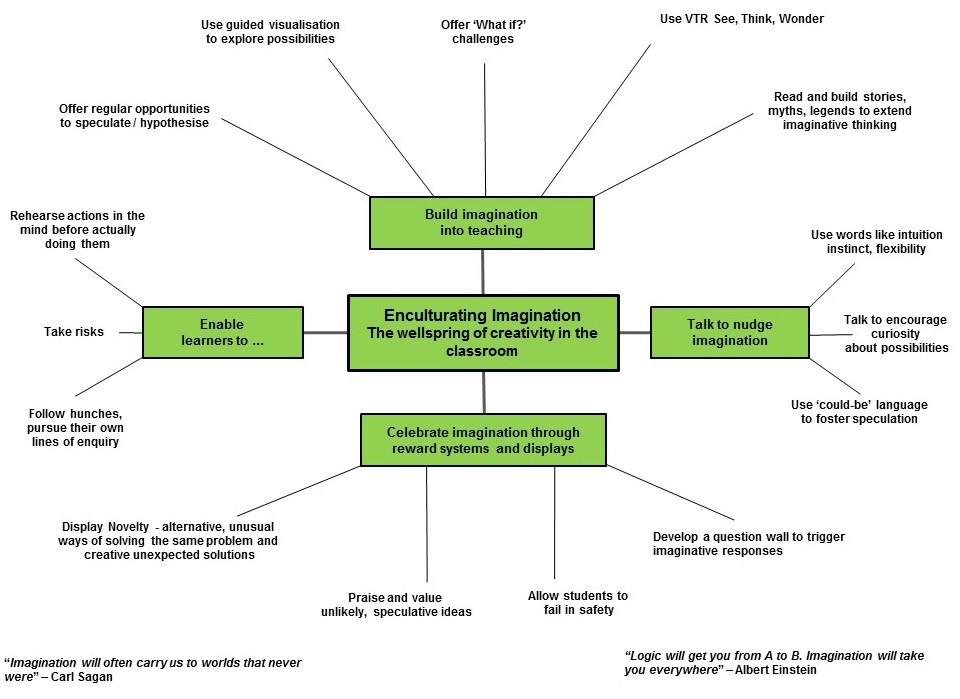










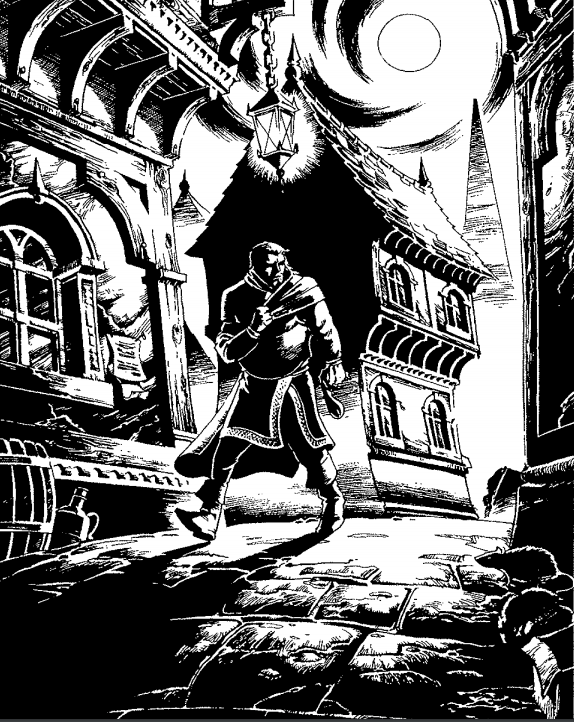

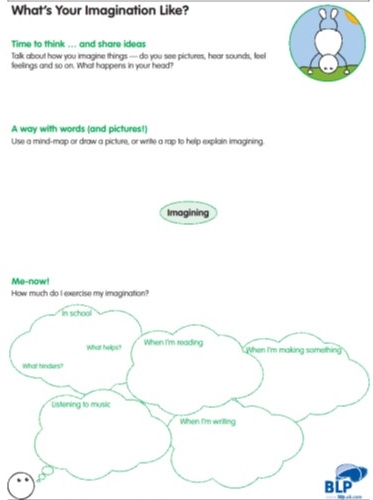


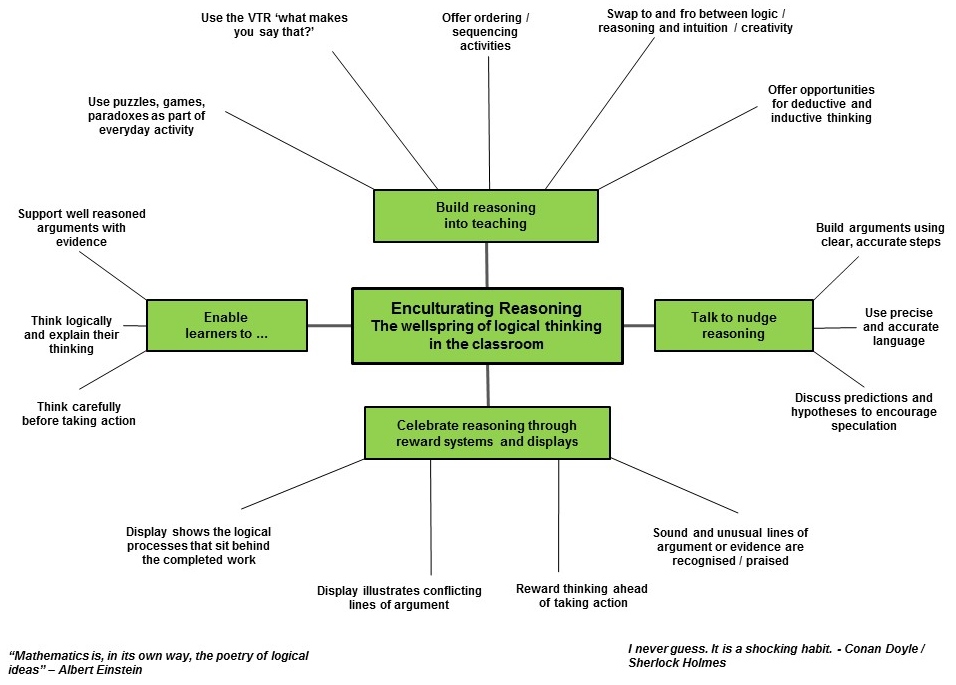




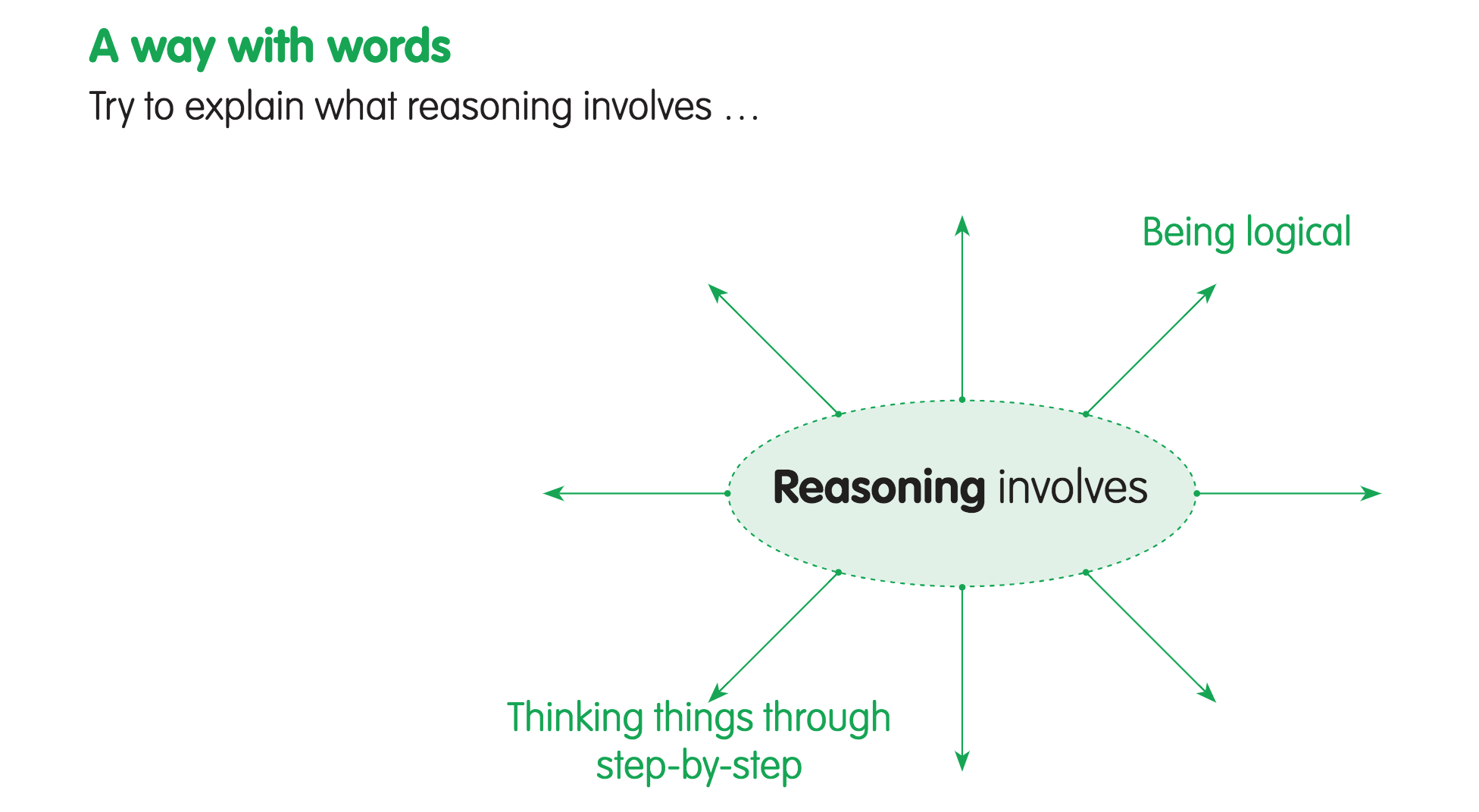


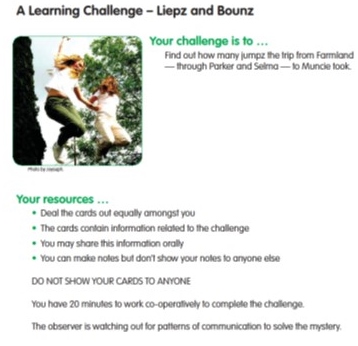
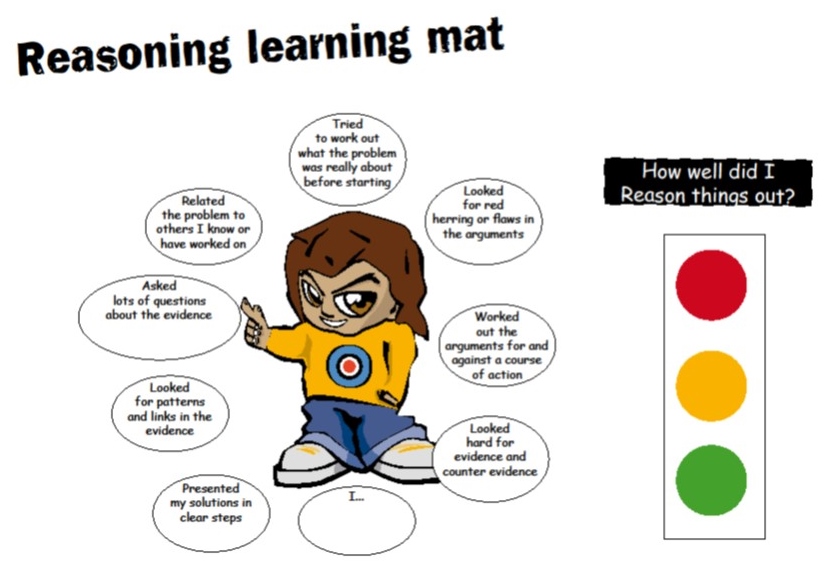


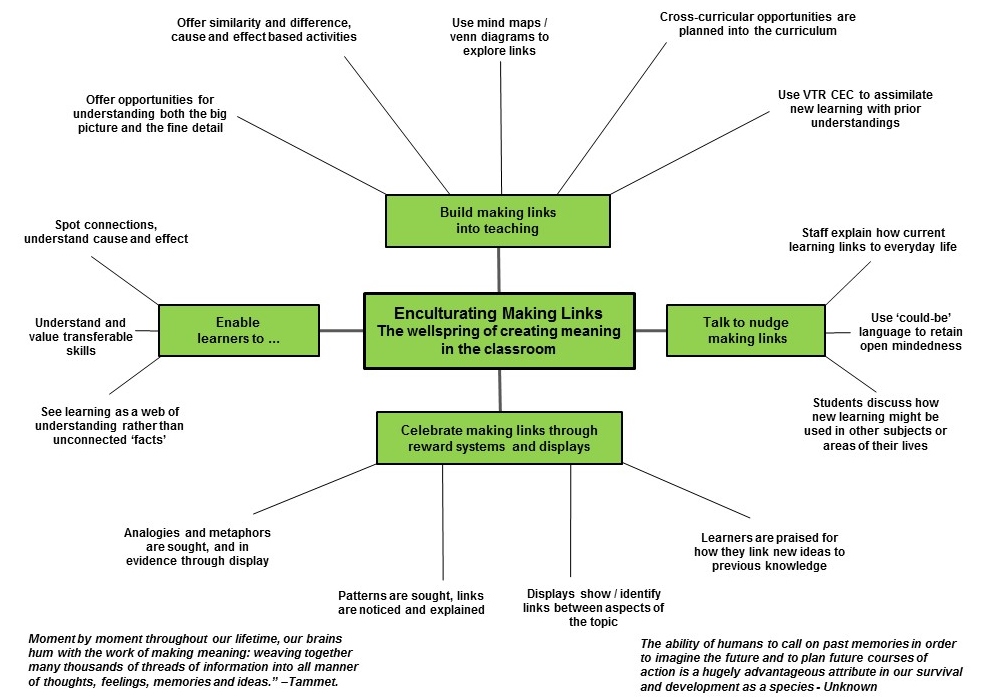
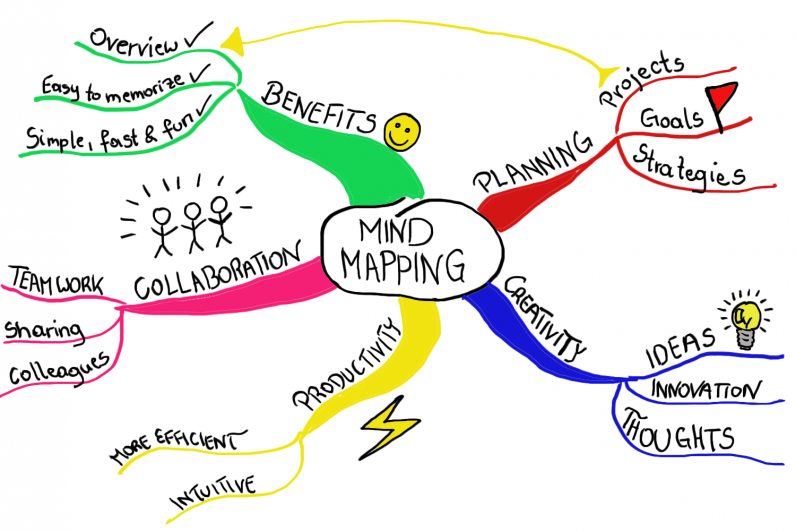
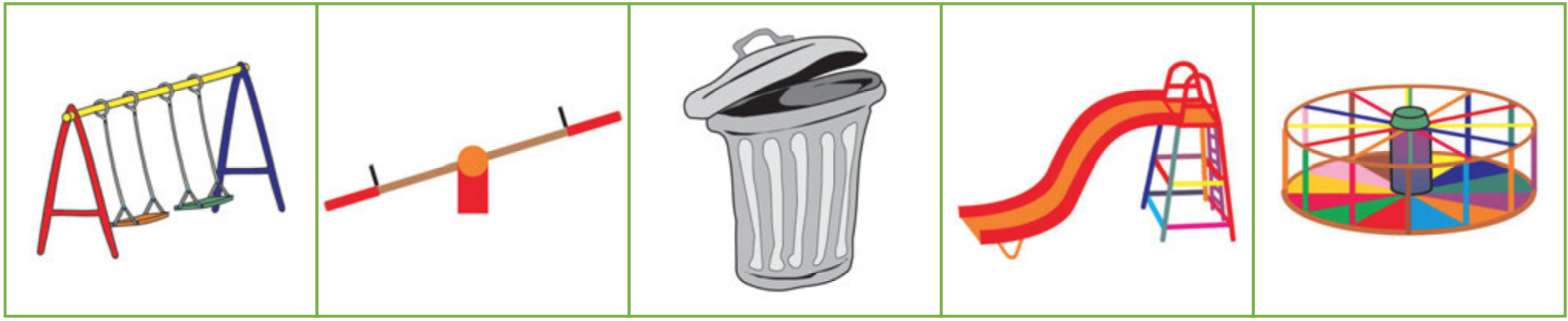


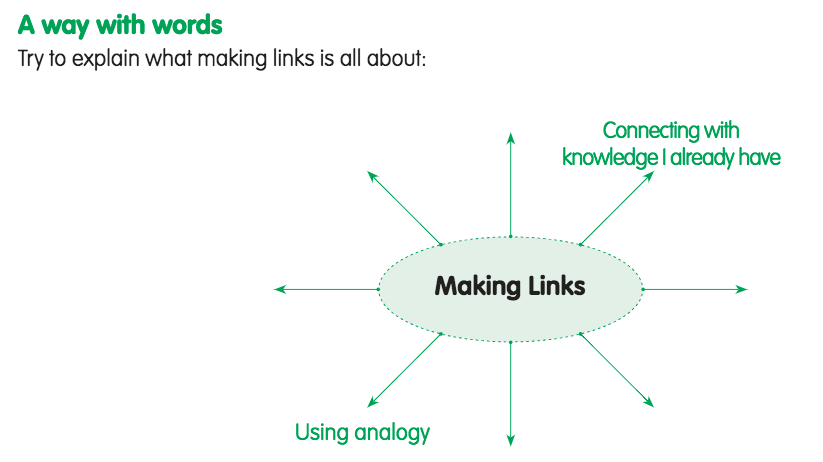



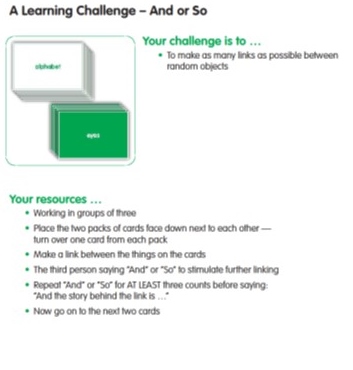
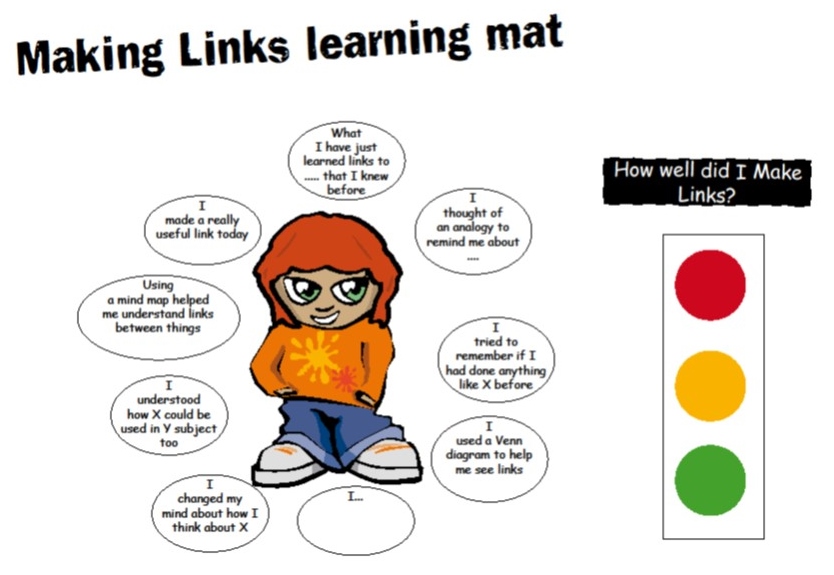


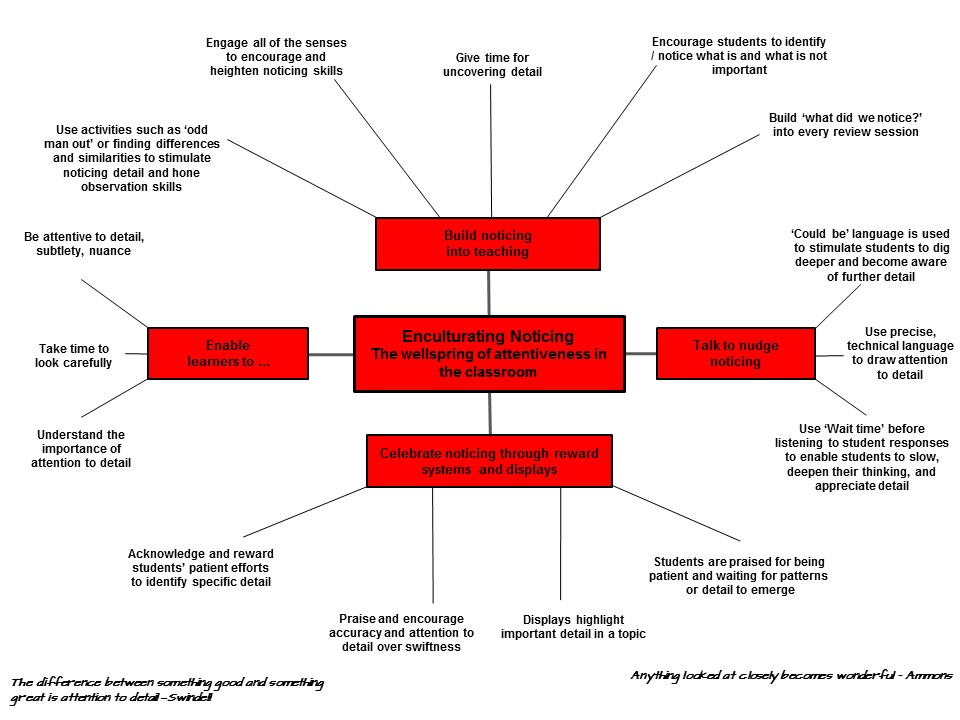
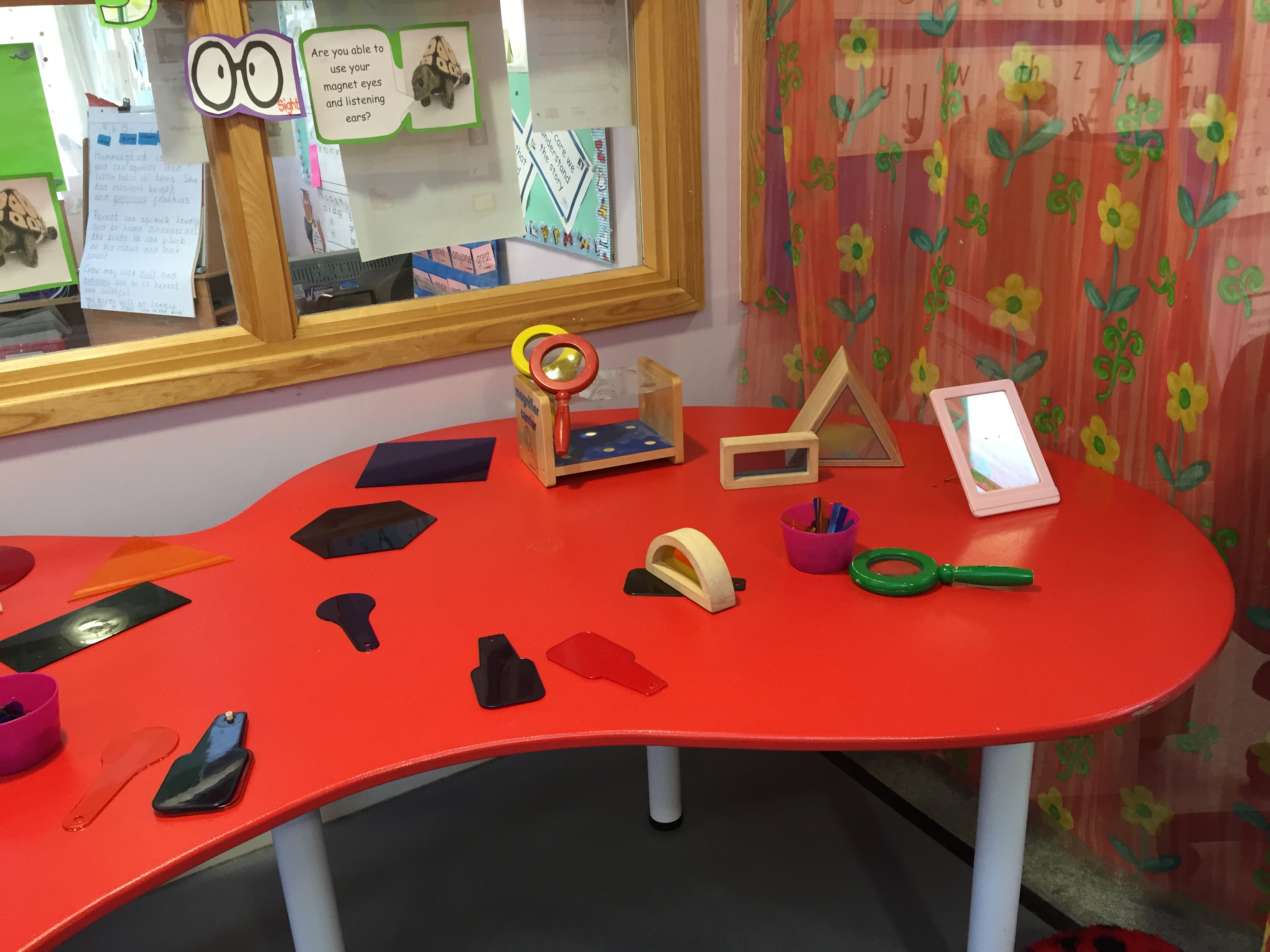




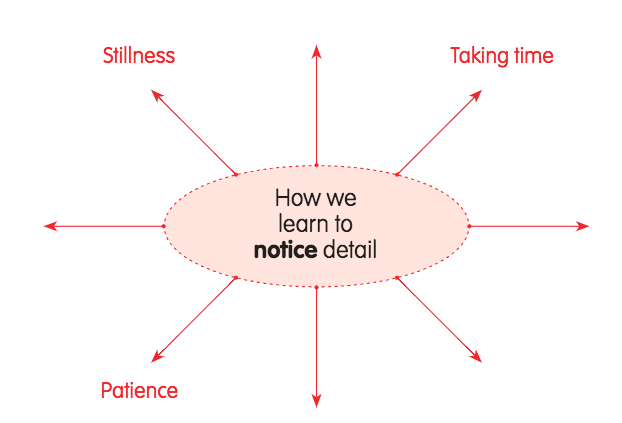


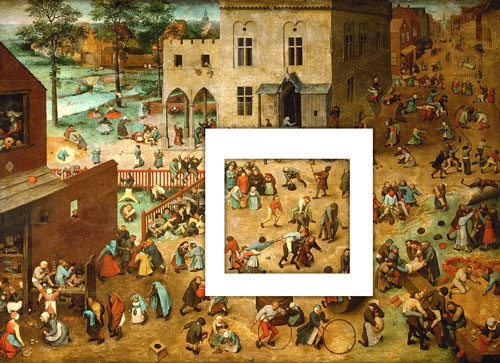
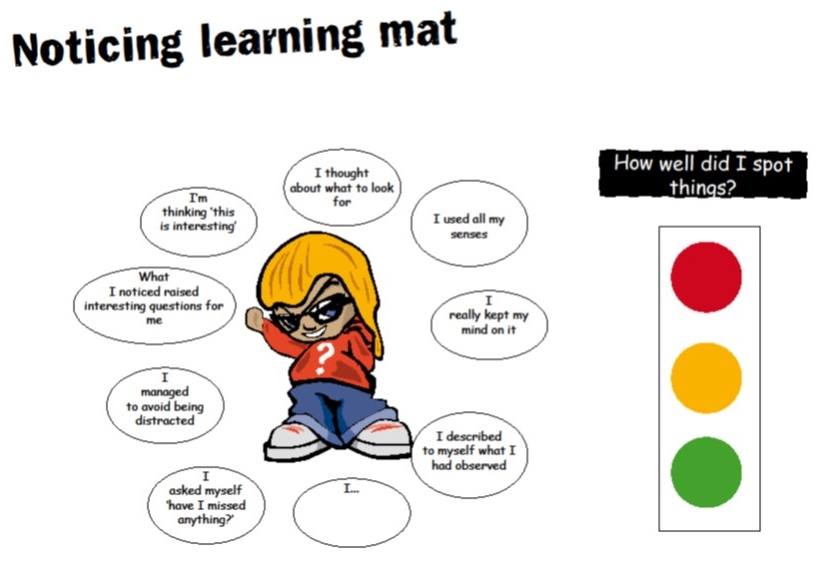
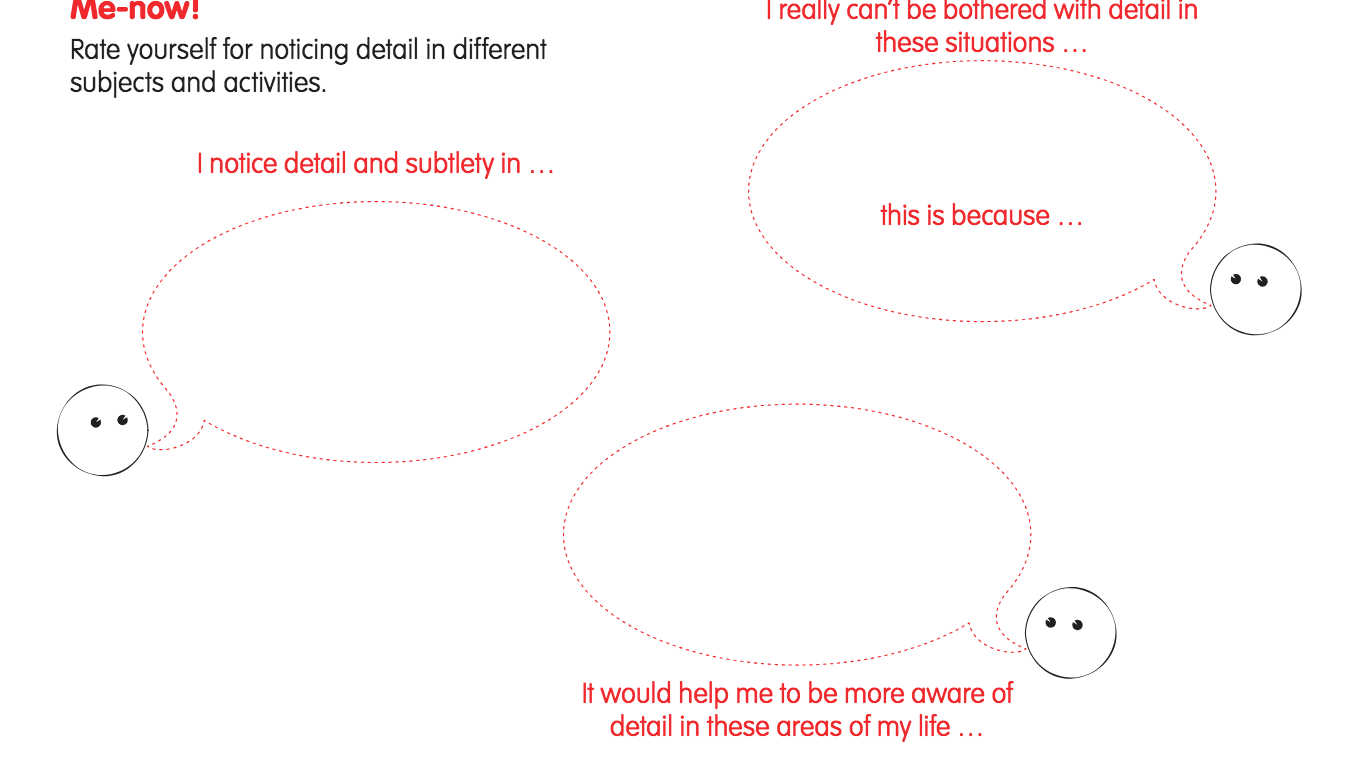
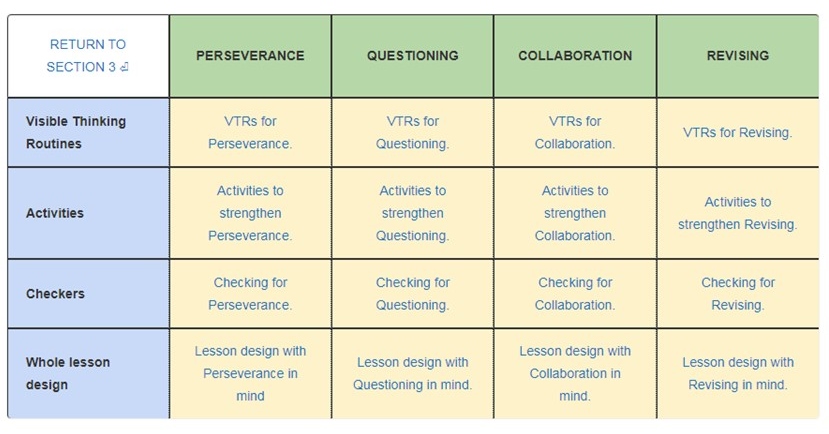


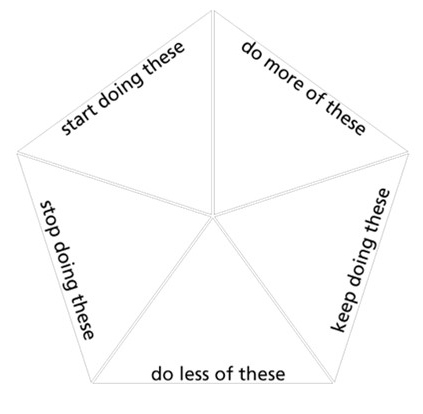
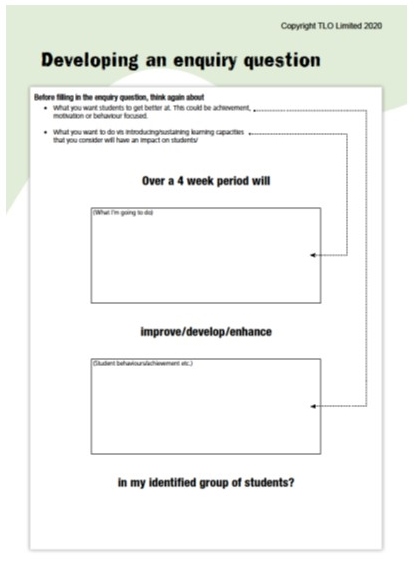



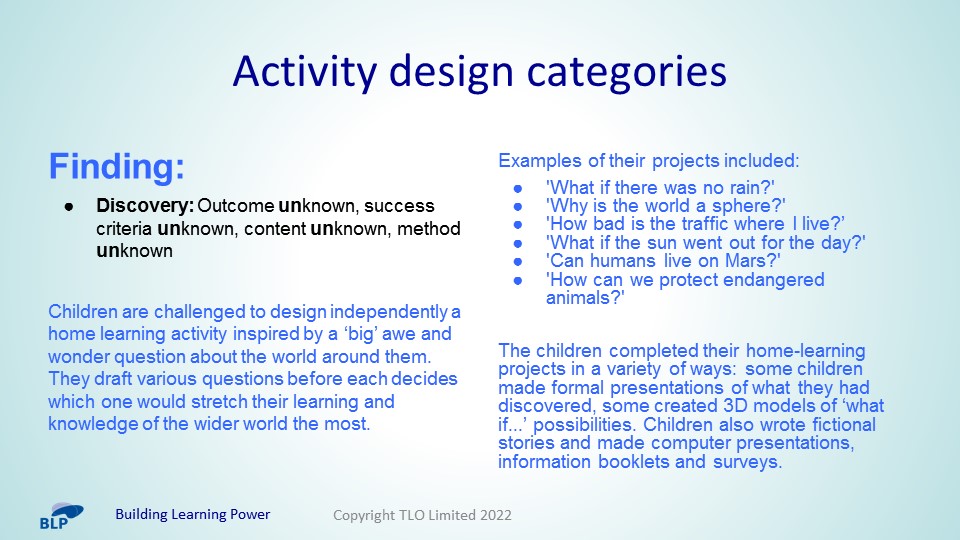


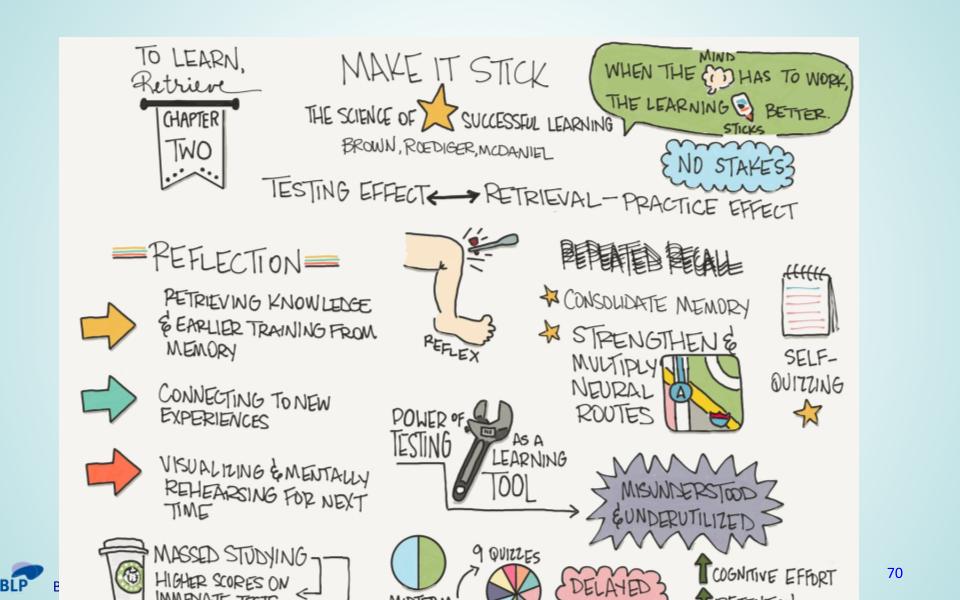


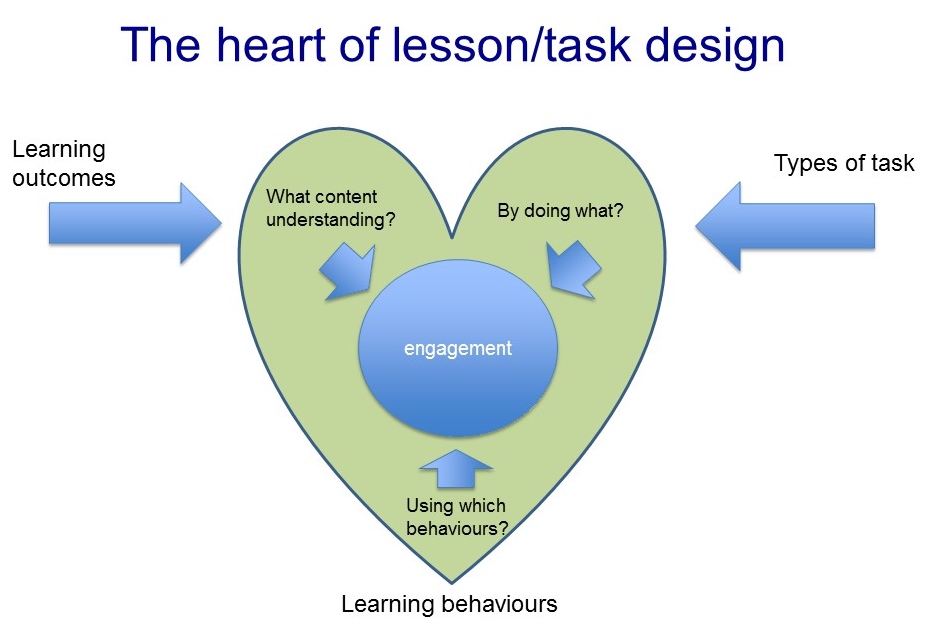


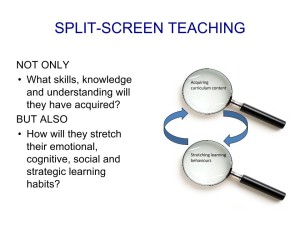




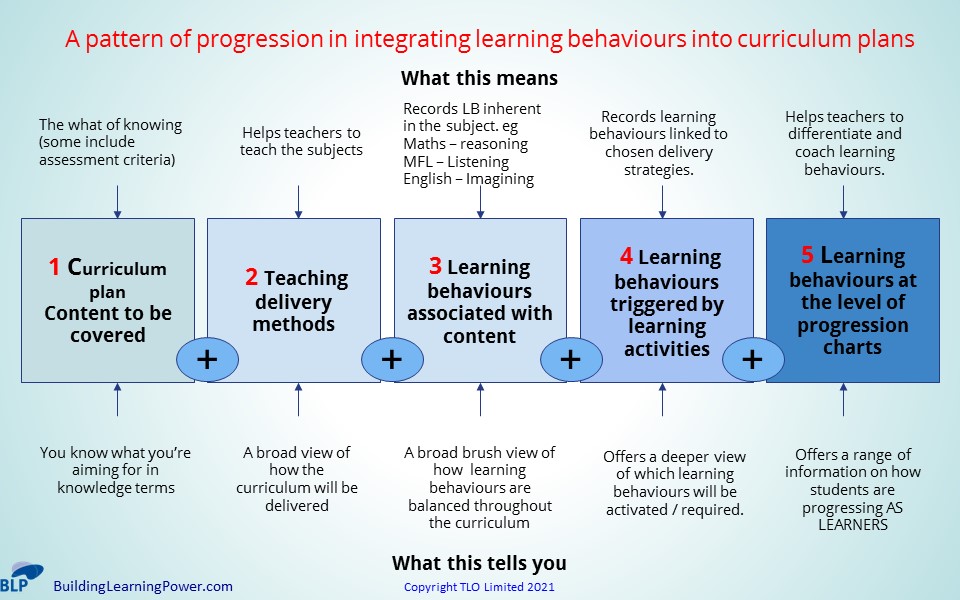


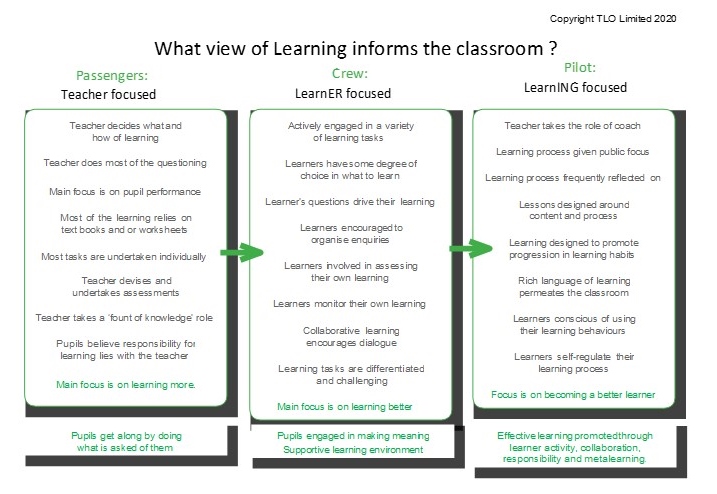
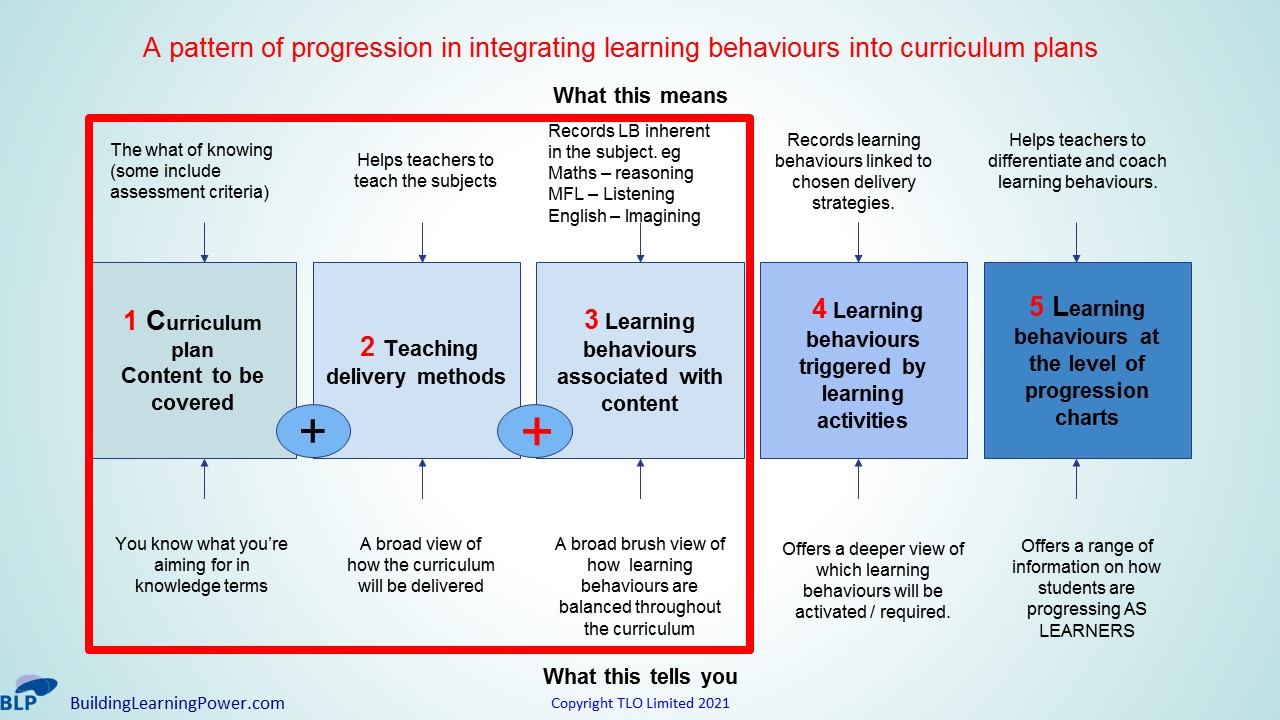
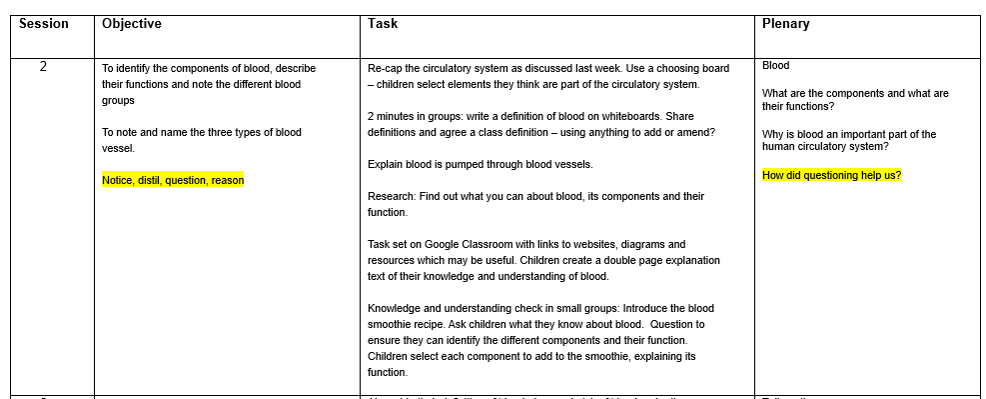
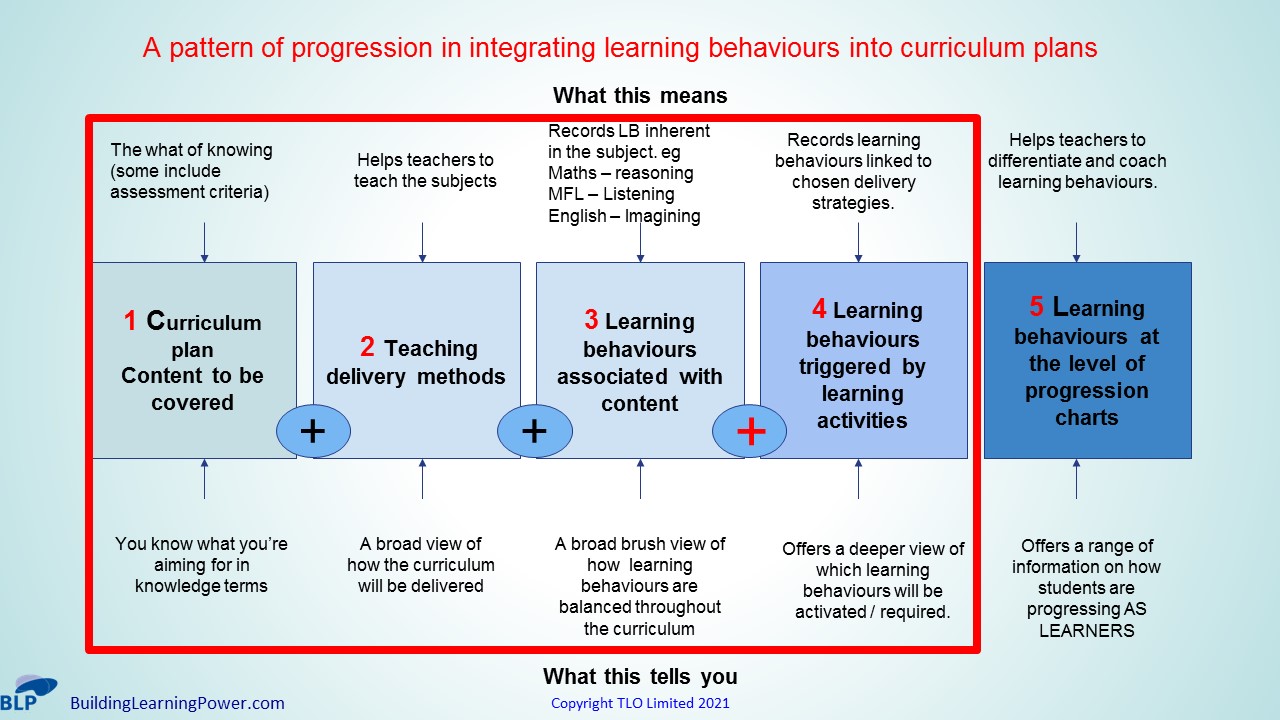
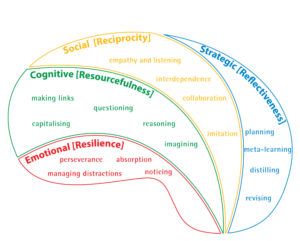

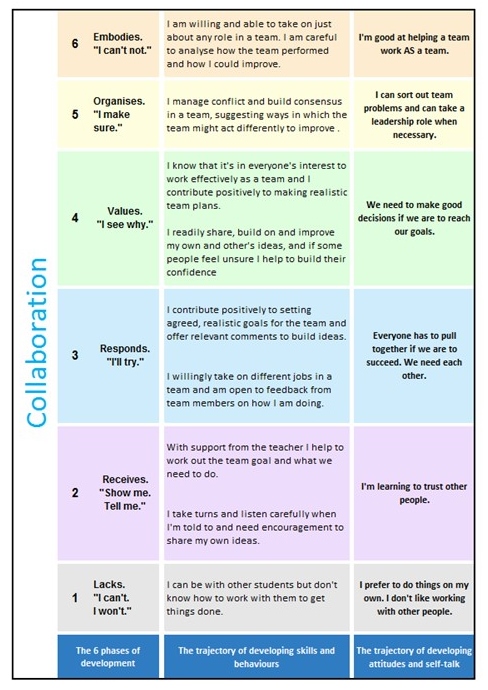

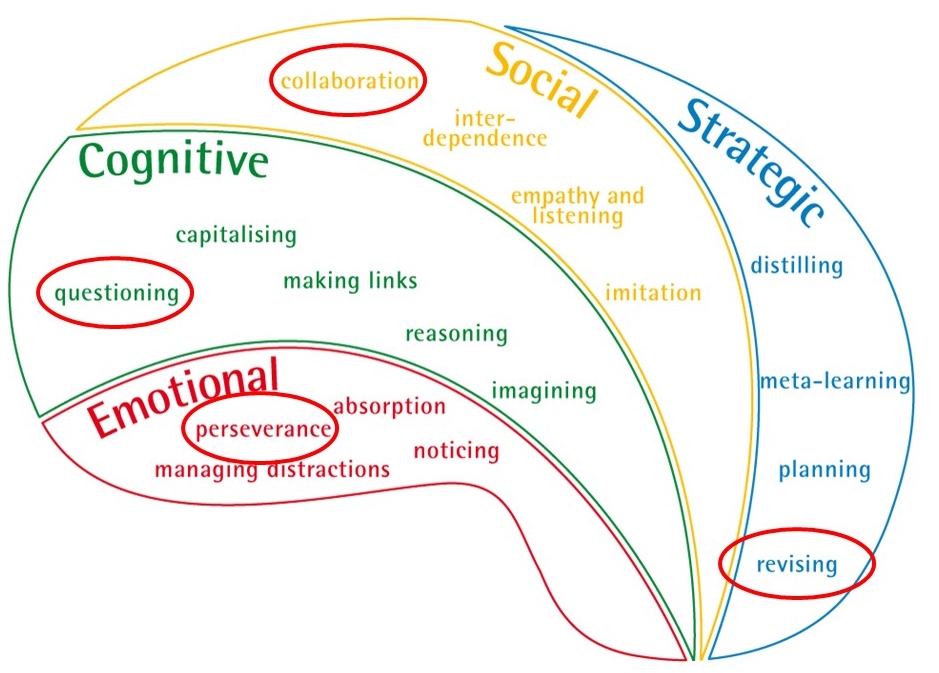


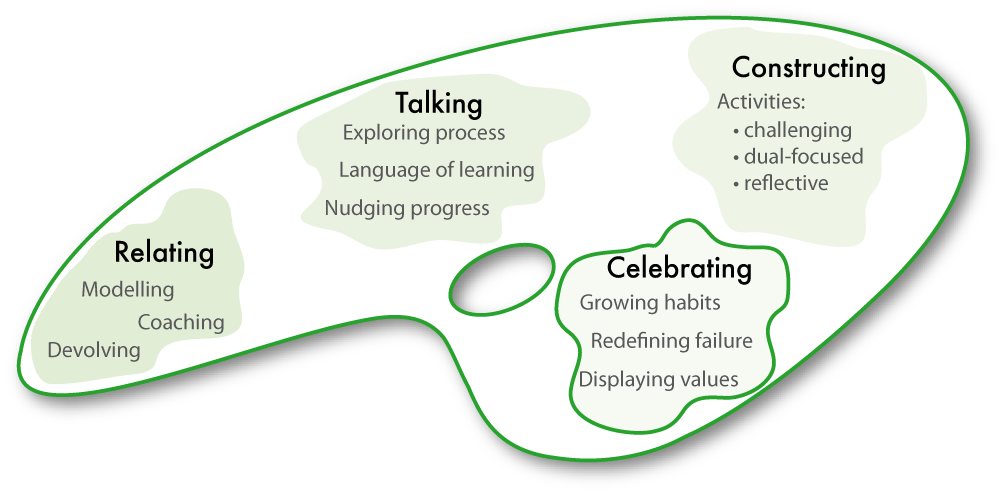
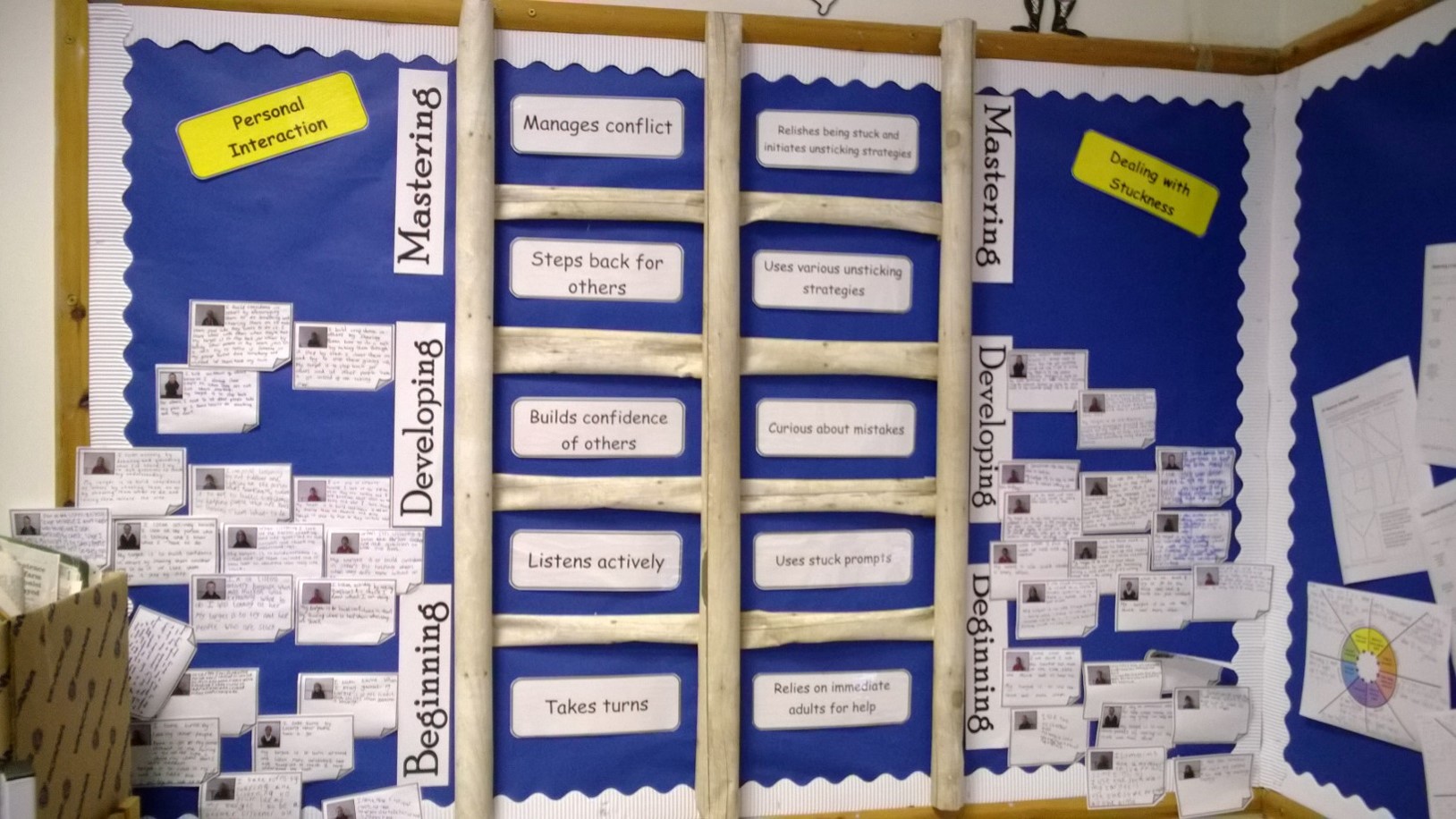

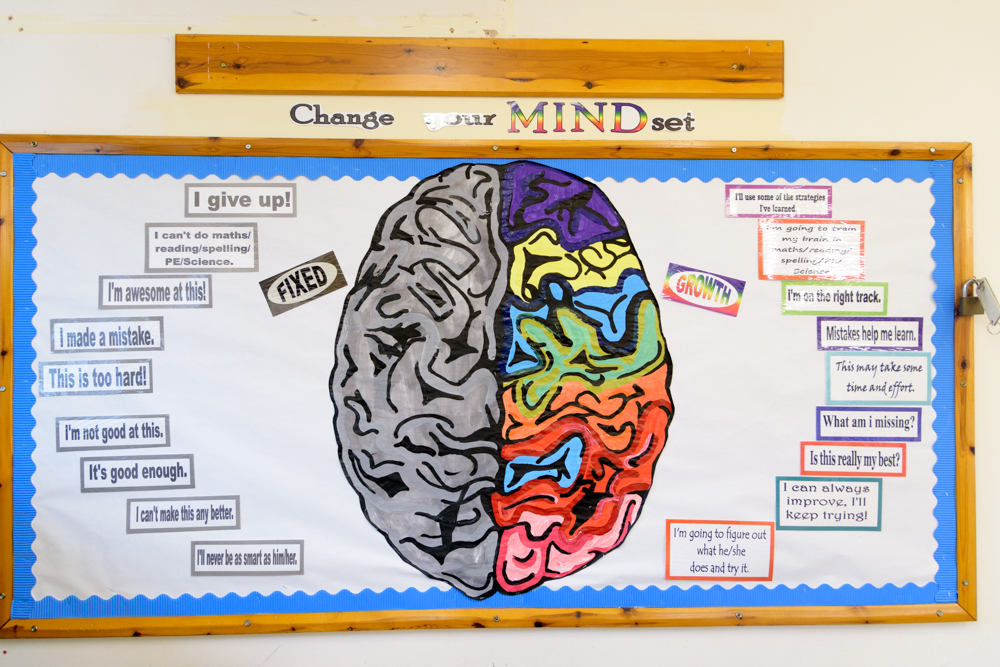
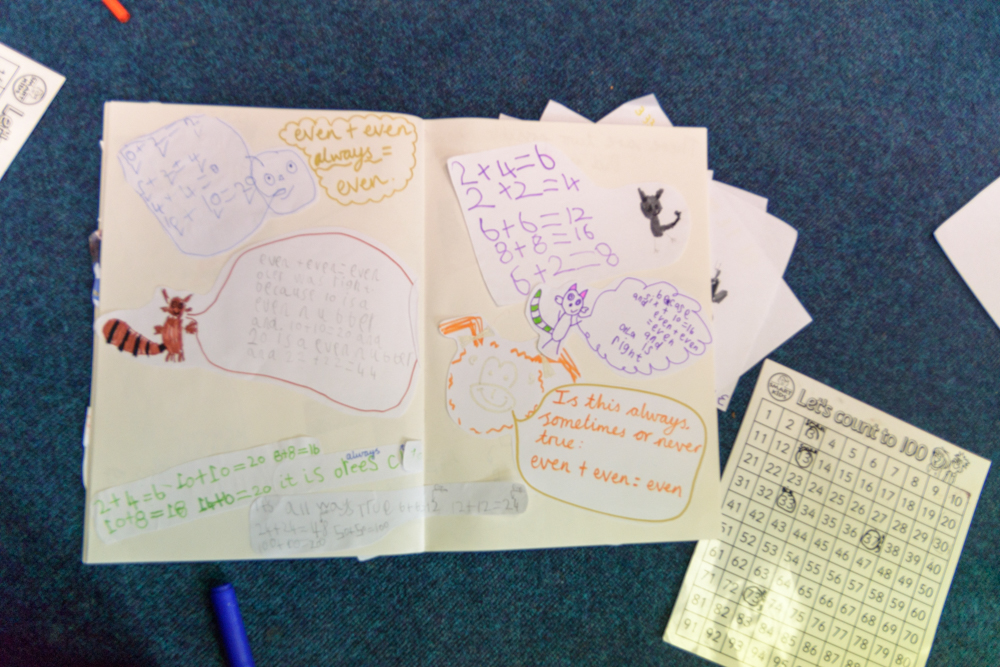

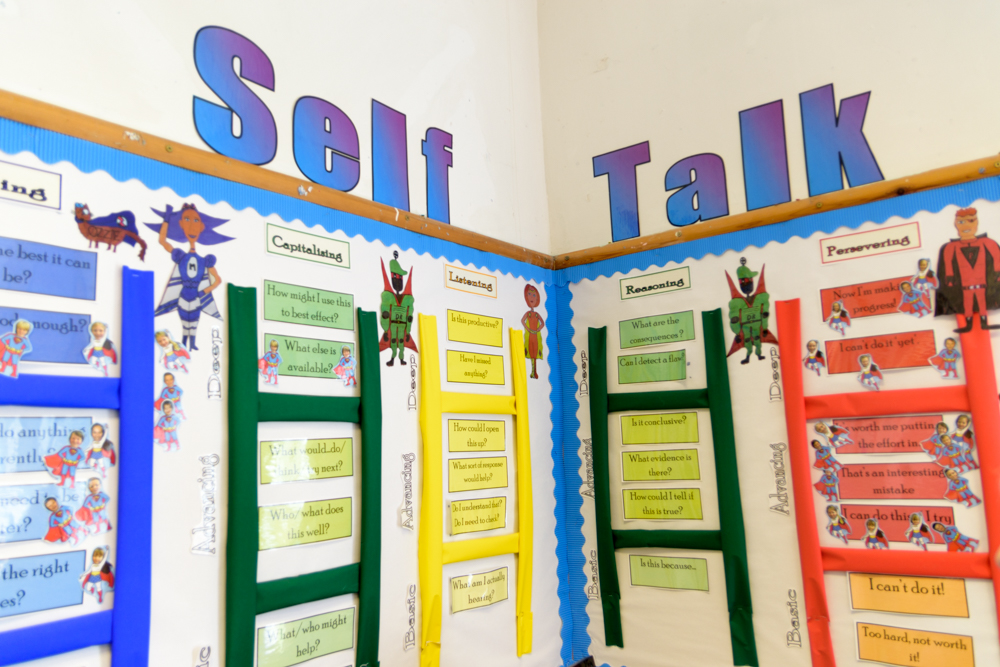

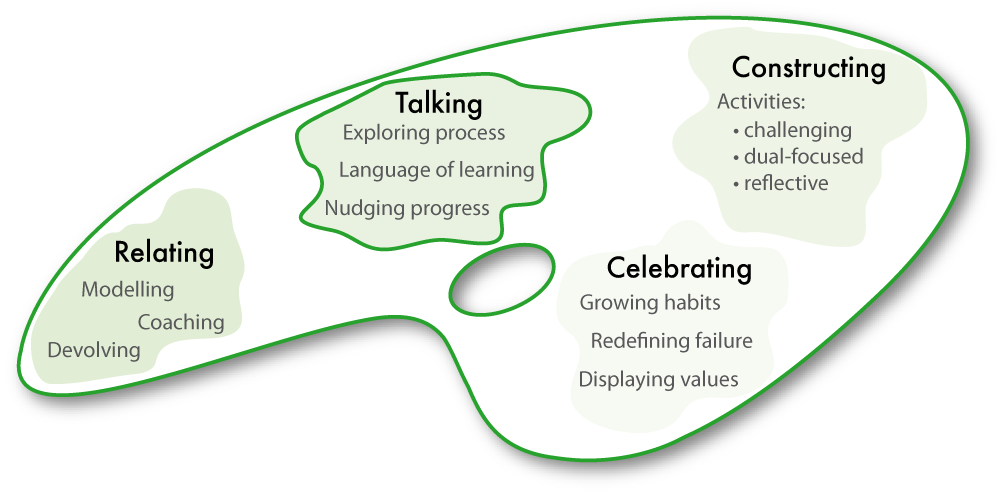


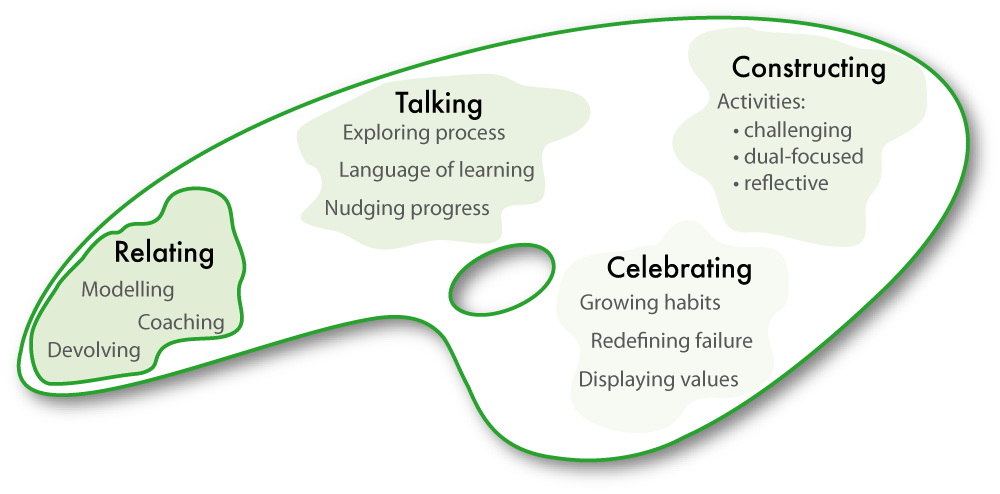

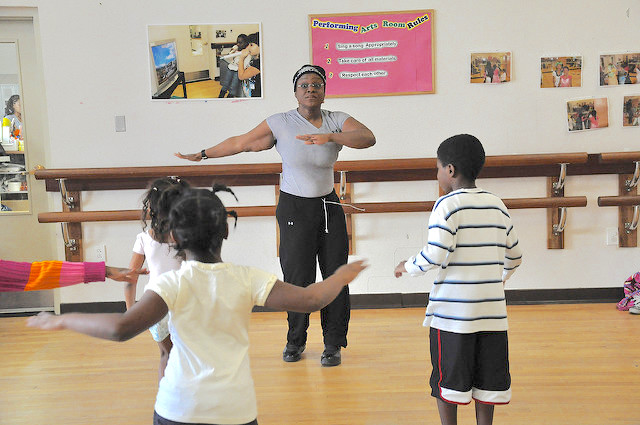


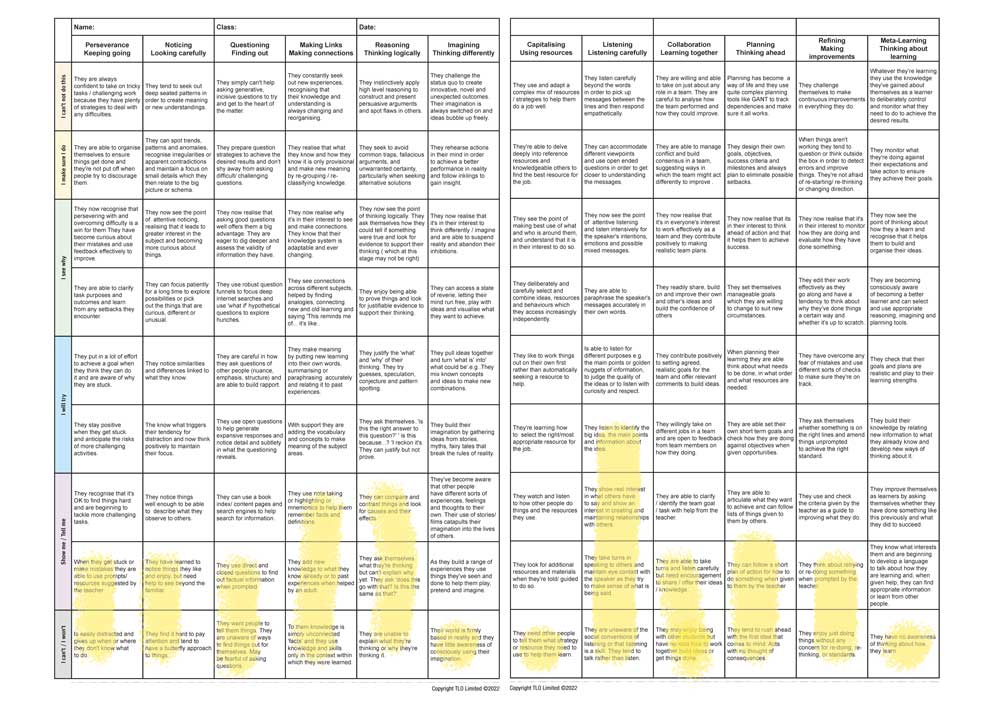
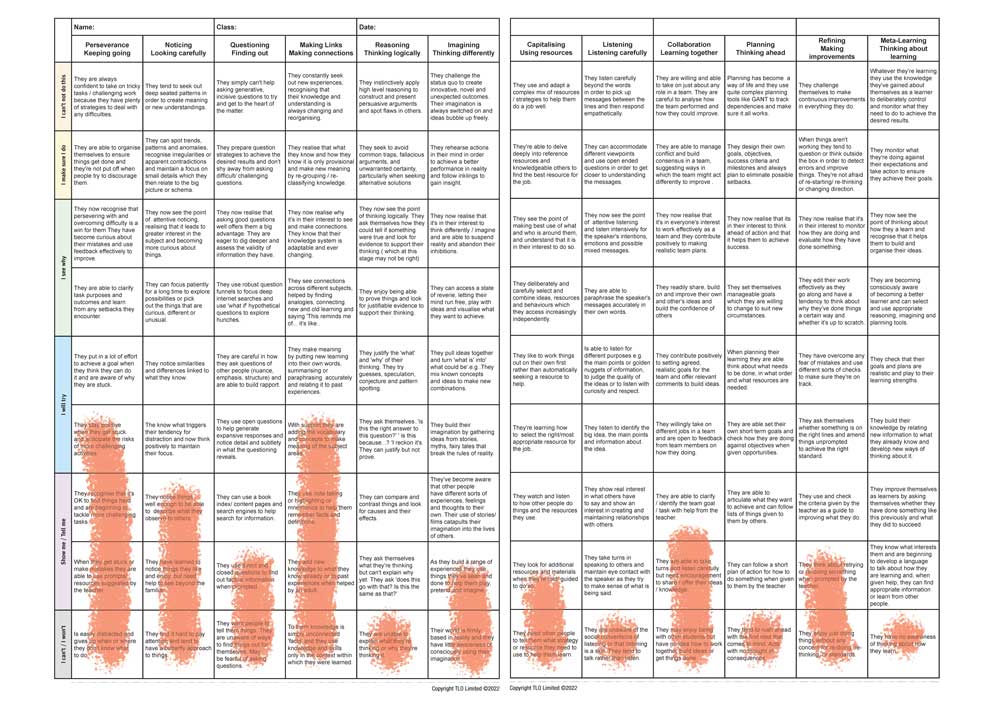
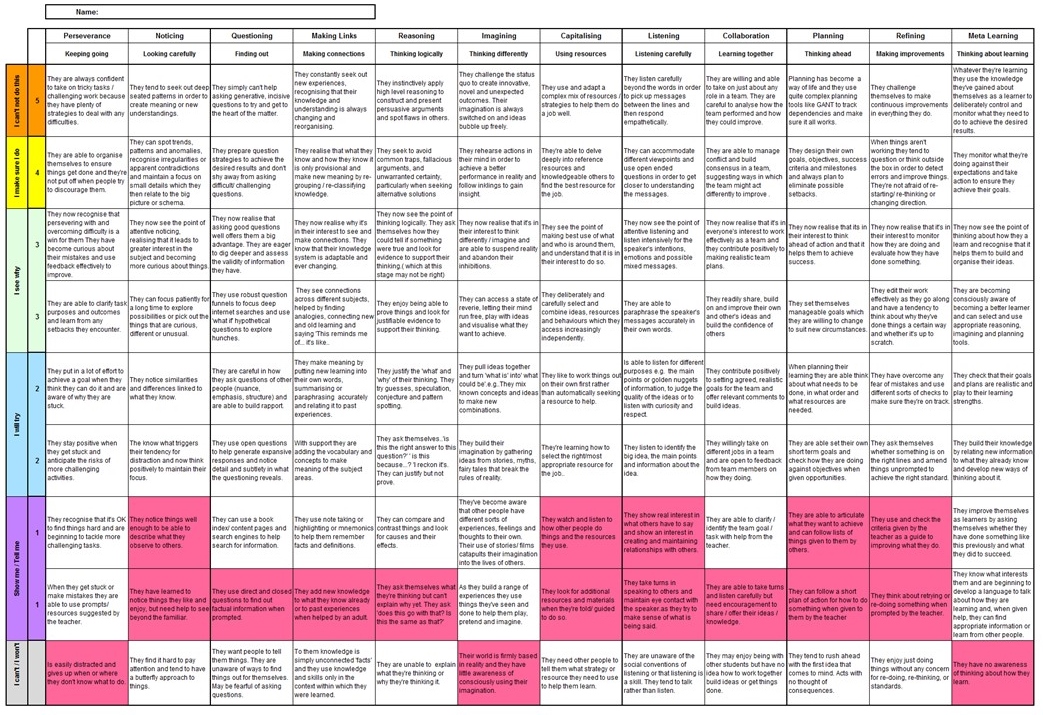
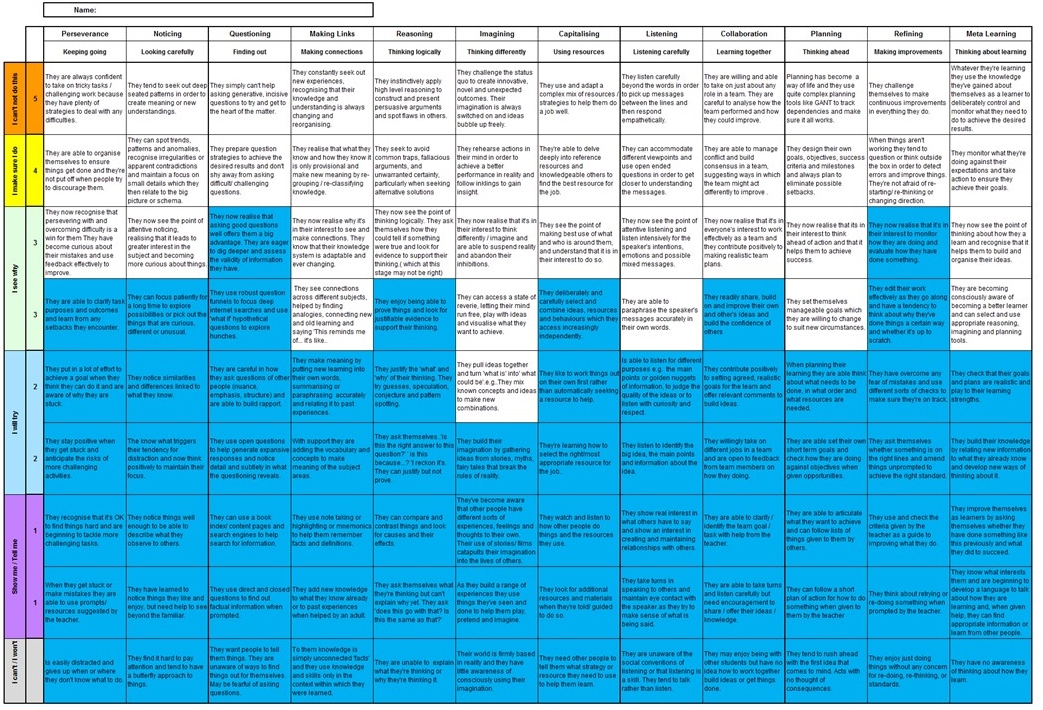




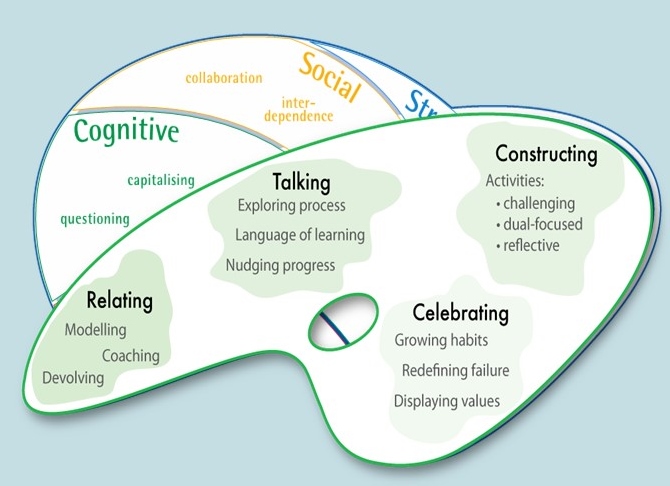



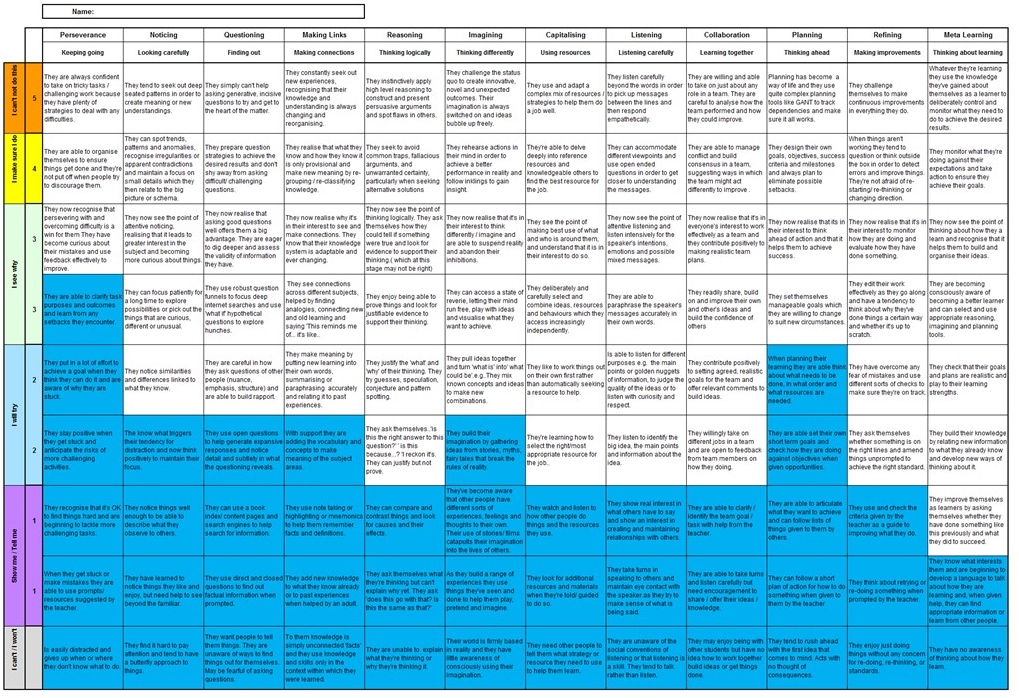



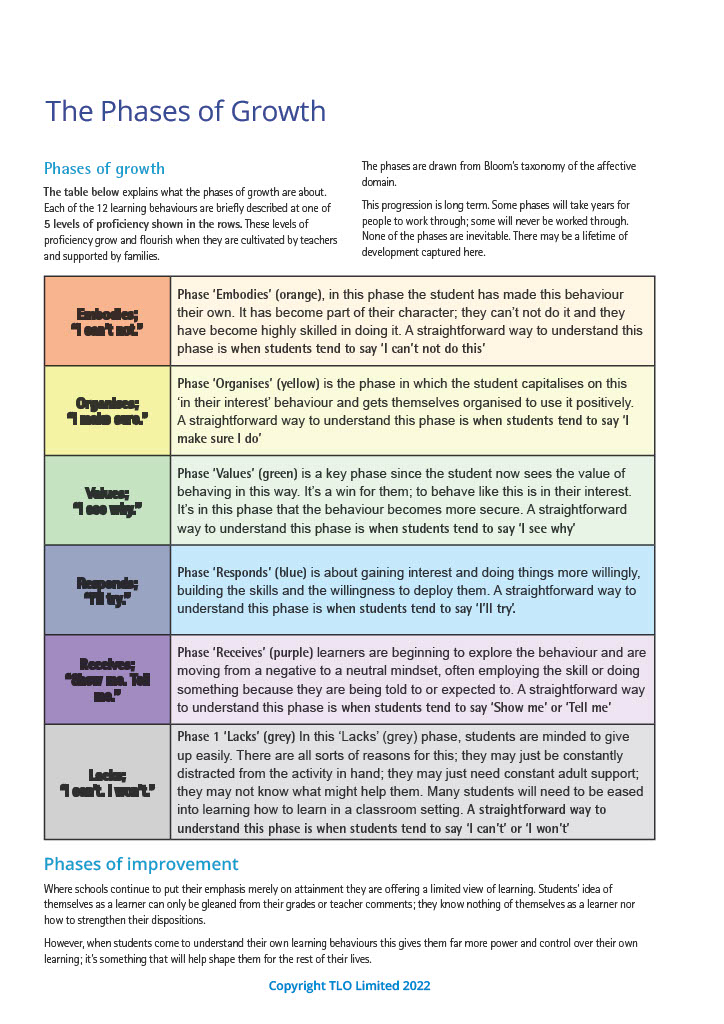







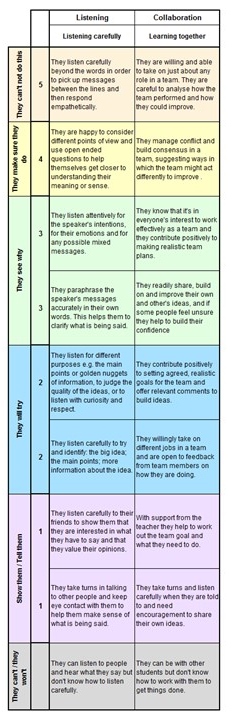
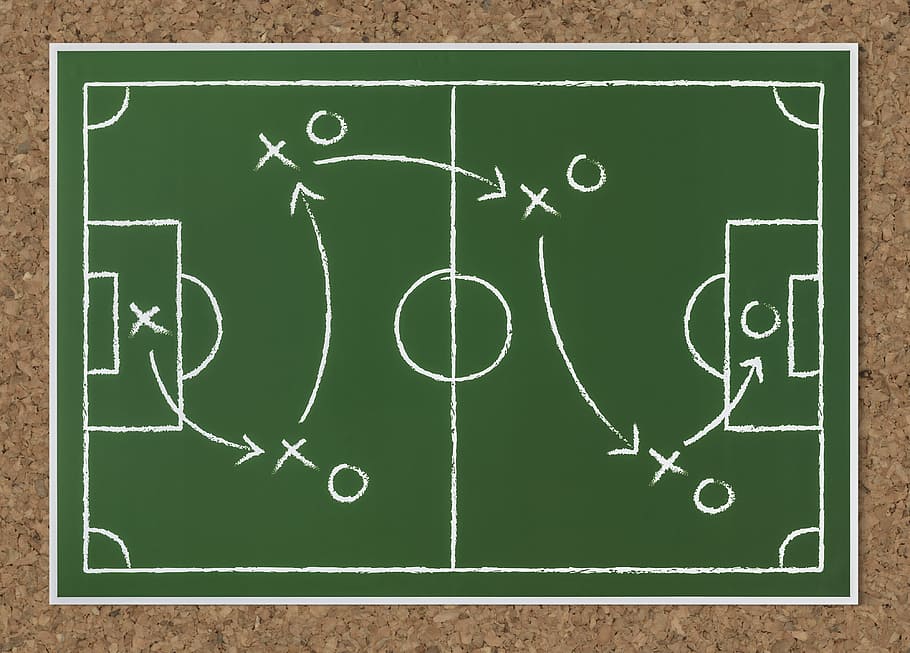







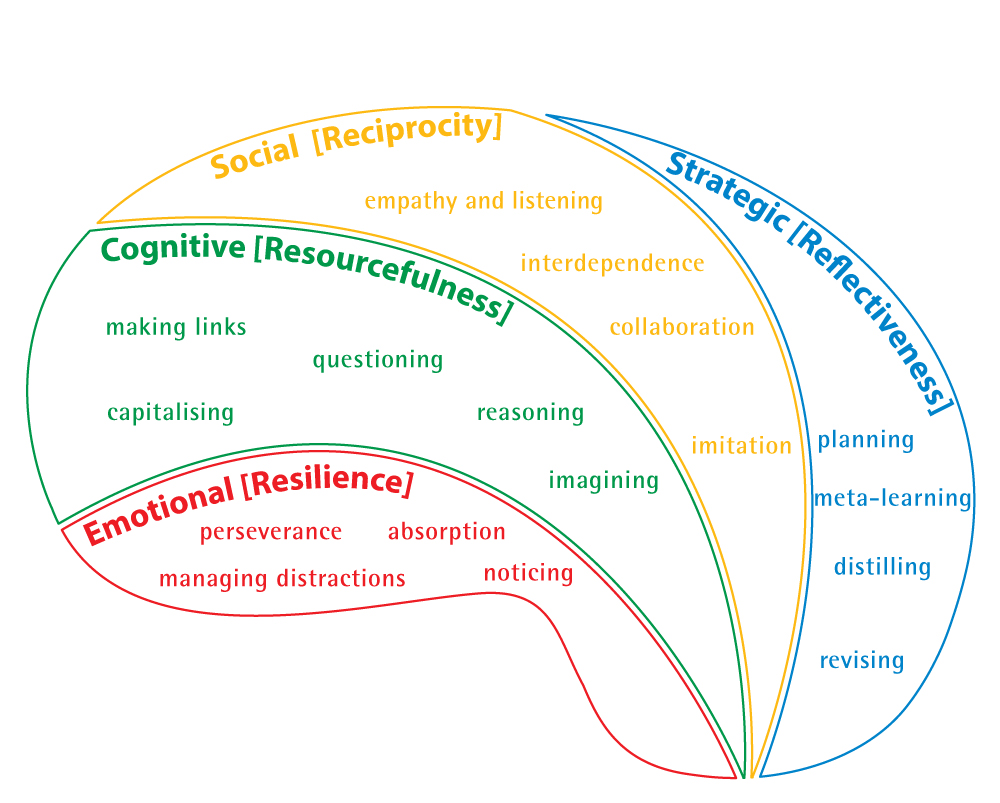


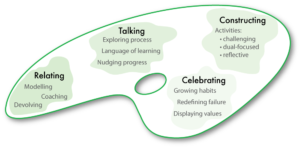





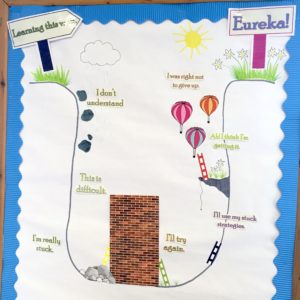



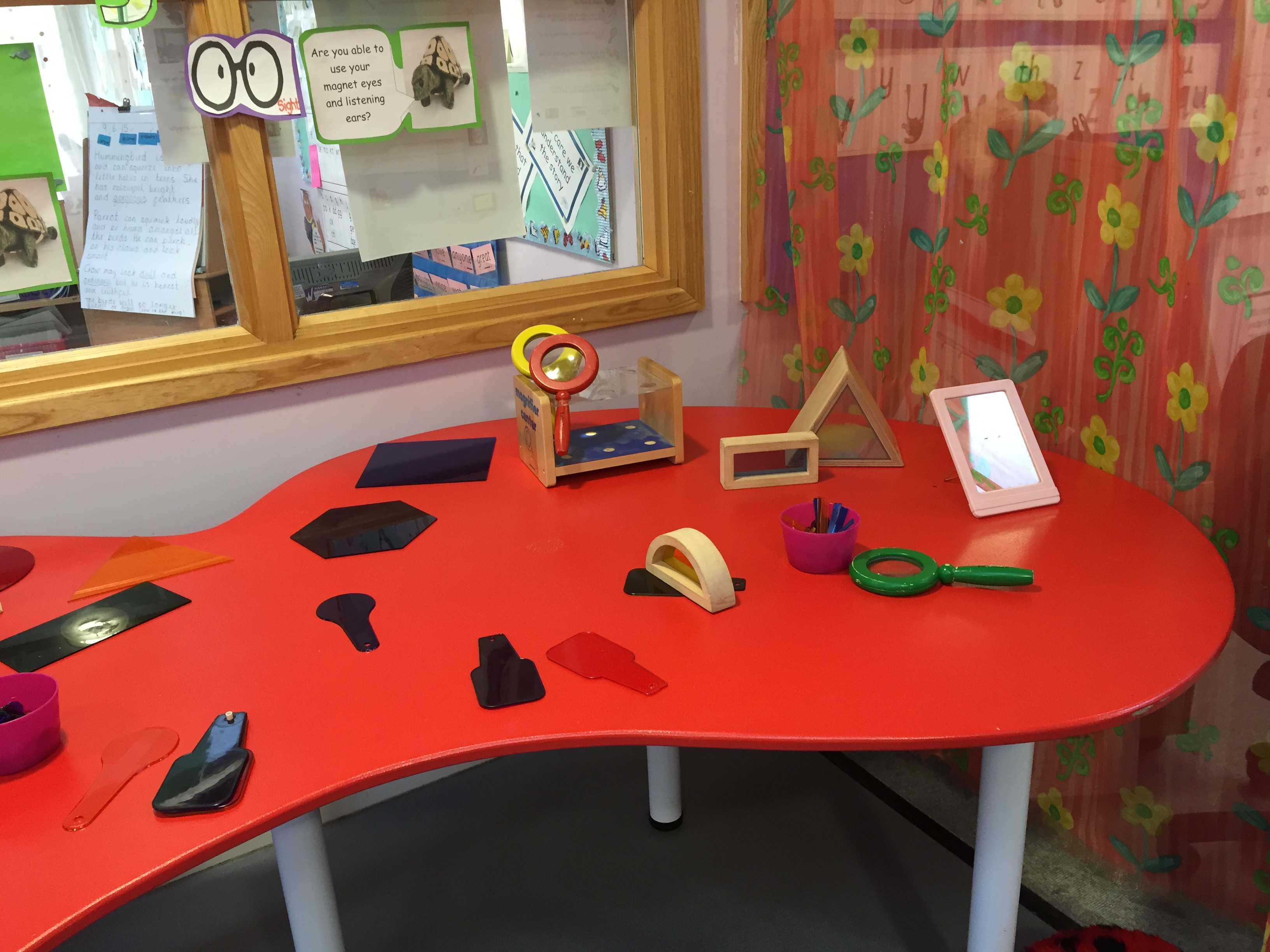



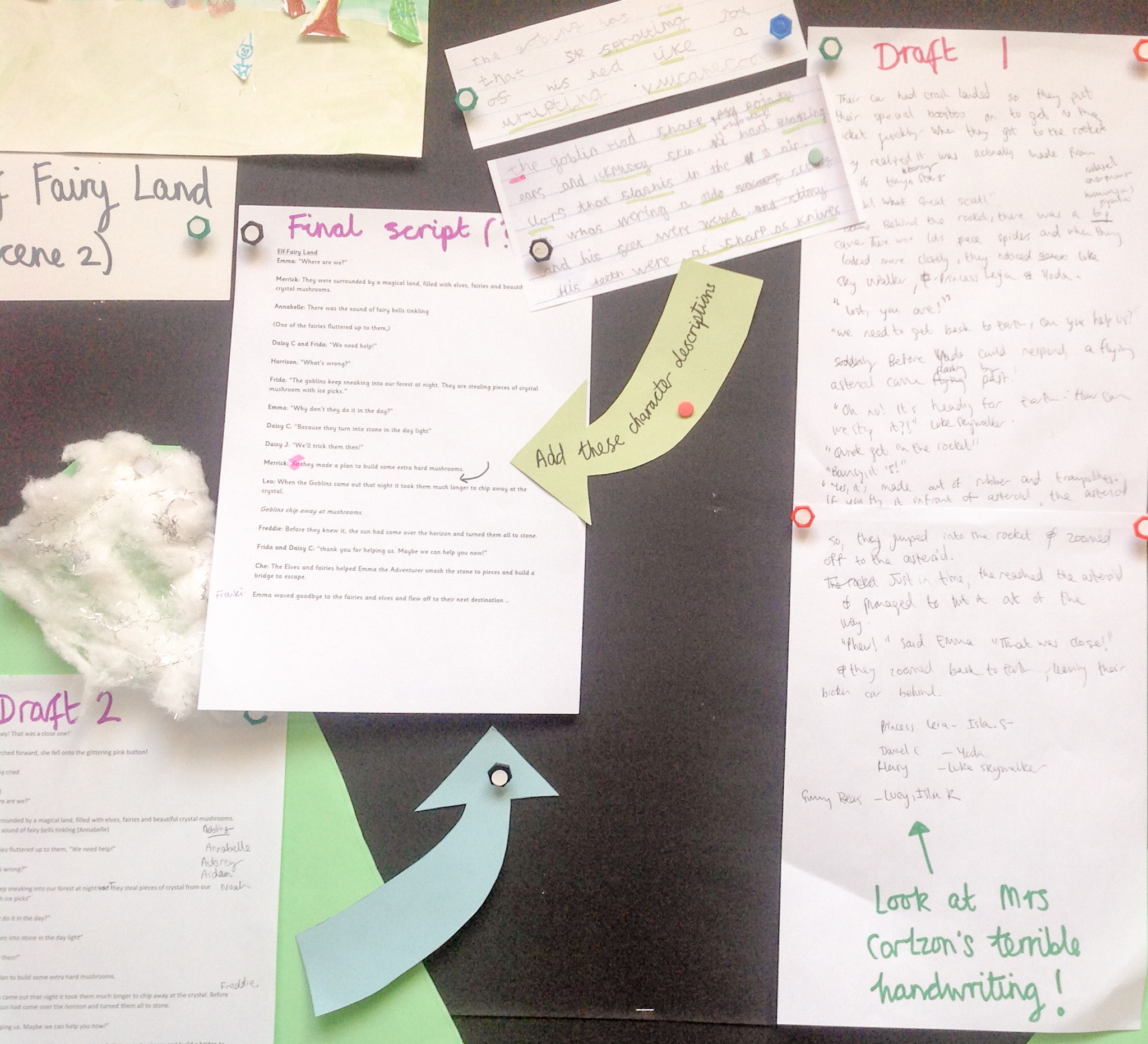






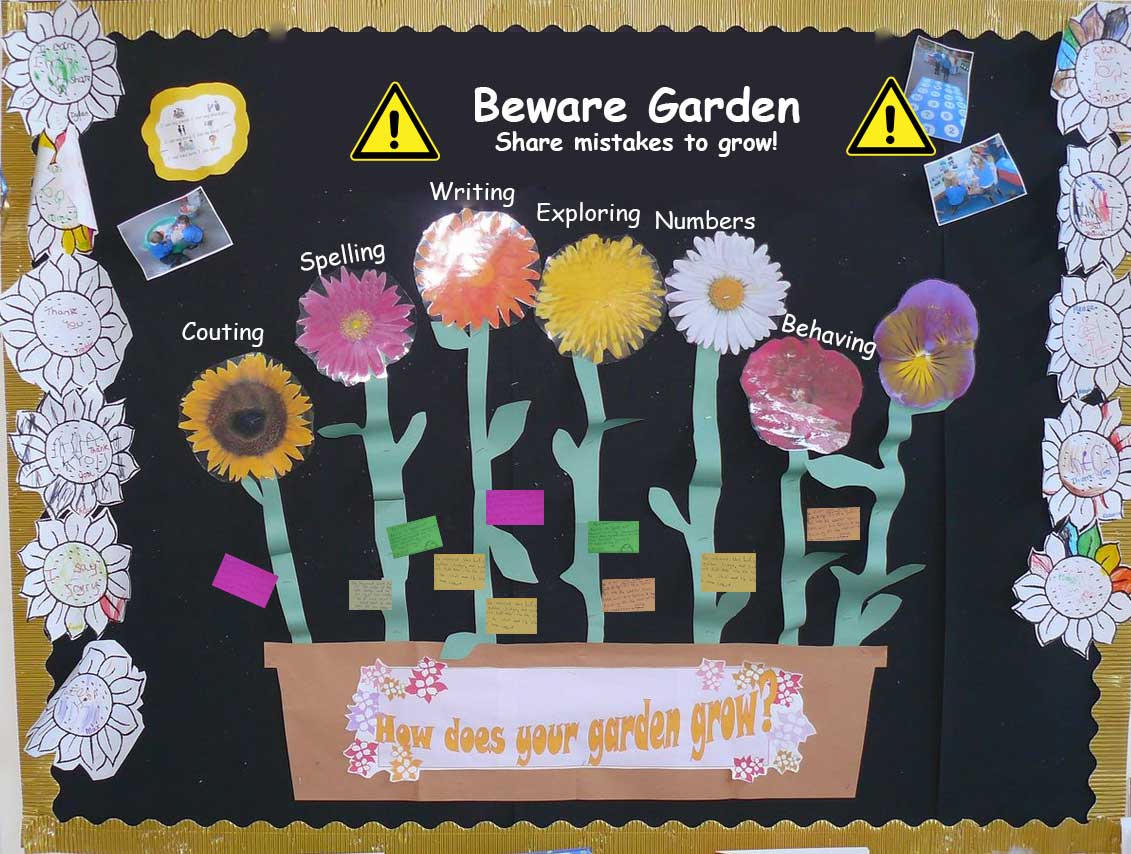

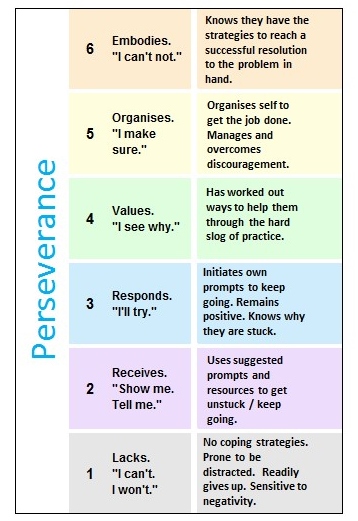
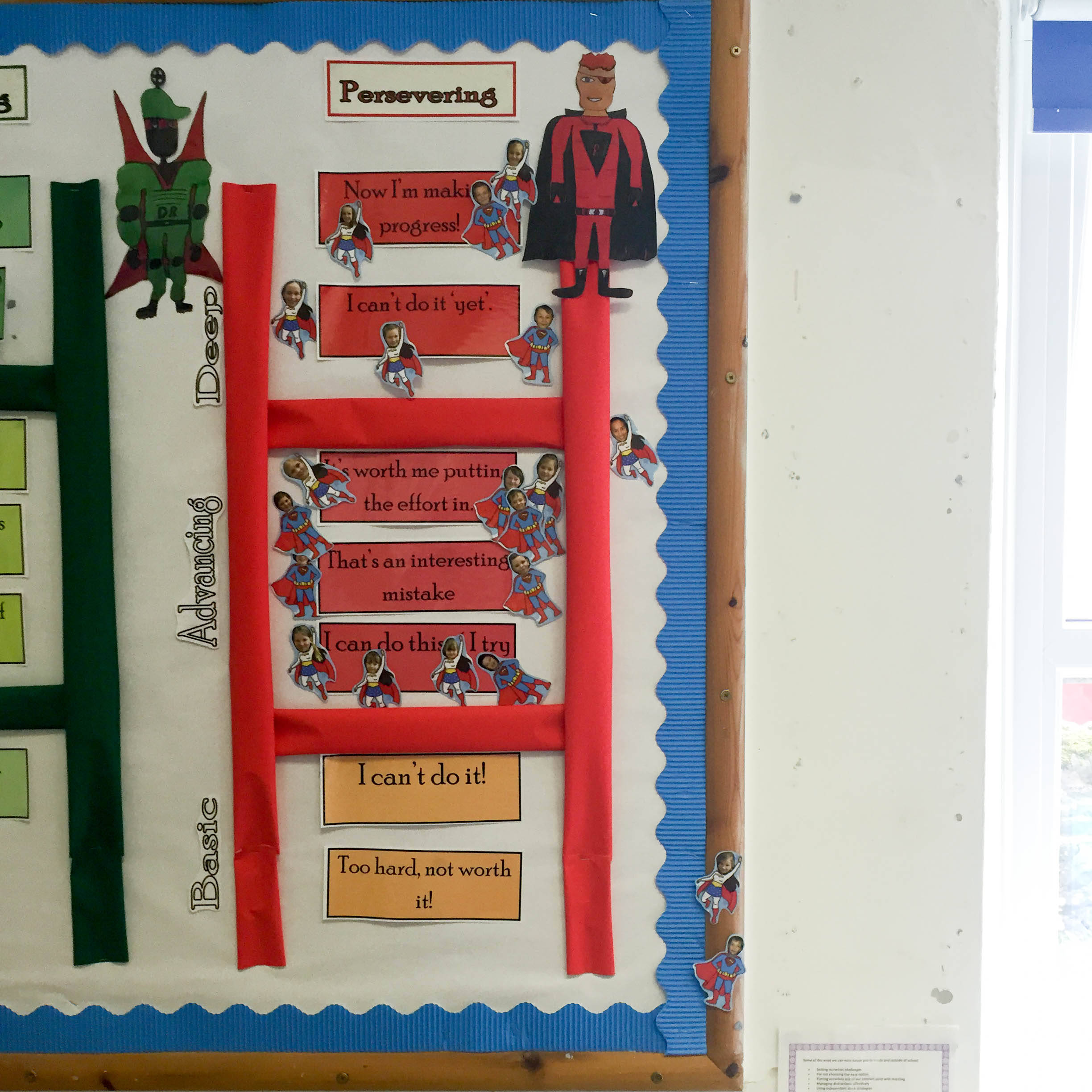

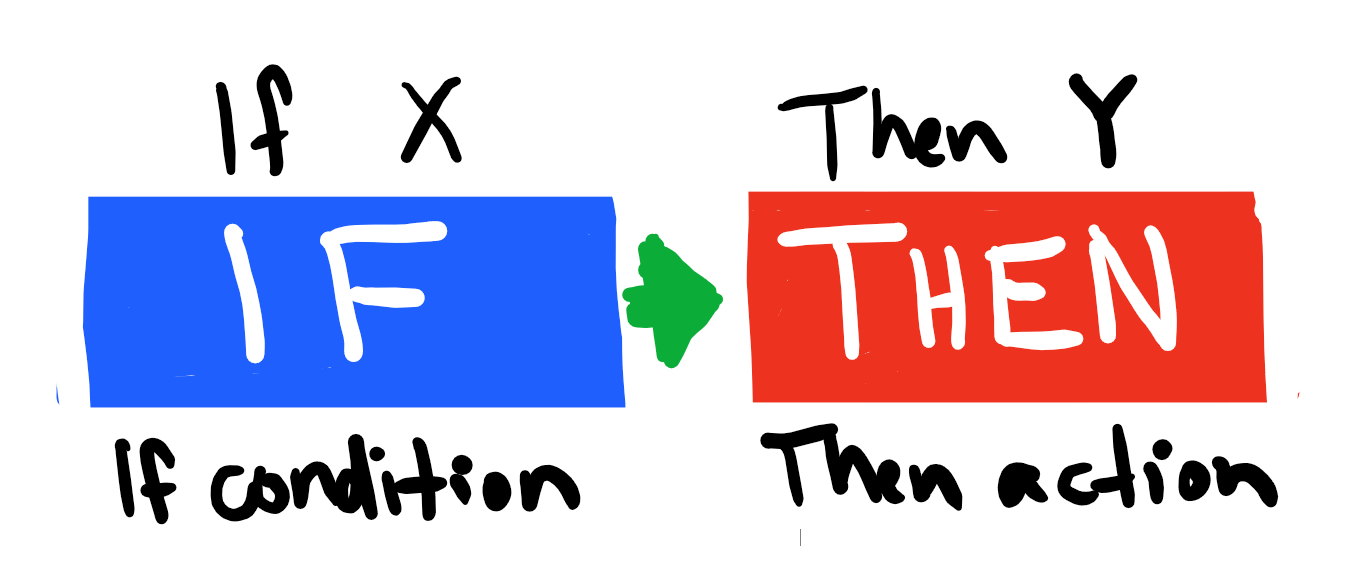

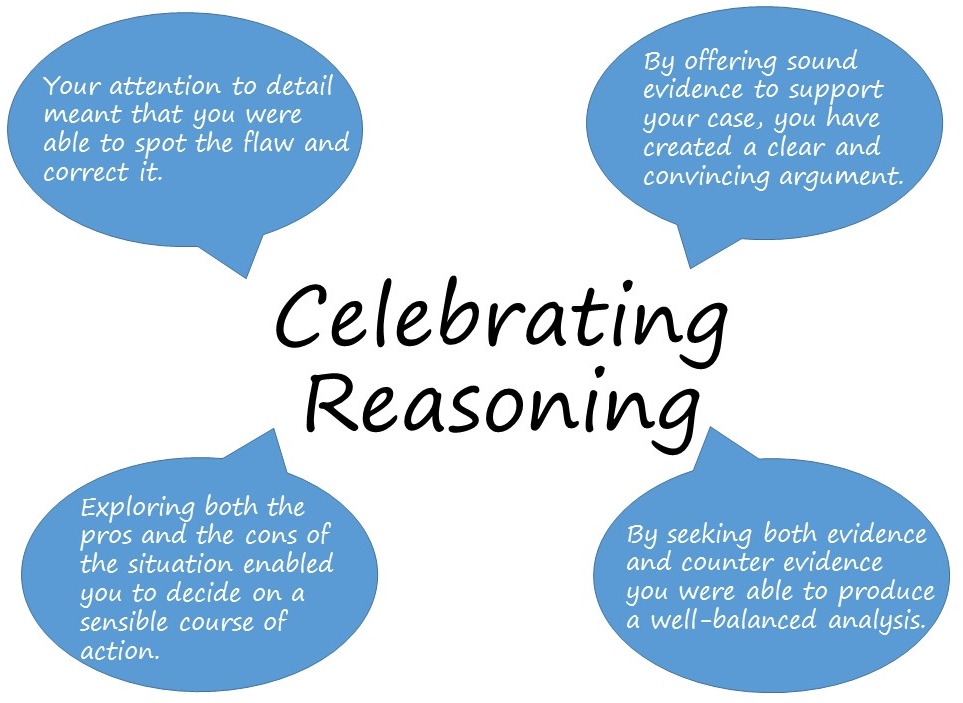
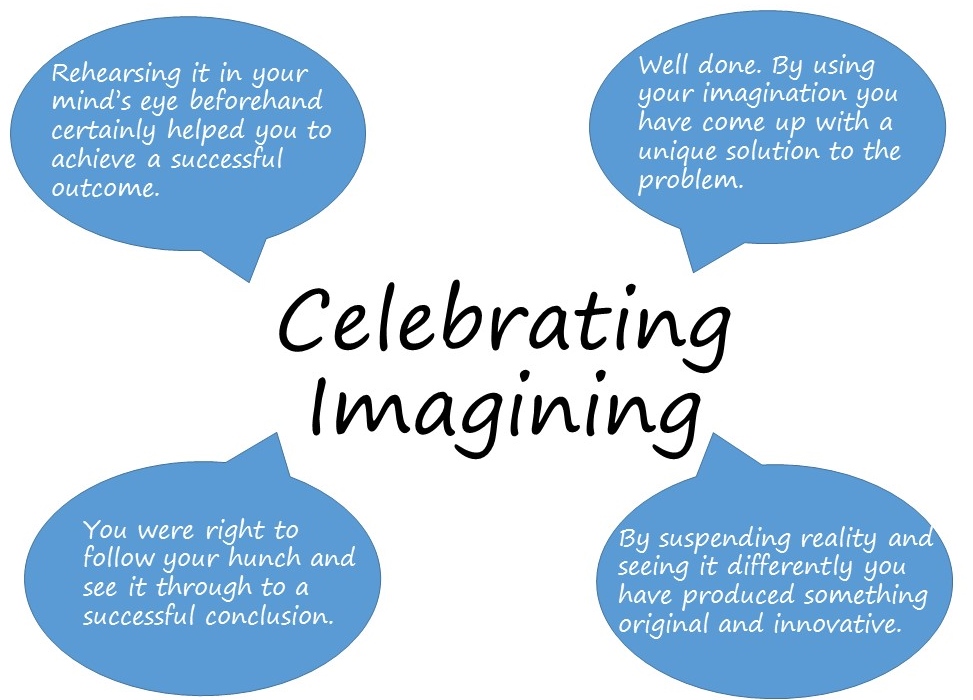




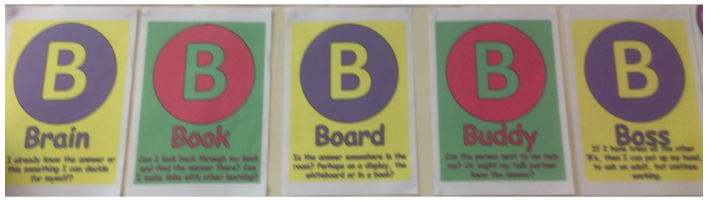
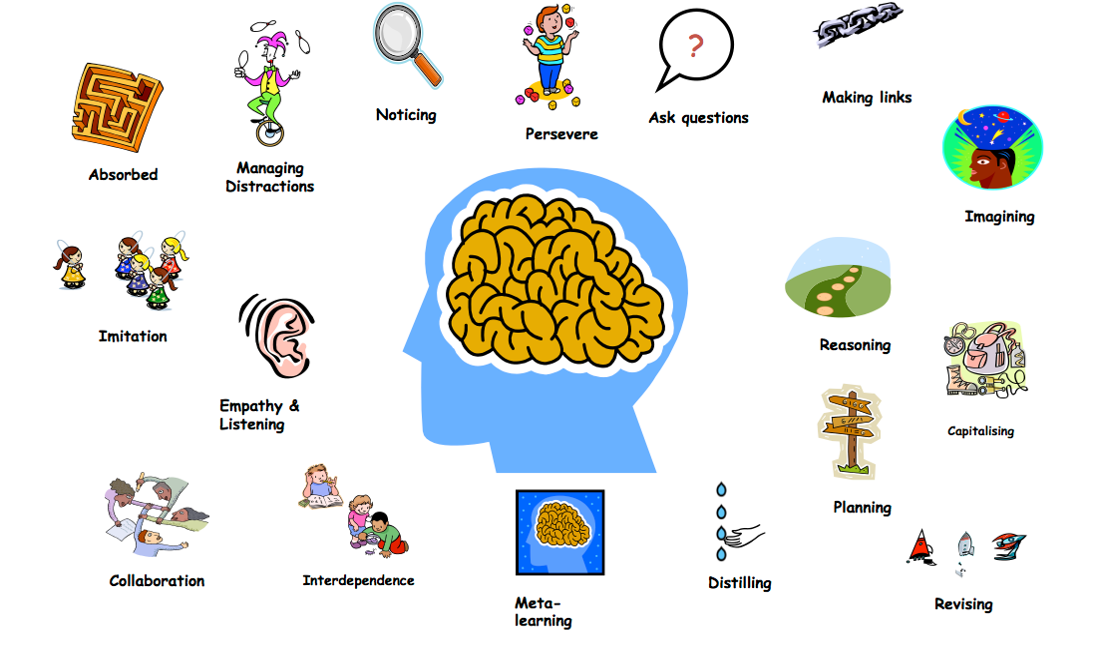




















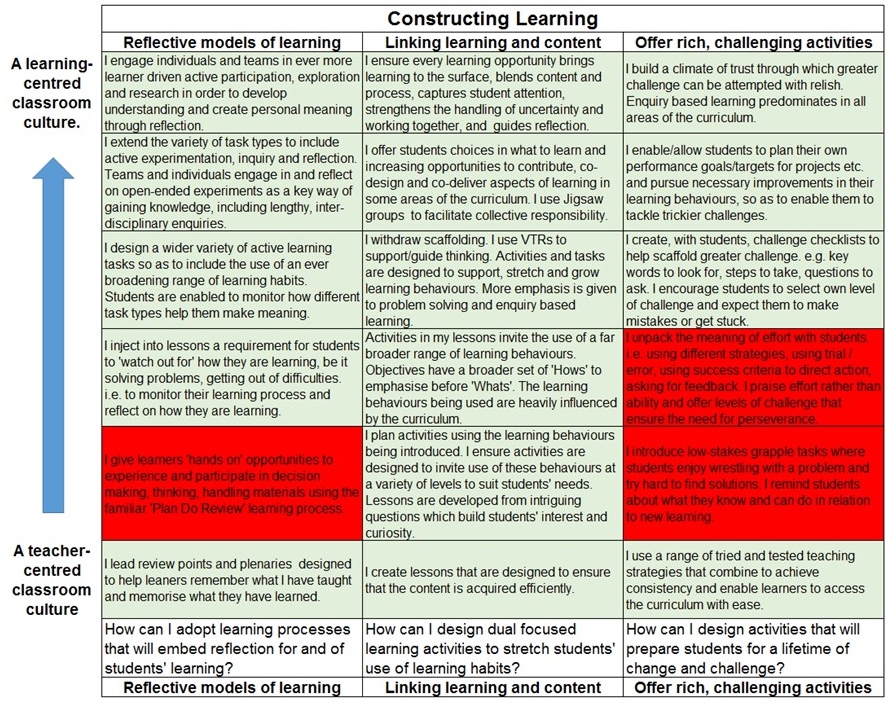


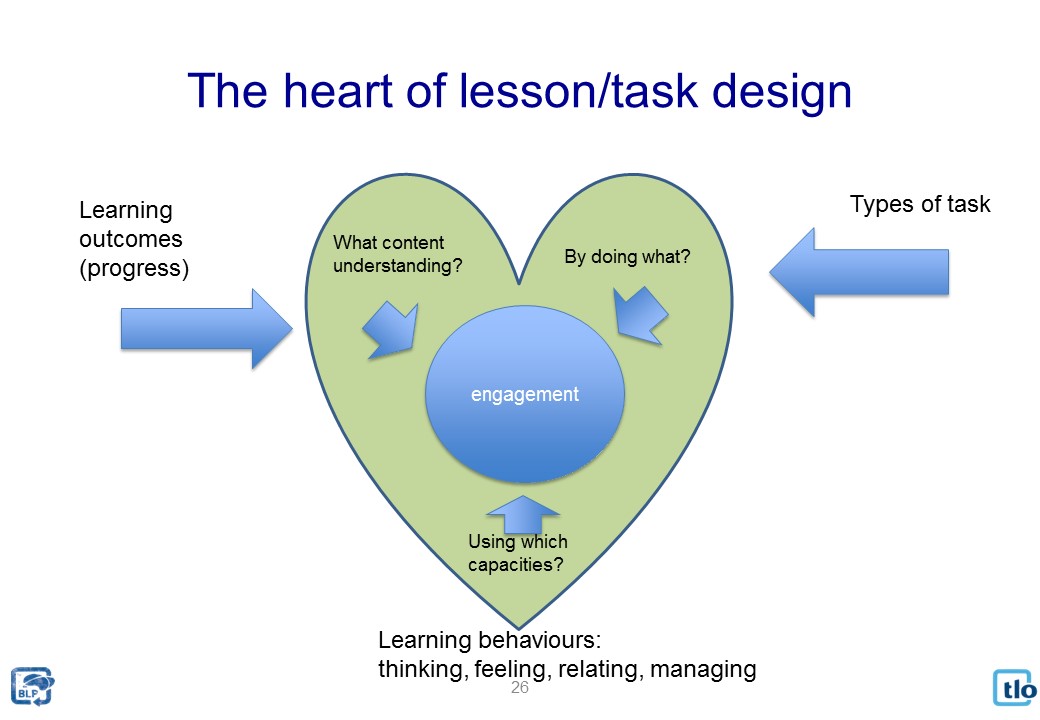
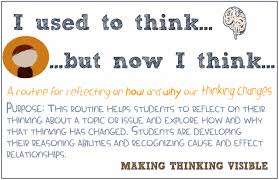
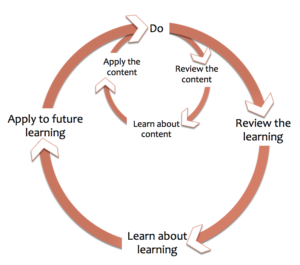


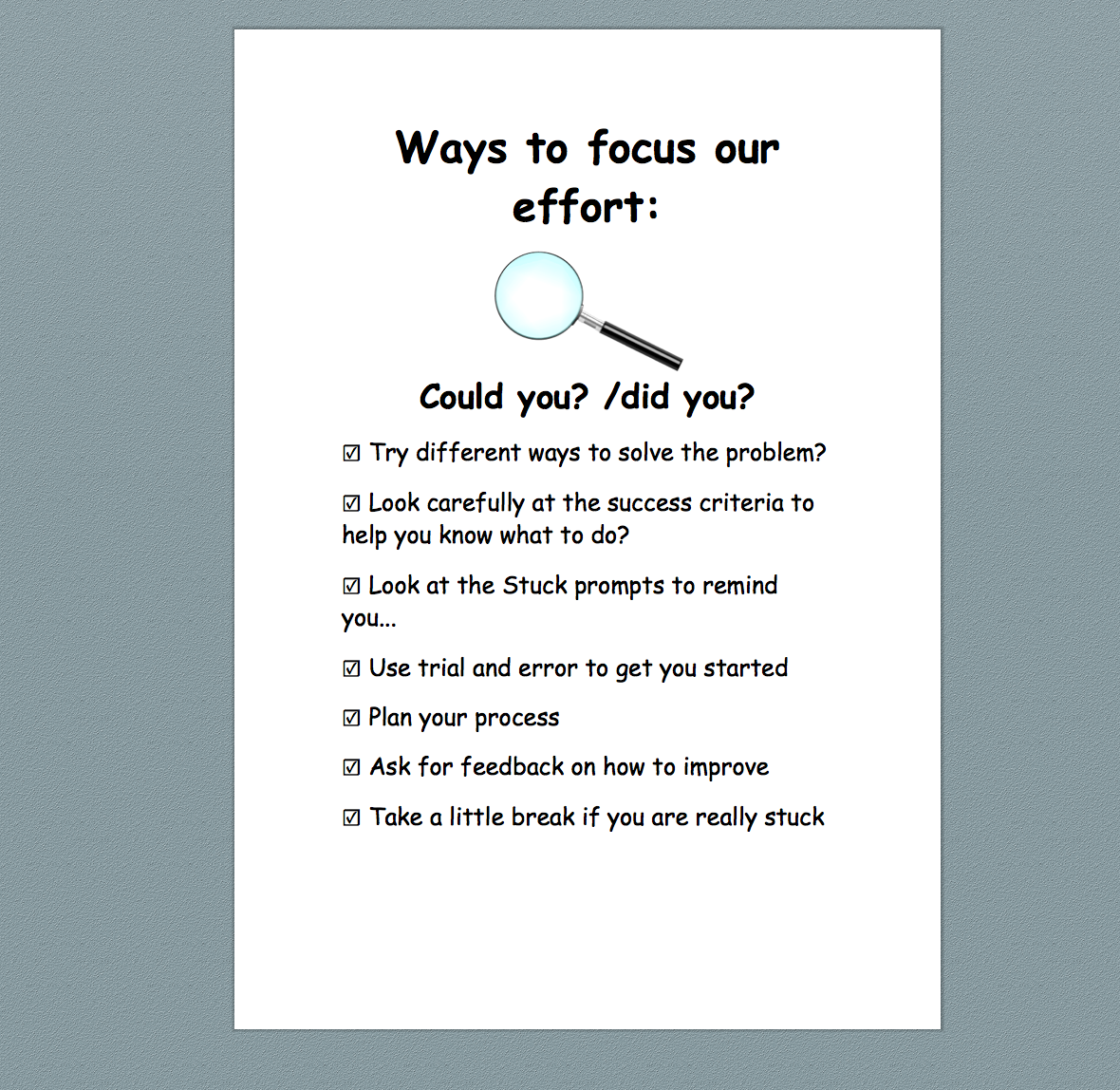


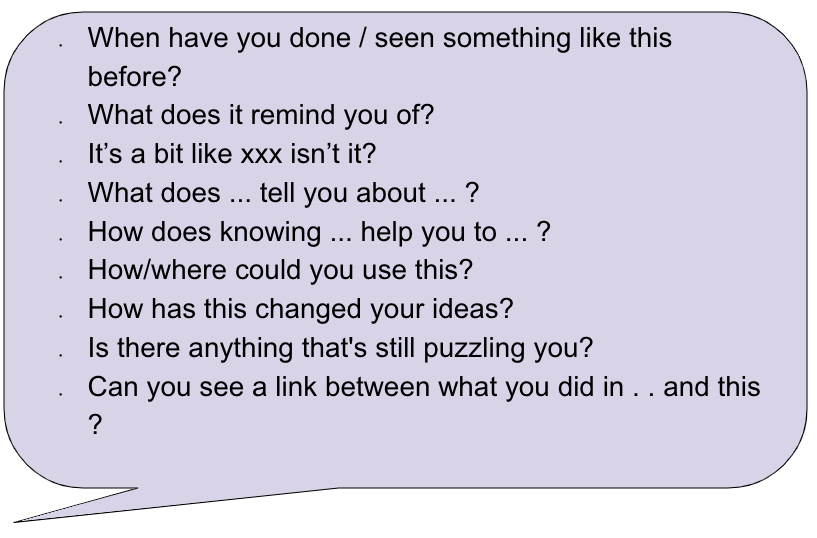

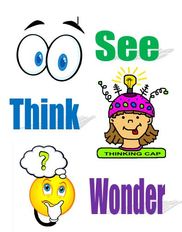

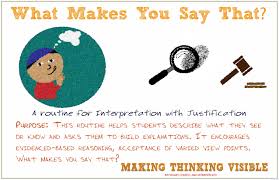

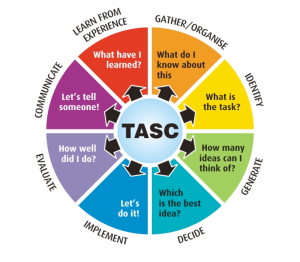

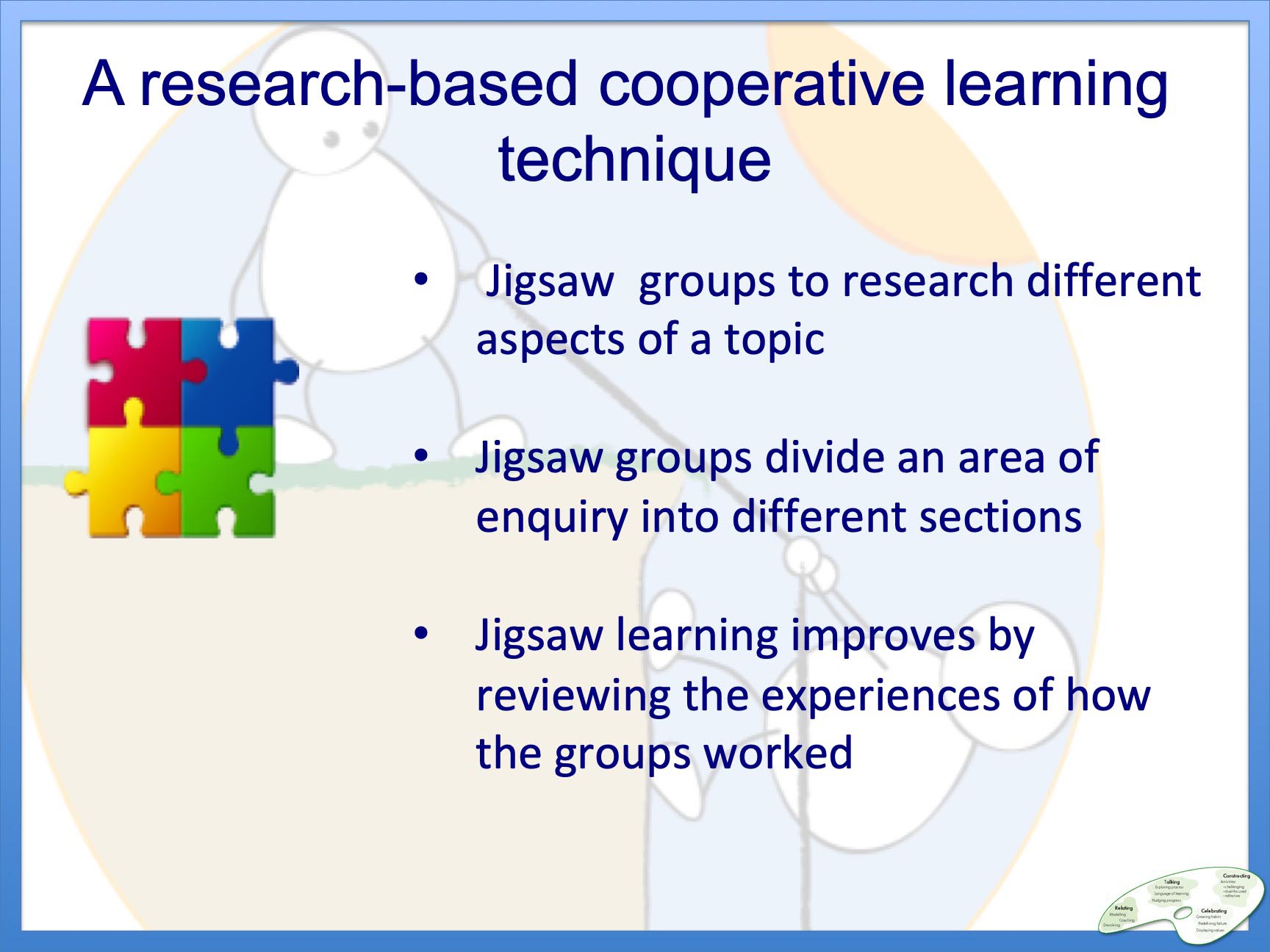






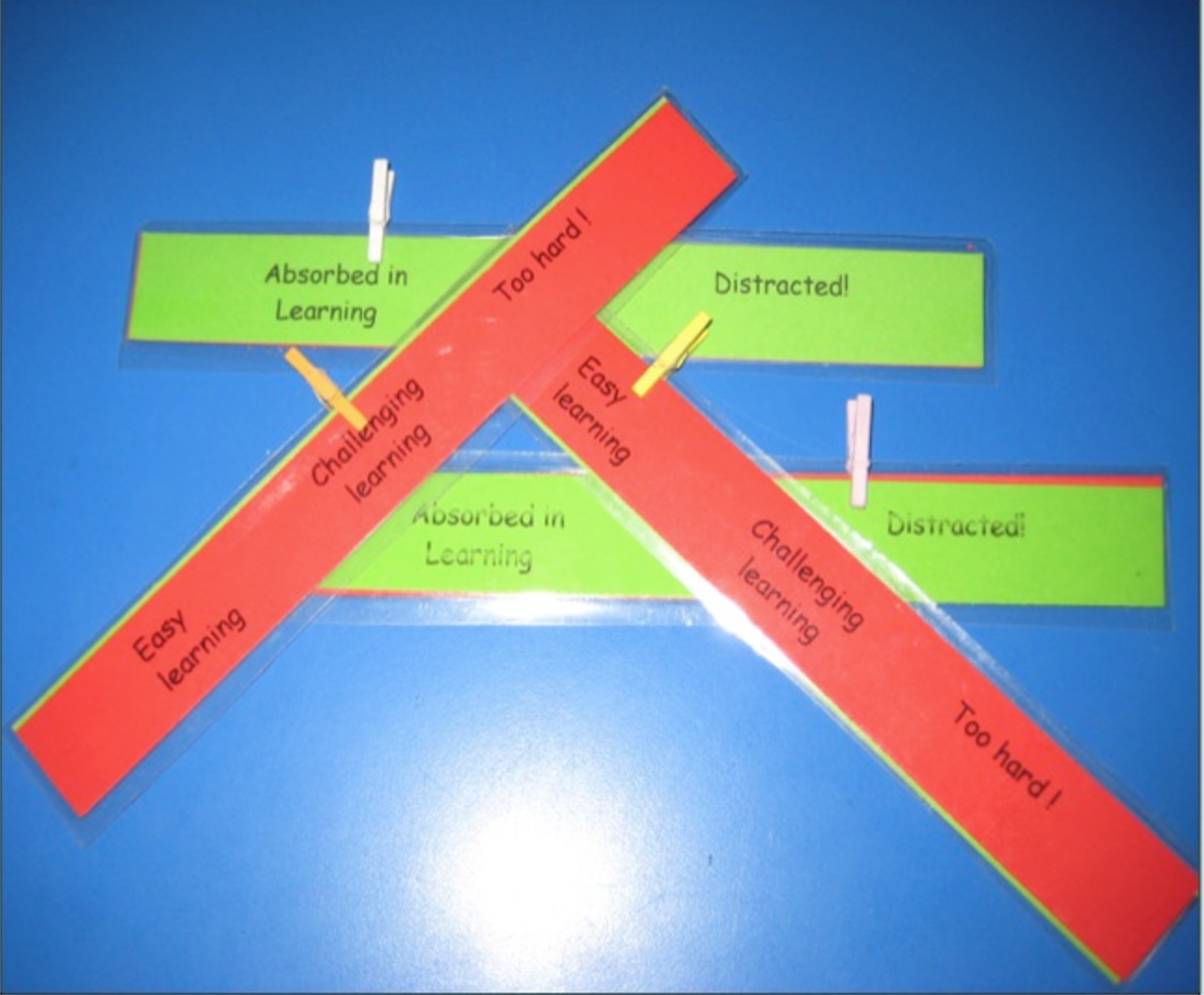
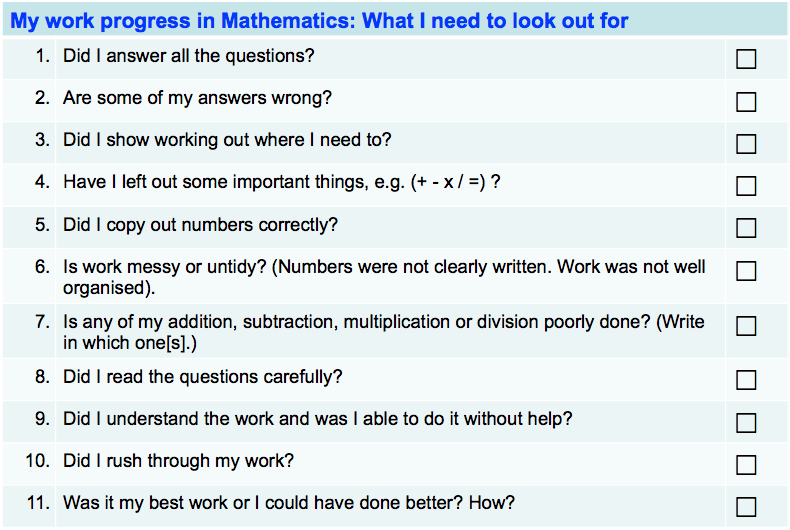
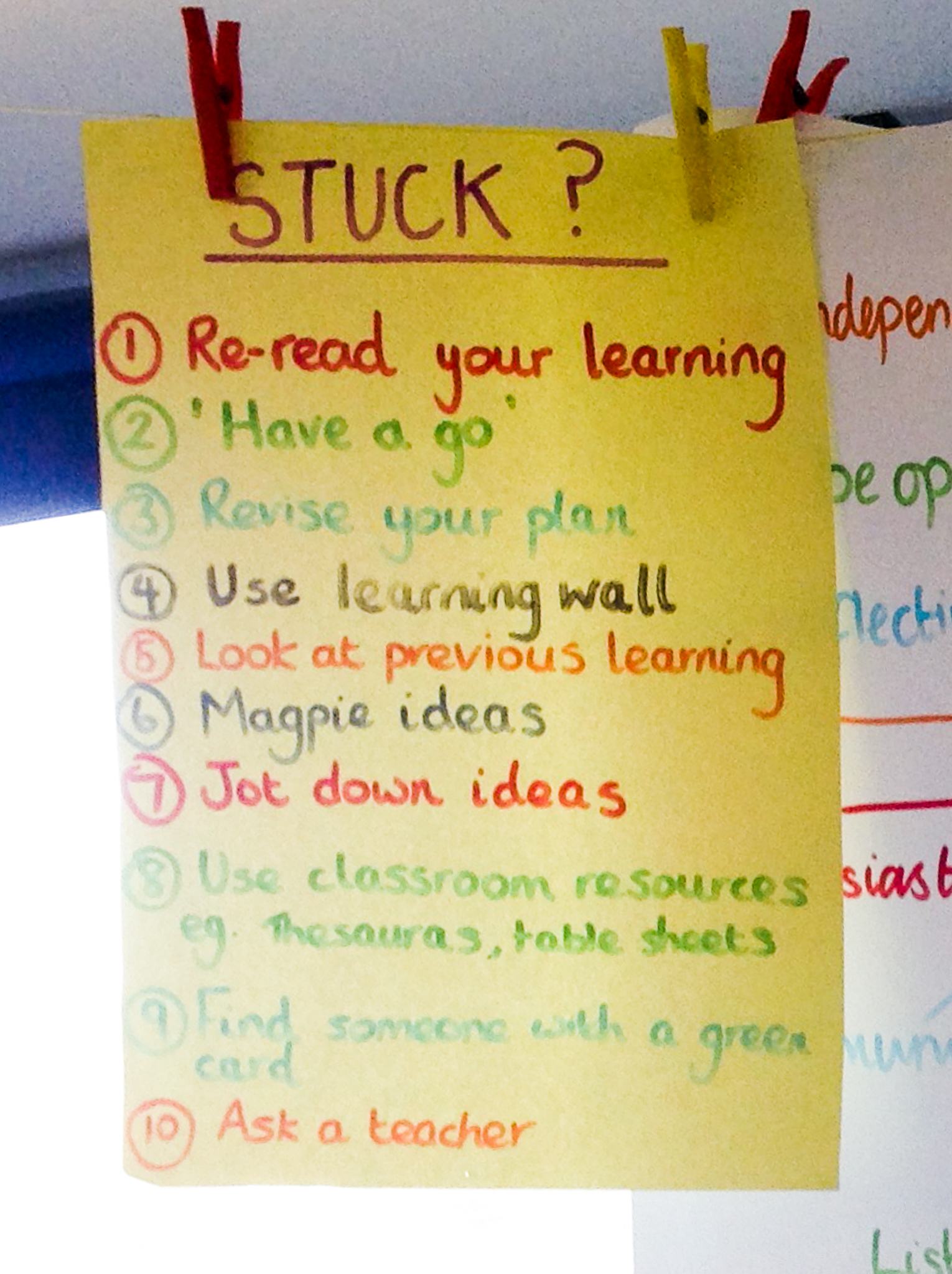













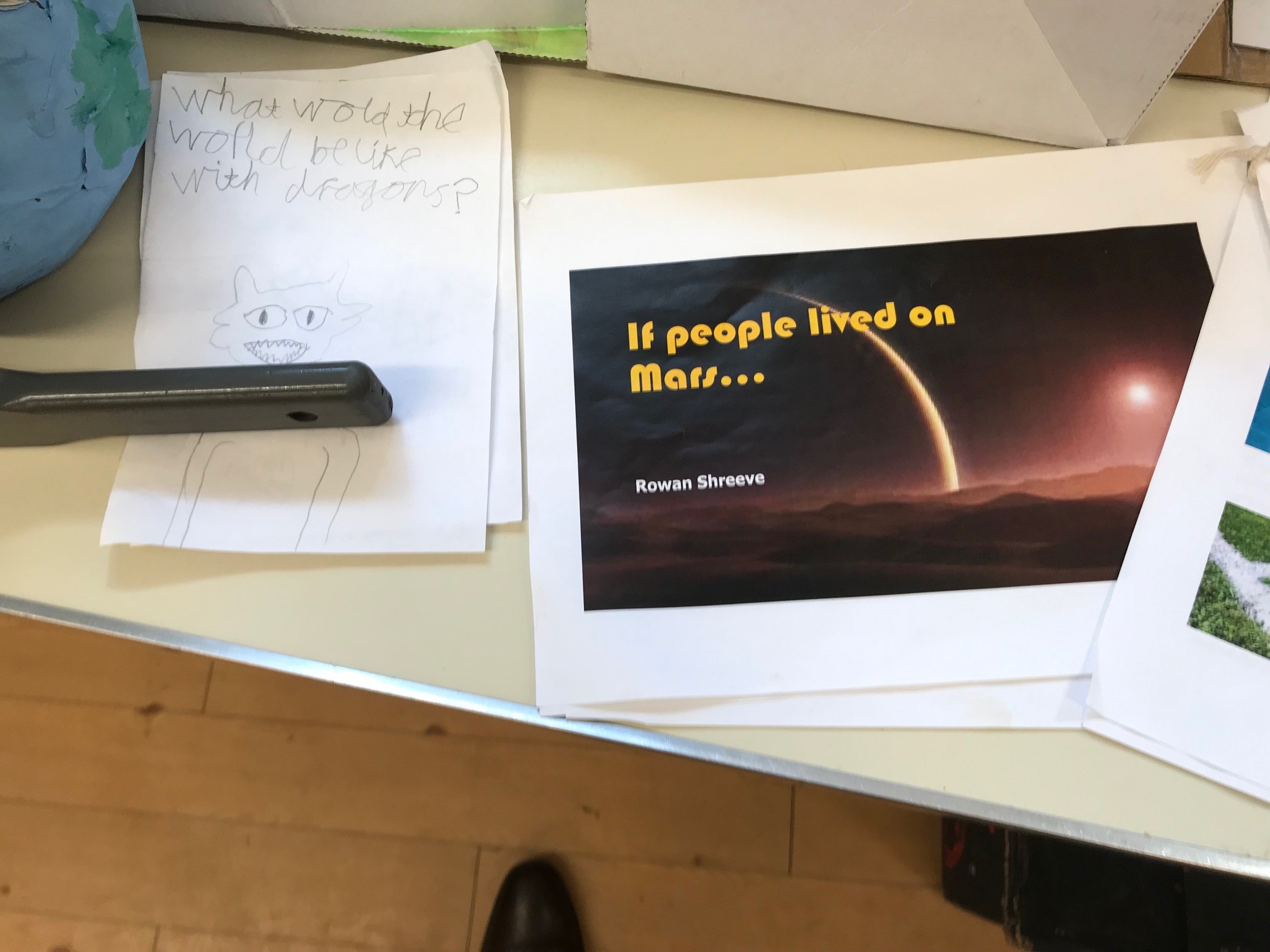
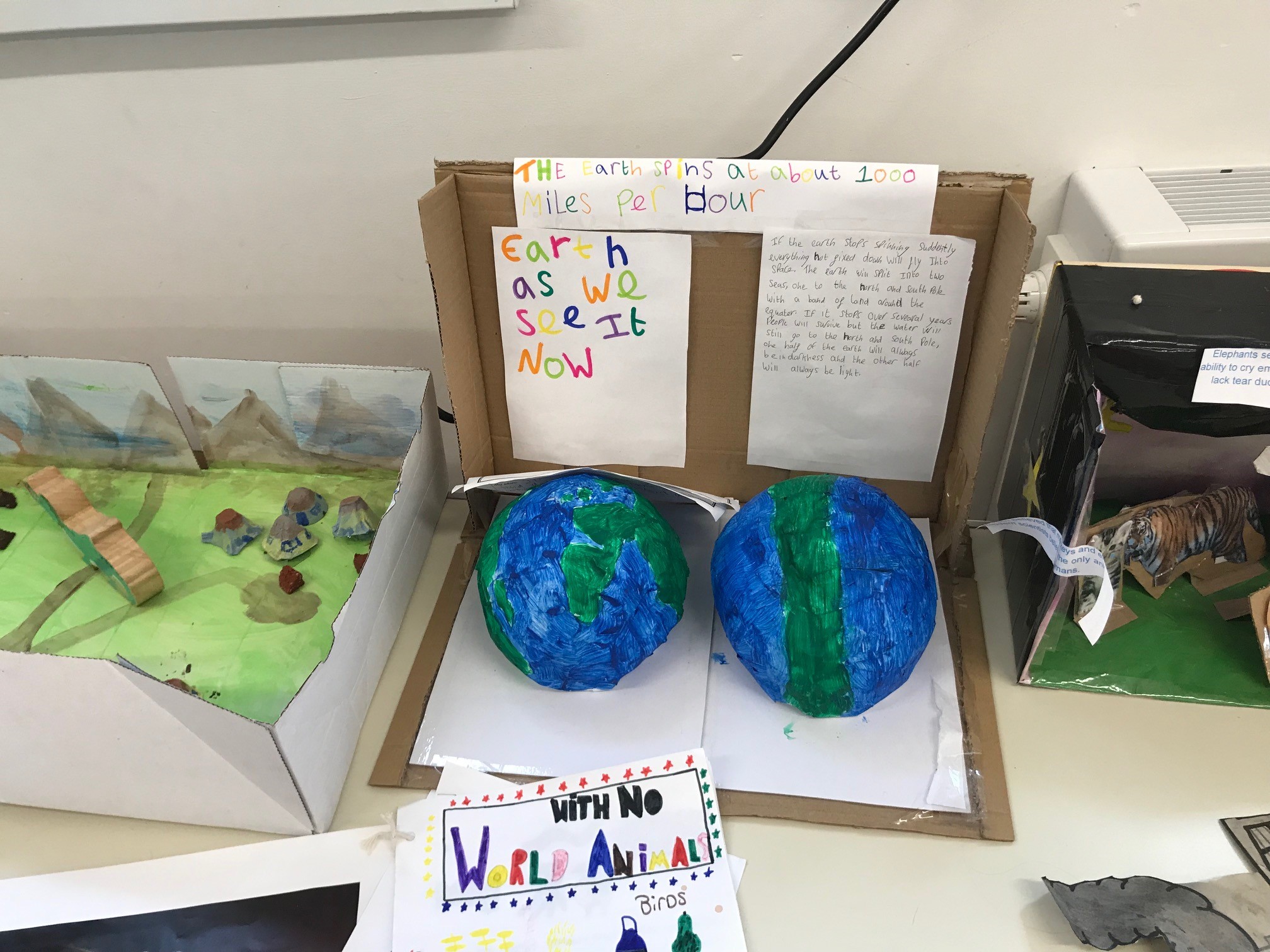


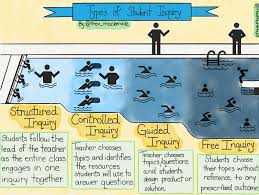
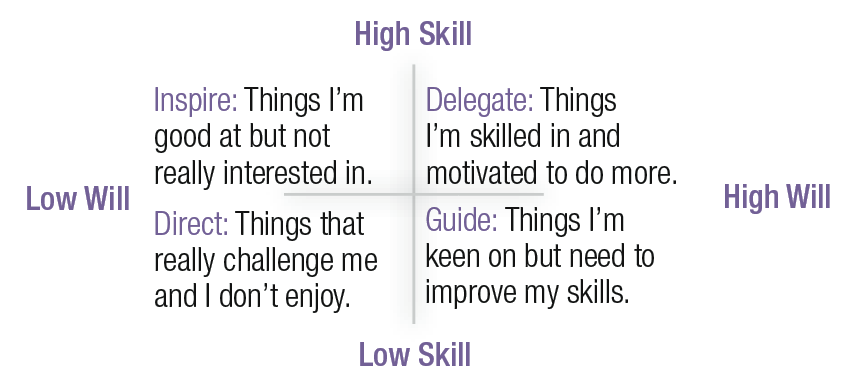


![BLP_Brain_Generic_no-Rs-[Converted]](https://www.buildinglearningpower.com/wp-content/uploads/2016/12/BLP_Brain_Generic_no-Rs-Converted.png)