Unit 2. The big picture of classroom culture
Welcome to Building Powerful Learners. This eight unit online programme will enable you as a teacher to:
- explore how learners might become not just better learners but effective lifelong learners;
- engage your learners consciously with the ideas and processes of their own learning.
The programme combines three types of action that will help you to experiment with, analyse and understand how to become skilled in developing your students’ learning power.
1 Understand by using Read abouts…of which there are two types
- Essential Read …essential must read text.
- Extended Read …interesting, good to know, absorb when you can.
2 Analyse by using Find outs…tools to help you discover and analyse essential information
3 Experiment with Try outs…practical activities for you to try, check and perfect in your classroom
Unit 2 explores the “how” of a learning culture.
- What are the key aspects of a learning culture? (Essential Read about 1)
- What am I like as a teacher? (Find out 1)
- Taking a look at your learning culture. (Find out 2)
- A closer look at learning cultures. (Essential and Extended Read about 2)
- How might I begin to teach differently? (Try out 1 to 5)
- How can I check how my experiments are going? (Find out 3)
Structuring and using the ideas below with your students over the next month or so is your second step in becoming a skilled learning power practitioner.
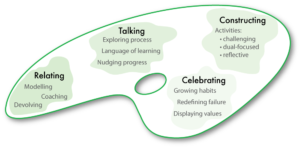
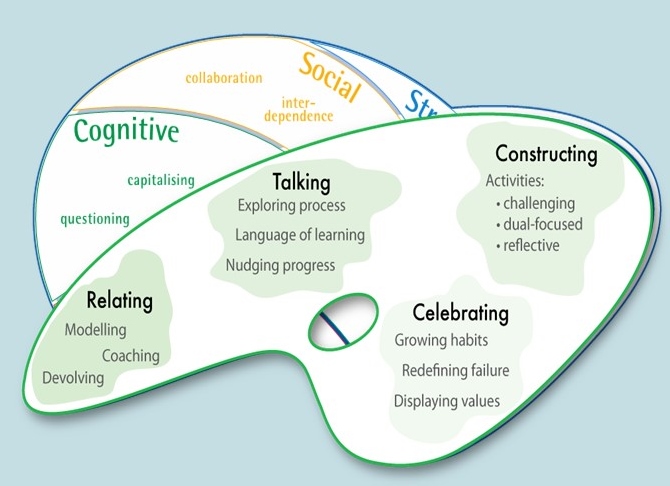
The Teachers’ Palette. A framework for classroom culture.
Essential Read about 1
A framework for high value learning cultures.
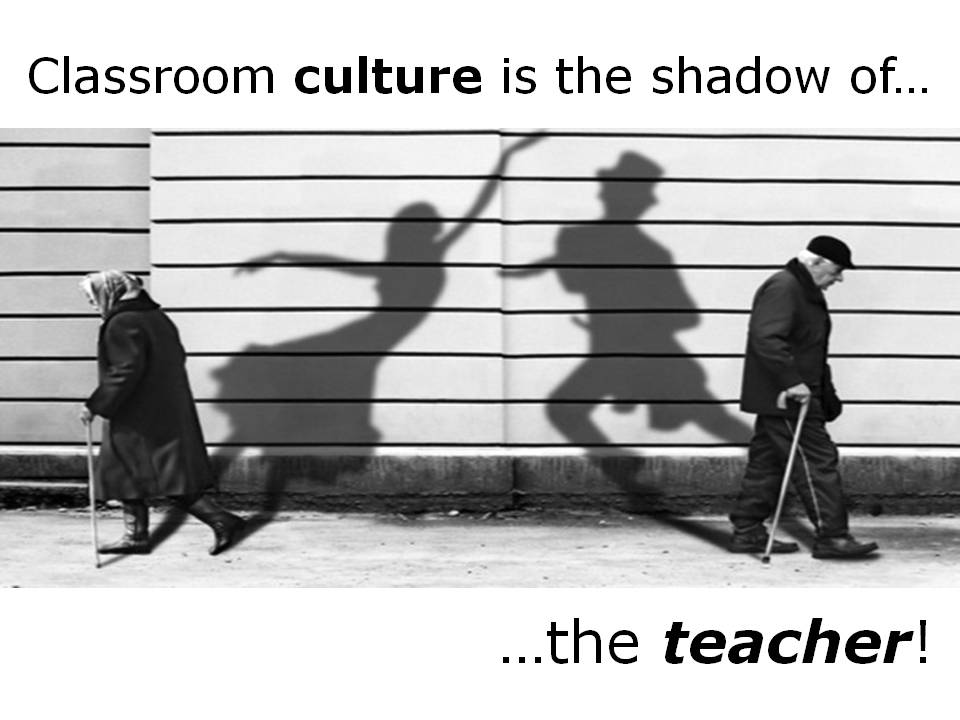
Building powerful learners is about creating a culture in classrooms – and in the school more widely – that systematically cultivates habits and attitudes that enable young people to face difficulty calmly, confidently and creatively. By a ‘culture’ we mean all the little habits, routines and practices that implicitly convey ‘what we believe and value round here’. The most important messages about learning are conveyed to students in classrooms. They are places where, hour by hour, students experience the values and practices that are embodied in the school, rather than just the ones that are espoused.
As Ron Ritchhart observes in ‘Creating Cultures of Thinking’:
“The culture of the classroom teaches. It not only sets the tone for learning but also determines what gets learned. The messages sent through the culture of the classroom communicate to students what it means to think and learn well. These messages are a curriculum in themselves, teaching students how to learn and ways of thinking.”
So ‘culture’ concerns the details of the micro-climate that you as a teacher create in your classroom. What you do and say, what you notice and commend and what you don’t, what kind of role model of a learner you offer: all these are of the essence. And what really matters is how you design and present activities so that, over the course of a term or a year, your students are cumulatively getting a really good all-round mental work-out. All the learning bits of their brains are being stretched and strengthened, one by one and all together.
Essential Read About Model 2. The Teachers' Palette framework
Model 2. The Teachers’ Palette: a learning culture model
As a teacher you can build young people’s learning power by helping them to expand their own learning capacities. This involves the ways in which you relate to students, talk to students, organise your classroom, and design activities, as well as what you notice and celebrate about learning
Making learning power work involves transforming the culture of the classroom.
- a common language for learning is adopted;
- staff shift responsibility for learning to students and model learning by sharing their own difficulties, frustrations and triumphs;
- students come to understand themselves as growing learners and consciously improve their learning habits;
- teachers assume the role of learning-power coach, offering students interesting, real and challenging activities to enable them to create their own knowledge and stretch their learning habits.
Underpinning this is the obvious reality that students will only change their behaviours once their teachers have changed theirs’.
The culture of the classroom is determined by how you are as a teacher, the relationships that exist between you and your learners, the ways in which you talk and what you talk about, the extent to which your teaching is designed to ensure both content acquisition and the development of learning behaviours, and the often subliminal messages about what you think is really important.
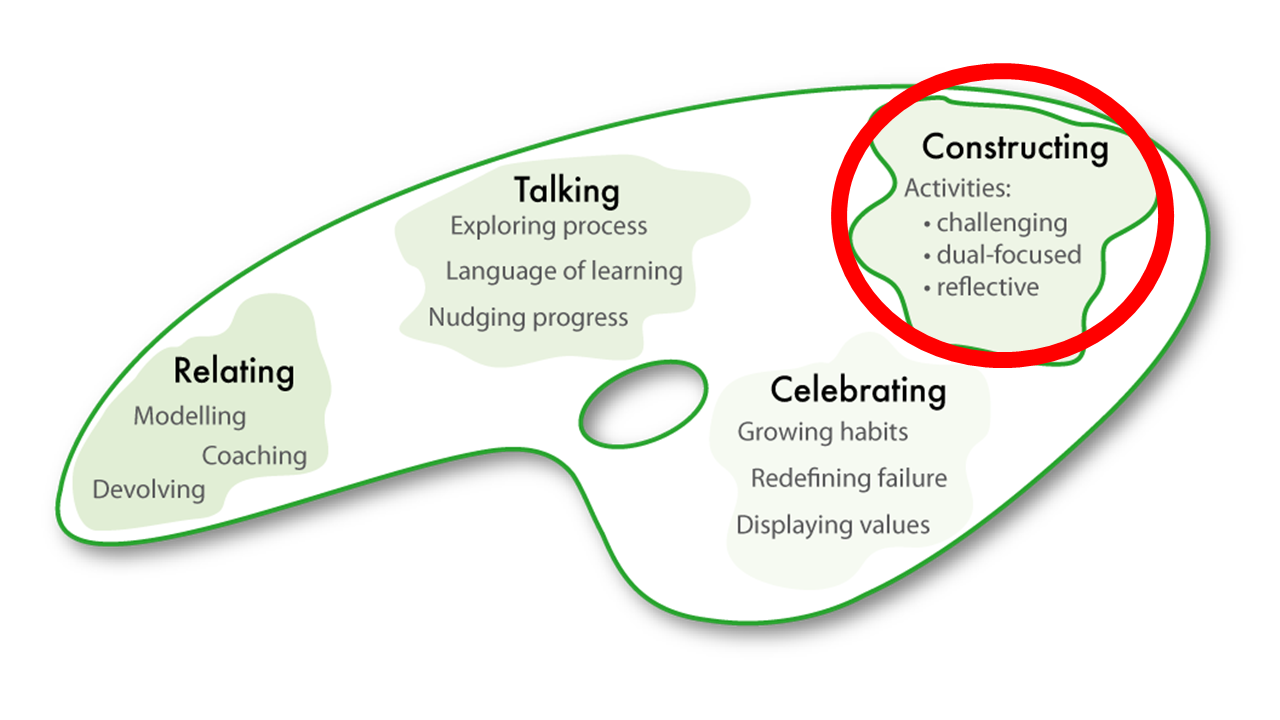
These 4 aspects of culture – Relating, Talking, Constructing and Celebrating – form the basis of The Teachers’ Palette, the second of three key models to build powerful learners.

Find out 1
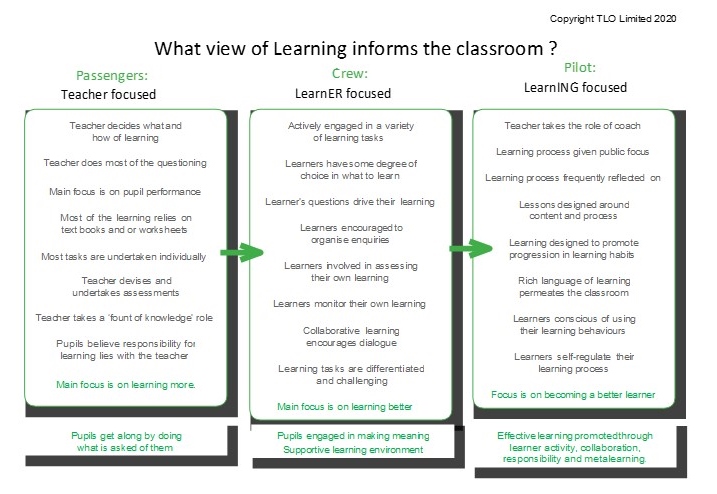
The journey to learning centred classrooms. Where are you now?
1. Teacher centred classrooms
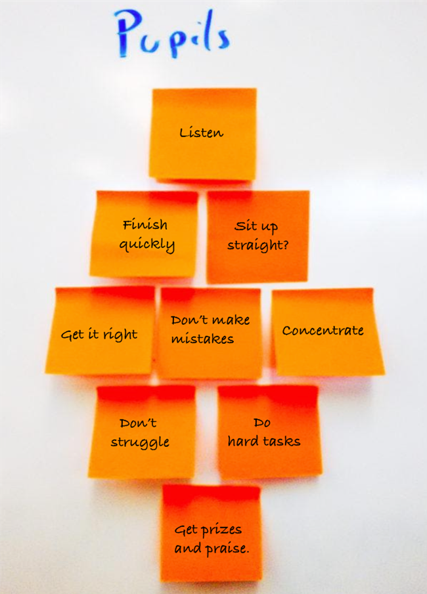
Many classrooms might be thought of as teacher centred where the emphasis is on what the teacher is doing or saying. Learners have little to do other than listen and be told what to do. In these classrooms students can see themselves as isolated, passive and dependent on the teacher for the acquisition of knowledge. In these classrooms the conception of learning is “learning = being taught”. The teacher and teaching are dominant. Students have what’s been called a ‘thin’ description of their own learning and they have an impoverished view of their own role in learning.
2. Learner centred classrooms
The learner centred classroom is where students take a more active part in deciding what to do. The purpose is seen as the learner making meaning. So ‘content’ is not just stuff to be taught but for connecting to previous knowledge, extending understanding and helping learners to see things in new ways. Here there will be more collaborative learning where students have dialogues about what they are learning and create meaning together. There will also be more learner-driven learning where learners might have a role in the agenda through questioning or organising an enquiry and evaluating the products.
3. Learning centred classrooms
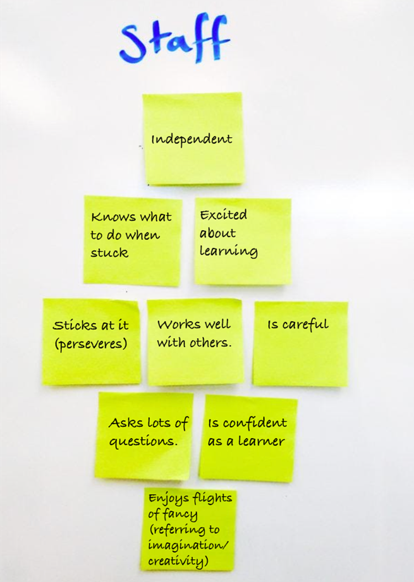
It’s only when the above dimensions are present to some extent that it becomes realistic to add another – that of learning about learning itself. Learners collaborating, taking a role in learning, using questions to drive learning and so forth give a firm platform on which to build powerful learners. Now we can add a language about learning for students and teachers alike, and practise meta-learning. Through such practices students come to see themselves as learners, develop stories about their experiences, understand the learning behaviours they are using and develop and propose improvements. They are able, consciously, to grow their learning habits.
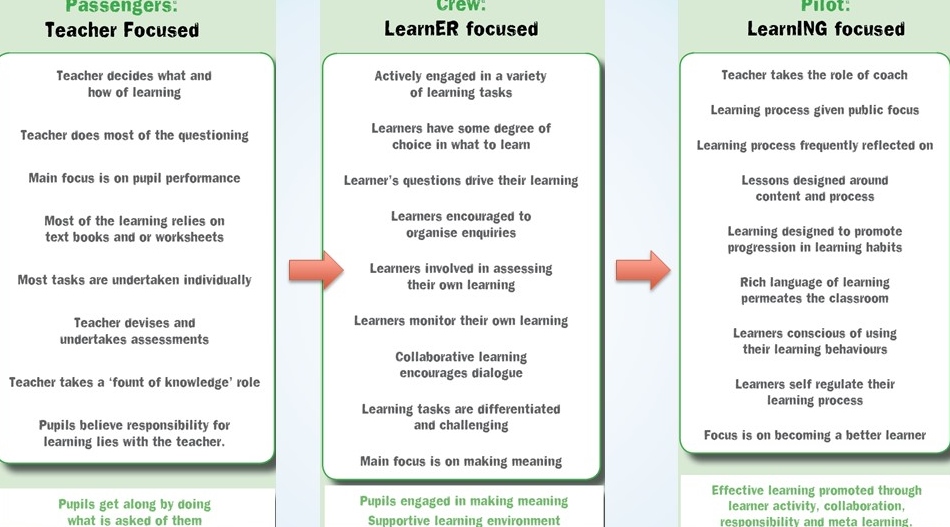
Download a copy of this informal classroom culture review tool (Culture Tool 1). Spend a little time thinking about your own classroom culture against the indicators for each classroom culture. Where would you say your classroom culture is now?
Culture tool 1. Where are you now?
Highlight the indicators that best describe your classroom culture now. NB. There will probably be a mixture of teacher and learner focused features.
- Which panel has most statements highlighted?
- What does that imply?
- Would your students see it the same way?
- Which statement in the middle panel would you most want to be able to highlight to make your classroom more learner friendly? i.e. in place in your classroom.
Find out 2
A closer look at classroom learning cultures
As a teacher, you’re an influential habit former. The way you orchestrate and guide learning influences the ways young people perform and behave. This means you’ll need to be mindful of how you help students to form, replace, re-form and strengthen their learning habits.
Ask yourself whether you think your teaching habits are helping students’ learning habits and what you might need to adapt and change?
Habits form through use and practice (deliberate or otherwise!). But desirable learning habits will survive and flourish better if students are aware of them, realise their value and strive to improve them.
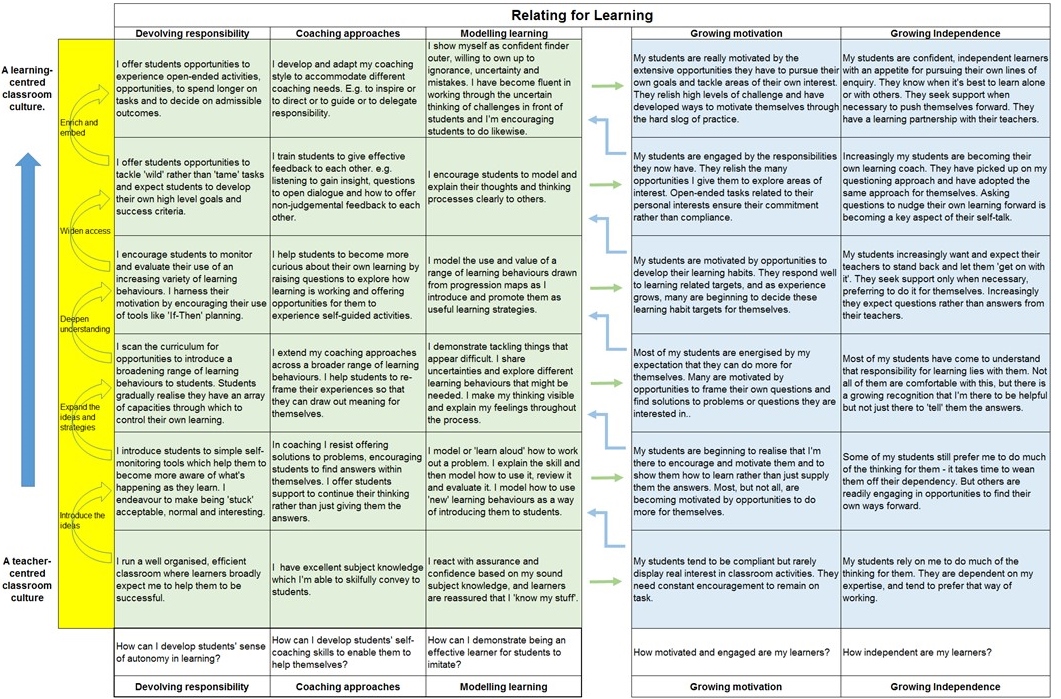
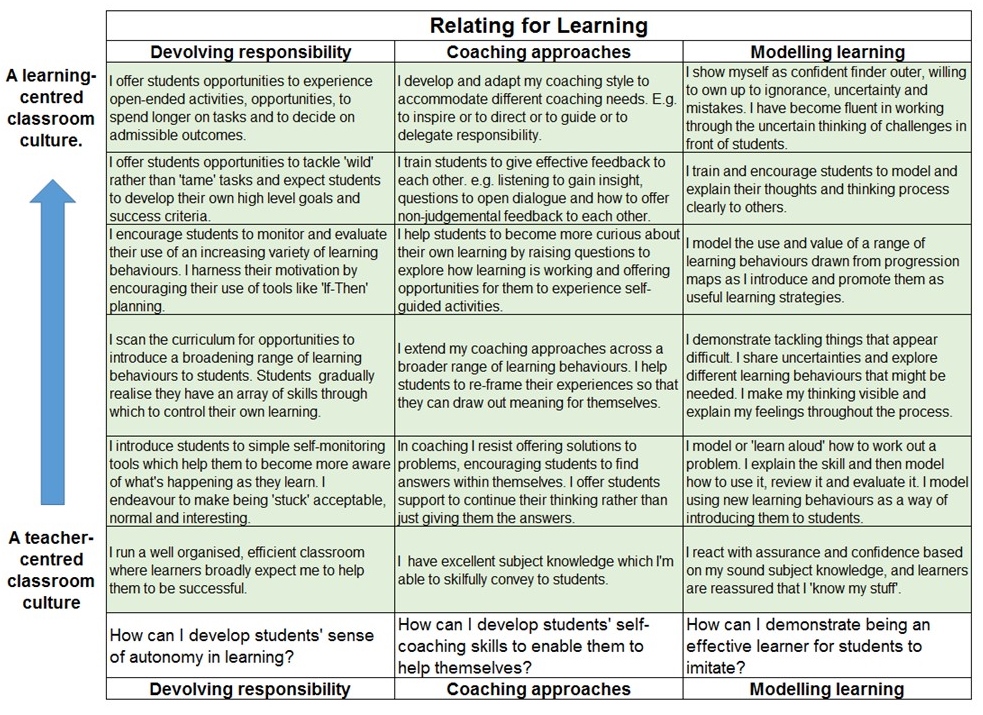
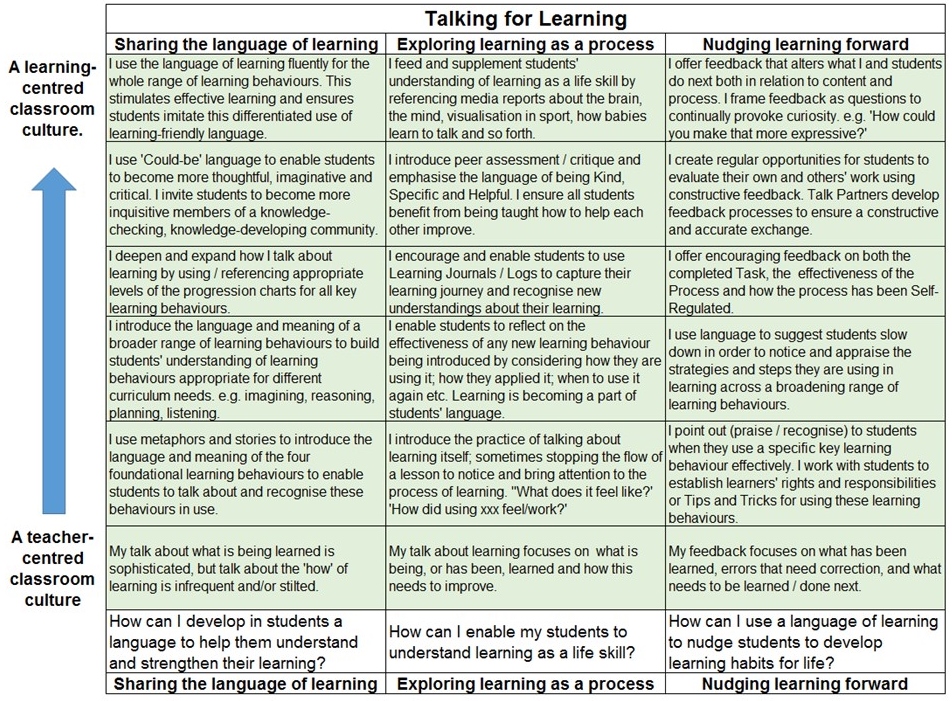
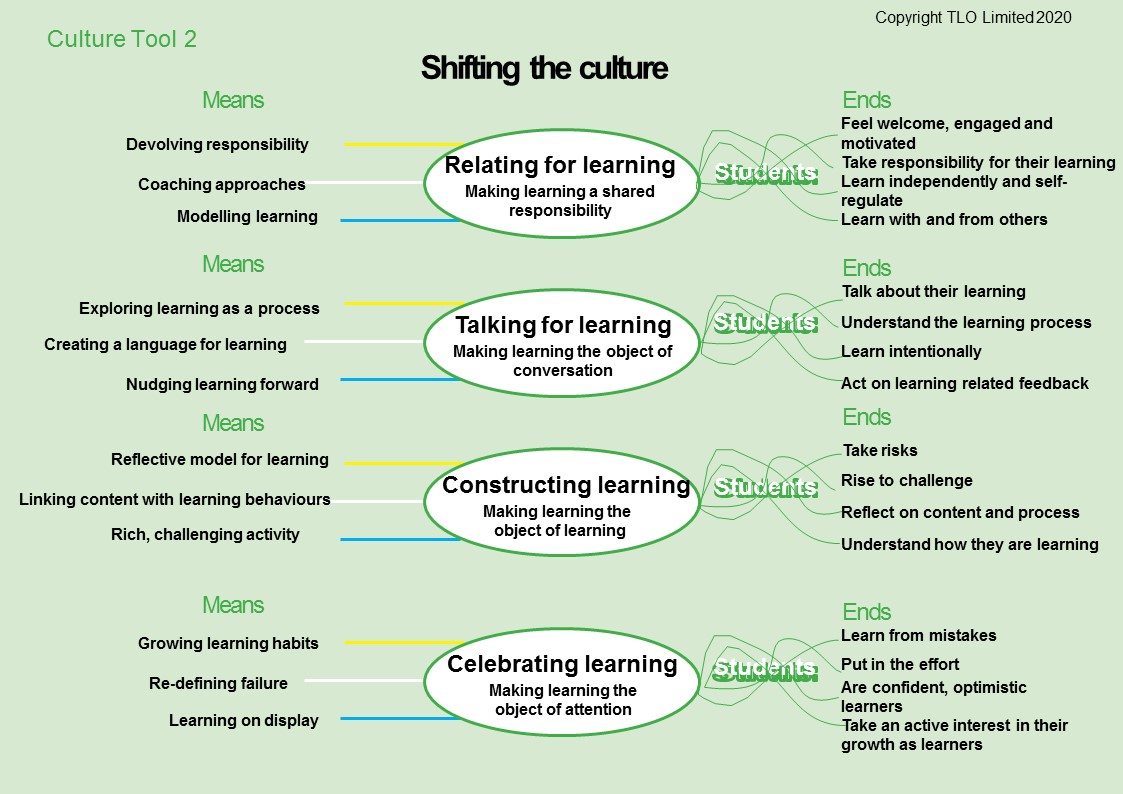
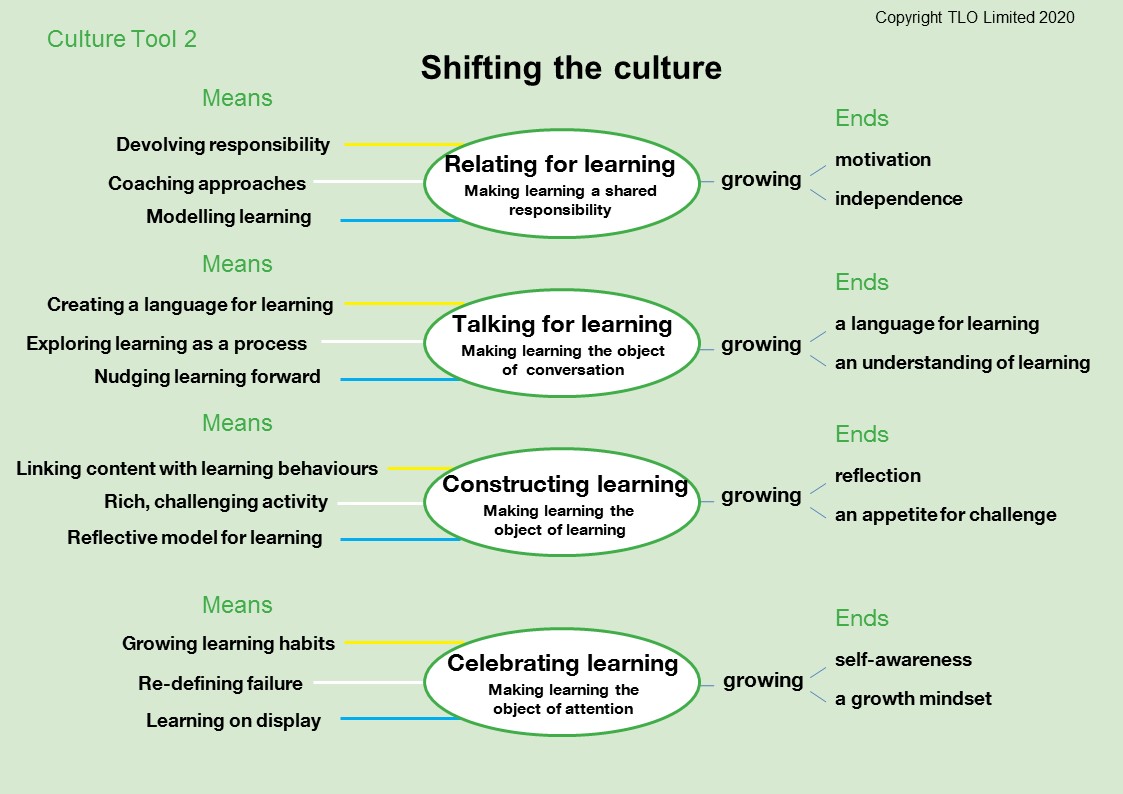
The tool identifies the four aspects of classroom culture;
- how you relate to students,
- the sort of learning language you use,
- how you design learning opportunities
- what you celebrate about learning
For each of these aspects the tool identifies three major ways of being for the teacher on the lefthand side and their results for students on right hand side.
Read more detail about this model in the toggle boxes below.
Essential Read about 2
An Essential Read About Learning Culture tool 2.
Learning cultures. Lots of little shifts
The journey from a teacher centred culture to a learning centred culture isn’t straight forward. It requires, firstly, that teachers begin to change some of their teaching behaviours so that learners can begin to change some of their learning behaviours. Inevitably this takes time, for both teachers and learners to change their default ways of working. Equally, the culture shift cannot be made in a single leap – it requires lots of small shifts in behaviour for both teachers and learners.
Moving to more learning-friendly cultures takes lots of little shifts in thinking and action. To establish learning-friendliness it’s useful to think about four types of shift. A shift in relationships, a shift in the language, a shift in how learning is constructed and a shift in what is celebrated – what is seen to matter:
Shifts in Relating
- Relating for learning: the changing roles and responsibilities of teachers and learners, where learning becomes a shared responsibility. Students are given more responsibility for their own learning, the role of the teacher changes from ‘the sage on the stage’ to ‘the guide by your side’; the role of the student moves from ‘passenger’ to ‘crew’ and ultimately ‘pilots of their own learning’.
Shifts in Talking
- Talking for learning: the sort of language content and style to enhance learning, making learning the object of conversation. The way we express ourselves in the classroom creates a powerful linguistic environment that teaches young people the best of what we know about learning. The language of learning helps students to discuss, understand, and become conscious of using their learning behaviours.
Shifts in Constructing
- Constructing learning: activities and classroom routines feed learning habits and learning becomes the object of learning. Learning challenging activities are designed to enable students to understand both the content and the process of learning. They do this by having a dual focus – to explore content and stretch students’ use of their learning behaviours. There is a strong underpinning of not just ‘doing’ learning but reviewing and reflecting on the process in order to make meaning and apply it elsewhere (transfer).
Shifts in Celebrating
- Celebrating learning: the outward signs of the values that underpin the culture, making learning the object of attention. In this dimension common notions of classroom learning are flipped or re-defined – being stuck is seen as interesting and mistakes valuable. Effort, questioning and taking risks are recognised, attended to, acknowledged and praised. These and the recognition of the development of learning habits serve to make visible and public the underlying values of the learning friendly environment.
The teacher’s role becomes one of surfacing learning; to make learning public; to train some of the tricky bits; to talk about it; to recognise and celebrate it as it happens; to nudge it along, assisting students to grow their learning capacities; and to design activity to stretch a wide range of learning habits. This uncovering of learning ensures students discover, use, understand and grow their learning habits. There is a shift in emphasis from performance to learning, from content to process, from teaching to coaching
Extended Read about.
An Optional, Extended Deeper Read About Learning Culture tool 2.

Relating to students – Making learning a shared responsibility.
The classroom as a learning community where everyone learns from each other and become more confident as learners as a result.
1. Modelling learning; show what it means to be a learner
Model being a good learner to students. Demonstrate how you are a learner too; a confident finder outer.
- Learning aloud: take students through how you would work out a problem. Model the thought processes (including emotional) that you go through. This is important because a lot of the skill of learning only manifests itself in the inner world of the learner.
- Expose the thinking, feeling and decision making of a learner-in-action to help students actually see and hear how learning works.
- Ask yourself
- How much do I learn aloud– externalise my own exploratory thinking– in front of pupils?
- How much could I reveal about my own learning projects with all their ups and downs?
2. Devolving responsibility
Let students become more active in the learning process by offering them more opportunities to decide what to do.
Put the focus on students’ activity on learning rather than performing. Make sure that:
- there’s plenty of collaborative activity, as this helps students to see each other as resources (not rivals) for learning
- students can make choices about what and how to learn (high levels of learner autonomy)
- students experience failure and the useful part of learning like tolerating uncertainty, mess, error and initial failure.
- students are given a chance to talk more – with you talking less
- students experience more open-ended activities – and create their own
Ask yourself :
- How many of the above do I use in order to enable my students to become better learners?
- How frequently do I offer such opportunities?
3. Teachers becoming coaches
“Expert tutors often do not help very much. They hang back, letting the student manage as much as possible. And when things go awry, rather than help directly they raise questions: ‘Could you explain this step again? How did you… ?’” (Mark Lepper)
When we are curious we are genuinely interested in learning. Curiosity lies at the heart of coaching. A coaching approach:
- helps students to explore their challenges, problems and goals
- resists offering solutions
- provides an objective view of students actions to enable them to see things as as they really are
- enhances motivation and raises self esteem
- builds curiosity and encourages learning
Ask yourself:
- What is the balance between telling and coaching in my classroom currently?

Making learning the object of conversation.
The more richly children come to relate their own learning the more they see and take hold of their own role in it.
1. Exploring learning as a process
Deep talk about learning is what sets learning powered classrooms apart. Learning and how it works isn’t just talked about at the beginning of a term or year but is embedded in the everyday conversations of the classroom.
Conversations will include noticing things about learning:
- What do we mean when we say learning?
- When and where is it best?
- What helps you to do it?
- How does it feel? What hinders your learning?
It goes on into encouraging students to talk about their learning:
- What made it so good?
- What did you contribute?
- How did you make sense of that?
And later learners can be enabled to become meta-learners with questions such as:
- How do you plan to go about learning?
- How will you monitor how it’s going?
- How can you review how your learning has gone?
Learning as a process is brought to life by making it the subject of conversations.
Ask yourself:
How much do you talk with students about the process (not content) of learning itself?
2. Creating a language for learning
Building powerful learners is all about being able to:
- name
- recognise
- talk about using
- select for use when appropriate
- become skilled in using
- evaluate the effect of . . .
students’ learning habits
Using and extending the language adds breadth and depth to how teachers and learners talk about, understand and improve learning.
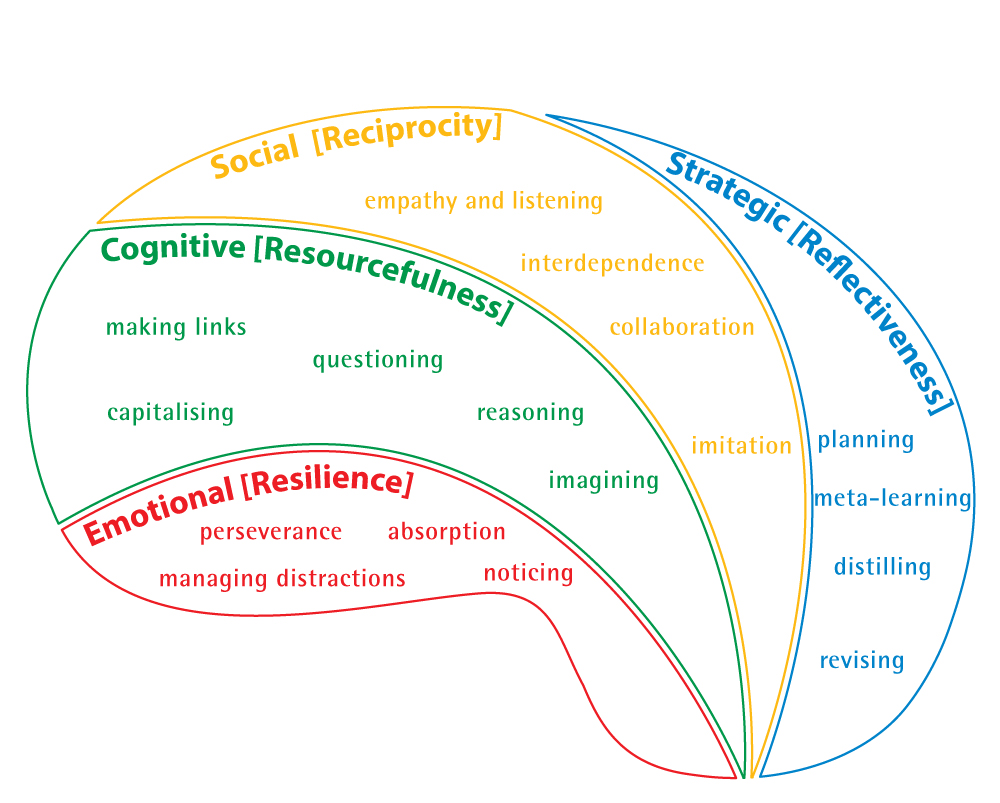
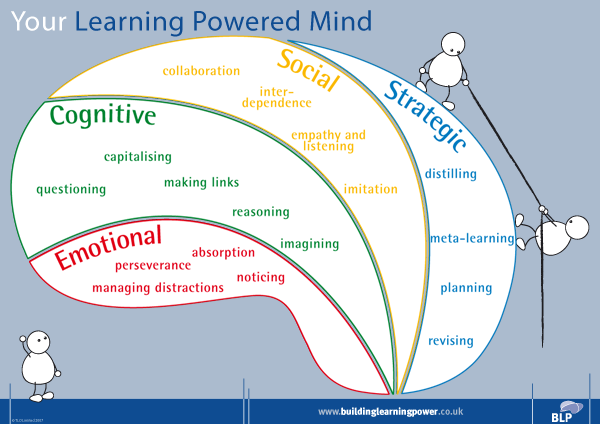
Emotional language – how we feel
The first aspect is about helping students to lock onto learning; to resist distraction; to become absorbed and to stay engaged despite the ebb and flow of learning.
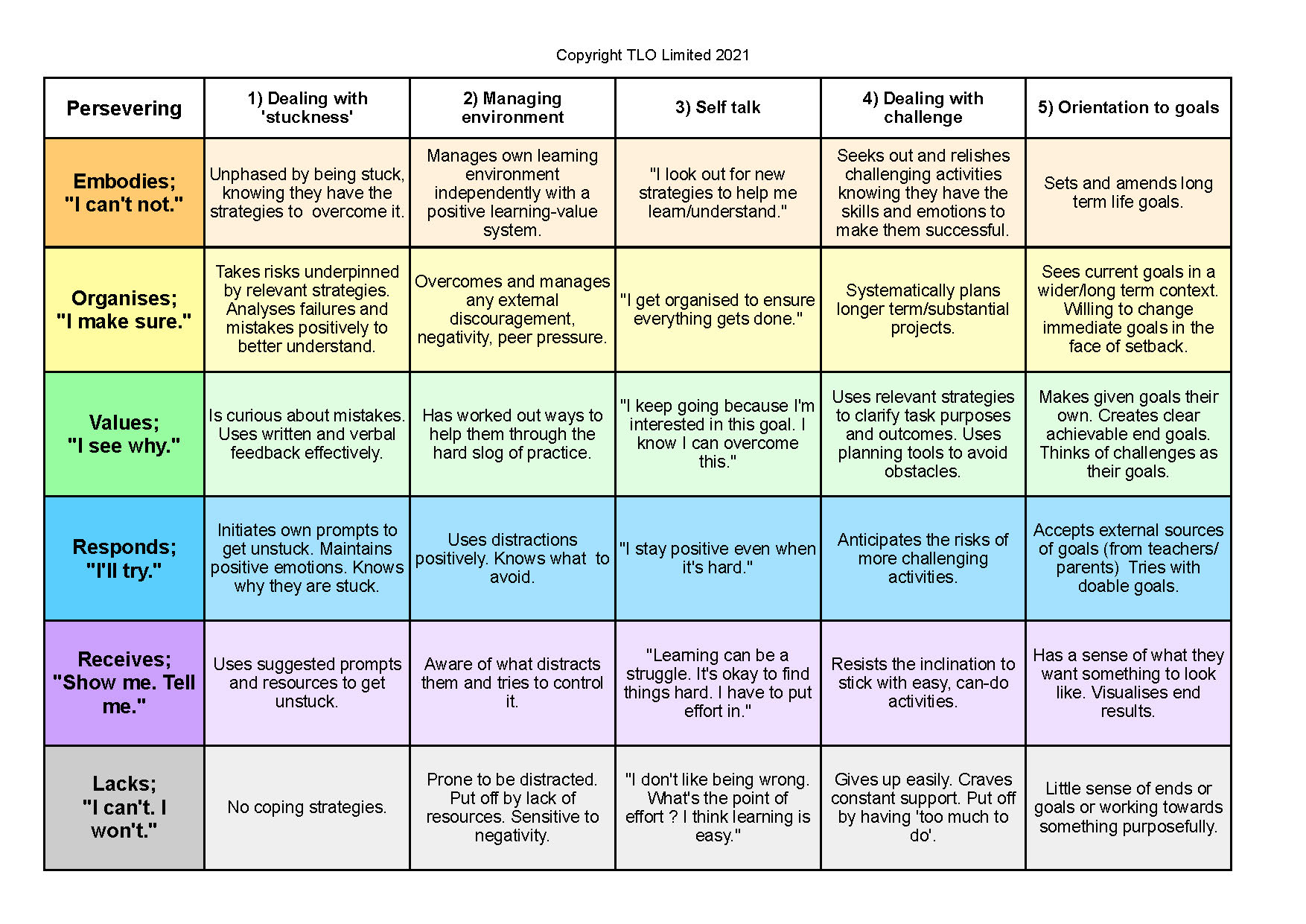
Learning behaviours include; absorption, managing distraction, attentive noticing, perseverance.
Cognitive language – how we think
The second aspect is about being able to draw on a wide range of learning methods or ways of thinking.
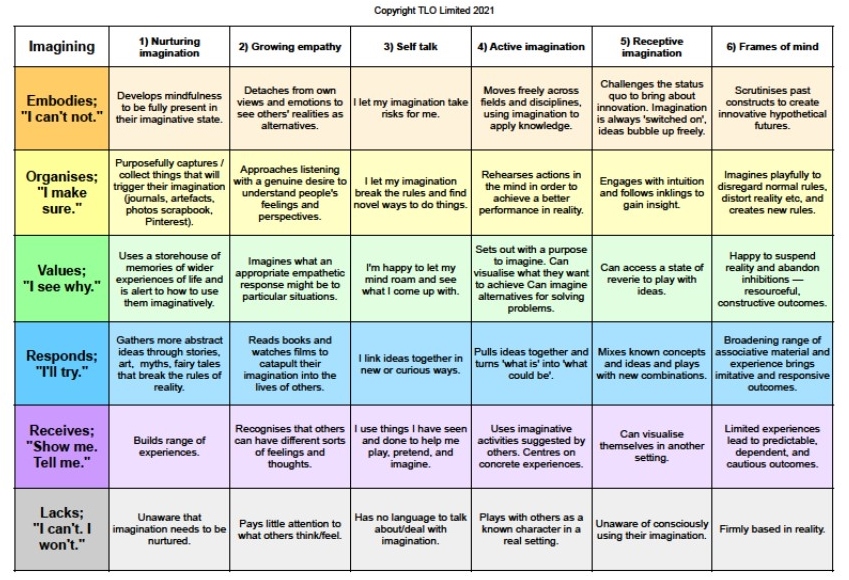
Learning behaviours include; questioning, making links, imagination, reasoning, capitalising.
Social language – how we relate
The next aspect is about being able to make use of relationships in the pursuit of learning.
Learning behaviours include; inter-dependence, collaboration, empathy and attentive listening, imitation.
Strategic language – how we manage our learning
The fourth is about building the ability to be reflective, to manage the learning process, to think profitably about learning and ourselves as learners; to become meta-learners.
Learning behaviours include; planning, revising or refining, distilling, meta-learning.
Use of the language becomes essential in what people notice about learning. When used abundantly it makes learning visible and public.
Ask yourself:
Would using and extending this language framework be useful in my classroom?
3. Nudging learning forward
Prompting learning
The language of learning can help you to think about how you might talk in a way that helps to cultivate the learning behaviours and help students to gain a better personalised understanding of content.
- You can turn each of the learning behaviours into sets of casual prompts or nudges to move students along in learning. For example, to nudge curiosity/questioning:
- “What’s odd about that?
- What does that make you wonder?
- What do you want to find out?
- How else could you do that?”
- Your classroom talk should all be focused on the process and experience of learning itself. Your comments encourage students to;
- pay attention to how they are learning.
- slow down and notice and appraise the strategies and steps they are using along the way.
- say”What would have made this easier for you?”
- or “Where else could you use that?”
- This helps students to become more reflective and thoughtful about their own learning.
Ask yourself:
Is my talk on the same lines as the examples above?

Making learning the object of learning.
The classroom becomes a place where young people learn that to struggle with a problem is ultimately satisfying and brings its own rewards.
The familiar learning cycle highlights what is needed in order to learn from experience. By active learning we mean active engagement with materials, with ideas, with relationships and with other resources.
1.Models of learning
Active Learning cycle
The teacher’s role is to facilitate the active learning cycle using questions such as;
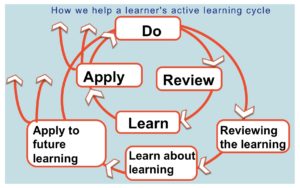
1 In the DO phase
- What’s happening?
- What do you notice?
- How are you feeling about this?
- What else is happening?
2 In the REVIEW phase
- What struck you?
- What did you see operating?
- How was that significant?
- What seemed effective?
3 In the LEARN/SO WHAT phase
- How did you make sense of that?
- What does that mean to you?
- What might help explain that?
4 In the APPLY/ NOW WHAT phase
- Where does this leave you?
- Where does this take you?
- Do you know other situations like this?
It’s not sufficient to simply have an experience in order to learn. Without reflecting on the experience it may quickly be forgotten or its learning potential lost (Gibbs 1988). This is the model that best drives the learning in learner/learning focused classrooms.
Ask yourself:
- To what extent is Reflection on either content or process a consistent feature in my classroom?
2. Rich, challenging activity
Learning is always an emotional business and learning how to manage this is best done ‘on the job’ as the learning is happening rather than as a separate stand alone activity.
Emotional engagement is a prerequisite of powerful learning, it’s what gets you interested enough to be willing to put in the effort to get better and see the value of pushing yourself. So lessons aren’t just designed to make use of different kinds of learning behaviours but to give those behaviours a good work-out. Activities are designed to:
- be challenging and where being stuck and confused are regular and fruitful experiences.
- give students the opportunity to ‘learn what to do when they don’t know what to do’ – to work on wild tasks, rather than tame ones, where there’s plenty of scope to get lost and perplexed.
“The presence of challenging learning intentions has multiple consequences. Students can be induced to invest greater effort, and invest more of their total capacity than under low demand conditions.”
(Hattie, Visible Learning)
Ask yourself:
- What proportion of tasks in my classroom are rich and challenging?
- How might I make tasks more challenging?
3. Linking content with learning behaviours
Whether we realise it or not, all lessons have a dual purpose:
- The content dimension, with material to be mastered
- The ‘epistemic’ dimension, with some learning skills and habits being exercised.
In conventional lessons where the teacher remains the focus of attention and the initiator of all activity, and where the epistemic dimension is not acknowledged, students gain habits of compliance and dependence, rather than curiosity and self reliance. In developing learning power, you are making conscious choices about which learning habits to introduce and stretch and how best to couple these with content so that lessons become more interesting and challenging.
Ask yourself:
- Do I ask myself “How are students going to learn it?” instead of ‘How am I going to teach it?”?

Making learning the object of attention.
Focus is on the learning rather than performance. By concentrating on the learning the performance takes care of itself.
1. Growing learning habits
The growth of learning behaviours is attended to closely. Successful growth across the use of reflection, or imagination, or managing their distractions needs to be acknowledged, recognised, celebrated or praised in some way.
Learning powered classrooms look out for and celebrate three dimensions of progress:
- the frequency and strength of the habits – how often are they used spontaneously as the need arises;
- the scope of their use – the range of contexts within which the learning behaviours are used;
- the skilfulness of the habit – how the skill of use becomes more subtle, more sophisticated.
In other words, students ask more and more questions not only in one subject but across all subjects and moreover they ask increasingly better, more searching, more generative questions. They take a questioning approach to learning.
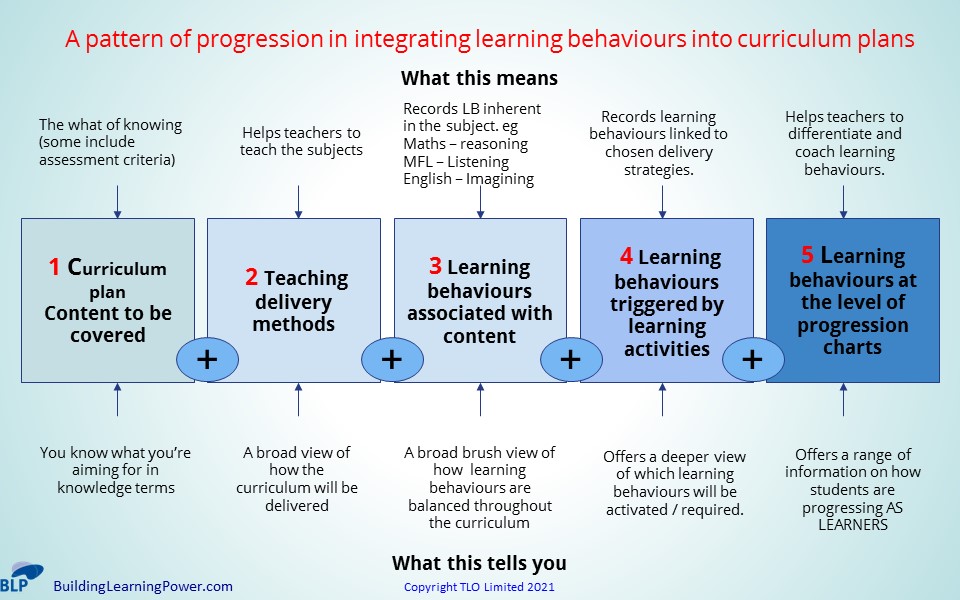
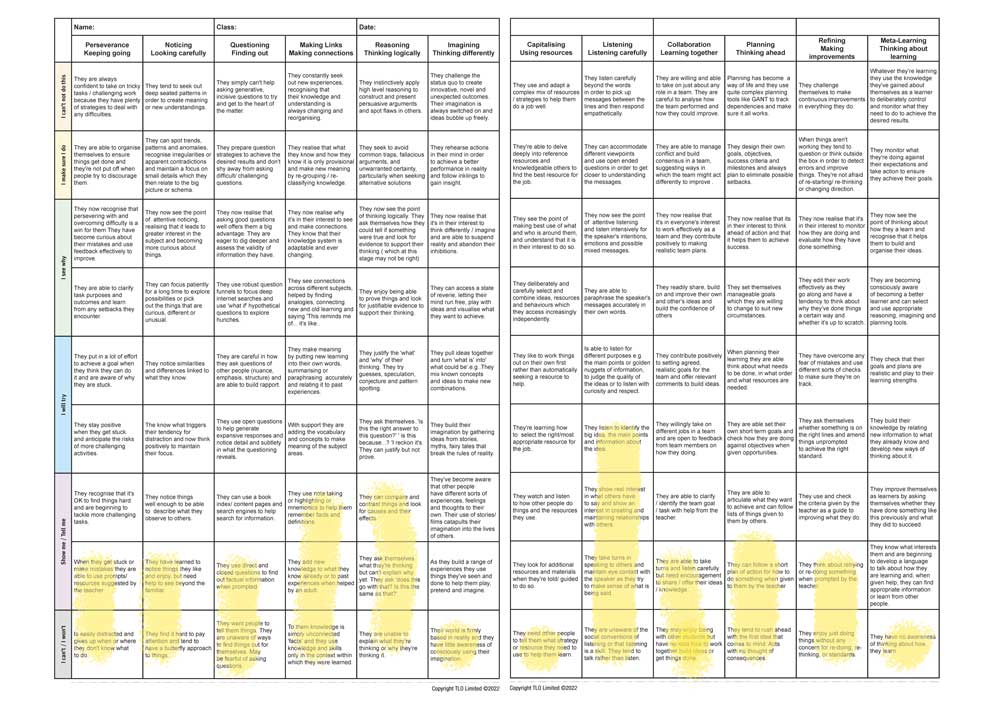
Progression ‘trajectories’ (charts) that show the steps between the natural curiosity of a three-year-old and the sophisticated skill-set of the consummate questioner. The charts enable teachers to identify, nudge and design activity to help students progressively build the fine grain learning behaviours of the effective learner. Progression trajectories are the subject of Unit 3 and influence all further Units.
Progression is the Building bit of Building Learning Power. There’d be little point in introducing such learning behaviours if we didn’t attend to having them grow.
Ask yourself:
- Are students in our school becoming increasingly skilful as learners during their time with us?
- What evidence do I have to support this view?
2. Re-defining classroom learning; new ways to view learning
“The hallmark of successful individuals is that they love learning, they seek challenges, they value effort, and they persist in the face of obstacles.” (Carol Dweck, 2000)
Mistakes or errors
Making mistakes, and more importantly covering them up – or rubbing them out – is now viewed as wasteful. Mistakes are a natural part of learning and should be recognised as valuable; something to learn from, something to improve on, something to change and try new ways, taking a risk and then learning from it if it doesn’t work. Redefining failure is and will be an essential part of reversing students’ fixed mindsets
Stuck
Similarly ‘stuck’ is promoted as an interesting place to be rather than a place of shame. Getting stuck, coming against a brick wall, not knowing what to do next… is a natural part of learning. If you don’t get stuck, the learning is probably not challenging enough. Being stuck is where real learning begins. Students who never experience being stuck or struggle with learning can become fragile learners unable to cope emotionally with the inevitable difficulty of learning and life.
Viewing learning as interesting, challenging, stimulating and worthy of effort needs to feed into changing pupils’ fixed mindsets
Effort
Effort is a word we use often without really thinking about what it means. What do students understand by ‘effort’ or ‘try harder’? Using the language of learning power helps teachers to be much more specific about what sort of effort they suggest pupils make. As one teacher put it;
‘I often used to just tell students to make more effort, and got blank stares back. But when I started using Building Learning Power language I realised I could be much more specific about “making more effort.” I could turn my prompts and nudges into really useful statements. So now I watch students carefully through the Building Learning Power lens and say things like “how could you use your imagination to…?”, Or, “what questions might be helpful to take you further with this?”. I’ve started defining the sort of effort I want them to make’
Praise
The negative value of too much general ability praise, uncovered by Carole Dweck in her research into Growth Mindsets, has caused teachers to think differently about giving praise. Suggested shifts in giving praise include:
- Praise the effort, not the ‘ability’;
- Praise the process not the outcome;
- Praise in specifics of learning behaviours, not generalities;
- Praise privately;
- Praise authentically, and not too much;
- Praise should be seen as separate from feedback. (Praise is evaluation);
- If using stickers, awards, treats etc (concrete tokens of recognition), make sure they’re given for accomplishing specific process or product goals.
Ask yourself:
How do I treat ‘stuck’, ‘mistakes’ and praise in my classroom?
How much have we re-defined failure?
3. Learning on display
In a learning powered classroom learning will be on display in what you will see, hear and feel. In other words, learning is visible in all sorts of ways.
You might find several ways of acknowledging learning on the walls:
- useful prompts for use when stuck;
- a list of agreed ground rules for the social habits the class have created and are focusing on;
- displays of student efforts showing drafts and examples of work in progress to emphasise the idea of learning as a process;
- a humorous display of mistakes of the week;
- a five point scale students have devised about levels of distraction;
- photographs taken by students that capture their peers displaying some learning behaviours;.
You will see students moving freely around the classroom selecting resources they think they may need for their tasks. On the flip chart is today’s selection of tasks at different levels of challenge, but all challenging, for students to choose from. There’s no hint of anxiety or pressure or boredom. No one has told them ‘this is hard’, they are knowingly using their learning behaviours.
Ask yourself:
What does the display in my classroom reveal about my priorities and my commitment to keeping the process of learning in the foreground?
Try out 1
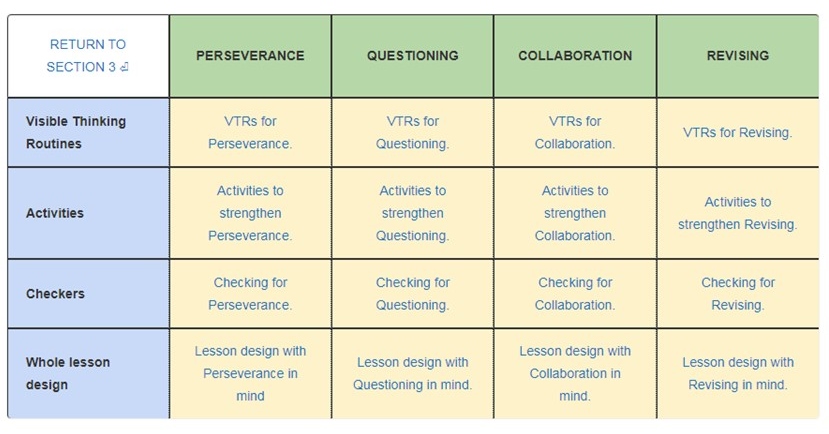
This activity is about devolving more responsibility to learners. In this case perseverance.
If we want students to change their behaviour we need to help them to think much more closely about the ‘hows’ and the ‘whats’.
Motivation research proposes an effective solution to this called ‘if-then’ planning.
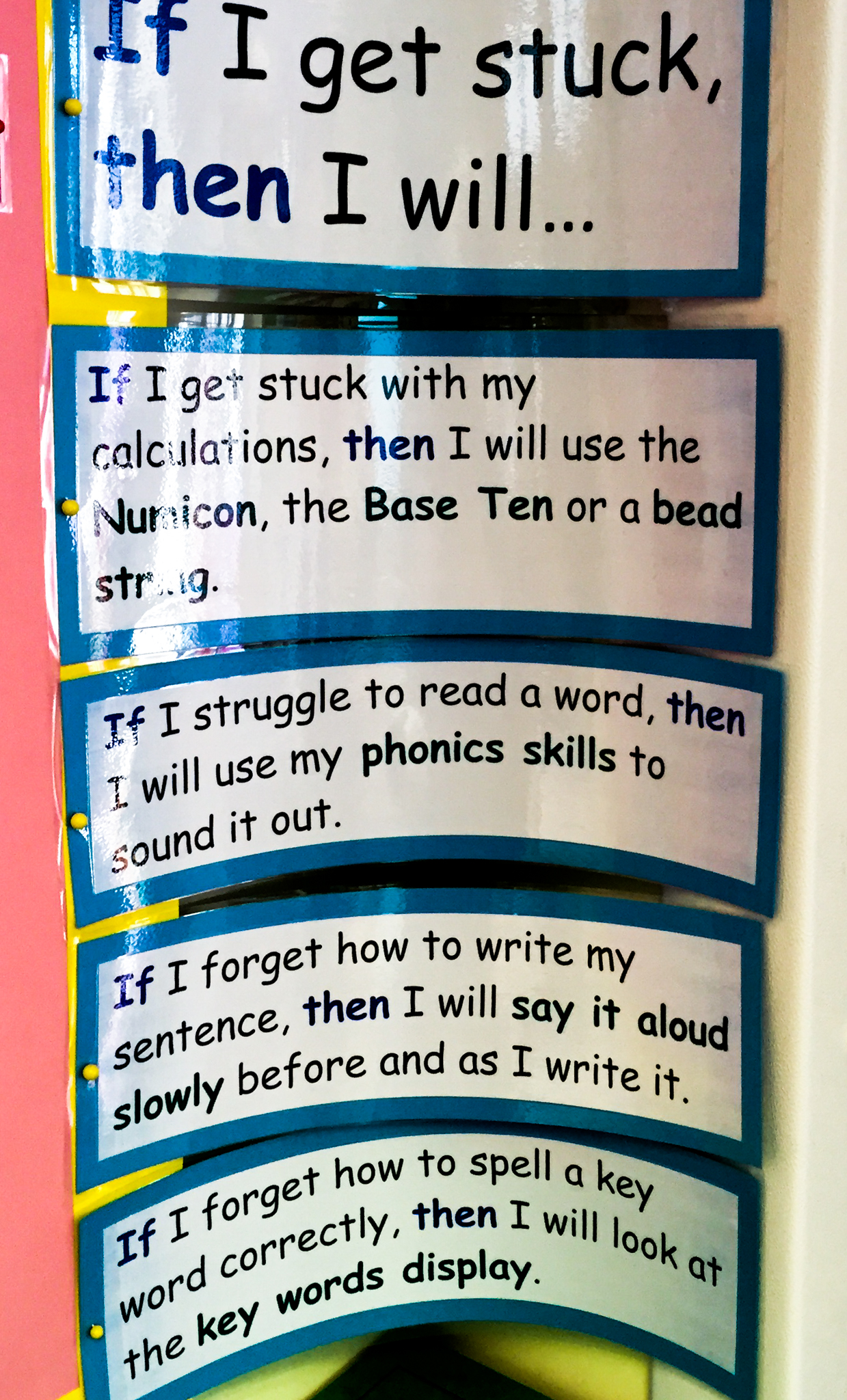
‘Ifs’ are the situations you want to remind yourself about. In the case of getting unstuck it’s useful to list all the sorts of places this tends happen
‘Thens’ are what you will do about something; the action you will take. Brainstorm a list of the ‘what we might do in response to the Ifs’.
Try putting ‘If-then’ planning into action in your classroom to make stuck solutions more specific and personal
Read more
Research findings
Research on motivation and goals from Harvard University shows how our brains work to achieve our goals. Basically it says that goals need to be very clear and our brain ignores a goal if it’s unclear about what to do. Brains act on goals only when what to do is clear.
So, goals like ‘Lose weight’ or ‘Exercise more often‘ or even ” I want to feel ok about being stuck‘ are too nebulous. They beg the question ‘how’ or ‘what do I do?’
The how of ‘If-then’ planning
When setting a goal you need to specify not only what you will do but also where and when you will do it.
If (or when) [___situation__], then I will do [___behaviour__]
So if we had a goal about losing weight, we would need to know a great deal about the ‘how’ and the ‘what’ and the ‘how to’ of losing weight.
An If-then statement or goal might be ‘If I get the pudding menu, then I’ll ask for coffee’.
This may sound a bit cumbersome to start with but research suggests far more goals are achieved by using ‘if-then’ planning. And the clever bit is that this builds self talk at the same time. You do what you are telling yourself to do.
The ‘if-then’ plan succeeds because the situation and the action become linked in the mind. The brain recognises the situation as an opportunity to advance the goal. When the situation is detected action is initiated automatically. “If-then’ plans become “instant habits”.
Goal: I want to feel okay about being stuck
If…
…I get stuck in my reading (all the stuck places will need specifying)…
…I get stuck in Maths (specify how you might get stuck)…
…I get into tricky situations in the playground (specify tricky)…
Then…
…I will (Some specific statements to unstick themselves)
Try out 2
This activity is about promoting talking about learning. In this case questioning.
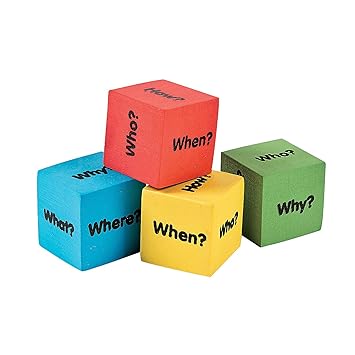
Make questioning important
Identify a project which the class might investigate. Write a series of questions on separate pieces of cards and give each group a set of the cards. The group shuffle the cards and deal each student one card. They have to decide:
- the best order for the questions, to do the project well
- if they have to ask all the questions or whether
some are irrelevant in the context - whether there are any missing questions and if so, what they might be
- what they have learnt about questions from this.
Try out 3
This activity is about shaping activities to support learning. In this case collaboration.
Scaffolding collaboration
A useful way of encouraging students to contribute their own ideas to their team and to become involved in negotiating/agreeing the team response.
Draw the mat onto a large piece of sugar paper (the one shown would be suitable for a group of 4 – adjust for smaller/larger groups). Each individual writes their personal response/views/solution in the section immediately in front of them. Once all individuals have made their contribution the group agree the group response, which is written in the central panel.

Try out 4
This activity is about celebrating learning by putting learning on display. In this case revising.
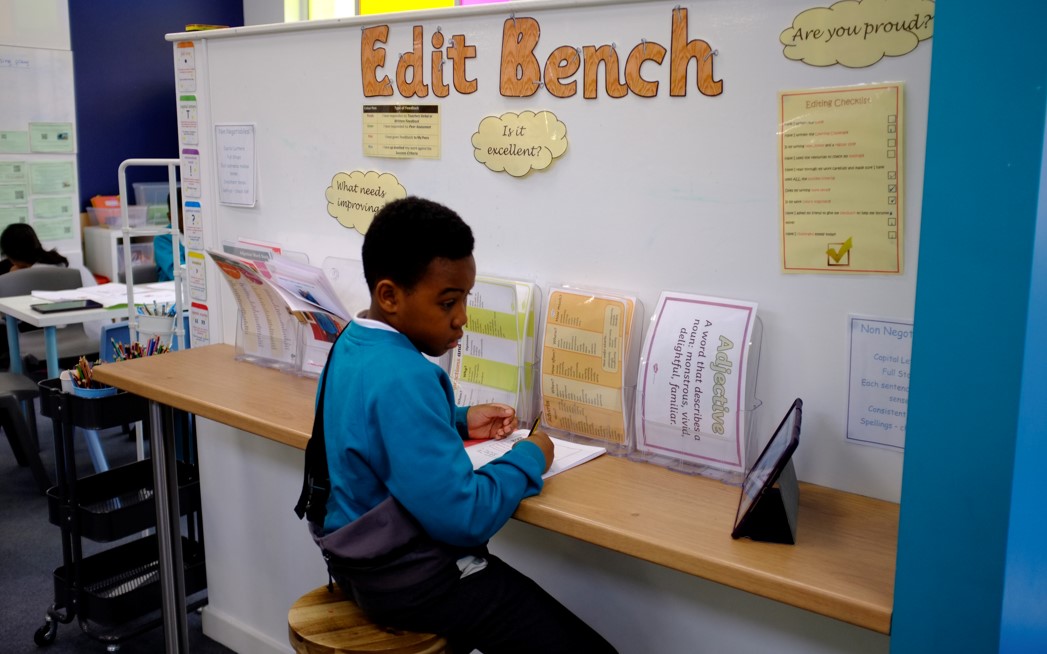
The Editor’s Desk
Create an area of the classroom which is dedicated to and celebrates the skills of reviewing and improving.
Set aside a table in the classroom, and equip it as if it were an office – writing equipment, computer, office chair etc.
This is called the ‘Editor’s Desk’, which is set aside for a student to use when they are in editing, drafting, redrafting, correcting or improving mode.
Find out 3
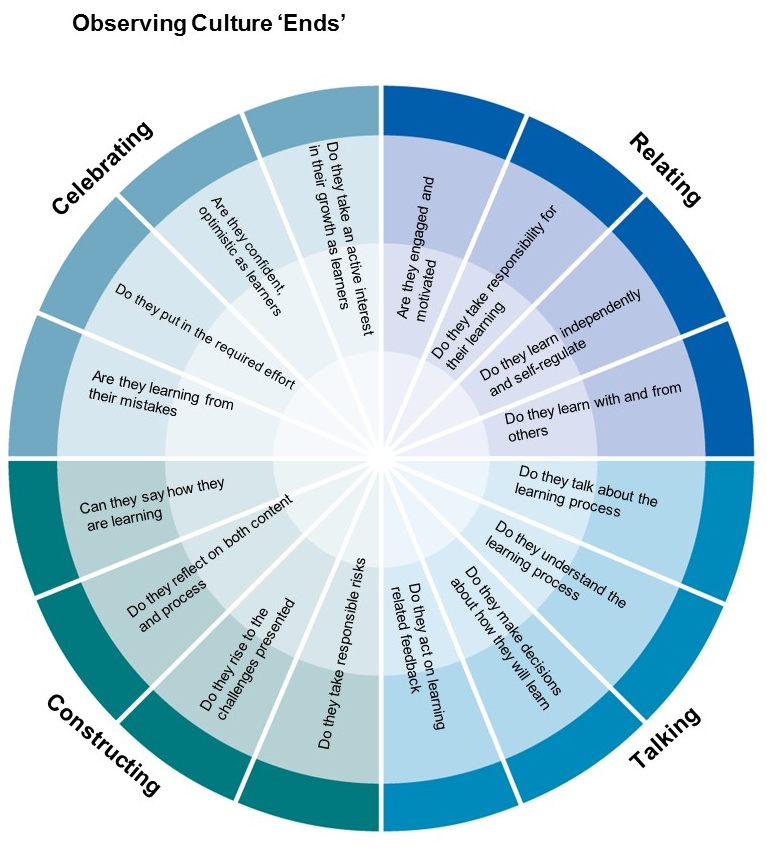
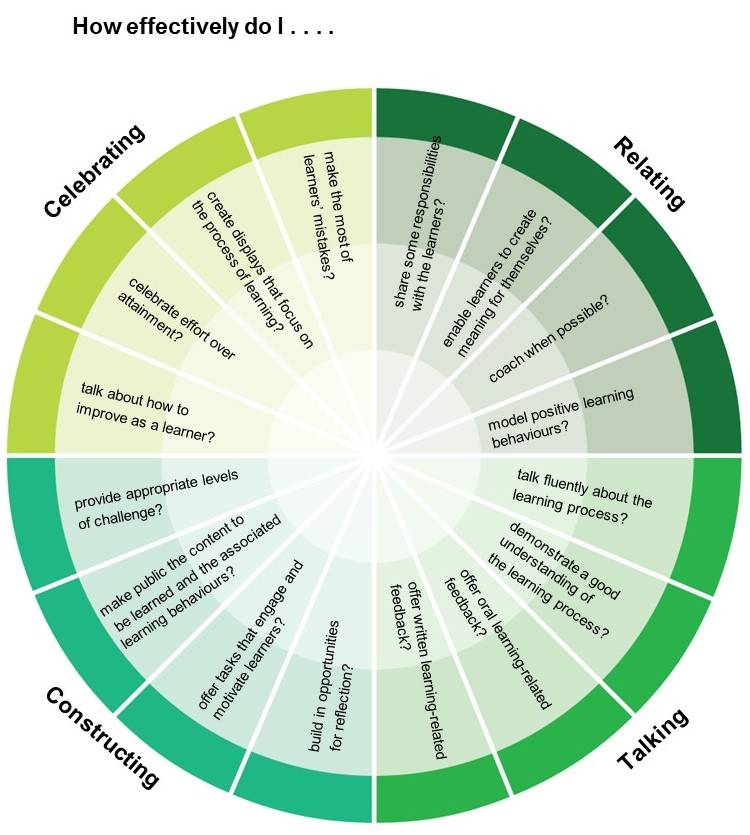
Unit 2 has invited you to look a bit more closely at your learning culture.’Find out‘ 3 will enable you to review aspects of your classroom culture that you may have re-thought, improved or tried something different.
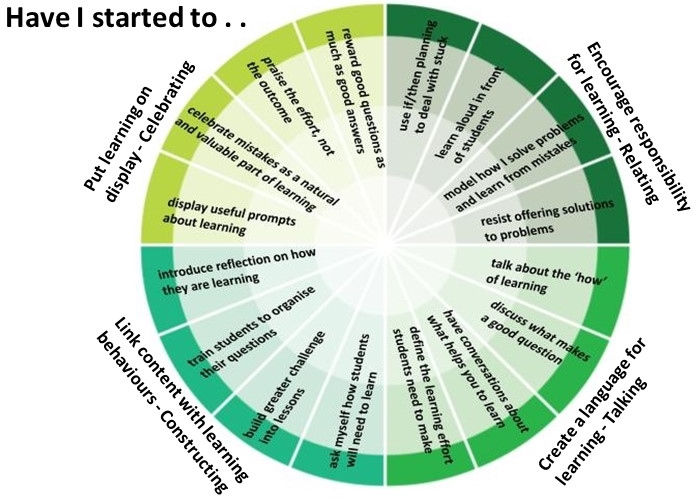
After about four weeks of making small adaptations, use the Culture Wheel to get a feeling for impact and success.
About the design of the tool
- The learning culture wheel is made up of the four aspects of culture depicted in four shades of green:
- relating for learning (encouraging students to take more responsibility for learning)
- talking about learning (creating a language for learning)
- constructing learning (linking content and learning behaviours)
- celebrating learning (putting learning on display)
- Each aspect contains four brief descriptions of the learning culture change you may have introduced.
Using the tool
- Observe the major aspects of your classroom in action;
- the various subject areas of the curriculum for evidence of learning talk
- your classroom walls for evidence of celebrating learning power
- any amendments you may have made in planning lessons
- any instances where you are encouraging students to take more responsibility
- Colour in the extent to which any such culture aspects are being used. The more used/successful the more you colour towards the edge of the circle.
Analysing results
Ask yourself . . .
- Which aspects of classroom culture have I started to develop?
- Which aspects might need attention going forward?
- Which aspects do I need to find out more about?
- In which quadrant have I made most progress? Least progress?
- Is there anything about my classroom culture that’s jumping out at me?
- What needs to be done next?
Learning together. Meeting 2
Unit 2 Suggested meeting agenda
- Decide what you want this meeting to achieve (5 mins)
- Discuss what you have found out about a learning culture (15 mins)
- Re-cap and reflect on the action you have each undertaken in your classrooms (20 mins)
- Consider issues that could be implemented across the school (10 mins)
- Review how the meeting format went (5 mins)

Learning Team Meeting 2 Agenda ⬇️
Item 1. Meeting Objectives. (5 mins)
Meeting objectives might include:
- share and learn from what we have each tried in our classrooms;
- feel confident about taking forward ideas from online materials into our practice;
- identify actions that would be more useful if everyone applied them in their practice;
- plan further personal developments in classroom practice.
Outcome. To have decided what the meeting should aim to achieve.

Item 2. Discussion about learning culture (15 mins)
Explore together your reaction to The Teachers’ Palette classroom culture model and discoveries about yourself and your students as learners
- what were our first impressions of Unit 2?
- where did we each estimate the school was in terms of the Culture Tool 1/Find out 1?
- what did you find out about yourself as a teacher (Find out 1)
- what did we each learn from using Culture Tool 2.
- which 3 of the teacher actions do we tend not to use
- which 3 teacher actions are our strongest
- what surprised or baffled you
- are there significant differences between year groups
Outcome. A clearer understanding of the thinking behind the idea of a learning culture, the teacher’s role in creating it and where we are as a school.
Item 3. Explore action using the initial Try outs (20 mins)
Share and discuss the action you each took in making a start on developing a learning culture
- Which of the suggestions did you each use?
- Any concerns about or difficulties in putting the Try outs into action.
- The impact of these actions. See Find out 3.
- Which seemed the most valid or successful.
- How the Try Outs affected different age groups.
- Ways of implementing these that we can all learn from and adopt.
Outcome. A clear picture of our interest in and enthusiasm for amending classroom cultures to support learning to learn. A feel for which are proving to be most effective and why. Will any of these culture shifts call for action on current school wide policies? i.e. how we all treat mistakes, being stuck and praise.
Item 4. Learning from practice (10 mins)
In relation to all the shades of practice you have been trying out, sharing, mulling over and observing using Find out 3, think about them now in two ways;
1. personally and 2. school wide.
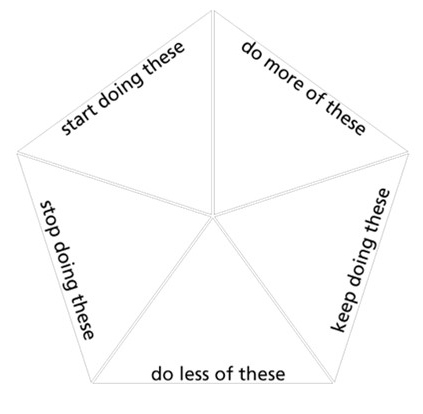
Which ideas/practice stand out as:
- things you want to start doing
- things you think you need to stop doing (that’s harder)
- things you want to keep doing
- things you want to do more often
- things you want to do less
Outcome.
- At this stage it’s valuable to note ideas arising from this discussion using 2 pentagon diagrams;
- one for each team member personally and
- one for decisions/suggestions that are school wide.
- Ensure that your school/group wide pentagon is shared with senior leaders.
Item 5. Evaluate team session. (5 mins)
- Did we achieve our objectives?
- Are we comfortable with what we are trying to achieve so far?
- Any concerns at this point?
- Next meeting date and time.